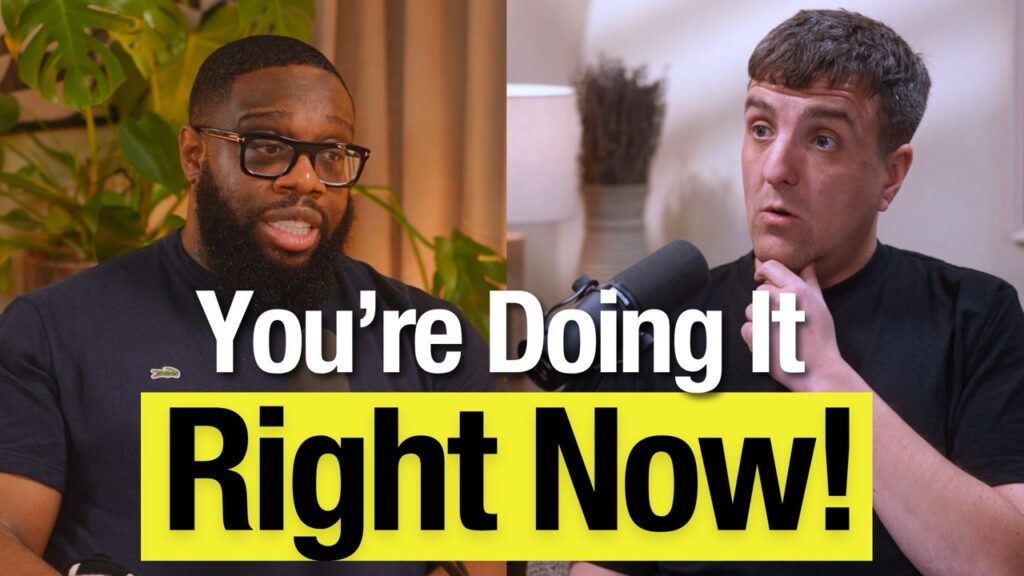

Money mentor Catherine Cornwall returns to the Money Gains Podcast to make the case that your bank balance is downstream of your self-worth: the habits, beliefs and standards you hold about yourself show up directly in how you spend, save and grow your money.
Catherine Cornwall spent twenty years working in asset management before becoming a success and money mentor, and her new book, Love, Money & Magic, sits at the crossroads of that finance career and over a decade of studying manifestation and mindset work.
This episode is a follow-up to her first appearance on the show, and it goes deeper into the “inner work” she believes underpins every financial decision people make.
Host Sammie and Catherine talk about the difference between being rich and being wealthy, why comparison and low self-worth quietly sabotage financial progress, and why small daily habits (not grand five-year plans) are what actually move the needle.
If you have ever splurged to feel better after a bad day, or felt stuck without a clear financial goal, this conversation is for you.
You can grab a copy of Catherine’s new book Love, Money & Magic right here: https://tinyurl.com/34je8h3s
———
Gains App is LIVE!
An AI-powered budgeting and cashback app designed to help you make more of your money.
Download here: https://gainsapp.onelink.me/8IhT/oiaimr1z
———
Get a FREE FRACTIONAL SHARE worth up £100 when you deposit £1 with Trading 212
https://www.trading212.com/join/MGP
If you don’t receive the free fractional share, head to the menu and put the word ‘MGP’ into the promo code section.
(Capital at risk when you invest)
———
DISCLAIMER:
This video is meant for educational purposes and should not be considered financial advice. When you invest your capital is at risk. Past performance is not a guarantee of future success.
This video description contains affiliate links, if you click on one and make a purchase we may receive a small commission. This does not alter our suggestions and there is no charge for you.
Key takeaways
- Being rich and being wealthy are not the same thing: wealth includes purpose, fulfilment and financial stability, not just a bigger bank balance.
- Low self-worth shows up as spending patterns, whether that’s emotional splurging or never quite backing yourself to invest or ask for more.
- Small, consistent daily habits compound into bigger financial outcomes faster than one big leap ever will.
- Success and financial goals are not fixed: what “enough” looks like changes as you grow, so revisit your targets regularly.
- Money amplifies who you already are, so the inner work (confidence, boundaries, self-talk) matters as much as the financial strategy.
Timestamps
- [02:25] Money mentor background in asset management
- [03:48] What manifestation really means
- [06:00] Finding your vision when you feel stuck
- [11:07] Rich vs wealthy: the key difference
- [14:56] Inner work before outer wealth
- [21:47] Training your mind like your body
- [23:18] The quality mindset and small daily habits
- [28:51] Small habitual changes build big results
- [34:29] Redefining what success looks like
- [43:40] Money as an amplifier of who you are
Rich vs wealthy: why the distinction matters for your money
Catherine draws a sharp line between being rich and being wealthy. Rich, in her framing, is just a number. Wealthy includes purpose, fulfilment and a sense of security that a bank balance alone can’t buy.
She points out that people can have “all the material goods” and still not feel wealthy if their relationships and sense of purpose are missing.
That distinction matters practically, not just philosophically. If your only financial goal is a bigger number, you can hit it and still feel stuck, which is often when people make impulsive decisions with money they’ve worked hard for.
Catherine’s advice is to define what wealth actually means to you (freedom, stability, time, relationships) before chasing the number itself.
If you’re not sure where your own definition sits, the free Money Personality Quiz is a useful starting point for working out what’s actually driving your money decisions.
Catherine puts it bluntly: “the money doesn’t buy you happiness. The things do not buy you happiness, the Louis Vuitton doesn’t buy you happiness, the Ferrari doesn’t buy you happiness.”
Chasing material markers of success is a trap most people fall into at some point, she says, but “we get to a place on the road where suddenly that is just never enough,” which is usually the moment worth paying attention to rather than pushing past.
Why self-worth quietly shapes your spending habits
One of the most useful threads in this episode is Catherine’s point that our inner dialogue, how we talk to and feel about ourselves, shows up directly in our financial behaviour.
She describes clients who want something but don’t feel worthy of it, and how that gap between desire and self-belief creates self-sabotage.
Host Sammie picks this up from personal experience, describing how improving his mental health and working with a therapist had a knock-on effect on his finances: when his mindset wasn’t right, he’d “spend and splurge” just to feel better, which meant months where nothing got saved or invested.
That’s a familiar pattern for a lot of people, and it’s worth being honest with yourself about.
If spending to soothe a bad mood is a regular occurrence, a proper look at where the money actually goes can be more useful than another budgeting app. Our guide to how to audit your spending walks through exactly how to do that audit.
Catherine puts this down to self-talk: “your outer reality is simply a reflection of your inner dialogue… it’s how you talk to yourself, it’s what you think about yourself.”
Her challenge to clients who say they want something but never quite get there is direct too: “Are you acting as if you’re worthy?
Do you truly believe that you’re worthy? Are you making moves that dictate that you’re worthy?” Wanting something while quietly believing you don’t deserve it is, in her view, where the sabotage starts.
Small daily habits compound into bigger financial results
Catherine and Sammie both push back on the idea that change has to be a dramatic, all-at-once event.
Catherine talks about “incremental gains” and “showing up” in small ways every day, whether that’s getting out of bed on a hard day or, on a good day, saying yes to a bigger opportunity.
Sammie references the well-known idea that small daily improvements compound into significant gains over a year.
The same logic applies directly to money. You don’t need a perfect five-year plan to start; you need this month’s step.
That might mean opening a stocks and shares ISA for the first time, automating a small transfer into savings, or finally sitting down and working out where your spending actually goes.
If investing is the piece you’ve been putting off, our beginner’s guide to investing in the UK breaks down the first steps without the jargon.
Sammie shares a line he leans on from Jordan Peterson: “if you make a cup of tea, make it the best cup of tea you have ever made.” Small standards like that, he says, “propel outwards into the big tasks.”
Catherine frames it as “having a quality mindset, so thinking about quality over quantity” in what you eat, what you think and what you believe about yourself, and she offers a line worth sitting with on the harder days too: “the deeper the trench, the higher the mountain.”
Redefining what success looks like
Success, Catherine argues, is entirely personal and it changes as you grow. Someone might feel successful hitting a specific savings goal, someone else might feel successful in a job they love even though it pays less than a role they’d find more draining.
The key insight is that once you hit a goal, the goalposts naturally move, and that’s not a failure, it’s growth.
This matters for anyone tracking their finances, because it’s easy to feel deflated after reaching a milestone and not feeling as different as expected.
Sammie describes breaking his own 25-year “financially free” goal down into what he could actually do this month or this year, which made the long-term target feel achievable rather than abstract.
If your income feels capped and a bigger goal needs a bigger lever, building a side income is one of the more practical ways to create room to move, and the ideas in our list of the top ways to earn a side income are a reasonable place to start.
Catherine sums it up simply: “the joy is in the journey… it’s not even in the having of it.”
Her conclusion is that success, stripped back, “is becoming the best version of yourself. For me, that’s success in a nutshell.” Money, on that view, follows rather than leads.
Money as an amplifier: do the inner work before you're wealthy
Perhaps the sharpest point in the whole conversation is Catherine’s observation that money is an amplifier: it doesn’t fix unresolved issues, it magnifies them.
She references stories of people who acquired significant wealth quickly and still made catastrophic decisions, driven by insecurities that had nothing to do with their bank balance.
In her own words: “money is an amplifier. It amplifies who we are, it amplifies our bad habits, it amplifies our unhealed wounds… as well as the good in us.”
She also points to coaches who work with billionaires, who say their clients often arrive “deeply unfulfilled, deeply lonely, deeply unhappy,” with every material thing they could want but “the core’s missing.” No level of wealth insulates anyone from doing the inner work.
The practical takeaway isn’t mystical. If poor money habits (impulsive spending, avoiding a proper look at your outgoings, never quite starting to invest) are rooted in how you feel about yourself, then the fix isn’t just a better spreadsheet.
It’s addressing the underlying habit alongside the financial one. Catherine’s advice to focus on “quality over quantity” in daily choices is a genuinely useful lens for money too: better small decisions, made consistently, beat one big overhaul that doesn’t stick.
This transcript is auto-generated and lightly edited for readability, it may contain errors.
[0:00] Sammie Ellard-King: My name is Sammie Ellard-King, and welcome to the Money Gains Podcast. We’re a show all about making, saving, and investing your money, interviewing the top minds in the industry to unpack their tips and tricks to success. And today, my guest is Catherine Cornwall, who joins us to discuss her new book, Love, Money and Magic: The Effortless Path to Wealth, Financial Freedom, and Your Dream Life. It’s such an in-depth conversation talking about the mindset of making money, how to build wealth, and things you should be aware of as you grow in your financial journey. This one’s not to be missed, but for now, let’s get started on the Money Gains Podcast.
[0:52] Sammie Ellard-King: So, Catherine, welcome back to the Money Gains Podcast. How are you?
[1:00] Catherine Cornwall: Yeah, very good, thank you. All good. Been very busy.
[1:04] Sammie Ellard-King: Have you? Oh, tell us what you’ve been up to.
[1:06] Catherine Cornwall: So yeah, I um so I’ve just come off the back of my very first book launch um called Love, Money and Magic. And, you know, that was a whole process for me. It was self-published. So I kind of did everything kind of end to end. And that’s been a bit of a six-month journey for me. So it’s been good to kind of get to the end of that six months and go, I’ve got a finished product. I’ve had it birthing up there in the mind for quite some time. And it’s just been it’s a bit of a relief to finally have it out there, but also it feels like I’ve birthed something, you know, which is wonderful. You know, the book is now my baby, and I’m now kind of showing the baby to the world. So yeah, that’s what I’ve been busy doing and all the other things that I do as well. But the book has been my main focus of late.
[1:49] Sammie Ellard-King: Yeah, I think like I loved our episode, our first episode, and I will encourage people to go back and listen to that as well. I’ll drop a link to it in the show notes because it was like one of my favourites, because we dived into kind of the realms around money, which I think get kind of left out of the conversation a lot, but actually, for me personally, they’re possibly the most important. And so I think we should kick start just a little like update on on you and like who you are. In case someone’s listened to this for the first time, they’re like, okay, cool, I’ve not listened to that first episode. Who is Catherine Cornwall and what do we need to do?
[2:25] Catherine Cornwall: Yeah, so Catherine Cornwall is a money mentor, you know, success mentor. I work predominantly with ambitious women to just realise, right, their deeper strings and desires, right? I’m a manifestation expert, you know, I’ve been practicing manifestation principles, you know, and putting that into practice in my own life for well over a decade now. Massive fan of law of attraction, but also I’ve worked in finance for the last 20 years. So immersed myself, you know, in that kind of world for a very long time. And I’ve worked for some of the, you know, the world’s biggest financial institutions, right, on what we call the buy side, which is asset management. So that’s all investing. And, you know, typically working with very, very big players, right, in that market. Um, and I got to a place in my life where actually
[3:10] Catherine Cornwall: I’ve learned all of this stuff. I have all of this kind of knowledge. It’s like, how can I apply it? But then how can I then utilize that in my own life, but also then start teaching people and working with other people, right, on how they can implement some of this in order to improve their results in their life. So that’s kind of my background, and that’s how I kind of got to where I am today. There’s a big long story behind that. We probably haven’t got time to go into all of that nitty-gritty, but that’s generally the crux of who I am, you know, and why I’m kind of here.
[3:41] Sammie Ellard-King: And what does the role of like manifestation for you play in like your everyday life? And I suppose with money as well.
[3:48] Catherine Cornwall: Yeah, so manifestation is basically the art of becoming the person that you want to become, right? And living the life that you want to live. You know, a lot of us go through life and we don’t realise that we are in fact the creators of our own reality. And we create our own reality through our beliefs, our thoughts, our feelings, and our actions, and that is it. And you hear a lot of like woo-woo speak that says, align, you need to align with what it is that you want to bring in. And it’s like, well, what is alignment? What the hell is that? And it is quite simply the art of aligning your beliefs, your thoughts, your feelings, and your actions every day with where it from where to take you from where it is you are today to where it is you want to be. In that could be two years’ time,
[4:33] Catherine Cornwall: six months’ time, five years’ time, you know, whatever it is. But it really is about intentionally creating your own reality and really bringing your goals to life in a way that leaves you feeling deeply empowered and in control of your destiny. And you can apply it to things like love and romance, you can apply it to things like your career and business, and you can also apply it to your money as well, which is obviously where you and I tend to specialise.
[4:58] Sammie Ellard-King: When it comes to like, I speak to so many people, and they’re like, this all sounds amazing, but I don’t know where I want to go, and I don’t know where I want to be. I’m kind of stuck. Like, how how would you address that with that person?
[5:15] Catherine Cornwall: So that’s the number one challenge that I have with clients when I work with them one-on-one. It’s like I feel stuck, I feel unfulfilled. I am feeling a bit grumpy about life, right? I have a problem and I don’t know how to solve it because you can’t see the label when you’re on the inside of the jar, right? Which is the saying that I love to say all of the time. And I fall victim of that as well sometimes, right? Like I can’t see the label outside of my own jar. And oftentimes speaking to people like you and I or picking up a resource or learning something allows us to see a different perspective, right, on life. But if I don’t know what I want, where I get my clients to when I work with them, or even just friends and family, right, is what is
[6:00] Catherine Cornwall: it that lights you up? What is it that excites you? What is it that brings you joy? What is it that elicits like this high energy kind of feeling where it feels expansive in your body rather than contracting, right? Expansion is love, contraction is fear, right? So I try and get people to a place of okay, but if you can’t really articulate what it is, try and articulate kind of what currently you do or that you’ve experienced that has allowed you to feel more joy, and then we go from there, right? And we build on that. And what we’re building on is effectively a vision, right? It is a vision. So you have to know to get to where you want to be, you have to know where you’re going, right? Or at least have some sort
[6:45] Catherine Cornwall: of understanding of what that might look like. And if a vision doesn’t come to you straight away, well, it’s practicing, you know, what that might look like. And where people hold themselves back is they get really in their head about this stuff, right? They go, Well, you know, I have a I have a desire, I have a thing that I think I want, but my mind will tell me I can’t get there, or it’s too hard, or it’s too difficult, or somebody like me with my socioeconomic background can’t get there. And I’m here to say that that is utter BS. It is a lie, it is a lie straight from the devil, and it is literally your ego, your fear trying to keep you safe, right? Because that’s what it’s designed to do. There’s a part of our mind that’s constantly trying to keep us where we are now because change is scary.
[7:30] Catherine Cornwall: And when we have the knowledge and the awareness that allows us to see that that’s all that’s holding us back, we go, Oh, well, if I can have anything I want, like, what does the dream look like? You know, if I did to dream big with no limitations, if I just played pretend for a bit, what would that look like? Because there’s a saying that says that if you can dream it, you can have it. And that if you can desire it, it gets to be yours. Because if it wasn’t possible for you, it would never even have entered your mind. So if it enters your mind as a desire, it means it gets to be yours. And then all you’re doing is you’re lining up aligning with the person that gets to receive that reality for yourself.
[8:57] Sammie Ellard-King: Oh, I love that. So, like pretending you are that person helps you become that person.
[9:04] Catherine Cornwall: Yeah, you almost have to, it’s it’s having imagination, right? The very first kind of teachers of law of attraction and manifestation all say imagination is key. It is just imagination. Now, people automatically, with a very logical brain, will go, oh, that’s just rubbish. They know imagination isn’t it. Well, how do you think you create your reality? How do you think everything around you, the the gadgets, the chairs, the buildings, the everything around us started with as an idea in someone’s mind, and that’s just a bit of imagination. Somebody imagined everything that we have today in the world. It had to start with imagination. So it is just using your the faculty of your imagination to think, okay,
[9:49] Catherine Cornwall: well, what gets to be possible for me? And that’s how it starts.
[9:53] Sammie Ellard-King: Yeah, that’s so true. And like I I was speaking to um Brian Mitchell yesterday on on his podcast, and we went quite deep into this kind of feeling that a lot of people I feel like are suffering with at the moment, and that’s kind of like, I’ve got the job, I’m kind of safe, everything’s kind of cushy, and I’ve got a nice roof over my head, I drive an all right car, but then underneath it, there’s this like lingering feeling, and it’s and over the past year it’s getting more and more and more and more, and then suddenly, usually what it does is it like explodes in like a midlife crisis and ends up in like quite a big like you know, show
[10:38] Sammie Ellard-King: of like look at me in my red sports car now with the 21-year-old model around my yeah, my arm. Like it, but if you that’s if you let it build to that, and often there’s a like a period where you can if you can identify that that that’s not right, this is not right, then you’ll be able to make a bigger change for a longer period of time and I and kind of know that there is something else out there for you. What would you say to that that kind of mentality at the moment?
[11:07] Catherine Cornwall: So there’s always a fine balance, right? And I think this is where spiritual practice and principles really come into play around you know, creating wealth in a way that’s sustainable and understanding the difference between being rich and being wealthy, having money and being wealthy, they are not the same thing. And everything for me comes down to purpose and passion. So we as human beings, just to address the bit about feeling unfulfilled, we as human beings are designed and intended to grow and evolve and expand, right? Spiritual practice will say, so within, so without, right? Or so within, so without, meaning that if we are all part of the whole consciousness and
[11:52] Catherine Cornwall: we are part of the universe, the universe is expanding at ever rapid pace, right? This is how I make sense of it. If consciousness is constantly expanding and the universe is constantly expanding, but me and you are standing still, what does that mean? Well, it means that we’re not keeping up with the expansion of the universe, we’re not growing or evolving, and then you get this kind of like stagnancy and complacency. I feel that that is where this unfulfillment that something isn’t quite right is coming from. You have, and a second part of it is around how much of our value are we attributing and our wellness are we attributing to material gain versus actual fulfillment and growth and purpose and passion and being of value and being
[12:38] Catherine Cornwall: of service, right? So we, as we know, are many mentors, right? And we talk and riff on money and we’re deeply passionate about people being financially empowered. And all of that is great, and we want to feel safe and secure, but the money doesn’t buy you happiness. The things do not buy you happiness, the Louis Vuitton doesn’t buy you happiness, the Ferrari doesn’t buy you happiness. And look, we sometimes we gotta go on a journey of falling into that trap, right? Of making those things mean something about us. But we get to a place on the road where suddenly that is just never enough. And we go, okay, what is it? And it forces us to go inward, to go, what is it about me that’s still not fulfilled, even though I’ve got all these things? And then that’s when I would say the spiritual journey
[13:22] Catherine Cornwall: starts, right? Which is why within the book I talk about the inner work before I talk about the outer work. I talk about the inner world before I talk about the outer world. Because so within, so without, everything is a reflection of how we feel inside of ourselves.
[13:38] Sammie Ellard-King: That’s the first quote on the uh that you you put that you put out in the book is about this inner and outer world, which I really liked. I think it’s Roy Bennett you you quoted, which is really cool. What um let’s talk about the book because I feel like it’s gonna steer this conversation even further. And so I’d love to know where you got to in your mind, like to go. I need to get this down onto a bit of paper. And the book is called Love, Money, Magic. And yeah, I love that title. What’s the inspiration behind it?
[14:11] Catherine Cornwall: So for me, it’s it is it is a I don’t talk about my own journey in the book, right? It’s not written in a way that I am talking about my own journey. I want that to be a different book for a different time when I’m ready to really talk about my journey and how it culminated right into this where I’m at today. But the book is very much designed to be a practical tool and help for people that really want to start feeling in control of their financial destiny. It is written by a woman for a woman, but it serves all people, right? Regardless. But, you know, I serve women in my business, you know, I my marketing speaks to women, which is why, you know, it feels very feminine in its language, right? And it looks very feminine on the cover, right? So I just want to caveat that. But you know, it is valuable for everyone. And I’ve had great reviews from men that have
[14:56] Catherine Cornwall: read the book as well. So, you know, it is it is definitely for everyone. How the book is really just a kind of taster of the work that I do with people, and it is the kind of recognition that everything starts with love and then the money follows, right? Money doesn’t buy you happiness, material things don’t buy you happiness, okay? It is really all about love and that’s self-love and self-worth, right? And it is loving yourself enough to know that you deserve and you desire better, right? It is no, it is loving yourself to go, okay, I’m gonna take control of my financial destiny, I’m gonna educate myself in a way that means that I can, you know, have
[15:41] Catherine Cornwall: more freedom in my life, right? So for me, the book really was a culmination of my years in finance, working with the practical strategies to make money, okay, and preserve money and build wealth, along with the 10 years plus of real deep integration of manifestation principles and spiritual practice into my world, right? To bring it, and it’s kind of aimed at bringing it both together so that people understand that making money isn’t just about hustle, it’s not just about working harder, it is actually about working on yourself in order to become the wealthiest version of yourself. And I do talk a lot in the book about how women specifically hold themselves back from realising
[16:27] Catherine Cornwall: their kind of, you know, the ultimate, you know, financial kind of destiny, right? And prowess. And that’s because society and societal, I mean, it wasn’t even that long ago that women weren’t allowed credit cards, right? Or to open up a bank account. I mean, not in our lifetime, but generations before that. 70s, insane. And we’re still kind of holding ourselves back a little bit, right? Because there’s some generational beliefs in there, right, that do hold women back, right? Women, I’ve had men not of the highest, sliding into my DMs and into my comments since I’ve even published the book saying, Oh, just another woman chasing money, you know, another woman being greedy, you know, and all of this, and it’s just and it’s insane. But it’s for me, it just demonstrates they are the minority, but it just demonstrates how far we’ve still got to go
[17:12] Catherine Cornwall: in really kind of changing, you know, people’s mindsets around money, but also what it is to be a wealthy woman in the world.
[17:20] Sammie Ellard-King: Ah, a hundred percent. And you’re so right, like it is uh 50 years since women can have a bank account, 70 years since they could vote, and like that’s not enough time for like the generational impacts on the pro. I think pros possibly our generation now is installing into say the Gen Z or the I couldn’t ever remember what the next one’s called. It drives me mad.
[17:48] Sammie Ellard-King: Alpha, are they alpha?
[17:50] Sammie Ellard-King: Um Alpha, that’s it. There you go. But I feel like there will be a another raft of major change in that generation, and then there’ll be a bigger raft in their generation, and slowly they’ll become to some sort of level of parity, which I believe is on the cards eventually, especially as we get more educated as a society. Even the the lower educated people of society are more highly educated than they would be 50 years ago, for example. So that’s going to help, but it’s a long road, and you know, it must be difficult as a woman as well, because they have you have, you know, children to factor into this, you have to then bring up
[18:36] Sammie Ellard-King: the child, you then have to worry about whether or not you you need or want a career at that point as well, which is quite a huge difference, which adds so much financial pressure into your lives as well. And suddenly you can have that kind of like who am I moment as a woman, which can be quite tough to deal with.
[18:56] Catherine Cornwall: Absolutely. I think it’s financial empowerment and freedom for men and women are a it’s a different journey. Like it really is. Like we’re all kind of going in the same direction and we almost like want the same outcomes for ourselves, right? We all want it for kind of similar reasons, but I think the journey is different. And I also think that the the beliefs that we hold subconsciously are different, and men are boys are brought up differently than girls. And you know, generationally, hopefully that will start to shift and change, right, as we evolve through the generations. But, you know, millennials were brought up, millennial millennial girls are brought up differently to millennial boys, right?
[19:36] Sammie Ellard-King: And there is a shift they kind of have to be in a way though.
[19:40] Catherine Cornwall: Yeah, yeah. I’m not saying, I’m not saying that we should all absolutely, I’m I’m absolutely not um an advocate of us being the same. We are different, we should celebrate our differences, we
[21:02] Catherine Cornwall: should maintain and uphold our differences and celebrate them. I’m fiercely passionate about that. I’m fiercely passionate about women winning as women, not having to become men to win like men. Like, like I’m sorry, but speaking from experience, women that have to constantly be in their masculine energy to win like men in the workplace, it leads to burnout. It leads to deep unfulfillment, which is why we have a huge number of women leaving the workplace and not going back after maternity and setting up their own businesses, right? And becoming entrepreneurial. Massive, massive spike in entrepreneurial women because women want to be able to win like women, not win like men. And I think that’s the right thing for us to be doing as well.
[21:47] Sammie Ellard-King: I completely agree with you. And going back to what you said about like working on yourself outside of just your wealth journey. I think it’s the most important thing you could possibly do. I think since we last spoke, you know, I went on like a big journey to like improve the way I eat, improve my health and improve my mental health as well. You know, I’m underwent some some therapy. I think like train if you’re training your body, you should train your mind as well, especially when you’re an entrepreneur, because it’s an extremely uh tough road, and you need to be like prepared for it, right? And you’re gonna have enormous ups and downs. And if your your mind isn’t right because of your past traumas or past things that have happened to you, etc., then that’s gonna have a massive impact on your ability to handle the ups and downs of your business or your life or your career,
[22:33] Sammie Ellard-King: and that’s gonna then manifest into your money journey, right? Because you’re gonna spend and splurge just to make yourself feel better, and suddenly you’ve not invested or saved that month, and it all stems from that. And so since I’ve done that, business has gone to levels I didn’t expect it to at this point. I’m way happier in my relationships outside, my friendships are stronger, I’m stronger, and my financial situation has improved tenfold. So it just means that what you’re saying is so true, and not just from a male perspective, but from a from a female perspective as well. And I just encourage everyone to like look at it all holistically,
[23:18] Sammie Ellard-King: because actually, when you do that and you improve yourself, like I love this quote. In um, it’s a Jordan Peterson quote, and he is quite controversial, but I personally love this. And I started doing it, and he just says if you make a cup of tea, make it the best cup of tea you have ever made. And if you’re making a bit of toast, make it the best, spread that peanut butter like you’ve never spread it before. And suddenly doing it, those small little things just like propel outwards into the big Tasks and you take on the big tasks. I’m going to do this the best that I can do. I don’t want to do it, but I’m going to do it the best that I can possibly do it. And just having those tiny little switches in your day-to-day can can can really
[24:04] Sammie Ellard-King: help. What do you what did you what what have I waffled a bit there?
[24:08] Catherine Cornwall: Absolutely not. Everything you just said massively resonates, not just with my own journey, right? But the journeys of people that I work with as well and that have been on my own journey. I think that for me, having a quality mindset, so thinking about quality over quantity, the quality of how you do things, the quality of like what you eat, the quality of what you put into your body, the quality of the thoughts that you think, the quality of the beliefs that you believe, right? It’s the having standards for your life is really part of the becoming the person that you want to be, right? You have to become the wealthiest version of yourself, right? And that does include just having higher standards for yourself, right? And Jordan says it perfectly, right?
[24:54] Catherine Cornwall: Like create the toast in a way that makes it the best quality piece of toast you’ve ever eaten, right? Like, yeah, it’s about what you put into it, what you put in, you get out. And I’m a massive advocate for that. I think that, you know, it it really is a case of so within, so without. I say this all the time. Your outer reality is simply a reflection of your inner dialogue, right? It’s how you talk to yourself, it’s what you think about yourself. It’s, I talk about worthiness a lot, right? Which is a trigger for people. They go, What do you mean? Of course I’m worthy of my dreams and desires. Are you acting as if you’re worthy? Do you truly believe that you’re worthy? Are you making moves that dictate that you’re worthy? You know, or or are you kind of contradicting yourself there a little
[25:39] Catherine Cornwall: bit, right? By wanting the desire, but not really feeling worthy of it, which you mentioned their therapy. And I’m a qualified hypnotherapist, and you know, I’m a massive, massive advocate, right, of inner work, inner healing, because it it can affect all kinds of things in your life. It does affect our interpersonal relationships, but it does also affect our money. And the same things that affect our romantic relationships or relationships with family or whatever are the same issues that affect our many, which is why it’s love, money, and magic, right? It’s all intertwined and interconnected. So I completely agree with you on everything you just said.
[26:18] Sammie Ellard-King: Do you think they’re like then the someone who’s listened to this perhaps as living that life like how how do you just go and accept that you need to make like this massive change? Because it’s good, is it flicking a switch or is it a gradual process?
[26:36] Catherine Cornwall: Do you feel like I think everybody is completely different? Oftentimes, a big traumatic event will shock you awake and you’ll go, I know I need to make change. Sometimes it’s like as savage as like an overdose, right? Or uh, you know, somebody’s died that’s really close to you, or you’ve had a near-death experience, right? It could be something as severe as that. Sometimes it is just, I have been depressed and lonely and anxious, and I’m in pain, and I’m in pain every single day. And then one day you just go, something breaks, something snaps, and you go, I’m done. It is literally a defining moment in your life where you go, I am done. And it’s like an entire full-body experience where you just know there’s no going back from that moment
[27:21] Catherine Cornwall: you are drawing the line in the sand. And quite often it comes from pain. But people get to a place where it has to be switched on by pain. I don’t believe it has to be switched on by pain. I think that with the right, if we taught this in schools, if we made it normal, right, to be learning lessons about ourselves, right? And embracing our humanness, right? And evolving and growing from a young age and just having a bit of a growth mindset, I think that we could probably avoid a world of pain, right? And but, you know, also life is for living. It is, we’ve got to embrace the darkness and the light. We’ve got to embrace the bad times and the good. Otherwise, it would be so boring. You know, if everything was wonderful and amazing and joyful, I guarantee you
[28:06] Catherine Cornwall: we would all get bored really quickly. You know, you’ve got to have the contrast and experiences in life to make life worth living. It is difficult accepting that when you’re in the pain. But I love the saying that says, like, the deeper the trench, the higher the mountain. Like the more pain you go through, the faster you grow and the bigger the upside. Like a market, like a market swing, right? It’s you know, it’s it’s same, same. And I think sometimes we can get overwhelmed with how much there is to do. But actually, I I believe in just little tiny habitual changes every single day, incremental gains, just showing up. And you know,
[28:51] Catherine Cornwall: if you’re a deeply depressed person that can barely get out of bed, it’s like, well, I got out of bed today and I brushed my teeth, right? I opened the curtains today. Yeah, nice. Big tip. Well done. Steps outside, right? It’s celebrating that in and of yourself. Don’t and it’s again, it goes back to inner dialogue, right? Give yourself a pat on the back for that, you know. But somebody who isn’t in depression, right? Who’s like, you know, firing all cylinders, right? And life is amazing. Well, it is about saying yes to that really big risky deal, you know, that you that you need to you need to go for. It’s different for everyone.
[29:26] Sammie Ellard-King: 100%. Personal finance is personal, and that’s why it says personal in it, and it’s unique. And so, like, for me, I’ve been really when I first jumped into this, I was like, this is the way it needs to be, and this is the steps you need to take. And now I just uh like completely understand that like we have to take a unique approach to absolutely every single person because they will understand things at different paces, different rates, different times in their life, and when they’re accepting, when they’re not to information, um, the issues that they might have, the beliefs they’re telling themselves, which are stopping them from processing that information.
[30:12] Sammie Ellard-King: It’s all different. And that’s totally fine as well. And that’s what I want to say. Like it, you are not supposed to be the person that’s sitting over there. You are supposed to be yourself. And when you start to accept that, it really does start to change things for you.
[30:27] Catherine Cornwall: Yeah, it 100% does. I think we can get into this, we all fall into it. And a lot of coaches will like talk about this, right? Or you know, people that have personal brands talk about the comparison trap. And it’s a really easy trap for us to fall into when we start off on our entrepreneurial journey. It’s like, look at those people showing off all of their, you know, revenue goals and achieving them and smashing them and making, you know, 100k a month, and there’s me struggling, you know, to make a brand. And then, you know, it’s you know, and you can fall into the trap, but you have to understand that, you know, nobody is an overnight success. And overnight success usually has, you know, a good decade’s worth of slog behind it, a lot of failing, a lot of trial, a lot of error, a lot of loss, a lot of sleepless night, God knows what. You know, everyone goes through
[31:12] Catherine Cornwall: a different journey. And you are right, on our financial journey, the things that hold us back are completely unique to us. We all have different socioeconomic backgrounds, upbringings, parents that had different beliefs, grandparents that had different beliefs that we had imparted onto us, rightly or wrongly, in childhood. You know, it’s it’s so it’s such a mixed bag. But that’s what makes it beautiful, and that’s what makes it interesting. But the principles about manifestation, about applying that and applying that to your finances are the same for everyone. It’s just the lessons you have to learn of the channel.
[31:52] Sammie Ellard-King: Oh, 100%. Yeah, I think it’s like, and you can change as well. Like, just I just take myself as an example, you know. I was like an absolute lost soul in my like early 20s, like partying in massive amounts of debt, like never knew the value of a pound, probably didn’t treat myself or other people around me that nicely either. And like then suddenly I went, no, as we said before, like I am done, and then I went on a different pathway. That’s taken me eight years that path, like to go no, and then now, and even now I’m still working on it, but I’m like that bigger proponent
[32:37] Sammie Ellard-King: of like the two steps forward. If you have one step back, you’re still moving forward. So as long as you’re kind of like actually going towards your goal, and I and and also your goals change. So, like my goal was to like create a business which I could now, you know, which which meant that I didn’t have to, you know, travel into London and work in the city all day and like not enjoy the actual day-to-day. I’ve done that, and then it’s like, well, now I’ve got what now? Your goals change, so because life’s changed for you. What’s next? You know, you’ve got to kind of break it down like that. And I feel like people set themselves such like high and unachievable goals when they’re looking at it because literally that’s 25
[33:22] Sammie Ellard-King: years away. So, like, what can you do this month, this week, this year? Break those down and work those steps backwards. And then once you reach that one year goal, and if you do it faster, amazing, then go again. Like, what’s next? What can I do in the next year? And when you just think like that instead of in like the 25 years I’m gonna be financially free and sitting on a beach with a pina colada, like it just means that actually you end up that 25-year goal ends up becoming you probably get there in 15, 20 years because you’re just doing in so many small things which are improving. It’s that one percent every day ends up being, I think it’s like thirty uh a hundred and something percent a better a year, which is uh the quote I’ve absolutely made a hash of that quote, but it’s so true. Um
[34:08] Sammie Ellard-King: I’d love to ask you then around that, because in your book you obviously are redefining wealth just beyond the financial terms. So how do we actually encourage people to measure success in their own lives? Like, what does success actually look like?
[34:29] Catherine Cornwall: So for me, success for any individual is completely different, but it definitely is attached to an emotion, it’s attached to a feeling it could be for someone. I’ve set all of my goals and I’ve achieved them. I’m successful, right? It could be for somebody else. I now live in my farmhouse in the middle of nowhere and I’m off grid. I’m successful. It could be I have got a career in the city that I absolutely love because in that career I am living into my passion and my purpose, and therefore, even though it’s a job, I still feel free because I can’t wait to get there every day, right? It is um,
[35:14] Catherine Cornwall: I am healthy, I wake up with energy, I’ve got a good balance going on, you know, I’ve got loving relationships in my life, right? Because that was what was important to me at the start of me setting out to become successful. Success is completely different for everybody. For me, success is about continuously being on a growth trajectory because you’re right, your goals change, right? And once you’ve achieved them, it’s like, well, what next, right? The success for me is in the journey. It the the joy is in the journey, right? It’s not even in the having of it, right? And here’s a really funny thing, right, about manifestation, right? And mastering manifestation and becoming the most successful version of yourself. It’s a bit of a double-edged sword because
[36:00] Catherine Cornwall: once you get there, it never feels as exciting as you think it’s gonna be when you start the journey to get there. No, it’s never you’ve constantly got to up-level your goals, right? And the things, but that’s the right thing to do. Everyone goes, oh, well, I’ve got there and oh, you know, and what’s the point? But it’s like, well, no, that the juice is in the journey, the success is in the journey, the success is in the experience, it’s in the growth, it’s in all of the things, right? It’s not even in the having of it. Because let’s not forget the having of the material things that we want, you don’t get happiness and fulfillment from that anyway, right? It’s just a byproduct of you becoming the best version of yourself. It is becoming the best version of yourself. For me, that’s success in a nutshell. Becoming the best version of yourself.
[36:45] Sammie Ellard-King: And money is the byproduct.
[36:47] Catherine Cornwall: Money is the byproduct, right? But money is a tool, it’s an enabler, it simply just allows us to have more freedom, potentially, if that’s what we want. You know, it allows us to buy from M&S rather than from maybe Lidl, right? If that if that’s your thing, right? It allows you to eat out more, it allows you to go on better holidays, it allows you to create a level of stability and safety, right, that you may never have had before. You’re no longer living from paycheck to paycheck, all of that stuff, right? The market crash is great because I’ve got a ton of cash to invest in the bottom of that crash. That for me is, you know, that’s juicy, right? That for me is feeling wealthy, right? It’s it’s just being continuously supported by the tool that is money,
[37:32] Catherine Cornwall: but not allowing money to define me. Okay. What defines me is how much juice I’m getting out of the journey. It’s how I’m feeling every day, right? It’s the joy, it’s the expansion. But more importantly, how much service am I being to others and how much value am I adding to the world? That is what gives me purpose and that’s what fuels me. It’s not about the money. It kind of is about the money, but it’s also not about the money. And I think when we stop making it about the money, and we make it kind of about the destiny and the growth and the journey and the value and the impact we want to have in the world, the money does follow. 100%.
[38:12] Sammie Ellard-King: 100%. Zig Ziglar says the more people you help, the more you get paid.
[38:16] Catherine Cornwall: It’s true.
[38:17] Sammie Ellard-King: It is true.
[38:18] Sammie Ellard-King: It’s so true.
[38:19] Sammie Ellard-King: Yeah.
[38:20] Sammie Ellard-King: Yeah. It’s it’s it money comes after the fact, you know, and the facts should be about either helping yourself or helping others around you. And that could be helping your people at your job to get the outcome or reach their goals, or your team to you’re empowering your team to reach your goals, which in turn makes you a better manager, which in turn gets you the promotion. Suddenly, money is the byproduct, it’s not always the thing. If you then look at the thing that actually is going to make the impact, often it’s not related to money. Yeah. And so when you invest in yourself, it will pay the most dividends. And that’s just everyone says that, and it’s so true. And but I’d love to know
[39:04] Sammie Ellard-King: then when you’re going on this journey with your clients, for example, or or in the book, like what is there a kind of time where it does become about focusing around money? Is it like, do we get ourselves to a certain level and now we can think about money, or is it a holistic, like 360 approach at all times?
[39:23] Catherine Cornwall: I think it entirely depends on what is important to you in that time period in the moment. I think you want to be right, where your attention and your focus goes, that’s what expands, right? So it entirely depends on where you are in your journey again. Because it could be that you’ve got a ton of cash assets built behind you. You don’t want for nothing. Your money’s making money, babies, right? You’re making money while you sleep, right? All of that. You know, the kind of wealth creation and money making is on autopilot. Your focus isn’t going to be on making more money, perhaps, right? Because you know that more money isn’t going to make you more happy. Because the money’s already making money for you, right? So it isn’t
[40:08] Catherine Cornwall: going to be your focus, right? A lot of billionaires, so coaches that work with billionaires at the highest level, right? Say that they all come to them deeply unfulfilled, deeply lonely, deeply unhappy. They’re missing the fulfillment, they’re missing the bottom up their boat, you know? They’ve got all of the material things, but they haven’t got the core. The core’s missing, right? Because they kind of did it arse backwards, right? They’ve hustled and they grinded and they spent all of this like time and energy and effort, didn’t focus on their interpersonal relationships or let their interpersonal relationships fall by the wayside. And now they’re seeking a coach because they want to get that back. They want the living relationship, they want the friends, they want the people that aren’t just going to take them for granted because they want clout or money off them, right? So everyone has different
[40:53] Catherine Cornwall: challenges, every single spectrum of the society. Like, don’t think that just because you’ve got money and wealth that you’re void of problems, you are not void of problems. You’re never void of problems, right? Because that’s life. And I think, you know, the problems change and they evolve depending on where we are, I think, on the wealth spectrum. But yeah, some people, you know what, that are living paycheck, paycheck to paycheck and they want to feel more financially free, of course, the focus it might be on how am I going to make more money, you know? And then we work on, okay, well, how can you increase your cash flow? Like that stage. Somebody that already has cash flow, that isn’t, you know, worried as much about money but has bigger problems, right? Like how do I scale, you know, how do I create more money
[41:38] Catherine Cornwall: on autopilot? Well, then you’re going to be looking at strategies to do that, right? And the energetics, the inner work that goes with that. And then if somebody is already wildly wealthy, right? When I say wealthy, I actually know, wildly rich. They have all the material goods, but they don’t feel wealthy because they don’t have the love and the relationships, right? And they don’t have, you know, the kind of the joy every day. Well, then you’re focusing more on the inner state of that human being. So it all completely depends on where you are on the journey.
[42:10] Sammie Ellard-King: You said it, personal finance is personal, right?
[42:12] Catherine Cornwall: So personal. It really is.
[42:17] Sammie Ellard-King: It’s just one of those things. I just like love this kind of conversation because it does just get doesn’t get as much airtime as it should when it comes to because people come on to channels like mine and and uh and YouTube channels and and other people’s channels, and often it’s just like do this and step, step, step, step one, step two, step three, blah, blah, blah. And it just doesn’t really highlight the underneath it. And it’s like looking under the bonnet and going, okay, probably need an engine change. And like, but just shutting the bonnet again and carrying on the drive, right?
[42:54] Catherine Cornwall: No amount of financial strategy or business strategy. Like it’s like um what did he say? Rob Moore, new level, new devil, right? You’re just gonna take the problems with you, you know? Um, and there are so many countless stories. I know Morgan Housel talks about this in his book, right? About, you know, incredibly wealthy people, rich people, right, that make ridiculous sums of money, right? You know, when you’re talking you’re worth 100 mil, right? And in a single moment in time, take on, just makes make the most ridiculous decision, right? Taking on a ridiculous risk, doing something that’s completely out of character because that individual was driven by this underlying conditioning
[43:40] Catherine Cornwall: that he was not enough, right? Don’t matter how rich and wealthy he was, he was still that little kid that grew up in the slums of India, and in that micro moment made a decision to put a nuclear bomb under his entire life and got thrown in jail, lost everything. The money kind of it’s funny, money is an amplifier. It amplifies who we are, it amplifies our bad habits, it amplifies our unhealed wounds, it amplifies the bad in us, right? As well as the good in us. So we almost have to do the inner work to ensure that when we’re amplified with money, we’re not amplifying bad bits of us, we’re amplifying the goodness in us. And for me, you’ll just take those problems with you. They become much bigger
[44:25] Catherine Cornwall: problems when you’ve got more money.
[44:29] Sammie Ellard-King: Oh yeah. Oh yeah. No, you you’ve hit the nail on the head. I have loved this conversation. Um it’s always, always absolutely lovely talking to you. I feel like I could literally go on and talk to you for hours about this type of stuff. But um, where can people find you, Catherine, and how can they get hold of the book?
[44:50] Catherine Cornwall: So the book is on Amazon. It is Love, Money, and Magic. It’s on the US marketplace, UK marketplace, Canadian marketplace, Australian marketplace. So, like all of the you know, English-speaking countries, it’s available in those marketplaces. Um, my Instagram is Catherine J. Cornwall, Facebook is Catherine Cornwall. I think there’s probably not very many of us out there. Um, so do connect with me, you know, do slide in the DMs and say hi. You know, I’m an open book, I love speaking with people. Um and I am, I am in the middle of creating um a new course that I’m going to be launching, which is all about putting love, money, and magic into practice. So this is like doing the work rather than learning kind of what through the book. So that’s exciting. So yeah, I’m starting
[45:35] Catherine Cornwall: to work on pulling those modules together now.
[45:39] Sammie Ellard-King: Oh, brilliant. Let us know when that comes out and uh we’ll it we’ll include the Amazon link for people interested in reading the book in the show notes. But I um yeah, love this conversation. Thank you so much. And uh yeah, we’ll we’ll 100% be back for a part three.
[45:54] Catherine Cornwall: Pleasure as always. Thanks, Sammie.
Frequently asked questions
No. Catherine is a success and money mentor with a background in asset management, but this episode is a personal development and mindset conversation, not regulated financial advice.
Love, Money & Magic combines her years working in finance with manifestation and mindset principles, focused on helping readers feel more in control of their financial destiny by working on their inner beliefs first.
Low self-worth commonly shows up as emotional or impulsive spending, avoiding financial decisions altogether, or not backing yourself to ask for more (a pay rise, a promotion, a better deal). Recognising the pattern is usually the first step to changing it.
No. Catherine’s point is that the inner work matters at every stage, whether you’re building your first savings pot or already financially comfortable, because unresolved habits and beliefs tend to resurface regardless of how much money you have.
Love, Money & Magic is available on Amazon in the UK, US, Canadian and Australian marketplaces. A link is included in the sponsor section above. This episode is for educational purposes only and should not be considered financial or professional advice. Capital is at risk when investing and past performance is not a guarantee of future results. This page contains affiliate links, if you click one and make a purchase we may earn a small commission at no extra cost to you. The personal development content discussed in this episode reflects the guest’s own views and is not a substitute for professional financial, medical or mental health advice.
———