Fat FIRE is early retirement without the belt-tightening. You save hard, but you don’t have to live on beans on toast to get there.
It’s the biggest number of the FIRE types. Where Lean FIRE aims for a bare-bones budget, Fat FIRE targets a genuinely comfortable, sometimes lavish, lifestyle in retirement, with the freedom to spend without checking your banking app first.
Table of Contents
The quick maths: take your target annual spending and multiply by 25. Want £60,000 a year in retirement? You need roughly £1.5 million invested. Run your own numbers through our Fat FIRE calculator to see your actual target.

What is Fat FIRE?
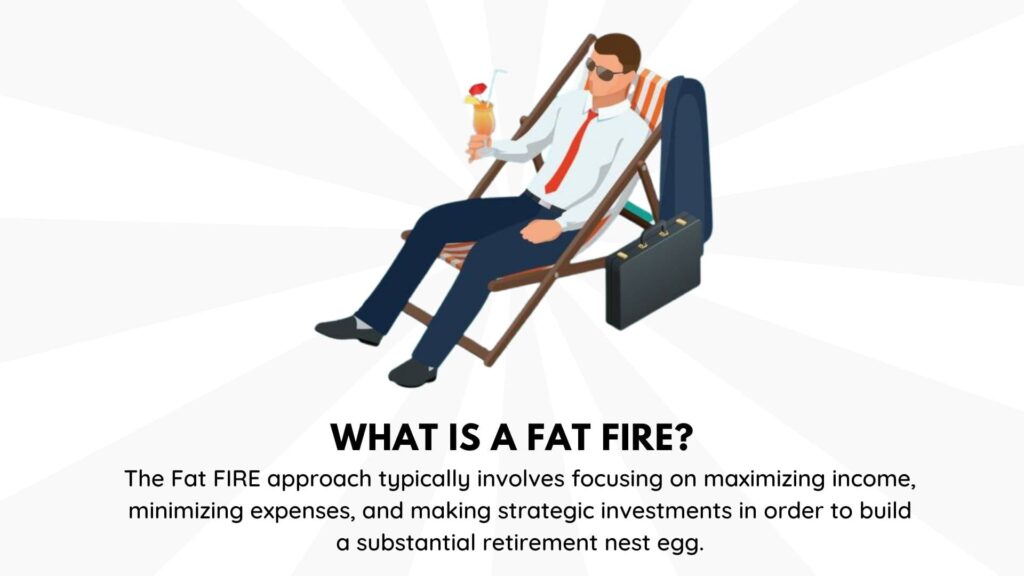
Fat FIRE follows the same core idea as the wider FIRE movement: build enough invested wealth that you no longer need to work. The difference is the lifestyle it’s built to support. Regular and Lean FIRE assume a modest, sometimes stripped-back budget in retirement, whereas Fat FIRE assumes you keep spending close to what you’re used to now, holidays, a nice car, eating out, the lot. It suits higher earners, business owners, and anyone who’s not willing to shrink their life just to stop working early.
How much do you need for Fat FIRE in the UK?
The standard FIRE maths uses a safe withdrawal rate (SWR) of 4% a year, which means your pot needs to be 25 times your annual spending. A more cautious 3.5% SWR pushes that up to roughly 28.5 times spending, giving you a bigger buffer against a bad run of markets early in retirement.
| Annual spending | Pot needed (4% SWR) | Pot needed (3.5% SWR) |
|---|---|---|
| £50,000 | £1.25m | £1.43m |
| £60,000 | £1.5m | £1.71m |
| £80,000 | £2m | £2.29m |
In the UK, this pot is usually split across pensions and ISAs rather than sitting in one account. Don’t forget the State Pension either. It won’t move the needle much on a Fat FIRE number, but it does chip a little off the amount you need to fund yourself from age 67.
Use our Fat FIRE calculator to plug in your own spending, current savings and timeline, rather than relying on the table above.

How to reach Fat FIRE
High income is the engine
Fat FIRE numbers are large, so the fastest route is usually earning more, not just spending less. That might mean pushing hard on career capital and promotions, building a business, or stacking a side income on top of your main job. A higher income also means you can save aggressively without your day-to-day lifestyle feeling squeezed.
A high savings rate, without the misery
You don’t need to live like a Lean FIRE follower to hit Fat FIRE, but you do need to save a meaningful chunk of a high income, often 30-50%. The trick is automating it so it happens before you see the money, rather than trying to white-knuckle your way through every month. For help staying consistent, check out our own Gains App.
Invest for growth
Cash won’t get you to a seven-figure pot. Most Fat FIRE savers lean on low-cost index funds held inside ISAs and SIPPs. Use your full £20,000 annual ISA allowance where you can, and don’t ignore pension tax relief: a SIPP contribution effectively gets topped up by the taxman, and higher-rate taxpayers can claim back even more.
Give it time
Fat FIRE targets are big, so the timelines are long, often 15-25 years even at a strong savings rate. That’s fine. Compounding does most of the heavy lifting in the second half of the journey, so the goal is staying invested and consistent, not timing the market.
The risks of Fat FIRE
- Lifestyle inflation moves the goalposts. The more you earn, the easier it is to quietly spend more, which pushes your target further away just as you’re closing in on it.
- Sequence-of-returns risk on a big pot. A market crash in your first few years of retirement can do lasting damage, even if long-run average returns are fine.
- Tax rules change. Pension access age is rising to 57 from 2028, and allowances (ISA, pension annual allowance, capital gains) shift regularly. A 20-year plan needs to flex with the rules, not assume today’s numbers hold forever.
- Chasing a huge number can lead to burnout. If a multi-million pound target feels permanently out of reach, Coast FIRE or Barista FIRE might get you a better quality of life sooner.
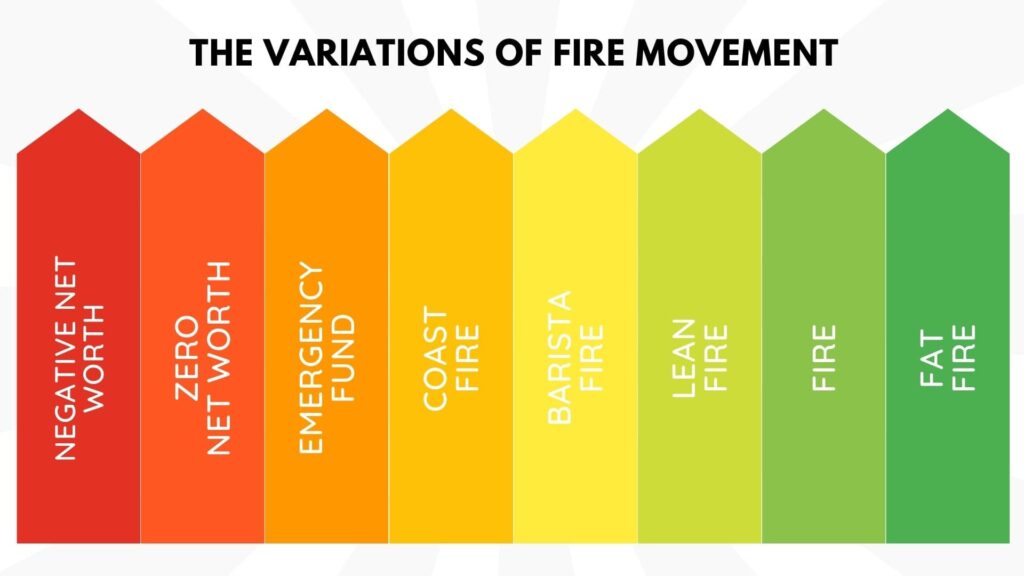
Fat FIRE vs the other types of FIRE
- Lean FIRE: the smallest number, built around a minimal budget.
- Coast FIRE: save hard early, then let compounding coast you to a normal retirement age.
- Barista FIRE: part-time work covers the gap while your investments keep growing.
- Traditional FIRE: the standard 25x-spending target, no frugality assumed, no luxury assumed either.
- Fat FIRE: the biggest number, built for a comfortable or lavish retirement.
See our full FIRE movement guide for how all five compare side by side.
Final thoughts
Fat FIRE is the FIRE strategy for people who want to stop working early without shrinking their life to do it. It takes a higher income, a serious savings rate and a long runway, but the reward is retiring with real spending power, not just enough to scrape by.
If you’re weighing up whether Fat FIRE, Coast FIRE or somewhere in between is realistic for you, start with the numbers. Run your own scenario through our Fat FIRE calculator and see how far you actually are from your number.
Frequently asked questions
Most Fat FIRE targets in the UK sit between £1.25m and £2m or more, depending on how much you want to spend each year in retirement. At a 4% withdrawal rate, multiply your target annual spending by 25 to get your number.
There’s no fixed salary requirement, but reaching a £1.5m+ pot in a reasonable timeframe usually needs a household income well into six figures, or a high savings rate sustained over 15-20+ years on a strong income.
Regular FIRE assumes a modest, sustainable budget in retirement. Fat FIRE assumes a comfortable or luxurious one, so the pot needed is significantly larger, often £1.5m-£2m+ versus £600k-£800k for a typical FIRE target.
It’s realistic for high earners and business owners who can save a large amount over a long period. For most people on average UK salaries, Coast FIRE or Barista FIRE are more achievable paths to early retirement.
There’s no set age. Because the targets are large, most Fat FIRE savers reach their number in their late 40s to mid-50s, though very high earners can get there in their 30s or early 40s.
The main risks are lifestyle inflation pushing your target further away, sequence-of-returns risk on a large pot, changing tax and pension rules, and the long timeline needed to get there.
Multiply your target annual retirement spending by 25 (for a 4% withdrawal rate) or by roughly 28.5 (for a more cautious 3.5% rate). Use our Fat FIRE calculator to run the maths with your own numbers, savings rate and timeline.
Share on social media
Disclaimer: Content on this page is for informational purposes and does not constitute financial advice. Always do your own research before making a financially related decision.