Search “how to make money online” and you drown in the same recycled list of 40 ideas, most of them dressed up to sell you a course. Half never say what you’ll actually earn. None tell you when HMRC wants a cut. I’ve tried a good chunk of these myself over the years, so here are 15 legit ways to make money online in the UK, ranked honestly by what you’ll really make, how fast you get paid and how much work it takes.

Join over 1,000 others learning how to go from £0-5k with just 60 minutes work a day.
Includes everything you need to create, build and sell profitable digital products in a niche you're already passionate about.
Key takeaways
- The fastest money comes from things you can do today with no skill: selling stuff you own, surveys and task apps. Realistic pace is £20 to £150 a month, not a full income.
- The best money-per-hour comes from a skill you can hire out: freelancing, tutoring and virtual assistant work pay £15 to £40 an hour once you have a first client or two.
- The biggest money is an asset you build: a blog, a channel, digital products or affiliate income. These pay little for 6 to 12 months, then compound.
- In the UK your first £1,000 of online earnings a year is tax-free under the trading allowance. Above that you must tell HMRC.
- If a method asks you to pay upfront, promises guaranteed returns or rushes you, it is a scam. Real online income is slow and boring at the start.
Table of Contents
The honest comparison: what each method really pays
Most guides list 40 ways and rank none of them. That is useless when you have a few spare hours and zero budget. So we scored every method on the four things that actually matter: realistic UK earnings, how long until your first payment lands, what it costs to start, and how much effort it takes.
| # | Method | Realistic UK earnings | Time to first payment | Cost | Effort | Our verdict |
|---|---|---|---|---|---|---|
| 1 | Sell stuff you own | One-off, £50 to £500+ | 1 to 3 days | Free | Low | Best quick win |
| 2 | Paid surveys | £20 to £50/mo | 1 to 2 weeks | Free | Low | Pocket money only |
| 3 | Task apps | £20 to £100/mo | Days | Free | Low | Fun, capped |
| 4 | Cashback | £150 to £300/yr | Weeks | Free | Very low | Free money, do it |
| 5 | Freelancing | £15 to £40/hr | 1 to 4 weeks | Free | Medium | Best £/hour |
| 6 | Virtual assistant | £15 to £30/hr | 1 to 4 weeks | Free | Medium | Steady demand |
| 7 | Online tutoring | £20 to £40/hr | 1 to 3 weeks | Free | Medium | Great if you can teach |
| 8 | Social media manager | £200 to £800/client/mo | 2 to 6 weeks | Free | Medium | Scales with clients |
| 9 | Digital products | £100 to £500/mo (yr 1) | 1 to 3 months | Low | Medium | Slow then passive |
| 10 | Start a blog | £0 then £500 to £2k/mo | 6 to 12 months | ~£50/yr | High | Long game, real payoff |
| 11 | YouTube / short-form | £0 then variable | 6 to 18 months | Free | High | Slow, huge ceiling |
| 12 | Affiliate marketing | £50 to £2k/mo | 3 to 9 months | Low | Medium | Needs an audience first |
| 13 | Print-on-demand | £100 to £500/mo | 1 to 3 months | Low | Medium | Low margin, low risk |
| 14 | Sell photos | Pennies to £50/photo | 1 to 2 months | Free | Medium | Volume game |
| 15 | Investing | Long-term, capital at risk | N/A | From £1 | Low | Grow it, don’t earn it |
Two honest takeaways from this table. First, nothing here makes you rich fast. Anyone telling you otherwise is selling something. Second, the smart play is to stack them: bank a quick win today, use a skill for reliable hourly money, and build one asset in the background that pays you later.
Tier 1: Start today with no skill and no money
These will not replace a salary. They will get your first pound in fast, which matters more than you think when you are starting out.
1. Sell the stuff you already own
The quickest money online is not earned, it is unlocked. The average UK home is sitting on hundreds of pounds of unused clothes, tech and clutter.
List clothes on Vinted (no seller fees), electronics and bulkier items on eBay or Facebook Marketplace. Photograph in daylight, price against what similar items actually sold for, and be honest about condition.
- Realistic earnings: a one-off £50 to £500+ depending on what you own
- First payment: often within 1 to 3 days of listing
- The catch: it is a clear-out, not an income. Once the loft is empty, it stops.
Good news on tax: selling your own second-hand belongings is not “trading,” so it is not taxable, no matter what the recent HMRC-and-Vinted headlines suggested. More on that below.
2. Paid surveys and research studies
Survey sites pay you to share your opinion. Most are low value, so choose carefully. Prolific is the one we rate, because it pays academic researchers’ rates (often £6 to £9 an hour) rather than pennies. Swagbucks and Qmee are fine as fillers.
- Realistic earnings: £20 to £50 a month at a casual pace
- First payment: typically a £5 to £10 threshold, paid via PayPal
- The catch: it is capped by the hours available. Treat it as pocket money, not a plan.
See our full guide to the best paid surveys for the sites worth your time.
3. Get-paid-to task apps
These apps pay you to run small real-world errands from your phone: checking a shop shelf, photographing a menu, mystery shopping. Roamler, Field Agent and Shepper are the established UK names.
- Realistic earnings: £2.50 to £20 per task, adding up to £20 to £100 a month if you are active
- First payment: within days, low or no minimum
- The catch: tasks depend on where you live. Cities have far more.
4. Cashback on spending you would do anyway
This is the closest thing to free money on this list. Cashback apps and sites pay you a percentage back on shopping you were going to do regardless.
Stack a cashback site for big purchases (insurance, broadband) with a cashback app for everyday spending. Done properly it is worth £150 to £300 a year for almost no effort.
Start with our pick of the best cashback apps, and if you want everything in one place, our own Gains App helps you track it alongside the rest of your money.
Tier 2: Sell a skill for the best money-per-hour
This tier is where online money gets serious. Instead of trading tiny tasks, you hire out a skill by the hour. The rates below are what UK beginners realistically charge, rising fast with a portfolio and reviews.
5. Freelancing
If you can write, design, edit video, code, translate or manage a spreadsheet, someone online will pay for it. Upwork, Fiverr and PeoplePerHour connect you to clients worldwide.
The winning move is to niche down. “Freelance writer” is a race to the bottom. “Email copywriter for fitness brands” gets picked and gets paid.
- Realistic earnings: £15 to £40 an hour for beginners, far more with a reputation
- First payment: your first client in 1 to 4 weeks if you pitch consistently
- The catch: platforms take a 5 to 20% cut, and the first few jobs are the hardest to land.
Freelancing is also the natural first rung into a proper side income.
Hire a freelancer on Fiverr to help you build the brand of your dreams. Whatever it is you need help with there's a freelancer waiting for you to reach out.
6. Virtual assistant
Businesses and busy founders pay virtual assistants to handle inboxes, scheduling, research and admin. It needs no niche expertise, just reliability and organisation, which makes it one of the most beginner-friendly skilled routes.
- Realistic earnings: £15 to £30 an hour
- First payment: 1 to 4 weeks once you have a profile on Upwork or in VA Facebook groups
- The catch: it is real work with deadlines, not passive.
7. Online tutoring
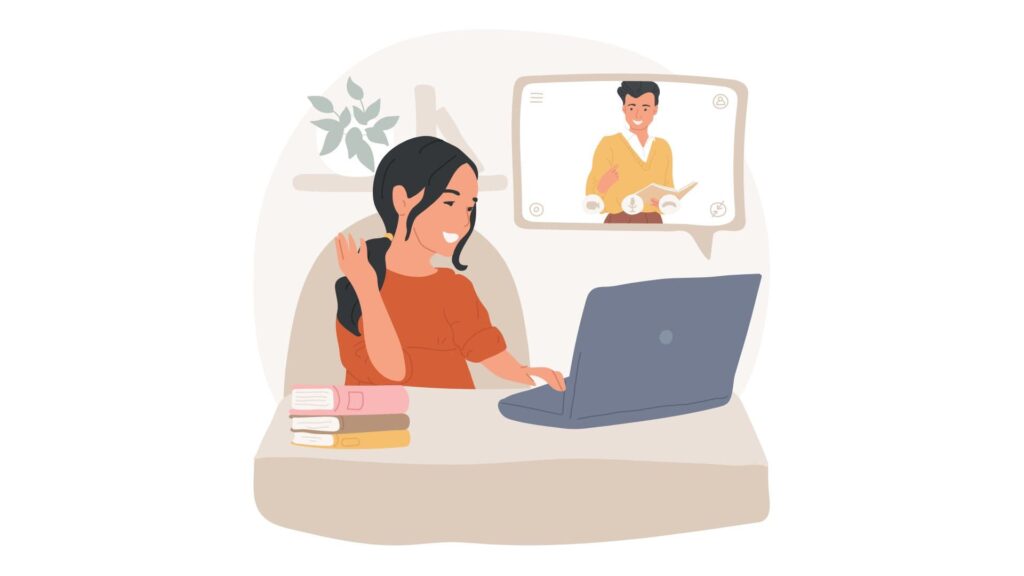
If you know a subject to GCSE, A-level or degree standard, you can tutor online. UK demand is strong around exam season. Tutorful, MyTutor and Preply connect you with students; teaching English as a foreign language on Preply or Cambly opens up global demand.
- Realistic earnings: £20 to £40 an hour, more for sought-after subjects
- First payment: 1 to 3 weeks
- The catch: you need to genuinely know your subject and be patient with people who do not.
8. Social media management
Every local business knows it needs Instagram and TikTok, and most have no time to do it. If you understand the platforms, you can run them.
- Realistic earnings: £200 to £800 per client per month; three or four clients becomes a real income
- First payment: 2 to 6 weeks to land a first client, often a business you already use
- The catch: results take months, so you need clients who understand that.
Tier 3: Build an asset that pays you later
Everything above trades time for money. This tier builds something that keeps earning after the work is done. The trade-off is patience: expect little to nothing for 6 to 12 months, then compounding returns.
9. Sell digital products
This is the one I know best. I’ve sold over £4,000 of digital products in a single month, and the appeal is simple: you build it once and it sells while you sleep. Templates, planners, e-books, presets, Notion setups: make it once, sell it forever. Etsy, Gumroad and Payhip handle the selling, and I build almost all of mine in Canva without being a designer.
- Realistic earnings: £100 to £500 a month in year one, scaling with your range and audience
- First payment: 1 to 3 months once listed and promoted
- The catch: “build it and they will come” is a myth. You still have to market it.
Join over 1,000 others learning how to go from £0-5k with just 60 minutes work a day.
Includes everything you need to create, build and sell profitable digital products in a niche you're already passionate about.
10. Start a blog
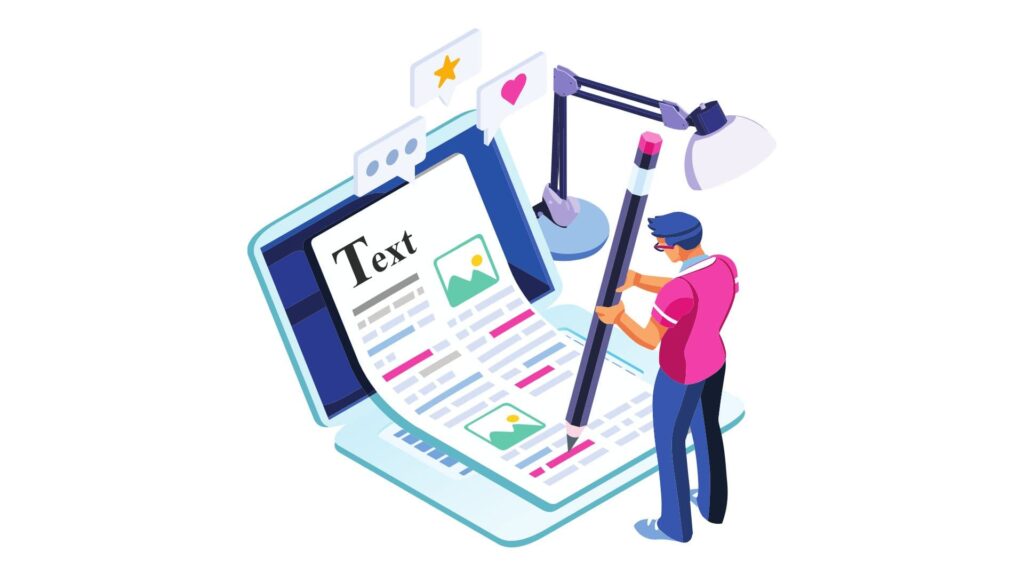
Blogging is a long game that genuinely pays. Pick a niche you can write about for years, publish helpful content consistently, and earn through display ads, affiliate links and your own products.
- Realistic earnings: near zero for 6 to 12 months, then £500 to £2,000+ a month is achievable with traffic
- First payment: 6 to 12 months, honestly
- The catch: most blogs are abandoned before they earn. Consistency is the whole game. Costs are tiny, around £50 a year for hosting and a domain.
11. YouTube and short-form video

Prefer talking to writing? Video reaches further than any blog. To earn from YouTube ads you need to join the YouTube Partner Programme, which requires 1,000 subscribers and 4,000 public watch hours in a year (or 10 million Shorts views in 90 days), per YouTube’s official rules.
- Realistic earnings: nothing until you qualify, then ad revenue plus sponsorships and your own products
- First payment: 6 to 18 months for most creators
- The catch: it is a crowded, slow-burn platform. The ceiling is enormous, the floor is a lot of unpaid uploads.
We break the money side down in our guide to making money on YouTube.
12. Affiliate marketing

Recommend products you use, share a tracked link, earn a commission when someone buys. It sits on top of a blog, channel or social account, so it works best once you already have an audience.
- Realistic earnings: £50 to £200 a month early on, £2,000+ with real traffic
- First payment: 3 to 9 months, depending on your audience
- The catch: no audience means no clicks means no income. Build the audience first.
13. Print-on-demand
Years ago I printed band t-shirts and sold them online, my very first taste of internet money, so I have a soft spot for this one. Design t-shirts, mugs and posters; a supplier prints and ships each order only when it sells, so you hold no stock and risk no money. Printful and Printify plug into Etsy or your own store.
- Realistic earnings: £100 to £500 a month once designs gain traction
- First payment: 1 to 3 months
- The catch: margins are thin and the market is saturated. Winning needs genuinely good designs.
14. Sell your photos
If you take a decent photo, stock sites like Alamy, Adobe Stock and Shutterstock will license them and pay you each time one is downloaded.
- Realistic earnings: pennies to a few pounds per download; a couple of pounds to £50 for the right shot
- First payment: 1 to 2 months, once you clear a small payout threshold
- The catch: it is a volume game. You need hundreds of quality images before it adds up.
15. Investing (grow money, don’t “earn” it)
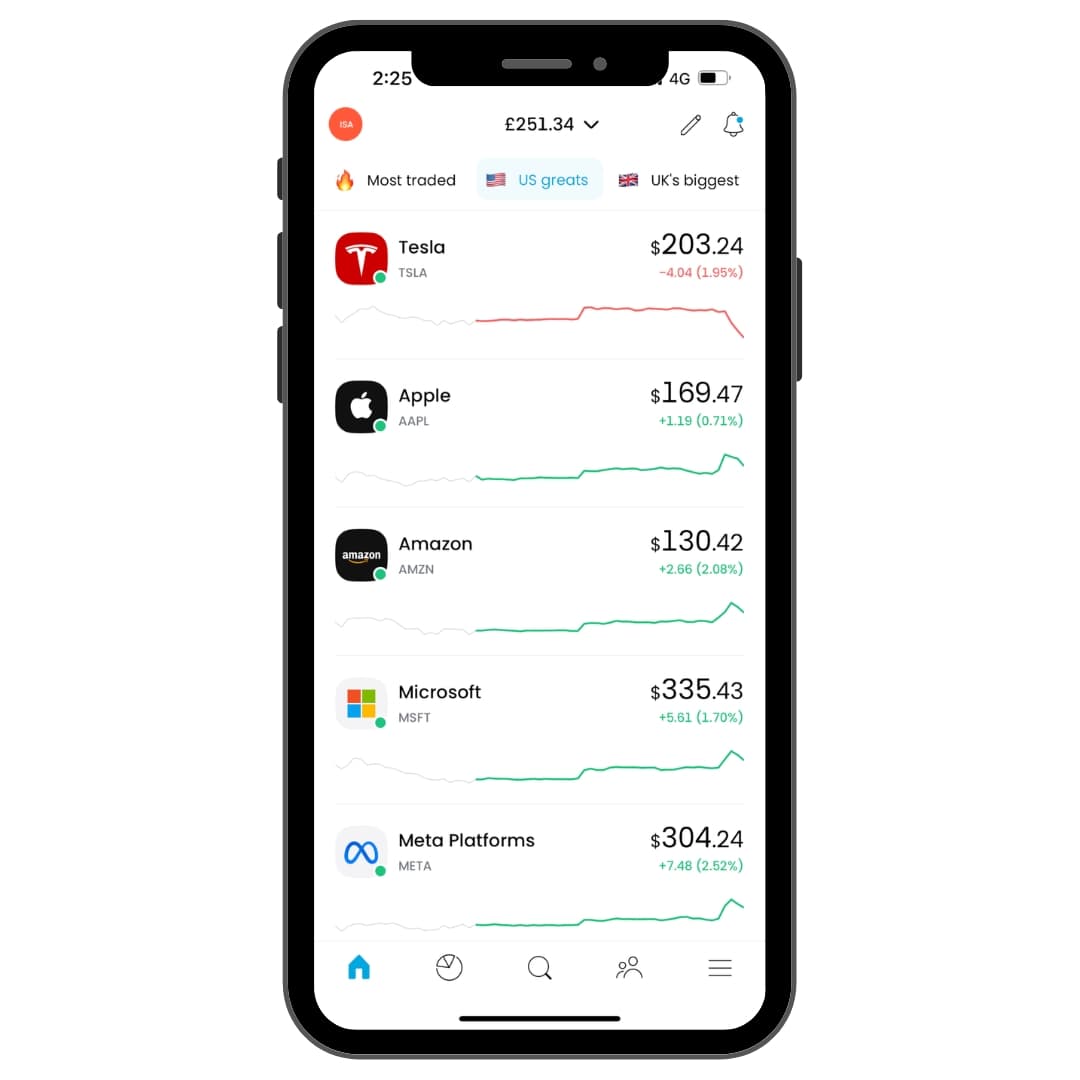
Investing is not a way to make money online this month, and anyone selling it that way is lying. It is how I’ve grown most of what the other methods earned me. Apps like Trading 212, InvestEngine and Nutmeg let you start from a few pounds, and a Stocks and Shares ISA shelters your gains from tax.
- The reality: returns are long-term and your capital is at risk. Think years, not weeks.
- The catch: treat anything promising fast, guaranteed investment returns as a scam. See the next section.
Ready to start? Compare our pick of the best investing apps for UK beginners.
Stop waiting and start investing with the best UK investing apps on the market right now.
We've covered all levels with expert managed and DIY options available.
How to spot a make-money-online scam
Search results for “make money online” are a minefield. For every legit method there are ten schemes designed to take your money. The good news: real scams almost always show the same tells. If you see any of these, walk away.
- You have to pay to start. Legit platforms pay you. Scams charge you an “activation,” “training” or “starter kit” fee first.
- Guaranteed or “risk-free” returns. No real income is guaranteed. This is the classic line in crypto, forex and “trading bot” scams, often using fake celebrity or Martin Lewis endorsements.
- It is urgent. “Only 3 spots left,” “price goes up tonight.” Pressure exists to stop you thinking.
- The money is unbelievable. “£500 a day from your phone, no skills.” If it were that easy, everyone would do it.
- They want commission to recruit, not to sell. If you earn mainly by signing up other people, it is a pyramid scheme.
- Vague about what you actually do. Real work has a clear task. Scams stay fuzzy until you have paid.
A 30-second check saves you: search the company name plus “scam” or “reviews,” look for a real UK address and Companies House listing, and read the Trustpilot one-star reviews, not just the fives. If in doubt, report it to Action Fraud.
Do you pay tax on money you make online? The £1,000 rule
Here is the bit almost every other guide skips. In the UK, money you make online can be taxable, and the rules are simpler than they sound.
Everyone gets a £1,000 trading allowance: the first £1,000 of income a year from self-employed or “side” activity is completely tax-free, and you do not even need to tell HMRC about it (GOV.UK).
Earn more than £1,000 in a tax year from these methods and you must register for Self Assessment by 5 October in the following tax year, then declare the income. You are taxed only on profit above the allowance, not the whole amount.
A few things worth knowing:
- Selling your own second-hand stuff is not taxable. Clearing out your wardrobe on Vinted is not “trading,” so it does not count, whatever the scare headlines said.
- Platforms now report to HMRC. Since January 2024, sites like Vinted, eBay, Etsy and Airbnb share seller data with HMRC once you pass 30 sales or around £1,700 a year. A report does not mean you owe tax, it just means HMRC can see the activity (GOV.UK).
- Keep records from day one. Note what you earn and what you spend to earn it. It makes any future tax return painless.
None of this should put you off. It simply means: once your side income gets real, do it properly.
For a closer look at thresholds, records and reporting deadlines, see our dedicated guide to side hustle tax in the UK.
Which method should you actually start with?
Fifteen options is a lot. Here is how we would choose, based on where you are right now.
- You need cash this week: sell what you own, then set up cashback so you never leave money on the table again.
- You have a skill and a few free hours: freelance or tutor. It is the best money-per-hour on this list and you can start this month.
- You want something that pays you while you sleep, eventually: pick one asset (a blog, channel or digital product), commit to 12 months, and let it compound.
- You are under 18: most of these methods still work; start with our side hustle ideas for teens, which flags the age limits on each platform.
- You want ideas built around caring or family commitments: our guide on how to make money fast as a woman rounds up flexible, from-home options.
The mistake beginners make is trying all fifteen at once and finishing none. Bank one quick win for momentum, choose one skill for reliable income, and build one asset for the future. That is the whole strategy.
Frequently asked questions
Start with the free, no-skill methods: sell items you already own on Vinted or eBay, complete paid surveys on Prolific, run task-app errands with Roamler or Field Agent, and turn on cashback for shopping you do anyway. None need any upfront cost, and you can start today.
Selling things you already own is the fastest, with cash often landing within 1 to 3 days. For ongoing money, freelancing pays quickest among the skilled options: pitch consistently and you can land a first paid client within a few weeks.
Not on day one, and not from surveys or task apps, which top out around £100 a month. £100 a day is realistic from skilled work (freelancing, tutoring, social media management) once you have clients, or from an asset like a blog or channel after 6 to 12 months of building. Anyone promising £100 a day instantly is selling a scam.
Plenty of legit methods are phone-first: selling on Vinted, paid surveys, task apps like Field Agent, cashback apps, and posting short-form video for TikTok or YouTube. Be wary of any app that asks you to pay or deposit money to “unlock” earnings.
Both exist. The legit methods are slow and boring at the start: real work for real pay. Scams promise fast, guaranteed, effortless money and usually ask you to pay upfront. If a method charges you to join or guarantees returns, it is a scam.
Expect £20 to £150 a month from no-skill methods, £15 to £40 an hour from skilled work once you have clients, and little to nothing for 6 to 12 months from asset-building routes before they scale into hundreds or thousands a month. Realistic, not overnight.
Your first £1,000 of side income a year is tax-free under the trading allowance, with nothing to report. Earn more than £1,000 and you must register for Self Assessment by 5 October the following tax year and declare it. Selling your own used belongings does not count as taxable income.
Yes. Every method in tier one is free to start, and most skilled routes (freelancing, tutoring, VA work) cost nothing but time. You should never have to pay to start a legitimate online earning method.
It varies hugely. Selling your stuff pays in days; surveys, task apps and freelancing in one to four weeks; digital products and print-on-demand in one to three months; blogs, YouTube and affiliate income in 6 to 12 months or more. Match your choice to how soon you need the money.
There is no single best method, only the best for your situation. Need money now? Sell your stuff. Have a skill? Freelance or tutor. Want long-term, semi-passive income? Build a blog, channel or digital product. The winning approach is to combine one of each.
Yes, and students are well placed for it. Tutoring pays well and fits around lectures, freelancing and VA work build a CV, and surveys and task apps fill spare gaps. Keep an eye on the £1,000 trading allowance and any impact on student finance if your income grows.
The bottom line
Making money online in the UK is completely doable, it is just slower and more honest than the internet pretends. Bank a quick win this week, sell a skill for reliable hourly money, and build one asset that pays you later. Do the maths, keep it legit, and tell HMRC once you pass £1,000. What would you do with the extra? Tell us in the comments.