Lean FIRE is a version of the Financial Independence Retire Early movement built around frugal living.
It means saving and investing aggressively while keeping expenses low, so you can retire on a smaller pot than standard FIRE requires. Followers aim to live on passive income and investment returns, sometimes retiring in their 30s or 40s. Because the target pot is smaller, Lean FIRE is achievable for more people, but it demands a lasting frugal lifestyle.
FIRE stands for Financial Independence, Retire Early, and Lean FIRE is the most achievable version of it. The idea is simple: keep your spending low, invest the difference, and you need a far smaller pot to walk away from work.
Below I cover what Lean FIRE actually is, how to work out your number, how it works in the UK with ISAs and pensions, and how it stacks up against Fat, Coast and Barista FIRE.
Table of Contents
What is Lean FIRE?
Lean FIRE is a version of Financial Independence, Retire Early built around frugal living. It relies on the same maths as standard FIRE: save aggressively, invest the surplus, live off the pot once it is big enough.
The difference is the budget. Lean FIRE followers keep their annual spending as low as possible, so the pot needed to cover it shrinks too.
That trade-off is what makes Lean FIRE the most achievable version of FIRE for most people. A smaller target number means you can realistically hit it in your 30s or 40s, not just on paper.
The catch is that frugal living is not a phase, it is the plan. You need to be comfortable keeping your expenses lean permanently, not just while you are saving.
How much do you need for Lean FIRE? (your Lean FIRE number)
Your Lean FIRE number is the size of pot you need before you can stop working. The maths is the same as standard FIRE, you just plug in a leaner budget.
Most people use the 25x rule: take what you expect to spend each year in retirement and multiply it by 25. That assumes a 4% safe withdrawal rate, where you draw roughly 4% of your pot in year one and adjust for inflation after that.
In the UK, Lean FIRE usually means living on around £15,000 to £25,000 a year. Here is what that looks like as a target pot:
| Annual spending in retirement | Lean FIRE number (25x rule, 4%) | Cautious version (3.5% withdrawal) |
|---|---|---|
| £15,000 | £375,000 | £428,000 |
| £20,000 | £500,000 | £571,000 |
| £25,000 | £625,000 | £714,000 |
These are guide figures. Your real number depends on your housing costs, whether you still have a mortgage, and how much State Pension or other income arrives later.
Work out your exact figure: our free Lean FIRE Calculator UK shows your number, the year you could hit it, and how much to invest each month in your ISA or SIPP.
How to plan for Lean FIRE
Planning for Lean FIRE comes down to four things:
- Know your number. Use our Lean FIRE Calculator to see your target pot, the year you could hit it, and how much to invest each month.
- Set a target date. Work backwards from your number to a realistic retirement age, based on your current savings rate.
- Budget hard. Lean FIRE lives or dies on your expenses. A proper household budget is non-negotiable, not optional.
- Automate your savings. Set up standing orders into your ISA and SIPP so the money moves before you can spend it, and make sure it is sitting in the best rate available.
For help staying consistent, check out our own Gains App.

How to build a Lean FIRE portfolio
A Lean FIRE portfolio should be low-cost and diversified. Index funds held inside your ISA and SIPP wrappers do most of the heavy lifting, spreading your risk without you having to pick individual stocks.
Keep fees as low as you can. A lean pot has no slack in it, so every percentage point lost to charges is a percentage point you have to work longer to make up.
Dividends can also form part of your income plan once you retire. If that appeals, our guide to dividend stocks covers how to build that side of the portfolio.
Lean FIRE in the UK: ISAs, SIPPs and bridging to your pension
The biggest UK quirk with early retirement is access. You cannot touch a pension or SIPP until the minimum pension age, which rises to 57 from 2028. If you Lean FIRE in your 40s, you need money you can actually reach before then.
That is why most UK Lean FIRE plans lean on a Stocks and Shares ISA. You can withdraw from an ISA at any age, tax free and penalty free, so it bridges the gap between the day you stop work and the day your pension unlocks.
A common order looks like this:
- ISA first: build a pot in a Stocks and Shares ISA to fund the early years.
- Pension second: use a workplace pension or SIPP for the years after 57, where the tax relief is hard to beat.
- State Pension last: factor in the State Pension from your late 60s, which lowers the pot you need from your own savings.
Get the order right and you are never forced to sell investments in a downturn just to cover the bills.
How to maximise your Lean FIRE income
Two levers speed up Lean FIRE. The first is boosting your income before you retire: passive income streams like dividends and interest, plus side income from freelancing, a side business, or renting out a spare room, all shorten the time it takes to hit your number.
The second is cutting your costs once you get there. Fixed costs, especially housing, are usually the biggest expense in retirement. Moving to a cheaper area, downsizing, or paying off your mortgage before you retire all protect a lean budget from the pressure of rising prices.

Different types of FIRE
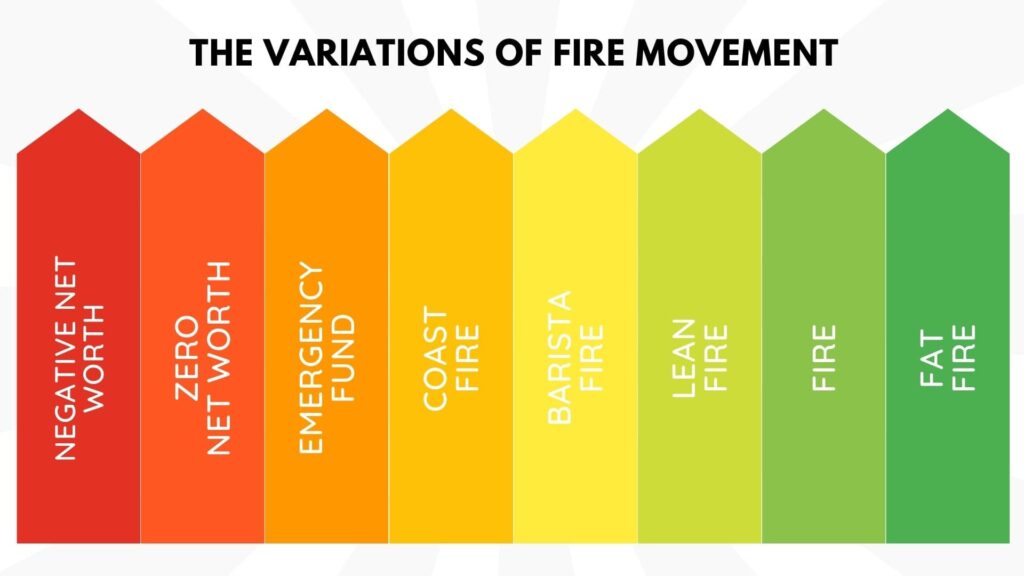
FIRE splits into a few flavours depending on how much you want to save and how soon you want out. For the full breakdown of Coast, Barista, Fat and standard FIRE, see our FIRE movement guide.
Lean FIRE vs Fat, Coast and Barista FIRE at a glance
| FIRE type | Lifestyle | Pot needed | Best for |
|---|---|---|---|
| Lean FIRE | Frugal, minimalist spending | Smallest | People who value time over stuff and can live lean |
| Barista FIRE | Part-time work tops up income | Medium-low | People happy to keep working a little |
| Coast FIRE | Stop adding, let compounding finish | Front-loaded | Young, high savers with time on their side |
| Fat FIRE | Full lifestyle, no cutbacks | Largest | Higher earners who want comfort, not frugality |
Final thoughts on the Lean FIRE lifestyle
Lean FIRE is the most achievable version of financial independence for most people, because the pot you need is smaller than standard or Fat FIRE.
The trade-off is frugal living, not just while you save but for good. If you are willing to keep your expenses lean, early retirement in your 30s or 40s is realistic, not just a nice idea.
Ready to see your own number? Use our Lean FIRE Calculator to find your target pot and the date you could hit it.
Lean FIRE FAQs
Lean FIRE is a version of Financial Independence, Retire Early built around frugal living. You keep spending low so you can retire on a smaller pot than standard FIRE needs, often in your 40s or even 30s.
As a rule of thumb, multiply your planned annual spending by 25. Many UK followers live on £15,000 to £25,000 a year, which points to a pot of roughly £375,000 to £625,000. Use our Lean FIRE Calculator for your exact number.
Both aim for early retirement. Lean FIRE does it on a frugal budget and a smaller pot. Fat FIRE keeps a full lifestyle with no cutbacks, which needs a much bigger pot.
The maths is the same, the budget is not. Regular FIRE targets a normal middle income in retirement. Lean FIRE deliberately keeps spending low, so you reach the finish line sooner with less saved.
The payoff is reclaiming years of your time. The risk is a thin safety net: a smaller pot leaves less room for surprise costs or lifestyle creep. Many people manage this with a cautious 3.5% withdrawal rate or a small part-time income.
It carries more risk than standard FIRE because the margin is thinner. A smaller pot leaves less room for unexpected costs, so many Lean FIRE savers use a more cautious 3.5% withdrawal rate instead of the standard 4%. Keeping a part-time income or side hustle as a backstop also reduces the risk of running the pot down too fast.
Most people who reach Lean FIRE do it in their 30s or 40s, depending on how aggressively they save. Because the target pot is smaller than regular FIRE, the date arrives sooner too, often several years earlier than a standard FIRE plan on the same savings rate.
Share on social media
Disclaimer: Content on this page is for informational purposes and does not constitute financial advice. Always do your own research before making a financially related decision.