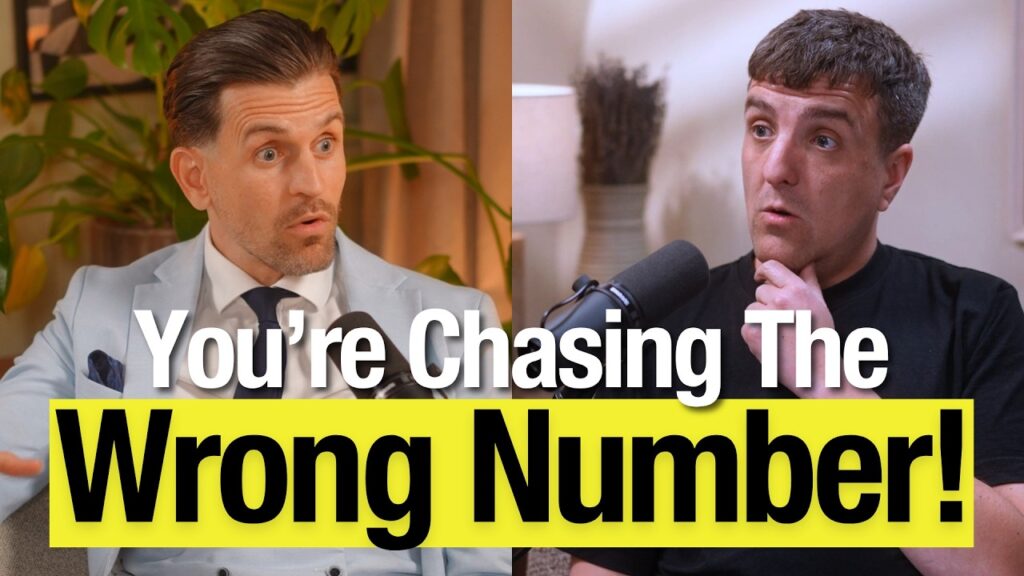
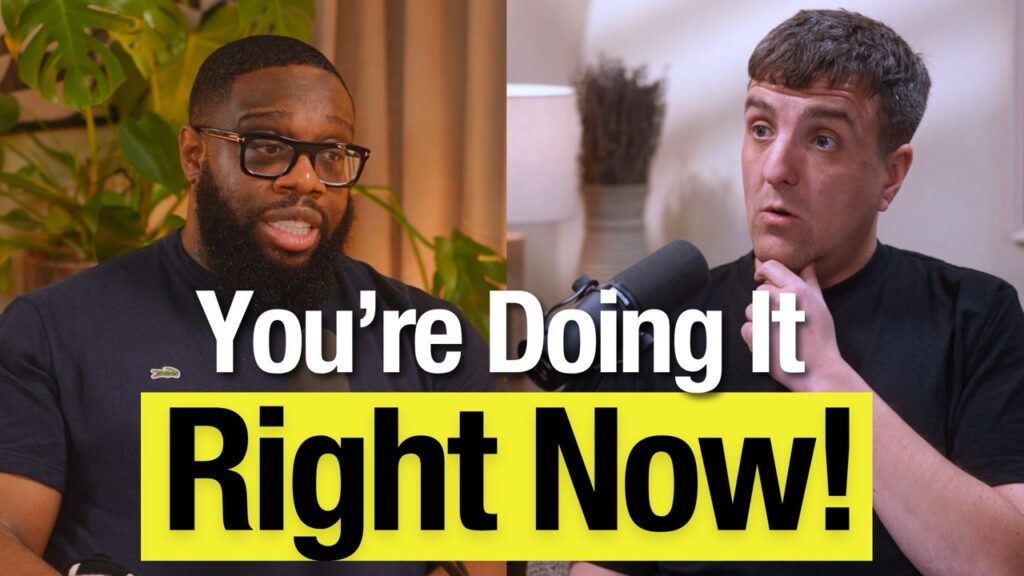
Listen to the pod


If you’ve ever felt like you’re doing everything “right” with your money and still going nowhere, economist Grace Blakeley has a blunt explanation: the deal your parents had, work hard, buy a house, retire comfortably, simply doesn’t exist for your generation anymore, and that’s not a personal failing.
I sat down with Grace, author of “Vulture Capitalism” and “Stolen: How to Save the World From Financialisation,” to unpack why so many of us feel like we’re falling behind no matter how hard we work.
Grace isn’t your typical money guest.
She’s an economist and political commentator, not a personal finance expert, but the way she breaks down wages, housing and pensions gave me a completely different lens on why saving and investing feels so much harder now than it did for our parents’ generation.
We got into the numbers behind the wage-versus-housing gap, why so many of us have been taught to see our finances as a solo competition, and what she thinks actually moves the needle when the system isn’t working in your favour.
Grace on Substack: https://graceblakeley.substack.com/subscribe
Grace on Instagram: https://www.instagram.com/grace.blakeley
Grace online: https://graceblakeley.co.uk/
———
Gains App is LIVE!
An AI-powered budgeting and cashback app designed to help you make more of your money.
Download here: https://gainsapp.onelink.me/8IhT/oiaimr1z
———
Get a FREE FRACTIONAL SHARE worth up £100 when you deposit £1 with Trading 212
https://www.trading212.com/join/MGP
If you don’t receive the free fractional share, head to the menu and put the word ‘MGP’ into the promo code section.
(Capital at risk when you invest)
———
DISCLAIMER:
This video is meant for educational purposes and should not be considered financial advice. When you invest your capital is at risk. Past performance is not a guarantee of future success.
This video description contains affiliate links, if you click on one and make a purchase we may receive a small commission. This does not alter our suggestions and there is no charge for you.
Key takeaways
- The work-hard-buy-a-house-retire-well deal that worked for our parents’ generation broke down after 2008, and Grace argues that’s a structural shift, not a personal failure.
- Wage growth has badly lagged housing and living costs since the early 1990s, and the gap has widened sharply since the pandemic.
- We’ve been culturally pushed to see ourselves as “mini capitalists” managing our own pension, house and debt in isolation, which makes financial setbacks feel like personal fault rather than wider economic trends.
- Around £30 billion a year is lost to UK tax avoidance and evasion, which Grace says should be tackled before new taxes are even discussed.
- Grace’s core message: you’re not powerless, you’re isolated, and building connections (with co-workers, neighbours or online communities) is what actually creates leverage when the system isn’t on your side.
Timestamps
- [0:00] Intro: Is Capitalism Still Working In 2025?
- [1:00] The Broken Promise: Work Hard, Buy A House, Retire
- [4:25] Wage Growth vs Housing Cost Gap
- [10:03] How Thatcher-Era Individualism Reshaped Personal Finance
- [13:18] Tool: The “Mini Capitalist” Pension And Debt Mindset
- [29:54] Would Taxing The Rich Actually Cut Your Bills?
- [35:21] £30 Billion Lost To Tax Avoidance Each Year
- [53:18] Tool: You’re Not Powerless, Just Isolated
Why building wealth feels harder than it did for your parents
Grace opened with a line from her book that’s stuck with me: “the system isn’t broken, it’s working exactly as it’s intended.”
Her point is that the post-war deal, settle down, work hard, buy a house, watch it rise in value, retire with a decent pension, was a genuinely unusual period in economic history, not the normal state of things.
As she put it: “for our generation, for the vast majority of us, that deal has been completely broken.”
Wages have stagnated for years while living costs keep climbing, and anyone who does manage to buy a home is increasingly relying on money from parents to do it.
This matters for how you think about your own numbers.
If you’re wondering whether your budgeting feels tighter than it should, it isn’t just you: the gap between median wages and housing costs has stretched dramatically since the early 1990s, and Grace and I discussed how much faster that gap has widened since the pandemic.
Understanding that the maths genuinely changed can be the difference between giving up on saving altogether and adjusting your plan to fit the world you’re actually in.
The "mini capitalist" mindset and why it makes money feel personal
One of the most useful ideas Grace raised is how personal finance itself became a tool of individualism.
Her argument is that from the 1980s onward, people were encouraged to see themselves as “mini capitalists”: you manage your own pension, your own house, your own debt, and whatever happens to you financially gets read as a reflection of how hard you worked.
“Because we’ve learned to kind of take on all this responsibility onto our own shoulders and blame ourselves, it’s much harder to imagine fighting back against the system,” she said.
In practice, that means a lot of us treat every financial setback as a personal failure rather than the product of wider trends like wage stagnation or a housing market that simply wasn’t built for our income levels.
That doesn’t mean the fundamentals of managing your own money stop mattering, they clearly still do. But it’s worth separating “am I managing what’s in my control well” from “is the wider system stacked against me.”
If you’re building your own pension pot, it helps to know what the average UK pension pot actually looks like so you’re benchmarking against reality rather than an outdated assumption about what “on track” means.
Why social media makes "failing" at money feel personal
Grace also pointed to something layered on top of that mini capitalist mindset: social media. Comparison culture didn’t invent financial isolation, but she was clear it has made it worse.
As she put it: “There’s not the same sense, there’s a lot of comparison, but there’s no real sense of kind of community or collaboration or belonging.”
Instead of neighbours checking in on each other the way they might have a generation ago, most of us scroll feeds built to make our own numbers look small.
That comparison cuts straight to how we talk ourselves down about money. In her words: “we follow content about people with amazing lives, and we think, well, I’m not living like that, so I must be a failure.”
It’s an easy trap when every third post is a house purchase, a promotion or a holiday, and none of it shows the debt, the parental help or the years it actually took to get there.
She also connected this to how our physical spaces have changed.
New housing developments, she noted, are often built without communal spaces “for people to go and play and exist with each other,” which quietly reinforces the idea that your finances are a solo project rather than something you can talk about with people nearby.
None of this means the comparison you’re feeling is imaginary, it means the yardstick is broken. If your budgeting or savings feel like they’re falling short of what everyone online appears to have, that’s the algorithm doing its job, not evidence that you’re behind.
Would taxing the rich actually fix your finances?
We spent a good chunk of the conversation on the “tax the rich” debate, because it’s one of the most common comments Grace and I both get.
Her answer was more nuanced than a straight yes. She was clear that “we do need to tax wealth more,” largely because extreme wealth inequality tends to translate into political corruption over time.
But she was equally clear that raising taxes alone doesn’t automatically make anyone’s life better: “it’s not enough just to say we need to tax the rich and that will inevitably make everyone better off.”
Her bigger concern is how that money gets spent, and whether it’s directed toward things that genuinely help ordinary people rather than, as she put it, “corrupt corporations” or “wasteful” spending.
She pointed to a more immediate fix: roughly £30 billion is lost every year in the UK to tax avoidance and evasion, money that’s already owed under existing rules.
Closing those loopholes, she argued, would do more good than debating new taxes that haven’t been designed yet.
There’s a broader point behind the numbers too. Grace argues we tend to picture national wealth as something a handful of very rich people own and could simply take with them.
Her view is more grounded: “the wealth of this country is produced by its people.” Land and property can’t leave the country even if their owners do, which is part of why she thinks enforcing existing rules matters as much as designing new taxes.
Building financial resilience when the system won't save you
Grace is blunt about where change has to start: “no one’s coming to save us.” That applies to politics, but it applies just as much to your own finances: waiting for costs to fall or wages to catch up isn’t a plan on its own.
Grace’s closing message wasn’t really about policy at all: “you are not powerless, you’re just isolated.”
Her practical advice was to stop treating your financial situation as something to fix entirely alone, whether that’s talking to co-workers about pay, joining a community group, or simply comparing notes with people going through the same squeeze.
There’s a personal finance version of that same advice too. If the wider economy isn’t guaranteed to work in your favour, the things within your control become more important, not less.
That starts with a buffer: knowing how much you should have in an emergency fund gives you breathing room when costs rise faster than wages.
From there, understanding the basics covered in our guide to investing for beginners in the UK and how compounding works over time using a compound interest calculator can help you build wealth steadily even when the bigger economic picture feels stacked against you.
If your income from work alone isn’t stretching far enough, it’s also worth looking at ways to build a side income, since Grace’s own research suggests wage growth alone isn’t going to close the gap any time soon.
This transcript is auto-generated and lightly edited for readability, it may contain errors.
[0:00] Sammie Ellard-King:
Welcome back to the Money Gains Podcast. Is capitalism dead or is it still working in 2025? Today we’re going to find out with top economist and best selling author, Grace Blakeley. Grace, welcome to the show.
[0:12] Grace Blakeley:
Thank you. It’s good to be here. How are you?
[0:14] Sammie Ellard-King:
I’m very, very well. Yeah. Thank you for coming all the way up from Cornwall for this.
[0:17] Grace Blakeley:
No worries. It’s uh yeah, great to be here.
[0:20] Sammie Ellard-King:
Yeah, absolutely. I have been diving into your new book, which we’ll get on to soon. But I’m yeah, a couple of chapters in and absolutely loving it.
[0:28] Grace Blakeley:
I’m so glad to hear that.
[0:30] Sammie Ellard-King:
Is it you’ve just come off a book tour as well, haven’t you?
[0:32] Grace Blakeley:
Yeah. So I’ve kind of been, it came out the it originally came out March last year. Um, and then for about six months, I was just kind of everywhere doing, you know, festivals and um book talks. I did Glastonbury to talk about the book, which was pretty exciting. Um, and then it’s just come out in paperback. So I’ve been doing a bit more of uh that sort of publicity. And there’s also been a few translations into other languages. So I’ve done a like little kind of mini European book tour as well, which has been fun. So yeah, it’s been busy.
[1:00] Sammie Ellard-King:
Yeah, I bet. I bet. But I want to start with something which I think the quote in your book, which I’ve heard sort of variations of it before, and I think it it sums up and probably will be a good sort of stepping stone for this conversation today. And you said the system isn’t broken, it’s working exactly as it’s intended. What does that actually mean?
[1:19] Grace Blakeley:
I think if you speak to most people now, and I’m sure that you will have a lot of experience of this with your listeners, there is this sense that the system isn’t working the way it should, right? Like, especially for people of our generation, you were sold a certain vision of the future. It was like what our parents had. So if you kind of settle down, work hard, you’ll be able to buy a house, you’ll have a good pension, the house will go up in value, you’ll retire at a certain age, you’ll have a family. And, you know, most people will be able to have a kind of nice life. They’ll be able to have stability and not, you know, masses of wealth, but a certain amount of prosperity. Now, for our generation, for the vast majority of us, that deal has been completely broken. So lots of people will not be able to afford a home. Those that do generally will be inheriting money from their parents to support them. Um, work doesn’t seem to pay as much as it used to anymore, both because we’ve had this long-term stagnation of wages and because we’ve had rising living costs now for quite some time. The public services that we rely on, that all of us rely on, education, healthcare, all of them seem to be breaking down. And then if you have something goes wrong in your life, like, you know, a tooth issue, or, you know, God forbid your parents get ill and need care, you then see even more deeply into how these systems just don’t seem to be working. And this promise of stability, of prosperity, of a world that will get better, where your children will be better off than you, and when you will be better off than your parents, it’s completely disappeared. And, you know, I think there are a lot of people basically looking around and trying to think, what happened? Like, how did the system get so broken that the things that my parents took for granted, I can now no longer expect to have in my life. And the argument that I make, and I’ve made in this book and several previous books actually, is that that promise was really a really exceptional historical period. That’s not generally how capitalism works, of kind of facilitating long-term increases in, you know, um, in equality, in general prosperity, uh, in stability. You know, this is a system that’s characterized by crisis, by inequality, by exploitation, all of these sorts of things. And that there was this kind of brief period, maybe from like the 1960s to 2008, basically, uh, where, you know, the model seemed basically to work for most people in our countries. And now we’re reverting to the historical norm of crisis, of um, you know, inequality, accompanied by all the other crises that we haven’t even, you know, mentioned, like with the climate and uh, you know, oligarchs taking over the world and all that sort of stuff. Um, so I really wanted to kind of show we shouldn’t be looking at how we try and fix this system and go back to some sort of like mythological age when everything worked really effectively. Yeah. Because it’s impossible. Yeah. We really need to think about what’s wrong with the fundamentals of how we organise things.
[4:25] Sammie Ellard-King:
Yeah, that’s you’re exactly right. We make a lot of content around this topic, and it’s like that wage disparity between what the actual physical costs are, the houses, et cetera, even just as far back as like the early 90s, is the difference is absolutely insane in terms of like median wage versus like mortgage costs or deposit ratios. And it’s just increasing, increasing, increasing. And it’s got a lot faster since the pandemic as well. It’s like really kicked on in a really short space of time. We did one the other day, 2020 to 2025. And the difference is just absolutely wild, even for the basic sort of level costs for people. So they are being sold this lie as such that everything can get better. And we’ve seen governments come in with promises recently, which we’re we’re definitely gonna touch on today. But where do you think, based on what you’re saying there, uh can we get like meaningful reform?
[5:23] Grace Blakeley:
It’s a very good question. Um, and I think it you know, it’s gonna have to come from us, basically. I have this thing that I’m saying to everyone at the moment, which is that no one’s coming to save us, right? Uh I think there’s an assumption from the way that politics has worked for quite some time now, that we can kind of wait around for a politician or political party to emerge and say, we’re gonna fix everything for you, right? Um and that is not gonna happen. And this is what I address in my book, really, which is that, you know, in the same way that our um economy is designed to work in a certain way and for certain people, our political system is the same. Um, and as our economy has become more equal, more sorry, unequal and more geared towards serving a small number of very powerful people, so has our political system. Um, and that’s the real catch 22. Because I think a lot of us think, okay, well, there’s something going wrong in the economy. That means we need kind of policy change. We need to elect different people so that they can manage these markets in different ways. And what I’m trying to show in this book is that the political figures that you would ordinarily rely on to introduce this kind of change are in the pockets of the people who are benefiting from this system. Now, this was a scandalous argument to make only a few years ago. And now you literally have Donald Trump in the White House very much proving my point, right?
[6:53] Sammie Ellard-King:
Exactly.
[6:53] Grace Blakeley:
Um, but I think, you know, it’s it’s a very extreme example of a much more deeply rooted and fundamental relationship. Even if you look at the US, for example, um during its first term, Trump made Rex Tillerson, former CEO of ExxonMobil, one of the biggest oil companies in the world, made him Secretary of State, right? This isn’t the first time billionaires have been in the White House. In the same way, our former Prime Minister David Cameron, some of your listeners may or may not know this, became a lobbyist for a private company called Greensill Capital.
[7:21] Sammie Ellard-King:
Yeah.
[7:21] Grace Blakeley:
Yeah. And when that company was um kind of threatened uh during the pandemic, he basically fired off a bunch of texts to people in the Bank of England, across the government saying, this company needs a bailout. Can you sort it out? Nudge, nudge, wink, wink. Exactly. So this kind of corruption, really, and it is, you know, a form of corruption. It goes really, really deep in our political systems. And so my argument is that if things are going to change, we’re gonna have to change them. We are gonna have to get organised and start demanding a different form of politics. Um, and the thing I said with I did this interview with the Times a while ago, and they got very scared by this uh this quote. I said that the politicians should be as scared of the people voting for them as they are of as the people writing the checks. And I think that’s really important. You know, we have to be organised enough to be able to say, you know, we are going to launch a campaign to make sure that our politicians care about our interests, that if they do things that harm our interests as, you know, ordinary people, as working people, then they’re gonna know about that. And that requires us to really think quite differently about politics and our engagement with politics. Because um, and this is another thing I write about in the book. I think a lot of us have learned to really um identify as just these very isolated, atomized individuals.
[8:44] Sammie Ellard-King:
Yes.
[8:44] Grace Blakeley:
Where we think if something goes wrong in my life, it’s on me and it’s up to me to solve that problem on my own. And actually, the kind of political change that we’re looking at, it requires us to think beyond just our own little bubbles and work together and collaborate exactly.
[8:59] Sammie Ellard-King:
Yeah, it’s so interesting because like what you said there as well, it’s like we kind of have been told that this is how it just needs to be. And our political system as well is like set up in a way that’s like the House of Lords, the House of Commons, even the king still involved in some way, even though that’s sort of you know just partly signing stuff. But that’s so old and outdated. And how like are we ever going to make some real change to that system? Because it’s so ingrained into like since the 1600s, that’s been the system in some way, shape, or form. Slight adaptations to it. But the power sits in Westminster and doesn’t really branch out anywhere else. And if you look at like France, for example, I mean they’ll riot over the price of a croissant, and they get together, they really do, and they you know, uh, you know, stop and say what you want about that, but they do really, you know, they get very uptight about any sort of change which isn’t right for the people. But we don’t seem to do that here in the UK. We have this kind of lack of collaboration in a way. Why do you think that is, do you think?
[10:03] Grace Blakeley:
I basically think it’s it’s this issue of individualism that’s the problem there. Um, because, you know, throughout history, there have been lots of moments when people within British society have come together to demand political change. You know, uh whether it was like the the suffragettes or um trade unionists demanding um exactly, well, even before that, you know, demanding um limitations on working time and the establishment of workers’ rights, the creation of the NHS, for example, was something that really um was spearheaded by a popular movement um of a very kind of well-organised society in which lots of people were in unions, lots of people were part of kind of community organizations. Uh, we were much more kind of tied together as a society. Yeah. And that meant people felt able to kind of challenge vested interests and make demands of politicians in a way that they don’t necessarily feel able to do now. As you mentioned, it was the same in, you know, the 70s, for example, um, when you had uh, you know, striking workers really, you know, like hold society kind of to a halt, basically. Um, you know, we had to have a three-day week for a while because um workers across the country basically said we’re not going to continue to produce this coal that you require to make the economy run. So there are always been these movements of people kind of coming together and making their collective power known. What I argue in the book is that that all really started to change during the 1980s. And it wasn’t just a kind of coincidental random cultural shift. It was something that was very much driven by politicians, basically, by a particular political movement, which you know is often referred to as neoliberalism. Um, it’s something the um Prime Minister Margaret Thatcher was very, very fond of. And she said famously, there’s no such thing as society, right? Now, the idea there wasn’t that she was identifying something that characterized British society. She was really saying what she intended to do as a leader, as a prime minister. Her goal was to break us up into these isolated, atomized little bubbles, basically, where we didn’t feel like we could work together to take on the system. So she was basically like, you know, we shouldn’t have a labor movement that’s strong. We should have lots of isolated individuals competing against one another because that will drive a more efficient society and a more efficient economy. And also, if people aren’t able to work together because they’re too busy competing with each other, they’re not going to pose any threat to the status quo. Now, she did that in a lot of ways. Firstly, obviously, she literally kind of went to war with the labor movement and introduced all of these laws that made it much harder to unionise. Exactly. Also did the same sort of thing with um kind of community movements and local government, for example, which was another place that people used to mobilize and build power. Power became very politically centralized in Westminster. That was another legacy of Thatcherism. But I think the biggest thing were the kind of cultural and economic shifts that were introduced. Um, and the way I like to think about this is that she tried to make people into kind of mini capitalists.
[13:18] Sammie Ellard-King:
Okay.
[13:18] Grace Blakeley:
So rather than seeing themselves as part of like a broader workforce where you would have the same or similar interests as the people that you were working alongside, her idea was that we would all come to see ourselves as kind of individual entrepreneurs, right? So you would have your own little house, you would have your own little pension. Um, and basically, whatever happened to you over the course of your life, it was up to you to make sure that you had enough money, that you had enough assets, that you didn’t have too much debt. So that task of kind of managing your finances, it was part of creating this kind of competitive individualistic spirit where basically where you end up in that system, how much money you have, how much your house is worth, you see that as being related to how hard you’ve worked and how well you’ve competed rather than what it is, which is basically a reflection of kind of wider market dynamics, whether you’ve had support from your parents, whatever. There’s obviously hard work that goes into it, but broadly speaking, you know, this generation isn’t working loads less hard than the previous generation. It’s just they weren’t born during the housing boom, right? And that’s that’s like that’s the big shift. But because we’ve learned to kind of take on all this responsibility onto our own shoulders and blame ourselves, it’s much harder to imagine fighting back against the system because we’re just like, oh, well, I’m poor and it must be my fault.
[14:38] Sammie Ellard-King:
It’s like a modern-day Magna Carta in a way. It’s like giving power to the people, the working people, in this kind of modern sense. But then I suppose back then, even till the 90s, like you would chat to your neighbours, you would have that community feel. And even now, uh there is an element of that where I live, but it’s still very divided. Like you would know everyone in your street. Uh growing up, I definitely did. I knew every house, I knew everyone in there, the the mum, the dad, the kids, like by first name on your own terms. That’s very much changed. And I think the internet has been a massive driver of that. So you have these pockets in these communities which sit online now, and mobilising everyone is a lot harder because they’re shut away in these little corners online and they’re not able to speak, and they also don’t go out and speak because they can have that conversation by their thumbs, which is hard makes it a lot harder. What do you what what do you feel like? How do we mobilize then if that’s what’s the case and that’s happening?
[15:41] Grace Blakeley:
Yeah, the um the kind of rise of of social media and the way in which we’ve all been kind of contained within our own little echo chambers online has definitely made things worse. Um, I actually think though that this trend towards more social isolation actually starts even before we start to see a big increase in people um spending lots of time online. And I think it’s partly to do with those kind of competitive individualistic dynamics that I was discussing. It goes from everything to, you know, the fact that we’re less likely to be in unions and more likely to compete with each other, through to the fact that the way that housing is built changes. And obviously there were, you know, things like social housing is sold off. Um, and you get uh the emergence of kind of big corporate landlords in certain areas, um, different kinds of housing developments that are designed to kind of keep people separate from each other, right? You know, you see lots of housing developments today and there aren’t communal spaces for people to go and play and exist with each other, right? And it’s because we lost this sense of, okay, you know, connection and community is something that we need to build and preserve. And we’re basically like the only thing that really matters is the value of your home and these kind of monetary variables.
[16:54] Sammie Ellard-King:
Box ticking, the how many houses I can build, kind of thing.
[16:57] Grace Blakeley:
Exactly. Yeah. Um, so that you know, there’s so many trends that that kind of go into the rise of this individualism and this isolation. But the kind of social media culture that we have now has definitely made things worse. It plays into that individualism and the competitiveness, right? Because status game. Exactly, right? You I mean, you know, it you can like see where you are in this weird hierarchy by being like, okay, how many likes have I got, how many followers have I got, right? And we’re all encouraged to really just like compete with each other to put a particular image of ourselves out there. And uh, you know, we follow content about people with amazing lives, and we think, well, I’m not living like that, so I must be a failure, right? There’s not the same sense, there’s a lot of comparison, but there’s no real sense of kind of community or collaboration or belonging. Um, and even when there is a sense of community and collaboration online, it can often become, as you said, quite like insular and divisive because people fall into echo chambers and only really communicate with people who agree with them. And this is obviously a big part of what we saw last summer with the riots that happened all over the country. These were people who were mobilized in their little, you know, echo chambers online and then did kind of come out onto the streets and actually um actually start, yeah, mobilizing on that basis. I guess um, you know, the way I like to think about this is that those online communities can be used to help people find each other and connect and, you know, build power in their workplaces or build community movements. But we need to be able to take that step of saying, you know, community matters, belonging matters. We need to learn how to work together. And that requires not completely dropping the kind of competitive, I want to succeed mindset. That’s not what I’m saying. But I guess what it does require is like learning to see yourself as a human who is connected with other humans and who needs other people, and learning that if anything in our society is gonna change, if your life is gonna change, if things are gonna get better for you, it’s not gonna be because you work loads harder, especially not in a system as corrupt as ours. It’s gonna be because you’ve learned to come together with people who are experiencing the same things as you and demanded change. So it’s about really like moving away from thinking, everything’s on me, I just need to work harder, I need to compete to succeed, to really thinking, how can I seek out people who are experiencing the same things as I am and learn to work together to protect each other and to support each other. And it’s kind of the real opposite of like the market competitive capitalist logic that we’re taught is what helps you succeed.
[19:45] Sammie Ellard-King:
Yeah, you you made a great point there. And we’ve seen probably some of the most like biggest political upheaval in the last like three, four days, right? It’s just been it’s been pretty nuts. I don’t I don’t think anyone’s been like, even my mum is like going to me, Oh yeah, Trump’s tariffs. And I’m like, wow, like you you would never pay attention to this normally. And I I find that fascinating. It’s it’s definitely like brought it to the forefront. And saying what you will about the tariffs and obviously all of that, I’m sure we’re gonna talk about that. You know, it has its own what do you say? I mean, but the what he did spot, and I’ll give him the only props that I will give that man at the moment, is that there is fun something fundamentally wrong with that economic system. It’s just the way that he went about it was that very much like power play. And that was the wrong way because the rest of the world were like, hang on a second, no, yeah, China especially. Um you’ve obviously covered this quite a bit. What’s your thoughts on this and what he’s done right and wrong?
[20:51] Grace Blakeley:
Yeah. So I think there’s a real danger of people looking at what Trump has done and basically being like, he’s crazy, he doesn’t know what he’s doing, he’s a kind of madman who is just, you know, there’s lots of people who are saying he deliberately engineered a stock market crash so that people could buy the dip and then inflated it again so that they could sell high. Um, or that he just, again, doesn’t know what he’s doing. Um, and this has all been a complete accident. I don’t think that’s true. Not because I have any particular regard for Trump’s intelligence, but because, you know, that’s not how political power works. It’s not like you just have one individual that enters office and then decides this is what I’m going to do. Individuals represent power bases. And Trump represents a particular kind of segment of basically American kind of business and financial interests and political interests who want to basically change the way that the world economy functions. Now, they have an analysis of the problems with the world economy, right? Um, and they basically argue that uh America has allowed um competitors like Like, for example, China, whose whole economy and society is kind of anti-American, basically, and who want to really kind of undermine American, America’s way of life, as well as taking over America’s position as the foremost superpower. Now, it’s important to understand that we’ve lived in an age, you know, you and I basically, for all our lives, have lived in an age where America has been the single biggest, most powerful economy. There’s been no real competitors, right? It’s, you know, spends as much on its military as the next nine countries combined or something. And it’s similar, sort of orders of magnitude bigger in terms of economic, financial, political power, et cetera. But that power has started to slip in recent years with the rise of China. And Trump’s strategy or the people around him strategy is basically to kind of unleash this chaos and almost hope that if you are a small amount stronger than everyone else around you, if you blow up the entire system, then they’ll be hurt more than you. So that will leave you in a position of basically having defeated your adversaries. And Trump wants to use his um, you know, the position of the American economy and of the American consumer as well, which is basically, you know, the world’s consumer of last resort, everyone wants to sell to American consumers as a way to kind of discipline his enemies, particularly China, but also to show the whole world that if it doesn’t play by his rules, there will be consequences, right? So it’s not completely random, and nor is it just about stock market manipulation, although there may be a little bit of that going on. There is a vision here for what the world economy should look like. And it’s basically about protecting American dominance. Um, and I think, you know, there’s a parallel here in the internal dynamics of Trumpism as well. If you think about like the ideology of patriarchy that’s really central to this. So the kind of Andrew Tate incel view of the world, right? Which is that men should be here and women should be here. There’s a natural order to things in which some people are in positions of power, the men generally, and some people are subservient. There’s a parallel there with how Trump views America’s relationship with the rest of the world, right? Absolutely. It’s like these young upstarts are coming in and trying to take our power. And that’s how people, uh particularly in the US, a lot of young men see what’s happened with like the feminist movement, for example, because they’ve been screwed over by a capitalist system that doesn’t benefit them. They think, oh, well, actually it’s women’s fault.
[24:36] Sammie Ellard-King:
Blame culture. Exactly. Yeah.
[24:38] Grace Blakeley:
So that attempt to kind of reassert power and dominance that feels like it’s slipping is really important to the phenomenon of Trumpism.
[24:46] Sammie Ellard-King:
Yeah. It’s nuts, isn’t it?
[24:49] Grace Blakeley:
Yeah.
[24:49] Sammie Ellard-King:
Like that four men in a room can cause that amount of damage in such a short space of time. Um how what are your thoughts on this reformed US government as a whole? I mean, because on paper it sounds great. Like we’re gonna cut government spending and we’re gonna bring in more revenue and the American consumer is gonna feel great. And obviously that has, you know, a lot will spill over into the wider global economy when that sort of happens. But in reality, it’s pretty difficult to get right and to do. And they have gone about it with this kind of like chopping board mentality. Do you feel like there is any hope for that kind of plan working?
[26:19] Grace Blakeley:
This is uh a big part of what I wrote about in Vulture Capitalism, actually, right? Which is the the right often presents their ideas as, you know, they want a small state so that there’s more space for the market, right? And it’s like states versus markets, governments versus corporations, right? This is a very classic way of understanding how politics works. And actually, what no one ever really tells you is that the market cannot function without the state, that corporations are always knocking on the door of the government to say, we want a bailout, we want you to change regulation or give us a tax break or whatever.
[26:55] Sammie Ellard-King:
Yeah.
[26:55] Grace Blakeley:
Um, and actually, what you’ve seen as these kind of free market parties have got into power, the state hasn’t shrunk at all. What it has done is it’s stopped supporting some people and given much more support to other people. So it’s not really been about the size of the state changing, it’s been about whose interests governments are serving. And it’s very, very clear today that governments basically serve the interests of the rich. So, you know, in this whole, we’re gonna cut the size of the American state. What are they targeting? Medicare, Medicaid, uh programs that basically help largely poor working class Americans. Elon Musk’s still getting government contracts. Yeah. You know, there are still gonna be billions dished out to Trump’s cronies. That’s always how it works. We saw it during the financial crisis of 2008. We saw it during the COVID-19 pandemic. I write a bit about that in the book as well, the kind of crazy corruption and cronyism that characterize the wealth transforms. Yeah, wild. Absolutely insane.
[27:53] Sammie Ellard-King:
Yeah.
[27:54] Grace Blakeley:
But this is just how our economy works, right? It is like you think of governments over here and businesses over there, and when the government gets bigger, that means less space for businesses and vice versa. It’s just not true. They’re working together, often very actively, but generally kind of more tacitly, um, to create a particular kind of economy that produces profits for certain kinds of people. And when people say, whenever you hear a politician saying we need to shrink the size of the state, they don’t mean we need to stop spending billions on, you know, buying weapons from this arms company or stop bailing out the banks. They mean we need to stop funding your healthcare or, you know, stop funding social security. And that’s exactly what we’ve seen in the US. If they really wanted to tackle the budget deficit, they’d need to take on the massive vested interests that suck wealth out of the American taxpayer. And it is things like, you know, corrupt arms contracts and those sorts of things that just cost astonishing amounts of money and are ridiculously inefficient, but they basically benefit a few cronies that have developed very close relationships with the US government.
[29:07] Sammie Ellard-King:
Yeah. The 20 pound billion, you know, 20 billion dollar consultancy fees, et cetera, which are just ridiculous. And you can’t work out what the hell they’ve done for it. Yeah. Yeah, no, absolutely. You see it, you see it here as well. You see it a lot here as well. But you’ve mentioned it quite a bit, and I think it’s important to touch on this because yeah, I’m very interested to hear your thoughts on this because we’re getting this whole like, you know, tax-the-rich mentality coming out uh of the UK, very strong movement, a lot of people talking about it. And we’re in this country right now where the 1% are increasing their wealth at rapid rates, unseen rates, obviously massively increased since since the pandemic. But I just want to know, like, from your own opinion, how this kind of argument would actually benefit someone that just needs to cover their energy costs, for example.
[29:54] Grace Blakeley:
I think it’s a really good question. And we do need to tax wealth more for a lot of reasons. Partly just because, like, when you have large inequalities of wealth, it ends up translating into political corruption. Right. It’s only so long. You can’t sustain an economy with a small number of just like extortionately powerful billionaires without that seeping into politics and undermining democracy. But it’s not enough just to say we need to tax the rich and that will inevitably make everyone better off, right?
[30:22] Sammie Ellard-King:
Because, you know, it’s part of the problem.
[30:25] Grace Blakeley:
Yeah. And like, you know, I’m on the left. I don’t trust most governments. Like, I don’t trust them to spend this money well. They will dish it out to, you know, corrupt corporations. They’ll use it to fund tax cuts or, you know, for other other sectors of the economy. They will uh use it to buy weapons or, you know, do things that are basically wasteful. Um, and what I want to see is more democracy. You know, yes, I want there to be more taxes on wealth. But again, you know, a big part of the reason for that is that I want a society in which everyone feels as though they are able to kind of input into the most important decisions that affect them, and that basically you can’t have a few billionaires who are able to do whatever they want all the time, and everyone else is basically extremely limited in their freedom because they’re just scraping pennies together to try and get by. That is it’s anti-freedom, right? It creates a society in which some people are trapped and some people have vastly more than they need. And I think it’s the same thing when we’re talking about these issues around tax and spend. Um, it is important to reduce inequalities of wealth and power. But when we’re talking about how that money is spent and how that power is and wealth is used when it comes into public hands, I don’t want a few very powerful politicians who I quite frankly don’t trust, to be in the position of being able to spend that money however they want. Absolutely. I want to see a real democratization of our society and of the state. You mentioned already things like the House of Lords and the monarchy and all these absurd things, these anti-democratic things that still shape how decisions are made in our country. I want to see decentralization so that local people can have a say in how their money is spent locally. I want to see the economy being more democratic, so workers getting a say in, you know, how their companies are being run and how much they’re paid and all those sorts of things. Um, and I want to see like real opportunities for ordinary people to actually be able to influence what the government is doing. Because if you don’t have that accountability, you are just gonna get corporate and oligarch takeover, basically.
[32:35] Sammie Ellard-King:
I’m so glad you said that because we get it now. I make this type of content and I’ve stopped, purposely stopped making this type of content because all I’ll get is 50 comments just saying tax the rich. And like I get I get it because you’ve got to feel again, it’s that I’ve got to feel angry about something, but I don’t know what yet. Um but my responses were to that almost exactly what you said is like you’re gonna get the money and you’re just gonna blow it. Let’s say you manage to raise 20 billion, maybe a billion will sleep, you know, maybe it will make its way down to you, but that’s really not gonna change your life. Yeah. Whereas if that full 20 billion was spent strategically overseen by the people and really put into the places it really needs to make a difference, then yes, absolutely I’m all for tax the rich. My other point is this, and I obviously watched that Gary Stevenson and Daniel Priestley um conversation was that that money is mobile at the moment. Yeah. And that is a big problem. And we’re seeing that with the vast amounts of of the top 10%, shall we say, leaving the UK, and that is then going to have its own tax burden and its own, and unfortunately, the working people will have to bear the brunt of that. It’s something like nine and a half million working adults would cover the amount of millionaires’ taxation that’s left, which is obviously an estimation figure, and who knows what that actually looks like. But it does sort of pose the argument that the only real way we can change this is to tax at the source and then have a plan for it, right? Do you think that that’s the only real way we can sort of sort this bit out?
[35:21] Grace Blakeley:
So I think there are there are definitely ways we can make our tax system more efficient in capturing, particularly, you know, the taxes we already have, right? Which, you know, it’s all very well saying we need to raise a wealth tax, but actually we have so much tax avoidance and evasion already. Just vast sums of money. I think the last time I checked, it was something like 30 billion lost to tax avoidance and evasion each year. Um, and there are clear ways that we could stop that from happening, right? Um, through to, you know, closing some of the just random loopholes that facilitate avoidance rather than evasion. So allowing you to move money and put it into different pots so that it’s taxed in different ways, in a way that isn’t efficient, through to really shutting down the UK’s network of tax havens and secrecy jurisdictions. And this is a huge thing, by the way. Um, I would encourage people to read. There’s a great book called Treasure Islands by Nicholas Shaxson, which looks at how the city of London is connected to this vast network of tax havens all around the world.
[36:25] Sammie Ellard-King:
Oh, cool.
[36:26] Grace Blakeley:
Yeah, and our banking system basically helping rich people to avoid and evade tax and knowing that they’re not going to get any sanctions for that. There’s a huge amount that we can do to uh to stop that from happening, just to basically enforce the rules that we already have. Equally, things like um, you know, fines for people who have found to have facilitated evasion and that sort of thing. Um, and there’s lots of really interesting work on this done by experts as to as to how you could close some of these loopholes. So that’s one thing. The other thing is then, okay, even if you were able to do that, money would still leave. But we need to think about what the wealth of our economy actually is. Because there is, you know, I would say the wealth of this country is produced by its people, right? And so the kind of big businesses and entrepreneurs want you to think that if they were to leave, if all the landlords were to leave, then all the housing would disappear, right? Um, if all the business leaders were to leave, then all the ideas would go too. You know, there would be no way of creating a business anymore because the entrepreneurs who are a special class of people separate from everyone else will have gone. And what I would say actually is that there’s a lot of wealth here in this country that we don’t make enough use of.
[37:38] Sammie Ellard-King:
Absolutely. Yeah.
[37:39] Grace Blakeley:
So, you know, if we were like how you you can you can sell a house and leave, but you can’t take the house with you. So let’s think about how we’re, you know, taxing like property and assets that are actually fixed. Um, the public sector owns a lot of um, a lot of wealth in the form of, you know, a lot of the wealth in this country is in the form of land that isn’t being used very effectively. Um, and then, you know, we have our people, right? Which is really the source of all of our wealth. And this is again why I think these are issues around democracy are really important. If we’re thinking about how we run the NHS, right? This is such a political hot button issue. Everyone has an idea, you know, every government comes in and says, we’re going to reform the NHS. Generally, that looks like putting in layers and layers of expensive management, whose role it is to kind of organise everyone and tell everyone what to do and create this top-down system that’s actually very inefficient. I want an NHS in which doctors, nurses, patients, communities have more of a say in how things work. I personally believe, and I think there’s good evidence for this from lots of different cases, that that would create a system that is more efficient, more linked to the needs of ordinary people, um, and in which you were much better able to kind of identify and solve issues as they arose. This seems like it’s far away from the tax question, but I don’t think it is, right? No, no, no.
[38:57] Sammie Ellard-King:
I see how you’re getting it.
[38:58] Grace Blakeley:
Yeah, like, you know, I think we need to think about our wealth as a country differently, not as just like a pile of money that a bunch of people in the city own and they could just leave and take everything we have with them. Firstly, you know, we can get to that pile of money where it exists and, you know, tax them on the way out. But also, we need to start thinking about our wealth as something that we produce. Um, and that actually most people don’t get paid enough for the wealth that they produce for other people. So if you start thinking about things in those terms, then it’s like, okay, well, maybe some millionaires will leave. But to be honest, we’ll probably be better off because they’ll stop bribing our politicians and like creating all of these kind of unfair systems.
[39:39] Sammie Ellard-King:
Yeah, absolutely. I think you put that beautifully. You got there eventually.
[39:43] Grace Blakeley:
Yeah, sorry.
[39:44] Sammie Ellard-King:
It was a bit of a long-winded way around.
[39:46] Grace Blakeley:
I mean, you’ll forgive me. It’s a complicated question, right? And I think in that interview with Gary, you saw that. It’s not, it’s difficult. It’s a difficult question to answer because you can’t just say, even if you believe in wealth taxes, you can’t just say, Oh, it will all be fine. Yeah. Because you know, people will leave, and that is something you’ve got to tackle.
[40:02] Sammie Ellard-King:
Totally. I saw both sides of the argument. And I there were, I don’t like there, I hate this whole like there was a winner, there wasn’t a winner. They both had very valid points and valid sides because there’s a problem on both sides. And so, you know, Lord, whatever, can wrap it all up in a trust right now and barely pay any tax on that money via apart from the income tax that he takes from that trust. Exactly. Which is just nuts.
[40:27] Sammie Ellard-King:
Yeah.
[40:27] Sammie Ellard-King:
But then so you can’t tax him because it’s wrapped up in a trust. So the system is broken there. Yes. And then only when you fix that system will it make sense for a wealth tax to be put in place. So then, and then also then you need to fix the bloody people that spend the money as well. So there’s a lot, there’s a lot to change.
[40:44] Grace Blakeley:
There is a lot to be fixed. But again, I think it comes back to this question, and I’m gonna keep banging on about this, which is like we can’t just expect a policy or a person to come in and fix everything. No, that’s not how it works. You know, if we want our society to change, we have to lead that change. If we want kind of, you know, healthier, happier communities, we have to think about how we build those. If we want less exploitative workplaces, okay, well, we’ve got to get organised with our co-workers and demand better wages, demand better conditions. If we want our politicians to listen to us, we’ve got to write to them. We’ve got to be on the streets, you know, when there’s an issue that we really care about.
[41:20] Sammie Ellard-King:
Yeah.
[41:21] Grace Blakeley:
We can’t just sit around and wait for some magical policy or politician to fix everything. That’s that’s not how it works. We’ve really got to start. Ironically, given what everything I was saying about how we shouldn’t take a responsibility for everything that happens, we do have to take responsibility for our society and how that works.
[41:38] Sammie Ellard-King:
Yeah, no, I totally agree. You’ve been quite critical of Labour under Starmer since they’ve come in. I have. Um obviously, Labour Party is supposed to be for the working people. These are the the party you would look to mobilize us in these types of situations. They’ve very much changed from, say, a more leftist approach to a much more sort of center-left. Um, in your opinion. What do you see the future of Labour at the moment?
[42:06] Grace Blakeley:
I don’t think it’s looking good. Um, it’s not looking good. And it’s hardly surprising why. This was a party that came in promising people change, promising uh, you know, using the legacy of labor historically to say we will come into power and we will make society less unfair, we will improve your living standards, we will listen to you, and we will stop this process of rising inequality and decline that you have experienced now pretty much ever since the financial crisis. Because for most people, the like life since 2008 has been an experience of stagnation and decline. And I’m talking about incomes, I’m talking about, you know, uh a sense of community, a sense of hope. Um, and also, yeah, just a kind of slow degradation of all of the services and the infrastructure and the support that they need to live good lives. There’s been this steady but very noticeable decline that most people have experienced. And the Labour message was basically we will fix that. And people believed it because they believe that Labour is a party for working people because it’s in the name, labor, work, you know, like these are this is a party that was formed by unionists. Um, and so when they come in and they renege on all those promises, two things happen. Firstly, trust in politics sinks to much lower lows. And trust in politics was already very low. There was a stat, I think it was last year, that only 9% of people trust any political party. Even the ones they vote for. Nine. Nine. Wow. So it’s just like trust in politics is extremely, extremely low. And this is only gonna make it worse because once again, you see a politician, a political party coming in, promising things, and then refusing to implement those things once they get into power. Things like, you know, Rachel Reeves was supposed to implement attack, uh, close the loophole on carried interest for private equity. Yes. So it would have been such an easy win. Yeah. And just because she’s got these guys from the industry knocking on her door and saying, don’t do that, she doesn’t. That erodes people’s trust in politics. Then there’s the wider question of how people how other political parties are gonna respond to this. And I think there is a very, very clear line here for the far right, which is basically your life has been getting worse for a long time. Labor told you that they were gonna fix it. They told you we’re gonna try it the left-wing way, and that didn’t work. So actually, this shows that we were right all along. And the reason you’ve been getting poor is that migrants have been stealing your wages and stealing your houses, basically. And when it’s more compelling after Labour have been in power, not just because Labour’s feeding into that message very actively, but also because it shows that this apparent other option has not worked, even though it was an option that wasn’t actually tried because they basically just continued the economic policy of the Tories. It really makes the argument being made by far-right politicians like Nigel Farage all the more convincing. And that’s the thing that worries me the most about the next election.
[45:10] Sammie Ellard-King:
Yeah, yeah. I mean, they’re growing in popularity at at rapid, rapid rate. And, you know, the when you’ve got quite an angry working population, some of those arguments sound pretty good. Yeah. Like, but they’re words and they’re not the actual way of things. And if that happens and we swing that direction, which is what’s happening in the US, yeah, pretty much. Where is quite is looking more likely every day that that will happen here. How dangerous is that?
[45:41] Grace Blakeley:
It’s really dangerous. Um, it’s particularly dangerous if you are, you know, a recent migrant to one of those communities, right, as we saw during the riots that happened last summer. But it’s dangerous for all of them. Us because people like Farage are selling snake oil. They are, you know, what has Trump done? Trump won by basically exploiting the anxieties and the fears and the hopelessness of people who’ve had this long experience of decline. Now, that isn’t to say that, you know, all of the people who voted for Trump are really poor and desperate. No, but they do feel like their lives are getting worse and they don’t feel like there’s a politician that is really speaking to them. They, a lot of them liked Bernie, actually. People switched from Bernie to Trump because they wanted someone with an answer to this question of why is my life getting worse. Mainstream Democrats just say, oh, you’re wrong. Your life isn’t getting worse. Actually, employment is quite high and growth has been good. So I don’t know what you’re talking about, right? They wanted someone to speak who spoke to that question of my living standards are declining. And even more than that, I feel powerless to stop it. Like I feel like I have no control and no agency in my life, that there are all of these huge trends that are happening around me. And I don’t feel like I can respond to that. Now, there’s a left-wing response to that, which is what I’ve been talking about. We come together in our communities, we build movements, we fight back. The right wing response to that is you elect a powerful, all powerful leader, really, who you can kind of project your anxieties onto. And he says, I’m big and I’m strong and I’m gonna take on the vested interests and I’m gonna make our country great again. And just by connecting with that figure, you then feel more powerful and you feel less scared. This is how like fascist leaders have worked throughout history. Um, and that is, you know, what I’m really scared about. To be honest, I don’t know if Farage has got the charisma to be able to hold that kind of role. No. But, you know, there are people on the far right who do. Exactly. So I really think we’re at this point of if the left or just, you know, we ourselves cannot answer these issues around a sense of a lack of belonging, powerlessness, fear, anxiety about the future by building movements in our communities, in our workplaces, and on the streets, then the far right is going to sweep these people up. And to be honest, it will make the violence that we saw last summer look like uh like a walk in the park because there’s a lot of very scary stuff that can come out of that.
[48:10] Sammie Ellard-King:
Yeah, yeah. It’s is it’s it’s so interesting to watch it at the moment. It’s it seems, you know, we’re seeing this kind of like decline in popularity of Labour, massive rises in reform. I mean, the amount, sheer amount of numbers that in the last election, I mean, Labour really didn’t win by popular vote, they won just because of the amount of seats they took, which was scary to see. Um but we’ve seen the likes of Dominic come in recently. He’s got his Substack, you know, say what you want about Dominic. Of course, there’s quite a lot, a lot of people have to say, but one of the things he is pushing for is political reform and the rise of a new party. Uh perhaps not his perceived ideology of how that party should operate. But do you see something else happening with Labour really sort of failing the left and the working people? Is there a new movement that could come out that could really rise up and you know take a stronghold?
[49:07] Grace Blakeley:
I really hope so. You know, the trouble, of course, with our democracy is that it really does favour two big parties and then parties with regional support because you almost have these like mini general elections in every seat. So whoever wins in each seat, you know, um gets uh yeah, and then you get the system that then just is very biased towards the two biggest parties. So it’s very hard to form third parties. Um, a lot that have tried have failed. Um, you know, there was the famous case of the SDP or Change UK. Oh god, yeah. If you remember Change UK, yeah, wow. Exactly. Yeah what a throwback.
[49:45] Sammie Ellard-King:
Monster Raving Loony Party as well. Like there’s so many that pop up, isn’t it? Yeah.
[49:49] Grace Blakeley:
Yeah, exactly. Um but so just just starting a new political party from scratch is quite difficult. But what I will say is that political movements that are grounded in communities or in a wider kind of social movement can translate that power into politics. And we saw that, for example, in the last election when you got some independent candidates elected, largely because people were really angry at Labour over Gaza. So that movement translated into the election of those candidates. And then you had quite a few green candidates elected as well.
[50:22] Sammie Ellard-King:
Yeah.
[50:23] Grace Blakeley:
Because they fought really strong local campaigns. They basically got lots of people out on the doorstep. They knew that they weren’t going to get any support in the media, so they just spoke to as many people as possible. And I do see a lot more of that happening. Um, I don’t think it will just be reform sweeping up all of the votes that Labour loses. No, of course not. Yeah. I think other parties will benefit from that as well. But what we’re looking at is a really fractured political system.
[50:50] Sammie Ellard-King:
Yeah.
[50:51] Grace Blakeley:
And that’s dangerous. It’s especially dangerous in a system like ours, because you can imagine a situation in which, you know, reform doesn’t necessarily get that high a vote share, but because they’re very well spread out and they manage to win a lot of seats in a lot of different places, they really flip and potentially become the second largest party. That would be extreme. And there are reasons to think that that wouldn’t happen. But I do believe that there’s a lot of arguments to say that we could end up with another hung parliament with a lot of reform MPs, not that many Tory MPs, not that many Labour MPs, and then a few others kind of dotted around.
[51:28] Sammie Ellard-King:
So Yeah, we’ve seen that before. We have, yeah. And it’s not ideal, really, is it?
[51:32] Grace Blakeley:
No, it’s not a recipe for stability. Do you remember the time when we had an election every like two years and a new what do we have like five prime ministers in five years or something?
[51:39] Sammie Ellard-King:
Yeah, wild. Yeah. Is it is it is like troubling to say the least, but I think hopefully we should start to see some sort of change over the next couple of years. Yeah like people will start to see, and hopefully, because of what Trump’s doing in America, exactly sort of showcasing that that ideology really doesn’t work because everyone can see that that’s going wrong. Exactly. And so that’s kind of like a case study live for you for the UK not to do the same thing.
[52:06] Grace Blakeley:
If I was doing a campaign against reform, I’d just be plastering that picture of Farage and Trump in their gold elevator everywhere and just being like, they’re gonna destroy your your pension pot. Yeah. Um, no, but seriously, I do think that will be that will be something of a liability. Because, you know, even amongst the right internationally, Trump is nowhere near as popular as he is amongst his base. Um, he’s pretty unpopular even among people who are like fairly right of centre here. Um so that will be a big liability for Farage as well. And yeah, I mean, if we especially if, you know, this craziness drags the world economy into recession, which is not unlikely, um, that is going to be something that really comes to bite the Republicans, but also all the movements associated with Trump as well at next elections.
[52:55] Sammie Ellard-King:
Yeah, yeah. Um, I want to touch on the book because I have just I’m about, yeah, a couple of chapters in and just really loving it. Um I’d love to know for you. Obviously, we’ve touched on the real core messages behind it, but is there anything we haven’t touched on that you really think is important for people to take away from this argument that we’ve spoken about today?
[53:18] Grace Blakeley:
I would say two things. I guess like I’m trying to think about what the message I would want to give specifically to your audience, right? And I feel like um the thing that I would say is it’s very easy to look at what’s going on in the world right now and feel hopeless and feel powerless. It’s very easy to look at the trends that are taking place in your life and think this is my fault. I failed and I blame myself. And the message that I really want to bring and that I try to bring in the book is to say that you are not powerless, you’re just isolated, and you should not blame yourself for trends that have been going on for a very long time and that are affecting so many people around you just as much as they are affecting you. And the antidote to both of these things, to this idea that you are on your own, you should blame yourself and that you don’t have the power to change your life is just building connections with other people. And not just in a kind of like, you know, making friends and doing nice things together. That’s obviously important for your mental health, but building movements with people who are like you to deliver change. That could be anything from organizing with people to protect your local library in your town through to organizing with your co-workers to demand higher wages from your boss, through to taking part in a protest, maybe about an issue that you really care about. All of these things will bring you together with people who care deeply, just as much as you care, who are being screwed over just as much as you are being screwed over. And that is the point at which you’ll start to realise, okay, I’m not alone and I do have the power to fight back.
[54:57] Sammie Ellard-King:
Yeah. Uh yeah. I I I love that. Uh Grace, you put that so eloquently. And it’s it’s been so interesting hearing all of this from you. I mean, I’ve been literally following you now for a while and just watching, you know, all of the content you put out. It it’s brilliant and definitely encouraging.
[55:14] Grace Blakeley:
I’m glad someone’s watching.
[55:16] Sammie Ellard-King:
Well, well, there is, yeah, you you’ve you’ve got a big audience and and rightly so. Um, so where where do you want to send people?
[55:22] Grace Blakeley:
The book, of course, but yeah, so um the book also, if you’re kind of interested in learning a bit more about like maybe you’re curious about kind of organizing, I’ve got this um column I write on Substack called What Can We Do, where I interview someone who’s involved in organizing, whether that’s kind of last week I interviewed the federal workers who are organizing against Trump. They’re trying to unionize basically to stop Trump. Before that, I interviewed the students in Serbia who are part of this political protest. I’ve interviewed climate protesters, um, a politician in Finland, like loads of different people who are just have these different views about how we need to start building collective power. Um, so I would really say check out my substack, check out what we can do, and it might give you some ideas about how you can get started.
[56:05] Sammie Ellard-King:
Grace, love it. Thank you so much for coming on.
[56:07] Grace Blakeley:
Thanks so much for having me.
Frequently asked questions
Grace’s research shows wages have stagnated for years while housing costs and living costs have climbed steadily, particularly since the 2008 financial crisis.
The gap between median income and housing costs has widened sharply, especially since the pandemic, which means the same effort and saving habits that worked for previous generations often don’t stretch as far today.
According to Grace, no. She argues that the “work hard and you’ll be fine” narrative was tied to a specific, unusually prosperous period in economic history rather than how the economy normally functions.
Struggling with rising costs and stagnant wages reflects a wider structural shift, not a lack of effort or discipline on your part.
Grace’s view is that it’s not that simple. She supports higher wealth taxes in principle, largely to reduce the political influence that comes with extreme wealth, but stresses that the impact depends heavily on how any additional revenue is actually spent.
She also points out that tackling existing tax avoidance, estimated at around £30 billion a year in the UK, would recover money already owed under current rules.
She’s describing the cultural shift where people were encouraged to see their pension, home and debt as entirely individual projects, and to measure their own worth by how well those things are performing.
This can make financial setbacks feel like a personal failure, when they’re often shaped by wider trends like wage stagnation or a housing market that’s changed dramatically over the decades.
Stop trying to solve it entirely alone. Her core message is that you’re “not powerless, you’re just isolated,” and that connecting with others, whether that’s co-workers, neighbours or online communities, is what creates real leverage. Alongside that, building your own financial buffer and understanding basic investing principles gives you more control over the parts of the picture you can actually influence. This article is for educational purposes only and should not be considered financial advice. When you invest, your capital is at risk, and past performance is not a guarantee of future results. This content contains affiliate links; if you click one and make a purchase, we may receive a small commission at no extra cost to you.
———