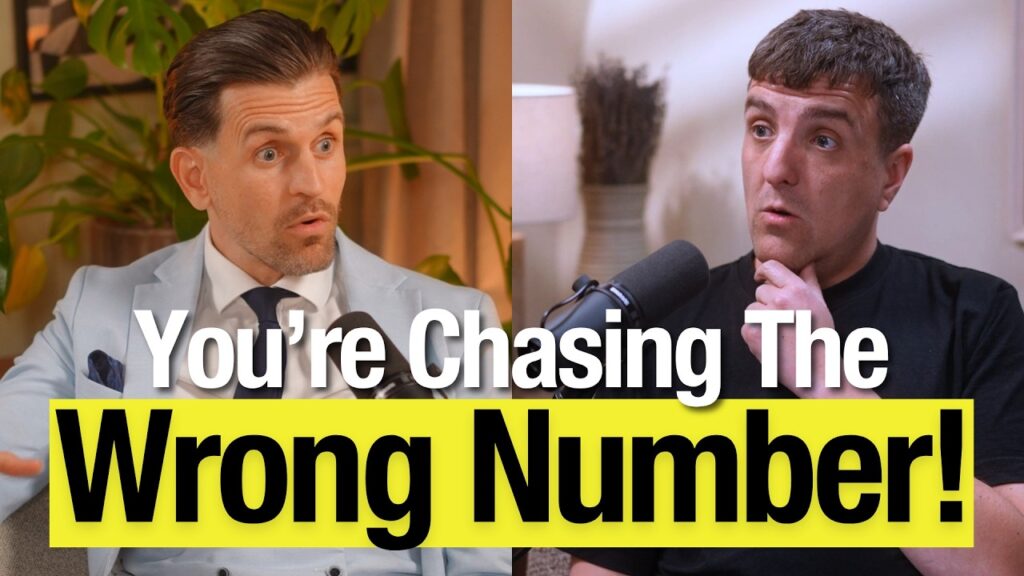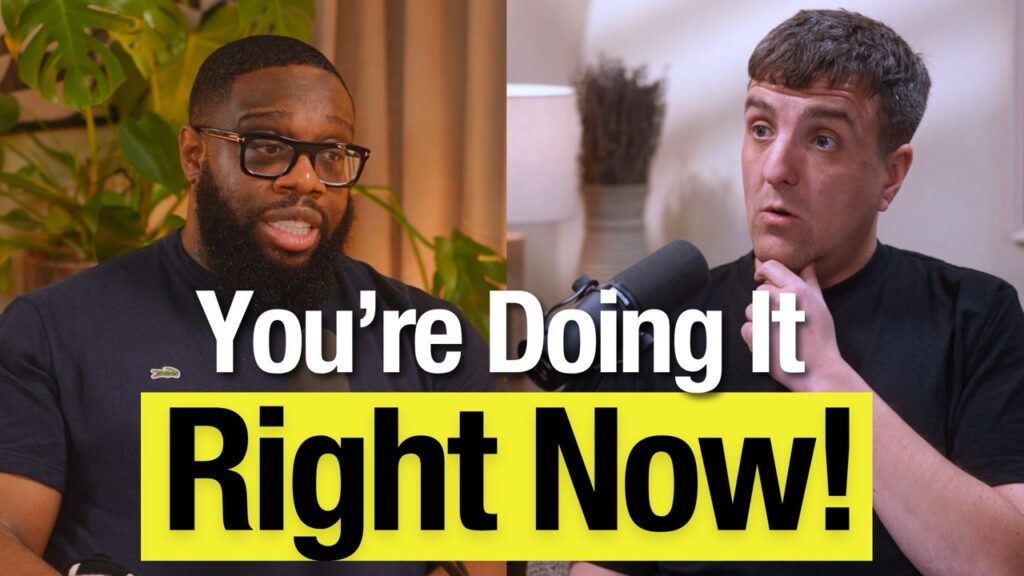

Steve Corwood built a career in automotive sales, then walked away from the “hamster wheel” to move his family to Mallorca.
On this episode of the Money Gains Podcast he explains the mindset shifts, the CBA framework and the leadership lessons that don’t just change your lifestyle, they change your relationship with money too.
Welcome back to the Money Gains Podcast. This week I’m joined by Steve Corwood, a mate I met online about six months ago who has genuinely become one of my favourite people to chat to. This episode flowed from start to finish.
We talk about the power of saying no, defining your why, and why school conditions us to leave our childhood dreams behind and become “workforce humans” instead.
Steve also walks through the CBA framework he uses to make big life decisions, and we dig into what it actually takes to lead people well, whether that’s at work or at home.
It’s a different kind of episode for us, lighter on spreadsheets, heavier on mindset. But every money decision starts in your head before it ever reaches your bank account, so stick with it.
If you’re on Spotify or Apple Podcasts, hit follow, and share this one with a friend who needs to hear it.
———
Gains App is LIVE!
An AI-powered budgeting and cashback app designed to help you make more of your money.
Download here: https://gainsapp.onelink.me/8IhT/oiaimr1z
———
Get a FREE FRACTIONAL SHARE worth up £100 when you deposit £1 with Trading 212
https://www.trading212.com/join/MGP
If you don’t receive the free fractional share, head to the menu and put the word ‘MGP’ into the promo code section.
(Capital at risk when you invest)
———
DISCLAIMER:
This video is meant for educational purposes and should not be considered financial advice. When you invest your capital is at risk. Past performance is not a guarantee of future success.
Key takeaways
- Learning to say no protects your time for the things that actually move you forward, financially and otherwise.
- A simple cost-benefit analysis (Steve’s “CBA framework”) turns a stressful decision, like moving house or country, into a clear, data-backed choice.
- Good leadership is about making the people around you look good, not the other way round, and that mindset compounds into better team and business results.
- Stepping away from technology, even for an hour, creates the mental space needed to make confident financial and life decisions.
- Big life changes (a relocation, a career pivot, a new business) come with a lonely adjustment period, usually six to nine months, before a new normal settles in.
Timestamps
- [1:26] Moving the Family to Mallorca
- [7:38] Breaking Free From Conditioning and Fear
- [9:39] Chasing Childhood Passions Later in Life
- [16:02] The Power of Saying No
- [17:28] Sacrificing a Social Life to Build a Business
- [20:43] Finding Your New Tribe After Big Change
- [25:48] The CBA Framework for Life Decisions
- [29:32] Switching Off Technology to Self-Reflect
- [35:41] What It Takes to Be a Good Leader
- [44:38] Steve’s Advice: Try Everything, Keep What Works
Why saying no is a financial skill, not just a life one
Steve put it simply: “you have to learn how to say no, because you end up doing things that you don’t actually want to do… you end up trying to please everybody else.”
He referenced Tim Ferriss’s line that what you don’t do determines what you can do, and it’s a mindset that applies just as well to money as it does to your calendar.
I went through my own version of this when building the podcast and the wider business.
I said no to drinks, no to football, no to nights out, because every one of those “yes” answers was a “no” to the thing I actually wanted to build.
It wasn’t always comfortable. Steve found the same thing: some of his old friendships were built entirely around going out, and once he stepped off that treadmill, those relationships quietly fell away while new ones, built around things like golf, took their place.
If you’re trying to build a side income or a new career alongside your main job, the same principle holds. Every hour you protect for the thing that matters is an hour you’ve said no to something else.
If you’re weighing up whether a new venture is worth the trade-off, it’s worth reading through some side income ideas to see what’s realistically achievable before you start cutting other things out of your week.
The CBA framework: a simple way to stress-test big decisions
Steve’s most tangible idea from the episode is what he calls the CBA framework, a cost-benefit analysis he originally picked up from his therapist and now applies to life decisions rather than just business ones.
“You’d sit down and work out how much is this gonna cost us, what are the benefits for it, and then you basically cross-examine and analyse everything,” he explained.
He gave the example of buying a bigger house: what does it cost each month, and what does it bring you, more space for a growing family, for instance.
Line the numbers and the benefits up side by side and, as Steve says, “does it all stack?” It’s not complicated, but writing it down forces clarity that gut instinct alone rarely gives you.
This is exactly the kind of exercise that works well alongside a proper look at where your money is actually going. Before you run a CBA on a big purchase or a move, it’s worth knowing your real numbers first.
A quick spending audit will tell you what a decision genuinely costs you month to month, rather than what you assume it costs.
Leadership at home and at work pays financial dividends
Steve became a sales manager at 23 and admits he wasn’t ready for the people side of it.
“I thought I had to puff my chest out,” he told me, before learning the hard way that leadership isn’t about looking good, it’s about making your team look good. “You’re there to support them… they’re not there to make you look good.”
I had almost the exact same experience becoming head of marketing at 25 with six people reporting to me.
Favouritism crept in, people left, and it was only once I flipped to a bottom-up approach, empowering people rather than commanding them, that the results actually started to show.
That shift in leadership style doesn’t just make work more pleasant, it directly affects your career trajectory and your earning potential.
Steve’s other big lesson was learning to separate emotion from action: “what you can’t do is let the emotion get involved in your actions very quickly.”
He used to put holes in walls; now he takes a break, gets a coffee, and comes back when he’s ready to have the conversation properly. It’s a small habit, but it’s the difference between a team that trusts you and one that doesn’t.
Switching off to make better decisions
One of the most useful threads in this episode is about self-reflection. Steve admits he’s still “crap” at putting his phone down, but described a skiing trip where he went hours without checking it and came back with real clarity.
I’ve had the same experience walking the dog without headphones: no podcast, no distractions, just space to think. I came back from one of those walks and made a big decision confidently, for the first time in weeks.
If money decisions or money stress are part of what’s weighing on you, that same principle applies. Understanding your own instincts around spending and saving, rather than reacting to every notification or offer, makes a genuine difference.
If you’ve never looked at how your personality shapes your money habits, the Money Personality Quiz is a good five-minute starting point before you tackle a bigger decision.
This transcript is auto-generated and lightly edited for readability, it may contain errors.
[0:00] Sammie Ellard-King: Hello and welcome to the Money Gains Podcast. Welcome back. This week we have Mr. Steve Corwood on the show with us this week, and I’m really looking forward to getting this one out. I really enjoyed this chat. It was one of those chats where everything just flowed so nicely. We talked about the power of saying no, defining your why, and how pursuing your dreams and creativity can actually be so fulfilling, and how we are trained in school to become these workforce humans that we leave behind our childhood dreams. We don’t take them forward with us, and actually it impacts us not just financially but across our whole life too. We talk about the CBA framework for decision making that Steve’s come up with. I absolutely love this podcast from start to finish. You’re going to get so much value from this. If you’re listening on Spotify, please do whack that follow button. Same for Apple Podcasts. And also make sure you’re going to share this episode this week, please, with a friend who would enjoy the show. And for now, let’s get started on the Money Gains Podcast. Steve, welcome to the Money Gains Podcast, man. How’s it going? You well?
[1:26] Steve Corwood: Yeah, it’s good. Thanks for having me. All good here. Wicked, where are you joining us in the world? It’s a little bit different today, isn’t it? Yeah, I’m in I’m in Mallorca. Buzzing. I love that island, mate. It’s so much fun. Yeah, it’s um we’ve been coming here for like years and years and years. It’s and it’s the lifestyle is great. Like this is you know, probably go into it in more detail in this podcast, but you know, it was something that we wanted to do. We wanted to move for about 10 years. We’ve made the plan before we actually were in a position to fully do it. So very fortunate. Sometimes I have to pinch ourselves when you know, just going out in the morning to walk the dogs, and it’s like wow.
[2:12] Sammie Ellard-King: It’s a beautiful part of the world, but we’ll get into that. I’d love for you to bring us up to speed on yourself and um give the audience a sort of 411 into you. Yeah, well, it’s always a lot going on with me, to be honest. Um, my uh yeah, so my background has predominantly been in the automotive sector over the sort of last two decades. So I sort of left school, um, went into valeting cars at 16, went into body shop, went into sales, went into sales management at by the age of 23. I was a sales manager for Europe’s biggest independent um dealer. Um, and then from there I went into setting up on my own and you know, tried other things as well in that time period, failed uh miserably, uh, most of them. Um, but obviously perseverance works, and um, you know, it it’s just one of those things I think I’ve never I’ve always had this uh I’ve not been very good at conformity uh over the years. Um and I’ve always knew I’d sort of be doing my own thing. So yeah, that up to date today is that I’ve got several different things that I work work on consultancy, um, mentor some people, a lot of social and content creation for businesses rather than a B2B, um, which funnily enough is sort of restricts me from doing my own thing. Um and yeah, northwest of England, where I grew up, Cheshire, Cheshire boy, um now living in Majorca.
[3:57] Sammie Ellard-King: Yeah, wicked man. I mean, it’s a like it’s so interesting to hear people, different people’s journeys, and that’s why I always really like hearing that because everyone’s different, and how they get to where they get to today is just so interesting. I want to pack into sort of why you chose to up sticks, move the family to Mallorca, and and and what drove you and would you recommend it? Yeah, I mean, I think um I mean that’s a really good question, and there’s a there’s a really strong reason behind it. For one, we absolutely loved the island. I think when you visit the island and you get to know it outside of, you know, my first ever trip was Magaluf when I was 19 with the boys, um, and getting to know it outside of that and the beauty of the island and the way it makes you feel, it just felt like home. Um, and then it led into us having a holiday house and stuff like that um later on down the line. Um, but for me and the wife, it was a lifestyle shift. We’d worked so hard for so long. Um, and I talk about that in quite a lot of places on on social and uh on on the internet in general, and I write about it in my newsletter, and you know, you’re going at such a pace all the time, and I got sort of lost in translation with that in terms of chasing success, was very much um I was very mistaken to what my success was, especially in the early days of entrepreneurship, and uh the foundations of it all were you know, on this turbocharged hamster wheel, ready to hit a massive brick wall, which essentially I I sort of did. Yeah. So that’s the essential driver. You know, we’ve lost friends near and dear, you know, people have got into mental health situations as well, where you know, I know two or three people that have that have unfortunately taken the life, and you get you get to a point in life where you sort of realise what truly matters um and making them changes, and I think as well, it’s an aspirational thing. A lot of people talk about wanting to move and wanting to move to better climates, but we’re so conditioned as in individuals um about what the way we should go about living a life and you know the way we’re educated from a very young age of what it should look like is something that probably where my non-conformity comes in when I just don’t believe it.
[6:52] Sammie Ellard-King: Mate, I love this answer because there’s so much to unpack in there for me because I feel like um you know, a lot of us do. We kind of have this view of society of you know, leave school, perhaps go straight into work, or go into the university system and then go into work. Essentially, we go into work, and then it’s about you know, deposit for a house, getting a house, getting a promotion, getting a dog, having kids, settle down, loads of debt, pay it off, and die. And for me, that’s just like becomes especially when you live in the UK, it becomes like there becomes a point where I was like, well, hang on, am I destined for better? And I believe like that’s what you’ve gone and chased here with this move.
[7:38] Steve Corwood: I I actually think that loads of people don’t reach their full potential because they’re scared of what they’ve been taught. I I think they’re scared of stepping outside of the system, they’re scared of people’s perception, um, and they’re worried about what other people will think. You know, what if I fail? What if it doesn’t pan out? What if it doesn’t work? These are all sort of the questions that are going through people’s heads all of the time. And you know, there’s a very easy answer in my mind is whether it doesn’t work out or not, you’ve learned you’re learning so much more while you’re doing it, and you had the balls to go and do it where other people don’t. So if you want judgment to be passed from people that want to sit in a position of conformity and follow the rules that really deep down wish they could do things in life with and step outside of the barriers, then that’s up to you, you know. I’d like you have to sort of get over it and and do and follow follow what feels right. I think that’s what you think.
[8:48] Sammie Ellard-King: But like fear is seems like it’s instilled into us. We go through this kind of I mean, our school system’s still set up for the industrial age to create factory workers, and essentially we’re then you know put on essential like a treadmill and we go out into the big bad world, and that’s what we’ve been designed and and conditioned to do. And then suddenly it becomes like, hang on, no, that dream of you becoming a musician or doing all of these things slowly gets parked because life starts to take control and and all of these things happen. And then suddenly we get to a point and we have this aha moment often in our 30s or sometimes in our 40s and 50s, and we go, fuck no, no, I really wanted to actually do that thing, and we do a big career pivot and shift, and it’s like you see it all the time. Someone jumping careers, and it’s they’ve just suddenly realised.
[9:39] Steve Corwood: I think that is like, you know, actually, funnily enough, I feel like that’s sort of where I am. You know, I uh I sort of fell into doing what I did. I’m very OCD, like if I’m in, I’m in. So I learned and got very good at my trade, um, but at a deep rooted level. But ultimately, when I was younger, after obviously I didn’t I couldn’t make it as a footballer and all the rest of it, you know, my passion was actually photography, which is what I’ve been sharing a lot more of again. And you know, it um I’m like I’m come I’m 40 next year, and I feel like now is a good time for me to be exploring that, but it’s only because I got to a position where I’ve jumped off the wheel, and it’s like you know, when we’re at school, was you know, was that actually a valid job to go and do, you know, was creativity or you know, seeing the world and being cultured in different ways and taking things in, you know, these things aren’t explained to us, it’s just like you say, we’re very much put into get you ready for the real world. This is the process that you’re gonna follow.
[10:57] Sammie Ellard-King: Yeah, and um, and I I feel like we lack that kind of like we are you you mentioned their creativity, and that’s like important to you. And obviously, with the photography now, you’re kind of bringing that forward, but your you know, your lifestyle and your decisions have allowed you to do that, and that’s really similar to something that I’ve been going through recently, and I try to explain it to people is that you know, I went and did my hospitality career and marketing career, and actually realised that I wanted to do something for myself. But the whole thing came from asking myself why, and like what is the core reasons for doing what I want to do? Most people will say I want to sit on a beach with a pina colada, but that isn’t a why. That is just a root, that’s just your conditioned phrase to say that I want to retire early. What is the actual fundamental reason? You mentioned creativity, for me, that’s one of my why pillars. The other ones are positivity and then time freedom. So to do that, I need to then create a business which generates money for them to for me to be able to feed those three things, and they’re my whys. Um, and then when I explain that to people, they go, Oh yeah, shit, actually, you know, that kind of makes sense.
[12:04] Steve Corwood: Um I feel like everyone should have that. I think like time is the biggest commodity, and I know it’s a stereotypical cliche thing that everyone bounds about, but it really is. Like, you know, when when I look back to like early parts, you know, I I I had to go through the process, I had to go through everything to get to the point of this level of understanding in terms of what life should sort of look like. You know, I’ve got memory blanks, like of near enough years, you know, and you know, especially like my daughter was younger, you know, I always wanted to make sure that I would be able to be there and do what I can and take them moments in, but even still knowing that that was my thought process, still I was on that track of like I have still got blanks, you know, and and now it’s like you know, if I want to, I’ll drop the kids off at school. If I want to pick the kids up from school, I’ll go and pick the kids up from school, you know. And I think that I had this conversation actually with um friend of mine who runs a HR business the other day, and it’s like we’re conditioned to go to work from this time to that time, and she she was like, Well, what how do you look at it? I was like, I don’t have working hours. She’s like, What do you mean? What do you mean you don’t have working hours? So like if I need to work at half five in the morning, then I’ll work at half five in the morning. If I need to be working until 11, 12 o’clock at night, I’ll be working till 11, 12 o’clock at night. But somewhere in the middle, I ain’t saying I’m working from half five to eleven at night. You know, like mid-morning, I might be going for a coffee with a friend for two hours, that ends up being two hours. I drop my kids off at school and I’m available to pick them up in the afternoon.
[13:58] Sammie Ellard-King: Work for me is like I’ve still got easily another 30 years of work left, and this is like this is the way I sort of tried to reflect upon it is that um what do I want to be doing that’s actually got some meaning for the next 30 years rather than just jumping on the on the wagon of you know, posting sort of whatever people go from sales manager to sales director to CEO, and then what like your life’s gone actually, and you’ve not done your dreams, yeah. But it’s really important to ask you this as you’re like I knew you were gonna be the perfect person to answer that question. It brings a lot of stress because you know, there’s a thing as well, like when you’ve got employees, and you know, I we were going through a stage of growth, and um it it wasn’t a comfortable situation for me. So yeah, and being responsible for people all of the time, and then trying to work out what their feelings like, you know. I I’m more of an emotional invested person than anything else, you know. It really sort of for me, I I think my emotional intelligence is pretty good, well over my IQ. Um, but I think I have that understanding of trying to feel what people are going through. And when you’re in business and you’ve got you know all of that going on, and you know you’re coming home and that’s all you’re talking about, and you know, you and you’re worried about other people, that’s also an added uh added element that people just forget. You know, everyone always looks at it from the employee side. Oh, they’re alright, they’ve got a few quid. Mate, you would not swap you would not swap the hours, the stress, the the ups and downs. If you know there’s a lot that goes on behind it all to try and maintain whatever it is. 100%.
[16:02] Sammie Ellard-King: You talk about the power of saying no quite a bit in your um newsletters, which I really liked. And you have a quote from Tim Ferriss, which I loved, which was what you don’t do determines what you can do. How important do you feel like it is to master saying no to get ahead? I think it’s one of the most powerful things that you can actually do. Because I always struggled in saying no, and I and I still do actually, because I always see opportunity in everything that somebody talks to me about. Like I’m I’m the I’m the optimist of absolutely everything. I cannot see a reason for something not to work if you are invested into it enough and everyone’s singing on the same hymn sheet. But when you say yes to everything, there then becomes a problem of what do you actually want to do, and your time gets manifested into areas that just actually have no importance to you. So you you have to learn how to say no, because you end up doing things that you don’t actually want to do, you know, you don’t you you end up trying to please everybody else. This comes back to that, you know, the the same thing, um, and you easily forget about what’s important to you. So by saying no, you allow yourself time to work on the things that you want to work on and create the environment that you want to be in.
[17:28] Sammie Ellard-King: 100% man. I had to go through a really big process of almost a self-sacrifice, really, in a way I completely sacrificed social life. Um, and actually a lot of a lot of time with my missus, but we discussed it before, and you know, to build what I wanted to build meant that I had to do eight hours a day outside of the eight hours I was already doing, and that was a sacrifice I had to do, but that was the no that you know, do you want to um meet for drinks on Saturday? Do you want to come to the football? Do you want to have a beer after work? Answer was no, because I had the yes, I want to do that in mind, and it was so so important. I’d be interested, how did that impact you and your relationships that you previously had with Well, a lot of my previous relationships were built on alcohol and and and going out and having a good time, and so when you suddenly realise when you when you want to build something, you you know you can’t be out partying on a Tuesday night in in Shoreditch House, like it doesn’t work like that. You’ve got to you’ve gotta you know knuckle down and put your head down. And then when you suddenly realise actually, like a lot of these relationships were just around having beers after work, which is fine, like there’s there’s a there’s a place for that, but then when you’re doing something else, you want to do something else, you need to understand that that’s you know, you’ve got to sacrifice those things. And actually, what became of that is the ones that um were real, were like, should we play golf? Yeah, let’s play golf, you know, let’s get out and do this, do something together which didn’t become around our our alcohol, and the ones that what weren’t, and maybe we’ll listen to this and and you know, hopefully they reach out and say hello because it’d be good to speak to them. But actually, you know, they’re the ones that I haven’t spoken to in six to nine months, and I’m totally fine with that too.
[19:17] Steve Corwood: Yeah, I was interested in what you’re saying. I thought, like, because I went through that similar experience, but mine was just like I decided to stop drinking because I just felt like crap. So that ended up being 22 months. I still have it, and now I have a drink here and there. Like when I do, sometimes it still goes like you know, I can go out of control. Like I’m and I feel like crap for days, and I can’t function at a level that I want to function at. I’m the same as you, mate. I’ll go all or nothing when it comes to booze, and I just done six months and I slowly brought it back in over Christmas, and then I’ve done nothing since since New Year’s Eve, and I probably won’t until another uh occasion. I feel like it’s alright to have a couple of beers now and then, but yeah, I’m a binge drinker, so uh yeah. I feel I think once it gets to the point where you don’t miss it, it’s okay. I mean, for me, and I was that’s why I asked you, it felt very lonely again. Like you’ve got the loneliness of running a business, then it felt very lonely because all of my mates stopped saying, Oh, do you want to come to Boozer? you know, and it’s like it’s funny how your relationships are built around them things, and then you start to meet like-minded people because they come and have a game of golf, you go for a game of I don’t know, here’s like it’s just taking off in the UK, but game of paddle, go for a run, go for a hike. Yeah, exactly. Um, it’s funny how it changes.
[20:43] Sammie Ellard-King: Completely. And you something you said there was a big lonely period, and actually um was really nice to hear that when I was coming to sort of the end of that period, um, on the Chris Williamson, which is actually how we met um on the podcast there with Alex Hormozi, he talks about there’s a period of six to nine months where you go through this period where you’re shedding your old friends because you know they’re not necessarily a part of your new circle, this new you that you’re trying to find, and it takes you six to nine months to find your new tribe. So you’ve gone and left into the wilderness and gone and found your new tribe of people. And yes, it is lonely, and that but once you break through that six to nine months, the people that I met now and the new people that are a part of my circle and are helping me with my business, and uh you know, I would have never have done that, and so it is that kind of period that you do need to go through, and I just found that so powerful. Did you you have the same then?
[21:41] Steve Corwood: Yeah, I mean I I I what I actually um think I sort of got very comfortable with my own presence as well. Like, you know, before that didn’t really give it much thought, you know, but now I’m very comfortable with you know, I can go out and spend some Three or four hours on my own. And and before that, I I couldn’t. The missus tells me, she goes to me, Well, you’ve been sitting up there all day on your own. And I said to her, Well, it meant I feel like I’m playing Xbox. So I’m building something, and that’s my feeling that I’m doing. So you know, when you’re in the zone, it’s my like monk mode, work mode that feeling that you’re accessing. Wow. I feel like higher power, and that’s like me on my own. And that’s because I’m so into it that I’m just really enjoying it. And that is what you can tap into when you do what you you love because the whole day will go by. Like, what did you do? I’m like, I did loads, but I couldn’t actually tell you. But I had a fucking great time doing it. Do you know what I mean?
[23:28] Steve Corwood: So it’s like and that’s where that’s when you know that you’re happy, and you know, I think when you get to that point, it’s great. I like you know, and I think there’s also chapters in your life, which is one thing I’ve really struggled with, like identity shift and a chat and a new chapter. And I suppose I’m sort of in that new chapter right now, which has always been like you know, this has probably been a two-year transition, which is just scary when you actually look back. It like it really is, is like when you can find that. I mean, that’s what the like sort of um photography and creating stuff does for me. I think you know it it switches off. I go into a totally different realm, and the next minute I’m looking at you know, I’d on Sunday I went into Palma just going out mooching, doing some street photography, and um I was like, oh no, what time is it? I was like, Oh, Mrs. has done Sunday dinner, like you know, I need to get home, and then you know, I sat there looking at the pictures, editing them, and uh you know, keeping some in the bank and stuff, and it’s like you know, when do you get that? You know, and and finding that is very, very powerful to have that sort of feeling.
[24:46] Sammie Ellard-King: And just to be clear, you can find that in a nine to five job, by the way. We’re not saying that you can’t, and so if you do get that and you can go and tap into that feeling, fantastic, but definitely trying to find that feeling in some area of your life, even if it’s a half a day a week, is so important. Like you say, I mean, I’ve got so many friends that are in nine to five jobs and they are so happy, like, unbelievably happy, to the point where in the past I’ve just been totally jealous. Like, where I’ve sat down and had conversations with myself saying, Steve, why can’t you just do that? Like, why can’t you just you know go back into employment and do that, and you get paid a good wage, and you’ve got no struggles, you’ve got no stress, you’ve got no this, and it’s like, but individuals, like you say, are just totally different. It’s just not in my DNA to do it and to confirm yeah, it just doesn’t make me happy, and uh like you know, I am envious of people that that that can do that.
[25:48] Sammie Ellard-King: Oh mate, me too. Yeah, make things a lot fucking simpler, I tell you that. But you talk about the um the CBA framework, and I absolutely love this, and I think there’s a really good kind of tangible thing for both entrepreneurs, but also the everyday person using it too. So, what is it and and and how can people activate it? I actually got the um idea from my therapist, and it’s so basically a cost-benefits analysis. You would normally hear that in the business world, so you know, you’d sit down and work out how much is this gonna cost us, what are the benefits for it, and then you basically cross-examine and analyse everything. And he said, Well, why don’t you just do one of them on your on your life? I was like, you know what? That’s a really good idea, so um, yeah, and you know, it’s one of them things as well. I sort of data doesn’t lie, but also the power of being able to put them things into perspective. So, like, you know, what is the so for instance, people ask me about it, and I’m like, well, how how do they work out? Right, you want to buy a new house, this is the cost of the new house. What benefits does it bring? Well, you’ve got another child on the way and you’ve not got enough bedrooms. So the analysis across the board is this is the cost, these these are the benefits, and this is the analysis that it’s gonna cost you this, this is how much it’s gonna be each month, but these are the benefits that it’s gonna bring to you. Can you does it all stack? And yes, it makes your decision making much more uh well, it gives you more clarity basically.
[27:34] Sammie Ellard-King: I love it. It’s a really cool way of just looking at things from a life perspective. Like as you say, CBA was I used it like throughout marketing and everything that we did because that’s just you know, you’ve got to look at the scenarios. Uh you know, if we do the X, Y, and Z, is it gonna move the needle? Is it gonna sell more products? Yes, no. But then actually, you know, if we move to X, Y, and Z location, um, how are we gonna feel? Do we know anyone? And okay, well, yes, benefits are cleaner air, you know, the kids are gonna grow up in a greener, greener area, you know, analysis. I don’t know anyone, how’s that gonna make me feel? In the longer term, are we end up gonna move back? Like, these are all things you’re gonna ask yourself, right? So, like doing that on major life decisions, but equally as well, just like your entire life, where’s it going? Like, if I go and do X, Y, and Z career, or if I go and take this course and start pursuing it, what benefits and how and how long is that gonna take me? Is the analytical side of it. And I just think it’s really interesting to put it into a life perspective.
[28:39] Steve Corwood: I just think like it’s not to be overused in a in the concept of like the analysis bit is really the clarity because it says like okay, say you want to move, say if you wanted to move to another country, it’s like okay, yeah, we might not like it, we might not meet new people, we might not do this, but there’s so many um bits that surround all that. What if you do meet people? What if you actually unbelievably love it, and it it just becomes the best thing that you ever did? You if you can’t answer them questions in the analysis to why it would stop you, then why are you why you why why are you even considering them? You know, you you don’t know the answer until you’ve done it. So it I think that’s where the analysis is really strong in make most cases.
[29:32] Sammie Ellard-King: Yeah, I think self-reflection is super key. Um, and I think these days as well, technology’s kind of taken over and allowing us to really kind of have that time to ourselves. It kind of stops us from doing that. How much value do you think there’s sort of taking the time just to think these days without having a phone or technology? I am absolutely crap at it still, like and I’m very aware of it. Um I I went we went skiing New Year’s Eve for a week, and it was probably the best time I’ve ever had because there was hours of the day where I didn’t there was there was one time throughout the week where I was halfway down the slope and I stopped because we were waiting for someone and I pulled my phone out, went to the email, and someone knocked at me, Steve, it’s work. You know what? I haven’t done it the whole time, put it back in. Like hours a day to switch off, enjoy the moment, be present, and that do that bit allows you to self-reflect because you’ve enjoyed that, and that again changed my perspective of you know what, I think I know what I know this, but am I actually making enough of an effort for that to happen? And that’s why carrying a camera with me everywhere I go, which I’ve started sharing people recently, allows me to do that also, because people’s argument is like, why don’t you just use your iPhone? Like, well, because there’s no stop and thought process. If I’ve got camera, one, it’s more creative, two, it makes me look at the surrounding and slow me down. So when when you’re in like I’m not saying it’s for everyone, but this is just a scenario which you know it for me, I loved photography, but but also it’s I jump out of a car, pull my camera out, first thing I do is look around and go, wow, look at how beautiful that is. Look at that building with the light shining through, and then people walking through it. When am I gonna do that? So it’s a you know, as well as enjoying it, it’s a subconscious decision that is being made. There’s purpose behind it.
[33:02] Sammie Ellard-King: Yeah, no, I think I I completely agree. Like to just bring this kind of back to the like financial topics, because you know, I think it’s important that we focus on that. Like, if you are having struggling with your you know financial finances at all, having that moment to self-reflect is really important. Like, for example, I did it the other day, I needed to think about a really big decision. I used to I used to usually listen to a podcast while I walk the dog because I’ve I like learning while I’m doing something, um, and it’s a great way to just tune out while you’re walking. But I left my phone and my headphones and I just walked with the dog full hour, did a really long walk, came back, and I honestly was like ready. Uh it was like almost like a meditation in a way, but but you know, active meditation. And it like that was so powerful, just having those moments and just resetting it. And actually, I went and made the decision confidently and freely from that moment on. And I feel like a lot of people, when they’re struggling with money or struggling to make decisions about the next steps of their lives, that doing having moments of self-reflection, just turning technology off and leaving it behind you is a really, really powerful thing to get yourself ahead.
[34:11] Steve Corwood: Uh yeah, I think at any point in life, I think that’s been the lack of thing for me. I think that’s the thing that’s brought me down most of the time, you know. Not having that outlet, you know, it’s an outlet that I’ve sort of been I grew up on a farm with a hundred acres of land around me, like zip. Just like walk out the front door bollocco and no one’s saying anything, and then you’re on this absolute flat out way of life, and it’s like I’m sort of reversing, I’m sort of going back to all the things that you know, nature going outside, taking it in, you know, and it has a huge impact, just like you say, that self-reflection, but also on your on the way you feel. Like, say you walk a dog for an hour, you’ve just like I always normally have something on because it’s like right 25 minutes, I might as well get 25 minutes of education in my ears, and now it’s like my mentality is like, you know what, sometimes I don’t want to do 25 minutes of education because before I used to think I feel guilty that I’ve wasted that time period where I could have fit it in. It’s like what are you doing? You know, like if you don’t feel like it and you just need a switch off, just try and learn to switch off.
[35:41] Sammie Ellard-King: Yeah, 100%, man. Yeah, 100%. I um you also talk about leadership quite a bit too, and I think people who are listening to this will either be managers themselves or definitely aspiring to be at some point in their life, and if not, then they may be entrepreneurs and therefore leading others. In your opinion, what do you feel like it takes to be a good leader? I think that you need to learn from people that that you feel like you know, if you get to the point of being a leader, you’ve obviously been led in some way, shape, or form. You know, it so like you know, if you’ve got a really shitty manager, take all of them bad points, flip them on the head, and work out how to make them really good. You know, I I think in the early days I got I went to management very early, wasn’t really ready as such from a people’s side of things, from a work perspective, more than capable, but then you know, trying to work with other people and you know, being in a pressurized environment that I was in to manage them, I wasn’t ready for it. You know, I thought I had to puff my chest out, I had to be a bit of a gob shite. You know, I look back on it now and I think you cringy, horrible, you know. But after six months, I learned very, very much that it’s about the people that are around you that that will all ultimately you’ve got to have a cog and you’ve got to be able to all work together and you all work as a team. And I think that’s again where my emotional intelligence actually came into play when when the ego and the chip off the shoulder came off. Um, you know, allowing yourself to have that level, you know, people say business and all the rest of it, you can’t allow it. I’m sorry, but like it happens if you’ve got if you’re an emotional type of person and you have them feelings, what you can’t do is let the emotion get involved in your actions very quickly. That that’s one of the biggest things that I learned is like, right, I was getting like you know, someone’s taking a mick now. My immediate reaction would be to fly off the handle, and I have done it, you know, I’ve put holes in walls and all sorts of stuff, which is not good to do in the workplace. Not long, you know, going down the line. I realised that you know, what I’d do is I’d just go and get in the car, go and get a coffee, and I’d go and get that at that an hour’s break. You know, I’d go and walk around town, grab, grab a butty, grab a coffee. There was you know, I remember one particular time uh I drove back to the office three times. First time was like, no, I’m still not ready. Second, still not ready. Third, right, okay. You know, I’d should we have a chat now? Yeah to just have a chat, yeah. So uh I think you’ve got to allow that to happen and allow yourself, you’ve just got to give yourself time and understand that you know you’ve not got a point to prove, you’ve you’ve got a team to build, and you’ve got to empower your team as much as you can, give them the tools, give them all the validation that they need. Um and you know, you know, any manager, you know, people say they’re there to manage people. It’s like you’re not you you’re there to support them. You know, you’re there to make them look good. They’re not there to make you look good. I think I think that’s the biggest misconception that anyone in a management has. These guys are here to make me look good. Bollocks. You’re there to make them look good, you’re there to support them, you’re there to make them the best they can be, you’re there to teach them, and you’re there to, even if they’re going to be better than you, let them do it. Because they’ll always, always have respect and they’ll always, always come back to you, and you’ll never go wrong if you treat people in that way. It’ll always pay pay its dues.
[39:47] Sammie Ellard-King: 100%, man. I love that because that’s what I struggled with initially was like, oh, I just like I’m a manager now, like hey, look at me, come on, and uh actually soon realised that um people would leave, you know, people would leave or they would feed back to hire people, and you would be like, you know, you’re not you’re not running your team correctly, and you’re like, but I was so young, man. I think I was 24 when I became a head of market, 25 when I became head of marketing, and I immediately had six people underneath me, and I didn’t have a fucking clue how to speak to them or manage them. All I knew about was how to do the job, so I just went down that. But actually, what that did was cause divide, cause issues, there was favoritism, and then it was only after a few years when I realised that actually it’s a bottom-up approach. If you unpower that person and make them feel like superhuman, you get 120% out of them, and that is when they start creating results, which in turn makes you look better to the CEO because your whole team’s getting the results, and then all that did was just put a bit of time into that person, provide them you know the motivation and the and then and the knowledge because they’re trying to learn too, and it was so so so important.
[41:04] Steve Corwood: I think mate, I think the thing is like chucking your dummy out of the pram and sitting in the corner with your lip hanging low to try and make points, people, which is what a lot of managers do, that don’t cut it. You know what? It’s your job to roll your sleeves up, sit down, work out the situation, try and help them. You know, there is people, and don’t get me wrong, and this isn’t like you know, the perfect scenario. There’s people that I will still work with, or still there, and I and I know it’s like I’m pissing in the wind. I am pissing in the wind. So you know, now isn’t their time. Maybe this their time right now is to be binned off, and that will trigger them to be back where they need to be, and realise that their actions actually matter, and then they’ll become the the you know, whatever they want to be in the workplace or whatever it may be. You know, that happens, and you know, people change as well. I think that’s the other thing. You’ve got to understand that people change what one person in in the workplace tells you today they want to do can change in three months’ time, and that’s fine because they’ve got a life, and understanding that their life is not your life is totally different. You know, it’s like they might be having a kid now, all of a sudden three months later, and the world changes when that happens, and they don’t want to be working all these hours anymore, and you know, everything else that goes with it, you need to understand that, you need to understand empathy.
[42:41] Sammie Ellard-King: Yeah, 100%. That’s happened to me with certain certain team members, like all of a sudden they’ve gone from like being happy, go lucky, then perhaps the kid comes into the frame, then they realise, you know, oh, actually, I’m gonna be breadwinner for a year, suddenly I need to make more money. How do I do that? Like, I’m ready to go, things change, um, and vice versa, you know. Late ladies, they you know, they’re they start thinking about you know, how am I going to come back into the workplace after I do have the the child and what’s the next nine months look like for me? And um, being an empathetic and and decent person, human being, because that’s really that human man is in the manager, um, is the most part is the most important part of it.
[43:26] Steve Corwood: Yeah, I think we we all forget about we are human beings and we all forget about you know, we should have some kind of feeling attached. No, uh I’m very good at separating, I you know, I’m very good at separating, and there’s no grey area. I don’t like grey areas, you know, it’s like you know, and I’m very good like at saying, you know, I can very easily sit in the workplace, have a really difficult conversation, and then we finish the day, and I’m like, you know, once that conversation’s done, it’s done. So the piece has been set. Yeah, let’s go for a better, yeah, let’s go and have a beer, let’s go and grab some food, let’s chill out, let’s have a laugh. You know, if you can’t switch that on and off in a work environment, you really have got problems. There’s people, there’s people, there’s managers that walk out there with this bitter hatred. Right look. Yeah, yeah. Say your piece, get it off your chest, put an action plan in place, boom. That’s done with. If that person decides not to follow that, then yeah, okay, they know it now know that is the consequence, and you’ve not got a sticky conversation to have. You communicated it, yeah.
[44:38] Sammie Ellard-King: Yeah, so so so valuable. Mate, I’ve loved this. It’s been a bit of a different podcast for people today. I wanted to unpack a little bit about mindset and feeling because you know it’s what you do, and I feel like it’s really important for people to hear this and just get them thinking, man. That’s all I’m trying to do with this podcast. Is like, it doesn’t have to be about there’s no right way or one size fits all with this, but thinking about things and just being a bit more knowledgeable about the topics like this, I feel like are so important. Yeah, I think if people can think about it, people can try different things. You know, we sit we all see these gurus on online in terms of this is how you should start your day, this is how you should do this, this is how you should do that, right? Try everything that you need to do, and I think that it’s valid to try all these different things, but ultimately there becomes a way that suits you. So, you know, experience them all and then work out what works for you. But if you’re not willing to try and think outside of them and and and put them into action, then you’ll never really gonna know what works. That’s great advice, man. Um Steve, where can people find you? Um I am on Instagram, um Stephen Corwood. Um I am I’m on most channels, um, LinkedIn, um, and yeah, I write I write the newsletter, Field Lifestyle newsletter. Um I’m probably I love it. Thanks. Um it it it unpacks a lot for me. It’s it’s selfish as well as trying to help and share that information, so that’s cool. Um, yeah, I think most of my time at the moment is sort of spent on Instagram, you know. I need I actually need to come up with some proper valid strategies around stuff because I’m just sort of messing around, you know. It’s I’m having a bit of fun and sharing stuff.
[46:35] Sammie Ellard-King: Your photography is great. I really think you should definitely keep up with that. I honestly go implore people to go and check it out. I really love seeing your take on the world, it’s it’s really fun. I think that that’s the thing for me at the minute, it’s allowed me to do is to have a look at and and and evaluate the world in different ways and people, it’s just so amazing. Um, I’m probably gonna explore more of that and and push that out there and we’ll see what kind of direction we head in. But I’m out in Majorca as well in a few months’ time. So we’re gonna catch up, aren’t we? Yeah, man, let’s do it. Couple beers, get a golf list here. I’m up for it. Yeah, yeah, we’ll get we’ll get on, we’ll get on it, get out on a golf course. Alright, mate. Well um, thanks very much for coming on, and uh yeah, we’ll catch up soon.
Frequently asked questions
CBA stands for cost-benefit analysis. Steve applies it to life decisions rather than just business ones: write down the cost of a decision, the benefits it brings, and whether the numbers and the upside genuinely stack up before you commit.
Every yes you give away is time and energy taken from something else. Saying no to distractions, social pressure or opportunities that don’t align with your goals protects the time you need to build income, save, or invest.
Better leadership skills, at work or at home, tend to lead to stronger results, more trust from your team, and better career progression. Steve and Sammie both found that empowering others rather than commanding them improved outcomes and, in turn, career and earning potential.
Steve describes it as a lifestyle shift after years of chasing a version of success that left him burnt out. He and his wife had planned the move for around ten years before they were financially and practically able to make it happen.
Steve and Sammie both point to roughly six to nine months as the period where old habits, friendships and routines fall away before a new normal, and often a new circle of people, settles in. This episode is for educational purposes only and is not financial advice. When you invest, your capital is at risk and past performance is not a guarantee of future results. Personal development and lifestyle content in this article reflects Steve Corwood’s own experience and opinions, not professional psychological or financial advice. This article may contain affiliate links; if you click through and make a purchase we may earn a small commission at no extra cost to you.
———