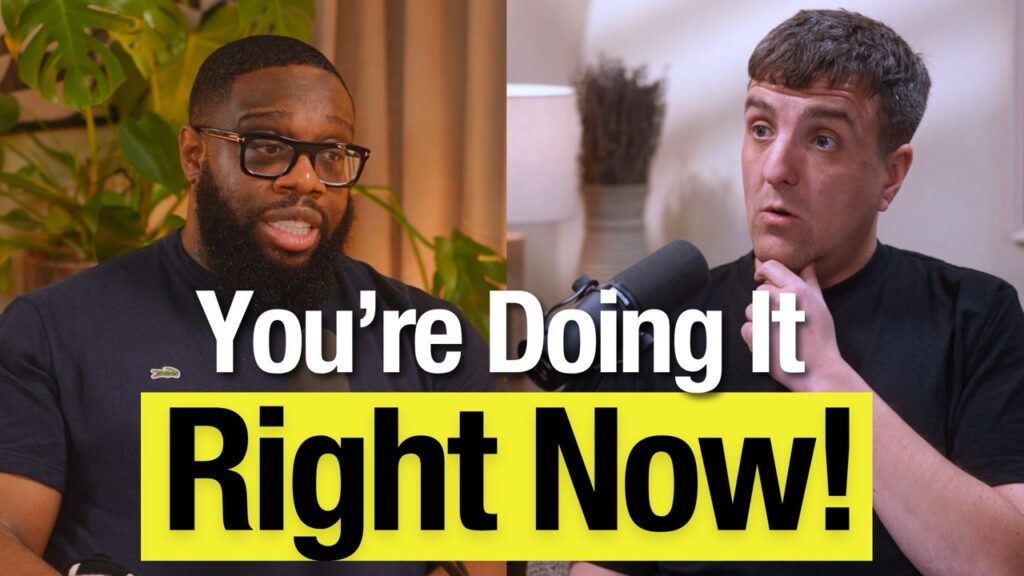

This week’s guest is Niaz Azad, co-founder of Millennial Money UK, who joins the podcast to unpack how his childhood, split between a council estate in the East End and a private school in Essex, shaped a genuinely nuanced relationship with money that still informs his work today.
Niaz’s story doesn’t fit the usual “I was hustling from age seven” narrative you hear on money podcasts.
He grew up in a household where his dad controlled every financial decision, and where circumstances swung from a council block in Aldgate and Shadwell to a private school where the cars in the car park were Bentleys.
He didn’t fully understand what any of it meant at the time, but looking back, he can trace a direct line from those extremes to the way he thinks about money, opportunity and abundance today.
We also get into the story behind Millennial Money UK itself: why Niaz and his co-founder Shaq built a community around demystifying money for people who’d followed the old rulebook, good grades, good job, good house, only to find themselves earning more than they’d ever imagined and still going backwards every month.
It’s a genuinely reflective conversation about upbringing, privilege, and what it actually takes to build a platform people trust.
———
Gains App is LIVE!
An AI-powered budgeting and cashback app designed to help you make more of your money.
Download here: https://gainsapp.onelink.me/8IhT/oiaimr1z
———
Get a FREE FRACTIONAL SHARE worth up £100 when you deposit £1 with Trading 212
https://www.trading212.com/join/MGP
If you don’t receive the free fractional share, head to the menu and put the word ‘MGP’ into the promo code section.
(Capital at risk when you invest)
Key takeaways
- Niaz grew up with no autonomy over money himself, his dad controlled the household finances, yet he experienced both a council estate and a private school before he turned 16.
- His dad ran a construction company across Asia and the Middle East, and the family’s living situation shifted dramatically depending on how that business, and later a UK property investment, was performing.
- Seeing both extremes of wealth without financial autonomy of his own gave Niaz what he now describes as a nuanced view of money, rather than a fixed scarcity or abundance mindset.
- Millennial Money UK was born from Niaz and his co-founder Shaq realising that earning “good” salaries in the city still left them getting into more debt each month, because no one had taught them how money actually works.
- Niaz’s advice for anyone starting a creative or entrepreneurial project: frame the worst-case outcome as having learned something for free, so there’s no version of starting that counts as a loss.
Timestamps
- [1:05] Niaz Azad Introduces Millennial Money UK
- [2:27] Growing Up With Money Controlled By His Father
- [4:38] From a Council Estate in the East End to Private School
- [10:34] A Flipped Upbringing: Private School Then State School
- [12:33] Seeing Both Extremes of Wealth Growing Up
- [17:33] Why His Dad Prioritised Private Education Above Everything
- [23:13] University, an Events Business and Avoiding a Scarcity Mindset
- [27:41] The Origin Story of Millennial Money UK
- [40:11] Where Millennial Money UK Is Heading Next
- [48:11] Advice for Anyone Starting Out as a Creator
Growing up with money controlled by someone else
Niaz is upfront that his money story doesn’t match the usual founder narrative. He wasn’t selling sweets in the playground as a kid. As the eldest sibling in his household, he says he always had a decent relationship with money, but no autonomy over it.
His dad controlled the finances and was the main breadwinner, and the family never felt a scarcity of money growing up, even during periods his dad later admitted were financially tight.
What makes his upbringing unusual, in his own words, is the sheer range of it.
He spent part of his childhood at private school and part of it on a council estate, extremes that felt completely normal at the time because he was too young to register them as extremes at all.
If your own money habits feel shaped by patterns you picked up without noticing, our Money Personality Quiz is a quick way to see where those habits actually sit today.
From a council estate in the East End to private school
The shift was not a simple case of the family doing well and then doing badly. Niaz’s dad ran a construction company operating across Asia and the Middle East, winning infrastructure contracts in what were then developing economies.
He was doing well financially but was constantly abroad, while Niaz’s mum raised the children alone in a council estate around Aldgate and Shadwell in London’s East End.
There was money coming in from the business, but the day-to-day reality for the family was a council block, not the lifestyle the business income might have suggested.
That changed when Niaz was eight and his sister was born. His dad decided he needed to be around more, gave up the business, and moved to London permanently.
By year nine, the family had relocated further out towards Essex, and his dad, flush with cash from selling the business, got into the property market just as London experienced what Niaz calls “the craziest boom.”
The family bought a home and Niaz was sent to private school, a jump he describes vividly: pulling up on his first day in his dad’s decent car, only to watch Bentleys arrive behind him.
Why his dad prioritised private education above everything else
The private school move wasn’t about status for its own sake. Niaz’s dad had grown up without the opportunity to be educated, and had spent years walking into rooms where he was the wealthiest person present but still condescended to because he lacked formal education.
That experience left him determined his own children wouldn’t face the same thing, whatever the cost.
Niaz estimates the fees today would run to around £60,000 a year across three children, money his dad found by reallocating wealth from the property he’d bought rather than by getting richer outright.
If you’re weighing up how to reallocate your own money towards a big priority the way his dad did, our budgeting calculator is a useful place to see what’s actually available to move around.
Niaz himself moved to a grammar school for sixth form to ease the financial pressure on his dad, before studying law at the University of Nottingham, a subject he chose less out of passion and more because it was the obvious non-science option that played to his strengths.
University, an events business and avoiding a scarcity mindset
At university, Niaz ran a small events business with a friend, an experience he says taught him more than the course itself. He’s candid that he never developed the scarcity mindset common in personal finance circles: frugality, in his words, doesn’t come naturally to him.
He’d rather find a way to earn more to meet his needs than cut out the things he enjoys, an attitude he traces directly back to watching his dad “find a way” financially, even during the periods when money genuinely was tight.
He’s careful to frame this as one valid approach rather than the only one, acknowledging that people who lean towards deliberate frugality are doing something he admires but doesn’t do naturally himself.
For listeners who want a clearer picture of where their own money actually goes before deciding which approach suits them, our guide to how to audit your spending is a solid starting point.
The origin story of Millennial Money UK
Millennial Money UK grew out of conversations between Niaz and his best friend and co-founder, Shaq, both of whom had followed what Niaz calls “the social contract”: study hard, get good grades, get a good job in the city, and life sorts itself out.
Instead, both found themselves earning more than they’d ever imagined as teenagers while somehow getting deeper into debt every month, with no idea why.
They realised most of their peers were experiencing the same thing quietly, and that most financial content out there was pitched at an audience that looked nothing like them.
Millennial Money UK was built to demystify personal finance for people who’d never had the conversation modelled for them at home or school, positioned not as experts lecturing from above but as people learning alongside their audience.
If that broken get-a-good-job-and-you’ll-be-fine script sounds familiar and you’re trying to actually build toward something, our investing for beginners in the UK guide is a grounded place to start.
Building community over vanity metrics: advice for young creators
Three years into building Millennial Money UK, Niaz says his focus has shifted away from growth for its own sake and towards creating genuine value for the community, including new formats like “My Salary Journey,” a series tracking how people actually got from modest starting salaries to where they are now.
He’s candid about the lonelier, more thankless stretches of being a creator, and about resisting the urge to position himself as the hero of the brand’s story rather than the guide.
His advice for anyone starting out is to strip away the pressure entirely: frame the worst-case outcome of any creative project as having “learned something from it”, so there’s no scenario in which starting counts as a failure.
He points to how long it took even the biggest creators to gain traction as a reminder that early, unrewarded work is rarely wasted.
This transcript is auto-generated and lightly edited for readability, it may contain errors.
[0:00] Sammie Ellard-King: Hello and welcome back to another episode of the Money Gains podcast. This week we are joined by Niaz. He is the co-founder of Millennial Money. Now, Millennial Money are absolutely killing it right now. They’ve got a really good community of young people trying to learn about personal finance. If you jump onto their channel, they’re absolutely killing it, making some really cool videos, really getting behind the nuts and bolts of society and why we don’t know enough about money. It was a really cool chat with him today. We went deep into his history, a lot of relatable aspects to us both as well. I really enjoyed this chat. So if you’re joining us on YouTube, please do hit the subscribe button and on Spotify or Apple, please do give us a follow or a review. It really does help the show. But for now, let’s get into it on the Money Gains Podcast. So Niaz, welcome to the Money Gains Podcast. How are you doing, man? You well?
[1:05] Niaz Azad: I’m good, thank you. I’m good. Thanks, mate. Thank you for having me. Excited to be on here. Yeah, I am really excited about this conversation today, man. I’ve been following you and your journey with millennial money over the past, I can’t remember now. It must be since the pandemic. It’s been a long time and the journey of the brand is incredible. But for the listeners out there, you know, give them a little bit of flavour. Who is Niaz and and yeah, what are you up to at the moment? Thanks, mate. No, though I really appreciate you. Um and um I was really happy when you reached out as well, because you it does seem like you’ve been following us right from the start. Um so I’m Niaz, I’m co-founder of Millennial Money UK. Um, and I think for a long time we’ve just been on a journey about trying to engage with young people and excite people and try and engage with them uh with the conversation of money. Um, me personally, I’ve I’d say like I’ve I’ve I’ve sort of like followed uh a corporate career. I studied law at university, I work in the legal sector, but I’ve always had a bit of a creative itch, which is probably how I describe myself, which is why I always um try to jump into doing some kind of brand or something outside of um the usual rat race corporate grind um as well. Um uh and yeah, it’s been an amazing journey, man. It’s been an amazing journey meeting so many new people and really like finding out about their own experiences with money and otherwise um through the brand that we’ve created.
[2:27] Sammie Ellard-King: It’s uh it’s an incredible journey, but like let’s touch a little bit on the younger nias. Like, what was it like for you growing up and uh you know what was your relationship like with money as you were a teenager and getting into sort of early 20s? So I think my one’s probably a bit different to what you’d expect most people to uh in the in this space to talk about. Most people are like, I was hustling from when I was really young, selling suites in the in the playground. I didn’t actually have that experience, so I think my relationship with money was a bit more complex in that uh so I’m the eldest sibling. Um I’d say I always um had a a decent relationship with money, but I didn’t have a lot of autonomy with money growing up. Um in our in our household, it was um my dad controlled the finances, he was the main breadwinner, he controlled the finances. Um and we I think we were quite fortunate and privileged in that um we never felt uh like there was a scarcity of money, but like obviously having grown up, my dad’s obviously told us stories. He was like, Oh, you have no idea at this point in life, like I was really struggling to provide. Um and then at other stages where it looked like he he was way more comfortable, we just felt like it was quite a consistent um experience for us. Um, but actually reflecting, I’ve had quite an interesting upbringing, um, which is really different to most. So uh so on one hand, there was a period of my life I went to private school, um, but then on on another side, uh I also had a period of my life where I grew up on a council block. So I’ve I’ve experienced um extremes, I guess, when it comes to um uh wealth, but we we never really considered it at the time. It all just felt fun, you’re young, you don’t really you don’t really understand it, you don’t really notice these things. And I think uh because of that, as I’ve grown up, I’ve had a very nuanced view of money and wealth, because in some cases we’ve experienced um such vast extremes of it. Um and I think that’s probably shaped a lot of my perception of money as I’ve grown up, even though at the time I didn’t realise it.
[4:38] Sammie Ellard-King: That’s an interesting journey. So talk to us a little bit more about that kind of moment then. So you were, you know, you were family was doing well, you know, yeah, you’re you’re living good, and then all of a sudden there was that moment where you kind of you you’re now in a council state. How did that happen? So it’s it’s more complex than that. I I’d say so. What happened was um my dad always worked internationally, right? And he uh from from when he was young, he had um he owned a large construction company in uh which operated across Asia um and the Middle East, um, for example, and then they it was mainly Asia, but they would win um contracts to like build up infrastructure from governments because obviously the third world countries at that time, 20 years ago, 30 years ago, you’re uh there’s way more that you need to build up. So they were quite large contracts. So my dad was doing really well when I was really young, um, but he was always abroad. And my mum, who basically raised us like our whole lives, and she sort of dedicated her life into raising us, when we were in London, she she was kind of like obviously she had my dad’s support, but he was always working. Um, so we lived in a council estate with my mum. It was just me and my mum, and for a period, my brother. Um so it was like a lot of like disparity because my dad was kind of like doing well, hustling, like building up his business, but at the same time, we we were in a council estate at the time because my dad wasn’t really here. Uh he he was present, but like not um he was working basically. Um you don’t you don’t you don’t know any better. And then I think when I was eight and my sister was born, it’s a classic thing, right? When dads have baby girls, they’re like, right, I need to I need to be around a lot more. Um so we do so we always grew up like um in the East End, basically. My mum was also born in the East End. She um I I’m sure that there had periods of like living in and around Brick Lane and um and and and she was she was an East End girl as well, like grew up in and around those areas, and then that’s where that’s where we were um in in Council Estates around Aldgate, Shadwell. And then when my dad decided to give up his company and move to London permanently, um I think he obviously had views around okay, we can’t live like this, we can’t live live in these places, um and just had a vastly different experience thereafter. I think it was when I was in year year nine. Yeah, when I was in year nine, I then um so I started secondary school as you would, like we’d we’d moved then. So when my dad arrived, we’d moved um further out of inner city London, basically. Um and we’d moved um further closer to closer to Essex. Um and uh my dad came, he bought uh he bought um a family home and we lived there and then um started secondary school as you would. Again, I did didn’t really like you didn’t really consider the changes as much when you’re younger. It’s just like, oh, okay, this is what we’re doing now. Um and obviously my dad he he had a lot of cash from his business, um, which he then was fortunate enough to get into the property market just over 20 years ago in London, um, where they then experienced the craziest boom, right? So I think he he got quite um obviously he he was good at business, but he also got quite lucky in the period that he started investing and he was cash rich at the time, um and uh got into the property market, and then it was like, okay, we’re gonna uh I think what was important to my dad was that like right, my kids, um, I need for them to prioritize their education. Um and what that meant for him was um because he because he always had this feeling that he his education wasn’t prioritised. So I think he had this like chip on his shoulder, like, no, my kids, that we’re gonna we’re gonna focus on that a bit differently. Um and then sent us to uh sent us to private schools, um, which was I look back now and I think I I’m never gonna be able to afford to send my kids to private school. It’s really, really expensive actually. Um but you can imagine the culture shock, right? Because we had this upbringing, um which again at the time didn’t seem didn’t seem scarce in any way, um, because we always had our mum around and she was just full of love. Um and never we never felt like we had less than anyone. And and to be honest, by for all intents and purposes, we never did have less. Um we never we never felt that we did um by those around us. Um and then we got sent to these private schools, um, which you can imagine when you arrive. I remember the first day I sort of like pulled up and my like my dad had a decent car as well, he had money. Um and the the next cars that like pull up are like Bentley’s and like um um and uh I’m sort of sat there like where am I? This is Hogwarts. Um and then and then I had that um I had that experience, and obviously then that becomes normalized to you. So I think by quite early on I had seen, so by secondary school, I had seen uh a very broad spectrum of wealth, all of which we had been engaged with, um and all of which we had experienced, um, which gave me quite um a refreshing perspective on like what money and wealth is, even though I didn’t know it at the time, right? But now that I reflect on it, I’m like, yeah, well, like I um I I I’m I’m very aware of like uh how much money there is in the world, but also like I’m very aware of a lot of people’s experiences um and and and their perception of what um the world has to offer. There’s really no one’s asked me that, and that was me reflecting live on that experience, actually. So I’m I’m glad you asked me that.
[10:34] Sammie Ellard-King: I love that, man. We went that’s uh we went world deep there. Do you know I can really relate to that um story though? Personally, uh my my story is slightly different. I started at private school, um, and my grandfather also from the West End, um, he was the co-founder of Ronnie Scott’s Jazz Club, and uh so I grew up in this kind of like world where you know it was like the jazz world around me, which was super cool. Um, but I went to private school, but then I hit 11, and basically my granddad being the cockney that he is, was like, uh you know, I’d come home and say hello, grandfather, and he was like, uh, absolutely not, like this is not happening anymore. We need to toughen you up, you go into proper school, and uh and I did, and so you know, I’ve got that experience, but completely flipped, man. So you know, year seven, I’m standing there in school, and uh, you know, I’m a this posh boy in this uh in this like you know, normal school, which is normal, and you know, I got absolutely ripped to shreds, mate, for two years. But um, you know, that’s it it made me as a person, and I think that experience of having that grounding for me is has set me up, and you know, I I can’t and I can see where exactly where you’re coming from on the flip side of that.
[12:33] Niaz Azad: 100% man. I I’m I’m I’m I’m very grateful for the experience, and I’m I’m happy I wasn’t either one the whole way through my life, um for for obvious reasons, right? Um and I think it does uh it offers you uh a great deal of like perspective and also that helps you empathize with like a broad spectrum of people as well. Um that’s what I liked about what you said, is you you said that you’ve seen all of the spectrum of wealth, and I can really relate to exactly what you mean by that because it you know if you would if you live in this in this certain bubble and you you you know you live in a certain s part of society, you don’t necessarily see the other side of society, so when you go into it, you feel completely out of space, uh place. Whereas uh you know, myself and and clearly yourself included, you know, I I feel like I can fit in all areas and all walks, yeah, which is a blessing, um, but um yeah, odd for some people.
[13:33] Niaz Azad: Yeah, it is, and it it is a strange experience. Um Yeah, I th when I reflect, I’m sort of like, okay, there it because I because I do often hear instances of like um people or friends looking at me like how how can you uh occupy that space and find ways to relate to these people? Um and that’s on both sides, right? Um, and I guess it’s because for all intents and purposes you were forced to at a young age. There’s elements of survival in there as well, like you were saying, like when you were ripped to shreds um for being the posh boy in school, right? Survival kicks in and you have to change, right? You have to change. You can’t be the little posh boy that’s coming to this school because you you you literally did get ripped to shreds, right? And now imagine the opposite. Um I remember because I loved I loved the the state school that I went to for year seven, year eight, like genuinely loved it. I’ve got some great friends from there. Um, but imagine going from there and turning up to uh uh I’d say it’s not a posh school that I went to. Well, I I guess you might describe it as such. Um and I remember I turned up with like trainers on and like my tie up to here, and like I just walked in and everyone was looking at me like, who’s this kid? Like the hell is this guy? Like, and the the reverse is also true, right? Um but you learn, you let you have to you’re forced to adapt. Um but I’ve seen peers, um I’ve seen peers who uh have gone to they say said private school the whole way through. Um and I’m just glad I didn’t. Like I just I felt like that experience can also leave you with a lot of like unfulfilled, unfulfilled potential, um, and just like uh not recognising the privilege that you have. Um and actually it’s so funny, we had our 10-year reunion um maybe like earlier last year, um, and some of my best mates who went there, uh, and some of the most successful people who went to that school had a similar experience uh to me in that they didn’t come from or they they they hadn’t like uh they didn’t have consistent experience of extreme wealth throughout their lives. Um and uh I guess they approached that opportunity or going to that school as an opportunity and made the most of it. And and you see them now, they’re they’re wildly successful, um, which is interesting. Whereas some people that maybe had gone there their whole lives since the age of, I don’t know, um since junior school, um perhaps hadn’t exceeded um their potential, uh I would say. Um so it is it’s really interesting. It’s a really interesting thing.
[16:14] Sammie Ellard-King: Yeah, I love that though. That’s uh it’s it’s interesting to see that that’s the correlation between you know their upbringing too. So in terms of how what was next then? So you leave this this school and did you go to uni? Yeah, I did, I did. So um uh I actually moved I actually moved in sixth form and I went to uh grammar school, so I did that, I did the full sweet. I went with state private grammar, so I’ve seen the whole education system. Um, but that was mainly because I’ve got two siblings and um sending three kids to private school is not cheap, man. Um and I I think uh as the elder sibling I always felt quite I don’t know, I felt bad man. I felt I I felt like it was tough on my like for example now I think the school’s na now the prices have been inflated even more. It might be might be like 20 grand a year. That’s 20 grand a year to send your kids to school. That’s that’s an insane amount of money. So in today’s terms, that would have been what six over sixty thousand pounds a year on my uh dad to send us to school, right? I I don’t know where he got that kind of money. Um and because he would I well again I don’t I don’t question it, I can I can sort of like speak and ask to him, and I uh and there are times that he tells me, but that’s an insane amount of money. But for him, he was like, I don’t care if that would have killed me. I needed to make that happen. Because it was his own personal, personal thing that he wanted for us. And I’m and I’m very grateful for it.
[17:33] Sammie Ellard-King: But I was my dad though on that though. Yeah, yeah. And he wasn’t again, my dad was my dad came from the humblest of like humble beginnings, man. Like, and I think because he didn’t he didn’t have the opportunity to become educated, that was a big thing for him. Like that was a he always says, like, that was one thing I wanted for my kids. Because he he would talk about um going into rooms where he had more money than people, but people would look down on him because he didn’t have an education. So he would often be in rooms where he was the wealthiest in the room, but people would like condescend him because he wasn’t as educated as them. So I think that’s for him, it was like uh yeah, it was a personal, it’s it was a personal thing for him. And now like my younger sister, she’s she’s uh studying medicine at Oxford, so like I think he’s got his um he’s got his uh uh both both my parents. I think it my my mum played a huge role in the pastoral element to make that happen as well. My dad obviously took care of the financial side. Um so I’m very grateful to my parents. Um but I did go to uni, I think it was important. Funnily enough, I had a choice of like um pursuing art. I was quite good at art when I was in school, uh, but obviously, naturally, elder sibling, like you can imagine, like in that in that time trying to say to your parents that I want to go to art school. Nope. So I did, I studied uh so I went to uh a grammar school for six form to like ease the financial burden on my dad, um, and uh then which was a really good grammar school actually, and I’ve got some of my best friends that I made are are from that school, had a great experience um of the people, uh not necessarily the school, but the people, um, and then went on to university and studied law. Um, so I think it was one of those I didn’t love maths and sciences, uh medicine, engineering, which were like the limited options, right? If you aren’t gonna do that, you go ahead and do law, right? Um, and I would that was that was always what my strengths leaned into. Um, so I went on to study law at the University of Nottingham, um, which again, the university experience I thoroughly enjoyed. Um the course I didn’t love. That’s great. I’ll be honest. Yeah, yeah. I didn’t I didn’t love the course. Yeah, standard. Yeah, I didn’t love the course. But again, the uni taught me a lot, and I think that’s where I realised that um maybe I was a bit more enterprising, like I always wanted to do something outside of whatever I was just expected to do. Um, started like uh a small business with one of my friends there. Again, it’s not the hustle in the playground story, but um uh I I did um uh start like an an events business like everyone does at university with with one of my best mates. Um and your your story is weirdly intertwined with mine.
[20:19] Sammie Ellard-King: Really? It’s so weird. Like yeah, like that’s exactly what I did. I was a good I was a nightclub promoter down there. It’s uh Where did you go in Southampton? Um nice, nice. Yeah, it was uh it was a good fun like experience and paid for more parties than it needed to probably so yeah, no, no, I can yeah, I I it it’s crazy, but it teaches you so much, right? Because um I think you can just do what you’re expected to do. You go to uni, like you you make some friends and you just you study, which you’re gonna do anyway, right? Or you can do that and a bit more, and I think that’s what uni taught me is that there’s nothing stopping you doing that and a a bit more and making the most of it. Um and I think that’s probably informed a lot of like my experiences now. Um so I do yeah, so that it was always that and a bit more, and it was always the bit more that probably like um carried me through um carried me through most of my experiences in life.
[21:17] Sammie Ellard-King: You know what I think about uni though is that you know people love it and then people don’t want to go. If you didn’t want to go and you set yourself up at 16, you went for it, how you know, props to you. I totally get that. You know, you’ve not been laden with the student loan debt that we’re all still paying off. But the um the other side to that is it, you know, it’s if you did go to uni, it’s the first time that you leave home, really, and you’re out on your own in the big bad world, and suddenly you start making financial decisions for yourself, and then you’re all of a sudden, you know, thinking about how I’m gonna eat this week. And these are these are kind of life experiences which get thrown at you from day one that you you’re not prepped for in any in any way. Suddenly you’re in this big bad world, and it is all on you, and uh it does make you as a person, I feel like university moulded me, bro.
[23:13] Niaz Azad: 100%. And it’s so funny because I university is a it is one of those places because I joke about it with some of my friends, like we were talking in our group chat. Um, some of my friends were like, just joke about like what’s the brokest you’ve ever been, and and they were talking about like their uni experience of um uh um what is it, going to bed and having sleep for dinner. Because they they didn’t have any because they didn’t have any money. But um but I always felt because I was running uh a business at uni, I felt quite rich. Like I always I never had I never had money issues, um which is a a huge privilege, but I think um that experience has taught me and again it’s it’s not for the faint-hearted, right? Um but that experience has taught me that you like I don’t have a scarcity mindset with money, right? Um again, this is probably not what you’ll hear commonly for people in like the personal finance circuit, anyone who’s in within this space. Um like frugality doesn’t come naturally to me. I’ve always been of the ilk that like um I will try to make more to suffice my needs. I’ll try. I’m not saying I’m gonna succeed, right? But I will and and thankfully that’s I’ve been lucky enough to achieve that, right? Um to suffice my needs, my I think you should be sensible about where your money’s going, right? But to suffice my needs, I wouldn’t be like, I’m gonna cut out all of my luxuries. For me, my strengths lie in trying to make enough money to meet my needs rather than cut out luxuries to meet my needs, you know, and both both can work. That’s so interesting.
[25:03] Sammie Ellard-King: Yeah, that’s always been my angle, and I think Yeah, you know, a lot of people on this podcast kind of follow the um follow the frugal method, and you know, it each person has their own way of dealing with it. I lean more towards your side of stuff, and I’ve been teaching myself to be more frugal as I go because you know I’ve got bigger goals, yeah. And if I want to meet those bigger goals faster, I’m gonna have to be a bit more frugal, but I’ve still got this like, oh, look at that new car heart jacket, man. I love it, like that’s what I want, you know. And yeah, yeah, yeah. And often I will just cave, but it’s just the way we are, man. It’s it’s 100%. And I rate people who can be frugal naturally, right? Um, but that’s just not in my nature, and I’m I’m I’m saying it openly because it it’s an imperfect thing that like I I wish I could just look at everything and be like, right, I’m gonna cut this, this, and this out. But I think I get that from my dad, because um, again, when I say like I guess the context that that we’ve we’ve coloured what I’ve said of my dad so far with um is that our businessmen always made loads of money, he he did not always make loads of money, and but he he never let us feel that because he was like, right, I’m just gonna I’m just gonna make this work until I make it work, right? And he always found a way to like make money, find money, um, and um so I think I get it from there. Like in the pro I I th I think when he first wanted to send us to these schools, which obviously cost a lot of money, he didn’t have tens or hundreds of thousands of pounds of cash. He didn’t have that money because remember, he came here and used all of that up to buy property. But then uh I think what he uh it might have been a case of like okay, you learnt about refinancing and be like, okay, rather than trying to get more rich, he was like, I’m gonna reallocate that wealth to send my kids to school, right? So it’s it’s finding opportunity with what you have. Yeah, and so again, I think it’s that abundance. I know people categorize it as abundance and scarcity mindsets, but I think naturally, because my dad was always like, no, you don’t you you can’t be stingy, and I’m not saying being frugal is being stingy, that’s not what I’m saying, because I think frugality is a is an important thing to master as well. But because I’ve always been surrounded by look, there’s so much opportunity here, right? There’s so much opportunity, you need to you need to make use of these opportunities, don’t just don’t just go by what you know. Um, that has informed my attitude to money in that um yeah, yeah, try and try and find a way, try and problem solve. Like you don’t have to succumb to like the limitations that you’re under right now.
[27:41] Sammie Ellard-King: I love that though. You uh he’s installed into you this go-getter attitude, which you’re utilizing by not just conforming to the nine to five, you’ve gone out and you’ve started businesses, and that has probably come from your upbringing, your grounding from your from your dad and and your mother as well, definitely. Yeah, for sure, man. For sure. Yeah, now that I reflect on it, definitely, definitely. So, well, let’s get into it. Millennial Money. Yeah. Where’s it where’s it come from? And you know, talk to us, obviously, there’s another co-founder, and uh, you know, I want to hear the story, man. Yeah, no, no, for sure, for sure. So um, so millennial money, I think it came from um like a series of conversations and experiences that most of us can probably relate to um within like our generation, uh like demographics, in that we’ve probably most of us have just followed um uh the what we’ve been sold as like the route to success. Um in that you um study hard, get your good grades, um, go to uni, go to a good uni, get it and and and and study towards these um subjects and and and graduate um and quote unquote get yourself some good jobs, probably in the city, um, but not necessarily, but probably in the city, and then you’ll be fine. That’s your life sorted, right? Um and then you go and then it’ll be enough for you to be able to buy a house and yeah, you’re chilling, your life is gonna be comfortable from then. Um so that was the social contract of 10, 20 years ago, right? And it’s just stayed. Um but the conditions around that social contract have changed so significantly, and most of us were never told that those conditions had changed, right? Because those people that we might be in the care of who could have given us that information didn’t know themselves, right? Our parents, our teachers, um, mentors, they they could not have predicted the conditions that we are in today, with the levels of inflation, with um uh professions like doctors, teachers studying, uh sorry, struggling, right? Um with uh the housing market so inaccessible inaccessible for most people, um they could not have predicted these conditions on top of that. Um uh the the real tax basically the real tax-like burden that um student loans have become on young people that that went to university and and um uh studied towards further education, right? Um all of these things and and then the state of the global economy um and the opportunities that come from there, right? No one could have predicted um that this was going to happen. So the social contract that we were sold um was a social contract based on very different conditions and opportunities than the one that we have now. And I think what you realised, and what me and my friends realised is we we did, we followed that social contract. We all got quite quote unquote good jobs in the city um um across like finance, consulting, legal, like all of the all of the safe jobs that you think about, even like my friends, and then I’m bringing in my friends who are teachers, doctors, nurses, right? Um, all of the things that you’re supposed to do, all of the things that and and certainly on the latter side, all of the things that keep society ticking, right? And all of us were earning more money than we thought we’d need when we were in school, right? Um I remember when I was in sixth form, I thought, wow, if I earn 50k one day, wow, that’s that’s a lot of money, right? Most of us like had um reached positions where we’re far exceeding that, and at the same time getting ourselves into more debt each month. What’s going on? Yeah, we’re poorer month on month, we have no idea how to do with our money. Um what’s going on? Like, what is it? And actually it was me and one of my best friends, Shaq, who’s uh Millennial Money co-founder. Um we often used to speak about these things and we were and no one was really open about money, but we’d just like speak to each other. We were always like we’d always benchmarked against each other quite well, like we’d always had similar experiences, um uh, and yeah, it just just leaned on each other a bit. And I think one day we were just like, mate, like I’m I’m struggling, but I don’t know what’s going on. Like I don’t know what to do with my money, like I’m I’m getting promotions and I still don’t have any more money. Like, what’s going on? And you realise that most of your peers are it are experiencing the same thing. You think you’re just alone in this in this experience of financial mismanagement. Um and from then we realised that it was it was most people, like most people had no idea because you you you were never taught in school. Um, most people’s parents actually probably don’t know. There’s a small proportion of people that might be able to uh be guided like um around the dinner table. Even even like in my household, let’s say my dad had it had experienced um financial success in certain periods of his life, he couldn’t give me the right advice because his advice would just be go and buy a house and you’ll be fine and then buy more houses. Um I can’t do that, like I can’t do that like you could, like 20 years ago, right? Um we have very different experiences, and then we realised that actually, if you wanted to learn about money, most of the content there wasn’t even really content, but most of the messaging was tailored to um rich old white men in boardrooms, right? And that those are specific intersections rich old white men, right? Um and I say that because what we’ve built, we’ve found actually targets multiple disenfranchised communities, right? And what we’ve tried to do, Shaq and I, because we went through a period years of self-learning, and we were like, wow, like everyone should know this information, it should be a bit more accessible. But the point is that people feel a bit stupid when they try to access um this kind of information because there’s all these words and they’re just like, I don’t know what this means, like, am I stupid? Like, I I certainly had that experience because I a load of my friends work in finance, so they’re just using all this jargon and like um using all of these abbreviations, and I’m just sat there like I’m pretty smart too, but I have no idea what they’re talking about. So um you can imagine how most people felt, right? So our angle was we wanted to create a community which demystified. I think that’s what we used to say a lot when we started, and we we still stand by which demystified um personal finance and and and the conversation of money. And I think the big thing was we wanted to encourage people to join the conversation of money, but we were doing it from an angle of listen, we are the target audience, like we’re not doing it like with a guru complex. We’re not trying to we’re not trying to say to anyone, look, we’re rich, we’re better than you, we’re we we know about money, um, you should listen to us. We literally said, listen, we’re the idiots that made every mistake there is that you’re probably making right now. So let’s learn together. Um and I think people warmed to that, and uh they warmed to like young people similar age, um, uh who might look like them or like operate in the same kind of um uh I don’t know, demographics as them, and and and and spoke to basically their experiences, um, which meant that our following over and the community that we’ve built over time is um majority female, um it’s majority millennials, young people and younger, um, and all of whom feel like okay, these are people with similar experiences to me, and I and the and they’re gonna tell me about their experiences with money or we’re gonna learn together. Um and that’s how the that’s how the platform is.
[35:15] Sammie Ellard-King: One of the things I I loved what you were gonna say is um what I just think wanted to say, like I the journey and the what you’re doing is different to anyone else out there, and I think the power of you two on camera, um especially now you’re doing a lot more video content, has really blown open that conversation. And I have people talking to me now saying, Hey, have you you know what where do I go? And I always guide them to you guys, especially if they’re younger people, because the kind of content you you do really kind of galvanizes knowledge in people, like it really it really makes them think, but in a way that’s done without this kind of superiority complex, which you were going on about. It’s very much, you know, we’re one of you, and I love that.
[36:02] Niaz Azad: Yeah, because it’s it’s true, bro. Like, I I can’t sit here and say that I know what’s like I also experienced in 2021 getting gassed by um investing into high growth tech stocks and thinking, yes, I’ve got this nailed, and then the next year, like I we experienced that as well, like we were there, like we we rode that wave as well, and we’re not gonna sit here and claim to be still riding it fortune selling experts. We’re here experiencing it together, and that’s that’s a big thing. We can’t pro we probably can’t learn from we can’t learn as much from um parents, mentors, because they they just had different experiences when it came to um the investing conditions that they had, like the the the money conditions that they had, the um the cost of living, um the the the the prices that they paid um and their cost of living in the and when they were in the same positions as us. So actually, our best bet we found is to learn from each other, and and that and that is what we’re trying to create. Um so no, I really appreciate that. And and and and actually over the um years, I think what’s developed is that we understand also another big thing that people come to us for, and it is the anonymous transparency, because people love to benchmark themselves and see that they’re holding up okay, and I think that’s something that we’re gonna lean into a bit more, is that people are like, oh wait, there is actually opportunity to make this kind of money. This is the these are the salaries that are available. So, and and and people like to hear from other people about their experiences. So I think we’re gonna lean into that a lot more in the world. Yeah, thank you. The My Millennial Money Stories, yeah, that’s that’s um that’s something that we we have found that people really appreciate. And we’re actually this is an exclusive, we’re we’re launching a new um we’re launching a new series which which leans into that a bit more. Um we’re gonna launch it next week, actually. Um, and it’s gonna be called um My Salary Journey, which dives into a bit more about how people got to where they are. Because I think people look at a hundred K salary, right? Or 150k salary, and they’re like, oh my god, I can’t relate to these people. But actually, we’re what we’ve what we’re gonna do is we’re gonna have a timeline and show that these people probably started on 20k, 18k, sometimes like um less, might be, and show you how they’ve tracked their journey to get to where they are. And hopefully that gives people a bit more insight. Um, because people have been asking, like, when they see higher salary ones, which gets the most engagement. But I can see on the flip side, it does uh it can make people feel a bit um uh bad about their own positions. But actually, what we’re trying to do and what we’re hopefully going to do with this new series is like be able to show them how they might get into new industries and things like that, and and really show them like what’s available in the UK. Because at the same time, like the UK is the sixth biggest economy in the world, sixth richest country in the world, um, and there is a lot of opportunity here. Um But I think there’s just this there’s just a real scarcity culture, like which is and we’ve we’ve been suffering a lot over like terrible leadership, and it’s just created this this like toxic cauldron, and I think we just need to help each other. Um, so hopefully with with some of these series, we’re gonna try and do a bit more of that.
[39:08] Sammie Ellard-King: I I love that. That’s a great thing to be doing, showing the journey of someone’s you know, they started out on the low salary, and this is how they got there, and these are the steps that they took to do that. I imagine you’re gonna find you know some big career jumps from people and certain things that started in sales, ended up over here, and yeah, that happened, and those journeys for people give people the confidence, give young people the confidence that is possible. 100%, man. 100%. Because even if we like reflect on our own career journeys, um it’s it’s most of the time it’s like it’s unpredictable, like how it how it’s tracked and got to where it’s got. Um, and if you just hit the point where you’re like, oh, I’m finally comfortable with my money, I’m finally comfortable with my career and my um and and and where I’m at, you you you can’t discount the last seven to eight years where you might have had periods of like, oh my god, I’m going nowhere. And it’s and it’s important to show that to people as well, I think. Um and hopefully it can act as a source of encouragement. Um so yeah, we’ll be launching, we’ll be launching that next week.
[40:11] Sammie Ellard-King: That’s amazing, man. I really look forward to seeing that. And uh so obviously you’ve been going three and a bit years now. Um the growth has been incredible on the social channels. What’s what’s you know, where can you take millennial money next? What’s the next goal for you? So I’ve really appreciated the growth and everything, and it’s been it’s been good. I I know that it probably could have been way more had we have like rode certain like waves of enthusiasm, but I think we had to also accept like our the the toll that it takes on, and I’m sure you can relate to this, Sammie, as well. Like the the toll that it takes on you to be a creator, right? Um, it can be quite a lonely experience, it can be quite a thankless experience sometimes, and sometimes I have to just step away a bit and be like, yo, like I need to just recharge myself. Um, but there’s there’s huge opportunities, and I think what the three years is uh or just over three years has given me is like perspective into like what people come to us for, and I’m gonna lean into that side of it a bit more. Um I’m gonna focus in on video content, um, which I enjoy, right? I’m I’m like enjoying that side of it, like learning to like, although I would like to not be in front of camera eventually and hopefully just get some presenters to do that for me. But at the start, I’m sort of just to get all of that started. I just I just want to build on like the multimedia format, right? And maybe build build a bit more of a team around the multimedia format. So I’m gonna I’m gonna try and launch a few of these series um and then step away from being in front of them and hopefully like empower people to grow those. Um I think the two, like My Millennial Money, the salary journey that’s gonna come out is good because um I think those are staple for us in in terms of brand and people hopefully can associate our brand with coming here and learning about like other people’s experiences um and um what might be out there for them. But also uh the video, I want to go on the video content side and like hone in that and learn. That’s that’s more of a learning. That’s almost like starting from ground one. I won’t say ground zero, but starting from ground one and learn about like the longer format video. What is it that people uh want from us? Um another thing that we often do is we do we do a lot of like corporate workshops. Um we go around and like try and speak to um people within the workplace about their um management of money, and I think that’s a growing experience because especially with the cost of living crisis, I think people are much more concerned um about employee well-being as well. Um, and if these people have never been taught in school, um, it probably is now under the care of like their employer to make sure that they know how to manage their manage their finances. So we we do that already, and I think we’re gonna try and ramp that up a bit more. Um we make loads of panel experiences. Um uh and yeah, I one of the things that has come up before is about how we might be able to productize millennial money, but I’ve always resisted that until I think there’s something valuable to give uh to our community because it’s very much I don’t like to think of it as an audience. I think we’ve been lucky in that it’s felt a bit more like a community. People have bought into like what we’ve produced because it’s often been co-created. Like our best content is actually um created by the audience. Like we we we like structure it and everything, but all the responses are they come from the audience, and actually all of our successful content is that way as well. So I want to just like lean into that a bit more. I’m I’m trying to be less focused on growth, but more focused on like creating value and like enjoying that a bit more. Um, that’s probably like my my message for the next 12 months is that I want to try and focus in on like I love I love that yeah, create value. What is it that people come to us for um and create it in a way that I enjoy it um and also that I think the audience might be able to derive actual value from rather than it being like a um an opportunity for vanity growth metrics for us, which everyone falls into the trap of, right? Because it is because otherwise it is quite thankless. But 100%. Yeah, but I just want to I want to go back into engaging with the community and trying to think about like how is it that we can provide value because ultimately that will lead to um sustainable growth for us as well.
[44:23] Sammie Ellard-King: You’re you’re you hit the nail on the head there. Like uh people go and they go, Yeah, I wanted this goal, I want 50,000 followers, how do I get there? Let’s go. And actually they forget about what the real true value that they provide. And if you stick to your guns, uh eventually your community will find you, and they’ll be your super fans, quote unquote Pat Flynn. But um, like for me, it’s it’s really if you I’ve just been listening to his book Superfans, and it isn’t it’s insane how the level of people, if they join you and you you coach them on a journey, they will follow you to the ends of earth and stick up for you in any room, and creating that and the community aspect of that is the most powerful thing.
[45:10] Niaz Azad: 100%, bro. And that’s why like what you’re doing is is is so amazing as well. And and because I can relate so much to you, I’m sure you’ve had this experience where you’re just like, what’s the point? Like, why am I doing these? Why am I waking up early on a weekend to like record a podcast? And you do get those experiences, and I get that as well. And I’ve obviously an an a subset of our brand. We’ve got a podcast, Loose Change um podcast as well, which I’m I’d love to have you on. Um, and there’s been times where I’m like, oh, this is this is gonna this is taking so much from me. Like, I’m I I’m putting money out of my own pocket to like get the content done and everything and put it out there. What’s the point? Um, it’s not making huge amounts of money really yet. Like, we’re just it’s it’s almost like a passion project. But and then I remember, you know, that when the year year in review Spotify wrapped thing um comes up, and a few people had tagged us, and we were like top three most listened to podcasts in their own year, and they and then you realise that actually this isn’t for you. You’re like, this isn’t for you. This is actually there’s a lot of people that you are making an impact on, um, and you might not be able to see them. And I just sort of sat there and I was like, wow, um, I need to take a step back and remember that um as much as this is a forum for me, like the real reason that we initially started engaging, or anyone engages with yourself, you need to like be a less be a little less self-um absorbed and think about the impact that you might be having on even one to two, ten, hundreds, thousands and um eventually people um and realise why you’re doing it.
[46:43] Sammie Ellard-King: One of the ways that you’re positioning yourself. So I was just gonna say, one of the ways that you’re positioning yourself is not the hero, and this is like the lessons that I’ve been leaning into really deeply at the moment is how uh you know, when you create a brand, you don’t need to be the hero, you don’t need to be the forefront of that. If you’re the guide in the story, uh that’s way more valuable, and actually people relate to you a lot more if you can fulfil that prophecy rather than being the the leader, come follow me. It’s not the way that people like to things, and actually, and that’s what every story from the beginning of time is based on. The the the hero is actually the guide. Absolutely, bro. I love that. I actually really do love that, and I think um I think that’s an important reminder to anyone and any creative because naturally the metrics that you judge yourself on they push you into thinking about things in in vanity metrics and positioning yourself in the middle. Um, but actually, all of these things, social media, these these distribution platforms, um, are a tool to allow you to basically engage and guide people and and and put yourself out there. Um so it’s a necessary reminder every now and then to lose that hero complex and realise that you’re just you’re just part of part of part of this story and and you’re facilitating. Um and and that makes it much more sustainable and like a much more of a long-term proposition.
[48:11] Sammie Ellard-King: So if you’re a young creator out there and you’re thinking about getting started, what would be the first bit of advice you’d give them? Oh so I would say that um you have to uh you have to enjoy uh the process. Everyone says that you have to enjoy the process. But what I would say is um take it, strip it all back. So one of the things that we did when we first um started Millennial Money, when we had no idea that it was gonna succeed in any way, um, and me and Shaq, we looked at each other and said, if this completely fails, right, the worst case is, the absolute worst case is we are gonna learn loads about money, which we need to do anyway. And imagine if you position yourself where that’s the worst case. The worst case is you’re gonna learn loads for free, right? And you’re gonna force yourself to learn loads for free. Anything above that is a bonus. So when you’re starting out, if you can have uh some kind of perspective where you’re like, okay, the content I’m gonna put out and I’m gonna put all this work into, the absolute worst case is that no one listens to it, no one sees it, no one likes it. Um, but I will have learned something from it and I would have actually picked up some skills. That was actually me again, and I have those things again in different periods. So I’ve for the longest time I’ve wanted to learn how to edit videos. For the longest time. So with Millennial Money, when we first launched, I did all of the um uh the static graphics, infographics, and everything because I I had a I had a background in design, right? I could I learned how to do that when I was really young, doing like MySpace layouts in my red room. Um so I learned how to navigate the I learned how to navigate the Adobe Suite for photos, right? Um and do graphic design. For the longest time I used to look at people that could edit videos and be like, how on earth are you doing that? Like, what the hell? So about when we pivoted to video for the first time, I was like, right. Again, I said to myself, the worst thing that’s gonna happen is I’m gonna learn how to edit videos now. And now actually, look when I when I look back, I’m like, wow, I can navigate myself around Premiere Pro. I’m not like an expert or anything, but that’s a skill that I’ve wanted to pick up for the longest time. So the worst case, if if you make the worst case something that you’re gonna gain, um, that’s a good place to start for creators and then have little reminders along the way. And just remember that it’s the long game. Like I I know sometimes it doesn’t feel like it, but it really is a long game. Um, most of the most of the really successful creators, um, some of whom are like we’re hearing like billionaire status, like for their brands, like Mr. Beast and otherwise. Uh I think he had don’t misquote me, but it might be like six years before um his videos got any. I know his first video went semi-viral, but then it was six years of uploading all the time before anything really caught much traction.
[50:50] Sammie Ellard-King: And now he got offered over a bit of 500 plus videos, apparently. That’s mental, right? Yeah, it was mad. Like 500 videos, man. Just doing, you know, I couldn’t imagine doing myself 500 YouTube videos with no one listening. It’s crazy. That’s what when I look at when I look at like our podcast as well, I’m like, okay, we’re like 20 episodes in, right? Um most of the biggest podcasts, they did not get any traction until about 50 or 100 episodes in. And then they’re none of that work that you did at the start is wasted because when you eventually blow, right? Um, it’s actually the the work of the previous hundred episodes that have culminated in the success of that that final push push-through. So just reminding yourself that it is um um it is a slow burn, but it can be hugely rewarding. And then also, just before I forget, which we spoke about just before this episode, is the intangible benefits um that you get. Um uh the intangible and non-financial benefits that you get, which I think are even better, is like the people you meet, um, the spaces that you can occupy, the conversations that you can have, um, those opportunities are just opened up by you like putting yourself out there.
[52:03] Sammie Ellard-King: 100%. There’s some wise words, man. I love that. Like uh the um oh god, what would you what did you say now? It’s gone from my head. Typical. Um, but yeah, listen back if you want to get that bit of the episode. Um complete flop for me there at the end. Well, look, man, it’s been an absolute pleasure chatting to you today. Um, where can people find you? I know we’ve spoken about millennial money, but if they want to say hello to you personally, yeah, more than welcome to. I’m trying to um sort of like make myself more available as well. Um, but you can follow me on Instagram at Niaz Azad. Um but also you can find us through the Millennial Money page, which is at Millennial Money UK. Um and we also have a podcast which Sammie’s gonna come on at some point, we’re gonna book him in, which is at loose change pod. Thank you so much, bro.
[52:55] Sammie Ellard-King: Thank you very much. No problem at all. Cheers, bro.
Frequently asked questions
Niaz Azad is the co-founder of Millennial Money UK, a platform and community built to make conversations about personal finance more accessible to millennials and younger people. He studied law at the University of Nottingham and worked in the legal sector alongside building the brand.
Millennial Money UK is a community and content platform co-founded by Niaz Azad and his friend Shaq, focused on demystifying personal finance for people who were never taught it at school or at home.
Its content is created from an “we’re learning too” perspective rather than a guru positioning.
Niaz grew up with his dad controlling the household finances and experienced both a council estate in London’s East End and private school before turning 16, depending on the fortunes of his dad’s construction business and later property investments.
He says this range gave him a nuanced, non-scarcity view of money.
It’s the idea, sold to millennials by parents and teachers, that studying hard, getting a good job and buying a house would automatically lead to a comfortable life.
Niaz argues the economic conditions behind that promise, including inflation, student debt and housing costs, have changed so much that the old script no longer holds.
Niaz is on Instagram at @NiazAzad, and Millennial Money UK has its own Instagram and a podcast called Loose Change. This episode is for educational purposes only and isn’t personal financial advice. When you invest, your capital is at risk. This page contains affiliate links; if you click one and make a purchase we may earn a small commission at no extra cost to you. Personal details, career timelines and figures discussed are as shared by the guest at the time of recording and reflect his own experience rather than general financial guidance.
———