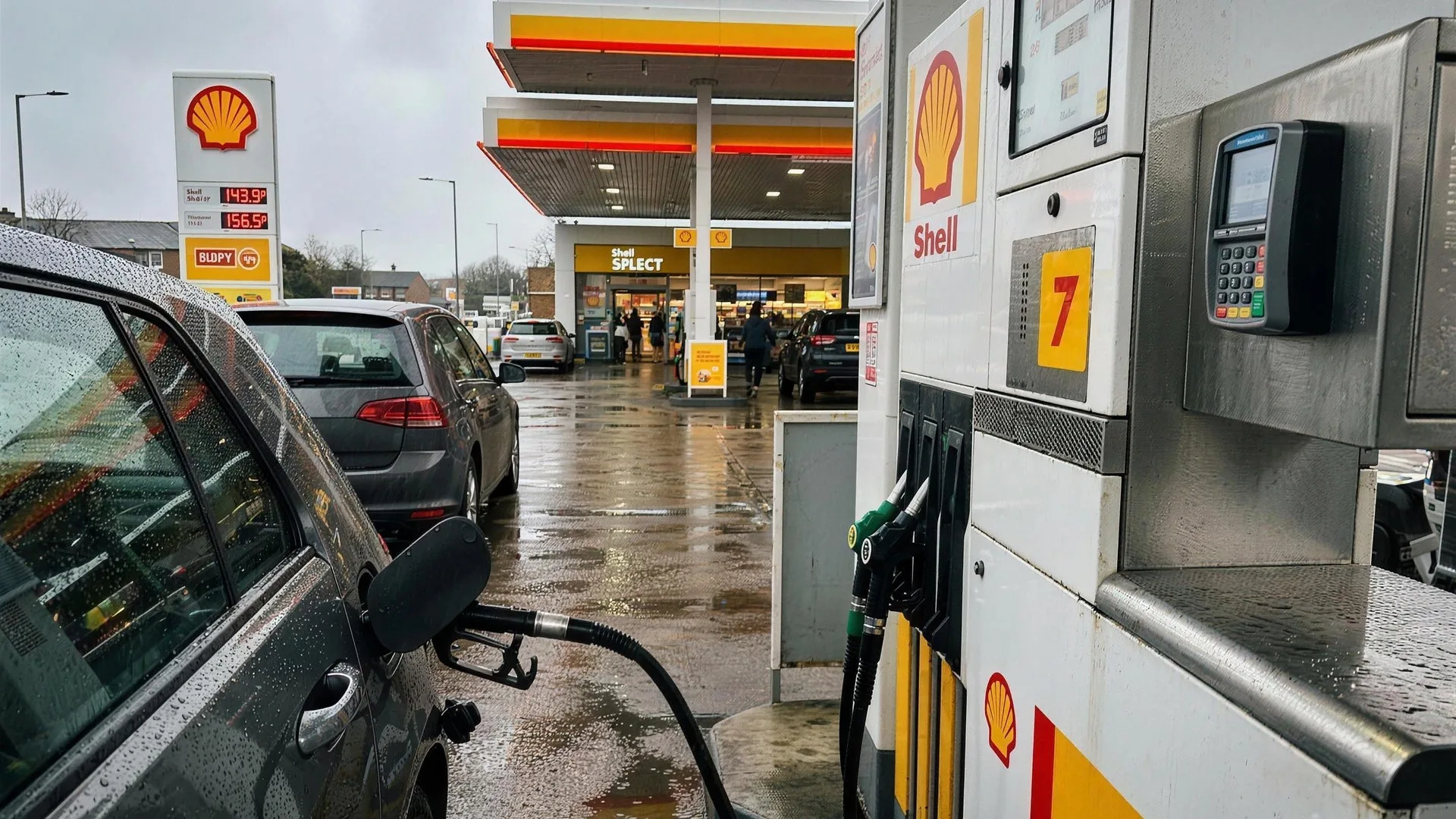
People in the UK owed £1,995.8 billion at the end of September 2026, around £35,970 for every adult once mortgages are included (Bank of England, Sept 2026). One in ten adults has no cash savings at all (FCA Financial Lives, May 2025), prices were rising 3.5% a year in September 2026 (ONS, Oct 2026) and the Bank of England’s base rate is 4% (Bank of England, Nov 2026).
Most money statistics get copied from site to site until they’re years out of date. So we did two things: we ran our own survey of 1,679 UK adults, and we went back to the primary releases from the ONS, Bank of England, FCA, HMRC, DWP and the Insolvency Service. Every figure below is named, dated and linked to where it came from. Our own numbers are marked Our data.
Updated 29 October 2026: every official figure now comes from the latest release, and the ISA figures reflect the 28 October 2026 Budget, which scrapped the planned cash ISA cut.
What are the key UK personal finance statistics for 2026?
- 70% of Brits would rather show someone their screen time report than their bank balance (Up The Gains, May 2026)
- 83% feel anxious about money at least sometimes, and 32% feel it often (Up The Gains, May 2026)
- One in ten UK adults has no cash savings, and another 21% have less than £1,000 to fall back on (FCA Financial Lives, May 2025)
- 46% of UK families have less than £1,500 in savings, including 18% with none (DWP, March 2026)
- The household saving ratio was 8.8% in April to June 2026 (ONS, Sept 2026)
- Total lending to individuals hit £1,995.8 billion in September 2026, about £35,970 per adult (Bank of England, Sept 2026)
- Credit card debt reached £83.7 billion, up 13.1% in a year (Bank of England, Sept 2026)
- One in 357 adults in England and Wales entered insolvency in the 12 months to September 2026 (Insolvency Service, Oct 2026)
- About one in three UK adults now invest, up from one in four in 2020 (Boring Money, March 2026)
- £135.7 billion was paid into adult ISAs in 2024 to 2025, £32.7 billion more than the year before (HMRC, Sept 2026)
UK money numbers right now (October 2026)
The rates and limits behind most money decisions, as they stand after the 28 October 2026 Budget, checked on 29 October 2026.
| What | Figure | Source |
|---|---|---|
| Bank of England base rate | 4% (raised in November 2026; next decision 17 December 2026) | Bank of England |
| CPI inflation | 3.5% in the 12 months to September 2026 | ONS |
| National Living Wage (21 and over) | £12.71 an hour, rising to £13.21 from April 2027 | GOV.UK |
| Full new State Pension | £241.30 a week in 2026/27 | DWP |
| ISA allowance | £20,000 a year. The cash ISA limit stays £20,000 from April 2027 | Budget 2026 |
| Tax on savings interest above your allowance | 20%, 40%, 45% now; 24%, 44%, 49% from 6 April 2027 | Budget 2026 |
| Personal Savings Allowance | £1,000 basic rate, £500 higher rate, £0 additional rate | GOV.UK |
| FSCS protection on savings | Up to £120,000 per person, per banking licence | FSCS |
Who did we survey and how?
We surveyed 1,679 UK adults online between 10 April and 13 May 2026, using fixed multiple-choice questions. Percentages are rounded to the nearest whole number, so some totals don’t add to exactly 100.
Every figure marked Our data comes from that survey and is free to quote with a link back to this page. The full UK Money Confidence Report 2026 has the question-by-question breakdown.
How do UK adults feel about money?
Worried, mostly. Four in five of the people we asked feel money anxiety at least some of the time, and the official figures point the same way.
- Our data: 83% of UK adults feel anxious about money at least sometimes: 51% sometimes, 32% often. 15% rarely do and just 2% never do (Up The Gains, May 2026)
- Our data: among people who feel anxious often, 58% aren’t confident they can save anything in the next three months (Up The Gains, May 2026)
- Our data: 54% feel more confident about money than at the start of 2026, while 46% feel less confident (Up The Gains, May 2026)
- 13.1 million adults (24%) had low financial resilience in May 2024, meaning low savings, struggling with bills or credit, or missed payments (FCA Financial Lives, May 2025)
- 26.4 million adults (49%) showed at least one characteristic of vulnerability, such as poor health, a recent negative life event or low resilience (FCA Financial Lives, May 2025)
- 6.5 million adults (12%) had low financial capability, down from 7.4 million (14%) in 2022. 19% lacked confidence working with numbers (FCA Financial Lives, May 2025)
The FCA figures come from its Financial Lives survey of May 2024, published in May 2025. It runs every two years, so this is still the latest.
Is money still a taboo subject in the UK?
- Our data: 70% of Brits would rather hand over their screen time report than show someone their bank balance. Only 30% would pick the bank balance (Up The Gains, May 2026)
- Our data: 80% would sooner stick to a strict budget for a year than a strict diet (Up The Gains, May 2026)
- Our data: asked which is hardest, 39% said getting fit, 38% said saving money and 23% said keeping the house tidy (Up The Gains, May 2026)
New to investing?
Get my free Checklist: the steps I would follow to open and fill an ISA without the classic mistakes. Plus one email a week, unsubscribe any time.
How much do UK adults have in savings?
Not much, for a lot of people. One in ten adults has no cash savings and nearly half of families have less than £1,500.
- 10% of UK adults have no cash savings, and a further 21% have less than £1,000 (FCA Financial Lives, May 2025)
- 46% of families had less than £1,500 in savings in 2024 to 2025, including 18% with no savings at all. Among lone parents, 28% had none and 79% had less than £1,500 (DWP, March 2026)
- At the other end, 20% of families had £30,000 or more in savings and investments, rising to 50% of pensioner couples (DWP, March 2026)
- The household saving ratio, the share of income households save, rose to 8.8% in April to June 2026 from 8.6% in the first quarter (ONS, Sept 2026)
- Households paid £5.0 billion into ISAs at banks and building societies in September 2026 alone (Bank of England, Oct 2026)
- New fixed-term savings deals paid an average effective rate of 4.42% in September 2026, while existing easy-access (sight) balances earned an average of just 1.66% (Bank of England, Oct 2026)
- 13% of adults hold Premium Bonds (DWP, March 2026). The prize fund rate is 4.35% from the September 2026 draw (NS&I, 2026)
- 293,600 Help to Save accounts were open in April 2026, with savers putting in an average of £48 a month (HMRC, Sept 2026)
- Our data: 32% aren’t confident they’ll save anything at all in the next three months, while 68% are at least quite confident (Up The Gains, May 2026)
For the age-by-age picture, see our breakdown of average savings by age in the UK.
How many UK adults feel in control of their money?
- Our data: only 31% feel fully in control of their weekly finances, and 48% feel slightly in control (Up The Gains, May 2026)
- Our data: 21% feel out of control of their week-to-week money: 18% slightly and 3% very (Up The Gains, May 2026)
 Read nextHow To Automate Your Payday Routine(And Never Worry About Money Again)
What do UK households cut first when money is tight?
Our data: asked what they would cut first if money got tight, 43% said eating out, 30% entertainment, 19% food and groceries and 9% holidays (Up The Gains, May 2026).
Here’s the cost of living pressure behind that:
- CPI inflation was 3.5% in the 12 months to September 2026, up from 3.1% in August. CPIH, which includes owner occupiers’ housing costs, was 3.6% (ONS, Oct 2026)
- Unleaded petrol averaged 174.07p a litre in the week of 26 October 2026, or £87.04 for a 50 litre tank. Diesel was 199.22p, or £99.61 a tank (DESNZ, Oct 2026)
- Raising a child to 18 costs a couple around £250,000 and a lone parent around £290,000 (CPAG, Oct 2025)
- The National Living Wage for those aged 21 and over is £12.71 an hour (GOV.UK, 2026) and rises to £13.21 from April 2027 (GOV.UK, Oct 2026)
How many UK adults invest?
About one in three, but plenty of people with money to spare still keep most of it in cash.
- About one in three UK adults now invest, up from one in four in 2020 (Boring Money, March 2026)
- 90% of adults had cash savings in May 2024, but only 35% held investments (FCA Financial Lives, May 2025)
- 61% of adults with £10,000 or more to invest kept at least three-quarters of it in cash (FCA Financial Lives, May 2025)
- 16.8 million adult ISAs were paid into in 2024 to 2025, up from 15 million. Cash ISAs made up 64% of them (HMRC, Sept 2026)
- £135.7 billion went into adult ISAs in 2024 to 2025, up £32.7 billion, driven mainly by cash ISAs (HMRC, Sept 2026)
- Adult ISAs were worth £952 billion at the end of 2024 to 2025, 8.5% more than a year earlier. Cash ISAs held 44.1% of that (HMRC, Sept 2026)
- 42.2% of adults in England had an ISA in 2023 to 2024. The average ISA was worth £11,087 for under-24s and £71,272 for people aged 66 and over (HMRC, Sept 2026)
- 1.6 million Junior ISAs were paid into in 2024 to 2025, with £2.5 billion subscribed, an average of £1,570 each (HMRC, Sept 2026)
- 99,750 people used a Lifetime ISA to buy their first home in 2025 to 2026, withdrawing £15,407 on average (HMRC, Sept 2026)
Best Stocks and Shares ISAs 2026
The investing ISAs we rate, compared on fees, features and offers.
See the ISAsWhat did the October 2026 Budget change for savers?
Three changes matter most for the numbers on this page:
- The cash ISA cut is off. The plan to limit under-65s to £12,000 a year in cash ISAs from April 2027 has been scrapped. The cash ISA limit stays £20,000 for everyone aged 18 and over (Budget 2026, Oct 2026)
- Savings tax goes up. From 6 April 2027, interest above your Personal Savings Allowance will be taxed at 24%, 44% or 49%, up from 20%, 40% and 45% (Budget 2026, Oct 2026)
- The Lifetime ISA is changing. The withdrawal charge for a first home over £450,000 drops to 20% from 29 October 2026, and a new First Time Buyer ISA replaces the Lifetime ISA for new savers from April 2029 (Budget 2026, Oct 2026)
The full detail, including what happens to the anti-avoidance rules that came with the cash ISA cut, is in our 2027 ISA changes explained guide.
Not sure where to start?
Pick your goal (debt free, start investing, side income, saving for something big) and get a free money plan you can level up on. Takes about two minutes.
Get your free money planHow much debt do UK households have?
£1,995.8 billion at the end of September 2026, up 4.2% on a year earlier. Mortgages are most of it, but credit card debt is the fastest growing part (Bank of England, Sept 2026).
| Type of debt (September 2026) | Total owed | Per adult | Per household | Growth in a year |
|---|---|---|---|---|
| All lending to individuals | £1,995.8bn | £35,970 | £68,819 | 4.2% |
| Mortgages | £1,734.6bn | £31,262 | £59,813 | 3.4% |
| Consumer credit (cards, loans, car finance) | £261.2bn | £4,708 | £9,007 | 9.8% |
| of which credit cards | £83.7bn | £1,509 | £2,886 | 13.1% |
Totals and growth rates are from the Bank of England (Bank of England, Sept 2026). Per adult and per household figures are our own sums: the totals divided by 55.5 million UK adults aged 18 and over (ONS, Oct 2026) and 29.0 million UK households (ONS, April 2026).
- Interest-charging credit cards had an effective interest rate of 21.71% in September 2026. Overdrafts cost 20.79% and new personal loans 9.85% (Bank of England, Oct 2026)
- Newly drawn mortgages had an effective rate of 4.63% in September 2026, and the average across all existing mortgages was 4.03% (Bank of England, Oct 2026)
- 39% of adults have unsecured debts, with a median of £2,500 (FCA Financial Lives, May 2025)
- 20% of adults (10.9 million) used Buy Now Pay Later in the 12 months to May 2024, up from 17% (8.8 million) in 2022. The market grew from £0.06 billion in 2017 to over £13 billion in 2024, and FCA regulation started on 15 July 2026 (FCA, Feb 2026)
If debt is weighing on you, our step-by-step guide on how to get out of debt covers the free help available.
How many people in the UK go insolvent?
- 11,894 people entered insolvency in England and Wales in September 2026, 9% more than in September 2025. That’s 671 bankruptcies, 3,838 debt relief orders and 7,385 individual voluntary arrangements (Insolvency Service, Oct 2026)
- One in 357 adults in England and Wales (28.0 per 10,000) entered insolvency in the 12 months to September 2026, up from one in 403 a year earlier (Insolvency Service, Oct 2026)
- 322,076 consumer county court judgments were registered in England and Wales in April to June 2026, 34.5% more than a year earlier. The median judgment was £602 (Registry Trust, Q2 2026)
- Of the 1.7 million people who used a debt advice service in the previous year, 61% said their debts became more manageable (FCA Financial Lives, May 2025)
How many UK workers are saving into a pension?
- 90% of eligible employees in Great Britain (22.6 million) saved into a workplace pension in 2025. Across all employees it was 82% (24.2 million) (DWP, July 2026)
- Workplace pension saving by eligible savers reached £166.1 billion in 2025. Employers paid 61% of it, employees 27% and tax relief 12% (DWP, July 2026)
- Only around 55% of eligible employees at private sector micro employers (fewer than five staff) are saving into a workplace pension (DWP, July 2026)
- 11.45 million workers had been automatically enrolled into a pension by May 2026 (The Pensions Regulator, May 2026)
- 55% of working age adults were in a pension scheme in 2024 to 2025: 80% of employees but only 21% of the self-employed (DWP, March 2026)
- A third (33%) of adults with a defined contribution pension have less than £10,000 in it, and another 12% don’t know how much they have (FCA Financial Lives, May 2025)
- 13.3 million people were receiving the State Pension in March 2026 (DWP, Sept 2026)
The full new State Pension is £241.30 a week in 2026/27, or £12,547.60 a year (DWP, 2026/27 rates). Pensions UK’s Retirement Living Standards put the yearly cost of a minimum retirement for a single person at £13,900, a moderate one at £32,700 and a comfortable one at £45,400. For a couple it’s £22,500, £45,400 and £62,700. These assume you own your home outright (Pensions UK, 2026).
So the full State Pension covers about 90% of the minimum standard on its own, but only around 28% of the comfortable one. Our guide to the average UK pension pot shows how far private pensions have to stretch.
What is the average UK household worth?
Median household wealth in Great Britain was £293,700 between April 2020 and March 2022. The wealthiest 10% of households had £1,200,500 or more, and the least wealthy 10% had £16,500 or less (ONS, Jan 2025).
Property made up 40% of household wealth, private pensions 35%, financial wealth 14% and physical possessions 10% (ONS, Jan 2025). This is still the latest official release, but it was collected during the pandemic and the survey’s accreditation has since been suspended, so treat the detail with care. We break it down further in average net worth by age.
How much do people in the UK earn?
- Median weekly pay for full-time employees was £811.20 in April 2026, up 5.8% on a year earlier (ONS, Oct 2026)
- Median annual pay for full-time employees who’d been in their job at least a year was £40,911 (ONS, Oct 2026)
- Full-time employees earned a median £862.20 a week in the public sector and £794.40 in the private sector (ONS, Oct 2026)
These are provisional 2026 figures. For more, see our guide to the average UK salary.
How much does housing cost in the UK?
- The average UK house price was £273,000 in August 2026, up 0.9% in a year. It was £294,000 in England, £216,000 in Wales and £198,000 in Scotland. London prices fell 2.2% (ONS, Oct 2026)
- Average UK private rent was £1,406 a month in September 2026, up 3.8% in a year. London was highest at £2,338 and the North East lowest at £790 (ONS, Oct 2026)
- 37% of UK households own their home outright, 19% rent privately and 17% rent from a social landlord (DWP, March 2026)
- 77,940 homeowner mortgages (0.89%) were in arrears of 2.5% or more of the balance in April to June 2026, 1% fewer than the quarter before (UK Finance, Aug 2026)
- 1,150 homeowner properties were repossessed in April to June 2026, 14% fewer than a year earlier. That’s around 13 a day (UK Finance, Aug 2026)
- Lenders approved 53,400 mortgages for house purchase in September 2026 (Bank of England, Oct 2026)
FAQs
What is the average debt per person in the UK?
About £35,970 per adult in September 2026, including mortgages. Without mortgages it’s about £4,708 of consumer credit per adult, of which about £1,509 is on credit cards. It’s an average, so most people owe far more or far less.
What percentage of UK adults have no savings?
10% of UK adults have no cash savings at all, according to the FCA’s Financial Lives survey. Measured by family, the DWP’s Family Resources Survey puts it at 18%, with 46% of families holding less than £1,500.
What is the UK household saving ratio?
8.8% in April to June 2026, up from 8.6% in the first three months of the year. It’s the share of household income saved rather than spent, pensions included.
How many people in the UK invest?
About one in three adults, according to Boring Money’s 2026 research. The FCA found 35% of adults held investments in 2024, while 90% had cash savings.
How many people go insolvent in the UK each year?
In England and Wales, one in 357 adults entered insolvency in the 12 months to September 2026, a rate of 28.0 per 10,000 adults. In September 2026 alone it was 11,894 people.
Is the cash ISA limit still being cut to £12,000?
No. The 28 October 2026 Budget scrapped the cut. The cash ISA limit stays at £20,000 for all savers aged 18 and over from April 2027, within the same £20,000 overall ISA allowance.
Can I use these figures in my own content?
Yes. Every figure marked Our data is original research by Up The Gains and is free to use in your own reporting or content, with a link back to this page. Official figures belong to the bodies named next to them.
Suggested citation: Up The Gains, UK Personal Finance Statistics 2026, survey of 1,679 UK adults conducted 10 April to 13 May 2026. https://upthegains.co.uk/blog/uk-personal-finance-statistics
For interview requests, the full data tables or a specific cross-break, get in touch through our contact page. You can find every figure we publish on our UK money statistics hub.
Where do these figures come from?
Our own figures come from the online survey described above. Every third-party figure was taken from the primary release and checked against it on 29 October 2026, the day after the Budget. Where official data runs behind, we give the period the figure covers rather than just the publication date, because the two can be more than a year apart. Per adult and per household debt figures are our own calculation, as explained under the debt table.
Sources used, by publisher:
- Bank of England: Money and Credit, September 2026 and summary tables (29 October 2026); Bank Rate
- ONS: quarterly national accounts, April to June 2026; consumer price inflation, September 2026; private rent and house prices, October 2026; employee earnings 2026 (ASHE); mid-2025 population estimates; families and households 2025; household total wealth, April 2020 to March 2022
- FCA: Financial Lives 2024 key findings (May 2025); Buy Now Pay Later protections (February 2026)
- DWP: Family Resources Survey 2024 to 2025; workplace pension participation and savings trends 2009 to 2025; benefits statistics compendium 2026; benefit and pension rates 2026 to 2027
- HMRC: annual savings statistics 2026. Insolvency Service: individual insolvencies, September 2026. HM Treasury and HMRC: Budget 2026 documents (28 October 2026)
- Others: UK Finance (Q2 2026), Registry Trust (Q2 2026), The Pensions Regulator (May 2026), Pensions UK (2026), Boring Money (March 2026), DESNZ fuel prices (27 October 2026), CPAG and Loughborough University (October 2025), NS&I, GOV.UK minimum wage rates
- Up The Gains: UK Money Confidence Report 2026
Spotted a figure that has moved or a source we’ve missed? Tell us through the corrections page and we’ll update it.