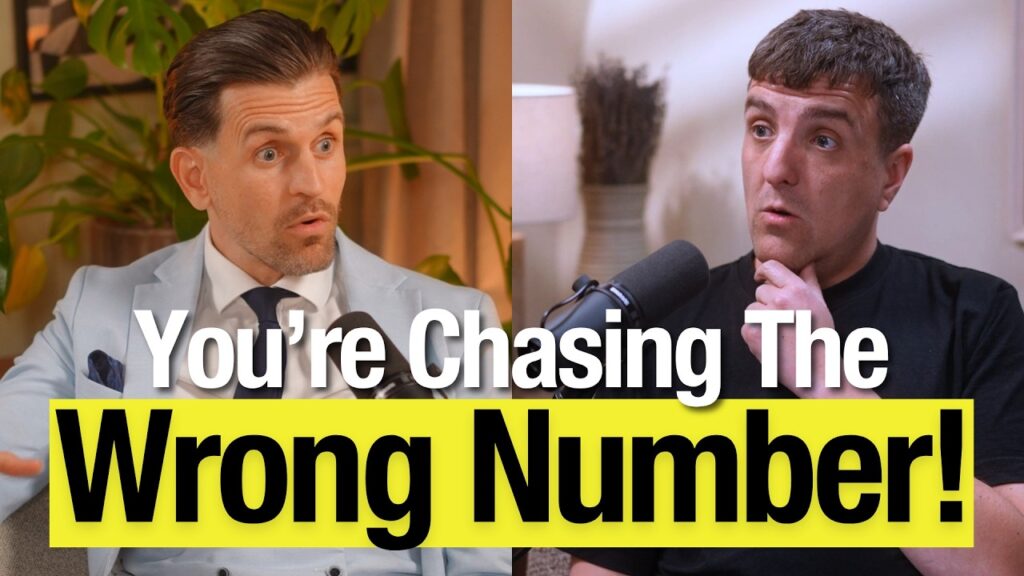

Aaron Knightley returns to the Money Gains Podcast to explain why handing your employer unpaid extra hours is the worst trade you can make with your time, and what to do with those hours instead.
Aaron Knightley’s first appearance on the Money Gains Podcast became the most listened-to episode the show has ever put out, almost double the plays of anything else.
So host Sammie brought him straight back for round two, this time digging into the idea that made Aaron’s “last one in, first one out” TikTok clip rack up 19 million views.
This episode is less about the mechanics of starting a business and more about the habits that quietly decide whether you ever get the time to try.
Aaron talks through why he refused to give employers free hours, the four-part self-evaluation he uses to check whether he is actually moving forward, and why most people’s daily patterns, not their job, are what keeps them stuck.
If EP125 with Aaron was about escaping the 9-5 and building wealth, this one is the episode before that: the mindset shift and the daily audit that has to happen first.
———
Gains App is LIVE!
An AI-powered budgeting and cashback app designed to help you make more of your money.
Download here: https://gainsapp.onelink.me/8IhT/oiaimr1z
———
Get a FREE FRACTIONAL SHARE worth up £100 when you deposit £1 with Trading 212
https://www.trading212.com/join/MGP
If you don’t receive the free fractional share, head to the menu and put the word ‘MGP’ into the promo code section.
(Capital at risk when you invest)
Key takeaways
- Aaron’s “last one in, first one out” stance is about understanding your value, not refusing to work hard.
- He uses four self-evaluations, patterns, social circle, time, and finances, to check whether he is actually progressing.
- Most people’s daily habits, not their job, are what keeps them exhausted and stuck.
- Building a supportive network comes before figuring out what business to start.
- Staying frugal once money starts coming in is what turns early traction into real financial independence.
Timestamps
- [3:28] Last One In, First One Out Explained
- [6:26] Why People Get Trapped in the Rat Race
- [9:26] Workplace Depression Statistics
- [11:58] The Four Self-Evaluations Framework
- [14:14] Patterns and Habits Audit
- [16:19] Building a Progressive Social Circle
- [20:41] What Monk Mode Really Means
- [22:40] Building a Network Before a Business Idea
- [25:02] Starting a Free Community
- [45:40] Staying Frugal When Money Starts Coming In
The "last one in, first one out" philosophy
Aaron’s viral line splits opinion, and he knows it. “The last one in, first one out is really a message aimed at people that want more from life,” he told Sammie.
His reasoning starts with time itself: “You can’t save it, you can’t buy it, you can only spend it.”
Growing up without family money or connections, time was the one resource he had, so he refused to spend it proving himself to an employer for free.
Pressed on whether the message is really “don’t give your boss extra hours,” Aaron pushed back. “I think it’s not a case of you shouldn’t be giving it.
I think you need to understand your value,” he said. He wasn’t willing to accept a workplace pecking order or exchange his hours for £12 to £15 an hour when he knew he was worth more.
Why the 9-5 habit loop keeps you stuck
Sammie and Aaron traced the rat race back to a school system built for churning out employees, not entrepreneurs. Aaron’s take on why so many people stay trapped isn’t the system itself though, it’s poor money habits.
“Everyone builds a life around the money that they get paid and accustomed to,” he said, pointing to a February 2024 survey showing 84% of the UK had less than £1,000 in savings.
Building a proper cash buffer, using a tool like our emergency fund guide to work out the right target, removes that dependency on the next payslip.
He also raised a World Health Organization survey suggesting around 35% of workers are mentally struggling because their income depends on a job that has no purpose for them.
“People are trapped and they do not know how to get themselves out of it,” Aaron said, “because they’ve been almost institutionalized into this system.”
The four self-evaluations: patterns, social, time, financial
Asked how someone actually breaks free, Aaron laid out a simple framework: patterns, social circle, time, and finances. Patterns come first.
“Most people wake up in the morning after a night of scrolling on Instagram,” he said, describing a day of caffeine, a job they don’t enjoy, and evenings lost to Netflix and more scrolling.
His advice is blunt: “Look at your habits. The answers are there.”
The social evaluation is next. Aaron’s homework for listeners is to open WhatsApp and check the last ten conversations. “Are they above you in terms of are they ahead in the journey?
They should be,” he said. He credits spending time around ambitious friends, including one who did £12 million in ten months, as part of why he progresses quickly.
On time, Aaron plans his day in strict 15-minute blocks and protects two hours daily for the gym. He is sceptical of fixed timeframes like “six-month monk mode” but backs the underlying idea: cutting distractions and saying no to anything that doesn’t serve the goal.
Working out where your money actually goes each month, with something like our budgeting calculator, is a practical way to start the financial evaluation Aaron says most people skip entirely.
Building a network before you have a business idea
When Sammie asked how someone figures out what business to start, Aaron’s answer wasn’t a business model, it was a network. “I would recommend, build the network first,” he said.
His advice is to seek out people at every stage: those doing their first £20,000, £100,000, £1 million turnover, and £1 million profit, so ideas surface from real conversations rather than guesswork alone.
He suggested a specific starting point too: build a free community.
“You learn so many things from being the host with the most,” Aaron said, from understanding what people actually want to learning how to work with different types of people, all without the pressure of a live product yet.
What to do with the time you get back
Once someone identifies the two or three hours a day currently lost to scrolling or box sets, Aaron’s message is simple: point that time at something of your own before you point it at your employer’s overtime sheet.
He described the maths plainly: the average UK take-home pay is roughly £1,600 a month for 40 to 50 hours of work, so replacing even part of that income buys back real hours.
Checking exactly what a raise or a side income would add to your own take-home pay, with a take-home pay calculator, makes that trade-off concrete rather than theoretical.
Aaron’s own path started small and consistent: give away free value daily, be visible, and be patient.
For anyone weighing whether to put spare hours into a side income stream at all, our roundup of side income ideas is a reasonable place to start narrowing it down.
He also flagged that starting for free is genuinely achievable now: “With a smartphone you already own and an app which is free, it’s wild, right?” as Sammie put it, referencing how little capital it takes to test an idea.
Staying frugal as the money starts coming in
The final piece of Aaron’s advice is about what happens once a side project starts working. “Live frugally, remain frugal until you are really thriving in business,” he said, comparing it to training hard but still watching your diet.
His rule for every sale: “Make profit, save, reinvest. Make profit, save, reinvest,” building a safety net before spending on lifestyle upgrades.
That discipline is what eventually buys the time freedom Aaron says is his real flex, not possessions. Reinvesting steadily rather than spending immediately is also where compounding starts to do the heavy lifting, something our compound interest calculator makes easy to visualise over several years.
For anyone ready to put saved profit to work longer term rather than let it sit in cash, our beginner’s guide to investing covers the basics of getting started properly.
This transcript is auto-generated and lightly edited for readability, it may contain errors.
[0:00] Sammie Ellard-King: My name is Sammie Ellard-King, and welcome to the Money Gains Podcast. We’re a show all about making, saving, and investing your money, interviewing the top minds in the industry to unpack their tips and tricks to success. And today, my guest is Aaron Knightley, and he is back on the show for a part two. It was our best performing episode that we’ve ever had. So we had to get Aaron back on to discuss things like leaving the workplace and not over giving too much time to your employers, how to actually know how to build a real business on the side while you’re working and when to leave that job and scale that business. Honestly, it is an absolute masterclass in building a business, understanding your value,
[0:45] Sammie Ellard-King: how you should be spending your time, how to build financial independence. I love this chat with Aaron. I absolutely think this is going to change the game for so many of you guys listening to this. So let’s get started on the Money Gains podcast. Aaron, welcome back, my man. It’s good to see you again. My man, here we go, round two. I know. I have to say, like, your podcast episode that we first did a part one with you on is the most
[1:30] Sammie Ellard-King: popular money gains podcast episode by some distance, I must say, almost double the amount of listens, man. So I had to get you back on. Can I just continue the conversation? Because I felt like we cut it short.
[1:43] Aaron Knightley: I think um I don’t know. I don’t know why. I think the thing is for me, the feedback I’ve had, I just don’t beat around the bush. And I think that’s what it all comes down to. I don’t fluff things. And I think sometimes people will either agree or disagree, but I think no fluff is good. So yeah, I’m looking forward to it.
[2:00] Sammie Ellard-King: Yeah, 100%. I’m gonna tell you the conversation a little bit more around starting a business today and like everything you would do if you were doing it as well, and kind of go back and forth together on that. But for the person that’s just tuning in for the first time, do you want to just give a little short intro into you?
[2:16] Aaron Knightley: Yeah, I’m gonna do exactly what I do on every podcast because I’m not a believer in titles. I’m Aaron Knightley, I’m a busy guy, I do my thing, I remain in my bubble. I am somewhat of a, you know, an entrepreneur, if you will, and I I focus on me. I try and help as many people along the way. I love making money, I love staying fit, healthy, I love business. That’s all I want to talk about, it’s all I want to do day in, day out, seven days a week, Monday to Monday. And I don’t hang on to a title. I just I just do me, mate, and you already know this. So um, that’s who I am. Aaron Knightley. That’s the that’s the name that my mum and dad gave me.
[2:53] Sammie Ellard-King: Okay, well, I suppose the first question I’m gonna go with just to kind of get it out of the way, because you’ve got been, I don’t want to get it out of the way at all, actually. I want to go into it because it is important, and for someone that’s listening to this, when you said it and I first saw it, and that TikTok video I think’s done what, like 19 million views now, like even I was like, oh cool, that’s gonna either ruffle some feathers, but also create some differences in people need to hear this. So when I say to you the last one in and the first one out, what do you say back?
[3:28] Aaron Knightley: So the last one in, first one out, really the core message has always been about time. You can’t save it, you can’t buy it, you can only spend it. So for me, I was really just I was hyper aware that I didn’t want to go in giving someone my time freely, not being paid for it, and also remaining later with other people. I wanted to really build my own thing and explore it. And I don’t come from a family that uh has money, I didn’t come from from a family that had connections. So the only thing that I can put into myself is time. So I say to people, why on earth would you serve an employer, another company, and give them this thing that we’re never ever going to get back? It’s the most important asset. And I was just hyper-aware, basically. And
[4:13] Aaron Knightley: the last one in, first one out is really a message aimed at people that want more from life. And that was me. I didn’t want to be in a nice five. I did a video, it caused a huge divide. Some people agree, some people disagree. And I’ve explained this many a time to people. Again, it’s short form content. Some people get it, some people don’t.
[4:33] Sammie Ellard-King: Do you think it’s more than around the fact that you shouldn’t be giving extra time to your employer? Is that really the crux of that message?
[4:42] Aaron Knightley: I think it’s not a case of you shouldn’t be giving it. I think you need to understand your value. That’s the thing I I just understood. I knew I was worth more. And I think if you look at the bigger picture, which I perhaps was aware of early on, is that younger, when you’re younger, you have these dreams, right? We want to be more than just what we are. And you know, some people want to be a pilot or a footballer or travel the world or be Indiana Jones, whatever it might be. And as you go through the education system, as you go through the nine to five, they eventually get forgotten about and they get suppressed, and you end up serving someone, and you lose all value, and you get put in a pecking order, and you accept the pecking order, and I was not willing to accept the pecking order, knowing that someone else is a human being who bleeds the
[5:27] Aaron Knightley: same as me. And whether they have authority because of their title, I just wasn’t comfortable with that, and I didn’t want to fall into this whole, well, Aaron, everyone else is coming in early. Why are you not? What are you doing? Doesn’t bloody matter what I’m doing. You get on with you, and I’m gonna get on with me. I just wasn’t prepared to give away free time, and certainly not exchange it for 12, 13, 14, 15 pounds an hour. I’m worth more. I always knew it. That was it.
[5:55] Sammie Ellard-King: No, that’s that’s fair enough. I think we’ve got this like school system created for us, Henry Ford, Rockefellers, whoever made the original school system. It hasn’t changed much since then, and then it’s then churned out workers, and we’re then suppressed dreams. We’re not taught about entrepreneurship. And I think a lot of people then define that as the rat race, as such, and they get stuck in that hamster wheel. Why do you feel like so many people get trapped in that? Is it just a school system or is there another thing at play here?
[6:26] Aaron Knightley: I think the core reason, this is what I truly believe for everyone, is it’s a lack of financial independence and it’s the needing of an income and then poor money habits, poor, poor money management in your spending, your education around money, and what happens is you start to build a life. Let’s face it, everyone builds a life around the money that they get paid and accustomed to. Therefore, you can either do things or you can’t do things. But one thing becomes very common for everyone, you need that income. I have at some point I needed an income, of course, but when I realised that this was happening to me, and I you know, how did I even realise it?
[7:11] Aaron Knightley: Some people, because some people might be thinking, Well, Aaron, how did you know that you needed to make more? I just didn’t want to be in a job. That’s the God’s honest truth. I didn’t want to be in a job, so I knew that I had to depend on myself and I’m okay with responsibility. So I never wanted to build a lifestyle around where I’m like, my my expenses is this, I need my employer, therefore I must serve them. And I think people that they spend their money, they don’t know how to look after it. What’s it? Uh, 84% of the UK have less than a thousand pounds in savings was the updated survey um in February 2024. And then it creeps up to like, you know, 16% have less than £200. It’s nuts. I didn’t want to be that guy. I didn’t
[7:56] Aaron Knightley: want to be the guy that bought materialistic things. I’m not a materialistic flex kind of guy. Now, as we were talking off air, my biggest flex in life is time freedom. I just I can mope about if I want to, like, I and I love it. Like, you know, and just wander off, you know, go whatever, picking berries if I wanted to. That’s what I’ve always wanted. I just want to do what I want to do, and I didn’t want to rely on someone paying me.
[8:23] Sammie Ellard-King: Yeah, and I think like that’s a dream, isn’t it? I think that’s what everyone would always aspire to. But then they get these kind of like, uh you know, I’m not the I I do like Dave some of Dave Ramsey’s stuff, and I don’t like some of the other stuff he says, like it’s controversial on both sides. But what he does have an incredible video is that wrapping the chains around himself as you go through, and actually your employer becomes the only reason that you don’t end up wrapping even more around yourself because you kind of laden yourself with debt in this materialistic world where you’re fed ads, 10,000 ads by the time you’ve got off the train in the morning from God knows how many different devices and boards and all these things you’re seeing by, buy, buy, buy, buy, buy, buy, and suddenly
[9:08] Sammie Ellard-King: you’re laden with debt, and your job is your only way of income coming in to even service that debt that you have to pay back at some point, and then oh, look, honey, I I want the new car. Oh, you know, we’ve got two kids now, they need X, Y, and Z, and then you’re in this whole like hamster world, you just don’t get off.
[9:26] Aaron Knightley: Yeah, and do you know something? Since we last spoken, right? This again, statistics and facts say it all. The World Health Organization did a survey about people who are clinically depressed from the workplace, and it was out of 291 or 292 million people, and it was about 35% are mentally struggling in the workplace because they’re dependent on their income and they haven’t built a life that was more purposeful and fulfilling for them. I reckon it’s far more than that because that’s just who’s been clinically diagnosed. I reckon, and people that I speak to and people who reach out to me in my content, especially on TikTok, we are seeing mass depression and anxiety and apprehensiveness
[10:13] Aaron Knightley: evolve rapidly because people are trapped and they don’t they do not know how to get themselves out of it because they’ve been almost institutionalized into this system. It’s quite scary, really.
[10:28] Sammie Ellard-King: Yeah, I completely agree. I I think it’s way more, and I think it was a ridiculous stat. And then this was before, was like, I think it’s four in four in some four in six stress-related illnesses are to do with money, and then you’re then going back around again, and you’re then taking that home, all these types of things, and it just becomes this kind of crazy oh, like, how how am I gonna break free? So I think a lot of people listening to this will be like, yeah, cool, like, all right, that sounds great, guys. Like, thanks for that. But like, you know, failure, fear of failure is probably the biggest significant barrier in this. How does someone then listening to this go, all right? I want to leave my job and start something new, but what do I do?
[11:58] Aaron Knightley: Patterns, got this answer nailed down because I talk about this so much. You have to go to a self-evaluation. So there’s four evaluations, in my opinion. Very simple, don’t overcomplicate things. I don’t like to make things too too fluffy and sound complicated. Self-evaluation number one, which can be anything from why do you want to change? What’s your situation? What’s your driver? What’s your fire in your belly? Is it your children? Is it your family? What’s your why to the breaking point of you going enough is enough? Then it’s your social evaluation, your time evaluation, and your financial evaluation. But number one is your patterns. If I look at my everyday, and especially in my younger days, what have I consistently done throughout my entire life, right? Let’s
[12:43] Aaron Knightley: say 21 years. I’m 31, but let’s say from 10 years onwards, disciplined to the high heavens and back. I have good routine, I have good structure, I have commitment, and I do have consistency, and I have really good bounce back time, and I’m very resilient and thick skinned. So I have all the all sort of those traits needed to keep getting back on the horse and moving forward. And with the discipline, let’s just look at the average human being to why they might feel overwhelmed or suffer from imposter syndrome, which I might add is totally made up. Most people wake up in the morning after a night of scrolling on Instagram, burning their eyes, drying them out, watching reels and cats jump off frickin’ buildings. And they fall asleep, they’ve not said low to their partner, they’re becoming detached from
[13:28] Aaron Knightley: real life and they’re watching other people. First thing in the morning, what’s everyone doing? Coffee, stimulant, caffeine. It’s a paranoia. It creates apprehensiveness in the body. Most people aren’t going to the gym. Let’s face it, most people aren’t going to the gym. Average people are not. So now they’ve stimulated their body. Now they’re going to a place of work that they probably don’t like. They might be getting bullied, harassed, micromanaged on a performance review. Then they’re miserable all day in their breaks, they continue to scroll, nothing productive. They mope about because no one works for a solid 10 hours. No one does. And then they go home, they slump down, they don’t acknowledge their kids, they’re stressed out about their situation, they’re losing hair, they might be on antidepressants, and then they watch Netflix for three, four hours, get back into bed, watch Net, uh, watch Netflix and scroll on Instagram, rinse, repeat.
[14:14] Aaron Knightley: Look at your habits. The answers are there. I don’t do any of that. I don’t even like other people’s stories on Instagram. Uh on Instagram. I don’t look at anyone else’s post. Patterns, habits. That’s what it is. That’s where it that’s where it starts.
[14:31] Sammie Ellard-King: And then you’ve got to really kind of go, oh, okay, those are the problems. I’ve now identified them. There, that there is my time. And now I have okay, three hours I’m watching Netflix, or looking at my phone scroll, it’s probably two hours plus a day. Two hours a day is more than enough to make a significant change outside of your nine to five.
[14:59] Aaron Knightley: Yeah. Well, I mean, I’ve been speaking about this with Jason and a lot of people. We’re when people ask me, Aaron, how is it that you make very fast progress? I utilize time. Again, that was one of the evaluations, time evaluation. I utilize my time incredibly well. You know, every day I’m a pen and paper kind of guy. I mean, I’ve I don’t know if I’ve got yesterdays, but I have. But you know, like for example, my whole day is by 15 minute slots. I 15 minutes. I don’t do anything more than 15 minutes. Well, some things, but I don’t do anything more than 15 minutes, apart from unless it’s a planned podcast or a meeting, because nothing takes more than 15 minutes. I always allow two hours for a gym session because that’s that’s my that’s my temple. That’s my as
[15:44] Aaron Knightley: we were saying, that’s the pillar of my life. But my time allocation, I don’t sit down for me, I don’t sit down for coffees, I don’t talk about the news. Um, weekends can be for working if you’re in an early startup stage, bank holidays are for working. The answers are very obvious. If you want to start a business and you’re really looking to make a huge impact, it starts with the habits. That’s it.
[16:09] Sammie Ellard-King: You mentioned time evaluation, financials, financial socials, socials. Okay, what’s the social then? What do I do?
[16:19] Aaron Knightley: Who’s around you? I I I encourage everyone who might listen to this, you know, active homework for everyone listening to this. Open up your WhatsApp and just look at the last 10 conversations. How progressive are they? Are they above you in terms of are they ahead in the journey? They should be. They should be ambitious, they should be driven, they should be doing things that you’re yet to do. They shouldn’t be behind the journey because you don’t look behind. You know, there’s loads of mantras and memes and you know, quotes, you don’t, but you don’t look behind. It’s always forward. So, for example, why do I spend so much time with Jason? Not only is he a is not is he a dear friend of mine, but you know, done $12 million in 10 months. I have to be around Jason
[17:05] Aaron Knightley: because it’s a part of my journey. I’ll do all the work, but I will absorb some of my other friends who do literally 30 million upwards. Why am I around them? Because eventually I want to get pulled up to that level. So your social circle is so critical. And be and again, that time that ties into your time. Be really picky on who you learn from. And I don’t watch other people, Sammie. I do not watch other people who haven’t done what I’ve done or they haven’t exceeded me because I’m not going to gain anything from them. That’s the harsh reality.
[17:41] Sammie Ellard-King: So let’s say you have gone through, you’ve I gone through your WhatsApps and it’s you know, John down the pub and all of these things. What are you then how on earth? So let’s say someone’s listened to this and they’re sitting in Felixstowe or you know Weston-super-Mare and that’s all they know and they’ve never left. Like, what how would you then approach that? How are you going to find these people?
[18:05] Aaron Knightley: Well, it starts with the self-evaluation. Why do you want this? And and if you’ve if you’ve ticked all the boxes and you said, right, that I need the change, you’ll you’ll imagine trying to go get to A to B and you’re carrying weight. Uh that’s the way that I look at it, is like carrying dead weight. It’s hard enough as it is. So get bin off the you know that dead weight, trim the fat. People need to get comfortable being alone for a period of time because when all you’ve ever known is this, and it might be quite negative. I already know just through conversations and the content I do and the feedback I get, uh, especially through live streams, people are scared to go through the middle ground of being alone until they find their new people, the better people, the ambitious,
[19:56] Aaron Knightley: the positive, the supportive group. And it’s it’s dumping off the old, it’s like being in comfort, you know, being in a relationship that’s boring, mundane, you’re going through the motions, your values don’t align, but you’d rather be with someone than no one. It’s getting comfortable being the lone wolf. For me personally, for anyone wondering, I’ve always been happy to be a lone wolf. I can I can survive, but also I do I thrive also in a group as well. So I think people don’t like to go into the unknown and not know what might might happen, which is why so many people stay in jobs because they don’t know what’s on the other side, they’re scared, you know.
[20:35] Sammie Ellard-King: Do you believe in the like six-month monk mode?
[20:41] Aaron Knightley: I don’t I don’t know whether I believe in time frames. I think the monk mode is obviously just a bit of a meme that’s ended up, you know, becoming a thing. I do think monk mode in the terminology in which it’s meant is good in terms of knuckling down and creating your own bubble and focusing on you. I’m a massive believer because I I truly believe anyone who dedicates six months to themselves, 12 months, you know, you don’t even need six months. Imagine dedicating just three, three hard months to yourself. Like that will seem a long three months. I do believe more people need to adopt the terminology and actually really what it means, monk mode, is to say no more. Really, that’s what it is. Do you want to come out? No. Uh do you want to do this? No. Why not? I’m working on myself. That’s what it is. So monk mode is essentially saying
[21:26] Aaron Knightley: no to a lot of things, unless they’re great opportunities, of course, and taking time to build the new you and actually understanding your values. Like, I think really in a society now where social media, excuse me, social media is so good at getting you to compare yourself to other people, uh, people don’t really know what they want. People think they want £10,000 a month. You don’t. You don’t. If you’re earning £2,100, your life would probably be very comfortable at £2,946. But but they think £10,000 is the number. It’s not, I promise you. No one knows what they really want. They have no idea. Is what I see.
[22:11] Sammie Ellard-King: So let’s say you’ve gone through this evaluation, done the self, done the social, done the time. The financial obviously is important. Um, yeah, let’s touch on the financial, but then I was gonna say, basically, following on from what you’ve said, really, like let’s say this person, you know, I’m sitting there and I’m a account exec or I’m a PA or I’m in sales and I’ve done all of these things. How do I even know what business I could start or even where I could begin with this?
[22:40] Aaron Knightley: Which is one of the most common questions that 2024 has ever seen. I want to start a business, but I don’t know what to do. Again, it’s not really about figuring out the perfect business model. Because I think until you try and you fail fast and you you go through the motions, you’re never really gonna figure it out. My advice when people ask me what I don’t know what business to start, I don’t have the answer. But what I would recommend is what I did build the network first. Because if you try and figure out on your own and you’re sitting at home in the in the scenario of you’ve done a long day at work, you’re mentally tired, and you get home and you’re sitting there and you’re thinking, what business can I start? You know, there’s Amazon FBA, there’s doing this, there’s affiliate marketing network, all of these big marketing
[23:26] Aaron Knightley: ads, you need to forget about that. And what you need to do is you need to build a network of people that are actually living and breathing it, people who are who are just doing their first 20,000 in business, people who have reached 100,000, someone who has just done a million turnover, not in profit, turnover, and then someone who has done a million in profit. And then if you can and you can expand the network, 10, 20, 30, 40 million and above. Because what’s going to happen is you’re gonna listen. To their advice, you’re gonna hear the hardships, the reality, the different business models, how it and you will start like little stars, you know, little light bulb moments will start to go off. And and that now you have a support network. So I actually wouldn’t say try and figure out a business model, I would say recreate
[24:12] Aaron Knightley: your entire social network, and the business will probably come to.
[24:16] Sammie Ellard-King: Yeah.
[24:17] Aaron Knightley: That’s what I would say.
[24:19] Sammie Ellard-King: Yeah, I I love that you said that because it I get it quite a lot in my DMs. They’re like, Do you think digital products is a good side hustle? Or do you think I’m trying Amazon FBA? And my answer is just give it a go. Like, go go and give it a go, and then let’s have a chat in two months’ time when you’ve tried and gone down the road. And then your types of questions to me, rather than the kind of broad-based questions of whether or not I think that side hustle is good enough, will be based on your experiences, and then that’s a very different type of conversation, which I’m then very happy to have with you because I can then actually give you some like tangible advice which you’re gonna take in because you’ve gone and got in the trench and tried to fight your way out.
[25:02] Aaron Knightley: Yeah. If I was to say to anyone, what’s a really good skill set to learn and start building straight away, if someone was like, I really want to get my teeth into something now, I would say build a community, build like a free membership. Because you learn so many things from being the host with the most. You learn people’s wants, needs, you’re uh creating an environment that is very similar and like-minded, you learn how to work with different types of people, you learn what other people again. I I think really the core of it is being around people and not being in your own brain too much. When you talk to yourself and you are the confidant, you are the customer service, the salesman, you haven’t even started a business yet, and you’re the decision maker, you’re the liaison officer,
[25:48] Aaron Knightley: and you’re everyone, and you’re having a conversation, and you have no one around you that gets it or understands it, your wife or husband hasn’t got a clue, your co-workers, there’s no point talking to them, and you’re going home and you’re trying to make decisions on what your next step is. You can’t. You need to ring someone up and go, can I have some advice? I know you run a business now for two years. I just want some advice. I don’t know what to do now. What do you think I should do? That’s what you need, and that’s what I had, which which served me very well. And obviously, now it’s massively expanded for me. But I thought that’s that would be my best advice. Start a free community.
[26:27] Sammie Ellard-King: Yeah, yeah, absolutely. You know, podcasting’s done that for me in a lot of ways as well. Like meeting people that I wanted to speak to, and then being able to have an hour with them was fantastic because then okay, now I’ve just picked up three or four different things about it, which I would have never have heard, but they’re also very happy to speak about it on a podcast. So it it’s it’s a really lovely way of doing that as well. But you’re right, free communities are brilliant. And now one thing I want to touch on what you said earlier was about that kind of journey that you’re gonna go on. And that first six months is just ridiculously lonely, especially when you are in trying to cultivate a new network because you don’t really know the people that are in that network, and you’re trying to build those relationships because
[27:12] Sammie Ellard-King: relationships take time like businesses take time, you know. You don’t just suddenly, well, some people do, but those marriages generally fall apart if you get married after three weeks, you know, we’ve all seen it. Um but essentially what I’m trying to say is that you’re gonna go through that journey, but it’s about having it’s about going back to your why at the beginning and going, right, this is why I’m doing this. So when you go through those challenges, which are going to happen to you as you build a business, that you understand why you’re doing it, right? Otherwise, like what we’re you’re gonna fall down and then you’re going back, and then you’re going back into the work feeling worse because you then didn’t see it through in the first place.
[27:51] Aaron Knightley: Well, I think what I’m quite I would say, you know, it saddens me to say this, but we have lost patience as you know, as a society as a whole, we want everything now, we want it yesterday, and and people focus on unicorn moments apart apart from the actual there’s a reality to all of this that takes time, and you know, I’ve been there where I wanted things quicker and I wanted to make more money and I wanted to be further ahead, and now I’m 31, and you know, I I wanted things at an earlier age, but I’ve realised that it is really a journey, and there’s no you can’t come away from that, and there is no fast-paced success, but but one thing’s guaranteed if you stick with it and you constantly evolve, you’ll get there. You really will get there, and again, this
[28:36] Aaron Knightley: is why I don’t look at other people and I don’t consume any type of social media, is that I understand that I will never know how someone got there. I do not know what someone else is doing, I have no idea the inner workings, the support network, or kind of what facilities they have access to, to what has gotten them there. It will do me no good. But what I can control, and something I’m very hot on, is controlling the controllables. I can focus on me, I can make as much money as I want to make, I can make smarter decisions, I can strengthen my physical body, my mindset. It’s all on me. Um, and but I can only go as fast as I can go. And I’m I’m okay with that. I’m comfortable now,
[29:21] Aaron Knightley: a point in my life where I already know, and I think this is a reminder for everyone, there’s someone out there that wants to walk in your footsteps.
[29:30] Sammie Ellard-King: Yeah.
[29:31] Aaron Knightley: There is, for everyone listening, there is someone that would give anything to be where you are, and and that really humbles you if you think about that. Because it’s true.
[29:41] Sammie Ellard-King: I really like the quote of like the kid on TikTok’s doing 30 grand a month that’s way less smart than you. And the reason is they’re just consistent, and actually, what they’ve ended up doing is enjoying the journey, and if they didn’t get there overnight, but they stuck with it. And one thing that I think that we we just look at the outcome, it’s usually that 10 grand a month. But once you get if once you get there, that goal will shift too. What are you gonna do after that? You’re just gonna stay at that point or you’re gonna carry on, and it’s not shouldn’t be about that, it should be about the whole kind of avenue of getting you there, right?
[30:18] Aaron Knightley: Yeah, it’s enjoying it, like that’s the other thing. This is incredibly hard. Everything we’re talking about is so incredibly hard. So if you can’t take time to stop and go, although this is testing me in every way, shape, and form, but I love it and I am really enjoying it. People don’t enjoy it when they constantly compare themselves because they feel let down, they feel deflated, they feel like they they’re not achieving. That’s where there’s a split. Again, like I’ve talked about it before, but social media does have a dark side and it has a good side. Remain on the good side, and that is by creating your own bubble of focus. Do not watch other people because you will never be happy. Because someone, there’s always
[31:03] Aaron Knightley: someone out there who’s bigger and stronger and got a nicer car than you.
[31:06] Sammie Ellard-King: Always. Oh, for sure. And I I did that as well. I’ve been like actively removing the news, and oh my god, I felt like felt like 10 million times better. Someone had to tell me that like President Trump had been shot, and that was like through a WhatsApp that went through the group with a video, and that was like 12 hours after it had happened. I didn’t have a clue. So, and it and and actually I was like, oh, really? Oh, okay, cool. And just carried on doing what I was doing because the mission for me was way more important than seeing somebody else. And with the news, you’re just fed this mantra that the world’s going to end tomorrow, and it definitely isn’t. The world’s getting better and better, and actually, people think living standards have gone to toilet,
[31:51] Sammie Ellard-King: and yes, they’ve got harder. Yes, of course they have, but go look 50 years ago, look how hard those people were to work, like, and those factory conditions and those things that you’ve put through. And you’re worried about you being body coddled at home because you’ve got your your McDonald’s and your smartphone out. Like, I mean, it just blows my mind some the way people look at the short term now. And you’re right, patience is a massive problem.
[32:15] Aaron Knightley: They they are, and I think we are all becoming well, the society is weaker than what it used to be. I think you know, we are looking for a way out of our own discomfort. Again, like when you collect so much data or you have so much feedback from socials, and you reach you reach such a wide audience, you you get a real perspective of where we’re sitting as a society, and what I’ve realised is a lot of people are weak, and they want to blame external factors, and they want to blame it because they consume it. They think they haven’t got any money in the bank because of Jeff Bezos or Donald Trump or uh the owner of BP or the CEO of uh Tesco’s, you know, profits of 1.6 billion. It’s their fault. Well, actually, for the last three weeks,
[33:00] Aaron Knightley: you know, you’ve been out watching England play down the pub, betting, gambling, doing drugs, and smoking. Is it not your habits? Or do you not want to take accountability for well, it’s nothing to do with me? You know, my my you know, I’m I’m entitled to enjoy what I earn. Yes, there’s enjoying it, but then there’s justifying can you afford it? And and if you can’t afford it, don’t be blaming everyone else for it. And that’s again, go back to what I said, patterns and habits.
[33:28] Sammie Ellard-King: So to spin this conversation about social media onto its other head, because you’ve done extremely well out of being on social media, you know, digital content creation, online business for you is what you do. Like, what role do you think technology will then play in starting and scaling an actual business today? Do you feel like it’s pivotal?
[33:51] Aaron Knightley: I think it’s everything, and especially at the moment, while it’s free to play, because I think it will be pay-to-play eventually for everything. I really do, because I don’t understand how this concept of free social media, free marketing will survive being predominantly for free. TikTok alone, I made over a hundred, I’ve been on TikTok for 21 months. I’ve made over £140,000 in revenue. How can anyone, and I’m small fish. How can anyone be allowed to make that for free and not have to pay for anything? I haven’t paid for anything. I’ve paid for my editors, you know, I’ve got things outside the box that happened to make my life easier and smoother in the process. But the world doesn’t want everyone getting richer. And at the moment, you can get rich into within context. Um, and it’s a huge lead
[34:36] Aaron Knightley: generator, right? So, yeah, it served me very well, but also I’ve been very commercialized about everything. You know, my YouTube, it doesn’t get the biggest views, but I get quality views and I get good conversions. That’s all I’m bothered about. I’m not bothered about having young little squirts, you know, 10,000, 20,000 views, and I’ve got little 18-year-olds going, oh, I want to start a side house. I’m not bothered about that. I want this, I want that individual that is ready to commit. And that’s what it’s about commercializing and positioning yourself. And yeah, it’s super exciting, the other, the good side of social media that you can literally day dot, align all of social media profiles for free, and start giving loads of free
[35:21] Aaron Knightley: value and putting yourself out there, positioning yourself for for an abundance of opportunities coming your way. It’s my it’s mind-blowing.
[35:30] Sammie Ellard-King: Yeah. With a smartphone you already own and an app which is free, it’s wild, right? And you can go and reach millions of people, you can create a digital product on Canva and which again is free. You can use the ChatGPT version, free version, which again is free. Suddenly you’ve utilised all of these things, and guess what? You’ve just started a business, and you can go and make a reel, and if you do a good job of that reel, uh you’re probably gonna need to put some reps in to get semi-good or go and do a couple of online courses on YouTube, which guess what is free, and then you’ve got a business, and suddenly you’re making, you know, suddenly, you know, some of my videos, if we do, you know, 100,000 views, we might make two, three thousand
[36:16] Sammie Ellard-King: pounds on digital product sales, and that’s just like uh happens with that, you know, with me picking up a phone and putting a bit of free content out there, which is just wild.
[36:26] Aaron Knightley: I always say to people, the ones that do really well are those that are happy to give away free shit the longest.
[36:34] Sammie Ellard-King: Yeah.
[36:35] Aaron Knightley: Because if you’re with if you’re willing to over-deliver on everything that you give and not hold anything back, you you build trust far quicker than you can than that individual that you can just tell they’re not giving everything away because there’s a there is a uh carrot being dangled. You can tell that, right? When you’ve been on social media long enough, you can really tell who is just legit and just wants to give it all and and is happy to be that front man or front woman to say, look, this is who I am, I know my worth, I know the right people are gonna work with me, but I’m happy to give it all. You know that, and then there’s the other people that they’re a bit reserved because they’re like, well, this information is kind of my paid stuff. Give it all away. Give it all away for free, and and give it away consistently daily,
[37:20] Aaron Knightley: multiple times every day, and be consistent. And the days where you think that it’s not working and it’s not paying off, and you know, you’re taking money out of your pocket and you’re paying for an editor because you want quality to go up and stuff like this, and it’s not working, you keep going and you keep going and you keep going because eventually, if you throw enough high-quality shit against a wall, it will stick. Something will stick, and when it sticks, shoot straight up. That’ll be in a clip, right? Shoot straight up, and that can happen for everyone because what I want to remind people listening to this, right, and again, it’s all about resonating. If you’ve been on this earth for more than 15 years, I would like to think you’ve developed some form of experience that could be converted into a really nicely packaged bit of uh uh you know,
[38:05] Aaron Knightley: information that could be in a fair exchange for a monetary value, far more than 10, 11, 12 pounds an hour. It’s is a it’s an open field for everyone to play in.
[38:18] Sammie Ellard-King: Yeah, no, it really is. And also, like a lot of people on socials they don’t like learning from the big guns, like the two, four, five, six million follower people, because they’re just so far out of their reach. They really like the smaller creators who are actually only one step above them and they’ve just turned round to teach the person on step one how to get to step two, and they’re doing extremely well out of an account with a few thousand followers, and they have a you know a six-figure business out of it because they’re just turning around, and then that person goes to step three and teaches step two and one, and then carries on up that ladder and then can teach everyone on that that that ladder. So it’s just an amazing tool when you start looking at it like that.
[39:00] Aaron Knightley: But you know what’s really exciting, what I try and remind people is is remember the average UK salary is 1600 pounds, right? So for anyone listening to this and you’re you’re earning for your family, let’s just say anywhere from 1500 to 2,000 pounds, right? You know, that’s an average salary, it’s what someone’s taking home, but you might be exchanging 40 to 50 hours for that salary. And and you have to imagine, gosh, if you could create something and replace that income of just 1,500 to 2,000 pounds a month, you gain 40 to 50 hours back. And then you have this time freedom and you can work on yourself. And I think people overcomplicate this thought of building something and starting on social media and getting to the point
[39:45] Aaron Knightley: of offering a product or you know, selling something is such a far thing, it’s such a far-fetched idea, and it’s it’s so hard. And it’s not, it’s about going, right, I’m gonna start. I’m a little bit nervy about it, it’s quite scary. I haven’t really got any camera confidence, but if I stick with this, and it’s quite obvious this is open to everyone at all different ages, which it is, you never know what might happen. I’m passionate about this, I’m passionate about that, I’m gonna start talking about it in a value-driven way. I’m gonna commit for the next three months. Let’s see how we get on. You start to build an audience, you start to realise that you’re helping people, comments start to come in, the likes start to come in, you think, I might have something here. Another
[40:30] Aaron Knightley: couple of months pass by, and you’re like, I’ve got a loyal following, I’ve got people constantly showing up, asking common questions. Maybe I have a little lead magnet, you know, uh slowly, slowly, right? And you know, you eat an elephant one bite at a time, you know, slowly, you know, but you just start.
[40:49] Sammie Ellard-King: You’re so right. Like I challenge some of my clients that I to do a real a day for 30 days, and then let’s have a look at what in those videos that you make. So make videos about different things within your niche that are solving problems for people, right? And then turn around and then let’s have a look at the content, and then let’s go, okay, cool. Well, these two types of videos about X, Y, and Z, let’s say for you it’s about you know HR and managers. Oh, right. Well, I’m gonna make loads more videos about that, and then oh, what happens in there? Suddenly people are resonating with this. Okay, now I’ve got a business, really, because I’m rocking and rolling. People then understand it. And so once you get those common questions from people, you then have immediately that that’s your
[41:34] Sammie Ellard-King: products straight away. Make the products around the problems that people are actually asking you once you’ve got data without you can’t just say, I’m gonna make a Tesla tomorrow. You have to go out and get a million data points on what like actually a Tesla car is gonna solve for someone before you can actually sell it, right? Like, you can’t just can’t create a product without data.
[41:57] Aaron Knightley: I think also something that I would advise people is be as be as real as possible. So if you’re starting on social media and you really want to thrive, grow, and monetise, start as you mean to go on and just be you. Because it look at some people who end up becoming very lonely and depressed because they’ve put on an act for so long, to so many people that they get tired of it and they want to step away from this act. And and that’s really tough to do, and then they lose their audience and then they fall into a slump. Whereas if you start as the person that you are, which also I could talk about in the workplace, in terms of I said this yesterday, how many people are pretending to be someone they’re not, and it’s tiring, and people are drained, and right it’s so it’s the same for social media.
[42:42] Aaron Knightley: Be you all the way through, because I think people now, if you ask me, are becoming really attuned with smelling the bullshit and calling the bullshit out, and I think people are noticing the fluff and the hard sale to the giving loads of free value, and if they want to work with you, they’ll work with you because they’ve they’ve built enough trust that they’re like, I like you, I like what you stand for, your values, I’m ready to buy, and I know you haven’t even sold to me. And I think that’s where we’re at now is people have been fed up of this hard sell, and now we’re on this there’s this sort of decline of just people are buying into people a lot more, and I think people are having to think a little bit more before
[43:27] Aaron Knightley: watching and following someone because I think we have just been so confused by who’s real and who’s not, and it is hard to navigate. So I would just say to anyone as you start, it becomes less tiring and much more enjoyable if you are just you all the way through. And that’s what I’ve done on all of my platforms.
[43:48] Sammie Ellard-King: I completely agree. It’s it’s when my content took off, was when I was like, hang on, let me throw some old school hip hop over this, let me sit at my my table, which I like, and let me talk in a way which is more comfortable, which I did with the voiceover content. And suddenly it’s like, oh, cool, yeah, I’m in, this is me, and then it feels good. And what happened? The views take off because suddenly I just wasn’t on camera, like going, hello, I want to talk about personal finance. And people are like, Who fucks this guy? I don’t yeah, I don’t care what you’ve got to say, mate. Like it wasn’t me, right? So, um, and then I brought that back in and suddenly I got the confidence in a different way, and it’s a really important thing. I want to ask you a little bit about business as a whole, like once you’ve started getting some traction. So let’s say the person that’s listened to this has got something
[44:33] Sammie Ellard-King: off rocking and rolling a little bit, and then you know, perhaps they’re bringing in some money, and or you know, perhaps their social channels have grown, or their, you know, their bakery business is up and running now. How do you what would you say to them? Like, how would you effectively scale that without losing the control or the quality of that product that you’re creating?
[44:54] Aaron Knightley: Live frugally, remain frugal until you are really thriving in business. I think one of the best things that you can adopt is when you make profits, which I know is really exciting and it’s a buzz, and you know, you’ve got a sale, and you kind of you see the light, you know that this is a real thing now, is to rein that in just like a diet. You know, have the discipline to train six times a day, but then don’t eat the sweet treats. You know, have that last little bit of discipline. You the chest is coming in, the shoulders are starting to pop, you’re getting that cap look, but now apply the diet so everything ties in together. Same with a business. I I see it exactly the same. You’re doing the fundamentals, you set up the processes, you’re
[45:40] Aaron Knightley: putting in the effort, you’re ringing the clients, you’re you’re lead generating, you’re getting the data, you get a sale, rein it in, remain humble. Don’t don’t get complacent. Put the money into an account, set aside for tax, national. insurance, call whatever your set, whatever your setup is, reinvest it or just sit it into account, go again. Find out what worked, repeat it. Live, live very frugally. If you start making money and you’re running a business that is laptop based and Wi-Fi, for the for the first six to 12 months, don’t worry about going into a cafe and and posting on social media that you’re a remote worker. I can do that because I have enough cash to float me for for many years if I just stopped. I can post in a cafe if
[46:24] Aaron Knightley: I want to. If you’re in the beginning phases, work from home. Work from home, hood up, head down, clients, clients, clients, little bit of social media at home. Find the balance. Don’t spend the money. That’s the key, Sammie. Do not spend the money. And anyone listening, make profits, save, reinvest. Make profit, save, reinvest. Until you have so much recurring revenue, you’re like, okay, I can divvy off some to something else if I choose to. But build some big ass safety nets as well. You need those. Ah for sure man. That’s such great advice.
[47:04] Sammie Ellard-King: And ask uh like what’s next for you, man? Like, what’s going on? What’s the new projects or goals that you’re working towards at the moment, do you think?
[47:11] Aaron Knightley: My baby at the moment is several things. The educational side, Knightley Education with the two programs and tier one evolving that, like a triangle of what it is. Building that, but it’s it’s scaling this up. Honestly, by 2031, I want to sell peak performance, pal. I want to exit at 20 million. That’s that’s what that’s my goal. I think we’ll do it. So everything that I am doing, everything that you see online is such a orchestrated time management from the amount of content that I bang out to all the behind the scenes grinding of business, all the meetings and stuff like that, is it is so attuned and I have such a a time management balance that I’m hitting goals but my baby is to sell this bad
[47:56] Aaron Knightley: boy in the next 10 years for a minimum of a valuation of 20 million. I’ve spoken what I love about Simon Squibb I’ve been friends with Simon Squibb for for for many years now. Seeing him grow help bank in 18 months just over 18 months to get it to a valuation of 30 million excites the living hell out of me because I’m like we have something very unique and I’m very passionate about it and then I would love to be like an advice I would love to sit on like boards as an advisory and to keep growing my socials that’s that’s that’s a passion and a hobby and a lucrative one but I’m just very passionate about it and um I’m very blessed now because of the hard work I have great sponsorships I have free stuff I have free restaurants I get a lot of VIP invites
[48:42] Aaron Knightley: I get I get all these different types of offers some I do some I don’t um but number one is enjoying it. I always want to sit back at the end of the day of a hard day and go Aaron did you enjoy today I fucking loved it because I love every moment of it I love every moment of it because again Sammie just to just for everyone that the biggest message here is look after your money. I think we’ve I think everything really ties back to that look after your money I don’t argue at home I don’t snap at my son I don’t worry about money I don’t worry about paying bills I I don’t know anything about the cost of living because I’m just good with money and I don’t flex materialistic things.
[49:25] Sammie Ellard-King: And it benefits me in every area of life yeah 100% that’s something I’m like actively scaling back on now. I used to be that guy you know brands this brands that he says wearing airpods on his ears but you know I’ve got every now and then I I treat myself to something that I actually want and but a yeah before it would be six seven nine ten things a month whereas now I’m very selective about it. And you’re right like the money comes in from the business I’m like oh how do I then if I then bring that person in or I then do this ad campaign it then grows it even more. So then why would I then take that £5,000 and go and you know put down a lease on a Tesla for example whatever that might well be yet
[50:10] Sammie Ellard-King: you know yet is the answer.
[50:12] Aaron Knightley: But here’s I I also just want to say for all the listeners right is that when you start making more financial decisions for you you you start to I I believe life becomes a little bit more pure because you’re never keeping up with the Jonesy’s right and and I’m just always on brand like I just wear my own stuff now and I’m never trying to impress anyone else because I’m not bothered about entering any form of competition with anyone else I have I am not bothered about entering any competition with anyone else. Bear with me. Alexa off there we go she’s just come on so when you can focus on you and it’s okay and by the way my my final point as well there might be some people listening going I get
[50:57] Aaron Knightley: it Aaron and I see where you’re coming from but when do you have fun? And I spoke about this with Jason when we were training at his house and it’s ironic because get this when people say to me Aaron I love I love that kind of stuff but when when do you have fun dude like when? Every day you know because you’re the person that’s telling me ironically that when do you have fun? Well I’m in a position now my friend who’s telling me from their workplace I get to book a holiday because I want to go on holiday not because I’m looking to escape my life I I get to do things that I love every single day whilst you’re commenting at me whilst you’re at work. I’m not in a life I’m trying to escape anymore. So the fun actually is is daily and if I want to go on holiday I am in a position now where I could
[51:42] Aaron Knightley: book a holiday with my family and we could jet off and I could still continue to work. I’m the best kind of life to live is one that you’re not escaping from. So stop feeding a life that you don’t really enjoy. That’s probably my my punchy one there.
[51:56] Sammie Ellard-King: Yeah you nerve that man I I always love chatting to you because there’s no holes barred and we just get we just absolutely get into it and you don’t be around a bush man and it’s just refreshing. It is refreshing. There’s not many people like you out there and yeah hats off to you for what you’ve created I think it’s wicked you know I’ve always been a supporter of yours since I first came across you man so um where can people find you what’s the best places and uh yeah we can always link this up in the show notes dude just Aaron Knightley just bang in Aaron Knightley anywhere and it will lead you to it will lead you to someone I have no relations Keira Knightley or do I and uh but yeah just Aaron Knightley my mate you know my friend you you’ll you’ll you’ll you’ll find it and um you know I’m always I’m always open to sharing voice notes with people uh people as well excuse me
[52:41] Sammie Ellard-King: I’m spitting everybody uh people you know if people want to reach out and they want to ask me a question I always say I’m always happy to share like one two three voice notes with people as well so there’s always that as well you know uh my door’s never closed really yeah I I agree I do the same on mine I think it’s really important you know these people need help and we’re and we’re in positions to do that so we should always turn around and give back for sure because it’ll pay off dividends later on you know hit the nail on the head man thank you very much mate it’s been an absolute pleasure pleasures all mine thanks mate
Frequently asked questions
It’s Aaron Knightley’s shorthand for refusing to give an employer unpaid extra hours out of guilt or habit. He argues it comes down to understanding your own value rather than simply working less.
Patterns, social circle, time, and finances. He checks his daily habits, who he spends time with, how his hours are allocated, and his money decisions to see whether he is genuinely progressing.
He is wary of fixed timeframes but supports the underlying idea: saying no to distractions and social invitations for a focused period while building something new.
He recommends building a supportive network of people at different stages of business first, rather than trying to figure out a business model alone. Ideas tend to surface from those conversations.
Because early profit is fragile. He saves and reinvests every sale rather than upgrading his lifestyle, building a financial safety net before spending on anything else. This article is for general information only and is not financial advice.
Your capital is at risk when investing, and past performance is not a guarantee of future results. Always do your own research or speak to a regulated financial adviser before making money decisions.
———