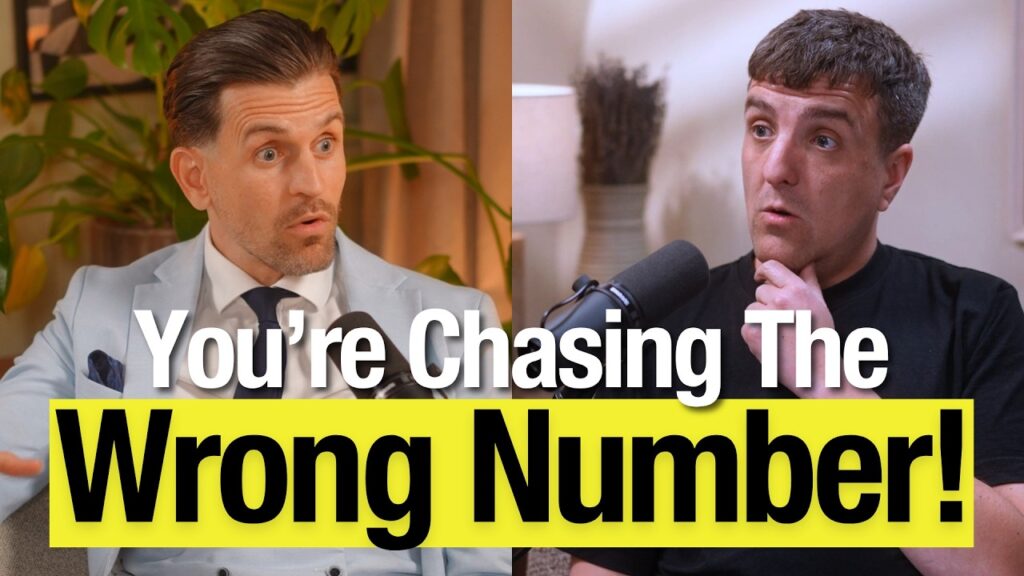
Listen to the pod


Ben Alistor built and sold an Amazon FBA business worth millions in revenue, then walked away from it to teach other people how to turn their own knowledge, from recruitment to English tuition, into a coaching business.
On this episode he breaks down exactly how he’d do it if he was starting from nothing today.
I’ve followed Ben online for years, so getting him in the studio to properly pick his brain was a treat.
He started out sourcing products from China and selling them on Amazon, built that into a business doing six to seven million in revenue over seven years, then pivoted completely into online coaching once he realised how much value his own experience held for other people.
What I liked most about this conversation is how unglamorous Ben makes the early stages sound. No funnels, no fancy launch, just posting content, getting comfortable on camera and putting a booking link in your bio.
We also got into the messier stuff: what happens when your content strategy grows your views but shrinks your revenue, and why Ben now thinks income generation should come before investing for most people starting out.
If you’ve got a skill, a job, or a weird niche interest that other people would pay to learn about, this episode is your practical starting point.
Ben on Instagram: https://www.instagram.com/benalistor/
Ben on YouTube: https://www.youtube.com/@BenAlistor
Creator Coach: https://www.creator-coach.co.uk/
———
Gains App is LIVE!
An AI-powered budgeting and cashback app designed to help you make more of your money.
Download here: https://gainsapp.onelink.me/8IhT/oiaimr1z
———
Get a FREE FRACTIONAL SHARE worth up £100 when you deposit £1 with Trading 212
https://www.trading212.com/join/MGP
If you don’t receive the free fractional share, head to the menu and put the word ‘MGP’ into the promo code section.
(Capital at risk when you invest)
Key takeaways
- Ben scaled an Amazon FBA business to £6-7 million in revenue over seven years before moving into online coaching, where he says profit margins run closer to 90%.
- Almost any job or hobby can become a coaching offer: Ben’s examples include a recruitment consultant teaching CV writing, an English tutor earning £140,000 a month on TikTok, and a Lego collector running a £15,000-a-month community.
- Growing your audience isn’t the same as growing your revenue. Ben’s own TikTok grew from 1,000 to 100,000 views a video, but the wider audience it attracted converted worse than his original niche following.
- The starting point for most people is simple: get comfortable on camera, post consistently, and put a booking link in your bio so people can pay for a call.
- Ben argues most people starting out should focus on increasing their income before investing large sums, since reinvesting in your own skills or business tends to produce a faster return.
Timestamps
- [0:00] Ben Alistor’s Journey From Amazon FBA to Coaching
- [4:30] Amazon FBA Basics: Product Sourcing and Margins
- [7:51] Tool: Why Selling Knowledge Beats Selling Products
- [10:56] Tool: Turning Your Job Skills Into a Coaching Offer
- [17:38] Tool: Getting Comfortable on Camera
- [19:33] Tool: The Calendly Link Method for Your First Clients
- [23:09] Views vs Revenue: The Niche Audience Trap
- [25:39] Scaling From Side Income to Six Figures
- [34:36] Income Generation vs Investing: Ben’s Take
- [39:44] Tool: The AI Tools Ben Actually Uses for Content
From Amazon FBA to a seven-figure coaching business
Ben started out as a recruitment consultant before getting into Amazon FBA in 2018, sourcing products from China and shipping them straight to Amazon’s warehouses. His first product was a two-handed tanning mitt, a small tweak on an existing product that solved a specific complaint.
He told me the numbers still stick in his head: “we were selling them for £9.99, we were buying them for £2.21… after fees, we were getting pound five pounds eighty three.”
Over seven years that business reached £6-7 million in revenue. But Ben eventually walked away from it for two reasons.
The margins, he said, sit around “20 to 30 percent, depending on time of the year, depending on the product,” and the cash cycle is slow: money goes out for stock, and it can be months before you see a return.
He also admitted the repetition wore him down after talking about “product research, speaking to suppliers, negotiating prices” for five years straight.
That’s what pushed him into coaching. As he put it, “you are selling your information, there are no suppliers, uh, there are no costs, therefore your profit margins are 90% plus.”
If you’re weighing up a physical-product side hustle against something knowledge-based, it’s worth reading his investing checklist alongside this episode, since the underlying question, where does my money and time actually go the furthest, is the same one Ben applies to his own business decisions.
How to find the knowledge you can actually sell
Ben’s core argument is that most people already have something worth teaching, they just don’t recognise it because it feels like “common sense” to them.
His go-to example is a recruitment consultant, who he suggested could teach graduates sales skills, CV writing, or how to climb the corporate ladder, since “recruitment consultant is sales, essentially.”
The examples he gave on the show back this up. One client, an English tutor, now makes £140,000 a month by his account, helping students improve their GCSE English on TikTok. A friend of his built a £15,000-a-month community around Lego collecting.
Another client, an archaeology professor by day, sells high-value collectibles on the side and clears roughly £10,000 from just two or three sales a month, despite getting only 500 to 1,000 views per video.
Ben’s advice is to stop discounting your own experience: “never discount what you’ve done because it’s it’s all in there.”
Whatever your day job or niche interest, the exercise is the same: work out what problem you can solve for someone else, and who would pay to have it solved faster than they could manage alone.
He also made the point that skills stack across jobs even when they seem unrelated.
Ben’s own background in hospitality marketing, for instance, fed directly into how he built his personal brand: “I know about branding, I know about socials, I know about funnels, I know about lead flow.”
The transferable part isn’t always obvious until you sit down and map it out, which is why he suggests writing it down properly rather than trying to work it out in your head.
Getting started: cameras, content and your first paying client
The practical first step, according to Ben, has nothing to do with courses or landing pages. It’s simply getting comfortable in front of a camera.
“The very first thing you need to do is just get comfortable in front of the camera,” he said, describing his own early attempts as feeling like he was “speaking to a microwave.”
His advice for new creators is to copy what already works in your niche before trying to find your own voice: study the hooks, the format, the topics your competitors are covering, then adapt it.
Once you’ve got some views and comments coming in, the next move is a booking link. Ben’s example was blunt: charge £50 for a call, put the link in your bio, and let people book in.
That first paying client, he said, is proof the whole model works, and it can be replicated and scaled from there.
Why more views doesn't mean more revenue
One of the more useful warnings in this episode is about chasing reach for its own sake. Ben described broadening his TikTok content from Amazon FBA specifically to side hustles more generally.
Views jumped from around 1,000 to 100,000 per video, and he gained 100,000 followers in a single week. But the audience shifted from adults who might buy his mentorship to, in his words, “a 15-year-old who wants to pay pocket money.”
His conclusion: “if you’re in the education space, the viewer is more important. If you’re in the entertainment space, the views is more important.”
It’s a distinction worth sitting with if you’re building any kind of content-led income, whether that’s coaching, a newsletter, or a niche community. Chasing the algorithm can quietly work against the thing you’re actually trying to build.
He also made a point about audience psychology that’s easy to miss: most people watching never comment or like, but that doesn’t mean they’re not paying attention.
Ben described people buying his mentorship after silently watching his content for over a year. Consistent, specific content to a smaller, well-matched audience can outperform a viral spike that brings in the wrong crowd.
Scaling and reinvesting your profits
Once a coaching business is generating a consistent £2,000-3,000 a month, Ben’s next steps are a proper one-to-one offer, a landing page, and email marketing, which he still rates as the strongest converting channel available.
From there, growth to around £20,000 a month typically comes from bringing in a closer or appointment setter to handle the sales conversations. Beyond that, paid ads open up a colder, global audience, though he was clear that stage takes considerably more work and budget.
On what to do with the profits, Ben’s view runs slightly against the conventional wisdom: “I don’t think you should be investing anything into an index fund, crypto, property, whatever, unless you have got six figures liquid… you should be focusing more on how much income you’re generating as opposed to your net worth.”
His reasoning is speed of return: putting £1,000 into a video editor or a better funnel can compound your income faster than the same amount sitting in a tracker fund while you’re still building the business.
It’s a fair point for anyone actively growing a side income, though once that income is established, the case for consistent, automated investing and letting compound interest do the heavy lifting only gets stronger, and it’s a topic worth exploring further in our guide to investing for beginners.
This transcript is auto-generated and lightly edited for readability, it may contain errors.
[0:00] Sammie Ellard-King:
Welcome back to the Money Gains Podcast. This is how to turn your passions and skills that you already have into a money-making machine. We’re joined by a very special guest today. His name is Ben Alistor. Ben, welcome to the show, man. How are you doing? Very well.
[0:12] Ben Alistor:
Very, very well. Thank you for having me.
[0:14] Sammie Ellard-King:
I bumped into you first at the creatorspace event at Champney. It’s the first time I’ve met you. But I’ve probably been watching you online for nearly a decade, I’d say. You’ve been doing this for some time.
[0:27] Ben Alistor:
Yeah. Yeah, yeah, yeah. I’ve been in social media now since 2020. I think we’ve met, what is it, seven, eight months ago? Yes. Stayed in touch. Give us such. Yeah, yeah, yeah. So been been around the block for a bit now, before the AI, now after with AI and all that stuff. So yeah.
[0:41] Sammie Ellard-King:
You built up a big audience online, but you’ve transitioned quite a lot over the years. Yes. What’s been that journey like for you?
[0:48] Ben Alistor:
So a bit of a background of myself. So I started in the online world, as people say, uh, with Amazon. Essentially, I was helping, I was basically starting selling on Amazon myself. I was a recruitment consultant. Thought to myself, hey, do I want to do this for the next 20, 30 years? Hate my life, hate my job. No, I don’t. Then I thought, you know what? How about I just look for a business where I can don’t need to hire stuff. I don’t need to put in a lot of money. I don’t need to get an expensive lease. Is there anything that I can do online potentially? And then I came across an ad basically that said, hey, you can buy products from China, bring them over to the UK or whatever country it is, you send them straight to Amazon’s warehouse, and uh you basically manage the process and make a make make money after all the fees are paid. So we started doing that in 2018. Um we did well over the seven years that we’ve been doing it. We’ve reached about six, seven million in terms of revenue. And in 2020, I thought, well, when COVID hit, why don’t I teach others potentially? So instead of just you know going on to like Netflix and doing nothing with your time, I thought might as well help out people on YouTube mostly. And um, yeah, that’s how it started. It started off really, really slow. I just literally put up my laptop, no camera, no nothing, just telling people how how to do it. And then slowly but surely people started taking notice. They started asking me questions, they started saying, Hey, can I book in for an hour call, help me with my business and so on? I thought, okay, interesting. And then they paid me. 999 pounds was the first call I did. I was like, oh, that was an interesting call. I just got paid for nothing and I get to keep all the money. Um, and then slowly but surely that morphed into having an Amazon FBA mentorship business. That did really well for four years. We managed to reach over a million in terms of revenue and mostly profit as well. And then last year I decided to give all of that away, change my brand completely, and move into essentially helping online coaches start their own info businesses. Because what happened was is that I realised how much opportunity there is when it comes to online coaching, personal branding, and just growing your own presence on social media.
[2:51] Sammie Ellard-King:
And here we are today. So talk to us a little bit about this Amazon FBA journey because it’s it’s it’s interesting for me because I I looked at that as well back in the day and was like very tempted by it. I mean, it sounds great. Does it still work and is it still something that people can get into?
[3:09] Ben Alistor:
Yes, it still works. Uh it worked for me. It still works for me. Uh we have now automated it to the point where I spend probably about three, four hours a week doing it. Everything else is being done by my team. Um, for people who are just starting out, it still works, but it’s a little bit more difficult than it was back in 2017-18 when people didn’t really know about e-commerce as well as they do now. Yeah. Now we have the likes of TikTok shop, Amazon, dropshipping, all that sort of stuff. So people are a little bit more educated and therefore the competition has risen. Um in the UK, it’s nowhere near as hard as it is in America because you have tariffs and Chinese goods to American audience. Yep, yep, exactly. So um one of my good friends who has done 20 million in terms of sales on Amazon in the US, one of his best performing products is basically a barbecue set, right? Really, really expensive and so on. And they are being sourced from China. And all of a sudden, his cost of goods cost of goods sold has jumped up by 170%. And on top of that, he’s getting sued as well because somebody burned themselves. So, as you know, Americans like to sue. Um, all of a sudden, you go from a very well-thriving business to all of a sudden potentially having the chance of closing down.
[4:18] Sammie Ellard-King:
Yeah.
[4:18] Ben Alistor:
Um, so yeah, but that being said, though, for somebody who is in a nine to five looking to make a little bit of money and is serious about it, it’s not easy, don’t get me wrong. Um, there is still a lot of opportunity out there if you’re gonna put in the time and the effort.
[4:30] Sammie Ellard-King:
What’s the like core fundamental basics? You mentioned the sourcing of products and then obviously selling on Amazon, but how does that journey work?
[4:38] Ben Alistor:
So the journey is really actually quite simple. So you have millions and millions of products on Amazon. Um, a lot of them are actually the same uh or similar. The key is to essentially find a product that people are not so happy with, that is slightly different, that’s slightly better, unique, upgraded, whatever. So, just to give you an idea, my very first product, um, bearing in mind I’ve never done tanning before was a simple tanning mitt, right? Now, everyone in the market had a tanning glove and that was it. And unfortunately, well, fortunately for me, a lot of people were um basically unhappy that they can’t tan their back. So I was like, okay, well, just there’s a problem here that we can potentially look to solve. So I looked into American marketplace and the Chinese marketplace, and there was a tanning mitt that was covering from this hand straight away to that hand. So you had like a whole thing connected where you, without a partner, without anybody in the shower, can tan yourself. Small difference, nothing crazy, but it’s enough of a differentiation for me to list that product on Amazon and start selling. This was my very first product. I know the numbers like the back of my hand. We were selling them for £9.99, we were buying them for £2.21. And after fees, we were getting pound five pounds eighty three. Nice, perfect, right? So £583 take away £2.21. That’s your profit. And if you sell three, four hundred units a month, that’s replacing minimum wage with one product within two months, and then you just scale up from there, and that’s exactly what we did.
[6:05] Sammie Ellard-King:
So then what about listing on Amazon? Because it’s such a minefield, right?
[6:08] Ben Alistor:
Yes, no, absolutely. So when it comes to listing on Amazon, um, you really want to pay very close attention to the images more than anything because we are very visual people. So if you were to sell a car or a house or anything, it’s the images that we like look into first. And this is where the UK sellers um really stand out because they know what appeals to the UK market far more than the Chinese. Um, but yeah, no, on top of that as well, SEO keywords used to be really important. However, now with the like of AI, if I were to sell this microphone and put up an image of this microphone, the AI will be able to say that this is a microphone that I’m trying to sell. So the keywords are nowhere near as important as they used to be. Reviews and stuff are very, very, very, very important, especially now with so many people scamming, etc., with you know, putting a whole bunch of fake reviews, and there’s been loads of uh newspaper articles, you know, of firms flooding the market with reviews. You have to make sure that the reviews are genuine, ideally with an image, um, to make sure that it’s it’s it’s a legit review. But yeah, they’re very important.
[7:09] Sammie Ellard-King:
I think the first time I came, obviously you’ve done Amazon FBA, but you’ve done so many other things as well. You tested so many different online business models. I mean, you did the, I think the first time I ever saw you was you did this um like I think it’s the A to F of side hustles. Side hustles, yep. Um, which was all which is like we all did that and yeah, the traffic light there it worked, it worked, it really worked. Um, but the in your opinion, if someone’s sitting there and looking at Amazon FBA like as an as a potential side hustle or job replacement eventually, yeah, like is that your favourite still, or is there other models which you think that people should look at?
[7:51] Ben Alistor:
So that is one of the reasons why I believe I now moved away from Amazon uh and moved more into the online coaching space. So, and I’ll give you two reasons for it. Number one, when it comes to Amazon, after all the fees and everything, I’ll just be dead honest with you, um, the profit margin is around 20 to 30 percent, depending on time of the year, depending on the product. Um, and secondly, you require to manage suppliers, to put a lot of money in in the very beginning. You have to wait. Like, for example, if I buy a product today, money comes out, it takes about two to three months for the product to come in, depending on the size of the product, then who knows how long it will take for Amazon to sell it, and then it takes two weeks from Amazon to get it to you. So as of right now, we’re in May. I’d probably see a return in my investment October, November, right? And uh, so that’s the first reason why I’m not sure if Amazon is with loads of risk and very exactly, exactly, exactly. And then, and then the second reason is why I moved away from Amazon is the fact that I just remember imagine talking about the same subject over and over again. Probably have an idea about what it feels like. I get that. Yeah, exactly. So after you’ve spoken about product research, speaking to suppliers, negotiating prices, creating a very first listing, PPC, I know it’s like the back of my hand. Um, five years in, you’re just like, I don’t care about the money anymore. I just want to evolve into something new, into something better, into something different. And this is where now I moved into the online coaching space because I believe majority of the audience, yourself, many other people have got the knowledge in their head to turn it into a coaching business. Um, I’m not a big proponent on schools and universities. Personally, it was a waste of time for me. However, uh same hand. Yeah. However, I do believe that a lot of us have the experience that a lot of other people would pay money for. Um, useful experience, interesting, good experience that will help people’s lives. And in that sense, from a business perspective, think about it. You are selling your information, there are no suppliers, uh, there are no costs, therefore your profit margins are 90% plus. Uh, you can get paid pretty much as quickly as possible as opposed to waiting six months. And uh it doesn’t require any risk. Like worst case scenario, if it doesn’t work out, okay.
[10:00] Sammie Ellard-King:
And the more you know, the more you charge. Exactly. That’s exactly right.
[10:04] Ben Alistor:
Yeah. Yeah. So, so in my opinion, is Amazon FBA a good model if you have no skills, no knowledge whatsoever? Yes, absolutely. However, now I believe more and more people should be going into social media. Um, I’ve got now clients who was a UX designer, an e-commerce coach, a male therapist, uh uh deal sourcing coach, um, Airbnb coach, like all of these people who have got these amazing skills and talents who are helping others, you know. So mental health, so many.
[10:32] Sammie Ellard-King:
And what about someone that’s like, because I’ve seen on your case studies you’ve started with people that didn’t have a coaching business before and they’ve started from zero. Yeah. So, like, what about the recruitment consultant that was sitting there today and they’re like, you know, fuck, that sounds so good, Ben. Like, I really want to do this online thing. What would you do with these guys in this case to kind of extract that ground out of them?
[10:56] Ben Alistor:
Yeah, no, it’s a great question. In the very beginning, before thinking, oh, need to put this on a course, a landing page, start taking course or anything like that. If you’ve never done social media before, the very first thing you need to do is just get comfortable in front of the camera. So when we get started, is literally just speaking about how to speak in front of a lens. Because for most people, including myself, when I started, it felt like I was speaking to a microwave. Like, what is this? Like, I’m I’m speaking, there’s no one in front of you. Like, what the hell is going on?
[11:22] Sammie Ellard-King:
Yeah.
[11:22] Ben Alistor:
Um, but slowly but surely you kind of get used to it. So, um, in the very beginning, with those people that you just described, we just work on just say something and press upload, like baby steps. And then as you get more comfortable, as you start to see views coming in and comments, you get more brave, you get more, more, more, you know, in your own zone, so to speak, you develop a personality. That’s when we start thinking, okay, what can we now provide to these people who are interested in what you’ve got to say? That’s it.
[11:47] Sammie Ellard-King:
So they look at what they like in terms of like establishing what they need to say, how are they going to achieve it?
[11:53] Ben Alistor:
So, for example, um, give me a job title. That’s the recruitment consultant. Recruitment consultant. Well, recruitment consultant is sales, essentially. What’s to stop you from helping uh university graduates improve on their sales skills? Okay, if you’re a recruitment consultant, you could potentially do a course or one-to-one mentorship on how to write up your CV and how to land your very first job after university.
[12:16] Sammie Ellard-King:
Nice. Okay, cool. We’re getting somewhere.
[12:18] Ben Alistor:
Um, as a recruitment consultant, you can potentially help, depending on how senior you are, how to climb the corporate ladder. Yeah. Right?
[12:24] Sammie Ellard-King:
And all of these things is content. Or get a great job or like change careers. There’s so many aspects, right? Exactly.
[12:30] Ben Alistor:
Yeah. That’s exactly right. So um, yeah, I think most people don’t realise how much knowledge they actually have um from another person’s point of view because we’re in it every single day and we’re just like, oh, this is common sense. So to a lot of people, it’s not. I was a recruitment consultant, so I know what a good CV looks like, but I also realise that most people don’t. Yeah. And therefore I can help them. I I’ve got actually a great example. So one of my best performing clients ever, she was an English tutor, and she decided to help people on TikTok improve their GCSE English. Okay. She makes 140 grand a month. A month.
[13:09] Sammie Ellard-King:
Wow. By online tutoring. That’s nuts. Utilising social media for lead flow.
[13:17] Ben Alistor:
Exactly. On top of that, you have the referrals base. On top of that, you now have results that my students on average get a 20% increase in grades. All of a sudden the parents are interested. Next thing you know, you’re living in Dubai. Yeah, you’re not marketing their kids, you’re marketing the parents. Exactly. Exactly. And all she does is two things TikTok, YouTube, and has a beautiful, beautiful laid-out funnel. That’s super simple. And a team of nine people. Just a few years ago, she was an English tutor. I love this. I love this. So it’s very no suppliers, no costs, nothing, just what you know. English. Like it’s not, you know, it’s not a rocket science.
[13:54] Sammie Ellard-King:
Well, she’s doing it on a daily basis. Exactly. So if you’re a teacher sitting there in geography, you could go and teach kids how to improve their geography grades. Exactly. Or you, you know, there’s so many other ways of that, you know, teaching people the ways of the different places of the world. You could even go into travel, you know, and look at it like that. 100% you understand the the you know the maps better than anyone else, or whatever that might not be. Map reading, all of these things. There’s so many cool things that you can explore, you know. And it’s this is why I say to people that it when you know we we do helping people grow on social media a little bit as part of uh of of our business. And what I always say to people is never discount what you’ve done because it’s it’s all in there. You’ve been growing. Of course. You don’t know when those things are going to come into play. You know, I was doing marketing for hospitality. Yeah, you know, has that helped my personal finance business? Absolutely. Of course. By the like tenfold, because I know about branding, I know about socials, I know about funnels, I know about lead flow. But do you know that you know all those things? Did you realise? I didn’t, I didn’t, I well, you I did when I sat down and wrote the business plan. I wasn’t like, okay, cool, because I can I can do that.
[15:00] Ben Alistor:
I know more than I thought.
[15:01] Sammie Ellard-King:
Yeah, but then like, you know, it wasn’t a it will it did it didn’t take long for me to then you reutilize those skills. But I suppose the transition for people is a lot more simple, it’s a lot simpler than it actually has to be.
[15:14] Ben Alistor:
Absolutely. One of my one of my good friends who’s into Legos, he’s got a community that makes him about £15,000 a month because they discuss which Legos are going to come out, where to buy them, how collectibles, all that sort of stuff. Legos. Yeah. Legos. These are grown men as well. So I’m like, oh, is there a market? But turns out there’s a massive one.
[15:30] Sammie Ellard-King:
It’s really interesting you say that because one of um our first people that we put through the program, he sells like high-level collectibles. So, like um, you know, like the old school figurines and of like Han Solo and this type of thing. His videos get like 500 to a thousand views, yeah. But one sale for him is worth like 10 grand. So he’s literally laughing, and sometimes he does two, three sales a month, and it that’s a business for him. And he does that on the side of his main business where he does our he’s an assistant professor of archaeology in the day. And like, how cool. Absolutely, you know, like, and to have be able to deal that.
[16:08] Ben Alistor:
And what I love about what you just said is the fact that he wasn’t getting many views. A lot of people have this perception that you have thousands, millions of views in order to make money. I was making over two grand from my Amazon FBA mentorship business, and I had less than a thousand subscribers. My views were 200 on video per video, so it it doesn’t really have to do with how many views you get, it’s just how specific you are on the niche and the problem. And is there a market for it? Which in most cases there is.
[17:16] Sammie Ellard-King:
So let’s say we’re taking someone today. Let’s let uh we’ll do like a live example. Let’s do this, it’ll be fun, you know. So, like we’ve just taken this dude, recruitment consultant, and he’s gonna teach university students how to do sales. Yep, right, shit. Now, Ben, I’ve got to sit down and like do this camera thing. Yeah, you know, like yeah, where where would I start thinking about ideas for content creation based on that problem?
[17:38] Ben Alistor:
The best thing you can do in the very beginning is just look what works, look into the market, look at the people who are ahead of you right now, and look at what what kind of hooks are they using? Are they shooting straight to the camera? Are you talking head videos or are they outside? What kind of topics are they covering? And just there’s a there’s a fancy word for it, emulate, but I just like to say copy. Copy what works in the very beginning. As you continue to do so, you will get more comfortable in front of the camera, you will start developing your own voice, your own persona, your own characteristics, and then kind of move from there. Some people in the very beginning, they like to do free talking videos, others like a script, so they put like a teleprompter in front of the camera and kind of go from there. Um, there’s pros and cons to both, but literally for somebody who’s just getting started, it’s just getting kind of comfortable in front of the camera. That’s the first step. Well, once you get comfortable in front of the camera and you actually start getting some views and some interest and some comments, the most simplest thing you can do is just put up a Calendly link and say, hey, you need help, book a call. And then you just start. That’s all it is. That’s all it is. And in your example of recruitment consultant, £50 every weekend. Anybody that wants to have a chat with me for an hour, charge you £50 and kind of go from there. And then after that, um, you start seeing more and more leave flow coming in, and so and then you start noticing what problems most of these your your clients have, and then you start thinking, okay, what kind of product, what kind of service can I release to serve for service to demand?
[19:02] Sammie Ellard-King:
Yeah. It’s not rocket science. No, it’s not, it’s not, it’s not. But I think people get scared about that, and then they think about like the 10 grand and I need to think of the whole like massive flow and deal funnel and all of this, and like and it’s like becomes like, whoa, I don’t have to do any of that. Whereas you can start with baby services, like, oh yeah, just put some you know content up, calendarly link in your bio, start there, and then once you’re on the way with that, because I see this as like you get good at that thing, so let me now attack how do I work out how to write a sales page or funnel. Now I can get good at that.
[19:33] Ben Alistor:
And those are the people that I love working with the most because in the very beginning, the people on that have never done social media before, you’re kind of like a confidence coach, boost them, boost their ego, tell them go ahead, et cetera. Whereas the people who already have spoken on social media and maybe made a few hundred pounds, now you’re like, okay, you’ve got an audience, you’ve got an offer, you’re clearly known in the market. If we just make this simple landing page, if we employ some AI and potential some email marketing, we take you from 500 to 5,000 in a space of a month. Um, I’ve got a great example, which I actually worked with not too long ago. An Amazon FBA coach, someone exactly like myself, was doing 4,000 pounds a month, and every single one of his clients was on WhatsApp. I’m like, dude, how’s your weekends? And he’s like, I go to a to a restaurant with my parents, I go to the toilet and I’d look at it’s just like messages on top of messages, people messaging me like, Hey, how do you do this? How do you do that? And um, the following month, once we reconstructed his offer, increased the prices, all that sort of stuff, he did 17,000 and he most importantly got his life back. Like everything now was done in an email form, like where he says, Hey, I’ll respond to you money to Friday, nine to five. Right. So it’s it it goes from just like a little hobby, calendly here and there, to all of a sudden a fully fledged business with high profit margins to all of a sudden you’re like, Do I need to do this nine to five that I’m in anymore? Like I’m making more in a month than I did in half a year, right?
[20:55] Sammie Ellard-King:
That’s what’s scary. Yeah. Like, you know, when we when we do our launches now, you know, it it shocks me. I’m like, how is this possible? But it what it is is a self-fulfilling machine which is just churning and chinning and churning. And the more content we put out over time, trust builds, you know, and the audience goes in into an emailing list, they go background, they come watch this podcast, they do, you know, YouTube midform, you know, and suddenly they spend hours and hours and hours with you. And when you release a product, which is still designed to help you, by the way, it’s not like it’s just a load of we’re not selling, you know, a big bag of something of value because at the end of the day, your invitation is so important. Totally. Yeah. You know, we want to sell like this. Is the thing, we’re not just peddling here. We’re with the the it you have to be able to deliver on the promise. Yeah, otherwise, they no one’s telling that, or you get a bad review or a bad rep online for being that guy. Everything we sell is like done with the goal of like, this one is a hundred percent gonna help you. Yeah, no, like and it and it’s affordable and you can do it, and it should take you from A to B.
[21:57] Ben Alistor:
Well, on that note, there are two things. So the first one is what people don’t realise is that 99% of your audience watching your videos are what I call silent viewers. They’re almost likely not comment, they’re almost likely not like, they may not watch every single video, but when it comes to an offer as something interesting that that they are come like they are much more compelled to buy. There are times where I literally like had somebody buy my mentorship and I’m like, oh, where did you come from? You know, how did you see my content, etc.? It’s like, oh yeah, I’ve been watching you for a year and a half. What? Yeah, yeah, a year and a half.
[22:26] Sammie Ellard-King:
Yeah.
[22:26] Ben Alistor:
Um, so yeah, so it’s it’s you you never know. Like people think, oh yeah, a hundred views. That’s a hundred people that have seen your stuff.
[22:34] Sammie Ellard-King:
You did it today with the or yesterday with the room that gets bigger and bigger and bigger by the number of views. That’s exactly right. And it’s wild, right? You you know, you see 20,000 people, it’s a stadium. That’s exactly right. And people just think, oh, I’ve got 20 million views.
[22:47] Ben Alistor:
Because you compare yourself to somebody else. And you’re like, oh, it’s not a good idea.
[22:50] Sammie Ellard-King:
Yeah.
[22:51] Sammie Ellard-King:
Yeah.
[22:51] Sammie Ellard-King:
Yeah. As we we had this chat the other day, we were like, actually, we we’ve stopped going for reality now. We don’t want that because what it’s done is it’s skewed our audience. Yeah. And now we’ve got people that in there that want to know, you know, about debt and savings, and actually we want to be talking about investing. Yeah. And they don’t, they’re not ready for that yet.
[23:09] Ben Alistor:
So it’s it’s I I smile when you say that because I’ve made one of the biggest mistakes on social media when it comes to changing your audiences. So my TikTok was very, very slow, but it was very niche around Amazon FBA. And I thought, okay, well, what my what I’m gonna do is I’m going to start broadening out a little bit. I’m gonna start speaking about side hustles, et cetera. And I’m gonna bring in more people into me, and then I’m gonna educate them around Amazon and then they’re gonna buy my mentorships. What happened was is that did I get more people in? Yeah, absolutely. We went from getting a thousand views per video to getting a hundred thousand views per video. There was a time where we gained a hundred thousand followers on TikTok in a week because of the subjects that I was talking about. The problem is that the audience went from a 25-year-old male, someone similar to myself, who’s potentially interested in buying Amazon mentorship, to a 15-year-old who wants to pay pocket money and would never even be allowed to set up a business in the first place.
[23:59] Sammie Ellard-King:
Yeah.
[23:59] Ben Alistor:
So, you know, you’re getting half a million views, but are they actually increasing your revenue? And the reality is it didn’t. It actually made it worse. Um, so views, as they say, are not created equal. If if you’re in the education space, the viewer is more important. If you’re in the entertainment space, the views is more important. I think it’s really important to have that distinction.
[24:21] Sammie Ellard-King:
Yeah, and there is a business model with volume in there if you, you know, Mr. Beast news or something along those lines. If you want to report on the latest news, etc. Like you want that million views because you need people to come into your world to be a part of your machines.
[24:35] Ben Alistor:
But it’s a different world, it’s brands, it’s ads, it’s a completely different world. So, you know, Mr. Beast is entertainment and he’s doing quite well for himself.
[24:43] Sammie Ellard-King:
Yeah, totally. You know, and you know that that’s where you know the 100 million views makes a big difference. Exactly. It’s very, very difficult to get. I mean, I’d be very happy if I ever got to a million views on a video, but the it’s a it’s a very odd.
[24:56] Ben Alistor:
So I I’ve calculated not long ago, I think we’ve got 40 videos over a million views on TikTok. And one of the weirdest encounters was, and I realised I was doing something wrong. I was doing my self-checkout in Asda, and a kid, 12-year-old kid with his mom goes, Are you that side hustle guy? Can I take a picture? I thought to myself, you’re not my type, like sure, but you’re not my target audience exactly. Um and then I was just like, right, things need to change.
[25:18] Sammie Ellard-King:
100%, 100%. Yeah, no, I agree. In terms of in terms of scale, then what does that really look like for someone? So in terms that that that level of journey, so they’ve got this recruitment consultant, he’s now in this stage. He started creating content. What does that journey look like for him in terms of scale and how long does that roughly normally take?
[25:39] Ben Alistor:
I know it’s a very difficult question to no that’s that’s a broad question to ask, but it depends on how much time they spend on social media. But in terms of the actions that usually tend to happen, is you in the very beginning, you just have one-to-one calls, mentorship trying to figure out who your ideal customer is, what their problems are, and so on. Then after that, you can create a proper one-to-one mentorship for three months, six months, a year. You have a nice landing page that will outline exactly what kind of problems you will help them with. Um, on top of that, as well, you start email marketing as well, because I don’t know how much you know about email marketing. It is ChatGPT, this. Um, it is still by far the best platform to convert viewers into customers. It actually is better five times than any other social media platform, including LinkedIn, Twitter, etc. Email marketing is completely slept on. Um, so we get the landing page, we get the email marketing, we have a lead magni in order to get more emails, and we start increasing our revenue from two, three thousand pounds a month to about 15,000, 20,000 pounds. Once we get past the 20,000 pounds a month, then we can start looking into getting a closer and an appointment center. Basically, two people who will help you, who will help nurture the audience and push calls that you can do yourself, or one of them can do it for you. So you’re essentially starting to automate the whole process where you only have to teach what you know, and the whole sale aspect is being done by somebody else. So you all every single day is the same. You market yourself, you create content, and you help the students. That’s it, everything else gets done. And that’s from 20, you get up to about 100. Once you get maybe not 100, maybe like 80 to 100. Once you get to 100, then you can start running ads and going to a much, much colder audience worldwide. But that requires a lot of work.
[27:21] Sammie Ellard-King:
You know, like that scale in. Is there a limit to how much you can add?
[27:24] Ben Alistor:
There are there are creators right now that I know uh who are making 600 grand a month. Wow.
[27:30] Sammie Ellard-King:
What kind of products are they selling to do that?
[27:32] Ben Alistor:
Uh ironically, how to become uh better on YouTube. How to how to speak basically how to create is this your Ed Lawrence’s and people like that? Great example.
[27:43] Sammie Ellard-King:
Yeah, exactly.
[27:44] Ben Alistor:
Yeah, he’s one of them. Yeah. He’s he’s I think he’s done uh so far this year over like two million or something as well in month May.
[27:52] Sammie Ellard-King:
Yeah, yeah. Incredible, man. Yeah, and this is info-based coaching businesses.
[27:57] Ben Alistor:
Even a better example, um, Alex Hormozi. So I went to one of his uh seminars, so to speak, which is basically like a workshop. Vegas ones. Yep, yeah, yeah. So I had to pay five grand. There was a hundred people there, and then after that, we were upsold uh his classroom essentially, which is a day with him in a smaller group setting for 15 grand. Um, I’d say a third of the people signed up to that. Now, when you do the math, half a million, five grand straight away, and then 15 times 30% of that, that’s another 600, something like that, right? You you bring that two together on a monthly basis, you get paid over a million with next to no cost.
[28:38] Sammie Ellard-King:
So that’s 15 million a year if he does it, you know, once or twice once a month. Exactly.
[28:43] Ben Alistor:
Yeah.
[28:43] Sammie Ellard-King:
Plus everything else, which could then lead from that as well, the one-on-one aspect and etc. And then it goes even further, right? So there’s levels and phases to it.
[28:51] Ben Alistor:
Obviously, Hormozi’s uh top of the food chain and well see the thing is I also believe I don’t know, you may disagree with this. I believe how much you’ll be paid has got very little to do with uh what you know. It has a lot more to do with how many people know you. So I’ll give you an example. If Alex Hormozy made a story and he said, Hey, tomorrow Calendly Link is open, you know, um one-to-one calls 20 grand each, I’m pretty sure he would sell out like this. Now, question is Is he the best business coach in the world? Probably not. There are Fortune 500 companies, billions and billions in assets that probably would give you just as valuable advice, but they can’t charge the prices that Alex Hormozy is charging because, well, they’re not as well known. Yeah. Right.
[30:44] Sammie Ellard-King:
So um another one that’s interesting for me is like Myron Golden. Do you know him? Yeah. Myron Golden, brilliant on YouTube, incredible. Yeah, he has a a day that costs a million dollars. Yeah. And you know, but it’s only because he’s well known. Yeah.
[30:59] Ben Alistor:
So it’s it’s all about who knows you. As opposed to how much you actually know.
[31:04] Sammie Ellard-King:
And this is obviously the top end of the food chain. They’ve worked years to get them to this point. But that’s the possibility of scale with this. Yeah. It’s essentially consistency showing up and making sure you’re delivering value to the people so they just continually talk about you, right?
[31:20] Ben Alistor:
Exactly. Exactly. But what’s also interesting is that Alex Hormozi, Iman Gadzhi, many others worked in the shadows for years. Nobody knew about them, and all of a sudden they just pop out of nowhere.
[31:29] Sammie Ellard-King:
Well, Iman had that social media agency that like struggled to make ends meet.
[31:33] Ben Alistor:
Eight years ago, I think he started his his social media. Yeah, 17 or something, wasn’t it? Exactly. So for that long to be doing, and all of a sudden they spike up out of nowhere. So for anyone who’s just starting out and you’re not getting results in the first month or so, like this is nothing. Like you know, like it’s okay. And obviously, this is where I come in to kind of speed up the process and speed up to your learning curve. Um, but um, these things take time.
[31:57] Sammie Ellard-King:
I love your content because it’s really open and like there’s always value from it as well. Like you’re giving the source away and a lot of things, and you’re giving people the opportunity to like take something from your content as like I can actually go and implement that yeah today. Yeah. And then, oh wow, because Ben told me that. Now I can trust him and I might need him for this. And that’s a really smart play.
[32:18] Ben Alistor:
I also think when it comes to information, I used to believe, again, you can disagree, it’s all about value, value, value, value, value, right? And I changed my opinion about that just a few months ago because if I just provide value, let’s say I’m in your niche, right? And I provide value about personal finance. Why would somebody pick from me as opposed to you or somebody else? The reality is is because of personality. So you need to have your story and personality in the mix. If you just give out value all the time, you’re not giving people a reason to buy you, know you, trust you. Totally, right? So I now start to slowly move my content more about like my own personal story, like how I literally, before the podcast started, how I came from rough background, right? How so ex-Soviet Union, you know, and all that sort of stuff. Um, what’s going on in my daily life, uh, what my struggles are, that bringing in that authenticity, so to speak. And people really um resonate with that. Like I did an email not long ago, you know. Most people do emails to sell. I did an email saying, hey, I’m going in for back surgery, and so many people responded, like, hey, fingers crossed, hopefully it all goes well, etc. etc. It humanizes you a lot more as opposed to just the value guy. Yeah, you know, um, big, big difference.
[33:27] Sammie Ellard-King:
We try and do that a lot in our stories as well. It’s just like that connection with the audience. Exactly. This is who I am, this is what I’m up to this weekend. And it’s like fed into value and sometimes call to actions to get the lead magnets or uh whatever their mind well be. So it’s not always just like take, take, take, take, take. Even so, the lead magnets are still valuable, but they’re like it feels like that to the audience otherwise if you’re like just constantly being like, download this thing. Exactly. Oh fuck off, you know. That’s so true. It’s so true. Yeah. Yeah. So it it comes to that. So you’ve done extremely well um in business. Okay.
[34:01] Ben Alistor:
I I I hope so. But um, yeah.
[34:03] Sammie Ellard-King:
I think you’ve done well. Like, I think you uh you know, you created a uh a brilliant uh community course, you’ve pivoted, you know, you’ve been through all of the pain, you’ve gone out the other side and now working on something which you’re really passionate about. You can see it in your content, it’s amazing. Yeah. In terms of what you do with let’s say you, you know, you’ve you you’re taking some of the profit off the table in your own personal finance world, obviously you’re running a business. What’s your your process look like to perhaps reinvest some of those profits as well?
[34:36] Ben Alistor:
Um so uh first of all, when it comes to personal finance, there are a couple of things. Number one, I don’t think you should be you’ll probably disagree with this. I don’t think you should be investing anything into an index fund, crypto, property, whatever, unless you have got six figures liquid. And by that I mean is that you should be focusing more on how much income you’re generating as opposed to your net worth. Because let’s say you have two grand a month job, you put in 500 pounds into an S&P 500 by the end of 12 months. Okay, you probably made a 10% on six grand, 500 pounds. Congratulations. But if you actually focused on improving your skills and and leveling up and so on, and this you can go from making two grand a month to 10 grand a month, and I think that will speed up your your your journey so much faster. And then when you have six figures and you have nothing to do with that money, which rarely it happens, then you can start investing into the things that you know the best, right? So I can never give somebody advice and say, hey, invest into crypto gold and houses and all that sort of stuff. I think all of those instruments have their place and they can work, but it really depends on which one do you prefer the most, which one are you mostly interested in, and so on. Um, for example, for me, I like to invest in blue chip stocks because I just casually I’m interested in them, what’s going on in the American markets, and so on. Um, other people say, hey, investing into property is so much better, but I have no interest in it. Right? I have no interest in it, I don’t know how it works, I’m not good at it, etc. So why would I invest into something that I don’t really know? Because somebody else said to me. Okay. That’s number one. Number two, I also believe like try and invest back into your business as much as possible. So if you’re gonna go down the social media route, maybe invest into a thumbnail designer, video editor, uh, dialect coach, work on your body language as you’re speaking. That will increase your income, and therefore you then get more money in order to invest to whatever things you want to do. Um, so that’s my best advice, to be honest. I I’m not one for like, you know, they say hashtag not personal advice, but this is what I would do if I were to start all over again.
[36:37] Sammie Ellard-King:
It’s interesting you say that. Like, I do totally see your point. Like, you are there is a lot more value in increasing your income and investing in yourself because at the end of the day, you’re the one that’s gonna bring the bacon home no matter what. I think it is still the only thing I would disagree with the touch there, is like it’s still good to get that £50 away or that £100 away if because you can just set that up once and automate it, right? You can.
[37:01] Ben Alistor:
Absolutely, you can, is just so slow. Let’s be honest, it’s so slow. Oh, yeah. It’s so slow. So it’s like right. Well, it’s not just about money, it’s like also speed of money. Like if I invest a thousand into an index fund or if I invest a thousand into a video editor and therefore make my videos better and therefore get more clients. Where’s the better ROI? In my opinion, in most cases, the ROI is going to be better on the second option. I completely agree with you.
[37:27] Sammie Ellard-King:
Yeah, I mean it there’s that’s why I actively reinvest most of everything we do back into the business. Yeah, surplus cash gets put into the investments, and that’s surplus cash, yes.
[37:37] Ben Alistor:
But people who are just starting out, they have a lot to invest into and they don’t have that much surplus cash.
[37:42] Sammie Ellard-King:
Best thing is to do yourself, exactly. No, I agree, 100% agree with you there. Um I just think that some people, you know, a lot of people listening to this won’t ever make that jump of investing into themselves and they’ll be happy in their corporate role. Yeah, and so the you need to do something.
[37:59] Ben Alistor:
Yeah, that’s true. Do you know what? I actually I agree with you there because a lot of people don’t have the financial discipline. So when you have a standing order coming out of 100, 200 pounds each and every single month and you don’t even see it, it’s just like, okay, well, I’m doing something right. Yeah, you know. So I guess I guess uh it doesn’t apply to me because I’m like a big saver. Um, but to a lot of people, we’ll just spend it on the night out and stuff and therefore not have anything to invest.
[38:22] Sammie Ellard-King:
Yeah, no, totally. But you’re right, like when it we had Rob Dix on, um personal finance author wrote a brilliant book, but he he brought up this thing called um called the three buckets of wealth. And number one is that security element, so that uh you know, that liquid cash, essentially you you need to have that. But once you’ve done that, it’s done. Yeah, you’re not gonna touch it unless your roof caves in. Yep. Number two is the index funds investments, that’s your compound machine. Yep, you know, again, automate it, five minutes, job done, see you in a bit. Then bucket number three is the aspiration, which is is the investing into yourself. It’s the you know, brilliant stock pick, which you know is gonna skyrocket because you put the time and research, put the five hours into researching it, you know it’s undervalued. Exactly. You know some insights that somebody else has done it know, that’s your aspiration bucket. But the large part of that aspiration bucket is massively increasing your income by investing into yourself, whether that’s to raise yourself up the corporate ladder or by starting your own thing and doing that, because that’s going to bring the exponential income, which is then gonna feed that compounding will as well.
[39:25] Ben Alistor:
That’s so true. Yeah, and it depends on people’s situations and their priorities. If you’re living under a bridge, probably savings is the number one thing you need to, you know, look into. Absolutely. If you’re if you’re making a hundred grand, two hundred grand and you’ve got a hundred in savings, then yeah, maybe investing into an index fund or somewhere else then makes sense. So it’s a really case-by-case basis, let’s be honest.
[39:44] Sammie Ellard-King:
How are you using AI at the moment to integrate into your content flow? And equally as well, for someone that’s sitting here thinking that you know the the recruitment consultant there that’s like, you know, that’s that sounds like fun, but I want to go and build out an idea. You know, can I use ChatGPT to help me with that?
[39:59] Ben Alistor:
Yeah. So um I used to use ChatGPT for scripting quite substantially. However, I realised it completely took away the character, the personality away from me, and I started sounding like ChatGPT. So you have to be really careful with using too many AI tools. The ones that have worked the most that come to mind are two, and then you’ll have to ask my video editor for more. The first one is ManyChat, probably about it. Yeah. So for people that don’t know, is basically you DM a certain word and then it will initiate a sequence of messages on your Instagram. It will soon be released. ManyChat flows, man, you’d be impressed. I love them. They’re going for ages. A good flow. Um, yeah, so um, and that will soon be released on TikTok, from what I heard as well, which is which would be very, very good. Um, so ManyChat is a must in my opinion. And then the second one is Opus Clips. I don’t know if you know Opus Clips are incredible, yeah, yeah. Exactly. So that one as well works for us really, really well. Um to cut your long form. Yeah, so it basically checks the hook and everything in it. Like, for example, this podcast, it could literally chop up the best bits, and therefore you can upload it within minutes.
[41:03] Sammie Ellard-King:
Um I still find it tiny bit misses the mark a little bit.
[41:06] Ben Alistor:
Yes, sometimes, yes, but you can get quite a few good clips that actually are quite good. Um, AI is a tool, it doesn’t replace people, it just helps them make their job easier, more efficient, is what I found. Um, and to be completely honest, by the time this podcast is released, there might be new AI and new AI. It’s so hard to give advice on that.
[41:25] Sammie Ellard-King:
Totally, man. So yeah, no, I use ChatGPT every day. It’s my ex, it’s my 10%. It’s also my little like, here is my whole idea. Yeah, I’ve done the work. Yeah, what are you thinking? Am I missing anything? Yeah, and then sometimes it’s like, and I’m like, that’s so good. Yeah, and it’s just the one line. Absolutely. Is it the rest of what it tells me? I’m like, yeah, whatever. But then I’m like, that is banger. I can’t believe I didn’t think of that. Yeah. And then it, you know, then it 2xs the value of what I can put out. Exactly. So I think that’s where I I say to people, it’s my extra 20% to make me 120%. Very good. And like that’s that’s the way I integrate it. If you start to think you’re like, I am a recruitment consultant, tell me a business idea, you’re using it very wrong.
[42:09] Ben Alistor:
Yeah. I just that being said, though, I’m a little bit concerned of what it does to us as a society because we’re now getting dependent more and more onto it. Um, I’m I’m very weird, but in my spare time, I used to like to play Sudoku. Now in easy mode, I can finish it in three and a half minutes. Haven’t played it for a year, just started playing it again. I can’t break under 10. Wow. And I’m like, what happened? Screen time. It’s not screen time, it’s just basically because we’re using less and less what we have in our brains, and we’re just relying so much on ChatGPT that all of a sudden all these mental puzzles, mental acuity, all of a sudden it starts to drop. So I’m very curious to know how damaging ChatGPT is to human brain because we’re using less and less. And you know what they say. If you don’t use it, you lose it.
[42:54] Sammie Ellard-King:
100%.
[42:55] Ben Alistor:
So we’ll see.
[42:57] Sammie Ellard-King:
Yeah, no, I agree. I agree. So look looking at what kind of what’s a big trend that you’re focusing in on? Like, what are you looking at right now in the market and thinking that’s exciting? I’m definitely going to be looking at that as to grow my online business.
[43:11] Ben Alistor:
Um, just literally doing what I’m doing, um, basically helping online coaches make more money because we I think there’s now a growing sentiment that hey, paying 9,000 pounds a year up for a university degree won’t get me the results that I want. Going to school, besides read and write, you know, I don’t need to learn about Irish history, which I did, you know, because my teacher was Irish, didn’t use it once. Um, so I think there’s a growing sentiment that, hey, if you really want to learn life skills, you may have to learn it from somebody who’s been there and done that. And that market is where it’s growing, in my opinion. It’s the easiest business that one could set up. Besides that, AI for sure, um, is going to be here, it’s gonna be here to stay. Um, but in terms of AI, I’m looking kind of like telling my team, okay, what can we do to improve and make it better? But also, um I’m looking like into the stocks like NVIDIA and all of those sort of places because that’s where the money’s at as well.
[44:03] Sammie Ellard-King:
Yeah.
[44:03] Ben Alistor:
So yeah.
[44:04] Sammie Ellard-King:
Ben, I’ve absolutely loved this, man. This has been good fun. It’s been a lot of fun, yeah. And the time has gone very fast. I know. Yeah, no, it really has. Because I was really looking forward to talking to you because I geek out on this stuff like all day long. And I was saying to Chris as well that you were coming on, he’s a big fan of yours, by the way. Um, he’s in my team. And, you know, I talk about personal finance and the front end all day long.
[44:27] Ben Alistor:
Yeah.
[44:27] Sammie Ellard-King:
Um, but actually on the back end, 97% of the time, we’re talking about this type of stuff and growing the businesses, and you know, should we change that ManyChat flow or is that word a power word? Is it gonna, you know, and all of these things. And like, this is what I really geek out on. So to have this type of conversation, I don’t have it often. And it is and so yeah.
[44:48] Ben Alistor:
You get to really nerd into which ManyChat automation works better, which sales copy works better, which lead magnet is gonna be better. Did this video get me more clicks? Did this video get me more clicks? Exactly. The list goes on and on, but and it’s fun, it’s so much fun. But in the very beginning, like I just want to make sure like people understand that you don’t have to complicate it. Like with the stuff that we’re talking right now is slightly further along. In the very beginning, start posting. Yeah, just start posting and have a calendar link and then let’s see what happens. Totally.
[45:16] Sammie Ellard-King:
That’s all. Yeah, and be prepared to do it for 12 to 18 months without seeing nothing for you.
[45:22] Ben Alistor:
Or sign up with me and do it.
[45:24] Sammie Ellard-King:
That’s the plug. All right, do you on that note? Where can people find you then?
[45:28] Ben Alistor:
Um, Ben Alistor, TikTok, Instagram, YouTube, uh, LinkedIn, every pretty much every platform out there, to be honest.
[45:35] Sammie Ellard-King:
We’ll link up in the show notes below. Um, and yeah, definitely go check out Create a Coach or Business Wikipedia. And um, yeah, it’s been a pleasure, man. Thanks for watching.
[45:43] Ben Alistor:
Thank you so much for having me, honestly.
Frequently asked questions
Ben worked as a recruitment consultant before starting an Amazon FBA business in 2018, sourcing products from China and selling them on Amazon UK. That business reportedly reached £6-7 million in revenue over seven years before he moved into online coaching.
Ben’s approach is to look at your current or past job, your hobbies, or anything you know well enough that it feels obvious to you but isn’t obvious to other people.
Examples on the show ranged from CV writing and GCSE tutoring to Lego collecting and high-value collectibles.
No.
Ben pointed to a client with an archaeology day job who earns roughly £10,000 a month from collectibles sales with only 500 to 1,000 views per video, and said he was making over £2,000 a month from his Amazon FBA mentorship with fewer than 1,000 subscribers.
Ben’s view is that, until you have six figures in liquid savings, reinvesting in your own income-generating skills or business (better equipment, a funnel, an editor) tends to produce a faster return than putting smaller sums into index funds or crypto.
That’s a personal call based on your own risk appetite and circumstances, not a one-size-fits-all rule.
He named ManyChat for automated Instagram DM sequences and Opus Clips for repurposing long-form video into short clips, but was cautious about leaning on AI for scripting, saying it stripped out his own personality and made him “sound like Chat GPT.” This content is for educational purposes only and should not be considered financial advice. When you invest, your capital is at risk and past performance is not a guarantee of future results. This article contains affiliate links; if you click through and make a purchase, we may receive a small commission at no extra cost to you.
———