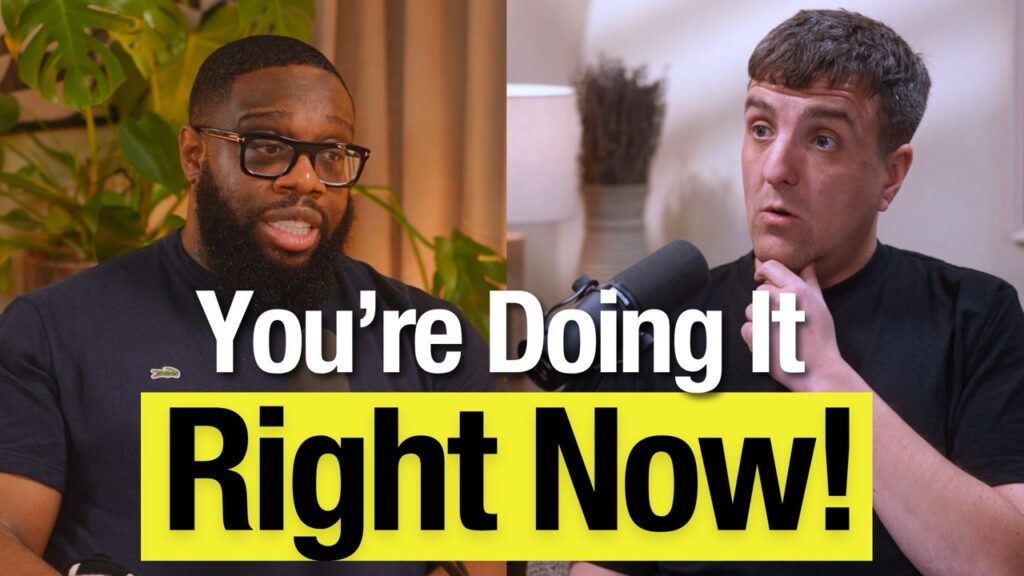

Shoshanna Davis, founder of Fairy Jobmother and careers consultant to a community of over 20,000 young people, joins Money Gains to tackle the question everyone in the workplace is asking: is AI coming for your job?
Her answer, recorded at a moment when the AI conversation was just heating up, still holds up: use it as a tool, keep upskilling, and stop panicking about things outside your control.
This week host Sammy L. King sits down with Shoshanna Davis, the woman behind Fairy Jobmother, a one-stop shop for young people navigating careers and confidence at work.
Shoshanna built her platform after spotting a huge disconnect between employers and young people, and she now works both sides of that gap: coaching graduates directly and helping employers understand the Gen-Z talent they’re hiring.
The conversation ranges from why so many people feel unconfident applying for jobs, to what actually makes a CV stand out, to the job-hopping debate that keeps coming up at every dinner table. But the centrepiece is AI.
Recorded before “AI and careers” became a headline on every news site, Shoshanna’s framing was already refreshingly calm: AI can go one of two ways, it can create jobs or eliminate them, and the only sensible response is to stay curious and keep learning rather than freeze up.
That’s the theme running through this whole episode, and it’s why it still holds up well after recording: whether the topic is your CV, your salary, or the robots supposedly coming for your desk, the advice is the same.
Get good at the fundamentals, stay adaptable, and treat every tool, AI included, as something that works for you rather than something to fear.
———
Gains App is LIVE!
An AI-powered budgeting and cashback app designed to help you make more of your money.
Download here: https://gainsapp.onelink.me/8IhT/oiaimr1z
———
Get a FREE FRACTIONAL SHARE worth up £100 when you deposit £1 with Trading 212
https://www.trading212.com/join/MGP
If you don’t receive the free fractional share, head to the menu and put the word ‘MGP’ into the promo code section.
(Capital at risk when you invest)
Key takeaways
- Only 54% of young people under 30 feel confident applying for jobs, and Shoshanna puts this down to a lack of transparency in hiring and a lack of practical careers education at school and university.
- A strong CV comes down to three things: keep it to two pages, use bullet points instead of paragraphs, and focus every line on results and impact rather than just listing responsibilities.
- Job hopping can genuinely boost your pay faster than staying put, but Shoshanna says it’s a trade-off between salary growth and the relationships, mentorship and network you build by staying somewhere longer.
- On AI, Shoshanna’s take at the time of recording was that it will likely both create new jobs and eliminate others, and the best response is to get comfortable upskilling repeatedly throughout your career rather than fearing any single wave of change.
- Investing in yourself, whether through a course, a mentor, or simply carving out regular time to learn, is something Shoshanna credits directly with turning her business around once she went full-time.
Timestamps
- [2:52] Who Is Shoshanna Davis and What Is Fairy Jobmother
- [6:22] Why Young People Feel Unconfident Applying for Jobs
- [8:59] How to Make Your CV Stand Out From the Crowd
- [14:33] Creative and Out-of-the-Box Job Search Strategies
- [20:09] What to Do When You Don’t Know What Career You Want
- [22:45] The Job Hopping Debate: Salary Growth vs Loyalty
- [29:14] Is AI Going to Take Your Job
- [33:57] Using AI as a Career Tool Without Relying on It
- [42:57] How to Stay Relevant as the Job Market Changes
- [44:34] Why Investing in Yourself and Upskilling Matters
Who is Shoshanna Davis and what does Fairy Jobmother do
Shoshanna Davis is the founder of Fairy Jobmother, which she describes as “a one-stop shop for young people on all things careers and confidence at work.”
Alongside the direct-to-young-person side of the business, Fairy Jobmother works with employers to help them close skill gaps, set up early-career programmes, and genuinely understand the young people they’re hiring.
Shoshanna started out simply sharing careers content online, which grew into coaching, a stationery range, and digital products, before she left her full-time job to focus on Fairy Jobmother full time.
Her core observation is that there’s a persistent disconnect between employers and young people that runs in both directions.
Employers don’t always understand what motivates or worries a Gen-Z hire, and young people are rarely taught how to navigate the hiring process at school or university.
That gap is exactly what her business exists to close, and it’s the lens through which she answers every question in this episode, from CVs to AI.
Why young people feel unconfident applying for jobs (and how to fix your CV)
Sammy raised a National Youth Mental Health Survey stat that only 54% of young people under 30 feel confident applying for jobs.
Shoshanna’s explanation is twofold: hiring processes are often opaque, with no visibility into interview stages or what employers are actually looking for, and school and university simply don’t teach people how to job hunt.
On top of that, she cited a figure from the Institute of Student Employers showing applications per role rising sharply, partly driven by cost-of-living anxiety and the ease of “easy apply” on platforms like LinkedIn.
Her practical CV advice is blunt and specific: keep it to two pages maximum, use bullet points rather than paragraphs so a busy employer can skim it in seconds, and make every line about results and impact rather than just responsibilities.
Her reasoning is simple: every candidate in a role has responsibilities, but employers are hiring for what you actually achieved with them.
If you’re weighing up whether a career change or a side project might be a better use of your time than another CV rewrite, our Money Personality Quiz is a quick way to get a clearer read on your own priorities before you decide.
Creative ways to stand out in a crowded job market
Beyond the standard CV, Shoshanna shared some of the more inventive approaches she’s seen work, from a friend who stood outside L’Oréal’s offices holding a “hire me” sign and landed her dream PR job, to a CV designed to look like a Spotify playlist for an application to the streaming giant.
Her caveat is important: gimmicks like gifted PR packages or elaborate stunts often involve spending money, which puts people without spare cash at a disadvantage, and creative formats only really work in certain industries.
If you’re going for a role in finance or accounting, a beautifully designed CV won’t compensate for weak content.
Her more accessible suggestion for graduates without much traditional experience is to build something of your own: a podcast, a social media page, a small project in the area you want to work in.
It shows initiative and gives you real experience to put on a CV, even before you’ve landed a formal job.
It’s the same instinct behind building a side income more generally, and our guide to top ways to earn a side income covers practical starting points if you want to build something alongside your main job or job search.
The job-hopping debate: salary growth vs loyalty
Job hopping came up as one of the episode’s hottest topics.
Shoshanna agreed with the premise that moving employer is usually the fastest way to grow your salary, since typical pay rises within a company sit around 2 to 5%, compared with the bigger jumps often available by switching roles.
But she was clear it isn’t purely a numbers game: she stayed at her own graduate employer for five years, turning down offers with significantly higher pay because she valued the network, mentorship and challenge she was getting where she was.
Her advice is to weigh salary against what else you’re getting, especially early in your career when learning matters more than maximising every payslip.
This trade-off between switching for pay and staying for growth is a theme that comes up across the Money Gains back catalogue.
Our rebuilt episode with Dan Mian on negotiating a pay rise tackles the flip side of this: how to get paid more without necessarily leaving at all.
If you’re currently weighing a move, it’s worth checking the actual difference an offer would make to your monthly finances, and our take-home pay calculator can show what a new salary really means once tax and National Insurance are accounted for.
Is AI going to take your job (and how to use it as a tool)
This is the episode’s title question, and Shoshanna’s answer, given at the time of recording, was measured rather than alarmist.
AI, she argued, can go one of two ways: it will create entirely new jobs while also eliminating some existing ones, and the healthiest response is to get comfortable with the idea that you may need to upskill more than once across your career.
She also offered a wider reframe: if AI ever did eliminate large numbers of jobs, it would force society to redefine what success and contribution even mean, which she found less frightening than the immediate panic suggests.
On using AI day to day, Shoshanna was practical rather than evangelical.
At the time of recording she used tools like ChatGPT to structure meeting notes and outline pieces of work, but deliberately avoided relying on it to write finished emails or full pieces of content, partly because free versions were working from data that was already out of date.
Her rule of thumb, echoed by Sammy, was to treat AI as a way to add extra capacity on top of your own effort rather than a replacement for it: use it for the 20% extra, not the whole 100%.
She’d also seen employers start using detection tools to spot low-effort AI-generated job applications, a reminder that leaning on AI too heavily can backfire in a hiring process specifically.
Staying relevant: upskilling and investing in yourself
Given how quickly careers advice can go stale, Sammy asked how Shoshanna keeps her own guidance current.
Her answer was about staying immersed on both sides of the market: networking with employer groups like the Institute of Student Employers, staying active on LinkedIn, and following marketing and social platforms closely given her own background.
She also blocks out dedicated learning time every other Friday to work through a course or read up on something new.
Shoshanna was candid that investing in herself, including hiring a business coach once she left full-time employment, was one of the best decisions she’d made, paying for itself many times over from the first few deals it helped her land.
Her closing message to anyone feeling stuck is to stop treating career decisions as irreversible: try something, and if it doesn’t work, try the next thing.
Getting your day-to-day finances in order first makes that kind of experimentation far less stressful, and our budgeting calculator is a simple place to start if you want a clearer picture of your numbers before making a change.
This transcript is auto-generated and lightly edited for readability, it may contain errors.
[0:00] Sammie Ellard-King: Hello and welcome to the Money Gains Podcast. This is your host, Sammie Ellard-King, and we’re back this week with my guest who is Shoshanna Davis from The Fairy Jobmother. Now, if you are in your workplace right now, you’re thinking about should I get a new job? Should I job hop? Should I apply for that job? Should I go for it? What do I do? This podcast is for you. We also discuss about AI. Is it going to take your job? What happens if it does? What does the future look like with AI involved and how you can use AI to potentially level up? We talk about upskilling as well. Upskilling right now, always stay curious. Steve Jobs said it, says a famous quote, and I really do believe that, and so does Shoshanna too. We discuss all about how important it is to stay learning and stay upskilling too. If you’re listening on Apple or Spotify, whack that follow. Please do share this podcast with a friend. It really does help the show grow, helps us attract more people, helps us help more people. That’s what we’re here to do. Um, but for now, let’s get started on the Money Gains Podcast.
[1:03] Sammie Ellard-King: The Money Gains Podcast, financial guys, concrete. The 24/7 podcast. So, Shoshanna, welcome to the Money Gains Podcast. How are you doing? You well? Yeah, I’m doing good, thank you. How are you? I am very well, thank you. Yeah, not too bad. I’ve just been out for a nice lovely walk and a bit of the winter sun. So uh need that when we’re working all indoors all day on the laptop. You do need to get a bit of sun on your face. But how are you? How what’s how’s it how’s business been going at the moment? Yeah, business has been going good. Obviously, we’re kind of December, so I’m kind of just in that period where it’s like kind of the two-week rush of closing things out before the end of the year and then trying to close business for next year. So I’m not gonna lie, it’s a little bit hectic, and but it’s all part of the fun, isn’t it?
[2:01] Sammie Ellard-King: So it’s that time of year, isn’t it? It’s just like mad. Yes, get me to Christmas. I need it. Do you like Christmas and you’re a big Christmas fan? Yes, I do. Yes, I do like it. And just the time with like family and friends and downtime is nice. Not so much about Christmas Day, I think just the you know, you’re in that bubble between like Christmas Eve to like basically till the end of the year, right? Of just chill and eating lots of food and spending time with people you care about. So yeah, I’m looking forward to it. 100%. Like the for me, it’s like the turkey sandwiches, which are like on the day after Boxing Day and smashing every leftover I can find into a sandwich. It’s always good every year, and there’s always a new chutney or a new sauce that comes out that you never heard of. So I wonder what it’ll be this year. But um, if you wouldn’t mind telling the audience a little bit about you and what you do, yes, absolutely.
[2:52] Shoshanna Davis: Um, so my name is Shoshanna Davis, and I am founder of Fairy Jobmother, which is a you know community slash company. Um, and really my mission or the what we do is all about effectively um oh god, I’ve sorry, what’s and what we do um is all about effectively. So um Fairy Jobmother is essentially a one-stop shop for young people on all things careers and confidence at work. Um, but then we also work with employers to essentially help them address skill gaps, set their young employees up for success, and ultimately understand young people better. Um, as through the work that I’ve been doing, um notice there’s kind of a huge disconnect between employers and young people, and then also kind of vice versa, and the two don’t really understand each other. So I would say the kind of mission of my company is to help both sides understand each other a little bit better.
[3:49] Sammie Ellard-King: Well, I love that because it is tough, even for like people, not just young people, but I remember coming out of uni and it was like really difficult. It’s like kind of like, right, you’re done now. Go on off into the big bad world. Like there was really no support system, and there was kind of no one that you could turn to, or no guide, or just there wasn’t there was nothing really. Like, so it’s lovely that you’re doing that. So you’re are you a job board or are you coaching people? How does that work? Yeah, um, so I’ve been running Fairy Jobmother for about three years now. So I recently actually left my full-time job to focus on it full-time. So it’s kind of in that transition period, transitioning from what was a side hustle to a full-time business. Um, so initially, I didn’t actually really mean to start out a business. I just started sharing social content online, which did well, and I built a little bit of a community from that, um, which I was able to monetise in a couple different ways. So I was offering coaching, um, I developed a stationary range, um, which was everything a young person could want when starting their first job, um, had some digital products. Um, so I do still kind of do that side, um, but in but I’m also in the transition period at the moment, so focusing a lot more on the kind of employer B2B space. Um, so work with a bunch of employers to do a couple things. So, number one, to help train their graduates, interns, and apprentices when they come into the organization, um, as kind of like what you said before, when we go to university or when we’re at school, we learn how to become experts or know a lot about particular subjects, but we don’t we aren’t really taught anything about anything else. So, the key soft skills you need for work, so things like effective communication, confidence. So, I do a bunch of training on that. Um, I also work with employers to help their line managers and leadership teams understand young people better as well. So, who are they? What are the best ways to work and understand them? And then do a bunch of consulting as well for employers from both a kind of learning and development and program perspective. So maybe some smaller employers who have a budget, they want to build early career or graduate programs, they don’t know how to do it. Um, and then also do some consulting and like execution from employer branding. So I’d say really um I’m a mixture of all things B2C on the community and working directly and helping with young people, but then also on the B2B side, helping employers and young people in that space too.
[6:22] Sammie Ellard-King: Wow, okay, cool. So a lot of it in the employer side, because that’s great, because I think that’s what’s needed, especially when you come out there, the employers could be doing a lot more to kind of give people the leg up. Um I read a stat, the National Youth Mental Health Survey, it was 54% of young people under the age of 30 felt fairly or vet um felt fairly or unconfident about applying for a job. That’s nuts. Like, why do you feel like that is? I feel like it’s one of two reasons. Um, number one, probably the whole mission of my company, there is just a huge disconnect at the moment between employers and young people, and young people and employers. And I do feel like the whole process or game of applying for a job is often made to be like some kind of you know mystical process between the candidate and the employer when it just doesn’t have to be. Um, there’s still not a lot of transparency around even the interview process for a lot of jobs or the whole process. So when you’re applying for a job, you don’t know the stages that you’re gonna go through, you don’t know how many interviews there are gonna be, which then obviously causes anxiety from a candidate’s perspective as they just completely don’t know what they’re going into or who they’re up against. Um, and then secondly, I also just feel like kind of like what you said, Sammie, and also another reason why I started my platform is we just aren’t really equipped with the skills to navigate job hunting or even work at school and university. There is some support at university, but it’s not always the best support, it’s not always the most up-to-date support, and it’s not always the most accessible support either. So I think two reasons the disconnect, but then also the fact that we just aren’t really set up education-wise to deal with it.
[8:59] Sammie Ellard-King: 100%. Like, I remember back in the day, I left uni, there was a couple of classes. There was like a CV building class, and they gave you like this basic portfolio um template that you could do. I mean, it was pretty basic. I mean, like, honestly, probably better off just looking online and like actually finding off myself. Like when you’re going into that situation, you’re going up against a ton of people coming out of university going for these roles, and you do need to stand out. Like, how important is it to stand out with your CV and your portfolios and your cover letter and all of those things? Yeah, I mean, I de absolutely, I definitely think it’s important to stand out, and you’re completely right when you said that you are up against a lot of people. Um, I think nowadays, even more so. So I was reading a figure, I think it was from the Institute of Student Employers. In the past year, applic the amount of applications for each role have increased by 34%. Um, so there are more applications than ever before, more people applying for roles. Um, I personally think that’s due to a mixture of reasons. Maybe one could potentially be the cost of living. There’s a lot of anxiety around getting a job. So I think people are almost panic applying. I want to increase my chances. So I’m just going to apply for as many jobs as possible and see what happens. Um, I think equally, lots of employers are now starting to up their game and invest more money in kind of promotion, whether that be through social media, whether that be through things like influencers, which are good on one aspect, but then also equally it’s more of a headache for employers because they get more applications, which they then have to deal with, but also it makes the competition higher. Um, and then I also feel like things like LinkedIn, easy apply, when it’s just so easy to literally go on LinkedIn, you upload your CV, you click easy apply, and that’s your application. Um, that’s definitely increasing the volume of applications and the ease of it for sure. Um, it’s definitely important to stand out. I think from my perspective, when it comes to your CV, the most important things that you need to pay attention to are, you know, your CV must be quick and easy to read, especially when an employer has hundreds to look through. So, how can you get that employer to see the most important snippets of information about you in as short a time as possible, right? So these this comes down to things like layouts. So ideally, your CV shouldn’t really be more than two pages. There’s all this umming and ring about one pages. I think one page resume that’s very American. I mean, ideally, two pages is more standard, but I mean, if you’re a recent graduate, you probably shouldn’t have two pages because it’s unlikely you’re gonna have that much to put on it. Um format-wise.
[11:49] Sammie Ellard-King: It can go past that. Like if I I’ve been in that situation where I can’t fit the two pages because I’m like got like a list of jobs. Do you cut them off? Do you go past the two pages? What do you suggest there? I I mean, yeah, I would you only want to have the things that are kind of most relevant and most recent. So if you’ve we’ve been in industry for 15 years and your CV has your most your past 15 years’ work experience, it’s unlikely to be two pages. So, yes, I would recommend cutting off or at least maybe reformatting it. So based on the job you’re applying for, you have the kind of most relevant pieces of experience there and cutting it off, um, for sure. Because no one’s gonna no one has time to read more than two pages, no one is gonna read it at all, so don’t feel like they will. Um bullet pointed as well. So your experience section and what you’ve done needs to be bullet pointed, it needs to be snappy so an employer can just skim through it as opposed to paragraphs. Um, and then I think finally the most important thing, and a lot of people get this wrong, is your CV needs to be kind of results and impact focus. So instead of just focusing on responsibilities, because in every job, everyone has responsibilities. That’s not showing that you’re good at your job, right? That’s not going to impress an employer. What is going to impress them is to show them what you’ve been able to do with those responsibilities and then the results you were able to achieve. So after every point, you ideally want to think, what was the impact of this? What was the result? And kind of try and quantify it in as many ways as possible. Because ultimately, you need to put yourself in the mindset of an employer. They are looking to hire people that can deliver results. They’re looking for people that can make or save them money that can save them time, regardless of the experience you have. These are the things every employer is looking for. Um, so those are some of my top tips.
[13:35] Sammie Ellard-King: I love that. That’s really good. I’m sure that people are gonna be like, crap, like let me go and rework my CV now because there’s certainly things that you said there that I’m like, oh, I haven’t done that on my one. I when back in the day, um I wrote I ran big teams and always hiring, and we were always looking for roles. And I often found my personal standpoint as you know, I’m a director, I don’t have a lot of time to look at these CVs, but I want to make sure I’m getting the right candidate. If for me they didn’t nail the first couple of lines of their bio, then I wouldn’t I maybe might scan down and see if they could rectify it once. But if again, if something didn’t land there, so I’m skim reading, I’m going two lines, oh, this person’s good, or this person’s not good, and that CV gets canned, even if they could actually have been a really good candidate, because of the amount of time directors have got there. So it’s so important for me, is like that opening line, it’s like the hook of a video. Yeah, you’ve got to get that right.
[14:33] Shoshanna Davis: And a lot of people don’t do that, a lot of people are kind of taken off that summary section. But I agree with you, I think it’s so important because it’s like that short summary of this is me, this is my experience level, like this is what I’ve achieved, and it allows you to really get the info quickly. So I definitely agree. Yeah, completely. What are some like innovative, sort of out-of-the-box ideas? Perhaps like cool things you’ve seen people stum doing or stumbling across and going, Oh, this is cool. Well, I actually I’ll tell you another something my friend did, which was really cool. She went and stood outside, she wanted to work for L’Oreal, and she was like, That’s it, I want to work in L’Oreal. So she made a box that said hire me on it, and she went and stood outside the offices. I think I can’t remember what she had written on it, but it was something very, very funny because she wanted to work in PR. And naturally, throughout the day, people from the office were coming over to her and talking to her, and then she ended up having the conversation and she got her dream job off the back of it.
[15:29] Sammie Ellard-King: Yeah. So, like that was an innovative, out-of-the-solution. No one was reading her CV at the at L’Oreal, but she went down there and got the job that she wanted. And most people don’t have the guts to do that as well. So I feel like the idea is great, but then also what it says about you as a person to the employer and what your work ethic is like says, yeah, says, says loads as well. Um, good question. I think some of the like innovative to be honest, I’ve not actually seen anything that innovative lately. However, in the past kind of year, I’ve seen lots of kind of you know, creative CVs, which is when you like brand your CV, like the company. So, for example, there was a CV that went viral, I think, like last year, and it was somebody that was applying to work at Spotify. So their CV was basically looked like a Spotify playlist, basically, that was laid out like that, which is quite cool. Um, but then obviously, then everyone everyone gets the idea, and then you’re seeing lots of kind of website CVs, and then it’s not really as creative anymore. Um, I’ve seen people creating like, you know, like influencers get like PR packages and stuff. I’ve seen people create like packages like that and sending them to employers with like items which represent like their experience or photos and stuff, which is cool. Um, I’ve seen things like cupcakes. I mean, apart from um, aside from like the example that you shared, which is obviously free, a lot of these things, whether it be cupcakes, whether it be the gifting thing, um it involves money, right? So obviously the people that have money in the process put themselves at an advantage, which isn’t necessarily fair. Um I also think another thing people can do to really stand out is just especially in like 2023, is just having some kind of hobby or side hustle or project or just doing something to even like make your own experience, especially when you are like a student or graduate and you maybe don’t have any traditional experience in the industry you’re looking to get into. How can you show an employer that you have initiative and you’re passionate about that industry? Can you start your own podcast? Can you start your own social media page? Can you start posting online? All these things are going to build you this brand, but then you can equally also put them on your CV as experience. Um, and I’m personally in the mindset of yes, sometimes things like creative CVs or out-of-the-box things, they work really well, but only for specific industries, right? If you were looking to get into finance or accounting or something which is just more traditional, it’s not gonna work, right? And then when it comes back to that, nothing just beats a standard well-done CV, which is results focused, which is easy to skim and easy to read. So if you maybe don’t have the initiative or don’t have the creative flair or feel like, okay, how am I gonna stand out? Honestly, I see so many crap CVs. I see more crap CVs than I see good CVs. Oh, yeah. Just investing some time in actually making it good is enough to make you stand out.
[18:30] Sammie Ellard-King: 100%. Yeah, I actually like the stuff, let’s be real here. Like, the standard isn’t exactly high in the first place. So if you just get it like to a very sort of solid level, because people don’t want to spend the time, and you know immediately if someone spent an extra hour on that CV. Because you just like everything’s formatted for me. I look at it like a ruler and I’m like, is everything in line? Yes, like okay, this person’s got attention to detail. That’s the like the number one thing. If you’ve got attention to detail, it means a lot of different things. So it me it means you’ve got decent work ethic. You go the extra mile, you check you check things, you look at things, spelling mistakes. Nowadays, with Grammarly and like all of these kind of things, you don’t have an excuse to get anything wrong on your CV.
[19:19] Shoshanna Davis: Exactly. And I think for me personally, a lot of these super creative CVs I’ve seen, they are very heavy on the creative aspect. But when it actually comes down to the content, talking about what they can do when how they align to the job, that’s where they kind of fall short. Um, so equally you can have a really super creative CV, but if you’re still not showing the employer how you have those skills and how you’ve generated results, it’s only going to get you so far because you get into the interview, but then if you don’t have any of that content, any of that prep, you’re then gonna fall at that hurdle. What about if you don’t know what you want to do? Like, if you come to this point and you’re like, great, I’ve just left uni, like I’ve just done a business degree, let’s say, I’ve just done a PR degree, but actually I don’t know what I want to do. Like, what do you suggest in that situation?
[20:09] Shoshanna Davis: Well, the first thing I would do is just to chill, um, because I feel like so many students and graduates put so much pressure on themselves of, oh, I need to find that dream job, or oh, I need to figure out what I want to do with my life. And the reality is there’s absolutely no rush, and all you need to do is find something that even looks remotely interesting to you right now. Try it out. And if in six months’ time you decide you hate it, that is completely fine. You can then go and try something different, regardless of whether you liked it or not. You now have that, you have that experience, and you’ve also developed a bunch of transferable skills, which you’ll notice are the same in pretty much any job in any industry. They’re all looking for communication, teamwork, um, organisational skills. You would have demonstrated those things, and as long as you can demonstrate those things with the results focus, then you’re gonna be able to switch industries. So I think first of all, chill and just focus on finding something that interests you right now. Um, obviously, it’s then a more complicated question if you’re like, okay, nothing interests me right now. Then obviously, I can give you some tips like um the first thing I would do is like map out your kind of strengths and interests. What are those? Then do some research on roles and industries that align with those. Um, then once you’ve maybe shortlist three or four roles, you then want to do some more in-depth research on those. Social media is a really good place to learn more about specific roles. Go on YouTube, go on TikTok. There’s loads of day-in-the-life videos, yeah, and they give really, really good insights into what those roles are like. Um, if you if you’ve shortlisted three or four roles, another way you can learn more about them is reach out to people that are actually in those roles and speak to them, ask them those hard questions to help you really determine like, is this role area going to be right for me? Obviously, once you’ve done that research, had those conversations, probably maybe your short list of three or four is probably gonna turn into one or two. And then probably the next step you want to do is try and actually get some experience in those, whether that be through something short term, like an internship or volunteering or even creating your own experience, creating your own project that actually allows you to kind of temporarily test that role to see if it’s actually some something worth you pursuing long term. So I think first it will just be to chill. And if you know of anything that remotely interests you, then pursue it and just see your career as, you know, a trial and trial and elimination, basically, because you’re learning regardless. And if you don’t know what interests you, I’d probably go through that exercise that I’ve just stated of mapping out your interests, research, etc.
[22:45] Sammie Ellard-King: I’m so glad you said that because the thing is like we put so much pressure on ourselves, even like for people in their 30s that still don’t have perhaps have it figured out. Like that is No one does. No one does. Exactly. No. No one does. Like I read a stat the other day that the the um multimillionaire entrepreneurs, the average age, starting age was 42. So if you’re just leaving university or you’re sitting there in your 30s listening to this and you’re still like, oh my god, I haven’t got it figured out, then mate, don’t worry. Like it’s totally cool. Most of us just figure it out. And when we do figure it out, it might come to you when you’re 25, it might come for you to you when you’re 35. Just embrace it when it does, because eventually you’re gonna find your path in life. That’s the way life works. You’ll it will find you fate at the end of the day. And also, one thing as well, it’s been a hot topic of late job hopping. I did it a lot. I was very purposeful with what I did. Once I found like an industry which I was semi-good at and wanted to go into, I went into marketing, uh, especially in the hospitality and digital space. And I m methodically moved every couple of years because I was getting five, ten grand more jobs, and it’s it’s become like this thing. I read a stat the other day that you end up with 34% higher salary if you job hopp every three to five years. What are your thoughts around job hopping? Do you do you talk about it?
[25:18] Shoshanna Davis: I do talk about it, and I think it’s a very hot topic at the moment, as I a lot of my work is focused on Gen Z, and there’s a lot of um stuff that’s said thrown around in the media online about Gen Z being serial job hoppers. Um, what do I think about job hopping? I do think it is a fact that the quickest way to increase your salary is to move between companies, right? Because I don’t know, if you’re at a company, um, you know, a generous pay rise would be anything I’d say between 10 to 20%. But realistically, the majority of pay rises and they are between like two to five percent, I would say, which two, three percent that’s absolutely nothing, especially after tax, right? Um, and then so yeah, it is a fact. The quickest way to progress your salary is to move companies. Obviously, you can get promoted and things like that, and the CNE you get, then obviously those salary percentages will increase. Um, however, I do just think it comes down to you know your your priorities. Um, so you know, some people aren’t particularly money motivated. So, for example, myself, I am money motivated, but I started as a graduate at my company and I stayed there for five years. Um, did I interview around? Yes. Was I offered jobs where the salary was like double? Yes. But um I had really great managers who made it their mission to keep me challenged and keep me fairly compensated. And I was like, do you know what? I’m weighing it up. I’ve spent two years building this network in this company, I can either continue with that, and maybe my salary progression is going to be a bit slower, but I’m still on my way. So I think it really just depends where you’re at in life. I think obviously, if you’re like a younger person, don’t get me wrong, like it’s expensive to live right now. We all need to be having like good salaries so we can live and pay the bills and shouldn’t be struggling. But if you’re a young person, does salary need to be your biggest factor when you’re just starting out your first job? I don’t think so personally. It’s about learning, right? Um, with that said, you shouldn’t be accepting global like 21k, 24k, those types of salaries. No. Um, but yeah, I hopefully that makes sense. Yeah.
[27:39] Sammie Ellard-King: Yeah. No, I get it. Yeah, I I think it really depends as well, like if you what what kind of like industry you’re going into. Because if you’re going into a really technical role within a company, that actually takes you three to five years to actually like make a difference. Whereas for me in marketing, I can walk in three months later, like we’ve totally turned around the fortunes of that company. And after a year and a half, you’ve kind of implemented a lot of strategy, and actually it’s just like keeping up with it, which can get quite boring. So when you’re like you’re like, okay, I want to go again now, like I want to try and take another business or turn around another business or start a new business and work with them on a strategy up. Um, so it’s a very different approach. So actually, job hopping makes a lot of sense in those situations because what I can get more money into, it’s it’s more fun. So you’ve got to weigh it up, like, but along the way, I’ve had fantastic managers and mentors which are now friends, and you know, they’re friends now. So, like by leaving the company, it wasn’t the end of the world. Like, I’m still mates of them, and they’ll still call me up and see how I’m doing. Um, the job market’s mental at the moment, and a lot of people are talking about the cost of living and increasing salaries and looking for ways, you know, there’s a lot of pressure about AI coming into the conversation. Is AI gonna take everyone’s jobs? And you know, it is it is a real threat to a lot of industries, um, but I think it’s like a good thing from the company side because businesses are gonna grow, which is gonna create more opportunity. How are you preparing candidates for this? Are you having these types of conversations?
[29:14] Shoshanna Davis: Good question, yeah, really good question. So, yeah, I mean, I think the topic does come up, um, is coming up more regularly. Um, obviously, like I can’t predict the future, but one thing that I am that I do that I will say when it’s mentioned is I mean, obviously AI can go one of two ways. I think personally, it can either, well, yeah, one of two ways. It can either create more jobs, right? Um, or it will take jobs away. Um, obviously the create more jobs is a really great thing, but I do think with more jobs being created, some of the jobs we have today are going to be taken away. So I am a very big believer of we all need to be incredibly open to kind of upskilling, and that may be something that we have to do many times in our career, many times in our lifetime. You may have to, you’ve studied for three years for this, which is great, you get into that job, in two years it’s eliminated, you then spend the next year kind of upskilling into a new career, you then pursue that, and maybe in five years later that will look different. So I think we all need to get um a lot more comfortable with kind of upskilling and continuously developing because that’s going to really help from like an AI perspective. Um, obviously, if AI does take our jobs, obviously everyone thinks this is like this really, really scary thing. The way I look at it is it’s scary because at the moment our value in society is basically based on how much we earn and how much we contribute to society based on our work, right? But if all jobs were taken away, that would completely redefine success in society, right? So what if the government were like, okay, there’s no jobs, I’m just gonna give everyone a set of money, which they can then spend however they want, and then we all could have more time to do the things that we actually enjoy, like pursuing our hobbies, and we would still be earning money, potentially from the government in like a universal basic income per se. So I think it’s only really scary if we’re thinking of like society as it is today, when realistically, if AI does take over everything, society and versions of success are gonna be completely redefined. So it’s less scary, at least for me, when I like think of it like that.
[31:29] Sammie Ellard-King: I completely agree. And even in that case, there’s still gonna be commerce. If you’re making something that somebody wants, i.e., I make a coffee, I make a cookie, I make a lovely bit of art that somebody wants, you’re there’s still gonna be a method of transaction involved in that, whether that is around uh a monetario value or I do something for you, or something, there will be a way of commercing with that person. So I just find it very, very interesting because everything will get naturally cheaper, everything will get cleaner, everything will get smarter. Um and yes, that might more mean that you know jobs are uh not something that we do, but I don’t think we’re anywhere near that point yet. And you’re totally right. Like, if that graphic designer’s just spent three years studying at university to become a graphic designer, if that video editor is just finished university or has been a video editor or a graphic designer for 10 years and is now getting less work through AI, well, actually use AI and do your job faster and better, and then you can pick up more clients and develop more work, and it’s uh actually a tool for you to use as you to grow. So I think you’ve got to be accepting to it and look at the risks and wherever the risks are, then be the one that knows how to use the AI to do that job better, because then you’re gonna be the one that succeeds.
[32:49] Shoshanna Davis: Yeah, and ultimately, like, there’s no point stressing about things that are like completely outside of your control. Like, I have no control over whether AI is gonna take my job or impact my business. So you may as well just embrace it and get on with it, or you just spend your whole life being scared and do nothing. So 100%. Take take the risk, take it as it comes, and you know, we’re just gonna have to get on with it. I I think they said the same thing when the internet came out, it’s gonna take all of our jobs, and it didn’t. It created brand new industries and brand new ways of working, which we could have never dreamed of 20 years ago. And also, like my background is in the tech, is in tech industry, so I did mark I was marketing based in the tech industry. So I’ve been I’ve known about AI for the past six years, and it’s kind of comical to me that like people are just still like now finding out about things like ChatGPT exists, and it’s just like, yeah, cool, like this technology has been around for like the past 10 years. So for me, it’s kind of almost just like, yeah, I’m yet to see anything that I haven’t already seen based on like my background too.
[33:57] Sammie Ellard-King: 100%. I it it’s been quantified and um been thrown out into the world because of the language models that have come out, because it suddenly can talk and can do things, it makes it real and tangible. But actually, it’s been doing this for you’re right. Like, you know, farmers have been using AI for like five, six years to grow better crops, like, and that’s how we get our food to our plate, but we don’t know or learn about this. But as soon as ChatGPT can spit out a blog post for you or do your CV in a better way, then it’s a big, big change to the world, right? Yeah, I don’t know. Yeah, I’m not a massive fan of ChatGPT personally. Um, but yeah. I was gonna ask, are you using AI in any of your work at the moment at all? Or uh but so I’ve started using it for like meetings to take notes because I think that’s really helpful. I’ve used ChatGPT a few times to structure things, so I personally wouldn’t ever rely on it to write me a piece of work or write me an email. I use it to structure, so I’m like, okay, I’ve got to do this, these are the things I need to include. How would you structure this? And then it gives me a structure. Um, but I mean, to my understanding, unless you’re using the paid version, the information it can provide you isn’t even like completely up to date. It only goes back to like 2022 or something because it hasn’t been updated and only on the paid version. So if you’re like preparing for an interview using free version of ChatGPT and you’re like, can you tell me what Google has been up to? It’s only going to be able to give you data from like a year and a half ago or something ridiculous, like which I don’t actually think most people realise. Um, so yeah, I mean, it I think it’s good for certain things, but other things, use it as um something that makes your life better. Like, what’s the word? Don’t use it as a replacement, use it to like compliment and help whatever you’re doing.
[35:46] Sammie Ellard-King: 100%. It’s just allowed me to be a lot faster and a lot more agile. I’ve got it to do little things for me, which would have taken me ages to think about, and those types of things, like a structure of a podcast description, for example, which I just give it a good prompt and the information and it just spits it out in exactly how I want it. And I change a few things on it. And that would have taken me 35 minutes, 40 minutes to write, and I’ve done it in five minutes. So that’s a great opportunity to like use it to help you like benefit your job and make make it easier for you to do the tasks that you were taking you ages before. But yeah, you’re right, don’t listen to it 100% of the time because it does lie as well. It can just like go off on tangents and give you wrong information. And a lot of people, um, I attended an event like a month and a half ago. It was an AI and early careers event, so it was kind of about employers talking about how they use AI in the application process and then also how they’re seeing candidates using it. Um, and basically there are now companies that are selling like tools to employers that will basically show or can detect if you’ve used like ChatGPT for your application. Don’t get me wrong, like I went to the event, some employees were complete cool with it. Some employees were like, Do you know what it’s here, let’s embrace it, which there’s always the um innovators, and then there’s always the you know the ones that aren’t into it. Yeah. Um, or there was there was equally just lots of discussion of it was like, Do you know what? We don’t mind people using it, but we can tell that it’s been used from a mile off because it’s just so obvious, it’s using words that they wouldn’t use, and they’ve not even done a good job at like hiding it. They’ve included, like, you know, when you type in something, it’s like, oh, here you go, here’s my they’ve included that basically as well. So it’s so obvious.
[37:29] Sammie Ellard-King: Oh, okay. Um, so yeah, lots of people are using it for job applications, um, but I don’t think they’re using it in the correct way personally. They’re relying on it too much. Yeah, 100%. Yeah, use it, use it wisely. It’s your 20% extra, it’s your 120%, you’re the 100% still. That doesn’t change. Oh, I like that, yeah. Yeah, and and and add the 20% on top. That’s what I say, because then I can I’ve got more output, but don’t rely on it as a as a as a final tool. For someone who’s listening to this, then and going, okay, today I’m sitting in my job, I just listened to this on my lunch break. I don’t like what I’m up to at the moment. I’m perhaps struggling with my career path as the Fairy Jobmother. What’s that your kind of advice in this situation? Well, I think definitely if you’re not happy, then it makes sense for you to do something to take yourself out of the situation so that you are happier. I feel like a lot of people, especially those of the older generation or even younger generation, um, have a lot of, I don’t know, you know, the sunk cost fallacy where it’s like if you’ve invested a specific amount of time in something, you’re less likely to let it go just because, for example, oh, I’ve spent four years studying to become a doctor, or I’ve decided I really don’t want to become a doctor, but because I’ve spent all this time and money, I’m just gonna pursue it, even though it’s something I don’t want to do, because otherwise I would have waited. That’s the sunk cost fallacy. Um, so I feel like a lot of people are held out by that. So definitely, you know, life is too short to be unhappy. God forbid, something, you know, we could I could die tomorrow, God forbid. And if I was working, they’d probably replace me in like a week. Do you know what I mean? So life is really too short. So definitely, you know, motivate yourself mindset-wise to get out of that situation, set yourself a deadline. Um, and then I’d probably follow some of the steps that I said before. Um, so maybe if you were someone that knows that you like want to make a change, but you don’t know what that is, really sit down and think like, what am I good at? What interests me? Um, another question I like to ask people is like, you know, outside of work, like what do you like to do? Like who are your favourite brands? Because a lot of the time people will be like, oh yeah, I love to listen to music. Okay, Spotify. And when I say Spotify, they just think, oh, well, um, you know, I don’t want to create music or something. It’s like, no, Spotify has jobs in marketing, they have jobs in sales, they have jobs in AI, probably. So sit down, map out your strengths and interests, um, then do some research on like roles and industries that align with those, you’ll then get some job titles in some industries, research them a bit more through like social media, reach out to people. LinkedIn is a really good way. Um, you can find anyone and any job title in any industry, and bonus points, if you can find people that you already have things in common with. So, for example, that went to the same uni as you or support the same football team or from the same area of as you, those are gonna be those are gonna be the people that are most likely to respond to you and like help you out. Um, so learn from those people um and just through speaking and researching, you’re gonna get a lot more clarity, right? Um, and then when you’re at a point where you’re like, okay, these are the maybe one or two paths I want to pursue, um, test them out a little bit. So make your own experience or try them out in some kind of non-committal way to determine if that actually interests you. Um, and then if it does, obviously pursue and go with that one. And if it doesn’t, go for the next one or repeat the exercise again based on what your learnings have been. Um and you know, you will get somewhere.
[40:57] Sammie Ellard-King: That’s so cool. I love that. I really like that approach. I think it’s a really good advice for people. We get us a lot, people message in, people email us a lot saying, you know, I’m stuck, I don’t know what to do. Um, so I will always guide them to that bit of advice from you, Shoshanna. So thank you very much. Yeah, and I also feel like there’s just so much anxiety around people don’t make a decision because they’re scared of making the wrong decision. Oh, yeah, um, this seems interesting to me, but like what if I end up hating it more than my current job? And it’s like you’re never tied into anything. Like, people need to get out of this mindset, just try things. If you don’t like them, leave, try something else. Like, you can either stay in a shit situation and moan about it or do something about it. Like, those are the two options. I know which one I would pick. There’s literally, I could count on one hand how many people I still speak to from older jobs, and that’s not because I didn’t get on with them. I got on them very well. I would probably have called them my work besties or whatever you want to call them. But like that, once you leave that job, you don’t have anything else in common with them unless you really, really got on and start to see them a lot socially outside of work and become part of their circles. That’s happened to me with with my London mates, as I call it, through one of my friends from work, and you know, I that’s in a relationship that I’ll keep. But majority, that’s one relationship. So, like the and the rest you don’t. So don’t worry so much. Like, the people in your office aren’t, you know, there’s billions of people on this planet, there’s millions of people in this in this country. There are, you know, you can spread your wings, or if you’re happy, great, stay there, try and get a promotion, you know, keep nailing your job. Well done. Like, if that’s you and you’ve nailed life in that in that part of uh in in your job, then then fantastic. Things are moving so quickly at the moment. So how do you running a you know the Fairy Jobmother, how do you stay relevant? How do you kind of make sure that the advice you’re providing actually doesn’t become like very quickly outdated because it’s so quick right now?
[42:57] Shoshanna Davis: Yeah, I mean, I think I’m quite immersed in the industry, so I’m quite involved with um like lots. I’m very immersed in the industry from both a young person’s perspective, but then also from like an employer perspective. So if I’m helping young people with careers, I need to know what the what the challenges, what are the challenges employers are facing, what’s on their mind. So I’m involved with like different groups, so I’m involved with like the Institute of Student Employers, which is like the top kind of 100 um student employers. Um, I’m involved with a bunch of other organizations like that. I’m very active on LinkedIn, I’m always reaching out and networking to industry, to employers. This is what I do. Would love to learn more about the challenges you’re facing. So, really just speaking to industry um is definitely something I do to keep up to date. And then from like a community young person perspective, I have a marketing background, and but I love all things social media, TikTok, Instagram, video content. So I’m always making sure I’m up to date from that side. I follow like a bunch of marketing publications and accounts, and I’m just I’m a creative person at heart. I’m a marketer at heart, so I love it all. Um, so I think those are the two things. And one thing I’ve just started to do, um, which I haven’t been really doing that much of a good job at, um, is I’ve blocked out like an hour or two hours actually every Friday, every other Friday, and it’s like a learning chunk. Oh no. Um so as part of that, I will do like start a course and continue with that, or I’ll read an article or something, um, just so that I’m continuously learning as well.
[44:34] Sammie Ellard-King: How important do you feel? And based on what you just said there, um, how important do you feel like it’s I suppose what my question is really like, how important do you feel like investing in yourself really is? I yeah, I feel like it’s very important. Um, I think up until this year, I was very much the type of person that was like, you know, I I’ve got it all figured out, I’m doing well, I’m doing good enough, I don’t need anyone else’s help. Um, then I left my full-time job and chose to focus on my business full-time. And not gonna lie, things were slower than I expected them to be. Maybe I was a little bit naive in that sense. Um, and obviously I left my full-time job. So luckily I had some money aside, and I was just like, you know what? I’ve nothing to lose. I’ve met a few people and they had like a business coach. Um, so I thought, okay, I’m gonna invest in a business coach, and it’s literally been one of the best things I’ve ever done. Um, and I have absolutely zero regrets for doing it, and it’s just been so beneficial to me, and I’ve made the money back like 10 times over in like the first few deals I landed. So it is very important um definitely to like invest in yourself, and it doesn’t always have to be investing money, right? There’s loads of free courses, read an article on the internet, watch a video. Um, you are gonna get left behind if you’re not continuously learning, continuously, continuously upskilling, like we said before. So, yeah, definitely recommend and challenge everyone listening to dedicate some time each week or every other week to do that.
[46:06] Sammie Ellard-King: 100%. Steve Jobs was set said it, always stay curious. And I oh, I love don’t even that speech makes me cry. Don’t it’s like my I know off my heart the graduate commencement speech, and whenever I’m having like a crap day, I just listen to it and it makes me feel so motivated. Yeah, that I completely agree. I’ve got I’ve got it here, written here. Always stay curious because it just means so much to me. Because I know that like for me, when I’m always like down and I’m not feeling like there’s a rut, like oh, there’s always a way that you can go and do something for yourself and actually it all pay off and it all compounds if you keep doing it. Yeah, and for anyone listening, I’d recommend they listen to um Steve Jobs’ Stanford Graduate Commencement speech, which is where that quote comes from. It’s yeah, it’s so motivating. I love it.
[46:56] Sammie Ellard-King: I completely agree. What a speech. I’ve loved this, it’s been a great chat. I think there’s so many nuggets in there for people to take away. Certainly things that I I I’m learning too. Um always lovely to learn about the job market, see what’s going on at the moment, and your take on AI as well, which I thought was really cool. Um, lots for people to take away for sure. Um, but tell us about your products if people want to get in touch. Oh god, good question. What products do I have? Um, well, I would say obviously, because I mentioned at the beginning, I’m kind of transitioning my business. But if anyone that’s listening um works for a company that feels like they could benefit from workshops in things like confidence, imposter syndrome, effective communication, I run a bunch of workshops for employers, um, also do some line manager training. So anyone that feels like those would be interested, definitely you can reach me on LinkedIn, Shoshanna Davis, or my website, which is fairyjobmother.co.uk. Um, and I’m also working on revamping some of my kind of one-on-one coaching services for 2024. So if you’re interested in those, um reach out on socials. I’m the Fairy Jobmother on TikTok, Instagram, and pretty much every social channel.
[48:13] Sammie Ellard-King: I came across you on LinkedIn because I love your post on there. Like you, I yeah, you you always bring a smile to my to my face when I see this stuff. So um I’ve loved this, thanks so much, and uh yeah, we look forward to catching up again soon. Yeah, thank you so much for having me.
Frequently asked questions
Shoshanna Davis is the founder of Fairy Jobmother, a careers platform and community of over 20,000 young people. She works directly with young people on careers and confidence, and with employers on closing skill gaps and building early-career programmes.
Shoshanna’s view, given at the time of recording, is that AI is likely to both create new jobs and eliminate some existing ones.
Her advice is to stay open to upskilling repeatedly across your career and to use AI as a tool that adds to your output rather than replaces your own judgement.
Keep it to two pages, use bullet points rather than paragraphs so it’s easy to skim, and focus every line on the results and impact you achieved rather than just your responsibilities.
A strong opening summary matters too, since many hiring managers skim-read the first few lines before deciding whether to read on.
Shoshanna agrees it’s generally the fastest way to grow your pay, since typical in-company pay rises are small compared with what a new employer might offer.
But she weighs this against the network, mentorship and stability you build by staying somewhere longer, and says the right choice depends on your personal priorities.
Shoshanna’s advice is to stop putting pressure on yourself to find a “dream job” immediately. Map out your interests and strengths, research roles that align with them, speak to people already doing them, and test one out in a low-commitment way before committing further. This episode is for educational purposes only and isn’t personal financial advice. When you invest, your capital is at risk. This page contains affiliate links; if you click one and make a purchase we may earn a small commission at no extra cost to you. This episode was recorded in late 2023 and references to AI tools, capabilities and market conditions were accurate at the time of recording; the general career advice on adaptability and upskilling remains relevant regardless.
———