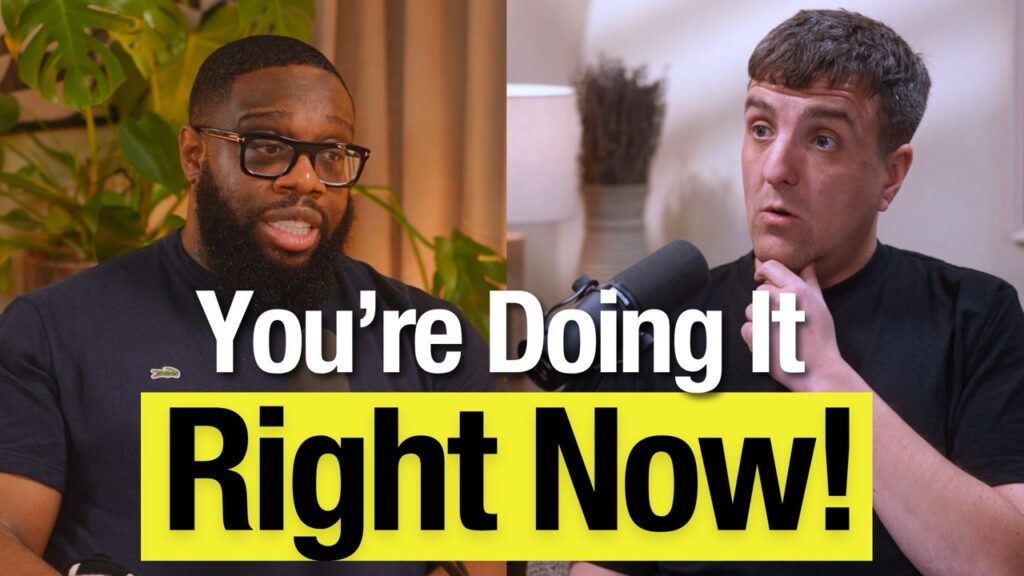

Freelancing is one of the simplest ways to turn skills you already have into extra money, and in this Side Hustle Sessions episode Sammie Ellard-King breaks down exactly how to get started, from choosing a skill to landing your first clients on Fiverr and Upwork.
I’ve used freelancing to make money on the side for years now, and it’s a brilliant way to put skills you already have to use.
I also hire freelancers all the time for my own business, because it saves me the cost of bringing on a full-time member of staff when I only need help with one thing.
Freelancing simply means offering your skills to people or companies without being their full-time employee.
Some people freelance as their whole job, my other half did it for nearly a year on contract work, but most people I hear from do it as a side hustle, fitting it around a normal job. That’s what I’m unpacking today.
If you’ve got a spare few hours a week and a skill someone would pay for, there’s a genuine opportunity here. Let’s get into how it actually works.
———
Gains App is LIVE!
An AI-powered budgeting and cashback app designed to help you make more of your money.
Download here: https://gainsapp.onelink.me/8IhT/oiaimr1z
———
Get a FREE FRACTIONAL SHARE worth up £100 when you deposit £1 with Trading 212
https://www.trading212.com/join/MGP
If you don’t receive the free fractional share, head to the menu and put the word ‘MGP’ into the promo code section.
(Capital at risk when you invest)
Key takeaways
- Pick one specific skill to offer rather than something broad like “marketing”, think writing, design, coding, admin or virtual assistant work.
- Fiverr and Upwork are the two big platforms to start on: Fiverr for buyer-led gigs and reviews, Upwork for pitching on posted jobs.
- Underprice yourself at the start to build reviews, then raise your rates as your portfolio and client base grow.
- Do an “ideal week” in Google Calendar first, so you know how many hours you can actually commit before taking on work.
- Communication, organisation and treating clients well are what turn one-off gigs into repeat work and referrals.
How to pick a skill to freelance with
Start by figuring out what you’re actually good at. It could be writing, drawing, coding, graphic design, or even organisational skills like managing calendars and emails if you’re strong at admin or virtual assistant type work.
Small businesses, including mine, use freelancers all the time for exactly this: a specific job they don’t want to hire a full-time person for.
Pick one area rather than something broad. Marketing, for example, is too vague. Narrow it down to something like Canva templates, video editing or copywriting so you can build a focused portfolio and get found for that specific job type.
It also helps to have a quiet space to work and a decent laptop with a reliable internet connection, since most freelance work happens online. If your home is too busy, a coffee shop or somewhere with fewer interruptions works just as well.
Where to find freelance clients: Fiverr, Upwork and Freelancer
Once you’ve settled on a skill, the freelance platforms worth checking out are Fiverr, Upwork and Freelancer.
Fiverr works on buyer demand: you build a profile, add a small portfolio of your work, and people search for services like graphic design, coding help or video editing. Reviews matter enormously here, the more you have, the more your profile gets shown.
I’d underprice yourself slightly at the start to land your first few clients and build up genuine five-star reviews.
Freelance income is lumpy by nature, so before you rely on it, check how much should be in your emergency fund to smooth the gaps between invoices.
Upwork is more in-depth. You build a fuller profile and pitch for jobs that people post, rather than waiting to be found.
I used Upwork myself for extra work when I first went full-time with Up The Gains, taking on a couple of hundred-pound jobs when I wanted extra money for investments or a holiday upgrade.
When pitching, research the client a little, something on LinkedIn or their socials, and make your pitch stand out rather than generic.
Freelancer is a similar setup, though I’ve used it less personally. Between the three, you’ve got plenty of routes to start putting your skills to work.
Bear in mind these platforms take a commission (Fiverr can take up to around 20%), so factor that into your pricing.
If you want to keep 100% of what you earn, you can also build your own simple portfolio site on something like Squarespace and drive your own traffic to it via social media, though most people start on a platform and add their own site later.
Managing your time and pricing as a freelancer
Before taking on client work, do what I call an “ideal week”: block out your working hours, commute, gym, family time and anything else fixed in Google Calendar, then see what’s genuinely left over. This stops you overcommitting, missing deadlines and picking up bad reviews.
For pricing, look at what other freelancers in your space are charging and decide whether you’ll price per hour or per project.
Undercutting slightly at the start, while you’re building reviews, is a sensible trade-off. Tools like Trello, Asana or Monday.com are useful free options for tracking clients, briefs and deadlines once the work starts coming in.
Communication is the single biggest thing that keeps clients coming back: be clear about what you can and can’t do, and by when, then stick to it.
Word of mouth is powerful in this space. Do a good job and clients refer you on, which is often how a freelance side hustle grows into a genuine second income over a few months.
If money management is part of what you’re trying to sort out alongside your side income, it’s worth checking your take-home pay and running a budget so you know exactly where the extra freelance cash is best used, whether that’s topping up an emergency fund or going straight into investments.
This transcript is auto-generated and lightly edited for readability, it may contain errors.
[0:00] Sammie Ellard-King: My name is Sammie Ellard-King, and this is the Money Gains Podcast. We’re a show all about making, saving, and investing your money, interviewing the top minds in the industry to unpack their expertise. And today we’re back with another side hustle sessions, and we’re going to be deep diving into the topic of freelancing today. So strap yourselves in. If you’re new here, make sure you hit follow, and we’ll see you on the show. Let’s get into it.
[0:35] Sammie Ellard-King: Let’s make some bread.
[0:42] Sammie Ellard-King: Okay, so today’s gonna be an episode where we’re gonna deep dive into the topic of freelancing.
And freelancing literally just means offering your skills to different people or companies without actually being a full-time employee here. Now, you can literally make money outside of your job just by offering skills and services that you already have, and then you put them to practice and you earn money from them. Now, there’s lots and lots of different ways that you can do this. Some people actually work completely full-time as a freelancer as well. My other half did it for nearly a year. She worked for different companies on contracts, so contract freelancers, or you can just do it as a little side hustle on the side, and that’s what we’re going to be unpacking today.
So to get started, you kind of need to figure out what you’re actually good at. Now, what could you do well? And it could be things like writing, drawing, coding, anything else that a company would pay for. Now, the reason I say this is like lots of small businesses, including mine, have used freelancers to help with smaller projects when they’re scaling up. When they don’t want to bring on a full-time member of staff, but they just want to help with that one thing, they hire an expert in that area.
Now, you could be literally anything here, you could have hobbies, which you could include as well. So, do you like making things or helping people in certain ways? There are so many ways that you can do this, but it’s better to pick a specific area that you’re good at. Now, honestly, like even people that are like receptionists, you’re good at organizing calendars, you’re good at organizing um emails, you’re good at doing virtual assistant type things as well. So there are so many scopes. Like, do you like doing some graphic design in your part-time?
Could you knock up some Canva templates for someone, for example? So just think about the skills that you have. And often it’s what you’re already doing in the workplace. You could do it outside of your working hours, and that’s the beauty of freelancing. The world is a 24-7-365 place. So there’s going to be people all over the world looking for people that can help them with smaller jobs, and that’s how you can make a little bit of extra cash on the side and start to build up a little portfolio, a little client base, and really get into it.
Now, as I say, I would literally pick one area that you’re going to go into. You know, don’t pick marketing because it’s way too broad. And you really want to try and set yourself up somewhere quiet without interruptions. So if your house is really busy, escape to a coffee shop, a gym, or somewhere where you’ve got the time that you need to deliver on this. Make sure you’ve got a good computer because majority of the work you’re going to be doing is going to require a laptop and an internet connection.
And then how do you actually find clients, right? So let’s say you’ve you’ve identified the skill that you think you could go and farm out there. If you haven’t yet, then also do this because you can jump onto platforms like Fiverr. I’m going to go through these individually, and Upwork or Freelancer, where people look for freelancers. Now, Fiverr started out, it was like jobs for a Fiverr, but that’s very much changed now. You know, there’s jobs from you know a few quids to hundreds of pounds, depending on what it is.
But you could go on there and start having a look at some of the plat the um people that are on there and the services that they’re offering. Honestly, the you’d be amazed at what’s available and equally as well, how many people are actually buying some of these services. It’s nuts. And you can create your own profile that shows what you do, and you can upload some of your work. So you basically need to make a small bit of portfolio. So I’d go and create a few little bits and bobs and then put it into a small portfolio that you can put up there.
And essentially, the more attractive your profile is on Fiverr, I would probably underprice yourself a little bit at the beginning, get yourself onto there, start making a little bit of money by getting a few clients and get some good reviews because reviews are massively important on Fiverr, right? So the more reviews that you can get, the more your uh profile is shown for that job type. Because people will go on there and search, you know, I need help with graphic design, I need help with coding on a website, I need help with editing my video, I need help with honestly, it’s endless.
I need help with virtual assistant for a week, for example. There are so many, so many different things. I need uh someone to create an AI chatbot for me. Honestly, it’s endless. So jump on there, have a little look around, and then start to create your platform, uh, your profile, and start to put up some some of your work on there. And you will literally, naturally, using Fiverr’s massive audience base, which is coming in and looking for freelancers, start to pick up some work. Now, if you want to try and game it a little bit, maybe get a couple of friends to buy the services and give you a few five-star reviews.
Give them the money back if you if you want, but that’s a good way to get a few reviews in for a bit of work. So it showcases that you’re you know a good at what you’re doing, because you know, you don’t want to just be sitting there with no reviews. So you try and get a few reviews from a few mates. Um, it’s a really good place to start. Then upwork is slightly different. So again, you create a profile, but it’s much more in-depth. So this is where you’d put a little bit more about what you’re doing, some of the work that you’ve done.
You’d put your portfolio on there, and you actually can apply for jobs. So people will list a job and you can pitch for that job on Upwork. It’s a little bit different in that way. You will get some work, find you, as you start to grow as well, similar to Fiverr, but Upwork is an amazing platform. I used it when I went full-time with Up The Gains for a little bit of extra work here on the side. I just used that money to like make sure that you know, bills and stuff were definitely 100% cover covered.
Or I, you know, I always I’ve side hustled on there in the past before when I wanted to kind of um put a bit more money into investments, or I knew I wanted to go on holiday or wanted to upgrade my hotel, for example, and I would do a you know a couple hundred pound jobs, and that was just a bit of extra money for me on the side. Like, you don’t have to. This is where time evaluation is massively important. If you’ve only got a few hours a week, just think about that.
We’re gonna get onto that in a minute. So you don’t have to be taking on tons and tons of jobs, and at the start, you’re not gonna get tons and tons of jobs because you’re new on the platform. Uh, so you’re gonna have to hustle a little bit, you’re gonna have to work, do a few jobs that are very underpaid just to get yourself built up. But as you start going, you can apply for jobs on Upwork, which you think are cool, you know, and then you need to make your pitches actually fun and engaging.
Think about the hooks that are relevant to that person. Now, I always tend to research the person a little bit. I’ll jump on LinkedIn, I’ll jump on Facebook, are they on Twitter? I’ll find something cool about them. Like, you know, were they in a certain location? Did they go to Legoland recently? You know, and just put that in their pitch. It shows that you’ve gone the extra mile. You there’s going to be lots of people pitching for these jobs. So you need to stand out. And that’s massively, massively important.
So when you’re starting out, tell your friends and family about what you’re doing. And you can also let, you know, social, you can also start social media as well. You could run a bit of content on social media and let people know that you’re actually available for work. You could create a Facebook business profile, you could start an Instagram or a TikTok account, you could start posting on Twitter if you don’t want to do those types of things. LinkedIn is an amazing place to pick up work.
But of course, if you’re doing what you’re doing at work, you might need to be careful. So, in that case, you might not want to post on LinkedIn, but you could always create a faceless channel on Instagram promoting your services and solving problems for people in the space. There are endless possibilities here. Don’t necessarily worry about getting yourself found out by work because you can use pseudonyms. You don’t have to use your real name when you do these things as well. You do next you do have to prove who you are on Fiverr and Upwork, by the way.
So that’s something you do need to think about. But there are hundreds and thousands of people doing this all across the world, doing extra bits of work in the job or the area that they’re trained in. So don’t worry too much. And if you’re really worried about it, there are ways around it. Um, Freelancer, I don’t know as much about, but it’s a fantastic platform for picking up some work as well. Um, but yeah, so you’ve got three options there to go and check out right away and start putting your skills that you’ve already got to work.
And this is how you can build up a little bit of extra cash on the side, and as you grow your clients and portfolio, you’re gonna do a lot more money than you will at the beginning. You’re gonna grow similar. It’s gonna just, you know, put the work in, what you put in, you’ll get back out. It’s not gonna change your life overnight, but it as you, you know, a few months in, you start seeing some real good progress. You know, people are doing really, really well out of it.
I’ve got a friend of mine who freelances, he does a bit of social media content work on the side of his day job where he’s actually designing websites, but he designs a bit of content for a few local businesses, freelancing for them, and he does an extra thousand pounds a month from it. Like, wow, you know, think about that. It’s 12 grand a year. That’s a lot of money. So just start thinking about how you can use your time in a bit wiser and and you know, instead of sitting there two hours on Netflix, could you pitch for a few jobs and upwork and pick up a bit of work?
Cost of living’s high. We’ve got to start hustling and looking for ways that we can try and make money. So when it comes to like setting your prices when you’re freelancing, have a look at what’s going on in the space. What are other freelancers charging around that to kind of get an idea? And then you need to perhaps either decide that how much you’re gonna charge maybe per hour or per project. So think about that. You might decide you’re gonna price per project, but then you’ve actually just worked it out per hour.
So, you know, oftentimes it’s like half day or full day or per project, for example. So just think about those things, have a look at what a lot of the other people are doing in your space and kind of match yourself up around them. Definitely undercut people at the beginning when you need the reviews, is a good time. So, moving on to the time evaluation, we touched on it a touch. So I think this is massively important if you’re doing any type of side hustle business. You need to understand how much time you can put into it first.
So I basically do what I call the ideal week, and the ideal week works for any type of business you can think of on the planet. And essentially, you say, Well, I’m working from nine to five. So use a Google calendar, right? It’s quite easy, a visual way of seeing this. Nine to five, I’m working. 8:30 to 9, I’m traveling to work, 5 till 5:30, I’m traveling home. So those hours are out of bounds. Then, you know, you might have clubs, gym, all of these different types of things.
You have to pick the kids up, whatever these things are, build your entire calendar out. So then you can look at it and go, over seven days, I’ve got this amount of time which I can actually dedicate to doing something. Because as jobs start to come in, you don’t want to start taking too much on because then you’re gonna annoy clients, you’re gonna get deadlines for these bits of work, and you’re not gonna hit them and they’re gonna give you bad reviews. So you could start saying no to jobs once you’re building up to this point, and you might start prioritizing some regular clients over new ones because if you do good jobs, people come back.
I’ve used a video editor on Fiverr. Um, when I was starting out on YouTube, I used him for the first like 20 videos because he was great. Yeah, and he was super cheap. It was like 40 pounds for a full YouTube video, which was great. Like, and it meant that I didn’t have to spend four hours on that bit of work. So when I look I also do my own time evaluation, how much time would I spend doing that? And if it’s worth it, then I pay someone else to do it, right?
I do that with the cleaner because you know, it could I make more money in two and a half hours doing something else? The answer’s usually yes, right? What you can do to kind of keep track of your tasks and your clients is use free software like Trello or Asana or Monday.com. Just really great ways of keeping track of everything, all the projects you’ve got coming in, all the briefs that you have, like what styles you need to make, when you need to deliver it by, you know, use Google Calendar to set up reminders that you need to do certain things by certain times.
So be organised when you do this because you want to do a good job for the clients. Now, the number one thing I’m gonna tell you is communicate with your clients. Be very clear about what you can do and what you can’t do and when you can do it by and stick to that. You’re gonna need to be professional with these people at the beginning while you don’t know them and be open to making changes. It’s not about you and your work, it’s about them. It’s their brand.
You’re delivering a service for their brand. So if they don’t like your work, don’t get antsy about it because it’s not your fault, it’s the company, they want it in a certain way, and you usually need to deliver that. Sometimes you do get a little bit more creative freedom and it’s awesome, and they let you go for it a little bit. I’m very much like that. I like finding people that add their own flavour to certain things. I give them a good brief on stuff and I let them run with it because if you stifle someone’s creativity, you don’t normally get back the result that you actually want from it.
So that’s something to think about here. So the client always comes first, and this can take some getting used to for some people. I I totally understand that. It’s not easy to start dealing with clients, especially the ones that are a little bit of a dickhead. Let’s be frank, you’re gonna get a few of them. You’re just gonna have to bite your lip. It’s just the way it is. But always stay communicating, always stay organised. And the last is like create yourself an online portfolio. So you could use a site like Squarespace, which is so cheap and easy.
They have templates already built out. It’s basically designed for people that can’t do web design to design a basic simple website, and you can drive some traffic into that. You could do that with you know a Facebook post, you could do that with an Instagram post or you know, a TikTok, for example, and driving some traffic into your website. All you need on there is a services section, like what you actually offer, a little bit about you, and maybe a booking call function. So could they book a call in with you?
You could use Calendly to set that up, which Calendly is amazing. It syncs with Google Calendars, it syncs with Outlook, and they book a call in with you to discuss the work, or you could just have a contact form on there, name, email, notes. What you what do you want? What do you want for me basically? Um, but creating a little online portfolio, if you’re not going to use Fiverr and Upwork or Freelancer and you’re going to do this yourself, which you can do, you don’t have to use these platforms.
And remember, these platforms do take a little bit of a commission from your work, and that’s uh hugely important here to think about when you’re pricing. So you sometimes I believe Fiverr takes sometimes up to like 20%. Um, I don’t know about Upwork anymore, but it used to, you know, you used to have to give them a good chunk of the money. Um, you know, you get the bulk of it, of course, but you’re still giving them a little bit. So sometimes you have to price the work because you don’t want to lose too much of it, but then you you know it’s a tough battle because then you don’t want to overprice the client.
So you’ve got to think about that. If you obviously do it on your own and you build a an online portfolio with your own website, then you can drive all the traffic into that. You take 100% of the sales. So that is something to think about. Or you could do both, right? You could have platforms on Upwork and Fiverr and Freelancer, and you could have your own thing going on Squarespace, is where you start to level up a little bit. Perhaps this could be something that you add in.
That could be a phase two element of this. You could start on one of the platforms that I mentioned before, build your own portfolio and websites, start getting your own clients in, running a bit of social media traffic to it if you want to. And word of mouth as well is a last thing is massive in this space, right? Do a good job for someone, they have a mate in their business that needs help with that one thing, they refer you on. Suddenly, you’ve got two clients, they refer you on, and always say to them this is why I say treat your clients well, treat them nice like you would your best mate.
Because when they people by people, man, this is how the world works, this is how the world goes round. If you treat someone well and you do a good job for them, they’re gonna recommend you when they need you, or they’re gonna come back to you when they need you again. And this is how you start really, really building up a fantastic little client base. It’s not gonna happen overnight. This is gonna take you know a month or two to get going. You’re not gonna get that many clients at the beginning.
But I guarantee you, if you keep at it for four to six months, you’re gonna be starting to get a good steady stream of clients coming in, and you’re gonna learn and you’re gonna understand what people want and how people work, and what if your what your services work better, what uh people are buying, and you could start adding more services into the mix if you want to try and do an upsell on something, a bigger project. These are all things you might start regular clients. You know, there’s so many options when it comes to freelancing, and this is utilizing skills that you already have, putting it to work.
So, look, freelancing can be literally and a fantastic way to earn yourself some extra money. So start small, don’t be afraid to grow gradually. This is what happens with the majority of businesses in the world out there. You gotta start somewhere, you’ve got to put yourself out there. And if you have any questions, let me know. Um, my email is in the description below. And if you want to kind of get started with your um freelancing journey, you can reach out to me on social media if you want a little bit of advice.
Drop me an email. And equally as well, if you want to share your freelancing story, something where that we can, you know, share with the audience about how it took you to grow. Um, I’d love to hear from you. So look, it’s been really great. I love these little side hustle deep dive sessions. Um, we’re doing them every Friday now, as well as the episodes on Wednesday. I do have a new YouTube video which has gone live, which is how to make 10k a month from scratch in 12 months or less.
And I’ve only got 10 hours a week to do it. How would I do it? So go check out that um on Up The Gains Money on YouTube. I’ll leave a link in the description of this episode as well. It’s a great place for you to start thinking about how to create yourself a business. But if freelancing is the one for you, then get yourself started and we’ll see you next Wednesday. All right, people, peace.
Frequently asked questions
If you’re earning extra money outside your main job, you’ll generally need to register as self-employed with HMRC once your freelance income goes over the trading allowance, so it’s worth checking the current threshold and keeping records from your first paid gig.
Fiverr tends to suit beginners well because buyers come to you once you’ve set up a profile and gig, whereas Upwork requires actively pitching for posted jobs, which can feel harder without an existing portfolio.
It varies hugely by skill and hours available, but modest, consistent freelance work, a few hours a week, can add up to hundreds of pounds a month once you’ve built a small client base and some reviews.
You can use a pseudonym on social media if you’re worried about your employer finding out, though platforms like Fiverr and Upwork will still require you to verify your real identity behind the scenes.
It’s rarely instant. Expect the first month or two to be slow while you build reviews and a portfolio, with a steadier flow of repeat and referred clients typically developing over four to six months of consistent effort. Disclaimer: This content is for educational purposes only and should not be considered financial advice. When you invest, your capital is at risk. Past performance is not a guarantee of future results.
———