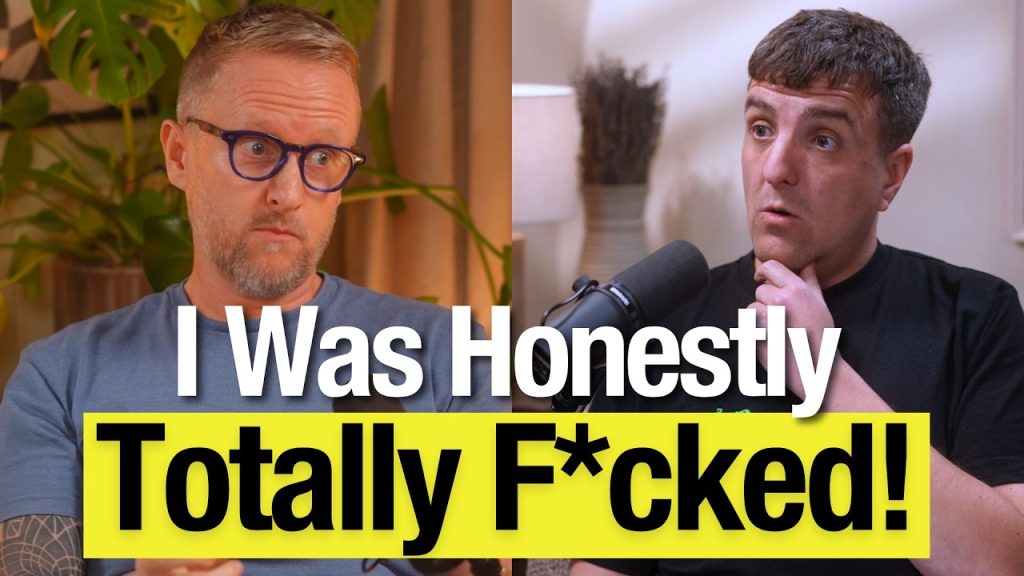

Tom McNally, founder of Pie Tax, says 80% of every £100 you earn in the UK ends up with the government once you count income tax, National Insurance, VAT and indirect taxes. One of his users recently reclaimed a £50,000 refund the accountants had missed.
I sat down with Tom McNally, founder of Pie Tax, for one of the most eye-opening conversations we’ve had on the podcast.
Tom built his career at State Street, one of the world’s biggest custodian banks, pricing funds worth billions of pounds, before he decided the UK’s personal tax system needed the same kind of overhaul.
Pie Tax has since become one of the most nominated fintechs in Europe, with 100,000 downloads and three major startup awards in its first two years. Tom’s pitch is simple: tax is confusing, expensive to get wrong, and nobody teaches you how it actually works.
We ended up covering a lot of ground.
Tom walked me through a real case where a user reclaimed £50,000 in overpaid interest tax, broke down exactly where £100 of your salary disappears to, and made the case (using the Laffer Curve) that Britain’s high-tax approach is actively shrinking growth.
We also talked property, side hustles, and what to actually do if you’re feeling squeezed right now.
Visit Pie Tax: https://www.pie.tax/
- Why 86% of people have no clue about tax
- How Pie Tax makes self-assessment free and simple
- How the Laffer Curve proves lower taxes mean more growth (and why Britain’s in a death spiral)
- Why your home is the best investment in Tom’s eyes
- Practical side hustle tips and the “gap” method to build wealth from nothing
———
Gains App is LIVE!
An AI-powered budgeting and cashback app designed to help you make more of your money.
Download here: https://gainsapp.onelink.me/8IhT/oiaimr1z
———
Get a FREE FRACTIONAL SHARE worth up £100 when you deposit £1 with Trading 212
https://www.trading212.com/join/MGP
If you don’t receive the free fractional share, head to the menu and put the word ‘MGP’ into the promo code section.
(Capital at risk when you invest)
Key takeaways
- 86% of people say they don’t understand tax, and the UK tax code runs to roughly 10 million words, more than any other country.
- A Pie Tax user reclaimed close to £50,000 in overpaid bank interest tax after switching providers exposed years of over-withholding.
- Tom estimates that of every £100 earned in the UK, around £80 ends up with the government once direct and indirect taxes are counted.
- The Laffer Curve suggests that beyond a certain point, raising tax rates actually reduces total tax revenue by shrinking the economy.
- UK property has delivered an estimated 10% annual return over 20 years, which Tom argues is closer to 100% return on a typical mortgage deposit.
- Making Tax Digital brings self-employed earners over £50,000 into digital record-keeping from 2026, with the £30,000 threshold following after.
Timestamps
- [00:00] Pie Tax’s award-winning year and 100,000 downloads
- [01:37] Tool: why 86% of Brits have no clue about tax
- [04:12] Tool: the £50,000 Wise interest tax refund case
- [05:52] Building Pie Tax: from investment banking to Making Tax Digital
- [16:29] The Laffer Curve and Britain’s tax “death spiral”
- [20:37] Tool: breaking down where £100 of your money actually goes
- [24:01] Lower taxes vs higher taxes: Ireland, Dubai and the UK’s missed trick
- [28:05] Why property is still the best investment in the UK
- [39:44] Tool: the “gap” method to build wealth from nothing
- [46:27] Tool: how to file a self-assessment with Pie Tax
How Pie Tax is solving the UK's £50,000 tax refund problem
Tom didn’t set out to build another fintech app. He spent years at State Street, pricing funds worth over a billion pounds each and watching automation strip cost out of institutional investing.
Then he looked at the personal tax market and saw nothing but gaps. QuickBooks, Sage and Xero all targeted business tax. Nobody had built a single app that covered all 24 UK income types.
That gap matters because, as Tom put it, “86% of people say that they have no idea when it comes to tax.”
They’re not taught it in school, and the UK tax code runs to roughly 10 million words, more than any other country, and it changes every year.
The clearest example Tom gave me was a Pie Tax user who reclaimed close to £50,000. Wise, formerly TransferWise, holds a Belgian banking licence and was deducting 30% tax on customers’ interest payments, even though the correct rate for many users was closer to 15%.
Because the claims process runs through a Belgian authority with confusing paperwork, “the accountants had missed it every single year.” Backdated over several years, the refund topped £50,000.
Pie Tax itself is free to use, with a paid £59 review option if you want a professional check. Tom compared the model to Instagram, WhatsApp and ChatGPT: remove the barrier to entry, get mass adoption, then monetise later through optional add-ons.
The Laffer Curve and Britain's tax "death spiral"
Tom’s clearest argument for lower taxes rests on the Laffer Curve, named after US economist Arthur Laffer.
In 1984, Laffer reportedly sketched the idea on a napkin for Ronald Reagan during a recession: past a certain point, raising tax rates reduces total tax revenue because it shrinks the economy underneath it.
Reagan cut the top tax rate by 20 points and the standard rate by 10.
According to Tom, US tax receipts went from $300 billion to $1 trillion, inflation fell from 10% to 2%, and growth swung from minus 1.8% to 7.8%. “Because low taxes, what happens with low taxes? Everyone invests.”
He points to Ireland as a modern example: cutting corporation tax from 25% to 12% helped pull in Google, Meta, Amazon and Microsoft, and Ireland’s GDP per capita is now roughly double the UK’s.
Tom’s frustration is that the UK once had a competitively low rate and has drifted away from it, while government borrowing keeps climbing.
Where does £100 of your money actually go?
Tom’s most striking moment was a live breakdown of a £100 note. Employer’s National Insurance and pension contributions take a chunk before you’re even paid.
Then income tax and employee National Insurance apply on top. By the time you spend that money, VAT takes another 20%, and businesses pay corporation tax on their margin.
Add indirect taxes such as fuel duty and council tax, and Tom’s overall estimate is that around 80% of the original £100 of value ends up with the government one way or another, leaving roughly £20 of genuine spending power.
“The system’s built to fail,” he said. It is worth stressing this is Tom’s own back-of-envelope illustration of how taxes stack, not an official calculation.
He also flagged inheritance tax as the final layer: “When you die, you then give half to the government.”
Is property still the best investment in the UK?
Given how much of a salary tax takes, Tom argues property remains the strongest lever most people have. He estimates UK homes have returned around 10% a year over the past 20 years, against inflation of roughly 2.5%.
Because most buyers only put down a 10% deposit, that annual gain effectively represents close to 100% return on the equity actually invested, and it’s tax-free on a main residence.
He also pointed to the UK’s underlying wealth: the median UK household holds around £125,000 in wealth, and average disposable income after bills sits at roughly £31,000, much of it tied up in property.
With demand for family homes still outstripping supply, his view is simple: buy what you can, extend or improve where possible, and let the mortgage shrink in real terms as inflation erodes it.
For anyone weighing property against other options, it’s worth comparing that against how index funds have performed in the UK too, since Tom himself splits his own investing between UK property and a US-heavy stocks portfolio for his children.
The "gap" method: building wealth from nothing
When I asked what an average listener, someone who feels stretched right now, should actually do, Tom kept it practical: increase income first, then control costs.
He noted that 27% of people in the UK have never asked for a pay rise, despite UK wage growth outpacing inflation by roughly 10% over the past decade.
This connects directly to an idea I’ve been building out on the podcast: the “gap” method.
Work out your target number using something like the rule of 25 and a compound interest calculator, then look at the gap between what you can currently afford to invest and what you actually need.
Instead of trying to close that whole gap at once, you close it in stages, an extra £100 a month this month, then £200 within three months.
Tom’s version of the same principle is to plug the leak before bailing water: cut recurring costs, negotiate broadband and mobile deals, and use side income ideas like Vinted, Etsy or paid reviews to close the gap faster.
Pie Tax even pays £50 in referral commission to both sides when a user refers a friend.
What is Making Tax Digital and how do I file a self-assessment in 2026?
Tom’s founding insight came a decade ago, when he read an article about Making Tax Digital (MTD), the government’s plan to move self-assessment online and eventually phase out the old paper-based system.
He realised self-assessment was painfully unfriendly: “There’s 36 steps, minimum. Minimum for one field.”
Pie Tax connects to your bank account, automatically categorises income and expenses, calculates your tax position in real time, and pre-fills your HMRC return.
Tom calls it “the Homer Simpson moment,” where the process becomes simple enough that anyone can use it. The app also includes an AI accountant, plus access to a human accountant for more complex questions.
MTD becomes mandatory for self-employed earners and landlords over £50,000 from April 2026, with the £30,000 threshold following the year after.
If that applies to you, Tom’s advice is to get comfortable with a compliant digital tool well before the deadline rather than scrambling in the new tax year.
Alongside that, it’s worth checking your emergency fund covers any tax bill surprises that MTD’s real-time reporting might reveal earlier than you’re used to.
This transcript is auto-generated and lightly edited for readability, it may contain errors.
[00:00] Sammie: Welcome back to the Money Gains Podcast. Today we have Tom McNally from Pie Tax. Tom, how are you doing, man?
[00:06] Tom: I’m doing good. Thanks for having me.
[00:07] Sammie: Mate, Pie are just like flying everywhere right now.
[00:10] Tom: Yeah, Pies in the sky. Did you mean that, Pun? Yeah, it’s been a great year for us. We’ve we’ve won lots of awards, won three awards the um startup of the year, had 100,000 downloads. Tax is a big problem, it affects everyone. Um, and making a tax app that’s easy to use and free, it’s been um very strong proposition.
[00:28] Sammie: We had uh Charlotte on who is brilliant and she’s absolutely smashing it right now on socials, right?
[00:33] Tom: Yeah, we’ve just reached 100,000 followers, um 14 million views last month on Instagram alone. So there wasn’t anyone in the tax niche. Um obviously tax turns a lot of people off. So we you know it was it was an untested water, and we we kind of made the big leap of faith and ultimately we went for value first, and if people can find useful tips and um the latest news, um there’s nothing hard setting on there, it’s just really just trying to provide value. Um, it’s really solved a big problem for a lot of people and it’s growing really strong. And she’s she’s brilliant, as you know. She is great, yeah.
[01:03] Sammie: No, and like I think what you’re doing is you’re making it simple. That is the core mission, yeah. Easy as pie, easy as pie. And I it you can see it when you even when you go on the website, like it just makes it so like it’s almost like your guard gets dropped, and then you’re like, okay, cool, I can do this. Because a lot of people look at their tax, one, they’re overpaying, or then like don’t have a clue what to put aside or where they need to be. And that can be massively overwhelming for a vast majority of people. And it feels like that’s what you’re tackling with the app, right?
[01:37] Tom: Yeah, well, the stats are very overwhelming. 86% of people say that um they have no idea when it comes to tax. They they they don’t have um the knowledge it needs, they’re not taught in school, and it’s scary, you know, if you make a mistake on your tax return or if you don’t declare money. The UK tax code is 10 million words, it’s the most in the world. 10 million. 10 million words in the UK tax code. And then just and you know, just to add to the challenges of that, it changes every single year. You know, last week has a budget and lots of new policies, so it’s it’s set up to fail. Um, and so if you can try and digest that information and make it relevant to people when it’s video form, uh, and also add a lot of technology to make the all the manual processing and the paperwork just automated. We call it the Homer Simpson moment, where even Homer Simpson could do their returns with our app, you just connect your bank and it you know it all pulls through uh and you can submit to HMRC. So we’ve achieved almost the impossible, although I get HMRC continuing to make to make it difficult. But yeah, you’re you’re you’re you’re you know you’re you’re right, it’s very, very confusing and worries a lot of people.
[02:38] Sammie: So yeah, I like let’s answer that question then. So like when you look at the UK economy right now and the UK tax system, what do you think is like the biggest misunderstanding for people about how the UK tax system actually works?
[02:50] Tom: I think the big biggest misconception is they don’t plan for tax. So when you talk about investments and you have your different asset classes in different vehicles, um, you always look at the top line. But obviously, you know, on when you pay yourself, if it be dividends or interest, um, property, crypto, you know, you lose a lot of that in tax. So people don’t plan ahead to incorporate that that loss. And if you look at the net impact of what you actually return, it can vary widely. So I think people need to look at, and we have calculators on the website for crypto, for interest, um, we have every income type on there. So people should really plan ahead because obviously once the transactions happened, retrospectively it’s too late. You know, the horses bolt with bolt with the um the cart. So you need to kind of plan around what the tax implications are. There’s lots of allowances as well, so you can you can nick a little bit here and there to use up an allowances, although they’ll reduce in every year to the government. Um, yeah, that’s I think the biggest problem that we we see is people don’t plan ahead.
[03:45] Sammie: I read Taxtopia recently. Oh wow. And that was like an eye-opening book for me of just about how like you can also navigate the system in certain ways. You mentioned about like saying of assets there and like crypto and these types of things, and just like how the share uh it’s actually written as a rule book, and these rules can be bended and moved in certain ways to make sure you stay both tax compliant but equally as well, like get the most out of the taxes. Tax efficient tax efficient.
[04:12] Tom: The most important part person in your whole company is your accountant. Um, we’ve had a user case recently, this this month, where someone potentially saved £50,000 as a tax refund. £50. £50,000, yeah. And because what happens, I’ll give you a quick overview of the user case. Um Wise is bank wise, previously TransferWise, they deduct um mortgage interest when they pay interest of obviously the new increase in rates. Lots of people now, over two million people are in their tax net for mortgage for for bank interest, sorry, bank interest. And so those high interest rates, people you know occurring lots of lots of interest returns. Um, what WISE do is because they have a Belgian banking license, they they take 30% of your interest payment every month. But it’s actually a lot less than that. So I’ll use a case as a guy in Ireland, so they should be deducting 15. And so the the net difference of what they had to pay and what they’re deducting, they’ve deducted too much, nearly double what they should have been deducting. But the actual process to claim it, it’s not obvious that you can even claim the interest back. Um there’s lots of forms. Um but the Belgian Authority have a website and they have forms that are difficult to navigate, but ultimately, over the course of four years, because you can backdate it five years for two businesses, it it the cumulative total is over 50,000 euros as a tax refund. That’s something that the accountants had missed every single year. It’s a nice payday. Yeah, it’s a nice case with accountant a hundred times over.
[05:30] Sammie: Yeah.
[05:31] Tom: So people are just not aware, they just it’s three little tips and tricks that can really just change the entire business.
[05:37] Sammie: So when you look at this UK tax system, you obviously you know you you you know it better than anyone, but you know, what made you think then about it when you’re looking at it? You mentioned the 10,000 merge, you mentioned how complicated it is, but what made you go, I’ve got to build something to fix it?
[05:52] Tom: I worked for the world’s biggest investment bank, State Street. They they you heard of Vanguard and BlackRock. Um, they managed $27 trillion on the custody. I worked in corporate tax and I saw firsthand how much tax that’s been saved every single day through efficiencies. My job was to price funds. All those funds were over a billion pounds each, and every day you’re doing the calculations of the nav and you’re seeing all this automation, you’re seeing the technology being implemented to make it easier. And I looked at the UK personal tax market and I saw QuickBooks and Sage and Xero all targeting business taxes, and there was no personal tax app. So if you’ve got um employment, uh self-employment, property, capital gains, uh bank interest, um, tax reliefs, there’s no app that covers all those income types. And I looked at the research, and three out of four people, 75% of people have multiple incomes, side hustles, you know, people in the UK very savvy. So I took my knowledge and I first hand of all I said. Three out of four, you said 75% of people have more than multiple income types. Yeah, because I and you can use examples of like child benefit that needs to be declared on tax return, student loans, you know, pensions. There’s all these different pools and vehicles of um the different different income types. There’s 24 in the UK in self-assessment, 24 different income types. Yeah. So most people obviously have employment, but you know, people might have some money on the side through vintage or or Etsy or eBay. Um, people have more than one. Um, most people to have, as I say, child benefits. So there’s no platform apart from self-assessment. And the the game changer for me was I was on the DLR and I read an article about MTD. This was 10 years ago. What’s MTD? It is making tax digital.
[07:28] Sammie: Yeah.
[07:29] Tom: And they’re going to close down, basically close down self-assessment. So the only place you had to go to file your income, to clear your income, apart from business, was going to go. So I thought, what an opportunity to go and build a best in-class user experience. And you know, self-assessment is so confusing. You have to go through every single question, even if it’s no. I’ve done it myself. There’s 36 steps, minimum. Yeah. Minimum for one field. It just doesn’t make sense.
[07:53] Sammie: And if you get it wrong, the implications of that.
[07:55] Tom: Well, you but not only that, you pay fines, interest penalties, you know. So I I looked at first principles. I took a step back 10 years of 10 years ago, I put five years in research and had to raise some money to pay because obviously building a tax app isn’t cheap. And yeah, I mean, we’ve been in the market for two years. We are Europe’s most nominated fintech, as I said earlier. Just recently won the most disruptive fintech in the UK, voted by Rosen Perry, head of FinTech in the Department for Business and Trade. We won the FinTech magazine startup of the year and the European Startup Awards. Uh, 100,000 downloads. And because I think for us, the biggest kind of like game changer for us was the fact that we are free. And I this really caused a lot of headache with the senior leadership team. Um, get the pricing right because ultimately we’re a business, we need to make money. Again, I looked at um Elon Musk at Tesla, and I had a large stake in Tesla, and I studied Tesla, I’ve read the reports every quarter and in the chat rooms looking why Tesla would succeed. I had a large, large bet about eight years ago. And the one word I heard that changed my life, and that was the word vertical integration. So Tesla are a vertical integrated business. They own the whole supply chain. So if it’s the selling of the car, uh making the batteries, the engines, the chassis, um, all the parts, um, so they you know they can really have fine margins on every single piece of the of the of the production line to undercut the market. People are savvy with pricing. So if you come in with a lower price, you take the whole of the market. The reason why Tesla now is suffering is because BYD are more vertically integrated than Tesla. And and the steps that they’ve taken, and this is insane, they own the whole supply chain of the cars, but also distribution. They build their own boats to distribute the cars, and Tesla haven’t done that, so they they can undercut Tesla with that. So I applied that to my business, and so we built all the software, we do tax software and tax support. Um, and that allowed us to really undercut or we literally priced the whole competition out because we are free. And it makes sense if you think every great product in history, you know, your Instagram, um, WhatsApp, uh, TikTok, uh, YouTube, even OpenAI, ChatGPT, they’re all free. They’re all free. If you have no barriers of entry, not only do you get massive user adoption, you get test in broad feedback. And there’s so many more ways at the end of the business journey which you can monetise. We monetise with tax support. Software is free if you’re comfortable to it yourself. If you want to be for peace of mind, £59, we would we check your return. But we normally pay for ourselves 10 times over because of tax reliefs.
[10:23] Sammie: I love that you said that. Literally this morning, I said exactly those two words to my team.
[10:28] Tom: Well, £50,000 in one example.
[10:31] Sammie: Like, it just makes so much sense, right? Because if you can if you can offer the the system, why does anyone need to go anybody where else? Like, and then also you can look at the system and go, well, actually, so for example, we were talking about our free plan for Gains App, for example, and everyone’s like, we can’t have the free plan. I’m like, we have to have the free plan. We have to make it so it’s so personalized that we still can do well from people being a free user. Because uh, when we looked at the data, it’s something between 89% to potentially up to sort of 95% will end up being free users. So we’re just what? Were we going to just completely discount all of these people? Well, that just undercuts the core mission. So, how do we vertically integrate these types of products and own the supply chain? We can’t do it all yet because you know we can’t offer ISES and investments and credit and etc. But that’s what SoFi did in America in the fintech space. I’m sure you know that business. And it’s like they now own the chain, they can do everything. It’s a Monzo-esque type.
[11:33] Tom: Yeah, Revolut, yeah. I mean, they do everything. You have to lead with value and win with trust. Okay, you lead with value, and everything out there is value-led. Every business is you go, you give some free advice, like like tax screen, for example, you have tax tips and stuff, and you’re not selling anything. People believe you and they trust you, and then eventually they’ll find another way, uh potentially an upsell of a secondary service. Again, if you think you look at um Credit Karma, um they really disrupted the whole credit score market because we’ve previously it was 15 quid a month for for for the experience, etc. And they’ve come in and said we’re free, we’re free. They made 76 million pounds last year and they don’t charge a penny because all that data, all that financial information, all those commissions on those financial products, and Martin Lewis is a king of it. You know, he’s come on with this great um personality providing tips and trick and tricks and advice. But MoneySavingExpert.com, you know, the chat rooms is making hundreds of millions, hundreds of millions. So every business out there you need to lead with value. And our value is we have the best software, the most features, and move free. And we’ll always be free because ultimately, if we’re not free with the cost of software coming down, someone’s going to undercut us eventually and say, okay, we’ll do the same thing as you, but we’re undercut with price. Price is so important, so important for users, you know, people are very savvy. Look at WhatsApp, they tried to charge a dollar for an annual subscription, and people people just said no for a dollar.
[12:54] Sammie: Yeah.
[12:54] Tom: For a dollar. I mean, they sold for $19 billion with no revenue. But 14 years later now, and they have WhatsApp, WhatsApp APIs, which they’re monetised, and they’ve just reached four billion. Um so they they knew the long game, you know, users just get users, get men lots of users, test the product and get the feedback, and then you know, you take the whole of the market.
[13:11] Sammie: You’re speaking my language, man. I love that you’re saying this because it’s exactly what I’m banging on about. Every single day, I’m like, we just get we get the users, we get the virality effect. Later, we start with all of that data, we can use it in ways which we couldn’t even imagine right now. Like so that’s what we have to do. Data is the is the value there. Data is the value 100%. But I’d love to know, obviously, you’re on the ground right now, you’ve got fingers on pulse, you’re seeing so much data coming through. Um, we were having this chat before we came in about, you know, a lot of people moving away and going out and starting businesses in other locations because it’s tougher in the UK right now. Do you think it’s still Do you think Britain is still a good place to start a business and grow your wealth?
[14:34] Tom: A short answer, yes. And the reason why I say yes is because the ecosystem, the talent is here, there’s incredible tax reliefs for startups, the EIS scheme, the SEIS scheme, which is this insane scheme, the government will never actually have actually just increased some of the thresholds. Whereas a business, if you get EIS approval, EIS is basically it’s if you’re a new product, an innovative product, and you want to get funded, the government will underwrite all the risk. So if you get approval for this new product, and any investor will get 50% of their investment back as a tax relief. And if it goes under and you you sell for the shares less or it goes bankrupt, you get all your money back, minus 5%. So there’s no risk. But the upside is is is huge. There’s no bigger return on investment than an early stage startup. I mean, if you look at um Tesla um Tesla, a thousand pounds in Tesla is now worth 26 million. So the ROI is insane, it’s it’s absolutely insane. It’s so lucrative that you can have a hundred wrong bets and one right bet, and it would be still be a billion dollar return. So um and the government understand the fact that to grow an economy you need new products and services. So um, yeah, there’s I mean, and and in if you go around the world and you see like tax efficient or low-tax havens, like the Dubai’s um islands obviously got decent tax rates, although they have some RD, you still haven’t got those tax reliefs, you haven’t got the ecosystem, the talent. To open up a bank account in Dubai takes like four weeks, they’ve just took it down to two weeks, whereas in UK it takes a matter of minutes. So you that whole infrastructure that UK’s got, people are quite rightly upset and leaving. There’s a quarter of a million people that have left this year to go to places like Dubai, but as a business owner, in my opinion, there’s no better place than the United Kingdom. And and you look at the best fintechs in the last five, ten years in the whole of Europe from England. Yeah. All from England. Absolutely.
[16:19] Sammie: Yeah, you are right. Time zone, another big factor in that as well. Language. Language, exactly. Yeah, it’s there is a lot of things going for it. It is harder though.
[16:29] Tom: It’s it’s much harder. And and this is my big problem with the government is that they don’t appreciate the fact that you need you need to give businesses more of their money. You need to let them keep more of their money. Okay, the moment you start increasing taxes and putting it away from businesses is that the whole economy collapses because the businesses can’t reinvest. If I’m a business and I’ve got a good product and good margin and a good model, I’m gonna I’m gonna scout that. I’m gonna take, I’m gonna open more shops, I’m gonna have more cafes, I’m gonna hire more staff. If you increase national insurance on my employees, I can’t hire. Minimum wage, I can’t hire now. Taxis, I can’t hire. So you just the whole ecosystem, 19 years now, um, there’s never been as much youth unemployment. So the government are making very short-termist decisions and they’re not understanding the Laffer curve. Have you heard of the Laffer curve? Of course.
[17:16] Sammie: Yeah.
[17:17] Tom: Yeah, me and Charlotte bang up about this all the time. The Laffer curve is basically this US economist, Arthur Laffer, and he went to he was at a dinner with Ronald Reagan in 1984 at an event, and Reagan and they were discussing tax rates, and the the US economy was dying. It was minus one minus 1.9% of growth, so it’s in a recession. And and Laffer explained to him on the on a napkin and drew the curve, which basically means that at a certain point, if you increase tax revenue, you actually get decreased tax receipts.
[17:44] Sammie: Tax takes, yeah.
[17:45] Tom: Because basically, the economy dies. And he explained going back to the 14th century, this was true. So Reagan trusted him and he took what he said um uh into practice, he lowered the top rate by 20 and the standard rate by 10%. And the US economy had the biggest expansive period in in human history. They the tax receipts went from 300 billion to 1 trillion. Wow. First first country in the world to hit a trillion. Their um inflation went down from um 10% to 2%, interest rates from interest rates from 20% to 10%. So you had the golden economy, you had high growth, low interest rates, low inflation, and high productivity and high growth. Yeah, growth hit 7.8%. 7.8% from minus 1.8. Because low taxes, what happens with low taxes? Everyone invests. Everyone invests. You know, the liquidity is in the market and the businesses. The question to with a capitalist versus a socialist is who you try who do you trust more with money? A business or the government? Now the government have lost, do you know how much government lost in the last 10 years? They’ve lost 1 trillion pound. The cumulative loss of their deficit in the last 10 years, they’ve lost a trillion pound. And there’s some what debt repayments are from from spending more than they make.
[18:56] Sammie: Yeah.
[18:56] Tom: The deficit, every single year they’re losing money, 70 billion a year, 80 billion a year, 400 billion a year. So all those losses where they’re they’re like they’re getting increased tax receipts every single year. They’re making more money every single year. They’ve gone from half a half a billion to one trillion tax receipts, but they’re losing more money than ever. So the the the performance is the rule basically is more you give them, the more they lose. Where business owners are growing money. They’re bit, you know, you look at the US economy, the entire growth in the US is from the top seven companies, actually, the top seven billionaires. So the left will always say, you know, they hate on Elon Musk or they hate on Bezos and Zuckerberg. But without those billionaires, the whole shoe economy is dead, it’s in a recession. Seven companies. So you have to you have to reward the billionaires, you have to let them keep some of their value. And ultimately, Elon Musk hasn’t got half a trillion in the bank. He hasn’t got that. That’s the value of his companies. XAI is worth 200 billion on paper, they’ve made 100 million. Yeah. So he hasn’t got the money.
[19:51] Sammie: He’s not got that money. Yeah.
[19:52] Tom: And even if he didn’t pay tax, and by the way, Elon Musk is the highest taxpayer in world history. He’s paid 11 billion dollars in tax. And they’re still he’s still getting abused from the left. Um, but even if he didn’t pay that taxes, he’s creating so many jobs, tens of thousands of jobs. He’s grown the economy. So we have a we had a debate, we had a vox pop interview on the street, and people asked, like, do you need billionaires? You think billionaires and people say they shouldn’t exist.
[20:16] Sammie: Yeah, yeah, yeah.
[20:17] Tom: If if you don’t have billionaires in the economy, then the middle will suffer because that money does trickle down. They create jobs, they create growth, and you need them.
[20:26] Sammie: You’re totally right. Like we have tough decisions now, just with the NI increases and you know the dividend tax increase the other day. It’s like, well, I’ve got court tax about V18. Now, if I want to take it out, I’ve got a dividend tax.
[20:37] Tom: This the average person is going to be furious when they see this. This is this is this is can they see on this in camera? I put it here where they see this. Yeah, well, hold it up. Okay, yeah, okay. So this is £100, okay. This is how bad the UK tax system is.
[20:53] Sammie: Okay.
[20:54] Tom: Okay. £100. If an employer pays an employee, they lose 15% national insurance, £5% for a pension. So straight away before they pay the employee, they lose 20%. Okay. Now that employee has to pay the high rate of tax ban, which is 40%. Um, so £30, half of that is £15. Um, so take away £20. And then the employee is left with around, sorry, and then the standard rate tax brand is 20%. So from 10 to 50k is another eight grand. Um so that that already from the employees had his money cut in half, okay? So that that’s that’s the time he receives his paycheck. Now, the employee, when he’s buying goods and services in the UK, okay, the VAT rate is 20% gone. Corporation tax, 25%. So the actual value of goods that he can buy with his money is down to 30%. So all this money’s gone to the government. But that’s that’s that’s direct taxes. There’s also indirect taxes. So things like council tax, road tax, fuel duty, um, congestion charge, pay per mile. So if you add the the indirect taxes, another £10 gone to indirect taxes. So from £100 of value, 80% is gone to the government. Yeah? The system’s built to a foul. So you’ve got £20 left to spend on goods and services. How can the economy grow with this little amount to actually go back and grow the system? It gets even worse. It gets even worse. When you die, you then give half to the government. So the system is set up that all of your money goes to the government no matter what you do, and there’s more taxis every single day. It’s insane. So until we solve this problem, we’ll never have growth. If you’re giving the consumer £10 of value to purchase. And services 90 to the government. And what’s even more frustrating with the with with taxpayers in the you know in the world, what are they doing with their money? The 90% of money that they’ve taken, they’re wasting it.
[22:56] Sammie: Yeah.
[22:56] Tom: You know, the HS2 Rao, 66 billion pounds wasted, fixing the bills for six months, six months, 50 50 billion wasted, and crime is up. You know, robberies are up, streets. I’ve just walked through London and seen a robbery. So they’re paying more than ever, and they’re not seeing this return on investment. So it’s even more frustrating. And then you talk about people leaving the country. You go to Dubai and you pay no tax, and it’s so safe. So as a business owner, I don’t think you should go to Dubai personally, but as an individual, why wouldn’t you? Why wouldn’t you? You’re paying no, you’re keeping all of this money in Dubai. As in from a from a for a business um staff member paying his staff, there’s literally the whole amount left to the to the individual. Obviously, you don’t get any services, there’s no education, you don’t pay for that. So um UK does represent good value for for the return investment. But until they fix this system, the laffer curve, until they reduce rates and reduce tax rates, it it it we’re in a death spiral.
[23:52] Sammie: So let’s let’s talk about that then because this is important stuff. Um if you were to then lower taxes, where are you lowering taxes right now?
[24:01] Tom: So going back to the 14th century, if you lower the standard rate and the top rate of tax, okay, you have growth. There’s four pillars of an economy, as I said before, with the US example. There’s increased tax receipts, there’s growth, inflation, interest rates. You need all four for a good economy, the golden four. If you increase taxes, you get one. You get increased tax receipts. But you get low growth, as we’ve seen recently, you get high inflation, which we’ve seen recently, um, and productivity goes down because no one’s hiring. And we’ve seen that again recently. We’ve seen that go down. UK’s productivity is a very good thing. But the government love it because every year they get more money, they’re grabbing more money off you. Now, if you inversely reduce taxes, as I said before the with the US economy, look at Dubai, look at Ireland. Ireland took their CT rate from 25 to 12%. Ireland was a PIGS nation. Portugal, Ireland, Greece, Spain. They were so bad they needed an EMF loan. They had a real high poverty rate. All they did was looked at history and said, okay, if we lower CT rate, what’s going to happen? What happened? Every major tech company went to Ireland, Google, Meta, Amazon, Microsoft. They have a GDP per capita double of the US. It’s double of us. Double of us. It’s double what we double of the UK. Highest in the world. One of the highest in the world. They’ve had the highest growth, second highest growth in the last 10 years. All they did was reduce their CT rate. So England has missed a trick here. We used to have a very low rate. That’s what we need to do. You have a low rate, you attract all the businesses, and even in Dubai, they know this. Dubai have a zero free zone rate. Um, so it’s no secret. Look at China, you know, the policies there, you know, they had a they had a capitalist um low tax zone, 900 million people come out of poverty. So if you want 900 900 million people because of a low tax zone, Singapore, the same. The the key isn’t higher taxes, it’s lower taxes. And Liz Truss did try and do this and the markets crashed. Markets don’t care. One market don’t care about the tax rates, they want they want their money, they don’t care about the average person. So they panicked. But in history, Arthur Laffer said this so many times, going back to in history, and the problem you’ve got now is you’ve disincentivised work because of higher tax rates, why should they work? And what do they give this money to? Welfare. They give it away in welfare. And the reason why they do that is because it’s called inflation-induced debt destruction. The economy’s not the economy’s not growing. So for them to pay the coupon rate on the bonds to get more money to pay them back, they need to print money, borrow money. This is where you have losses every single year. The new budget is forecast an additional 600 billion pounds of borrowing in five years. That’s nuts, isn’t it? New money borrowing. What’s going to happen to the economy of that new money given away to who? The spenders, the welfare people. So it’s we’re in a death loop. Um, and I I I I really I think interest rates will go up in the next 10 years. I think house prices are gonna go up the next 10 years. Um so I I would personally that’s my opinion.
[28:01] Sammie: What do you do in this day and age then if you’re trying to fight that?
[28:05] Tom: Do you know the best asset performed in the last 20 years it’s homes, personal homes? Because if you’ve got a limited supply of homes and the annualised return on a home in the last 20 years in the UK is 10 cent per year, okay, the value increase per year above inflation. Inflation is about 2.5% in the last 20 years. So the actual return on investment on a house is 100% per year. Because if my house is increased by 10%, the house value total, um, but I only put down 10% deposit. Say for a million-pound house, I put down 100 grand deposit, but the house has gained 100,000 pounds in value every single year. So your actual return on your investment is 100% per year on a home. It’s tax-free, as a bit earlier. You know, look at the net return.
[28:49] Sammie: Minus net return on interest, though, right?
[28:51] Tom: 2%, 3% interest rate borrowing. Yeah, of course. Still, it’s still a 98% return on investment. Yeah, that’s wild, isn’t it? And and the thing with with interest rates and with property is if you look at inflation, okay, you look at all this new money into the system. In the UK, we’re a very wealthy country. Very, very wealthy country. Um, the average savings rate is 17,000 pounds. The median, sorry, the average is 17,000, the median is 12,500 pounds. So half of the population have 12,500 pounds or more in savings. You know it’s better than anyone, you know, you’re trying to address that market. Um, you have average salary of £37,000. Um the the median wealth in the UK per head is £125,000. Half of the UK has wealth over £125. That’s higher than the US. Yeah? And the reason why is because of property. If everyone 15 million people are own property in the UK, 5 million own it outright, and that limited supply and people are accumulating wealth, disposable wealth in the UK is £31,000 per household after bills. So if that money is entering the system, all that new money entering the system, what you have is you have these suburbs with limited supplies of big houses, big gardens, and as people are moving up the ladder and getting accumulated money, there’s not enough homes. So if you if you just reinvest into your home, stay in your home, leverage it as much as you can, you know, get as big as mortgages as you can, pay it off, it’s such cheap money. And every year of inflation, it’s getting reduced anyway, the debt’s getting reduced. For me, it’s very simple because if you make millions anyway in a business, what are you gonna spend it on? You’re gonna spend it on a house. And you’re gonna get destroyed by the government, as we’ve just shown. Yeah. And it’s gonna be reduced. So you you can literally just buy a house. A house, a house in 1970, a thousand a hundred K house in 1970, it’s worth five million pounds now.
[30:27] Sammie: It’s nuts, isn’t it? It’s insane. Yeah. The price of two blueberries, you see that meme, blueberry.
[30:32] Sammie: It’s like, oh well, you know, but it’s true. But it’s performed, it’s outperformed inflation.
[30:36] Sammie: But it’s very interesting because we’re seeing large American the BlackRocks of the world, et cetera, waking up to that fact.
[30:44] Sammie: Yeah.
[30:44] Tom: So what’s it going to do with house prices?
[30:46] Sammie: Exactly. So that you’re Competition. Exactly. Massive competition, inflation, inflated prices within the lower end sector of the UK housing market, which then pushes up everything else. Because guess what? They’ve just sold or they’ve just got out at those prices. Lloyds Bank as well. And they’re moving up Lloyds Bank. We’re seeing it from a lot of UK actually corporations now as well, which is just insane. And so it does make you think, well, but then the problem with that is is because of the way that the economy is being run, the actual lower to median like uh class assets can’t get on. And so we’ve got that gap which is growing.
[31:26] Tom: Yes, that’s where you’ve got wealth and equality. So wealth inequality, if you actually look at the figures, when you have the left and Zack, um, the leader of the Green Party, and they’re talking about wealth and quality, it’s a bit of a uh a false stat because ultimately if you’ve got a very rich country and there’s a big gap between the ultra-rich and the median person, the median person actually doing by disposable wealth is doing very, very well. Yeah. You go to a country with no wealth, there’s no wealth and quality. So you always want to look at the median disposable wealth. And in the UK, it’s one of the highest in the world. It it’s a it’s a very high figure. Uh, and I think the again, even even the poorest people, right? When I say the word poverty, you know, what emotions are injected? You think, oh, these people are really suffering. The global definition of poverty used to be $1 a day. It’s now $2 a day. So that’s the global definition of poverty, okay, in most of the free worlds. If you if you look It’s $2.15 is the average. It’s about $2 a day. If you if you look at the United Kingdom definition of poverty, do you know what the United Kingdom definition of poverty is? Let’s just guess, right? So if you if you think how much do you need to make a month, yeah, to be classed as being in poverty in the UK, what do you think the the threshold is? How much income you have? Um, what do you think it is in in the UK?
[32:42] Sammie: It’s a lot higher. I’ve just done a video on it. I can’t remember the number now, but it’s a lot, lot higher. Go on, give us a number.
[32:49] Tom: It’s it’s it’s £1,500 disposable income a month. Yeah. £1,500. So if you add in, if you add um housing costs, because poverty line doesn’t include housing costs, it’s 10 times the global um threshold.
[33:01] Sammie: So um The only thing I’d say to that though is it’s a subsidy subjective to the actual economy that you’re living in.
[33:07] Tom: Exactly. Exactly. That’s because we’ve got such a high meat. So exactly, so so there’ll never be the poverty will never be ended. Because poverty in the UK is basically 60% of the median household income after housing. So the median household income is £31,000. So £18,000 is the UK property threshold after housing costs. Right. Yeah, yeah. So if you’ve got 18,000 pounds of disposable income, I’m cost of been in poverty. But it gets even better. And it’s a great reflection of how good England is, right? Because people in poverty are actually comparatively are are really well off. How many people do you think escape poverty in the first year? It’s called persistent poverty rates. How many people do you reckon how would you guess in just one year? Escape in the world. Yeah. No, in the UK, how many progress away from poverty?
[34:01] Sammie: What’s this 40 something? 40%.
[34:03] Tom: 40% of people, 40% of people in the UK escape poverty. After three years, 40% in the UK, after three years, 92% of people in the United Kingdom escape poverty after three years. The persistent poverty rate in the UK is 7.8%. Wow. So if you look at poverty in the UK, it’s an amazing country, very wealthy countries. People don’t not only are you if you’re in poverty, you’ve got disposable income because of housing and benefits, people escape very quickly. So you’ve Why is that? Benefits. 26K is a benefit cap. The equivalent household needs to earn £70,000 now to be on a level with household in benefits. A four a woman with four children now earn the equivalent of £100,000 with a disabled child.
[34:44] Sammie: Yeah, I saw these figures come out yesterday. Um Brian uh Brian Mitchell did a frugal spender did a video on it, and the people that benefited from this budget was just wild. Like it’s the average person earning £50,000 is £380 a month worse off, and then someone that’s at home with a single mum with four kids is some thousands of pounds better off a year. Yeah. Which is just m mad.
[35:07] Tom: Well, the reason why they did this, and this is why the government is stuck, because of they they have a UK gilt which we borrow at and we have to pay back a coupon rate. Now, because you’re not growing, the only way we can pay off our debt is to print more money, inflate, and they know that if they borrow this money inflate it and give it to the poor, they’re gonna spend it. What happens when they spend money? Tax. They get all back. So it’s it’s inflating away the debt and it’s giving them kickbacks. So you know they they lied, didn’t they? They lied about you know this black hole. They lied. Yeah. And they had a choice. They had this new income which they were told they were gonna have because of the um um rise in in in um rural-term wages uh and the freezing of the of the tax bans. But instead of instead of paying off their debt, because with the debt’s 2.6 trillion, right? It’s a hundred billion pounds a year to service that one in ten pounds, something that why wouldn’t you pay that off? Why wouldn’t you stop reducing your debt, which they promised to do? What do they do? No, they go and give it away. And look, their headline is you know, we’ve got half million people in poverty, and I want to get, you know, we w we’re not okay with that. As we’ve just shown, impoverty in the UK is a very high threshold. But if you you have two options with poverty, I was in poverty, you know, I was on a parent family. You can work your way out of poverty, or you can give be given handouts, yeah, and you’ll just stay in poverty. So we’ve adopted the handouts, which creates a dependency on the state. 52% of all people in this country take more than they give into the system. So until you fix that system, that threshold, you’re never going to ever pay off the debt.
[36:35] Sammie: That was one of the big uh replies from Kemi was around that. And I I, you know, I think it’s definitely woken a lot of people up to that fact. And I think that’s their slogans now is get Britain working again. I know a lot of people have an issue with the Tories, but that fundamental basically of this is that that is the truth. Like if we can get Britain working again a little bit more and get these people off.
[36:58] Tom: But there’s no incentive. This is what offers. Yeah, there’s no incentive. You’ve disincentivised working because you’re taxed more. A million more people now will be taxed at a higher rate. So if you disincentivise working and you incentivize, by 2031, right? It’s Yes, exactly. Yeah, yeah. Yeah, exactly. Yeah. And obviously, you know, you’ve got um the pay per mile. You know, ludicrous decision because you’re you’ve you’ve you lied to people and you promised, you know, Sadiq Khan and Heidi Alexander in in Parliament said we are not looking at a pay-per-mile.
[37:27] Sammie: It was a conspiracy theory. I find that one really interesting. So I posed that I had that exact same question. I posed that to Andrew Craig, and he came back to me with a really interesting answer. Fuel duty. Well well, yes, but also the the fact that um if you look at the weight of um electric cars versus standard petrol or diesel cars, it’s enormous in comparison. Yeah, it’s so that pressure is on the roads. Yeah. And so and they’re getting the tax breaks, but the roads are decreasing in quality. So they had to try and look at a balance there and increase.
[37:59] Tom: Yeah, so that’s reasonable. That’s perfectly reasonable. But my argument, why would you pay per mile? Because people in the rural areas that have to travel five miles to get to the nearest shop, they’re hoping punished. Yeah, yeah. People like me, I could walk to the shop. So I don’t think personally, I think it’s I think it’s a problem that he’s solving 100%, and that’s a it’s a smart way, but why why do it per mile? Because you’re punishing people that are working. It could have just been a tax, it’s true. It could be just a tax, road tax, yeah, which they are doing. Yeah. The problem we’ve got on your system is once a tax is implemented, like a mansion tax, is it stays there forever and it’s only going to get worse. And because we have this debt dependency, this this um burden of 38% high since World War II, we’re in a death loop now, and it’s gonna get worse and worse because we’re not generating any growth. So the solution isn’t pay per mile, it isn’t mansion tax. The solution is very simple. The IMF’s come up recently and said that the the losses from Brexit was 90 is 90 billion pounds a year. You can you can pay off the service debt on interest just by agreeing a new deal with to the EU. You know, these little things don’t touch the side. So if you really want to affect the economy and help people, look at the root cause. Businesses can’t trade freely. You know, inflation, like going for how inflation is because if you have barriers to entry in the EU, your price is going to be shut up. So they they can solve all these issues by looking at their looking at first principle thinking and going back to the real big winner here, which is I think Brexit, which I don’t think any government will be brave enough to tackle again.
[39:21] Sammie: No, no. What so what can the average person listening to this do? Like, is it is it about equipping yourself with the right tools financially? Is it literacy? What what is the thing that like the average person watching this can go, okay, well, that that doesn’t sound great, but I need to put my eggs on the table. You know, like what what can I do?
[39:44] Tom: I my my personal opinion is invest in your own bricks and mortar. Okay, if you if you can leverage your earnings and borrow and stretch yourself and buy a house uh you know for as much as you can, you will have a guaranteed return of a hundred percent or ten percent per year of the house value. Um you can also increase that by doing an extension or doing refurbishment. So you get to live in an investment and you get a return.
[40:10] Sammie: Yeah.
[40:10] Tom: Because in the next five or ten years, as you said before, with Blackstone, um, Lloyds homes, homes are going good homes of good land. The the housing market, the housing industry is built to fail. The cost of a new home is £287,000 just to build. With a developer margin, it’s a 400k cost just to buy a new built house. So that’s 10x the average salary. So if if there’s not enough supply, and these homes they’re building haven’t got any gardens. So if you can go and get a nice house, the it’s estimated that you can’t do that though.
[40:38] Sammie: Like what if you’re at that point where you’re just like stretched right now and like you can’t get yourself up?
[40:44] Tom: Yeah, so there’s there’s different vehicles. I mean, the US stock market is is traditionally a very good return of 10% per year. You could put out the top 10 tech companies from that and make 40% per year because they they equate to pretty much the whole gain of the SP and the NASDAQ. So um I my children’s funds are all in tech companies in the US. Um I’ve turned £4,000 into £40,000 in the last six, seven years. So that’s definitely the ICE. Yeah, exactly. Yeah, yeah. My son luckily had a child trust fund and my mother to um I had to I had to get one because the the £250 of government of £500 um wasn’t was quickly removed. That’s a shame they did that.
[41:18] Sammie: By the way, uh your is it your daughter that’s a footballer? Yeah, mate, she is sick, yeah.
[41:23] Tom: She’s she’s so good.
[41:24] Sammie: I see I see you put off in your stories. Yeah, I was absolutely blown away. I couldn’t believe it.
[41:28] Tom: She’s just on a the Ali That’s World Cup campaign in Barcelona that was an £8 million shoot with all um big footballers and she’s gone over there. Yeah, she’s she’s She must be buzzing. Yeah, she’s my retirement. I joke for that.
[41:39] Sammie: That’s so cool, yeah. But like going back to that, then saying like so investing in assets.
[41:47] Tom: Yes, you want to diversify, obviously. You don’t want to have all your eggs in one basket. So I I if you can’t if you can’t increase your income, like what I always say is upskill yourself, go for a pay rise, go for a promotion, go to your boss and try and increase your income first of all.
[42:00] Sammie: Yeah, yeah, 100%. So you can’t ask the question. 27% of people in the country have never asked for a pay rise.
[42:05] Tom: It’s insane.
[42:05] Sammie: It’s mad. Yeah. Blows my mind. Ask for the pay rise.
[42:08] Tom: You can’t lose. You can’t lose. Knock on the door. I mean, UK wage growth has outgrown inflation by 10%. UK wage growth is 40% in the last 10 years, inflation is 30%. So earnings have increased in real terms. So if you go out there, first of all, before you actually start investing your money, try and make more money, have some side hustles, you know, you have some little things on the side. And when you do then make the money, you know, you have to be prudent, you have to plan ahead. Yeah, exactly. Yeah.
[42:30] Sammie: Yeah. We say that all the time.
[42:32] Tom: So follow your channel, you’ve got great advice.
[42:34] Sammie: Well, we try because I uh uh um we we’ve got this idea at the moment, it’s called the gap. So it’s like, well, if you need to look if you look up and you times your incumbent and you do the you know rule of 25 and you look up and you go, Oh, Jesus Christ, that’s a lot of money. Well, um you work out on your compound interest calculator and you’re getting your six, seven, eight percent, whatever that might well be. Well, actually I can only afford 200 pounds. Well, your gap’s 300 pounds. So instead of like thinking, oh, I need to create this massive business, which uh, you know, I’m just gonna take me all of my time away from my family. Actually, could you challenge yourself to go out and make a hundred pounds extra a month? The answer is yes, like for every single person listening to this. You can 100% like this month. And then could you then work out a way of making that £200 within the next three months? The answer is yes. Right, you all can do it, and then it can that £200 turn into three? Yes. And then suddenly you’ve filled that gap, and actually, if you can eat or you ask for the pay rise, or you do those certain things and you change enough to do it. Or save money.
[43:34] Tom: A big one is saving money. For me, if you’ve got a ship and it’s leaking water, you wouldn’t pull water out, you’d solve the leak. And I think for me, I was on a show called Spendaholics, I was when I was 20, and I was I was really loose with my expenditure, I didn’t keep tabs on it. And I think it’s a lot easier to save money, and you can bring up your network and ask for a better deal. You can change networks, you can change TV providers, broadband providers. So I think if you do them two things, if you increase your income, reduce your costs.
[44:00] Sammie: Definitely.
[44:01] Tom: Okay, a good tip for your listeners is the Pie app offers a £50 commission on any new referrals for both you and the referee. So you know you can split that with your friends.
[44:12] Sammie: I love it. I do it all the time. You know, someone asks me, Oh, what do I think is the best bank? Can I say on Monzo? And I haven’t seen it.
[44:17] Tom: Yeah, you get your referral code. Exactly. Someone as a guy that’s earned £4,000 from just showing his referral code. So yeah, little thing, there’s so many ways to make money out there, little little, you know, um hundreds of pounds for £50.
[44:28] Sammie: Well, this is it, it’s that turning on the mindset of knowing that that money is out there if you can go and work on a few things. Like a lot of this now, you know, back in the day when uh that you know an investment app would be like, oh, we’re doing this big campaign and we’re giving you £30 away. It’s just sort of a link in the WhatsApp group. Like at this point, because you get it, I get it out of £30, you get £30. Like, let’s go.
[44:47] Tom: Yeah. Octopus Energy, you know, the airflow card’s been massive.
[44:51] Sammie: Exactly. So it’s just it’s just making like little things here and there. And it can be to let’s say your gap is that £300, it can be a combination of three or four different things. Exactly. Vinted, um, Gary V, I love, goes out and does the you know, the the um the car park, the the cut, what they call yard sales. Yeah, and he goes and buys the mug, finds it for 50p, and then he sells it on eBay for 15. And it’s just like he only does it one Saturday afternoon and then he puts it all up on the Sunday and then like sends it off throughout the week. So clever.
[45:23] Sammie: Yeah.
[45:23] Sammie: And so it’s his side hustles. So this stuff is out there for people to try and get them together.
[45:28] Tom: Leave in reviews, you can get paid to review products and and food, and and we do we do a hundred pound review. If you leave a review of our app on on your on your story, it’s a hundred pound. So just one post on your social media is a hundred quid from us. So there’s so many little ways that our money, you know, my wife’s very savvy, she’s on Etsy selling all the you know every day a couple of items, she doesn’t wear it, you know, and you know, half my wardrobe probably generate thousands. So they’re sitting there, so there’s If you’re savvy and prudent and you’ve got grit, there’s so many little psychologies that you can do out there, no money.
[45:58] Sammie: 100%. So what what so what I’d like to know then is if you’re starting that business then and you come into you and you know you jump you download Pi and you’re looking at this and you’re going, where do I even start? Like because I remember sitting there and having to do my first self-assessment. I was so frustrated with it and then ended up paying someone like two, three hundred quid to sort it out for me. Like what what what’s the kind of journey someone downloading this app and like actually putting this in place?
[46:27] Tom: As I said, we’ve made this Homer Simpson proof. So you with MTD, it actually makes returns much easier because if you connect to your bank, all of your transactions are there, right? And pretty much all your income will be in your bank. So you all you have to do is categorize your income. So if you’ve you’ve got a transaction that’s say for Etsy, you just mark that as self-employment. If you’ve got a transaction that’s your bank interest, and the app can do it for you, by the way. So what the app does is it categorises all your income, it then calculates a total and it pre-fills the form digitally and sends HMRC. And what you actually get is a real-time position of your tax bill. You don’t have to wait until April and then get all your bits, it’s all in one place, one central place. Um, so it it takes literally as you see, it’s a piece a couple of minutes. It’s one button. And with an AI accountant, it gives it it also as questions for you. So if you’ve got any questions around what to do, what to claim, you can use the AI accountant, or you can ask a human accountant that’s available on the app as well.
[47:19] Sammie: You’ve been making headways recently with a lot of partnerships as well with some big investment firms. Yeah, we’ve had a scene. I’ve seen the likes of uh InvestEngine, Chip, etc. I know you’re you mentioned a few others that you’re partnering with at the moment. Like that’s a really interesting play for you. What what’s the strategy there and why is that? Is there is there new things coming?
[47:37] Tom: Or it’s so important. So I I always been mentored by a VC, and one of the things he said to me is you need a good commercial partnership, and it makes complete sense. There’s no product on the market that can handle other income types. So if I if I’ve got crypto and I’m trading, I have to go and do a self-assessment, but our app, our app cases for crypto. So eToro have 1.5 million UK investors. So they’ve got this problem now where HMRC are on them on on e-Toro saying we want your users’ data, they’re receiving letters saying you didn’t declare your crypto gains and they don’t know where to go. So we that because we’re the only app to deal with crypto, we’ve partnered with them, and now they’re their users can use our software for free or get discounted tax services because there’s other little you know, tax-efficient ways you can move money around and carry forward losses, carry back losses. Um so that was huge. Uh Chip’s just gone live bank interests. Two million people in the UK now are pulled into the tax NAT because of the high interest rates, you know, and Chip have to report to HMRC, I believe so. Um so there’s now an easy way on our app to handle bank interest. And because we cater for every income type, your employment personal savings allowance.
[48:39] Sammie: Yeah, yeah.
[48:41] Tom: Obviously, if you’re over that, then obviously you’ve got to declare your bank interest. Yeah. Um, 1,500, 1,000 for a lower rate, 500 for a higher rate.
[48:47] Sammie: Yeah. Um, this is a massive problem last year. Yeah. For so many people.
[48:51] Tom: Yeah, it is, it is a good problem to have if you’re not in an ISR. Um, and then you’ve got property, you know, landlords, we cater for landlords, um, tax reliefs. So CrowdCube, you know, all their investors, they’ve got a million investors on there, and they invested in these tax relief schemes as we talked about earlier, the IS schemes. Yep, we’re doing everything. And they don’t know how to claim back the tax relief. Yeah. In our app, it’s so easy. You can go in and just get the transaction and click tax relief, you know, or add it manually. So these partnerships, we’ve had 10 now, 10 partnership deals. Um, and it’s it’s led to like 500% user growth. And for us, again, it’s the fact that we’re free. So you’ve got that free service, so the price there, and it’s 10 times easier, and you have more features. Look at like Revolut and Monzo, what they did to the banking system. You know, the old legacy banks just sat back and were very next laser call. They didn’t look at the user experience, didn’t look at the the features, and Monzo come and Revolut would just smash them out of the park. Revolut valued at £50, £75 billion.
[49:42] Sammie: Well, there’s a CrowdCube example.
[49:44] Tom: Did you see CrowdCube 500x? It’s not 55,000, 500x.
[49:48] Sammie: I think it’s 700. Oh, yes, it’s 700 now. It was two grand investment as well, 4.4 million.
[49:53] Sammie: Yeah, it’s just not a return.
[49:55] Tom: As we said earlier, the earliest age tech companies, pie, you know, hopefully your app as well, you know. Yeah. Get in there early, and there’s no return. We talk about a 10% return as being a good annual return. You’re you’re getting like 10,000% return. 10,000.
[50:09] Sammie: Yeah.
[50:09] Sammie: It’s insane.
[50:10] Tom: A small portion of your investment should be in those high return investments. Yeah.
[50:14] Sammie: I love it. I I have a lot of fun with them. I stay in my lane with them. I understand fintech better than most people, better than the average person. Like I I use that as my advantage. I can look at a fintech and go, that’s not gonna work. You can see straight away. Yeah, you know, you can see well, look, oh, there’s gaps in the market. Like there, you know, there’s there’s certain ones that I’ve sort of looked at and you think, well, you’ve got to do you’ve got to like be joking, right? You’ve got to be joking. Like, how how are you how are you bringing that to market? But then I’d rather see them try, yeah, um, and if they go on to do really well, and I’ll I I’ll happily eat my words, but uh with those startup investments, they are high risk, but you are right. Like are they?
[50:59] Tom: Yeah, because look you not only are there are the they’re no risk, they’re they’re they’re discounted because you get a tax relief on your investment. So that’s why there’s so many. But you can’t say that though, that’s the thing. You you can’t, but you know, a good investor would know, you know, you know the you know the benefits of EIS, you know you get investor discount relief, so um carry forward relief, loss relief. Um but you’re right, there’s lots on there that that you look at and you think, okay, well, that hasn’t been a lot of time and effort put into that. But you know, it’s I mean is it one in ten businesses or nine in ten businesses foul, stops foul, so it’s not easy.
[51:28] Sammie: Yeah. Yeah. Hopefully we both button out.
[51:31] Sammie: Yeah, yeah. It’s all a long way to go. We should actually have a chat. Yeah, yeah. Integrate, we’re partnering, yeah.
[51:38] Sammie: It would make a lot of sense. I think a lot of our users are self-employed, and so yeah, it would definitely make a lot of sense. Here we go. Live on a podcast, ladies and gentlemen. But um I think it it you know it’s it’s important to touch on all of these aspects from the economy perspective. But as we’ve sort of said, the UK is is growing, there’s new businesses, it is the like life and blood of this nation, it is small businesses. We’ve got the likes of Starbucks closing stores at the moment, we’ve got you know, McDonald’s, we’ve got many other corporations which just funnel tax out of this country. And that’s why both myself and yourself actually, you know, we’re championing UK small businesses. Like invest in, you know, if you’re gonna buy the coffee, go to the shop that’s two minutes extra walk and give it back to that person that’s running that small business because that’s gonna feed into the local economy, it’s gonna feed into the national economy. And I think it’s so, so important. What would you say around that?
[52:40] Tom: Yeah, I mean, that’s the problem with capitalism is they become so powerful that you just can’t compete. And like you say, they have the best accountants, they they have a holding company, all of the IP is charged to the UK company. There are some taxes that the government are trying to do to to mitigate that, like Amazon stuff and the digital tax that they have of Google. Ultimately, when you spend money at your local coffee shop, you’re paying for that that child to go to a holiday. You know, you’re paying for the parent. And I I walk past these shops and I I I look at them and I f I just feel so bad for them. I just my heart bleeds. I’m like, how are you paying your bills? The bills are so expensive, the the electric bills, the business rates, council tax, um, the cost of the tax, the taxes have gone up now. You know, so I’m I’m like, it’s so hard to run a business and keep a business going. And you can be amazing for 20 years, and COVID could come along, and you’re dead. And then these people get back up again and they try again and they try again. And I I’m one of the people right now, you know, we’re making massive losses. We’re you know, we’ve got a long way to go. And you just wonder how you’re going to feed your kids. And you’re like, how what’s the point? And you’ve got this incredible guilt, you know, that have you made the wrong decision? Do you want to go back to a nine to five into the rap race to pay the bills? And that and that’s it’s very difficult. And these brave people that go out there and they risk it all, and they they have that uncertainty. And the only way really that we, you know, we do support this is we support each other. And we go and we buy like all local butchers. Um but those big multinationals, I mean, it’s very difficult. And Google are a good example of it now because they’re just they’re just all these different products like vertical integration talking about earlier, they brought all their different products out. Um, so I I I always go and I chat to the chat to the restaurant owner, I leave a good review as well, that really helps and try and spend money locally because it’s it goes to the goes to the family. It’s there’s so hard to look at business.
[54:28] Sammie: How nice is the guide to the waiter aspect of it, like it’s the same person, like that that five-star Google review literally takes them up the rankings, and there’s literally a difference to like tens of thousands of pounds over a course of a year. It’s like two minutes of your time. Yeah. So always do it. Like, I just think it’s so important. Like and I’m now like actively like I’ll go past the big supermarket and I’ll just go straight to the local butcher, I’ll go straight to the greengrocers. It’s an extra 10-15 minutes of my day. Yeah. But I know I’ve done the work.
[54:59] Tom: And the quality’s there. So we I’m getting raw milk now from my I’ve seen this whole documentary about raw milk. My kids are just trying to trying to you know be good athletes, my daughter, as you know, and they do raw markets like twice the price, more than twice the price of a local supermarket, but it’s so amazing. And they’re just a family. And and what really annoys me, pissed me off with this government, is they’re taxing farms even more. They’re going off to farms. Like, and you you think it isn’t by coincidence they’re doing this. I said to you earlier about they want inflation, and because if you tax the farmers, what happens to the price of food? If you increase taxes and national assurance, well, what happens to the price of the products? So, all these measures they’re introducing, they’re inflationary measures that they know push up the price of everything, and then they’ll get more money. So um the that that’s really annoyed me in the farmer’s tax. That that’s right. And they had the vote, yes, they didn’t they. A lot of people didn’t turn up to the vote. But why would you I mean the price of beef is gone 50% and some some some cuts of beef, um, and it’s just insane. I mean, you want people to be healthy, to eat healthy, but they’re being priced out, and it’s all the problems we have is from the government.
[55:58] Sammie: Well, I’ll tell you what, I did a comparison on this because it I was actually really interested because I’ve been buying from the local butcher and everyone’s like, Oh, you must be made of money, mate. And I’m like, Well, actually, so I went and did a exact match shop uh in Waitrose, in Aldi and in the butchers. So Aldi was cheaper, yes, by £12, but the quality across what spend how much do you spend? £46. Oh, okay. Sounds like this was on chicken thighs, um mince meat, like standard staple. Yeah, exactly. Um and Waitrose was five pounds cheaper, but if you look at what goes into that product versus from like organic reared farms, where’s different comparison to where’s the gap? Exactly. So yes, it’s slightly more expensive, but I mean you look at the quality and what’s going into your body, which for me is like massive right now. I’m just obsessed with it because it’s just like, well, you know, it if it’s got more than three ingredients, ain’t touching it. Whole foods, yeah, exactly. And uh but it is like if you go to Whole Foods and that £46 at £146, you ain’t getting nothing in there. But like it can be done, and um you know, it I just think it these things are massively, massively important because now that that butcher’s just invested in his stuff, that’s scent background, they’re local, they all these lads live local, they drink local, you know. It’s just so important. And I just think it’s something which is like vastly overlooked by a lot of people, yeah. Uh especially this Christmas, like that’s a good message. I think it is, yeah. Mate, I’ve loved this. Where do you want to send people?
[57:38] Tom: Um, go to pie.tax or search the pie tax app if you want to try out the pie app. I I I I uh plead for you to give me your feedback, good or bad. Um we’re really proud of the app, it’s free to use, you know, the value’s there. Um in 2026, MTD kicks in for 50k owners and then 30k owners, so you’re gonna have to use a third-party app like ours and all the support that we can get. You know, we really, really appreciate it. And we’re just trying to provide value to people and help people tax it so confusing, so stressful when this is we’re really proud of the product.
[58:07] Sammie: Yeah, no, it is awesome, by the way. Like, I will give it that personal sale. It is class. Like when I was messing around with it to play around with uh when we had Charlotte on, like I was just like, this is so good. Like it’s just very intuitive, very clever, super easy, makes it like super simple to use. We’ll leave a link in the show notes for you guys as well. Go and check it out and uh big up Tom. Thank you.
[58:27] Tom: Leave your affiliate link, you can get some commission. I didn’t say that.
[58:32] Sammie: Thank you.
[58:33] Tom: Amazing now. Thanks for having me.
Frequently asked questions
Tom’s estimate stacks employer National Insurance, employee National Insurance, income tax, VAT, corporation tax and indirect taxes like fuel duty on top of each other.
Once each layer is applied to the same £100 of value, he estimates only around £20 of genuine spending power remains, though this is his own illustrative breakdown rather than an official government figure.
The Laffer Curve, developed by economist Arthur Laffer, argues that past a certain point, raising tax rates reduces overall tax revenue because it slows the economy.
Tom cites Reagan-era US tax cuts and Ireland’s corporation tax cut as evidence, and argues the UK has drifted away from the low-tax approach that once made it competitive.
A user who received interest payments through Wise was having 30% withheld under Wise’s Belgian banking licence, when the correct rate was closer to 15%. Backdated over several years, the refund totalled close to £50,000, a case Tom says regular accountants had missed entirely.
Making Tax Digital (MTD) requires self-employed people and landlords to keep digital records and file quarterly updates instead of one annual return. It becomes mandatory for those earning over £50,000 from April 2026, with the £30,000 threshold following the year after.
Tom’s figure comes from leverage: if a home rises 10% in value but you only put down a 10% deposit, your return on that deposit is closer to 100%. It’s a return on equity invested, not a return on the total property value, and it assumes prices keep rising. DISCLAIMER: This episode is meant for educational purposes and should not be considered financial advice or UK tax advice. When you invest your capital is at risk. Past performance is not a guarantee of future success. Always do your own research. This episode description contains affiliate links. If you click on one and make a purchase we may receive a small commission. This does not alter our suggestions and there is no charge for you. Take the FREE Money Personality Quiz: https://upthegains.co.uk/quiz Get The FREE 10 Step Checklist That Grew My Portfolio To Over £160,000+ https://upthegains.co.uk/investing-checklist
———