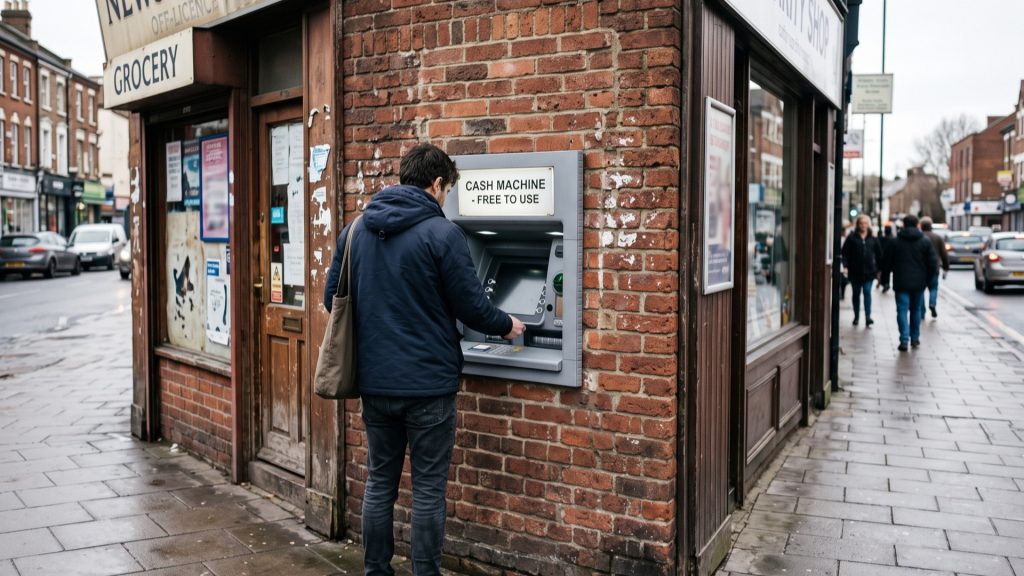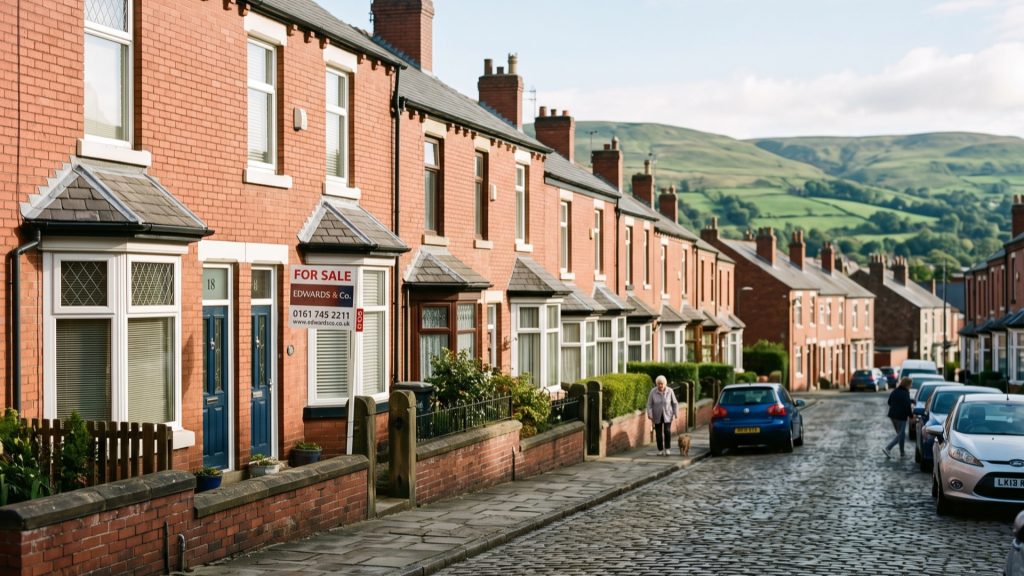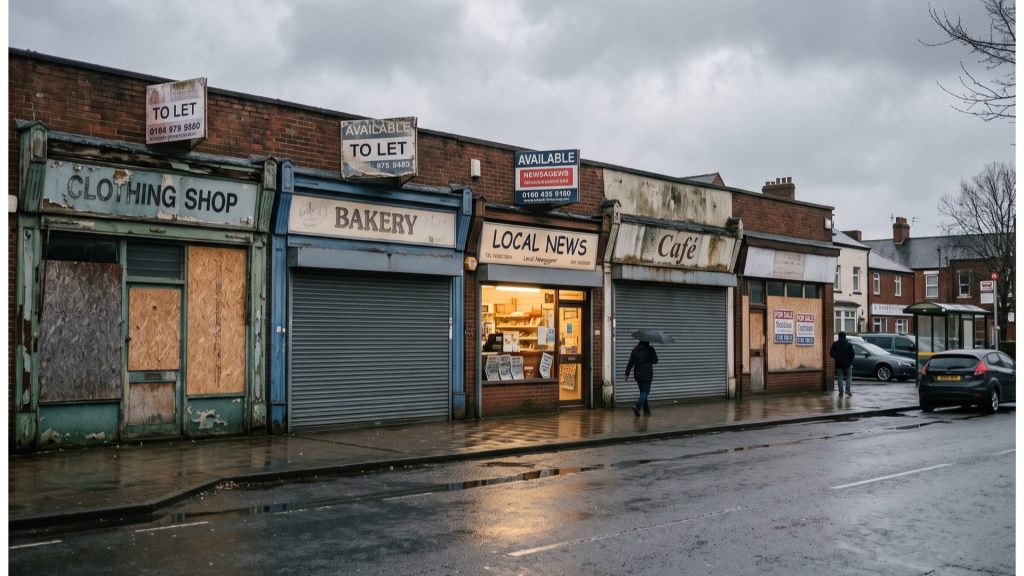
Newport has the emptiest high street in Britain, with 19.0% of its shops standing empty.
That’s almost 1 in 5 units boarded up, shuttered or sitting vacant.
Bradford (18.0%) and Blackpool (17.6%) are close behind in second and third.
The figures come from Centre for Cities’ “Checking out” report, published in July 2025.
Researchers looked at 63 of the UK’s largest cities and towns, using card-transaction data alongside shop vacancy estimates.
It’s the clearest picture yet of which British high streets are genuinely struggling, and which have quietly turned things around.
Why is Newport's high street so empty?
It comes down to a simple mismatch: too many shops, not enough shoppers.
Struggling city and town centres have more than twice the retail space per person of thriving ones.
In other words, these places built (or inherited) far more retail space than local footfall can ever fill.
“City centres that struggle are over-supplied with shops and under-supplied with people,” says Andrew Carter, chief executive of Centre for Cities.
There’s also a leakage problem. Newport and Bradford both lose nearly 5% of local high-street spending to bigger neighbouring towns.
Birkenhead has it worse. It leaks 7.5% of its spending straight across the water to Liverpool.
Every pound spent in a bigger neighbouring city is a pound that never reaches the local high street.
Over time, that steady drain is what tips empty units from a temporary problem into a permanent one.


Which UK high streets are struggling most?
Here’s the full worst 10, ranked by shop vacancy rate, according to Centre for Cities’ “Checking out” report (July 2025).
| Rank | Town/city | Vacancy rate |
|---|---|---|
| 1 | Newport | 19.0% |
| 2 | Bradford | 18.0% |
| 3 | Blackpool | 17.6% |
| 4 | Basildon | 17.4% |
| 5 | Sunderland | 16.8% |
| 6 | Birkenhead | 16.3% |
| 6 | Stoke | 16.3% |
| 6 | Wigan | 16.3% |
| 9 | Swansea | 15.4% |
| 9 | Southend | 15.4% |
A few names here will look familiar if you follow this series.
Bradford also sits near the bottom of the UK’s happiness rankings, so a struggling high street and low resident wellbeing seem to travel together.
Blackpool crops up on more than one list too, a reminder that these problems tend to cluster in the same places rather than being one-off bad luck.
None of the worst 10 are small villages either. These are recognised cities and towns with real shopping districts, which makes the numbers harder to explain away.
Which UK high streets are thriving?
Flip the table around and a different picture appears.
- London: 7.4% vacancy
- Cambridge: 8.5%
- Oxford: 9.0%
- York: 9.2%
- Brighton: 9.2%
- Edinburgh: 9.3%
- Liverpool: 9.5%
Notice that last one. Liverpool is thriving partly because it’s pulling shoppers (and spending) away from Birkenhead, just across the Mersey.
One city’s strong high street can be another’s weak one.
The common thread among the strongest performers is scale and pull. They draw shoppers, students, tourists and office workers from a wide area, not just the immediate postcode.
Smaller struggling towns rarely have that same drawing power, so any leakage to a bigger neighbour hits far harder.
What does an empty high street mean for your money?
Empty shops aren’t just depressing to walk past. They tend to drag on the local economy around them.
Areas with high vacancy rates often see softer property demand, because a struggling town centre makes the whole area less attractive to live near.
Fewer open shops also means fewer local jobs and less money circulating on the high street itself.
It’s a slow spiral: empty units reduce footfall, reduced footfall pushes more shops to close, and so on.
Councils lose out too. Empty units generate far less in business rates, which puts more pressure on local services and, indirectly, on council tax.
That pressure can end up landing back on residents through higher charges or fewer local services down the line.
There’s a knock-on effect for anyone job hunting locally, since retail and hospitality are two of the biggest employers on any high street.
When those units sit empty for years rather than months, those jobs simply don’t exist any more.
If you’re weighing up where to buy or rent, a town’s high street vacancy rate is worth checking alongside the usual house price and crime figures.
It’s a quick, visible signal of how a local economy is actually doing, not just how it looks on a spreadsheet.
A short walk down the main street will often tell you more than any estate agent’s listing.
If you found this interesting, please share!
Disclaimer: Content on this page is for informational purposes and does not constitute financial advice. Always do your own research before making a financially related decision.