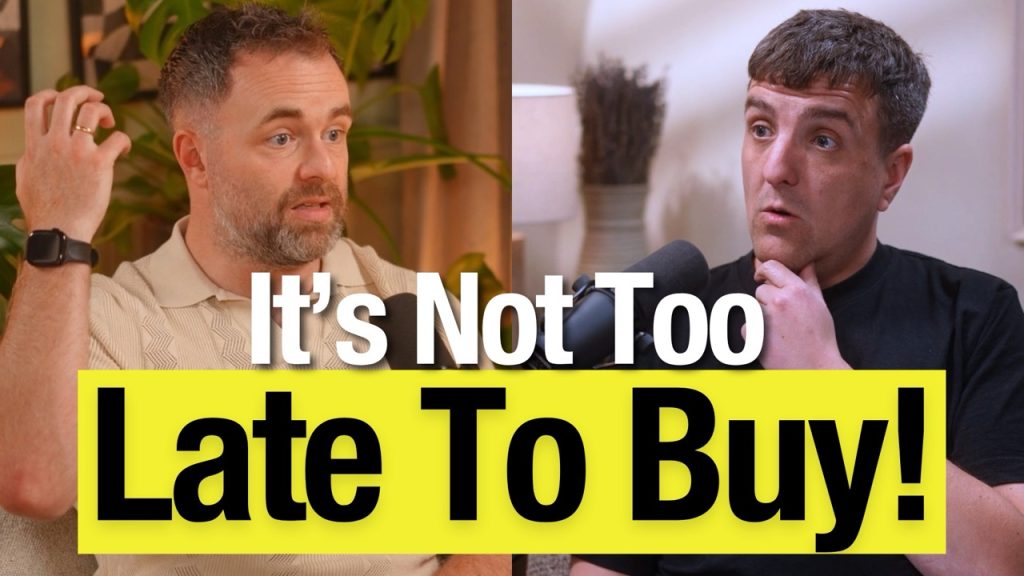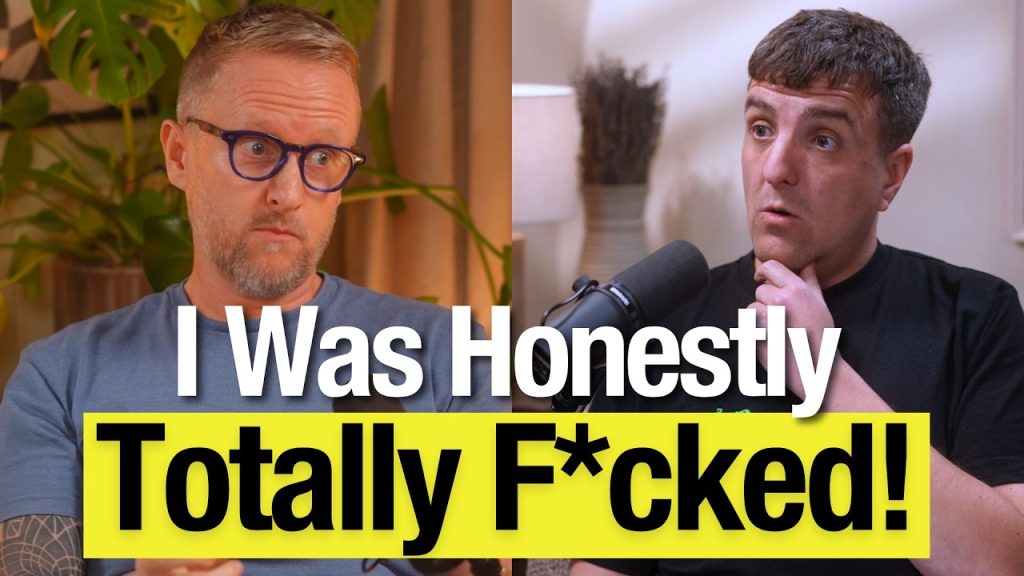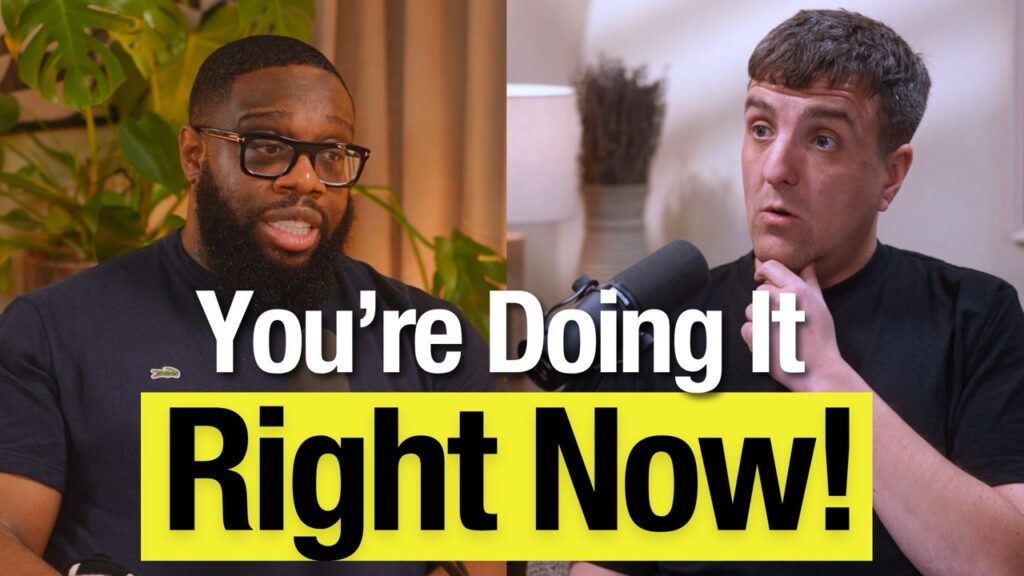

This week’s guest is Connor of Foundered, who retired at 40 after building and exiting a digital agency that started in his bedroom with around £1,000.
He talks through paying off his mortgage by 30, discovering the Mr Money Mustache blog, building wealth through Vanguard LifeStrategy funds, and why “retired” for him means a new free personal finance brand rather than doing nothing at all.
Connor grew up in Belfast in a working-class family where the message from both parents was consistent: work hard, save what you can, and never borrow for anything you couldn’t pay for in cash.
That grounding, alongside a competitive streak shared with his two brothers, set the tone for a career that started with him selling sweets at school and ended, thirteen years later, in the sale of the agency he’d built.
He started a print company in 2009, in the same bedroom he grew up in, on a previous maximum salary of £20,000 a year.
It grew into a full branding and digital agency, was acquired in 2020, and Connor completed his exit in December 2022, seven weeks before this conversation.
Along the way he paid off his mortgage by 30, found the Mr Money Mustache blog, and built a habit of saving and investing that took him from replacing his old wage to full financial independence.
What makes this episode different from a lot of early-retirement stories is what comes after. Connor didn’t stop. He built Foundered, a free personal finance and business brand, because after years of grafting he found he couldn’t just sit still.
This is a conversation about what financial independence actually buys you: not an ending, but the freedom to choose what you work on next.
———
Gains App is LIVE!
An AI-powered budgeting and cashback app designed to help you make more of your money.
Download here: https://gainsapp.onelink.me/8IhT/oiaimr1z
———
Get a FREE FRACTIONAL SHARE worth up £100 when you deposit £1 with Trading 212
https://www.trading212.com/join/MGP
If you don’t receive the free fractional share, head to the menu and put the word ‘MGP’ into the promo code section.
(Capital at risk when you invest)
Key takeaways
- Connor started a print company in 2009 from his bedroom with roughly £1,000, having previously earned a maximum salary of £20,000 a year.
- He prioritised paying off his mortgage first, clearing it by age 30, before shifting his focus to investing and building wealth.
- Discovering the Mr Money Mustache blog introduced him to a simple framework: earn more, save as much as you can, and invest the difference.
- His agency was acquired in 2020 and he fully exited in December 2022, retiring at 40, but instead of stopping he built a new free personal finance brand called Foundered.
- Retirement for Connor isn’t about sitting still: it’s about choosing which projects to pursue and reprioritising health and family time over relentless work.
Timestamps
- [1:17] Growing Up in Belfast and Building a Work Ethic
- [6:12] Building a Print Company From His Bedroom in 2009
- [7:48] Discovering Mr Money Mustache and Early Retirement
- [10:31] Saving 80% of Income and the Cost of Moving Too Fast
- [12:51] Why Connor Is a Vanguard LifeStrategy Funds Advocate
- [18:32] Buy and Hold Investing vs Active Trading
- [20:10] Launching Foundered After Exiting the Agency
- [26:49] What Foundered Is Really About
- [29:30] Advice for Starting a Business With No Experience
- [34:33] What Retirement at 40 Actually Looks Like
From a Belfast bedroom to a seven-figure agency exit
Connor of Foundered started his print company in 2009, literally in the bedroom he grew up in, getting going with roughly £1,000.
The business grew into a full branding and digital agency doing web design and development, and was acquired in 2020, in the middle of the pandemic.
He completed the exit fully in December 2022, seven weeks before this conversation, having grown his income from a previous maximum salary of £20,000 a year to a multiple of that over 13 years.
He credits the growth to two things in sequence: multiplying his own earning power by running the business, and then learning how to invest what was left over.
Connor also traces some of that drive back to his upbringing.
He grew up in a working-class Belfast household where his parents ran their own businesses, his dad in the drinks trade and his mum making curtains and soft furnishings, and where the family rule was simple: if you didn’t have the cash for something, you didn’t buy it.
With two brothers in the mix, he says the competitiveness of the household carried straight into how the three of them later approached business.
For anyone starting from a similar position with a small pot and a lot of nerve, our guide to investing for beginners in the UK covers the fundamentals Connor built on over the following decade.
Paying off the mortgage before anything else
Once the business started replacing and then exceeding his old salary, Connor’s first instinct wasn’t to invest, it was to clear debt.
“My first thoughts were to pay off my mortgage,” he said, and by the time he was 30 he had done exactly that, working on the basis that reducing risk and always having a roof over his head came before anything more ambitious.
Only once the mortgage was cleared did he start looking seriously at what else he could do with surplus income, beginning with a search for how to put money into a retirement account.
In the first year of the business, Connor simply replaced his old wage, with only three or four hundred pounds of difference. It was year two, around 2010 to 2011, when the surplus started to build and the mortgage-clearing plan took shape.
He describes that period as reducing risk in the world first, then working out what came next once the biggest fixed cost in his life was gone.
Finding Mr Money Mustache and the FIRE mindset
That search led him to the blog Mr Money Mustache, which he credits with most of what he learned about money in the years that followed.
The principle he took from it was simple: earn more, save as much as you can, and invest the difference, and at some point you become financially independent.
Connor put it into practice hard, saving around 80% of his income at one stage, though looking back he says he would have paced it more gently.
He remembers turning down a trip with friends because he felt “skint” the same day he’d put a sizeable sum into his investments.
If you want to see how consistent saving and investment growth compounds over years rather than months, our compound interest calculator is a useful way to picture where disciplined saving like Connor’s ends up.
Vanguard funds over stock picking: why simple won
Asked what he actually invested in, Connor is unambiguous: Vanguard LifeStrategy funds, “100%.” He doesn’t call himself an investor in the stock-picking sense, saying he doesn’t understand individual shares well enough to be confident choosing them, and prefers a small-and-often approach into diversified funds instead.
He described his own approach as buy-and-hold rather than active trading, comparing individual stock speculation to a trip to Vegas: “at least I know what I’m losing there.”
His advice for anyone starting out mirrors that simplicity: don’t try to make investing more complicated than it needs to be, and results tend to follow.
He’s also relaxed about not checking his portfolio often, saying he’s still in the accumulation phase of building wealth, so there’s little need to watch day-to-day price moves.
That will change, he says, once he has to think about tax on withdrawals from his general investments, but for now the approach is deliberately hands-off: pick broad, diversified funds, keep contributing, and let time do the work rather than trying to outsmart the market.
Building Foundered: a free personal finance brand after retirement
Rather than stopping work when he exited the agency, Connor started Foundered, a personal finance brand aimed at helping people start businesses, invest safely and work towards financial freedom.
He began writing articles roughly a year before this conversation, aiming for three to four posts a week, while deliberately keeping the site separate from his old business until after the sale was complete.
Early traffic was, in his own words, “mum, dad and a few mates,” before growth started to build through 2022.
Every piece of content on Foundered is free, a decision Connor is firm about: people struggling with money shouldn’t have to pay to learn the basics.
Going public with the site meant getting in front of a camera too, something Connor says didn’t come naturally after years of being the person behind the camera in his agency.
He now writes an article first, then records video versions of it for different channels, a workflow he built directly from his agency background in content planning.
He’s open about the pace of that growth being slow at first: articles that took six or seven hours to research and write got barely any views in the early months, and only started appearing on the first page of Google roughly a year after he’d written them.
If you’re starting from scratch and want a sense of where your own financial habits sit, our money personality quiz is a quick way to get a starting point, in the same spirit as the free content Connor publishes.
What "retired at 40" actually looks like day to day
Connor is candid that “retired” doesn’t mean idle for him.
He describes himself as an entrepreneur at heart who has to actively stop himself taking on too much, and his content schedule has deliberately slowed from three or four posts a week to three or four a month.
Day to day, retirement now means things like taking his daughter to school, playing golf, and travelling extensively, a shift from the routine of being in the office at 7am that defined his agency years.
He’s candid too about what he sacrificed to get there, saying he neglected his health for the business and is now using retirement to fix that.
For anyone building towards a similar goal, keeping a clear picture of income and outgoings along the way matters just as much as the investing side, and our budgeting calculator is a simple way to check the numbers behind your own plan.
This transcript is auto-generated and lightly edited for readability, it may contain errors.
[0:00] Sammie Ellard-King: Hello and welcome to the Money Gains podcast. This is your host, Sammie Ellard-King, and this podcast is powered by Up The Gains. We’re a personal finance website dedicated to helping people like you and me learn about money safely. Now today we’re joined by Connor from Foundered. Now Connor retired at the age of 40, having sold and exited a business that he started in his mid-twenties with just a thousand pounds to his name. He’s since gone on to start his own personal finance brand in Foundered, teaching people how to start businesses of their own, invest safely, and work towards financial freedom. If you’re listening on YouTube, please do hit the subscribe button or drop a comment below. And if listening by Apple Podcasts or Spotify, please do leave us a nice review. It helps us more than you know. Right, let’s get started on the Money Gains podcast. So uh Connor, welcome to the show. How are you doing, man? Good to have you on. Doing really well, man. Thank you so much. Thanks for having me. Yeah, it’s a real pleasure. And uh where whereabouts are you in the world at the moment?
[1:17] Connor: So I am in Belfast at the moment. I uh live here, have lived here my whole life, which is in Northern Ireland, and uh yeah, it’s a great part of the world. I I love it. I don’t think I’ll ever leave here for good, but I I love to travel, so yeah, I scoot about the place throughout the year a little bit. Ah, nice. I um I haven’t ever been to Northern Ireland, I’ve been over to Dublin a few times, but um yeah, yet to yet to get into the northern part of the country, but I hear it’s beautiful. You’re more than welcome. Oh, thanks. Yeah, no, I’ll take you up on that offer when we when we come over again. Perfect. Um I’m really excited about this conversation today. I think it’s gonna be a really good one. Like your story’s a little bit different to some of the guests that we have that perhaps have been doing it for longer, and but it’s m you know, your story before that I think is super interesting. Um so I’m gonna um I’m gonna roll back the years, a touch is kind of tradition here on this podcast, and then we get to know our guests and their relationship with money growing up. And um so yeah, that’s really my first question. Like, what was your relationship with money as a kid and and early days?
[2:21] Connor: Well, we uh we weren’t a rich family. Um my dad and my mum were both working class, and they what I would always say is they had a a huge work ethic, and that’s what was instilled into us from from the very, very early days. Actually, I said to my dad a few months back, I was like, when do we ever go out for dinner? We didn’t, was the answer, because we just didn’t have the money to go out for dinner, but it we never felt poor because we were we had holidays and everything like that, but we just didn’t have that roughness that people would have that you would attribute to like a middle-class lifestyle. Um, so my dad and mum, actually, both of them, they they were always very focused on money in the sense that well, you all you never borrowed for money in our household. If you didn’t have it in cash, you didn’t buy it, or you didn’t buy whatever you wanted. So, from that perspective, we’ve always been told to save and to learn how to save from them. And as I said, then the work ethic came from both of them. They both had um great jobs, they both worked really hard and and built their own business and built their own career, and we just followed in that footstep, myself and my two brothers.
[3:26] Sammie Ellard-King: Ah, right, wicked. So you you’ve got brothers, any any other siblings? No, just two brothers. One of them, uh Martin, was in uh the business with me, and then the other brother works with my dad as well. Ah, interesting. Okay. What did your parents do? Were they Yeah? So my dad’s in the drink trade. Um so he works for a Heineken owned company now. Um and he’s always been in that business for the last 38 years. Um and my mum made curtains. She had her own upholstery, or not upholstery, but um soft furnishings business. Um she made curtains for you know homes and residential homes and and and in commercial settings as well. So the creative side as well in the fans. A little bit, yeah. Actually, she has she’s a painter, so yeah, she would be the creative one. Ah, brilliant. Oh, cool. So obviously, you kind of have that installed from you in a young age, yeah. The brothers as well. I’d imagine it was quite competitive with two brothers.
[4:19] Sammie Ellard-King: Absolutely. Yeah, okay. We’re we’re competitive. Do you have do you have family yourself? I do, yeah. I have three sisters, so slightly different to you, and I’m the oldest, so I get all of the all of the shit basically. Yeah, I’m sure. No, well with two brothers, you absolutely, as you said, it’s so competitive. Um, even when we’re we’re playing cards or we’re playing around the golf or whatever, um, it’s incredibly competitive, and even in business, we’re we’re all competitive as well. Yeah, no, but that’s kind of installed that in from a young age, which you’ve then taken into business, I would imagine. Exactly that. Um what where do you think that kind of it clicked for you when you started thinking about money a little bit differently? Like as a teenager, obviously, you know, we’re just kind of exploring the world and finding out things, and you know, you want the latest this, you want the latest that as a kid naturally. That’s just the way that you you know your mind works then. When it when did it start to click for you?
[5:10] Connor: Well, I was always going to go into business, so there’s always somebody in your class who sells sweets. That was me. I went to the I went to the wholesaler, I bought sweets and I sold them and I made a profit. So I knew about making money in that sense. On the other side, I knew about saving money too, because as I said, we didn’t have a huge amount of money growing up, we weren’t poor, but we didn’t have a huge amount of money. So if we were shopping, my mum would have asked for a discount. She would have asked whoever was behind the till for a discount back you know 25-30 years ago. And while that embarrassed the hell out of us, it told us that you know you can get discounts for things, you can save money on everyday purchases if you just ask. Um, so both from an earning money and a saving money perspective, we we were brought up in that, you know, we understood that from an investing and growing your wealth, that was something that our family didn’t know an awful lot about, to be honest. From my perspective, that came in my my twenties and thirties, um, only when I had money that I could then put for my put away for my future.
[6:12] Sammie Ellard-King: Okay, cool. So you you lead well into the next question. Sorry. Uh I was gonna ask about investing, but yeah, yeah, I’m gonna actually go a little bit into your story because it is quite different. Okay. Um, you know, you you you you retired at what would be regarded as a young age. So talk to me about this business that you created and you ran. How how’s that kind of worked out? Well, that’s I exited the business in December, just uh seven weeks ago today. And that business was actually started in this room, this bedroom. It didn’t look just like this back then, but in 2009 I started a print company, um, and that print company then morphed into a digital agency, and we did branding and development um of websites, and from that we were acquired in 2020 at mid-pandemic, uh, which was fantastic. And I’ve just exited there in the last few weeks. And I do apologise, there’s a lot that I can’t say in that. Um, contract for contractual reasons, but the business itself, you know, from a from an early part of that, uh I took my I can say this anyway, whenever I started the business, my max salary, and this is something that I I love, um, I never earned a big wage prior to starting my own business. I earned a maximum of 20 grand a year, 20,000 pounds, per year the year prior to starting the business. And when I started the business, I multiplied that m significantly over the last 13 years, and that was the biggest catalyst to my growth in wealth, and then learning about investing and getting all that um side of things, which I’ll know we’ll come into, um, really then catapulted it.
[7:48] Sammie Ellard-King: So, in where in that journey did you start thinking about investing? Yeah, great. Um, whenever I first started the business, the first year of starting that business, I replaced my wage. Literally, that was about three or four hundred pounds of difference. In year two, that increased somewhat more, and I didn’t know what to do with that money. And just being me and a little bit old school in my thinking, my first and thoughts was, or my first thoughts were to pay off my mortgage. So at that point, um, in year two, which is about 2010-2011, I started to think about well, reducing my risk in the world, um, always have a roof over your head, um, and started to pay down my mortgage. So by age 30, I’d paid off my mortgage. And then after that, I started looking at well, what else can I do? And I I do remember the initial search, it was how to put money in your retirement account, and that was the first search that I’d made about this. I also then searched early retirement and found um it was actually the Mr. Money Mustache um blog at that stage, and this was really in the early, early days. So he’s an American blogger, and I do credit a lot of the learning and the instruction and the understanding that I have about money with that blog. And if you go down that rabbit hole, I don’t know if you have done that before yourself. Do you know Mr. Money Mustache? Okay. Yeah, yeah, yeah. I think the old day.
[9:11] Sammie Ellard-King: Yeah, he’s still I mean he’s still going strong. It’s uh yeah, insane blog. Um yeah, and and he has uh uh um I don’t know if I can curse, but it’s a no bullshit approach to money. Uh to lift um and I agree with a lot of that in principle. Now it’s very American and his thought process is very American. Uh he’s Canadian, but it’s very American style blog. Um but the principles work here as well. If you earn more, save as much as you can, and invest the difference, well then you’re gonna at some point become financially independent or financially free, whatever your goal is.
[10:31] Sammie Ellard-King: That’s amazing. Like you’re you well uh out of that, would you s would you look back now? Would you have done anything differently? Yeah, oh absolutely. Um I I think we all would. Um what would have I would have done differently is had it probably taken my journey a little bit slower. I remember saving 80% of my income for the year. Now, that didn’t necessarily make a change to my lifestyle. Um, as I mentioned, my income grew quite considerably over a couple of years, and so I just maintained the lifestyle that I had during that period of time, but it did mean that I was able to put a lot of money into my investments early on, and the earlier you do so, the better that you know the longer you have compound interest and growth and all that good stuff. Um works in your benefit. Um, but I would have taken it slower because I do remember one day where a few friends had messaged me and they were like, Do you want to go skate or do you want to go on holiday? I can’t remember, it was a trip anyway. And the an initial response back to them was no, I can’t, I’m skint, and I just put a sizeable sum into my investments that very same day. So it’s taking the money side of things away, taking that emotion out of the money. It was right for me, money and investing and saving was an expense, a savings rather than something that I didn’t want to do.
[11:47] Sammie Ellard-King: So do you think that you would kind of perhaps siphoned off a little bit more of a personal life? Yeah, just a little bit. Now it doesn’t have to be an awful lot, but you know, if you wanted to go on a weekend away or do something like that, I probably could could have done a few more things like that over the time and made it a bit more of a pleasant journey, let’s say. Um, although I do appreciate that that doesn’t work for everybody because if you’re saving 30% and that’s the max you can save, there’s really not an awful lot of room for those additional expenses. So for me, I could have, but your mileage may vary. Yeah, 100%. It’s unique to everyone, right? But absolutely if you’ve got skin in a game, it doesn’t matter if that’s a pound or uh a million quid. It’s a game that counts, right? And you know, that as you say, completely unique to you. So how how then if we if we if we look at this, what type of investments were you getting into? Because I imagine, do you mind me asking how long ago that was and what was available to you right then?
[12:51] Connor: Yeah, that that would have been 2010, 2011 onwards. Um and in the early days there was still access, in the early days, um back then there was still access to um all of the the vanguard funds. Um so you would have still had your life strategy fund back then as well, um, which I I am a big fan of the life strategy series of funds, um whether you’re going for 20% um equities or all the way up to 100%, again suits yourselves. Um but for me they just give you an awful lot of scope to buy into a lot of the market for well for quite easily to be honest. For a fraction of the price of a full share. Yeah, which helps, right? You know, you then exposure. Yeah. So you’re Vanguard heavy? 100%.
[13:38] Connor: Yeah, absolutely. I I’m a big fan and advocate of the Vanguard life strategy funds. I love them. Um I think that they for somebody who’s not an investor, I I wouldn’t call myself an investor because I don’t understand stocks and shares to a level where I could be confident in picking them. Um so for someone who just wants the ability to buy into the market and to look for growth that along with the market, um, the Vanguard life strategy funds work really well for me. Well, that’s wonderful. Like you’ve come in all this way, and you you still are an advocate of funds, you know. Yeah, it it’s one of those things that people think that they have to be the next Warren Buffett or you know, sit behind a computer day trading 24-7, and that couldn’t be further from the truth. It’s it’s about often just small and often and into the right funds, which gives you access to the market and diversification across it, and and that can make you wealthy, and it’s just really that simple.
[14:41] Connor: Just keep it simple. Um, there’s no point of trying to to make things you know very difficult for you to manage or to understand, or that you’re having to rebalance things regularly. Um, I don’t look at my stocks and shares often because I don’t have to. Um, I know what they’re doing, and I I can look at the price point of whatever fund that I’m in and save it’s going up or down. That’s the limit of all I need to do at this point in time. I’m in the the accumulation phase of my wealth building, and that’s very different now because when I have to be mindful of when I take those payments and when what that does from a tax purpose for my general investments. Um, so it’s a little bit different, but whenever you’re just buying in, you just do it small and frequently, and you see great results over time. And it it does take time to start seeing those results. I remember hitting um a specific number and it took forever, and then doubling that number was a lot less, and then doubling that number was was a very, very short period of time in between. So uh it the start feels slow, it is slow, but you get there in the end.
[15:44] Sammie Ellard-King: Your first million is your hardest, as I say. I wouldn’t know, unfortunately. But apparently. So you you did touch on it slightly about individual stock picking. Have you since had a play around and do you get involved in that a little bit now? No. No, no, I to be honest, um, I follow stocks and I follow shares like everyone. Um, but no, I I I don’t put any money, I don’t even have like a little fund of you know play money that I put in um a small amount and and pick shares like that because well, I don’t know enough about it. I wouldn’t get enjoyment from it, and I know what my money’s doing in the one fund or the couple of funds that I’m in, and it just works really well. And if I want um to gamble, which is what I would describe, um I can go to Vegas for a weekend or a week and stay and at least I know what I’m losing there.
[16:38] Sammie Ellard-King: Yeah, look, there there are other ways of looking at that too. You know, some people um you know, off uh I I read a lot about this sort of stuff, and I love individual stop picking myself. Okay, good, good. I’m s I’m self-taught, and yeah, you know, that I’ve made a lot of mistakes along the way, which I probably should have just put that money into the funds. But you know, that’s that’s the way it is. But I I you know a lot of people do um where they start out, they look around their house and they make a list of items within it and stuff that they buy regularly, yeah, and they’re contributing to that company, and so why not own a little piece of it? Um that is another way. Yeah. Um without having to, you know, without having to be checking the charts, checking the earnings reports 24-7, which is very, very difficult and you know, and very difficult to dissect as well.
[17:30] Connor: So it it’s a it’s a completely different approach for myself. I personally I like it to be very, very simple in the way and for me, the least amount of work that I can do for my stocks and shares, the better for my investments. Um, but I completely get that. You know, there you do have a lot of people who look for dividends and that that’s what they’re going for with their investments, and you have other people, and I do love your approach where you know, if you’re buying Johnson and Johnson products, well, why wouldn’t you want to own a little bit of that company? If you buy Apple products, why wouldn’t you want to buy a little bit of that company? And that’s again, go back to the point, there’s no right or wrong way for everyone, it’s what suits yourself. 100% couldn’t agree more with you. And yeah, yeah, there’s there’s no right or way, you’ve got to find out for yourself. You know, there’s hands off or hands-on, and there’s also somewhere in the middle, too, you know. Yeah, I’m probably somewhere in the middle. I’ve got a range of funds, I’m probably more heavy on the funds now than I than I used to be, and and you know actually my results are a lot better, if I’m being frank. Who knew?
[18:32] Connor: Uh but do you do you enjoy that? Do you call it active? Would you say you’re an active trader, or do you just buy and I’m not active, no? I’m um I’m a buy-in, I’m a buy-and-hold. I basically I love researching new technology, so I’m big on my fintech, I’m big on uh I’m big on my software brands, which I think you know perhaps have the ability to be the next Amazon or you know, could could you know 10x in 10 years kind of thing. And yeah, if if three, four, or five of those pay off, you know, then I I’ll be a happy, very happy man. Understood. Understood, yeah. It’s one of those ones. That’s what I enjoy. I enjoy the actual brands and what they’re up to rather than the than than getting deep into their earnings and financials, you know. If I think they’re going to explode, then I think it might be a good investment, and I might take a punt on that. But other than that, I I will not like sit there and and trade in, trade out like uh it’s a losers game, it really is. Of course it is, yeah. Very good. The house wins, always. Always. So since you’ve exited, obviously, you’ve you’ve I’m gonna move on to to talk about founder because uh you know there’s a lot of similarities um without the games as well, what we’re doing, and and and and it’s I think it’s excellent what you’re doing. You’re taking a really good approach to it, going video heavy, which you know, some of your videos are very educational, they’re brilliant. Um so is that what you know when did that idea formulate? What talk to me about that kind of journey of creating founded and and and how it’s going.
[20:10] Connor: Well, I I come from an agency, so my agency was a branding and design agency uh with a little bit of video focus. Um, but from my perspective, I’ve always loved video um and I’ve always loved educating. Um, even whenever I owned the agency, I was talking about personal finance. We used to have a day in the office every week, it was wellness Wednesdays or well-being Wednesdays, and on some days we would have had chest heart and stroke in, so that they would talk about cholesterol, other times we’d have had a gym in, and then when it came to the personal finance chat, I gave the personal finance chat to discuss money saving tips. So I’ve always had a passion for it, it’s something that I’ve been learning about for the last 13 or 14 years now at this stage. And when I exited, I was never just gonna sit at uh a beach and drink pina coladas. That’s not who I am. Um, to be honest, I’m I would say that one of my strengths is that I’m a hard worker. Uh it would be very hard to find somebody in an industry who works harder than me, I think. That’s probably a little bit um naive to be honest, but I I work hard, we graft and we put the effort in. So I wanted to start a blog. I wanted to start a personal finance blog. Uh do we call them blogs still these days? Uh they are blogs, yeah. Yeah. Um, so I wanted to start that and I started writing content um maybe about June last year, and with the the effort or the plan to create three to four posts per week. Now, as somebody who’s in this game yourself, you know how hard that is to continue. Yes, it’s a big goal. Yeah, to consistently write uh a lot of articles, a lot of words, and put that down onto well onto a digital media now. So I did that and I did that for the longest time, and I enjoy it still, and I will still continue to write articles um every single week. But whenever you’re building a website like this, when it’s an information-based website, um, you need that it needs to well, you know this more than anyone, it needs to uh mature somewhat. And you could write an article for that takes you six or seven hours, ten hours including research and editing. Uh your your graphics, you put everything there live with it, and in the first six months it gets 15 views because you would exactly take an awful long time to establish a website authority, and especially in a very competitive market that that we we work in and work with that we we publish in. And so whenever I I was very mindful that I didn’t want this work to interru interrupt. What I was doing, and I was exiting the other business, and I wanted to make sure that they didn’t intersect even until I had actually left the business itself, um, just because I didn’t want there to be any conflict. And whenever I exited, I then went public with the site, and still was getting 30 visits to the website at that point. Because again, you’ve got a nice network there, they’re being polite, they’re going to your website and they’re they’re having a look. But unless they’re specifically in the in the moment wanting to learn about personal finance, they’re not going to stick around.
[23:15] Sammie Ellard-King: 100%. First few months, you it’s mum, dad, and a few mates on the site, and you’re looking at it thinking, Oh wow, because yeah, who are who are these people? It’s family and friends. Exactly. If you if you filtered all the IPs of the people who you know, you it would be a sorry state of affairs. Yeah. So um then around Christmas, I had created quite a bit body of, it was actually it was at the start of November, I created a body of text around a financial detox that I was launching in January. And I kicked out to my old network and spoke to a couple of the editors in the local press and asked them if they wouldn’t mind featuring it. They saw it, they liked it, and they were like, yeah, we’ll publish this in early January. So at that point I was committed to going public with the site. And with that in mind, I then decided that, well, if I’m going public, I may as well go all in and started recording the video. And I’m not a natural person in front of the camera. This, as I say in my videos, this pains me because I’ve always been the guy behind the camera calling the shots or telling people what to do and how to move and how to interact. And that’s been fine. So this is unnatural for me. And I can relate. Yeah, of course. Nobody likes it. Even hearing your own voice sounds really it’s it’s off-putting. And it’s also hard to put yourself out there because everybody for the last 20 years knows me for old colour, and they don’t know anything about this side of me that knows about personal finance. They don’t know all the time that I’ve spent learning. They have an idea that I’m doing okay, and that’s okay. Um, but now that I’ve put myself out there, um, I went public, and the only way to do that, in my opinion, is to get in front of the camera. Um, because the the content over here will mature, and that will do its thing over time. And the marketing over here will do fantastic work, and people will start to find the blog and they’ll find start to understand a bit more about what I do. But the quickest way to make a big impact is to speak directly to those people who want to learn a bit more, and that’s why the video has become a primary focus. And so every I have quite a large going back to my agency days, have a quite a large plan for every bit of content. Um I write an article first and then I record it in the video, and then it becomes multiple versions of that for each of the different channels. Right. And that works really well. And over the last few weeks, going live at these things, uh, it started to take off quite a bit, actually.
[25:37] Sammie Ellard-King: That’s amazing, man. What a journey. No, no, no, you seem like you it’s just really refreshing to hear that from myself because you know, I I talk to myself about these things 247365, right? In my head. And to hear somebody else say these things, it makes you go, oh, I’m I’m not crazy, you know. This stuff does work. You know, what you said about blogging, as a lot of people get into it as a as a as a passion project, yeah, all with the view to make money quickly, and that they couldn’t that couldn’t be further from the truth. You know, building a website um, you know, has been blood, sweat, and tears for the past year, and only now uh you know the articles that I was writing in June are actually now starting to show up on the first page of Google and actually making some traffic and finally some a little bit of money, and that’s just the way things are. Um, but if you keep it up, it’s a compound interesting. It goes right back to investing. Um, more content, better written, you get better, and you you help more people, you make more money, and it is that simple. And uh, you know, if you can keep it up, then then that’s great. Well, looking at the the the videos then, what what for the listeners here that don’t know you, what kind of context are you taking into these videos?
[26:49] Connor: Yeah, so you you mentioned there about money, um about making money with your site, and I’ve decided for this first 12 to 18 months that well the money side of things isn’t really the the primary driver for it. For me, it’s about getting content to a wider audience and letting them decide whether or not it’s right for them and whether or not that will help them. So I talk about personal finance, I help people earn more, save more, invest intelligently, and then hopefully achieve their financial goals, whatever they may be. I did originally start the site to talk about financial independence, but I do appreciate that at this point in time that where people are finding it very, very difficult with money that that side of things will come later on, but if I help people to earn more and save more now and to put that money to work for them, well then I’ll reach more people that will benefit from it.
[27:39] Sammie Ellard-King: Yeah, that’s a thing you’ve pivoted at the right time. Uh yeah, I think so. Perfect sense, definitely. Um, it’s a very similar thing to me. I started out thinking that I was going to be the encyclopedia about investing, and actually it couldn’t be further from the truth when when actually you start writing the and and thinking about things, it has to be to help others in the situations that they’re in. And once you realise that, you know, in any niche that you get into, by the way, this doesn’t just revolve around personal finance. It will take you time to figure out who your target audience is. Yeah. But if you just get started with whatever you’re doing, whether that be starting an investment, starting a website, starting a side hustle, crafting business, whatever that might well be, just get started and you will figure it out along the way. You have to make mistakes.
[28:25] Connor: I I talk about personal finance an awful lot, but I talk about business. So you mentioned there about getting started, and I can tell you now that you know, Sammie, you’re gonna be the exact same as me here. I hope that we all feel like imposters. You know, I in my old career I was pretty successful, I’d done quite well. When I stepped onto this new Foundered platform and I put myself out there, I’m a complete beginner. I hadn’t got the experience, you know. I definitely don’t have experience speaking to camera. I don’t have experience in communicating that way. I always had a marketing team to do my marketing, so I’m learning marketing again in a different world. I started my printing business whenever flyers were the core focus of marketing. Yeah, yeah. It’s it’s different now. There wasn’t even a Facebook back then. Um so I I’m learning all these skills, and as you said, just start. You know, you will make mistakes, you will feel a lot. I feel every day, I make mistakes every day. But you if you learn from those, then it’s an education, it’s never a failure. You fail forward, is a term that I use a lot because well, you’ll grow from it better, you’ll grow from it quicker too.
[29:30] Sammie Ellard-King: Oh, yeah, 100%. I I couldn’t agree more with it. You said it i i if someone you know is thinking about starting a business other than getting started, what advice would you give them just starting out now? Yeah, oh that’s a class question. That’s the one question that I’m asked from everybody is well, what will it do? And I always say, look at what people are paying you for at the minute, and I’m always caveat that was don’t go out and try and steal your customers from your day job, or don’t try and you know sideline in the the evenings or weekends to those customers because you’ll lose your job. Um, but if you work in uh in design, for example, or if you’re a graphic designer, there are so many opportunities for you to sell design services printables on Etsy, uh Amazon uh desktop publishing um there or Amazon merch. Um you could even sell your illustrations on different sites as well. There’s lots of ways for you to sell products or your service outside of your 9 to 5 without being in compete in competition with them. So it’s looking at what skills you have now. I’m a marketer, I like personal finance, I have some skills in well, very rudimentary skills in editing. But what I do then is I take that and I put that together in a video format. Um, if I was starting a business today, I would do something like this: something where you’re selling service, sorry, you’re selling a product, not a service, and because then you can open that up to the wide world and you’re not just limited to the time that you have available in the evenings and weekends.
[30:58] Sammie Ellard-King: That’s a that’s a great thing. You know, you might start out making t-shirts, but then you might build a website to function that off, then you might sell across multiple platforms, social media might come into it, but actually the fundamental basis of it was what you were good at and what you enjoyed. And exactly that. That’s a really good bit of advice. I love that one, man. Thank you. Thank you. So in terms of what where where are you seeing founded going from here? What’s the big goal for you? Uh the Poundland Martin Lewis for myself. Uh I love it. A friend of it. It’s got a ring to it. Um, look, yeah, I would be happy as that. Um, no, to be honest, if I can reach more people and educate in a manner that they don’t feel that they’re being preached to, um, that would be wonderful. Um, I’m just very happy to make people aware of financial literacy and to increase that across the board. As I said, I’m making my site without expectation of charge for anyone. Um, I will get work and I will get money off the back of that from whatever reason, but the primary focus of that site is to educate free around financial literacy. Okay, well, that you would completely bring my next question out of the water.
[32:15] Sammie Ellard-King: I was gonna say, you know, would there be a service or a course or something that you thought about or yeah, so like every bit of content on my site is free and will always be free. And the reason for that is because well, the people who will come to a site like mine where they’re looking to earn money or to save money, they may have challenges with their own current financial setup, and that’s absolutely fine. It’s not a great situation, but there shouldn’t be a charge or they shouldn’t have to go into debt to find out more good information about personal finance. But if they want private tuition or they want coaching in business, um and I work a lot with businesses, I I’ve helped launch thousands of businesses over the years, um, then that’s a service that goes beyond the free content on the site. And I may open that up as consultation in the future. Um, to be honest, I’m not because I don’t not that I don’t need to. I I don’t need to. Um sorry if you can cut this bit out. Um not opening it at the minute um because I just want to make sure that I’m putting good content that’s free of charge.
[33:18] Sammie Ellard-King: It’s a great way of looking at there’s um there’s a YouTuber called Miles Beckler who is done exactly that. Yeah and he’s put himself out there for free, and what has come off it, he’s touring the world giving talks about marketing and and investing in in business and websites, and he he’s a he’s a website builder himself by by trade. Um and the opportunity created by giving something to his audience for free as is vastly outweighed what he could have done if he’d have monetised it from day one. Yeah. And to be honest, I’m retired. So I I every single day that I come up with I I’m an entrepreneur at heart. You know, I will always be the person who wants to do something new. I’m a starter, I’ll make things happen and do that. And the challenge for me is to stop myself and to say no because I’m meant to have stopped work so that I don’t do things like this, um, and to take things a bit more easy and to reprioritise things, and I am doing that. So I had a schedule, and my schedule’s not rigid because it’ll just happen when it happens. So every bit of content I want, as I said, what was three or four a week, maybe three or four a month or a quarter now at this point. But when I put content out there, it will be the best version of it that I can.
[34:33] Sammie Ellard-King: That’s amazing. You got you got to work towards something. Yeah. And what are you getting up to at the moment in retirement? What in your spare time other than founders? What yes, a lot of travel. A lot of travel. So I finished um in December. Uh sorry, the start of December. I’ve had three weeks travel, sun and skiing. Um back at the California today, and I’m going in a few weeks’ time. A couple uh I this first year I have booked 13 years of holidays. Um it’s it’s trap mostly travel and just relaxing. You know, I as I will tell anyone who starts their business, make sure that you keep your priorities in check. I neglected everything myself, my health for business. And yes, I achieved the goals that I wanted to, but now that I’m going back, I’m just very fortunate that I can go back and fix those things and get myself healthier. It’s not the major, just go to the gym. You know, I would have been the person in the office at 7 a.m. because that’s what I thought you had to do. Um, whereas now I’m getting up at 7 and taking my daughter to school and then going for a coffee and playing golf for four hours. It’s a day, it’s a lot different. Yeah.
[35:36] Sammie Ellard-King: But look, you worked your uh your backside off the get there. So props to you, you know. They’re the thank you. You can only look back and have everyone’s got regrets, but at the end of the day, you work you worked your twenties off and it’s paid off for you, right? So um, yeah, I’m congratulating 40. I’m 30. Thank you. You don’t look it. Well, um, look, it’s been a really great chatting to you, Connor. I’ve really enjoyed this. And you know, is there any last tips or anything that you didn’t cover that you really want to sort of let the listeners know? Yeah, look, if you are thinking of starting a business or you are thinking about investing um or anything like that, then my advice is just start. Um, there’s no right time, there will never be a perfect time to start, and you will learn from your mistakes as you go. As long as you don’t make mistakes that stop you in your tracks, then you can just keep moving forward. And and that’s just call it an education. But um, from from my side of things, if anyone wants to find out any more information, they can go to foundered.co.uk and that’s f o-n-d-e-r-ed.co.uk or my channel on YouTube is Foundered Money. Excellent, brilliant.
[36:44] Sammie Ellard-King: Well, look, it’s been a real pleasure, thank you so much. And uh yeah, I can’t wait to get you back on in a couple of years’ time and we can chat about how founded and uh has taken off, and you know you’ve you’ve you’ve exited in another business. Pleasure, thanks, gonna have a great night, take care of you.
Frequently asked questions
Connor of Foundered is a Belfast-based entrepreneur who started a print company in 2009 with around £1,000, grew it into a digital agency, and exited fully in December 2022 at the age of 40. He now runs Foundered, a free personal finance and business brand.
He built and sold a branding and digital agency over 13 years, paid off his mortgage by 30, and saved a high proportion of his income into Vanguard LifeStrategy funds. The agency was acquired in 2020 and he completed his exit in December 2022.
Connor invested almost entirely in Vanguard LifeStrategy funds rather than picking individual stocks, describing himself as a buy-and-hold investor who prefers a simple, diversified approach over trying to time or select shares.
Foundered is Connor’s personal finance and business brand, built after he exited his agency. It focuses on helping people start businesses, invest safely and work towards financial freedom, and every piece of content on the site is free.
The core idea Connor took from the Mr Money Mustache blog is straightforward: earn more, save as much as you can, and invest the difference, which over time can lead to financial independence. This episode is for educational purposes only and isn’t personal financial advice. When you invest, your capital is at risk. Past performance is not a guarantee of future success. This page contains affiliate links; if you click one and make a purchase we may earn a small commission at no extra cost to you.
———