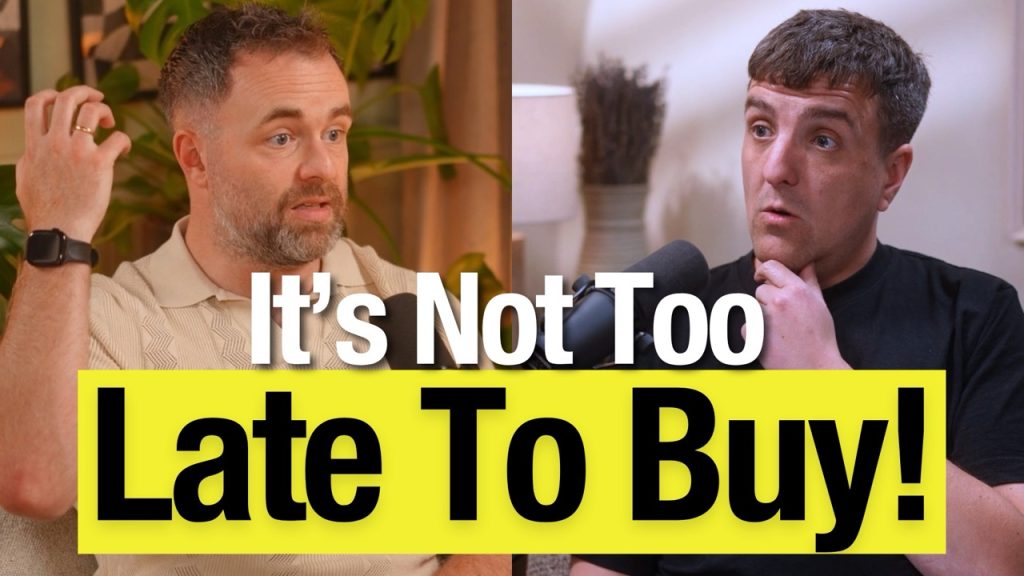

This week’s guest is Dan Knott, the self-employed mortgage advisor behind Dan Does Mortgages, who joins the podcast to translate the confusing world of mortgage jargon into plain English: whole of market advice, loan to value, fixed versus variable rates, and how self-employed applicants get assessed.
Dan is a whole-of-market mortgage advisor based in Sunderland who works with home buyers and homeowners right across the country, not just in his local area.
In this episode he takes apart the language that makes mortgages feel intimidating, from what “whole of market” actually means compared with walking into your own bank, to why lenders talk about your borrowing in multiples of income, to the jargon around fixing, switching and remortgaging.
The conversation covers the full first-time buyer journey: how much you can typically borrow, why deposit size moves you between bands of interest rates, and what self-employed applicants need to have ready before they apply.
Dan also walks through government schemes like the First Home Scheme and the Lifetime ISA, and touches on buy-to-let, self-build mortgages and the vocabulary that comes with each.
At the time of recording, rates were still well above the near-zero levels of 2020 and 2021, so some of the figures discussed reflect that specific moment in the UK mortgage market.
———
Gains App is LIVE!
An AI-powered budgeting and cashback app designed to help you make more of your money.
Download here: https://gainsapp.onelink.me/8IhT/oiaimr1z
———
Get a FREE FRACTIONAL SHARE worth up £100 when you deposit £1 with Trading 212
https://www.trading212.com/join/MGP
If you don’t receive the free fractional share, head to the menu and put the word ‘MGP’ into the promo code section.
(Capital at risk when you invest)
Key takeaways
- A whole-of-market mortgage advisor has access to the entire lending market, not just one bank’s own products, criteria and affordability calculations.
- At the time of recording, residential lenders generally lent up to around 4.5 times income, though this varies by lender, debts, dependants and credit history.
- Deposit size matters a lot: interest rates generally improve in bands as your deposit moves from 5% up through 10%, 15%, 20% and 25%.
- Self-employed applicants are usually assessed on two years of accounts or tax calculations, though some lenders will accept one year in the right circumstances.
- Jargon like “switch and ditch,” loan to value and interest-only versus repayment all have specific meanings that change what deal is right for your situation.
Timestamps
- [1:10] Meet Dan Does Mortgages: Whole of Market Advice Explained
- [3:02] What a Mortgage Advisor Actually Does for First-Time Buyers
- [5:14] How Lenders Assess Your Income and Borrowing Limit
- [8:32] Switch and Ditch: Locking In a Rate Before You Remortgage
- [10:16] Fixed Rates, Interest Rate Rises and the 2023 Mortgage Market
- [14:21] Self-Employed Mortgages: How Lenders Evaluate Two Years of Accounts
- [17:55] Deposit Size and Loan to Value Bands Explained
- [21:24] The First Home Scheme: A 30% Discount for New Builds
- [24:48] Lifetime ISA Rules for First-Time Buyers
- [36:28] Self-Build Mortgages and Preparing for Mortgage Success
What a whole-of-market mortgage advisor actually does
Dan describes his job simply: to understand a buyer’s circumstances and goals, then identify and secure the best possible mortgage solution for them, usually the cheapest deal that fits. The key jargon term here is “whole of market.”
As Dan explains it, a whole-of-market advisor has access to the entire lending market, whereas walking into your own bank means you only see that bank’s products, that bank’s lending criteria and that bank’s own affordability calculations.
Every lender has different rules on what they want from an applicant and how much they’ll lend, so seeing more of the market gives you a better chance of finding a deal that works, and doing so cost-effectively.
Dan’s advice is that it’s never too early to have that first conversation, even if a purchase is two years away.
An early chat lays the groundwork: understanding where your current circumstances leave you, how much you could borrow, and what might need to change before you’re ready to apply.
If you want a clear-eyed view of your monthly numbers before that conversation, our budgeting calculator is a useful starting point.
Mortgage jargon explained: loan to value, fixed rates and switch and ditch
A few terms come up repeatedly in mortgage conversations.
Loan to value, or LTV, describes the size of your mortgage relative to the property’s value, and it’s directly tied to your deposit: a 5% deposit gives you access to a certain set of products, and as that deposit rises to 10%, 15%, 20% and 25%, the interest rates on offer generally improve in bands.
A bigger deposit also simply means borrowing less, which pulls the monthly payment down on top of any rate improvement.
“Switch and ditch” is jargon for a specific remortgaging tactic Dan flags for anyone with a deal ending soon: you can lock in a new rate today, and if your lender releases a lower rate before your new deal actually starts, you may be able to switch onto it.
Dan’s practical advice is to start that conversation around six months before your current deal ends, since switching isn’t always straightforward: a new application can trigger a fresh credit check and go back into underwriting, so it needs weighing up rather than assumed.
As Dan put it, “it’s more important than ever to make sure that you are getting the best deal.”
The self-employed mortgage process: how lenders assess your income
Self-employed applicants, Dan explains, jump through a few extra hoops.
Where an employed applicant might show three months of pay slips, most lenders want to see a self-employed applicant’s income evidenced over the last two years, whether that’s a sole trader’s tax calculations and tax year overviews or a limited company director’s accounts.
Every lender treats that income differently: some average the latest two years, some use the lower of the two, and some look at self-assessment income (salary plus dividends) versus a director’s share of net profit plus salary.
It is possible to apply with just one year of accounts, but the pool of available lenders shrinks and rates are often higher.
Dan’s process is to look at the applicant’s income over whatever period is available and place it with a lender that makes the best use of it, both for the amount they can borrow and the deal they can access.
Getting a realistic sense of your true take-home position, self-employed income included, makes that conversation easier; our take-home pay calculator is a quick way to sense-check the numbers first.
First-time buyer schemes: the First Home Scheme and Lifetime ISA
With Help to Buy’s equity loan scheme now closed, Dan highlights two remaining routes for first-time buyers.
Shared ownership has been around for a while, but Dan singles out the newer First Home Scheme: buyers purchase a new-build property at a discount of 20% to 30%, and unlike shared ownership, they own 100% of the home outright, with no third party holding a stake.
The trade-off is that when the property is sold, it has to be sold at the same discount to another scheme-eligible buyer, so the seller only benefits from their share of any appreciation, and the pool of eligible buyers is smaller.
There’s also a maximum income requirement and a local connection test, and not every lender offers mortgages on the scheme.
The Lifetime ISA is the other tool Dan rates highly for first-time buyers: save up to £4,000 a year and the government adds a 25% bonus on top, so £8,000 saved becomes £10,000 towards a first home.
The catch is that the account needs to be open for 12 months before the bonus can be claimed, so Dan’s tip is to open one and pay in even a small amount as early as possible, just to start that clock, rather than waiting until you’re ready to buy.
Buy-to-let and remortgaging: the jargon around investment property
Buy-to-let has its own vocabulary. Minimum deposits are typically 25% with many lenders, though Dan notes it’s possible to find 20%, and in the past even 15%, deposits for buy-to-let.
Rate rises have squeezed the margin between mortgage payments and rental income industry-wide, which is why deposit size matters even more here: a larger deposit both improves the rate and increases that margin.
Dan also explains equity release in a remortgaging context: if you’ve built up equity in your own home, you can remortgage to release some of it and use that capital as a deposit on an investment property, subject to qualifying for the higher loan amount.
He draws a distinction between a repayment mortgage, which pays off the debt so the property is owned outright by a set date, and an interest-only mortgage, where monthly payments only cover the interest and the loan itself is repaid separately, often used by landlords prioritising monthly cash flow over a debt-free asset.
Self-build mortgages and getting mortgage-ready
Self-build mortgages, Dan says, work differently to a standard purchase. They typically require a larger deposit, come from specialist lenders rather than the high street, and funds are released in stages as the build hits agreed milestones rather than as one lump sum upfront.
Lenders want to understand exactly what the build plans are, what the finished value will be, and what the risk looks like if things don’t go to plan, since an unfinished build with money already spent is a real risk for both borrower and lender.
Across every route, Dan’s closing message is the same: preparation is what makes the difference. Whether you’re a first-time buyer, a home mover or due to remortgage, it’s never too early to have that first conversation and get a clear picture of where you stand.
Before any of that, it’s worth knowing you have a buffer in place so a mortgage decision doesn’t leave your finances stretched too thin; our guide on how much should be in your emergency fund covers how to size one.
This transcript is auto-generated and lightly edited for readability, it may contain errors.
[0:00] Sammie Ellard-King: Hello and welcome to another episode of the Money Gains podcast. This is your host, Sammie Ellard-King, and today my guest is Dan Does Mortgages. Dan is a mortgage advisor, a self-employed one, and we unpack everything you need to know about buying a house, the current landscape that we’re facing with high interest rates, and also all about self-employed and how you can get yourself a mortgage. We also discuss property investing and buy to let’s as well. There’s so much in this episode. I am going to be going back myself and making as many notes as I possibly can. But if you’re listening on YouTube, please do like that subscribe button. And if you’re listening on Apple or Spotify, please do give us a follow. It really does help show people to get started on the Money Gains Podcast. So Dan, welcome to the Money Gains Podcast, man. How are you doing? Are you good?
[1:10] Dan Knott: Yes, very well. Thank you for having me on. Pleasure. Whereabouts are you joining us from in the world? So I’m based up in the Northeast, Sunderland specifically. Ah, cool. I actually work the guy that helps us out with some of the press for the games. Yeah, he’s actually Sunderland born and bred as well. Are you a Sunderland fan? I am season ticket holder of 26 years. Wow. So yes, I am. You’re a proud bunch. It’s not the most fun club to follow, but I’m still there. I’m still there, clinging on. Well, yeah, if I last time I looked, you were still just about to make the championship playoffs. So maybe hopefully in next year you’ll might be might be litty there.
[1:59] Dan Knott: We’re just we’re just short. We’re probably gonna miss out. We’re just just say short, but it’s a it’s the hope that kills you. Yeah, and that’s why we love and hate football. But um we’re not here to talk about football today, unfortunately. We’re talking all about mortgages today. Um, and you have your brand, Dan Does Mortgages. Um and I’ve yeah, I’ve been following you for a little while, and uh yeah, it’s obviously a hot topic right now with interest rates flying up, people struggling. Um, so I think we’ve got quite a bit to unpack today. So, yeah, do you want to talk a little bit about what you do? Yeah, so I am a whole of market mortgage advisor and I work with home buyers and homeowners, and it’s my job to understand their circumstances, their goals, and then to essentially identify and secure the best possible mortgage solution for them. Most commonly, um, the cheapest deal is what’s most important to most people. Um, so yeah, it’s my job to hold their hands from an initial call all the way through till you know they get the keys if they’re making a purchase.
[3:02] Sammie Ellard-King: Okay, cool. So if you if I was to come to you today and it was say I’m a first-time buyer and I’m looking to get into the market, what kind of do you does the mortgage advisor do for you? Yeah, absolutely. So it’s probably worth mentioning that although I am based up in the Northeast, um I do work with home buyers all over the country. Um, so yeah, what does a mortgage advisor do? All right, so as mentioned, it’s my job to hold your hand from an initial conversation all the way through till the day that you get your keys. It’s never too early to speak with a mortgage advisor, whether you are two years away from purchasing. If you are, you can have that initial conversation to lay the foundations for a future purchase, you know, get an idea of where your current circumstances would leave you, how much you could borrow, anything that you need to change over the next couple of years. Um, if you’re looking to purchase sort of in the immediate future, then they can put you in the position to do so. All right, so yeah, it’s a case of the mortgage advisor will assess your documentation, chat through your goals, the specifics in terms of what your budget is, what sort of property you want to buy, and then the general process will allow them to, once you have found a property, submit a successful mortgage application. Nice.
[4:19] Sammie Ellard-King: And and you, as a mortgage advisor, you would have access to a wide range of different products. Do you do you kind of assess the whole market or is it a small, small piece? Yeah. Yes, I’m a whole of market mortgage advisor. So as it sounds, that means I have access to the whole of the market. Now, as of that’s as opposed to if somebody was to visit their bank, um, their bank would only offer you their own products, as well as that, you would only have access to their own lending criteria and also their own affordability calculations. So all lenders have different criteria in terms of what they want from a mortgage applicant, and also in terms of how much they will lend to a mortgage applicant. Right. So the benefit of a whole of market advisor is essentially um you’ve got much a much higher chance of achieving your goal and um doing so in the most cost-effective way.
[5:14] Sammie Ellard-King: So if I’m tracking back to this sort of first-time buyer conversation, if I’m looking at my first property and I’m thinking, you know, maybe I’m on, let’s say I’m on 40 grand a year and you know I’ve got a bit of money saved up, what what do you kind of look at for them there? Is it uh what you know, do you assess their salary based on what they’re earning and then how much they put away to what they can afford? How does that work? Yeah, so it’s worth seeing, you know, with any applicant, when given figures and some basic information, I can give it a rough indication of you know how much they can borrow, for example. However, to give real specific and tailored advice, um, ideally, I do want to see you know pay slips, credit reports, bank statements, etc. With that, that allows me to understand their income. What is the salary? Do they receive any further income, such as um shift allowances, overtime, bonuses, any further income outside of employment, such as child benefit, um, any other form of benefits, um, understand their debts from their credit reports, how many children do they have, what sort of employment contract are they on, and also any any any bad credit history at all because that can impact your mortgage options. With that, I can then put that all together and then essentially create a report of right, this is how much you can borrow with X, Y, and Z lenders. Um as a maximum as a general rule of thumb, residential mortgage lenders generally, every lender’s different, but generally will lend up to around about a maximum of four point five times your income for most people. Okay, that will generally come down depending on the lender, the level of debts that you have, how many children you have, any bad credit. Um, but generally speaking, we see up to a maximum of four point five times your income. Okay. You may see online that 5.5 times is possible, it is possible in special circumstances, but not for everybody.
[7:14] Sammie Ellard-King: And obviously, you know, there’s quite a few things then that they do assess per lender. Is it and I imagine it’s different per provider as well, right? Yeah, absolutely. So it is a very complex calculation in terms of how much you can borrow and what mortgage products you can access. There’s a bit of a like a running joke in my in my job, which is always the answer is always it depends. You know, if somebody comes to me and says, I earn this much and these are my exact debts, how much can I borrow? That’s simply not enough information because it depends on how your credit history is, how many children you have, what your employment contract is. So, yes, it’s it’s definitely it’s very complex. And for those who perhaps have already got their first home, this is actually a selfish question for me. I wanted to ask you this, so I’m gonna ask you live on the podcast. So my mortgage is up in November. Obviously, things are looking a bit crazy right now from what they you know, actually interestingly. I was talking to someone and they said this is completely normal, actually, when you look years back, these these kind of interest rates. But we’ve been so used to this like 0%, 1% kind of interest rate for such a long period of time. Borrowing has been so easy. Like, what would you say to someone that perhaps has got uh you know a remortgage perhaps within the next 12 months?
[8:32] Dan Knott: Yeah, so maybe we can come back to interest rates sort of overall as a broader subject. But if you are looking to remortgage or if you are due in the next six months, generally I would say it’s worth speaking to an advisor like myself or somebody else when you are at that six months mark, okay, to explore what your options are in the market. Um, what can you refinance to? Is it worth remortgaging to another lender, or are you best off making that switching on to a new deal with your current lender? So the answer is different for everybody, all right, but it’s worth considering that in the market currently, it’s not guaranteed that the the the reduction of interest rates or fixed rates has slowed down over the last month or so. Okay, but if you secured a new interest rate, okay, today and your new product is due in six months, generally with lenders, depending on the circumstances, will allow you to then switch onto any newer lower rates as the as or when they are released. Interesting. So sort of a switch and ditch, essentially. So you could switch now onto the best possible solution now, and then in theory, if there are better deals come out with that lender, you could then ditch that rate and move on to a newer and lower rate. Now, it’s not always advisable with everybody because generally a lot of the time lenders will run a new credit check and it may go back into underwriting. Okay, so these are considerations. However, that’s something I would advise on. If somebody’s credit criteria, if it’s very, very um if it’s sort of tight in terms of making affordability of lending criteria, we’ll have a conversation. Or is it worth going through another credit check to save X amount? With others, it’s a case of right, let’s switch. Okay, fine. Okay.
[10:16] Sammie Ellard-King: Well, that’s interesting. We’ll have options early. We’ll have to have a chat after this, Dan, because uh yeah, I’m coming up to six months, uh the first of May. So um, yeah, it’s one of those things um that you know I th I’m sure a lot of the UK right now are worried about it. It is it’s been front and centre in the news. So we should probably talk about interest rates. What’s the sort of mortgage advisor’s view on it from you know, knowing what’s going on right now? Yeah, so let’s say over the the first three quarters of 2022, interest rates increased significantly. Okay, they were increasing from interest rates from let’s say 2020-2021, which were an all-time low historically. Yeah. Never ever been lower than they were then. All right. So interest rates have increased significantly. All right. However, historically, they’re still not actually that high. They’re still pretty low. But what they’re paired with at the moment is soaring house prices over the last couple of years, um, as well as that, you know, the cost of living crisis, petrol’s going up, your shopping’s going up, the bills are going up. Um, so it is making a significant difference to a lot of people. Okay. Um, I would say in the last quarter of 2022, your fixed rates started to come down, and they did so for around about you know four or five months. Okay, they actually are still coming down slightly, but it’s very gradual. All right. Um so where are they at the moment? They’re significantly higher than they were in 2020 or 21. However, there’s no guarantee that they are going to go back down there, all right, anytime soon. So, what I generally advise to people if you are looking to buy and you’ve seen on the news that you know interest rates are through the roof, and you know that that’s daunting for people naturally. Um it’s worth speaking with somebody and seeing in the current market, can you achieve your goal with interest rates increased? Can you achieve your goal in the current market? Can you buy that hot property with a monthly payment that’s affordable for you? If you can, it’s a good time to buy because it’s always a gamble, it’s always a gamble waiting.
[12:26] Sammie Ellard-King: Yeah. Okay. Um, especially for a residential property, it’s not purely an investment. You’re also buying um, you know, a roof over your head, a roof over your kids’ heads. Alright, so there’s also a lot of gamble, um, or it’s also a gamble potentially waiting when you don’t know where the market’s going to go. Um, for some people, however, maybe because house prices increased over 2020 and 2021 and interest rates did increase in 2022, maybe they won’t be able to achieve their goal. If that’s the case, then yes, it will be a case of fingers crossed, hopefully the market improves. Yeah, it’s it’s a crazy one. It seems like there’s so many variables that could change the landscape even from here on out. It’s not it’s never a certain um, you know. I was getting quoted like 4.3%, and my current one is 2.1, and it’s um it’s mad to think that that’s the difference in you know two and a half years, really. Um but that’s the world we live in, and as you say, uh quite normal really, and if you look at it historically.
[13:34] Dan Knott: Yeah, and you know, the 2.0% interest rate simply doesn’t exist today. Um that’s not to say it won’t next year or next month or in two years’ time, but as of this conversation, that interest rate simply doesn’t exist. So for people who are due to switch rates, as you are at the moment, it is a simple fact of your rate is going to go up, and that could mean, quite likely, that your monthly mortgage payment is going to go up. Um that’s just where the market is. It’s the same for everybody, but that’s another reason why it’s more important than ever to make sure that you are getting the best deal. You’re not just settling for whatever your bank’s offering. Yeah. Because if you can save X amount, 50 quid a month with another lender, um, it’s more important than ever to make that saving and to know that you are doing the best thing financially.
[14:21] Sammie Ellard-King: Yeah, as you say, like that that tiny little bit of difference that even that 0.01% can make a massive difference to people’s monthly payments, which over the year is hundreds and if not thousands of pounds in some cases, which is which is insane. So what about if I um you know, I’m just gonna pick your brains here, Dan, because you you’re the man in the nose. So um what about you know, listeners that are self-employed, they’re looking at this, they’ve perhaps started a business in the past, you know, 18 months or even recently. What what’s the kind of parameters that that um that lenders look at? Because they it it you know it’s daunting and there’s not a lot of information out there that that seems to be you know accessible for this. Yeah, so for self-employed applicants, um there are a few extra hoops that you need to jump through. I’m also self-employed, so I need to jump through the exact same hoops as everybody else. The difference being is how you evidence your income as a self-employed applicant. Now, an employed applicant, generally speaking, will have to show three months’ pay slips. Most lenders for a self-employed applicant want to see your income evidenced over the last two years. Okay, so whether you’re a sole trader, that they may take that from your latest two years tax calculations and tax year overviews. Um, if you’re a limited company director, some lenders may do the same, or some may use your limited company accounts. Um and every lender assesses that income in a different way. All right. So just to be clear, there are some lenders that will accept one year’s accounts. Okay, it is possible if you meet criteria. However, the majority do want two. Right. Now, generally speaking, or most commonly, lenders will use an average of your latest two years. Okay, if your latest year is lower, then may use that lower figure. All right, but it’s different from lender to lender. Some lenders will look to use your self-assessment income, as mentioned, okay, and that will be your salary plus your dividends. Yeah, other lenders will look to use for a limited company director, your share of the net profit plus your salary. Okay, so income with every lender it’s considered in a different way. All right, but how you evidence that is essentially where the restrictions can be. So it is very complex. You need to, it’s my job to look at your income over the last two years or even over the last year, that’s all that you have, and to place that income with a lender who will essentially make the best use of it, allowing you to achieve your borrowing goals, but also to access the best deal for you.
[17:00] Sammie Ellard-King: That’s interesting. So you it is possible after one year, but it’s a lot harder and there’s less products available. Exactly that. So, yeah, there’s a much smaller pool of lenders available, much smaller, as well as that, those lenders quite often um may have higher interest rates. Yeah. But if you are in a position to buy, if you feel you’re in a position to buy and you’ve only got one year’s accounts, it’s worth having the conversation. Um, again, can you achieve your goal with the options available to you? You know, it doesn’t matter, you know, that everybody else may have a lot more lenders available to them. It’s with the lenders available to you, can you achieve your goal? Right, that’s interesting. So if I’m let’s say, for example, let’s go back to like someone who’s looking to buy their first home, what products are available at the moment in 2023? Let’s say, for example, you know, I’m saving. What what what should I be working towards really to kind of try and get me the best deals?
[17:55] Dan Knott: Yeah, so the answer’s different for everybody. You know, with a residential mortgage, you’re going to need a minimum of a 5% deposit. Okay, so that’s the smallest deposit that you can proceed with. Now, with a 5% deposit, there’s a certain amount of interest rates and mortgage products available to you. When that deposit increases to 10%, generally speaking, you will have access to better interest rates. When that deposit increases to 15%, the same thing again, 20% and 25%. Okay, so the products available to you generally get better in groups of 5%. Now, some people may only be able to get a 5% deposit for whatever reason. If so, um yeah, there’ll be a certain amount of interest if interest rates available to you. Other people may have it may let’s say have a 20% deposit available. That’s great. If so, we’ll have a conversation. You know, do they want to actually use a 20% deposit or do they only want to use a 10% deposit? Are they happy with that product and keep the extra 10% in the bank? Right. Okay, but generally speaking, the larger the deposit, the better interest rates you’re going to be able to access.
[19:04] Sammie Ellard-King: Oh, interesting. So it does make a big difference if you can get to that 10%. Absolutely, as well as that not only the interest rates, but you’re also reducing the loan amount, which once again is going to pull that monthly payment down. Ah, okay. And so let’s say, for example, I’ve I’m nearly at this 5% now, and I’m looking around, I’m thinking, should I do this? Do you think it’s a good idea at the moment to for people to wait or or you know to still explore? To still explore. Definitely. You know, not everybody’s going to have a 15% deposit. If you only have a 5% deposit, how many years is it going to take you to save another 5%? For some people, the answer may be six months. For others, it might be six years. Okay, so if that’s a position you’re in, yes, absolutely. Let’s explore what your options are. Um, and it’s my job to make it work for you. What is, you know, can we get a monthly payment? That’s within budget. Um, there’s plenty of lenders, you know, offering 5% deposit mortgages. It’s a little bit of a myth that there’s only sort of a handful. There are quite a few lenders offering 5% deposit mortgages. So hopefully one of those lenders will have a product and also a criteria that fits for you.
[20:18] Sammie Ellard-King: Nice. And if I’m, you know, I did help to buy, um, which was massive for me, and you know, built up quite a bit uh of money there, um, which was contributed. If I’m saving up now, what are the kind of other than uh, you know, because obviously help to buy is closed now, what what’s out there for people, government help?
[21:24] Dan Knott: Yeah, so you’re right, so help to buy equity loan scheme is no longer available. Okay, so there are schemes such as the shared ownership scheme, of which is has been there for a while. There’s also a scheme called the first home scheme. Now, both of those schemes are exclusive to new build homes, um, as the help to buy equity loan scheme was. The first home scheme is a little bit newer. I quite like this scheme. Um I didn’t know this scheme. Yeah, so it’s not as available as hopefully it will become, um, but it is maybe growing slowly. So the first home scheme is a scheme where essentially you purchase a new build property at a discount of 20 to 30 percent. It can vary um depending on uh you know where it is in the country. Okay, so the benefit is that it’s removing that initial hurdle of buying um a home. Okay, it’s making it more affordable, it’s taking 30% off the purchase price. The benefit is, unlike the shared ownership scheme or the help to buy equity loan scheme, is that you own 100% of that home. Okay, so you’re getting a 30% discount, but you own 100% of that home, there’s no third party got to hold over your property. Um the negative of it is that when you sell that property, you’ve then got to sell it with 30% discount again. Right. So the considerations are that you’re not going to benefit from the Appreciation of the property value over those years. And also you’re going to be selling to a smaller pool of buyers because you have to sell it onto somebody who’s using that scheme. Now, not everybody would want to use that scheme, and not everybody would qualify for that scheme because there’s a maximum income criteria. You need to be local to the area. So those are the considerations. However, you know, there’s considerations with any with any home buyer scheme, both current and future considerations. But I do think that’s a good scheme. It’s not everywhere at the moment, but it’s worth, you know, if you are a first-time buyer, maybe you do, you do, you would like to buy a new build, you’re struggling to meet affordability, you know, calling around, you know, the local council, new build sites, are there any first home schemes properties that are going to be built on the on the on the on the site? Um and yeah, if so, it’s worth having a look into. Further consideration is that not every lender lends on the scheme.
[23:44] Sammie Ellard-King: Right, right. So just to get my head around this, so you you get the 30% discount. Let’s say for I buy a hundred grand and I get it for seven two, give or take. Um, and that property price of a hundred grand increases to a hundred and fifty grand by the time I sell it. I’ve then got to sell it on to someone who’s looking on the first home buy scheme, is that correct? Yeah. And then from there first home scheme. First home scheme, sorry. And then you what happens to that 50 grand of appreciation? Does 30% of it then what happened? How does that work? So essentially you’ve just got to sell it at the same discount. So you will benefit from 70% of the appreciation. But the 30% doesn’t really go anywhere. Um it essentially it essentially doesn’t exist. Um so yeah, you would just sell it at 70% of 150. So you’ll still benefit from the appreciation, but not as much as if you won’t, if if you you know you had 100% of the value as you still.
[24:48] Sammie Ellard-King: I didn’t know about this scheme, it’s interesting because you know they didn’t really promote it like help the buyers everywhere, right? They I haven’t seen it uh really at all. Yeah, and not a lot of people do. Um and it’s a shame because I I do I do quite like it. Um it is still relatively new, um, but yeah, it’s it’s not it’s not as available as as we would like. And I suppose you the other one is obviously your Lifetime ISA and you can then build up for your first-time buyers home from there, right? Yeah, so so the Lifetime ISA, um, it’s a little bit different, it’s essentially um, you know, a savings account. So the lifetime ISA is a is an amazing opportunity for first-time buyers. Um you can contribute £4,000 annually to a lifetime ISA, and then you can get 25% contribution from the government on top of that. Yeah, it’s amazing. If you save £8,000, that’s going to give you £2,000 towards your home purchase, which is a lot of money. If you can save even more, then that’s amazing. Um, so it’s a little bit of a no-brainer, to be honest, for first-time buyers. The consideration would be that you do need to have the LISA open for 12 months before you can benefit from the bonus. Okay, so if you’re buying, if you’ve got £4,000 and you’re looking to buy your house next month and you don’t have a lifetime ISA open, don’t open one and put £4,000 in because you’re not going to be able to get the bonus, and then you’re going to get charged um for pulling it back out. Okay. Right. But if you are looking to buy a home, you know, 12 months or more in the future, a Lifetime ISAR is just a fantastic opportunity. Um, the consideration would be that even if you don’t have any money to put into a lifetime ISA right now, just open the account, put a pound in, set the set the clock ticking, um, get that 12 months out of the way out of the way for when you are ready to buy. But yeah, lifetime ISA, great opportunity for so many people, and so many people do use it, which is great to see.
[26:50] Sammie Ellard-King: So I I have a couple of friends who already have their, you know, they’re already on the market, they’re happy you know, maybe on their second or third fourth round of buying houses with their families, they’ve moved up the ladder a little bit, and perhaps they might be looking at an investment property. I know things have changed quite considerably over the years. What’s the kind of landscape now for a you know, second home, buy-to-let, that type of uh that type of thing? Yeah, so for for buy-to-lets, okay, so interest rate increases have impacted the buy-to-let market as well. You know, rates have quite simply gone up, which generates a more expensive monthly mortgage payment. And what that means is there’s sort of the gap between your monthly mortgage payment and your rental income, that’s that that margin slims down, okay. Um which obviously can be an issue for buy-to-let landlords. So when buying a buy-to-let property or refinancing a buy-to-let property over the last 12 months or so, it has been a little bit more difficult to get you know figures that work for you. Alright. However, fixed rates have been coming down, as mentioned earlier, and hopefully that is making things a little bit easier. Alright, but in terms of a deposit for your buy-to-let, the minimum deposit needed for a buy-to-let with a lot of lenders is going to be 25%. Alright. Um, you can buy a purchase purchase a buy-to-let with a 20% deposit, potentially. In the past, you have been able to do so with a 15% deposit. Okay, but especially with higher interest rates as there have been over the last year or so, um, that larger deposit, once again, is going to make it a little bit easier to make those figures work for you.
[28:35] Sammie Ellard-King: So it’s exactly almost well, it’s not exactly the same at all, but I mean, in terms of like the bigger the deposit you get, the better rate you’re gonna get, and you know, it makes it then a viable investment for some people, right?
[29:57] Dan Knott: Absolutely, yeah. So that is exactly how it works. But the consideration with the buy-to-let landlord, you know, a lot of the time they don’t want to put all of that capital into the property because they may want to keep some back um to place elsewhere into another property. So, you know, it’s it’s something that we need to wheel. The answer’s different, once again, for every landlord. But to access lower interest rates, yes, a larger deposit will be beneficial. So if I’m let’s say as an example, I own my own home and I’ve owned it for a number of years, and I’ve paid down a mortgage and I’ve built up my equity in the property. And I’m thinking perhaps, you know, I could refinance this and look at an investment opportunity. What what kind of steps do they need to take there?
[30:42] Dan Knott: Yeah, so what I was mentioned, you would be looking to remortgage your home. Um if you have equity in that property, you could look to release some of that equity. Um, so that would be you would do that as part of a remortgage of your property. Okay, so that would again um a chat with an advisor, you know, see one, do you qualify for a higher loan amount? Um, because your loan amount will be increasing if you are releasing some equity. Um so one, do you qualify for that? Um if you can release that equity, then great. Then we’ll also, once we’ve got that money available, we can then chat about where we can place that. Okay, so what sort of mortgage deals will be available for you, depending on the purchase price, the rental income generated by the property, and you know, some extra buy to let variables. But yeah, that’s absolutely an option. Um, a lot of people do choose to do that. Take some equity out of the residential and place that into investment properties.
[31:39] Sammie Ellard-King: Right, so interesting. Uh yeah, it’s something that’s always like been my dream. I’ve had sort of friends of the family, and you know, they’ve got six, seven, eight, nine, ten properties, and you’re like, How have you done this? And they just always refinance the ones that they’ve had for longer, pulling equity out and then purchasing the next one. And I always wondered how they kept doing it. Well, uh another consideration is naturally, um, over sort of a longer period of time, house prices do generally increase. Yeah. So naturally, over the course of five, ten, fifteen years, there’s going to be substantial amounts of equity extra in a property. So that’s generally how people, you know, are able to do that. As well as that, you know, rental income may increase it, which allows them to get a higher loan amount. So, yeah, there can be lots of flexibility for buy-to-let landlords to um pull money out to reinvest elsewhere. But I would say is you know, it is, it can be complex. Um, a lot of people do go into property investment a little bit sort of willy-nilly, um because it can be a fantastic option for so many people. Um, but there are considerations, you know, it doesn’t work out for everybody. Um, you need to consider things such as gaps in tenancy, bad tenants, yeah, issues with the property, the roof collapsing. Um, you know, it’s not all sunshine and rainbows.
[33:03] Sammie Ellard-King: No, absolutely. It’s you know, probably don’t buy that house that’s sitting on the edge of that cliff and maybe look somewhere safely for your property investment. But yeah, it’s such an interesting one because uh, you know, people will always say, get into property, get into property, get into property. And it doesn’t actually take that long when you okay, you know, a few years is for some people is a long time, but actually in the property investment game, that’s not long at all, and uh, you know, you can get yourself going quite quickly once you’re on you’ve got one, the other ones can come fast, right? Exactly, yeah. Um a lot of people do do start quite quickly. Um so you know what we would do, we would have a chat, and let’s say you’ve got you’ve got somebody’s got fifty thousand pounds and that they’re looking to invest into into property, and we would then have a conversation. You know, some people may come at me and say, I want to put £50,000 into this property. Um, but the conversation would then be maybe could you put £25,000 into two properties? Yeah. How would that work out for you? Once again, the answer’s different for everybody. I’m not necessarily an investment advisor, okay, in terms of property investment, but we can look at how the figures would work for each, what the benefit would be. Um we have the pros and the cons, and then that’s their their decision to make.
[34:23] Sammie Ellard-King: That’s interesting, because obviously people, you know, that happens to people all the time. You know, people pass away, family members, etc., they get left to quite a nice chunk of money, and they’re you know, perhaps that’s their money for them to then get their first home, and that’s fantastic. But if you’re already on the market, what you know, what am I going to do with it? Am I gonna dump it in the stock market or am I gonna do half and half? I’m gonna put it into a property, you know, having these options available to you is really interesting, and you know, hearing how you know how you can do it is a sort of open open my eyes to it for sure. An additional you know thing to mention is that people have different goals with property. So for some people it may be to generate a monthly cash flow. For others, that may not be the priority, it may be to have a capital, you know, um a debt-free property sitting there in 20 years’ time as a retirement fund or as an inheritance for the children. Um so people have different goals, um, and it can, yeah, it you know, it can be of major benefit for people, depending on you know what what those goals are.
[35:24] Sammie Ellard-King: Yeah, I love that man. Love that. I certainly uh it’s got my cogs ticking, and I’m like, oh cool, right, I’m gonna go and have a think about this now. Um you know, we we we’ve always dreamed of doing that, and I think it you know, as you said, the uh for me especially was like how can I build a like a stable non-dept-free asset for retirement? That’s essentially my pension. Um, that’s the way I look at it. Um yeah, it’s it’s it’s it’s it’s a wild one for sure. And thank you for clearing that up. No problem. And if you do look to do it, obviously we could have you know we’re gonna have a chat through it, um, chat through what your specific circumstances are, what your goals are with the property. You know, if you do want to, if that is your main priority, right? I want a house that’s debt-free um in 20 years’ time, you know, we may look at a repayment mortgage as opposed to an interest-only mortgage. Um, somebody who’s looking to just generate a monthly cash flow over the next 25 years, they may look at an interest-only mortgage. Um, so yeah, there’s lots of different routes to explore.
[36:28] Sammie Ellard-King: Yeah, I was I was actually writing an article about the different types of mortgages yesterday, super exciting. Um and uh um the I was coming across self-build mortgages as well. What what what are they and and how do they sort of work if you’re looking to build your dream home, for example? Yeah, so they do work sort of very differently, to be honest. Um so self-build mortgages are different forms of self-build financing. Generally speaking, you need a substantial deposit. Um that will differ depending on what your options are, what exactly um your plans are with a self-build. But as well as that, um lenders will want to know exactly what your plans are for the property, um, what you know what that value will be, what the risks are for the lender. Um with a self-build mortgage, you know, it is specialist lenders, it’s not necessarily just your high street lenders. Um, so yeah, it’s quite a specialist subject, but generally speaking, you’re gonna have to place a lot um of a larger deposit down.
[37:30] Sammie Ellard-King: It’s it’s mad though, because people watch Grand Designs and then they get like the bargain, I’m gonna do it, but it is so different. Like you need to check in with them, uh there’s you get money gets released in stages based on the builds and goals hit with the builds, and you know, it can get it can be a nightmare as well. Things go wrong with the build, then suddenly you’re left with half a built house, and uh you’ve got to pay them the money back. It’s it’s insane. So yeah, I wanted to ask you about that one. Yeah, especially, and you know, you’re also thinking about time scales, you know, um what you’re paying and when, how long is it going to be for? Are you gonna meet your deadlines for the build? Um, you know, so generally speaking, people who who tend to look at that sort of um that option, most often I would say have some have a little bit more experience in that area when they are looking to build their own home. Not everybody, but a lot of people do.
[38:29] Sammie Ellard-King: Let’s face it, though, they’re all of those grand designs are always over budget. I don’t know whether it’s for the TV show or it’s for that. They’re just like it’s gonna cost 600 grand, yeah, right. 1.2 million later. It’s like yeah. I’d be suspicious how much of that may just be for the uh for the storyline. Yeah, yeah, yeah. Every week. Yeah. It’s good TV though. Um, Dan, look, I really enjoyed chatting. Is there anything you want to add? Uh anything we’ve missed out from this chat today? Um, I would just say, you know, anybody who is either whether you are a home buyer, a first-time buyer, or a home mover, or you are due to remortgage as you are, it’s just preparation is key. It’s never too early to prepare, to give yourself the best possible chance of mortgage mortgage success whenever whenever the time’s right for you.
[39:17] Sammie Ellard-King: Wicked. And if people want to get in touch with you about their mortgage, what do where do they go? Yeah, so in terms of social media pages, my main social media page is my Instagram, which is at Dan Does Mortgages underscore. Um on that page you can either send me a message or there’s a link to book a call directly into my diary, as well as that on Facebook. That is Dan Does Mortgages. LinkedIn is Dan Knott. So those are my main three pages. Epic, man. Well, look, uh, you know, I think there’s lots of nuggets for people to to unpack for I’m gonna be going back through this making my own notes for sure. Um so yeah, thank you very much for your time today. Really appreciate it, Dan. Thank you very much for having me on. I’ve enjoyed it. Take care, mate. Thank you.
Frequently asked questions
Dan Does Mortgages is the brand of Dan Knott, a self-employed, whole-of-market mortgage advisor based in Sunderland who works with home buyers and homeowners across the UK.
A whole-of-market advisor has access to the entire mortgage market rather than one lender’s products, so they can compare criteria, affordability calculations and rates across many lenders to find the best fit for a borrower’s circumstances.
Most lenders want two years of income evidence, such as tax calculations and tax year overviews for sole traders or company accounts for limited company directors, though some will consider one year’s accounts in the right circumstances.
The First Home Scheme lets eligible first-time buyers purchase a new-build home at a 20% to 30% discount while owning 100% of the property, with the condition that it must be resold at the same discount to another eligible buyer.
Loan to value is the size of your mortgage relative to the property’s value. It’s driven by your deposit, and interest rates generally improve as your deposit rises through bands such as 5%, 10%, 15%, 20% and 25%. This episode is for educational purposes only and isn’t personal financial advice. When you invest, your capital is at risk. This page contains affiliate links; if you click one and make a purchase we may earn a small commission at no extra cost to you. Rates, lending multiples, deposit thresholds and scheme details discussed were accurate at the time of recording in 2023 and may have changed since; always check current terms with a qualified mortgage advisor.
———