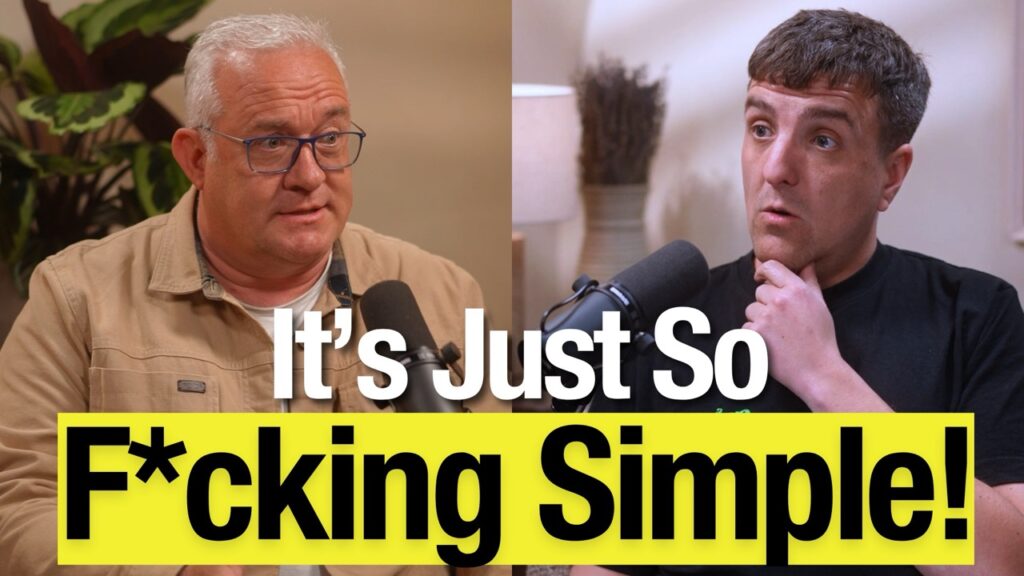

This week’s guest is LaSean Smith, founder of CAGR Investments, who joins the podcast to unpack how he left a corporate career at Amazon and Microsoft to buy, build and mentor small businesses, and the systems he uses to help entrepreneurs get their finances in order along the way.
LaSean’s career started long before software was even a job title he recognised: a teenage stint as an aspiring recording engineer, a spell in the US Navy working on avionics, and a self-taught habit of coding small programs on the side.
That thread eventually pulled him into a 12-year run across Amazon and Microsoft, moving from developer to designer to product management, before he walked away from big corporate life to focus on something smaller and, in his words, far more energising: very small business owners.
In this episode LaSean explains what he now calls a “micro private equity” firm, CAGR Investments, which buys and builds businesses typically valued under $5 million.
He breaks down how he finds deal flow, the six-pillar life map he uses to coach entrepreneurs on their finances, and why he thinks most people overcomplicate the maths of getting rich.
It’s a genuinely useful episode for anyone thinking about starting a business, buying one, or simply working out how to structure their own path to financial independence.
———
Gains App is LIVE!
An AI-powered budgeting and cashback app designed to help you make more of your money.
Download here: https://gainsapp.onelink.me/8IhT/oiaimr1z
———
Get a FREE FRACTIONAL SHARE worth up £100 when you deposit £1 with Trading 212
https://www.trading212.com/join/MGP
If you don’t receive the free fractional share, head to the menu and put the word ‘MGP’ into the promo code section.
(Capital at risk when you invest)
Key takeaways
- LaSean describes CAGR Investments as a “micro private equity” firm focused on deals typically under $5 million, buying and building businesses run by operators he mentors rather than employs.
- His six-pillar life map runs: become valuable, build relationships, generate income, stay liquid, buy assets, then stay free, and he argues most people succeed by accident because they hit these pillars out of order.
- LaSean’s own definition of passive income is strict: true passive income means zero ongoing work, which rules out most side hustles people casually label “passive.”
- He uses a “calendar journaling” technique, reviewing his day in 15-minute blocks to check whether his time actually matched his stated priorities.
- His advice to first-time entrepreneurs is to build audience and distribution before quitting a day job, and to buy a small business for a few hundred dollars simply to get real-world reps.
Timestamps
- [0:00] Meet LaSean Smith and CAGR Investments
- [1:47] From US Navy Avionics to Amazon and Microsoft
- [10:12] How to Find Deal Flow in Micro Private Equity
- [13:01] Why Reconnecting With Old Contacts Creates Opportunities
- [16:20] The Six-Pillar System for Financial Independence
- [29:01] Why Entrepreneurs Rarely Retire to the Beach
- [30:03] Flow State and Calendar Journaling for Productivity
- [39:45] Building Distribution Before You Quit Your Job
- [45:50] Buying a $500 Business to Learn the Reps
- [50:23] The Power of Speed in Small Business Growth
From the US Navy to Amazon and Microsoft: LaSean Smith's path into entrepreneurship
LaSean describes his career as a series of two-to-three-year “dips” that compounded into his current path.
He started out chasing a career as a recording engineer, then joined the US Navy working in avionics, where he began teaching himself to code small programs without realising software development was even a viable career.
That accidental skill led to a string of roles as a developer, then a designer, then a product manager, culminating in over 12 years split between Amazon and Microsoft.
He’s candid that the corporate run itself was good: strong pay, real relationships, and exposure to world-class processes. What didn’t sit right was who he was ultimately serving.
Briefing large enterprise CEOs and CTOs left him cold, and a moment of honesty on the drive home, before the pandemic, made him realise the customer he actually cared about was what he calls a “very small business owner,” someone with zero to 20 employees.
That realisation is what pulled him out of big tech and into building CAGR Investments.
Finding deal flow: how CAGR Investments buys and builds small businesses
CAGR Investments is what LaSean calls a micro private equity firm, buying and building companies typically valued under $5 million. Unlike venture capital, where growth and share are often chased ahead of profitability, he says private equity at this scale is simply about cash.
His first attempts at sourcing deals through brokers produced plenty of volume but poor quality, so over time he narrowed his investment thesis and leaned on his existing network instead, following degrees of separation until the right introductions surfaced.
Once he owns a business, LaSean typically holds the majority of the equity while an operator, someone he interviews and vets carefully, runs day-to-day operations as effectively the CEO of an eight or ten-person company.
If you’re weighing up your own first steps into business ownership or a side project, our guide to the top ways to earn a side income is a useful starting point before committing real money to an idea.
The six-pillar life map for financial independence
A recurring theme in LaSean’s coaching, which he now does informally and unpaid alongside his day job, is what he calls a life map: six pillars people tend to work through in a haphazard order rather than a deliberate one.
The sequence is: become valuable by building your “talent stack,” build relationships and visibility around that value, generate income from it, stay liquid by controlling spending, buy assets with the surplus, and finally, once you’ve reached financial independence, stay free to choose what comes next.
He’s blunt that most people stumble through the first three pillars by accident, simply by living their lives, but that being intentional about the order accelerates everything.
Getting a clear view of where your money actually goes each month is the practical starting point for the “stay liquid” pillar, and our budgeting calculator is a straightforward way to see that picture before you try to change it.
Staying liquid and buying assets: LaSean's simple money rules
LaSean is candid that even as a well-paid tech executive he once had no budget at all, and describes a “pickle jar” technique for curbing impulse spending: write down anything you want to buy, wait two or three weeks, then decide if you still want it.
He says the plan for good money habits is easy; the daily consistency is what’s genuinely hard.
On investing, he keeps things deliberately simple and applies a strict definition of passive income: true passive income means zero ongoing work, which rules out most rental properties or side hustles people loosely call “passive.”
His own asset mix is limited to three buckets: fully managed real estate, ETFs and dividend-paying index funds rather than individual growth stocks, and equity stakes in private companies through CAGR Investments.
Seeing how consistent contributions and time can build wealth in the background is exactly what our compound interest calculator is designed to show.
Flow state, calendar journaling and why financial independence isn't retirement
LaSean challenges the idea that reaching financial independence means stopping work altogether.
In his experience, almost everyone who reaches “stay free” starts something new anyway, whether that’s giving back through charity, travelling, spending more time with family, or launching another business without outside investors to answer to.
He links this to what he calls flow state: the dopamine-driven feeling of being fully absorbed in work you enjoy, which he says explains why some entrepreneurs stay energised in businesses that look, from the outside, genuinely dull.
To stay honest about how his time is actually spent, LaSean uses a technique he calls calendar journaling: reviewing his day in 15-minute increments and honestly logging what he actually did versus what he’d planned.
He treats time like a bank account, and says the practice keeps him accountable to the work that compounds toward his goals rather than what merely feels productive in the moment.
Advice for aspiring entrepreneurs: distribution, reps and the power of speed
Asked what he’d tell a room of aspiring entrepreneurs, LaSean offers two core pieces of advice.
First, build your audience and distribution before you need it, ideally while a day job is still subsidising your time, rather than building a product first and only then figuring out who wants it.
Second, decide honestly what kind of business owner you want to be: a large business built on managing people and stakeholders, or a smaller business built around a craft you genuinely love, because the two require very different days.
He’s also candid about a costly early mistake: buying a business for under $300,000 and handing operations to someone with huge potential but no prior experience running a company, which cost him roughly half the investment.
His practical fix for anyone starting out is to buy the cheapest possible business, even a $500 one from an online marketplace, purely to get real operating “reps” that no course can replace.
He closes with what he calls the power of speed: big companies move in months or years, startups in weeks, and solo entrepreneurs need to move in hours, because that speed is the real advantage a small operator has over everyone else.
This transcript is auto-generated and lightly edited for readability, it may contain errors.
[0:00] Sammie Ellard-King: Hello and welcome to another episode of the Money Gains podcast. Today my guest is LaSean Smith from CAGR Investments over in the US. Now, this podcast is an absolute winner if you’re looking to become an entrepreneur or are thinking about a new business idea, or indeed are just looking to get yourself onto the financial markets and trade or invest. Now, LaSean has got a really great take on how to start businesses, having served at some of the world’s biggest companies, including Amazon, Microsoft, and Deloitte, just to name a few, but now he’s doing his own thing. Really, this was so inspirational from the ground up. From moment one, LaSean’s dropping absolute bombs and bangers. So if you are listening on YouTube, please do whack that subscribe button. And if you’re listening on Spotify or on Apple Podcasts, please do whack the follow and give us a review this week. We really do appreciate it. But for now, let’s get started on the Money Gains Podcast.
[0:59] LaSean Smith: The Money Gains Podcast. And uh we uh oftentimes get very cloudy, misty, rainy weather. And so right now it’s also sunny, so we gotta soak it up while we can.
[1:47] Sammie Ellard-King: Oh, for sure. Yeah, yeah. Make the most of it, man. We do hear like the UK goes crazy for like two months of the year, and then we just hibernate for the rest of the other ten. So man, really excited to chat to you today. Um like what you’re doing with CAGR Investments, and yeah, I think we’re gonna get into a real good chat, but would you guys mind giving the audience a little 4-1-1 about LaSean and what you do? Yeah, I mean, in short, I have been kind of just taking random uh kind of dips every two to three years in my career and compounding that to my current journey. I started off uh way back in high school as an aspiring recording engineer and producer. And when I had to go, you know, get a real job, as they say, I went into the US Navy in the military. And uh through that whole thread, I was actually, you know, kind of uh hacking and kind of coding little trivial programs. And so I didn’t even know at the time that software development was a job, something you could actually do. And so when I got out of the military, I started a string of roles, uh, starting as a developer, moving to a designer, and then after business school, uh largely product management, and then just started managing teams. And so along the way, the common thread from so many of those stops has been, you know, kind of the intersection of media and software, and you know, how can we use code to either uh communicate, publish things, or to automate parts of our work. And uh about uh, I was at Amazon and Microsoft, two big tech companies for over 12 years, and the the kind of culmination of those experiences, you know, sometimes people leave big corporate jobs and they’re like, it sucked. And I’m, you know, they have all these negative things to say. I just looked at it as I had a fantastic run, I made great money, made uh build a great set of relationships, and I learned a ton. I kind of learned, you know, kind of how world-class processes were implemented at, you know, kind of the highest level in my industry of technology. Uh, but the thing that, you know, wasn’t kind of gelling with me is, you know, many times we were servicing enterprise customers who were, you know, large CEOs and CTOs. And at you know, I remember this driving home one day pre-uh pandemic, and I was like, I just don’t care about these random executives. Like, like they just don’t matter, right? And so, you know, on one hand, I understand it’s a privileged position to be able to, you know, hang out with thought leaders at folks across industries who would come. Uh, Microsoft at the time, um, where I was working is in Redmond, Washington. And uh, you know, so they would fly from all over the world to, you know, have briefings and talk more about the future of tech and all these things. And so it was great to be in those rooms, help facilitate those conversations, brainstorm with folks, but I just didn’t care about that customer. And so I started to dig and say, like, well, who do I care about? And it always would come back to what I now call a VSB, a very small business owner. Uh, so this is somebody with zero to 20 employees, and it’s just where I get most energized. And so uh I left that world to start investing in companies that enable those types of entrepreneurs. And so now I run CAGR Investments. It’s a microprivate equity uh firm that just means baby private equity, very small deals, typically less than $5 million US. And the output of that is I just focus on businesses that help uh accelerate someone else as they are maybe aspiring to start a new business or they’ve just started and they’re like, what are all the pieces? Some of it’s very pedestrian, you know, visual identity, web development, um, all sorts of stages in in that part of the world. Uh, but then also some of the things that technically I get very interested in, uh, such as uh AI automation. So not just saying, like, all right, let’s throw some some ChatGPT in there, but really digging a level deeper and saying, hey, how can you think about AI and automation um as a serious tool in a small business? Because if you got loads of money, there’s all sorts of ways you can start experimenting with AI today. But if you say, hey, I don’t have a lot of money, but I still want to use it, um, where do I even start? There’s so many options. And so that’s a big part of my day that I really enjoy. And uh along the way, um, you know, what kind of is at the core of that job is I’m looking for deal flow. So I’m looking for companies to build or buy. And then I’m interviewing a number of folks uh as CEOs or operators for these businesses. And I say CEO to respect those roles, but these are really small companies. So this might be a CEO of an eight-person company, right? Um and so they’re not, you know, they don’t work for me, um, if you will, because they’re running those companies. Now I own, you know, I hold typically the lion’s share of the equity, but uh these are companies that are they’re run by these individuals. So I have to talk to a lot of people, a lot of talent to make sure I have a good pipeline. And that kind of comes to right now. Um, one of the things I kind of stumbled on was I would talk to people and say, wow, this person has so much experience. So this person is almost there. I mean, there was all these little things. And I was like, why does the rest of their life seem to be in disarray? Or why do they not have a broader plan on, you know, how they’re going to become financially independent? And it’s almost, I don’t know if you’ve run across this, you know, people almost like sequester their talent, you know, their their network, their their financial aspirations. Like they kind of compartmentalize these things. And so where I landed was uh this idea called a life map where I was like, well, we could probably just connect all of these things together because I start seeing common pillars. And and that’s kind of what I do now, um, you know, outside of my core job, is I just you know get on the phone with anyone I can who wants to talk about how they are going to craft their own life map. And it’s it’s effectively unpaid coaching. That’s the way I like to look at it. And the reason I do it is both hopefully to help people, but selfishly, it is for me to um use that as a signal to say where are people having problems? Because if I talk to enough people, I keep hearing the same problems, then that’s a company to build or buy to go address that. So that’s kind of my business model is to kind of talk to folks, look for patterns, find great leaders. And I’m having a blast just because um, again, you got to pick your customer, right? You know, they say if you’re an entrepreneur, you gotta hire your customer. If you’re an employee, you gotta hire your manager. You don’t hire the logo or the company or whatever. They don’t hire you. It’s it, you know, it’s it’s a bi-directional decision. So it’s a long, windy road. Um, you know, I’ll kind of pause there, but hopefully that kind of gives you and the your audience uh a kind of stint of where I’ve been. And uh yeah, we can kind of poke at any of those things that might be interesting.
[8:31] Sammie Ellard-King: Yeah, what I loved what you said there, man, is like your career today, every role that you’ve done, even though they were at the top levels of some of the biggest companies in the world, have led you to where you are today. You didn’t let that be that you didn’t let those jobs define you. You always knew that you wanted to go out and do something and create something for yourself. And now you’re from the knowledge that you’ve got, you’re clearly giving back to the community that you feel like you can add the most value with. And obviously, yes, cash is king, and you know, that’s great, you know, adding value to these businesses and bringing them forward, but you’re also now adding value to people’s lives and helping out their entire life. You know, it’s not just about your career, it is about what goes on behind it. As the person can be an absolute mess, but a fantastic CEO. So if you can get them right 100%, actually that’s probably gonna be better for your investments, right?
[9:20] LaSean Smith: Right. I mean, you know, that balanced life. Now, you know, while I have a great handle on finances and technology, I’m not gonna be the person to help someone, you know, solve their their health, you know, and wellness uh or their relationships. However, you know, so many times we’re letting one part of the solvable portion of our life kind of be a blocker elsewhere. And I just think money should not be part of the challenges that we’re tackling, because that’s, you know, if you have a plan, you have a destination, that’s the easiest to tackle. We can’t guarantee that our health is going to be great or all of our relationships are gonna be exactly how we want. Um, however, the the money side of things is much more predictable if you have a plan. 100%. So let’s take an example, right? Do are these guys coming to you or are you going out and finding these businesses? Like how’s this process work with CAGR?
[10:12] LaSean Smith: Yeah, so first I started, you know, pretty ignorant in the process. Uh, I had done um a number, uh, just over 20 angel investments. And so I was pretty familiar with, you know, being an LP or taking minority stakes, equity stakes in startups. And as I moved to the private equity side, things are, you know, number one, you’re not valuing kind of this fake money that sometimes floats around in the VC world because they’re really just chasing share and they’re trying to grow as quickly as possible. So kind of momentum is kind of everything as they kind of get to their next milestone or tranche. In private equity, it’s just cash, right? And so um, I realised that my network wasn’t as strong as I thought it would be because I have a very strong network in the startup world and I thought it would translate over and it just didn’t. And so I started doing the the average thing was you know, talk to brokers and other types of folks. And through that process, the the deal flow was quite high. I was able to kind of find many deals, but when you kind of did the even a trivial cursory inspection of the quality of these companies, uh, they just weren’t great. And so you had to really put in the work and be diligent of continuing to review and evaluate a number of them. Um, and so I just never found great deal flow that way. But over time, I realised that you know, you had to kind of grind it out. I started leveraging my network and got more crisp on the type of businesses that I was interested in. Because, you know, someone would say, like, all right, you know, a buddy of mine is thinking about selling his startup, you know, it’s $40 million. Well, that’s outside of you know, my, my, my world. And then somebody else would say, Hey, my buddy is trying to sell his pressure washing business, you know, and like, you know, I can’t add enough value to that. I don’t know how we’re gonna grow that. And so, you know, finding that sweet spot isn’t uh I think that’s a decision that you have to make for yourself. And my investment thesis is very crisp and it’s fairly narrow on purpose so I can focus. And so after I got better at asking the people I already knew uh for what I was looking for, um it was just kind of that degree of separation, right? And I remember talking to this guy, I had a buddy who uh he had worked in in VC, and he’s like, Oh, I know this dude you should probably meet. And I meet him, and uh he was a great guy. Um, and like it was clear in the first five minutes, like, you know, he wasn’t gonna have the right deal. But then he said, Hey, you should talk to this other guy. And it was just, you know, kind of just keep showing up day to day and not letting these seemingly unrelated or unuseful relationships just kind of like, you know, kind of fade off. And uh over time, you know, six relationships, connections later, it’s like, all right, here’s this person who actually um is going to be able to run one of these companies or has a business for sale that actually makes sense. And so, yeah, a lot of it is just kind of old school biz dev and uh you know good relationship management.
[13:01] Sammie Ellard-King: You never know what’s that door’s gonna open, right? Like, that’s the way I see life, man. I I shake everybody’s hand with a smile, and you never know. Like, I’ve had opportunities recently from people that I haven’t spoken to in eight years since you like no longer now. Wow, I say eight years. It’s actually it’s actually 13 years since I was at university. Wow, that is that’s a trip. Uh the wisdom is compounding. But you know what’s interesting about that? You know, 13 years you are likely present and in the moment, and you’re thinking all these things, but folks know us from our previous steps in our journey. And when you reconnect, you have number one, a handful of, you know, you got that trust already pre-built, but you also, you know, you’ve likely grown since then. And so I don’t know, I don’t know about you, but when I reconnect with folks, it’s one, oh, you know, we haven’t talked since school or since, you know, we worked at such and such. Uh, but then we get into it and they realise, oh, now this trust that I have in this person, um, you know, they’ve they’ve kind of invested in this whole new area that maybe I’m not, you know, paying attention to as well. And so, yeah, to your point, there’s I I don’t know what the word is. Like, you know, are we mining our authentic relationships or something? But there’s so many great people that we already know that if we just uh spent the right type of time reconnecting with them, uh, it’d probably be an unlock for so many things that we might have going on currently.
[14:22] Sammie Ellard-King: 100%, man. Like it, you know, this this friend came to me and he said, Hey, look, I’m now working at this great company. And it was super cool. It’s like a real estate investment. Like for beginners, basically, you could put like small amounts into say a bigger loan for these houses. You know, there might be like 5,000 buyers for this one uh investment project. Exactly, fractional real estate. And um, like I’d never knew the company existed, he’s quite high up there now. Now we’re having chats about it. Now I’m gonna feed them you know affiliates basically, and I’m gonna make money out of it. So I was like, cool, great. You know, these things happen. And I would he was literally messaged me out of the blue 13 years, not one word. Like, it’s insane. So, like what I was trying to say is like, you’ve clearly done that, right? You’ve leveraged relationships that you’ve had before, and you it wasn’t the first door that necessarily opened. You know, he that guy could have messaged me and gone, hey, you should chat to my friend Mike or something like that. And then you might chat to Mike, it might not be right, but you keep going, right? And you keep leveraging those conversations. So talk to me a little bit about this the finance side of stuff. Obviously, this being a money podcast, keen to understand what you’re working with and how you’re working with these people to try and sort of improve that side of their lives.
[16:20] LaSean Smith: Sure. So you want to talk about the businesses themselves or the individuals and how these individuals can hopefully kind of put a better system in place? Yeah, so the individuals really. Yeah, so at the core, what I found was, and I’m a very systems-driven person. And so I would talk to people and they they didn’t really seem to have a rhyme or reason why they were sequencing some of their things. You know, they heard a podcast, they read a book, they had a coach, they talked to a friend, and it was like, all right, I’m trying to save for this retirement, I’m trying to go figure out, you know, my short-term you know, liquidity. I’m trying to go, you know, maybe get this new job or start this business. And it just was like driving me bananas. Um, not so much that that was their approach, but I was like, why is no one like putting this in an order, right? And so that was at the core. And so what I um what where I landed was this, and it still evolves, uh, but it’s a six-pillar system where first you are trying to become valuable, then you are building relationships, you are um uh trying to figure out how you go promote that. You are staying liquid, buying assets, and uh then um uh what I call stay free. And and I’ll I’ll kind of double-click on those a little bit more precisely. But on the first one, it’s like, okay, let’s go take all of the work that we’ve done, you know, I call it uh building your talent stack uh and embracing the fact that you’re unique, right? Not trying to be like this homogenous person who looks like everyone else. It’s like, listen, you maybe travel places, you’d have life experiences from your childhood to now, you have specific interests and values, and then you have your hard and soft skills. And so, how can you be very intentional in both building that list, being able to articulate it? Um, and you know, over time, I believe like that’s the the kind of the nexus of all of this. And so before someone says, like, wow, how should I think about, you know, personal finance and saving, I’m like, are are you investing in making yourself as most valuable as possible? And so that’s that first pillar is kind of make yourself valuable. Then the next piece, and this is tied back to our conversation on relationships, it’s all about um making sure everyone knows what your talent stack is, right? Uh and then once you have that, you know, a lot of that comes down to meeting strangers, uh, you know, and and building those types of relationships, it comes down to not only to what we were talking about before, rekindling these pieces, but leveraging some of our relationships for recommendations, referrals, all the things that we know we should do, uh, and ultimately kind of building social proof. And I love things that don’t require permission. And so, you know, especially whether it’s writing online, it’s sharing information, all the things to take that first pillar of your talent stack and let the world know this is what I’m amazing at, and then leveraging your relationships for that to be your unlock to generate income, which is the third pillar. Uh, and that piece, you know, I find folks kind of almost stumble across those first three pillars almost by accident. Like even like just kind of moving through life, you can kind of piece those together. And so I think the first piece of advice I tell myself is the more intentional I am moving through those three pillars, the better I kind of get to my you know, my target destination. And I keep having different destinations. As I get to one destination, I would just want to plot another, you know, pinpoint on the on the map. But then that next piece, this is where I think a lot of folks get a little funky, um, is the uh is the stay liquid. So they go generate this income. And I’ve seen this for high earners. I mean, even at my even for myself, at one point, I didn’t really have a good budget. I wasn’t paying attention to my spending because I was like, I’m making great buddy, I’m working in this software company, they’re paying me all this cash. I don’t have a budget. I just go to the grocery store, eat what I want, I take vacations. Like, it’s just a silly way to live. It just was not thoughtful. And and so, you know, having the same rigor that we might have when we go work out, or having the same rigor that we might have working for someone else. I just think it’s very uh it’s odd that we don’t always think that we’re gonna put the same level of discipline in our, you know, kind of the CEO of ourselves, right? Like we we are the CEO of our own lives and we should put that same rigor. And so that staying liquid is all the things that I’m I’m sure you and some of your previous guests have have spoken about. But you know, at the core, it’s a lot of it is just you know that money psychology and shifting your behaviour. And a lot of those small tactics, again, it’s like working out or eating right. The the plan is easy. The consistency and the execution every day is what makes it hard. So things like growing the gap. Um, and uh, I have this concept that someone told me years ago, the pickle jar, where you know, one of the ways to delay gratification is as soon as you see something you want to buy, you write it down and you could physically put it in a in a jar, you could put it in a journal, or you could just write it on your phone, and you’re not allowed to buy that thing for two or three weeks. You you pick some arbitrary time frame. And then you come back and you say, All right, do I still want this? And it’s fascinating how many times when you come back, you’re like, Yeah, I don’t really want that. I was just kind of caught up. I thought that was the deal of a lifetime, or I thought um, you know, this was the new thing, it was gonna solve everybody’s problems. Now that I’ve seen the reviews, like maybe it’s not that great. But, you know, it’s all of those types of best practices, again, that we know sporadically, but when you operationalize them, they become very, very powerful. And then, you know, once you can get past that stay liquid, it’s uh that that uh next pillar is buying assets. And I keep it very simple. There are, you know, folks who look at, you know, in the US, way we get taxed, uh, we have passive and act active income. In other countries, they typically have something, something similar. And a lot of times I hear people saying, Oh, I have this passive income stream. And I’m like, oh, tell me about it. And when they tell me about it, I’m like, that is active. Like, stop calling that. There’s nothing wrong with that being, you know, a side hustle or an additional revenue stream. But like, if you know your your tax entity in in your country is saying, like, well, we’re gonna tax that as active income, you should not call that passive. And so when I hear someone saying, you know, I have this short term rental, I have a couple of long term rentals, I’m trading some stocks, I have this, you know, this drop shipping business. I believe what folks are getting the the taste of is this this world where they’re making money when they’re not working, right? And that’s a huge Huge unlock, and we should all be tapping into creating leverage through those types of systems and businesses. However, to me, I kind of use the traditional finance definition of passive income where you do zero work, like zero work. And so, yes, managed real estate that is truly, you know, turnkey, where you’re not on the hook for placing commercial or residential tenants. You’re not on the hook for screening them, you’re not on the hook for collecting their money, you’re not on the hook for any of the maintenance. Like you, you do zero and a dividend check shows up every quarter or every year, um, that’s a passive income uh asset. Uh on the stock side, you know, I just buy ETFs and index funds. And the reason I keep it very simple is if you want to trade stocks, you know, within here in the US, again, it’s you know, if you trade uh a stock within the 12-month period, uh you you’re taxed as it is active income, like you’re an active trader. Um and I’m just not interested in that as my side hustle. So again, if you want to trade stocks, I’ve seen a number of folks be very successful when they have small lots of money. Uh the challenge today is, you know, far you know, before all of this AI um conversation got into the zeitgeist, uh, these quantitative traders were screwing all the retail folks as soon as you got up, right? So if someone says, hey, I got $5,000, $50,000, you can easily get 50% returns if you’re like working on that bucket of money every day. But as soon as you take that same strategy and try to extrapolate it out to, you know, a million dollars, three million dollars, you know, all of these quant algorithms are gonna step on your stack and they’re just not gonna work. And so uh the business just doesn’t scale. And that’s the thing I think for some folks that they don’t they don’t want to acknowledge. And so I I look at ETFs uh or index funds, you know, just very, very simply because I don’t need to be there balancing things. And, you know, to be fair, it’s going to be that’s not gonna be the place you make your money. That’s the place you’re parking your money. Um, you know, as you’re generating your income, you’re trying to stay liquid, you’re buying these assets. What you’re trying to do is just trying to keep that ballooning. And then the latter, uh, the last one is just buying stakes in other private companies. So those three buckets for me, truly manage real estate, uh, you know, stocks and bonds, uh, and you know, largely dividend um stocks and bonds. So I don’t get crazy aggressive with uh the growth stocks that don’t pay dividends. Um typically I’m just buying the home market. So it’s just very, very simple strategy. And then third, buying more equity stakes. Uh, the beauty of those, uh, similar to real estate in a lot of countries, is there’s a lot of tax favorability when you’re acquiring these. And so that’s those three are it, right? And so anything else is in the generate income bucket. And what I found is I’m a lot smarter in my lane around the software industry or using software to help other industries or businesses. I should just spend more time doing that than you know, trying to figure out how I’m going to game the market and become a uh, you know, an amazing stock trader. And then the last one, and I think this is the payoff, hopefully for folks, is you know, uh stay free. And that stay free pillar is about all right, you have reached financial independence, you have enough passive income and you’ve acquired enough of those assets that you can cover your annual expenses. And people might call it fire, fat fire, or what have you. But whatever that that that number is for you, I think it’s important to say, okay, now what do you want to do? And I have almost never, uh, there’s two people that um I kind of saw this with, but people said, I’m just gonna retire and chill on the beach. I’ve only seen two people, and even those didn’t really count because the guy, one guy, he uh he basically turned it to a kind of a TV show, and he just him and his wife were just you know traveling and they’re like, he’s like, I should just start a media business, right? Um and so he he became uh he just started using those connections to to create media. And then the other guy, he effectively created an import-export business because he was traveling meeting so many people. Um and so I just I don’t believe this idea that if you’re driven, you’re motivated, and you’re charging toward a destination, that you’re then going to say, all right, I have enough money to cover my expenses and I don’t want something else. And and I’ll quickly run through what I have seen people do. Number one is you can give back. Um, you know, that might be charities, philanthropies, volunteerism. Number two, you can go explore the world. Uh, and that might be exploring the world or exploring yourself. Uh, number three is you can um redistribute your time. So maybe you want to spend more time with your family or your friends or or you know improve your health. And then number four, this is where I decided to go uh once I once I hit FI was start another business. But start another business without any LPs, without any other folks who you have to make happy. And there’s nothing wrong with that path, but it is very liberating when you say, I get to decide you know who I’m going to invest in. And then you just kind of repeat the process. And so a lot of that, you know, you know, sounds like procedural, but that’s kind of the point, right? We’re not trying to make this sexy. It’s just these are all pieces that I think probably most folks listening probably do. But if you do them out of order, you’re gonna get some optimal results.
[29:01] Sammie Ellard-King: I love that, man. Absolutely love that. Well, I what I loved about what you said there was it made me laugh, was that like once you do get to this fire age, like say with me, it’s like I listen to these people when I’m talking to these individuals, and they’re like, Yeah, I’m just gonna sit on a beach. I’m like, man, but you’re like the most driven person I know. Like you’re hustling so hard, you’re like bending over backwards as an entrepreneur with two or three different businesses, multiple investments, and then all of a sudden, when you’re just gonna flick a switch, like come on, like you can’t do that. There’s not, you’re not your brain is not set up to do that mentally. And I don’t think most people’s is like my grandfather ran a ran a jazz run my grandfather ran a jazz club for 60 years, loved it. The day he signed off was the day he got ill. And like he he shut his brain down and went into retirement, he got ill. Like, I personally think that’s what you’re doing to yourself and your brain if you do that. Like, you need to stay active, whether that’s starting a new business or doing something else. And sorry, I cut you off for what were you going to say.
[30:03] LaSean Smith: I love that, I love that anecdote. And I think what it speaks to is, you know, and I’m not a chemist, so I will I’ll probably be misusing some of these these words, but the the high that you literally get when you’re doing work you enjoy, it’s something that I’ve struggled to explain to people who clearly don’t enjoy their job, right? And so we know there’s kind of a dopamine release that hits you when you’re in flow and you’re just, you know, you’re just in that flow state. It’s such a powerful thing. And I think many times, you know, when someone says like, oh, I’m down with all this, you know, I’m not down with all this hustle culture, and folks are just working themselves to death. And, you know, I say, let’s pause. Like if it’s the random folks on the internet, you know, folks are just venting. But if you have a real conversation with someone and they and you kind of unpack it, um, what they’re many times doing is extrapolating their work, their life, um, and saying, like, you must be just doing more of what I do. Right? Like they can’t fathom the fact that there is true enjoyment out of the process, whether you’ve gamified entrepreneurship or you’re in flow state because you’re you’re working in a craft that is so rewarding. They can’t get their head wrapped around that because to them, work is exhausting and it just doesn’t make sense. And so I actually stopped using uh productivity as you know the thing to kind of optimize for and start just you know focusing on the word being intentional. And so I do calendar calendar journaling um pretty extensively. And what that is, is a tactic where you you kind of use your time as a bank account. So the same way you would spend money out of your bank account, you think about spending your minutes. And uh when you journal on the calendar, you have your existing calendar that you already do, but then you go back and I do mine in 15-minute uh increments, which is a little OCD for most people, but you can do it however level of detail makes sense for you. But the same day, I usually do it two or three times a day. I’m just on my phone, you know, in the in the transition period of something. And I go and change anything I procrastinated. So I said I was gonna write this memo, but I went and I learned on YouTube, right? Um I went and like, you know, listened to this podcast, or I went and did something else that I kind of said was in service, but it wasn’t truly, you know, you know, kind of compounding to my core destination for that day, that week, that month, that quarter. And so that’s a really powerful uh kind of concept for me because it holds me accountable on how I’m spending my minutes. And what I find is as long as I keep myself honest and I’m doing the work that keeps me in flow, the day is so fantastic that the idea that I want to stop feeling that seems silly to me. And so uh I really think that the more folks, you know, kind of search for the thing that will uh kind of get them in flow. And I don’t know if searching is the right word. Maybe you have to choose something and really kind of find the magic in it. Because I’ve I’ve met entrepreneurs who do kind of what I think are like paint boring, you know, paint dry boring businesses. And I’m like, dude, how and but they’re so energized. And it’s almost like their energy is infectious. Like I’m getting, you know, kind of turned on by what I’m like, okay, tell me more. Um, and so so much of this stuff starts with mindset, but then the math on the finances is just very simple. And anytime I hear people trying to complicate it, I’m like, no, you go generate income with your talent stack, and then you have whatever works for you as your asset accumulation strategy. And, you know, through that lens, I’ve never met anybody who, you know, unless they had, you know, hundreds of millions of dollars and they needed a team for all sorts of protection and other, you know, downside, you know, risk management uh strategies that you’ll need where you really need to go pay somebody to manage your money. Um, like like into tens of millions of dollars, you just need a simple system. And like, yes, you need a lawyer maybe to keep the paperwork straight and you need a CPA or someone uh to kind of keep the books in order, but you don’t need someone to tell you what your plan is. Your plan needs to be simple. And if they come with something sophisticated, then they’re probably gonna lead you astray because they’re not gonna be able to manage it effectively. Um, and you’re not gonna be able to pay attention, right? And so I love the idea of like saying, hey, maybe you should go pay somebody uh for a few hours of their professional time to help you create the plan. But this idea that you’re gonna go run a business and then go hand it to a financial advisor and they’re gonna take you know points on your money to you know maximize it. I I think it’s a it’s a I won’t say it’s a silly strategy, but it like there’s so many other ways that you can really kind of dive in. And so I love working with financial advisors and those professionals, but I don’t like this idea that I go give you my assets, you put it on autopilot, and I pay you a percentage every year. It’s like I should pay you like I pay a lawyer or or someone else. Uh and even if you’re expensive, four or five, six hundred dollars an hour, like it doesn’t matter if the price is crazy, like that’s just commiserate with the value. And so there’s I think a lot of times we can just simplify, and the answer is the part that we don’t want to hear. Consistency is what will help us win. Um, and and that just feels like, well, that’s that that’s sucky. I want the convenience button.
[35:15] Sammie Ellard-King: You know what, man? Like something you said there about flow state, which really hit with me was like I I only recently found this with Up The Gains. You know, I was doing hospitality marketing and directing and running bars and and and businesses for years and just never really had that feeling. And then once I got into doing my own business and Up The Gains, it I hit that flow state. And it was like that evening, those evenings and those early mornings were like almost like it was that kind of feeling that I had when I was 14 playing Xbox. Like and just like I’m in, like, and I’m I’m just I’m loving it. But what I when I went and searched for this in other people, I actually found it super interesting that people that not everybody has to be an entrepreneur, they can be in their flow state if they really, really enjoy, you know, something what you said was, you know, that there’s entrepreneurs out there in in boring businesses. And actually what they could like about that is the actual business itself and the actual running of the business. It might be that they love the team management of the side of that, and that’s what gets them going. And there’s so many aspects of that, you know, it could be a graphic designer and you just love the process, or you love the creating the briefs for a copywriter as a marketing director, like whatever that might well be. There are little things within your job that you can find as your flow state too. Um, so I think accessing that and trying to find what that is in your life will allow you to set up and leverage your success, I think. And that that’s what I loved about what you said there.
[36:44] LaSean Smith: Yeah, no, 100%. And it’s so to me, it’s almost rewarding when you observe someone who’s never had that opportunity. They’ve never been in flow state kind of on demand or consistently consistently with their work. And to your, it’s the perfect analogy. When someone is, you know, you’re a teenager and you’ve lost yourself in your favourite video game and you can just play it for hours. As adults, we we forget that that there are paths, there are crafts, there are things, you know, paths we can take that can give us that same feeling as an adult. And it’s almost like we feel like, oh, that’s a time gone, we can’t revisit it. And and so it’s a really, I think, a powerful way to visualize what that possibility is. And and then, you know, kind of staying with that gamified theme, because that’s a lot of how I look at this. I I just look at it like this is a game. And and when I say this, I’m referring to, you know, kind of making money and you know, kind of our professional paths. Um, because life, man. Yeah, yeah, 100%. And it doesn’t mean the stakes aren’t are trivial, but it does mean that you can push yourself to turn this into levels. And, you know, I’ll I will say, like for almost anybody, if you tell me you can get $100, I don’t know how you’re gonna get your first hundred dollars, but if you can get to $100, you can start playing the game because you know, you can invest in yourself. I like to say the the best paid coach is a uh a time-tested book uh that you know costs $20 and eight hours of your time because that person is taking 20 years of their experience and dumping it down into eight hours, right? And so if you can just get $100, you buy uh one or two amazing books, and you turn that $100 to $1,000, $1,000 into $10, $10 to whatever your target. You know, I think once most people get to, you know, maybe around $10,000 a month, um, they start to have enough liquidity to start making smarter decisions. But back to this gamified concept, the the thing I see folks struggle, and this is part of what I have observed in my business, is I’ll talk to someone, and you know, not to say this is trivial or to belittle it, but to get to a get a business to a million dollars, two million dollars is not extremely hard if you’re just like brute force working. Like a lot of folks can do that, but then they feel burnt out because they’re like, how why am I not getting to 5 million? Why am I not getting because largely you’re going to need to change your systems. You likely need a different talent approach. I mean, and you know, as a result, potentially a different organizational design. You may need to expand your product offering. Uh, so it’s not always that uh we can just keep jacking up this price or we can um just tell more people about this. Sometimes you need to figure out your your product ladder and what the halo is going to be for what other what else you’re gonna sell. And and so that inflection point where you’re like, all right, we’re at you know $2 million a year, we’re ready to take this business to five, it’s just going to be a different business. And that can be energizing to folks. And I think sometimes people take an employee’s mindset and they try to apply it to entrepreneurship and they’re like, why is this not working?
[39:45] Sammie Ellard-King: Right, exactly, exactly. Well, um, if you were uh, let’s say, for example, a lot of our listeners, you know, they might be just getting started with their entrepreneurship journey. If you were thinking, if you were to chat to uh, let’s say we’re in a room full of you know aspiring, budding entrepreneurs, what would be the like number one thing you would say to them is like, this is what you need to tap into? So I’ll give you two. Uh, I’ll try to keep these brief. But I think the first is it’s tempting to want to sell the thing you’re good at and ignore distribution and channel. And by that I mean, you know, how what is your sales and marketing um strategy? And uh largely I believe if you have a day job that is paying you, what you want to try to do is free up enough time uh on your physical calendar as well as mentally. Sometimes we’re so emotionally drained when we get off uh kind of a day job, you’re just like, I ain’t got it. And so um try to free up enough time to do this. Go figure out, you know, the customer audience you care about and go figure out where they hang out, start building relationships, and you’re trying to build, you know, on you know, online marketers will say, like, you know, you’re just doing audience building. I think the term is actually a bit more generic that you’re trying to build relationship modes, you’re trying to build enough relationships with folks that you’ve given value to that you are going to be able to activate because there’s enough trust built up. And that, you know, if you quit your job today and started your business, that clock is still that clock, right? And so that might take you six, 12, 18 months. And so starting now on building those relationships, adding that value to me is very powerful because you’re letting your employer subsidize, you know, that process, right? And and through that, you know, you know, identify your audience, go figure out the distribution strategy, and then just listen and add value on the pain points. And then go figure out what are you actually going to make for them? Because, yes, it might be an information product, it might be some type of facilitated, you know, professional service to start. You know, my world is is software. I’m always thinking, can this be a SaaS product, right? And so there’s going to be different levels, and you don’t always want to be that, you know, you see everything as a nail because uh you’re a hammer type um concept. But as you go through that, the idea that you picked your customer first, you figured out their pain points first, then you figured out what you’re going to sell them. I just find it to be a much more predictable path versus the inverse that I see entrepreneurs do so many times is they they have an idea and then they’re like, all right, uh I feel proud that I built my first version of this product. And then they’re like, all right, let’s get selling it. And they get frustrated because that time horizon can both be long and unpredictable. And it’s like, do that when someone else is subsidizing. So that’s thing number one. Uh, thing number two is really decide if you want to be a business owner that is going to build a big business because that likely is going to be about talent and managing people, inspiring those folks, you know, helping them become the best versions of themselves, um, raising the bar, like having enough self-awareness and confidence to hire people who are smarter than you. You know, I learned this the hard way. Uh, I had uh I bought a business one time that, and it was a relatively small deal. I think it was less than 300 grand. And so, you know, it was expensive uh you know to learn this lesson, but you know, it was like I’ll never do that again. And people had told me, uh quick quick note, they were like, LaSean, don’t do this. Um and I picked someone who had amazing potential. They had, you know, Sammie, they’re they’re like, they were so, you know, they were so amazing. And they’re and I I still have a good relationship with them, but they had the potential to be a great operator for this business, but they had never done it. And so they were learning on the job. There was a bunch of things that they just couldn’t get right in the time horizon. And uh I didn’t that investment didn’t go to zero, but I lost uh probably half of that investment, right? Because we we had to go give the asset to someone else. And what I’ve learned is, you know, you want someone who has done this before when you’re gonna give them that money. Um, if if an entrepreneur is on their journey, you need to go get the reps, right? Like you can only listen to so many people talk, read so many books. You got to get out there and go go do it. Um, I was trading text with someone I’m coaching, and he was like, uh, you know, I’m thinking about taking this finance course to learn more about the principles of uh, you know, setting my company up. I was like, stop, stop, stop, stop, stop, right? Like I I’ve sat in plenty of classrooms and we could talk like sophisticated derivative models and all sorts of things that, you know, you know, that that folks might use in that world. You don’t need any of that. All right. I was like, you you’re saying you want to go acquire a business and be the operator. Go to acquire.com or one of these marketplaces that sell like really cheap, you know, $500, $1,500 businesses and go buy it. Like that $500, $1,500 purchase is going to teach you way more than someone’s $3,000 course. And again, I’m not knocking the courses, right? I’m just saying like, like, let’s get pragmatic about what you’re going to go and do. And there’s just no replacement for the reps. So that second piece is like, what do you want to be? And if you’re like, I want to go build a you know, a billion dollar company, what you’re saying to me is you want to be someone who spends most of their time talking to stakeholders, you know, limited partners, the media, other investors, and hiring people. Um, and then the person says, Well, you know, I just really love furniture and I want to, I want to, you know, I want to take the furniture craft that I have. And I just want to like, if you want to build a $2 million business, that’s an option. But if you want to build a hundred million plus business, that’s probably not what you’re gonna be spending your day on. And so that’s why I love this calendar idea. Because, you know, design your perfect week by hour on a calendar and then work back to say how much money can I make from that. And a lot of times I think folks have a mismatch on what you know is going to be likely the outcome.
[45:50] Sammie Ellard-King: Wow. You hit the nail on the head, man. What I love about that is you said the reps. Like that’s what I say to a lot of people. Like, you just got to get out there and do it. Like, make the mistakes. Like, I love the, you know, just buy a $500 business and run with it. Because you know, you you will. You’ll just learn. Like, especially an entrepreneur, like you’re, you know, you might be that furniture maker, but you’ve also got to be HR, finance, marketing, sales, you know, recruitment, the finance, you know, it’s all there. You’ve actually got to go out and do that. So if you go and do that with a $500, which is probably not the you know the end of the world, like that’s what you need to do. Go and do that first, and then make your furniture business after that because you understand what you actually need to go through. Like, it’s wild, man. Yeah, one quick follow-up on that. There’s so much to whether it’s you know, business startup or acquisition, the operational component, when you’re ready to sell it yourself, the logistics and the tactical things of how do you go through the negotiation? Oh, I should probably create, you know, I should learn how to create a data room and like how do I get all my stuff in order? Um, where do I, you know, do I actually need actuals or will a pro forma uh work? Like all of these things that are gonna be the same at a $300, $400, $500 million deal. Um, I did a pretty big deal when I was um, I was on the M&A side on the corporate side when I was at Microsoft. And it’s fascinating. I look at the mechanics of that deal and the mechanics of buying a $500 company. You can do the same type of due diligence. Like it’s not at the same scale, but you can force yourself to have the same level of rigor and you can just learn so much at you know, a relatively small level of investment.
[47:26] Sammie Ellard-King: You can actually apply those to your own business when they’re running too, like you know, cash flow, you know, EBITDA, all of these little things, these things you don’t actually understand first. You’ve just got the idea. Uh and you can pick up the quick there. I I tell entrepreneurs that I talk to, learning accounting is going to, in most cases, be a better payoff than some sophisticated, you know, other finance skill set. Like, like, fantastic if you want to add those to your toolkit, but go figure out how to be a great business writer, go figure out how to hire people, and go figure out accounting. If you do those three things in almost any industry, you’re gonna be far ahead of many other operators who are like outsourcing all of those pieces. And it’s like, you just need to understand your napkin math. And, you know, I talk to people and they’re like, all right, I got this great idea for a DTC company, and we’re gonna, you know, reshape e-commerce with like whatever they’re gonna, you know, turn from a traditional boring, you know, physical product and they’re gonna just sell it direct. And I’m like, all right, walk me through the unit economics, walk me through all of these basics that are going to help me understand like the state of the business. And they just get so flimsy and clumsy over the napkin math. And I’m like, all right, time out. Before you start talking about this big strategic deal you’re gonna do with this influencer that you know, like, go get this math sorted. And you know, I think that’s kind of the punchline as we’re wrapping up, is that a lot of times we’re looking for the secret sauce or the easy button. And it really is, to your word, it’s the it’s the consistency and the reps. And you’re gonna that’s gonna feel like, oh my goodness, that’s the less interesting path. Um, but that’s the path where you’re going to compound. And a great piece of advice that I I use today for myself and for folks that I speak with is uh the power of speed. And if you look at large multinationals or large organizations, you know, big, big companies, they tend to move in months or years. If you look at a series A, B, C startup, they tend to move in weeks. If you look at a pre-seed seed company, they they many times have to move really fast or moving in days. If you’re a solopreneur or someone just getting started, you need to move in hours. And that’s the power that you have that these big companies can’t they can’t do that. There’s too much decision process um, you know, kind of baked into the bureaucracy of the organization. And so your speed is your magic. And if you have speed operationalized, you’re going to compound, just like simple, you know, kind of finance math, to the right place. And so it’s not about, oh, I need $1.3 million in seed money to start my idea. Go start that thing with $500 and go compound that to a thousand to ten. Like you have to really think about speed and and true compounding economics as the secret sauce if you’re a tiny business, especially if you’re bootstrapped. And uh, there’s just so much that you can do when you when you think speed first.
[50:23] Sammie Ellard-King: LaSean, I’ve absolutely loved this conversation. I think there’s so much for people to take away here. It’s been incredible chatting to you. Like I could talk to you all day. I literally just want to pick your brains about every little bit of a business now. But uh, you know, I don’t want to take up too much of your time. But thank you so much for coming on. And where can people find Stacey? Um, yes, I mean the folks, uh, two places. If you want to just uh say hello, you can find me on Twitter. Uh it’s uh at L-A-S-E-A-N, so at LaSean. And if you have a business to sell or you’re someone who has uh operating experience in a specific industry or vertical, uh you can reach out uh at cagr.com, that’s cagr.com. And it’s it’s the same concept we’re talking about. I named the company that because it’s not just about compound annual growth rate for our money, but also our personal development and ourselves. And if we keep compounding the best version of ourselves, we’re gonna be able to do anything.
[51:20] Sammie Ellard-King: Awesome, man. What a chat. I can’t wait to get this one out. Thanks so much again, LaSean. Appreciate it, man. Great chat. Take care.
Frequently asked questions
LaSean Smith is the founder of CAGR Investments, a micro private equity firm that buys and builds small businesses typically valued under $5 million. He previously spent over 12 years at Amazon and Microsoft and served in the US Navy earlier in his career.
CAGR Investments is LaSean’s private equity firm, focused on acquiring and building small businesses, usually run day-to-day by an operator he mentors while he holds the majority equity stake.
It’s a life map framework covering becoming valuable, building relationships, generating income, staying liquid, buying assets, and finally staying free once financial independence is reached, in that intentional order.
He uses a strict definition: true passive income requires zero ongoing work. Anything requiring active management, like most short-term rentals or side hustles, he classes as active income rather than passive.
Build an audience and distribution before quitting a day job, and get real operating experience, even by buying a very cheap business, rather than relying only on courses or books. This episode is for educational purposes only and isn’t personal financial advice. When you invest, your capital is at risk. This page contains affiliate links; if you click one and make a purchase we may earn a small commission at no extra cost to you. Figures and claims about LaSean Smith’s businesses and investment approach reflect his own account at the time of recording and should not be taken as guidance for your own circumstances.
———