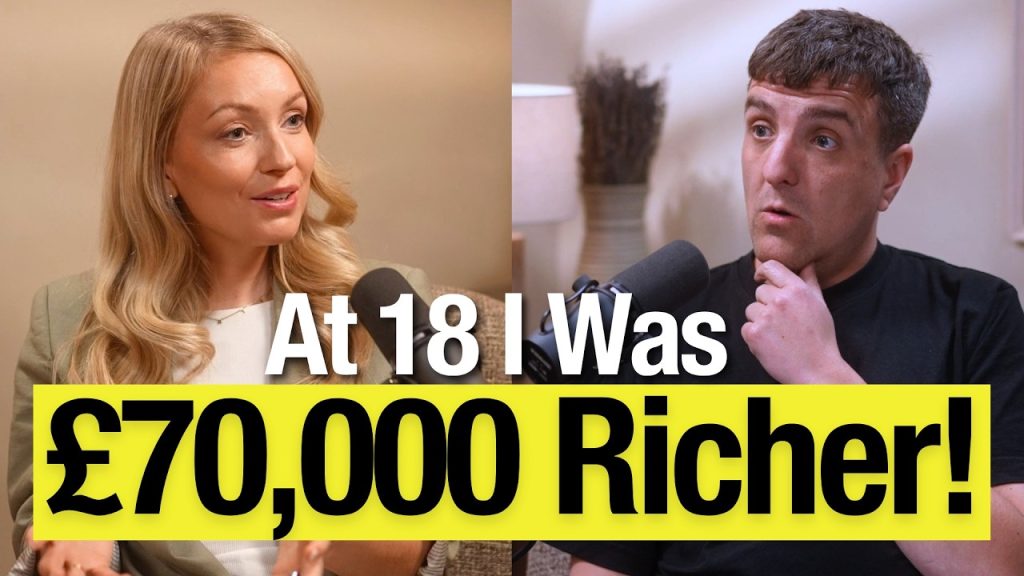

This week’s guest is Emma Young, the secondary school computer science teacher behind the Instagram channel Invest Em, who joins the podcast to talk index funds, why she keeps a chunk of her emergency fund in Premium Bonds, and why she overpays her mortgage even though the maths says investing usually wins.
Emma didn’t come from a family of stockbrokers. She’s a teacher by day, and until a lockdown walk with her brother in 2020 she thought investing was something reserved for “men in business suits” timing the market perfectly.
That conversation, and a book called The Simple Path to Wealth, sent her down a rabbit hole that turned into Invest Em: an Instagram account built around clean, infographic-led explainers on index funds, ISAs and budgeting.
Three years on, Emma has settled into a genuinely sensible, unglamorous approach to money.
A global index fund as the core of her portfolio, a Lifetime ISA ticking away for retirement, and a chunk of her emergency fund parked in Premium Bonds for the small chance of a big win.
She also has a joint budget spreadsheet with her husband that quietly overpays their mortgage every month.
None of it is exciting.
All of it works. This episode is a good one for anyone who wants the reassurance that boring, consistent habits beat chasing the next hot stock tip.
———
Gains App is LIVE!
An AI-powered budgeting and cashback app designed to help you make more of your money.
Download here: https://gainsapp.onelink.me/8IhT/oiaimr1z
———
Get a FREE FRACTIONAL SHARE worth up £100 when you deposit £1 with Trading 212
https://www.trading212.com/join/MGP
If you don’t receive the free fractional share, head to the menu and put the word ‘MGP’ into the promo code section.
(Capital at risk when you invest)
Key takeaways
- Emma’s core holding is Vanguard’s global index fund, VWRL, which she says averaged 9% a year over the previous 10 years at the time of recording; she prefers it over a US-only fund like VUSA purely for the diversification.
- Premium Bonds pay no guaranteed interest, but Emma keeps a large chunk of her emergency fund in them anyway for the monthly chance of winning up to £1 million, alongside smaller prizes as low as £25.
- She overpays her mortgage even though her own fund has historically returned more than her mortgage rate, purely for the psychological win of being mortgage-free sooner; many mortgages allow up to 10% of the outstanding balance to be overpaid penalty-free each year, but this varies by lender.
- A UK Lifetime ISA adds a 25% government bonus on contributions up to £4,000 a year for anyone aged 18-39, usable for a first home or, as in Emma’s case, saved untouched until she can withdraw penalty-free from age 60.
- Emma didn’t budget properly until she built her own spreadsheet from scratch, starting with a simple list of every account she held and growing it into a full monthly plan with separate pots for emergencies, holidays and Christmas.
Timestamps
- [0:00] Meet Emma Young, The Teacher Behind Invest Em
- [4:27] Why Investing Felt Too Risky For Emma At First
- [5:36] Long Term Investing And Reducing Risk Over Time
- [8:09] Vanguard VWRL vs VUSA: Emma’s Global Index Fund Pick
- [10:36] Why Emma Overpays Her Mortgage Instead Of Just Investing
- [13:33] How Mortgage Overpayment Limits And The Sprive App Work
- [24:31] Building A Budget Spreadsheet From Scratch
- [30:41] What Financial Independence Actually Means To Emma
- [36:45] How A Lifetime ISA Works And Who Can Open One
- [40:49] Are Premium Bonds Worth It? Emma’s Honest Take
From nervous beginner to Invest Em: Emma Young's investing journey
Before she started investing, Emma pictured the stock market as something for “the men in business suits who are like buying at the right moment and then selling at the right moment before they lose all their money.”
It didn’t feel like something an ordinary person, let alone a teacher, could realistically do.
That changed during lockdown, when her brother talked her through index funds and investment ISAs on a walk. The timing turned out to be good: markets had just crashed, and Emma started buying while prices were down.
She’d already read J.L. Collins’ The Simple Path to Wealth on her brother’s recommendation, a book that, in her words, is “all about Vanguard and Vanguard index funds,” and it shaped how she’s invested ever since.
If you’re at that same nervous starting point, our guide to investing for beginners in the UK covers the same ground Emma had to work out for herself.
Invest Em grew out of that journey. Emma builds infographic-style posts breaking finance down into visuals rather than walls of text, partly because, as she put it on the episode, “sometimes teaching is the best way to learn.”
Explaining index funds, Lifetime ISAs and peer-to-peer lending to her followers has doubled as her own ongoing financial education.
Why index funds beat picking individual stocks
Emma’s central investing strategy is simple: buy funds, not individual shares, and hold for the long term. “I’m a big fan of index funds or ETFs,” she explained.
“So rather than buy one individual stock, I buy a fund which contains like a basket of stocks… it kind of it hedges your bets essentially.”
Her reasoning is that nobody has a crystal ball on which single company will win, but a fund spreads that risk across thousands of companies at once.
She also leans hard on time in the market rather than timing the market. Her view: the longer money stays invested, the smaller the chance of losing it, because although markets go up and down in the short term, “essentially over time, it always grows.”
Host Sammie backed this up with a stat from Nutmeg quoted on the episode: 15 years invested in a global index fund gave a 0% historical chance of losing money.
If you want to see what that kind of long, steady growth could actually be worth over a decade or two, our compound interest calculator is a useful way to picture it.
Emma Young's actual portfolio: Vanguard VWRL vs the S&P 500
Emma’s largest holding is Vanguard’s FTSE All-World fund (VWRL), which she said averaged 9% a year over the previous decade at the time of recording, covering more than 3,500 large companies worldwide.
She’s aware that a US-only fund like Vanguard’s VUSA (tracking the S&P 500) has historically performed even better, but she deliberately sticks with the global fund for the diversification: “I’d rather stick most of my money into the global fund to have that more diverse portfolio.”
For a deeper walkthrough of how index funds work and how to actually buy one, our guide to investing in index funds in the UK covers the mechanics step by step.
Beyond the core index fund, Emma also holds some individual shares through Trading 212 and Freetrade, mainly to share on Instagram, plus a smaller, less common allocation to peer-to-peer lending through an app called PeerBerry, where she lends money directly to borrowers in exchange for interest.
Should you overpay your mortgage or invest? Emma's answer
This is where Emma openly breaks from the purely mathematical answer. With her fund averaging 9% a year, she accepts that “unless you’re paying nine percent interest on your mortgage, then realistically it’s probably… better worth putting the money into investments rather than your mortgage.”
She overpays anyway.
“I just love the thought of being mortgage free and that freedom that will give me and the thought of not having to have those payments every month,” she said, and does both: investing her own money while she and her husband jointly overpay the mortgage from their shared budget.
In practice, most lenders cap penalty-free overpayments, and Emma said her own mortgage allows up to 10% of the outstanding balance per year without charges, something worth checking on your own mortgage terms before you start.
She uses an app called Sprive to automate small overpayments and round-ups, which has already shaved two months off her mortgage term.
It’s a reminder that the “correct” financial decision on paper isn’t always the one that makes the most sense for your own peace of mind.
Are Premium Bonds worth it, and how does budgeting fit in?
Asked to explain Premium Bonds, Emma summed them up neatly: “It’s kind of like buying a lottery ticket each month, except you can get the money back.”
You buy bonds in £25 increments, and every month NS&I enters them into a prize draw with amounts from £25 up to £1 million, funded by the same interest pool a normal savings account would pay.
Emma keeps a large part of her emergency fund in Premium Bonds specifically because that money still has a shot at a life-changing prize while remaining accessible if she needs it.
She noted that plenty of people have been moving money out of Premium Bonds and into normal savings accounts as interest rates climbed, since a guaranteed rate can beat relying on luck.
Sammie referenced a rate of 4.51% on one savings account, Chip, at the time of recording, illustrating just how competitive standard savings had become against the lottery-style odds of Premium Bonds.
None of Emma’s system would work without the budgeting behind it. She only started properly budgeting after building a spreadsheet from scratch: first listing every account she held, then adding a spending tab, then splitting fixed monthly amounts for food, bills, clothing and mortgage overpayments.
That structure now runs to around 20 tabs, including separate pots for emergencies, holidays and a “Christmas fund” built from round-up spare change.
If your own monthly numbers still feel like a mystery, our budgeting calculator is a straightforward place to get that same starting picture Emma built for herself by hand.
She and her husband also hold a stocks and shares Lifetime ISA each, where UK savers aged 18-39 can pay in up to £4,000 a year and receive a 25% government bonus, withdrawable penalty-free from age 60 or for a first home purchase.
This transcript is auto-generated and lightly edited for readability, it may contain errors.
[0:00] Sammie Ellard-King: Hello, hello, and welcome to another episode of the Money Gains podcast. This is your host, Sammie Ellard-King, and today my guest is Emma from the Instagram channel Invest Em. Now, Invest Em’s channel is wicked. I love it. It’s full of visual infographics teaching you everything you need to know about personal finance. And we discussed all about her journey towards financial freedom, how she’s a teacher by day, to also investor side, budget correctly, all about her finances, overpaying mortgages, etc. There’s so many duty nuggets in here for you this week. But if you are listening on YouTube, like that subscribe button for us, please. And if you are listening on Spotify or Apple, like and follow, do it right now. So now let’s get started on the Money Gains Podcast. So Emma, welcome to the Money Gains Podcast. How are you doing? You well?
[1:12] Emma Young (Invest Em): Hello, yeah, I’m very well, thank you. I’m really glad to be here and uh looking forward to having a chat with you today. Yeah, me too. Third time lucky. We had a few technical difficulties the last couple of times, didn’t we? Yeah, we did, yeah. But um hopefully we’ve ironed out all the problems now and uh ready to go. Wicked. Well, if you wouldn’t mind giving the guests a little four-one-one into yourself. Yeah, so um I’m Emma. I go by Invest Em on Instagram, and um I started my my Instagram page to kind of document my journey to be able to start investing. Um, because when I started investing, I was really scared about the whole process. And I just thought um it’s either going to work or it’s not, and it’d be really interesting to document whether that happens or not. And uh that’s kind of the reason why I start why I started Invest Em, and um it’s kind of developed from there over the last couple of years into it, still is a little bit of that, but also balanced with some financial education. So sort of putting out there and sharing what I’ve learned along the way about finance and hopefully supporting other people who might want to start investing or who have questions about all things finance that they maybe um just didn’t learn, like I didn’t until three years ago.
[2:26] Sammie Ellard-King: Sometimes teaching is the best way to learn. Definitely, yeah. Um, especially sort of when I make my posts, all of my posts are pretty much sort of infographic style. Um, so I have to think of how to break the information down into things that it looks visually pleasing, not too much text, um, but has all like the key points for people. So yeah, that kind of that breaking it down definitely helps me to learn it on the way as well. It’s the same for me, like writing about financial topics. You know, often I’m learning as I go and I pick new things up, and there’s stuff that are in there that I would have never have known if I didn’t like learn to try and teach somebody else. So it’s I know I love it. Starting investing has just opened up like a massive, a kind of a whole new world of different financial terms and different kinds of accounts and things like that. And I just would never have known all of this stuff if I hadn’t have come to this community on Instagram in particular. Um, things like Lifetime ISAs, never heard of that before. So I I’m so grateful to the community and to everything I’ve learned over the last few years.
[3:37] Sammie Ellard-King: Well, I love your channel. I learn a lot from you still to this day, even though I’m writing about finance 24-7. So you teach me lots of little different quirks and little things that I didn’t know existed, which is wicked. Like that’s good to know. Yeah, yeah, thank you. I’ll I’ll I’ll you know, yeah, tip my hat to you on that one. Thank you. Um, yeah, I I um I love how visually appealing you make it for people because there is so much out there that it’s difficult for people to learn, and often visually is a really great way of getting people, you know, started and into it. Some people read, some people love the visuals. What um you know you mentioned earlier about like you you know you were worried and you had found it difficult when you started. What was the kind of pattern that you saw that kind of got you into it?
[4:27] Emma Young (Invest Em): So I think I was so scared because, like probably many other people, when you hear investing and until before you become an investor, you think about, you know, the men in business suits um who are like buying at the right moment and then selling at the right moment before they lose all their money. And it just doesn’t seem like something that everyday people can do. But then sort of having found the community and investing, and actually it is something that absolutely anyone can do, from you can invest as little as a pound on some platform. So um it just seemed like it was something that would was out of my reach and something that could potentially involve a lot of risk. And um I think that was that was why I was sort of nervous and scared to start. But then once you actually look into it and you kind of understand it, that’s when things kind of change and you’re like, oh, okay, so yes, there is always going to be a risk with investing, but you can do it in a certain way to kind of limit that risk.
[5:36] Sammie Ellard-King: And what is that way that you’re implementing? So for me, it’s all about the long term. So I’m not one of these people who are looking at the figures every single day and waiting to sell at the high point. Um, I actually intend to invest to continue and build my investments to retirement age and hopefully early retirement age would be nice. And um, so yeah, just having that long term. Um, if you you can never obviously go on past performance of the markets because you no one has a crystal ball and can see what’s going to happen to the markets in the future. But since the the kind of history of the stock market, yes, it goes up and down, um, but essentially over time, it always grows. Um, the economy grows, you know, everything grows over time. So if you’re gonna keep it in there, there’s certain statistics that evidence if you keep it in there for a certain amount of time, the longer it’s in there, then the less chance you’ve got of losing any money. Um, and the other thing I do is rather than pick in certain stocks where I don’t know sort of how that’s gonna perform, um, I’m a big fan of index funds or ETFs. So rather than buy one individual stock, I buy a fund which contains like a basket of stocks. And um, so the fund performs based on how all of the stocks do in that fund, rather than just one that might win or lose. It’s like a balance of all of them. So that kind of it hedges your bets essentially.
[7:03] Sammie Ellard-King: Love that. So I I I read a stat this morning that Nutmeg put out a bit of information today to say that if you’re invested in, say, a global type fund, uh, you know, index fund, ETF like you were just talking about, 15 years invested means that there’s a 0% chance of you losing your money. I saw that same thing, yeah. Yeah. So the long-term, yeah, long-term investing for the win. Yeah, exactly. Yeah, long-term mindset, keep plugging away. Yeah. I was listening to um Ramit Sethi on uh Steven Bartlett as well last week, and you know, he was saying that he often just tells his clients, don’t complicate it, pick a Vanguard fund that has your retirement date in it, and just put money into it and and just crack on and and you know, build a habit. And often habit is associated with investing and long-term investing, and that’s where you you get your wins. So, what are you what kind of funds are you investing in at the moment?
[8:09] Emma Young (Invest Em): So, um, like you just mentioned there, my favourite fund is a global fund. So it actually just encompasses, I think, over 3,500 of um large stocks across the globe. So um it’s quite a big exposure to US, um, but historically US markets perform really well. Um, but yeah, that I’ve done a post on that previously. The particular fund that I invest in is Vanguard’s uh VWRL. And over the last 10 years it averages 9% year on year. Um so if that can continue, then I’m happy with that. Um I do sorry, no, that’s okay.
[8:54] Emma Young (Invest Em): I was gonna say I do also like the S&P 500, um, in particular, the Vanguard fund I like is the VUSA. Um they that actually performs better, but um I’m always a little bit like, do I just go all in America? Um it’s obviously you’re not you’re being more um less diverse that way. So I kind of like the global fund because of the diversity, although my statistics and my research shows that the American fund actually performs better or has performed better. But as I said before, you know, we don’t have a crystal ball. So I think I’d rather stick most of my money into the global fund to have that more diverse portfolio. I’ll do the same. Um I’m just like you, I have a global fund. Um, you know, I I’m an 80-20 guy, um, 80 in index funds, 20 in individual stock picks, and uh, but you know, most of that 80% is in the Vanguard Global, and then um I have UK-based uh stuff because I I personally believe UK is undervalued, and I think once we finally get round to sorting ourselves out, you know, it seems like every couple of years it seems to be another thing thrown out into the into the into the waters to muddy it even further. But once we do seem to sort of come out of this, you know, UK is um UK I think has an enormous amount of growth in it, and um so that’s why I’ve placed some of my money on uh trying to make a good bet, really, essentially. We’d seeing I’m willing to hold that for 20, 30 years. So it’s a very different sort of mindset if it if it doesn’t sort itself out in a couple of years, and yeah, hopefully in 20 we should should be able to do that.
[10:36] Emma Young (Invest Em): Well, yeah, definitely. We would hope so. So one of the things you do as well is you overpay your mortgage. Um, I’d love to hear more about this and how it’s possible. Yes. So, I mean, this is probably for some investors out there, this is very controversial. Um, because like I mentioned before, with funds like Vanguard’s uh VWRL returning on average 9%, um, unless you’re paying uh nine percent interest on your mortgage, then realistically it’s probably a lot of investors see it more uh better worth like putting the money into investments rather than your mortgage. However, I just I just love the thought of being mortgage free and that freedom that will give me and the thought of not having to have those payments every month. Um, so therefore, although I know um financially as an investor, it might make more sense to put the money into investments. I am actually, I’m doing both. So I obviously invest and I’m putting money into my mortgage. Also, the kind of difference on that as well is because as an investor, I invest myself, my money, whereas the mortgage is joint with my husband, so it’s our money that we that goes on kind of overpaying the mortgage. Uh, he’s not an investor, haven’t won him over yet to the investing side, but I’ll keep working on him. Um but yeah, so I uh just kind of of our monthly budget, so we have a joint account, that’s how we do our finances. So we’ve I’ve got my own accounts, but um, for anything to do with our house, so our mortgage, our bills, our food shopping, all of that stuff goes into a joint account each month, and I budget that. So I budget how much we have for our food, how much we have for the bills, and then a small amount to overpay on the mortgage. And um, yeah, so I just each month just send a little bit of money towards the mortgage and it just helps chip away a bit quicker, it will lower um the amount you have to pay on interest over your mortgage term, and it should also bring our mortgage term down. In fact, we actually have already shortened it by two months. So it’s not not massive amounts, but you know, it’s it was over time it’s obviously going to increase and carry on shortening it. And uh I use a really handy app for it as well. There’s an app called Sprive, which I always rave about um on my page just because it’s really handy because you link it directly to your mortgage and it will kind of siphon off um or give you the option to siphon off money from your account, um, like sort of put it aside for you, and then you can send it into the overpayments directly through the through the app. And uh there’s other ways on the app where you can earn extra money towards your mortgage, uh, you can buy like gift cards through through through the app and they give you cash back, which you can send towards your mortgage. So, yeah, it’s just a really handy way to uh kind of support you to be mortgage free a lot quicker, really.
[13:33] Sammie Ellard-King: I love that. So Sprive essentially you could like if you’re going to Pizza Express, you buy a £30 voucher and it might then add up and give you a little bit of money back. Yeah. Oh, that’s super cool. How how does it work then, like, because a lot of the um a lot of mortgages don’t let you overpay. And does does Sprive help you solve that? Um no. If your mortgage won’t let you overpay, then it won’t. But um from what I know, a lot of mortgages will let you overpay up to 10% of what you actually have remaining. Um so I think there is you have to obviously check your mortgage terms, but certainly my mortgage, um, we’re allowed to overpay without any penalties 10% per year.
[15:02] Sammie Ellard-King: That’s really interesting. I didn’t know that. So 10%, that’s that’s really interesting. 10%’s 10%, isn’t it? At the end of the day, it’s still knocking it off. Yeah, when you’re talking like hundreds of thousands of pounds, 10% is a lot. Yeah, and and you’re right, like, you know, the interest payments are going to come down over time, you’re gonna be mortgage-free quicker. There are, you know, and it and I suppose as well, you know, when you do re-mortgage, you look for a a lender that will allow you to make those overpayments. So, you know, you’re not always stuck in with uh there, you know, just look at your fixed term. Okay, we’re coming out in two years’ time, we can find one that will let us and we can put it into a pot for now or maybe invest it. So when you um when you first got into this, you know, what what was you what was it like growing up with you with money? Was there something in the household that stopped you? Was your parents investors? What what was the kind of deal for you there?
[15:58] Emma Young (Invest Em): Um we I think we were always made to like understand the value of money. We were given pocket money, and we weren’t just given things that we had if we wanted something, we had to save up our pocket money. We always had bank accounts as well. My dad, you know, got us had us, we had bank accounts from very young. Um I say us because I’ve got brother and a sister. And um, so it just was always something like when we got birthday money, we would like to go to the bank and pay our birthday money into the bank and uh sort of enjoy seeing our. Do you remember the little um check-in books you used to get with your bank account, little booklets? And you used to see like your deposits go in and get printed on the booklet. Um, it wasn’t like I guess it must have been not just the way we were brought up that we didn’t think when we had birthday money, oh, what we’re gonna spend it on. We were like, oh, let’s go and put it in the bank. Um, so I guess that was just a bit of a mindset from our parents was a kind of saving mindset and um yeah, just sort of that enjoyment of seeing it build up, I suppose. That’s something from that must have stuck with me. And my dad did invest. Um, sadly, we lost him in 2019, which was right before I started investing. So I haven’t got to have any investment chats with him. Um, but I know he he always did invest. Um, he did talk about it um just obviously before before kind of 2020. I didn’t really know anything and have that much interest in it. But um, yeah, obviously it was kind of something that was in the background and was going on in my family.
[17:29] Sammie Ellard-King: So you kind of probably had that that saving mentality, yeah, and it’s kind of rubbed off on you somewhere along the line with your dad talking about it. You must have always had it somewhere at the back. And then what was that moment for you? Where did it sort of go, oh, I need to do something about this? Well, um, again, it was down to family because my brother was investing. Um, and I don’t quite know how he got into it, I have to ask him, but he had been investing for a little while and he’d mentioned to me the word in the term index funds, and um sort of said, Oh, you need really need to do this, Emma. You’ve got to get into this. And he’d mentioned it a few times, and I was just like, Oh, yeah, whatever, like it sounds really complicated. Not got any time to look at it. And then we had lockdown, and um, so we had met up to do a uh a walk, as lots of people did during lockdown when they were the times when that’s what you’re allowed to do. You meet friends and family to go for a walk. And uh we went on this walk and he explained it all to me. He explained about index funds, he explained about investment ISES, and um, yeah, that was the moment where I was like, okay. And also add into the fact that you know we were in a pandemic and the markets had crashed, I could see that actually that was probably a really good time. If well, there was going to be a time to start, that was probably quite a good time as the markets were down. And yeah, it kind of went from that really.
[18:51] Sammie Ellard-King: That’s super interesting. So you you got started uh really, if you look at history now and you go back, actually a brilliant time to start investing because you know you probably had a good run from there. Yes, definitely. Yeah, from I mean, if you look at the graphs sort of from that kind of summer 2020 where it plummeted since then, it’s sort of been on the uh growing back up sort of thing. It’s been uh it’s been a wild ride though for the last sort of two, three years, isn’t it? Yeah, you know, with inflation kicking off, it’s it’s it’s just one of those things. But history, as you said earlier, is on your side, and I think that’s really oh, my series just kicked off. Sorry, get rid of that. It’s like it’s like history comes up. I was like, I don’t know, not for you today, mate. Um, you know, it’s on your side, and that’s one of the things that I think people get worried about. But the stock market is designed to go up, it is that’s what it’s there for, it’s designed to go up over time. Yes, there’s bumps in the roads, and yes, you know, it’s not all sunshine and rainbows, but if you’ve got this long-term mindset, you can really you can beat the market, essentially. You can beat what you know, you can do well for yourself, and any normal person can do that these days. And you mentioned earlier about access, and I think that’s been a big, big thing, the thing that’s changed even since COVID. There’s so much more access to investing accounts. What um what do you use yourself?
[20:20] Emma Young (Invest Em): So I use Vanguard for my investment ISA. Um, again, it was just probably coming from chats with my brother, and that’s what he was using. And I think he was coming from a place of reading that book, um The Simple Path to Wealth. J.L. Collins. Yes, that was what he had read. Yeah, and um obviously that’s all about from a kind of American perspective, but it’s all about Vanguard and Vanguard Index Funds. So, yeah, Vanguard ISA. Um, then my lifetime ISA is with AJ Bell, purely because Vanguard don’t do one. Otherwise, I would I like the Vanguard platform, it’s clean, it’s easy to use. Um, but yeah, they don’t currently do a lifetime ISA. So I’ve got that with AJ Bell, and um then just sort of some apps for just general investments, just because you know, on Instagram it’s uh interesting to show the odd individual stock and share, and people like to sign up to those kind of things. So I’ve got um Trading 212, Freetrade and Shares currently running at the moment, and then uh a little something else I do, which I haven’t seen too many people talk about on Instagram, is uh peer investing, peer lending as well. So um I use an app called PeerBerry for that. And um, yeah, essentially I put money on it and I lend it to people and uh they pay me back with interest. So yeah, peer-to-peer lending. Yes.
[21:52] Sammie Ellard-King: Hey guys, Sammie here. Just a quick one. If you wouldn’t mind heading over to upthegains.co.uk, hitting the subscribe button in the top right hand corner and entering your email into the box for your troubles. You will receive a free net worth calculator worth £25. Now, this net worth calculator, if you enter your assets and your liabilities, will tell you exactly how much you are worth today. Now, what you can also do is set yourself some financial goals and track your net worth along the way using this tool. It’s totally free. So head on over to upthegains.co.uk, hit the subscribe button, pop your email in, and it’ll be sent straight to your inbox in a matter of minutes. Now, back to the podcast. When um when you talk about because your day to day, you’re a you’re a teacher, right?
[22:39] Emma Young (Invest Em): That’s right, yes. What do you stand what do you teach? Uh so I’m a secondary school computer science. Teacher and an assistant had a year as well. Wow. Oh, cool. So computer science, absolutely great that they’re doing that in schools now. Is that coding or is it? Yeah, so um I qualified as an IT teacher because when I did my PGCE, that was what we were. We were IT teachers, obviously, just using the computer, but then over time um things have changed and we’ve kind of migrated into computer science because I mean, in terms of IT, every kid can use a computer. You don’t really need to teach them that anymore. Um, but like you say, it’s something from uh we teach things like coding, um, inside the computer, binary, hexadecimal, uh like the workings of the computer, the hardware, and so on. So, yeah, it’s a lot more kind of technical based than it was when I initially trained and we were sort of looking at how to do um make a PowerPoint and use Excel and stuff. We still do a little bit of Excel though, which I always enjoy teaching because I love Excel.
[23:45] Sammie Ellard-King: Do you enjoy it? Yes, yeah, I do. I mean, retiring early is my goal, but I I do like my job. It is a good job, but I do enjoy it, but at times it’s just really intense and really stressful as well. Um, more so in the past few years, I think things have certainly changed in education um in the time that I’ve been teaching. And um, there is a lot more pressure now. Um, so to to not have that that intense pressure of that kind of whole education system would be nice, and that’s why I want to retire early. But I mean, essentially, yes, I do like the job, and uh yeah, it keeps keeps me going, keeps me busy. Keeps the bills going and the investments growing.
[24:31] Emma Young (Invest Em): Yeah, that’s very true. Well, the reason I asked you about that is because you know, we we have people on here that are, you know, doing their own businesses, and some people, you know, they’re doing very well out of that. But it’s really interesting to see that, you know, you can have a a a good solid job and still be doing these things. And I suppose it really comes down to the number one thing which everyone really should be doing, and that’s budgeting correctly, right? How are you how do you sit down? Um you mentioned you have these chats with your partners, and I imagine you’ve got your personal and your your your joint budget. How how do you sit down and work that out and what do you use to help you? Yeah, so I mean, I always actually say when people are like, you know, how how do you invest? How have you found like the money to do this and so on? Budgeting actually is so basic that it changed changed my finances. Being a teacher, I never like had any issues in terms of being able to afford stuff. Like I I lived comfortably and I was like, Yeah, I can so I don’t need a budget. That was my initial view. I don’t need one because I can afford to do this, I can afford to do that, and I can still put money in my savings at the end of the month. So I’d always thought I never needed one. And then again, like coming into this community on Instagram and uh sort of seeing budgeting, I kind of started by um thinking, I need, I need to, I’ve got all these different accounts, I need to see what’s where. So I started a spreadsheet and it just started off as a list of all my accounts and how much was in each account, almost for like will purposes. So if anything ever happened to me, my husband could see where my money was or you know, that kind of thing. And then I was like, okay, so I’ve got this here. Now let’s see how much I’m spending each month. So now I did another tab to the spreadsheet of like my spending. Then I was like, oh, let’s do it with my joint account as well. And it kind of developed. And then uh from there I was like, actually, this is how much I’m spending, so let’s like budget it now. So I’m gonna assign this amount for the food shopping and try and keep within that amount, and then I’m gonna assign this amount to spend on myself for like clothing and things like that each month. And I’m gonna spend this amount, assign that for like car expenses. And I just kind of broke it down. I looked at what we had coming in to my own personal account and what we had coming into our joint account and just split it up and uh tweaked, tweaked it, had a little play around with the numbers, and made sure there was enough where I could put a little bit into our joint savings, which is like our, you know, if the washing machine goes wrong kind of fund, um put a little bit into our mortgage overpayments and just sort of broke it down from there and saw what we had left and what we could afford to do, sort of thing.
[27:13] Sammie Ellard-King: That’s so interesting. So you got your you suddenly thought, right, yeah, I’m gonna list this out and then you saw opportunity, right? Yeah, I imagine. Yeah. And uh in terms of what I use, just a spreadsheet, just love my spreadsheet. It’s now got about 20 tabs on it of different things. Um, it’s it’s just massively kind of uh expanded since that that first uh point of me just thinking, oh, I need to say what money I’ve got where. It makes such a big difference, you know, even when we started doing this. Yeah, me and my partner now we have like an emergency fund, which is you know, our washing machine breaks or you know, something goes through the roof or whatever happens. And then we’ve got like our holiday fund, a new house fund because we want to buy some new furniture when we do finally move and the interest rates decide to drop on us. Um and then we’ve got uh Christmas fund as well, which um is uh is a is our roundup purchases. So anything we, you know, if we go out for dinner, we put it on the joint account and 61 quid and three pence, and we get the 97 pence goes into our Christmas ball. And that’s like our little way of of kind of tying up those loose bits of change. But also when we get to those periods of time we’ve got the money there and we don’t feel like we’re under massive pressure come those big sort of holiday season spends that always happen.
[28:37] Emma Young (Invest Em): Yeah, I love that use of the roundup account. That’s a great idea. It really works, like, because you just don’t think about it, right? In your head, it’s already it’s already, you know, that pound, you’ve already rounded it up in your brain. Yeah. And you you see it go up like in I think six, seven months we’ve got like nearly a hundred quid in there. And so I think by the time we get to Christmas and we’ve got a couple hundred quid in there, you know, that’s presents that we’ll do for joint and you know, the turkey and all of that’s covered, and we haven’t really got to worry about stuff then, then it’s not pretty sure. Yeah, because Christmases sucks, man, for a lot of people. You know, they get credit cards out to cover these things, and actually, you know, you can we can use things like that and cashback apps as well, great for that. Yeah, leave our budget sitting in there, and then that’s uh that’s all the presents covered.
[29:25] Emma Young (Invest Em): Yeah, we actually really wound it down last Christmas and um decided not to buy each other anything. Um, and also with my family, we changed it to do uh like on my side of the family, we changed to do a uh secret centre. Um just so we just bought one thing for each. So we will change it a little bit next year because I did miss like us not giving it each other anything. So I think maybe we just need to limit what we spend on each other. And um, I think we’ve we liked doing the secret centre as well, but we didn’t give ourselves enough of a budget, so we’ll probably go a little bit more. But yeah, there’s certainly ways you can um it. I think over the years, especially in our kind of social media age, we see all pe you know, people’s pictures of all the presents under the tree and a glorious looking tree, and like everything just looks so perfect, doesn’t it? And you kind of you get on board that train, you’re like, oh well, I’ve got to have that, and I need to have that decoration on my tree, and I need to have all matching, I don’t know, uh wrapping paper that’s from John Lewis and whatever else. And you kind of get on that train, and then actually, when you take it back, like, why? Why am I doing that? There’s no real like you don’t get any more enjoyment out of doing all of that than you can do it different ways, more affordable ways, and uh still have a great time.
[30:41] Sammie Ellard-King: It’s the giving, isn’t it, that makes all the difference. I think that’s that’s the one thing seeing the smile on somebody’s face from the effort that you’ve put in is the biggest thing for me, anyway, for Christmas. I love Christmas. I know it’s July, it’s weird talking about it, but yeah. I think it’s important when it comes to money because setting yourself up for it is a is a is a good way. So you mention on your channel financial independence, you know, you’ve got fire journey listed there. Yeah. What does that actually mean for you? So for me, that means that point where I don’t have to work because I can live off of my investments. So I’ll be able to start drawing money out of the investments and just live off of that rather than my salary. Um, although, like knowing me and what I explained earlier about being a child and sort of watching my money add up on in my little book, my savings book. I think when I to get to that point of where I actually switch and start taking the money out, that’s gonna be a really hard step for me to actually make, I think, of actually going, no, I’m not gonna put any more in now, I’m gonna start taking it out. I think that’s gonna be really strange. But um, yeah, that’s that’s the aim, that’s why why I’m here. So fingers crossed.
[33:01] Sammie Ellard-King: You know, you get to that point. Let’s say you hit that and you’re 50. What then? Um, yeah, I mean, it’s hard to say because it depends how I feel in my job at the time. Maybe I’ll go part-time, maybe I’ll have something else I’ll be interested in doing. Um, maybe opportunities will have come about, maybe because of Instagram or something else. So it really just depends on what what um where I am at at the time. Um, probably in my head, I would see myself going part-time teaching, or at least something using those kind of skills I have around that sort of area education, maybe teacher training, um, something along those lines, but something where I’m not doing it every single day of the week and I’ve got more time freedom. I think that’s the key thing that I want to look for is the time freedom. So uh what I’ve got now in the summer holidays of where I can just uh have a bit of a lay-in and structure my days around what friend I’m gonna go and meet up with today and what family member I’m gonna go and catch up with, and so on. It’s yeah, that’s what it’s about for me. It’s not necessarily saying I’m gonna go and travel here, there and everywhere and go on a million holidays. Um, it’s just that freedom of being able to have the choice.
[34:19] Sammie Ellard-King: Oh, you I love that. It’s really difficult, isn’t it, to say what it is. Yeah. And so, you know, you especially when you know I’m in my 30s. Someone asks me what I’m gonna be doing in 20 years’ time, I don’t bloody know. But like what I do know is that I want the choice and I want freedom to make that choice. And if I give myself that opportunity, then I know being me, I I can’t sit about with a pina colada on a sunbed. I just can’t do it. Yeah, you know, I I’d love I’d go on a big trip and I’d really enjoy the money that I and I’ve worked hard to create, but I’d have to get busy, I would be doing something, whether that’s jumping back into a business or doing something. Um, and it but I’d have that choice, and I think that’s so, so important. And that’s why I asked that question because everybody’s answer is different and it’s unique to you. So, like what you say isn’t going to be different, it’s gonna be different to what I want and what anybody else thinks about. So I do think having that that goal is a really, really important one, and working towards that in some way, shape, or form and what that looks like for you is is is important to have in there because I’m investing.
[35:29] Emma Young (Invest Em): Definitely. I mean, one thing I definitely will do is book a holiday in term time, though. That would be one of the first things I do, I reckon, as a celebration of retirement holiday. Yeah, yeah, no kids around me today. Yeah, I get it. It’s um it’s such a strange time, like when my area it like changes completely. You know, I’m I usually have to leave early to get to the station on time if I’m going into London because it just like school time, there’s like traffic jams up all the roads, and then I left this morning to take my partner in, usually at the pivotal time, and we left at the normal time, and we got there 10 minutes before. I was like, oh my god, these pessy kids. Yeah, no, I know. It’s crazy. My my stepmum’s a teacher, and you know, she’s I was saying to you before this, actually, like it’s um you know, she hits that six month week period and she just goes full switch off. And I’m like, you know, you should probably do something, but it it’s tiring, it’s really, really tiring. So I can see where you’re coming from. Um, yeah, one last thing I wanted to ask you about, which you mentioned earlier, is your lifetime ISA, because you obviously you’ve bought your home, right? And you’re you’ve got the mortgage. What else are you using it for then?
[36:45] Emma Young (Invest Em): Yeah, so with the lifetime ISA, like you said there, um you can either use them to put towards your first purchase, your first property purchase, or you can save it for retirement. Um, so that’s what I’m doing. So you can withdraw without penalties from the age of 60. Um, so that’s my aim. So I’m just sort of adding in to my lifetime ISA each month and building it up. And um for kind of for those who don’t know, the lifetime ISA, you can open it between the ages of 18 and 39, and you can put in £4,000 per year maximum, and the government give you 25% per year of what you put in. So if you put in the maximum £4,000 per year, the government will give you £1,000 for that tax year. Um, and you can do that up until the age of £50. So you can keep depositing £4,000 a year till you’re £50, and then you have to stop. Um, and then you can withdraw it from £60 for your retirement. So that’s my plan, that’s what I’m doing. It’s just an extra kind of retirement fund. Um, obviously, I can get my Vanguard ICE whenever I want. I can withdraw that earlier. So that would be my first thing I withdraw from. And then once I reach 60, I can start withdrawing from my lifetime ISA as well. Uh, there’s two kinds of lifetime ISAs. You can get a cash one with no investments, or you can get an investment like a stocks and shares one, which is what I’ve got. So the money I put in each year is also being invested. So hopefully, as well as the £1,000 I get from the government each year, um, I’m also getting my investment growth and my dividends and so on. So uh hopefully by the age of 60, that’ll be a nice little extra pot for me to start withdrawing from.
[38:25] Sammie Ellard-King: Hey, the way I see that is that you’re 25% up. Yeah, exactly. Straight away, day one, you’re 25% up. So if your investment, you have a bad year, you know, as long as it doesn’t drop 25%, you’re still up. Yeah, that’s very true. Yeah, I hadn’t looked at it like that. That’s a really good point. Um, and you you know, that’s that’s as you say, if you’re investing that money and you’re not, you know, you can just put it in a cash house if you just want it there as a as a tuckaway. Yeah. If you invest that money too, suddenly that’s going up quite a quite a lot. Yeah, yeah. So it’s 60 happy days. Again, like had I’ve not been part of this whole Instagram community, I would never have known about lifetime ISAs. It’s crazy. Like, the where do you get this information from if otherwise, like uh it’s not just something, I guess as well, nowadays, general people, you don’t just go into a bank to do your banking anymore, it’s all on the app. So you wouldn’t necessarily find out about different kinds of accounts, would you?
[39:22] Sammie Ellard-King: No, I it it was really hard for me, and everything, you know. I read the JL Collins Simple Path to Wealth, and that was one of the first sort of port of calls for me. And luckily I did, because that, you know, if I’d have read trading books, I’d probably had a very different mindset. Yeah. But you know, it it was all US focused, there was only really Martin Lewis about, and uh, you know, he wasn’t as big as he is now, and so in the UK, there really wasn’t many people, they were all major sort of um you know US guys, and you had to kind of try and put that mindset for the UK into your into your thinking, but things have changed, and you know, there’s a brilliant um community on Instagram now, channels like yourselves, and um and there’s some other fantastic uh um you know social media guys that are out there and and and ladies themselves and and podcasts, and you know, I think nowadays if you’ve you’ve got so many opportunities to learn YouTube as well, uh you know, there’s just endless possibilities. So if you are listening to this podcast, please do get yourself out there, learn as much as you can, and um you know, as you can say, you can get started from as little as a pound these days, and and that you know, for if you can budget for a pound each month, then invest that pound, please do. You know, I think it’s really important. What’s um what’s one big thing that you you know that we’ve not covered that you think is really important to talk about today?
[40:49] Emma Young (Invest Em): Oh, that’s a a big question. I know. So we’ve talked about investment ISAs, we’ve talked about lifetime ISAs, we’ve talked about peer investing, uh, we talked about budgeting. Premium bonds, maybe? Oh yeah, premium bonds, that’s a good call. Um again, something where I’ve seen a lot of people kind of like coming out of them lately because of the growing interest rates on savings accounts. Um, so premium bonds basically, it’s kind of like buying a lottery ticket each month, except you can get the money back. So if you buy spend two pounds on a lottery ticket, that two pounds’ gone forever, um, but you might win something. With premium bonds, you can buy uh you can put in 20 in 25 pound increments to buy essentially like a like a lottery ticket, but it’s buying a premium bond, and you go in for a draw every single month and you have the opportunity to win up to a million pounds. There’s lots of different uh amounts you can win, I think as little as £25, um, but then sort of going up all the way to a million pounds every month. So I have a big chunk of my emergency fund in premium bonds because then every single month that money has the opportunity to win a million pounds. And if I needed it, because I have an emergency, I can draw money out of the premium bonds and use it. However, like I say, um I’ve noticed a lot of people, particularly on Instagram, talking about coming out of premium bonds lately and using savings accounts instead, because obviously with premium bonds, it’s luck, luck of the draw. So you might win nothing one month, another month, you might win something. I think the most I’ve ever won in a month was either 100 or 125. Um, but that’s that’s like rare. Um, occasionally I win 25. Um, I’ve got a post on it on how much I’ve won over the like the full um time I’ve been investing. If anyone is interested, so just have a look on my Instagram. Um, but yeah, it’s it’s one of those ones where I’m happy to keep it in there for the chance of winning a million pounds because you know it’s got to happen to someone. Um, but a lot of people I can see their reasoning why they might have moved it into savings accounts now where the interest rates are so much better on savings accounts. Yeah, they’re through the roof. Amount on the interest.
[43:11] Sammie Ellard-King: It’s crazy. Um I think chip is like 4.51 at the time of recording. You know, that’s really good money to have it aside in an interest and getting it back monthly as well. I know because when I started, when I’m I actually had an old ISA, like a cash ISA, and I closed it to move everything into premium bonds because the cash ISA was like 0.1% or something, which was it was just nothing. So yeah, I that’s why I moved it all into premium bonds in the first place. And had the interest rates have been different, I might not have done that. Um, but now I’m in it, I’m happy to stick with that for the chance of winning. Because even if there’s a month where I win £25, I’m still like, yes, I’ve won. It’s still that feeling of like brilliant, it’s a win, isn’t it?
[43:57] Sammie Ellard-King: The more uh money you put into that though, the more opportunities you have to win, I suppose. So it’s like uh it’s like a ticket, isn’t it? Essentially. Exactly. Yeah. Oh, it’s really interesting. Yeah, we’ve not spoken about that on the podcast yet. So um, yeah, well, I wanted to ask you about that one. Um Emma, thank you so much. I’ve loved this. There’s some really good nuggets in there for people. Um I really do implore people to go and follow you as well. And what’s the best uh what’s the best channels for you? Yeah, so at the moment I’m just uh fully on Instagram and it’s invest underscore underscore em. Wicked. Thank you so much. I’ve loved it. Me too. Thank you very much. I’m glad we finally made it. Yeah, I know. Yeah, third time lucky we got there. Yeah. Um wicked, thanks Emma. Take care.
[44:42] Emma Young (Invest Em): Lovely, thank you. Bye.
Frequently asked questions
Emma Young is a UK secondary school computer science teacher who runs the Instagram channel Invest Em, sharing infographic-style posts on investing, ISAs and budgeting. She started investing during the 2020 lockdown after a conversation with her brother.
Emma’s main holding is Vanguard’s global index fund, VWRL (FTSE All-World), which she said averaged 9% a year over the previous decade at the time of recording. She also holds some money in Vanguard’s US-focused VUSA fund but prefers VWRL for its diversification.
Premium Bonds pay no guaranteed interest, but every bond is entered into a monthly NS&I prize draw with amounts from £25 up to £1 million.
Emma keeps a chunk of her emergency fund in them for that chance of a big win, though she notes many savers have moved to standard savings accounts instead as interest rates have risen.
Mathematically, investing usually wins if your expected investment return is higher than your mortgage interest rate. Emma does both anyway, overpaying her mortgage for the psychological benefit of becoming debt-free sooner.
Most lenders cap penalty-free overpayments, often around 10% of the outstanding balance a year, so it’s worth checking your own mortgage terms.
A Lifetime ISA is available to UK residents aged 18-39, allowing deposits of up to £4,000 a year with a 25% government bonus on top. Money can be withdrawn penalty-free towards a first home or from age 60 for retirement; withdrawing for any other reason incurs a charge. This episode is for educational purposes only and isn’t personal financial advice. When you invest, your capital is at risk and past performance is not a guarantee of future returns. This page contains affiliate links; if you click one and make a purchase we may earn a small commission at no extra cost to you. Fund performance figures, savings interest rates and Premium Bonds prize details were accurate at the time of recording and may have changed since.
———