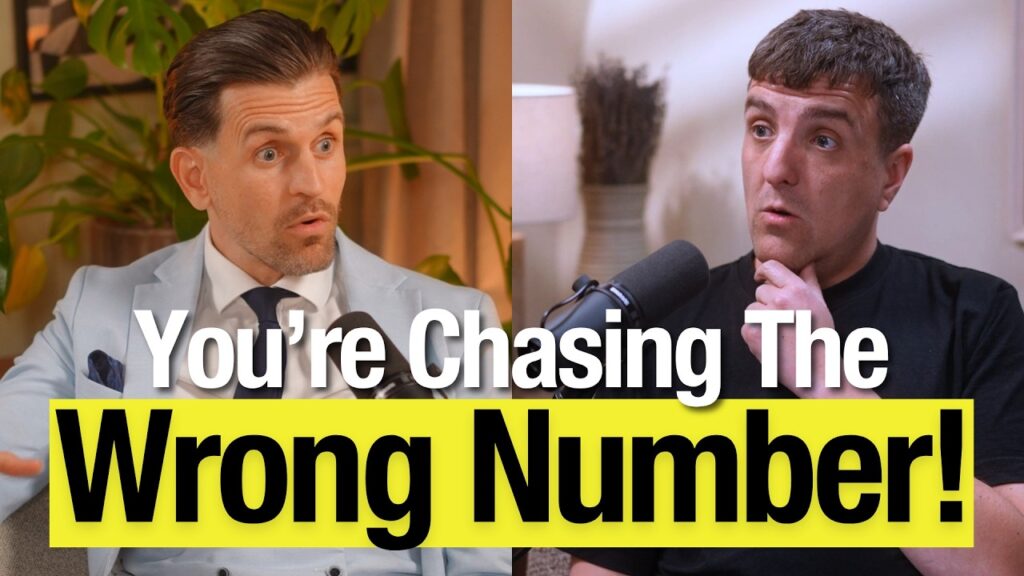

This week’s guest is Dan Sherrard-Smith, founder and CEO of MotherTree, who joins the podcast to explain something most of us have never checked: the carbon footprint sitting inside our current account, savings account and pension, and what it takes to bring it down.
Dan was part of the founding team behind Look After My Bills, which secured what was then the biggest investment ever made on Dragon’s Den and switched over 800,000 UK households to better energy deals.
After becoming a father, he left that business to explore how ordinary financial decisions, the bank you use, the pension you’re auto-enrolled into, quietly drive a huge share of a household’s carbon output.
That research became MotherTree, a money carbon calculator and switching service that shows people the carbon impact of their current account, savings and pension, then helps them move to greener alternatives.
In this episode Dan and host Sammie walk through why the average UK consumer’s bank and pension carry roughly the same carbon footprint as everything else they do in a year combined.
They also cover how MotherTree’s bank league table exposes the gap between the UK’s big five banks and their greener competitors, what ESG labels actually mean (and where greenwashing creeps in), and whether green funds really do cost more to invest in.
It’s a practical, occasionally eye-opening conversation about where your money sleeps at night, and what it’s doing while it’s there.
———
Gains App is LIVE!
An AI-powered budgeting and cashback app designed to help you make more of your money.
Download here: https://gainsapp.onelink.me/8IhT/oiaimr1z
———
Get a FREE FRACTIONAL SHARE worth up £100 when you deposit £1 with Trading 212
https://www.trading212.com/join/MGP
If you don’t receive the free fractional share, head to the menu and put the word ‘MGP’ into the promo code section.
(Capital at risk when you invest)
Key takeaways
- The average UK consumer’s bank and pension carry a carbon footprint of around 10 tonnes a year at the time of recording, roughly the same as every other lifestyle choice combined.
- The UK’s big five banks (Barclays, HSBC, Santander, Lloyds and NatWest, including affiliated brands) put a combined £114 billion into fossil fuel expansion in 2021, according to Dan.
- ESG labels are inconsistent and can include companies like BP if they score well on governance, even while failing badly on environmental impact, something Dan calls greenwashing.
- Green pension funds outperformed the default pension funds of the same major providers by 15% over five years, based on MotherTree’s own research at the time of recording.
- Sites like TrustNet let anyone check the top holdings of a fund for free, a useful first step before deciding whether it matches your values.
Timestamps
- [1:22] Dan Sherrard-Smith’s Journey From Look After My Bills to MotherTree
- [4:10] The Carbon Footprint of Your Bank and Pension Explained
- [9:20] Inside MotherTree’s Bank League Table: Barclays vs Green Banks
- [11:12] What ESG Really Means and Why Greenwashing Happens
- [14:29] Why Your Bank’s Financed Emissions Beat Your Carbon Footprint
- [19:41] How MotherTree’s Measure, Prioritise, Research, Switch Method Works
- [22:10] The Biggest Green Wins: Banking, Pensions and Household Setup
- [27:13] Do Green ESG Funds Really Cost More Than Standard Funds
- [31:36] How Dan Invests His Own Money in Green Funds and Startups
- [34:25] Tips for Beginners Starting Green Investing
From Look After My Bills to MotherTree
Dan’s route into green finance started with a very ordinary trigger: becoming a father.
Having helped build Look After My Bills into a business that saved the British public over £127 million by switching households to better energy deals, he wanted to be able to tell his son one day that he’d done everything he could once he understood the scale of the climate crisis.
He left a comfortable job, started running focus groups, and eventually built the “climate challenge”, 30 days of sustainability challenges run with small groups of people.
The moment that changed everything, Dan says, was when the groups looked at where their banks and pensions were actually invested.
He checked his own pension and found 2% going to BP and Shell, 1% to tobacco, and 1% to weapons, investments he’d never have chosen deliberately.
That gap between what people believe their money is doing and what it’s actually funding became MotherTree: a free money carbon calculator that shows the carbon impact of your current account, savings account and pension in one place.
That first climate challenge ran over 30 days with groups of eight people at a time, testing everything from going vegan for the day to cutting out single-use plastic, before the group turned to where their own banks and pensions actually invested.
The carbon footprint hiding in your bank and pension
The headline figure Dan gives is stark: for the average UK consumer, the carbon footprint of their bank and pension is roughly 10 tonnes a year, about the same as every other lifestyle choice, travel, food, energy use, put together at the time of recording.
Sammie’s own MotherTree result came out at 12.5 tonnes, which Dan compared to flying Rome and back 63 times in a year.
That’s because banks don’t just hold deposits, they lend and invest them.
Holding £10,000 in a current account with a bank that finances fossil fuel expansion can carry a footprint of over two tonnes a year on its own, simply because of how that bank chooses to deploy the money.
It’s a similar principle to compounding, small amounts sitting somewhere for a long time can add up to a much bigger number than expected, which is exactly the kind of maths our compound interest calculator is built to make visible, just applied to carbon instead of returns.
Dan links that urgency to what he’s watching unfold in the news, worsening wildfires and flash floods around the world, which he describes as a slow capitulation of the climate that’s easy to miss day to day but is clearly building.
Inside MotherTree's bank league table
MotherTree built a free public league table ranking UK banks by the carbon footprint of holding money with them, updated each year when banks release year-end reports.
According to Dan, the UK’s big five banking groups, Barclays, HSBC, Santander, Lloyds and NatWest, including affiliated brands like First Direct and Royal Bank of Scotland, put a combined £114 billion into fossil fuel expansion in 2021.
The encouraging part, Dan says, is that switching doesn’t have to mean a worse deal. MotherTree’s tracking found interest rates from greener banks have been competitive with, and sometimes better than, heavier carbon-investing banks.
Before switching anything, it’s worth knowing your actual monthly numbers first, and our guide to auditing your spending is a useful starting point for seeing where your money currently sits before you decide where to move it.
Building the table wasn’t quick. Dan says MotherTree spent the best part of six months pulling the data together before deciding to give it away free.
Once someone acts on the numbers, the average client saves around £3,000 a year across banking, pensions and bills through MotherTree’s switching service.
What ESG actually means, and where it breaks down
ESG stands for environmental, social and governance, a framework for scoring how companies and funds perform across those three areas. The problem, Dan explains, is how broad and unevenly weighted it can be.
Some funds have included oil majors like BP because they score well on governance, even while failing badly on the environmental side of the equation. That inconsistency is what critics call greenwashing: a label applied because it’s fashionable, without the substance behind it.
Dan also made a wider point about scale: for almost every company MotherTree has examined, the carbon emissions “financed” by the cash sitting in its bank accounts is bigger than the emissions from its entire supply chain.
Google’s parent company Alphabet, he said, holds cash whose financed emissions are roughly double the carbon footprint of Google’s entire supply chain, purely because of which banks hold that cash.
Sammie argued environmental performance probably deserves its own separate score rather than being blended with social and governance factors, since a company can look strong on governance while still failing badly on the environment.
Dan agreed that untangling the two is exactly the gap MotherTree is trying to close.
Do green funds really cost more?
A common complaint about ESG or “green” fund options is that they’re noticeably more expensive, sometimes close to double the annual fee of a standard tracker.
Dan’s honest answer is that he isn’t fully convinced the higher cost is justified by extra active management. He suspects some of it is a “green premium”, pricing built in simply because ethical options are in demand.
More importantly, MotherTree’s own research found the performance gap runs the other way.
When they checked verified ESG pension funds from major providers like Scottish Widows and Aviva against those same providers’ default pension funds, the green funds outperformed the defaults by 15% over five years, at the time of recording.
If that kind of comparison is new territory, our guide to investing for beginners in the UK is a solid place to get your bearings before choosing between fund options.
Dan is candid that his own money follows the same scrutiny: he questions his green fund manager monthly on returns and impact, and vets the founders personally before backing any early-stage startup.
MotherTree also vets the financial advisers it refers clients to, checking that fees reflect genuine active management rather than a green markup.
How to start investing green
For anyone starting out, Dan’s advice is refreshingly simple: look for a platform genuinely built around green impact funds rather than a mainstream broker where sustainable options are buried among everything else. Beyond that, check what a fund actually holds.
Free tools like TrustNet show a fund’s top ten holdings, which won’t give the full picture but is enough to spot an obvious mismatch between a fund’s name and its contents.
That list only covers around 10 to 15% of a fund’s total picture, Dan cautions.
Dan also flagged the value of simply asking your fund manager for the underlying data rather than accepting a label at face value.
Before making any changes to where your money sits, it’s worth getting a clearer read on your own financial personality and priorities first, and our free money personality quiz is a quick way to do that.
This transcript is auto-generated and lightly edited for readability, it may contain errors.
[0:00] Sammie Ellard-King: Hello and welcome to another episode of the Money Gains podcast. This is your host, Sammie Ellard-King, and today my guest is Dan Sherrard-Smith, founder of MotherTree. Dan was part of the original team that went on to Dragon’s Den with Look After My Bills, which was the highest investment ever made in the den, which is absolutely incredible. But now he’s helping people go green with both their banks and their finances, but equally as well, their household and looking to help people promote green energy. Now we chat all about the current climate crisis and how people can really make a difference with where they both hold their money in terms of the banks, but also invest it too. It’s a super interesting conversation. I’m sure you’re gonna love it. But for now, if you are listening on YouTube, please do whack that subscribe button. And if you are listening on Spotify or Apple, hit that follow button. Do it right now so you get next week’s episode. It really does help the show. But for now, let’s get started on the Money Gains Podcast. So, Dan, welcome to the Money Gains Podcast, man. How you been?
[1:22] Dan Sherrard-Smith: Really well, thank you. I’m very, very excited to be here. Thanks for having me, Sammie. No, my pleasure. We were introed by a mutual friend, and uh he it told me all about what you’re up to with MotherTree, and I was like, amazing. We haven’t had you know a green investing chat before on the podcast. So I’m really interested to dive into the business, but equally as well the topic itself. So if you wouldn’t mind giving the listeners a little 4-1-1 into yourself. Yeah, sure. So uh a bit about me. So I was on the founding team of Look After My Bills, which uh had the best ever deal on Dragon’s Den and saved the British public £127 million over three years through switching over 800,000 UK households to better energy deals. Uh, through that, through that process, well, towards the end of my time at Look After My Bills, my wife became pregnant. And I know at some point we’ve now got a two-year-old, Theodore. At some point, he’s gonna ask me what did I do when I realised the extent of the climate crisis. And I want to be able to look him in the eye and said I did all I all I could with the skills that I had. So I left or I’d become a very comfortable job at Look After My Bills, and I started just talking to people about their own experience of the climate crisis and how they were feeling and what they were going through. And then started running focus groups, and then on a walk in the forest with my wife, she came up with the idea of the climate challenge, which over 30 days was 30 challenges to live more sustainably, and we ran it with groups of eight people at a time. You know, really for me it was a chance to just run focus groups and see how people reacted to different challenges. We went vegan for the day, we got rid of single-use plastic, we did all sorts of things. We we looked at our carbon footprint. And the thing that that got people really shocked in taking action was when we looked at where our banks are investing and where our pensions are going. And, you know, me included, the first climate challenge, those actions were new for me. And I realised 2% of my pension was going to BP and Shell, 1% to tobacco, 1% to weapons, just things that I’d never choose to invest in normally. And yet every month some of my hard-earned cash was going there. And that was really the start of MotherTree. So last year, uh, having realised when we looked at our carbon footprints, there’s nothing that accounts for what our money’s doing in terms of our current accounts, savings accounts, pensions, the like. Uh, and also realising there’s just this big gap in awareness in terms of what is actually happening with those investments. So we launched MotherTree last year. It’s a money carbon calculator, and it shows you the carbon impact of your pension, your current account, your savings account. Uh, so that’s uh that’s kind of MotherTree, MotherTree at the start. We’ve we’ve evolved it quite a lot since then, but I’m sure I’m sure we’ll get into that through the chat.
[4:10] Sammie Ellard-King: I just did it. I just signed up, went through, did my carbon emissions. So I’m 12 and a half tons, which is just wild. Is that a year that you do that over? Yeah, it’s a year. And the kind of crazy thing for the for the for the average UK consumer, their the carbon footprint of their bank and their pension is about 10 tonnes. And when you look at all their other actions put together, it’s about 10 tonnes. So just by focusing on our bank and pension, we can have a massive impact in terms of our carbon output. You said to me on there, it’s like chart flying to Rome 63 times there and back. And that just puts it into perspective for you, doesn’t it?
[4:58] Dan Sherrard-Smith: Yeah, it exactly. That’s a that’s a four-hour round trip. Just one of those, one of those flights. And 63 of them as well. Like it it’s one of these things. I think where recently, obviously, you know, we’ve been getting wildfires kicking off all over the globe, flash floods are getting worse all across the world, and we’re just slowly seeing what feels to be, you know, it’s built up that way as a you know slow capitulation of the current climate. Um it feels like we should be doing a lot more as a society, and you know, we’re we’re all trying to do our bit, but you know, what some of the sort of things that we can take action on that perhaps isn’t related to finance that we can do in our households that you’re seeing a big effect on.
[5:50] Dan Sherrard-Smith: Yeah, the the big stuff in the household is you know, first up, make sure your energy is coming from sources that that are green. That sends a that sends a signal to the generation that to the generators that are creating our energy that uh you know we want to shift out of oil and gas and fossil fuels. And actually the prices for that energy sometimes are are the market leading rate. So sometimes you don’t even lose out by going for the greener option on that. And then uh a couple of others, making sure your house is is fully insulated in the right way really helps to save bills. So, you know, financially it just makes sense, but also it reduces energy use. Uh, and then the third is you know, if you’re lucky enough to have solar panels or or you know, if you’re in a block of flats collectively to get solar panels, and that can also help to reduce the amount of energy you need to draw from the grid. Uh and also in the long run saves you money because you can you pay that off over sort of a 10 to 15 year span typically, and then after that it’s all it’s all upside in terms of savings. So those would be my three main tips. The other is to just make sure you’ve you’ve had a look at what’s called your EPC, your energy performance certificate, which the government provides as a website on the government that does that, and that shows you the setup of your home in terms of where are the gains for energy um efficiency that you can make for specific to your home.
[7:19] Sammie Ellard-King: That’s so interesting. We we made a conscious decision when we looked for houses. We we had to do help to buy um to get a bit of government support to be able to purchase. But one of the big things for us was was looking at where our energy came from. And luckily, our uh estate that we live on is powered by a solar panel farm, which I can see from the window. Um and so we were really very lucky when this energy crisis kicked off. Our bills remained at a very, very respectable level. In fact, they barely even rose. And we we were so, so lucky with that because what people went through when it spiked last year was just insane. You know, my stepmother’s bills went from £56 a month, she was paying £260 quid a month by the end of it all. Um, so it just goes to show what these you know these green energy solutions can do, they’re sustainable and they’re not they’re not as subject to to major prior price fluctuations like we’ve seen over the past sort of 18 months. Um when it comes to the finances, then obviously MotherTree, you know, it’s finance focused. I had a look at the bank league table, that’s quite eye-opening, isn’t it?
[9:20] Dan Sherrard-Smith: Yeah, we we spent a lot of time, a lot of resource putting that table together, and then we decided to give it away free because we think that’s such a fundamental thing people uh can think about when moving banks. So we spent the best part of probably six months in total putting that together, and each time the banks release their year-end reports around March, April time, we’ve committed to updating that league table. But what it gives consumers is is real clarity in terms of if you had £10,000 in a current account with Barclays, what does that mean in terms of carbon output per year? And actually, it’s over two tons just by holding £10,000 in the Barclays current account. And that’s because of the way Barclays invest. So Barclays are heavily investing in fossil fuels. Uh, and the actually the UK’s big five banks, that’s Barclays, HSBC, Santander, Lloyds, and NatWest, and they’re affiliated brands. So, you know, First Direct for HSBC and uh Royal Bank of Scotland for NatWest. Those five banks put £114 billion into fossil fuel expansion in 2021. Uh and so it has a yeah, it has a fundamental difference to our society, and so making sure our money is very low on carbon is a really big signal we can send. And so moving from Barclays to a greener bank, and that’s why we publish that table, it’s a really positive move. Here for me is a really is a really interesting news, really great news. Actually, the interest rates, when we looked at them, and we we continually update these the interest rates for some of those green banks outperforming the the sort of heavy carbon investing bank. So it kind of pays to go green.
[11:12] Sammie Ellard-King: It pays to go green. I love that. That’s that should be a slogan that we should all adopt. Yeah, uh, I’ll uh keep that one in mind for sure. It should be our tagline. Yeah, it’s not bad. Here we go, you know, doing marketing calls as well. That’s how we do it. Um, yeah, well, I see this word banding and banding around a lot, and understanding actually what it means, especially when it comes to investing, but even so, you know, you see the company saying our ESG score uh or our ESG rating. Um, what does that actually mean? Uh it’s a lot of there’s a lot of greenwashing going on here in that sense. So ESG environmental social governance is a framework for companies and and and investment funds really to think about how companies are performing along those three lines. So are they doing the right thing for the environment? Are they doing the right thing socially? Uh, and are they doing the right thing in terms of governance? It’s a very, very broad net. And what we’ve seen for funds, some funds have included BP because BP are good at governance. Uh, but you know, we our stance is well, they fundamentally fail us on the environmental side of that equation. Should they so they shouldn’t be included in ESG, and that’s greenwashing. There’s a lot of debate going on here, there’s a lot of um stories about fund managers slapping an ESG label on something just because it’s become the sort of hottest new trend. For me, it’s really important to get absolute clarity and confidence on what’s actually going on, despite the label. And that’s one of the things MotherTree does. Uh, we really go very deep into terms of what funds uh actually are doing. And so, can we, you know, beyond the label, can we say with confidence that this fund is genuinely uh good for the environment, good socially, and also good uh in terms of its governance. Uh so we do a lot of work to confirm that. And it’s kind of trying to take that label off, right? See what’s in see what’s in the box.
[13:27] Sammie Ellard-King: They now like uh need to declare this as part of their earnings reports. And for me, what’s apparent here is something you’ve just you know very clearly highlighted, um, and something that’s sparked me. You know, I’ve seen other companies make their way into these funds, and I’m just like, how is that even possible? Same with the BP situation. For me, what I feel like this should be done is there should be an environmental score and a social governance, because those two for me are much more uh connected rather than the environmental score. And by separating them, what you’re allowing to yourself to do is then really study what that business is actually doing towards the the climate. Um, because I just find it’s so skew whiffed, it’s so broad, and uh, we’re living in this society where do we really trust the guys that are scoring it? I certainly don’t. So, you know, I think there has to be a lot more clarity on this issue for me. What would you say to that?
[14:29] Dan Sherrard-Smith: I I could I absolutely agree, could not agree more. So this is an area that we’ve spent a lot of time and resource exploring. Uh, it’s actually where we’re evolving the company is to give consumers and companies real clarity on what’s actually going on with their investments in terms of their banks, in terms of their pensions. So just trying to get beyond the ESG wrapper and give them clarity on what’s going on in terms of the carbon emissions for those choices, what’s going on in terms of the return profiles for those choices, and how do you look at those trade-offs and make an informed decision? Which most companies don’t get, but then also doing that work on their behalf, right? Because I get founders are busy, they want to focus on their mission. Uh so we want to take away the pain of that side. And just to just to bring that to life a little bit, every company we’ve looked at, big or small, almost always their financed emissions is bigger than the emissions from their entire supply chain. Excuse me. Um and to bring that to life, so Google and their parent company Alphabet, they hold a whole bunch of cash for acquisitions, for paying employees, for tax purposes. That cash is held with just a couple of banks, and based on how those banks invest, that cash is a carbon footprint. And that carbon footprint is two times bigger than Google’s carbon footprint for their entire supply chain. So, you know, just by making sure there’s clarity in terms of what that money’s doing and what are the options for a business in terms of where they can move it, to make sure they get a decent savings rate, a decent return, or having the available cash to pay employees and to take up opportunities of the market, but also making sure it’s not releasing a whole bunch of carbon through where it’s invested, we think is a really important part of uh of this game.
[16:20] Sammie Ellard-King: Hey guys, Sammie here. Just a quick one. If you wouldn’t mind heading over to upthegains.co.uk, hitting the subscribe button in the top right hand corner, and entering your email into the box. For your troubles, you will receive a free net worth calculator worth £25. Now, this net worth calculator, if you enter your assets and your liabilities, will tell you exactly how much you are worth today. Now, what you can also do is set yourself some financial goals and track your net worth along the way using this tool. It’s totally free. So head on over to upthegains.co.uk, hit the subscribe button, pop your email in, and you’ll be sent straight to your inbox in a matter of minutes. Now, back to the podcast. And even if you take, say, the top five companies, you know, Apple, Microsoft, etc., the net free cash flow between those businesses is in the hundreds of billions of pounds. And so if it was sitting within, you know, an ES uh you know, a climate focused bank or fund essentially where that bank’s investing it wisely, the difference that would make is enormous.
[17:27] Dan Sherrard-Smith: Yeah, it’s colossal. It’s colossal. Yeah, that’s incredible. Um so let’s get into the investing side of stuff then. So if someone is super interested in this, you know, a lot, you know, and I think everybody should be interested in this in some way, shape, or form. Do your bit. I, you know, I will happily hang my hat on that as well. What um what’s something that they could look out for and and go for when they’re looking to make these types of investments and into funds? Yeah, I think the the first thing is to look at where that fund is invested. So it’s kind of like pulling the thread, but there are sites out there like TrustNet who will show you at the very least the top 10 companies within that fund. And that’s just a good place to start because you get a really good sense, you know, what are the companies that make up this this specific profile? Is it is it the likes of you know Apple and Facebook and Amazon? Is it Rio Tinto and BP and Shell? You know, you can start to get an idea of what’s going on. It doesn’t give you the full picture, it gives you about 10 to 15% of that fund, but it’s a start. The other thing is uh, you know, if you have a fund manager or someone who manages this on your behalf, ask them, actively ask them and make sure they send you over email ideally the information so that you can really interrogate it and understand exactly you know, are they doing what they say they’re doing? And that’s that’s a lot of the work we do at MotherTree, is we go into real depth with individual investors, with businesses, and with their fund managers to get clarity on exactly what’s going on and also understand then what are the what are the options, what are the alternatives, both for both for funds and investment, but also for things like banking. It’s a very similar uh kind of approach. But you know, we get people are busy, we get this is complex, so we want to be able to almost almost be that referee between you and your fund manager to say, yes, the fund manager is doing what they say they’re doing. And if you haven’t got a fund manager, then then be there be that guy, be that person who can say, okay, we’ve done the research on these funds, here’s what’s going on, and here are the options as a result.
[19:41] Sammie Ellard-King: So if I you know go on to MotherTree, I’ve just done my uh my carbon um footprint based on my banks and my savings, it then offers me the option to to book a call. What’s that call for and and how are you holding your their hands past that process? Yeah, so that that’s what we call our green living service, which is kind of what I’ve explained in terms of being the that that referee, as it were, uh slash the slash the guides. But uh what we do there is we take time to understand you and your values, your current situation and your budget across finance, but also things like bills and home improvement. And then we work with you to unlock uh savings, both in terms of carbon and monetary savings, and we perform a lot of the paperwork, a lot of the switch on your behalf, which is a lot of what we did at scale at Look After My Bills. Uh, and we run what’s called an MPRESS method. Um big fan of the acronyms for this stuff. So M is for measure. We take time to measure where you are, and a bit like a doctor, you know, I wouldn’t want to walk into a doctor’s surgery and then just prescribe me something. Like I want them to understand what’s wrong with me first. Uh so we take time to measure where you are, uh, and that allows us to then prioritize the P of press, prioritize the really big impact actions that you can take to make a difference, both in terms of monetary savings, but also in terms of carbon and also in terms of your values. We have lots of clients who tell us actually they want to make sure they’re promoting biodiversity. We have clients who say they want to reduce the gender pay gap. So we go into depth in terms of the values of that customer, and that’s the R of press. So the R is research, we research based on the values, based on the carbon, based on those savings, we do the research. Typically takes about a month. So a lot of depth that goes into that. Then evaluate, we sit down with you, we work through those results together. You can you absolutely can challenge, and we work, we want you to challenge us on those results. We want you to get the clarity, that confidence uh that this is the right move. And then the two S’s of press switch and save. So once you’re confident, we switch you, we do the legwork, we do the paperwork, and that unlocks the uh the savings. And typically, uh the average saving for clients is £3,000 a year. So you know it does really stack up. Pays the go green, man. Yeah, exactly. That has to be our tackling on it, loves it.
[22:10] Sammie Ellard-King: I love that though. So you’re holding someone’s hand throughout the process. I imagine within there, outside of the standard gas and electric, there’s probably loads of little ones that they don’t realise. What are some of the ones that you see there? So the really the really big things we see uh are around banking and pensions. You know, there’s a lot of awareness here around uh what people eat and how people travel. There’s very little awareness about what’s actually going on with their money. So the big, the big driver we see for I’d say like six. 70% of our clients is around making sure their bank, their pension, the financial elements are set up in a way that works with their values without compromising on security. And you know, that also includes things like mortgages, insurance, uh, those elements. The other thing we then see, the other really big impact item is the house setup. So having the installation uh done in the right order that fits the budget, exploring how those solar panels can help in exactly like the story that you said earlier, I think is absolutely brilliant. That you have the energy security already built into your property. Um, and then the final one is around bills and just optimizing, these are kind of the quicker wins around energy, but also around things like broadband, just optimizing what you need uh with your budget, but also making sure that aligns to your values.
[23:38] Sammie Ellard-King: That’s incredible. So it’s not just you know gas and electric, this goes way wider, and you really kind of paint a full financial picture of that person and that household and give them actionable steps and then really hold their hand throughout the entire switch process. So it’s awesome, man. What a great idea! Like, hats off to you. I love it. Thank you. I really appreciate that. Well, um what what what drives you? What’s the goal with this? Like, how have you got like a I’m gonna help 10 million people? What is it that’s gonna drive you? What drives me? So I um I mean, I mentioned earlier I’ve got a two-year-old son, so I start to see the world sort of through his eyes a bit, and what’s the world gonna be like when he’s my age, when he’s in his in his mid-30s, hopefully not starting to go grey like I am. Uh Welcome to the world, man. Just starting to realise uh, you know, already we’re on that path. You said at the start of this call, you know, we’ve seen forest fires and flash floods, and these things are only getting more intense. And thunder thinking, well, what’s that gonna be like in 30 years? And what are the things that I can do to make a tangible difference on that front? So that that’s kind of my internal motivation, I guess. And and the other one is you know, I grew up in Swansea in South Wales, and very near some beautiful beaches on the Gower. I like to say they’re they’re the best beaches in the world. My wife says they’re the best beaches in my world because the sea’s far too cold. Uh, but just an absolutely stunning place. And I remember really clearly sitting in a geography lesson at 12 years old and hearing for the first time about climate change and realising within my lifetime, without dramatic change, we’ll lose this beautiful part of the planet. That was the kind of first wake-up call for me, and I didn’t know what to do about it then, but that’s now evolved into Mother Tree. So those are my kind of like, I guess, internal motivations. And then externally, what that means, well, our goal for Mother Tree is to shift a billion pounds into the green economy by 2025. And we think by doing that, we can really start to drive money to the places that will sustain us for the long term, but are also genuinely sustaining for the planet. An example being renewable energy, but with an infrastructure and a storage system that supports that. We can get the money moving away from oil and gas and into those areas, then we can start to build that society. And for me, long term, it’s about making it really easy, really effortless for consumers, for businesses to go green and to save money. And if we can do that, then we start to change the system because we’ll see you know hundreds of thousands and then millions of people choosing the sustainable choice because it’s cheaper, not necessarily because it’s right for the planet, but actually it’s just an amazing byproduct that this is a this is also really great for the planet. So that’s the kind of long term. And I I guess my my long-term vision here is you know, when my son’s in his 30s, we live on a planet that’s full of life, that’s full of the amazing wildlife that I took for granted in my childhood, but is now at risk of extinction, and some of that we’ve already lost. But also, you know, clean rivers, clean air in our cities, and uh he can he and his generation can thrive. That it’s not just this kind of 1% minority who are who are locked away, but we’ve built a world where uh where billions of people can genuinely thrive.
[27:13] Sammie Ellard-King: I love that. What a fantastic goal to have. You know, if you can shift, even if you don’t hit that billion, but you make a big dent, then that’s a big difference that you’re making. Um one of the things that I annoys me with the way some of these companies are set up at the moment. I’m not gonna name names because you know, I I uh outside of this topic, I still think they’re fantastic companies and helping people get investing. But a lot of their ESG funds or their green option, they often call it as well, is often a lot more expensive and sometimes double the cost per year to invest in. And I I I wondered if you knew why. Uh what I often hear is that it’s actively managed, which means uh, and I’m sure you I’m sure you know this, uh, but actively managed means that they’re actively talking to the to the fund managers and often directly, sometimes indirectly to the companies to make sure that they’re hitting the targets that that they’ve set out to do. And if they’re not, they’re taking action on it. Whereas a sort of passive fund, it’s more of a tracker, there’s no additional management required. That that’s what I often hear. Um I’m not I’m not convinced that’s the reality of it. I think I suspect there’s this kind of premium going on green because it’s because it’s on trend, because people want it, and therefore there’s a bit of kind of margin being built in for certain companies. Because what we’ve seen when we invested uh ESG funds, when we investigated ESG funds with the likes of Scottish widows and Aviva and the really big pension providers, and we verified they were genuinely ESGs. So they, you know, there was no fossil fuel in those funds, there was no tobacco in those funds, etc. We looked at their performance over five years for their ESG for those ESG funds, and then we looked at the performance of the default pension fund for those same providers. The default pension fund being, you know, if you’re an employee and you have a pension, you haven’t looked at where that’s going, it’s likely to be the default. Well, the green funds perform 15% better over those five years. Wow. So this kind of green premium thing that definitely comes up understandably, I think is I hope, increasingly a myth that by doing the right thing for the planet, we’re also doing the right thing for our pocket.
[29:38] Sammie Ellard-King: Yeah, because I I find it really hard because I’m saying to people, keep your fees low, keep your low costs down, find providers with low costs, you know, that extra 1% over 25 over 25 years is 25% of your money gone. And like that makes sense. So then when you see, oh, okay, 1% for the you know standard option results look pretty good, average 10% a year, fantastic. And then 1.8% green option and only 1% more uh higher returns on average over the past five years. I know you’ve said something different there, but really that’s how kind of how it’s laid out to you in a lot of these things. You just think, well, what’s the point then? And that’s and that’s one click and that’s gone out your head. And I just think there needs to be a little bit more of a conversation about that, especially in the investing world. It’s just a dark thing, I think.
[30:32] Dan Sherrard-Smith: I couldn’t agree more, and and we work with a few financial advisors who really lift the lid on that to make sure uh you know what what’s kind of going on in terms of the investment and the fees are really clear for the consumer. So we vet a lot of we vet a lot of financial advisors to make sure that the you know the ones we’re talking to our customers about are really are really adding value and and not overcharging on those fees, as you mentioned. Because it could be quite easy if you turn around to me and said, look, you’re paying 0.3% because we are spending, you know, across 10 members of staff actively spending 250 hours a month making sure these are legit investments and they’re helping the planet, that would probably change my entire thinking. But it’s just a number that they put there. And so yeah, I think there’s a lot to be done. Yeah, absolutely. So, what about your own investments? How you set up.
[31:36] Dan Sherrard-Smith: Yeah, great question. I am uh I’ve got quite a few. So I um invested through a fund manager, through a green fund manager who’s doing the active investment piece. And show, you know, I kind of pester them every month saying what’s you know, what’s going on, what’s going on in terms of the returns, what’s going on in terms of the impact, like I want to see it. Uh and we’ve also examined them as part of MotherTree to make sure they are, you know, they’re legit, they’re doing what they say they’re doing. Uh, so I’m invested through them. I’m invested in a bunch of different funds through Hargreaves Lansdown. And again, that’s a kind of that’s a it’s more of a hobby, really, but just tracking a bunch of funds to see how they’re actually performing, but with my own money. So I’ve skin in the game uh and making sure they’re genuinely ESG, so tracking the companies that they’re in. And then I’m invested in a few small uh startups that I think have real potential to change the world for good. Uh who are all of those ones I’ve met the founder personally, and I kind of take time to really get to know that founder before I’ve invested. But um there’s those pieces, and then I guess you know, I got a uh a house in Bristol, which I guess is part of the investment portfolio. Uh yeah, that’s probably uh my and then and then you know most of my money is tied up with Mother Tree now.
[33:06] Sammie Ellard-King: Yeah, yeah, no, I I you know I would love to have a lot more money in my investments, but uh, you know, getting a business off the ground, especially in personal finance, as you well know, is not cheap and um you know it requires a a lot of a lot of capital investment. But hopefully, you know, we make a difference and and pay back. It’s about the reason I did this business is it fills up my heart teaching people rather, you know, I was in hospitality for 15 years and sending them home drunk in an Uber versus you know changing their life financially is a is a very different feeling. Um so yeah, no, I I I know I know exactly how you feel on that one. Um, so that’s cool. So funds and then startups, so you’re slightly diversified as well, really looking at it. Well, you are very well diversified with funds and startups. That’s that’s awesome. We always like to know this. My last question really is going to be around um, let’s say, you know, I’m a beginner here in personal finance, and this conversation’s really you know hit hit me. Um, I want to go green. Um, I’ve been thinking about starting investing, and I’m looking to open an account and get going. What’s some of the like little key things that I need to look for when I’m going into this?
[34:25] Dan Sherrard-Smith: Yeah, I I think you know, look for a platform that’s genuinely uh able to offer you green impact funds. So Hargreaves Lansdown takes a lot of digging because they’ll just just they’ll just give you access to everything. But they’re um trying to remember the name of the platform. There’s one out there, and if you have post show notes, I’ll share, I’ll share the link when I when I remember it so you can share it with your cool. We’ll drop the link in the in the description below. Uh which which only gives you access to green funds. So I think as someone just starting out in this game, that that could be a kind of nice like, yeah, I know these are the ring fence ones that are doing good in good in the world. Um the other thing is just to make sure when you are investing, you you’re getting that clarity in terms of what you’re investing in, both in terms of fees that you’ve mentioned, but also in terms of what’s going on within that fund. And whether that’s just putting that the fund name that you’re thinking of investing in into Google or ideally Ecosia, which plants are true every time you search, uh, you know, and just getting clarity on what’s going on with that fund. And you can see the top 10 through something like TrustNet, the top 10 companies that it’s invested in, that at least gives you a steer in terms of where where that money’s gonna go. So those would be my kind of my kind of tips, and I guess one shameless plug, but uh obviously MotherTree does a lot of that research. So if you’re feeling like actually just want someone to research this for me, then you know that that’s part of the service that that we do. But finding some way to get clarity on those investments before taking the jump is is the key thing.
[36:07] Sammie Ellard-King: That’s wicked, Dan. I’ve absolutely loved this. This has been so eye-opening for me. I’ve learned a lot, and I think it’s just such an important topic as you know the world is changing so rapidly now. Um, so yeah, I really appreciate your time. Thank you so much. Um, where why obviously MotherTree is a good place to find you, but any anywhere else people can come have a chat? Yeah, definitely. So uh, you know, feel free to email me, dan at my mothertree.com, uh, or on LinkedIn. I’m pretty sure I’m the only Dan Sherrard-Smith. Uh, do feel free to reach out and uh more than happy to have a chat. We love a double barreled name, mate. It’s the same here. So uh yeah. Thanks again, Dan. Appreciate it. Sammie, great to be here. Thank you so much.
Frequently asked questions
Dan Sherrard-Smith is the founder and CEO of MotherTree. He was previously part of the founding team behind Look After My Bills, which secured a record investment on Dragon’s Den before he left to build a green money carbon calculator and switching service.
MotherTree is a free tool that calculates the carbon footprint of your current account, savings account and pension, then offers a guided switching service to move your banking, investments and household bills to greener alternatives.
Dan cited the average UK consumer’s bank and pension footprint at around 10 tonnes a year at the time of recording, roughly equal to every other lifestyle choice combined, driven by how banks invest and lend the money they hold.
Some do carry higher fees, often justified as active management costs.
MotherTree’s own research at the time of recording found verified green pension funds from major providers outperformed those providers’ default funds by 15% over five years, suggesting the extra cost isn’t always reflected in worse returns.
Free resources like MotherTree’s bank league table and TrustNet’s fund holdings data are useful starting points. Dan also recommends asking your fund manager directly for clarity on what a fund actually holds, rather than relying on an ESG label alone. This episode is for educational purposes only and isn’t personal financial advice. When you invest, your capital is at risk. Past performance is not a guarantee of future results. This page contains affiliate links; if you click one and make a purchase we may earn a small commission at no extra cost to you. Figures on bank fossil fuel financing, carbon footprints and fund performance were accurate at the time of recording and may have changed since.
———