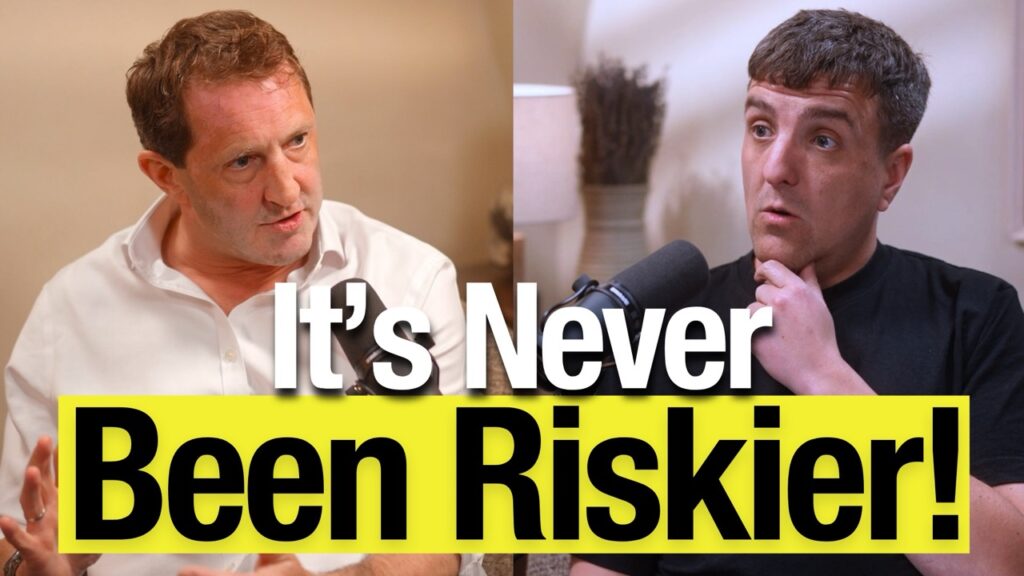

Ian Dempsey spent 18 years inside the financial advice industry before going fully independent, and he’s blunt about why so many people don’t trust advisers: too many rooms full of grey suits, egos, and advice that’s basic underneath the charm. In this episode of the Money Gains Podcast he explains what’s actually broken in the industry, what the “grey suit brigade” means, and how to spot an adviser who’s genuinely on your side rather than just good in front of you.
Ian is an independent financial adviser (IFA) who got into the industry back in 2006, worked his way through subprime lending, mortgages, high street banks and the big restricted networks, and eventually went completely independent and self-employed a couple of years ago. He’s also built a huge following on LinkedIn by doing the opposite of what a lot of his peers do: giving financial information away for free.
That combination makes him well placed to talk about why the profession has such a mixed reputation. It isn’t that financial advice itself is a bad idea. It’s the culture around a lot of it: rigid sales targets, one-size-fits-all advice, and advisers who talk at clients rather than with them.
This is a different conversation to “do you need a financial adviser at all” (we cover that question in our episode with Pete Matthew). Ian’s angle here is what’s actually gone wrong inside the industry, and what changes when you find someone doing it properly.
———
Gains App is LIVE!
An AI-powered budgeting and cashback app designed to help you make more of your money.
Download here: https://gainsapp.onelink.me/8IhT/oiaimr1z
———
Get a FREE FRACTIONAL SHARE worth up £100 when you deposit £1 with Trading 212
https://www.trading212.com/join/MGP
If you don’t receive the free fractional share, head to the menu and put the word ‘MGP’ into the promo code section.
(Capital at risk when you invest)
Key takeaways
- The average financial adviser in the UK is around 58 years old, and Ian argues the industry’s culture, not the job itself, is what puts people off.
- Independent advisers can recommend products from the whole market; restricted advisers can only pick from a limited panel (a bank’s own range, for example).
- Some of the worst pushback Ian gets for making financial education free comes from other advisers, not the public, and he says it’s always come from men.
- A good adviser should be able to explain things at your level without making you feel talked down to. If they can’t, that’s a red flag.
- Ian believes younger generations with access to free financial information may never need to pay for advice at all, and he thinks that’s a good thing.
Timestamps
- [1:48] Ian Dempsey’s Path Into Financial Advice
- [8:15] IFA vs Restricted Adviser Explained
- [12:04] When You Might Not Need An Adviser
- [14:38] The Grey Suit Brigade Explained
- [21:16] Why Other Advisers Troll Financial Educators
- [25:18] Accountability And Social Media
- [37:13] Consistency Over Instant Results
- [39:33] Common Money Mindset Issues Ian Sees
- [41:21] Habits Matter More Than The Amount
- [45:03] The Brown Envelope Budgeting Method
Who is Ian Dempsey?
Ian got into financial services in 2006, despite growing up around it and swearing he’d never do it. His dad was an IFA and his mum was a mortgage adviser, and as a kid he remembers sitting in his mum’s bank branch and his dad’s office thinking the whole thing looked boring. He ended up in call centre sales instead, then drifted into finance: subprime lending, mortgages, several banks, and stints at big restricted networks including St James’s Place and Quilter.
Two and a bit years before this recording, after being made redundant, Ian took the leap into full independence. He describes it as “the last roll of the dice”, the point where he’d got so disillusioned with parts of the industry that he needed to see whether doing it entirely on his own terms would work. It did. He now runs his own IFA business and has built a large personal brand on LinkedIn, TikTok and Instagram under “ID The Moneyman”.
Why financial advisers get such a bad reputation
Ian is careful to separate the job from the people doing it badly. He says it wasn’t the work itself that wore him down over 18 years, it was sharing rooms with advisers he describes as having enormous egos and questionable practices, all chasing the same sales targets. “Where do I fit in all of this? Because those are the guys that make lots of money,” he says of watching that culture up close early in his career.
A lot of the reputational damage, in his view, comes from advice that looks impressive on the surface but is thin underneath. He puts it plainly: some advisers “will be phenomenal in front of the clients… but underneath the advice is fairly basic.” Clients who’ve had the same adviser for fifteen years often have no benchmark to compare against, so they never realise what they’re missing.
The "grey suit brigade" explained
The phrase came from a conversation at an industry conference, where an accountant looked around a room of advisers and joked about the “grey suit brigade”. Ian ran with it because it captured something real: rooms full of men in grey or black suits, mostly over 50, at the top of an industry where the average adviser age sits around 58 and isn’t getting any younger.
He doesn’t dismiss that experience outright, plenty of those advisers are genuinely good at their jobs. But he says he didn’t want to become that person, still grinding through the same routine two decades in rather than practising what he preaches about building a life you don’t need to retire from.
Independent vs restricted: what the difference actually means
If you’re trying to work out what kind of adviser you’re dealing with, this is the practical bit. A restricted adviser can only recommend products from a limited panel, a bank’s own range, or a single network’s approved list. An independent adviser can look across the whole market. Ian spent years restricted before going independent, and describes the shift as going from only being able to buy tinned food at the supermarket to suddenly having the whole shop available.
That doesn’t automatically make restricted advice bad. Ian points out plenty of people are better served by the brand trust of somewhere like a major bank, and simpler financial situations don’t always need the full market searched. The more useful question isn’t independent versus restricted, it’s whether the adviser in front of you can explain your options in plain language and clearly has your interests at heart.
How to spot an adviser who's actually on your side
Ian’s own test, before anything else, is whether an adviser can plan and have a conversation with you at your level, “without you feeling like you’ve been talked down to, without you feeling like you’re back at school.” If two advisers seem equally good on paper, one independent and one restricted, he suggests meeting both and judging on that.
He’s also candid that DIY is a genuinely valid path for a lot of people now. He tells his own clients when something is simple enough to manage themselves, and says younger generations coming through with easy access to information “are probably never ever gonna need to use a financial adviser”, which he calls a phenomenal position to be in. If you’re weighing that decision yourself, our investing for beginners guide is a useful starting point, and our SIPP vs ISA breakdown covers one of the most common “do I need advice for this” questions.
Habits, mindset, and why the amount matters less than you think
Away from the industry politics, Ian’s client work centres on one idea: the habit matters more than the money itself when you’re starting out. He talks clients through the “red VW golf” analogy, once you start paying attention to your finances, you notice opportunities everywhere, the same way you suddenly spot a car everywhere once you own one. Small, consistent amounts compound into something meaningful, which is worth remembering next time a compound interest calculator makes a tenner a week look trivial.
He also shared the “brown envelope method” he used to fix his own spending: work out your fixed direct debits, take everything else out as cash on payday, split it by week, and only spend what’s in the envelope. It’s blunt, but it broke a cycle of tap-to-pay spending he couldn’t get on top of any other way. For clients further along, the conversation often turns to pensions and where money should actually sit, which is where tools like our retirement income calculator and a look at the average UK pension pot can help you see where you stand before you ever speak to an adviser.
This transcript is auto-generated and lightly edited for readability, it may contain errors.
[0:00] Sammie Ellard-King: My name is Sammie Ellard-King, and welcome to the Money Gains Podcast, where a show all about making, saving, and investing your money, interviewing the top minds in the industry to unpack their tips and tricks to success. And today, my guest is Ian Dempsey, who is an independent financial advisor, and we discuss all about the state of the industry, what to look out for when seeking financial advice, and his thoughts on the future of financial education and things that we need to look out for as we grow our finances. It is a wicked episode. Ian is such a lovely guy, and I really enjoyed this chat. But for now, let’s get started on the Money Gains Podcast. So, Ian, welcome to the Money Gains Podcast, man. How you doing? You well?
[0:56] Ian Dempsey: Yeah, we’re good. Boiling. It’s roasting out today. It’s pretty hot, man, there isn’t. Yeah, absolutely. I mean, we’re complaining about the weather when it’s cold, we’re complaining about it when it’s hot. Mate, we’re British. That’s that’s it. And it wouldn’t be a British podcast without some comment about the weather. I say this to clients all the time, it’s like some standard jokes. You’d be like, when you have them have them on a call, there’s always a conversation around the weather, and I’m like, come off and I’m like, why’d I do that? Same standard crap. It’s me, it’s when I chat to my nan, she goes, Oh, is it raining up there? I’m like, You live, you live a couple of hours from me. She’s all she wants to know, is it raining up there? I’m like, No, it’s it’s 30 degrees today. Yeah, that’s it. But I have been um following your LinkedIn for a while, man, and you know, you are like the LinkedIn don when it comes to personal finance.
[1:48] Ian Dempsey: Thank you. I mean, that’s a that’s a high praise indeed coming from you, mate. So yeah, thank you. But you have such a nice approach to personal finance, which is what I really resonate with, actually, and just that kind of like no nonsense, zero jargon, no ego, which is very big in this space, especially in your line of work as well. Um, which I just kind of think is so important when it comes to money, and I’m sure we’re gonna unpack that a debt today a little bit. Um, but yeah, I I’d love for you to sort of bring us up to speed. Who the hell are you, man? Who the hell are you? I feel like you should have like trumpets playing in the background or something, like a like a big introduction or something. Maybe you can edit this, isn’t it? You can edit that in afterwards, and I’ll just jump dump it out in different outfits. Um, but I mean I’ll just jump into it. Like I got into financial services a long time ago, back in um I was gonna say 2006, but never ever wanted to do it because my dad was an IFA and my mum was a mortgage advisor. And you’d kind of like my mum worked in a bank, my dad had his own business, so I’d go around to my mum’s like after school and sit in the bank, and I’d be like, this looks pretty boring. And then I’d go around to my dad’s and it was just officers with men in grey suits stinking of like cigarettes and coffee, and I’m like, this is even worse, and I and I’m like, I never ever want to do that. And then started working at call centres, did sales. Me and my partner at the time, ex-wife, decided we’re gonna move back to Newcastle from Milton Keynes, and I moved up there, she didn’t want to do, so then I came back and just took a job in finance and got my head into it and really started enjoying it. Started liking that the the kind of um the the interaction with clients, the impact that it makes on people’s lives, and that was just at a subprime loan company, then I did the mortgage stuff, went to all the banks, kind of did it there, then did a St James’s Place, did a Quilter, and then eventually two and a bit years ago, decided that the the the last roll of the dice, because I’d got so disillusioned with financial services, and and we’ll probably cover that as well, that I needed to kind of do it completely independent, completely and utterly self-employed, and just see what it’s like because it was an itch that I just wanted to scratch for such a long time, but never had the I guess the bravery to make the jump because I I I was used to having a salary coming in and having a car and having a laptop and getting a bonus every 12 months and pension benefits and all that stuff, and then I got made redundant from a firm I was at at the time, and it was just it’s now or never, it’s do or die, do it now, or you’re just gonna get sucked back into that again, and that’ll be you for another 15 or 20 years. And I just I think that one of the things that really stuck for me was in banking when we had the big like team meetings and we had like 30, 40 advisors in a room talking about like what you’re doing and your sales targets and stuff, and I’d look at some of the older guys in the room and I’d be like, You should be retired by now. Like, why are you still doing this? Do you know what I mean? And and I’m like, if you were a and and it’s quite judgmental, and I’ve I’d kind of sit there and think, well, if you were an amazing financial advisor and you were really, really good at this, you’d practice what you preach and you’d do the stuff that you talk about, and actually you’d be packed in by now. So why you still slugging away, putting the hours in that I’m putting in at 23, 24 years of old, and you’re like on the tail end of it? And some of them just kind of it was just that just got comfortable and just kind of carried on, go through the processes, and before they know it, 15, 20 years have passed, and they’re kind of like, Well, well I might as well stay here for another 15. I just thought, I don’t want to do that, I I want to be, I want to be done and out and enjoying the good life.
[5:25] Sammie Ellard-King: I love that man. Did you do that thing where you looked up and you thought, actually, I don’t really want to be you? Oh man, like regularly, and and like I think a lot of us come with confidence and with age and kind of understanding what the what what I can do for clients and having 18 years of experience behind is obviously a massive help as well. But like I grew up pre-RDR, so pre-boom, I had to requali re-qualify in the industry, and it was fairly simple to pass those exams to be a financial advisor in the industry at that point. We took them all again, masses of people dropped out, didn’t want to do the exams and kind of stepped away from it. But there was still a lot of I’m gonna say there’s still a lot of dickheads in the industry that I just kind of I’d share a room with them and I’d be like, nah, you’re I I wouldn’t even have a conversation with you in any walk of life, yet here I am in a room as a colleague with you, and I was there was a real disconnect with it all, and I’m thinking, like, where’s my where where do I fit in all of this? Because those are the guys that make lots of money. So I have have I got to be a dickhead to make all this money, or can I do it a different way? And it was part of the reason why I fell massively out of love with it all because it was just full of people like that, and the egos was on some of these people just insane, and I and I I hated it.
[6:47] Sammie Ellard-King: It’s really interesting you said that because like obviously you’ve carried on doing the thing now, but independently, and so it wasn’t necessarily the job that you’d or the work that you’d fallen out of, it was the environment and the people around you, and that’s why I actually say this to people. I say to everyone listening to this, and everyone that I meet that’s like, Oh, I don’t actually know if I really like my job. I say, Well, have a look at your boss, just look up, and if he’s you know not got the life that you want to live most of the time, fat, old, you know, wife divorced, two kids he never sees, borderline alcoholic, and you know, very near a heart condition, basically. So, like that’s if that or a a resemblance of that in some way, you don’t want to be that individual, basically, is what I’m trying to say. And if that’s the case, then you need to change up either your environment, or if it actually is the role that you want that you do want to change, you need to change that too, and then that will have a better impact on your life. So I think that’s really important for everyone listening to like actually do. And obviously, Ian’s done that and he’s carried on staying on doing his same thing, which is awesome. Like, yeah, I like I actually quite like the job, but I just didn’t like the dickheads, and that’s like totally cool, man. But I’d love to know what um for someone listening to this is like, you know, Ian, what the hell is an IFA? What does that actually mean? And what’s how’s that differ to you know the standard, say, financial advisor that uh firms that are out there as such?
[8:15] Ian Dempsey: I mean, there’s there’s there’s massive variation across the whole of the industry, as as you kind of know from the stuff that you put out there as well. And there’s a massive standard of advice right across the industry, going right the way from kind of entry level to just doing the level four qualifications to chartered fellows, and it’s it’s such a broad spectrum, but IFA effectively means that I’m completely independent, so I can look at opportunities out there throughout the whole of the market. I’m not loyal to one product provider, one platform, one investment solution. I can look at everything, and I was restricted for 60 years in my career, which meant I could only work from a certain panel. Now, what it’s told me is actually in those restricted spaces, and I do think there’s a space for those kind of advisors and that kind of space because a lot of the time you don’t necessarily need to have things as complicated as what a lot of financial advisors make out. I think there’s a there’s a space for you going to somewhere that you trust. So in the banking space, when I work for the likes of HSBC, HSBC, great global brand, people would come to the bank for the brand and the security that sits behind it. It could be me, it could be somebody else sat there doing the advice. Doesn’t matter, they’ve picked HSBC. And there’s a lot of trust. Yeah, absolutely, and there’s a lot to be said for that because you know you’ve got a global brand standing behind you, not Joe Blogs down the road who’s a one-man band by himself. Now, again, that’s also got its merit. Everybody’s slightly different, but being independent, I can look at everything. Restricted meant I could only work with HSBC’s range or Santander’s range or St James’s Place range, and it was limited to that particular range. Now, what those corporates and those bigger places do very well, and and again, part of the reason I fell out of love with it is they’d have it to do a very good job of kind of wrapping the rounds around you and looking after you and saying, really value you as an advisor, you’re good, you’re really good, but actually you’re not quite good enough to leave and do it on your own yet. And and it was you kind of like I started noticing it a bit more and more and more, and I got to a point where I’m like, if I don’t get out, I’m never gonna get out, and I’ve got to have that independent itch. And now I’ve kind of stepped away from restricting to independence. My head was spinning for six months because it’s just gone from like and it’s like an analogy, you’ve got it at the supermarket, and you go at the supermarket every day, all you can buy is stuff from the tin section, that’s all you’ve got access to. So you go in there and all you can live is beans and tins of peaches or whatever it might be, but then you kind of go independent and you go in and the kind of whole supermarket opens up to you, and it’s like look at all the stuff that I could get, look at all these things I could have in my kit bag to help clients and do things and do this, and it’s a constant learning curve, but those first six months, man, like I didn’t know whether it was coming going, and there was a couple of occasions during those first six months, and I sat down with my other half, and I’m like, I don’t know whether I can do this because there’s so much to do, and so much more than I’ve ever done before. I don’t know whether I can do it, and it got to a point where I was probably a month away from leaving and just saying I’m just gonna go back to a job, but I’m so glad I didn’t because it’s it gets easier, you just get in the routine, you understand stuff, you can kind of find information out much quicker, and and independence is uh makes a massive difference. But I think uh the big thing before all that is finding an advisor that you can trust, that you know is got your interests at heart, it’s gonna do the right thing for you, can plan and have a conversation with you at your level without you feeling like you’ve been talked down to, without you feeling like you’re back at school, that that should be first and foremost over anything else. And then if you want to kind of then if you’ve got two of those people that you can feel that with, and and one’s independent, one’s restricted, then maybe have meetings with both of them and figure out which one’s gonna do the best thing for you.
[12:04] Sammie Ellard-King: Oh, a hundred percent man, like value the person over like I when I first started out, I actually spoke to a financial advisor and it put me off for life because they were just like so monotonous and so like channy channy channy, oh yeah, yeah, yeah. Like they didn’t basically didn’t give a fuck about me. And like, and when that happened, I was like, well, uh surely I can learn how to do this on my own because what you’re telling me doesn’t sound complicated, it just like I could probably go and figure this out. And if you’re that type of person like I am, like that’s not a big deal for you, and actually it turns out it’s not, right? But there are lots of other compliment more complex financial situations than mine that require assistance with tax planning and with you know making the most out of their estates and inheritance, etc., which is where it really comes into play for me. Do you is that do you agree with that?
[13:00] Ian Dempsey: Yeah, absolutely. Like I’ve had a couple of real disconnect moments over the last kind of couple of years as well, because a lot of the time I’m kind of going through the stuff with clients and I’m like, you could probably do this yourself, you know. And I say that to clients now, I’ll say it, I’ll say, look, I can help you do this, and you can probably go and do it yourself with a little bit of time. You would get to a point where you can manage all this stuff yourself, and I always give that automate it, and always give that to an option as a client. But quite a lot of the time, they’re like, But I don’t want to. I don’t want to I don’t want to do that, which is fine because because if I get it wrong, the consequences are massive. Whereas I know that’s your bag, you’re looking after me, crack on, fight. Um okay, but I think I think there’s a what I love about the space that we’re in is that the amount of information that’s out there, and it’s never been easier to be able to do this stuff yourself. And I think we’ve got generations of kids and kind of coming through now and and under 25s that just get this stuff, they get this stuff, they’re probably never ever gonna need to use a financial advisor, which is amazing, and I applaud it, hands down. I think that’s a phenomenal position to be in. But like you’ve got the old school that sit right at the top of the industry now, like the 55, 60 year plus, and they’re looking at these these people kind of coming through with thinking, oh, you’re gonna fuck your whole life up because you’re not gonna take proper financial advice. No, you’re not, they’ll probably do a better job than you will because they’ll be paying less in fees. And there’s a real like I struggle with it like big time sometimes. Sometimes I’m like, I hate the fucking industry and want to see it burn, and then other times I’m like, actually, no, let’s not. Let’s let’s be part of the force for good and change this stuff. Do you know what I mean?
[14:38] Sammie Ellard-King: You said about the old Grey Suit Brigade to me in the message when we were talking through some ideas to talk about. What do you what did you mean by this? Because this is interesting for me, right? So so like I mean it is literally that the Grey Suit Brigade. The average age of an advisor in our industry is 58, right? And that’s a that’s that’s a statistic that’s been around for years, it’s not getting any younger, and if anything, it’s probably gone the other way, it’s probably getting older, and there’s less advisors. Now, in some ways, all that experience goes out of the industry, all that experience of however many years they’ve been in it, and that’s that’s a shame because a lot of those those advisors are very good, very valuable, they could do a lot for businesses, but they’ve just had enough and want to get out. But like the Grey Suit Brigade, whenever I go, you go like with these conferences, like these national conferences, and I would just stand there like just looking, and I can’t remember where it came about. But someone said Grey Suit Brigade, I think it was an accountant, because they were talking about there, and he said, Oh, it’s the Grey Suit Brigade. And I’m like, Started looking around the room, and I’m like, everybody’s got a fucking grey suit on, like, everybody’s got a grey or a black suit on, and the vast majority of people in the room were men, and the vast majority of people in the room were over the age of 50, and I’m sitting there and I’m like, like, I’d I don’t I don’t want to I don’t want to be that advisor, I don’t want to be that guy. Yes, you know what, you’ve made lots of money and you’ve done okay out of it, but for me it was a it was something bigger that I wanted to to do, and it was just uh, but I didn’t realise that until about 18 months ago when I when I when I kind of took the jump to go self-employed because I’d got to a point where the business did really well very quickly, and I’m like, this financially is everything that I wanted it to be, but I still felt empty, and I’m like, it was a real tough weekend. Like that weekend, I’m like, what the fuck’s going on? Like, why I’ve got the money that I wanted that I’d set out to have, and I could do this on a consistent basis, but what’s missing? And and it was it was the helping people and helping people make those decisions and make better financial decisions that became the the driver, which has meant me kind of taking me foot off the gas a little bit, but focusing on the right areas and and long term, as you kind of know, that that’s gonna pay off infinitely more than kind of the route that I was going down.
[17:33] Sammie Ellard-King: Yeah, so zigzag cloud, the more people you help, the more you get paid, it’s like infinite. So if that’s your remember what order that’s in, and the more people you help get to where they want to be, the more they’re happy to pay you for it. This is it, and that’s totally fine, but if you mix those up and you get into business in any form thinking I just want to make a shitload of money, you’re missing the point because a business is there to solve someone’s problems. Doesn’t matter if you’re a financial advisor or making glasses at the end of the day. If the glass is all wonky and like you can’t actually drink water out of it and it’s got a hole in the bottom. Um, but it looks cool and it’s £2,500 and it’s got a theor logo on the side of it, it doesn’t fucking matter. It doesn’t do its job and it’s not helping you, right? So that’s the context, and obviously that meth or it’s got slightly weird when my brain goes.
[18:30] Ian Dempsey: No, no, no, no, I love that. But again, but like that’s that’s like the the like the Grey Suit Brigade as well. Like the kind of if I look at how regulations changed over the years, it hasn’t changed because of these young guys, inexperienced guys coming in the industry, it’s changed because of what these guys operating in that environment have done. And a lot of the time, it it was the advice has been questionable. A lot of the time it was money, money, money, money, money, keep doing this and look after clients. And don’t get me wrong, some of these guys will be phenomenal in front of the clients that could tell you everything they know about them, but underneath the advice is fairly basic, and then you come across this stuff and you’re like, oh well, I’ve had my advisor for like 15 years, I’m never going to change, and you say, Well, spend a bit of time together, let’s have a bit of a chat, and they’re like, That was fucking mind blown. That’s like that was that was nothing like I’ve ever had before. I’m like, Yeah, that’s because I do it differently, and it’s taken 18 years to get to the point of being able to do that.
[19:26] Sammie Ellard-King: You want someone to hold your hand throughout this process, like, and often that gets mixed up with charm, like they they put the charmers on, and so you feel like you’re safe and you’re in the right place, but actually that’s not that’s just them like disarming you and playing the charm game, and then suddenly you’re signing up for two, three percent of your total portfolio, and it’s like, man, you just could have just gone and like had a better conversation and better, better outcome and with someone like yourself. I like I really do believe that. I noticed as well, one thing we were talking about before this was about the Grey Suit Brigade and them bashing on the kind of younger generation. So I don’t know if I’d put myself in the younger generation anymore. I sort of crossed over that barrier, middle, middle age. I couldn’t believe it, man. I saw this quote the other day and it said middle aged was 38 and I nearly fell off my chair. I was like, what the hell? I’m on the wrong side of that. Oh, sorry, Ian. Yeah, I didn’t look you you look young. Two good lights there, that’s what it is. Two good lights. Oh yeah, but look, I think I get it quite a lot, actually, on my content. Um, I’ve had direct messages, I’ve had um uh people like comment, like full comments, I’ve had people tagging the FCA, I’ve had all different types of things. And then when I look them up, they’re like a small firm in like Bournemouth or something. Yeah, and I’m like, what’s your problem? Like uh none of this information is wrong because I’ve gone to the efforts and I’m self-taught, I’ve been in the game eight years now, and like I don’t know what the fuck I’m talking about. And if I’ve generally made a mistake, I’ll take it down, but like I know I haven’t. So do you know what I mean? Like, why is that happening?
[21:16] Ian Dempsey: I I wish I could give you an answer. I get it all the time. Like when I first really got you get it too. Oh mate, when I first really started getting going on LinkedIn, the traction was there, like at the start of lockdown, the wheels were kind of really turning, and I’d I’d get financial advice is just sending messages and commenting and stuff, just slating what I’m doing all the time. And I’m like, Well, it’s not wrong. Now I’ve got to a point where because I’ve done it on LinkedIn, I can get onto TikTok and Instagram and kind of do stuff on there. That’s a whole different ball game of tales of trolls and people tearing you down, mate. That’s just that’s brutal. Wild, but yeah, it’s still the same demographic of people, it’s existing IFAs doing that, and I’m like, well, I look at that now and I’m like, what the fuck are you doing? Like, what are you doing to go out there and educate people on how to manage the finances better? You’ve got all this expertise, chart at this qualifications coming out of your ears. What are you doing to make a difference? Because what you’re actually doing is making a difference to your family, fine, can’t fault that, making a difference to your clients, can’t fault that. That’s where it stops. Like, we’ve got a responsibility in this space, whether you’re a coach, whether you’re a creator, whether you’re a financial advisor, accountant, whatever, to make this information accessible to everybody. Because if it’s accessible to everybody, as a generation and generations after that, everybody benefits from it. Like this doesn’t just have to be for the elite or the people that can turn around and say, Oh yeah, I’ll pay you three grand advice for you or whatever it might be. But that’s what these guys don’t like. It’s and I’m saying guys deliberately, because I’ve never had it from a woman yet, never had a female financial advisor tearing this stuff. It’s always the guys, and they just want to rip you apart and be like, Oh, look at you, Mr. Social Media Guru, or look at this and blah blah blah blah blah. And I’m like, actually, I’ve I’m an IFA with 18 years of experience. What’s your problem? Like, and that shuts them up the majority of the time. Sometimes they kind of keep going, and I’m like, block, delete, job done. Like, I’m I’m and and that’s hard initially when you first get into social media stuff because you’re kind of like that’s a bit of a personal attack, you know. You’re like, and I was I was a couple of times I’d be sat there, be like, he hates me. Or I’d be like, who the who the fuck is this guy? Do you know what I mean? Yeah, and I’d go and I’d go like straight, like full almost full Mike Tyson mode, and I’d be like, if they were in front of me right now, they’d get a straight right jab to the nose. Obviously, I’m a condone than that, but they would. Um but then it’s like you think you could you could use that time effectively and you could help change people’s lives on a bigger scale, and that and that’s what I try and do with the content that I put out because it’s it’s about making this stuff accessible to as many people as possible, and I’ll make a living off the battery. And it’ll be for it’ll be those people that have kind of either read the content and say I don’t quite understand that I need some help, but there’ll be other people who read it and be like, I get that now, I’m gonna go do it myself. Amazing, that’s what we should be doing.
[24:04] Sammie Ellard-King: Nobody underneath you um sorry, nobody above you in life will laugh at you. It’s the people that are below you that are looking up at you, yeah, that are either jealous, one, or two, haven’t figured it out themselves, and three are just displaying some sort of negative behaviour um because they haven’t got their own shit in order at home. You know, wife, wife, wife and you might not be talking, whatever that might well be. I’m not gonna go into specifics, but you understand where I’m going with this. Like that, and that’s what I’ve come to realise with social media. Uh, it’s been quite an eye-opening experience for me, especially on TikTok. Like, and the fact on TikTok you can actually go into the like unapproved comments and see if you want to go and die, that’s a place to go. Didn’t even know that existed. I’m gonna have to do that then. Don’t do it. No, don’t do it. If you want, like well, you just like if you basically you want to beat yourself up, like that’s where you go. Because there’s it’s just nuts. Like, people will now say anything that they want online, not just uh uh financial advisors, everybody, right? And I think it’s a big problem all around, like, but um personally I want to see like IDs now for having in research and accounts and like accountability, there’s no accountability.
[25:18] Ian Dempsey: Yeah, but you’ve got to have that accountability because you just you don’t know the impact that you’re having on someone at the other end of that screen. You don’t know what their mental health position is, how they’re feeling, what day they’ve had, and that one silly little throwaway comment that you make about whatever it is could have some devastating consequences, but you’re never really gonna find out about it, and I think that’s that’s dangerous. It’s and it’s it’s go back like Mike Tyson and it was a quote he said in the in ages ago, and he said, Everybody’s got far too used to saying whatever they want without getting punched in the face. And I was like, Yeah, wow, and he’s right because you wouldn’t say it to some people’s faces because you just wouldn’t have the the the bottle or the goal to do it, and and I kind of like think, well, whatever I’m putting out online, I need to be able to have that conversation with myself, or I need to be able to say that in front of my kids, and I need to be able to say the same stuff and say it with confidence on my boss or my dad or my mum, whoever. And that’s the kind of mantra that I follow with it, and it seems to have seems to have worked.
[26:18] Sammie Ellard-King: Yeah, Gary Vaynerchuk was talking about this. He was like, social media is actually like apparently all of this is just like bottled up inside a lot of most people, and social media’s giving them the ability to be able to freely express what they’re actually thinking without actually getting any consequences, which I get, because you know, I suppose another way of it coming out is like road rage, right? Like, some of I jump behind the wheel and I’m like, use your fucking head and came out like screaming it at the people, right? And then I’m like, where the hell’s that come from, man? Like at home, like, but actually, that’s very much deep inside you, man. Oh man, absolutely, it’s like it’s staggering. Like, what I love about like TikTok is, and I’m relatively new to TikTok, some of the stuff you see on that place is just nuts. Like, it’s incredible how many people are out there on TikTok. With like hundreds of thousands of followers, some of these people, some of them in the millions, that just post like random shit they do in their life, and now they’re a a creator or an entertainer, and they’re getting paid to do that stuff. Like, for me, that’s quite worrying. I mean, it’s it’s in some ways it’s good because that person might never ever get that financial reward any other way. Fair play to them, kudos for them for doing it. But there’s kids growing up and like looking at that thinking, well, I don’t have to do anything at all, I could just sit and make stupid TikToks all day. And but once you start getting into social media and understand how it works and the amount of effort and work and testing and it’s it’s relentless, but you find your flow eventually, and and most people don’t ever see that workload that goes into it.
[27:55] Sammie Ellard-King: Yeah, what what’s about LinkedIn that’s like nailed it for you? Do you think? Because it’s like you’re flying, yeah. It was um timing-wise, like I I genuinely believe luck pays a lot bigger role, a much bigger role in most people’s lives than they can’t give it credit for. And I think a lot of the time for me that timing was was a big part of it. And it was start a lockdown. I’d looked at LinkedIn for a couple of years, never really got in. I did the typical thing about like using it as an online CV, or I was doing the the cookie cutter. Oh, look what the FTSE’s done today, it’s gone up like seven points. Who gives a shit about that? You know what I mean? But I was doing it because I thought, right, that’s what you’ve got to do, and then I yeah, so I did it as well. And you get two or three people looking at it, I think you get the odd comment, and you’d be like, Oh, I like that. And you but like something inside of me just like get smouldering away in the background, and I just left it for a while, start a lockdown. I thought, right, let’s have a look at this properly. I’d found somebody who was a LinkedIn coach, and I’m and I reached out to her and I was like, Can I can I have a coaching session with you? Just want to try and figure this out, see if I can do it. And and the first thing she said to me was, I’m not gonna teach you how to get leads, I’m gonna teach you how to build a personal brand. And I was like, Personal fucking brand, man. Like, that’s not I was honestly, I was like, I’ll like I mean it would be written all over my face when she said that as well. She was like, but that’s gonna be a good thing, and like she explained it all, and I came off the corner, I was like, what a waste of a couple of hundred quid at the time. And I’m like, I’m never gonna do any of that, and she just kept chipping away. She’s like, Come on, just start writing some content, start writing some content. And then I started writing a little bit, and it was awful, it was horrendous. As and I bet your first post through it as well. You kind of look at them and you’re like, Oh my god. Oh my god. Yeah, I’ve deleted a lot. Yeah, same. And then it was like, well, make it a little bit better and do this and do try a little bit, and then you start building up a bit of a community, and like people start watching your stuff, and and they’re like, Oh, can I ask you a question about this? Can I ask you a question about that? And actually, what it kind of became is over lockdown when we couldn’t go out and see anywhere, that became the the almost like the real world for me because there was loads of people kind of spending all this time online and it the content just really And interested in finance, right? And massive and it really started resonating with people, and they were like, well, actually, COVID was devastating for a lot of people, but for others it also really brought to focus your life in general, and a lot of people like if you talk to any will writer or solicitor, how much busier they were in during COVID times because everybody was up, all mortality was like right in front of them, like you need to have a will, you need to have a power of attorney. A lot of people wanted to look at the finances at the same time, and I was just yeah one of the only people on LinkedIn writing that kind of style of content of I’ll share everything that I possibly know with you if you want to use me, great, and it just like over time it just became this this beast that just went and went and went and kept rolling, like to the point where my diary was full like four weeks in advance, back to back, like all day. And and I was kind of like, This is amazing, but what am I giving up? Like, and I I wasn’t kind of finished work when the kids were getting back from school. I was working on a weekend, I wasn’t switching off, and I was just gradually wearing myself down, and then for whatever reason, there was a bit of a disagreement to the network I was with at the time, they didn’t like what I was doing. I stopped posting, took a break off for 10 months, moved somewhere else, and and just started again and and started building up again. But I think LinkedIn’s a real interesting place because there’s a it’s a professional social media, if you like. Definition of professional varies massively.
[31:30] Sammie Ellard-King: There’s an ass I was gonna say, there’s blurred lines there now. I’m seeing like girls posting like selfies, like, hey, this is me. I’m a LinkedIn coach. I’m like, fuck it. Yeah, do you want to put some clothes on? Yeah, yeah. Absolutely, but it’s just there’s like an assumed level of knowledge there, and it just like I feel like I’ve almost done it the wrong way around. Like, I feel like I probably should have started on Instagram first and kind of got the the the personal and the social stuff and then gone across there, but LinkedIn just worked, so I just I just ran with it as quickly as possible. Couldn’t have got to a point where I’m like, I can leave employment now and and this can be full time, which it has been. The reason I asked you that question was because I wanted to people to hear about the process of actually growing something, because actually this stems into all walks of life, and what you just did there was like really just perfectly clearly outline like I tried it, it was shit, I carried on, I iterated, it was still shit. I carried on, I moved, I took a bit of advice, I took some mentorship, and I carried on and I did it and I improved, and then all of a sudden I hit the jackpot and it was and and it kicked off, but like that growth was probably like that, and then hockey stick, right? So, which is kind of very similar to money in a lot of ways, yeah, yeah. And so, like, I I was sort of setting you up there a little bit because I wanted to I wanted to hear it because I think it’s really important for people listening to this, like it’s the same with me with Instagram, like and building a business, and same for me, like investing and putting money away and saving and getting into habits, like all these things kind of connect together, and it’s about perseverance and consistency a lot of times in all walks of life, especially when we’re trying something out. But unfortunately, people have a really big mentality at the moment. I’m really seeing it in a lot of places, which is worrying me quite a bit, is this like, ah, whatever, man, it doesn’t even work anyway. Like, what don’t know what he’s on about when there’s literally like people right in front of you doing it, which makes no sense at all. But you’re telling yourself that it doesn’t work, whether that’s investing, whether that’s saving, whether that’s budgeting. Like, why is that? Why are we like, why do we do this to ourselves, man?
[33:44] Ian Dempsey: Oh, I don’t know. Like, I’ve got I’ve got a great example of it. So, so over lockdown, that the film I was with loved what I was doing. Could see I was writing loads of business. I was only one of the team of like 15 advisors that were still writing business. And they’re like, What are you doing? I’m like, use LinkedIn, this is how we’ve done it. MD of the business loved it. They’re like, come and train some other people, trained like 90 odd financial advisors how to use LinkedIn, spent loads of time with them, wrote them a content schedule, planned it all out, made sure it wasn’t over, took ages of time to get it all ready, trained them all on it, and they’re all like, This is amazing. We’re gonna we’re gonna write loads of business, we’re gonna do this, and then it goes back to what you said persistency and consistency. Like, after the 90 days of that content plan had come, at least half of them came back to me and said, Can you write us some more content? I’m like, No. Like, I’ve done the hard part for you, like you just need to carry on. I’ve given you the framework and everything to do it, but like so many people just expect instant results and it’s instantly to be on a plane, instantly available to them. And I’ve said from the start to them, it’s a slow burn, but when it starts, it will keep burning and it’ll burn for a very long time. But you’ve got to put the groundwork in. And everybody, and especially in financial advisors, want instant stuff. That’s why there’s so many companies that sell leads, that’s why there’s so many companies that guarantee you X amount of conversion or two million pounds funds under management for however much you want to pay. It’s just it’s nonsense, like being consistent. And I saw a quote the other day, and it was a guy, American guy on stage, can’t remember who it was, and he said if you give 18 minutes of your day, every single day, to one task or one thing, or whatever it might be, football, for example, and you did that every day for a year, you’d be better than 95% of the world. Oh, yeah. 18 minutes a day, and yeah, and yet all of us are sitting there, like, and I used to do the same, I’d look at other financial advisors, be getting all these opportunities like online. I’d be like, I’d be like, how are they getting that? How’s this person doing that? And how’s this person doing that? And that’s ridiculous because I worked with them and they were a shit financial advisor, and then something just flicked at me. I’m like, well, ask the same question, but ask how you could be doing that instead. Like, how can I be in the press? How can I be on TV? How could I be on podcasts like this? And and then the whole mindset just just shifted and changed completely to opportunity rather than scarcity, and that’s that was a massive shift. It’s a big thing with money as well.
[37:13] Sammie Ellard-King: It’s a big thing with money, yeah, for sure. Let’s bring it back to that a little bit. I think it’s important to like for someone listening to this going, yeah, that sounds like fun. I’ve tried budgeting, I’ve tried saving, I’ve tried investing, I’ve tried my own business. Um, like, where are you sitting where as a financial advisor? Someone that comes to you, what do you see? What’s like the most common thing, I suppose, I’m trying to get to is that like you need to try and install into someone and to have that right mindset. Because I’m a firm believer that like 90% of personal finance is in your mind, and the rest is pretty simple and easy and just requires consistency, which actually just goes back to mindset again. Um, so like what’s the big thing that you kind of see with a lot of clients that you’re like, this is a running theme, right?
[38:02] Ian Dempsey: So, like beyond say 45, I wish I’d started sooner because but because now I get it. Now I get how important this stuff is. Now I’ve had a pension for 18 months that I’ve had to pay into because I’ve been forced to do with auto-enrolment, or I’ve got an extra 500 quid a month because I’ve had a couple of pay rises. That’s really common for those under say 30, and obviously it’s quite generalisation. I’m generalising here, it’s just a bit of structure to what you’re doing, and it’s the stuff that you talk about, and some stuff that you kind of post about, it’s like actually, this doesn’t need to be rocket science. What you need is a couple of really and I talk about this clients as well, there’s some really simple foundations in place that you can build upon because if you were building a house, you couldn’t just go straight and build the first floor and build it on stilts, you have to have the concrete and you have to have stuff in place, and a lot of people just try and miss those foundations out and go straight to oh, I’m gonna be a Bitcoin millionaire in the next six months, kind of stuff. Do you know what doesn’t it? Try and drive the Lambo in the garage, yeah, yeah, yeah. But but a lot of people see others doing that and think, I’m a total fucking failure because I’m not driving around in the Lamborghini or whatever. Well, actually, look at look at what they’ve done to get that. They might have been incredibly lucky, they might have done all kinds of horrific stuff to kind of get their stepped all over everybody and whatever else. There’s all yeah, absolutely. I mean, that’s that’s a whole different ballgame, but like there’s there’s so much that can have an influence on that, you know what I mean?
[39:33] Sammie Ellard-King: Yeah, yeah. And it’s just worried me uh slightly when I get like, for example, the other day I actually had to write a newsletter about this, and it was like it got to me more than anything else. I don’t think anything has, and I’m not usually one actually, I’m quite hot-headed. My missus will definitely say I’m definitely feeling I just reply very quickly, basically. That’s my my one vice. Uh, my brain, my mouth moves before my own things. I’m exactly my vice. Every report, it’s like he doesn’t think about what he’s just saying. Um, but it it also makes you quick tongue, so it does have its benefits as well. So um, but basically, I put up this post and I was talking about look, I’m gonna have X amount of money 5.5 million in retirement if I just carry on doing what I’m doing in the same amount every month, like with no negotiables. Yeah, that’s if nothing else happens to me, or you know, kids are in all of those types of things, right? Because that will definitely change. Um, but I had like a stream of comments that were like, I can’t believe you think um 750 pounds is a small amount, and I was like, No, no, no, no, you you’re taking it out of context, and also now you’re comparing your journey to mine, and that’s immediately like a red flag for you because now you’re like thinking that oh my amount’s never enough, and again you go back to the like, oh, it doesn’t work anyway, right? So, like that to say, like, okay, like comparison one is the thief of joy, two, if you’re jealous of that amount, use it as motivation, not as your own self-loathing. And if you can afford £50 a month, here’s the damage that you can do with £50 a month. It’s quite a lot. So, like, I feel like it’s really important for people listening to this. What what what do you what do you think about that?
[41:21] Ian Dempsey: Um like the ha the habit more important than the money itself when you’re first getting started because it’s so different to anything that you’ve you’ve ever done, and and I talk to people about this all the time. If if you’re in a position where you’re up to your eyeballs on debt, I’ve been there, I’ve I’ve been like struggling to get to the end of the month and wondering what I’m gonna do next month, and then it just rinse and repeats forever. I’m like, I’m never gonna get in any savings. But actually, the habit of even with a pound every single week or a month just starts the habit, and then it one can go to two, two can go to five, five can go to ten, ten can become a hundred, five hundred, whatever it is, it’s it’s the habit that’s the important part. And I use a great analogy I always use. It’s the old red golf analogy where you kind of you go out and buy a red VW golf tomorrow. How many red VW golfs are you gonna see everywhere? Loads of them. But if you’re more aware of your finances and you’re a little bit more in tune with them, how much other stuff are you gonna spot that could make a difference? And that could be, well, I’ve got a bag of clothes upstairs that I could sell on vintage, or it could be I’m gonna do a course and learn how to do A, B, C, and D. I’m gonna start writing content. It it all couldn’t suddenly start coming about, and saving a fiver here and a tenner there, yeah, it’s easy to say, ah fuck it’s only a tenner, but that tenner over a year, over the next 30 years, at an S&P 500 rate of return, that’s thousands and thousands of pounds that you’re missing out on by just saying fuck it, it’s only a tenner. Fuck it, it’s not fuck it, it’s it’s actually the rest of your financial future if you just have a bit of discipline to do something with some of that. And it’s the habit, I think, is well, they say you’re right, man.
[43:06] Sammie Ellard-King: Habits and how you look after your pennies, how you look after your pounds. We’ve been hearing this for generations, right? Like, it’s the same thing. Fuck it, it’s only a tenner, I’ll just buy it, and then uh actually, man, like now I’ve got to dip back into my savings because uh, you know, I don’t actually have any money to like get to work tomorrow. Uh, okay, that 50 quid which I put away, uh I’ll try again next month. And like all you’re doing is just going on in a cycle of like this paycheck to paycheck mentality because of the way that you treat yourself and the habits that you’ve set yourself. Like habits take 90 days to form, so that’s three pay cycles. So if you can get it right for three pay cycles, then you’re probably away from that point on. Hope from some people, four, five, six pay cycles, which is totally fine. Six months, and you could be a completely different person. Uh, and uh it’s just that’s the same with me. Like, I’m going for a full-body transformation. Six months is what it’s gonna take. Six months, I’ll look like a completely different person, a big, fat, overweight. Hopefully, you end up with Ryan Gosling abs. But like you can go out and change your life and you’re in six months, and it again, it just goes back to the consistency and the habits thing, right?
[44:13] Ian Dempsey: You’ve and you’ve got to find the thing that works for you, right? Because just because what works for you or me, sorry, doesn’t mean that’s gonna work for your best mate down the corner or someone else around the road. And that’s part of the challenge I have with financial services, it’s very rigid and structured, and this is how you do it, and this is how you build wealth, and that’s the next step, and blah blah blah. That isn’t gonna work, which is why the like the human element of it became such an interest to me because that’s what has the impact. Like how you perceive and think about things has much more of an impact than you putting £250 a month into a pension, because you’ve got all kinds of hang-ups about what that £250 a month means, what it values to you, what that’s gonna look like long term. That stuff’s got to be unpicked, and if you can’t unpick that, the phrase I use, you just sat with an expensive calculator in a suit, and that’s the bottom line of it.
[45:03] Sammie Ellard-King: Yeah, I you’re also right, like that £250 means if I like for my next door neighbour, it might be everything that they’ve got, and then John down the road, it’s you know bit of bit of fun money that they use on a Friday night out, then they’re not too bothered about it. Like, it’s very different, and so personal finance is personal, that’s why it’s called personal finance. So, again, within that, do you see it’s not called group finance, it’s not called neighbour finance, like it’s called personal finance because it’s related to you as your one individual, so you need to treat it like that because it’s not a game, it’s not competition. No one’s there’s no winner, it’s just you at the end of the day, right? And if 99% of it hasn’t worked, how do you know that next thing, that 1%, that next thing that you try might not be you nailed your finances forever? And I I was a financial advisor for years and I was horrendous with my money. And the one thing that nailed it for me, I was like, I’ve got to get on top of this. I work in an industry where I mean credit rating was absolutely fine and all the rest of it, but I’m like, I’ve got I haven’t got a lot of savings built up, and I’ve got money on a credit card, and I just had this shame attached to it, and I’m like, I need to break this cycle, tried all sorts, couldn’t do it, and then it was the brown envelope method. I just went, worked out all my direct debits for the month, left all that money in my account, and on payday, I took everything out as cash, I only need to do it for three months, took it out as cash, went home, worked out how many weeks were left, split the cash up per week, and if I spent it that week, great, I’ve spent it, there’s nothing else left for that week. If I didn’t, I’d have it roll over for the next week. And I got towards the end of the month, and I’m like, There’s loads of freaking money left because I’ve just been conscious about what I’m because I’m conscious of handing over a 20 quid note to pay for something. I’m conscious of paying for fiver, but when you’ve got your debit card and it’s just tap, tap, tap, tap, tap, tap, tap, tap, tapes, it can disappear at a rate of not. So you need to break that cycle and break the bad habit and then to form the the good one. That’s what makes a big difference.
[47:02] Sammie Ellard-King: Uh Ian, I’ve loved this man. I can talk to you all day, I think. I mean, we just uh we’d it I think me and you in a pub with a few beers would just be putting the words to rights for I’m sure there’d be some colourful, colourful language ones for three pints deep, mate. Maybe we need to do that. Maybe that’s the next one. We’d we’ll do that. Yeah, I think so. Yeah, 100%. We’ll just record episode two, uh uh three pints deep and see what comes out, mate. I’ve loved this, but um I think there’s gonna be a lot of people listening to this thinking, like, I really like your approach. I wish I’d met someone like you and I was starting out as well because it’s refreshing and nice, and it’s good to know that you know financial advisors can wear fun, funky t-shirts and and not take themselves too seriously, right? So um, where can people find you, man? And obviously, like uh we leave all these links in the show notes below.
[47:54] Ian Dempsey: So um don’t have a website at job number eight hundred and fifty-five on the list at top of everything else. But I’ll I’m on LinkedIn if you just put Ian Dempsey in. I’m on TikTok as ID the Moneyman, Instagram as ID the Moneyman as well. Come and come and look me up and like the content’s not gonna be for everybody, but like I can’t please everybody. But what I can try and do is just help educate as many people as I can about the stuff that I learn and know. Wicked man. Thank you so much. It’s been a pleasure.
Frequently asked questions
An independent financial adviser (IFA) can recommend products from the whole market. A restricted adviser can only recommend from a limited panel, such as a single bank’s own range or one network’s approved products.
Ian Dempsey puts it down to industry culture rather than the job itself: rigid sales targets, big egos, and advice that can look impressive in a client meeting but be fairly basic underneath.
It’s Ian’s term for the older, male-dominated end of the advice industry, coined at an industry conference. The average UK financial adviser is around 58 years old.
Not always. Ian says simpler financial situations can often be managed yourself with a bit of time and the right information, and he expects younger generations with easy access to financial education may never need to pay for advice at all. More complex situations, tax planning, inheritance and estates, are where advice tends to earn its fee.
Ian’s test is whether they can explain your options at your level without making you feel talked down to. If two advisers seem equally strong, meet both and compare. Disclaimer: This article is for educational purposes only and should not be considered financial advice. When you invest, your capital is at risk. Past performance is not a guarantee of future results.
———