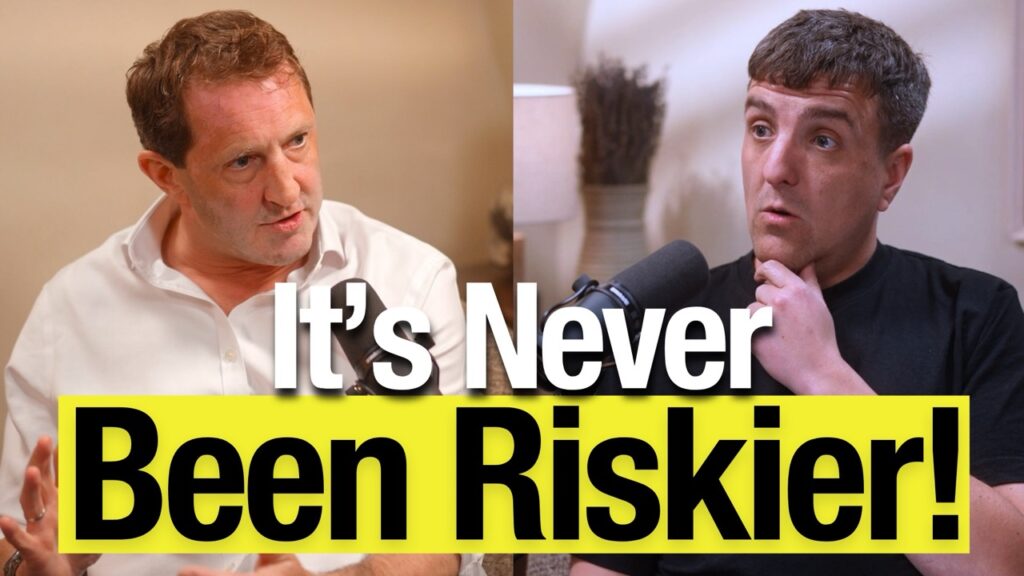

Money mindset mentor and independent financial coach Sarah Brill joins the Money Gains Podcast to explain why up to 90% of your financial life comes down to mindset, not maths, and how understanding your money personality type can unlock better decisions with saving, spending and investing.
Most people assume personal finance is about spreadsheets: budgets, interest rates, pension percentages. Sarah Brill disagrees, and after six years coaching clients through exactly this, she has the case studies to back it up.
Sarah spent a decade as an expat before burning out of a high-powered corporate career in Dubai. She retrained as a transformative coach and turned that skillset towards money, eventually building a framework that maps out eight distinct money personality types, each with its own strengths and blind spots.
In this episode she walks host Sammie through what those types look like in practice, why arguments about money are rarely really about money, and how understanding your own patterns can change the way you save, spend and invest.
———
Gains App is LIVE!
An AI-powered budgeting and cashback app designed to help you make more of your money.
Download here: https://gainsapp.onelink.me/8IhT/oiaimr1z
———
Get a FREE FRACTIONAL SHARE worth up £100 when you deposit £1 with Trading 212
https://www.trading212.com/join/MGP
If you don’t receive the free fractional share, head to the menu and put the word ‘MGP’ into the promo code section.
(Capital at risk when you invest)
Key takeaways
- Sarah puts the mindset-to-strategy split at roughly 80/20: most money struggles come from beliefs and emotions, not a lack of knowledge.
- Everyone has a mix of money personality types, each with natural strengths and a “shadow side” that shows up as specific financial blind spots.
- Money habits are shaped young, often by the age of seven, and get passed down through generations as much as taught directly by parents.
- You cannot change your underlying money personality type, but you can recognise your patterns and work with them rather than against them.
- Financial arguments in relationships and friendship groups are frequently a clash of different money personality types, not a lack of love or trust.
Timestamps
- [0:00] Sarah Brill Introduces Money Mindset Coaching
- [3:30] Why 80-90% Of Money Is Mindset, Not Strategy
- [9:28] The Money Personality Types Explained
- [18:08] Facing Your Financial Shadow Side
- [22:42] How Childhood Conditioning Shapes Money Beliefs
- [29:50] Building A Bespoke Financial Plan
- [34:30] The Gender Gap In Financial Confidence
- [36:33] What Is A Glass Money Ceiling
- [41:48] Handling Judgement From Friends About Money
- [49:56] Money Boundaries And Splitting The Bill
Why your money mindset matters more than your spreadsheet
Sarah opens with a claim that reframes the whole conversation: “80% of what we do is driven by our beliefs and our emotions around money.” She started her coaching career the conventional way, handing clients a 50/30/20 budget and a conscious spending plan. Most of them didn’t stick to it, not because the maths was hard, but because nobody had addressed why they were resistant to looking at their numbers in the first place.
That gap between knowing what to do and actually doing it is where money psychology lives. Sarah describes financial coaching as “understanding where you are at the moment, what you’d like to achieve in the future, and then creating a bit of a strategy and a plan that’s going to help you get there.” The trouble is that most clients arrived not knowing what they didn’t know, unsure of the difference between investing and simply saving.
If budgeting has never worked for you, it’s worth asking whether the plan was wrong, or whether nobody ever helped you understand your own relationship with money. Our Money Personality Quiz is a quick way to start answering that question for yourself.
The eight money personality types
Sarah’s framework is called the sacred money archetypes, a certification she completed last year. She frames it as a shared language rather than mysticism: “Archetypes are universal… it’s symbolic language [that] has been around before the English language.” Everyone has a top three, and Sarah’s own mix is Accumulator, Ruler and Maverick.
Accumulators are natural savers, cautious with risk, but can sit on cash for years without investing it. Rulers build empires and communities but risk burnout chasing “more.” Mavericks love risk and gamification, thrive on the details, but can rebel against structure like budgeting.
Then there are Celebrities (magnetic, good at earning, less good at security), Connectors (great with relationships, prone to avoiding the details), Nurturers (generous to the point of overgiving and undercharging), plus Romantics, who spend for pleasure and the finer things, and Alchemists. None of these is inherently good or bad with money, they simply spend, save and avoid money for different underlying reasons. As Sarah puts it: “It’s not that any person is better or worse with money. Inherently, we are all have the capacity to be good with money. It’s just how we do that has to be aligned with who we are.”
Facing your financial shadow side
Once you know your type, the real work starts. Sarah describes it like diving into murky water: “First of all, you jump into the water, you’re petrified, you look below, and you’re like, I can’t see what’s underneath. That’s where the fear is.” For her personally, discovering she was an Accumulator explained a long-standing fear of investing, something she’d absorbed as “risky” long before she understood the actual mechanics.
That’s a common pattern the other way round too. Someone who is naturally comfortable taking risks might invest confidently but skip the basics. Sarah gives the example of Mavericks who tell her, “Yeah, I invested in crypto,” but admit they don’t feel secure, because there’s no emergency fund behind it. If that sounds familiar, our guide on how much should be in your emergency fund is a sensible place to start before anything riskier.
Where your money beliefs actually come from
Sarah traces a lot of adult money behaviour back to childhood, specifically beliefs formed before the age of seven, reinforced by generational patterns rather than any single conversation. She points to recent history as evidence of how much conditioning shifts across generations: women in the UK couldn’t hold a bank account until the 1970s, or get a mortgage without a male guarantor until the 1980s.
There’s also a striking gender split in how people respond to thinking about their financial future. Sarah references research using an “ageing app” that shows users a future version of themselves: men who saw their future selves took more financial action, while women, on average, felt more fear and took less action on pensions and savings. She calls this the “doom filter”, the point in the future we quietly refuse to plan for.
Sarah links this same conditioning to how couples argue about money. She cites a statistic that around 22% of people in the UK admit to some form of financial infidelity, hiding money or spending decisions from a partner, and points out that money disagreements are among the leading causes of divorce in the country. In her view, it’s rarely about a lack of love or trust: “Maybe one person’s the saver, one person’s the spender, one person squirrels the money away and hides it.” Different archetypes, colliding under one roof, tend to look a lot like conflict even when nobody has done anything wrong.
Building a plan that actually fits you
Rather than a single formula, Sarah’s coaching starts with the basics that any solid financial plan needs: income, expenses, assets, liabilities, and clear goals. She’s blunt about vague ambitions like “financial freedom” and pushes clients to quantify what that actually costs and looks like: “What does that actually look like? Do you want to do that every day for the rest of your life? Are you taking your family with you?” She applied the same discipline to herself when funding years of travel, working out exactly what the trip would cost before she went.
From there, she builds a bespoke plan, because a Maverick and an Accumulator will need very different approaches to the same target.
If you’ve never actually looked closely at where your money goes, a proper spending audit is a useful first step before setting any new goals, and our budgeting calculator can help turn those numbers into a workable plan once you know your patterns.
Glass money ceilings, friendships and awkward bill splits
Sarah’s concept of a “glass money ceiling” describes the subconscious cap people put on their own income or savings, often tied to self-worth rather than opportunity. She sees clients who get a pay rise or land a bigger client, only for their bank balance to quietly settle back to where it always was: “Whenever I come into money, it just kind of vanishes. I don’t know where, it just vanishes.” Underneath, she says, sit fears like “money is bad,” or “people are gonna judge me if I have more money,” beliefs most people have never said out loud.
She also talks candidly about the social side of money: friendship groups drifting apart after one person’s income jumps, buying a first property alone and being met with disbelief rather than congratulations, and the very relatable chaos of splitting a restaurant bill, which she says reveals more about someone’s money personality type than almost any other everyday situation.
Her point throughout is that financial progress isn’t just about learning new strategies, it’s about noticing where your own beliefs are quietly working against you, then building habits that fit who you actually are rather than a generic template. For anyone ready to put real numbers behind a growth plan, our guide to investing for beginners in the UK is a solid next step once the mindset groundwork is in place.
This transcript is auto-generated and lightly edited for readability, it may contain errors.
[0:00] Sammie Ellard-King: My name is Sammie Ellard-King, and welcome to the Money Gains Podcast. We’re a show all about making, saving, and investing your money interviewing the top minds in the industry to unpack their tips and tricks to success. And today, my guest is Sarah Brill, who is a money mindset mentor and an independent financial coach. Now, I loved this conversation. We discussed something which I don’t think has been brought up on this podcast like this before, and that is the sacred money archetypes. You’re probably sitting there thinking, what on earth does that mean? Well, all of us have one, and it’s so interesting, and I absolutely love this conversation. So let’s get started on the Money Gains Podcast. So, Sarah, welcome to the Money Gains Podcast. How are you? You well?
[1:01] Sammie Ellard-King: Very good, thank you. Thanks for having me on. Yeah, very good. How are you doing? I am I’m alright. I’m alright. I’m super excited to to chat to you. Like when you reached out on LinkedIn, I was like, oh, I love talking about all of these topics which we’re gonna discuss today. So I was like, yep, 100% in the bag. Let’s go. Nice. I listened to your podcast as well, and I was like, yeah, I can I can see the synergy as well. So I’m excited. Oh, wicked. Well, bring us up to speed. Who are you? Who am I? Oh, what a question. What a question to kick us off. So I’m uh I’m Sarah Brill. I’m a money mindset mentor and an independent financial coach. And I’ve been working in this space now for about six years, more or less. Um, and I came into this space really because I lived as an expat for many years, 10 years, and I got burnt out from a career, high-powered corporate career. And unlike people who perhaps already work in the finance space, I had no knowledge about the practical strategies of finance at all. And I, off the back of getting made redundant from a job in Dubai, I went traveling for the best part of three years, lived out my best life, became a dive master, was working as a digital nomad, and I was just having the time of my life doing that. And when I came back to the UK, unfortunately I got injured, so I couldn’t dive anymore. So I came back to the UK, and what I saw around me was a lot of people just very stressed about their finances, just maybe not outwardly saying the word finances, but just stressed in life with the rat race, living paycheck to paycheck. And I decided to retrain as a transformative coach. So my journey into financial coaching actually came from transformative coaching. And for anyone that doesn’t know what that is, it’s really about transforming your mindset about a specific thing. And so I started to apply that into finances. And over the years, I’ve done certifications, got qualified, reinforced my uh, you know, my own financial skill set, and yeah, it’s brought me here today.
[3:30] Sammie Ellard-King: Oh wow, cool. That’s wicked. I didn’t know about the diving stuff. That’s super fun. I um I struggle myself, I don’t think anyone knows this actually, like with I can dive. So I really love diving because I can see. Um, but if you put me in open water without knowing what’s underneath me, I completely freak. So something inside me just goes, get me the fuck out of here, basically. Do you know what? I’m a bit like that as well. Okay, cool. Yeah, it’s an odd one. I like I I don’t meet many people that so it’s interesting you are, but um, I don’t meet many people that like have that, and then as soon as I can see it, but even if you just put a pair of goggles in me and I look down, I’m like absolutely fine, it’s it’s an odd one, but yeah, anyway, enough about but that’s the really cool about the diving. I didn’t know that. But um mindset stuff is for me, like personally, and I say this openly to people, I say that if you were to divide personal finance up in with a hundred percent, I say ten percent is actually the actual personal finance theory, and it’s actually pretty easy to learn, it’s just basically a few bunch of steps, and then once you understand the words and the terminology, which isn’t hard, unfortunately, it’s just laid out in really difficult ways for my by most people. Actually, the 90% of any kind of personal finance journey is down to your mindset. And would you agree with that?
[5:02] Sarah Brill: Yeah, I tend to say 80-20, but 90-10 is about right as well. It depends on um, I guess, your money mindset. Some people find the strategy side very easy, and some people find a bit more resistance with it. Um, but in essence, 80% of what we do is driven by our beliefs and our emotions around money. Yeah, very much so. And why and why do you think that is? Do you feel like it’s because I suppose maybe not what why it is? Like, why do we then find that 80% majority of us find that 80% so difficult? Yeah, so I think there’s a number of different things. So, what I realised, I started off as a financial coach and what that means for anyone that doesn’t know what financial coaching is. There’s lots of different interpretations, lots of different ways that actually financial coaches implement their coaching. But fundamentally, it’s about understanding where you are at the moment, what you’d like to achieve in the future, and then creating a bit of a strategy and a plan that’s going to help you get there. And when I started off, I started working with a company in the UK as a financial coach. And what I found was people would come to me, they were just curious about their finances. Maybe there was a bit of a blind spot, but they they didn’t really know. At the beginning, when you’re looking into your finances, you don’t know what you don’t know, right? You for some people, they might know that there is such a thing as an index fund, but for a lot of people, it’s just investing, right? And people don’t know the difference between day trading and investing in stocks and shares, right? So there is a massive difference. And I think what would happen is people would come to me and I would start them off with a budget. I’d be like, here you go, here’s the budget, 50, 30, 20 rule, go conscious spending plan, have a look at where your spending’s going. And a lot of people were met with resistance at that point. And they would come back to me, you know, a couple of weeks later or a month later, and they’d be like, so I kind of did it, but I didn’t really stick to it. I didn’t really see the point of it. I kind of know where my money’s going. So I don’t really need to do a budget. And all of this is the underlying beliefs that stop a lot of people from taking action. And I am on a mission to help people feel empowered with their finances. And so I thought, how can I not just give people the tools, but actually give them the mindset and the strategy that’s going to work for them? And on my journey, I came across something called the sacred money archetypes. And I got certified in that last year. And that provides a framework to help people better understand their unique gifts and strengths with money and their challenges. And it’s not that any person is better or worse with money. Inherently, we are all have the capacity to be good with money. It’s just how we do that has to be aligned with who we are inherently as people. And that comes from our nurture, that comes from you know nature as we grow up. Um, and some of that is taught to us from a younger age, but some of that is actually inherently who we are. And so the work that I focus on is really about understanding who you are with money, and archetypes are universal. Some people might have heard listening to this, they might have heard things like the hero or the mother archetype. You know, people are quite familiar with archetypes, and that’s because it’s a universal language, it’s symbolic. So symbol is symbolic language has been around before the English language, you know, since like the Egyptians, you think of hieroglyphics and stuff. So the way that we communicate about money is more about who we are inherently and how we feel about money, because we know it’s not about the number in a bank account, right? You can have a billion pounds and feel broke, and you can be earning 18,000 pounds a year and still be saving. So we know it’s not about how much you have in the bank, it’s more about how you feel about that situation. So that’s where my piece of work sort of ties in both the mindset and also the financial strategy.
[9:28] Sammie Ellard-King: Cool. Oh, that’s really cool. Let’s dive into that a little bit more. I’d love to know about the sacred archetypes and like perhaps we could do a couple of examples. Could we do that? Yeah, yeah, definitely. So everyone has a top three archetypes. There are eight in total. So we have the accumulator. So the accumulators are the inner the inner bankers, they are naturally very good savers, very good with numbers, very good at the details, um, very respectful with money. But the shadow side might be that they often live in scarcity. So they feel like there isn’t enough. And as a consequence of that, what people might see is that maybe they don’t take investment risks at all. So you might see people with bank accounts where they have loads of savings, but they haven’t invested that money anywhere, they haven’t done anything with it. Um, but that could also mean investing in yourself, right? That could mean investing in skills or tools that are going to help you up level in your life in some capacity. Um, that’s one example. I’m an accumulator, I’m an accumulator, ruler and Maverick. So rulers are the empire builders. They’re very good at seeing and helping people thrive. And typically you might see people who are business owners might be rulers. Um, and they are very good at supporting people, building that community where people are gonna thrive, um, very determined. But often rulers might find that if they’re out of alignment, they might work until burnout, or they feel like they’re moving the goalposts constantly. So they’re kind of in fear. It’s so not scarcity like accumulators, but there’s a fear of where is money gonna come from because they’re constantly chasing more and more and more. So makes sense for me because I obviously burn out, right? So I started as I started to understand more about the archetypes, you learn more about yourself. The other one that I am, the third one is a maverick, and the mavericks are inner rebels, they are rebels with a cause. And I don’t know if anyone knows Alex Hormozi. I don’t know if anyone knows Alex Hormozi, but like he is the epitome of a maverick, right? Mavericks love games, they love gamification, um, they take high risk and high reward, but they love the numbers, they love the nitty-gritty in the financial details. So you might find them in particular jobs like accounting or even finance because they like the numbers. Um, the downside of that is that maybe they take risks which put their security at risk itself, right? And they might rebel against things. So, for example, creating a budget and not sticking to it, right? And so for each of the archetypes, it’s about understanding where you’re most comfortable, what your strengths are naturally and your gifts, and stepping into that power, but also recognising where your saboteurs or where your challenges lie. And that is typically where people will feel resistance, and that resistance is going to look differently for everyone. So, some things I’ve heard people say, for example, is um everyone gets into debt at some point. That’s not true because accumulators very rarely get into debt. Whereas a celebrity is um magnetic, they’re leaders, they’re very good at making money, but they find it sort of harder or they find more resistance in creating financial security. Connector is very good at building relationships, they have this optimism and faith about money, but maybe don’t necessarily like the financial details, so they might stick their head in the sand. And I mean, I could talk about this all day long, but the others are nurturer, alchemist, um, romantics, um, romantics of the inner hedonists. So they they love people spend money for different reasons. We kind of, I think in the money space, because money is so formalized and it seems formulaic almost, we forget that different people have different ways of operating in life. So people spend money for different reasons. Celebrities spend money for validation, right? For status. Romantics spend money for the pleasure-seeking aspect because they love luxuries, they love the finer things in life. Um, nurturers spend money or often get into debt because they are generous, they’re nurturing, they’re caregivers. And so often I find that they are the type of people that might overgive, right? So they might undercharge for their services, over-deliver, give money to all family and friends, and then go, where’s my money gone? But they are inherently good at money. So everyone has their strength and sabotage, and it’s about understanding where your unique gifts sit in that. And another thing that often comes up for my clients is things like um having perhaps arguments at home about money. We often find that, you know, people don’t openly discuss money in their relationships. It’s one of the leading causes of divorce in this country. And I think a lot of that stems from different archetypes. So having different ways of operating with money. So maybe one person’s the saver, one person’s the spender, one person squirrels the money away and hides it. Financial infidelity is, I think, 22% of people in the UK or something have financial infidelity, meaning they hide money from their partner or they make spending decisions without their partner knowing. So all of this ties in to not just a budget. I think it was something like that. Yeah, yeah. Don’t quote me on it. Aviva did Aviva did some research on it. But um, yeah, and and more and more people are arguing on a day-to-day basis about money than ever before because of the cost of living crisis. So we find that the way that we manage money is not just about a budget, it’s more than that. It’s about, you know, the legacy that we want to leave, leave, how we want to raise our children, what we want to do with our lives, when we want to retire. And that all stems from our inherent relationship with ourselves, but also money as well.
[16:53] Sammie Ellard-King: Wow, that’s blown my mind. So there’s just spoken for 10 hours. So no, no, it’s so interesting. Thank you for that. Like, it’s super cool because we’re not all the same, are we? Like, and and trying to have one some one size fits all strategy for the entire nation, which I feel like is what many do, is actually just kind of in a way, it’s actually quite um what’s the word? Where you you just basically uh it’s quite offensive, really, in a way, actually, to some other people that perhaps would react in a certain way about money. And so it’s really interesting when you know that about yourself, to then be able to go, okay, well, this is my shadow side, these are the things that perhaps I need to work on and challenge my beliefs around these aspects. So I see that a lot, and obviously, there’s different limiting beliefs for different people now. We’ve established that. So, is that what you would then do once you’ve established their archetype? You then take them and say, Okay, let me challenge all of this with you now.
[18:08] Sarah Brill: Yeah, so I have a 90-day program. Um, obviously, I’m not the only person that teaches sacred money archetypes in the world, but the way that I do it is by giving someone the practical tools and strategies to achieve their financial goals, and then looking at what’s going on underneath it. And it’s quite like what we were saying at the very beginning about diving, right? First of all, you jump into the water, you’re petrified, you look below, and you’re like, I can’t see what’s underneath. And that’s where the fear is. That’s where the fear is underneath all that, all the ocean, right? All the stuff that we can’t see. It’s like the bottom of the iceberg. And for me, that’s the work of the sacred money archetypes is to actually shift all of it and feel in really good. Like in yourself, I mean, like not just about money, but to feel aligned with your purpose, with your mission, the impact that you want to make. And it doesn’t matter whether you’re employed or whether you run your own business. If we’re if you are coming from a growth mindset and you want a better life for yourself and your family, naturally you’re going to be growing, right? And so, in order to do that, we have to face those murky waters underneath and we have to delve into that shadow side. And once we know it’s knowledge is power, once we know ourselves better, we can then work with our strengths, right? And feel into that resistance and where the stickiness is so that we can move forward and make those investments. So I’ll I’ll give you an example. Um, for me, before I realised I was an accumulator, um, I’m actually very good at spending money or like investing in myself. I’m very uh I’m I I like personal development. I don’t tend to spend money on things, I tend to spend money on experiences, hence why I traveled for 10 years. Let’s call that the Maverick side. But uh yeah, I kind of like the unconventional. I like the unconventional, it makes sense, right? It makes sense. I like the unconventional. And for a lot of people, they’ll save up go on two holidays a year, two weeks, you know. For me, I can like not go on holiday for two years, and then I will just go away for like two years. So I I very much live outside of the uh status quo, if you like. Um, but knowledge is power ultimately. And I think before I knew I was an accumulator, I was actually really scared about investing and I didn’t know much about investing at all. I’d heard it was like gambling, I’d heard it was risky, and accumulators are quite risk adverse, right? So I think once I realised that, I was like, oh, now I have to learn about investing. Now I have to, you know, see what this is about. Whereas perhaps for a Maverick, they might be someone who naturally loves to invest, but they don’t have an emergency fund. And often I speak to Mavericks and they’re like, Yeah, I invested in crypto. And they’re like, but I don’t feel very secure about my finances. And I’m like, well, where’s your emergency fund? What have you got in your emergency fund? Well, I don’t have one, you know. So I think the way that we work with money does tap into our archetypes, and how we do that is through a framework. So it’s not a cookie-cutter approach, it’s not like this is how much you need to save, or you know, this is how much you need to invest, or open a pension pot, although that’s part of it. It’s also about understanding your money story and what your values are around money and how the energy of money itself and how that impacts your nervous system when you get anxious, when you get nervous, when you feel ashamed about money, and all of that gets unpacked through the coaching program that I take my clients through.
[21:56] Sammie Ellard-King: Oh, cool. Yeah, that sounds like a lot of fun. I want to backtrack a touch then. So before you’ve established that about yourself, or even once you’ve established that about yourself, do you feel like this is coming from well, we’ve sort of mentioned it, but I mean, in terms of like how how let’s say take me as an example, how have I been conditioned up until that point? Is it usually the relationship with parents? Is it through friends, family, society? What what what is making us this human? Is it already in us? Because I I I don’t know why, but I don’t believe it always is and i I don’t know, yeah, I’m I’m interested to see your thoughts are.
[22:42] Sarah Brill: Well, I would say yes it is. I would say yes, it is. And it is hard to wrap your head around. And really, it’s all science because how we, how do I phrase this? How we feel about money is energy. Money itself is energy. And I know for some people that might sound a little bit woo, because you’re like, no, it’s just coins and it’s a plastic card. But it is, it’s energy, right? It’s it’s an energy exchange. When we pay for something, we are exchanging what we perceive as value for that thing. So part of it is about our beliefs that we’re taught up until the age of seven. So a lot of the way that we see the world comes from our parents, but a lot of it is generational as well, right? A lot of it is generational, which gets passed down through the generations. So it doesn’t just stop at our parents, it might be from our grandparents or our great-grandparents. And if we think about how the world has changed, even in the past 50 odd years, women couldn’t have a bank account in the 70s, women couldn’t get a mortgage until the 80s, right? And so there are these generational patterns that tend to emerge, right? And particularly now the status quo is being challenged around that. Gender roles in society, you know, who is the homemaker? Women should go out to work. There’s all this pressure to be a mother, to you know, be a wife. I’m speaking particularly for women, for men have a completely different role to play. They might feel a sense of responsibility in the household. And I think all of that is shaped throughout our childhood. Inherently, who we who we’re born to be is who we are born to be. It’s just that our environment has a certain amount of influence on that.
[24:34] Sammie Ellard-King: I suppose, yeah, because you’ve got like introverts and extroverts, you’ve all different types of personality types, and that will then play into your archetype. But then equally as well, you’re being socially conditioned, your parent parents having a massive influence on the way that you view money as a tool or as a as a as energy. Um and then that’s having this that’s formulating into the person that you are today. But the good thing is, is that you can change as well. So you’ve mentioned that you’ve been a certain archetype, now you’re perhaps certain, more moving into a different one. What how do you then go? I want to be like that, but I want all of the good things and not the bad things. How do you do that?
[26:32] Sarah Brill: So you can’t change archetype. You can’t who you are is who you are, right? It’s a bit like a personality test. You could say it’s a bit like a personality test, like a psychometric reading, if you like. So who you inherently is gonna be who you are at 18 is who you’re gonna be at 88. Like that’s just the law of the land, right? It’s just um, we might identify with our top three at different points in time. And it’s almost like you know, going to the doctor and you think you have a back pain, but actually you’ve got a problem with your foot, right? It’s kind of the same with the archetypes. You might think, well, I’m a bit scared, you know, I’m sort of uh scared there’s not enough money right now. Um, but actually, you might be someone who it’s not really about the scared of not having enough money because you actually have money, it’s actually something else. And so we can shift the lens to see where you’re out of alignment. And we do, as much as we focus on the top three, we also tie in with the others as well, because they might be things that we’re not resonating with as much. So I think connector, no, celebrity is my lowest. Um, and what’s interesting, and I’m taking us on a bit of a tangent here, I realise, but what’s interesting is who I attract into my business because most people, most of my clients are accumulators, they’re also celebrities and rulers, but less so romantics. So it helps us identify and understand our language, but also the way that other people relate to us as well. And then when we understand that inherently who we are, we can then tap into those different strengths, if that makes sense.
[28:18] Sammie Ellard-King: Okay, cool. So big reveal. I was um I’ve done this before, and I’ve but I didn’t get three, and I ended up as a maverick. Okay, I thought that might be the case fine enough. Yeah, yeah. See, I ended up as a maverick. Uh there was um there’s a uh Dr. Nikki, um oh my god, Nikki, uh Dr. Nikki, she has what this test, and I did it, and I was like, oh my god, that’s bang on. Now I’m like, now I have to actually like physically train myself not to be like that. But interestingly, I was already working on those things because there’s other ways and other ways of like highlighting about yourself that what your weaknesses are, and there’s lots of different um techniques of like bringing that out of yourself. Um, but I do love this because I just think it’s so cool just to be like, okay, yeah, no, that that’s me. Now I need to do something about it. Um, so yeah, so okay, cool. So we’ve we’ve got our archetypes, we’re moving forwards now, we know who we are. How do we then approach money and mindset from that point on? You’ve mentioned the kind of 90-day plan that people go through, but do you have to tailor that individually to each person, or can you then go on a the standard sort of steps of wealth, which is what a lot of people teach?
[29:50] Sarah Brill: Yes, within the framework that works for you. So, how I go through my coaching program is understanding where someone’s finances lie. So, what their income is, what their expenses are, what their assets look like, what their liabilities look like, and then creating a structured plan to get there. So, giving them the tools like a budget planner, helping them figure out how much is comfortable as an emergency fund, what their goals are. And I think financial goals are quite very, very fundamental to creating a financial plan. But often when you ask people, what do you want to achieve with your finances? They go, I just want to work where I want, when I want, right? And you’re like, but what does that mean? What does that mean for you?
[30:44] Sammie Ellard-King: Yeah, um, colada on a beach somewhere. Yeah. So, but do you want to do that every day for the rest of your life? Do you want to do that just for, you know, a season? Do you want to do that for two weeks? Are you taking your family with you? Are you doing this alone? There’s so many, there’s so many different variables. And so the way that I work is bespoke. It’s about understanding what those goals look like. We hear things of create a vision board and you’re gonna live out your best life. And I’m all about quantifying that. Quantifying that. So, what does that actually look like when I went traveling? I had to actually quantify how much I was gonna spend. And when I realised I’d spent all my money, I went, right, well, now I’ve got to get a job. So that’s when I started to explore the digital nomad space and becoming a dive master to help fund that trip. So I think it’s about understanding what your plan, what your goals are, and then creating the strategies to get there. And then the accountability and support comes through the mindset work that I do with my clients. So at that point, I’m I don’t treat it like school. You don’t have to do homework, although some of my clients call it homework, and maybe that’s because of their archetype, they find it uncomfortable, right? But this is all part of the process. Some people are gonna find the budget more uncomfortable, some people are gonna find investing more uncomfortable, some people don’t want to think about their future at all, and the idea of a pension just gives them such anxiety that they they don’t even know that they have tens of thousands of pounds sitting there because they haven’t looked it up, right? And so I take people through that process of getting the awareness and accountability of looking up where your pensions are, how to start paying yourself fairly. I work with entrepreneurs, so how you pay yourself, you know, there’s so much different advice. A lot of my clients have accountants, and accountants are like, well, this isn’t tax efficient, you shouldn’t be taking this out of your business. And the consequences of that is that people feel like they have a lack of contribution in their household because they’re taking bare minimum just to survive, they’re reinvesting back into their business without really enjoying the process. And I think that is just as fundamental as it is to have money in the bank. And yeah, for me, it’s about taking people through that journey. It looks different for everyone, it’s not a cookie-cutter approach. But ultimately, you said there that money is fun and this sounds fun, and people come to me very nervous, very anxious, sometimes very ashamed, and they feel like they finally found the space where they can be heard, listened to about money, and by the end of it, people having conversations with their partners, getting new jobs, increasing their income, being able to save a bit more freely, and just having that confidence in themselves that they can do that at the end of it.
[33:40] Sammie Ellard-King: Yeah, I completely agree. It’s where it all stems from, and that’s why I do a lot of work around like getting your mind right before you go and put the pressures on yourself of saving, investing and like growing a pension or starting a business. Like, you need to be right and you need to be ready, you need to understand where you want to go and what that actually looks like. And is there a number associated to it? Is there a feeling associated to it? Do you have kids? Do you have do you not have kids? Like, do you have a house, a mortgage? Like, where are you at? Like, let’s get all of this down and right and a piece of awareness first before we ever move forward and start doing the more sexier stuff, shall we say, in investing your money and and trying to grow your wealth because it all does stem, you’ve got to have those foundations absolutely nailed down.
[34:30] Sarah Brill: And you know what’s really interesting? So I had a conversation. Oh, I think she’s gonna, yeah, hopefully, I don’t know if she’s gonna listen to this, but her, I think her name was Katie. She works for uh she she does um uh she’s she’s working on a research piece for Edinburgh University in partnership with Aegon. And what’s really interesting is Aegon introduced one of those aging apps, and they distributed it. And what they found was so the idea of an aging app is obviously you take a picture of yourself today and it shows you what you’re gonna look like in future. And what they found was I remember those, yeah, yeah. Yeah, so what they found was Ramit Sethi has spoken about this as well, but what they found was men who took these pictures and saw themselves in the future were more empowered to take action with their finances. Women had the adverse effect. So when women saw themselves aging, it gave them more fear and it meant that less women took actions on their pensions and their future investments and savings. And so there are differences, I think, in the way that men and women view money and the way that we perceive aging in general. A lot of people, I call it the doom filter, where we have like a point in time where we don’t want to think past, you know, we don’t want to think past getting 40 or 50 or 60. We don’t we don’t want to think about that. And I think what the research showed was people do have a fear of getting older. And whether that is because they believe that financial freedom isn’t possible, where they believe they just don’t have enough money, or maybe it’s a future story, a past story, whatever we’re telling ourselves. That’s the work that I help people figure out. Um, they found that yeah, there was a gap. And that’s that is also the gender gap is not just a monetary gap, it’s also this mindset gap of what we’re worthy of in the future as well, and and that generational legacy that people want to leave.
[36:33] Sammie Ellard-King: So this is so interesting. It’s so interesting because there’s your approach is so unique in a lot of ways, really. Like, I don’t come across people that approach it like you, which is just it’s refreshing to hear because you really put a lot of effort into getting it right for the person and tailoring their approach, which is just lovely to hear. Um but I want to ask you, I came across one of your videos and I was like, oh, this is good. I want to ask you about what you mean by glass money ceilings. Glass money ceilings. Yeah, we were talking about this before. I don’t even remember the content piece, but glass money ceiling. What I so I help women entrepreneurs quit the paycheck to paycheck cycle. And that can be one of several things. Either they are not earning enough, either they don’t know how to manage their money or have the capacity to hold more money, or they’re spending money, right? So it’s kind of one of those things that that’s the financial flow. When I talk about cash, we talk about cash flow. That’s the same as the flow of the energy of the universe. So money comes in, we manage it, money goes out. And when you start working for yourself, and perhaps this is helpful for people who are in a job that maybe they’re thinking of leaving or they have a dream to have a side hustle or start their own business, you’re shifting from an employer’s mindset into a business owner mindset. And then once you’ve monetised your business, you’re shifting into an employer mindset, which is like scaling your business. So there’s different phases that we all go through. And at any point in time, we can kind of feel stuck where we are. And I don’t know if people felt this feeling of just feeling stuck. You’re like, doesn’t matter what I do, I ask my boss for a pay rise, I charge my clients more, but my bank account’s just not going up. It just stays the same. And I hear this quite a lot from people, you know, they’ve saved like 10,000 pounds and they’re like, whenever I come into money, it just kind of vanishes. I don’t know where, it just vanishes. So people create this glass ceiling for ourselves. It’s subconscious, we don’t know that we’re doing it. And that can be linked to self-worth, it can be linked to what we think our value is. So, you know, whether that’s in a job, you know, oh, I’m applying for a marketing job. All marketing jobs offer 40k a year, and that’s just the way it is. But we know that different industries might pay different amounts, and so it’s about understanding where our glass money ceiling sits and how we break through that to not only earn more, but also to be able to have the capacity to hold more as well. And really what that boils down to is the beliefs that we have about having and earning more. And I heard one of your podcasts recently, and uh you were talking about trolls on social media. And uh often the trolls are people who yeah, have are missing something who, you know, but it’s subconscious, they don’t know that. They don’t they don’t know that they’re being triggered by something because they’re not that point at that point of awareness yet. But for someone who’s gonna go through my shatter your glass money ceiling exercise, it’s a challenge of 60 days where every day they are mindfully observing where money is coming into their life. So it’s not just paychecks, it’s where you find money, where people gift you money, where you find money on the street. It’s about being aware of where the energy of money is coming to you. And yeah, there’s some fun games in there as well, and some mindset transformational tips as well to help people identify what their fear is. And for a lot of people, it’s believing that money is bad, money is evil, people are gonna judge me if I have more money, I’m gonna lose all my friends, what are my family gonna think? What’s my partner gonna think if I start making money? And so all of this baggage, all of this suitcase that we’re carrying of just beliefs, is what we shatter when we go through that and break through to the next level.
[41:00] Sammie Ellard-King: That’s really interesting you say that because, like, um obviously I’ve gone out and started my own business, and I was probably one of the first ones in my home friendship groups to go out and do that, and then all of a sudden I was feeling like a tang of regret about telling them that it was doing well, or like anything like that. And so I know exactly what you mean there. Because imagine you’re all like trained together, or you’re or for example, you’re all on certain salaries, and actually it’s really interesting, a lot of friendship groups are on really similar salaries, and I imagine that’s playing quite a big role if some of them, one of them is to break out and get like a head of department role and the 30 grand pay rise, they’re gonna feel quite weird about that, I would imagine, and even potentially self-sabotage that.
[41:48] Sarah Brill: Yeah, it’s really interesting you say that because I remember so I purchased a property on my own just outside London uh a few years, a couple of years ago now. And I think people find it very, I don’t want to say hard to believe, but that is the truth. People find that very hard to believe. So they might say things like, oh, your parents must have helped you, oh you must have helped had help in some way, or you know, it’s it people find it really impossible to believe that it’s actually doable, right? And you know, I’ve been working since I was 14. And because I’ve been very good at saving, despite having gone traveling, I’ve always found a way to be fiercely independent. That is the accumulator, being fiercely and well, being independent, fiercy is my term. Um, but I guess that’s reflected in my journey. And I remember one day we was a couple of years ago, we were talking about purchasing a property, and people were saying, Oh, it’s so hard to get on the property ladder now. And I went, Well, it is and it isn’t because I’ve done it. And they said, Yeah, but you know, you must have done this, you must have done that, you must have a really high income. I said, And to be honest with you, I wasn’t on a massively, you know, I was on a good salary, but I’d saved up so much, I put down a 25% deposit. And I think people were shocked. I publicly said it to the room, and people were like, Have you got a six-figure bank account? Like, how have you done that? There must be, there must have been some cheat code, you know, what have you been doing? You know, if you’ve been doing some illegal activities or whatever. And, you know, I think I almost felt embarrassed at that point, you know, even though I was proud of my accomplishments, I felt embarrassed because other people were perceiving me in a certain type of way. What were they going to think of me? You know, oh, Sarah, she knows it all, you know, she thinks she knows it all. But, you know, I’m comfortable in my own skin. I’m very proud of my accomplishments, and I’ve just used that as motivation to push forward and inspire more people to do that. And I recognise that maybe that’s not my childhood friends, you know, maybe that’s not the people that I grew up with, and that’s okay. Everyone serves a different place in our life, whether that’s friends for a season, friends for life, it doesn’t matter. And so, yeah, I think there is a lot of fear around judgment from other people, and that is part of the challenge that we have with money, like generationally in society, because we all keep ourselves small. We all keep ourselves small. And when I went to Dubai, I got the shock of my life. I lived in Dubai for four years, and a friend of mine, when I turned up, they had two cars and two phones. And I was like, What do you need two cars for? And he was like, Well, everyone has two cars here. I was like, What do you mean everyone has two cars? Like, that’s just that’s just unheard of. But I think when you step outside of your zone of influence, when you step outside of your echo chamber, you start to see the possibilities, and that is the radical shift that that really set me on a new trajectory. So yeah.
[44:54] Sammie Ellard-King: You’re so right. Like it took me a little while, and then I actually just went, okay, do you know what? And they’re my home friends, they’re never not gonna not be my friends or grow up with them, right? But it might mean that for the next year or two, I’m just gonna have to like see them a little bit less while I go out and build a new group of because they don’t they don’t not not become your friends, like you know, and they have their lives going on as well. And so I went and found people that were doing what I was doing, which was building businesses online and growing and becoming content creators, and now I’ve got a really cool friendship group that do that as well. And so I can talk to them about those things, and then I can go back and have a laugh with my old friends, and actually nothing’s changed, absolutely nothing’s changed. They still treat me like the village idiot that I am, and and I and I do the exact same back to them. And it’s interesting once you get over that hurdle and Realize that actually, no, nobody really gave a fuck in the first place. It was like they’re too worried about their turkey twizzlers and what they’re eating tonight to think about you and your ventures, right?
[46:04] Sarah Brill: Yeah, yeah. And it’s funny because yeah, everything comes back around, everything’s cyclical, and you’ll probably find that they will come to you, if not already, saying, Oh, I’ve seen you’ve done this cool thing. How can I do it? Can you teach me how to do it? Maybe it’s not starting their own business, but they’ll be like, Oh, you invested in that thing. That sounds really interesting. So, yeah, often the people at the very beginning, you know, they might not support you, but yeah, I’ve got people now who are reaching out to me who I met when I was, you know, 18, 19 traveling, and they’re like, I’ve seen you doing this thing now, and I’ve just met them along the way. And yeah, I’m I think one of the things with the archetypes is that you opportunities are around us all the time. Opportunities are everywhere. It’s just how we energize those opportunities, and sometimes we’re not in tune enough to see the opportunities that are in front of us. So those friendship circles, maybe it’s not meant for them. That’s that’s okay. Or maybe they’re just not ready to hear it yet, and that’s also okay. But when you start opening up to it, you start seeing it’s like when you’re driving down the road and every single traffic light is green, right? And you’re like, oh my gosh, today’s such a good day. You know, every time I seem to like jump on a podcast, I get inquiries. It’s almost like the energy just aligns. I had a client recently who had seen this person in the playground every day for a few years, and in the past few months, we’ve been working on starting up a business for him. And uh he went into the playground and she asked him about building a website for him, for her. And I said to him, she was always there, she was always in the playground. Just now you’re seeing the opportunity because you’re in alignment, you’re uh you’re seeing it come to you. And I think sometimes we’re just not tuned in, you know, we’re we’re listening to the wrong radio station. And if we just dial it down a little bit, we can start to see that actually, you know, maybe we need to shed some things in order to grow and evolve in certain ways, especially with money.
[48:06] Sammie Ellard-King: Oh, you’re so right. Like, you can’t say to all six of my friends, uh yeah, you should be investing in the S&P 500, for example. Because they might look at you and go, right, uh uh, one might go, Yeah, I already do that. The other one might go, What’s that? That sounds interesting. And the other four are like, I literally can’t pay off my credit card right now, or like, you know, we’ve got we’ve got a wedding coming up, like, bugger off, you know that kind of thing. And like, do you just that in three years’ time you can still teach them about it, but in three years’ time, they might turn around and those four friends go, Okay, we’re ready now. Can we have that chat? And that’s that’s what I failed to necessarily see at the beginning here. I was just like, why isn’t everybody doing this? Like, what is going on here? And then slowly you some to realise the more and more people I’ve now spoken to, it’s just um like such a nuanced and completely different conversation per person, right down to the budget that they have. No budget is even close if they’re even if they’re earning all earning 50k, they’re never gonna be the same. And so it’s been a really eye-opening experience for me to learn about that. And so I’m really glad that you you see it the same way because it’s uh it’s means that we get better at teaching these frameworks to people because we become much more humble and what’s the word where you’re very I’m struggling with my words today. I don’t know what it is. I’ve got brain fog in the afternoon, I think. Um but yeah, the you we’re we’re we’re we’re we’re much more like caring and nurturing with these things rather than being like my way or no way. And I think that’s really, really important.
[49:56] Sarah Brill: Yeah, and I think one one thing that I’ve uh so a lot of my friends have done my quiz. Um, and something that’s really interesting is the different relationship dynamics with money. So when I see it come up most is when we go out for dinner. That’s always the place where it comes up with my friends. It’s things like it comes to the end of the meal. So because it’s guard down. Well, you come to the end of the meal, and people are like, What should we do? Should we split the bill or should we each pay for our own? That’s generally how the conversation goes. And I think you know, you get sort of half the table being like, Well, I only had yeah, I only had a small thing. Uh I didn’t have a starter and a dessert, so I’ll just pay for mine. And then you get the other half of the table, typically the ones who have had all the wine, all the champagne, and uh had three course meals, and they’re like, Yeah, we should just split it all. And what’s really interesting, and I I I don’t say too much, but I have observed how people react in certain situations, how people establish their money boundaries, and some people will go, that’s rude, you’re just paying for your own. Whereas other people will go, that’s fair enough. And that’s all linked to our archetypes, because some people will think, well, it’s being generous and you should just split the bill. And other people think, nah, you know, you you should just pay for what you had. So I think a lot of that shows up in things like that and asserting our boundaries, and you get people who are just like, yeah, fine. They just they they give in, they give in and they go, no, no, it’s okay, we’ll just we’ll just split the bill. But actually, their 18 pound meal has now come to 60 pounds, right? So it’s about understanding ourselves. Um, but yeah, I definitely that’s how I’ve noticed it about my friendship group, particularly social activities and when bills are getting split and things like that. Yeah, holidays, yeah.
[51:48] Sammie Ellard-King: How do you split the how do you split the taxis and all of that? Oh my god, yeah. Like, I’m just thinking of like my mum’s birthday. Didn’t know there was like 30 of us, and it was the most awkward thing in the world. I was like, in the end, I was just like, look, mate, we’re just gonna have to like cover my mum because it’s her birthday, but everyone else just needs to go up there and pay for their own thing, like because this is just getting ridiculous, and there’s people arguing, and it was like, you know, people have had a bit of wine, so they’re a bit more loud and used. You know, I was just sitting there watching in the end. I was like, executive decision, this is not happening. Just go and pay for your own shit, please. That’s the maverick. That’s the maverick with all the details sitting there doing all the maths for everyone, and go, do you know what? Let’s just break all the rules. Everyone, just do what you want, just pay for your own, have what you want to eat.
[52:40] Sammie Ellard-King: Yeah, yeah, and yeah, and at the end, there was uh there was a chunk of money left over, and I was like, Oh, for God’s sake, here we go, typical. And I was like, just a pet to pay for it. I was like, damn it, I stitched myself right up. Um, but there we go. Um Sarah, I would love this. I could talk to you all day about this type of stuff, but um, where can people find you? Where’s the best place to come say hi if they want to do the quiz? Yeah, so I mostly hang around Instagram and LinkedIn, they’re like the two places I hang out most. So I’m Sarah Brill on LinkedIn, although I think there’s more than one Sarah Brill, but you can’t miss me. I’m money mindset mentor, and I’m also on Instagram as Sarah Brill Coaching. Um my quiz is in the link on my website or link in my bio, depending on where you go. Um, and yeah, that’s really the first step. I don’t know when this is going to get released, but I do have a masterclass coming up as well, um, which is gonna be August the 20th. So I don’t know if this will be before or after, but I occasionally do um masterclasses as well. So yeah. And we spoke about oh no, we’re gonna be able to do that.
[53:48] Sammie Ellard-King: It will come out just after, but um yeah, I’m so sorry, but it will come out just after. Um so if you’re doing the next one by the time it does, we will list that one in the show notes and we’ll put a link to Sarah’s quiz as well in there. Definitely do it. Um, because it’s a lot of fun when you work out like who you are. I was like, shit, I am definitely a member. Yeah, there’s a workbook included, there’s a two-part training as well. So people get two videos that explain their strengths and their sabotages as well. So it should set you on your path to get started. And yeah, I offer a free half an hour complimentary consultation as well. So I’m very much high a high touch coach. Um, I do have a few like digital downloads and things which uh some people find very helpful because not everyone needs the accountability and support. But that but for those people that do, um, yeah, we have a half an hour complimentary consultation to help people better understand their money mindset.
[54:44] Sammie Ellard-King: Oh, cool. All right, well, uh yeah, we’re gonna have to do this again and go back into a little bit of it again in the future. I absolutely love this. We could be here for days though, Sammie. So I know, I know, yeah. That’s a little that’s the problem with this stuff. It’s like doing uh when do I stop this episode? Because it’s really good. And I’m like, okay, I’ve just got to call it like I was gonna be here all day. Yeah, thank you so much for having me on. It’s been yeah, it’s been an honor that you invited me as well. So thank you very much.
Frequently asked questions
Money personality types are patterns in how people naturally save, spend, invest and avoid dealing with money, shaped by upbringing, personality and life experience. Sarah Brill’s framework identifies eight types, with most people leading with a top three.
Sarah says no, your underlying type is fixed, much like a personality trait. What can change is your awareness of it, and the habits you build around your natural strengths and blind spots.
Sarah puts the split at roughly 80% mindset and beliefs to 20% technical strategy. Many people already know the basic steps of budgeting or investing but don’t follow through because of unexamined fears or beliefs about money.
Sarah says financial conflict often comes from two people having different money personality types rather than one person being “wrong”. A saver and a spender, for example, are simply operating from different underlying patterns.
A structured quiz is the quickest starting point. Try our free Money Personality Quiz to see how your own patterns show up in everyday spending and saving decisions. This article is for educational purposes only and does not constitute financial advice. When investing, your capital is at risk and past performance is not a guarantee of future returns. This post may contain affiliate links, meaning we may earn a small commission at no extra cost to you if you click through and make a purchase. Money mindset and coaching frameworks discussed in this episode reflect the guest’s own approach and are not a substitute for regulated financial or professional advice.
———