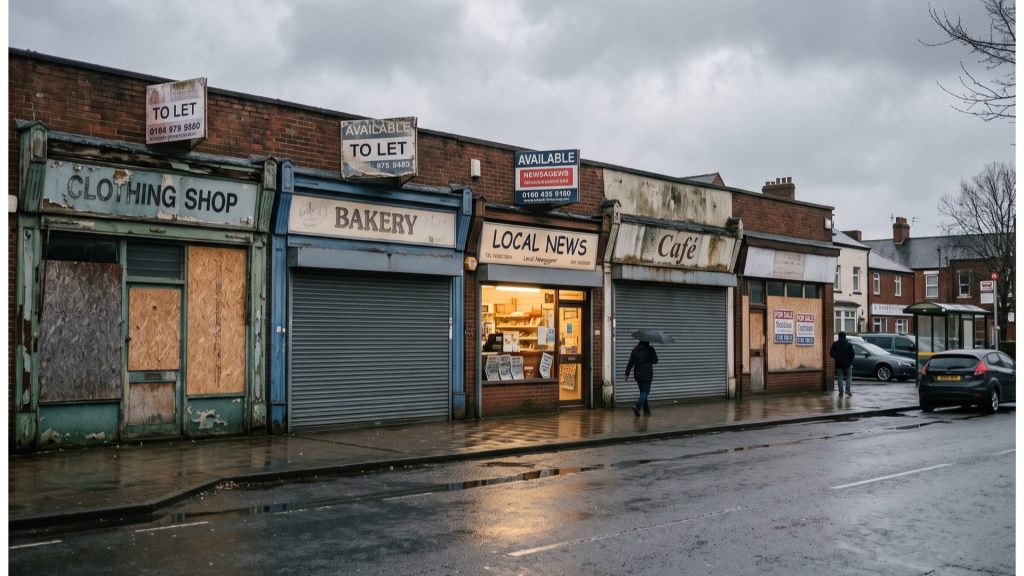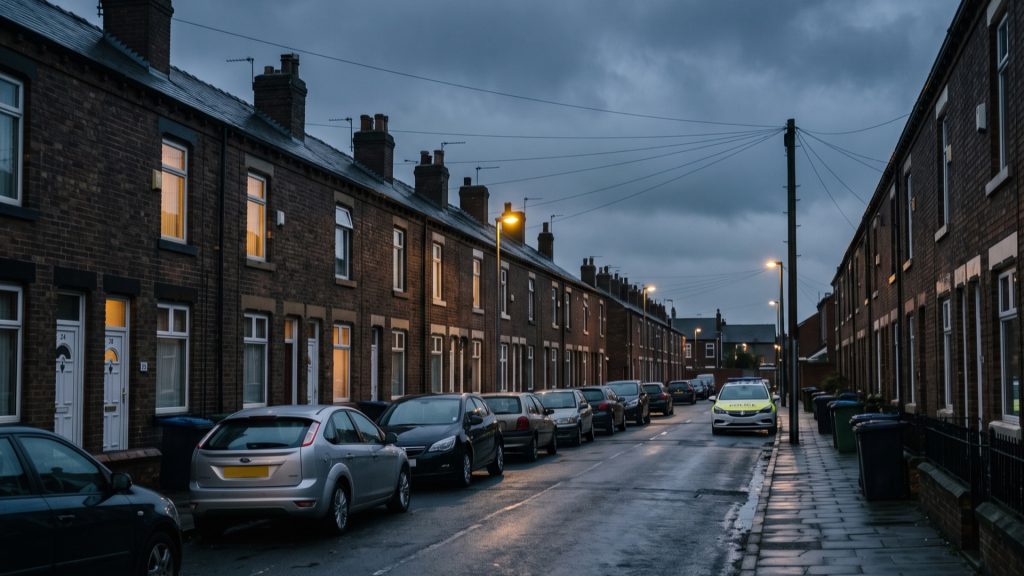
Middlesbrough has been named the most dangerous place to live in the UK, according to Home Office recorded crime data for the year ending March 2026. The local authority recorded 150 crimes per 1,000 residents, the highest rate of any area included in the ranking.
Blackpool, Manchester, Hartlepool and Bristol round out the top five, all recording well above the national average. Central London and Westminster are excluded from this particular ranking, since their huge daytime population of commuters, tourists and office workers skews the per-resident crime rate in a way that makes comparison with other areas unreliable.
Before you start eyeing up the exits, it is worth understanding what these figures actually measure, and what they leave out.
What do these figures actually measure?
The Home Office publishes recorded crime data by local authority every quarter, covering offences reported to and recorded by the police. The rate is calculated per 1,000 residents, using the area’s usual resident population as the denominator.
That last point matters. Recorded crime tends to concentrate in town and city centres, where shops, nightlife and transport hubs bring in far more people during the day and evening than the local resident population would suggest.
A borough with a small residential headcount but a busy retail centre can post a high per-resident rate without its actual neighbourhoods being especially unsafe.
The figures also only capture crime that gets reported and recorded, so they are a measure of recorded crime, not a complete picture of every incident that occurs.
The mix of offences counted is broad too, everything from shoplifting and criminal damage to violent crime and theft from vehicles gets bundled into the same per-1,000 figure. That means a high overall rate does not automatically mean a high risk of serious violent crime specifically.
It is a useful headline number, but it is worth reading alongside the category breakdown if you want the full picture for a particular area.



The top five, ranked
Here is how the top five compare, using crimes recorded per 1,000 residents. There is no verified, fully reliable top ten for this period, so we have kept this to the five areas we can stand behind.
Source: Home Office recorded crime data, year ending March 2026.
| Rank | Area | Crimes per 1,000 residents |
|---|---|---|
| 1 | Middlesbrough | 150 |
| 2 | Blackpool | 146 |
| 3 | Manchester | 143 |
| 4 | Hartlepool | 134 |
| 5 | Bristol | 131 |
Where's the safest place to live?
At the other end of the table sits Broadland, a district in Norfolk that consistently posts one of the lowest recorded crime rates in England, at around 35 to 40 crimes per 1,000 residents. That is roughly a quarter of the rate recorded in Middlesbrough.
Broadland is largely rural and suburban, sitting just outside Norwich, which fits the wider pattern: lower recorded crime rates tend to cluster in areas with fewer town centre hotspots and a lower daytime population influx. Smaller settlements with less late-night footfall, fewer retail and transport hubs, and a more dispersed population simply generate fewer recorded incidents per resident, even before you factor in anything about the character of the area itself.
None of this means Middlesbrough is unliveable or that Broadland is risk-free. It means the gap between the highest and lowest recorded rates in England is large, and that gap is worth knowing about if crime statistics are one of the things you weigh up when choosing where to live.
What this means for your insurance and house price
Recorded crime data is not just a curiosity, it directly feeds into how much you pay for home insurance. Insurers use local crime statistics, along with claims history for the postcode, to price burglary and contents cover, so areas with higher recorded crime rates typically carry higher premiums.
If you live in or near one of the areas above, it is worth shopping around at renewal rather than letting your policy auto-renew, since providers price risk differently.
Crime rates also show up in house prices over time, though rarely as the only factor.
Areas with persistently high recorded crime often have lower average property values than similar-sized towns with cleaner figures, which can work in your favour if you are a first-time buyer weighing up affordability against other trade-offs like commute time or school catchment.
It is one input among many, not a reason on its own to rule an area in or out.
If you found this interesting, please share!
Disclaimer: Content on this page is for informational purposes and does not constitute financial advice. Always do your own research before making a financially related decision.