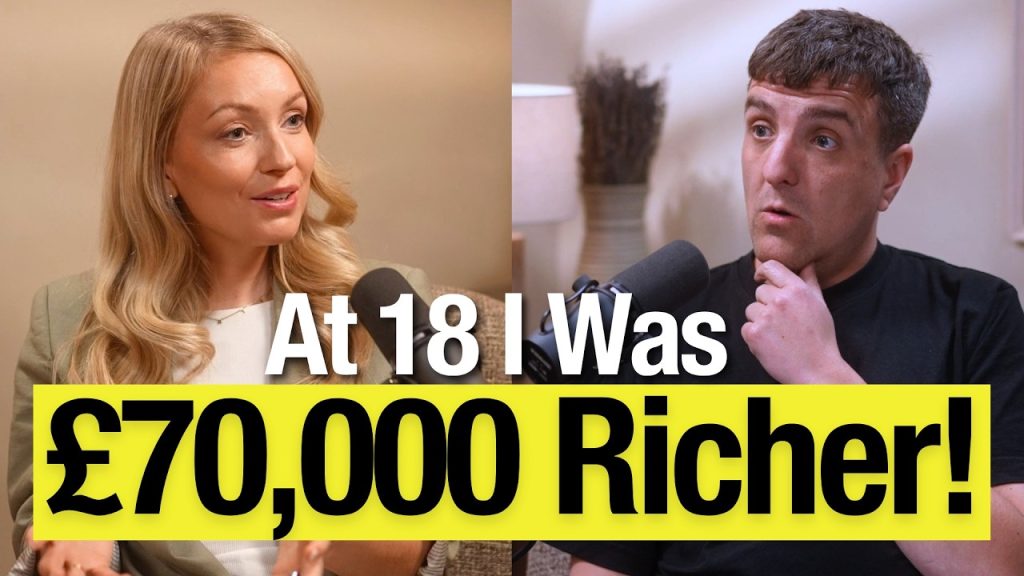
This is the very first episode of the Money Gains podcast, and it kicks off with Emma, the one-woman team behind Bee Money Savvy, who made over £45,000 from side hustles in a single year at the time of recording, built from blogging, referral programmes, paid surveys, cashback and a bit of rental income.
For episode one, the show went straight to someone who had already turned side hustling into a genuine income: Emma from Bee Money Savvy, named Best Money Saving Blog at the Corporate Livewire Global Awards.
She started sharing money-saving tips in 2017 after colleagues kept asking her the same questions about apps, discounts and referral links, and has since built that habit into a blog with a thousand-plus posts and a following across Instagram, Twitter and Pinterest.
In this launch episode, Emma walks through her low-income upbringing and how watching her parents budget every penny shaped her own habits, how she saved a house deposit in her twenties, why she waited until her mortgage was paid off before she started investing.
She also explains exactly how her £45,000 in side hustle income was made up, from blogging and referral schemes to mystery shopping, surveys, cashback stacking and rental income from her old flat.
Bee Money Savvy Links
Website: https://www.beemoneysavvy.com
Instagram: https://www.instagram.com/beemoneysavvy
Twitter: https://twitter.com/BeeMoneySavvy
———
Gains App is LIVE!
An AI-powered budgeting and cashback app designed to help you make more of your money.
Download here: https://gainsapp.onelink.me/8IhT/oiaimr1z
———
Get a FREE FRACTIONAL SHARE worth up £100 when you deposit £1 with Trading 212
https://www.trading212.com/join/MGP
If you don’t receive the free fractional share, head to the menu and put the word ‘MGP’ into the promo code section.
(Capital at risk when you invest)
Key takeaways
- Emma made over £45,000 from side hustles in a year at the time of recording, split across blogging, referral programmes, surveys, cashback and rental income, and she says the growth has kept climbing year on year.
- She saved a £33,000 house deposit between the ages of 18 and 25 by budgeting her main wage for essentials and savings, then funnelling almost all of her side hustle earnings straight into her home fund.
- Blogging took three months to earn its first tenner and years to become meaningful money: £90 in year one, roughly £8,000 the next year, £12,500 the year after, then £30,000 last year.
- Stacking cashback apps such as Cheddar, Top Cashback and Airtime Rewards on the same purchase, sometimes alongside a cashback credit card, can turn a couple of percent back into three separate payouts on one transaction.
- Emma’s advice for starting any side hustle is simple: pick something you’d enjoy even without the money, expect it to take months rather than days to pay off, and keep chipping away at it.
Timestamps
- [1:03] Emma’s Low-Income Childhood and Money Mindset
- [5:10] Saving a £33,000 House Deposit in Seven Years
- [7:15] Why Emma Waited to Start Investing
- [9:29] Emma’s FTSE 100 Index Fund Investing Strategy
- [14:52] How Bee Money Savvy Started on a Walk With Her Dad
- [17:44] From £10 to £30,000 a Year in Blogging Income
- [20:37] Inside Emma’s £45,000 Side Hustle Income Report
- [25:02] Cashback Apps: Top Cashback, Cheddar and Airtime Rewards
- [28:31] Turning a Paid-Off Flat Into Rental Income
- [32:42] Emma’s Advice for Starting Your Own Side Hustle
Growing up money-savvy and saving a £33,000 deposit
Emma grew up in what she describes as a low-income household, watching her parents live paycheck to paycheck after they received bad financial advice earlier in their lives.
Rather than putting her off money altogether, it did the opposite: as a teenager she worked part-time jobs, chased discounts and did mystery shopping, determined not to end up in the same position.
She says she “did not want to be in the same position as my parents,” and that watching her mum run a household budget spreadsheet as a child stuck with her.
That mindset paid off directly. Emma bought her first home at 25, having started saving from her very first paycheck at 18, and built up a £33,000 deposit over seven years while earning around £12,000 a year in a part-time job.
Her method was straightforward: budget the main wage for bills and a set amount into the home fund, then treat almost every pound earned from side hustles as extra savings rather than spending money.
She’s candid that her friends at the time were counting down the days to payday while she never had to, purely because of the small questions she asked herself before any purchase, like whether she actually wanted the item or could find it with a discount or cashback instead.
If you want to see how a similar split between essentials and savings plays out on your own numbers, our budgeting calculator is a quick way to check where your money is actually going each month.
Why Emma waited to start investing
Despite being disciplined with money from a young age, Emma didn’t start investing until after she’d paid off the mortgage on her first flat.
She puts that down to being naturally risk averse and to her parents never having invested themselves, occasionally warning her against it.
It wasn’t until she owned her home outright that she felt secure enough to start putting money into markets, something she now partly regrets leaving so late, though she’s clear it was what let her “sleep better at night.”
Her current approach is built mostly around a regular investment into a FTSE 100 index fund every payday, with occasional individual shares bought on a whim, including, by her own admission, buying a Nintendo share instead of a video game one month.
She holds a small amount of crypto but doesn’t recommend it to her followers because of how many scams exist in that space.
How Bee Money Savvy began
The idea for Bee Money Savvy came from repetition. Emma kept telling colleagues and friends about the same money-saving apps and referral links individually, until she decided to start writing it all down instead, first on a free WordPress blog.
The turning point came on a walk with her dad, when he asked what the next step could be, and she landed on buying her own domain name and building out the brand properly, choosing “Bee” for the “money savvy” wordplay and the sustainability association of a buzzy bee.
Growth was slow at first. It took three months before her blog earned its first £10, and the first full year brought in only around £90.
From there it climbed: roughly £8,000 in year two, £12,500 in year three, and £30,000 last year from blogging alone, a trajectory she puts down to sticking with it through years of unsociable hours before it properly paid off.
Anyone weighing up whether a side hustle like this is worth the time might find our roundup of top ways to earn a side income useful for comparing options before committing to one.
Inside the £45,000 side hustle income report
Blogging was the largest single piece of Emma’s £45,000 year, but far from the only one.
Referral programmes were the second-biggest earner at around £8,000, built by signing up to apps and websites with referral schemes and sharing the links, something Emma points out anyone can do without needing an established blog or following.
Paid surveys added more on top, mainly through Prolific and Swagbucks, typically a pound or two for a short survey with occasional bigger payouts and bonuses, done in spare moments like a lunch break or while watching Netflix in the evening.
Rounding out the report were cashback earnings and a small amount of rental income.
It’s a useful illustration of how a single side income figure is rarely one thing: it’s usually several smaller income streams stacked together, each manageable on its own.
Emma also makes the point that most of her audience won’t have a blog to promote referral links through, but the same referral schemes work just as well shared with friends, family or on personal social media accounts.
This is why she still calls it one of the most accessible income streams on the whole list.
Cashback stacking and turning a flat into rental income
Emma’s cashback setup is where the numbers quietly add up. She uses Top Cashback for online purchases routed through the website, plus app-based options like Cheddar, Airtime Rewards and Loyalty Bee that connect to a bank account or card and pay out automatically.
Because several of these can apply to the same purchase, and a cashback credit card can stack on top, a single transaction can generate cashback from three separate sources at once, turning what looks like a couple of percent into significantly more over a year.
Her rental income came about by accident rather than design. Emma paid off the mortgage on her first flat, then moved in with her partner rather than selling up, and now rents it out.
She’s candid that being a landlord came with more admin than she expected, but it adds a further income stream on top of her employed part-time role, which she’s kept deliberately rather than going full-time on blogging, valuing the security and variety of both.
For anyone weighing up how a second stream would actually change their monthly position, our take-home pay calculator is a simple way to see the numbers side by side.
This transcript is auto-generated and lightly edited for readability, it may contain errors.
[0:00] Sammie Ellard-King: Hello and welcome to the Money Gains podcast. This is the first ever episode of the series, and I am so excited to get this started with you guys. Today we are going to be joined by Emma from Bee Money Savvy. Emma is an absolute side hustle queen. She has made over 45,000 last year from side hustles alone. So I know you guys are really going to enjoy this episode. But for now, if you’re joining us on YouTube, please hit the subscribe button. And if you’re on Apple or Spotify, please do leave us a review in the comments below. It really does help the show. So let’s get started on the first ever episode of the Money Gains Podcast.
[1:03] Emma: Yeah, good, thank you. How are you? I’m very well. Thanks for asking. Yeah, not bad. So look, we’ll just jump straight into it. Obviously, you know, we’ve been following you for a long time on Instagram, and obviously with Bee Money Savvy, which we’ll get into. But I’m going to take you back a little bit at the beginning. So I want to kind of get to know you a little bit, a bit about your journey with money and sort of how that’s progressed. And so my first sort of question for you is what was your relationship with money when you were growing up? Like how was that when you were younger? Yeah, so I’m from quite a low-income background. My parents had some bad financial advice when they were when they were about my age, actually. And so I spent my childhood sort of watching my parents live in paycheck to paycheck, budgeting every penny. And throughout my teens, I was super money savvy because of that. Like I, in my head, I did not want to be in the same position as my parents. So I worked all sorts of part-time jobs, I’d constantly search for deals, discounts, go searching for free stuff, mystery shopping. And that was me as a teenager. So then in into adulthood, I sort of stepped that up a notch, and that’s that’s where Bee Money Savvy started. But I guess my relationship with money as a kid, I think I remember trying to find two Ps and one Ps off the floor, and I think I think that pretty much sums it up, to be honest.
[2:31] Sammie Ellard-King: That’s amazing. Like, you know, I totally get where you’re coming from, that paycheck to paycheck thing as well. And you know, you see your parents going through that. That’s a really similar thing to me, too. Like, you know, my parents live paycheck to paycheck. Like, you know, as we as we grow up, we don’t, you know, we rely on our parents to kind of teach us stuff, right? And it’s really difficult if they they’re the if you know, if they live paycheck to paycheck, or they you know they’re not that great with money themselves, or um, it can be difficult, but uh, you know, because obviously we don’t really get that kind of lessons in school as well, you know, what actually made you start thinking about money differently? What was that kind of catalyst in your life? I think I think going back to my parents, I think it was them, um, but it wasn’t really them saying this is this is how you do things, it was it was watching them. Um, I remember as a kid admiring the fact that my mum would have this budget spreadsheet. I loved it. I I got right into it, I’d watch her do it. Um, they had such drive to pay off the debt. Um, they were super smart with their money. My dad would work overtime at the weekend, um, they would look for extra income, they would budget all the pennies, and I think it was sort of I learned from watching that. Um, I’ve got a very similar mindset to them when it comes to money, um, and I didn’t realise how rare that mindset actually was until I sort of went into the world of working, working world. Um, and I got my first job, and everyone around me was like living for payday. They would constantly be like, 10 days till payday, and I’d be like, I’d not even noticed. Um, and they would like on payday, we’d all go out for a drink, and yeah, they would constantly just count down the days until pay payday, and I never had to do that because I would constantly watch the pennies. Um at the time I was earning a relatively low wage as well. So I was earning around £12,000 a year in a part-time job, and then doing sort of mostly low-income side hustles, like side like mystery shopping surveys. Um, but I always had enough money to live off comfortably, and even have enough money to save towards towards a first home. So I’d watch them and I’d be like, How are you earning more than me? But I’m in a better position. Like, what’s happen what’s happening there? And it was just all the extra little things that I did, just buying a t-shirt, checking for a discount, checking for cash back. Do I actually want the t-shirt? Like those those questions that went through my head before I bought bought anything, and I think they would just buy it, I guess.
[5:10] Sammie Ellard-King: Sound like you had a really good grounding, and that’s kind of set you up, and you’ve kind of taken that through, like looking at your mates and being kind of one step ahead of them financially, even if they’re earning more, is you know, a big testament to you. So, yeah, hats off. Uh, you know, I wish I could say the same growing up. I’ve had to learn the hard way. So um, yeah, you know, um, real big hats off to you. Like you talked about in you know, putting a deposit down for a house. How how long did that kind of take you to build up to that? So I was 25 when I bought my first home. Um, I pretty much started saving from being like 18 from getting my first job. Um, every paycheck I’ll be like, I remember my first paycheck was barely, it was probably like 200 pounds, and I was like, right, 50 pounds to the home fund. Um, and so it’s pretty much been since I was 18 and managed to amass a 30, 33,000 pound deposit um between 18 and 25, so seven years.
[6:16] Sammie Ellard-King: Did you have help from parents or was that totally on you? Totally my own money that um I mean my parents did help me in respect of they would let me I lived with them for a long time. Um, and I would give my parents a small rent, but it what it wasn’t the same as paying proper rent. Um, so yeah, that I mean that’s the way that they helped me get on the property ladder. And imagine through your side hustles and your mystery shopping and what you were doing, you would then make that pot bigger, right? Because that’s quite a big amount to save in seven years on the salary that you mentioned. So, like you must have been putting extra cash away, is that right? Yeah, definitely. All the side hustles, because I’d sort of budgeted my paycheck to save a little bit towards the house and then pay for everything else. Um, it meant that all the side hustle stuff that I did, I pretty much just saved it all. Like I wasn’t much of a spender anyway, so the extra money was just funneled straight into my savings.
[7:15] Sammie Ellard-King: That is incredible, mate. Honestly, that is really good. You know, I think you’re you’re an absolute gold one because that you know there’s few and far between people like you get out there, so yeah, amazing work. Like, let’s move on to kind of um investing now, because you know, I’ve had a had a good look through your Instagram, been through the website, and obviously talk about investing as part of that, and that’s a big part of what we do on this podcast. So, you know, where were you in your life when you started investing? You obviously got the house, was it before that? And and how’s that journey been for you? Um, so I started investing quite late, actually, and to some extent I do regret that. Um, but being from the background that I was from, I’m quite risk averse. Uh, my parents certainly didn’t have any investments, never uh even when I mentioned investing, they were like, Are you sure about that? Like, are you gonna lose your money? Um, so they always sort of put me off a little bit. So it wasn’t until I bought my house and I’d paid off the mortgage that I thought, right, now is the time to start investing. Like, let’s let’s start chucking money at investments. Um, and I think, like I said, I partially regret leaving it so late, but I think I needed that little bit of security to feel like it was time to start investing for me. I think that’s what made me sleep better at night. I had a lot of people telling me not to do what I was doing and to start investing, but I just needed that security of I’ve got a house and it’s paid off. Now I’ll start investing.
[8:43] Sammie Ellard-King: That’s amazing. You know, I think a lot of people get into investing without having nailed the budgeting and saving element of it first. And actually, like that’s probably the fundamental basis of being able to become a successful investor and you know, work towards any kind of financial freedom. If you haven’t got the budget and you haven’t got an emergency fund, like you know, you are kind of playing with fire because it can all come back crashing down if the stock crap market crashes or something happens, right? So um, yeah, that’s amazing. So what kind of you know, you got into it a little bit late. So, what what are you doing at the moment? Are you individual stock picking? Are you, you know, is it funds? What talk to me about kind of your portfolio and how that’s made up?
[9:29] Emma: So um I’m I’m big on the funds. Um, I regularly so straight my paycheck comes out and I send money straight into an index fund, the FTSE 100. Um, I do buy some individual shares as well, um, but I don’t always feel like I’m particularly knowledgeable on it. So I kind of am just um to be honest, I that that’s very ad hoc for me. So last month I wanted to buy a game and I thought instead of buying that game, I’m gonna buy a share in Nintendo, and that’s sort of how I come to buy my shares. Um, but the investing in the index funds happens every month. Light clock work soon as payday happens. Um got a little bit of crypto, it’s not something I recommend to my followers just because there are so many scams. Um, but I do have a little bit of crypto as well.
[10:21] Sammie Ellard-King: Ah, interesting. Okay, well, I liked about what you said there was you invest in stuff that you like, like the Nintendo thing. And I honestly, if people are starting out, it’s actually probably one of the best ways of doing it. Like look around your house, like, what do you buy on a daily basis? Uh, you know, uh we’ve all got an iPhone, we’ve you know, we’ve all got shampoo, and you know, you you love games, you’ve got Nintendo, so you know that makes sense to you, right? And if you’re gonna individual stock pick, pick stuff that you’ll kind of associate yourself with. Um, and that’s a really good way of making up a profile and a portfolio as well. So right, cool. So we’ve we’ve kind of covered investing and budgeting. Um, do you have kind of any tips for anyone on your budgeting? Is it anything different that you do to say the normal standard budgeting list or spreadsheet that people might or may or may or not have?
[11:19] Emma: I think so. I don’t have a spreadsheet actually. Um, but what I do do is my wage that I get, I start off with my wage and I go, right, I have these bills. That’s the first thing that happens. I’ve got this amount of money to spend on bills, and then from there I go, so I’ve paid off my essentials, and now I also see investing and saving as an as uh as an essential. Um so I send money to those as well, and then the rest of the money I sort of look at what’s coming up. So um it’s payday for me tomorrow, and next month it’s my mum’s birthday, my dad’s birthday. So I’m thinking, right, how much money do I need for those? And then um you you’ll have seen on the Instagram I do a fair amount of side hustles, and I sort of see that as bonus money. So that will be the ad hoc investments that I make. That’ll be from side hustle money, um, putting little extra bits of money in my savings account, um, topping up my fun fund. I’ve got sort of saving pots that I’d that I like to top up, and it feels like I’ve got a travel fund and an emergency fund, and and like to keep them topped up as well.
[12:31] Sammie Ellard-King: That was gonna be my next question. So you you know that right. So you’ve got pots and you and you utilize those. Roughly how many of those do you have? So currently four. Um it’s it’s varied a lot throughout the years depending on different priorities, different goals. Obviously, buying a house was a pot at some point, right? Um, and then paying off the mortgage was a pot at some point. Um, but yeah, I’ve got four at the moment that I’m saving towards.
[13:43] Sammie Ellard-King: That’s amazing. It’s a it’s a it’s a great way of doing it, you know. You’ve got kind of long-term goals, and then imagine you’ve got shorter term stuff, i.e., you know, mum’s birthday or something like that. And that that that allows you to be a bit more you’re ready for it when it comes around, and that’s that’s amazing. All right, so we’re gonna move on to be money savvy now. Um, you know, amazing couple of years for you. The growth has been insane. Uh I had a look at your recent income report that you put up. It’s uh, you know, to see where you’ve come in the last couple of years, it’s just a brilliant story. Um, and you know, it’s I have a lot of fun following you as well. It’s uh you know, it’s really good seeing the stories you come up. You know, you’ve got me on to all these budgeting apps now. I’ve got cashback apps that I didn’t know existed. So, you know, thank you as well for that. I really appreciate it. So um why why did you get into that and and where did it come from? And it was it kind of the journey because you you’ve had that kind of upbringing, like what really drove you to start it and and and the dream behind it.
[14:52] Emma: So, yeah, I think the upbringing was a massive part in it. I think that was sort of the motivation behind it. Um, that money-saving mentality. Like the idea is that I’m sharing stuff that I do, the money-saving stuff that I do. Um, but the actual idea, the the day that I come up with the idea, it had been like a week at work. All my colleagues were were counting the days down to pay a day, I was doing fine, and my colleagues that had come in to me for advice, and um, I’d tell them about apps that I’d downloaded, and there’d be a referral that they could sign up to, and they would constantly come to me, and more and more colleagues were coming to me and asking, um, and friends and family. And I thought, do you know what? I’m telling you all the same thing, but sort of individually, I’m just gonna start writing it down. So initially, I created a free WordPress account um that where you don’t properly own the blog, and started writing all my money saving tips on there, and then on a walk, actually, with my dad one day, I was I was taught telling him about it, and I was like, I’m getting a fair few people following me and and interacting with me, and um and my colleagues are telling me that they’re reading it. And my dad was like, What could you do next? What’s the next big step? Um, and I guess this again, this is a mindset that I’ve got from my parents. And I said, You know what? I could do I could buy my own domain name. And we were sort of bouncing ideas of what what I would call it. Um, and I always we always described each other as money savvy. Um, so I was like, why not be money savvy? And I I sort of like the sustainability aspect to it as well. So that’s where the bee, the buzzy bee, um, came from as well. So I think I was actually on a walk with my dad, but I guess my parents were a major contributor to it, my colleagues being a major contributor, and then the fact that I work part-time as well, I think it gave me the other half of the week to to work on a passion project, and that’s that’s kind of what Bee Money Savvy was.
[16:52] Sammie Ellard-King: It’s amazing. So you started with the blog, yeah, and then moved into the socials, is that right? Yeah, that’s right. I think I might have reserved the names on socials just to make sure no one else stole them. Yeah, maybe. Yeah, but yeah, I think initially I got I reserved the names, didn’t really do much on the socials, created the blog, and then you know how social media’s got now as well. Like you can’t ignore the fact that it’s there, it’s a captive audience, um, an audience that you can expand as well. 100%, you know, it’s another traffic channel to through to your website, essentially, which is which is what you want, right? So um, oh that’s amazing. So you’ve gone from the blog, and this is kind of grown. So, when did you from when you started the blog, how long did it start to sort of start paying you back and and you sort of see an income coming through from it?
[17:44] Emma: So it took me three months before I made a tenner. Um, and I I remember that £10. I was so proud of it. I was good. Um yeah, the first pound you make online is incredible, right? Yeah. Um, but in all honesty, like so I started in 2017 and it was like the back end of 2017, and I only started making money in 2018. Um, and I think I I barely made anything. I think I made like 90 pounds in the first year, um, and then the next year it sort of jumped to I think it was like 8,000, and then the year after it jumped again to like 12.5, and it just kept jumping, and then last year it was 30,000. Um, so we’ll see, we’ll see where it jumps to next, hopefully.
[18:29] Sammie Ellard-King: Yeah, oh yeah, and the growth is is phenomenal. And then and with that blog, you know, for people that are interested in creating their own blog as a side hustle, how does that money come through? Is it if you don’t mind talking about it, is it affiliate marketing, you know, from commissions or do you do you have ads? How’s that sort of breakdown work in a percentage sort of format? Um, for me, the percentage is sort of like 75% sponsored, and then um it’s quite equal between ads and affiliate for me. Um I didn’t introduce ads onto my website until last year, so I let it sort of grow without that. Um and affiliates, I kind of wish that I’d put more affiliate links into my early blog posts because now I’ve got like a thousand blog posts, and it would take me so long to go through each one, which I do, but it just takes so long to integrate all those affiliate links in there.
[19:29] Sammie Ellard-King: Yeah, 100%. Like people completely underestimate when they start a blog, they think, right, you know, I’m gonna write five, six posts, and I’m gonna get all this traffic and I’m gonna, you know, have make millions of pounds an ads. And it couldn’t be further from the truth. You know, bloggers have to hustle, they have to hustle real hard, they have to put the time in. Um, and only after you know, blood, sweat, and tears, and hours and hours of of unsociable hours trying to make it work, it do you start paying dividends. But if you keep at it, you know, the money is there, the proof is in the pudding that you’re you’re a success story out of this, right? So um, yeah, it’s a brilliant side hustle if you if you if you can stay the course. That’s all I would say with blogging, definitely. So you you obviously posted, you mentioned about your income report, and I had a quick look before this podcast, and you mentioned 30,000 just straight from blogging, but there’s other elements of that income report which are amazing. So I’m gonna dive a little bit into that now because I think it’s super cool. So you’ve got, I’m gonna say the first one’s a mystery shopping, then you’ve got other aspects of that. Do you want to talk through that a little bit? Because I think the listeners would love to know.
[20:37] Emma: Absolutely. So um when I shared that income report, um, as you mentioned, blogging’s on there, that was the highest. And then I think it was like referral programs was the second highest. Um, so that’s um signing up to a website, you think it’s brilliant, and it’s got a referral scheme where you can earn money and the person you refer earns money. Um, that worked out pretty well for me last year. I earned £8,000 from that. Obviously, your average person is not gonna have the website that I have to promote those referral links, but anyone can do that. You can share it with your friends, your family, find forums, um, create your own website to do it on um Instagram, you can share them on social media. So that’s a really good income stream if you are willing to put a little bit of effort in. It’s almost like affiliate networking, I guess. Um, but but using existing referral programs that are out there. Um I think I think next on that list is surveys, I think.
[21:38] Emma: Yeah. Um so two websites that are probably my main survey websites are Prolific and Swagbucks. Swagbucks has got a terrible reputation because people get kicked out of surveys. Um but that doesn’t happen on Prolific, so there are academic surveys, you’re essentially checked for your demographic beforehand. I think they’ve got a waiting list at the moment, which is a bit annoying. Um, but once you get on there, you can earn. I think my parents earn like £50 a week on Prolific, although they do just sit with it open. Um, I’m probably more like £50 a month, is what I’m sort of earning on Prolific, and then you get odd, really good surveys, bonuses, that kind of thing as well. Um I can’t remember what else is on my uh my income report.
[22:25] Sammie Ellard-King: I think I have to get to get it up now, you know. Probably should have done that, but um here we are. But yeah, no, I mean it was the so when you mentioned prolific and how much are you earning per survey? So how how’s that kind of breakdown? So they have a minimum, it’s almost like a minimum wage. On there, so much you can earn per hour that you do for a survey. But I’d say that the majority of the surveys that I do are maybe like five, ten minutes, and I’ll earn maybe one, two pounds. Um, but then every now and again you get a really good one that’s like for half an hour and you’re gonna earn like a tether or something like that. Um, lots of them offer bonuses once you get in the study as well, um, which obviously adds up quite quickly. But yeah, you can do loads of like little ones, there’s big ones that pop up. Um in the past, I’ve sort of sat like on my lunch break with prolific open so that I’m eating my lunch, but I can also see if a survey pops up. Um, that’s always a brilliant idea. If you sit on a computer most of the day, it’s brilliant to have prolific. I always have it open in a tab just to see if anything pops up. Um sometimes I’m like, oh, I can’t can’t I can’t commit to that one today. Um, but it’s worth having it open in a tab and seeing if any studies pop up.
[23:46] Sammie Ellard-King: Right, you’re making use of time, you know. You could be on your commute, you could be on your lunch break, like you mentioned, you know, you could be sitting in front of Netflix in the evening earning money by just doing these things and still watching the shows that you want to watch. You know, there’s so much opportunity here now online for people. And you know, that’s why I was really interested with how you’ve broken down your income report and you’re getting to these numbers. You you you’re obviously really thinking about your time. Another thing on there I want to talk about is cashback, and that’s something that you’ve taught me about. And I I’m loving Cheddar at the moment, I’m getting some good money back. I, you know, they got a really good one. Um, it’s 1% on the train line and TFL, which for me, in two weeks, I’ve got six pounds something in there, and that’s I wouldn’t have had that money, I wouldn’t have known about it. And you know, when I did the numbers over the course of a year, I’m saving hundreds of pounds, and that’s pretty good for me. You know, I’m gonna put that money straight into an investment pot or maybe maybe a holiday or something nice, right? Or do something for myself. And it we we just wouldn’t have had this money if it if we wouldn’t have signed up and it connects to your bank, which is just phenomenal. You don’t need to do anything, it’s yeah, I love it. But there’s other ones, right? So there’s lots out there. So what are the big ones for you?
[25:02] Emma: Um the original one for me was TopCashback. So that one’s a website, you click through, um, visit the retailer you want to visit, like shop like normal, and then you get cash back straight into your TopCashback account. Right. Um, that was how I started with cashback, uh, was on TopCashback, a website. Um, but in terms of apps, like you said, we’ve got Cheddar, which once you’ve signed up, connected your bank, it’s just automatic, it’s just earning money when you spend money. So that’s just it’s just brilliant. It’s almost like passive income. Um, Airtime Rewards is really similar to Cheddar as well, um, but you can add payment cards, so you can put credit cards on there as well. Um, and then there’s another one called loyalBe, which is a lot like Cheddar as well. Um, I think that’s connecting a bank account as well. So you can connect all three as well, so you can earn cash back. If there’s a retailer that’s on all three, you will earn three lots of cash back. Um definitely if you did your shop with a card that gives you cashback on with a retailer that’s on these apps, and then you also do that through TopCashback or Quidco, um, you’ll get cashback from various different things. I literally did this the other day. I went went shopping with my partner and we went to YO! Sushi, and I ended up getting cashback from from three different things. Um, I think it was Airtime Rewards, it was an on-card one through curve, and then it went through my Chase account, which also gave me cashback. Um, so three lots of cashback on there.
[26:41] Sammie Ellard-King: Wild. So actually, what ends up being a you know looks like a couple of percent can end up being six, seven, eight, nine, ten percent. Some cases more, right? Some of the cashbacks on there are absolutely insane. Like, you know, there’s there’s boots offering seven, eight percent, and it’s like, why would you not make use of that, you know, and drive around the corner and go in the shop or just order what you need online and get that seven percent into your account? It’s all gonna add up over time. It’s just about being smart and thinking one step ahead, like, oh, I’m going to make this purchase, can I get a discount? And that’s obviously something that you’re nailing left, right, and centre. Absolutely. And then you can put that money. So, for example, my parents save it up all up for Christmas. So all year they’re doing their shopping like normal, and at the end of the year, they’ve got this cashback pot that’s going to pay for Christmas. So, if you’re someone that’s saving up for your first home for to travel, you could just put all this extra money from cashback from other things into a pot.
[27:42] Sammie Ellard-King: I love that. The Christmas idea is a brilliant idea, it takes all the stress off them. You know, they’ve done that work throughout the year, they get to Christmas, they’re thinking about presents, Christmas dinner, you know. We’ve all just been through it. We’re thinking in you know, January 2023 right now, and we’re recording this, and it’s uh, you know, you’re kind of in that aftermath period, and a lot of people have had a real hard time, they’ve got themselves into debt throughout Christmas, etc. And you know, what about getting yourself onto a cashback app this year and and and making next Christmas uh really easy? And yeah, what a great idea from your parents. I love that. So you’ve mentioned obviously the cashback apps, and one other thing on there is you’ve got a bit of rental income. So how how’s that how’s that working out? Are you now paid off and you’re generating money from your house? How’s that how’s that sort of working?
[28:31] Emma: Yeah, so it kind of happened accidentally. Um, I never intended it for it to be an investment property. Um, but yes, I bought my flat, then paid off the mortgage, and then met my partner and moved in together, and I wasn’t really willing to sell the flat. Um, and it’s always there. It’s something that, you know, if worst case scenario broke up, I’ve got another property there. If if not, I want to sell it and it could pay towards a deposit on a bigger house for us on a nicer in a nicer area or whatever. Um, but for the time being, yeah, it’s I’m using it as a rental property. It’s I have learnt a lot as a landlord, didn’t realise all the extra things you needed to do. Um probably underestimated the all the extra things you needed to do a little bit. Um so that’s been a bit of a learning curve, definitely. But yeah, that that gets me a nice bit of income as well, I guess.
[29:28] Sammie Ellard-King: And it you obviously you mentioned before you you you work part-time. Is that still the case now? You’ve got to this level, and you’re planning on kick and staying that is there a plan to move full-time and to be money savvy. What’s the what’s the next step for you? Do you think? Yeah, my colleagues constantly ask me this. So uh I am still working part-time. I think I’ve thought about it many a time, thought about going full-time blogging. Um, but I kind of like the variety of doing both, of having the blog half of the week and then going and working with my employer the other half of the week. I think from a money perspective as well, yeah, yeah, it’s lonely. Um and from a money perspective, it’s I feel like it’s adding security as well. You know, like if I go off and I’m on sick leave, I’m getting covered by my employer, I’m still getting a part-time wage to a to an extent. Um, if I’m getting a pension at my employer as well, so again, a match contribution. Um, and also multiple streams of income. If something was to happen to my website or got hacked, taken down, whatever, then I’ve still got something to keep keep me running over. So I think from a money perspective, I’m always like, this it benefits me having both.
[30:45] Sammie Ellard-King: It makes perfect sense. You’ve got the security there of the job, and then that’s the you know, you’re making that extra income from that, and you want to keep growing it. But as you say, you know, anything could happen. Google could go down, and you know, suddenly we’ve got no traffic, or you know, Instagram gets taken to court, and then you know, your folks your social following is gone overnight. Like there’s nothing you can do about that, right? But you can keep control of your work. So, yeah, that’s uh that seems really sensible. So I’m just gonna sort of touch on the cashback apps and those apps that you find because you you know you seem to be first to every app that I see. You know, you’re always there straight with a story, sign up. Uh this is amazing. Where do you find these things? Is it you’ve you know, have you got a website that you go on or is it finger on the pulse?
[31:36] Emma: You know, I think to be honest with you, I think where I’m at an advantage to to most people is they’re they’re in a job nine to five Monday to Friday, whereas I have two days a week, if if you don’t include the weekend, two days a week where I’m constantly looking for deals, for offers, referrals, and I’m like, I’m I’m really looking. Um and I guess on that, I’m like the Instagram, I’m looking at what other people are posting. I’m not just using it for my own for me to post, I’m looking at what other people are saying, and I follow some brilliant accounts, and I feel like they’re always first to spot these things. Um, but also I’m like I’m subscribed to various different newsletters from other money bloggers, from money saving expert, um just to see what what they’re putting out there, see if I’ve missed an offer. Um, but also like Twitter, Reddit, they’re always quite quick on the offers, I’ve noticed as well. And I think following loads of different personal finance accounts, apps, websites, and just see it all straight away.
[32:42] Sammie Ellard-King: Yeah, that’s amazing. So you got your definitely finger on the pulse then. Definitely. All right, so if if you know, we’re no doubt gonna have people listening to this that want to start their own side hustle, perhaps are at the start of their own journey, uh, you know, thinking about it, what can they do? What advice would you say have for someone that’s looking to either get into blogging or you know, cashback apps or crafting business? What advice would you give? I think first and foremost, like just start. Um, and and I guess we touched on it in stay patient. I think you’re you’re not gonna start something today and it’s gonna make a thousand pounds tomorrow. It’s just not gonna happen. But if you keep chipping away, keep putting the work in, even if it’s something you do on the side, then eventually it will come, it will pay off eventually. Um, might need a little bit of adjusting, you might need to do a bit of research, might need to see what other people are doing and adjust from there, but it will happen if you keep working at it. Um, for blogging specifically, I always recommend writing 10 blog posts to see if you actually enjoy writing. I feel like so many people start a blog, especially when they hear podcasts like this. You know, I’m there saying I I earned 30 grand from blogging last year. So most people are like, oh well, I’ll start a blog and I’ll make 30 grand. Um, but that’s me five, six years in. And I think if you’re not going to enjoy blogging, it’s it’s gonna be a pointless endeavor. Make sure that you actually enjoy the side also that you’re going into, you’re more likely to put more time into it. For me, I started blogging, I didn’t even realise you could earn money from blogging when I started. I thought I might I might get the odd person sign up for a referral link, but I didn’t think it would, I didn’t know about sponsor posts or affiliate income or advertising income. I had no idea. So I I started it because I liked writing about money, I liked sharing my tips, um, I liked finding apps that could help you budget and save money. Um so with any type of side or settle, just just find something you enjoy. If it’s crafts, be it crafts, if it’s design, get into design. You know, there’s there’s pretty much any freelance role that you can think of, if you’ve got a skill or a talent or an interest, you can pretty much find freelance work for it, but you just have to go out and find it, I guess.
[35:06] Sammie Ellard-King: Yeah, 100%. You know, there’s like Fiverr, Upwork, you know, you can go and set up profiles on these things for free and push it, you know. And yeah, as you say, it if you don’t start something, you’ll never get there. You know, it was the same when we started Up The Gains. We I jumped in two feet in, no idea what I was doing, you know, writing, copywriting. I do a bit, I’m a marketeer by trade, so I I do a bit, but you know, I normally have a good team to do this that type of stuff for me. And um, you know, I was writing my first blog post, and I was like, oh my god, this is this is hard, it’s difficult, you know, it’s not easy. And but over time, you know, year and a bit in now, written 170 plus posts. It was after 30 posts, probably 30 or 40, I started going, right, I’ve got this now, I’ve got into it, I know what people are, you know, are enjoying. You look at what articles are doing better than others, and you’re like, right, cool. And you start to formulate a little plan, but that’s happened over a sort of 18 months, it’s not overnight at all. Um, so yeah, totally see where you’re coming from there. All right, well, um, you know, I absolutely love talking to you. It’s been really good fun. Um, where can people find you? Where’s the best channels for you? And so Instagram, website, etc.
[36:28] Emma: Yeah, so the website is bmoneysavvy.com. Um, that’s B like a buzzy bee, money savvy. And it’s the same on Instagram, Twitter, Pinterest, Reddit, everything that you can think of. Um B double money savvy. Um that’s where you’ll find me. Amazing. Well, thanks for coming on the show, Emma, and we will hope to talk to you again soon. Thanks for having me, Sammie.
Frequently asked questions
Emma is the one-woman team behind Bee Money Savvy, a money-saving blog and social media account named Best Money Saving Blog at the Corporate Livewire Global Awards.
She began sharing side hustle and budgeting tips in 2017 and now earns a full-time-equivalent income from blogging alongside a part-time job.
By her own account, Emma’s £45,000 year at the time of recording was built from several income streams together: blogging (around £30,000), referral programmes (around £8,000), paid surveys, cashback earnings and rental income from a flat she had already paid off.
Emma’s blog took three months to earn its first £10 and around £90 in its first full year, before growing to roughly £8,000, then £12,500, then £30,000 in successive years. She’s clear that meaningful blogging income typically takes years, not weeks, to build.
Emma uses Top Cashback for online shopping, plus Cheddar, Airtime Rewards and Loyalty Bee, which connect to a bank account or card and pay cashback automatically. Using more than one on the same purchase can multiply the cashback earned.
Start with something you’d enjoy doing even without the money, expect it to take time before it pays off, and keep chipping away consistently. For blogging specifically, she suggests writing ten posts first to check you actually enjoy the writing before committing further. This episode is for educational purposes only and isn’t personal financial advice. When you invest, your capital is at risk. Past performance is not a guarantee of future success. This page contains affiliate links; if you click one and make a purchase we may earn a small commission at no extra cost to you. Emma’s £45,000 side hustle income figure is her own reported total for the year at the time of recording and may not reflect current earnings.
———