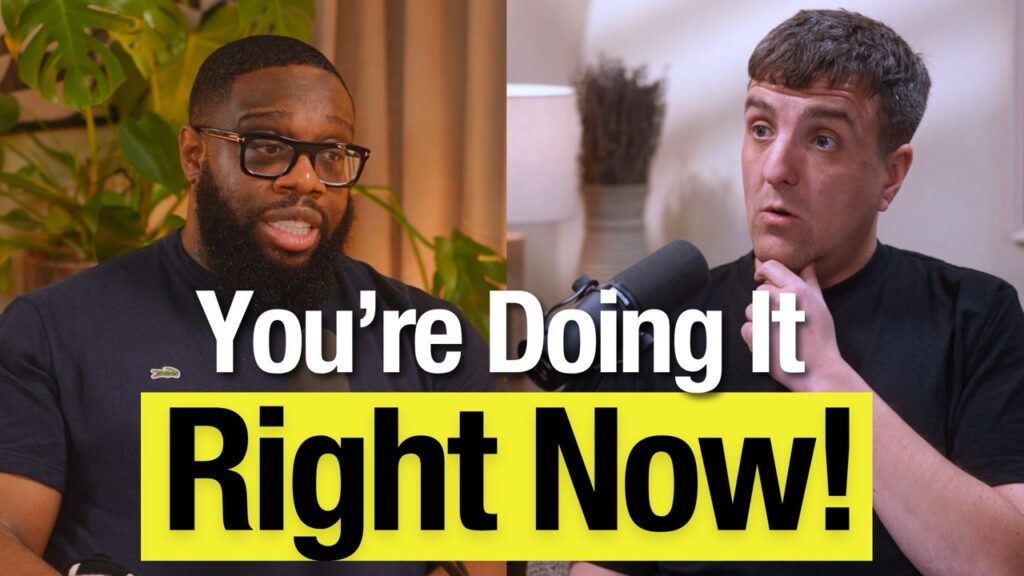
Listen to the pod


Emmelia Powell advises footballers and athletes on their money, and she’s married to one. Her husband Nick was signed by Manchester United as a teenager.
Here’s why over 40% of footballers face bankruptcy after retirement, the “cost of doing nothing” she says is silently draining ordinary savers too, and the four-letter framework she built to fix it.
I sat down with Emmelia Powell for episode 181 of the podcast. She’s director of Premier World Solutions, a financial adviser, and she works alongside her mum, who’s been in the industry for decades.
Day to day, she helps athletes, business owners, and families make sense of money in a chapter of life that’s often busy, confusing, and time poor.
She also has a front row seat to fast money most of us will never see. Her husband Nick Powell was signed by Sir Alex Ferguson as a teenager, and she found out on Twitter before he’d told her himself.
We talked about what that does to a relationship, why so many footballers end up broke, and the framework she’s built to help people, athletes or not, actually keep what they earn.
———
A huge thanks to the episode’s sponsor, Trading 212.
Get FREE FRACTIONAL SHARES worth up to £100 when you deposit £1 with Trading 212
https://www.trading212.com/join/MGP
If you don’t receive the free fractional shares, head to the menu and put the word ‘MGP’ into the promo code section.
(Capital at risk when you invest)
Commission-free investing. Other fees may apply. See terms and fees.
———
Gains App is LIVE!
An AI-powered budgeting and cashback app designed to help you make more of your money.
Download here: https://gainsapp.onelink.me/8IhT/oiaimr1z
———
Key takeaways
- Over 40% of footballers face bankruptcy after retirement. Emmelia puts much of it down to being handed big money before you’ve had the “messy middle” of learning to fail with small money.
- The cost of doing nothing with your money is silent. Delaying decisions for years costs you compounding and time you can’t buy back, even if the outgoings never actually show on a bank statement.
- 81% of impulse buyers regret the purchase within a day, according to a Harvard study Sammie cites, and the guilt often outlasts the item itself.
- Earning £100,000 in the UK feels like a milestone, but without structure it doesn’t make you wealthy. High income doesn’t remove financial anxiety, and can bring its own tax traps and lifestyle pressure.
- Emmelia’s G.A.M.E. framework (Goals, Assets, Mindset, Endpoint) is her way of turning money into a repeatable system rather than a source of anxiety.
Timestamps
- [00:00] Introducing Emmelia Powell, adviser to footballers
- [00:55] Man United signing, fast money, fast questions
- [07:31] Why Nick Powell turned down financial advice
- [11:33] Tool: why 40% of footballers face bankruptcy
- [18:26] The cost of doing nothing with your money
- [25:47] The impulse buying trap, Harvard regret study
- [29:18] Why £100,000 income won’t make you wealthy
- [40:02] Tool: the 33/33/33 lifestyle inflation split
- [45:17] Tool: the G.A.M.E. wealth framework
- [54:01] Teaching kids about money and debt
What happens when a teenager signs for Manchester United
Emmelia met her husband Nick when she was 15. By 17, working at horse stables and still at college, she found out he’d signed for Manchester United from a friend’s text, not from Nick.
“I texted him, I was like, have you just signed for United?” she told me.
The money changed things fast. “What you earn in a month can be more than what the people you trust earn in a year,” she said.
When the people around you can’t answer your questions anymore, isolation follows quickly, whatever triggered the windfall: a promotion, a bonus, or an inheritance.
Her own identity took a hit too. “I was acknowledged as Nick Powell’s girlfriend. My identity was something of a background piece,” she said. It took years to build an inner circle she trusted, separate from the noise around his career.
She stayed grounded through her own routine, riding horses most weekends and largely ignoring the football itself.
But she noticed the world around them shift regardless: strangers with opinions on Nick’s Saturday performance, on what he should do with his money, even doctored photos of her circulating online.
“That world just took me by surprise,” she said, “because I’d lived quite a sheltered, normal life up until that point.”
Why Nick Powell turned down financial advice
Early on, Nick kept his finances to himself. “I didn’t know what Nick had never told me what he earned,” Emmelia said.
“He felt very protective over this money.” Private bank wealth advisers circled, but he left it in the bank, which felt like the safest option at the time.
Her mum, an adviser herself, deliberately didn’t step in. “She respected his position. She didn’t overstep the mark,” Emmelia explained. Over time, as the family grew, money became a joint conversation. Transparency, she argues, builds with trust and shared responsibility, not on day one.
If you’re working out how to split finances with a partner, our guide to auditing your spending is a good place to start before you decide what stays joint and what stays separate.
Why 40% of footballers face bankruptcy after retirement
I asked Emmelia why so many footballers, some earning more in a week than most people earn in a decade, end up broke.
“It will vary from case to case,” she said. “Sometimes that is as a result of being misadvised. Sometimes that is the cost of inaction.”
Her explanation centres on what she calls the “messy middle”: the ordinary years most people spend earning modestly, making small mistakes, and learning from them cheaply.
Footballers often skip it entirely. “You’ve missed learning to fail and it not costing you everything,” she said. Without that struggle, money means less, and it’s spent faster.
Expectation compounds the problem. “As soon as you get that first income, there is a wider pressure to live up to what that lifestyle should look like,” she said, pointing to cars and watches as the obvious triggers.
Building a lifestyle before you’ve built the income to sustain it is, in her words, where the bankruptcy stats come from.
Many young players come from working class backgrounds and skip years of normal school life for academy training, arriving as professionals almost overnight.
Without a support network from the club or family that understands the numbers involved, Emmelia says, they’re left exposed at exactly the moment the stakes get highest.
“Nobody’s born perfect with money. This is a skill that we learn, and we continue to learn,” she added, a reminder that the same struggle applies well outside football.
The cost of doing nothing with your money
This is the idea Emmelia kept circling back to.
“Saying I’ll think about this when I’m closer to retirement… before you know it, a decade or two has passed you by, and what you’ve lost is potential returns, compounding, and time, and you can’t buy those back,” she said.
The damage doesn’t show up as a number on a statement, which is exactly why it’s dangerous.
“The cost of doing nothing, although it’s silent, isn’t silent when you get to 50 and recognise you’ve got another 20 years in a job because you can’t afford to retire,” she said.
Her fix isn’t a giant target figure, it’s a near-term one. She described telling her daughter, mid-run, that they were “just running to that lamppost,” and watching her find more speed instantly.
Money works the same way: a visible near-term finish line beats a vague distant one. Our compound interest calculator is a quick way to see exactly what years of delay cost you.
Why £100,000 income won't make you wealthy
We talked about the psychological pull of round numbers. Emmelia has seen plenty of clients hit six figures and assume the anxiety stops there. “High income does not equal wealth and it does not remove fears, anxiety, worries, pressures,” she said.
Beyond a certain point, she argues, chasing more money just delays the same emptiness.
“I see people who, on paper, if you looked at their pay slip, would say wow… and then you have a look behind closed doors, and it is fragile and frail,” she said.
£100,000 also drags UK earners into the 60% effective tax trap between £100k and £125,140, a genuinely tricky planning problem she says has no universal answer.
Lifestyle inflation makes it worse. Her rule of thumb for a pay rise: roughly a third to enjoy now, a third to invest, a third to save, so you feel the benefit without losing the progress.
If you want a framework for where the “saving” third should actually sit, our guide to emergency fund sizing is a sensible starting point.
Once that buffer exists, mapping the rest against a proper monthly plan makes the split easier to stick to. Our budgeting calculator is built for exactly that.
The Game of Wealth: Emmelia's G.A.M.E. framework
Out of her client work, Emmelia built a framework with four corners, which she only realised afterwards mirrors a football pitch. “G for goals, A for assets, M for mindset, and E for endpoint, and the system supports itself,” she explained.
The point isn’t complexity, it’s repetition. Small steps toward goals, resources mapped to assets, an honest read on money mindset, and clarity on the endpoint: what all of it is actually for.
“It doesn’t matter what you earn,” she said, citing the well known story of Ronald Reed, the petrol station attendant who died with an eight-figure portfolio. Mindset, not income, was the deciding factor.
She also teaches her three daughters the same principles early, including a memorable Costa hot chocolate lesson where the girls learned what debt actually feels like after spending £10.40 they didn’t have.
If your own household could use the same clarity on what things actually cost, our piece on how much you need to live comfortably is worth a read.
For a wider benchmark on where your own numbers sit against the rest of the UK, see our breakdown of average UK savings by age.
This transcript is auto-generated and lightly edited for readability, it may contain errors.
[00:00] Sammie: So Emmelia, welcome to The Money Gains Podcast. How are you?
[00:02] Emmelia: I’m good, thank you. Thanks for having me on.
[00:04] Sammie: Yeah, I have been following you on social media for a while.
[00:07] Emmelia: Likewise.
[00:08] Sammie: And I just love your approach. And I don’t think we’ve done this before, to have someone that kind of crosses over into business owners, but the sports area, football especially. But I’d love to, sort of, could you bring us up to speed with what you do on a day-to-day?
[00:24] Emmelia: Yeah, absolutely. So I am director of Premier Wealth Solutions [?], a financial advisor, and I work alongside my mum, who has been in the industry for decades. She’d probably hate me for saying that. But that relationship is really special to me. And on a day-to-day, I’m helping, like you said, athletes, business owners, and families make sense of their money in a chapter of their life that’s often busy, confusing, and time poor. So we bring some structure and clarity around that for them.
[00:55] Sammie: And your husband, Nick, was signed by Sir Alex Ferguson as a teenager. What was it actually like when there was, you know, that big move to a club like Manchester United, and obviously some money coming in, and you were both really young?
[01:08] Emmelia: Yeah. Yeah, I mean, I found out about it on Twitter. Never let him live that down. I was working at horse stables and my friend texted me, like, “Did you know this?” And I thought, you didn’t really have fake tweets back then, but I thought it was like a bot account. And I texted him, I was like, “Have you just signed for United?” And he was like, “Yeah.” How’s that cool, this is when he was trying to be cool. And now it’s very different, isn’t it? He’s a dad, and that excitement’s kind of gone. But yeah, it changed our life dramatically overnight. And fast income brings some big, fast questions. And we do recognise how incredibly fortunate a position that put us in. But I think that really helped me acknowledge how isolating your finances can be. And especially where the numbers start to get bigger, and they get bigger quite fast, how quickly you can outgrow your circle. What you earn in a month can be more than what the people you trust earn in a year. And when those people can’t help you answer questions, you start to feel quite isolated. And I think for anybody listening, they would relate to feeling isolated with money, whether it’s you’ve had a promotion, you’ve had a bonus, you’ve had a windfall, and suddenly having these big money decisions and not really knowing who to turn to or what to do or how to give that legacy some meaning, especially if it’s an inheritance and things like that. So yeah, I think our life did change, and I’m eternally grateful for that change, but it gave me some insights into why money wasn’t just the numbers on a piece of paper very, very early on.
[03:08] Sammie: Did relationships change? Because I imagine that’s a big deal, right? Like, everyone then knows you and knows that Nick signed for Manchester United, arguably the biggest club in the world at the time. And that’s a big step. So did people look at you differently? Did you feel different?
[03:27] Emmelia: Um, I think it wasn’t my success at that point, that was entirely Nick’s success. And if I was speaking on his behalf, 14 years in, I think he would say that he struggled with that. Because people expected him to be something that he hadn’t even come to terms with. His life hadn’t changed necessarily, but how the world saw him had changed overnight. And it did change for me in the sense that people would ask me questions about what he was doing, people would have an opinion on what he should do with his money or what he should do playing on a Saturday. And it was a strange reality until you got used to it and found an inner circle that you could trust.
[04:17] Sammie: And who were you during that time? Like, how did you feel? I’d love to understand that.
[04:24] Emmelia: Yeah, I was a teenager, so we first met when I was 15. And by the time he’d signed, I was 17, working at horse stables, and just normal. I was at college, I had two part-time jobs. And I can continually remember just being acknowledged as Nick Powell’s girlfriend. My identity was something of a background piece, and I was a stepping stone for a lot of other people.
[04:55] Sammie: Yeah.
[04:56] Emmelia: But I lived quite happily in my own world. I used to have horses, I rode every weekend, I didn’t go and watch his games, I wasn’t particularly interested in his sport. I was really passionate about horse riding and really enjoyed that up until having kids. So my reality of it didn’t change that much, although I was aware that other people potentially did see some difference in who we were and what our life looked like.
[05:22] Sammie: Yeah, and I completely understand that. It must be so strange for you, obviously going through that, but you ride it out, right? Because you play the cards you’re dealt with, you’re not just going to turn away from that. And I think that’s super interesting to understand, because when a footballer does, they are, you know, you see it now on Twitter and they just rank the girlfriends of the footballers and stuff like that. And I just find it, I actually find it quite crazy to watch that, and that they become commodities as footballers do as well. We were talking about this as well, and then just the way that they’re spoken about, and underneath it there’s, they’re people at the same time, and I just, yeah, I find it wild how we glamorise these types of individuals.
[06:08] Emmelia: I mean, our Saturday used to be, after he’d finished playing and stuff, we’d get Dominos, we’d get a McDonald’s, and then we used to love Suits, like we’d just sit, and then his Sunday would be his day off, and Frankie and Benny’s was a date night. We were really not ready for that lane of life at all. We did a Man United, I think it was like X Factor, or a big charity gala, and big names, like football player names. And I remember Nick saying, “Oh, we’ve got this thing tonight, can you come with me? Girlfriends are going.” So I was like, okay. And back in the day, when Topshop was the shop to buy your dresses from, I had a really old Topshop dress, and I was like, that’s the best thing I can do. And I just, yeah, that world just took me by surprise, because I’d lived quite a sheltered, normal life up until that point. And then it was quite glamorous. And yeah, people used to put pictures of aliens over my face and then tweet them. Honestly, bizarre, but madness.
[07:12] Sammie: Absolutely madness. Now, you obviously, when you’re going through that period, Nick originally talks about how he turned down financial advice. And I imagine that was kind of a decision that you would maybe have made together, but perhaps you were really young. What were you thinking yourself, when you saw that happening, and perhaps mum was leaning over your ear? What was happening there?
[07:31] Emmelia: Yeah, that’s really an interesting point. When we were first early on in our relationship, we actually didn’t have much transparency around money. I didn’t know, Nick had never told me what he earned. He didn’t tell me what he signed for, and I never asked. I thought that was his, that was his to share with me when he felt comfortable. And equally, my mum respected his position. She didn’t overstep the mark, she didn’t suggest he sit down with her. And obviously, once you’ve got some recognition as a footballer, and being at United, there were lots of private bank wealth advisors that would reach out to Nick, and he felt very protective over this money. And I’m sure we’ll talk about not doing anything, you know, is a decision in itself, but he just felt leaving it in the bank at that moment in time was the safest thing to do.
[08:25] Sammie: He wanted to focus on football as well, right? Yeah, yeah.
[08:29] Emmelia: Yeah, and it’s a big decision, isn’t it? It’s like decisions that I know have a cost to them, but I don’t really know if I’ve got the time and inclination to think about it. So over time, my mum did become an advisor to both of us. And over time, as we grew our family, that was very much a joined-up conversation. But at the start, Nick kind of just managed it himself, and we were just a young couple.
[08:55] Sammie: And I think, similar to myself and a lot of other people that I know, it becomes about trust and time, and as more responsibilities come into the family, those conversations become paramount. Yeah. And if they don’t happen, usually there’s a split, or there’s a divide, or there’s arguments, or whatever that might all be. And so transparency comes with time, and trust, and that’s usually built up from levels of responsibility. Would you say, would you agree with that?
[09:24] Emmelia: Yeah, I think that’s a really good point actually, because at what point that turns in a relationship can be very different for somebody. So there’s lots of couples choosing not to have children, and pursuing their career. And sometimes children is that shift, you know, we need to collaborate here because I’m going to be on maternity leave. But I think transparency and independence hand in hand are important. So having your own financial independence is really important. And I see what that can do to people where they don’t understand the money as the secondary partner in a relationship. But equally, collaboration and making sure you have a joined-up ethos and belief system around money is super important. So I would say you’re right, it’s not necessarily about everything having to be in one pot and divided, but the conversation is important as soon as you get together, really. I would say absolutely.
[10:23] Sammie: There’s no right way to do it. There’s methods. Totally. Some, like me and my partner, we split, a majority, 80% of our money goes into the joint, we keep 20% back. We have what’s called the FU funds.
[10:38] Emmelia: Yeah, nice, which is our money.
[10:40] Sammie: Yeah, like that’s our own individual emergency funds. Should anything ever happen between either of us, we have our singular finances to be able to operate, if something happened. But equally as well, we run most of our life as a joint. We eat the same food, we’re in the same house, it makes sense, right? But we openly speak about that. But I know other people who both get paid, they dump all of their money into the account, and they live out of that, and that’s very open levels of conversation, and it works for them.
[11:09] Emmelia: Yeah.
[11:09] Sammie: So I don’t think there’s any right or wrong when it comes to that.
[11:12] Emmelia: Yeah, and I would say that in this information abundance era, we have a lot of rules that people think are hard and fast and apply to every situation. And if only life was that simple, you know, take elements of what people are saying and then just mould it to your life. I would agree, yeah.
[11:33] Sammie: Yeah, it’s like the 50-30-20 rule. People stick to that these days, it’s basically impossible. But it’s a framework, work towards it. If it feels like it’s going to work for your life, I completely agree. But just coming back to, this is obviously a large part of what you do. And when I went into the research for this episode, it absolutely blew my mind, around the struggles of footballers, because we look at the footballers out there and we see the Mbappes and the Cristiano Ronaldos on these ridiculous, like, by the time we’ve earned that, we’ve worked 10-15 years, right, for a lot of people, and they get that in a week. And obviously that’s not the case across the whole spectrum of wealth, all the way up and down. But the stats around footballers facing financial struggles after retirement, over 40% face bankruptcy. Why is that number so high after they’ve earned so much, do you think?
[13:09] Emmelia: Yeah, and that is a sad reality, isn’t it? And it will vary from case to case. Sometimes that is as a result of being misadvised. Sometimes that is the cost of inaction. And I think that’s a really important point to make, and one that’s a bit sad to highlight, but to anybody listening today, that is a cost. There is a cost to indecision. Saying “I’ll think about it later” is a decision. Choosing not to address your finances and to bring some structure and clarity around them and to give your money meaning is going to cost you. And that’s the reality for footballers coming out of the game that haven’t necessarily sat and thought about it. And one of the biggest pain points that I see for footballers is that expectations can actually be quite crippling. So as soon as you get that first income, there is a wider pressure to live up to what that lifestyle should look like.
[14:22] Sammie: Oh, I see, like, he’s driving the Lambo or he’s got the watch and the mansion, now I have to. So I stretch myself.
[14:29] Emmelia: Yeah, if you think back to 18, 19, 20, how easily are we influenced? How much is our identity superficial? And one of the parts about managing money is that messy middle bit, where we’re earning money, but it’s not so much that it causes us significant risk. So when we make mistakes, we can learn from it and we can evolve at a pace that is natural. Where you get big money and fast money, and there hasn’t necessarily been that struggle, you’ve missed all of that messy middle. You’ve missed learning to fail and it not costing you everything. And without doing that, the value of that money is less significant. I’m not saying insignificant, but it is less significant, because you haven’t had to struggle. It doesn’t mean as much because it didn’t take as much to earn it in a shorter time frame.
[15:29] Sammie: So I see what you’re saying, because it’s just one day to the next and a bit of paper, and then you’re essentially signed, or you’re not, and then it’s like 50 grand a week or two grand a week or nothing.
[15:41] Emmelia: I’ve earned a million pounds in a year like that, and, all right, I absolutely for no minute am I saying being a footballer isn’t a hard job. It is a hard job, I’ve seen the inside of it. But it is a very different earning projection, and, if we think about us as normal people going through a system, and the listeners who have gone through school education and then onto a career, we’ve had that time to grow and develop. They skip all of that, and then suddenly it’s all of these big, expensive questions, big decisions, people having opinions. You needed that time to mature with it. So I think that can cause a lot of the feet to be pulled from the ground. And if you’re not surrounded by the right people during that transition period, once you’ve become accustomed to a lifestyle before you’ve built the lifestyle, that’s where those stats come from, in my opinion.
[16:50] Sammie: A lot of these kids are working class kids that go into an academy, skip a large part of school to train, and then become professionals almost overnight. And some of them know they’re destined for it because they’re unbelievable at that, you know, whatever that might be, you all know those kids that came through the ranks etc. But they don’t have that core unit around them. The people they hang around with are literally the kids from their old estate still. Because they go back to that life, and then suddenly they’re in the penthouse in the city centre and they’re wrapped in this cocoon of the club. And if there’s not that support system from the club or the network, then they can be left quite exposed with quite a large sum of money, which can have, I would think, if you put me in that environment, I would go off the rails.
[17:37] Emmelia: As a teenage boy, I mean, look, if we’re being totally honest, and if everybody is being honest with themselves, we’ve all had a period of life where we’ve been less responsible with money. Me too. Nobody’s born perfect with money. This is a skill that we learn and we continue to learn, and we have to.
[17:59] Sammie: Yeah.
[17:59] Emmelia: Nobody just got up and walked. It’s something, it’s a craft, and you’ve got to keep re-educating yourself on it. So yeah, it’s an isolating place, put it that way. And if those people around you either don’t have the answers or don’t know the right support network to put you in front of, you’re left to do it all alone. And, totally, it’s hard.
[18:26] Sammie: So you mentioned this idea of the cost of doing nothing, and we’ve sort of breezed over it a touch. And I think it’s so important, because it affects everyone. Can you explain that for, say, the average listener that’s listened to this and wants to understand how they can make their money go a little bit further for them? What’s the cost of doing nothing?
[18:45] Emmelia: Yeah, so like I alluded to before, saying “I’m not going to make a decision” is a decision. And saying “I’ll think about this when I’m closer to retirement” or “I’ll do this when I get a pay rise”, before you know it, a few years, a decade, two decades have passed you by, and what you’ve lost is potential returns, compounding, and time, and you can’t buy those back. So once that’s gone, the cost of doing nothing, although it’s silent, it’s not when you get to 50 and you recognise you’ve got another 20 years in a job because you can’t afford to retire. The cost of doing nothing is the lack of freedom that you’ve got, the lack of independence tomorrow. And although we can go through life thinking, “I won’t have to work until I’m 65, I will retire in my 40s,” unless you are purposefully planning for that now with clarity on what you need to do it, you won’t get there. And that’s the cost. It’s not about having this ridiculously ambitious number, but it’s about building structure, about having a focus. I was trying to explain it to the girls the other day, and I took my eldest for a run, and I recognised that she dwindled halfway through the run. And the moment I told her, “We’re just running to that lamppost”, she found a bit more speed, and I thought, like money, if I can tell you, Sammie, your focus is this, this is your finish line, aren’t you going to work harder towards that than if you were just dwindling? So I actually think it might feel easier to do nothing, but it can be really empowering knowing what you’re aiming for.
[20:49] Sammie: I love that you said that, because it’s one of my favourite things to talk about, because I think it’s really important to do the number and then work towards that. I also think it’s important to design your life. A hundred percent, and then look at it and put a figure towards that, and then pop that over there, because looking up at that figure makes you go, never gonna get there. Especially, because a lot of, we get, I get messages like this all the time. “I’m 45, I’ve done nothing, I’m really worried, what do I do?”
[21:16] Emmelia: Yeah.
[21:17] Sammie: Well, you need to design your life based on if you’re 25, 35, 45, it’s going to be a little bit of a different journey for you, especially if you’re starting from zero. But it doesn’t mean it’s not going to happen. It just needs to, you know, you need to be realistic about it. And then let’s say it’s 500 grand, for the sake of numbers. Yeah. But then it’s like, well, okay, what can I probably do in five years? And what can I do this year? And then literally, what can I do this month? And then with that finish line thing, it’s exactly the same thing. I could definitely hit that in a year, and that’s all I focus on. Forget everything else, I know I need to do that, it’s in the back of my mind, but you compartmentalise it, and it’s just like, let’s nail in on this year. Because I can do that, and it, I can look at that and my brain can process it, 100%, whereas you can’t process 500 grand, because you’ve never had it in your account. And it would feel odd to you if I dropped that in your account today. Yeah. So then, but you can focus on five grand, for example. Because you can feel that and you know what that looks like.
[22:25] Emmelia: The whole point is, like you said, once you’ve got a bit of clarity on the next step, everything else is moving, but you’re in control. Don’t we all want to feel like we’ve got a handle on it? Whatever it is, even if the reality isn’t what you wanted it to be, and it falls, 45, you feel behind the mark, you have still got the ability to be in control of what your reality will look like. And when I sit with clients, I say, my job isn’t to tell you not to spend, it isn’t to tell you the right or wrong thing financially, it’s to show you the compromise you’re making, because everything is a compromise. If you want something today, then absolutely have it today, but the compromise to that is this later. And when you start thinking about that, it’s not that you can’t do something, but what are you taking from somewhere else? It’s a bit like raising children, isn’t it?
[23:21] Sammie: Oh, yeah.
[23:21] Emmelia: There’s a compromise everywhere. And it’s the same with money.
[23:25] Sammie: You buy this today, that’s a future cost, and that’s not necessarily the worst decision, it’s just you need to be okay with that decision. It’s the value, right?
[23:32] Emmelia: 100%, I was going to say. Yeah, it definitely makes you think, is that worth it? If I was impulsive, I’d have just bought it. But when you start thinking of things as a compromise and a future, you’ve taken away from your future, then you start to value things a little bit more.
[23:51] Sammie: I do the whole thing now where I’m like, I don’t do the future thing actually, I should probably do that. But I do the whole question around, what I’ve been doing over the past year, is like, I’m the CEO of my own personal finances.
[24:04] Emmelia: Yeah.
[24:04] Sammie: And so would I make this as a business decision today? And sometimes the answer is comfort and yes, and I make that decision, I’m totally okay with it. And then I layer that on top of, like, having 500 quid a month, let’s say for example, it could be 200, it could be 300, whatever, it could be two grand, who cares, but whatever fits into your budget, I can blow that, but no matter what, and I don’t feel guilty, and I’m okay with putting that on my farm shops and my occasional Uber Eats, because I can’t be bothered to cook or whatever. I don’t feel bad about that. But then the rest of the money is very much like, okay, if I buy the coffee machine that’s 500 quid, that’s taking away from the bigger goals. And then you have to weigh up what’s more important, the coffee machine now, or is it this goal which I set before, which I actually was really motivated about at the time, I just now need to remind myself about it.
[24:58] Emmelia: Yeah, yeah. Delayed gratification is a skill, but the more you practise it, the better it becomes. And I always think when you’ve waited for something and you eventually get it, you save for something, it’s a milestone, like buying your house, getting married, in that moment, after all, it just feels slightly different. When we’re just buying like that all the time, you’ve got rid of that connection, that again, when things come easy, when there isn’t a struggle, you don’t have the same level of satisfaction from it. It doesn’t feel like it means as much to you as if you do just delay it even a little bit. A week later, do I still want it the same as I wanted it last week?
[25:47] Sammie: 100%. Harvard did a study, it was 81% of people who made purchases based on impulse regretted it the next day.
[25:56] Emmelia: Oh, really? Interesting.
[25:57] Sammie: So that just shows, right, they’re a large part of it. And actually, when they went deeper on that study, it wasn’t actually the item or the physical purchasing itself, it was actually the anticipation of buying the thing, the dopamine rush of feeling like they needed to.
[26:17] Emmelia: Ripping the wrapping paper open kind of moment.
[26:20] Sammie: Exactly. And often when it arrived, if they bought online, they returned it. Or a lot of people, really interestingly, kept it, but felt really guilty about it and never used it. And I have this, I talk about this, where I bought myself these gold Nike Air Max 97s, they were gold and with like a red tick on the side. Literally awful. But the ad got me, and I was there, and they stayed in the box. I had 30 days to return them, and they were beautiful, but I was like, I would have looked like an absolute melt if I’d worn them out. But I waited to the 29th day and I sent them back, and the guilt was there. And I always take myself, I think moments are really key when it comes to mistakes.
[27:06] Emmelia: Yeah.
[27:06] Sammie: Because you were like, remember, that’s your night care moment, you’re gonna do that again, like, don’t go and buy that, because you’re gonna feel the same way. And you just remember the feelings, and then you put them back into your finances, and I find that really helps.
[27:18] Emmelia: Absolutely. I mean, ultimately, money is a tool, and if you don’t control it, it will absolutely control you.
[27:26] Sammie: Yeah.
[27:27] Emmelia: And the best will in the world, we’re all going to have these impulses. It’s not about being perfect, but that whole cycle of reflection is the only way you can improve it as a skill. So, yeah, the gold trainers are your reminder.
[27:44] Sammie: What’s yours? Have you got any?
[27:45] Emmelia: Oh, I’ve bought loads of things, and there’s moments where I’ve been careless with money. Convenience spend is something I talk about quite a lot. I see with a lot of high earners that they’ve got enough money to think, “I’ll just pay for that” or “just bin that,” that kind of attitude where “I can pay to replace it, so I will.” So it’s just inconvenient. Or even, “I won’t return those trainers because I can’t be bothered”, and I can kind of afford to take the hit, or I’ll just pay to do something to a greater degree because time’s poor, I don’t have the inkling to fix this problem, so I’m just going to pay for it again. A carelessness, but what comes with success usually is this pressure to be focused on the thing that you’re earning and not everything else, so it becomes inconvenient to fix other problems. So yeah, I’ve had loads of impulsive moments. By no means have I been perfect with money, but isn’t that the beauty of it? Because it is relatable. When people say to me, “Oh, you’re going to hate me for this” or “I spent this,” I’m like, that’s not a problem, you know. I’m actually so glad that you feel like you can tell me, because that’s the whole point, isn’t it? And if it meant enough to you that it was worth it, then great. If not, then let’s just learn from it and move forward, and you might not do it again.
[29:18] Sammie: You said that once someone hits 100k without the right structure, any money after that doesn’t materially change their life forever. That sounds mad to me. Walk us through why.
[29:29] Emmelia: Yeah, I think the perception is that the more you earn, the happier you will be, and that isn’t the reality that I see. High income does not equal wealth, and it does not remove fears, anxiety, worries, pressures. So beyond a certain threshold, and I think there are studies on this, but I’m not going to cite them in case I’ve got the date wrong or something, but beyond a certain threshold, everything that you think you are chasing won’t actually be the reality you think it will give you. And I see that time and time again, that people earning a lot of money are still very isolated, still feel an emptiness, still have problems at home, see family units break down, start having expensive decisions, complications, more money can create more problems for people, and they start coming with a bigger price tag. And I’m not necessarily saying it’s at that £100,000 threshold, but I definitely see the more you earn, the more you think earning more will get you closer to a version of reality that you think will make you happy, and actually all it does is leave you feeling quite empty on quite a lonely journey. I think £100,000 is quite a pivotal one in the UK for a lot of people. 100%.
[31:07] Sammie: I completely agree with you, by the way.
[31:08] Emmelia: Yeah, the emptiness of just chasing more money. And my job is to bring more meaning to people than that, because money, no matter how many zeros you chase, is meaningless unless you relate it to something in your life that is meaningful. What you stand for, who you want to help, what it means to your family and your stability, all of that emotional piece around money. What does good look like? It doesn’t look the same to you as it would for me. You probably don’t want to do a parkrun on a Sunday morning, but that makes me so happy doing, and it’s free, and it’s back on the road, so you could bring your Nikes next time you come, and there’s Sammie go. But yeah, you know, what good looks like is different to different people, and it’s not chasing more and more money. It really isn’t, beyond a certain threshold, engineering your life is much more about the little small habits, the tiny behaviours that aren’t empty, they really give you that purpose. But yeah, £100,000 in the UK, especially for families, is a particularly hard time. And I have a lot of people reaching out to me around, how do I manage keeping my income below that threshold, because I’m falling into that 60% tax trap? And it isn’t a definite answer, because there’s a whole picture there, again, denying yourself pay increases, or moving up a career ladder.
[32:50] Sammie: Yeah.
[32:50] Emmelia: I don’t know if I’m encouraging people to do that, but you’d really need to look at their situation and say, is it going to cost you more taking that promotion? Is there a way to still benefit from that pay rise, but maybe not right now? And look at things like pensions.
[33:08] Sammie: Salary sacrifice or something like that.
[33:11] Emmelia: Or is there other things that we can do here to make it more efficient? So when people reach out to me and ask me as if there’s a black and white answer, it’s quite hard to deliver that, well, I can’t give advice anyway, so I’d have to know their situation. But yeah, I always think you get to 100 grand and you think, “oh my god, I’ve dreamed of earning this much money, this is incredible.”
[33:39] Sammie: You used to look up at that, right?
[33:52] Emmelia: Yeah, that used to be the moment.
[33:52] Sammie: And it still is for a lot of people, by the way, I’m not going to part that away, but it hasn’t got the same gravitas of what it used to have, because the numbers have shifted so much.
[33:58] Emmelia: And it’s not even about what you consider wealthy, because in my head, a hundred thousand pound income is still like, wow, that’s a really good salary, and a million-pound house is still like, whoa, you’re like the Fresh Prince of Bel-Air in that. But what it buys you today is not what it used to buy you. So even though we might still be anchored by those clean numbers, it isn’t quite the same reality. And I think now more than ever, people need to recognise how much our life is costing us and why we need to do something.
[34:35] Sammie: We’re doing a video about it today, and it’s like someone earning £100,000 in London.
[34:39] Emmelia: Yeah.
[34:40] Sammie: And their other half just has a small child, for example, new to this, you know. It’s extremely difficult with maternity, time off, wanting to spend time raising the small child. So often that’s time off work for an elongated period. And if there’s one person on 100k, before maybe the partner was on 50, 60, 70k, whatever, could be matching, I’m not doing any gender pay gap stuff. Yeah, no, no, no, no. But you know what I mean, right? There’s money coming in from two places, and then suddenly there’s one, and even though that’s 100k, actually it doesn’t end up a lot, especially when you look at the costs, because you’ve probably both raised your lifestyle and expectation of the 150, 160 grand coming in as a joint couple.
[36:33] Emmelia: Yeah.
[36:34] Sammie: And then it’s suddenly not. And it’s really interesting, how seasons of life completely change. And you talk about this, so there’s a transition. Oh, nice, there’s a transition here. Because you talk about key earning periods of your life, and where suddenly you might be a bit flush with money or not. And how to treat those moments when they come, especially with footballers, athletes, business owners might have a cash injection from a sale of a business, or take a big fat dividend or something along those lines. What do people do in those situations?
[37:08] Emmelia: Yeah, I think, I mean, in football, you play to the whistle to plan. Business owners have got slightly longer and slightly more available tools and resources to plan, but ultimately, without doing a plan, they are going to run out of time. And I think that is just a universal truth to everybody, that you do need to take a handle of this, and use the athlete’s life cycle and the stats that sit behind that, that we talked about earlier, as a reality that it doesn’t matter how much they earn a year on a varying scale, you can still run out of money. You can still have nothing to show for it at the end of the day without actually being intentional behind what you’re doing. So footballers have slightly less, have slightly more available resources to plan with, because it’s all through PAYE. So for a lot of the listeners, if they’re employed, it comes through a salary, so they can only use the resources that are available to them. They don’t necessarily have the same creativity as a business owner who has a limited company structure, that can perhaps use offsetable allowances, pensions to reduce tax, paid in by either an employer or a personal contribution, reducing two different types of tax, employ family members, put life insurance through the company and still benefit from a tax perspective. So there is definitely more resources in a business world. But fundamentally, it doesn’t matter what resources you have available to you, I actually think one of the most valuable tools that you have across the board with money is your mindset. And again, it doesn’t matter what you earn. I think there’s been lots of citations, Morgan Housel cited one, the janitor that died with, Ronald Read.
[40:02] Sammie: Yeah, yeah, yeah. It doesn’t matter, you can earn 30 grand and you can technically be more wealthy than a footballer earning 500 grand a week.
[40:11] Emmelia: Yeah. Technically. And I see that, I absolutely see that. I see people who, on paper, if you looked at their pay slip, would say, wow, and you’d be envious. And then you have a look behind closed doors, and it is fragile and frail, and it doesn’t have quite the same level of independence that you’d expect that income to give you.
[40:36] Sammie: Lifestyle inflation.
[40:38] Emmelia: Oh, it catches us all at some point, doesn’t it?
[40:40] Sammie: Yeah, I mean, look, I’m not saying no to that. I think it’s important to upgrade your life. And I don’t agree with these people that are like, don’t inflate your lifestyle at all. That’s just bollocks.
[40:53] Emmelia: It’s just killing ambition, isn’t it? We all need to motivate ourselves to a better reality.
[40:59] Sammie: You want nicer things. And that’s fine. We’re here for a short time. The cashmere feels better than not, at the end of the day, and that’s just an example. It doesn’t necessarily mean go, don’t go buy cashmere, unless you want to. The thinking behind that is that, for example, if you get the five grand pay rise or the ten grand pay rise, 33% of it, inflate your life, enjoy it. 33% into your investments, 33% into your savings, then you’re moving multiple goals forward, you’re feeling better, you’ve got something nice for doing well. You’re feeling good, but you’re also saving, you’re also investing.
[41:39] Emmelia: Yeah.
[41:39] Sammie: And if you just inflated to the 10 grand, got the 25 plate Audi, suddenly you feel like you’re super cool, but actually it’s a 15-minute commute to work, and you’ve just got a really expensive lease on the front drive. What are you doing? That’s a status decision, who’s that for? Exactly, it’s not for you. So I think there’s a game that we can play with ourselves, and it is a bit of a game. But yeah, lifestyle inflation is important, it should happen. Everything else inflates, your lifestyle should get better.
[42:13] Emmelia: If your money isn’t affording you a level of comfortability that is better than tomorrow, then what is it for? Like I said, money is a tool, and you can control it, but that doesn’t mean that you can’t enjoy it, it is there to be enjoyed. The objective is never to deny yourself.
[42:35] Sammie: Exactly, exactly. But the Kia gets you to the same destination. So you have to ask yourself, are you buying it for you or are you buying it for somebody else? It’s a social status game.
[42:45] Emmelia: Yeah.
[42:46] Sammie: Because, you know, I spend a lot of money on food and on my bedding.
[42:50] Emmelia: Yeah.
[42:51] Sammie: But that’s for me. No one sees that, no one goes in my boudoir, and they never should. But I’m happy to spend money on that, but then there’s other things, that I’m now moving away from wearing so much designer gear and all of these things which I used to just be obsessed with. And as I’ve got older, I’ve realised that it was only me trying to actually show outwards to them.
[43:17] Emmelia: Yeah, when was that turning point for you, do you think?
[43:20] Sammie: I still struggle with it now.
[43:22] Emmelia: Yeah.
[43:22] Sammie: But there’s certain brands that I’ll buy now. I’m obsessed with Carhartt.
[43:26] Emmelia: Okay.
[43:27] Sammie: But I wear Carhartt for everything, and I’m okay with wearing Carhartt, and I know that’s a brand, but I have the same Carhartt t-shirts which I bought 10 years ago, because they don’t break, and I’m alright with that. And that’s a decision that I’ve made, but I wouldn’t, I think even if I came into loads of money, I would just wear nice suits and things that, I wouldn’t have the big flashy brand on the front.
[43:54] Emmelia: Yeah, yeah, yeah.
[43:55] Sammie: I used to be like, shot jacket, bad, you know what I mean? It used to be very loud. And I think what I’m buying now is much more understated. If I buy something in Carhartt, it’s got the tiny badge there, and no one can see it, muted, exactly. So I think that change happened when I, one, grew up a little bit, two, the goals got bigger than the clothes. I have a long-term partner, so I didn’t need to show off.
[44:21] Emmelia: You’ve got stability elsewhere, yeah. Do you find that the rest of your circle kind of matured through that cycle with you, like your friends? It’s interesting.
[44:33] Sammie: A lot of my friends are quite high up in fashion.
[44:35] Emmelia: Oh, no way.
[44:36] Sammie: Okay, so they’re very flamboyant, a lot of them, and wear cool stuff. But that’s just them. And I think it can be part of your identity. If you love nice clothes, wear nice clothes, it’s totally fine. It doesn’t have to be part of who you are, but your finances are absolutely a mess underneath it, and you’re spending all your money on really expensive stuff. It’s when your finances are a mess, but suddenly they’ve got the new Prada bag.
[45:04] Emmelia: That’s when the math ain’t mathing.
[45:07] Sammie: How are you doing that? Yeah, likelihood is credit cards, right? So it’s just a game that you play. But on the subject of games, yeah, the game of wealth.
[45:17] Emmelia: Yeah.
[45:17] Sammie: You messaged me about this, and I’m really intrigued. But before we get into that, can you just, why a game, and why did you come up with it? What was the reasoning there?
[45:28] Emmelia: I think of personal finances like a game, and there’s tricks and rules and a system, and I just think most people are playing it without really ever relearning the rules. Money is something you can master if you’re shown and given the resources and the tools. So the Game of Wealth, I recognise that some people don’t have a relatability to money, they just can’t get it. But when things are broken down into a way to think about things, and into analogies, I think it lands better. And I see the game playing through in lots of different ways. Compromise being a game with yourself and thinking about who am I buying things for, being a game in your own psychology. And there were just lots of tie-ins to it. And obviously, working within football and sport, I recognised that there was this parallel to the game that I’m helping people kind of move through professionally, in business and football. So yeah, that was the beginnings of a framework that essentially has four corners.
[46:57] Sammie: Okay, like a football pitch.
[47:00] Emmelia: Well, do you know, I didn’t even know that, but yeah, now you’ve said it, it has four corners like a football pitch. And each of the four corners are aligned together with intention at the heart of it, and they are there as a support system.
[47:16] Sammie: Okay.
[47:16] Emmelia: So G for goals, A for assets, M for mindset, and E for endpoint, and the system supports itself. So, what are the little steps that you need to take today? As for those goals, what are you going to use to help support them? How do you think and feel and react to money? And then the bigger picture, what is it all for? So there’ll be more content, more of that being built out across my channels. But I’m hoping it really starts to become something quite universally understood by people, that they can relate to no matter what chapter of life, the game will keep in motion and keep moving with them. And it’s just to help them keep coming back, cover all four corners of wealth, because that’s what keeps the system going.
[48:10] Sammie: It’s accountability. In a way.
[48:13] Emmelia: 100%. I think discipline, focus, accountability, they’re words that I come back to in my own finances a lot. With my own career, with raising children, with everything, I think they are really important fundamentals of being good at something. So, for wealth as well, absolutely.
[48:36] Sammie: You mentioned mindset quite a lot, and I think that’s one thing that we both really relate on. But if someone’s listening to this now and they’ve struggled a little bit, or they don’t understand what the next step for them is, what’s the first move that you would make with someone, do you think?
[48:55] Emmelia: So if somebody was sat and wanted to make reason with it financially, most of us just sort of bundle through life, flying blind is a phrase that somebody threw my way the other day.
[49:09] Sammie: Flying blind is perfect. Yeah, because it’s like, you just bundle through, you make mistakes, you get better, you figure things out here and there. But if someone’s like, right, no, I don’t really enjoy this kind of figuring it out thing and just bundling through, and it’s life happening to me.
[49:22] Emmelia: Yeah.
[49:22] Sammie: What if you were to say, right, today.
[49:26] Emmelia: I want to be intentional. I want to understand.
[49:28] Sammie: Where do I even go? What’s the first move you think you would make with someone?
[49:32] Emmelia: I think this is the whole evolution of this framework, that you can think about your ikikagi, I never know how to say it.
[49:42] Sammie: Ikigai.
[49:43] Emmelia: Ikigai, yeah, that one. And you can think about those things that are really important to you, your values, beliefs, your morals, what is the foundation of your own emotional stability. But it has to bleed into this framework, this bigger picture, because there are moving parts to our lives. So even if you find something that fundamentally brings you happiness and that motivates you and maybe even pays you well, it has to have an evolutionary cycle. Like we were saying earlier about business and career progress, what is the end point for you? What is it all for? And at the top of the chain, it’s, I don’t want to set an alarm clock on a Sunday. I don’t want to have to worry that if I don’t look at my phone, something will have landed and it’s only me that can sort it. That level of anxiety, I just don’t need anymore. So going back to the earlier point, where do you start with mindset, I think it’s getting firm on some of those non-negotiables. Have a look at the resources and what is in your lifestyle right now that does or doesn’t fill your cup. We both recognise professionally elements of our roles that we do and don’t like, and they’ll be the same translation into our personal life. There are elements of my personal life I really don’t like. I don’t like doing the ironing. So, if I’m working really hard, do you see that? I don’t mind cleaning my car, but I couldn’t think of anything worse than doing that.
[51:16] Sammie: I get that.
[51:17] Emmelia: You know, working hard and earning money for me is to remove things I don’t like, because I’m building towards something that is going to make me feel freer. So I do do a lot on mindset. I think that’s a whole other conversation in itself. I love talking and helping find motivations for people and helping get really clear on what’s really important to them.
[51:42] Sammie: It’s funny, we get into our 30s and we get obsessed with mindset.
[51:45] Emmelia: We do, yeah, it gets really deep, doesn’t it? It’s like, whoa, what am I here for, what’s my purpose? 100%. Yeah, I think I’d want to give that a little bit more of its own conversation, but I do post a lot about concepts like social debt and pressures and insecurities on the mindset piece, across channels, and I know you do too.
[52:12] Sammie: So yeah, I’m massive on abundance. I just believe it, take it, get woo-woo, use absolutely everything that’s in your power. 100%. Convince yourself you’re going to be better, use that, because if it does and it works, then at least you’re going to feel way better.
[52:29] Emmelia: Well, nobody else is going to be telling you.
[52:31] Sammie: Totally.
[52:32] Emmelia: Nobody else, same with money, nobody’s going to come and save you. So you can go through a system, and I do hear a lot of people who say, “well, I don’t have anything left over at the end of the month,” and I totally get that, I really do get that, but nobody is going to rescue you. So we have this situation, and you have choice. You can choose to do something with this, and the choice of that reality might not be great. And I don’t mean to say that without any empathy, because I recognise that there isn’t a lot of wiggle room for some families right now. But yeah, I think just that visibility, being empowered to make those decisions, does change things and it does help.
[53:20] Sammie: You’re a mum of three. How, first off, how do you do that?
[53:25] Emmelia: Three girlies, I know. It’s all right now, but I think when they’re like 12, 13, and 15, it’s going to be…
[53:25] Sammie: I have three younger sisters.
[53:25] Emmelia: Okay, that’s fun. How was that growing up?
[53:37] Sammie: Interesting.
[53:38] Emmelia: That’s what I think’s coming to get me.
[53:39] Sammie: Four women in the house. I’m actually quite comfortable around women in that environment, just because that’s how I grew up. And my dad was always working in the clubs and stuff, so I liked that, you know, growing up with sisters.
[53:54] Emmelia: Wow, yeah.
[53:55] Sammie: And I’m the oldest as well, so I used to get it. But it’s nice.
[53:59] Emmelia: It’s nice.
[54:01] Sammie: How do you talk to your kids about money, especially girls?
[54:05] Emmelia: I’d love to think that because of what I do, I’ll get this right. But I’m not delusional enough to think that even with all of these things that I say, I talk to the girls like this and I do this with them, that they’re going to wake up and be perfect with money. Because I think as parents, we try with best intentions to set our kids up with all the love and care and support, and still get it wrong, and think, I thought I was doing right by them, and look what happened, or life had a funny way. So I don’t talk about how I parent my kids to say that this is the right way to do it, who knows, time will tell. I’m sure one day they’ll be on a podcast and they’ll be saying, “my mum ruined my relationship with money,” and I’ll be like, oh dear, personal brand gone to nothing now, thanks girls. But I think one of the most important things that I recognise is creating a struggle and not overly engineering comfortability for them, because I think there’s so much learning in struggle and failure and getting things wrong and recognising the value. I took them to Costa the other day and I’d printed off a list of chores. 50p is the going rate. So I’ve had my car cleaned for 50p, I mean, it wasn’t cleaned, there were streaks at like three different heights across the car, they were in between. But 50p for each. I love that. And I think they’d got themselves to three pounds, and they were feeling wealthy. They said, “can we go and spend it?” And I said, absolutely, that is entirely your choice. And some people might say, “oh, did you not tell them to save it?” And I said, no, they need to learn to spend it and not have any tomorrow, and then go, “I’ve got to work for it again.” It’s like, yeah, because you chose to spend it. Letting them learn that lesson is more valuable than me telling them. So I need them to struggle. And that’s what I’m trying to create. I’m trying to give them the right tools, not to give them everything, but for them to find their own everything. I think that’s really important.
[56:18] Sammie: And they’re like sponges now as well.
[56:21] Emmelia: They are, yeah, they are. So we go to Costa and they like a white hot chocolate from Costa. So I said, that’s fine, are you going to get one each? And they said, yeah, I’ll get one each. And I said, okay, well I’ll cover it and you can pay me back when we get home, because I didn’t actually know how much they were. So I paid for it, and there were only two of them there, so it was £10.40.
[56:41] Sammie: Oh my god.
[56:42] Emmelia: And I said, okay girls, so you owe me £5.20 each. And they were like, “for the drink?” And I said, yeah, and I hope you drink it all, because if you waste it, that was hoovering, washing the dishes, doing all of these things. And their faces… they were in debt, yeah.
[57:00] Sammie: Yeah, yeah, yeah.
[57:00] Emmelia: And they did, and I wrote it down, and I said, you know, that’s, you’re going to have to work that back tomorrow, because that whole point about debt, you just spent money that wasn’t yours. Now how does it feel earning that off? Because it’s nowhere near as nice as spending it when you had it.
[57:14] Sammie: Oh, yes, I’ve been there, yeah, exactly.
[57:16] Emmelia: So, it’s all of those little things. And I’m super transparent about money with the girls, and they’ll say, “my friends are going away this half term, why are we not?” And I say, I can’t, I can’t afford to do those things. Again, if I wanted to pay for them, we could go and put it on a credit card, or we could use our savings, but that’s all money that is earmarked for something else. And again, it comes back to that compromise. So I can’t, I don’t have a surplus amount of money to take you on holiday this half term and every other half term. So I’m transparent, whether or not that leads them to have worries about money because I’ve been so open, I don’t know, but I am an honest person, I’d tell anybody anything. So that’s just how I raise them across the board, not just money, everything. So yeah.
[58:08] Sammie: Yeah, it’s bringing them along for the ride rather than teaching them as they go, right?
[58:13] Emmelia: Because I’ve not got it figured out. I’m not perfect at everything, let’s be messy together and work as a team, and totally.
[58:20] Sammie: I think kids can spot that too. But a lot of parents try to shield their kids from everything, and actually there’s probably, obviously there’s things you need to.
[58:29] Emmelia: It’s so hard, isn’t it?
[58:31] Sammie: They do still pick it up.
[58:33] Emmelia: They do, yeah.
[58:35] Sammie: I used to think mum and dad were absolutely perfect with money, and then I came to realise they’re just not, and you learn that later on, that they shielded me from that. But actually, I was just as bad as them when I got let loose, and I’ve had to relearn myself, but I picked that all up from them subconsciously. They probably thought they were shielding me from it, but they didn’t, because I’ve got to be able to do that. That’s so interesting, isn’t it? So I think it happens. But I love that your daughter said this, she wants to work Monday to Wednesday and play football Thursday and Friday. That’s life by design, right there, right?
[59:14] Emmelia: Isn’t that, and it just goes back to the point you said, maybe she sees this weird work-life balance I have at home. I drop them at school and I pick them up, but then I work in between, I work weekends, maybe this is the reality that is leading the way in. She thinks that’s a normal work life, because she sees this freedom and a career that I’m engineering based around my family and what works for us. So, I mean, goals.
[59:48] Sammie: Three days on, three days off. Smashed it.
[59:51] Emmelia: I know, I know.
[59:52] Sammie: But do you think we can try and work towards something like that in the future? Because I think a lot of people see retirement as this, that’s it, flick the switch, bye. But actually, potentially, because, the reason why I asked that, is a friend of mine, her dad’s just retired, and he went straight back to work doing something completely different for three days a week, because he got bored within a week. And he said, well, actually, it’s perfect for me, because three days a week I’ll play golf, if I did that six days a week, I’ll go mad.
[60:22] Emmelia: Yep.
[60:22] Sammie: And then three days I work, and we live in England, and it rains every, yeah, totally, but that’s now, it’s like life by design. So you could do that.
[60:31] Emmelia: Well, I think that’s the point, isn’t it? And this is such a big focus point with my client bank, because that cliff edge comes, whether it’s retiring from football in your mid-30s, when we’re just finding our feet now and getting creative and enjoying life.
[60:49] Sammie: Yeah, wow.
[60:50] Emmelia: Or selling a business. And the point isn’t money, the point is purpose, connection, social, routine. That, again, this is what I’m saying, some of the most priceless things in life that mean the most to us don’t come from earning more.
[61:08] Sammie: Totally.
[61:09] Emmelia: So it doesn’t surprise me that somebody who’s retired, even after working and probably got more than enough to retire with, has gone through this sort of internal crisis of, oh my god, what is life like?
[61:24] Sammie: What do I do now?
[61:26] Emmelia: Yeah. And especially for my clients, where it’s been this high level of success, this real visible career, or kudos in business, and they really were somebody driving something forward. My support financially is also emotional, because it’s something that I’m going through with my husband now, where that identity and that relationship with a working life is changing.
[61:58] Sammie: Because he’s coming towards the end of his football career.
[62:03] Emmelia: Well, who knows, but he’s kind of over that bell curve, that 30.
[62:07] Sammie: Yeah, because 31 for a footballer is technically it.
[62:10] Emmelia: Getting old.
[62:11] Sammie: Getting old, which is just mad, isn’t it. He is great, so I’m like, yeah, yeah, yeah, no, I’m sure he is. So it’s just mad. That’s the case, right? But it’s athletes, it’s the same in a lot of sports, right, most sports, other than cricket, where they go on forever.
[62:26] Emmelia: I mean, he went into the system at four or five years old.
[62:28] Sammie: So that is nuts, isn’t it?
[62:30] Emmelia: And when I say it’s hard, they never switch off. Having a croissant and a Maccies comes with a guilt that you’re not being an elite athlete. And that’s since he’d been in that system at the ripe old age of, you know. And again, there’s a whole other chapter around parenting and having children that are going through high-pressured competitive journeys now in their youth. But I definitely think you can engineer a life. I’ve never felt wealthier in my life, and I don’t earn a monumental amount of money, but I have a life that lets me drop my kids off at school. I have a life where I can do parkrun. I have a life where some of the most precious moments for us as a family are playing Uno, playing board games, playing rounders in the garden. And I’ve come to realise that that’s the wealthiest version of my life. True wealth. And having that time, building a career that pours into that cup of purpose but gives me that time back with the kids, it comes in seasons. Tax year end is a busy, busy working season.
[63:42] Sammie: Thanks for doing this this week.
[63:43] Emmelia: And half term doesn’t ever make that easier, and stuff like that. So there is no perfect sketch out of that. But when I look back at a year and I go, we laughed, we cried, we played together, we went on long walks, we spent time without all the distraction and noise, it was just us as that unit, shut our door on a Sunday and we had the time together to chat about our week, I feel incredibly wealthy. And again, you don’t have to earn loads to create that reality. You do need to work, you need to put some structure behind it.
[64:17] Sammie: Yeah, but hats off to you for designing that and understanding that. But life’s difficult, man, everyone’s going to have problems, and you only get one shot to take it. Yeah, absolutely. I’ve loved this. I’ve got loads of other questions, but we’re running out of time. But I’d love for you to say, where do you want to send people? And what’s important to you right now?
[64:41] Emmelia: Yeah, I am a curious person by nature. I love helping people, I love understanding them, I love finding what makes them tick. And if I can give them a bit of value, then absolutely, let’s have a conversation. So I talk a lot across my social channels. I’m on LinkedIn, Emmelia Powell, and on Instagram, Emmelia_PWS. Just need to check the spelling of my name, because it’s more like Emmelia than it is Amelia. And my newsletter that’s coming, rolling out, which will have the game framework spoken about in a bit more detail. And who knows where that will evolve to. But yeah, any opportunity, even conversations like this, I love having. And if it helps somebody, I’d love to know. Because there’s nothing, you’d probably say the same, but when somebody reaches out, and I have had people reach out to me to say, “I cleared debt because of these conversations,” that really, more than anything in the world, makes the biggest difference. 100%.
[65:49] Sammie: I couldn’t agree more. And it doesn’t matter if it’s one or a million, that person you’ve helped, you’ve got to be able to do that. You help somebody. It is incredible. I think the whole world’s very centred around take, take, take, take, take, and actually just giving back, you can feel five million times better by doing that. And yeah, I think it’s awesome what you’re doing. Likewise, I love it. I think your social channel is a class. So we’ll drop the links to those in the show notes below. And thank you very much, hope to see you again soon.
[66:20] Emmelia: Yeah, I really enjoyed it. Thank you.
Frequently asked questions
Financial adviser Emmelia Powell says over 40% of footballers face financial struggles after retiring. Causes include poor advice, inaction, and skipping the “messy middle” of learning to manage money on smaller sums before the big income arrives.
Sudden wealth without structure or the right support network makes overspending and poor decisions far more likely.
It’s the silent cost of delaying financial decisions. Every year you put off saving, investing, or planning, you lose potential returns, compounding, and time that can’t be recovered later.
The cost doesn’t show up on a bank statement immediately, which is exactly what makes it easy to ignore until retirement feels out of reach.
Not automatically. High income doesn’t remove financial anxiety and can bring its own problems, including the 60% effective tax trap between £100,000 and £125,140. Emmelia argues that structure, mindset, and intentional habits matter more for genuine wealth than the income figure itself.
It’s Emmelia Powell’s model for building wealth: Goals, Assets, Mindset, and Endpoint.
It treats personal finance as a repeatable system rather than a one-off decision, prompting you to define small near-term steps, the resources that support them, your money mindset, and the bigger picture you’re ultimately working towards.
Emmelia lets her daughters earn small amounts through chores, then experience genuine consequences, including a real debt lesson after a Costa hot chocolate run.
Letting children make small mistakes with small sums, rather than shielding them entirely, builds a more resilient relationship with money than lectures alone.
———
DISCLAIMER:
This episode is meant for educational purposes and should not be considered financial advice or UK tax advice. When you invest your capital is at risk. Past performance is not a guarantee of future success. Always do your own research.
This page contains affiliate links. If you click on one and make a purchase we may receive a small commission. This does not alter our suggestions and there is no charge for you.