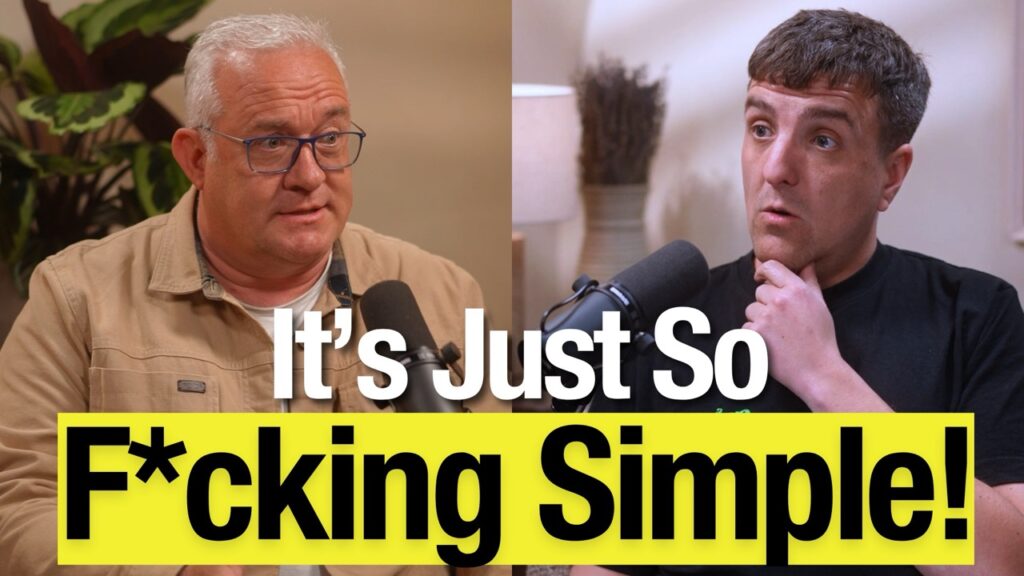
Amy Knight has started four businesses. One is still ticking over as a passive income stream, one funded her way out of financial pressure as a single mum, and one, a bakery, taught her more about herself than about baking.
In this Money Moments short, she tells Sammie why the fear of starting a business is worth pushing through, and how to test an idea without betting your whole income on it.
I get asked constantly how people find the confidence to start a side hustle. The truth is most people never feel ready. They wait for the perfect idea or the perfect amount of spare time, and neither one turns up.
Amy Knight from NerdWallet UK has started four businesses over the years, and she’s blunt about the fact that not all of them worked. That’s the bit most “start a business” content skips over.
In this episode we talk about what actually pushed her to start, what she learned from the ones that failed, and how to know when a side hustle is ready to become the main event.
If you’ve got an idea sitting in the back of your mind and you keep talking yourself out of it, this one’s for you.
———
Gains App is LIVE!
An AI-powered budgeting and cashback app designed to help you make more of your money.
Download here: https://gainsapp.onelink.me/8IhT/oiaimr1z
———
Get a FREE FRACTIONAL SHARE worth up £100 when you deposit £1 with Trading 212
https://www.trading212.com/join/MGP
If you don’t receive the free fractional share, head to the menu and put the word ‘MGP’ into the promo code section.
(Capital at risk when you invest)
Key takeaways
- Amy started a communications agency alongside her full-time job as a single mum, and it became her biggest income boost.
- Her children’s book, written during furlough, is now a passive income stream she still posts out worldwide.
- Not every business needs to work: her bakery failed commercially but taught her she doesn’t work well alone all day.
- A simple time evaluation, finding three to four spare hours a week, is the practical starting point for any side hustle.
- Scaling down a full-time job gradually, rather than quitting outright, is a safer route into self-employment.
Timestamps
- [00:18] Four Businesses, One Side Hustle Success
- [02:25] Tool: Turning a Passion Into Passive Income
- [04:32] Etsy Shops and Full-On Second Careers
- [06:32] Etsy vs eBay vs Amazon: Choosing Your Platform
- [07:18] The Bakery That Taught the Real Lesson
- [08:53] Tool: The 10-Hour Side Hustle Benchmark
- [11:14] Why Failed Businesses Set Up the Big Win
Why starting a business feels so terrifying
Most people overestimate how much time and effort a side hustle will take before they’ve even tried it, and that gap between expectation and reality is what stops them starting.
Amy puts it simply: “it’s not easy, and you do get out what you put in.”
The fix isn’t motivation, it’s a practical audit. Start with a time evaluation: look at your current week honestly, including your phone screen time, and find three to four spare hours.
The benchmark most side hustlers work towards is around ten hours a week, enough to properly test an idea without risking your day job.
If you’re not sure where your time (or money) is actually going, running a proper audit of your spending alongside that time evaluation makes the gaps obvious fast.
Amy Knight's four businesses: what worked and what didn't
Amy’s biggest earner was a communications agency she ran alongside a full-time job as a single mum, supporting small businesses with social media, PR and communications strategy in the evenings and weekends.
It topped up her income and rebuilt her confidence at a time she badly needed both.
Her second venture came out of lockdown: a self-published children’s book, illustrated by a friend, that she now posts out to buyers as far away as Australia and the Netherlands.
It’s a genuine passive income stream, built from a story she’d wanted to tell for years rather than a plan to monetise something.
Then there was the bakery. Amy spotted a gap in the market for gluten-free and dairy-free celebration cakes and tested it by partnering with a local grocery delivery business.
It didn’t succeed commercially, but she learned something more useful than a sales figure: she doesn’t work well alone in a kitchen all day.
That’s the kind of lesson you only get by trying, and it’s exactly why building a bit of side income on the side, even one that doesn’t take off, is rarely wasted effort.
Etsy, eBay or Amazon: finding the right platform
If you’re thinking about selling products, Amy’s advice is to start with the product and the audience, not the platform.
Etsy has built a reputation as the go-to place for handmade, personalised and craft goods, but eBay or Amazon might be where your actual customers are searching.
Etsy in particular has become saturated, especially with digital products, and standing out usually means investing real time in learning SEO rather than expecting easy wins.
When to take the leap (and when to keep the safety net)
The safest route to self-employment isn’t quitting on day one, it’s scaling down gradually: dropping to four days a week once the side hustle is proven, so there’s a buffer instead of a cliff edge.
Before you make that kind of jump, it’s worth knowing your numbers cold, including how much runway you’ve actually got.
If you haven’t checked lately, working out how much should be in your emergency fund before you scale back hours gives you a real number to aim for rather than a guess.
Amy has started somewhere in the region of twenty side businesses across her career, some still running, some long gone, and she’s clear that every one of them, successful or not, was preparation for the one that actually mattered.
This transcript is auto-generated and lightly edited for readability, it may contain errors.
[0:18] Sammie Ellard-King: If someone is struggling, then a potential thing for them is side hustles. And you have started four businesses, with one of them becoming a little successful income generator for you. Yeah. Um and another you’re still running as a side hustle. Yeah, I think I’ve always had a bit of an entrepreneurial streak. And probably the same. Uh people that have business ideas will know that you can kind of have a go at something and it doesn’t quite scratch the itch, and you need to go and try something else. And every every business that I’ve started, I’ve learned something really helpful along the way. And for me, the the income generating business was a side hustle that I created because I really needed extra income. It was a time in my life where I was a single mum. So I had a full-time job, but I was I had financial goals and I really wanted a little bit of extra cash. So I set up a communications agency alongside my day job, and I was supporting small businesses with digital marketing, social media, communication strategy and PR. And it meant working a lot of evenings and weekends, but it was a really nice way to top up my income. And it was great for my self-confidence at that time in my life as well.
[1:40] Sammie Ellard-King: Yeah. And I love that because you’re just like you’re utilizing time and using it as a positive thing to do. And you’re actually utilizing skills perhaps you, you know, you knew that you already had or that you were happy to like very quickly upskill on certain areas. Yeah. And I, you know, that’s what when I was going through my debt journey, like freelancing alongside for businesses, like almost like a mini agency in itself as well, was was like my actually ended up being like over 50% of the contributions to get rid of that £24,000 of debt. Because it just like it does actually bring in like really good money if you’re putting yourself out there and providing services. And as long as those companies are fine with you working whenever, because as long as you deliver, yeah, it doesn’t necessarily matter, right? Yeah. I love that for you. And your other one.
[2:25] Amy Knight: Yes. So the side hustle that I still have ticking over. In the pandemic, I wrote a children’s book. And this was something that I’d always wanted to do. I knew that I had a story inside me and I wanted to share it with the world. And COVID and lockdown just created this perfect opportunity where I got furloughed from my job at the time in a university, and I had this time to actually produce this book. And I actually got a life coach at the time just to hold me accountable because I knew that I was very unlikely to get this opportunity again. I was like, I really want to do this. I want to take this passion and this skill and turn it into a product. And actually monetizing it was almost secondary to that. But it’s been amazing to create this passive income stream. And I’ve posted books out all over the world, Australia, the Netherlands. It’s so lovely. And I went down the self-publishing route. So I did I didn’t spend huge amounts of money. I had a friend illustrate the story for me.
[3:36] Amy Knight: Oh, lovely. And yeah, it’s it’s on it. See, and it’s yeah, like I posted one yesterday. It’s just nice to keep that little passive income stream that you can dial up and dial down. And if you’ve got something, uh, a passion, a hobby, a skill that you can monetise, yeah. It’s there for you in times of financial need, and you can kind of increase the amount of time that you put into it according to how much extra income you need. Obviously, you’ve been through this as a single parent. Like you juggled parenting, full-time job, and side hustle. So it’s possible. It is possible. I didn’t have a TV for a year, so I I didn’t do I didn’t do some of the things that are people would think of as like normal life. I was very workaholic for that for that period, and I don’t think it’s something that’s sustainable for a long period of time.
[4:32] Sammie Ellard-King: Seasons. Exactly. Yeah. Having said that, I have interviewed a couple of ladies this week who are running very successful Etsy shops alongside a full-time job, and they are they’re like massive sales, they’re doing the marketing, they’re doing the paid advertising. It’s a full-on second career for them. Yeah. And I think side hustles have that potential. I know people who’ve started side hustling and then they’ve gradually transitioned. So they’ve got a full-time job and then they’re going on to four days a week so that they’ve got a day for their side. What we needed for this. And you just gradually move it across. And that’s a really safe way to make the transition to self-employment without putting yourself in a vulnerable situation financially.
[5:20] Sammie Ellard-King: 100%. And I love you said that. Yes, exactly what we did for Up The Gains. We scaled down, ended up selling my shares in the business and just like went for it when it was ready. And like they didn’t put that kind of pressure of like, in January, I’m leaving, and this business must work. Because then you make really, really bad decisions. And so, like, having that little buffer point. But what I love about what you said there is the possibilities of like making money online selling products. That’s not something we’ve covered a lot on there. And you mentioned Etsy, it is quite buzzwordy out there. And I think having done tests on this myself with multiple stores and just to see how difficult it actually is, it isn’t easy. And I think YouTube and social media will have you feel like it is, like buy my XE course, you know. And I think that there’s a trap there and a crutch, like to get to those levels, you have to be very good, and you also have to find like the right product to fit within that market because it is getting vastly saturated quite quickly, especially with digital products on there. A lot of people have already thought of the things that you might have thought of, and there’ll be 30 versions, and it becomes like a price war.
[6:32] Amy Knight: Yeah. Um, in your opinion, like, is it still the best out there, or is there other ones out there on there that you think people should look at? It is a matter of opinion. Etsy holds this reputation for being the go-to place for handmade and personalized and craft. So it’s really about what your product is, your business values, because eBay or Amazon might be where your customers are looking for whatever it is that you’re selling. So understanding your audience, you’re right about it being quite difficult in terms of learning SEO. But as you say, there are courses online and there are some great ones, by the way. I will say that as uh it’s another thing that if you if you you you get out what you put in.
[7:18] Amy Knight: So if you invest the time to upskill yourself, uh so it yeah, for people that are really keen to turn it into more of a moneymaker, it probably is worth investing that time to to learn about SEO and do some experimentation. So one of the earlier business ventures that I started was a bakery. So I was yeah, I was making uh cakes and what kind? Uh so mostly celebration cakes, like wedding cakes, christening cakes, birthday cakes. Brilliant. And the the gap in the market I was going for, and this was this was back years ago when I was sort of 24, 25, um, was for dietary requirements. Because back then the gluten-free and the dairy-free were not as widely available as they are now. And yeah, that was that I did a whole load of experimentation to find out whether people would buy my products if I partnered up with a local business delivering groceries. Do they want some muffins in there, for example? And that business did not turn out to be particularly successful. But I learned a huge amount on the financial aspect of running that business. But probably the most important thing was learning that I don’t work well on my own in the kitchen all day, every day. And I need to be around other people. So I think that’s something that until you until you try it, until you give uh a business a try, you you learn about yourself as you go through that process of experimenting with products and who your market is and where’s the best place to position your brand?
[8:53] Sammie Ellard-King: 100%. Like start with a time evaluation. Usually look at your phone screen time as the starting point. This is what we say to everyone when before they get started on any of our programs, it’s like do a time evaluation. Okay, this is what a current week looks like for me. I’m not really happy with that. How do I find three to four hours, maybe eat upwards of 10 hours? We try and get them to get to 10 hours. Like if you really want to start a side hustle business, usually 10 hours is kind of the good benchmark period where you can do some damage. Um, and that quickly adds up. You know, it’s a full working week over a month. So that’s a that’s a you know, a lot of a lot of weeks of the year. I can’t do the maths right now off the top of my head. Um, but it makes a massive difference, and then that’s your starting block to then go out and actually try something with the pressure’s not necessarily there because you have your nine to five in place and you can experiment, you can make mistakes, you can try the bakery business, and if it works, fantastic. If it doesn’t, it’s not been the end of the world. Or you can hopefully land on something that you really enjoy doing and you could double down and become the best at it. And I think if you have that mindset, it really sets you apart when it comes to side hustles.
[10:03] Amy Knight: Yeah. But not everybody does, and and that’s usually because they kind of um miss but I can’t think of the word, but basically they think that it’s gonna take them a lot less time and a lot less effort than it actually does. Yeah. But when it comes to business, it’s not easy, and you do get out what you put in. Yeah. And that’s why it’s so important to find something that you give a shit about. Yeah. Like, yeah, if you’re gonna put all that time in, yeah, it has to be something you care about because that’s what’s gonna drive you at the end of a working day, right? I’m gonna put my other hat on, I’m gonna start my other job now. I do like we do it guy with everybody. So it’s so powerful. What’s your purpose? Like, what do you really love? What are you good at? What does it actually the world need? And what you know, what can you be paid for? You bring it all together, and that’s your business right there. And if you can get that right, you uh will never work a day again. Nothing will be work. Obviously, yes, there’ll be little tough times and tough periods that you go through, and you’re gonna have to learn a load, of course, but your North Star, back to that, same with your finances is exactly the same for your business as well. If you get that dialed in, I personally think so.
[11:14] Amy Knight: I would say though, we go through seasons of our lives, so your passion may change. Oh, yeah. And so having two, three, four, however many businesses over the course of your life, there should that be acceptable. Yeah, and it should be, yeah, totally. I think probably in 10 years’ time, if you ask me what type of business that I asked, would it be a personal finance education business? Probably not. But who knows where we’d be by that point. Yeah. And that’s totally fine too, you know. And and you know, I’ve started so many side hustle businesses over the years, possibly in the 20s now. And some of them still going, some of them are not. And I’m totally cool with that. And I’ve learned so much. So when I actually did go and do the big one, I was ready. And like I’d made every mistake in the book before. So it set me up for the one that actually mattered. But if you’d I if I’d have just started the one that actually mattered without doing any of that, I guarantee you I wouldn’t be sitting here today.
[12:13] Amy Knight: Yeah. So it’s uh it is one of them things. Try it and see how it works. You know, what have you got to lose? I suppose is the big thing in that. And if you love it, then isn’t that what’s uh why we’re here as people, I think.
Frequently asked questions
Her communications agency, run alongside a full-time job while she was a single mum, was her biggest income generator. It involved evening and weekend work supporting small businesses with digital marketing, social media and PR.
According to Amy, it depends on your product and audience rather than the platform itself. Etsy suits handmade, personalised and craft items, but it has become increasingly saturated, and success usually requires learning SEO properly rather than expecting quick sales.
Amy and Sammie both point to roughly ten hours a week as a realistic benchmark. Start by doing an honest time evaluation of your current week, including screen time, to find where those hours can come from.
Not straight away. Amy scaled down gradually, and Sammie describes doing the same with Up The Gains: reducing hours over time rather than quitting outright, so there’s no artificial pressure forcing rushed decisions.
That’s fine, and normal. Amy’s bakery didn’t succeed commercially, but it taught her something about how she works best, and she credits her earlier failed businesses with preparing her for the one that eventually did work. This article is for educational purposes only and should not be considered financial advice. When you invest, your capital is at risk and past performance is not a guarantee of future results. It contains affiliate links; if you click through and make a purchase we may receive a small commission at no extra cost to you.
———