Listen to the pod


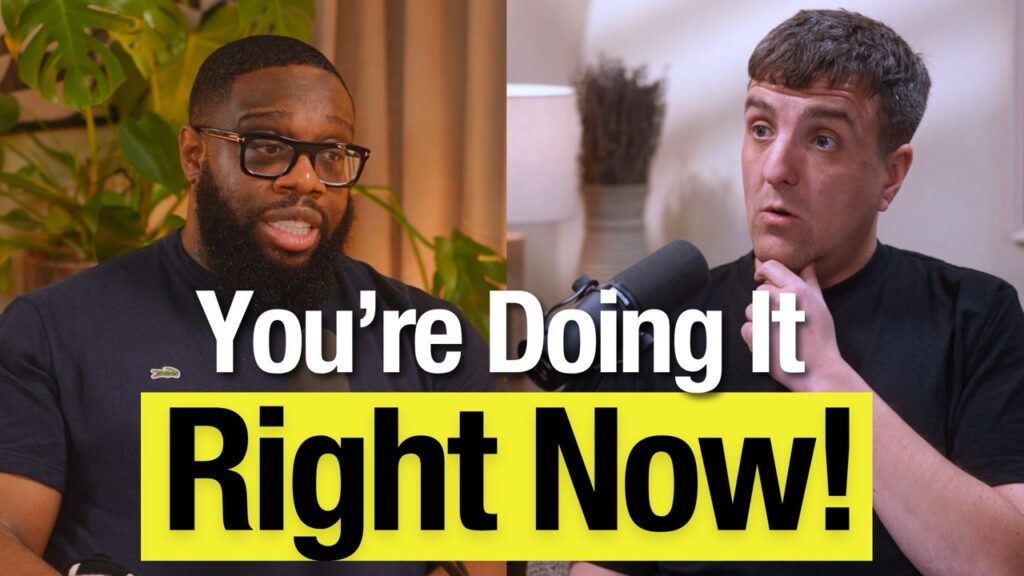
Journalist and broadcaster Rick Kelsey joins the Money Gains Podcast to unpack the childcare support, ISA allowances and tax quirks that could leave your family thousands of pounds better off, if you actually claim them.
Rick’s been covering personal finance for the BBC, The Times and his own Running Channel for over a decade, and he’s spent a lot of that time getting frustrated by one thing: how many parents leave free money on the table simply because the system is confusing.
In this episode we go through the three childcare benefits almost every parent can claim, why 63% of ISA money sits in cash when it doesn’t need to, and the brutal tax cliff that makes some parents scared to earn another pound.
We also get into junior ISAs versus junior pensions, and why the standard 50/30/20 budgeting rule needs a rethink once childcare bills land.
If you’re a parent, or about to become one, this is the episode to bookmark.
Are you missing out on free money you’re entitled to?
In this episode we welcome presenter and journalist Rick Kelsey to the show.
We discussed the often overlooked financial opportunities for UK families including childcare support that could be worth thousands, plus practical advice about teaching children about money and so much more!
Rick on Instagram https://www.instagram.com/rickkelsey
The Running Channel on YouTube https://www.youtube.com/@runningchannel/videos
The Running Channel Online https://therunningchannel.com/
———
Gains App is LIVE!
An AI-powered budgeting and cashback app designed to help you make more of your money.
Download here: https://gainsapp.onelink.me/8IhT/oiaimr1z
———
Get a FREE FRACTIONAL SHARE worth up £100 when you deposit £1 with Trading 212
https://www.trading212.com/join/MGP
If you don’t receive the free fractional share, head to the menu and put the word ‘MGP’ into the promo code section.
(Capital at risk when you invest)
———
DISCLAIMER:
This video is meant for educational purposes and should not be considered financial advice. When you invest your capital is at risk. Past performance is not a guarantee of future success.
Key takeaways
- Around 1.3 million families are eligible for tax-free childcare (worth up to £2,000 per child a year), but only 465,000 claimed it last year, leaving roughly £1.3 billion unclaimed.
- Free childcare hours are expanding to 30 hours a week from September 2025, and eligibility now starts from when a child is nine months old rather than three years.
- Earning one pound over £100,000 can wipe out both free childcare hours and tax-free childcare entirely, a cliff edge that could cost a two-child family around £25,000.
- 63% of ISA money in the UK sits in cash even though stocks and shares ISAs have historically performed better over the long term.
- Junior ISAs give you £9,000 a year on top of your own £20,000 allowance, and Rick argues they should be filled before anyone considers a junior pension.
Timestamps
- [00:57] Rick Kelsey’s Career: BBC to Running Channel
- [07:04] Tool: Rent a Room Scheme, £7,500 Tax-Free
- [10:19] Biggest Money Mistake: Debt Before Savings
- [13:31] ISA Allowance: Why 63% Sit in Cash
- [21:58] Junior ISA: £9,000 Allowance Explained
- [26:35] Tool: Junior ISA Growth Figures to Age 18
- [33:45] Tool: Three Childcare Benefits Most Parents Miss
- [38:19] 30 Hours Free Childcare From September 2025
- [42:00] Tool: The £100k Tax Cliff Explained
- [51:28] 50/30/20 Budgeting Rule for Families
Why 835,000 families are missing out
Rick’s central frustration is simple: the support exists, but almost nobody claims it. Tax-free childcare alone was available to 1.3 million families last year, yet only 465,000 claimed it, less than half. That left roughly £1.3 billion unclaimed.
He puts it down to naming and complexity rather than pride. As Rick explains, “I think the reason is simply because it’s clunky.
It says tax in it, which puts a lot of people off.” Some parents he’s spoken to would rather pay 25% more for childcare than work through the sign-up screens.
The fix is checking three things: child benefit, free childcare hours, and tax-free childcare.
Rick’s own approach is to run through a mental checklist every month: is he claiming child benefit, has he set up tax-free childcare, and does his nursery accept the free hours he’s entitled to.
If you’ve never audited which of these you’re actually claiming, our how to audit your spending guide is a good place to start.
It’s a similar story with investing more broadly. Sammie points out that fractional shares have only really existed properly since 2019, and savings apps have only become mainstream in the last decade, so it’s no surprise take-up lags behind awareness.
The tools are new, the habits haven’t caught up yet.
The three childcare benefits most parents miss
Rick breaks childcare support into three separate pots. Child benefit is a weekly payment worth just over £1,200 a year for one child and around £2,000 for two, paid from birth until a child leaves full-time education at 20.
Free childcare hours currently sit at 15 hours a week, rising to 30 hours a week from September 2025, and now start from when a child is nine months old rather than age three.
Rick calls it “the biggest change to the childcare system in a generation.”
Tax-free childcare tops up whatever you pay in by 20%: pay in £100 and it becomes £125, up to £2,000 free per child a year (£4,000 if your child is disabled).
Every childcare provider needs asking whether they accept it before you sign up, and Rick says he asked that question of every nursery he looked at before choosing one.
Everything runs through the government gateway, which Rick admits is nobody’s favourite process.
His advice is to treat it as a short checklist rather than one overwhelming task: confirm you’re claiming child benefit, set up the tax-free childcare account, then check your nursery or after-school club accepts both the free hours and the tax-free top-up.
The £100,000 tax cliff nobody warns you about
The sharpest edge in the system is what happens once one parent’s income crosses £100,000. Rick describes it bluntly: “We now have this crazy graph where parents earn, earn, earn, earn, earn up to £100,000 and then just stop earning.”
One pound over that line and you lose both your 30 free hours and tax-free childcare, worth up to £25,000 for a two-child family.
His fix is salary sacrifice, paying more into your pension to bring your taxable income back under the threshold, whether that’s the £100,000 cliff, the £60,000 higher-rate band, or the £50,000 higher-rate threshold.
It’s worth running your own numbers through our take-home pay calculator before deciding how much to sacrifice.
Sammie made the wider point on the same segment: parents pulling back from work over this cliff means “talented individuals which are at home because they can’t afford to go back to work” simply disappear from the workforce.
The same cliff logic applies lower down the income scale too.
Child benefit now tapers between £60,000 and £80,000 of individual income, up from the previous £50,000 to £60,000 band, so a couple can each earn £60,000 and keep it in full, but one partner earning £61,000 alone starts losing it.
Salary sacrifice into a pension, alongside the tax relief that comes with it, is Rick’s go-to fix at every one of these thresholds, not just the £100,000 cliff.
Cash ISA vs stocks and shares ISA: the mistake costing families
There’s around £800 billion sitting in UK ISAs, and 63% of it is in cash, even though stocks and shares ISAs have historically outperformed over the long run.
Rick’s view is that fear, not maths, drives the split: “We are scared as a nation to invest because we see investing as gambling.”
The same pattern shows up in junior ISAs, where 61% of children’s money sits in cash despite an 18-year time horizon that’s arguably the ideal case for investing.
If you’re weighing up where new contributions should go, our cash ISA vs stocks and shares ISA comparison breaks down the practical differences.
Before adding to any ISA, Rick’s first rule is clearing expensive debt. He’s blunt about people asking where to put £5,000 of savings while sitting on a 7.5% loan: it “doesn’t make sense.”
Our guide on how to get out of debt covers the order of priority he’s describing.
Junior ISA vs junior pension for your child
A junior ISA lets you pay in £9,000 a year on top of your own £20,000 allowance, accessible to your child at 18.
Paying in just over £3,000 a year at 4.5% growth could build to somewhere between £61,000 and £90,000 by then, depending on returns.
A junior pension (junior SIP) works differently: contributions of around £2,800 get topped up by 20% government bonus to roughly £3,300 a year, but the money is locked until pension age, currently 57.
Left invested to that point, the same pot could be worth over £400,000.
Rick’s ranking is clear: fill your own ISA allowance first, then the junior ISA, and only consider a junior pension once both are maxed and there’s still spare cash.
He sees the 18-to-21 access window as more valuable to a young adult than a pension pot they can’t touch for decades.
If you’re weighing up how a side income could fund extra contributions, our top ways to earn a side income roundup includes options like the rent a room scheme Rick mentions, worth up to £7,500 a year tax-free with no tax return needed.
Why the 50/30/20 budgeting rule needs to flex for families
Rick’s a fan of the 50/30/20 rule (50% needs, 30% debt or investing, 20% spends) as a general base, but admits it doesn’t survive contact with childcare.
His own version has become 60/10/30 during the expensive early years, with childcare, rent or mortgage, car costs and medical bills swallowing far more than the standard 50%.
His advice is to keep contributing something rather than stopping entirely when money’s tight, even if that’s £100 a month instead of £300.
Sammie makes the same point from the other side: accept that early parenthood is a different season of life, don’t beat yourself up over reduced contributions, and just don’t let them drop to zero.
Our budgeting calculator can help you work out what a realistic split looks like for your own household right now, rather than forcing a rule that assumes you don’t have a nursery bill.
This transcript is auto-generated and lightly edited for readability, it may contain errors.
[0:00] Sammie Ellard-King: Welcome back to the Money Gains Podcast. Are you a parent and do you want to be thousands of pounds better off? We’re joined by Rick Kelsey, personal finance journalist and broadcaster. Rick, welcome to the show. How are you, man? I’m so excited to be here. And it’s such an important time for families and people who need to save money when it comes to children to start getting on it. Yeah. And doing something about it because the world’s tightening in and it’s down more than ever for parents and us to try and help people to save some money. Yeah, I totally agree. I want to start. Your repertoire is incredible. I mean, you’ve been you’ve been round the houses, BBC, The Times, you’ve interviewed prime ministers, chancellors, you’ve got a running podcast, which is like the best in the UK and like second in America. Like, you’re everywhere. I should come more often, shouldn’t I?
[0:57] Rick Kelsey: Well, I mean, I suppose I started off in local radio and then went to the BBC. I was at the BBC for 10 years and then moved to the Times, started the running channel six years ago, kind of filming in on our iPhones in the park, and now what is it now, 800,000 subscribers. So yeah, it’s been a it’s been a journey to get there. And covering personal finance on the way has been I don’t know. I’ve I’ve always loved saving. I think you’ve got to come from it from a point where you enjoy saving money yourself. Because if you if you’re not interested in it, I don’t think it’s as easy to help other people. Totally agree. Yeah. Yeah. Yeah. Well, I bet I better enjoy it, otherwise I’m doing sitting in this chair.
[1:45] Rick Kelsey: Yeah. But I want to start somewhere interesting from your perspective. Like, you’ve interviewed six prime ministers, six chancellors. How has this changed your perspective of how personal finance sits over the years of interviewing all of these top people? I think it was not such a big deal if you went back ten years ago kind of to scrape together and save a few pounds. I think it was potentially a little bit easier to do that back then. And I think the world’s kind of closing in, like the the loopholes on how to save money, certainly from a tax perspective, have kind of closed in. Also, the areas where you can save money have kind of closed in a little bit as well. And I think that because wages have been kept down so much, Sammie, in the last 10 years, then everybody’s just been squeezed more and more. And as wages have not kept up with inflation and especially in the UK, then I think people have been looking more for ways to save. And I think people are now far more interested in their personal finances than they were 15 years ago, and they’re looking for more ways out, which is why kind of like the boom has come, you know, from people like you. You do what you do, and and there are more per personal finance journalists. And I think that’s why the the industry’s kind of grown in that way. But I mean, as far as budget’s concerned, I mean, I’ve I’ve been outside Downing Street or outside the Exchequer on budget day and been sent down to the petrol station to find out how many pennies came off a litre of petrol, you know, no, so many times. And you kind of see that, you know, budgets, they are they are obviously a balancing act. And yeah, and what what’s happened in the last few years is just a real tightening of how much spare cash people have. And you know, that’s a combination of interest rates, it’s a combination of tax rates being frozen. And it just means that people have looked for ways now to save money that they didn’t actually have to do as much before. I you know, I am talking about bills, I am talking about, you know, how to make sure that you’re you’re paying the correct amount of tax. I think there’s just so much more of an appetite for it now than there was.
[4:15] Sammie Ellard-King: I completely agree. It’s definitely shot up. We did a video the other day about investing in like fractional shares, and actually, really, they’ve only been around properly since 2019, give or take. Yeah. They were obviously introducing the 1990s. Um, but like they’ve only really taken off since then. So when it comes to like actually getting people to be aware that they can even just invest, let alone savings, yeah, like that shift hasn’t necessarily happened. And then equally as well, in line with that shift is those like rise of savings apps, etc., and accessibility on your mobile phone. Yeah. People have only just really crossed over into that realm in the past decade. And so And it’s easier than ever. It’s easier than ever, it’s more accessible than ever. But with the digitization of that personal finance, it becomes like almost overwhelming because there’s so much option and choice.
[5:13] Rick Kelsey: Yeah, I mean I think like a a good example is kind of with energy, like it would be the case whereas, you know, even 10 years ago where if your neighbours were, I don’t know, over 75, they’d just be on British gas. Yeah, yeah, yeah. Yeah. And now, you know, I’ve got elderly neighbours now, and they will be switching, they will be savvy. Yes, this is anecdotal, but actually the anecdotal stuff is played out on switching data as well. Totally. People are far more open to bringing down their bills because they’re being pinched so much more elsewhere. And and this and this is same with like current accounts, really, as well. Yeah. On switching with current accounts, I mean, yeah. I tell current accounts is one for me that I just wish more people actually got onto it, not just for the switching, but for the switching incentive. I wrote an article for the Times about six months ago now, where I was basically challenged to make 1,800 pounds uh on behalf of me and my wife in six months, in order that we could get something. So it wasn’t about 1,800 pounds, like 900 pounds each, five switches each, uh, so we could save that money and put that towards paying for our childcare. It was right, set a set a pot, we’re gonna go on holiday, or we’re gonna join a tennis club. And that was my that was my aim. I was like, what have I never done? Just something ridiculous. Yeah, something free. We’ll join a tennis club. So I just wrote this article, it’s like about how you can do something like that, do a side hustle like bank switching, do five of them with you and your partner over the course of six months, 1800 pounds, and have a key aim at the end. So a one-line aim that isn’t just going into your general day-to-day spending, that’s something that’s a speciality.
[7:04] Sammie Ellard-King: I love that. You could also use it for supplementing if you are being squeezed, though, couldn’t you, as well? Like I suppose that’s there’s a way of utilizing that, you know. I’ve seen offers recently, 175 quid, 200 quid. That’s not true. They make you change. They make you it’s not, but they make you jump through more hoops nowadays. Yeah, they do. So you might have to go and buy 10 bananas every month. Yeah, which which you didn’t have to do um if you went back a couple of years ago. But I mean, side hustles are on the rise. I mean, you can just look at HMRC data on this. Um uh side hustles, people taking on extra jobs are on the rise. And there are loads of side hustles that I’m surprised people don’t get into. I mean, there are some real simple side hustles. I’m amazed more people don’t do this. Bank account switching, the rent a room scheme. The rent a room scheme is seven and a half grand a year. Tax-free. Yeah. You don’t even have to submit a tax return.
[7:58] Rick Kelsey: No. What is the rent a room scheme? The rent a room scheme is essentially a scheme where someone can come and live in your house at different parts during the year, as long as your house is furnished and you can earn seven and a half thousand pounds per year to rent that out. Wow, why is nobody talking about this? This is an amazing scheme. You know, vintage, shifting your secondhand clothes. I know we’re going to talk about parenting gags. How much money you can now make on vintage. And you know, for those people who are watching and listening to this show and thinking, I can’t be bothered going on vintage. Oh my gosh, here’s the best thing you can do. There is a service now for vintage where you can get someone to come to your house, open up your cupboards, take everything that you don’t need anymore, shift it all for you, take it away, and they’ll just take 25%.
[8:52] Sammie Ellard-King: It’s a no-brainer, isn’t it? Yeah. I know, you know, these side hustles have and they’ve taken off. And this is all because um, I think, um, because of the massive squeeze on personal incomes, both on on what people are earning and also the amount of tax that people have had to pay, especially since COVID. So um from 22, basically, 2022 onwards, people, especially families, um, the squeeze has just been immense. And I suppose that’s my job. My job is to direct people in the right way to try and save cash and maybe open their eyes up a little bit to things that they might not have thought about.
[10:19] Sammie Ellard-King: I want to get into the squeeze on families a lot more. But before we do that, I just in your opinion, obviously, you’re on the ground, like a lot of the time, speaking to people, understanding their finances, the nuances within that across different areas of the country, etc. What are you feeling what do you feel like is one sort of misconception that people have about managing their money? And it’s something you see quite a lot from writing these articles. I think one of the biggest misconceptions that people have about managing their money is not putting their money in the right place, um, both from a savings aspect and from a debt aspect. So the amount of people who we might have asking for advice who who come to one of my shows, who might say, you know, where should I be, where should I be putting this money? I’ve got it in a savings account. Well, is it in a is it in an ISA? No. Are you paying tax on that savings? How much do you earn? I uh I don’t I don’t know if I’m paying tax on that savings. Well, you you you probably are if you’re a higher rate taxpayer now, to be honest with you, if you’ve got it in one of the the higher paying accounts. And secondly, have you paid off your debt before you are building up your savings? And what is your debt percentage compared to what is your savings percentage? This is what’s something that just uh I I just get so frustrated about and it comes up all the time. Um, if you’ve got a loan that is 7.5% a year, so a good loan, a good rate for kind of kind of now, and you owe 10,000 pounds on that loan, you shouldn’t be coming to ask me where I should put a £5,000 of savings for 5% in a top rate ISA account. Doesn’t make sense. You need to be pulling down your debt first. And I think the the the people naturally, naturally and understandably struggle between good debt and bad debt. And I see I obviously see mortgage debt as good debt. Um but i if people are looking to savings accounts before they’re clearing their debt, I think that’s a problem. And then when it comes to saving, I mean, I just don’t think that the ISIS system is is used as well as it should be. I mean, Britain, we we we’ve got a lot of problems in the UK, but my gosh, we are blessed with the ISIS system. And I would just urge anybody who’s listening to this to really take a look at what you’ve got and fix it right now, because there is an opportunity by living in this country that you simply do not have in other countries. I mean, literally, it doesn’t exist. This is not anywhere else for this type of generosity in Europe or the US. £20,000 a year that you can put away tax-free and into investment, that doesn’t exist, semi, in other countries. And it’s one of the main reasons that so many entrepreneurs actually stay within the UK because of that system.
[13:31] Sammie Ellard-King: We had Michael Taylor say that’s the only reason he’s still here on an episode the other week. So I saw that. I saw that. I saw that. And it it it I I I I get frustrated that people don’t use it and don’t use it correctly. And there are so many ways that um that you can improve on how you use the ISA system. I mean, so many. Do you want me to tell you something? Please. Um, I think I think the first part uh of of kind of the saving system, the ISA system, of someone who’s so sad who reads through all the clauses in HMRC when they when they make any changes to them. That’s me. Um I think the first place is is how people are investing. So there is about 800 billion pounds in ISAs in Britain. 800 billion. Um the majority of that is in stocks and shares at ISAs, the majority of that money. However, over 63% of ISA accounts in when you sign up for an ISA account are in cash. Now, if you took out an ISA account in cash 20 years ago, or you took out an ISA stocks and shares account um 20 years ago, okay, they’ve become slightly different names over time. Over time, we know that the stocks and shares will have done better. Now, that does not to say that you shouldn’t have a cash ISA. I think everybody should have a cash ISA. Um, it’s great, and it looks like there’s some changes on the horizon. But we are scared as a nation to invest because we see investing as gambling, and a gamble is only a gamble if there is a significant chance that it will not pay off. And if you look at time and returns over time, over 20, 30, 40 years, long-term investing is actually not much of a gamble.
[15:38] Sammie Ellard-King: 0.1% according to the Schroders study. There was a FTSE study, which was 11 years or so. Uh so, and that’s most periods of history. The Schroders study was any period in history. There you go. So And you’re great at talking about this. I mean you are fantastic at talking. You you are just an great advocate for getting people to diversify how they invest. People are scared of the word investing. I think that’s uh a real shame. Um, like a guy to me, like on my team at work, you know, so someone who’s working on my show, um, said to me, you know, which which ISA should I put my money in? And I was like, well, these are some of the best ones, but you should whack, you know, some of it in a stocks and shares. ISA. I said, I don’t wouldn’t know where to start. And I think that’s you know, it is a financial education, which is half of this.
[16:31] Sammie Ellard-King: 100%. 100%. And interestingly, when we spoke before, you said the amount of stocks and shares opened last year has decreased, which blew my mind by 126,000. That’s right. That’s scary to me because we’ve only got around about 11.5% of the working adults actually even signed up to a stocks and shares ISA. We need to be drastically increasing that number into the multi-millions a year. Yeah, it’s about 30% of accounts. 100%. Yeah. So how like that scares me. So what are we doing wrong? Because, you know, I’m out there chatting about this from the rooftops every single day, and there are multiple other accounts doing that. You know, we’ve got the FinTech apps now, you know, pushing left, right, and centre. Is it overwhelm? Is it like basic knowledge? What what is it stopping us doing this?
[17:26] Rick Kelsey: The government have noticed this, and the government uh are have now said in the spring statement um that they are looking to change this. So I think in October there will be a change to how ISAs work. It’s almost banged on. The reduction of the cash ISA contribution. I think it would be a shame if they did that, but I think they probably will. It’s fear of the unknown and not knowing where to start. Um but here’s what you should do if you are worried about where to where to start. You should get yourself a simple open portfolio, so to start off with. What should I go for? Just go for a simple, ready-made fund. That that is the best way to start if you are scared.
[18:27] Sammie Ellard-King: So about those ones. Yeah, and how that works is it basically works on your money personality. Yeah. So you do a test and it will say to you, what would happen to me if I lost £500 over a year? Do I want to take that money out? Have I got a significant event happening in a few years’ time? Am I having a life-changing event like having a baby? Am I getting married? Okay, so all this works out, and then it will put you into a bracket. So, like you say, am I an adventurous investor? Am I a cautious investor? Or am I an intermediate investor? And actually, what your personality, what your actual personality is, I always find is so different to people’s money personality. Completely. So different. Yeah. And and these ready-made funds are the way to start out. You might jump off a bridge, but you won’t necessarily invest that.
[19:13] Rick Kelsey: Exactly. That is the way to start. That that is the one way to start investing. Then move into ETFs. Then research what type of industries you want to be putting your money in. Then decide if you want to go into one country heavily or you want an all-world, you know, FTSE, all-world tracker. Do that afterwards, but that’s the way to start because you need to dip your toe in to get the confidence to start investing. You know what? The problem for this, it starts so early. Because if you think about that’s the ISA system for adults, but actually there’s a whole ISA system for kids, right, that you can put in for um your children. You can set uh an ISA account up in stocks and shares or cash for your children. You can pay up to 9,000 pounds a year in the UK into that. And the figures are exactly the same. And this blows my mind. The figures for stocks and shares ISAs for children are almost identical as to what they are for adult Sammie. Now, if you’re thinking about risk, hang on, you’ve got a baby, he’s one year old, you’re investing for 18 years. That should be in the stocks in shares ISA. Yeah. Because the the risk there, that money’s not coming out. You’re investing for the long term. So one of the things that people are worried about with stocks is, well, they can’t take it out. Oh, I’ve got a family event. I need to pay for something major. I need to get 5,000 pounds out right now. Is this the market a low point? I don’t want to pull out right now. Okay. Well, you’ve got a baby or a one or two-year-old. This is invested for the long term. You’re not taking their money out right now until they’re 18. Totally. So the fact that we’re putting 61% of kids’ ISAs into cash ISAs, yeah, it’s just is just madness. And that’s not to say, like, you know, I would say that’s not to say don’t put it into a cash ISA. Just be more balanced. And right, if we would, if we all did this, then I think the government wouldn’t be getting involved and actually pushing us to do this. And it may be that they’re gonna say, right, well, we’re gonna reduce the cash ISA limit. We’re gonna make sure that um stocks and shares ISAs have a certain percentage, maybe 80% have to go into British stocks. Uh, that could be something that I can see a smile on your face. But it might this this could be something that they might do in uh in October. Um if we were all get that, I think 80% would be extreme. They could do 50%, they could do 20%, they could they could do 20% as a they could they could well well they they could I mean this is what the British stocks and shares ISA that was that was kind of suggesting that it was gonna be for 5,000 pounds. Yeah, that was gonna be 100%, yeah, yeah, yeah.
[21:58] Sammie Ellard-King: That was at on top of the 20%. On top of the 20. Yeah, but they could they could say for one year it’s they I mean they could do anything. But that’s obviously that’s obviously been canned. Canned. That’s been canned. Um, but fear, and I I just I just hope people um continue to look at it and maybe just dip their toe in a bit more. Completely, yeah. I mean, there’s there’s obviously different accounts. Let’s go into sort of the family situation because I think it’s a nice segue into it. We’ve sort of spoken very briefly about junior ISAs. I think parents listening to this or soon-to-be parents will want to have something set up for their kids, right? So if that is an account, it’s better to have one than not. But when we make content around junior ISAs, we often get a lot of pushback, and that’s because they’re like, I don’t know who my kid is gonna be when he’s eight. Um, you know, I was a bit of a rascal when I was uh got got got kicked out of house a few times for being a naughty boy, but um you know always came back because I was a charming lad. It’s all worked out alright though, isn’t it? It’s all worked out fine. They love me now, I think. Um no, but the um, in all seriousness, like when they get that money, they will have access to it at 18 and they can make their own decisions at that point. And that worries some parents.
[23:11] Rick Kelsey: Yeah. Um, in your opinion, should they be worried about that at all? Is that something to be thinking about, or should you be placing your money elsewhere if that’s something that you are worried about? I think one of the first things that you should do as a parent is try and get your own finances in line first. Yeah. Um, so if you’re really struggling, um, yes, it’d be great if you can do some investing for your for your child, but the most important thing and the best financial opportunity that you’re going to give your own kids is if you get your own finances stabilised. Yeah, there’s no point having an amazing stocks portfolio for your child and then you’re in loads of credit cards. Yeah. Yeah. Um, but yeah, I I I do think um junior ISAs are a great way to start. I agree. I think they’re amazing. Brilliant.
[23:57] Rick Kelsey: I think they’re a great tool. And again, I think they’re, you know, we are quite unique, not quite as generous as the adult one when it comes to how unique the UK is compared to other places. But it is a great tool to start. And that £9,000 is on top of your £20,000 contribution. It’s on top of your own. You can own you you have to open it as a parent. Um, grandparents can pay into it. In fact, anybody can set up a direct debit and pay into it, and you can pay from as little as £10 a month into a junior ISA. Uh and they are also a great educational lesson for kids to watch how it grows. So if you have a little app on your phone, you can show your kids and you go, when they’re four, it’s like this is how much you had in your four, this is how much you had in your six, this is how much you had in your eight. And they and they can really grow into something. I mean, if even if your, you know, if if your account was doing, you know, five percent a year by the time they’re 18, I mean uh even with a fee of about 0.5%, I mean, that could be £60,000, £90,000 if you if it if the market’s done well. So just paying in would be 60. 90% if it’s done well, uh, which is a great start to life. I mean it’s better it’s better. It’s better off to have that kind of money when you’re 18 than than you saving in your own account to pay for the university.
[25:26] Sammie Ellard-King: Yeah, we we we love this stuff because like you also then if you teach your child how this works, they turn 18, you say, look, okay, maybe take some of it to do X, Y, and Z because it’s a great like Kickstarter for you at that age. If that’s traveling, if that’s a house deposit, whatever that is, brilliant. But also educate them on the fact that the continuing compounding rate, the even if you contribute 20 pounds a month yourself from that point on from your you know, first paycheck of what that might well be, the growth of that by the time you’re 30 is just astronomical. Yeah. And so you’ve really got an opportunity for them to kick on as well. And that comes down to education of your children. Completely. Well, th those figures are based on um paying in just about just over £3,000 a year. So if you pay in just over £3,000 a year by the time your child is 18, if it’s done an average of 4.5% a year interest, and then the account fees are around about 0.5%, you could have around 61,000 pounds, but at 4.5%, that would take it to £90,000 by the time your child is 18.
[26:35] Sammie Ellard-King: At 4.5, yeah. Yeah. Wow. If you’re paying in £3,000 a year. That’s nice, isn’t it? So that sounds lovely. Yeah. And that is the average UK retirement pop. That’s incredible. It’s nuts, isn’t it? Um Do you know one of the kind of buzzwords in the the money world when it comes to kids this year has actually been child pensions, though? Yeah. You’re telling me and junior SIPPs. Junior SIPPs. So a self-invested what do you think about these junior SIPPs, Rick? I think they are for the elite of the elite summit. I think there are so many things that you’ve got to do first before you use a junior SIPP. And if you are so lucky that you have that much money that you can fill out your ISA, you can fill out your own ISA allowance, cover everything else, and you’ve still got some spare cash, then go for uh a junior SIPP. So just to kind of let people know what um a junior SIPP is, so it’s you’re basically starting a pension for your child from when they are a baby or however. So you’re you’re creating a fund for your child when they’re 60.
[27:53] Sammie Ellard-King: Yeah. If it’s that. It might be 67 by that point. At the moment, it’s just about to go to 57. So that the money you could take out. And they are they are pretty limited, actually. So just to run you through kind of similar figures, so you can pay in personally about 2,800. That’s topped up by 20%. That’s the bonus. So it’s about 3,300 per year that you can put in. Again, if that was at an average rate of four and a half percent per year minus your fees, you get to that around about 60,000 figure by the time your child’s 18. At 4.5%, that’s 90,000 pounds. But then don’t forget, they can’t take that then, like they can with the ISA for that university, for that whenever they get married, or what yeah. This then stays invested. But if you sat that money, so this is where the figures get a bit wild. If you sat that 90,000 pounds that’s accumulated at that rate in a junior pension until retirement age, currently 57, that would be worth just over 400,000 pounds. What? Yeah, but I just think this is uh it’s it’s not a route that people um should be going down. You should be looking at junior ISAs and you should be certainly filling those first.
[29:11] Sammie Ellard-King: Yeah, yeah. But I thought you might like the figures. No, that I love the figures, thank you. I mean they sound great, don’t they? But I mean, at the end of the day, if you ask for figures, you’ve got the right man in. Yeah, right. I’m gonna hit you with some some slums. Oh no, don’t. But obviously, there’s pros and cons to both, right? And uh that’s a way of looking at it. And you’re totally right. I agree with you. Like ISAs first, if you then have some extra cash, yeah, look at a junior SIPP. But the access point is such a big deal. It’s not affecting your child’s. It’s absolutely wild. It’s affecting the adult that they could be at the age of 60. Yeah, you know, which is a long time. Yeah, you also gotta let they’ve gone through their entire life before they can then access that money. I just think that’s a waste. You know, you won’t you want to try and be impacting them at that really key point, which is like 18 to 21, when they’re in their real like formative years, definitely building them as a person, completely just doing a junior SIPP is taking that opportunity away from them, in my point of view. Yeah. Um, a lot of people save into their own ISAs because they’re worried about the child having access and buggering off to IB for basically um spunking it on some fancy sports exhaust on their you know, Renault Clio.
[31:28] Rick Kelsey: Um Sammie, it’s fine. Yeah, as a Clio guy. Um do you think that’s another option that people can take? If if let’s say then, like, you know, 11% of this country max out their ISES, so 20 actually it’s not much. And and understandably so, because of you know, you’re not paid hundreds of thousands of pounds, it’s hard to put 20,000 pounds a year away. So I totally get that. After that legs after tax, yeah. And so if they do put their money into their own eyes, so they have then got semi-control over it. How do you feel about that approach? I think there’s an element of trust that you’ve got to go down here, and I think if something it is in a child’s name, it’s nice for them to see their own name and understand how savings work and understand that how growth works and understand how money works, and if it is in their name, then you can’t touch it. And that’s a good thing. If you’re doing it for your child, that’s a good thing that you can’t touch it. Yeah. Uh and they can’t touch it. They can take control of it when they’re 16, but they can’t get it until they’re 18. I would always urge keeping things separate and creating one for your child to teach them the value of money.
[32:52] Sammie Ellard-King: Yeah. And also just to keep finances separate so you can deal with your own issues if you need to take that out, and you don’t even have to, you know, cross that bridge of thinking, do I need to break into that? Yeah. Yeah, I agree. Okay. Are there any other accounts for children that we’re missing that are beneficial or have we covered them, do you think? I think there are there are so many accounts which are kind of part of the the tax system, which uh which we’ll get onto, such as tax-free childcare, which is an account um that are mind-blowingly efficient and important for children that are just not taken up. If parents use these accounts, they’d be thousands of pounds better off.
[33:45] Sammie Ellard-King: So when you say account there, can we go through that? What do you mean? Well, there are there are three types of childcare help that pretty much everybody, the majority of people, can get. Child benefit, which is a weekly payment that you get from when a child’s born to if they’re in full-time education until they’re 20, uh, which is uh at just over 1200 pounds a month for one child and about 2,000 for two child uh two children. So and it goes up per month. Um per year. Per year. Per year, yeah. So um that’s the first one, child benefit. Secondly, there is free childcare hours. Uh free childcare hours are currently 15 hours per week, and they have they are going up to 30 hours per week from September 2025. That’s worth thousands of pounds. And thirdly, there is tax-free childcare, which is an awfully named system which has been around for years, which gives you £2,000 of free childcare per child, £4,000 if your child is disabled, to help with the costs of childcare. Now, how that works is simple. You pay in £100 into this account, it magically turns into £125. You pay your childcare provider via the account. Every childcare provider I looked at before I picked one, I first asked, do you accept tax-free childcare? Most of them do, but it’s just a question that I was just first off. It’s essentially a 25% boost um up to £2,000 per year. Now it’s a small change, isn’t it? It’s not a small change. No. These three systems uh for childcare support uh are so dramatically underused that it’s depressing.
[35:38] Sammie Ellard-King: Something like £1.3 billion unclaimed last year, right? Yeah. So for tax-free childcare, 1.3 million families that it was available to. Oh, okay. 465,000 claimed it. So less than half. Yeah. Wow. Right, why? It’s depressing. Why? Because it’s so complicated. Is it people who are proud as well? Not to have to claim it if you don’t have to claim it, like are they too proud to claim it? Because it’s called a benefit. Tax-free child care is a scheme that helps people work more, so it helps adults work more. Yeah. In theory, it’s it it’s a benefit because you’re working, but it’s not a benefit based on you being on a low income.
[36:33] Rick Kelsey: No. It’s based on you having a child. Having a child. Yeah. So to use it. To use. So the idea is that you use it so you can work more, so you can pay more into the tax system, so there is everyone’s better off. Um, I don’t think that is actually the reason. I I think the reason is simply because this it’s clunky. It says tax in it, which puts a lot of people off and they go, oof. And trying to sent it set it up is can be quite complicated. I mean, I had to run a bit of a session at one of my nurseries for some other parents, some who had poor English, and some who were just like, oh, I’m just not getting into that. I’ll just pay the extra 25%. You’re like, well, if you want to pay the extra 25%, fine. But if you do this, like, I really want to do that, but it just looks so complicated. There are so many screens you’ve got to go through. Um, the government should rename that. I mean, call it tax, call it childcare help, call it childcare balloon for all I care. Do something. Yeah. You know, make it more friendly. Yeah. Um or repayment or repayment. Or yeah, something. Um, so tax-free childcare is just one you’ve just got to get on to. Um, and if you haven’t got kids, tell your friends, are you claiming you £2,000 for childcare help? Like that that that is so you can work more. It it’s it’s a net benefit to the tax system. That’s how that’s supposed to work. It to get people to do more hours. Um and then uh three hours is the big one that’s just that is changing at the moment. So three hours, um, 50 going up to 33 hours a week if your nursery accepts it. Some don’t because of staffing pressures. Um, but it is a widely accepted scheme.
[38:19] Sammie Ellard-King: And with that £2,000, is it per child as well? Per child, yeah. But the three hours is completely different. So, you know, that’s on top. That’s on top. Wow, wow, this is mind-blowing. Yeah. So and and this is all claimable. Yeah, I again though, the the the three hours that that was put in by um Jeremy Hunt, the previous Chancellor. Yeah. He upped it from when a child is three, you got 15 hours. He changed it from when a child is three, getting 30 hours, to when a child is nine months, but it was done gradually, so it’s come in over the Labour government, and the final bit of the scheme kicks in soon. Um, and this is just the biggest change to the childcare system in a generation, if not ever. It was from nine months old, parents will be allowed to take up to 30 hours free per week. Per week. Oh, it’s per week. Per week. Wow of childcare. That’s enormous. That’s coming in from September. And this is obviously, and you know, and how’s that work? Like, well, the OBR have looked at this and they’ve kind of they’ve kind of gone, they’ve kind of gone, um, obviously for budget responsibility, have said, we think this will create this many, much more work, hence this will pay so much more into the tax system by helping parents who simply cannot work, won’t work, don’t have the support, don’t have their parents around them, can’t get out to work, are uncomfortable with the type of arrangements they’ve got. You can go to a registered nursery and you can get 30 hours a week. Wow, this is gonna change people’s um whole take on childcare ability. I mean, this is a difference of around about seven and a half thousand pounds per year per child.
[40:05] Sammie Ellard-King: Yeah, it’s a lot of money. We did the calculations on this with uh like a few young mothers and we were speaking directly, having these types of conversations back and forth to get the exact figures. And the three mums that we spoke to delayed going back to work. I think it was on average, it was two and a half years, simply because of the costs of childcare pre this change. Uh the 15 hours made an enormous difference, but even then it wasn’t enough simply because the nursery costs had gone up 26% year on year at that point as well. So actually, the 15 hours was basically bringing them back to school one again. Yeah. So they weren’t going then back to work. But this 30 hours change will make that significant jump over. And you’re totally right. You know, if you can’t afford to go to work, just even saying that sentence is wild. You can’t afford to go to work. Exactly. Is nuts, right? So if you can afford to go back to work, then suddenly that changes the whole game system. Talented individuals which are at home because they can’t afford to go back to work, suddenly that this talent is back in the system.
[41:14] Rick Kelsey: I think we should be really proud that this system’s kicking in, and there are some big problems with nurseries in the fact that we don’t have enough staff, the government isn’t paying them enough for the free hours. So some of the nurseries are unable to do it. That’s a big problem. Um, but at the same time, I think we should kind of commend ourselves as a country that we are going from one of the most expensive childcare schemes and setups in uh the Western world, literally, i uh if over the last 15 years, to a more of a mid-table position. And that that is to be commended. Yeah, yeah, no, it is, absolutely. Um, you can say what you want about the Tory government, but that’s possibly one of the better things and schemes that they came up with.
[42:00] Rick Kelsey: It’s a game changer when it comes to childcare. Completely agree. In terms of the um way that system works, though, there’s an element of worry for parents earning. And this was a big topic that I get a lot back. Yeah because it’s like, well, why should I earn more than the threshold even by a pound? I’m screwed. Um, so can we talk through some of that? Sammie, I’ve written about this a couple of times. It is it’s just where the UK tax system is broken to the point that it just needs to be ripped up and and tore to shreds, you know. Literally. I mean, we now have this crazy graph where parents earn, earn, earn, earn, earn up to £100,000 and then just stop earning. Because if they earn one pence, one pence, one P over 100K, they lose their 30 hours free childcare and they lose their tax-free childcare. If you have two children, that could be 25 grand. Wow, you’d have to earn that much more. Is that 100k per person or a household as well? It’s it’s it’s for one individual. So you could have uh you could have one person who might have a medical condition, doesn’t work. Yeah, and that is one hundred, so that’s one person uh earns 100k. And you know, I I’ve written about this and it it’s just painful because you can all you can argue, hang on, 100 pounds, 100,000 pounds a year, they should be paying more. They should be they they can afford this. Like that’s easy. Like they should be able to afford childcare. But that’s not the point. The point is that it’s stopping growth, that they are not paying more tax into the system to the support of the lowest paid people who need it the most. Right. We are slowing economic growth in Britain because people stop working because of these awful tax cliffs. Literally awful. They you get to that amount and people just stop because they it they’d have to earn another 25 grand more before they started bringing something home if they have multiple children.
[44:15] Sammie Ellard-King: What was the change where it went from 70 to 80,000? So that is child benefit. So the 100,000 cliff is where you lose your free hours. Yeah. So your free nursery hours, and where you lose your tax-free childcare. Now, the the third source of child care help that everybody can get hold of is child benefit. That’s recently gone to 60,000 pounds. So everybody can get it up if you earn up to 60,000, one person in your family, and then it’s tapered up until 80,000 pounds when you lose it completely. So it’s a gradual taper. So like if me and my wife earn over 60 grand. If both of you earn 60 grand, you’ll get it. If one of you earns 61, you’ll start to lose it. So annoying. Yeah, yeah.
[45:02] Sammie Ellard-King: So annoying. This is what I mean. I’m I’m doing a big piece on this at the moment on growth. Like it this is just slowing growth. And and I I just get so many comments whenever I’m doing a show on this that, oh, the rich can pay more. I mean, great. If you want the rich to pay more and the least well-off in society to have less as well, because that’s how this is going to work, because people are just stopping working. They’re not paying into the pool. So there’s not more money in there’s not more money in the pool to help people. That that’s just how it works. And if we just release these thresholds and had a sensible approach and said, Well, it’s tapered, or you extend those thresholds, or you still get some of the hours, instead of having a cutoff, oh right, 100k, it all goes. Everything goes. It it all goes.
[45:54] Sammie Ellard-King: Yeah, the tapering would make a much more sense because it’s like, well, you know, instead of it being like one pence gone. Because then it’s like, well, why would I earn more? Yeah. Because you know, and and that you you’re you’re totally right. And I think that this is with this whole like, yeah, tax the rich, tax the rich. And it’s like, well, yes, but like they’re not the rich though. No, I know. It’s like, where does this line end? Yeah, they earn a lot of money. They earn a lot of money, but we should be milking them for all they’ve got. Well, all right. Is that if that’s what you’re saying, then you want them to pay more taxes. I’ll just earn 99 grand a year. And I’ll just sit there. Yeah. Just sit there. Do nothing. Do you want to pay rise? No. No. You don’t want to pay rise. Yeah. What that but I mean that that is where, you know, I suppose one of my jobs is to try and help people to try and save money. That that is where if you are at that level, I would say this is where salary sacrifice is really clever, and you should speak to your employer if you are at one of those thresholds. So not even at 99k, if you’re at 60k threshold, or even the higher tax rate threshold of 50,000 in the UK, you should think about salary sacrifice, which is basically a scheme where you can pay into your pension and lower the amount that you earn on paper so that you stay under certain tax thresholds and only pay 20% tax or 40% tax and not go into the next and lose out on the benefits that that would come with.
[47:24] Sammie Ellard-King: Plus the tax relief. Plus the tax relief. So I think salary sacrifice is an amazing scheme and um people should encourage their employers to set those schemes up. Yeah, I think it’s a yeah, you’re right. And then you don’t lose your childcare plus you maximise your pension, actually then the tax release from that. Go hell for leather on your pension if you are just sitting below one of those um tax bans because you’re into a whole world of danger if you just tip over. And also you can always release it as well when your children become of age or they’re you know they’re they’re out of the world and need those benefits or want those benefits anymore. Um, you know, marginal tax rates in this is where stuff like this works so much better in the US. If you listen to the show in the US, that’s kind of how how how it works. Things the marginal tax rates are far more blended uh than they are in the UK.
[48:15] Sammie Ellard-King: Yeah, certainly some work to be done around that. Um in terms of like understanding this, is there anywhere where someone can easily go and just actually like work this out? Because even from my own perspective, like yeah, I wouldn’t even know where to start. Like, how do I begin to like okay, Rick? Great, that sounds amazing. Like, cool, you know, two grand, that’s I’d like two grand. How do I get my two grand? Like, where do I go and work this out? All these systems are done via government gateway. So yeah, I know you hate that video. I know, I know, hate it. Um, so you you need to get your code and you log on sort of your government gateway and tend to be. I think a lot of this is done via just telling yourself, right, it’s I need to go through. There are there are there are three sources of help that I can get uh for with my childcare. And these these are not benefits uh as such, they are to encourage people to work and help people to earn more money and do well and pay more into the exchequer. And you know, uh think about it. If you’ve got kids, child benefit, am I claiming it? Tick, no. What am I where am I in the threshold? Tax-free child care, have I got an account? What does it look like? Does my nursery school you can pay your school for after school clear through um for after school clear with tax-free childcare? Um, do they accept it? Unless the free hours um is the nursery that I’m using, do they accept free hours? Like every every month I just have something on my fridge goes, right, have I done one, two, three, and you know, just try and keep on top of it. Yeah. But it’s hard, you know, it it it is hard. And like if we could simplify this into one big childcare system, and it’s like you there was just a childcare portal wherever you could log on and do all of it.
[50:20] Sammie Ellard-King: Similar to like the pensions dashboard model, which they go on. Like the pensions dashboard model. Exactly. Yeah, which is great. Yeah, which is great, yeah. Because you could just log in as DM okay, I am paid X, here’s how much I’m out to. I would like that money, please pay me. You know, this just can be that simple, right? Yeah, and it’s not an embarrassment. Talk about it at the nursery gates, talk about it at the school base gates. Are you using tax-free child care? You know, uh, because 99% of people will be. Um, are what free hours are are they doing? You know, how’s it work with child benefit? Gosh, let’s just all be a bit more you know open and free about this type of stuff. I’ll I why not? Yeah, yeah. Free money. Yeah, exactly. You’ve got to look at it. Like, you know, you you you’re maximising everything else in your life. Like, why would you not do that? I just don’t get it. Um, but you know, if you listen to this day, hopefully that’s helped you. On the subject of this, obviously, we’re talking about you know, families being squeezed, things being harder. You’re a big fan of the 50-30-20 budgeting rule. Um I’ve sort of moved away a touch just simply because of the climate that we’re in. Do you still feel like that system works for families in today’s day and age?
[51:28] Rick Kelsey: Yeah, so 50% for needs, uh 20% for spends, and 30% for paying off debt or investing. I I still think the 50 2030 rule is a good base, um, just because I think it gives people a little bit of structure, and I’ve not heard one as a general rule that’s better. Um, I agree with you. Wholeheartedly, it’s just more the realities. Yeah. Um I think when it comes to families, which is what I spend a lot of my time talking about, uh I I think the the first one, the 50, kind of balloons a little bit into the second one, which is the ones. Because childcare, you know, you childcare takes up so much more of your life. I mean, you you you what are your big spans in life? Your big spends in life are your rent or your mortgage, your childcare bill, kids in general, your your car bill and your medical bill, if you have private um medical care. So they’re your four big things, you know. The the other things don’t make as much difference like day to day.
[52:44] Sammie Ellard-King: Five pound problems. Exactly. So when childcare comes into that, it blows your finances. Like you you’ve been hit by a ton of bricks. You know, childcare just mixes up every bit of personal finance budgeting you’ve ever done. Um, and I I so I do think you’ve got to be more flexible on that rule when it comes to uh 50-2030. And there will be a couple of years where you’ve just got to take the hit and go, well, you know what, childcare’s expensive. This is gonna change. So I I’m my my 50-2030 is becoming 60 10 30. Yeah. I’d still be paying down as much debt as uh as I could. Absolutely. Um but I’m trying to put some away and just I’m trying to put some away um as you can. But there are those, you know, those first kind of four years that you have a kid where things are just squeezed on a different level. Absolutely. Um compared to the rest of your life.
[53:45] Sammie Ellard-King: We did an email about this, and it’s just about like accepting that there’s different seasons of life. Yeah. And just understanding that earlier kids’ days are extremely expensive. Yeah. So that 300 pounds you’re popping into your your cash ISA or whatever that might well be that you’ve been doing pre-kids might end up looking like 100 quid now. And that’s totally fine. You just got to accept that that might actually be your reality, and like don’t beat yourself up about that, but don’t stop that contribution completely just because you couldn’t put the 300 pounds in there. And that’s a lot of people do do that, and so I feel like you know, you just need to bend your finances based on where you are in your life and understand that your reality is different to bend it, be flexible, but just know what’s out there. Totally. I just want more people to know what’s out there, what what opportunities, financial opportunities are out there for parents. Yeah, yeah. And if more of us know about the financial opportunities, then actually more of us will pay into the bigger pot.
[54:46] Sammie Ellard-King: Completely agree. You have kids. Yeah. Two two small children. How old are they? They are two and just turn five. You’re sleeping yet? No. My two-year-old has slept through the night nine times in two years. Wow, okay. That’s one figure I won’t forget. Fair play. Yeah. You told me how early you’re up this morning. I was like, Whoa. Yeah, that that that was work. The three o’clock starts. Luckily, I’m an early riser, so I think I’m gonna be alright, bro. Yeah, I noticed you were up pretty early. Yeah, I’m weirder, man. I’m half four or five. I don’t know why. But just just got used to it. It’s ever since you quit booze. Yeah, I know. I just I would love to have a pint though. Would you? Yeah, yeah. Is that still is that still kick in? I don’t know. I just I still have like the occasional. It’s just the um I don’t do the the big Tuesday, Wednesday, Thursday, yeah, Friday.
[55:36] Rick Kelsey: And you love the fresh feeling. No, I go Yeah, one pint and I’m gone. That’s it. Yeah, cheap basically. Yeah, you win it. I’ll take you out. Yeah, fantastic. Yeah, so are you? Probably cost you an arm a leg in London now, won’t it? So I paid £7.90 for a pint of Guinness. It’s absolutely wild. Um, but with those young kids, are you looking at things like we had um Ashley from GoHenry on and I really like GoHenry, I think they’re a brilliant brand, Louise Hill, but you know, big advocate for financial education schools, which I think is fantastic. Um, do you feel like there’s space for more brands like this? And will you be actively using financial education tools like you know, GoHenry or books or whatever that might well be with your young kids? And is there anything you’re trying at the moment that you think is cool?
[56:24] Rick Kelsey: I think the the best thing you can do, and this I’m not gonna tell people how to parent their kids, but um encourage your school to have some form of educational advice that comes in as early as possible on things like budgeting um from a wider perspective, but from a personal perspective, I think it’s getting your kids involved in decisions and making them interested in money while not boring them about it, and doing that through things like showing them their own accounts and getting them excited and going, Oh, you know what, when you’re 21, you’ll be able to have that. What do you think you’re gonna buy when you’re 21? I mean, now it might be, you know, literally a thousand bags of Harry Bow. But you know, that that that choice will change every year about what they want to buy. And you know, I I chocolate fondue. Exactly, exactly, you know, exactly. You know, I you know, I’m still pretty old school in the fact that I well I’ve given my five-year-old a piggy bank and she just loves it. Yeah, that’s cool. I know and it and it’s uh because it it’s it’s the physicality of coins for them to play with. Yeah. But not overdoing it as well, you know, let kids be kids. Um, but get them get them an account and show them an account and let them get excited about the fact that there is something there for them long term. And if that’s only a tiny amount of money, then you know, then that’s if it’s £10 a month, fantastic. That’s what that’s what my mum did for me, £10 a month.
[57:57] Sammie Ellard-King: I used to have like a leaderboard thing um where I could do chores and just eight, eight, it’s ace, isn’t it? I remember going to mow the lawn, which is like you got 50p to move the lawn. Yeah, it’s not bad. Back in the day. So you’re talking early 90s, yeah. I remember going to the Halifax Building Society, which um used to be on a high street near where I grew up in the Wirral. And every Friday night from my pocket money, I’d try to save three pounds out of the £10 that I got for my school dinners. Nice. And I’d go and see the lady and she’d stamp the book, and I can still remember that like a number of it being stamped to go through. This wasn’t in the 1800s, this is the early 2000s. Yeah, yeah, yeah. Uh literally it put go into a machine and just take chunks out of it. Yeah. And um, and it and it and that was what kind of got me interested. Now, if you can get your child interested by a certain event or you know, some of these apps that you’re talking about, they’ll like that they’ll have kind of pots that you can create and you can put things in pots. That’s awesome. Could be like, you know, you could have a bouncy castle if you wanted to. And okay, they’re not going to buy a bouncy castle, but it’s you know, it’s something that they can picture, something physical, um, which I think just think so useful. Um, which really, which really excites me. But you know, you you don’t need to overdo it as well. At the end of the day, as a parent, you kind of want to shield your kids away from money as uh as much as uh uh as from the difficulties of money problems as much as you fundamental principles, not problem solutions, exactly.
[59:31] Sammie Ellard-King: And that’s why it’s so important to get your own finances right first so you’re not passing that stress on to your children, if possible. So true, so true. And yeah, it can be fun as well. Yeah, yeah, yeah. It’s great fun. I love it. Yeah, yeah, turn it into fun. Yeah, turn it into fun, turn it into fun. Because uh otherwise, like, you know, I think it was something ridiculous like you know, four and five stress-related illnesses are to do with money. You know, we’ve got to try and turn this and gamify it and enjoy some of the process, otherwise it becomes a chore. And we all know what we do when these things happen, we bury our heads in the sand. And uh, you know, that’s why I do what I do to try and sort of break. Well, it and and that’s kind of what it I it all comes back to because of the financial squeeze in the last five years, where only recently wages have started taking off again in the UK and tax rates have have stayed the same. So this horrible term fiscal drag, which means we’re all being dragged into higher tax rates, we’re all paying more tax, but uh while at the same time, our wages are now going up, but for years they’ve not been going up. They’ve not been going up. So, you know, the old middle class, we’re just creating one giant working class, if you like, as we’ve pushed the minimum wage up. And, you know, skill jobs and less skilled jobs are beginning to merge more. And and the this whole structure of how much spare cash is in society for all of us is being squeezed because we’re all being put together. Yeah, we’ve got the super rich over here and doing their thing, and we can all talk about wealth, wealth taxes and whether or not they work for those people. But actually, for the majority of us, there’s just a big squeeze going on. Absolutely. So, what happens when there’s a squeeze going on? Well, you need to take care of your own finances better, hence more people are interested, and hence people need to be doing these things to literally save themselves thousands of pounds. Love that, Rick.
[61:27] Sammie Ellard-King: I think you wrapped up that lovely. I think it’s been such an interesting deep dive. And we’re gonna link out to some of these articles that you’ve written below because they’re brilliant. Um uh, but where else can people people find you? Well, um, I um every week on the Running Channel. Um, I work It’s great fun. Yeah, it is. I mean, we we we absolutely love doing the Running Channel. Um the show’s on every week, so that comes out um every Saturday, and we make loads of videos. So you can find me there. Um at Rick Kelsey on on socials and uh yeah, uh working right for the times and um present on the BBC as well. So yeah, pop, pop, pop up in probably too many places. You’re probably bored in my face, mate. Can I just apologise? Yeah, yeah. Uh but I love it. Honestly, posting the vegetable awards near you.
[62:20] Sammie Ellard-King: Coming to a small town. Yeah, yeah, yeah, yeah. Presenting postcode lottery. All right. Well, I’ve loved this, Rick. Thank you so much. And um, yeah, definitely encourage people to go and check out the show and um yeah, we’ll speak to you soon. Sammie, keep doing what you’re doing because you’re helping a lot of people and um I’ve really enjoyed coming on. Thanks, mate.
Frequently asked questions
Tax-free childcare tops up whatever you pay in by 20%, up to £2,000 free per child a year, or £4,000 a year if your child is disabled.
You pay into the account (£100 becomes £125) and pay your provider directly from it, but you need to check your provider accepts it first.
If one parent’s individual income goes even a pound over £100,000, they lose both the 30 free childcare hours and tax-free childcare entirely. For a family with two children, that cliff edge could mean needing to earn an extra £25,000 just to stand still.
Rick recommends filling your own ISA allowance and then the junior ISA (£9,000 a year) before ever considering a junior pension.
A junior pension locks money away until age 57 or later, whereas a junior ISA gives your child useful access at 18, during what Rick calls their “real formative years.”
Eligible working parents will get 30 hours a week of free childcare from September 2025, up from the current 15 hours. Eligibility also now starts from when a child is nine months old, rather than the previous age three cut-off.
The rent a room scheme lets you earn up to £7,500 a year tax-free by letting a furnished room in your own home, with no tax return required. Rick flags it as one of the simplest, most underused side hustles available to homeowners. This article is for educational purposes only and should not be taken as financial advice. When you invest, your capital is at risk and past performance is not a guarantee of future results. Some links in this article are affiliate links, meaning we may earn a small commission if you click through and make a purchase, at no extra cost to you.
———