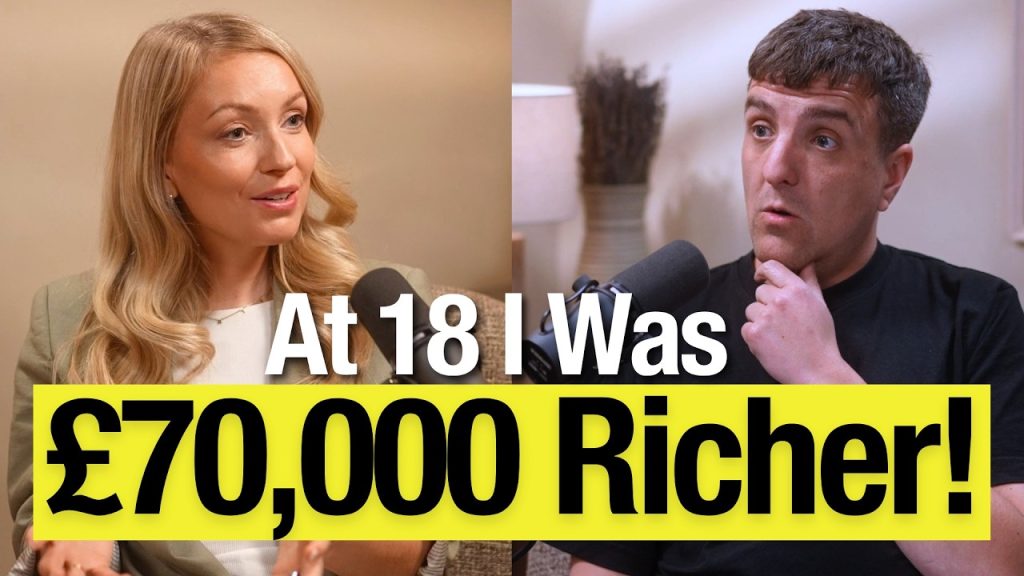
This week’s guest is Caro Syson, founder of Pocket PA, who joins the podcast to talk through a genuinely unusual career path: from physiotherapist to mortgage broker to property investor, and finally to building a tech start-up from scratch with no coding background at all.
Caro’s first business was a physiotherapy practice she opened at 23 with a young family in tow.
From there she retrained as a mortgage broker, used what she learned to start building a property portfolio in the years before the 2008 crash, and spent the best part of a decade juggling landlord life with raising four children.
It’s the kind of self-employed, self-taught journey that will feel familiar to a lot of small business owners, long before Pocket PA ever existed.
The pivot into tech came later and almost by accident. When Caro’s daughter Megan left a job to go self-employed, Caro went looking for a single tool that could handle bookings, invoicing, expenses and tax admin in one place.
She couldn’t find one, so at an age and in an industry where she says she had no business doing it, she decided to build it herself. Six years on, Pocket PA is a web-based platform used by self-employed people across the UK.
This episode is less about property tips and more about what happens after the portfolio: the admin, the tax returns, the constant juggling that comes with running your own business, and why Caro thinks most people who go self-employed are never actually taught how to manage the money side of it.
———
Gains App is LIVE!
An AI-powered budgeting and cashback app designed to help you make more of your money.
Download here: https://gainsapp.onelink.me/8IhT/oiaimr1z
———
Get a FREE FRACTIONAL SHARE worth up £100 when you deposit £1 with Trading 212
https://www.trading212.com/join/MGP
If you don’t receive the free fractional share, head to the menu and put the word ‘MGP’ into the promo code section.
(Capital at risk when you invest)
Key takeaways
- Caro opened her first business, a physiotherapy practice, at 23 with a young family, and says she never worked for anyone else again afterwards.
- She retrained as a mortgage broker in her early thirties specifically to understand property “from the inside out” before building her own portfolio, buying her first investment property with a business partner in around 2004.
- Caro built Pocket PA with zero coding experience and no background in tech, starting the project purely to help her daughter Megan manage her new self-employed business.
- Pocket PA brings income tracking, expenses, invoicing, business mileage, card payments and a tax estimator into one platform, aimed squarely at sole traders and small business owners.
- Caro’s core message for self-employed people: track your numbers little and often, because you can’t manage a business you’re not measuring.
Timestamps
- [1:05] Meet Caro Syson, Founder of Pocket PA
- [4:24] From Physiotherapy Practice to Self-Employment at 23
- [10:30] Building a Property Portfolio With 125% Mortgages Before 2008
- [13:31] Surviving the 2008 Crash as a Landlord
- [17:46] Renting Out Rooms and Using Help to Buy to Afford a Mortgage
- [23:34] The Pivot From Property to Tech: Why Pocket PA Was Born
- [27:42] Building a Software Platform With Zero Tech Experience
- [34:23] Tracking Income and Expenses: What Pocket PA Actually Does
- [46:38] Sorting Out Tax and Self Assessment as a Self-Employed Business Owner
- [52:18] Pocket PA Pricing Tiers and the Free Trial
From physiotherapy practice to mortgage broker: Caro's early business journey
Caro’s entrepreneurial life started with a physiotherapy practice she opened at 23, next door to her own house, with a three-month-old baby and four children under four.
She describes it as terrifying, but says she “never worked for anybody again” from that point on. Three years in, with the practice running smoothly, she started looking for a new challenge, and property was what pulled her in.
Rather than jumping straight into buying, Caro retrained as a mortgage broker, cramming her exams into six or seven weeks. Her reasoning was practical: if she understood how mortgages actually worked, she’d be better placed to build a property portfolio of her own.
She ran the mortgage broking business alongside the physiotherapy practice and family life, an arrangement she says only worked once she brought in extra help at home.
Building a property portfolio through the pre-2008 boom
Caro started buying property with a business partner around 2004, in an era she describes as “the Wild West” of mortgage lending, when 125% mortgages meant buyers could walk away with cash in their pocket for furniture and fittings on top of the purchase itself.
She scaled the portfolio through the following decade, later moving into construction and development and even teaching others how to do what she’d done.
Anyone weighing up how a savings or investment pot might grow over a similar timeframe can get a feel for the maths with our compound interest calculator.
The 2008 crash tested that portfolio hard. Caro says some years were genuinely frightening, with lenders pushing hard as property values fell, and the only thing that kept her afloat was making sure every property stayed occupied and every debt got serviced.
Twenty years on from those first purchases, she says the mortgages are smaller and the incomes far healthier, but she’s clear that “property investing is not for the faint-hearted.”
Getting creative to afford a mortgage: renting rooms and Help to Buy
When Caro bought the house she still lives in back in 2006, the monthly repayments were over £2,500, more than she could comfortably manage on her own.
Rather than give up on the house, she rented out two rooms to tenants for six years alongside her own four children, using that income to cover roughly half the mortgage each month.
It’s the kind of creative, unglamorous decision she comes back to throughout the episode: work out what sacrifice or compromise gets you to the goal, then do it.
She’s also candid about how much the mortgage market has changed.
Her own children used the government’s Help to Buy scheme to get onto the property ladder, and Caro flags the current UK rent-a-room allowance, which lets homeowners earn roughly £7,000 a year tax-free from a lodger, as an underused option for anyone trying to make a mortgage more affordable.
Her advice throughout is the same: renting is not a failure, and there is more than one route onto the property ladder if the traditional one feels out of reach.
The pivot from property to tech: how Pocket PA began
The idea for Pocket PA came from Caro’s daughter Megan, who left an internship at 19 to go self-employed and, in Caro’s words, said seven words that changed everything: “Mum, I want to work for myself.”
Megan has dyscalculia and struggled with spreadsheets and numbers, and nobody had ever taught her how to actually run a business.
Caro went looking for a single tool that covered bookings, clients, invoicing and expenses in one place and couldn’t find one, so she decided to build it herself.
She had never written a line of code and had no tech background at all, going, as she puts it, “into the lion’s den” of a heavily male-dominated software industry in her forties.
Caro has worked with six or seven different developers over the years and says her current team, in place for the last four years, has been “night and day” compared to earlier attempts.
What started as a tool built purely for Megan evolved as her daughter’s lash business grew, and Caro realised Megan’s problems were shared by hundreds of thousands of other UK sole traders.
What Pocket PA actually does for self-employed business admin
Pocket PA brings together income and expense tracking, appointment booking, automated client reminders, card payments through Stripe and Square, business mileage tracking at the standard 45p rate, and invoicing, all accessible through a browser rather than a downloaded app.
Caro built it around a simple red-and-green dial: red for money going out, green for money coming in, designed to give a business owner an instant read on whether they’re actually profitable.
“It’s not about what you make, it’s about what you keep,” she says, pointing out that a business turning over £100,000 with £80,000 of costs is really only a £20,000 business.
A goal-setting feature lets users set an annual income target and see, day by day, whether they’re on track based on what’s already booked in.
For anyone just starting to get a handle on where their own money goes each month before applying the same discipline to a side business, our budgeting calculator is a straightforward starting point.
Getting on top of tax and cash flow as a sole trader
Tax time, Caro says, is one of the most stressful parts of self-employment, largely because nobody explains it properly beforehand.
Pocket PA’s tax estimator uses whatever income and expenses a user has logged to suggest how much to set aside each week or month, using default rates of 20% or 30%, or a custom percentage based on historic bills.
At the end of the year, users can export a fully itemised spreadsheet for their accountant with a single button rather than building one from scratch.
Caro’s wider point is that self-employed people rarely separate “what I earn” from “what I keep,” and treating business admin with the same seriousness as household budgeting from day one avoids nasty surprises later.
If a side hustle is where this all starts for you, our guide to the top ways to earn a side income covers the options before the admin becomes a problem worth solving.
This transcript is auto-generated and lightly edited for readability, it may contain errors.
[0:00] Sammie Ellard-King: Hello and welcome to another episode of the Money Gains podcast. This is your host, Sammie Ellard-King, and today I’m going to be joined by Caro Syson, who is the founder of Pocket PA. Now, Pocket PA is wicked, especially if you’re a business owner of any kind. It really does integrate all of your needs into one easy-to-manage platform. Say goodbye to spreadsheets and note file books with rubbish scribblings on, trying to remember that three days later when you’re scrolling through it. It’s all on a really to use web app. And Pocket PA is going to change the lives of millions, I am sure about that. And I’m very excited to unpack it all today with Caro. So if you’re listening on YouTube, please do whack that subscribe button. And if you’re listening on Apple or Spotify, hit follow, drop us a review, it really does help the show. But for now, let’s get started on the Money Gains podcast.
[1:05] Caro Syson: Let’s make some bread. So, Caro, welcome to the Money Gains Podcast. How are you doing today? Are you well? I am very good. Thank you so much for inviting me here today, Sammie. Been really excited about this one. Yeah, me too. I um I you actually messaged me and introduced me to Pocket PA and I loved it. I thought it was really cool. Um, and you were on another podcast as well, which I know very well. And uh yeah, I was listening to you speak, and I just thought we’ve got to get you on the show. So yeah, how you been today? Where are you joining us in the world from? Thank you. Yeah, I’m from St Albans, just near St Albans, outside London, and yeah, love it here. But I am a bit of a remote worker, so I do just need an internet connection, and this has been my year of travel, so I have been off and about this year um working away, and I just keep putting things on my story, and I keep thinking, gosh, I hope people are still following where I am, because you know, I as long as I have an internet connection, I can work from wherever, and that has always been my aim to have that freedom of travelling um and still being able to work. I think that’s really important if that’s what one of your goals is.
[2:10] Sammie Ellard-King: Yeah, absolutely. I saw you, was it Sweden you were in recently in the ICE hotel? I’ve been off to the ICE Hotel in Sweden, I’ve been in Thailand this year, I’ve had a trip to Finland and also um Portugal. So yeah, I am packing it in. This is my year of travel. So if you like travel, you can follow along on my stories. It’s like loving it. Oh amazing. Well, um, I’m really excited to unpack this with you today. I’m gonna talk about Pocket PA a bit later, but we like to get to know our guests a little bit and understand that their journey to where they created their business. So, what was it like for you growing up with money? How how were you as a as a you know a young Caroline? Yeah, so I uh I grew up um in I was the youngest in a family of four, and we travelled all over the world. I think that was one of my sort of blueprints when I was little. I was in a um a family which was in the Air Force, so I moved um every one or two years. I had 11 different schoolings, and so I was always sort of somewhere new, and we weren’t, you know, we I don’t think I really thought much about money when I was little, not because we had an abundance of it, but because everything was just taken care of. I used to get a little bit of pocket money and that sort of thing. Um, my parents were pretty frugal, we weren’t particularly extravagant, we had camping holidays, caravan holidays. Um, we didn’t sort of jet off abroad, do anything in a hotel. I think we ate out once a year for someone’s birthday, but compared to the sort of pace of life that people live these days, where you might eat out two, three, four times a week, um, it was just crazy back then. That was just so not something that was done. So yeah, I just grew up, um I guess I would say in a just a normal house with money things. I don’t feel like it developed any particular blue blueprints for me of thinking of scarcity or of an abundance or sense of entitlement. Um, and yeah, it wasn’t really until I started working for myself when I sort of left school and went to university that I started to realise how important it was to start budgeting and that money didn’t grow on trees or any of that sort of thing, and that I really needed to look after myself. That was the first time that it really dawned on me when I left um school and I went to university and had to become financially responsible then.
[4:24] Sammie Ellard-King: And what did you study at university? So uh well, I had I’ve had a very squiggly journey. I um went to university to do physiotherapy. So I did a four-year physiotherapy degree and qualified to work in the NHS. And on finishing my physiotherapy degree, I was using my physiotherapy degree as a stepping stone. I then wanted to join the Navy and wanted to become a helicopter pilot. So I applied. I know this is all very bizarre and uh things that people find out about me. So I’d applied to go to Navy and I had a place at the Naval Academy down in Dartmouth, and I think three weeks before I was due to start, um, just after I’d left university and was shelving physiotherapy, I changed my mind. I met a guy and we decided to get married, and so I decided to stay in physiotherapy for the moment and um gave my whole thought of going to the Navy and travelling the world on a ship. I gave that up and I stayed in physiotherapy and had a family, um, opened a private physiotherapy practice, in fact, um, and that was my very first business. Um, and so yeah, I never looked back, I never worked for anybody again after the age of 23. I’ve always been self-employed.
[5:38] Caro Syson: Yeah. So you were 23 when you started your first business? Yeah, I I began, um, I had some small side hustles and things, and I did um other bits and pieces, but I opened my physiopractice when I was just when I was 30, and I literally had a young family. My youngest daughter was just born, she was three months old, and I had four kids under four, and I opened my doors to a physiotherapy practice next door to our house, and I began, and it was terrifying. I didn’t know what I was doing, I just knew that I couldn’t go back to work in the NHS and be on someone else’s timeline. I just had to do my own thing. So it was born at that point, and that was my very first sort of fully fledged business that I did. And you pick up suddenly you’re doing every skill in the book as well. You’re not just as a business owner.
[6:25] Caro Syson: Everything. Yeah. Yeah, yeah. No, I just never stopped. I remember being up in the morning, I remember listening to music at two in the morning, sort of looking over my books, thinking about, oh, this is interesting. But I was already thinking of another side hustle, and I’d only had my physiotherapy practice for three years when I was already thinking of doing something new. Everything was working like clockwork in the physio practice, and I decided I wanted a new challenge and I wanted to do something more to do with finance and money. And I was thinking of what my next stepping stone would be. I was only 33 at the time, and I was thinking about going back into London and retraining and doing some trading or investment fund or that sort of thing. That was what I was looking at, but I could just see that the hours would be incredibly long and with a young family and balancing my physio practice, which I wanted to keep going, it didn’t seem like it could fit. But I was also fascinated with property at that point, and I wanted to understand and learn more. And so I retrained as a mortgage broker, and I did all my exams in six, seven weeks, um, which was really fast time scale. I literally just got my head down, decided that was what I wanted, and I went in and did my big three CeMAP exams and got qualified in um a couple of months, and then I began working self-employed as a mortgage broker in an area that I never knew anything about, but it I really wanted to understand mortgages and property and that sort of thing. And I thought the best way to do it is from the inside out, and if I start to understand how mortgages operate, then I’ll be in the best place position to be able to start buying some more property because that was what I wanted to do next, because I could see my way towards growing um, you know, more financial freedom for myself and family by doing that. So I was then juggling my mortgage broking um new career that I was just brand new at with my physiotherapy practice, which was sort of going on on the side with again being a mum still of my four very small children. Um, and that that was where I was at when I was 33.
[8:18] Sammie Ellard-King: I can relate to this, you know, running two businesses at once. It’s not easy. Um how did you manage your time with with both of those businesses? Um, I eventually got an au pair to help with the children because I was really stretched. Yeah. Yes, yes, they were they were hugely important. Yeah, well, I know I definitely were not that. I just I couldn’t be a stay-at-home mum, although it was absolute they’re absolutely my world. I just still had this burning thing. I didn’t feel like I had found my calling, my passion. I just felt uh unfulfilled, I suppose, which sounds really ungrateful when I had such a beautiful family. Um, I just knew that I there was something more that I could do, and I really wanted to sort of build some financial um sort of wealth and stability. I didn’t have anything in my pension at that point, and I could see the way forwards for my own um stability later in life. I I’m a little bit um, you know, I’m I’m very much about taking care of myself, and so it worried me that I kept seeing all these stories about pensions. There was things with the Maxwell scandal back then in the olden days, and he’d taken all this money from people’s pension pots, and I felt really vulnerable back then, and I don’t think I even recognised it at the time, but I very much knew that I needed to take care of my financial stability and my my finances for my family, and I needed to take that action. I didn’t want to rely on anyone else or some savings pot at the end. I wanted to take that autonomy and grow my own savings pot for my pension, and I decided that property was my best bet. I’d seen other things not performing or delivering shop stocks and shares seem to be quite transient and um unstable sometimes. And I just thought, no, bricks and mortar, we are an island, um, we’re not going to ever get any more land. So if I invest, you know, all the biggest um, you know, when you look at McDonald’s, really they’re just a very large real estate company. Yeah, absolutely. And yeah, it’s all about having um, you know, bricks and mortar, and that was what I wanted to understand more about. So I felt if I was on the inside out with this mortgage stuff, then I would get the inside track and I would surely I would pick up something was my reasoning. And you know, slowly I did, and I was able to start buying extra properties with my extra knowledge that I got.
[10:30] Sammie Ellard-King: So talk to us about how you’re moving funds from one business into say, you know, obviously your physiotherapy business was doing okay. Um how did that work in terms of getting yourself onto the property ladder as a business owner? Because it’s not easy. Yeah, it wasn’t. And um, I had got the children into a school which I was paying school fees for at that point. So pretty much all of my money from my physio practice was going to pay the children’s school fees. They were only little, but um we’d decided to put them into a local school which had fees. So I was paying for four little ones’ school fees by the time I was um uh sort of working in my mortgage um business practice, and so I was really um just watching and learning to see how other people were buying properties, and back then the property market and the mortgage market was very, very different. It was before the crash of 2008, and people were able to buy properties without any money down, and in fact, we’re able to get what we called cashbacks at this point, where they were able to get a mortgage for 125% of the value of the property, and you were then able to actually put money in your back pocket to buy fixtures and fittings and furniture, and it was just crazy back then. And we were able to start building a property portfolio. I had a business partner at that point, and I was doing a lot of the research and the sourcing of the properties and finding the ones that we wanted to buy, and that was when I got started. I’d already bought a couple of um properties with my um husband at the time, and we had a couple in our portfolio, but I really wanted to scale up, and that was the time really in 2005 onwards. I bought the first one with my ex-business partner in about 2004, and we started scaling up and buying um a lot more um over the next 10 years, really. And then I moved into construction and development and started to become um a property investor. I taught on some training courses, I developed a training course to teach people to do what I had done before the property um market changed. So that was a really busy period really for me from 2003 to about 2013.
[12:34] Sammie Ellard-King: Wow, there is so much to unpack there, isn’t there? There is so much to unpack. I love it though. So back in the day, obviously, you with this 125% mortgage, you could really go for it quite quickly, couldn’t you? And you it was mad, and looking back, it’s crazy. Thank God they stopped doing it because so many people got into financial stuck from that, you know, even people that were leveraged as high as having a 95% mortgage with only 5% equity. I know we have some of those mortgages now, but the checks and balances and the stringency that they scrutinize people today is so much more rigorous, thankfully, because back then it was like the Wild West. And although it was regulated, it wasn’t enough to really um give people you know confidence going forwards. People were going crazy with all sorts of purchases, and then it all unraveled um, you know, when the recession came and and the the cycle sort of went fell apart in 2008.
[13:31] Sammie Ellard-King: You still have a lot of those today? Yes, yeah. I was very lucky. I fortunately had gone through um a cycle and my properties gone up in value enough that I was able to weather the storm. Um, but we had some very scary years, literally, it wasn’t even weeks and months, some years where the banks were trying to um, you know, squeeze us to um get the the properties back and we were able to show that we were able to service all of the debt. I always had this um, you know, this mindset where as long as I could make sure that I could service all of the debts, there was no reason why we needed to make any paper loss, a real loss. So it was just getting through those years, making sure that we had all the repayments under control, making sure that all the properties were occupied, we were bringing rental income, and it was a huge balancing and juggling act, and it was very, very stressful during those years. But we’ve come through that, and you know, 20 years on from buying those first properties, they’re now um, you know, the mortgages are very much smaller, the incomes are very much healthier, and it’s able, you know, it’s enabled me to have a lot more choices, and so yes, it was very, very hard. And property um investing is not for the faint-hearted, and it’s going through a real cycle as well, a lot with legislation, and they’re really squeezing landlords um hugely, but that’s another whole topic. It’s you know, it’s uh it’s a minefield.
[14:56] Sammie Ellard-King: Yeah, it’s absolutely crazy right now. I mean, the the way that they’re getting squeezed, they’re then squeezing the tenant, and it’s this catch 22, and it’s kind of really it’s really hitting home for a lot of people that rent at the moment for sure. Yeah. Um and we are a very aspirational society to become homeowners, but it is so difficult to get onto the property ladder, and you know, it’s no mean feat for people to be, you know, putting savings aside, and I can understand how discouraging it is that they seem to need more and more and more, and now the interest rates have gone up to what actually aren’t really high levels. I do remember them being 14-15%. Um, but you know, compared to what we’ve been used to the last 10 years, where they’ve been incredibly low and almost on the baseline of zero, one percent, or whatever, anything where they’re at now at four, four percent, five percent, that’s just astronomical for a lot of people to comprehend to think, oh my god, I’m never gonna get onto the property ladder. But I can tell you, I actually also thought when I was 18 and I saw my brothers and sisters buying houses, I thought, oh my god, I’m never gonna be able to own a house, it’s never gonna happen to me. And I remember thinking that when I was that age, but you can always find a way to do something and you can work out how to be creative. And if it’s something that you really want enough, there is always a way that you can achieve that. I believe that for anything.
[16:15] Sammie Ellard-King: 100% agree with you there. You know, we were really lucky. We we did help to buy um at the beginning of COVID, and where things were just fell into place really quickly for us. You know, we had extra cash on the side, we weren’t travelling for work, etc., and suddenly we had disposable cash to put into a property, and it it changed everything for us. And suddenly the access to that five percent, I know it’s only the five percent, but it gave us that foothold. Um, and you know, we are now proud homeown homeowners and looking to skip now looking for our second property. So it’s one of those things. It’s like if you can get the foothold in there, you know. I I luckily did it with my partner, so it meant half the amount of deposit. It makes such a difference, doesn’t it? Yeah, but there’s also there’s absolutely no shame in renting because it’s so difficult to get on. And you know, for those people that might be listening and haven’t been able to reach that, you know, there is no, it’s not a failure at all. There is no shame at all in renting. It’s it’s something that you know you can still aspire to, but you can still have a good life renting. It just, you know, it’s something that you can work towards and you just don’t know what’s round the corner. I’m sure that the rates are going to come back down, and so it is definitely still worthwhile putting money aside on a savings plan if that is something that you want to do. There are some government schemes, some leases and things that you can invest in to be able to help you put towards your deposit and stuff. Um, but don’t give up. If it is something that you really want, there are definitely ways that you can do that that um option. 100%.
[17:46] Sammie Ellard-King: We we did the help to buy scheme, so we got the extra, I think it was 3,000 from the government at the time, um, when we when we both put it in, we both put it in together, so we had the extra money. Um these days, obviously, as you mentioned, you know, a l uh a a Lifetime ISA will do that for you. Um, you get £4,000 a year, you know, uh contribution a year with a thousand pound contribution from the government, that’s amazing. And you know, if you can utilize even some of that each year and get that government contribution towards your first home, that’s fantastic. Um even sorry, just to say, when I bought the house that I’m living in now in 2006, I couldn’t really afford the monthly mortgage day-to-day, and it was over it was over two and a half thousand pounds back in 2006. So that tells you how much that might be today. And I really, really wanted to buy this house, and I was able to get the mortgage for it, but the monthly payments were so high, and I ended up renting two rooms in my house for the first six years that I lived here, and I had tenants as well as the kids in two of the rooms, and I had two tenants paying me, I think, four or five hundred pounds each towards that mortgage, and you know, I I was divorced at that point, and um, you know, had the four kids for part of the week, and I had to rent the rooms out in my house because I wanted the house badly enough and I knew that it was a means to an end, and I wouldn’t need to do it forever. And I was never too proud to think, you know, how can I afford it? What sacrifices do I need to make? What compromises do I need to do? What creative way could I still have this house and get an extra, you know, income from the two rooms in the house that would enable me to afford the mortgage? So for six years I rented rooms in the house that paid half of my mortgage, and yes, it wasn’t the best having other people in, but I vetted who I had and who I lived with, and they were great people, and I made some great friendships over that time, but it was a stepping stone, it was a means to an end. So, you know, there are creative ways that you can reach your end goal. Um, so yeah, again, it’s just having those thinking outside the box to be able to make what you want happen because there’s always more than one way to do anything.
[19:51] Sammie Ellard-King: Oh, absolutely. I love what you said there. You know, a lot of people do do that, they take the mortgage out, it might be a touch too big for them, but they know before they’re going in there that they’re going to do that, you know, rent out a room or rent out, you know, the annex or a part of the house. And actually, a lot of people will even go as far as renting every single room in the house and then they get their entire mortgage paid for. Well, we do have the option. I know that there’s a government scheme, the rent a room scheme, where you can claim, um, you can have about, I think about £7,000, it might be slightly more now, £7,000 worth of room income without it being taxed, which is totally legitimate. You can pop on your um tax return, um, and that is genuine, you know, legitimate income that you can have that’s not taxed that can go towards your mortgage payment. So, what could you do with £7,000 if you rented rooms out in your house? How would that help your day-to-day, week-to-week, monthly budgeting? Just have a we think. Have you got a room that has got, you know, floor to ceiling with boxes and rubbish and stuff? Could that be relocated? Could you pop a bed in there? Do you think you could have somebody, you know, share the house with you for a period of time? Because you can choose the parameters. There are websites that you can rent uh your room just Monday to Friday. How cool would that be? Because you’re everybody’s busy Monday to Friday. It’s often the weekends that you might want to be more to yourself. But there are people that might want to rent your room Monday to Friday and have an extra income. How cool would that be? What difference would that make? Your budget.
[21:15] Sammie Ellard-King: Or if you’re in like a seaside location or a desirable location, Airbnb, Airbnb, 100%. A great bit of business. And you know, if you’re away for two weeks, rent the house out, make the money back, pay for your flights. There’s so many ways. Swap your house, do a house swap. Swap your house with someone in Florida if you fancy going to Florida for two weeks because your house is going to stay empty. So, you know, there are lots of websites where you can do these exchanges. Another innovative way for being able to have an amazing holiday and utilize an asset that you already have and reduce your costs. I love that. You know, we’re thinking outside the box here. So you’ve gone from into this more um mortgage advisor role. Um, how did it go? What what happened next?
[22:43] Caro Syson: It was fine. It was Good, I learned loads. Um, and yeah, I started buying the property because that was my end goal. I was training up other mortgage brokers because I really enjoyed the training element of it. I really got to understand how mortgages worked, all the different products, terms, and that sort of thing. So I really enjoyed the training aspect of that. Um, and I carried on doing that really until 2008 when the property market crashed and um there was a big sort of global recession back then. Um, and then I moved just more into being a landlord. By then, I had accumulated um uh you know a good number of properties that needed managing day to day, and I really have been doing that until six years ago when um I had another detour into uh the latest venture that I’ve been doing for the last six years, which is Pocket PA. So that’s that was the journey up till there.
[23:34] Sammie Ellard-King: I love it. Let’s get into Pocket PA because the story’s wicked. Um give us the 411. I love it. Well, I was just literally bumping along, being a mum and a landlord, you know, pretty much enjoying my life. I was um, you know, not having to do a huge amount day-to-day, and I I guess I was thinking about a new challenge and what could I do? I’d had a few side hustles, I’ve done lots and lots of side hustles of things that I’ve enjoyed doing. Um, I’ve had an online photo editing business, I’ve had a baby massage business, I’ve had a sort of a cupcake business, a spray tan business, a pancake passion business, all sorts of side hustles which I’ve enjoyed and you know shown the kids how easy it is to have a side hustle and to make some extra money. Um, but when my kids were starting to leave home, my older son went to university, totally excited for him. It was the right move for him. But my next daughter down, she didn’t want to go to university and I was really cool with that. But she got a job as an intern, and six months after starting there, she came home one day after a holiday and she said, Mum, I want to work for myself. And those seven words just were they just lit me up, and I thought, oh my god, she’s chip off the old block, how exciting! But I was just thinking, Oh my god, how is she going to cope? She has got dyscalculia, so looking at spreadsheets, numbers, anything to do with finances like that were overwhelming for her. She didn’t particularly have a good handle on that. No one had ever taught her how to run a business because why would they have? They don’t teach that sort of thing in school. She was 19, and I was just so excited that she had that energy and drive, and you know, she was so brave that she wanted to start her own business. And I thought, oh my god, that’s so exciting! I need to make sure that you’ve got all the tools that you know you’re gonna be able to succeed because at the end of 12 months, if you haven’t done your tax return and kept on top of all the business stuff, then for goodness sake, you’re not going to be able to still carry on shining your light and doing your business. So I set about um as her mum looking for for this magic tool, and I could find 50 different apps, all doing one strand of what she needed in her day and her week. So there were lots of really overwhelming accountancy software packages of which she would have needed 5% and have only understood like 10% of what was in them with all of the, you know, profit, loss, accruals, trial balances, and all these words that she would have just switched her off and not lit her up at all. And then there were booking softwares all doing a little bit of something. There were CRM systems keeping uh track of all of her clients, there were different softwares for invoicing, there were different softwares for receipts. And I just thought, this is mad. There’s just so many different things out there. Where does she start? And why isn’t it all in one place? Because the journey doesn’t begin when someone hands you 50 pounds and says, Thanks for doing my whatever it is you’ve done. It begins when that client first contacts you and says, Can you do this for me? And it’s like, oh, oh my god, I’ve got a new client. Oh, I can match them with this service or I can give them this product. Oh, when am I going to do it? So you have to have a booking and then you have to remind them to get to your appointment, and then you know, you have some business costs, and then you there’s just so many other aspects to it. It’s not just about that transactional money coming in, money going out. So I just thought, well, that’s mad. Where is this tool for my daughter who’s 19? She gets lit up with colour and really simple language, and I thought, gosh, that’s mad. I can’t find it anywhere. I think I’m gonna make that for her. I’ve got a bit of time on my hands. Let me see how hard can it be. And I just started out making this software tool with zero experience, never written a line of code, never planned to, and I just thought I’m going to give that a go. And I have been on this roller coaster journey, nothing else has compared to it. Buying and selling property hasn’t got a patch on software, and yeah, I’m six, five, six years into it. She’s got a very successful lash business, doing super well. She’s now training new lash artists, and she’s 25, 26, she is, and yeah, it’s it’s just been testament to what I’ve been able to help her do with Pocket PA, and it literally manages all of her business aspects while she focuses on what she loves, which is her clients, and you know that that’s what her mainstay is every single day.
[27:42] Sammie Ellard-King: I love it because in in a way you’re always reconnecting with your daughter at an age where they might, you know, fly the roost, and and you you’ve built this tool for her which now allows her to just completely worry about what it is that she loves doing and then check in very quickly and easily on the app. So talk to us about building the app because building an app is not easy. Well, I mean, this just goes to show how naive I was back then. And um, just just as an aside note, um, I I do have autism, which has been sort of diagnosed in the last 12 months, and I think now looking back, it was that autistic part of me, that naivety, that fearless, like, well, how hard can it be type thing, not recognising or realising what an astronomical, ridiculous, bonkers plan that sounded like I was just going to make this software platform, and I knew nothing at all. So I have been literally into the lion’s den, and 98% of the software tech industry is male uh dominated, so there are very few women in it, let alone women of a certain age, of which I am sort of in advancing decades. So I was very naive back then going into it. I just thought, oh well, I’ll just, you know, hire a developer, and it was just so not like that. Um, and you know, and if I can make a software platform like this, it is totally accessible for anyone to do it because I have no tech background. I’ve had six or seven different develop developers over the years. I’ve been with my current team for the last four years, which has been amazing. It’s been like night and day compared to the ones I had used before. Um, but it’s been a total evolution of what I needed, and Megan was my ideal case study because I was literally at the beginning just making this tool for Megan. So every time she came down the stairs and said, Oh mum, I need this, I need that, it was like I was Mummy Christmas. I was just like bringing up the developers saying, Oh my god, we’ve got to have this extra feature on. So it’s evolved as her business has evolved. But what I came to realise very early on was Megan is very typical of how hundreds and thousands, if not millions, of other small business owners work. And so I was making this one tool for specifically for self-employed business owners who work by themselves, for themselves. They don’t get duvet days. If they’re not working, they’re not earning money, they’ve got a gazillion things to do. The admin stuff does not light them up, they get stressed at tax time, they feel overwhelmed with tasks, they’re always messaging clients backwards and forwards, you know, putting appointments in, that sort of stuff, making sure deposits have been paid, checking payments have been made before or after the appointment, that sort of thing. There’s all this extra stuff to do, and the actual delivery of the service or the selling of the product, which is the bit that they started their business for, you know, becomes second rate when they’ve got all this admin stuff to do. And as I said to Megan, nobody starts a new business because they want to do more business admin. I said no one ever. So it’s really important that they have a system in place, and when you begin anything, you’ve often got a lot more time on your hands and you don’t have much resources or sort of money coming in, perhaps, but you’ve got a lot more time. And I say it’s those times when you’re beginning your journey that you need to set up the systems that you’re going to have in place that will serve you once you start getting busier and busier. So if you’re converting your hobby or your side hustle into an income-producing sort of livelihood, it’s really important, I think, that people start treating their business right from the get-go as a business. You’re sending this message out into the universe that you’re serious about, you know, having this business and it’s going to give you an income and it’s going to grow and grow and grow. But if you don’t put those systems in place, once you do start getting busier and busier, things can unravel really quickly and you can get really overwhelmed and feel a bit burnt out and frazzled, and then think, oh my god, why did I start all this? Because it’s not as much fun as I thought it was. But you can do this, but you just have to get a little bit organised. That’s the that’s the main thing, and that is what I was trying to deliver with Pocket PA. It was supposed to be this trusted PA in your back pocket that you know, your DIY tool that was going to cost, you know, half an hour that you might pay for a VA a month. Um, that was all it was going to cost for you to have your system in your pocket, and it was on the cloud, so you couldn’t lose it. You could open it on a phone, a tablet, a laptop, computer, and you would always have it available to manage all your stuff so that you’ve got all your all your sort of statistics and all your information and data at your fingertips because we can’t manage what we don’t measure. And you know, with money, the bottom line is you’ve got a business, and business means that it’s it’s making you money, a good business. If you want it to be sustainable, it’s going to be profitable, but it’s all about the money. And if you’re not focusing on the money right from the get-go and understanding what your cash flow is, because that can seem really scary when you’re starting out, it’s no different from you budgeting your household uh income and expenses, you’re just moving it into your business, so you’re just doing it in parallel to your household budget, but you’ve got to know that you’re making money, otherwise, what’s the point? You’ve just got an expensive hobby going on, and you need to know that sooner rather than later. You don’t want the accountant to be the first person to tell you. And because of the way I’ve made Pocket PA, it’s all delivered to you in colour. So there is one coloured dial, which is so important, and it’s red for the um things going out and green for the items coming in. And I just say, make the red as small as possible and the green as pick as big as possible, and at a glance, you will know that your business is profitable. If it’s half red, half green, it’s going to say zippo in the middle, you’re not, you’re breaking even, there’s nothing left for you, and God forbid, as I say, that red is bigger than the green, then you’ve got an expensive hobby going on, and you need to know that sooner rather than later because this is about business if you’re really serious about your business.
[34:23] Sammie Ellard-King: So let’s talk about that, obviously, because it’s a big deal. A lot of people start side hustles, they do have to invest some of their own cash, whether that be for products, for goods, or for services that allow them to get up to where they need to get to. How does that have you seen that transition for a lot of young business owners coming from a loss into profit? And and and what does Pocket PA do to kind of help you on that journey? So with Pocket PA, it’s super simple. There’s like one plus button, and I encourage everybody to try and keep it up to date on a daily basis because what we do little and often is the things that really create giant leaps and steps. And as I said, you can’t manage what you don’t measure. So you need to be tracking every time you get a payment into you know whether it’s a deposit payment, whether somebody’s paid you cash, whether somebody’s paid you in your bank account, they’ve you know they don’t give checks anymore, do they? But you know, they might have done a bank transfer or PayPal, whatever it is, they might have given you a card payment, you can take card payments through Pocket PA, but you need to be tracking all of your income. But a lot of the booking softwares that I see, they do bookings, which is great because people think, oh yeah, I need a booking system, and then they’ll track some of the income. But what they’re not doing is they’re not looking at the expenses going out. And a business is just a game of two halves. What have I got coming in and what have I got going out? And unless you are cognizant and you know exactly both of those two bits, you can’t possibly know how well your business is doing because you’ve, you know, people talk about having, oh, I’ve got a six-figure business, and you think, oh my god, that’s so impressive. They’re making a hundred thousand at least. Um, but it’s not about what you make, it’s about what you keep. Because if you are spending 80,000 of that hundred thousand in order to be able to make that hundred thousand, you’ve actually only got twenty thousand left. You’ve got a 20 grand business. Yeah, and you might be better off in a job. Yeah, exactly. And as unexciting as that sounds, it’s about what the actual profit is for you. And that’s why that dial is so important. And if you’re not really tracking on and you’re not on top of what your costs are going out as well as what you’ve got coming in, then you’re not really in control of your business. Your business is in control of you. You should be able to look very quickly and easily and see all of your outgoings and know whether they’re recurring subscriptions, whether they’re regular payments, whether they’re one-offs, whether they’re must-have things in your business or they’re nice to have, whether you’ve got any extra money for training, whether you need to buy some extra stock, whether you need to buy some extra equipment and some capital expenses. All of those sorts of things have to be taken into the mix. And you can’t afford when you are a small micro business owner, um, you know, transitioning from a hobby into a small business that you really want to, you know, take to its extreme and really make profitable. You can’t be um sort of on that runway if you’re not aware, fully aware, of what your costs are as well as what you’ve got coming in. It’s really vital. There, it’s like this push-pull. And people talk about profit-loss accounts and forecasting and projections and all that sort of stuff. You it doesn’t need to be scary. It literally is what have you got coming in, what have you got going out? What’s a regular outgoing, a direct expense, and what are those one-off annual costs that you’ve also got to budget? Um, you know, things like your insurance, that sort of thing, you pay once a year. But you know, if that goes out and that’s a hundred pounds in one month, that could like make you think, oh my god, I’ve got loads of expenses this month. But just bear in mind that’s an annual expense. So really you could amortize that over the whole 12 months and say, oh, well, that’s actually only going to be costing me eight pounds, whatever it is a month, whatever. But you’ve got to be in charge of your expenses and then look at those expenses, scrutinize those, and think, are they must have for my business to operate at this size when it’s so small, or are they nice to have? Could I do without that? Is that something else that I don’t need just yet?
[38:07] Sammie Ellard-King: It’s it’s it’s it’s a really cool way of looking at it. I think like wait, one of the things you said was that you think that business owners should do it in the way that people act run their household budget. People look at businesses very differently and they think, oh, well, you know, I’ve got this investment of 10 grand uh or this bank loan of 10 grand, I’ve got 10 grand, like let’s go for it and actually let’s move further than the truth. We’ve got to really plan it out and then plan that pathway. Yes, okay, fine, you might be not being profit. Year one, year two is when you start making profit, and that’s absolutely fine. But if you’ve roadmapped all of your expenses out for the next 12 months, you can do that through. And obviously, Pocket PA allows you to do that. So, what’s you mentioned it takes card payments as well. What are some of the other really great features on there? Yeah, so it’s integrated with Stripe and Square to enable you to use your phone effectively. You can just use your phone once you’ve got Pocket PA on it, just like a card, um, a card payment machine. You don’t even need a card reader because we use it with Stripe and you just need to input the digits in. Um, in addition to that, it does business mileage tracking. That’s one of the biggest things that small business owners do not bother doing because they see it as a faff. Whereas um once you’ve got the appointment popped into Pocket PA, all you need to do is click on the appointment, click on the directions button, and it will take you from A to B and say that is 7.4 miles. You can claim £3.23 and it pops it into your business expenses. And all of those £3.23s add up every day, every week, every month, every year, and suddenly you’ll find that you can claim back an offset against your profit, you know, four, five, seven hundred pounds effectively, that you wouldn’t have been claiming for if you hadn’t bothered tracking your business mileage. So that’s one of the biggest things that people don’t bother doing because it’s a faff, but we make it super simple in pocket.
[39:52] Sammie Ellard-King: I don’t do that. I should do that. Oh my goodness, Sammie. Definitely should be doing that. I just save my train tickets, that’s all I ever do. But I don’t um but I bet you drive also on do little routes and journeys for business purposes. You need to be tracking those, and it’s super simple to do. We’ve already got the 45p business mileage in the default settings, um, so that you just have to put in the A and B points. And when you’re when you’ve got an appointment, when you’re an appointment-based business, you’ve already tracked where you’re going to be going, you’ve put that in. Open it on your phone, it will pick up your current location, so it will tell you in a flash exactly how far it is between. You don’t need to do any calculations. That’s just the point. Just clicking. I love it. Click and go. So that’s that’s one of the things. We send um, we’ve got a booking confirmation, appointment reminders, and thank you messages that can go out automated. You just set them up once and then they go out to your clients to remind them to turn up, just like the doctor and the dentist send you things. But when you’re a small business owner, you see the big salons and the big you know companies doing that sort of thing, and you think, oh gosh, you know, they’re so professional. But you can do that yourself through Pocket PA. You literally just set up your template, and then we pull the per the client’s first name, we pull the service that they’re being offered, we pull the date and time that you’re seeing them. And those sorts of things will make a real difference. It really minimises forgotten last-minute cancellations, missed appointments, because if you’ve sent out a text message to remind somebody to come, the chances are so much higher that they’re going to turn up. Instead of you having somebody that’s forgotten an appointment, you’ve got a two-hour gap, you could have been earning 70 quid or more, and they haven’t turned up, so you’ve now got a space. That’s a direct impact on your cash flow. Exactly. And you just need two or three of those a week, and then every month, and that can really have a massive effect. So just by sending small things like appointment reminders, what about sending a thank you message after your client has been, you know, two days later to say, so lovely to see you, Jenny. Thanks so much. Um, you know, looking forward to seeing you again. Small little touches like that take you and set you aside from your competition and also lets your client know that you really value them. Those are small things that you can do as a business owner, and you know, it it doesn’t take much effort. You just set it up once. I’m I’m hugely about set and forget. I love leveraging our time so that we can put systems in place. Um, and one of the biggest things that I hear small business owners is they’re always messaging clients backwards and forwards, evenings, weekends, and stuff. They should be, you know, a family event or out of the pub with friends, and they’ve got a whole list of people that they have to get back to. What about just setting up an online booking system straight into your Pocket PA diary, sharing the link on your Instagram or Facebook page or on WhatsApp with somebody? And guess what? They book in at a time when it’s convenient for them to do their life admin, which is usually between 10 p.m. and 8 a.m. when you’re fast asleep. Definitely not working. You wake up in the morning and you’ve got three new bookings, or you’ve sold two extra gift vouchers or whatever. It’s about working smarter, not harder, and trying to make sure that as a small business owner, you’re using technology to your advantage right from the get-go, setting up these systems and processes, because we’re only as good as the systems and processes that we have in our business. Um, and if you really want to grow and scale, then you need to be really savvy right from the get-go and think, right, how am I going to use my time? Because the time that I’m best spent is when I’m seeing my client and I’m delivering the service, and I’ve got that customer interface or whatever. It is not, it does not light me up doing all my business admin, doing all that stuff. You just want to do it in the least amount of time, and you know, as quick as possible and as easy as possible. And that was my whole premise for making Pocket PA to try and make it quick and easy. And every time you open it up, it lights you up because it’s all in colour, you get motivated because you can see how much you’re earning, what’s left for you. Um, and I’ve got a new goal setting feature which I put in at the beginning of the year. So if you decide that you want to earn, you know, £48,000 this year, it will break it down and say, right, this month you need to earn this amount, this week you need to earn this amount, and based on what you’ve got booked in, you are on target. You are 75% there, you are 3% there, you’re 125% there. So you get to see every single day because so often we make goals and we make um, you know, plans and we write them down at the beginning of the year on the first of January, and then we forget about them or we don’t look at them, we don’t revisit them. So having them open on pocket PA, and you can set not just monetary goals, you can also set how many appointments you might want, um, also how many hours you work, because when you become self-employed, you might swap a 40-hour paid work week for a 60-hour self-employed work week, and you don’t even know it. Um, and so that’s quite um that’s quite alarming for people. So in Pocket PA, we actually um measure the number of hours that people work per week customer facing, and it can be a real shock for people because they’re like, oh my god, I had no idea. They they, you know, when they were being paid for their 37 and a half hour work week in their employed role, they were right on it because they knew that they started at 9.30 and they finished at 5.30 and they had their hours lunch. When you’re self-employed, that goes all out of the window. I’m sure you know how that works.
[44:53] Caro Syson: Yeah, yeah. Yeah, so those are just some of the features. But Pocket PA is such a pick and mix tool. You can use it end-to-end and get really great value from um, you know, using every feature to the nth degree, or you can just decide to use it for your business expenses and your um outgoings, and or you can just track your income and expenses, or you can just use it for the card payment feature, or just for the reminder messages, whatever it is, whatever suits your business best, um, I can help set people up so that they they choose the bits and cherry pick the bits that will work for their business. I absolutely love it. It’s wicked. It’s such a like honestly, for me, even when I started my own, it was like, you know, I was writing stuff down in a notebook at the beginning. You know, this is old school, and it’s just it’s just not it’s not 21st century, let’s face it.
[45:41] Caro Syson: But we feel safe, don’t we? With uh that was my biggest worry that my daughter was never going to disband with her golden Filofax. She had everything in her golden Filofax. And in fact, last year she um she revealed something, she said to Me, God mum, when you when you first told me that you were making this app, she said, I don’t want to be mean, but she said, I did think, Oh god, what the heck’s mum gonna produce? And I was thinking, how will I be able to keep my golden Filofax hidden and sort of pretend that I’m still using Pocket PA and say, Oh mum, it’s really wonderful. Yeah, yeah, you’ve done a really good job. And she said, I was just really worried what it was going to be. She said, Honestly, I could never have imagined that you could have made something like this. And I said, Oh, Megan, how could you not have believed it? She said, Well, you know, it was such a big ask, you know, to make a software platform, mum, when you’ve got no experience. And I said, Oh, yeah, I suppose. But, you know, she literally thought that she was going to have to keep hiding her golden Filofax from me and keep using it because my tool would be crap and she would still be needing to use it in the background but in secret.
[46:38] Sammie Ellard-King: So let’s talk about tax because that’s a big thing for a business owner, anything that, especially when you come into it, because it’s kind of this like world that we don’t understand, especially as a business owner. How does Pocket PA kind of help you get over this and get you ready for the tax returns? Tax time can be one of the most stressful things, and I think everybody, when they become self-employed, is afraid of the tax man, whoever you are, HMRC, that whole brown envelope syndrome. I got a brown envelope this week and I was still my heart was palpitating. I opened it and it was actually from the DVLA. They started using brown envelopes. It wasn’t tax time. But I know that brown envelope, that whole tax time, the whole 5th of April end of tax year, the 31st of January and July when you have to make this payment on account. What the hell is payment on account? Who devised payment on account? You know, that all of that stuff is alien. When you’re employed, you’re used to somebody else taking out your tax every single month, and oh my god, it’s a bitch having to see that line being deducted. But when you’re self-employed, it feels like, oh my god, I’ve got all this money. And then you do your accounts, and an accountant will say, You’ve actually got to pay this much. It’s like pay it from where? What but I’ve spent all my money. So I was really adamant that I don’t want people to find that whole tax thing a stress. So, firstly, because you are entering in your income and your expenses on a regular basis, daily, obviously, ideally, um, into pocket PA, you don’t need to do any spreadsheets. So, we create all the spreadsheets in the background, and you just become a data enterer in your phone or your computer. You know, I received £30 from Sally Johnson today, I paid out £15 for my train ticket, I received £30 from X, whoever it is. So you’re tracking your income and expenses daily. And what that means is at the end of the tax year, when it’s time and your accountant says, tax time, I need to do your accounts, you can literally press one button and you export all of your information of all of your income and your expenses. They’ve all been categorized, they’re all itemized line by line in a spreadsheet, and you can send that off to the accountant in one in one email. And literally, you can either you can actually set up in Pocket PA to have those spreadsheets sent to you on a monthly basis, weekly basis, however often you want to have them received, or a lot of people just wait till the end of the year, press that one button. But I do know that tax time is stressful. So, what we introduced last year is a tax estimator feature, right? Which now, based on the amount of income that you’ve got, your income and your expenses, it tells you what you should be setting aside on a weekly or a monthly basis, whichever um timescale you’ve got set up, and it gives you a ballpark figure, and you can either set it at the 30% or the 20%, those are our two default settings, or you can put in your own percentage if you’ve got historic data which tells you that you know your average tax bill is 23% of your income. Right. So you will then be told in a little box exactly what you need to set aside each week, month, or year based on what you’ve been inputting into Pocket PA. And this is where I’m talking about how important it is to be on top of your finances on a week-to-week basis. It’s no good just waiting till the end of the year to put in all of your expenses because you’ve effectively not been giving yourself that head start as you go along to really know where your finances are at. So it might seem stressful to do it, but it literally doesn’t take me more than 30 seconds, even with my fat fingers, to input an expense. Take a photo of the receipt, pop it in, saved on the cloud, dish dash dosh, all done. And you’ve got that information, and then it will feed back to you because knowledge is power, it will give you a steer on what to pop into that savings pot for your um HMRC, your tax bill. And you know, it it’s I would suggest that you overestimate it a little bit because nobody ever felt bad having a bottle of champagne, thinking that they’ve got extra at the end of the year to pay the tax man, and it’s always a lovely surprise, but you just have that surety rather than thinking, oh my god, where the hell am I going to find that money? You know, it shouldn’t be a surprise. You should have be going into your business with your eyes wide open. You are going to have a tax liability if you’re earning over sort of 12 and a half, 13,000 pounds. So, you know, there’s no point burying our head in the sand. We need to know what that is and make preparations so that we are a responsible business owner. And it’s no different to your household budgets, you know, you know that you’re going to have to pay council tax if you own a property. You know you’ve got to pay rent if you’re renting somewhere. There’s no point, you know, just thinking, oh, uh, I don’t know where I’m going to get that money from this this month, this year, or whatever. There are consequences if we aren’t financially responsible. And as a business owner, we need to take that seriously. And if you want to grow your business and you’re serious about your business, then you need to take those those things seriously to do.
[51:23] Sammie Ellard-King: Wow, this is I can’t wait to download this now. Um, what’s the problem? There’s nothing to download. There’s nothing to download. And that’s um, you don’t you you literally set up an account and you open it on any browser. So it doesn’t take up storage space on your phone. It’s um it’s not an app from the Apple store. Oh, it’s literally a platform. Yeah. So it’s straight on your browser. Any device. Yeah, you can save it as a shortcut onto your desktop on your phone or whatever, but you literally just it because we’re connected to the cloud, so it syncs across all devices, you just log into your browser and all the information is at your fingertips. But it’s mobile friendly, obviously. So yeah. I call it an app, but it’s a web app, I suppose. Yeah, people like to think that they’re using an app, but um apps are a little bit um dated because if something goes glitchy, then you have to download an update and then they crash, and that doesn’t happen with Pocket PA. We can’t crash because we are a web app, that’s the beauty of it, and it gives you so much more functionality.
[52:18] Sammie Ellard-King: And what um what’s the price tiers like on the app? Yeah, so it’s um it’s a free 14-day trial for everyone, and when they’re on the 14-day trial, they get access to all of the premium features, and we include five SMSs and emails for people to practice sending to see how that operates. And then we have got three pricing tiers. The light plan is uh £14.99 plus VAT, which I think works out £17.99 for the whole month. Uh the medium tier is £22.99 plus VAT, so they get 100 SMSs included, invoicing, business mileage tracking, that sort of stuff, and then the top tier, the premium plan, um, that is £33.99 plus VAT, and they get everything, all of the features that we’ve been talking about today in Pocket PA. So I urge anyone to have the free trial for starters because that’s a no-brainer, and then they can see how it works for their business. But do use it, don’t just register and then not use anything for two weeks because that’s it is you you are the magic secret sauce to your tool, you know, you’ve got to input. Um, nothing happens without effort. So try it, try all the features, see what you like, decide the plan that you want to go on. But even the light plan that tracks all of your income, your expenses, you get to use the card reader, all that sort of thing. If you’re on the next level and you want to use online booking, you might want to send invoices, that sort of thing, and have some messaging go out on a regular basis to your clients. Um, that’s the middle tier, and then the top tier has everything included, so all the goal setting and all the um marketing data, all of that sort of stuff um on the top tier. So there is something for everyone, but I didn’t ever want that price to be unaffordable. So literally for I don’t think £17.99 a month, that is like half an hour of a of a virtual assistant a month, and you get everything for you know to DIY in your in your tool um that you need for your business to get started on that basis. So, you know, if you’re serious about your business, then I’m serious about helping.
[54:13] Sammie Ellard-King: So technically it’s a business expense, but actually 100%. Yeah, it’s a tax-deductible business expense as well. So it’s another win-win. Exactly. But also what I was going to say is like you you’re at with those features, you’re 100% making that money back each month. There’s no way you’re not. Like even when you think of what a bookkeeper will charge for you to do for to do your bookkeeping. I mean, I looked the other week at bookkeepers were sort of £25 and upwards starting. And literally, even the middle tier of pocket PA is around that price, and literally, as I say, it takes less than 30 seconds to put your business expenses in. It’s literally a game changer. As well, which is a big thing. And and you have that access to your information in a non-complicated way. There’s no jargon. You can press one button and see exactly still still who owes you money. Most people that have got a paper diary, if they’ve got loads of transactions, that whole headache of like, who actually owes me money and how much is it all? We’ve got literally one button that will give you an itemized list of everybody who owes you money, how much, which appointment, so you can systematically go back in and check. The time saving that those sorts of things will help you with, you know, how do you calculate that? One hour of your time to do that, that might be worth 35, 40 pounds or more. So it’s about having these systems and processes in place that you understand that you know how to use. It lights you up when you use it because it gives you that immediate feedback of information around your business. And if you’re, you know, you should be in charge of your business, you should have that information. Having all that info at your fingertips is so powerful. You know, it’s just like household budgeting and stuff. You know, you can’t possibly think of running your own household, you know, without having a handle on business expenses and letting sorry, without, you know, having a a track on household expenses. You’ve got to have that that in place for being able to fiscally manage your your day-to-day life.
[56:05] Sammie Ellard-King: I love it. Um I encourage everybody to go and check out Pocket PA because it it just sounds wicked. I am definitely going to be on there myself having a little play around with the 14-day trial. So um it’s gonna help me. It’s really gonna help me. Um, because I I I just currently look at everything on a Tide account and I invoice through there, and it’s very difficult to see where I’m at each month. I have an Excel spreadsheet and it’s not the most visual. And yeah, I can only imagine. I think when people are only measuring their business by the actual balance on their bank account, they’re they’re a little bit disconnected and disjointed. Yes, it gives you a single snapshot of where you’re at financially today, but it’s not giving you an overview and it’s not giving you those other bits of information that you really need to have because your business is is about your bottom line, absolutely, but it doesn’t show you the peaks and troughs. And we’ve got a really lovely um screen and pocket PA which gives you an annual view of what you’ve got coming in in green and the little red top, which is your outgoings. And once you start to see those trends, and as you start to put more data in, obviously you get more data to look at, but it enables you to look back over the whole year and see when your busy periods were, when your quiet periods were, when you might need to do more marketing, when it might be a good time to take a holiday, when it might be time to do a course because you’ve got a few less clients. Once you start seeing all of that information, you can start to plan your year and know, you know, project forwards as to know what you could increase your income if you increased your prices a little bit, or if you added an additional service, all that sort of thing. You can’t tell that from just looking at a bank statement and these banking apps. They do some of the features and functionalities, but that was what I found out in my research at the beginning. There are lots of different apps doing one or two strands, but I hadn’t been able to find anything that joined up all these dots, which was what my motivator was to be able to give people a 360 view of what’s going on in their business. And when you are small, you need to have eyes in the back of your head and in your ears and in your shoulders and your backside. It’s got to be you’ve got to have eyes everywhere. And that was what I wanted um Pocket PA to deliver.
[58:12] Sammie Ellard-King: I’ve got so many people that are gonna love this. I’m gonna be sending it out to a lot of my freelancing buddies who who could definitely use this tool. Yeah, I know. It just lights me up being part of their journey. I love helping people, and you know, if if it could be free, it would be. I just I’ve I’ve spent an inordinate amount of of money getting it to this point just because it’s taken such a freaking long time to do. But I I feel so proud of what we’ve made now, and I just feel you know, we’ve got it a really good budget price to enable people to really springboard off and grow their business, and I just love being part of people’s business um journey that really lights me up because you know, not everybody’s got a mum that can make them an app, and it sounds really self-indulgent that I made it for Megan, and my son is also an electrician, and he’s my blue customer, and Megan is my pink customer, and they use it so differently. Sam just cherry-picks two or three bits, Megan uses it end-to-end. Um, but I just I feel so proud of everybody that is part of the Pocket PA family when they use it for their business because they’re all so successful. I it’s just so exciting to see them and be I’m so proud of being part of these people’s journey, so it’s a privilege. Um, just to say, there are lots of guides and things to help people because sometimes when you get a new tech product, it’s like, oh my god, it’s so overwhelming. And because Pocket PA does do so much, and I really encourage people to just start small, just begin by adding in one client, one service, one appointment. Don’t get overwhelmed and think, oh, I need to use all of the features, set everything up all at once, because that is not the aim, is to be overwhelmed. Nobody does well in overwhelm. Um, but pocketpa.gb on our Instagram, we’ve got lots of um little videos and guides. You can find out um more step-by-step information, and I’ve written myself 160 of the step-by-step guides all inside Pocket PA to help you with each feature. So, you know, every day in your 14-day free trial, I send an email, you know, showcasing one of the features with a link to a video so that you can find out more if it’s a feature that you want to use. But it’s really about finding um the tool and tailoring it to what your business is because some people might never use invoices. Megan doesn’t use invoices, whereas Sam uses it every month. Um, so she he she uses the online booking. Sam’s never been interested in an online booking. So it’s about finding the features that you need. And if Pocket PA, I’ve got people that just use it for business expenses and um the mileage tracking because they haven’t found it better anywhere else. So find what fits for your business because you know there is something for everyone there, especially if you’re a new business.
[60:39] Sammie Ellard-King: So you mentioned uh it’s pocketpa.gb. That’s the Instagram page, yeah. If um for anybody that wants to try it, just pocketpa.com. Um, but there’s a link on my Instagram um page, and I talk, you know, I I I love talking about this these sorts of things with business owners. So I started a podcast last year, Earn More Stress Less, because I think we should all be earning more with less stress. Um and I talk about um all of these sorts of topics if people are more business oriented. Um, I particularly niche in for these micro business owners, these people that work by yourself for yourself, because for me they are the heroes in this world, they’re the backbone of the UK. There are 3.24 million people in the UK who have no employees, they’re not VAT registered, they’re going out on rainy days, they don’t get the duvet days, and they’re working damn hard to put food on the table and a roof over their head. Oh, yeah. And those are my people, those are the people that I really want to help. So, you know, hooray when you have got a company, if you, you know, super well done that you might have progressed on, that you’ve got staff and employees. But for those people that just entering into self-employed life, those are my people that I really want to help and uh commit to training and um supporting.
[61:49] Sammie Ellard-King: Well, amazing. I’m gonna be giving my mother a phone call after this and telling her that she needs to start making me an house. You’re never too old, you’re never too old. Yeah. I’ve got people in their 60s using Pocket PA and beyond, so I don’t want to reveal everybody’s uh ages, but yeah, I’ve got people from preschool, um, not preschool, but I mean before they finish school. Not yeah, they’re not two or three. Um, you know, 17 right up to in their 70s. So, you know, you’re never too old. You you aren’t a technophobe. Um, if you feel overwhelmed with this sort of stuff, just take it, take it step by step, and we’re here to help. Well, thank you so much. Honestly, this has been a really eye-opening chat, but uh selfishly for me as well, because there’s a lot of questions that I want to know the answer to. So um, yeah, I can’t wait to check it out. Um thank you so much, Cara. It’s been a real pleasure. Is there any last words that you wanted to well?
[62:40] Caro Syson: Just just if you are thinking about starting a business, do not delay. There is never a right time, and you can do this, literally. Whatever you want to shine your light and do, the world needs more people shining their light, and literally, I’m here to support you. So, yeah, be brave, go into the world. Life is not a dress rehearsal. Oh, I love it. Okay, well, thank you so much. Well, hopefully, catch up with you soon. Pleasure.
Frequently asked questions
Caro Syson is the founder of Pocket PA, a business admin platform for self-employed and small business owners. Before tech, she ran a physiotherapy practice, worked as a mortgage broker and built a residential property portfolio over roughly a decade.
Pocket PA is a web-based platform that combines bookings, client management, invoicing, income and expense tracking, business mileage tracking, card payments and a tax estimator in one place, aimed at sole traders and small business owners.
No. Caro built Pocket PA with no prior coding or software experience, working with a series of developers over several years after deciding to build the tool herself for her daughter’s new business.
Caro retrained as a mortgage broker in her early thirties to understand property “from the inside out,” then began buying investment properties with a business partner from around 2004 onwards, scaling the portfolio through the following decade.
At the time of recording, Pocket PA offered a 14-day free trial with access to premium features, followed by three paid pricing tiers depending on which features a business needs. This episode is for educational purposes only and isn’t personal financial advice. When you invest, your capital is at risk. This page contains affiliate links; if you click one and make a purchase we may earn a small commission at no extra cost to you. Figures on Caro Syson’s property portfolio, business history and Pocket PA’s features and pricing are her own claims, accurate at the time of recording, and may have changed since.
———