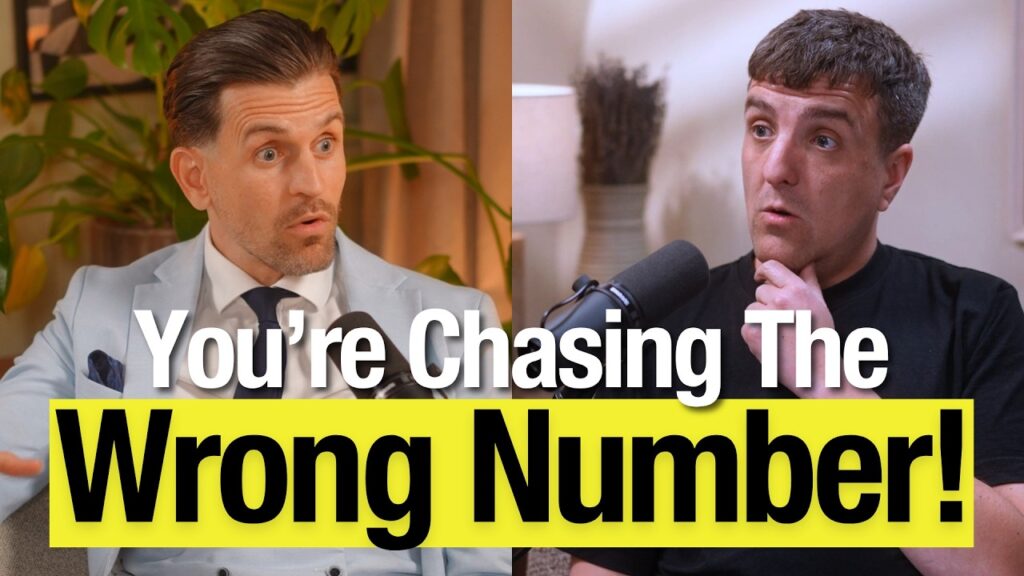

This week’s guest is Shinobu Hindert, a Certified Financial Planner and bestselling author of “Investing is Your Superpower”, who joins the podcast to explain why so few of us are ever taught how to invest.
Shinobu also explains why fear rather than a lack of money is usually the real barrier, and how to start building genuine investing confidence from wherever you’re starting.
Shinobu built her career the hard way.
She interned in finance while still at college, took a cutthroat commission-only sales job to prove to herself she could sell before anyone would let her near financial planning, and spent close to ten years as a working Certified Financial Planner before moving into public speaking and eventually starting her own financial education company.
That grind is exactly why she’s spent the years since trying to shortcut the process for everyone else, first through a course, then through her book.
In this episode she and the host dig into the knowledge gap that leaves most of us figuring out money by trial and error, and the difference between saving and investing (a distinction more people get wrong than you’d think).
She also explains why real estate isn’t the shortcut it looks like from the outside, and the psychology behind why a perfectly rational person will freeze up the moment a financial decision feels risky.
It’s a genuinely useful listen for anyone who understands, in theory, that they should be investing, but hasn’t quite got there yet.
———
Gains App is LIVE!
An AI-powered budgeting and cashback app designed to help you make more of your money.
Download here: https://gainsapp.onelink.me/8IhT/oiaimr1z
———
Get a FREE FRACTIONAL SHARE worth up £100 when you deposit £1 with Trading 212
https://www.trading212.com/join/MGP
If you don’t receive the free fractional share, head to the menu and put the word ‘MGP’ into the promo code section.
(Capital at risk when you invest)
Key takeaways
- Investing knowledge is rarely taught anywhere, even on a business degree, so most people learn by trial and error unless they deliberately go looking for it.
- Saving and investing are not the same thing. Money sitting in cash is saving; only money put at risk in the market, with the aim of growth, counts as investing.
- The biggest barrier to investing usually isn’t a lack of money or knowledge, it’s fear: an instinctive, gut-level reaction that isn’t designed for financial decisions.
- Staying invested tends to beat trying to time the market, since nobody reliably knows when a downturn will hit or when the bottom has passed.
- Real estate and other alternative investments can work, but they demand a very different, more hands-on skill set than most people expect, and should only be a small, calculated slice of a wider plan.
Timestamps
- [1:40] Shinobu Hindert on Building a Financial Education Company
- [3:10] Why Investing Isn’t Taught, Even on a Business Degree
- [7:42] From Cold Calling to Certified Financial Planner
- [15:00] Inside the Book: Investing Is Your Superpower
- [19:08] The Real Reason People Avoid Investing
- [22:41] Saving vs Investing: What the Difference Actually Means
- [23:55] Why Staying Invested Beats Timing the Market
- [32:36] Why Real Estate Investing Is Harder Than It Looks
- [37:18] How Fear and Instinct Sabotage Financial Decisions
- [41:45] The Message Shinobu Hopes Readers Take Away
From cold calling to Certified Financial Planner
Shinobu Hindert didn’t start out with a plan to work in finance so much as a personal need to understand it.
She minored in business at college, where investing was touched on “a tiny, tiny bit”, and interned at a couple of financial firms alongside a fairly miserable stint at an insurance company that convinced her office life wasn’t for her.
What actually shaped her career was a commission-only sales role she took on deliberately, before anyone would give her a shot at financial planning.
As she put it, coming into the industry “predominantly men”, she noticed opportunities kept going to junior men instead of her, so she decided to prove herself in sales first rather than keep arguing for a job she wasn’t sure she’d even enjoy.
She spent close to ten years as a working Certified Financial Planner, moved into public speaking, and eventually built her own financial education company because, as she says, she “didn’t know how to do this on her own” and assumed other people were in the same boat.
Why nobody teaches you how to invest
One of the more uncomfortable points in the episode is how little of this gets taught anywhere formal. Shinobu studied business and still only got the briefest exposure to investing: “we touched on investing a tiny, tiny bit… but that was it.”
Her explanation for why so many people never engage with it properly is straightforward: “you don’t learn something until typically until you make a mistake… but why do we have to make all those mistakes first?”
She says the gap isn’t really about intelligence or effort, it’s that nobody hands you a starting framework, so most people are left reacting to money problems after they’ve already happened rather than planning ahead of them.
That gap is exactly what her book, Investing is Your Superpower, was written to close.
She originally taught the same material through a paid course, but found people were missing out because of cost or scheduling, so she turned it into a book that, in her words, “everybody can swing” at around £20 if they actually want to learn how to do this on their own.
Rather than another dense investing manual, she built it around three fictional characters from different financial and cultural backgrounds, walking through how each of them sets multiple goals at once, works out how to fund them, chooses where to invest, and checks in on progress over time.
If you’d rather work through those fundamentals in one place before picking up the book, our investing for beginners guide covers the same groundwork in a UK context.
Saving versus investing: the difference that trips people up
A recurring theme is how often the two get confused. Shinobu is blunt about it: if your money is sitting in cash, “that’s just considered saving.” Investing means deliberately taking some risk in the stock market in exchange for the potential of growth.
It sounds obvious stated plainly, but she’s found that plenty of people describe themselves as “investing” when they’re really just setting money aside. Getting that distinction straight matters because the two serve completely different jobs: cash is for near-term certainty, investing is for long-term growth.
Our compound interest calculator is a useful way to see just how much that distinction is worth over time, since consistent long-term investing compounds in a way cash savings simply can’t.
The real barrier to investing isn't money, it's fear
Ask Shinobu what actually stops people investing and her answer isn’t knowledge, or even money: it’s fear.
She compares a financial decision that feels risky to walking to your car at midnight and sensing someone following you, “that same kind of animalistic instinct is in us when we’re presented with something unknown that we’re scared of.”
The advice she gives clients isn’t to ignore that reaction, but to pause and interrogate it: what’s the purpose of this investment, what’s the realistic upside, what’s the downside, and what happens if you do nothing instead?
She’s also candid that self-awareness compounds here too, once you recognise your own spending triggers or instinctive reaction to risk, you can start working with them rather than being ruled by them.
Why staying invested beats timing the market
On the practical side, both guest and host land on the same conclusion from different angles.
The host cites a statistic from Nutmeg that being invested in a global index fund for more than 15 years cuts your risk of loss to close to zero, and Shinobu adds that the stock market has historically delivered a positive return in roughly three out of every four years.
Her point about trying to time a downturn is the one worth remembering.
Even if you correctly guess when to sell, “nobody knows when to put it back in,” and investors who wait for things to “settle down” typically end up buying back in above where they sold, worse off than if they’d simply stayed put.
She’s also candid that the market doesn’t track how anyone feels about the economy day to day: “the market’s always forward looking.
We’re never going to be able to catch up to what it is,” which is exactly why she treats staying invested as a discipline rather than a feeling.
On real estate specifically, she’s more cautious than people might expect from someone who invests in alternatives herself, warning that owning rental property is “a completely different skill” that demands far more hands-on management than most people anticipate, and can leave people exposed if a local economy turns or a major employer leaves town.
Her own approach is to keep any alternative investing to a small, calculated slice of a wider portfolio, sized so that if it doesn’t pay off, “I’m not gonna be losing sleep.”
Our guide to the best investing apps in the UK is a practical next step if staying invested, rather than trying to time entries and exits or chase alternatives, is the strategy you want to build toward.
Building your own investing confidence: practical first steps
Shinobu’s advice for someone starting from zero isn’t a stock pick, it’s a starting question: how do you actually make financial decisions, and where do your instincts about money come from?
Understanding that, she says, is what lets you ask the right people for the right kind of support once bigger opportunities come along.
Her hope for readers of the book is simple: that they take some action now, because the impact of under-saving and under-investing doesn’t show up for years, by which point it’s much harder to fix.
If you want a quick way to see where your own money habits and risk comfort actually sit before you take that first step, our free money personality quiz is a good place to start.
This transcript is auto-generated and lightly edited for readability, it may contain errors.
[0:00] Sammie Ellard-King: Hello and welcome to another episode of the Money Gains Podcast. This is your host, Sammie Ellard-King, and today my guest is Shinobu Hindert, who is a best-selling author and a CFP. She is really joining us today to talk all about her book, Investing Is Your Superpower. Now, we discussed how hard it can be for some people to make a financial plan and actually stick to it, especially amid some turbulent economic conditions that we’re facing at the moment and those unforeseen circumstances that always seem to crop up. But today I’m going to say something a little bit different. I would really, really appreciate it if you could send this podcast or one of your favourite episodes if you’ve been listening for a while to a friend. Get them involved. We really could use the new views and the new viewers. It really does help the show, helps us get better guests on and yeah, create topics which we can cover for you each week. So if you’re listening on YouTube, please do wrap that subscribe button. And if you’re listening on Spotify or Apple Podcasts, hit the follow button. It really does help the show. But for now, let’s get started on the Money Gains podcast. So, Shinobu, welcome to the Money Gains Podcast. How are you? Well, good. Yeah, thanks for having me. I’m super excited about this chat. It’s uh I’ve just been reading through your stuff online and I just absolutely loved what you’re doing. If you wouldn’t mind giving the audience a little 411 into you.
[1:40] Shinobu Hindert: Yeah, so I have a financial education company, and I primarily help people feel more confident about investing specifically and help them navigate different financial challenges that we face as we uh own adulthood. It’s one of those things, isn’t it? The conversation just never really seems to get started. It always seems like there’s always so many more people to help out there. Um what got you into it? Well, I think it was my own desire or need to figure it out. And I thought, well, what better way than to work in it? I’ll figure it out. And then if I want to do it as a career, I will. If not, at least I learned all of these skills that I know I ultimately need. I think I recognised that I didn’t have anybody to share all the answers with me. And I was kind of looking around, just almost as if I was a kid, looking around, like, all right, I’m ready. Who’s gonna help me with all these things? And realising I’m a college grad, no one’s gonna help you with these things, you have to figure it out on your own. And so that’s really why I dove into it because I didn’t know how to do this on my own. I actually minored in business in school, and we touched on investing a tiny, tiny bit. And I remember it was exciting. Um, but that was it. I kind of just got my feet wet, and and that’s really how I uh turned this into a career.
[3:10] Sammie Ellard-King: So you studied in college business is something you mentioned there, which is I think is uh, you know, going to be a good premise of this conversation, really, is about education. And, you know, even if you’re doing a business degree, you’re still not taught investing, which is just wild, isn’t it? Yeah, even just you know, more basic survival skills of living on your own. And when you graduate, you know, how how can you afford rent? How much should you spend on rent? You know, taking a look at all these factors, and I think that when you don’t know it, it’s trial and error. You know, you don’t learn something until typically until you make a mistake, right? When you screw it up, then you’re like, this is gonna stick with me. Now I have to figure out how to fix this, and then you learn from those and you grow. But why do we have to make all those mistakes first? You know, it would be nice to offer um solutions ahead of time. So that’s really why I created Empowered Planning, because I had so many people asking me questions that I’m like, gosh, like, you don’t know this, you know, and I looked at them as these people that were really like kicking ass. So I’m like, if if you’re, you know, I look at you really highly, and if you don’t know this, then oh my gosh, like how come people don’t know this information? So yes, I think knowledge truly, truly when it comes to investing is power.
[4:27] Sammie Ellard-King: And what where where what got you into this? Is I mean, were you good with money growing up? Um, you know, my my father had lost his parents earlier on in life, and he had to figure out a lot on his own. He had kids when he was young in his early 20s, and you know, didn’t really have really when he was from youth to being a young adult, didn’t have time in his life where he was financially comfortable, where he could kind of, you know, figure things out. It was really just always money was a big um driver or decider of how he was going to live his life. So when I came along, he did share with me that we didn’t have family in the country and you need to be prepared for if you have to be on your own. These are the things that we’re looking at. So I was always in touch with when my parents had extra money. I was in touch with when they didn’t have extra money, and I kind of knew when to ask for things, when not to ask for things. So it was kind of just always present in my life. I was always aware of money.
[5:34] Sammie Ellard-King: Yeah, that’s so do you would you say you were a saver growing up, or do you have you like managed to teach yourself this? Is do you mention it? It was definitely a saver. Um, I think a little bit of that, you know, scarcity mindset. Um, and it can go in different ways. Some people feel that money’s hard to come by. So when they get it, they they have this knee-jerk reaction to spend it because they’re like, well, I don’t know when I’m gonna get money again. And I was kind of in the other camp where I had this scarcity mindset that I had this money, I was really going to need it, and so I really shouldn’t spend it because I’m gonna need it for an emergency. And I didn’t know what that emergency was, but it was like this pending doom that was coming. Um, so I would get these like little envelopes and I would put cash in them as I would earn money, and then I would proceed to hide them in my room and I would put them in different drawers and put them under things, and I have this whole system that was not organised. So I lost money because I couldn’t find it that I made. And then I and I think that was kind of the first time that I realised like something’s a little, this is a little odd behaviour that I had. So I I definitely was always thinking about saving money from a from a young age, but again, coming from more like fear, uh fear mindset.
[6:51] Sammie Ellard-King: That’s the old school kind of sinking fund, in a way, isn’t it? Yeah. It’s like my sister does it as well. She she uh used to get paid in cash and she’d find rolls of cash, like where she’d just like put like a bunch of cash and then she’d put it in a sock and then she’d go to put the sock on and go, oh, that’s where it was. Oh, that’s hilarious. Yeah, I mean, it looks cool, right? When you rolled up in a in a rubber band, you’re like, yeah. Yeah, yeah. Stacking, I’m stacking dough over here. But yeah, no, it’s just this uh, yeah, so I was always saving, but yeah, her and I have a lot in common. That’s super cool though. But then I suppose as that’s kind of taken through into college with you, you go into this business degree. Have you used that at all since? I know you’re running your own business now, but when you came out of college, what was it like for you?
[7:42] Shinobu Hindert: Well, I was, you know, again, this kind of scarcity mindset. So I always had jobs. Um, a lot of it was in retail when I was younger. And then when I was in college, I interned at um a few different financial organizations. Um I remember I was cold calling at night for a group of guys that were trying to get new clients. And um, I didn’t mind, you know, it was a couple hours in the evening when I didn’t have much, I didn’t have class or anything. So I and I and again I got paid for it. Um, they were really nice, great mentors, and then started working at um with Smith Barney, which is now uh part of Citigroup or Morgan Stanley. Um, and that’s when I was like, okay, I think I could make this a career. So I was interning there and it was really fun. I mean, every day was different. I also was working at an insurance company, and that was not fun. It was really boring. And I was sitting there, I was like typing on the computer, and I, you know, I think maybe one week I worked a whole week, maybe it was like spring break or something, and I’m like, oh my God, this is 40 hours of work. It was, I think that was a big slap of reality for me. Because, you know, when you’re other times you’re working, you’re working a shift, you know, you’re working hours and then you have a break and then you go do your other things. And this was just straight like, here’s what other people do. And I was like, oh God, I gotta find something else for myself. So when I was interning at um a financial institution, it was really fun. It was like every day was different. I was learning things. Um, there was so much that I didn’t know that I felt this hunger to learn this information. Um, and then I worked in that industry. It was hard for me to find my stride in there because it was predominantly men. And especially coming in saying I want to be a financial advisor or a financial planner, you need a ton of sales experience ahead of time. And I was coming in really fresh, green out of college. Um, so I had to really go and learn how to sell and then come back because what I what I noticed is they would most of the times give an opportunity to a young man to be like, okay, he can try this. And I’m sitting there like, wait a minute, I did all these internships, I’m working here, like I want an opportunity, but it’s not an option for me. And I kind of kept hitting that wall and then realised, you know what? Before I start making a big stink and um really asking for this financial planning job or financial advisor job, why don’t I see if I even like sales? You know, what if I fight for this? I get this job, I hate it. Like, what am I, what am I fighting for here? So I went off, um, took a job that was pretty, pretty cutthroat, and it was um, they I think they guaranteed you $2,000 a month. Um, but you had to make that in commissions. And if you didn’t make it, they would give it to you. And then the next month, let’s say you made $3,000, you’d have to give the $2,000 back. So you’d net a thousand. So it was this like, you know, eat or be eaten uh type of environment where I really got my um sales um acumen during that time. And I had a lot of fun with it. And I was like, I actually don’t mind this pressure. And I enjoyed it because when I was in more of a support role working in the financial industry, I felt like I was working harder than other people around me, but then understanding that we were all getting paid pretty similar. And I’m like, I’m like, you know, doing all this extra stuff. Well, I would like to be in a situation where I get paid more, but it’s like, oh, if you bonus in this, and in sales, it’s like I just did way more than the person next to me, and I’m getting compensated for it. So that felt really, that type of environment felt really good for me. And then I went back into the financial industry, became a financial uh planner, was a I still am a certified financial planner, and then did that for about 10 years, moved into more of a public speaking space in the financial industry, did that for a couple of years, and then um broke off on my own.
[11:42] Sammie Ellard-King: I did it. You know, it’s a it’s a one of those things. It’s sales is like when you’re in those hard sales roles and you got a graft for your buck, it it it it makes you, it’s a make or break situation. Yeah, it it is. It is. It it truly uh brought something out of me that you know, I’ve always been quite social, quite confident on speaking to people. And when you went into sales, it was like you needed to go up a level that I I didn’t know I had, but luckily, you know, I found it, and you know, that was the real kind of start for me was learning how to sell when and sell something which I didn’t like or want to or want to be associated with. But you have to, right? You want to you want to get the bonus, you want to get uh you want to be, I wanted to be the best, and that for me was like the big driver, it was like anything I’ve ever done, I always want to be the best at. And um yeah, I loved it actually. Uh like it I met some of the people that are still really great friends to this day, um, but where none of us are really in sales anymore.
[12:47] Shinobu Hindert: Yeah, I was gonna say it’s not it’s not necessarily for everybody, and I think if someone takes a crack at it, doesn’t like it, or let’s say, you know, according to the metrics, they fail, like doesn’t make you a failure. It’s just I tried this, it’s not for me, it’s not working, and move on to something else. And I think that was my whole approach is like, do I like this? And now I don’t know that I would like like that. You know, it is, I haven’t found a way to be super calm about it. So I think when I’m in those situations, the highs feel really good, the lows, you know, it’s like kind of you gotta manage um your expectations. And I remember a manager of mine, you know, sat me down when I was pretty young, and he was like, I, you know, be because I was having some success, and I think that um you you tend to put a too much emphasis on that potentially when you’re young. And I remember him just saying, like, I, you know, the highs are never as high as you think they are, and the lows are never as low. And I was like, what are you talking about? You know, but it did something, but it did stick with me, stick with me over time.
[13:53] Sammie Ellard-King: It’s a grind, like you gotta keep going. It’s a but it teaches you resilience, it also teaches you to be humble, um, discipline as well, to just keep it in the phones and keep trying to make yourself go for it. And I think it gave me a grounding, which I’ve taken into other roles and now my own businesses. And you know, without that, I don’t think I would be making the the right decisions or or be where I am today. So you have to start somewhere, and you’re right. Like if it’s not for you, it’s not for you. And you know, if you’re a creative and you go off to uh be a creative after that and you find that out about yourself, then you learnt something about yourself that you didn’t know, and that’s the big, big thing here. And I I I really do believe that it’s a good, it’s a probably a good everyone should probably learn how to sell in some form at some point. It does help you, but if you’re not uh if you’re not a salesman by natural standards, like that’s totally cool. Like go and learn that. Um investing is your superpower, is your book, and it looks wicked. What can you tell us a little bit about it?
[15:00] Shinobu Hindert: Yeah, so I wanted to, I have a course that I teach, and I don’t do it that many times a year. And I think I was getting people that couldn’t get in, or the times didn’t work out, or maybe they were it was too expensive for them, or whatever the case was at the time, that I wanted to create the book for everybody because it’s $20 or something. I’m like, everybody can swing $20 if they really want to learn how to do this on their own. And that was the purpose of it. So it’s essentially broken down into different parts that if you were to want to create your own financial plan, and let’s say you have eight goals for yourself, you know, it’s like, I need a car, I gotta pay for my student loans off, I gotta pay for my kids to go to school, I want to get a house, I want to go on vacation, like you have all these things. A lot of people talk themselves out of it and just go, well, I can’t afford to do all of that. And the conversation stops there. So this is actually laying out how do you do all of those things? What do you need to do to think about those? Yes, it’s possible to do them all at the same time. Okay, once you set it up, well, now actually how do you invest? What is a what are good options for you to look at? What kind of companies should you use? And then once your plan is set up, well, how do you check on it? How do you, you know, know what to change? And really it was to encompass um financial planning full circle. So somebody can, if they really wanted to, pick this up and do it on their own. And I didn’t want to write a boring investment book because in my research for writing this book, I read so many investing books and it they were tough. They were tough to read. I was like, man, this explains a lot why people don’t see this through. This is this is difficult. So I created three different characters that I use in the book and I essentially just share after I give my my knowledge of, well, now how does this character apply this to their life? So all throughout the chapters, you’re seeing how three different people take the information, apply it to their lives. They’re all a little bit different. So you can see how it could work and then hopefully apply it to your own life.
[16:58] Sammie Ellard-King: Cool. Oh, okay. I love this. Okay, so there’s actual characters and they’re different. They could, I imagine they come from different backgrounds and different social. Yeah, and have, yeah, and have different histories or cultures when it comes to money that they’re kind of addressing those. I think that I mean that’s something I do up front. I think it’s important to address what are your cultural um or inherent biases that you have towards money and like let’s just get it out in the open. And once you know that, you can start moving forward from it.
[18:13] Sammie Ellard-King: Hey guys, Sammie here. Just a quick one. If you wouldn’t mind heading over to upthegains.co.uk, hitting the subscribe button in the top right hand corner, and entering your email into the box. For your troubles, you will receive a free net worth calculator worth £25. Now, this net worth calculator, if you enter your assets and your liabilities, will tell you exactly how much you are worth today. Now, what you can also do is set yourself some financial goals and track your net worth along the way using this tool. It’s totally free. So head on over to upthegains.co.uk, hit the subscribe button, pop your email in, and it’ll be sent straight to your inbox in a matter of minutes. Now, back to the podcast. What do you feel like is, you know, you’re see you’re talking to people all the time as part of you know your course, and I’m sure you’re working with people. What do you feel like is like the biggest barrier to people getting into investing?
[19:08] Shinobu Hindert: It’s the knowledge gap. I think, especially as people become successful in their careers and they’re kind of making it in the world, you know, not a kid anymore, and they’re out there and they’re doing it. I would have to say, I mean, it’s not it’s a generalized statement, but I would think, you know, when I was in my early 20s and I had friends in their early 20s, we were lost, you know, we didn’t know what we were doing. We’re just like, all right, we want to do something and I need money to go out to eat with my friends. And, you know, so you’re kind of just like throwing yourselves in these situations. And then your boss is like, cool, make me a photocopy. You’re like, I have a college degree, I make you a photocopy for. So you kind of just learn like, how am I how am I supposed to fit into this adult world now that I’m in it? And then after some time, you know, you find your lane, you start to build some momentum and speed. And with that, oftentimes comes extra compensation. And when you get that, then it’s like maybe you now have more responsibility, and then you get extra compensation and then more responsibility, and then you have a more expensive lifestyle that comes with that, that you’re able to do things, you know, instead of maybe driving a crappy car, maybe you get something a little bit safer for yourself. So you end up spending more money. And if there isn’t somebody there that’s pumping the brakes to say, hey, stop, let’s take a look at big picture, what you want your life to look like in 20 years from now, it’s really difficult to do that on your own, especially when you’re on this trajectory with your own career, you have your life happening around you. It’s difficult. And if it’s not already ingrained in you to stop and do financial check-ins, then it’s just not happening. And what we’re finding is people that are in their 50s, maybe 55 plus, they’re taking retirement very seriously. And they’re like, okay, I gotta do this. My kids are, you know, either in college or almost out of college. I have more money, I can start saving for retirement. And I don’t want to say it’s too late by then, but you’re, you’re cut, you’re cutting it down pretty darn close to start to make up for that time. So I think the more people can break those knowledge barriers and say, like, it doesn’t matter that I don’t know this. What’s one step I can take today to get a little bit closer to understanding that? And then these are really just knowledge building blocks because at some point you’re gonna need to know how to do this. Because unless you want to keep on working for the rest of your life, you need to find ways to generate income and then draw from that income when you want to stop working. So we need the information anyway. And it’s up to you to figure out like how soon you want to get the information and start learning these things. So when you come across, you know, a market crash and you’re invested, you’re like, okay, I’ve been through this before. I remember last time I sold out and I freaked out, I put everything in cash and that was a terrible decision, you know, or I ended up doing nothing and I wasn’t invested the right way. That was a terrible decision. Like whatever those are, you’re just looking at that as learning. So when you come across that in the future and you don’t have um kind of that earning income coming in, that you know what to do with it. So I think it’s critical that we do this now. I think it’s it’s tough, especially as you get going in your career, to be vulnerable, to say, I don’t know this information. I’m gonna raise my hand and I need help. And that’s the biggest thing that I come across is as people are becoming more um successful in their careers and life in general, they’re embarrassed that they don’t know it. And they’re just like, well, I don’t really want to tell anybody I don’t know this. So I’m just gonna keep acting like I know what I’m doing and then, you know, not really reaching my potential at that.
[22:41] Sammie Ellard-King: When you say investing, what does that actually mean to you? So using the money that you have, leveraging it to earn more money without um, you know, working, essentially. So it’s like you put money. So I want to really take the time to differentiate between saving versus investing. I think often those terms kind of get interchanged. So people might be like, oh yeah, I’m investing if they’re saving money for a house or something like that. If it’s sitting in cash, that’s just considered saving. If you’re act actively investing in the stock market, um, that’s what I would consider investing is I’m gonna take some risk for potential growth opportunity and hopefully have my money grow. Interesting stat I read uh today from Nutmeg, who is a JP Morgan subsidiary. Um if you’re invested in a global stock market fund index fund for longer than 15 years, your risk is now almost down to 0.01%, which just goes to show like how long-term focus and starting with a, you know, with a timeframe of 15 years or more almost completely mitigates your risk down to zero. What what what would you say about that?
[23:55] Shinobu Hindert: Yeah, it’s spot on. I mean, when when you look at, you know, as different investment opportunities come your way, you know, maybe it’s a newly issued stock, or maybe someone’s like, oh, I have this, you know, good feeling about a cryptocurrency, and or maybe you should buy real estate, you know, in a specific area. The stock market has so much data behind it. You know, and so all a lot of these people are investing, and you have these investment managers, portfolio managers, like they’re they’re not just coming up at their best ideas. They’re using a ton of historical information. They’re looking at how to optimize risk to come up with the right formula based on how far out you want to be investing. So there’s enough data out there to say that the stock market, I think 75% of the time returns a positive return in an in a year. I like those odds. There’s gonna be times where where it doesn’t, like last year it was terrible, like, but now already look at this year when we don’t feel that great. If I talk to clients of mine and just are asking them, like, how do you feel about your business? How do you feel about the economy? It’s like people aren’t feeling that good about it. The market doesn’t care. You know, the market’s still going up and doing well, and they don’t care. The market doesn’t care how we feel. And so there’s often a disconnect between what’s actually happening day to day in the economy, politically, all of those things versus what the market’s doing. The market’s always forward looking. We’re never going to be able to catch up to what it is. So you have to make sure that you’re participating. And it would be easier to be able to pull all your money out of the market, maybe right before a market crash, right? If you saw all the signs of something terrible happening, like I can pull it out, but nobody knows when to put it back in. Nobody knows when the bottom is hitting. So then what happens is if somebody pulls that out, they’re like, oh, I’m gonna wait for things to what I hear all the time is settle down and then I’ll put my money back in. But when you look at that mathematically, it’s like all you did was wait for the market to come back up and then you bought back in, and you would have been better off if you either stayed there or put it down at the bottom, but nobody knows where the bottom is. So I think just staying invested makes sense as long as those investments are appropriate with the goal that you have in mind.
[26:11] Sammie Ellard-King: Time in the market, not timing the market. I mean, how many times do we hear that? Um, staying invested for me is is a strategy which I use. You know, I I pound cost or dollar cost average in, uh, I take it to different levels. Uh, you know, I’m 80-20 index funds, single and individual stocks. Um and, you know, I find it so important for me that you know, I I take it to the next level in the terms that uh the market’s down, I’m going, you know, heavy on. And you know, if the market’s up, I might put out, but I’m still putting that cash into the account. So it’s ready for me if an opportunity arises, uh I’ve got it there to go. Um, what let’s say I come to you today and you know, I am really interested about this, don’t know anything about it. What’s the first sort of steps people should sort of look to take?
[27:06] Shinobu Hindert: I think understanding your background really well and understanding how not just the data points of like how much income do you make, how much money do you have, but really understanding how do you make financial decisions? What is your thought process for that? How, what, what is helpful for you making that? Because as you build wealth, you’re going to be presented with more opportunities and different kinds of investments. And you want to know how you like to make smart investing decisions. So that way you can ask for that information. You can ask for that support that you need to make those proper, really informed, educated decisions, confident decisions when you’re using your own money to do that. But the so that would be the first place to start is like, how do you think about money? You know, what do you think? Because, you know, you’d be surprised. You ask a hundred people that question, you’ll be surprised at the answers that you get of like, wow, they don’t have, you know, they don’t trust a lot of the banks, or they truly believe in this one strategy. Um, but it, but I think for people to understand their starting point is the best place to start and just be vulnerable with like where are my weaknesses that I can invite help within those. So again, I am making the best decisions. Like I use a financial planner, like this is my profession. I know how to do it, I know all the tools out there. Like I need a sounding board to be like, here’s what I’m thinking. You know, not just investing, but the taxes, the future, the right now, the this, the like it’s always like it’s putting a little puzzle together and have a second set of eyes on that to look at it and be like, well, what why don’t you think about this? Or that’s a great idea, I think so too. And then that kind of builds that um confidence and you get momentum behind that decision-making process.
[28:48] Sammie Ellard-King: It’s like a juggling act. You just need the technique to learn how to do it and keep the balls up in the air. And if you can pick those things up, like it can be yeah, it can massively change your life. Um, let’s talk a little bit about your own style of investing. Uh, what what what are you into and you know how how do you set yourself up? Yeah, so I’m a traditional uh type of investor, and I think that’s really what I focus on in my book is what I would say 90% of portfolio managers do, which is use something called asset allocation, where you’re basically taking a calculated amount of risk depending on your timeframe. So, you know, a certain percentage of stocks versus bonds, fixed income, and cash, depending on when you’re gonna use the money. Um, and then I am also interested in the alternative space, um, but with a small amount of money that I feel comfortable that if this, if they do well, I’m gonna feel awesome. But if they don’t do well, I’m not gonna be losing sleep. It’s just gonna be like, you know, darn, I shouldn’t have done that, or I wish it would have turned out differently, but not like, you know, oh, I need to have a conversation with my husband because this is not a good situation. Um, and I think, you know, so I do like to dabble in other things a little bit, but I’m I’m very calculated in how I do it.
[30:07] Sammie Ellard-King: When you say alternatives, are we talking crypto here? Um, a little bit of crypto, um, real estate. I live in Southern California. Um, and it’s just fascinating to me what the real estate can do here in certain areas, but I don’t necessarily have, uh not necessarily, I don’t have a few million dollars lying around to just invest in different opportunities. Um, however, a lot of these companies go for alternative lending options where they’re not going through a bank because maybe their turnaround time is going to be like nine months, something like that, where they just need quick access to cash. They’re finished the build, they’re gonna turn it around. Um, and just to get in on that piece of it where I’m only owning a tiny bit of their bigger pie. And I’m like, those guys are the professionals. Like they know what they’re doing, they’re going after the right properties, they’re looking at different rental things in the area or outside of California that I’m gonna trust them with this money rather than me going and trying to flip a property on my own. Um, and it also made and it it’s um it feels good because I do want to invest in real estate. I just it’s not my realm. And I also like having liquidity. So this is a good option for me to explore that’s not um being responsible for everything.
[32:36] Sammie Ellard-King: It’s one of those things. I was speaking to uh a guy called Ben from Trade Tribe. He um he got into property as kind of diversifying his portfolio essentially. And one of the things that struck him with it, which I found super interesting chatting to him, was that it’s like a completely different skill in itself, just because of the terms of management of owning a portfolio of rental properties. You know, it’s vast amounts of work than that he and a lot that he didn’t realise. I think that holds a lot of people back. Yeah, and it should. I think it should hold a lot of people back. I think there’s there’s times where, you know, I I saw in the 2009, 10 time frame when people were really underwater in their homes and maybe were in a position where they didn’t have to foreclose, they didn’t have to sell their home. And if they’re not, depending on the area that they’re living in, they might just be back at those prices now or or not even. And that’s devastating, right? Especially if someone’s working towards retirement in their mind, like my home’s gonna be paid off, I’ll sell it, I’ll get this profit, and then I’ll also have my retirement accounts. And it’s like all of a sudden, if the home’s really not an asset anymore, and you have to take that out of the equation, it can really change the picture for people. So I think falsely believing that just because I buy real estate, I’m gonna do well, like it has to be very calculated, it has to be the right area, there has to be industry, there has to be growing population. If you look at a lot of places in the middle of America, there were companies that, well, I mean, this still happens to this day. Companies come in, they need a huge labor force. So they build towns around their factories or around, you know, their um corporate offices. People move there from different parts, they buy their homes. If that company leaves and there’s no industry that comes in, those homes lose their value. They can’t, they can’t sell those homes. And maybe people don’t, they’re living paycheck to paycheck potentially, don’t have enough money to move somewhere else. And then you’re you’re seeing generational poverty in some of these areas. And there’s definitely um a lot of industries trying to revive those towns in America, but that happens. Like that, there’s no American dream there. That’s a bad situation that people are stuck in. So, real estate, you know, I always say like your primary residence really should just be a residence. If you’re looking for an investment, think about it a little bit differently. Because if it doesn’t work out, you you kind of need a backup plan um inside of that. So it is the right thinking to be careful when purchasing real estate because you lose so much liquidity.
[35:11] Sammie Ellard-King: Yeah, I’m I I completely agree with you. You know, some a buddy of mine, Sean Hill, I’ll shout him out. He’s a great guy. Um, he sent me a video actually of a Central American state. Now, the name of it completely escapes me. But he said, What do you think this is? And the video is basically almost a semi-deserted town that looked like it had been ravaged. And I said drugs as the first thing, and he just went, No, the business closed. And I just blew my mind. So when you said that, it put that uh image back in my head. And um, you know, it happens in the UK as well. You know, we’ve had industries or areas go into generational poverty essentially because you know things have shifted within a couple of years, and you know, there’s no there’s no safety net for these areas. You’re right. To be super careful, and that’s why, like with my own investments, I’m being very careful about when we go into you know, buy to let or um in that’s what we call it here in the UK, or investment properties, essentially rental properties. Um, because I feel like it needs to be a large enough portion uh of my of my um net worth needs to be established before I take that that risk on. Uh because you’re right, it can bite you in bite you in the backside quite quickly.
[36:28] Shinobu Hindert: Yeah, and and I think right now a lot of you know smaller real estate companies are kind of have their backs up against the wall, especially if they had short-term debt, you know, or had an equity line of credit of something that they took money out of, those rates are going up, they have to, you know, refinance at higher rates, they can’t afford them, they’re letting go of those properties at a loss. I mean, it’s you know, it’s something that I don’t think people anticipated having rates be, I mean, they were so low forever. I think this is difficult for people to adjust to this environment and kind of shocks them a little bit. Um, so yeah, I think, but again, my I’m sure someone who only works in real estate would have a different opinion. Mine is mine’s investing in the stock market. So I’m very biased. Disclosure, biased alert.
[37:18] Sammie Ellard-King: Yeah, no, I know I can hear the uh hear the Airbnb rental influences already coming out in arms. Um so let’s get let’s get back into uh investing in the stock market because it it is, you know, everyone that I’ve been speaking to ever since I started doing this has always got the the lack of knowledge part of it, but that’s very true. But one of the other things I see is is scared of risk. How do you kind of help them get past that? I think that’s some of the initial work that I do is really understanding how they make financial decisions and just kind of going through, and I talk about this in my book of when you make a decision, you know, people tell you, like, trust your gut, you know? And it’s like, yeah, that works when you’re, you know, in a neighborhood you’ve never been in before. It’s like midnight and you’re walking to your car and some some guy makes eye contact with you across the street and just starts walking towards you. It’s like, you’re gonna trust your gut and get in your car and get the hell out of there. You know, that same kind of animalistic instinct is in us when we’re presented with something that that’s unknown that we’re scared of. So if somebody presents a financial solution, it’s like, I think this would be a good fit for you, that’s saying your body’s gonna do the same reaction. Your body’s like, fear, we got to get out of here. And people lean into that and they trust that because there are maybe other people are telling them to trust their gut. And so that works in certain situations. But when you’re making financial decisions, like, don’t trust your gut. Go through what is the purpose of this investment? What are what’s the potential upside? What are the downsides? What are the consequences if I don’t do this? You know, what does that mean? Am I looking at a 2% interest rate in a money market fund when interest rates are at 6%, like essentially you’re losing money in there? Is that that’s your gut telling you that? Like that’s not a good solution. You know, you want to look at what these are and then from there make a decision. So I think taking a pause, acknowledging how you feel, acknowledging your emotion, and then being like, well, is this, how is this serving me in this situation? Otherwise, I would never invest. You know, my scarcity mindset would be like, nope, I’m gonna hang on to everything, I’m gonna hoard all my money, and I’m just that’s it. I’m gonna keep it, keep it close to me. And it’s like, that doesn’t, that doesn’t make any sense, right? And that so it I’ve had to work with that a ton. So it’s really easy for me to relate to people that have to work through that themselves. And you also have to be ready, right? If people are just like, no, I don’t want to do it, and and they’re not open to it, then they’re they’re also just not ready, ready to do that. I think the more experience you get, and when you start to see that growth and you can feel it, you’re like, okay, I don’t want to miss out on these.
[40:08] Sammie Ellard-King: It’s one of those, like, once you get past it, I think being self-aware about this is so pivotal. Like once you’re self-aware of things like your spending triggers, your uh your attitude to risk, you can then almost compartmentalize it and push it to one side, which will allow you to move forward and make informed decisions about your personal finances. Definitely. Like for me, I know that you know I have spending triggers and in certain situations and certain moods I spend or I overspend. And latching onto those and trying to make myself uh uh you know react in a certain way to them now I’m aware of them is completely different. And change it’s changed everything for me when it came to personal finance, but also to investing as well. You know, I I was a super risk-on person, but actually when I learned more and I let myself learn more, I realised that I wasn’t. I was actually you know extremely against risk, which is weird. Um, you know, I didn’t like it because when I saw the stock market crash, I didn’t like that feeling. And I didn’t I didn’t love love watching you know my investments fall 70%. I was like, wow, how did I make this not happen, but still be in this? And so I had to look at other ways of of trying to make that work. So I completely switched my strategy around. So, you know, I was protected in some way from it, which is wild. Um so you know, within the book, what are you hoping people come away from?
[41:45] Shinobu Hindert: Just to take action towards anything that would improve their lifestyle either now or in the future. I think, you know, when you look at a lot of the statistics that are out there about how much people are saving or how much they’re investing, we’re really not gonna see the impact in the US probably for another 10 to 15 years, where then they’re gonna be releasing the data of saying, you know, X amount of retirees are running out of money. And it’s like, if I’m 15 years older than now, like that’s not the time I should be saving. It’s like we need to be doing that now. And it’s hard because we don’t see those, we don’t see that data. So we just don’t know. But right now, with pensions really going away, this is the first generation in the United States that we’re seeing people retire without pensions. So it’s like one person will get one, another person won’t. And we’re not gonna see what that other person who doesn’t, if they’re only getting Social Security and relying on their savings, like, how long is that gonna last them? What does that look like over millions and millions of people? I think there’s like 60,000 baby boomers retiring every single day for the last few years, and that’s gonna continue. Um, and with high inflation at where it is right now, obviously the dollar’s not gonna get them as far. So we’re not gonna see those numbers for some time. And again, it’s like maybe a little too late for people if they don’t pay attention to it until 15 years from now, where now is really the time to do it. So, if anything, I would hope that my book would prompt someone to take action in terms of saving or investing more for themselves to take care of themselves in the future.
[43:23] Sammie Ellard-King: Love that. Absolutely love that. Where can people buy it? Amazon? Yeah, on Amazon or Barnes and Noble. Um and yeah, that’s that’s where you go. And you can go to my website, which is empoweredplanning.com, and the book is um, there’s links to the book on there. Is it better to buy direct from you? Oh, I don’t I don’t house them. So it would just go to Amazon. Yeah. Yeah, no, you never know because they, you know, Amazon take a percentage. So, you know, it’s always if you’ve got your own link, then better. But we’ll include those in the link below. Awesome. Um, Shinobu, thank you so much. It’s been super cool conversation. Really nice to speak to somebody over the pond and get a different perspective of these things. Um, yeah, thanks for having me, Sammie.
[44:08] Shinobu Hindert: This was cool. Thank you.
Frequently asked questions
Shinobu Hindert is a Certified Financial Planner, founder of a financial education company, and bestselling author of “Investing is Your Superpower”. She spent close to ten years as a working financial planner before moving into education and public speaking.
Shinobu’s approach is to understand how you personally make financial decisions and where your instinctive reactions to risk come from, then pause and evaluate a decision on its merits rather than acting on gut fear.
Confidence tends to build with experience and small, informed steps rather than arriving all at once.
Saving means holding money in cash. Investing means putting money at risk, typically in the stock market, with the goal of growing it over time. Shinobu points out that many people describe saving as investing when the two serve very different purposes.
Shinobu describes it as an instinctive, almost animalistic fear response to something unfamiliar, the same reaction that would kick in if you sensed danger on a dark street.
The fix isn’t to ignore the feeling, but to pause and consciously weigh the actual upside, downside and consequences of a decision.
It’s Shinobu’s book built around three fictional characters from different financial backgrounds, showing how each works through setting goals, funding them, choosing investments and reviewing progress, designed as an accessible alternative to dense traditional investing books. This episode is for educational purposes only and isn’t personal financial advice. When you invest, your capital is at risk and past performance is not a guarantee of future results. This page contains affiliate links; if you click one and make a purchase we may earn a small commission at no extra cost to you.
———