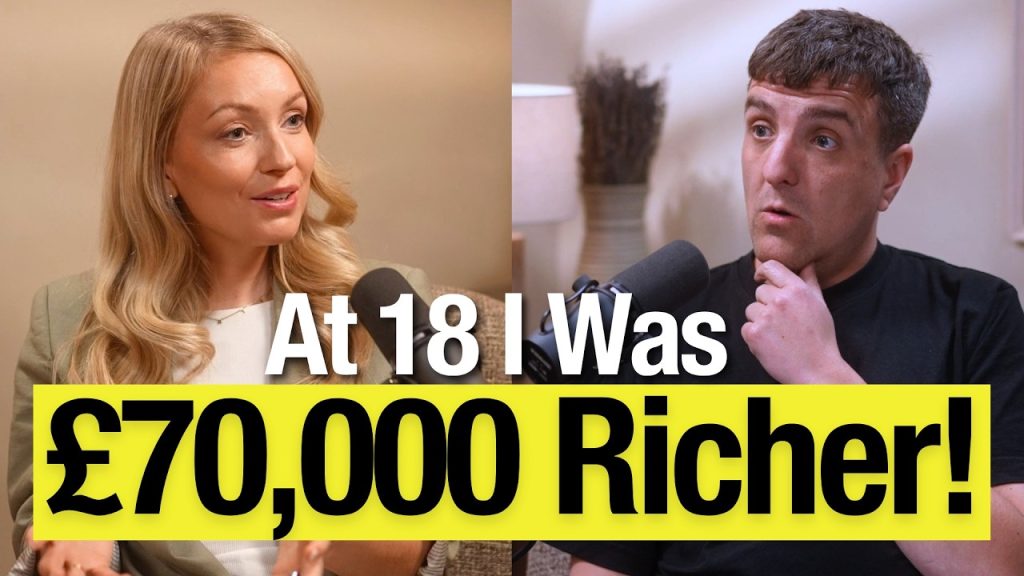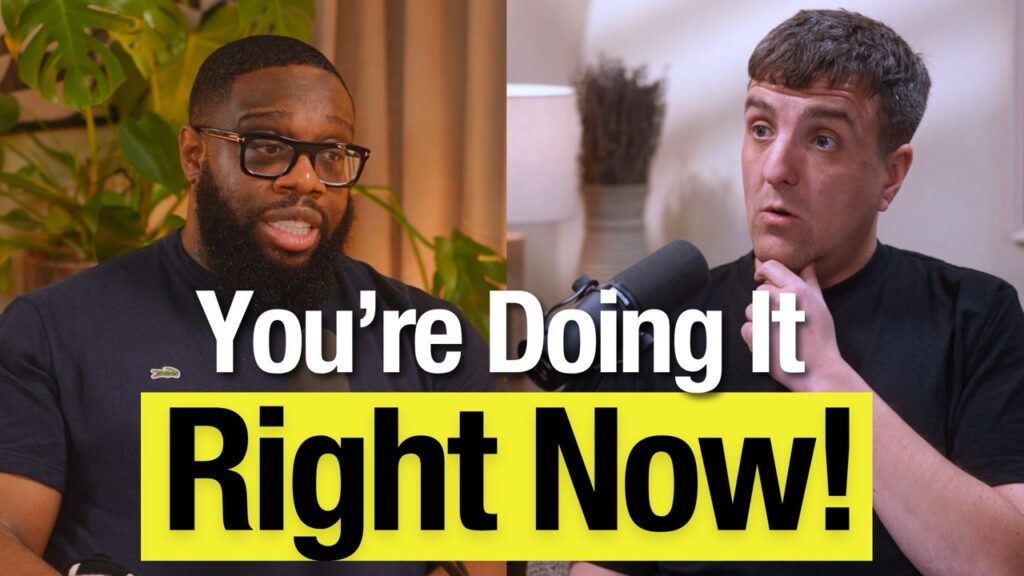
This week’s guest is Ola Majekodunmi, founder of All Things Money, a personal finance platform she built from a lockdown side project into a full-time business teaching young adults the money skills school never covered: budgeting, investing, credit cards and mortgages.
Ola studied business management at the University of Birmingham and had a one-way ticket booked to Australia when the pandemic hit and the move fell through.
She spent lockdown “creating content online to help people manage their finances, just kind of curb my boredom”, and nearly three years later it had become her full-time job.
She didn’t quit everything overnight either: All Things Money ran alongside a marketing job and then an events role, dropping from full-time to part-time as revenue grew before she went all in around a year before this recording.
In this episode Ola and host Sammie talk through her income model, the difference between robo-advisor and DIY investing, why she calls herself a “lazier investor” who sticks to ETFs and index funds, how pound-cost averaging works in practice, and the pension tax relief and salary sacrifice mechanics that most people never claim.
They close with the boundaries and routines Ola uses to run a self-employed business without burning out.
———
Gains App is LIVE!
An AI-powered budgeting and cashback app designed to help you make more of your money.
Download here: https://gainsapp.onelink.me/8IhT/oiaimr1z
———
Get a FREE FRACTIONAL SHARE worth up £100 when you deposit £1 with Trading 212
https://www.trading212.com/join/MGP
If you don’t receive the free fractional share, head to the menu and put the word ‘MGP’ into the promo code section.
(Capital at risk when you invest)
Key takeaways
- Ola built All Things Money from a lockdown side project into a full-time business over roughly three years, deliberately diversifying into brand partnerships, a podcast, workshops and digital products rather than relying on one income stream.
- Her core investing approach is “lazy investing”: regular contributions into ETFs and index funds rather than picking individual stocks or trying to time the market.
- Investing a fixed amount every month (pound-cost averaging) smooths out the highs and lows of the market, and some platforms let you start with as little as £1.
- Pension contributions come off your salary before tax through salary sacrifice, and higher and additional-rate taxpayers can claim back extra tax relief through self-assessment that most eligible people never claim.
- Ola protects her time as a self-employed founder with strict boundaries: no calls before midday, no emails before 9am or after 5pm, and content scheduled three weeks ahead.
Timestamps
- [1:00] Who Is Ola Majekodunmi? Meet the Founder of All Things Money
- [2:54] Frugal Not Cheap: Ola’s Relationship With Money Growing Up
- [4:12] All Things Money as a Lockdown Side Hustle
- [7:12] The All Things Money Business Model Explained
- [8:44] Building Multiple Income Streams From Ebooks to Workshops
- [17:00] Investing Basics: Robo-Advisors vs DIY Investing
- [19:43] How to Start Investing: Budget, Platform, Pound-Cost Averaging
- [26:35] Pension Tax Relief and Salary Sacrifice Explained
- [29:07] Setting Boundaries as a Self-Employed Business Owner
- [34:34] Quick Fire Questions and Ola’s Worst Money Mistake
From lockdown boredom to founder: Ola Majekodunmi's All Things Money story
Ola describes herself as someone who has “always kind of been good with money” since her early teens, a self-confessed budgeter that friends jokingly call “the cheap friend”. Her own line on it: “I’m not cheap, I’m frugal.”
She’s candid that this cautiousness once tipped into financial anxiety, and that her relationship with money is healthier now than it used to be. If you’re curious where your own money habits sit, our money personality quiz is a quick way to find out.
All Things Money wasn’t a plan. Ola studied business management at the University of Birmingham and finished her degree just as the pandemic hit, with a one-way ticket to Australia booked for straight after graduation.
When that move fell through, she spent lockdown making content to fill the time and curb her boredom. Nearly three years later it was her full-time job.
She didn’t leap in immediately, though: the platform ran alongside a marketing role she “would never go back” to, then a job in events that went from full-time to part-time as All Things Money’s revenue grew, before she committed to it fully around a year before this conversation.
Building multiple income streams as a personal finance creator
Asked how All Things Money actually makes money, Ola is clear that no single stream carries the business. Brand partnerships across TikTok, Instagram and other social platforms are one part of it.
The All Things Money podcast is another, with guests paying to appear and discuss their corner of the finance world. On top of that sit online workshops, corporate sessions for businesses, universities and colleges, and a growing range of digital products.
Her first product was a single ebook, born after being turned down by brands she’d hoped to partner with.
That ebook grew into seven products, including a financial handbook covering budgeting, saving, investing, tax and mortgages, a dedicated investing guide, a small business finance pack, a financial planner, an expenses tracker and a workbook.
Corporate demand has shifted with the times too: at the time of recording, her most requested workshop topic was navigating the cost-of-living crisis through budgeting and extra income streams.
Investing basics: robo-advisors vs DIY, and the "lazy investor" approach
When it comes to actually investing, Ola sets out two broad routes.
A robo-advisor is an app or platform that does the investing for you once you’ve handed over money each month or as a lump sum, which she recommends for anyone unsure where to start.
The alternative is investing yourself, picking your own funds and stocks.
Ola places herself firmly in the second camp but keeps it simple: “I’m very much a lazier investor in the fact that I just invest in ETFs and index funds,” bundles of companies held in a single package that spread risk rather than resting on one company’s performance.
For a fuller walkthrough of getting started, our guide to investing for beginners in the UK covers the same ground in more depth.
How to start investing: budget, platform and pound-cost averaging
Ola’s practical starting checklist is short. First, work out a budget: how much you’re comfortable investing, ideally money you wouldn’t be devastated to lose. Our budgeting calculator is a useful place to work that figure out before you commit anything.
Next, choose a platform, which at the time of recording she suggested comparing via the Money Saving Expert website, and then pick one or two investments such as an ETF or index fund rather than spreading yourself too thin.
The final piece is investing regularly rather than as a one-off.
Ola’s example: if an ETF is 50p one month, £1 the next and 20p the month after, investing the same amount every month means you buy at all of those prices rather than gambling everything on a single month.
Sammie sums up the effect neatly: “you’re basically buying at an average that evens out over time.”
This is pound-cost averaging, and Ola notes some platforms now let you start investing with as little as £1, so a lack of spare cash is no longer the barrier it once was.
Pension tax relief and salary sacrifice explained
The conversation turns to pensions when Ola explains why, now self-employed, she puts a significant chunk of her income into hers “purely for tax reasons.”
Pension contributions made through an employer are typically taken from your salary before tax, known as salary sacrifice, which means you’re taxed on a smaller amount overall.
At the time of recording, the annual tax-free pension allowance Ola referenced was £40,000, a figure worth checking against current government guidance since allowances do change.
Our take-home pay calculator is a quick way to see how a change in pension contributions affects what actually lands in your account.
Sammie adds the tax relief angle: basic-rate relief of 20% is applied automatically, but higher-rate taxpayers can claim back a further 20% on top through self-assessment, money he describes as “possible free money” that’s regularly left unclaimed.
Structure and boundaries: how Ola manages self-employed life
Ola is honest that her first year of full-time self-employment involved back-to-back calls from morning until evening, leaving no real time for focused work.
By 2023 she’d rebuilt her routine around firm boundaries: “This is the year of boundaries and actually having a set routine.”
Nobody can book a call with her before midday, mornings are for the gym and admin, and she doesn’t answer emails before 9am or after 5pm.
Afternoons are reserved for deep work, and content is scheduled roughly three weeks in advance so social media doesn’t dictate her day.
That structure matters more when income is variable rather than a fixed salary, which is exactly the situation most self-employed people and freelancers face.
Before leaning on discipline alone, it’s worth having a financial cushion in place too, and our piece on how much should be in your emergency fund covers how to size that buffer.
This transcript is auto-generated and lightly edited for readability, it may contain errors.
[0:00] Sammie Ellard-King: Hello and welcome to another episode of the Money Gains podcast. This is your host, Sammie Ellard-King, and today I am joined by Ola from All Things Money. I am absolutely buzzing to get chatting to Ola today because she is an absolute inspiration. If you’re looking for any kind of personal finance topic, budgeting, saving, investing, all things money really is a great channel. I’m really buzzing to get her on today. So we’re going to get started on the Money Gains podcast. But for now, if you’re listening on YouTube, please do hit the subscribe button. And if you’re listening on Apple Podcasts or Spotify, please do leave us a review. It does help the show. But for now, let’s get started on the Money Gains podcast. The Money Gains Podcast. Let’s make some break.
[1:00] Sammie Ellard-King: Welcome to the Money Gains Podcast. It’s good to have you here. How are you doing? I’m good, thank you, Sammie. Very excited to be here. How are you? Yes, very well. Thank you for a fine Tuesday evening in March where we’re talking now. Um, yeah, well, look, I’m would love to chain wag, but I really want to get stuck into this. I’ve been really looking forward to having you on. I’ve been following you for a good year now, loving all the content you’re pushing out, all the people you’re helping. You know, it’s truly inspirational stuff. So thank you. So yeah, give the audience a little bit of a flavour of who is Ola and you know, all about all things money. Yeah, so I’m Ola. I am 25 years old, and I am the founder of All Things Money, which is a personal finance platform that teaches young adults how to manage their finances effectively. So basically cover everything we weren’t talked about at school, from basically your budgeting, your saving, investing, how to get onto the property ladder, credit cards, and everything else in between.
[2:01] Sammie Ellard-King: Wow. That’s a lot. Yeah, I love it though, it’s awesome. So talk to us a little bit about you. Like, where did you grow up and you know how was your relationship like with money growing up? Yeah. So I’m based in London. I’m an East Londoner. If anyone’s listening, whoop to us. Um I I think like I’ve always kind of been good with money. Like, I feel like from like I don’t know, like 14, 15, like I’ve always been like a budgeter type person, like really cautious about money. That’s probably just been through what I’ve experienced growing up. Um, most of my friends now calling me the cheap friend. I’m not cheap, I’m frugal. Um, and yeah, I’ve kind of always just been really careful with my money. Sometimes I’m probably a bit too extreme in terms of how careful I am with it. But yeah, I think generally my relationship with money is quite healthy. Well, it’s healthier now than what it was before. I think I used to be really pedantic beforehand, but now it’s a lot healthier.
[2:54] Sammie Ellard-King: Oh, okay. So you weren’t a spender and moved into being more frugal and savvy? So I’ve always been like so. I think I was really tight, really cautious, um, had a lot of like financial anxiety in terms of like spending and things like that. Whereas I think now I think I’m a lot calmer in terms of like how I view money and how money isn’t something you should be scared of spending. Okay, I love that. And when was this always the dream for you? Like, were you always going to be in finance? What was that pathway like? Good question, Sammie. So I’ve I’ve been that girl from like school. I’ve always been like, I’m gonna run my own business, X, Y, Z, and never had a business plan at all. Um, all things money definitely wasn’t the plan. Um, I studied business management at university, um, finished in a fun time called the pandemic. I’m sure many of you guys have heard of it before. Um, and just I was meant to move to Australia, funny enough. So I had a one-way ticket book to Australia. Um, sadly, couldn’t happen thanks to COVID. So during lockdown, kind of just spent my time creating content online to help people manage their finances, just kind of curb my boredom. And nearly three years later, it’s my full-time job. So, yeah, it’s been a crazy ride. I probably would have changed it for the world now. Um, so yeah, I can kind of fell into it.
[4:12] Sammie Ellard-King: Yeah, like a lot of us do, don’t we? I mean, I certainly did, you know, study, studied music, was a marketeer, now teaching finance. Who knew? Yeah, yeah. I think you know, Up The Gains as well was a COVID baby for sure. It was just I suppose that time allowed us to have a little bit of creative freedom, and like suddenly all these ideas start throwing out, and actually, personal finance was one that we’ve both found, you know, felt like we could make a difference with. And I think that’s powerful stuff, you know. Yeah, definitely. I feel like as well, the pandemic gave us time to like stop and freeze. That was like my perfect time to kind of learn more about my personal finances. So I’ve always, like I said, budgeted and saved, but that was really a time where I learned how to invest properly. Like I actually had the disposable cash to kind of invest in the stock market as well. So yeah, it was definitely like a learning time for me as well.
[5:06] Sammie Ellard-King: So, what was your job before this? So I so all things money was always brought was with alongside me whilst I was at university, finished university and then did a stint at marketing, would never go back, not my thing. Um, and then worked in events for the lot like a year and a bit, um, started off full-time, dropped to part-time, and then this time like a year ago, I was like, you know what, I’m gonna try and pursue this full-time, and I haven’t looked back, and I don’t plan on looking back, to be honest. It’s amazing. Like, what I liked about what you said there is that you had the brand, you were building the brand, but you didn’t go all in day one, like this is me. You still had a support network there, you work full-time, went to part-time as revenue started coming in, and then it’s a really good way of you know, if you’re looking right now as a person to start your own business, you can do a lot of these things on the side and build these brands up over time, and often it does take 12 to 18 months before you start seeing any type of traction, figuring out who you are, who your audience is. It’s mad, right?
[6:11] Ola Majekodunmi: Yeah, absolutely, especially when it comes to juggling it a long time, a full-time job. Like now it’s my full-time job. I’m not, I don’t know how on earth I would work 10 to 6, have like meetings at 8 o’clock with potential clients, then podcast recordings at 7 o’clock, 8 o’clock. Whereas now I can’t even do like a 12 to 5 day, like it kills me. So, yeah, I feel like when you are working a full-time job and you are genuinely pursuing your passion, because it’s your passion, it doesn’t feel like work and you love it. Um, so yeah, I think it’s definitely like discipline and determination that kind of pushed you to kind of bring it to where you want to get it to. 100%. You know, for me, I’m doing Up The Gains in the morning, doing a full working day, marketing director job, but pretty stressful, straight out, carry on. But for me, I used to like sit there, watch Netflix or play Xbox, and I’m now utilising that time to create something which you know could be really powerful. And yeah, and my other half says to me, You work too much, and I’m like, This isn’t work. I actually love this. This is like me playing FIFA all night, you know.
[7:12] Ola Majekodunmi: No, literally, it does it does become rather than a hot well, and this is what uh what I always say to people if you want to maybe start a side house or uh or a full-time job, you have to genuinely love it. So I always say, like, you know, all things money was never really was going to be my full-time job. I thought I’d do it for a couple of months, then move to Australia when the like, you know, um all the like flying went about, but obviously we couldn’t fly for ages, so just continued churning content. Um and it wasn’t like I made money from day one either. So it was just because I genuinely loved it rather than because oh I’m actually I can make money from this, let’s go do this instead. So talk to us about the business model. Like, what is the business model for uh all things money? Yeah, it’s a good question. I get asked this all the time because I feel like people see me, they’re like, I don’t get how you make money. Um, so I’ve got many streams of income, and I think, especially now more than ever, it’s really important to utilise multiple streams rather than relying on one. So one of my streams of income is working with brands online on social media, so TikTok, Instagram, basically all the influencing. Not keen on that term, but that’s basically what it is. Um, and then I fortunately am able to make revenue from the podcast as well. Got a lot of um clients that come on and discuss things about the world of finance on the podcast, and they pay to come on. Um, we’ve got online workshops, online ebooks, and we’ve got our next live event happening this month, which is very exciting. Um, and I also do corporate workshops for clients as well. So, corporate clients, universities, colleges, and that’s another stream of income for myself as well.
[8:44] Sammie Ellard-King: Amazing. So you diversified your income right across the business. What was the first one that really started clicking out of those? Do you think? So, my first ever thing was my first ebook. Um, I was like, you know what? I was like, I’ve gained some followers now. Like, and at the time before I’d made my ebook, I remember reaching out to like a few brands that I like loved. I got aired. So I was like, okay, maybe I’m not like quite like influencer status yet. Let’s like make our own stream of income. So yeah, created my first ebook, which then developed into like seven online products because I was like, you know what, this is a good passive income earner. It doesn’t earn me thousands, but it does help when I’m like maybe on a Saturday night out with my friends and someone’s just purchased an e-book. I’m like, oh, that just covered the cost of my drink. Um so that’s a really good passive um income earnest. That’s what I started with. The first pound you make online is like uh you might as well have been like won the lottery. It’s insane.
[9:35] Ola Majekodunmi: Literally, honestly, especially when I launched, I remember because that looked the book launch was the day of my flight. That if I had gone to Australia, that would have been the day that I was flying out. So I was like, you know what, let’s distract myself with a book launch instead. So that was quite a little milestone. And you talked about digital products, you’ve expanded the shop now, there’s a range on there. What what what can people kind of find? Yes, you can find the handbooks, that’s my baby, that’s my first one. So that kind of covers like your budgeting, saving, investing, how taxes work, how mortgages work. Um, and then I’ve got the investing guide, which just solely focuses on investing. I have a small business pack which focuses on how to manage your finances as a small business owner. Um, what else have I got? I’m trying to think off the top of my head now. I’ve got a financial planner, um, I’ve got a revenue and expenses tracker, um, yeah, many different items. And I’ve got a workbook as well. I forgot about the workbook. So yeah.
[10:27] Sammie Ellard-King: So there’s something literally yeah, no, absolutely. You like I love that though. You’ve expected you’ve done one and you the thing is with digital products, they’re mad. Even in doesn’t matter what business you’re in, yeah, you know, you can go onto Canva now and create printables and start selling them with it on Etsy within 30 minutes. Yeah. And you know that it it not that your products can be be done in 30 minutes, by the way, but I mean it more like the you know, if you’ve got the initiative to go out and get these things, digital products, you make them once, you can sell them infinite amount of time. So the margin on them is insane, yeah, yeah. And I think that’s what I think is the biggest thing in the fact that it is just does take initiative. Now I’m not downplaying the hard work that what we guys do, but I feel like a lot of people now look at me and be like, Oh, I wish I started something in lockdown. It’s like, well, obviously, you don’t have to have done personal finance per se, but everyone did have that kind of free time. So it is about you know finding something you love and taking that initiative to do something with it, and yeah, it seems easier said than done, but yeah, it’s definitely something that I think more people should take advantage of if they have an idea they want to kind of take a like, you know, try and push.
[11:35] Sammie Ellard-King: So I see you a lot on LinkedIn doing workshops. Yeah, yeah, yeah. It’s phenomenal. Like, you know, you’ve you you’ve really nailed the the content strategy there. I think it’s it’s working for sure. You can you can really see the growth in it. Uh but I constantly see you talking and doing stuff uh in businesses, workshops. Talk to us about an OLA workshop, like what happens? Oh that’s a good question. Um, so loads of loads of workshops kind of vary in terms obviously depending on the clients’ needs and wants, but I think now more than ever, what’s most popular is how to kind of navigate navigate the cost of living crisis. So a lot of my talks cover about how you can budget effectively, how can you budget for the rising costs of living right now, how can you save efficiently, and ways you can make extra streams of income. So I think that’s probably like the biggest requested workshop that I’m kind of hosting at the moment.
[12:34] Sammie Ellard-King: So much more on the budgeting saving, which makes perfect sense for the time that we’re in, right? Yeah. Definitely. And then do you offer uh like investing workshops too, or is that sort of Yeah, yeah. So literally I’ve hosted every honestly every personal finance topic you can think of, I’ve kind of covered. So I’ve done budgeting and saving, investing, credit cards, mortgages, um, financing cards, um, how to make extra streams of income. Yeah, lots, lots, like financial well-being, how to overcome financial anxiety. Um, so yeah, I think I wouldn’t say I’m a pro, but I’ve definitely I’ve touched up on a lot of those topics now. Yeah, yeah, yeah, yeah. You’ve been round the block on those topics, yeah, for sure. What what do you love doing the most out of all of those? Like, which is your favourite?
[13:20] Ola Majekodunmi: Definitely the workshops in whatever capacity that is, whether that’s to the all things money community, whether that’s to corporates, universities. I think I can honestly speak for England, England when it comes to personal finance. Um so I think that’s definitely like my huge passion. Um, it’s a shame I’ve kind of like fallen a little bit of love for like social media, um, but yeah, that the real passion really really lies with like speaking now. I think it’s a grind. Social media is a pure grind. Yeah, like if you’re not consistent, it’s suddenly your your engagement numbers are down and all that hard work you put in. It’s like it’s it’s it’s demotivating as well as motivating at the same time. Yeah, yeah. Um, you know, I feel for brand creators because especially one man bands, because you’re not only doing your marketing, your own finance, your brand vision, your strategy, your website, like the list goes on, right?
[14:11] Sammie Ellard-King: Yeah, it’s a joke. Yeah, yeah. No, it’s like you’re jumping into hoops you didn’t know existed for that. Yeah, yeah. But you’re stronger for it, I would imagine. No, definitely, definitely. I think I think I the reason why I struggle to keep up with social media as much now is because there’s just so much else going on now. Like before, all things money was just an Instagram account, whereas now it’s Instagram, TikTok, Twitter, then we’ve got the podcast, and then we’ve got corporates, and I’m very grateful that I’m so busy that I struggle with social media, but yeah, it is just a lot to kind of manage. So, yeah, growth is good, but it’s also hard and overwhelming. What’s the next steps for you? Do you think? Oh, that’s a good question. I don’t know because everyone asks me this question, and honestly, like I wouldn’t have dreamt of half the clients I’ve worked with or half the things I’ve done as a result of all things money. So I think it’s really hard to kind of picture what the future looks like. Um I would obviously love to continue growing the platform if I can TV. Yeah, well, I mean, everyone’s kind of saying that. I’m like, maybe one day, maybe TV, radio show, who knows? I would never say never to that. Um, I don’t know. Yeah, I think that’s the honest answer. Oh, thank you.
[15:28] Sammie Ellard-King: You know, there’s there’s there’s only so much Martin I can watch. And so I I do think that we’re underrepresented as personal finance uh influencers on the telly. Um, you know, there’s there’s there is some guys making good breakthroughs, like the Channel 4 shows, and you’ve been on a few things yourself actually, haven’t you? And yeah, but um, you know, I do think there’s a room for another big show, something maybe that’s done a little bit more, you know, with a few people, perhaps a bit of comedy thrown in there as well to keep people into kind of into it. Yeah, definitely. I mean that’s the challenge, isn’t it? Yeah, yeah, absolutely. So, yes, I mean, I mean, you’ve said it, a couple of people said it in the last week, so maybe this is a sign. Um but yeah, we’ll see. We’ll see if I can get conversations going with the right people. Who knows?
[17:00] Sammie Ellard-King: Yeah, I’ll back it. I’ll back it. So talk to us about your investing now, because you know it’s a big part of obviously both of our businesses and you know, listeners here are obviously looking to either start investing or are investing and perhaps aren’t doing it successfully. So talk to us a little bit about your strategy and how you you put things into place. Good question. So obviously, not sharing investing advice, but I always think um when I speak to people about investing, it’s always about looking to the future and it being a long-term game. I think a lot of people who mix or confuse investing with trading, so they assume that when you’re investing, you have to be managing your investments every single day. Now, that’s not the case. I haven’t looked at my investments for months, and it’s probably the best thing to do with the current stock market climate. Um, but um two ways you can invest. One, you can invest using a robo advisor. So if you haven’t heard of that term before, that’s when you’re using an app or a platform to do the investing for you. So all you need to do is give them your money every month or offer up a lump sum and they’ll do all the investing, which is great, especially if you don’t know where to start. Or you can invest yourself, which is where you invest all the money yourself. You pick your investments you want. Um, I’m very much a lazier investor in the fact that I just invest in ETFs and index funds. So, what that is is basically a collection of companies held to what into one package. Um generally it minimises your risk because you’re invested in um in a range of different companies, you’re not solely relying on the importance or um performance of that one individual company instead. So, yeah, I feel like investing is a really big um topic that everyone wants to get a peak get into, and I think that’s the main reason why I’m I started All Things Money because I really want every single person on this country or planet to invest in the stock market because it’s way easier than people think it that think it is. So, yeah, that’s definitely one of the biggest reasons why I started All Things Money.
[18:57] Sammie Ellard-King: 100% like you know, that is the biggest stigma. Even I talk to people today, you know, we’re in a little bubble because we follow it other influences in this space, and we just that’s all we see, so we automatically assume that other people know about this sort of stuff, and it can be further from the truth. Like trying to explain the pure basics to my mum the other day was like it was I couldn’t believe the you know, the yeah it she she wants to learn and she wants to know about it, but it’s this kind of seen as this kind of like all-knowing, seeing power that only a few can can possess, you know. It’s it’s it’s wild, and trying to get people started and into it is the biggest challenge.
[19:43] Ola Majekodunmi: Yeah. Once you get into it, what do you think is like then the the fundamental like steps people should take to kind of get themselves geared up to start? So I’d say first you work out a budget. So, how much do you want to invest? I always kind of recommend, especially if you’re starting out investing money, you don’t particularly mind losing. I say that obviously I’m not ever gonna say you’re definitely gonna lose all your money, but you know, you want to know that if you do invest, uh if it’s a 50 quid, 50 pounds, then you’re not gonna cry about it. So I don’t want you investing all your life savings. So, yes, start with a budget to work out a platform that you’re going to use. So explore um the Money Saving Expert website is a great website that breaks down loads of different investment platforms. They are what you use to do the investing. So, like I said, whether you’re going to use a platform that invests for you or you’re going to invest yourself. Um, and then if you are going to go down the route of investing yourself, picking out a couple like one or two key investments. So, whether that’s an ETF, an index fund, um, I say one or two with them because obviously they already hold a number of different investments in that package and invest regularly. So I always kind of recommend investing every month if you can, because you’re kind of riding the waves of volatility because obviously the stock market um constantly fluctuates. So investing like a fixed sum every month can be really handy. And always people always ask me whether or not you need to have loads of money to invest. No, you don’t. Some platforms now allow you to invest as little as one pound. So that whole like excuse, like, oh, I don’t have any money to invest for some people is no longer the case. Um so hopefully um investing is more accessible for people now as well.
[21:20] Sammie Ellard-King: And it’s uh it’s been an evolution of this technology drive, and all of these investment brokers have popped up out of nowhere. There’s loads now, you know. Loads I can’t keep track. I I’m on the tube last week and I’m like, who is that now? Like um, I can’t remember, I won’t name names, but um it’s just it is like every day you sort of see, oh look, new platform out. But it’s great because they’re all doing they’re all fighting that one problem, which is just to get people into the market and make it easy and simple for them, um, which is gonna be beneficial for us all if that happens. And that’s something that something I really like. What you said was about riding the volatility and by investing each month, you know, some people call it dollar cost averaging, some people call it pound cost averaging in your buying at different points. Do you want to expand on that a little bit?
[22:18] Ola Majekodunmi: Yeah, so they try and make it as simple as possible. So basically, every month the stock market or every day your investment, let’s say one, let’s say Sammie’s ETF, just to make it easier. Um, every day, Sammie’s ETF is never the same price, it’s constantly fluctuating. So let’s say in January, Sammie’s ETF might be 50p. In February, it might be a pound, in March it might be 20p. So where You’re investing, you’re buying your stock, so you are buying at a set price. So obviously, if the price is 50p one month, you know, you’re probably going to spend less if than if it was one pound in February, for example. So you want to kind of ride the waves of volatility because you know you can never time the market or predict how much the market’s going to be worth. So you never want to really invest, let’s say £10,000 when Sammie’s ETF is at one pound, when you could have also got it at 50 pence as well. So again, investing regularly every month just make sure that um allows you to make sure that you’re kind of just buying at different prices. It always fluctuates, but hopefully you’ll get some months where it’s a little bit cheaper than other months.
[23:26] Sammie Ellard-King: Yeah, and it’s like an average. You’re basically buying at an average that evens out over time and you’re riding the waves of uh volatility, as you said very well. Like that’s something that um can make that stigma of investing go away because you’re just every month, like clockwork, it’s just a habit, comes out, goes in the bank from paycheck, goes into my investments, and then I don’t really look at it other than once or twice a year just to go, yeah, okay, cool. Or oh mate, it’s a had a bit of a rough year this year kind of thing. Yeah, yeah. But it but overall I’m up, you know, and that that might well be the case, and you’ll start seeing that over time. It’s about creating that habit, I think. Which yeah, I think so. And it’s a habit that most working people in the UK already have. We already invest into our pensions, and you know, if anyone’s listening today and scared about investing, obviously I’m not pressing you to have to invest, but a lot of people are scared about the thought of losing their money, but no one’s scared about their pension potentially losing money. And if you’re investing for the long term, which I always recommend doing anyway, you can see it as exactly how you’re investing into your pension. It’s a long-term thing. Um, ideally, five to ten years, if not longer, you want to kind of leave that investment pumping away. Um, that’s how you should kind of see it as, especially um, if you’re already investing in your pension.
[24:46] Sammie Ellard-King: Yeah, exactly right. Like it’s one of the big things. You’re already doing it, it’s just done for you out of your paycheck. Yeah, yeah, yeah. So so why not take an extra hundred quid and you can access that money a lot sooner than than your personal pension, which you know is 55 now, soon to be 57. Don’t don’t I don’t want to I don’t want to think about what my retirement age will be when I get to it. But you know, I do something with mine that I you know I think is a is a nice way of looking at everybody has their own strategy, but I I proportion a larger portion of let’s say I get paid and I put you know 15%, 20%, 25% away, whatever that number is for you, whatever you can afford away, then there’s a small percentage that goes into my personal pension, and then the the bulk of that for me goes into my stocks and shares ISA. Because that’s my that’s my fuck you money, basically, is a you know, in a in in a nutshell, it really is. It’s yeah it’s uh it’s that’s my way out, and that’s my enjoyable, I can enjoy that before I’m retiring, hopefully.
[25:50] Ola Majekodunmi: Um, definitely. Um yeah, I I would say now that I’m self-employed, I invest a big chunk into my pen pension purely for tax reasons. Um, and then what else I I also alongside invest in the stock market as well. So I would say it’s probably quite even in terms of what I invest every month and how much I put into my pension, but yeah, I just make sure again my pension is quite healthy because however old I’m gonna be when I retire, I want to know that I’m literally gonna be able to just do a worldwide cruise and not have to stress about working ever again. Yeah, real talk, right? That’s what I said to like take that lump lump sum and travel to every single country around the world. That is my plan. Yeah. Fingers crossed we make it, hey. Literally.
[26:35] Sammie Ellard-King: So when you you mentioned very quickly about tax reasons for pensions. Could you could you talk a little bit about that? Yes, so when you are contributing to your pension, you are putting obviously away money for your future self. However, the government allows you to put money into your pension tax free. So I think for this tax year you can invest up to £40,000 into your pension tax-free, which is great. Um, now when you are working full-time, you are what any deduction that’s made for your pension is done on your pre-tax salary. So let’s say, for example, quick mouth I’m thinking of an example. Let’s say you are earning £30,000, for example, and let’s say um you are oh come God, I’ve been put on the spot. I’m not gonna think of examples, I’m gonna confuse people. But basically, what I’m saying is that if whatever you get taxed, whatever you are contributing to your pension, um it comes off your pre-tax salary. So, for example, if you decide to increase how much you are um contributing to your pension, you will end up getting taxed less because you’re taxed after your pension contribution has been made. So that’s also known as your salary sacrifice. So I know a lot of people at the moment, especially with the cost of living crisis, they are stressed about, you know, you know, making ends meet. So they’re probably thinking, let me withdraw from my pension. However, if you do withdraw from your pension, you’ll end up getting taxed more because obviously then you’re not getting your pension um taken out before you get taxed, if that makes sense. So again, it’s definitely something to look into a bit more if you’re considering about opting out of your workplace pension. But for the most people, I probably wouldn’t recommend it. And if you can afford to contribute more, I would recommend it because then you get taxed less on your um on your salary.
[28:20] Sammie Ellard-King: You do, yeah. And you also get tax relief as well as part of your pension payments, which is like something that um, you know, if you’re a higher tax bracket earner, it’s absolutely insane. You can claim the first 20% and then you can claim another 20% on top of the earnings over of that amount. So you can actually get a double whack tax hit which you put through in a self-assessment. I I think uh, you know, anyone in a higher tax bracket should be making the most of possible free money, yes. Absolutely, absolutely, especially with the tax year ending soon. So, yeah, absolutely, guys. If you are, especially if you’re self-employed um and you’re not registered with a limited company and you’re over that £40,000 threshold, you might want to think about yeah, shifting.
[29:07] Sammie Ellard-King: Doing a little saying, Yeah, yeah, yeah. I put it. Then um, so talk to us a little bit about this. You know, you’re obviously a freelancer. How how do you find it? What’s the kind of day-to-day feel like for you? Good question, Sammie. I feel like only this year have I really one prioritised my well-being, mental well-being, and also boundaries. So when I first quit my job, I was like doing calls left, right, centre, I was probably working like nine till seven calls all day, and then because I didn’t leave myself enough time to actually do any physical work, I’d be working into the evening. So now I’ve this year 2023, I’m like, this is the year of boundaries and actually having a set routine. So what that looks like for me now is that no one can book in a call with me pre-12 pm in the afternoon because my morning is for me to go to the gym, which I used to love doing before I um went full-time self-employed, um, and then also getting some like quick tick tick um tasks done as well. Because beforehand, I’d I take a call at like nine o’clock, and before I know it’s four o’clock and I’ve done no work and I’m best in the morning. So, yeah, and then now when it comes to like answering emails, for example, I make sure I don’t answer emails before 9am and I’m not accessible past 5 p.m. So, again, just giving myself that proper structure because again, when you work for yourself, it’s so easy to work all hours of the day when realistically, as much as you know we have work to do, you still want to take advantage of the fact that you’re self-employed and you’re not governed by anyone else’s rules. So, yeah, I think that’s really important.
[30:38] Sammie Ellard-King: It’s it’s uh it’s an adjustment period, right? Especially when you’ve gone from full time because you are what working life, corporate working life does give you is is routine and structure. Yeah. You remove that, how do you then suddenly control yourself? Because you’re you know, you could be your day could look like a 2 till 2am if you really wanted it to. Yeah, oh 100%. It’s up to you. It’s wild, right? Um, how do you so you mention this sort of no one contacts you before 12? Do you so you’re using that time before for deep work? Yeah, yeah. So yeah, so it will be deep work. Well, I said at the moment I’ve been getting up a little bit later than usual. So I’ll be going to the gym around like 10 to 11, maybe 12. So when I say deep work before I go to the gym, I normally just do a lot of admin work that I haven’t had the chance to do the night before. Um, and then I normally give myself like a good slot in the afternoon to do some more deep work, and then again, so I’ve got some blocked hours that people can’t book in with me. So when I say no one can access me, I have like a Calendly link that I send out to people, and I’ve got times that people can obviously book in with me if they wouldn’t have a call.
[31:50] Sammie Ellard-King: It’s a great way of like just saying this is when you can have me and you can’t call me outside of this because my number isn’t there, you’ve got to come on Zoom at the time that I say you can. Yeah, literally, it’s as simple as that, respectfully. Because again, you know, like we said, you can easily be offering like your evenings, you can then I don’t know, do all sorts, it’s just it and it can get a lot. And I think, especially before, I used to get really excited at the thought of emailing, replying to emails, because obviously all these opportunities will come over, but I’m like, no, why? Because if you start emailing at 9 pm, you set an expectation that you know you’ll be up all hours for this client, for example, and that’s not the impression you want to give. Not that people expect it, but I think sometimes it can easily fall into that like that pattern where people are like, Oh my god, you haven’t replied today. I’m like, Well, no, I don’t I wouldn’t. So yeah.
[32:43] Sammie Ellard-King: I um I’ve been taking a leaf recently out of I don’t know if you’ve seen her, accountant underscore she. Um she’s got a really I do follow her. You follow her, yeah. She does like every morning she posts her like day schedule um onto her stories. Yes, and I just really liked how she’s just like, This is when I’m doing what I’m doing. Yeah, so outside of that, you know, you can’t get hold of me. It’s really that kind of simple. Um, and I think that’s what people struggle, like you, you know, as an as a small business owner myself, I could go, you know, I wake up at weird times thinking of like ideas that have popped into my head, like right, and you’re like standing there, like, oh my god, if I don’t act on this right now, it’s over. And it couldn’t be further from the truth. Like, often you do need to give yourself that kind of downtime. So I’ve been really focusing on trying to like give some time back to me because I work better.
[33:44] Ola Majekodunmi: Yeah, no, it’s true. And I think and I think what doesn’t help with us a lot as well is that we’re in this constant echo chamber where you are seeing people’s great content, amazing content. I’m just like, I am so far behind your kind of content ideas and your creativity right now, and I think sometimes you just have to accept that as well. And I’ve had a lot of calls with like people in the space and like mentors that kind of give that advice, and I think sometimes you need that with reminder that you know you can’t be here, there, everywhere all the time. Like, it’s great that people say, like, oh my god, you’re doing great on LinkedIn. I mean, the the secret behind it is all this scheduling. Like, I schedule my post three weeks in advance, so yeah, it’s just making sure that you also put systems in place that make your work so much easier. So, yeah, scheduling is one of my biggest tools that helps me massively.
[34:34] Sammie Ellard-King: Yeah, no, I I I completely agree. All right, I’ve got a few quick fire questions for you. Oh god, okay. I love throwing these in there. So, Elon Musk or Jeff Bezos? Jeff Bezos. Okay. Bitcoin or Tesla? Bitcoin. Oh, okay. Uh index funds or individual stock picking? Index funds. Okay. And then last one, don’t think about it too much. What’s the worst money mistake that you’ve made? That’s a hard one. You genuinely put me on the top of that one. Worst money mistake. Honestly, like people ask me this question, and I’m actually really good with my money, so I don’t have an awful it could be like you’ve bought something and it broke the next day, or you know, you bought a tally and accidentally knocked it off the side.
[35:35] Ola Majekodunmi: Okay, not naming brand names, but people we know it. I bought a handbag the other day, fairly expensive designer, and they got cancelled a couple of weeks later. So that was probably like my I’m not naming names, but I’m pretty sure you know who it is. But yeah. Okay, there you go. Perfect. So handbag for you. Yeah, yeah. It’s more the fact that I can’t use that handbag now because no one likes that designer. So I’m in big trouble and I can’t, I’m not gonna sell it because I don’t think anyone would buy it now, but it’s what it is, you live and you learn. Keep it on the mantelpiece, is it like yeah, life lessons. Yeah, yeah, yeah, yeah. Well, I love where can people find you? Good questions. So you can find me mainly on Instagram at all things money underscore. Um, it’s the same across TikTok and Twitter. Um, and also if you ever want to purchase an ebook or anything like that, then we’re at www.allthingsmoney.com. And we also have a podcast which is all things money podcast, which is available to listen everywhere.
[36:35] Sammie Ellard-King: Love that. Uh, if you haven’t gone and listened to the podcast yet, honestly, I really do implore you to. You’ve got some great guests on there. I really enjoyed the mortgage one the other day, which was like very insightful. Thank you so much. Thank you. Uh look, it’s been a real pleasure, and thank you so much for coming on. And we look forward to catching up with you again in a couple of years’ time seeing how your journey’s progressed. And uh yeah, thank you very much. Oh, thank you so much for having me, Sammie.
Frequently asked questions
Ola Majekodunmi is the founder of All Things Money, a personal finance platform aimed at young adults. She studied business management at the University of Birmingham and built the platform from a lockdown side project into a full-time business.
All Things Money is a personal finance education platform and podcast covering budgeting, saving, investing, credit cards, mortgages and general “financial adulting” topics not typically taught in school.
Ola describes herself as a “lazier investor” who invests in ETFs and index funds rather than picking individual stocks, since these funds already spread money across a range of companies and reduce reliance on any single one.
Pound-cost averaging means investing a fixed amount at regular intervals, such as monthly, rather than a lump sum at one point in time. Because investment prices fluctuate, this evens out the average price you pay over time.
Salary sacrifice takes pension contributions from your salary before tax is applied, so you’re taxed on a lower amount overall. Basic-rate tax relief is added automatically, while higher and additional-rate taxpayers can claim further relief through self-assessment. This episode is for educational purposes only and isn’t personal financial advice. When you invest, your capital is at risk and past performance is not a guarantee of future results. This page contains affiliate links; if you click one and make a purchase we may earn a small commission at no extra cost to you. Figures on pension allowances and tax relief were accurate at the time of recording and may have changed since; always check current guidance before making decisions.
———