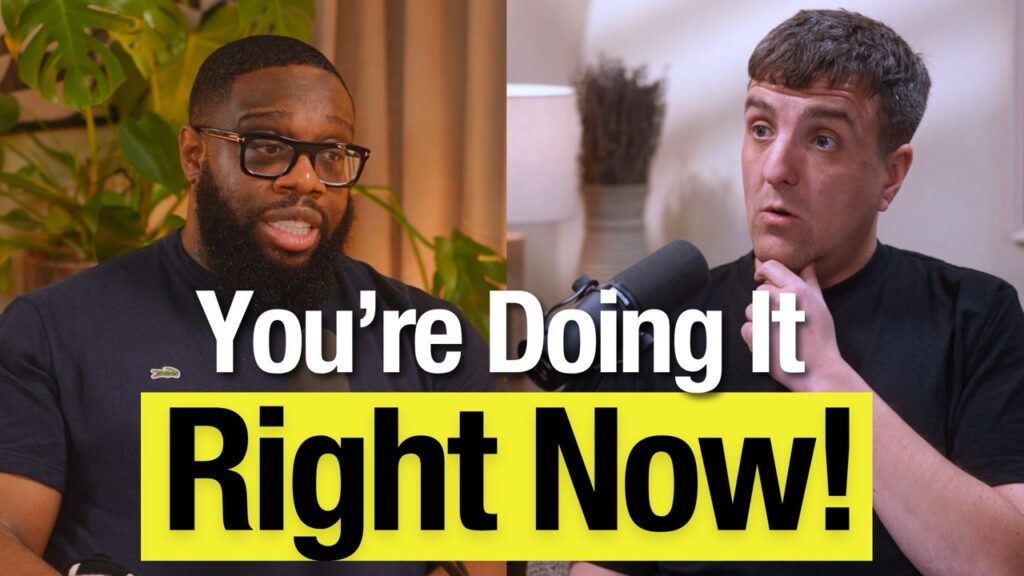

This week’s guest is Tolu Frimpong, Financial Coach and Content Creator, who joins the podcast to ask the question she puts to every client: how much does it cost to be you?
It’s a conversation about her own journey through more than £30,000 of debt, the values-based budgeting method she now teaches, and how she’s raising four money-savvy kids along the way.
Tolu spent her teens and twenties working retail jobs and handing her wages straight back to the high street before she’d even been paid.
After getting married and buying a first home, a wave of loans, credit cards and store cards to fund renovations pushed her into serious debt, and for a while she genuinely believed there was no way out.
Self-education changed that, and once she’d paid her way clear she started sharing what she’d learned, first on Instagram, then on YouTube, and eventually as a full-time financial coach working with women moving from payday to payday.
In this episode she and Sammie compare notes on strikingly similar debt stories, unpack why credit feels like free money at 18, and get into the practical exercise Tolu runs with every new client.
Sitting down with three months of bank statements and a highlighter to work out exactly how much it costs to be them.
It’s a genuinely relatable, no-judgement episode for anyone who suspects their spending and their real numbers don’t quite match up.
———
Gains App is LIVE!
An AI-powered budgeting and cashback app designed to help you make more of your money.
Download here: https://gainsapp.onelink.me/8IhT/oiaimr1z
———
Get a FREE FRACTIONAL SHARE worth up £100 when you deposit £1 with Trading 212
https://www.trading212.com/join/MGP
If you don’t receive the free fractional share, head to the menu and put the word ‘MGP’ into the promo code section.
(Capital at risk when you invest)
Key takeaways
- Tolu’s central coaching question, “how much does it cost to be you?”, exposes a gap almost everyone has between what they think they spend and what their bank statements actually show.
- Her own debt, built up through home renovation loans and stacked credit and store cards, only became manageable once she sat down and worked out her real numbers rather than assuming she simply didn’t earn enough.
- Freshers Week overdrafts and credit cards are marketed as “free money” to 18-year-olds who often don’t understand interest until years later, which Tolu says is one of the most common routes into early debt.
- Relying on a single income stream is, in her words, “too close to zero income”: a second stream of income, even for a season, builds the buffer that a redundancy or a rate rise can otherwise wipe out.
- She teaches her own children a simple spend, save, give system with three pots, so they learn the value of money and what things actually cost before they ever leave home.
Timestamps
- [1:08] Tolu Frimpong Introduces Herself as a Financial Coach
- [1:54] Early Money Memories and Growing Up Without Much
- [5:34] Tolu’s Journey Into More Than £30k of Debt
- [9:30] Freshers Week Overdrafts and How Easy Debt Really Is
- [15:03] How Much Does It Cost To Be You? The Budgeting Question
- [18:21] Setting Financial Goals and Finding Your Why
- [20:08] Why So Many People Live Payday to Payday
- [24:12] Why One Income Stream Is a Risky Strategy
- [35:52] Teaching Kids About Money With Spend, Save, Give Pots
- [42:19] Investing Tips for Women: Index Funds and Risk Tolerance
From retail wages to £30k in debt: Tolu Frimpong's money story
Tolu describes her childhood money situation plainly: “there was always some food on the table, we always had clothes on our back,” but money was still “a big deal because it causes a lot of friction when the money’s not there.”
As soon as she turned 16 and got her National Insurance number, she went straight out looking for work, mostly in retail, which she now calls “probably like the worst place for somebody who is not good with money to work,” because she’d mentally spent her wages on new stock before payday even arrived.
The real debt came later.
After she and her husband bought their first home, a string of loans to fund renovations, plus credit cards and store cards taken out along the way, tipped her into what she describes as a period where “I never thought there would be a way out.”
What changed things wasn’t a windfall, it was education: books, podcasts and YouTube videos on how money actually works, taken on one at a time until she understood her own numbers well enough to start paying the debt down.
If your own debt feels similarly stuck, our guide on how to get out of debt covers the same practical, step-by-step approach she eventually taught herself.
Once she’d worked her own way out, Tolu started posting what she’d learned on Instagram, almost as a personal record rather than a business plan.
She’s candid that she never expected the account to grow into anything, joking that the version of herself who hated the financial accounting module at university would be baffled to find people now paying her for money advice.
It’s a reminder that the coaching she offers isn’t theoretical: every principle she teaches is one she tested on her own bank statements first.
"How much does it cost to be you?" The question behind her coaching
The line that gives this episode its title is the first question Tolu asks every new coaching client, and it’s deliberately blunt: how much does it cost to be you?
“You’ll be surprised how many people don’t actually know their numbers,” she says, and the gap between what people think they spend and what they actually spend is, in her experience, almost always bigger than they expect.
Her method is low-tech on purpose: pull the last three months of bank statements, get a highlighter, and tally up spending by category, groceries, takeaways, nights out, hair, the lot.
It was doing exactly this during her own debt-free journey that made her realise the truth: “I didn’t have an income problem, I had a spending problem.”
Running that same exercise on your own finances is a good place to start, and our piece on how to audit your spending walks through it step by step.
Once you’ve got real numbers in front of you, our budgeting calculator makes it easier to see where the gaps actually are.
Freshers Week debt and why credit feels like free money
Tolu traces a lot of early debt back to university. At the Freshers Fair, banks pitch overdrafts and credit cards to 18-year-olds as if they’re bonus cash: “that’s all I heard anyway… here’s some free money for you.
And I took that money and I ran with it.” It wasn’t until she graduated, her student account closed and interest started being mentioned that she properly understood what she’d taken on.
Sammie shared an almost identical story from her own student years, signing up for a Barclays account with debt piling up across several overdrafts because the banks “don’t double check” whether a student already has one elsewhere.
Both agreed that materialism and constant marketing, from Freshers Fair banking stalls to buy-now-pay-later apps for takeaways, make debt feel routine rather than serious.
Tolu points out that the 24-7 nature of phone-based advertising makes this harder to switch off from than the TV and magazine ads of previous generations, so the pressure to keep up rarely lets up.
If old borrowing is still hanging over you, working out exactly what you’re bringing home each month with our take-home pay calculator is a useful first step before deciding how fast you can pay it off.
Breaking the payday-to-payday cycle
More than 60% of people in the UK struggle with the payday-to-payday cycle, and Tolu puts a good chunk of that down to constant marketing pressure combined with a genuine cost-of-living squeeze that has eroded the gap between income and expenses that used to exist for most households.
Her advice isn’t to wait for things to improve on their own: ask for a pay rise, apply elsewhere if you’re refused one, or build a skill in the evenings that lets you move up or move on.
She’s also candid that a single income stream is a risky position to be in. When she was made redundant during the pandemic after ten years at the same company, her content platform was already generating income on the side, which softened the blow considerably.
“One income is too close to zero income,” as she puts it, and building even a small second stream for a season gives you a buffer a single salary can’t.
A solid emergency fund does similar work: our guide to how much should be in your emergency fund covers how to size that buffer properly.
Teaching the next generation: money lessons for her own kids
Tolu doesn’t expect financial education to make it onto the national curriculum any time soon, so she’s building it at home instead. Her three older children, aged nine, six and four at the time of recording, each have three money pots: spend, save and give.
Money from relatives no longer goes straight to the toy shop; a percentage is split across all three, and the children now understand that a £20 Lego set with only £10 in the pot means saving before buying.
The shift in behaviour struck her most on a recent toy shop trip, where there was “no complaining and no crying,” because the children finally understood real prices against their own limited pots.
One of her sons even topped up his younger brother’s spending pot so he could afford what he wanted.
It’s a small, practical version of the same audit exercise Tolu runs with adult clients: know your numbers, know your limits, and make deliberate choices inside them.
This transcript is auto-generated and lightly edited for readability, it may contain errors.
[0:00] Sammie Ellard-King: Hello and welcome to the Money Gains Podcast. This is your host, Sammie Ellard-King, and this week my guest is Tolu Frimpong, who is a money coach, and we chat to her all about her journey from deep in debt, just like myself as well. We had a lot in common to where she’s got to today, how she manages a business with four kids, her views on entrepreneurship, financial literacy. It was a really cool chat that I absolutely loved, and I’m sure you guys are too. And if you’re listening on YouTube, whack that subscribe button. If you’re listening on Spotify or Apple, give us a follow. If you can, leave us a review. It really does help the show. If you can share this with a friend, do something, help us out, please. We want to grow. But for now, let’s get started on the Money Gains Podcast. So Tolu, welcome to the Money Gains Podcast. How are you doing? You well?
[1:08] Tolu Frimpong: I’m good, thank you. Thanks for having me. So excited to be here. Yeah, I am super excited. We’re recording this on a Sunday afternoon. It’s now rainy and cold in the UK. Typical after what was a great summer. But I’m really looking forward to uh getting into this too with you today. And there’s lots to unpack. Your history so far is amazing. I’ve been following you for a while on socials, but if you wouldn’t mind introducing yourself. Oh, absolutely. Hi everyone. My name’s Tolu Frimpong, and I’m a financial coach and content creator. And I’m really passionate about helping women get better with money. So everything from budgeting, setting financial goals, and achieving those financial goals and just helping them build the perfect money management system. So that’s a little bit about me. I have a YouTube channel, Instagram account, and I just love to talk about money online.
[1:54] Sammie Ellard-King: Yeah, we we we love talking about money here, so we’re in the right place. Um, what was money like, you know, what was the word money like for you growing up and and how did you interact with it? Oh gosh, going back to my childhood, money was something, if I’m honest, seemed like quite a hard thing to come by. So money conversations always used to be, I’d say, a cause of contention at home. So yeah, growing up, I’d say money was one of those things that it was a challenging thing for the family. Like I would never say we were like suffering. There was always some food on the table, we always had clothes on our back. But I from a young age had the understanding that money is hard to come by, and money is a big deal because it causes a lot of friction when the money’s not there.
[2:41] Sammie Ellard-King: Yeah, 100%. Everybody’s situation is so different. And and when did it sort of click for you? When did you have your like moment with money and go, oh, okay, cool. Like now I kind of understand it. Was it when you left home or was it a bit before that? Were you doing anything saving growing up? Or so I guess if I go back to like my childhood days, so my from a young age, I knew that I wanted my own money because there was so much stuff that I wanted as a child that I was unable to purchase because that there was no additional money for those kind of things. So I remember little things like wanting Nike trainers. I still remember my first ever pair of Nikes that my parents bought me. I think I had them for about four or five years. I made them last, even when they were too small. I still managed to squeeze my feet into them because yeah, back then it was like those kind of luxuries were just that a luxury. So I knew quite quickly if I wanted more of those type of things, I would need to work for it. So as soon as I turned 16 and I got my national insurance number, I was straight out there trying to find a job because I knew that I wanted money, I wasn’t getting that additional money other than what I needed to survive. That extra money needed to come from me. So from a young age, I knew I had to work for money, and I did that from 16 to well, pretty much to today, to be honest. So I’ve always worked, but I think for me, back then, it was all about getting the money so I can buy all the things that I’ve always wanted to buy. So anytime I had money growing up, that money would quickly go. So if as soon as I got paid, funnily enough, actually, back then, I worked in retail. So that’s probably like the worst place for somebody who is not good with money to work because as soon as I got paid, even before getting paid, I’d already made plans for that paycheck. All the things in the store, I’d put it aside and reserve it to be able to come back and buy it on payday. And so I was literally working to just give the money back to my employer, and I worked across loads of different retail stores from the age of like 16 to finish in uni. And over those years, all the money I made just literally went back to the high street.
[4:42] Sammie Ellard-King: It’s so funny you said that. Like, that is pretty much exactly what I used to do. I I worked in game for a bit, and I think everything went back on new Xbox or PlayStation back then, and then I worked in Marks and Spencer, and I just used to wax it all on suites and like new t-shirts and stuff. So like I totally understand where you’re coming from. Then it’s so easily done. But you when you don’t really know anything other than that, and you just want to kind of look cool and be fit in with your mates, like it’s more important for you to kind of feel socially accepted that age than it is to like thinking about a sinking fund or I’m gonna put this money into a into a savings pot, right? Like, you’re just like, I just want to look cool, feel good, and hang out with my mates. It’s so different. You say in your bio, like you would have laughed if you’d have said you’d have been a money coach here today. Um I really wanted to know why that was.
[5:34] Tolu Frimpong: Do you know why that was? It’s because I was so bad with money. So I kind of alluded to it a little bit about the fact that when I was younger, I used to work, get paid, and spend all that money. So I was not great with money. Actually, fast forward a few years after getting married, my husband and I brought our first home, and then off the back of that, we took out a lot of loans to refurbish our property, which ended up making us fall into a lot of debt. So, that on top of the fact that I just took out credit cards, store cards, everything, any kind of credit, you name it, I got it, and I just got myself into a large amount of debt. And at that time, I never thought there would be a way out. I just kind of felt like I was always gonna be in debt because I just couldn’t imagine how I could ever break free from that stronghold. And it was only fast forward on that debt-free journey. I’m kind of skipping over a lot of my story because I’m conscious there’s a lot that we’re gonna um unpack in this conversation, but that’s the story for another day. But when I was in a lot of debt and on that debt-free journey, I never knew, I never knew much about money until I was in debt and on embarking on that journey. And once I learned a lot about money, how money works, and understood why I was in a position I was in and was able to start paying it down. It was after coming out the other side of that debt that I realised that no, I need to go back and share what I’ve learned with other people, and that’s how I ended up starting my platform on Instagram and then subsequently did a YouTube channel, etc. And it kind of grew from there. But it’s just funny because when I started before I started my account, I never even imagined that I would start such a page, and then fast forward now people are asking me for help with their finances, and I’m like, wait, you tolu that five years ago had no clue about what you were doing with your money, are now helping other people to manage theirs. But I guess that’s just proof that you can grow and learn. Like, just because money isn’t something that is taught in schools, and for some of us, it’s not something it’s taught at home, it is still something we can learn ourselves, and once we learn, we can do better. Like, when you know better, you do better. And at the time I didn’t know better, but after investing in all that education, YouTube, podcasts, books, all of those things helped me to learn about how money actually works. And now that I have those tools, I’m able to share that with other people online. But it’s just so funny because I never thought that that would be my story, and just as a funny story to tell, actually, when I was at university, I studied marketing, and as part of the core modules that you do in your first couple of years, you have to do like financial accounting. I absolutely hated that module, like I was not a nice person, so it’s just funny, fast forward how life can change, and now I’m in the money space talking about finances.
[8:09] Sammie Ellard-King: Oh my god, it’s like sounds literally is I’m like the male version of you in this situation. I I did exactly this, like it was literally exactly the same. I took out every bit of credit going. If you’d have asked my mates who’ve known me since you know, you know, year seven in school, would Sammie ever be anything financially related, like a money coach or a financial advisor, they’d laugh you out of the room. So like it is quite funny that I’m doing this now, but it’s exactly that. I went on that journey and like I didn’t really I understood how to create and make money. That wasn’t never a problem for me. But the um but the keeping it and using debt to finance a lifestyle that I didn’t really, really even want um was something that you know uh like came and and and took over me really. And why why do you think that is? Do you feel like it’s you know, obviously, you know, well I wasn’t taught the value of a pound in in my home and uh or at school. Um parents are lovely, but they’re just not very good with money, and it’s just the way it is. Um but like all of the we know when we’re doing the taking out this debt that the debt isn’t good. We know that. Like we’re when we’re doing it, we’re like, right, we shouldn’t really be doing it. We do it anyway. Why why do you feel like that is?
[9:30] Tolu Frimpong: I’d say a number of reasons. I think because it’s just so easily accessible and available, yeah. And I think a lot of us, well, for me, I can speak from my experience. I initially got into debt. So obviously, I spoke about me getting into debt with my home purchasing journey, but rewind back to 18 as a freshman on campus, go into the freshers fair. You had all the banks there with their stores telling you about come and collect overdrafts, collect credit card. I didn’t even understand what all of these things were or how they worked, but it was just sold to me as you know free money. That’s all I heard anyway. That’s I’m sure that’s not what they were saying. But all I took from that is here’s some free money for you. And I took that money and I ran with it. And while I knew it was debt to an extent, I didn’t really see it as debt, I just kind of saw it as my money because the overdraft is available to you as part of your credit. It just seems like extra money has now landed in your account, and it’s only fast forward after graduating, and I had um my student account was now closed, and they now moved me onto the adult account and it started talking about interest. And I’m like, what’s interest? It’s like, yeah, you need to pay it back within this window of time, or you have to pay interest. All of those things I didn’t actually have a clue about it, so I think I quite naively entered into that debt at the time, and I think another big reason why a lot of us kind of get into debt quite easily is that we’re in a materialistic world, if we’re honest, like there’s just always stuff that we’re told we need. So, like, obviously, offline before we started recording, we were talking about iPhones and the new iPhone that’s come out, and as a young person, wanting to be cool, wanting to fit fit in with our friends, wanting to be socially accepted. If everybody else has now jumped onto the new iPhone 15, I don’t want to be the only one with the iPhone 11 because people are just gonna laugh at my phone, and I’m just gonna feel like I don’t have the coolest gadget. So I think there’s a lot of that as well. There’s the social pressures, there’s marketing, we’re all marketed to on a daily basis. And I think back in the days you could switch off from that. I mean, there was obviously TV advertising, magazines, billboards, etc. But now it’s like 24-7 on your phone, you’re just being bombarded with advertisements of all the things that you must have. And if you don’t have the means to get it, naturally through your nine to five job, and you’re now being told, Oh, yeah, you could just get this credit card at whatever the free interest for the first year. That’s how they kind of get you into it. You just think, oh, yeah, this is free money, I’ll pay it back later. Or now you’ve got things like Klarna where you can I so I shouldn’t be name dropping any companies, but you have those buy now pay later type companies, or where you do payment plans for literally anything. I can order KFC now and pay for it in three monthly payments. It’s mad, insane.
[12:05] Sammie Ellard-King: Yeah, it’s mad. But yeah, so it’s actually crazy. So I feel like it’s just the debt is just being just literally shoved down our throats, and it’s very hard to kind of resist it because it just seems so easy, and it it’s something it seems like a problem for later on. It’s not something in a moment that I need to think about, and I think that’s why a lot of people don’t think about it until it becomes something you can no longer ignore. You hit the nail on the head there, all of the big reasons for and it I remember it as well, like because they they sat, you know, my parents sat me down and they said, Look, these are gonna be your tuition fees for the year, but it’s covered by the government, your your rent’s covered by the government, da da da. And you’re like, oh, okay, cool. Like in your head, you’re just like, Oh, all right, well, I haven’t got any debt, but you do you got a big fat student loan hanging over your head, but you don’t really understand it then unless someone really physically tells you that these are the things, this is what is gonna happen to you for the rest of your life. And then you’re right, like well, the day I got there, I signed up to a Barclays account and you know I had two grand in my in my pocket at 19 the next day, active in Freshers Week. Like, come on, what’s gonna happen, man? Like, it’s gonna be about itself, right? Yeah, it’s gonna wax. I’m just gonna wax it. And I did, and then you take out another one because you tell the other one that you don’t have a student overdraft already, and they don’t double check. So, so suddenly you got three or four, and then it’s not looking pretty. Um so yeah, and then you’re like, okay, maybe I better get a job, um or come up, come up, come up with something, otherwise I’m in trouble, yeah. But it’s so easily done. Uh that’s why I wanted to ask you because you know, there’s so much similarities with our stories and the way that we’ve been kind of gone through this pathway and then turned into who we are today. Um and I suppose my next question really is like for someone who’s listening to this and going, God, that sounds like me, because you know it’d be it’s amazing how many people are, you know, come out of school, don’t go to uni, and still get themselves into debt. So there’s a covering a lot of base of the young generation, our generation. Um for those of someone who’s kind of looking to learn about money, but they have no idea where or what to begin with. What would you be your advice and where would where would you send them?
[15:03] Tolu Frimpong: Come to my page. No, go subscribe to my YouTube channel. In all serious, I think it’s so important to start with knowing and understanding your numbers because when I work with clients one-on-one, that’s what I kind of get them to do is really understand how much they’re earning and how much they’re spending. It sounds pretty basic, but you’ll be surprised how many people don’t actually know their numbers and know how much it costs to be them. So I always ask them this question like how much does it cost to be you? And you’ll be surprised what they say at the beginning of the session versus what we unpack as we dive into the real numbers. Because what you think you spend on a monthly basis and what you actually spend, there’s always quite a gap there. And I think that would be a good starting point to really know and understand your numbers. So, how much you’re spending on a monthly basis on groceries, how much you spending on takeaways, how much are you spending on nights out, how much you spend on your hair, etc. Like, literally get to know those numbers. And I think when you sit down, go over your previous bank statements of the past three months with a highlighter and start tallying up how much you’ve spent on certain items, that will shock you into making some changes. Because I know it definitely did when I was on my debt-free journey. It was only when I sat down and actually put pen to paper and looked at how much I was spending on a monthly basis across all the different budgeting categories that I realised that actually, no, Tolu, you are wasting a lot of money. Because I think when I was in a lot of debt, I was telling myself that I just didn’t earn enough to keep up with all the payments. But in actuality, when I sat down and put pen to paper, I didn’t have an income problem, had a spending problem. So I think that’s the first thing is really being honest with yourself, looking at your numbers and really understanding how much it currently costs to be with you. Are you happy with how much you’re spending across your different budget categories? And if you’re not happy, now it’s time to kind of look at how much you’re spending and make adjustments to that budget. Really get clear on what are your needs and what are your wants and what are your financial goals. I think having a clear direction of where you’re trying to get to makes it easier for you to actually walk that path because I think a lot of times we just kind of go through the month, pay all our bills, and then whatever’s left. If we have something left, we’ll save it. And if we don’t, then you know we’ll save it next month, and then next month becomes next month, and then it’s a rolling thing, and then we get to December 2023, and you’re looking back at the year thinking, oh, I haven’t saved any money, and that’s because you weren’t intentional about setting those financial goals. So I think the first thing I’d say is really get clear on your budget, how much it costs to be you, and then really set yourself some financial goals. I think this is a perfect time to be having this conversation as we’re nearing the end of 2023, the new year’s coming. Do you want your finances to look the same way they looked in 2023 and 2024? If the answer to that is no, what are you gonna do about it? And I think that’s an important question people should start asking themselves and having those internal conversations because nothing’s gonna change unless you do something about it, is the reality. So I would say, yeah, to those that want to change their financial situations, it’s not gonna be pretty. You’re gonna have to do things differently. So you can’t continue doing what you did to get to the position you are if you want things to change, you’re gonna have to do things that are drastic, which to other people might look crazy at the time. So some of your friends might think you’re doing too much or being extreme, but if you want that extreme result, you might need to make some extreme changes.
[18:21] Sammie Ellard-King: Yeah, yeah. Great advice, great, great advice. I I was liking it. You know what? I love I love I loved it though, because it’s so true. Like you start with the foundations, it’s like building a house, right? You build you build it from the foundations up. If you don’t get your foundations right, then the house will eventually tumble down. That’s the way that it works. It’s it’s not if you if you put in the time to and the effort to create solid foundations, and I love what you said about setting financial goals because for me, I have three goals that sit on my desk. They’re my why. And actually, my why isn’t just uh a monetary value goal, the the why is actually like what how do I want to feel? How do my goals want to make me feel? And um mine is mine is about creativity and energy and positivity. But to do that, I need money to and a business that provides those things, those monetary values. So I have those goals sitting on my desk because that’s my why, and that’s the reason why I do it. And when things get rough, which they naturally will for people, because that’s bloody life and that’s what we deal with. Um if you’ve got those goals and you’re so clear about them, you can move through them a lot easier and you can kind of brush it off and just get it, you know, get yourself back up a lot easier without having to dig deep. Um, and I I completely agree with you, it’s it’s so so important. One of the things you talk about a lot, and I think it’s a big, big issue. A study was done recently that over 60% of us struggle with the pay-to-pay payday-to-payday cycles. You mentioned it there, you know, kind of brushing, kicking the can down the road, if you wish. Um lot of the UK is dealing with this. Um, why do you think that is?
[20:08] Tolu Frimpong: I guess it kind of um goes back to the point that we were talking about earlier in terms of people living beyond their means and not and being sold to all the time. So we’re constantly being sold to, so that’s a big reason why a lot of us can’t break that cycle because we constantly feel like we need more and we’re never content with what we have. So it’s like that always wanting more is gonna mean that you’re gonna continue to spend more money. I think we can’t ignore the fact that we are in a cost of living crisis, like life is a lot more expensive than it was once upon a time, and salaries haven’t been rising at the same rate. So I do appreciate and acknowledge that as well. So for a lot of people, once upon a time, you created that gap between your income and your expenses, and you had that buffer, but now um inflation has eroded that, so now there isn’t as much of a gap as there once was. So I think for a lot of people, they kind of feel stuck now where they’re in a position where their income and their expenses are just about the same, if not less, so they’re in that deficit. And I’d say to those kind of people, if you’re listening in, that reality is nothing’s going to change unless we take action ourselves. And while, yes, you know, the government can help us here and there, I think if we can, where we can try and take ownership of our financial situations ourselves and think about what we can do to change that position. So, for example, if you’re in a job that you’ve been in for two, three years and you have asked for a pay rise and your employers said you can’t have it right now, which is what was the case in my company, what are you going to do about that? Are you just going to sit down waiting for them to hopefully change their mind eventually? Or maybe consider applying for a job elsewhere that is paying more to widen that gap, or maybe consider thinking about what kind of skills you need to move up in the organization to the next level and maybe work on that in the evenings or on the weekends where you get extra time, add that value to yourself so that you can get paid more elsewhere, or even go back to your employer to get that extra money now that you’ve got that extra qualification or you’ve got that extra experience and learning. So that’s what I’d say to that.
[22:10] Sammie Ellard-King: 100%. You know, job hopping is something I touched on recently. I put up a post about it, and it’s 30. If you on average, if you job hop more in your career, so once every three, two to three years, you move on. Um, it can be longer, but overall, on average, 30 you end up with 34% higher salary than if you just stay put in the same company. So I do feel like right now you you should be assessing your options, you should be looking at the playing field, especially if you’re, you know, just making ends meet or you’re struggling each month and you’re This payday to payday cycle, you should be looking at the ways that you can utilize the things that are in your power if your boss isn’t giving you what you want. And but you know, and it’s not easy for some people. Some people love their jobs, some people like where they like where they go in. It’s a good commute for some people, they don’t want to travel across halfway across the country or or London or you know, whatever that situation is. It’s tough for people, but right now, where we are in this issue where inflation has eroded away our spending power rapidly within the last 18 months. Yeah, things are I I exactly the same shop. We we usually get pretty much exactly the same shop in Tesco. Last year we paid 60 to 70 pounds there or about the other day. It was 112 quid. And like I was like, what the hell? I did not expect to see the three numbers. We didn’t do anything different, and then that’s just a reality. And it’s like, well, how on earth are people actually gonna be able to still buy the same shop? Because what if their family is grown, they’ve got another little one on the way or something like that, and then they’ve got another mouth to feed? That it’s just what we’re facing at the moment, it’s really, really tough. Um Warren Buffett famously said, if you don’t find a way to make money while you sleep, you’ll be working until you die. So, with that in mind, do you feel like everybody at the moment should really have a side hustle or trying to get a little business on the go to kind of supplement that loss of income that we’re facing with inflation?
[24:12] Tolu Frimpong: Oh, absolutely. I would say one kid one income is too close to zero income, like no income. So I think in these economic times, just relying on that one income stream is a risky strategy because anything can happen. Like if I use myself as an example, when COVID hit, I was made redundant for my company and I’d been there for 10 years. And 10 years meant nothing. So loyalty does not pay you like that. Your company, you’re just a payroll number at the end of the day, so you have to do what works for you and what’s best for you. So just relying on that one source of income can be a risky strategy. Thankfully, at the time when I was made redundant, I had already started my platform, I was already working with brands doing content online, so making additional money that way. But if I didn’t have that second stream of income, I would have been in a bit of financial trouble because yes, I did get a redundancy payout, but that could only last so long before I could find another job. So I’d say definitely if you can get a second stream of income, it’s easier said than done. I recognise that people have other things going on outside of work and you don’t want to work 24-7. But I would say do it for a season if you can, because it’s not going to be forever, but it’s just gonna be for enough time for you to build that business up or build that side hustle up to give you that extra income that you need to have that flexibility with your time and to have that buffer in your budget. So definitely side hustles. I think, especially in the time that we live in, now’s such a great time to start making money online, like literally from the comfort of your home, you can make money on the internet. Now, not here tonight to sell anybody any dreams of quick get rich quick schemes because I don’t believe in that personally, because yeah, I think if it sounds too good to be true, a lot of times it is too good to be true. So definitely do your due diligence and don’t just fall for any kind of scammy person promoting these easy fixes to your online. But equally, I would say that there is opportunities to make money online for the comfort of your home, of your own home. So why not do that? Why, why, why not? Like, definitely if you can get that second income, third, fourth, as many as you can handle. I would absolutely encourage people to do it because you’ll be so surprised what opens up to you when you open yourself up to those opportunities. Because I think looking back on my situation personally, when I started my platform back in 2018, 2019, yeah, late 2018, I started. I never imagined the different kinds of income streams that I would be able to build off of the back of it. But if I didn’t do that, if I didn’t start my blog, if I didn’t start creating on Instagram, I wouldn’t have known what could have become, I wouldn’t have been here now having this conversation with you. Do you know what I mean? So definitely I’d say start that side hustle. If there’s something in you that you think you can do, do it. And if there’s something you don’t know yet, like a skill that you want to learn that you haven’t yet learned. Now we have YouTube, like literally everything can be learned for absolutely free online. I remember when I started my YouTube channel, I had no clue about editing, but I was I was just excited that I want to start a YouTube channel. My first video, I just recorded it in one sitting and uploaded it, so I didn’t have to edit it. And then fast forward now I’ve learned how to edit and I can edit for other people and get paid for that. So you can learn any skill that you want at any time and monetise that on the side of your nine to five. So, yeah, if you can, I absolutely encourage people to do so because that’s gonna be yeah, your your opportunity to build wealth a lot faster.
[27:30] Sammie Ellard-King: 100%, 100%. I completely agree with you. And a lot of times it’s like look, just get started in it, you’re not gonna be good at it. Your first YouTube video you said there was, you know, you probably look back at it now with a bit of cringe. Your first Instagram post, it’s gonna be rubbish. Your first something that you make handcraft, you know, I don’t know, woolly hats or whatever you’re gonna knit for someone, whatever, it’s gonna be crap. Like, but as you get better, you’re gonna do well, and you know, you might start selling things for a pound or five pound or and then slowly you creep up and you never know, it could take off. And even if it’s um even if you enjoy it, the most important thing is enjoy it. Like, there are so many side hustles out there that you can get going with these days and try a few, you know. I’ve tried loads. Some of them I’m like, I’m not not doing that again. Like a lot of people bang on about online surveys, and then people and rightly show because they’re good. They be anyone can pick them up today and stop making money today from them, but I can’t do them, they drive me nuts. Like, I just can’t do it. I’d rather do something else. So I I do trainer reselling, I do you know, a bit of consulting work every now and then for a friend’s business because I really enjoy those things, and so um, but I found that out over a long period of time. So if you’re thinking about like, right, I need to get a second stream of income on the go, go out and try a few things as long as you don’t burn through a load of your own cash trying to get things going, um, you know, you’re on to away. But with that in mind, because you are a machine, you’re a machine on socials, you’re always out and about, you’re a founder entrepreneur, a mother of three boys, you’ve just had one. How on earth do you get shit done?
[29:07] Tolu Frimpong: That’s a good question. I don’t even know half the time myself. Um, I’d say I have a very helpful and supportive husband, so that definitely helps me. So he’s very hands-on with the boys, which means that I I’m still hands-on as well. I was gonna say it means that I could be less hands on person, both hands-on, but it just lightens the low so that we can work together in that way. And I feel like um also, no, do you know what? I was gonna lie, but I’m not gonna because I was like, I’m so organised and I use my calendar. I just kind of wing it. I I don’t know. I think for me, I just my thing is having top priorities for the day that if I get that done, I’m happy with that, and that’s kind of how I do it. Initially, I used to start my day with like the longest to-do list, and to be fair, I still kind of do. I have a to-do list, but I just prioritize on that list. Okay, if I can get X, Y, and Z done, then I’m happy. The rest of it can go onto the onto the to-do list for the next day, and that’s kind of how I do it. I just kind of yeah, prioritize the most important task of the day, and then after that, it’s kind of free-for-all. And if I can get more done than I do, and if I don’t, then it can wait to the next day because the reality is a lot of things that you think are urgent are not as urgent as you make them, so and that’s what I’ve kind of had to accept that I can’t do everything all the time. So, so long as I can go to bed knowing that okay, I’ve achieved as much as I can today, I’m happy with that, and I’m not gonna put unnecessary pressure on myself beyond that.
[30:33] Sammie Ellard-King: I love that answer. One of the things I’ll take from that is that you find the time, no matter what, you find the time to make sure that stuff gets done. And whether that means, you know, looking after the boys, putting out that social post, you make sure it happens. And that’s what I struggle with for a lot of people when they say, Oh, you know, I haven’t got the time to do a side hustle. Yes, you do. It just means that you need to perhaps not watch that binge program you’re watching on Netflix, get up half an hour earlier, go to bed half an hour later, maximize your commute. You’ve got the time in there, and if you’re doing that with four boys and a business, you know, with and a YouTube channel and um and coaching and clients, like then, you know, it’s proof in there that anyone can. And that’s why I really wanted to ask you that question, because you know, I I don’t have that level of responsibility, but um, but you know, and I still struggle with start thinking, feeling like I’m gonna get stuff done. But what I loved about what you said there is that you try and knock something off, you try and make sure the day was done well, and as long as you try, that’s probably the best bit, right?
[31:43] Tolu Frimpong: No, absolutely, because I I I literally believe where there’s a will, there’s a way. Like if you have a will, you’ll find a way. And that’s kind of how I do my days. So, yes, I could say, you know, I’ve got four children, my hands, my plate is very full, I have a lot of my plate. Like, that’s a given, I know that, but nothing’s gonna change in that respect. I’m still always gonna have these four children, but I equally still want to build this business. I still have these goals that I’m aspiring to achieve. So, yes, it’s hard, it’s not easy, but I guess choose your hard, is what I would say to people because it’s hard building a business, but it’s equally hard being broke, so it’s like you have to kind of pick which hard you want to go with. And for me, I’d rather stay up late at night if I have to to get content done, wake up extra early, like what you mentioned, go for my run at five. Again, I was gonna lie there. Go for my run at 5. I’m gonna say 5am, not running anywhere at 5 a.m. Go for my run at seven if I have to go for my run at seven. Like just make it make it happen, like find a way to get it done. Because yeah, for me, I’m just a big believer of if you want to do it, you’ll make it happen. Like what you mentioned before when it comes to Netflix series, and I’ve done it myself. Someone, what series was it? All American. My friend told me about this series. I managed to watch the whole series, there’s like 12 episodes per season, and I watched like three seasons within like two weeks. So, those two weeks of my life, I could have taken that time and applied it to different areas of my business, but I used it to binge on that show. I mean, I don’t regret it because I really enjoyed the show. But the point is that you find time for the things that you want to find time for. So it’s easy to say, you know, I’m too busy, I don’t have the time for it, I’m tired, etc. etc. But like you said, if there’s some, if there’s a motive, for example, there’s an your friend invites you somewhere, you’re gonna go, you’re gonna find a way to do the things that you want to do. And I just think have that honest conversation with yourself. Are you happy with the way your life is right now? If the answer is no, what am I gonna do about it? Because nothing’s gonna change unless you do something different.
[33:36] Sammie Ellard-King: 100%. 100 100%. I’ve been listening to the Chris Williamson Modern Wisdom podcast a lot recently, and he talks about this kind of victim, you’ve either got a victim mentality or you’ve got a builder’s mentality, but you can switch between the two. Um, I had it in my 20s. I thought I was, you know, the victim of the worlds against me, or um, you know, who who am I, this type of thing. But then suddenly, once that’s switched for me, and I’m like, right, how do I then solve this problem which I’ve created for myself? Because you have to take responsibility for your own two feet, man, and that’s like where it ends for me. You talked about the boys, um, you know, you you’re a mum, financial literacy, big issue in this country, as we know. And I really think it starts with the next generation for us to solve this now, you know, we’re probably a lost cause, me and you, Tolu. But um how would you uh want to see like the next be approached for the next generation? And and what are you doing with your own kids?
[35:52] Tolu Frimpong: I mean, the ideal situation would be for them to include it in the national curriculum for schools, but the reality is it’s probably never gonna enter the national career curriculum because it’s not in their to their best interest and advantage for them to teach kids about being wise with money because then they’re not gonna be spending the way we spend. But I think for me, I have to take ownership for myself in terms of the financial education that I give to my children. And my children, my older three are nine, six, four. Took me a second to remember the ages. Yeah, so and we’ve already started teaching them about money, so they’re very on the ball when it comes to money. And I had to start educating them like about a year ago because I think as parents, especially coming from my background, where you know, growing up, like I mentioned earlier about not having all the things I wanted, and you know, just seeing other people with all the nice things and wishing I could have it. I then, when I had my children initially, wanted to give them everything that I never had. And for the first few years of their lives, those children they wanted for nothing. Like everything they wanted, they got, and then some everything I wanted that I didn’t have as a child, I got for them too. And that was how it was for the first few years. And as I’d say about a year or two ago, I started to realise the error of my ways because I was like, no, I’m actually creating monsters and I don’t like it. They they were becoming very entitled and just not understanding the value of money, so they just literally thought it was like magic, what you want, you just get. And I was like, no, this is not the lesson that I’m trying to teach you, children, because I want you to understand the value of money, and things cost money, so you can’t just break something and then it be replaced the next day. Like this thing costs a lot of money, and you have to look after it. And that’s the lesson that we started teaching them the last couple of years, and more recently, we’ve really ramped it up in terms of teaching them about the three pillars when it comes to their finances, which is to spend, save, and give. So at the moment, they have their three different money pots, so they have one for giving, one for spending, and one for saving. So, whenever they get money from family members, etc., whereas once upon a time they will just will just go to the toy store and they’ll just spend it all. Now it’s like, no, okay, a percentage of that needs to go to savings, to spending, and to giving, and also understanding that that money is not unlimited. So, with their spending pots, for example, now they understand that okay, wait, I want to buy this Lego. This cost £20, there’s only £10 in my spending pot, so I need to save another £10 before I can now buy that Lego. And just those kind of lessons are the lessons we’ve started giving them. And recently, actually, I think I even posted about my stories that I took them to Smith’s toy store because they had money in their spending pots and they wanted to go and buy a toy. Fine, you’ve got that spending money, you can do what you like with it. And I think that was the first time there was no complaining and no Grob like um crying about I want to buy this, I want to buy that, because now they understand that how much things actually cost. So once upon a time, they’ll just point out the most expensive item on the shelf and be like, I want that, I want that. And then if they don’t get it, crying, shouting, throwing tantrum, just doing the most. Whereas now they’re talking to each other, like, no, no, you don’t have enough. You’ve only got 12 pounds, so you can only buy like five packets of these cards, those football card things, and they’re like budgeting and planning what they’re gonna buy with their smaller, like the amount of money that they had, and then one of my sons, the youngest, he had the least amount in his spending pots, and then these two older brothers give him money towards his toys so that he could buy what he wanted. I was like, Oh bless, I’m doing something right. They’re getting yeah, they’re they’re getting really good.
[39:21] Sammie Ellard-King: They they he helped out his brother, yeah. The two older ones helped out the youngest, or the third one, yeah. Oh man, that would get me. That would. It was so cute. I was like, oh bless. Like, literally, they donated to their little brother so he could get the toy he wanted. I was like, no, that’s good. So yeah, they’re totally now getting it about money. So even like when we’re in the supermarket and stuff, they’re like, oh no, that’s too expensive. What was it they wanted the other day? Syrup, yeah, that you pour on pancakes. Yeah, it was like four pounds. And even before I said it, my son was like, four pounds, that’s too expensive. I said, That’s right, son, put it back, and he put it back on the shelf. You’re giving them the blocks, you’re giving them the foundations, you know. When so when you they you do send them out and you know a little bit of time to go on that, yeah. But when they do go out and go to school in uni and etc. And they’re making their own decisions, they’ve got foundations which they can lean upon. Whether or not they decide to is up to them, and that’s that, but then that’s free will, you know. You can’t you can’t coach them through that. But what you can do is give them everything that they need to make those decisions. Yeah, I I I love that. I love that story. And I I think it’s really important to to to touch on because I agree with you. Um, you know, I feel like it’s getting better. There are some schools and some curriculums which are putting some of it into the curriculum or as an after-school extra activities, and we’re starting to see some change, but whether or not we’ll see drastic change within the next five, ten years, I don’t think we will. Um, but you never know. We might get a government come in and completely reform the way that we work, and um, that would be fantastic.
[41:02] Sammie Ellard-King: That would be great, right? Yeah, it would, it would be great. Because the pressure is then not necessarily on us to then give them those lessons too, because there’s so many life lessons who the bloody the whole reads Pythagoras’ theorem these days. Do you know what I mean? Like who who does that? And so um there’s so much they learn there that they don’t ever touch on, and it falls on parents and and friends and family to and their own mistakes often to pick up along the way. But um, I wanted to touch on something because you obviously uh big advocate for helping women understand personal finance, start investing and improve their finances. A study came out recently saying that women will have more invested in the stock market than men by 2050. And I personally think that women are better investors. And I think it’s normally because they’re just kind of naturally less risk-averse, perhaps because traditionally the homemakers they keep the nucleus there or they don’t want to necessarily risk their money as much as men would undo. So for the women that are l listening to this, and the men perhaps who might need to actually take a leaf out of Facebook, what are your tips for investors um looking to get started?
[42:19] Tolu Frimpong: I would say um I think the long game is a great strategy, so that’s what I do. So I’m more of a risk adverse person, so maybe I’m not the best person when it comes to men, because men, like we like what you just mentioned, they’re more into taking risks, so like crypto and all that thing is a lot more dominated by males and females. Whereas for me, I’m more of a invest slowly but surely consistently over time and let that money grow. Um, stocks and shares, ISA, and index funds. That’s me at the moment, that’s how I invest, and that’s for me, that’s the most or least risky strategy, I would say. But I think everyone, like there’s so many different ways for you to build wealth, right? So it’s finding what strategy works for you. So some people, it’s properties, they want to get into the property game. I think you just need to know what your risk tolerance is. And for me, I know I I don’t I don’t like risk, I’m a sketchy cat. Whereas for other people, if you have a higher risk tolerance, then maybe you’re more into the individual stocks or you’re into the property business, rent to rent, etc., or those kind of things. People make a lot of money in those kind of businesses, but equally people lose a lot of money too. So it’s just what is your appetite to risk? Are you one of those people that are happy to spend a lot of money or make a lot of money, lose a lot of money, or spend a lot of money to make a lot of money, but potentially lose a lot, or are you one of those people that would rather have not a guarantee but something closer to a guarantee return on your investment?
[43:43] Sammie Ellard-King: So you’re talking index funds here. Exactly. Yeah, in the index funds are my my thing. But I wouldn’t tell anybody that you have to do it. But for me, it’s the most safest form of investing for me. Yeah, I completely agree. I completely agree. That’s what we teach people a lot, and um, you know, the ones that want to go out and uh still have uh a little bit of uh fun, perhaps higher risk. It’s about a pro appropriation of a portfolio, so a percentage of higher risk, and each and that percentage is unique to every single individual on this planet. It will never be the same as somebody, and it’s just you’re not the same as everybody else, even though there’s only a hundred numbers in there, so yeah, and technically you will be the same as somebody else, but you you the way the way that you need to look at it is that you are unique, so whatever feels right for you is the right thing to do. Um exactly. Tell us a little bit about the business. You know, you’ve got you’ve got uh you’re a money coach, you help people, and how can people come and get involved if they’ve enjoyed listening to this? Like what what what um yeah, give us the give us the four one one. Sure.
[44:49] Tolu Frimpong: My elevator pitch, right? So I work with women one-on-one in terms of financial coaching, so helping them, like I said earlier, to build that perfect money management system. I am actually putting on my first in-person event in December, so December the 7th, and it’s open to mums specifically. It’s a vision board party. So we’re gonna be literally sitting down, creating our vision boards for 2024, looking at where we want to be by the end of next year, and not just in terms of so to go back a step, it’s not just for entrepreneurial mums, it’s for all types of mums. So you could be a stay-at-home mum, a work-from-home mum, a business-minded mum. The main thing is just getting mums together to work on their vision for next year, how are we going to set intentional goals for the year and kind of yeah, put that plan on paper so that we know exactly what we’re working towards, and we’re more likely then to achieve it by the end of next year. So that’s happening on the 7th of December. Details for the event can be found on my Instagram bio, or you can even search on Eventbrite, Tolu Frimpong, Vision Board Party, and it should come up.
[45:53] Sammie Ellard-King: Nice. Where is that? Oh, it’s gonna be in Brixton, Southeast London. Nice. Can you come if you’re not a mum? Do you think it sounds great? You have to be female, though. Okay, all right, okay. Yeah, I was thinking of pulling out my uh 1960s um big wig and tearing up. Unfortunately, this one’s for the lady. Not coming in, fair enough. Um but yeah, so you’ve got the event coming up, and where can people find you? What’s the best links for you? So I’m most active on Instagram, so Instagram at Tolu Frimpong, but I also have a YouTube channel as well, which I post on twice a week. So Tolu Frimpong on YouTube as well. You can just search and it will come up. I also have a blog and a newsletter as well. So again, tolufrimpong.com, and you can subscribe to the newsletter via the blog or via my Instagram bio as well.
[46:51] Sammie Ellard-King: Amazing. We will drop all of those links in the description below. So um please go and say hi. I personally think follow you on Instagram because it’s a lot of fun. I love all your uh visuals that you put up. So um, Tolu, thank you so much. I’ve really enjoyed this conversation and yeah, hope to speak to you soon. Love you too, I really enjoyed it. Thank you for having me, Sammie.
Frequently asked questions
Tolu Frimpong is a Financial Coach and Content Creator who helps women move away from the payday-to-payday cycle. She has featured on Channel 4’s Bidding Wars and Channel 5’s 30 Tips to Cut Your Bills, and works with clients one-on-one on budgeting and financial goal-setting.
It’s the opening question Tolu asks every coaching client: a prompt to work out your true monthly spending, category by category, rather than relying on a rough guess. Most people find their actual spending is higher than they assumed.
Tolu built up more than £30,000 of debt through home renovation loans, credit cards and store cards. She paid it down by self-educating on personal finance through books, podcasts and YouTube, then applying what she learned to her own bank statements and budget.
Tolu suggests starting with an honest audit of your spending against your income, then acting on the gap: asking for a pay rise, building a skill to earn more, or starting a side income stream.
A cost-of-living squeeze can shrink the buffer between income and expenses, so deliberate goal-setting matters more than ever.
It’s the three-pot method Tolu uses to teach her own children about money: every amount they receive is split between spending, saving and giving, so they learn the value of money and what things cost before making a purchase. This episode is for educational purposes only and isn’t personal financial advice. When you invest, your capital is at risk. This page contains affiliate links; if you click one and make a purchase we may earn a small commission at no extra cost to you. Figures on job-hopping salary gains and payday-to-payday statistics were accurate at the time of recording and may have changed since.
———