I got my first overdraft at 18. A £2,000 limit, and I maxed it out within weeks on clothes and nights out.
That should have been the warning sign. Instead, the debt just kept growing through my early twenties, even while I had a decent marketing job and looked, on paper, like someone who had his life together.
By the time I was 25, I owed £24,000. Mostly credit cards, plus a couple of high-interest payday loans that had crept in whenever things got tight. My credit score had fallen off a cliff. Friends my age were finding their footing and starting businesses, and I was quietly juggling minimum payments and pretending everything was fine.
The moment that actually changed things happened on a trip abroad, one I’d paid for on yet another credit card. Someone asked me a simple question: when did I want to retire, and how much would I need? I didn’t have an answer. I didn’t even have a starting point. I flew home and became slightly obsessed with fixing it.
Eighteen months later, all £24,000 was gone. The story ended up getting picked up by The Sun and the Mirror, which still feels strange to say, but it also proved to me that this wasn’t a fluke: it was a repeatable process.
You can hear Sammie tell the full story on the podcast, including why it led him to build Gains App.
If you’re wondering how to get out of debt without it taking a decade, this is the exact five-step plan I used. No fluff, no shame, just what actually worked.
Step 1: Face the numbers
You cannot fix what you haven’t written down. Every debt, every creditor, every balance, every interest rate, every minimum payment, all of it needs to go on one page.
I know how uncomfortable that first list is. I remember staring at mine and feeling sick. I’d been avoiding adding it all up for years, because as long as it stayed vague in my head, I could tell myself it wasn’t that bad. It was that bad. But once it was on paper, it stopped being a fog I was dreading and became a fixed target I could actually plan against.
That’s the real value of this step. A vague sense of dread has no end point. A list with numbers on it does.
Lynn Beattie, who blogs as MrsMummyPenny and cleared £16,000 of debt in two years while raising three sons alone, put it better than I ever could when she told her story on the podcast: “the number in your head is almost always scarier than the one on paper.”
She’s right. Shame is the biggest obstacle here, not the number itself. Once I actually wrote everything down and said it out loud to one person who didn’t judge me for it, the whole thing felt smaller and far more manageable.
One more thing before you touch a repayment plan: sort your priority debts first. Rent or mortgage, council tax, and energy bills have the most serious consequences if they go unpaid, so they always come before credit cards or loans, no matter how tempting it is to attack the card with the scariest number first.
Step 2: Pick your attack order
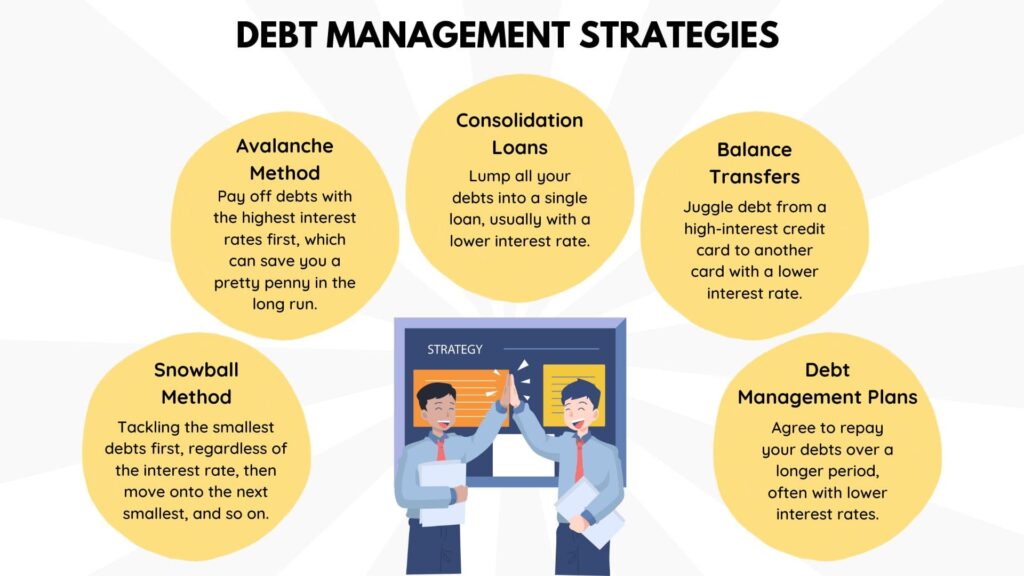
This is the step most people get stuck on, because there are two well-known ways to get out of debt and they pull in different directions.
The snowball method has you pay off your smallest debt first, then roll that payment into the next smallest, and so on. It’s built for psychological wins: you clear something quickly and that momentum keeps you going.
The avalanche method has you attack the debt with the highest interest rate first, regardless of size, because mathematically it saves you the most money overall.
I did something a bit different. I did the snowball backwards.
My biggest debt was a £7,000 credit card, so I started there. I moved it onto a 0% interest-free balance transfer card, which meant every payment I made actually reduced the balance instead of mostly covering interest. On everything else, I made minimum payments only, and in a couple of cases I negotiated that minimum down to as little as £1 a month for six months. Lenders would rather receive something than nothing, so most were willing to talk.
This is close to what the Debt Free Guys call the “debt lasso” method: moving high-interest balances onto 0% deals for 12 to 24 months so your repayments actually attack the principal. They used it to clear $51,000 after realising they were paying roughly $10,000 a year in interest alone before they took action.
Whichever order you choose, the point is the same. Getting out of debt fast isn’t really about which spreadsheet method looks cleverest, it’s about picking one, sticking with it, and making sure your money goes towards the balance rather than the interest.
Financial adviser Ian Dempsey used a different kind of discipline, the brown envelope method, to see exactly where his own money was going.
The reason my reverse-snowball worked for me specifically was interest. My £7,000 card was the debt quietly costing me the most every single month, so moving it onto a 0% deal did more for my overall progress than clearing three smaller balances ever could have. Once that big number stopped growing, everything else felt like tidying up rather than firefighting.
Step 3: Cut your outgoings
Forget rigid budgets for a moment and think in terms of targets instead. A budget you abandon after a fortnight is worthless.
Start by tracking every single thing you spend for 30 days before you change anything. Most people underestimate their own spending by 30 to 40%, and you can’t fix a gap you can’t see.
A few numbers that might sting a bit. UK households waste an estimated £680 million a year on unused subscriptions, and 82% of those auto-renew without anyone noticing. On food, the average household wastes around £470 a year, closer to £1,000 for a family of four.
One rule that genuinely helped me: the 24-hour rule. Anything over £50 waits a full day before I buy it. Most of the time, the urge passes.
During my 18 months, I cut back hard on social spending specifically, because that was where most of my money had been leaking out for years. It wasn’t fun, but it was temporary. I still went out, I just stopped treating every weekend like an event, and that alone freed up more than I expected.
The mindset shift that made the biggest difference was thinking in targets rather than restrictions. Instead of telling myself I couldn’t spend on anything fun, I set a number for the month and let myself choose how to use it. That felt like control rather than punishment, and it’s the difference between a cutback you can sustain for 18 months and one you abandon after three weeks.
If you want a proper framework for this, here’s how to create a simple household budget, and once your debt is under control it’s worth working out how much you should keep in an emergency fund so you’re not straight back to square one next time something goes wrong.
Step 4: Raise your income (the real engine)
Here’s the honest bit. If I’d relied purely on cutting spending and my normal salary, clearing £24,000 would have taken three to four years, not 18 months. Extra income is what actually compressed the timeline.
My side hustles weren’t glamorous. Reselling trainers and clothes, freelance consulting on the side, running events, basically anything that brought in extra cash. A realistic expectation for most people is somewhere between £100 and £500 a month from side income, not a fortune, but enough to change the maths.
Worth knowing: the trading allowance means the first £1,000 of side income each tax year is tax-free. Above that, you’ll need to fill in a self-assessment return.
Bank switching bonuses are an easy, low-effort option too, typically worth £150 to £200 per switch. I once met someone who’d made £800 in a year from five separate switches. Cashback apps are worth using as well, but only on shopping you were already doing, never as an excuse for new spending. Here’s a rundown of the best cashback apps in the UK if that’s a route you want to try.
Then there’s your actual salary. Moving jobs delivers an average pay rise of around 9.5%, compared with about 2.9% for staying put. On a £30,000 salary, that’s the difference between roughly £2,000 and £870. Most people never even ask for more, so if you haven’t had that conversation in a while, you could simply ask what a rise would take.
If you’re short on ideas for where to start, here’s a full list of side hustle ideas to work through.
None of these on their own sound life-changing. £150 from a bank switch, £300 from a month of reselling, an extra £2,000 from a job move. But stacked together over 18 months, that’s what actually shortened my timeline by years rather than months. The spending cuts stopped the bleeding, the extra income is what actually closed the gap.
Step 5: Stay out of debt
Clearing the debt is only half the job. The habits that get you out of debt are, almost exactly, the same habits that build wealth afterwards. The Debt Free Guys are refreshingly honest about this: a year after clearing their debt, they went $6,000 back into it, which tells you habits matter more than willpower alone.
Not sure which camp you fall into? Take the money personality quiz and find out in two minutes.
For me, the commitment device was physical. At 26, I cut up my credit card and filmed myself doing it. It sounds dramatic, but having no card to reach for in a weak moment removed the temptation entirely.
After that, the order matters. Build a small emergency fund first, so an unexpected bill doesn’t send you straight back onto a card. Only once that buffer exists should you start putting spare cash into savings that actually earn interest, because borrowing always costs you more than saving earns you.
If you’re starting from zero and want the next step mapped out, here’s how I’d save £10,000 fast starting from nothing.
When to get free debt help
Everything above assumes you can, at minimum, meet your monthly payments. If you genuinely can’t, this stops being a DIY project, and none of the tactics in this article should come before getting proper help.
There is no shame in this. Reaching out to a free, non-judgemental debt charity is a smart move, not a failure, and these services exist for exactly this situation.
In the UK, you can speak to StepChange, Citizens Advice, or National Debtline, all free and confidential. It’s also worth knowing about the government’s Breathing Space scheme, which can give you legal protection from creditors while you get your footing back.
If any of this applies to you, please make that call before you do anything else on this page.
FAQ
The fastest route combines a clear payoff method (snowball or avalanche) with actively raising your income, rather than relying on cutting costs alone. That combination is what took my own £24,000 down to zero in 18 months instead of the three to four years it would have taken on salary and budgeting alone. Neither lever works as well on its own.
Start with priority bills (rent, council tax, energy) so nothing serious lapses, then contact your creditors directly, some will accept a minimal payment like £1 a month for a period. Free debt charities such as StepChange or National Debtline can negotiate on your behalf. Even a small side income, £50 to £100 a month, can shift the maths meaningfully over time.
The UK’s Breathing Space scheme gives you up to 60 days of legal protection from creditor action and interest while you seek advice, though it doesn’t clear debt itself. For more serious situations, options like Debt Relief Orders exist through the insolvency process. These are worth discussing with a free adviser at StepChange or Citizens Advice, who can tell you what actually applies to your situation.
It depends entirely on your income, interest rates, and what the debt is attached to. I owed £24,000 at 25 and cleared it within 18 months on an ordinary salary, so the number on paper is a starting point, not a life sentence. What matters more than the total is getting it written down, prioritised, and moving in the right direction.
Getting out of debt didn’t start with a clever spreadsheet. It started with an uncomfortable question on a trip I couldn’t really afford, and a decision to actually look at the numbers instead of avoiding them.
Eighteen months later, the £24,000 was gone, and the habits that got me there are still the ones I use today. If you’re at the start of that process, have a look at side hustle ideas to speed things up, or read how I’d save £10,000 fast from zero for what comes next.