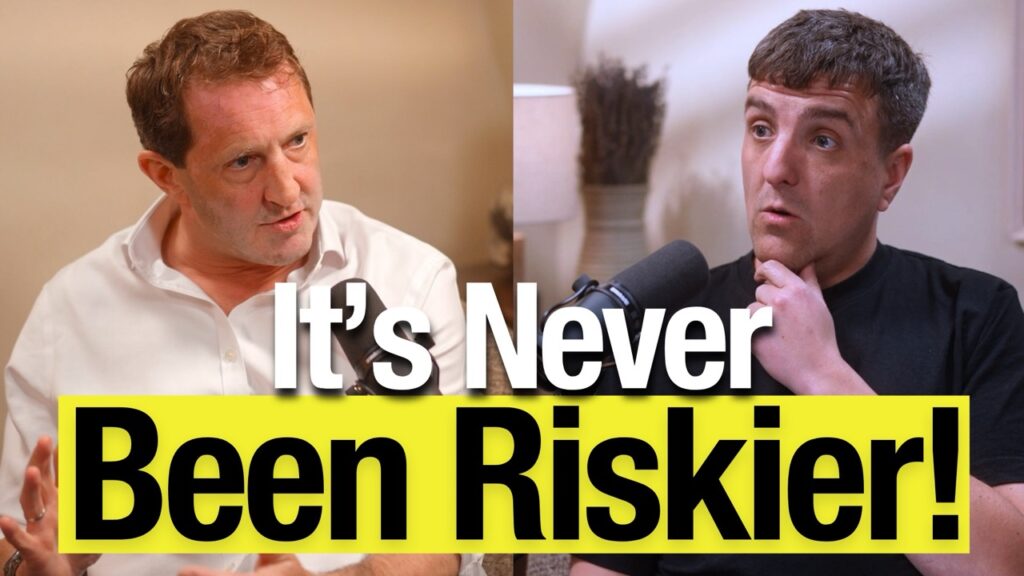

Mindset coach and trainee psychotherapist Bekah Donovan joins the Money Gains Podcast to dig into the limiting beliefs that quietly run our financial lives, the lies we tell ourselves to stay comfortable, and why so many of us know exactly what we should be doing with our money and still don’t do it.
Most money advice starts with a spreadsheet. Bekah Donovan starts somewhere else entirely: with the story you’ve been telling yourself since childhood, most of which you didn’t write.
Sammie sat down with Bekah, a mindset coach and media producer currently training as a psychotherapist, to unpack why so many of us sabotage our own progress. Not through lack of knowledge, but through inherited beliefs about money we’ve never actually questioned.
It’s a different kind of episode for the show: less about the mechanics of saving and investing, more about the psychology underneath it. If you’ve ever wondered why you can earn well and still feel broke, or why you keep planning a leap you never take, this one’s for you.
———
Gains App is LIVE!
An AI-powered budgeting and cashback app designed to help you make more of your money.
Download here: https://gainsapp.onelink.me/8IhT/oiaimr1z
———
Get a FREE FRACTIONAL SHARE worth up £100 when you deposit £1 with Trading 212
https://www.trading212.com/join/MGP
If you don’t receive the free fractional share, head to the menu and put the word ‘MGP’ into the promo code section.
(Capital at risk when you invest)
Key takeaways
- Understanding yourself and uncovering your limiting beliefs is the real foundation of a fulfilling financial life, not the spreadsheet itself.
- The “lies” we tell ourselves about money are usually inherited beliefs from parents, teachers and culture that we’ve never questioned.
- Fear of judgement, not lack of ability, is what stops most people acting on the changes they know they need to make.
- Lifestyle creep and mindless spending hide in plain sight until you actually pull up the numbers and look.
- Self-acceptance, not more willpower, is the starting point for doing anything differently.
Timestamps
- [00:55] Introducing Bekah Donovan
- [06:44] The Lies We Tell Ourselves About Money
- [09:54] Common Money Mindset Myths
- [13:04] Why Doing the Work Feels So Scary
- [17:10] Identifying Regret and Who You Are
- [24:31] Fear of Judgement and the Five Whys
- [35:38] Lifestyle Creep and Honest Spending
- [52:27] The Problem with Burning the Boat
- [59:16] One Simple Money Mindset Habit
The story you didn't write
Bekah’s framework for money beliefs is deceptively simple. Imagine your life as a 10,000-word document. You arrived with maybe 500 words of your own, and everything else got added by someone else: parents, teachers, culture, whoever raised you.
You know you’re not supposed to be rich. Money doesn’t grow on trees. We’re not made of money. These phrases get repeated so often they become fact, long before anyone stops to check whether they’re actually true for the adult you’ve become.
The work, Bekah says, is going back through that document and working out which parts are genuinely yours. Some of it is wisdom worth keeping. Some of it feels supportive and true. And some of it is absolute nonsense that just needs to go straight in the bin. The trap is that most of us never separate the three, so an inherited belief about scarcity gets treated with the same weight as something we’ve actually tested and chosen for ourselves.
Bekah is careful to say this isn’t about blaming your parents. It’s about recognising that a belief formed to protect a child doesn’t necessarily still serve the adult carrying it around decades later. The Money Personality Quiz is a decent starting point if you want a structured way into that question, rather than trying to untangle it cold.
Why the work feels so scary
If limiting beliefs are so easy to spot once you name them, why doesn’t everyone just fix them? Because, Bekah argues, our brains are wired for certainty, not growth. Opening up a part of yourself you’ve spent years protecting can feel less like self-improvement and more like a threat to your identity.
She’s blunt about it: your brain doesn’t reliably distinguish between an actual existential threat and the discomfort of admitting your spending habits don’t match your values. Both get treated as danger. That’s why so many of us know what we should change and still don’t move.
Bekah traces this back to her own experience of grief pushing her into therapy for the first time, describing the fear of “opening the box” on beliefs she’d spent years using to keep herself feeling safe. Her point for listeners isn’t that everyone needs therapy, it’s that the discomfort you feel before making a financial change is data, not a stop sign. Confidence tends to follow action, not the other way round: you prove to yourself you can do the thing by actually doing it, not by waiting to feel ready first.
Fear of judgement and the five whys
Bekah’s clearest insight is about why people plan for years and never act. It’s rarely about logistics. It’s the fear of what other people will think if it doesn’t work out.
Her tool for cutting through that is asking “why” five times on the same question. Keep going past the first two or three answers, which tend to be socially acceptable cover stories, and you usually land on the same truth: fear. Not a strategic obstacle, just fear of looking foolish.
That’s a useful lens if you’re weighing a pay cut for a job you’d actually enjoy, or a career change that means starting again. Sammie puts this directly to Bekah with a real example: taking a job that pays £500 a month less because it would make you happier. Bekah’s response is that the number matters far less than honesty about why it feels risky. If the fear is genuinely financial, that’s solvable with a plan. If it’s about ego, the job title, the car, other people’s perception, that’s a different conversation entirely.
Understanding your own runway matters here too. Before you take a leap, it’s worth checking how much should be in your emergency fund so the decision is informed by numbers rather than only by nerve.
Getting honest about lifestyle creep
The conversation turns properly practical when Sammie and Bekah get into lifestyle creep: the slow, almost invisible way spending rises to match income, especially after a promotion or two.
Bekah’s advice here is uncomfortable but simple. Pull up the spreadsheet and actually look. Not a vague sense of where money goes, but the real number spent on food shops, on clothes that sit unworn, on convenience choices like taking an Uber over the bus without ever questioning it.
This isn’t about cutting everything. Bekah is upfront that she still spends on convenience when it matters to her, taking taxis on solo trips abroad or booking a nicer car from the airport, because travel is a value she’s chosen deliberately. What she’s cut instead is buying clothes new, shifting to vintage and marketplace listings first. The principle is the same either way: know what you’re trading off and why, rather than spending on autopilot. It’s about being honest with yourself over what you actually value versus what you buy because everyone else seems to be buying it. If you haven’t done that exercise properly, our guide on how to audit your spending walks through it step by step, and the budgeting calculator is a quick way to see where the gaps actually are once you’ve got the raw numbers in front of you.
The problem with "burn the boat"
Sammie pushes Bekah on the popular idea of quitting your job overnight and figuring the rest out later. Her answer is unambiguous: that’s often avoidance dressed up as courage.
Making a plan, setting a deadline and telling people you’re committed to it can hold you accountable without torching your safety net. But genuinely burning the boat, with no fallback and no consideration for anyone who depends on you, discounts every other person and responsibility in your life. It’s rarely as brave as it looks on social media.
One habit worth starting today
If all of this feels overwhelming, Bekah’s practical takeaway is small on purpose: buy a cheap notebook, write one question about your money psychology each morning, and just see what comes out. Five or ten minutes, done consistently, is enough to start noticing patterns you’d otherwise never catch.
Bekah also appears on the show discussing a related but distinct theme in Financial Red Flags in Dating and Relationships, if you want to hear more from her on how money beliefs show up specifically in relationships.
This transcript is auto-generated and lightly edited for readability, it may contain errors.
[0:00] Sammie Ellard-King: My name is Sammie Ellard-King, and welcome to the Money Gains podcast. This is a show all about making, saving, and investing your money. And if you’re new here, be sure to whack that follow button because you won’t want to miss a show. And this week, my guest is Becca Donovan, who is a mindset coach. And we jump into all of the reasons that could be holding you back financially. What are the things that you’re telling yourself? What are the limiting beliefs that you place on your own life? It is an unbelievable deep dive into how our brains actually work, especially around money. I absolutely love this episode, but for now, let’s get started on the Money Gains podcast.
[0:37] Sammie Ellard-King: The Money Gains podcast and creature.
[0:55] Sammie Ellard-King: So Bekah, welcome to the Money Gains Podcast. How are you?
[0:58] Bekah Donovan: Well, I’m very well, thank you. How are you?
[1:01] Sammie Ellard-King: Yeah, awesome, thanks. I was just telling you offline, but I’m gonna say it now. I just fell upon your content one day. I can’t remember how. Someone tagged you in something, and I was like, oh, I’m just being nosy. And I jumped on and had a little look at I was like, started watching one video, ended up down a Bekah Donovan rabbit hole, basically. And was like, oh my god, this would be such a sick podcast episode. So here we are, and thank you so much for jumping on. But yeah, I’d love to like hear a little bit about you, bring the audience up to speed.
[1:31] Bekah Donovan: Yeah. Um so I have, I feel like I live multiple lives all at once. Um, so my like full-time day job, proper job. I am a media producer, I work in marketing for an American tech company. Um, but I am a certified coach on the side, and I’m currently a therap psychotherapist in training. So I’m undergoing my masters at the moment. I’ve got a couple of years left of doing that. Um because that is my dream in life. This is my my reason. My reason for being here, I believe, is to help people live better lives.
[2:08] Sammie Ellard-King: Okay, okay, cool. So you’re working towards that?
[2:13] Bekah Donovan: Yeah. Yeah.
[2:15] Sammie Ellard-King: Sick. Love that for you. What’s the dream then?
[2:20] Bekah Donovan: Well, the dream is honestly to just help people, which seems like it’s such a floofy thing to say. But I’ve always been very, very interested in human behaviour and psychology and why people do what they do. I think there’s part of that that is ingrained in me as a human, but I also think my upbringing has a lot to do with that. Um, but I just personally find so much fulfillment and so much purpose from helping people see things that they can’t see for themselves. And like as a coach, as a therapist, your goal isn’t to tell people what to do, because as human
[3:05] Bekah Donovan: beings, we are very rarely motivated by what other people want and what other people say. And the strongest way to get us to do something different is by having the idea ourselves. It’s that whole thing in a relationship of like when one of the partners is like, I need them to think that it was their idea. So I’m just gonna place all of these little nuggets around and then praise them when they say and just like not even say anything, but it was their idea all along. That’s like that’s what a therapist does. They kind of like create a container for the person to figure it out for themselves, and just those moments when you’re with a client and all of a sudden the light goes on, and that you see the realization in
[3:50] Bekah Donovan: themselves, and then you see the results of that, that they do something different and they feel better about things. Like, I just don’t think there’s a better feeling than that, to be honest.
[4:01] Sammie Ellard-King: I completely agree with you, and on another level, like when we do the workshops and we go through like the purpose for someone in life, like I I use Ikigai, Japanese technique, you know, your purpose in life, why’d you get up in the morning? But it’s also connected to like how much money you can you can make and you put the four circles of Ikigai together. Uh, everyone’s heard me banging on about this recently, but essentially it’s your purpose in life when you put your four circles together. Um, but when they go, Oh, yeah, like that’s that’s what I should be doing. Yeah, that moment is honestly possibly some of the best feelings that I’ve had watching someone have that moment.
[4:43] Bekah Donovan: Yeah, yeah, it’s amazing. And I’ve always I’ve always wanted to go down this path, but it’s never felt like the right time. I feel such a huge sense of responsibility about this role. In bad therapists can do a lot of damage, bad coaches can do a lot of damage, and I feel the responsibility around that. So I needed to be ready to be able to support people in doing that, and it’s just you’ve just got to live some life, I think, first go through some stuff, figure some stuff out, and then be able to help people from a place of actually sort of having maybe a little bit of wisdom, a little bit.
[5:27] Sammie Ellard-King: I like you said that because it we place a lot of pressure on ourselves as well to find that moment, yeah. And it happens to people, some of them lucky if you’re it happens to you at 21, some people it happen to them at 56.
[5:41] Bekah Donovan: Yeah, totally.
[5:43] Sammie Ellard-King: Yeah. Do you feel like like one of the things you talk about, which I really loved, and I want to kind of lead this into a strand of kind of few questions around this topic because I’m super passionate about this from a financial perspective, yes, because you know, this is the Money Gains Podcast, and I do personal finance, but I feel like that to be able to succeed in your own life, you often need to get your foundations correct. And the foundations are not money related, they are very much psychological, and the kind of limiting beliefs that we’ve formed in ourselves as humans, we don’t we’re not born that way. No, we’re we’re it’s earned and learned uh through
[6:28] Sammie Ellard-King: experience. And one of the things you talk about is the lies that we tell ourselves, and I wanted to kind of unpack that a little bit because you say, like, why do we tell ourselves lies to keep ourselves comfortable? What is that reason?
[6:44] Bekah Donovan: Well, so uh as you will see with some of my content, I do I do speak quite bluntly about certain things because I think that is what we need often. Um so lies can have like a heavy connotation to them, people can have their own triggers and issues around the word lies. But it’s basically that the way to start unpacking that is realising that there is a story that you are living out. And I kind of like one of the frameworks that I like to use is imagine it as like a 10,000-word Google Doc, Microsoft Word doc, whatever.
[7:30] Bekah Donovan: You came here as a little human, and you probably started with like 500 words, and then over time, more words have been added to the story. The story’s gotten bigger and bigger and bigger and bigger, but the majority of those words weren’t written by you. They were given to you by somebody else. And at some point in your life, you’re gonna have a moment where you’re like, What am I doing? And you still want to start looking backwards to figure out how the hell you got here. So you’ll start looking at that word document and you’re like, Who the hell has written this? This has been edited and written by the worst editor in the whole world, and you’ve got to start going through it and figuring
[8:15] Bekah Donovan: out which of those 500 words are yours, and which parts of the rest of the story do you want to keep? Because some of it you will want to keep, some of it is wisdom, some of it feels true, some of it feels really supportive and is added to your life, and some of it is absolute nonsense and just needs to go straight in the bin. And a huge part of your money stuff is figuring out like which money beliefs have been given to you by your family. Why do you feel this way about it? And do you want to keep that with you or not? Does that still feel true? Or does it feel like a lie because it’s just something that you’ve adapted as adopted as part of who you are, but it’s not actually your
[9:00] Bekah Donovan: own belief, it’s somebody else’s.
[9:03] Sammie Ellard-King: Oh God, love that. So, like I hear it all the time, you know, like you know, I’m not supposed to be rich. Uh, you know, I don’t come for money, money doesn’t grow on trees. These are all phrases that we kind of hear banded around often, you know, we’re we’re not made of money, don’t turn the light on. And then you’re then installing that into your own lives, and often it’s your parents, let’s be frank, frankly honest, like in the majority of these situations, but also around you know, your teachers when you’re growing up and and the way that they they act and and do things and it rubs off on you as a human being. Um, like what are some of the core things that you see with your clients that you’re like, this is a
[9:48] Sammie Ellard-King: common theme of people doing this to themselves that is holding them back?
[9:54] Bekah Donovan: Yeah, I think with clients and just a general observation of some people on the internet, um, is that the thing about money beliefs and money stories and money mindsets, there’s all of these different phrases that people use. And I’m conscious of what I encourage clients to do is do some real actual interrogation of what that means and where it’s showing up in their life, going back to the past to figure out what you want to do differently in the future. I think quite often these words are just being like, fix your money mindset and you’ll be able to manifest all this shit. And I’m like, do you know what? Like, I believe
[10:39] Bekah Donovan: in parts of that. I to totally 100% believe that if you are, if you feel good, then you’re probably on the right path. Follow that. Good stuff happens when you feel good, bad stuff happens when you feel bad, but also don’t ignore the bad. You can’t just push it in a box and and not look at it, not feel the feelings, not do anything with that. It’s that is just completely bypassing all of the different aspects of being a human being, which scares me a little bit. One of the things that I find, particularly with female clients, is a denial of their own emotions. And because they
[11:24] Bekah Donovan: believe that that is stopping them from having the future that they want, where in reality you have to feel that stuff. You’ve got to figure out why you feel so emotional about money, why it makes you sad, why it makes you angry, which is something that women in particular find very difficult to deal with, like resentment and anger towards certain things that have happened to them in the past. And there tends to be, again, this denial of things, like what you’re you’re essentially lying to yourself by saying that if I just practice gratitude, if I fix my mindset, everything is going to be totally fine. You have to do the work of interrogating where that came from. Feel
[12:10] Bekah Donovan: the feelings. Do you want to carry this with you? If yes, great, let’s figure out how to do that. If no, it stops now. And you choose to start doing something different, which is hard work. That’s not an easy thing to do to all of a sudden just decide that you don’t want to do something anymore and stop doing it. That’s not how humans work.
[12:32] Sammie Ellard-King: Yeah, yeah. I I I did that, I had that like a moment and came back and was like, I’m gonna be a different person.
[12:41] Bekah Donovan: Um, and sometimes that does happen. Sometimes, but it’s for me, it’s almost like the idea of that overnight success. Those moments do happen, but they happen after the 10 years of the grunt work that you’ve done before that. You have to do the work to get that moment.
[13:01] Sammie Ellard-King: And why do you feel like people don’t do the work?
[13:04] Bekah Donovan: Because it’s scary. Like it’s terrifying. I remember going into my first therapy session, and I ended up going to therapy because I believed that I was an untouchable human being. I’d gone through a lot of shit in my childhood, there was quite a bit of trauma. So I’d built this like big shell around myself. Like I had these walls up, I was untouchable as far as I was concerned. And then one of my best friends at university committed suicide, and the grief of that hit me like a ton of bricks. Like I had never experienced anything like it in my life. And all of a sudden, I was like, oh my God, I’ve got no idea what I’m doing. Like I have no idea why I am doing as a human, and I
[13:49] Bekah Donovan: need to go and figure this out. And that is what led me to therapy in the first place. And I remember going in and being like, I am terrified of what happens when we open this box because we, through this like storytelling that we have from other people and from ourselves, we create an identity. And our brains like certainty. We are wired to seek patterns and to create stories so that we feel safe. Oh, sorry, hang on, my screen’s just like disappeared. Right, I’m back.
[14:25] Sammie Ellard-King: Don’t worry, I’ll let it out.
[14:28] Bekah Donovan: Um, yeah, we are we’re wired for certainty. We’re wired to find patterns and to feel safe. And opening up a part of ourselves that we have done a very, very good job of shutting down for whatever reason. Generally, it’s the self-protection thing. Our brains are very, very good at keeping us alive. We feel so scared to look at that because it would, it could potentially completely change how we see ourselves. It could completely destroy our identity, and we don’t know what to do with that. It feels like it’s it’s our brains don’t understand the difference between actual death and not actual death. Like every threat is perceived as something that could literally
[15:13] Bekah Donovan: kill us. Our brains don’t know the difference. So to potentially start looking at completely deconstructing our identity is so scary because it’s uncertain. We don’t know what’s going to happen on the other side, and we don’t like that.
[15:30] Sammie Ellard-King: Yeah, yeah, it’s the first step. It’s like your chimp brain, isn’t it? Like that’s what’s protecting you. And it’s that that that is it the frontal cortex or something like that. Is uh I you’ll know better than me. I don’t know. Maybe you should at the end of the last time.
[15:47] Bekah Donovan: I’m a psychotherapist, um, I’m not a neuroscientist.
[15:50] Sammie Ellard-King: Yeah, fair fair, fair enough. I I will leave that one there. But um what I hear is that our chimp brain takes over and it doesn’t allow us to then create like the patterns in life which is actually beneficial for us or allow us to like break our routine.
[16:08] Bekah Donovan: Yeah, and there’s also there’s a there’s a psychological theory that I am currently studying because this is kind of what I want to practice once I’m qualified, but it’s called internal family systems. It’s by a guy called Dick Schwartz, and it’s basically this idea that we have multiple parts. We as human beings are built up of multiple parts, and each one of those parts kind of developed at a certain time in our lives when we needed it the most to help us survive. So one of those parts could very well be the protector, which is the person who had to keep you safe, and that protector is not going to move out of the way without a fight. And there are practices that you can do with a therapist or a coach who understands this to be able to like move it out of out of the way in a very gentle way, but it’s
[16:53] Bekah Donovan: accepting that there are there are parts of us that are keeping us safe. They have had a job to do for a very long time. We might not need them anymore, and we have to address that in order to start changing the way that we do things.
[17:10] Sammie Ellard-King: Okay, okay, okay. So, like what I want to talk about really is now is kind of based on where we’ve got to is like we we get we get we get to this point in our lives like we all some of us have a hard moments, some of us uh don’t. But the vast majority of us get to a point in life and we look back and we we have like enormous regret, right? Like we didn’t take the risk, we didn’t do the thing that we said we were gonna do, we didn’t we told ourselves the comfortable lie, often because we’re paid a paycheck and things are comfortable and nothing’s wrong, and we’ve got the two up, two down, and two kids in the car outside, and we’re paying off the mortgage, and everything’s rosy and
[17:55] Sammie Ellard-King: fine until it isn’t.
[17:56] Bekah Donovan: Yeah.
[17:57] Sammie Ellard-King: Like I came across a statue the other day, and it just blew my mind. Like 90% of people hate the jobs that they work in. I know, and they put themselves through that. That’s nine in ten people that you know right now. So, how important is it for someone listening to this is to identify that first? And is that a good starting place for all of this?
[18:21] Bekah Donovan: Figuring out their job, what they want to do for working out who they are. Figuring out who you are, it’s the first step. Um, it’s quite a big one, but yes, the the internet will have you believe that um oh hang on, sorry, I’ve just completely lost my train of thought. Ask me the question again.
[18:47] Sammie Ellard-King: So I can’t remember it myself now right there. We are basically I’m trying to figure out like 90% of people hate their jobs, yeah. And we are in this kind of like world where we go throughout life, we’re just kind of meandering through on autopilot, then suddenly we might go, Oh my god. So, what I’m trying to figure out is if someone is listening to this and they’re not at that point now, but they perhaps don’t like their job and they haven’t figured out who they are yet, is that where they start? Is it figuring out their purpose first, or do they need to go through this kind of like um the the uh sorry, the the thing that you mentioned before? Do you see what I mean?
[19:27] Bekah Donovan: The purpose thing, this is again the purpose thing is another word that’s like thrown about as if it’s something that’s really easy to try and figure out. I’m just everybody is completely different, nothing is as black and white as it is on social media, and I think this can often be one of the hardest things to accept is that things take time, things start really small, you might go into it thinking you want one thing and discovering that you want something else.
[19:59] Sammie Ellard-King: Yes.
[20:00] Bekah Donovan: We are we are our own worst critics, we are our biggest judges. The whole thing around, you know, one of the regrets of the dying is that they didn’t do the things that they loved. There’s that whole thing that goes round about the is it the the hospice nurse that taught that shares the regrets of the dying, which is a really interesting thing to hear, but there’s a lot of judgment in those phrases around things that we did or didn’t do, and it’s too simplistic. Life isn’t as simple as that. You the
[20:45] Bekah Donovan: first thing I would do or I would encourage someone to do is to accept where they are and why they’re there. Because you could be in a job that you hate because you’ve been a single parent caring for an elderly relative and you’ve had no other choice, all you’ve had to do was survive. You could be there because your parents told you that that’s what they wanted, and their approval was the most important thing to you. You could be there because you were in an abusive relationship, and the only way that you could get out of it was by taking any job you possibly could so that you were financially independent. The first thing we have to do is give ourselves some fucking grace and
[21:30] Bekah Donovan: accept why we are where we are, and that we made the best choices that we possibly could to make sure that we survive, and then you start figuring out what you want to do differently. Okay. And one of the things is to figure out the path of least resistance. You don’t have to blow up your goddamn life in order to feel differently, you’ve got to figure out what your priorities are. Are what things do you value the most? Be it prioritize those things in an order that feels comfortable. And it can feel really weighty and disheartening to
[22:16] Bekah Donovan: know that oh god, I have been doing this for 40, 50 years. And the idea of having to spend the next five to 10 untangling everything in order to completely change my life, it can feel like a slog, it can feel disheartening, it can feel like you don’t want to do it. The alternative is staying exactly as the way you are, and you could potentially live till 95 and then regret every decision that you made from the age of 50. Because you woke up one day and you realised you wanted something different and you didn’t do anything about it.
[23:39] Sammie Ellard-King: Okay, okay. Powerful stuff, like awareness first.
[23:44] Bekah Donovan: Awareness and acceptance first, and then start to do things about it. And everybody’s approach to doing things about it is gonna be completely different.
[23:55] Sammie Ellard-King: Okay. One of the things I feel like people struggle with is like even just putting their foot over the start line. So they go and do all of this work, and then they actually realise what they want to do, and they’re like, I’m gonna go for it, gonna go for it, and then they spend two years planning it, then things change a little bit, so then they’re like, Oh, I don’t know if that works for me anymore, and that opportunity is gone, and then they’re gonna, and then five years have gone by, and then ten years have gone by, and they’re doing the same thing. Oh, yeah, I’m gonna try that, I’m gonna try that, but they don’t ever take the step. What’s that? What’s that in our heads? Why is that happening?
[24:31] Bekah Donovan: More often than not, that’s the fear of judgment of others. Okay, because I think if we cared significantly less about the acceptance of other people, we would give way less of a shit about whether it worked or not. We just do it. So one of the things that I encourage clients to try and figure out is okay, why? There’s this whole process of like, if you ask why five times to the same question, you actually get to the truth of the answer because we are very good at adding all of this nonsense and layers that we believe is the truth, but actually it’s not. And
[25:16] Bekah Donovan: if you ask it, if you get down five layers deep, the truth is, and the truth is you’re scared. Like this, we’re like, we’re all just like scared. We’re all little kids still in adult human bodies who all of a sudden have responsibilities, but we’re still scared of fucking up, and or another person like the kid on the playground laughing at us because we fell over, we’re still scared of that. So you can spend all of your time planning, and this is I don’t spend a huge amount of time planning with coaching clients. It’s like, what are you gonna do? Because now that we understand what the fear is, you have to do. You can’t just plan it, you just gotta do, and it can be the tiniest little thing,
[26:01] Bekah Donovan: but confidence comes from action. You don’t feel confident first and then do the thing. You have to prove to yourself that you are capable of doing it. Your brain believes that you’re gonna work in exactly the same way that you always have worked because it doesn’t know any different. You have to override the operating system and start teaching it that you are serious, that you are showing up, and that you can be trusted to do the things that you say you want to do.
[26:30] Sammie Ellard-King: So playing devil goes devil’s advocate to that.
[26:33] Bekah Donovan: Yeah.
[26:34] Sammie Ellard-King: Like I’m paid two grand a month in my manager at a supermarket job, right? Um by me going and doing this new thing, I now have to be only earning £1,500 a month, but it’s gonna make me happier. But stick with the two grand thing because of the £500 difference, right? Not what happens then? Because lots of people do do that, yeah, yeah, yeah. And they they they they realise and it’s it’s painful starting from the beginning. Like going back to university and like taking those steps, like to go and learn a whole brand new thing, to be paid. I’m now an executive, I was a director.
[27:19] Bekah Donovan: Like, yeah, that’s all ego though. That’s like there’s there’s so there’s two different parts to this. There’s the ego, which is the I really like the perception that other people have of me because of this job title that I have. There is this, I enjoy the perception that other people have of me because of the car that I drive, because of the clothes that I wear. And you know what? If that is a huge thing for you, fine, go live your life that way. If that is something that makes you happy, then great. If it doesn’t, though, you gotta tell yourself the truth. And with money, it so this is this is potentially I have some potentially quite controversial opinions about this.
[28:04] Sammie Ellard-King: So let’s do this.
[28:06] Bekah Donovan: Like I, and this is like I fully accept that there are some people that are literally living hand to mouth, they’re really struggling. There are some people that have it really, really hard. And when I work with a client like that, we have to accept reality, and then we get creative on the side and we figure out a long-term plan, and I support them through the process of doing that. Those are that is the reality for some people. I don’t think that’s most people, though. I think that we are constantly fed advertisements. We believe we need to be wearing a new outfit every weekend to go out drinking. We believe we need to go into the city to go
[28:51] Bekah Donovan: out drinking. I know like the whole boomers and the way that they had it is significantly easier than us in their economic situation. Yeah, I totally get that. But also, they went to a local pub at the weekend, they wore the same shit that they wore to work. There is so much more stuff that we feel the pressure to buy now, to spend money now on that we didn’t necessarily have before. How honest are you being with how much money you’re actually spending? And how much of that stuff is things that you really value that bring a lot of joy and richness to your life, and how much of that stuff is stuff that you buy in mindlessly because you’ve seen an advert on Instagram, stuff that you buy in because other people
[29:37] Bekah Donovan: you are pressured, feel pressured by others to do it because it feeds this identity that you have about yourself, and you don’t necessarily want to actually take a real look at it and do anything different. There’s there’s two very different realities. So if a client came to me with that situation of I really would like to do the £1,500 a month version, then it depends on what that person wants. If that person comes to me and says, I can’t take this pay cut because of this reason, this reason, this reason, we work together to create a plan to make sure that that ends up being a reality for them in whatever version. There’s flexibility, there’s so many different options now as to how you can make up that extra
[30:22] Bekah Donovan: money. If someone comes to me and says, This thing would make me happier, but and we take a real look at their finances and they’re not willing to let stuff go, then that’s your life. You make that choice if you want. But if you want to do something different, then you will.
[30:41] Sammie Ellard-King: Yeah. Yeah, yeah, yeah. It’s the dry, it’s the like you need to actually want it. Like, yeah. This is why I think like things like Ikigai and understanding when you’ve got your purpose right is so powerful because actually, if you wake up in the morning and love what you do, that is that worth more to you than the leased car and what Karen
[32:07] Sammie Ellard-King: next door thinks of you downgrading to a Nissan from a beer.
[32:10] Bekah Donovan: 100% and I have had to go through this. Like, I have I have separated from my kid’s dad. I have two children with him, we co-parent wonderfully together. I have had to go through the process of like being a single parent, being on benefits, trying to figure out through COVID, like trying to figure out what the hell I was doing, getting a nice job, feeling the ego boost of getting a really nice job, buying myself an Audi because it’s the first time that I’d ever had it. And then 18 months into the lease on my Audi, realising I don’t want to pay for this shit anymore, having to get rid of it, like it you just get to a point where you can’t you can’t take your own bullshit anymore.
[32:53] Sammie Ellard-King: Yeah, yeah. You’re so right. Like, I I had to shed that for myself. This happened to me quite young. I was quite lucky. I was 26, 26 when this happened to me. And I before that, I was the most materialistic little tosser on the planet. Like, there is no other words for it. I wasn’t a nice person, and I know I wasn’t. Like, I was a nice person at my core, but like the way I projected myself out into the world as out drinking 24/7 on the lash, you know, going out crazy hours on a Tuesday night. Like, I wasn’t happy. And I just didn’t really let myself accept it. I built this whole like mentality up around myself that actually, you know, John who I met
[33:38] Sammie Ellard-King: at work, who just loves going to the pub, is the person that I need to impress. And John buys a new trainer, so I’m buying new trainers. John bought a new bag, I’ll bet I’ll bet a bag. Uh, he he came in in a flashy new coat. Well, I’ll I’ll one up you, John. Like, I’m I’m here for it. Do you know what I mean? And you peg yourself to this human and you don’t even fucking like him.
[33:59] Bekah Donovan: I know, I know, and that and literally, like, there’s there’s no there’s no judgment in any, like, in any of my opinions about this whole thing, there’s no judgment. It is very much like accept, accept what you’ve done, accept what you want, and then you can actually move forward and live the life that you actually want. But until you get to that point where you accept it and you accept yourself and what you actually want, you’re just never gonna do anything different.
[34:30] Sammie Ellard-King: Totally, totally. So let’s say that this person comes to you as well, because this is another thing that I see a lot of, and I try my best, and I I say some of the things that you say, but not as eloquently. But the main thing, like it’ll be, you know, I just for some reason I just can’t seem to hold on to my money. I get to the end of the month and I’m I’m blowing it, and um, I ask them, like, you know, how much do you earn? And they tell me, and I’m like, Are you are you like I have to hold it back? Like, you are you kidding? Like, because you can’t you couldn’t be on that wage if you weren’t a smart human being. So you’ve got to that point. You’re you’re obviously a smart human being, you’re above the UK national average wage, not saying that people under
[35:15] Sammie Ellard-King: it aren’t, by the way, just to be clear, but what I’m trying to say is essentially here is that they’re like their mindset isn’t right around managing their money. Their mindset’s perhaps right in their day-to-day, they enjoy what they do, but they struggle to make anything of it. What’s that human being going through and why are they doing that to themselves?
[35:38] Bekah Donovan: Do you do you follow any of Ramit Sethi’s stuff? Oh, yeah. I love Ramit, he’s like my favourite. Um I think well, there there is the whole thing of lifestyle creep with the more that you earn, and especially if you’re in a role where you’ve been like, you’ve had a promotion every couple of years or whatever, your lifestyle has like slowly crept up on you. And I think you have to you have to take a very, very hard and clear look at exactly what you are doing with your money. I think get into a place where you’re like, right, I’m gonna budget this month without it again, it’s the same as like understanding why you do anything in life. Like, you have to look back and you have to analyze
[36:23] Bekah Donovan: the things that have impacted you along the way to get to exactly where you are now for you to be able to change the way that you do things in the future. With you gotta get your goddamn head out of the sand and take a very harsh look at exactly where your money is going. In as much as pull up the spreadsheets, like pull up the spreadsheets, let’s look at exactly what you are spending your money on. And that is such an uncomfortable process to go through sometimes of like, oh, I didn’t realise I was spending like 800 pounds on my food shop and I don’t actually really care that much about food, like, or I’m spending this amount of money on ASOS, and the stuff
[37:08] Bekah Donovan: just sits in my bedroom for two months, and then I can’t return it because it’s past it because I couldn’t be bothered going and taking the parcel back. Like, there will be so many little little creepy things that have just like ended up on that spreadsheet that you don’t care about. You don’t care.
[37:28] Sammie Ellard-King: What if, and one of the things is like or you overconvenience yourself in a lot of them as well, like yeah, like the Uber over the bus, and do you know what I mean?
[37:38] Bekah Donovan: And I am a sucker for that sometimes. I am a sucker for that sometimes, but I understand that convenience in certain situations is is really important to me. So I I took a solo trip recently. I was in Portugal by myself for a few days. I was gonna ask you about this, yeah. Yeah, and I did and I did take Ubers. And when I last travelled, I travelled to LA in March and I got myself like a really nice car from the airport because if you’ve ever been to LAX Airport, Jesus Christ, hell no. Like I am not dealing with getting a normal taxi to my uh to my hotel. But I I value travel, like I value being able to spend money when I travel, and I will happily cut back. Like I have made a conscious
[38:24] Bekah Donovan: choice to stop shopping new, and I will always search for my clothes on vintage first now. I will search for most things on vintage first or on Facebook Marketplace rather than buying new. And by cutting back on that thing that I actually don’t really care about, to be honest, I can then put that money into my travel pot, which means that when I do go and travel, I don’t feel guilty about getting the nice car from the airport because that feels good to me and that’s what I enjoy.
[38:51] Sammie Ellard-King: I want to ask you about this holiday because you put the post up and I was like, yeah, I’m in. And I did the same as you by the way, flew to LA, uh, hired a hired a Ford Mustang, drove up San Francisco, did the whole Route One and did Grand Canyon. And I did that when I was when how old was I? 27. And after I got myself debt-free, and I went and did that, and I it made me as a person. Like the stuff that I did in those experiences made me as a person, like popping into the bar and having to say hello to someone because you didn’t want to be on your own anymore, in the car all day, and just having a chat with someone that you would have never spoken to. And the most craziest things happened to me on that trip just simply because I was like, put myself out there.
[39:36] Sammie Ellard-King: And when you said it the other day, it tweaked it in my head because I’ve been thinking I’ve been having I’ve got this Switzerland trip in my basket, and I’m like just walking across the mountains and just doing this like cool thing. Oh, that’s but I haven’t pushed it, I haven’t pushed a button, and I don’t know why.
[39:51] Bekah Donovan: And well, then the therapist in me is like, why? Like, we didn’t know.
[39:56] Sammie Ellard-King: I know that’s what I wanted to ask you. This is why I wanted to ask asking live on air, you can you can go to me. Um, like you went and did that, and what I want to know is why and like what what’s it given you?
[40:08] Bekah Donovan: Yeah, so I actually released a podcast episode about this on my own podcast last week, just in case anyone wants to go and listen. Um, but and I value my solo trips so highly. Like I enjoy going on trips with other people, but only with other people where I I’m gonna feel comfortable being myself. I have no desire to go on a hen weekend with a bunch of people I don’t know. That is my idea of hell. Um but I really love being by myself. I I get so much from it. And one of those things is to your point, of you do things that you wouldn’t do at home, you push
[40:53] Bekah Donovan: yourself out of your comfort zone. And pushing yourself out of your comfort zone could literally be as simple as getting on public transport in a different country. Because that can be like such an anxiety-inducing thing of just like, I’ve got to go and get on a bus in Portugal. Like, do they even have like you automatically assume that everywhere is like so behind England, and you’re like, how am I gonna get on the bus? So it can be something as simple as that, but you put yourselves in situ, you put yourself in situations where you wouldn’t do that at home. And it gives me the space to allow parts of my new identity to like take form because I feel confident in myself
[41:39] Bekah Donovan: when I’m alone. Like being in a hotel and being going down to breakfast every morning and being the only person there that’s eating breakfast by themselves. And I just like ate my breakfast, like I said hello to some people whenever it felt right to do it, and I’d just have my journal with me and I’d make a coffee, I’d write on my journal, and then I’d just like hop off and go on about my day. And I’m a very creative person as well, and and having that time where I don’t have to be responsible for anybody else’s feelings is very important, especially as a parent, as a partner. Like, we all have these roles that we play for different people, and we take on the responsibility of what the expectations of others are, especially
[42:24] Bekah Donovan: if you’re someone who’s a people pleaser. Going away and being by yourself, it allows you to just remember who the fuck you are, yeah. And then you bring that energy back to your everyday life.
[42:39] Sammie Ellard-King: Yeah, like the reason why it’s there for me is that I’ve just always I don’t know what it is, it’s something that draws me to that country. Just I want to see that man, I just want to see it, and like my partner’s been, and she’s not too fussed, and I’m like, and I kind of get the same thing with Iceland as well, like those two locations got them in my head, and she’s done it and done it well, and I’m like, uh, you know, so then we can go do other things together, but then I’m like, no, I need to go and do that. And I said to the boys, anyone want to come? Everyone said no, and I was kind of like, actually, I’m quite pleased you all said no. Um, don’t know why.
[43:18] Bekah Donovan: I mean, that’s the thing as well. Like, so here’s another thing around the whole identity that we like believe that we have, we can quash down that voice so much of like you feel drawn to Switzerland and Iceland, you’ve got to go, man. Like, there is a reason that that keeps coming up for you and that you are happy to be given the opportunity. You keep trying to get out of it, like your brain keeps trying to get out of it by like inviting other people when busy you want to go on your own. You want to go, you want to go on your own. There’s a reason for that, and it could literally just be so that you’ve experienced it in life. That’s it, and that’s enough of a reason to go.
[44:00] Sammie Ellard-King: I know, I I literally know what it is. I just want to stand on the edge of this one little bit and just look at it. And I don’t want to I don’t want to move for like an hour, I just want to stand there, and I think like that as I don’t want to so that in that moment when I’ve got that in my head, I’m not with anyone, I’m not talking to anyone. Yeah, I just want to stand still and look at it. Yeah, and so like when I do do that, I feel like that’s gonna be this is I’m a big thing for bucket listings, and that’s always been there. So, yeah. No, I don’t know. I’ve my thing at the moment is I run a business, solopreneur. Actually, we just our first member of staff started today, you know. It’s been how exciting!
[44:35] Bekah Donovan: Congratulations!
[44:36] Sammie Ellard-King: Thanks, yeah. She’s great. Um, Danielle, if you’re listening to this, or she’ll be editing this podcast, so give her a big tick. Um, the uh, but she, you know, it’s a big moment for me is bringing somebody in with the eventual realization that perhaps I can remove myself from certain areas of the business to allow me to do some more of these things, right? Um, because they say, you know, if if I got hit by a bus tomorrow, that’s like the game’s done forever, right? So how do I bring other people who are in that are just as talented and or specialists in their areas? But anyway, what I’m trying to say is I’ve been running a business for bloody ages, two and a half years now. We are probably coming up to three years now. Um yeah, October, yeah, so not far. Um and I’ve just been working my bloody ass off. Do you know what I mean? And so I’m telling myself I’m busy all
[45:21] Sammie Ellard-King: the time because that’s what I’ve been telling myself for three years now. So that’s what’s stopping me from going.
[45:28] Bekah Donovan: Well, yeah, because it’s a really well-worn path. Like that part of your brain is on autopilot now of like my response is I’m busy because I am busy. But to not be busy is a conscious choice. Like the our unconscious runs 90% of what we do every day. It it’s bringing that conscious awareness to being like, am I busy? And it can be as simple as literally just hearing, becoming aware of the phrases that you use on autopilot every day and catching yourself saying them and then being like, is that true? I don’t think it is.
[46:06] Sammie Ellard-King: Do you know the weird thing as well? the five whys thing in my head while you were saying that? Do you know where I got to at the bottom? Was I was scared. I think I’m scared. Yeah, yeah, yeah. Yeah, I was like, actually, I’m just scared to go, I think. Like, that’s probably it. Is it starting telling myself I’m using it?
[46:25] Bekah Donovan: Is it the fear of being alone? Or is it the what is the fear?
[46:30] Sammie Ellard-King: My partner knows, like, I love spending time with her. She’s great, right? But I have to be on my own, like, for large periods of time because I just it’s just how I operate, my brain works like that, and then she’ll want to engage, and I’m very much like internalized at that time, and so uh we have you know we know that about each other now, but it took a long time and a lot of clashing and a little bit of like friction to work that out about each other, but yeah, we give each other space, and actually, she’s quite similar in a lot of ways, but um, yeah, I think the being on my own bit is not the thing, I think it’s just I like this room and the comfort, the comfort of being and the routine of like going out
[47:15] Sammie Ellard-King: with a dog at 11 o’clock, and like I’m quite like that, and then to break that routine, like the missus just got me to go to Sicily for a week, and it was lovely, but like the hassle she has to go through to get me to go is like and then when I’m there, I’m like, this is awesome! I’m having the best time, like we’re doing this again, we’re booking next trip tomorrow, you know. And then like I don’t know what that is about me that I just have to break, I imagine.
[47:41] Bekah Donovan: But it’s well, we like we like our routines, and some of us are more comfortable with the lack of routine than others. Personally, I find that chaotic as hell, but I and I like my routine, and I I don’t I struggle a little bit when things are upended, all of especially if it’s like all of a sudden and I wasn’t expecting it to come. But there is a reason that you want to go. Like, how long have you had that in your basket?
[48:08] Sammie Ellard-King: Oh my god, yes.
[48:09] Bekah Donovan: You just need to book it. Like you just act, otherwise, you’re gonna keep thinking about it. Like, how much of your mental energy is being taken up thinking about this thing?
[48:18] Sammie Ellard-King: I’m not joking. I probably follow, you’re talking probably this is a personal finance account, probably like 15 I Love Swiss accounts. So my feed is like mounted, and I’m like, oh so yeah, no, 100% needs to be done. I I’m gonna do this, guys. All right, look, this is this is it. I’m putting my flag on the floor, I’m booking it. I’m gonna send you all everyone that’s listening to this. I’m gonna put up the picture. Uh so you all everyone listening needs to hold me to rights like this has to happen now.
[48:49] Bekah Donovan: Absolutely.
[48:50] Sammie Ellard-King: I’ve said it live on air, so like Yeah, no, it’s true now. It’d be a total idiot if I didn’t. But what’s one thing that we’ve not covered today that you’re like is really important to you at the moment that you’ve been covering? And sorry to throw that on you like that, but I feel like that if is there anything we’ve missed here that we really should have thought about?
[49:20] Bekah Donovan: One of the other things that I just wanted to share a little bit more about is on the acceptance front, is accepting what phase of life you’re in as well, and the danger of putting things off because we can often be the best at saying that things are gonna be great in the future. So, say for example, like so many of us will be like, I am gonna plan this trip for when I retire. When you retire, like, unless you are, even if you are the most active person in the whole world, if you say, for example, have the idea of wanting to go to Switzerland to walk up a mountain, are
[50:05] Bekah Donovan: you going to want to do that at 65 years old? You might still want to go and do it, but the experience is going to be completely different. And the acceptance of where your physical body is at that age, you’re not going to enjoy it as much. So if it is better, if it makes more sense for you to do it in the phase of life that you are in now, do it now and accept that you might have the best intentions of wanting to do it at 65, but it’s not going to be the right phase of life. Accepting where you are is a huge part of the acceptance thing. Because if you’re still in your 20s and you’re in you’re in grind time, you’re in hustle time, you’re in growth time, accept that that is where
[50:50] Bekah Donovan: you are. Not where someone on Instagram is, not where someone else in your family is. Identify what phase of life you are in, accept that that is where you are, and do what you need to do in that phase of life for you. Some people have kids in their 20s, some people don’t. Everybody’s life is completely different. And one of the things that I fear is a really strong word, but one of the things I’m almost like trying to rally against is this idea of the black and whiteness of life and the internet. There is so much grey, there is so much nuance to every single person’s life,
[51:35] Bekah Donovan: and we all need to be focusing way more in on ourselves than than other people that literally do not matter to us at all.
[51:51] Sammie Ellard-King: Last question is let’s say we find this level of acceptance in ourselves and we realise that we want to be this person. Now, something that comes up a lot, and I know you’ve got quite a good opinion on this, is that like fuck it. I’m gonna do this, I’m gonna quit my job, I’m gonna burn this boat, and I’m gonna sail out into the ocean on uncharted waters, and no idea what’s gonna happen in the next few weeks. Like, there is power in that for sure, yeah, but what do you feel about that?
[52:27] Bekah Donovan: It’s avoidance of the hard work. Like there are so many people who don’t want to do the work, who don’t want to accept that being human is having to do things that you don’t like sometimes. Being human is you’ve been raised by people that you don’t particularly like. Like, these are this is just what happens. It’s life. This is what it is to be a human being. You’re born into the society that you’re born into, you’re born in the skin that you’re born into, you’re born into the family, you don’t get a choice about any of these things. If you want things to be different, you’ve got to do the work or face the consequences over and over and over again. There are very rare occasions
[53:13] Bekah Donovan: where the whole like success porn situation of I dropped out of university and I, you know, decided to do this thing and it worked out for me. Yeah, fine, but that’s such a rare thing. And we will never know the psychological state truly of those people, the depth of the intimate relationships that those people have. You don’t know. All you see is the facade that everybody places on the internet. I’ve lost my train of thought again.
[53:47] Sammie Ellard-King: I just find it dangerous if I’m being frankly honest, because like for me, that you know I love Chris Williamson’s podcast Modern Wisdom, but they talk about this like burn the bridges thing all the time. And yes, it makes sense if you’re 22 years old and you you probably still live at home, but for someone who’s 40, two kids, mortgage, house payment, that’s very different for you, and you’ve got to be aware of that. Um there is an element of this that you can throw in there where you say, in six months’ time, I am doing this no matter what, and I’m telling everybody that I’m going to do that, and then you can work towards that goal, and people can hold you accountable. That’s almost burning the bridge, but it’s not like turning
[54:33] Sammie Ellard-King: it.
[54:33] Bekah Donovan: But it’s not destructive, and it’s not destructive. And if say, for example, if I was working with a client, which this happens, like we make that plan, there is always a plan B, like because I just don’t think it’s healthy. You are not in control of everything, you’re not, and it can it’s such like I’m going to set this thing on fire and it’s all going to work out for me because I have decided. That is completely discounting anybody else in your life, any other external influence that you have literally no control over. And I hate to say it, but a lot of the people who spread that message are men who aren’t necessarily
[55:18] Bekah Donovan: look responsible for looking after children, aren’t necessarily the primary caregivers. And that I know that they have the best intentions and they’re only saying it from their worldview, but a lot of that just doesn’t accept other worldviews. It doesn’t accept other experiences. And it is avoiding the reality of what needs to be done in order to keep yourself safe, in order to keep other people safe. Like it’s not the same as like one of the therapy things, the therapy speak that gets thrown about is like putting boundaries in place and cutting people off because they’re toxic. And those kinds of words get thrown about all the time. Yeah. And it’s like, are they toxic? Are they actually toxic or are you just avoiding dealing with them? Are
[56:04] Bekah Donovan: you avoiding with dealing with conflict because you feel uncomfortable about it and you just don’t want to deal with the discomfort? There is a difference between having to remove yourself from a dangerous toxic situation and the fact that you are avoiding doing the work that needs to be done in order to have a healthy relationship with your work, with with your the other people in your life. Just got to do the work.
[56:29] Sammie Ellard-King: It’s actually gold. I I couldn’t have said it better. Like, honestly, man, you should see my DMs, some of the people that come through there and they’re like, oh, you know, I don’t know about this, don’t know about that. And I’m just I just have to say to them a lot of the time, like, honestly, you know, you just gotta go and do it now. Like, you just work in.
[56:48] Bekah Donovan: It is hard. And if you are someone who needs support, then go and get it. Find it in whatever form you need to find a mentor, find a coach, find a therapist, find a really great cheerleader within your inner circle, find that support if that is what you need. But don’t go into anything with a sense of I’m entitled and I deserve to have this thing because I exist.
[57:13] Sammie Ellard-King: Yeah, or the or the like, I just don’t know if I can do it mentality, because actually that’s also self-destructive and self-loathing in a lot of ways, right?
[57:24] Bekah Donovan: And you don’t know. But that’s like you’ve got to you’ve gotta do the things to find out whether it’s gonna work or not.
[57:31] Sammie Ellard-King: Yeah, take put the reps in, then come back to me when you’ve done a few of them, and then we’ll discuss how we can then get to the next level. Because by then you would have gained far more experience than me telling you how to do it.
[57:42] Bekah Donovan: Yeah. And it is, and sometimes it is going in trying to go into situations with more of a sense of curiosity rather than just a defeatist attitude of like, I I really, really want this thing, but I don’t know if I can do it. I don’t know if I can do it. It is super judgmental, and it’s like you can you can still say the same words and have a completely different intention with it. You can be like, I don’t know if I can do this, but I’m gonna try.
[58:13] Sammie Ellard-King: Yeah.
[58:13] Bekah Donovan: I don’t know if I can do this, but I’m gonna figure it out. There are slight tweaks that you can take to using those phrases that completely change the energy and the intention behind what it is that you’re doing.
[58:26] Sammie Ellard-King: 100%, 100%. Oh my god, this episode has been so much fun. I’ve actually loved it. Uh like I can talk about this all day. I know, I know you can, and that’s why I wanted to have you on because it’s a slightly different episode. We are it, but all of this stems down to your core being and where this hat this takes you, has a massive impact on your where you end up, what job you do, how much money you earn, whether you start a business or not. Like these are all things and journeys that you have to go on, and so you’ve got to get this right first. If you want to you want to do the business or you want to work in X, Y, and Z industry, you’ve got to get this right. So that’s why I wanted to talk to you about it. And I’ve just honestly really loved it. I think I could probably this could be like a two, three
[59:11] Sammie Ellard-King: hour episode. So I’m gonna have to get you back on and go deeper into some of these topics for sure.
[59:16] Bekah Donovan: If I can give people one super simple thing to do, if this feels like an overwhelming thing to start even trying to figure out what the hell your money psychology is and what you’ve been given by your parents. I know some people have resistance to this idea, but the one thing I will tell you to do is journal. Like get yourself a blank notebook, two pounds from Tesco and a Bayro, and sit down and use ChatGPT or whatever to come up with journal prompts for asking myself questions about money and my money psychology and just ask yourself one question
[60:01] Bekah Donovan: every single day, write it down in the book, see what comes out, and then move on with your life. Like dedicate five, 10 minutes every morning to it. And if you do that tiny, tiny thing consistently, you will all of a sudden start to see things in a way that you just never saw them before.
[60:20] Sammie Ellard-King: Okay, I’m gonna start doing that myself, I think. I’m gonna put that’s great advice. Um, Bekah, where can people find you? And if they want to work with you as well, is there a way to do that? Yeah, hit hit us with the 411.
[60:33] Bekah Donovan: Yeah, I I have my own podcast, which is called Humans in Training. So that is on Spotify, Apple, all the places. Um, I’m on Instagram mainly at @itsbekahdonovan. And yeah, just if you if you’re curious about anything, like want some advice, got some questions, just send me a DM. And I do offer coaching services if anybody needs any support. But yeah.
[60:57] Sammie Ellard-King: Well, look, I’m gonna leave those links in the show notes below because I feel like there’s a lot of people listening to this that could could could use your help. And yeah, you you the way you talk about it is so lovely and eloquently, and just like you’re putting the person first in the way you’re thinking.
[61:12] Sammie Ellard-King: Always.
[61:13] Sammie Ellard-King: That’s I I love that’s why I was drawn to you when I stumbled down the Bekah Donovan rabbit hole, basically. And uh, I was like, great, like this is awesome the way that you put it together. So I just wanted to say that, and thank you so much for coming on, it’s been it’s been really a fun.
[61:26] Bekah Donovan: Thank you so much for having me. This has been such a fun conversation.
[61:29] Sammie Ellard-King: Wicked. What are you saying?
Frequently asked questions
They’re the assumptions and rules about money we absorb from parents, teachers and culture growing up, such as “money doesn’t grow on trees” or the belief that wealth is for other people. Many go unquestioned into adulthood and quietly shape spending, saving and career decisions.
Bekah points to lifestyle creep, where spending rises to match income without you noticing, plus a reluctance to look honestly at where money actually goes. Pulling up a real spending breakdown, rather than a vague impression of it, usually reveals the gap.
Bekah’s suggestion is to interrogate where a belief came from: did you choose it, or was it given to you? Journalling one question a day about your money psychology is a low-pressure way to start separating inherited beliefs from ones you’d genuinely choose again.
Rarely, according to Bekah. It tends to be avoidance of the harder, slower work of building a real plan. A firm deadline you’re accountable to can create similar momentum without the same risk to your finances or the people who depend on you.
Because most inaction isn’t really about logistics, it’s about not wanting to be seen to fail. Bekah’s five whys technique is designed to strip back the socially acceptable excuses until you reach that underlying fear, which is usually far more addressable than it first appears. This content is for educational purposes only and should not be considered financial advice. When you invest, your capital is at risk and past performance is not a guarantee of future results. This page contains affiliate links; if you click through and make a purchase we may earn a small commission at no extra cost to you. Coaching and mindset content discussed in this episode is not a substitute for professional therapeutic or financial advice.
———