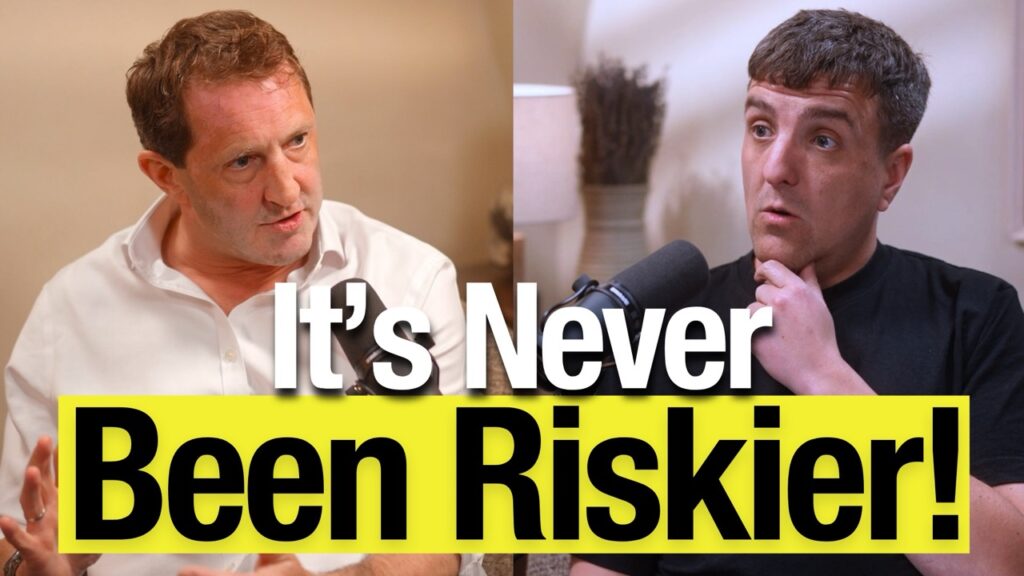

Chartered financial planner Gareth Shears joins the Money Gains Podcast to break down the one distinction he says most people never learn: saving and investing are not the same job, and using the wrong one for the wrong goal is how people lose money on their house deposit or miss out on decades of growth in their pension.
Gareth spent nearly two decades building Sanctuary Financial Planning, a chartered, multi-award-winning firm based in Cardiff that works with clients across the UK. Before that he was a police officer for six years, which he says taught him plenty about dealing with people under pressure, just not much about money.
In this episode he sets out the framework he uses with his own clients: what counts as “saving” versus “investing”, why he’d rather see someone take out income protection than grind toward a six-month emergency fund, and why he thinks keeping money in a bank account can be riskier than most people realise once you actually break the word “risk” down properly.
In this episode:
– Why financial education is key in helping people manage their money effectively
– How saving and investing are both important components of your financial strategy
– Understand the difference between saving and investing based on short-term and long-term goals
– Why insurance and protection policies play a vital role in safeguarding your money
– How to understand risk and volatility when making investment decisions
– Why ISAs offer flexibility and tax efficiency
– How to invest in global equities
– Explaining how pensions provide tax relief and protection against inheritance tax
– Understand how financial planning should be personalised and regularly reviewed
Gareth’s links:
Website: https://www.sanfp.co.uk/
Instagram: https://www.instagram.com/garethshearscoach/
———
Gains App is LIVE!
An AI-powered budgeting and cashback app designed to help you make more of your money.
Download here: https://gainsapp.onelink.me/8IhT/oiaimr1z
———
Get a FREE FRACTIONAL SHARE worth up £100 when you deposit £1 with Trading 212
https://www.trading212.com/join/MGP
If you don’t receive the free fractional share, head to the menu and put the word ‘MGP’ into the promo code section.
(Capital at risk when you invest)
Key takeaways
- Gareth splits money into two simple buckets: saving is anything you’ll need within five years and belongs in cash, investing is five years plus, ideally twenty, and belongs in the market.
- He’d rather a client take out an income protection policy with day-one cover than exhaust themselves trying to save six months of net expenditure.
- Once you break “risk” down into volatility, inflation and loss of capital, cash starts to look like one of the riskier places to park long-term money, not the safest.
- He caps crypto and NFT exposure at under 10% of a portfolio because they sit outside the Financial Services Compensation Scheme, with no recourse if something goes wrong.
- ISAs and pensions aren’t rivals, he uses both with clients: pensions for tax relief and inheritance protection, ISAs for flexibility before age 57.
Timestamps
- [1:58] Gareth’s Background: From Police Officer to Chartered Financial Planner
- [13:54] Saving vs Investing: The Core Difference
- [16:29] Income Protection Instead of a Six-Month Emergency Fund
- [26:15] Informed vs Uninformed Risk: Why Cash Isn’t as Safe as You Think
- [29:10] Crypto and NFT Allocation: Capping Exposure Under 10%
- [30:30] Global Equities vs Single Stocks: Diversification Explained
- [41:15] ISA vs Pension: Using Both for Different Goals
- [43:26] What To Do With Your First £250
- [46:39] Naming ISA Pots by Goal: Wedding, Property, University
- [47:44] Reviewing Your Financial Plan Every Year
Saving and investing are not the same job
Gareth’s starting point is deceptively simple, but he says it’s the bit most people skip. Saving, in his words, is “money that goes into a bank account that’ll make you interest,” and it’s for anything you’ll need within the next five years, whether that’s a house deposit, a holiday, or a rainy-day pot. Investing is for money you won’t touch for five years or more, ideally twenty, because you need time for the market’s ups and downs to work themselves out.
He’s blunt about what happens when people mix the two up. A client once put a house deposit into an S&P 500 tracker on a friend’s advice. When the market dipped and they needed the money, they’d lost value on funds they couldn’t afford to lose. “You should have just stuck that in the bank,” Gareth says. That’s the whole point of the split: short-term money can’t absorb short-term volatility, no matter how good the long-term case for investing might be. If you’re weighing up where to start, our investing for beginners guide covers the basics before you commit anything to the market.
Skip the six-month emergency fund, get income protection instead
Most personal finance advice says build a six-month emergency fund before you do anything else. Gareth pushes back on that as the default for everyone. Saving six months of net expenditure is a lot of money, and for a lot of people it’s simply not realistic in a reasonable timeframe.
His alternative: take out an income protection policy with day-one cover, which can cost as little as £20 to £30 a month, then aim to save one to two months of net income on top. If you’re signed off work, the policy kicks in and covers your basics, including for stress and anxiety, not just physical illness. He’s used it himself after a shoulder injury. It won’t suit everyone’s circumstances, but it’s worth knowing the option exists before you assume a six-month buffer is the only route. If you’d rather build the cash cushion first, our piece on how much should be in your emergency fund walks through the sizing.
The real risk in keeping your money in a bank account
This is the part of the conversation that reframes the whole episode. Gareth runs an exercise with clients on “informed and uninformed risk”, a concept he credits to fellow adviser Andy Hart. Ask most people to rank cash, bonds and equities by risk, and cash comes out safest every time. Break risk down into volatility, inflation and loss of capital, and Gareth argues cash can actually be one of the riskiest places for long-term money: anything above the FSCS protection limit is exposed if a bank fails, and cash savings very rarely beat inflation over time.
By contrast, he points to a well-diversified global equity portfolio, spread across thousands of underlying companies rather than concentrated in the UK, as one of the least risky long-term holdings once you understand what you’re actually measuring. His firm holds under 2% in UK equities specifically to avoid home bias. To lose everything in a portfolio like that, he says, “we need an Armageddon event.” A compound interest calculator is a useful way to see what staying invested over that kind of timeframe actually does to a pot.
Global equities over crypto, NFTs and single stocks
Gareth isn’t anti-crypto, he holds some himself and has clients with an allocation too, but he’s firm on the ceiling: no more than 10% of a portfolio, and for most people, none at all. The reason comes back to protection. Money in a regulated investment can be claimed through the Financial Services Compensation Scheme. Crypto and NFTs sit outside that entirely, unregulated and, in his words, “untested in reality, they are gambling.”
He’s equally cautious on single stocks. Holding one company, however strong, concentrates risk the same way an all-cash position does. He’d rather see clients hold a portfolio of thousands of global companies than bet on one name, however well it’s performed lately. His rule of thumb for anyone starting out: hold for the long term, don’t try to time entries and exits, and don’t let a friend’s crypto win at the pub talk you into more than a small, deliberate allocation.
ISA or pension? Gareth uses both, for different jobs
The ISA versus pension question comes up constantly in his DMs, and his answer is that it isn’t really a choice between the two. Pensions bring tax relief on the way in, can reduce a company’s corporation tax bill for business owners, and sit outside your estate for inheritance tax purposes, things an ISA doesn’t do. The tradeoff is access: money in a pension is locked until age 57 or 58.
ISAs, in his words, offer “a little bit more control.” For someone starting out with a spare £250 a month, his default is an ISA over a pension, simply because it’s more flexible if plans change. With clients further along, he’ll run multiple named ISA pots for different goals, a wedding fund, a property fund, a university fund, each with a different time horizon, alongside pension contributions doing the long-term, locked-away job. If you’re still deciding between the two, our Cash ISA vs Stocks and Shares ISA and SIPP vs ISA breakdowns go deeper on how each works.
A plan built around your goals, not the market
The thread running through the whole conversation is that Gareth’s approach isn’t about chasing returns, it’s about matching the right pot of money to the right timeframe and reviewing it as life changes. He and his team set a one-year, five-year and “ultimate” goal with clients, then revisit it annually because circumstances shift: a new job, a house move, kids arriving. None of it is about picking winners. It’s a framework, applied consistently, adjusted as the goals move. If part of that plan starts with getting your day-to-day spending under control, a budgeting calculator is a good place to see where the spare £250 a month might actually come from.
This transcript is auto-generated and lightly edited for readability, it may contain errors.
[0:00] Sammie Ellard-King: My name is Sammie Ellard-King, and welcome to the Money Gains Podcast. We’re a show all about making, saving, and investing your money, interviewing the top minds in the industry to unpack their tips and tricks to success. And today, my guest is Gareth Shears, who’s a financial advisor. Ooh, and he’s coming all the way from Wales. I’m really looking forward to this conversation today. We unpack why investing is important and something which has not been spoken about on this podcast before, and that’s income protection. It’s actually really, really important, and you guys are gonna love this episode. But for now, let’s get started on the Money Gains Podcast. Welcome to the Money Gains Podcast, man. How’s it going? Good to see you.
[1:00] Gareth Shears: How are you, mate? I’m very well. Yeah, I am alright, man. I’m looking forward to the holiday this week we’re just discussing. We’re gonna be in the same country. We’re both off to Mallorca this week, I go Wednesday. Looking forward to it. Buzz is a bit more. I know, yeah, yeah, yeah. But by the way, everybody, if you do want to like look us up and try and rubble our houses, by the time you listen to this, it won’t actually be like we’ll be done, so we’ll have the tan. So good luck. I always have to plan those things ahead. I’m like, do I say that I’m away or do I post up? Yeah, like there has been some cases of that, hasn’t there? Yeah, yeah, yeah. I see like that Reece James one from Chelsea, like saying he was away, and then his like missus and uh I think his mum was like in the house and came and tried to steal all the watches and stuff. So you just gotta be careful. Who knows what’s going on out there these days? But um great to have you here, man. I would love for you to sort of bring us up to speed. I’ve been loving your content. Um, but yeah, give us a 411, dude.
[1:58] Gareth Shears: Yeah, thank you. Yeah, so case, yeah. Well been in financial planning now, probably touching towards two decades, really. And uh, if anyone’s seen my post today on my Instagram, you’ll see kind of where it all kind of started for me. Used to be a police officer and kind of did six years there and kind of saw the light, thought there’s got to be something a little bit more fun than what I was doing. Do you know what I mean? Grafting away, dealing with not the nicest side of society, and uh thought, hey, let’s go from this really well-paid job to uh just shy of when the credit crunch was kicking in, let’s jump into it, jump into the mix and get into financial services. Do you know what I mean? It was a big shout, big jump, but hey, never look back. It was uh it was a it’s been a great ride. Do you know what I mean? Now, you know, financial planning firm run with my business partner now, and um yeah, we’re off the back of social media, we’re growing quite rapidly now. You know, we don’t really we’ve run a really good successful business until now, multi-award winning. Um I’m a chartered financial planner as well, so I hold the highest qualifications in the industry. I’m a fellow as well, so I’m kind of not playing at it. I kind of know what I’m kind of doing, I’d hope to think. Um and the firm’s chartered as well. So we’ve we’ve come a long way. We’ve had our ups and downs, like anyone running business. You know, people who say that running business is easy is not. It’s like uh it’s probably one of the worst roller coaster rides you could ever go on, really. You know that feeling.
[3:19] Sammie Ellard-King: Only too well, mate, to be honest. Yeah, I think I wouldn’t go back now, though. I couldn’t go back. Never. Never. Yeah. It’s one of them things, like you get the bug, and then actually the roller coaster becomes the addiction in some way. Oh, yeah, I genuinely think you do. I I think you get kind of addicted to that kind of the rush that it gives you, do you know what I mean? Of kind of the the ups and downs and the solving problems and and not really having anyone above you to kind of go to to get the answers. Do you know what I mean? You’ve kind of got to fumble your way through it a little bit, and hey, it’s a big learning curve. Oh, for sure, for sure. But super rewarding at the same time, I think, as well. Like for me, I loved my job before you know I was good at it, but actually I just uh it was wasn’t filling the hole that I I I didn’t know was there until I sort of found it. Um and you know, doing this allows me to have cool chats with people like you, and we can get geeky about finance, man. I think that’s like the most important thing for me.
[4:22] Gareth Shears: Oh yeah, do you know what I mean? Because it’s it’s a big topic now, isn’t it, finance? Do you know what I mean? That’s that’s kind of all you see, and everyone’s talking about money cost of living, and you know, it life’s tough out there, however you cut it. Yeah, for sure. I was listening to uh study actually by um Chris Williams, and he was talking about it, and uh I went and read it after, it’s actually really interesting about how the UK um is basically an extremely poor country, and it’s supported by London being an actual metropolis, it’s where all the money is funnelled into. And it’s if you took the UK out, we’re actually like one of the most one of the poorer Western nations out there, which uh the London out of the equation, which I just found baffling. And then when you actually then think about it, it’s it’s it’s actually quite true. You go to you know, the outside towns, I would say more the towns, and less so like Manchester’s and Liverpool’s and Newcastle’s, but you know, you can really see how people have been hit hard by the last sort of four to five years. Is that do you think you agree with that?
[5:25] Gareth Shears: Yeah, I think I’d agree with that, Sammie. And and I think just from some of the conversations I’ve had with people on social media, the people um out of especially when you put some posts out there which kind of talk about averages and average salaries and average rents and stuff, and you have a lot of people from London coming in and say, Well, mine’s like twice that rent, and you kind of like, you know, I’m struggling to live, and then you have people saying, Well, I’m paying, I’m paying that average rent in somewhere which is actually quite, you know, what would be classed as a a lower income area, and you’re like, Well, how the hell do they kind of afford to live where they are? And like, I’m I’m seeing it all spectrums at the moment. It’s quite interesting what comes off the back of social media, realising actually how tough it is out there. And like, you know, I’m I do a lot of free consultation calls, 15-minute calls, like, and and I’ll just chat to people and see what it is. But it’s interesting to see where people are. So I kind of I’d agree with that study. Do you know what I mean? It’s you know, l London, I think, takes the weight of what the UK holds. Like, do you know what I mean?
[6:19] Sammie Ellard-King: All the money was money’s funneled back in from Westminster is where all the investment is, and yeah, they they see it as like uh well, if London’s making money, we should double down on London, but they forget about you know Western Supermare and you know, all the smallest towns and cities in the UK, which just drastically need some severe investment. Like I I was down in Ramsgate this weekend and like seeing some of the the like the high street there just looks like battered and it’s like wow you know. Well Cardiff’s like that. Cardiff you know, Cardiff’s our capital city here in Wales, and you you walk down what used to be quite a thriving main street in Cardiff, and loads of the shops are closed, or um you know, they’re the temporary shops in there. Like Cardiff now is just turned into the place where you can go and have a chain meal, just full of chains. Do you know what I mean? It’s it’s an in it’s interesting. And then you go to some of the smaller towns now, sort of outside in Wales, and you know, it’s just full of like porn shops and um you know uh corals and all that, and and and you kind of know why they’re putting them there. I mean, they’re putting them there for a reason. So it’s kind of it it’s an interesting horizon out there. But then it’s don’t get me wrong, there are some places where you go and they are thriving a little bit, but there’s a lot of there’s a lot of gore of it out there.
[7:33] Sammie Ellard-King: Yeah, yeah, yeah, yeah. It’s really interesting. I was listening to Damien Talks Money, put a video out yesterday, and uh he lives in one of the more affluent uh areas uh uh where exactly he lives. I think it’s sort of borderline Manchester. And he was um talking about how he went into a church and then actually went into the wrong door when he was going to vote. And they said, Oh, are you here for the food bank? And he couldn’t believe that like in that area that there was a like a fully functional food bank actually uh busier than ever, which just goes to show like it doesn’t you don’t know what’s going on in the roads or too next to you, which is just mind-blowing. I think um I’d love to know like where you’re doing these 15-minute conversations with people, like what are you seeing as like some of the biggest mistakes people are making right now with their money?
[8:19] Gareth Shears: Yeah, it’s interesting. So I kind of I get a lot of people DM me off the back of my posts and stuff and whether I can kind of help them and things like that. And so I do this 15-minute consultation thing, which is either gonna be a Zoom Teams or a phone call. And it’s surprising actually how many people do a virtual call. Um and you know, it’s interesting, you know, there’s some people we kind of come on with and you know, straight away we can help them with pure financial planning. There’s other people who kind of just want some sort of guidance around how to budget better, you know. They they see my posts about like kind of saving for the future and then like literally don’t have any spare money anyway. And and and don’t get me wrong, they’re from my experience, I get that there’s a lot of people who really, really can’t find any, but then there’s some who we’ll sip with and we’ll do a budget and exercise with and we’ll dissect their bank statements over the last three to six months and we’ll get them to find where the kind of habits are in there of like you know, like there’s some people you see on the you know they’re having a takeaway like four or five times a month. You know what I mean? Let’s just scale it back, knock too off, you know, still have some fun. I’m not talking about taking it all away. Um, but that’s what I’m kind of discovering. There’s lots of different kinds of sector of people out there who need help, and and there’s just no help out there. I think that’s the hardest thing. I think like the stuff that we’re all kind of trying to do on social media is trying to change that a little bit. But I think it all stems back to for me that the schools just don’t teach these core skills. Um, and we’ve tried to, you know, we’ve been to schools and colleges, we’ve given our time for free to kind of talk about you know the the money skills, the budgeting, you know, what to expect when you get a job, what does a pay slip look like? But the schools just don’t seem that open to it. I mean, and we know we’re we’re happy to give our time. You know we even wrote a book on it. We wrote a book on money, um, which we gave out last year, yeah, 2023. We gave out about a thousand copies for free to people. You know, we we sent them to schools and colleges to see if anyone wanted us to come in and kind of help with a bit of kind of guidance and stuff. But but I think that’s where it comes back to. If we can get that right in schools, it’ll solve a lot of the problems that I’m seeing day in, day out. People just really struggle with how to handle money unless they’ve kind of learned it from a a parent who knows about it. And I and I put a few surveys out where people have said, well, it’s down to the parents, yeah. But if the parents don’t have those skills, how the hell are they gonna teach the kids? Do you know what I mean? It’s a massive thing. And I’m I’m a I’m a big kind of fan of like we we need to address the kind of where it all kind of starts. And we we’re toying around with kind of potentially running some kind of courses for for children. So like probably get my kind of daughter on one of the videos to kind of to teach her how to do it to show people and try and work from there. I don’t know what it’s gonna look like, but I’ve got it in my head, you know what it’s like. You have these ideas, and now you’ve got to try and get it on paper somehow or on video.
[11:00] Sammie Ellard-King: 100% video, do it video. I like found anything written. Yeah, they just a lot goes over people’s heads these days, everything’s video, isn’t it? Yeah, I but I think I think there’s a huge gap out there. That well, you know, the the advice gap is growing in the UK, it’s getting bigger and bigger. People can’t get advice, the banks can’t give it, you know. It’s a difficult one.
[12:05] Sammie Ellard-King: Yeah, which is you know, stem the likes of people like myself and others that have just sort of gone, well, hang on, if you know you guys aren’t gonna do it, we’re gonna do it because there’s public information, it’s just the way it’s displayed that’s yeah actually very difficult to uh to understand because it’s written by someone who’s basically got a full-blown textbook in mind, and it sounds like that, which is it for the everyday person who hasn’t taught what a bloody ISA means or that their pension is actually invested, it’s like yeah, well, is it they’re basically their answer is like, what the fuck are you talking about? And I now need to go get an Oxford dictionary to understand, and then suddenly it’s like, Well, actually, sod that I’ve got bigger problems, which is like how I’m gonna put food on the table next week, and it’s like and then and then there we go, and that’s suddenly you’ve lost that individual, right? You there? Yeah, yeah. Oh, okay, we lost you a bit there. I’ll just add an uh marker there just so I know to edit that bit. Um so yeah, I think one of the big things for me, I’d love to chat a little bit about with you today, just kind of your expertise, really, is uh I’m seeing a lot of posts around investing, and everyone’s like investing, investing, investing. And yes, absolutely, makes perfect, you know, it should be a part of your financial portfolio. But one of the things that gets left behind a lot of the times, or there’s very focused channels towards it, is saving. Um, so you’ll like get someone who only talks about saving or only talks about investing, and actually it’s a lot more nuanced than that. And I’d love to know how you kind of coach your clients and your thoughts in general around sort of saving and investing as part of your strategy.
[13:54] Gareth Shears: Yeah, you know, it it is a big one for us, and and this comes back to everything that we try and do, not not only kind of what I put on social media, what we do with our day-to-day clients, is is around education. So it’s kind of firstly it’s kind of learning what I categorize as the difference between saving and investing. For me, saving in the simplest form is money that goes into a bank account that’ll make you interest. Okay. Now, for me, that’s anything that you need to use within the next five years. If you need that money in the next five years, you just need to find yourself, depends on when you need to use it. You know, if you don’t need to use for three years, find yourself a really good fixed rate cash bond, which will give you a good rate. Currently they’re brilliant in fairness, but we’ve had particularly poor rates for a long time. And and it needs to be easily accessible. You mean be mindful of the 85,000 pound limits and things like that. Um but effectively it’s the money that you’re gonna need, whether that’s for a deposit for a house, you know, it’s um money for a holiday, it just needs to go into cash. And then for me, then investing is anything really five years plus, something that you’re not really gonna touch for long term, probably really something you’re not gonna touch for 20 years in reality, where you can deal with the volatility and the ups and downs in the market, which we’re seeing at the moment. So anyone who’s kind of looking at the moment, you know, the the stock market’s having a hammer in, but that’s short-term volatility, it will recover. But if you would put your deposit in for your house two months ago, you know, you put £100,000 in for your deposit, the markets have dipped five percent, you’ve just lost five percent of your deposit for your house, where you could have put it in somewhere a bit more stable. Yes, okay, long-term, that’s not great saving for the long term because the banks historically don’t perform that brilliantly. But if you need the money for that, you cannot risk the volatility, and that’s where you kind of see. And and and we’ve had it, like we we we’ve had a client come to us once with his deposit, and his mate had told him to stick it into the S&P 500 tracker. And when he came to use it, he lost money on his deposit. You know, I mean I said you should just stuck that in the bank, stick in the cash, you know, sticking premium bonds anywhere that you’re kind of not going to see that volatility because you need that money short term. So I think that’s the the big thing for me is kind of saving, and then you you can split those pots down a little bit. You know, we we always try and say to have kind of like you know, I I know everyone talks about an emergency fund, and I think sometimes it’s a little bit overused. Uh I I like having an emergency fund, but if you but a lot of people can’t really afford to save six months worth of net expenditure, that’s a lot of money.
[16:29] Gareth Shears: Yeah. So my my fallback on that will be get yourself an income protection policy. Get yourself an income protection policy which has got day one cover. So if anything happens, it’ll take you back to day one, and then at least try and save one to two months worth of net income. Yeah. Because uh an income protection policy might cost you 20, 30 quid, yeah. And that’s gonna do the job if you can’t work to cover your kind of basic expenditure. So I come at it from a little bit of a different angle. There’s probably financial advisors out there saying, Oh, you’re crazy, but no, that’s exactly how I come at it. You know what I mean? Get yourself an insurance in place, they’re always underwritten at the start, so you know it’s gonna kind of pay out. You’re gonna have day one cover, so if anything happens, you it’ll be kicked back to day one anyway. And you know, you walk out of here tomorrow and get knocked over by a bus and you can’t work for 12 months. You’ve got money coming in. Do you know what I mean? Because it’s that balance, isn’t it? Because you know, say your net expenditure is, you know, what, £3,000 a month. You’ve got to try and save 18 grand just to get going based on the fact that historically we’ve always said to save sort of six months worth of kind of net expenditure or even three months. Where it’s a little bit of a balance of kind of like, yeah, let’s have a little bit, but then also we also want to be looking for the future as well and invest in and saving for other things. So that’s kind of where I would come at it from is you know, savings is your less than five years, and if you can’t get all of your kind of um if you haven’t got a lot of spare cash to have an emergency fund, just stick an income protection policy. The best cover you will ever take in income protection policy. It’s the most undersold insurance in the UK, but the most claimed on insurance you’ll have out there. Because you can claim on income protection for mental health issues. If you’ve got to go off work with stress, anxiety, and things like that, you’ll pay out. I mean, it’s not like a critical illness cover, you’ve got to have one of these defined critical illnesses which are getting less and less because of advanced advances in medicine. But you could be off work for three years recovering from an illness with no with no income.
[18:25] Sammie Ellard-King: Can I ask you like with that as well? Like, let’s say you’re made redundant or lost your job, or you know, you need to take time off for bereavement, or what where’s where’s the cover sort of start and end? Is there different ones? Yeah, so I’m talking pure income protection. You do have accidents, sickness, and unemployment covers which will cover you against some of these short-term ones like redundancy, generally only lasts one year. I’m talking about a pure income protection policy, which in reality will pair on accident or sickness. Yeah, they’re not going to pay out if yeah, they’ll pay on stress and things like that, but not on bereavements and things like that, or um unemployments. That’s your pure kind of um sickness. But these ones will pay if you can’t go back to work till you’re 65 for argument’s sake. As long as the policy is set up to go to 65, it will pay you an income till you’re 65. Yeah. With the other ones like the access sickness and unemployment ones, they’re a little bit more stricter with the cover. Also, the amount you can kind of get is not kind of as high, and they’ll generally only be 12 months, maybe two years of a push, but they will cover you for some of these other things, really. You know, but I’m I’m a I’m a huge fan of income protection, you know, especially my business owner clients, because I’ve had it. Um I’ve used it as well when I had shoulder injury. Um, but it you know, they’re they’re brilliant insurances.
[19:41] Sammie Ellard-King: And they can kind of bridge that gap. It’s not something that I know much about at all. And so it’s really interesting. So, in terms of like the amount that you get paid, what’s is there thresholds, and then I imagine if you pay more, you get more. Yeah, well, general rule of thumb is they won’t usually pay more than like 60% of your gross income. Okay. Because what they can’t do, you can’t be off, you can’t be better off in sickness and in health. Excuse the term. Yeah, yeah. Okay, so the so the idea is is that you know they’ll they’ll pay you out an amount that, you know, and and sometimes, you know, like if, for example, there’s something wrong and you can only go back to work part-time, it will top you up. Yeah? Okay. Oh, okay. But also, say for argument’s sake, you’ve got an employer scheme, which pays six months full, six months half, you can have it to dovetail in. So after the first six months, you’re gonna have a half cover policy kick in, and after twelve months a full cover policy will kick in. We used to do this historically for doctors because I can’t remember exactly how doctors used to work, but when they first qualified, their um uh their sickness cover in work was on a sliding scale. So for the first year it’d be one year, then two years, then three years, then four years, five years. So we would have a policy which dovetail into that. So in fact, it would top them up, mean they get full cover, just the way the NHS used to work with doctors, they wouldn’t get their full six months, full, six months half cover for sickness until they’d done X amount of service. So we used to get a policy which would um dovetail into it to make sure they’re then reverting them back to full cover. But it’s an interesting one. It’s not like I think, you know, from from experience.
[21:22] Sammie Ellard-King: You’re the first person that I’ve heard say that though. Like I’ll say that like first person I’ve said that said you know, one to two months and it and then income protection. Yeah, it’s just my take on it. Do you mean it don’t get me wrong? If you if you’ve got a bit of cash left over, you can get six months. Most people can’t, though. Do you know what I mean? But you can put an insurance policy in place which will cost you X amount a month, you know, just like a life insurance or a critical illness policy, it’s a lot cheaper than critical illness, and it’s more likely to pay out because you look at the advance in modern medicine, critical illnesses are becoming less critical now. Um, don’t get me wrong, if you can afford them all. I think I did a post the other day about like I between personal and business covers, I probably pay about £700 a month in insurance. Yeah. Wow. You know, that that’s income protection, that’s relevant life, my death and services as a liberty company director, um, private mental insurance for my family and me, um, my life and critical illness cover on my house, plus family income benefit. If anything happens to me, it’ll pay my family. Because I got two young kids and a wife, it’ll pay them a amount of money which allows them to sustain a lifestyle they used to if I’m not here. So not don’t I always advise on protections and I’m a big exponent of them. It’s because I’ve had them. Do you mean I use them and I actually kind of buy into what I do? Yeah, and it is and and sadly, I was having a conversation with another um financial advisor today. Um, good guy, and he he’s very much the same. He said, but it’s mad the amount of financial advisors you come across who just concentrate on building wealth for their clients. But forget about you know, if you build a financial plan about building wealth, if you’ve got no protection in place, you’re building your financial plan on sand. Because if something happens to the main earner, for argument’s sake, in the house, throw the financial plan out the window because it can’t continue, because he can’t work anymore. So it’s just another way of coming in. I I do come at it from a little bit of a different way, and and one of the things we try and encourage with all of our clients is that they take out kind of the realm of protections. And I actually know a financial planner, London sort of way, brilliant guy. One of his things effectively says is you won’t take a client on unless they make sure the foundations are in place and they’ve got the insurances in place, you know? Because he’s like, I can’t write you a financial plan if something happens to one of you.
[23:33] Sammie Ellard-King: Really interesting, really interesting. Certainly something that I’m gonna do. Yeah, no, it certainly is, and but that’s why we do this podcast because it’s interesting, like some that may well be suitable for a lot of people listening to this, and some people are like, no, it’s all good, I can save the emergency funding. If you save the emergency fund, then happy days. Like, you know, it really depends on you and your financial situation because personal finance is personal, you know, and that’s the way we have to uh approach these things. There’s no one size fits all for anyone, really. I don’t I personally don’t believe when it comes to money. Um, really interesting, uh, for sure. I think um I’d love to unpack the second half of that question about saving and investing a little bit more with you because it’s something that’s coming up a lot at the moment, and I get you know probably 10 plus DMs about this a day, and that’s like usually around uh like why is there a capital at risk? Will I lose all of my money? And I have to take a back seat with this because I totally understand why they’re answering that question. If you saw that for the first time, that would probably scare you, right? No, more likely did myself when I first saw it. What would you mean I could lose my money? Um, but there’s ways of managing this risk to mean that that potentially could you have to say potentially potentially could not happen because yes, there is a chance that you could lose all your money, but how do we how do we manage risk? What does it actually mean?
[26:15] Gareth Shears: Yeah, and and I think so we do a piece with our clients about informed and uninformed risk, and and that comes off the back of some stuff that um Guy called Andy Hart has done um around informed and uninformed risk, and we use this with our clients. And it’s quite interesting that when you actually understand the risk and breaking it down, when you look at your different asset classes like property, cash, equities, emerging markets, single c single kind of shares, um what we would call as what’s working now, your cryptos, your NFTs, and things like that, and then we can kind of categorize them. And if we look at the kind of scale, generally how everyone kind of sees it when you’re uninformed there are risk is that by investing your money in the bank, bonds, gilts is actually one of your least riskiest things to do. When you actually understand risk and break it down into things like volatility, inflationary risk, and loss of capital. I actually think that putting your money in the bank is one of the riskiest things you can do. Okay. Because one 85,000 pounds your capital is a risk, anything over that. And people say banks don’t fail. Yeah, but they did. Northern Rock did. Do you know what I mean? And banks are being downgraded on a daily basis. Now I don’t think we’re gonna see like kind of huge failures in banks kind of coming up, but you just never know what’s gonna happen. Yeah. And also, the money in the bank very, very rarely will beat inflation. Do you mean it’s only kind of currently what inflation’s down when interest rates are up? But even when the interest rates were flying at sort of 5%, inflation was well above that. So it was still being eroded, the capital. So when you understand some of those things, and then I kind of come back to actually one of the least riskiest things you can do is invest in equities, global equities, and I’ll explain that in a second. But when people understand risk, investing in things like cryptocurrencies and NFTs and all these things of what’s working now, as we kind of call them, you have no recourse, okay? Because your money in the bank, you can go to the financial services compensation scheme in the UK, okay, and click and get your money back. If your money’s invested in equities, you can go to the financial services compensation scheme and kind of you can claim against where your investment is. But if your money’s in the likes of NFTs and cryptocurrencies, they’re not regulated by anyone. They’re untested in reality, they are gambling. Now, don’t get me wrong, I have clients who have an element of cryptocurrencies, NFTs, and their portfolios. Okay, we don’t invest in them because we can’t, because we’re a regulated company, we can’t deal with any of those things. But I have no issue with them. And some clients we have conversations with, and we’ve had to say to them, but agree with them and their partner, as long as it’s less than 10%, we’re happy with that of your portfolio. Anything less than that, it goes outside the remit of where we really want a financial plan. Yeah. Okay, and they can have a bit of play with that. But that’s if they’re overall wealth. Anything more than that, you mean is that yeah, so anything more than 10%, really, then you know we’re kind of pushing into we think risky. Yeah, I’m not five. Yeah, yeah, yeah.
[29:10] Sammie Ellard-King: I’m not five percent. I I really keep it capped at that point. Yeah, I hold a little bit as well. I hold a little bit more so to um just show clients volatility because we’ll have clients coming in and say, Oh, I meet and the pubs invest in this, and we’ll show them volatility of it and the upset and we’re like, could you cope with that? Do you mean when it’s dropped as much as it is? Yeah, yeah. Well, there’s two reasons I I hold it. There’s one because there’s potential for greater returns with this over the long term. When you look at like the way that the crypto market is like, you know, especially when Bitcoin sees it’s not being able to be mined anymore and all of that type of stuff, there’s going to be less supply. Less supply usually means higher price. Yeah. So, you know, it’s it’s a it’s a calculated investment, essentially, rather than uh uh let me get into crypto trading, diamond hands, bro. Like there’s a very there’s two different types of people, right? Um, and the other side of it is is I want to watch it because I want to know and feel what it does. And like, okay, you know, it just dropped 19% this morning. Like, how the hell is that happening? Like, why is that happening? Oh, it’s linked to uh US recession talks. Interesting. Look at the correlations and that for me, I love that type of stuff. So it’s like that’s why I do it. But yeah, you’re right. I feel like overexposing yourself to those things, especially with your hard-earned cash, can be really, really damaging.
[30:30] Gareth Shears: And that’s it. I think like I always kind of come back to I think for 99% of the population, these things like crypto and NFTs, just ignore them. They’re not for you. If you make down the pubs telling you to invest in them, it’s probably because he got in at the right time and he and he’s out of boat. But like ask ask him in like 12 months’ time what it’s like. Do you know what I mean? How does he feel about then? And and I think unless you’re educated around risk and actually I think again with crypto, like any investment, you’ve got to hold it for the long term. It’s not something you can jump in and out of and kind of try and trade it because that’s where you’re gonna lose out. So that kind of comes back to, I guess, you know, single shares. You own an Amazon share or a you know a Microsoft share, you you you’re at risk from one asset class. A little bit like putting your money in the bank, you’re putting all your eggs in one basket, and that’s where the kind of issue comes. So that I would class, yes, as high risk. But invest in what we to individual stocks. Individual stocks, yeah, because you you’ve got one asset class, and if that asset class like what happened with Microsoft, do you mean when when there was an issue with the the flights and the computers and the hack and everything, the stock will have gone down. So Yeah, and yeah, massively. Yeah, and lots of others around it. So if you just held that stock, that’s very volatile. Unless you understand risk and actually, again, you’re holding for the long term, it’s a problem. So I come back to saying actually, probably the least riskiest thing you can invest in do across all the different asset classes, property. Um I’m talking property kind of funds more than anything. Physical property, I like, you know, uh single asset classes, cash, bonds, gilts. One of the least riskiest things, once you understand volatility, risk, and invest in long term, is investing in what we call the great companies of the world, global equities. So if you take a portfolio of minimum, for example, four and a half thousand underlying equity spread globally by the big capital markets of the world, not holding too much in the UK, like we kind of talked about. Like our portfolios hold less than 2% in the UK because we don’t have a home bias. Okay. We we work on the base of evidence-based investing by in the cap big capital markets of the world. So our portfolios for our clients will hold 60% of equities will be in the US because it’s the big capital market of the world, and the rest will be kind of spread out. But if you’ve got a portfolio of equities and you understand what you it’s probably one of the least riskiest things to do because it’s well diversified. And for you to lose all that money, and I go on a limb here, for you to lose all that money, we need an Armageddon event. Yeah? And if that’s happening, you know, you see it in the films, you sat on the side of the mountain wondering whether you’re gonna get a lottery ticket to go in the underground bunker. That’s the only time. If you’ve got a well-diversified portfolio of equities, the likelihood of you losing all your money, we would need an Armageddon event. Because that would mean all that Amazon, Apple, Shell, Barclays, Lloyd’s, Starbucks, all those companies would have to fail if you’d lose all your money. Yeah. But if a b- At once. At once. And I and I call that an Armageddon event. Okay. Yeah. So once you kind of understand that and understand that we have clients come in and we show them this chart which basically shows 35 different companies on Oxford Street. And we kind of say to them, in any good portfolio of investments, all 35 of these will be in your portfolio. Probably your workplace pension will have it. Okay. And that’s Oxford Street in London. And we’ll show it’s got Starbucks on there, it’s got like Costa, it’s got Assos on there, you know, it’s got Hugo Boss on there, it’s got 35 different companies on there. And we’ll say that you’re worried about investing in stocks and shares because someone has told you some horror stories about them. But you’re doing it every day. You’re buying a McDonald’s, you’re buying a Starbucks, but all you’re doing is only a little bit of that share. So every time you go and buy a coffee in Starbucks, it’s increasing the value of your pension. That’s the simplest way of looking at it. Okay. So actually investing in stocks and shares in the great companies of the World East is not as risky as people think once they’re educated properly about what investing is and what volatility is. And yes, they will go up. But I always always come back to the fact is all the people who own these companies like Microsoft, Amazon, Starbucks, they have a fiduciary duty to run the business properly. They’re not out there to try and lose money, they’re out there to make money and make profit. So that’s what they’re trying to do for your money. Yes, it will be volatile and it will go up and down. But that’s a good thing. That’s what helps you grow your money. So I think once you bring it back to educate and actually invest in equities and what I call the great companies of the world, it’s the best thing you could ever do long term. But it’s got to be long term, it’s got to be five years plus, very minimum. And like I said, I’ll go on the lit. Like if you look at the stats, um, you look at uh an equity portfolio, if you invest that money for a 20-year period, after you pass the 20-year period, you’ll never lose money.
[35:16] Sammie Ellard-King: That’s what history will tell you. 0.02%. Yeah, something like that, yeah. Exactly that from shoulders, which is nuts. Which is nuts. So okay, everyone says we shouldn’t look at it. You take that bet, right? 99.8%, you’re gonna make money in 15 years. I’m taking that bet. 100%, 100%, mate. And it’s kind of like you and you’ve got to bear in mind if that’s your pension and you’re just started investing in your 20s, you’ve got like a potentially a 47-year horizon. Do you mean? Until you can actually well, not sorry, not long, sorry, a 37-year horizon before you can actually invest take that money out. So you need to be in the highest equity content you can do to get the most amount of growth out of it long term. And that’s sometimes the issue with kind of you look at some of these default schemes with work-based schemes, there’ll be a 50-50 portfolio, and you look at the difference between the 50-50 portfolio and 100% equity, the the suppression and growth is unbelievable. That’s another story. Um, but if you can really be educated around risk and volatility, and that’s a big thing we do with our clients, we educate them at the very earliest stage, and we bring this back up in every review meeting, uh, um, and kind of every sign-up meeting we kind of do with a client, we take them back to risk. And we always kind of say that when you when you’ve invested money, one day you’ll log in and it’ll be up. The next day you’ll log in and be down, the next day you’ll log in to be down, the next day you’ll log in to be down, then the next day it’ll be up, it’ll be up, it’ll be down, it’ll be up. You’ve got to be as long as you educate people on that, then when things like this happen in the market, it’s less likely your clients are gonna bring you.
[36:49] Sammie Ellard-King: 100%. And I always do the thing of like, don’t look at the year, look at the five year or plus. Yeah, yeah. Yeah, exactly that. And if you’re then looking at that and it’s consistently going down, if you’re looking at a type of fund or whatever, then yes, maybe there’s a problem with that fund. But in 99 cases, let’s just say you look at the S&P or the global sort of you know, VTI, the Vanguard Total Stock Market Index, for example, and not not um no not financial advice at all about Vanguard, but that’s just the one I always just type in and look at because it’s just a really good indicator of like, okay, that’s what the global economy has how it’s working right now. And if you actually look at it this year, it’s like 15.19%. Maybe it’s slightly lower now as of today. But um even so, where are you getting that from anywhere else on a consistent basis over time? And yes, you know, you look at 2020, 2022, bad years, right? But these are just the these are um these are outlier events, and then over time, if you actually press max and look at it, it goes the wrong way.
[37:50] Gareth Shears: It it’s quite interesting because like I’m I was looking through our portfolios earlier, and if you look at 2019, 2020, 2021, it wasn’t until 2022 we actually saw a dip in the and in the calendar return of investments, and then they’re back up again. Yeah. Um, it’s quite interesting to see. Like because of the rebound. Yeah, because the rebound was massive. And and and that’s to end to education because there was there was this story that I heard about um, and he publicly put this out on Twitter. There was a financial advisor who moved all his clients into cash when the markets dipped in COVID. Okay, when the markets went, he moved them out of the cash. And there was financial advisors who were attacking him effectively saying, So when are you planning on putting that back in then? Do you mean? And if we if we think by July, the markets had virtually rebounded to where they were, and then we’ve had a we’ve had a big bull, we had a bull run from there onwards. Do you know what I mean? Um so when was he gonna put that money back in? Because if he waited until July, he just he lost all the rebound growth. And and that’s where it comes down to you. We we can’t time the markets. Do you know what I mean? No, none of us got a crystal ball. I have this argument on Instagram all the time. I have people kind of, and it’s usually the people behind the kind of cryptocurrencies who talk about the cycles, and I don’t know, you might know more about this, but they all seem to think that there’s a four-year cycle, they know exactly when it’s gonna happen. I’m not convinced you know exactly when it’s gonna happen. Um you know, like we have cycles, but I always kind of come back to it, and I always come back, and they hate this when I do it. I ask them for the link to the crystal ball on Amazon so I can buy it. Because like I just don’t think like I yeah, if you read some of the comment, like I’m I’m really bad on this. Like some some people don’t get involved in the I get into arguments with people because I don’t really care.
[39:32] Sammie Ellard-King: Oh, yeah, yeah, yeah. Standards, yeah. And then I end up going back in and deleting a comment and and and blocking them because I’m like, actually, yeah, there’s no hope for you. So no, there’s not. I uh you probably see me, I normally call them out. The ones who troll me, I normally call them out of my stories anyway and tag them in it. I did I did sadly, so some some lady did it and was trolling me and and I called her out and she ended up ringing the office and asking for me to take it down, crying. I was like, Well, you’ve got to learn your lesson, you can’t troll people and say you sh the comments she was putting in my in my uh DMs were like repulsive. Do you know what I mean? And so I just called her out on Instagram. I don’t care. I’ve done it where um someone um was working for a locum, wrote the most insane comment, and uh I screenshotted it, then screenshotted the DMs that followed and uh looked him up on looked him up on LinkedIn and sent it into his HR. And I was like, this is who you’ve got working for you. You should know about this. And like that was that’s the only time I’ve ever done that because it was that bad. It was like you know, you’re calling me personal things you don’t even know me because you’ve never even come, you’ve like you you’ve never thought it. It’s nuts. But anyway, we can talk about that all day long. But um, I’d love to know a little bit more around because you mentioned pensions, we’ve not mentioned ISAs, and there’s uh another like pension versus ISA kind of conversation where I get it all the time. Like I I’m way more aggressive in my ISA than I am with my pension, and people will like berate me for it, and because again, personal finance is personal. I have certain goals which I want to hit in certain times, and so I’m way more aggressive with some funds than others, and so like where where do we sit here? Where do like what where do we even start with this conversation?
[41:15] Gareth Shears: Oh, that’s a good one. Do you know what I mean? Like, I think I think it comes back to what you said in the early stages that it is personal and it depends on each individual circumstance because like we’ll use pensions differently depending on what we’re trying to do. Do you know what I mean? And ISAs. So I’ll give you a good example. Like, we we’ve got we have quite a lot of um young clients who’ve got growth businesses, which will amaze some people. We got we got people in their kind of late 20s, early 30s, maxing pensions, maxing maxing ISAs from their businesses and stuff, not ISAs from their businesses. Not ISAs from their businesses before someone tells me you can’t do that because I had that before when I mentioned it. But maxing their ISAs out as well, and maxing the kids’ ISAs out as well to nine grand. Um now we will use ISAs in that case to bridge the gap because some of these clients are like 50, I’m done. Like, I’m one out, like I’m gonna go harder this now, 20 years’ time, 50, I’m out. And we’re like, okay, if you continue in this like way, as long as the government don’t particularly massively change the input levels of what we can put into certain things, yeah, we could retire you at 50, but bear in mind, you know, they’re not gonna fully retire, they’re still gonna do a little bit, but they probably want to live abroad. Or we need to use ISAs then to dovetail in because they ain’t gonna access their pensions until 57, 58, depends on what the rules move them to. So exactly. Like I might think I like pensions from the point of view that you know you get tax relief, they can reduce the the you know the corporation tax in your company as a company owner, they can you know they can get you a little they can expand your tax band as a personal um contributor. They also protect you against inheritance tax, which things like um ISAs don’t. Do you mean and so the tax relief is good, you get a tax-free cash the other end, and if you’re tax efficient with it, you can potentially draw it out with a minimal amount of tax. Do you know what I mean? You still gonna have to pay an element probably at 20%. But if you can mix it in with ISES, um so I like kind of using both, and like and I like like we throw VCTs in the mix as well. We use VCTs and EISs with clients, depends on the level of client, and if we’re maxing stuff out and we want to be even more tax efficient with the companies, we’ll throw those in the mix. They’re not for everyone, don’t get me wrong, because they are classes your higher end of.
[43:26] Sammie Ellard-King: So let’s say, like um like the everyday Joe listening to this, for example, like going, oh yeah, I’ve got 250 pounds and I don’t know where to put it, like what do you what would you say to that person? So a little bit comes down to probably understanding the person whether if they stick that into our ISA, they’re gonna rip that out in six months’ time, okay? Um, and also when are they gonna want to use it? But probably my default for most people, if they’ve just got 250 quid, is just stick it into an ISA. It’s got that element, a bit more flexibility to it. Do you mean when you’re max funding, it’s a totally different ballgame. But I’d probably go for an ISA. You know, it’s tax efficient, you know. You know, if you want to top your pension up, yeah, you know, great. But I do think an ISA, you can invest in the same assets, the same time of investments, be aggressive with it if you’re not going to touch it. Do you know what I mean? You need to be aggressive with your investment strategy. Um, but I I love ISAs, you’re anything is tax efficient. Do you know what I mean? Um, you know, you know, maybe you could, depends on the circumstances, stick 50 quid towards an ISA towards your pension to top that up a little bit. Um, but as long as you’re paying your workplace pension scheme and they’re matching it, you’ve got you know, you’ve got double double whammy there. You’ve got the free money from the government and from the employer. But I love a bit of kind of ISA because you’ve got a little bit more control, it opens it up to if you want to kind of retire early or do some things, you’ve got that little bit of cash there you can kind of do it with. And yeah, and it’s called an element of flexibility. If you really do need it, you can get it back out. Because once it’s in a pension, you ain’t getting it back out. I mean, until you’re 57, 58. Do you know what I mean? And it’s landlocked, you know. It’s a little bit like I have these conversations with clients about junior ISAs, you know. Um, do you realise your child’s gonna have access to that at 18? You don’t know whether they’re gonna turn out, right? And they’re like, no, I didn’t realise that. Yeah, no, they’re gonna well, I’ll just keep hold of it. No, I don’t will like that. It’s gotta go into their name at 18. Well, 16, and then they get access at 18. So I’ll kind of say to clients, you know, like I do with my kids, I I save a small amount of junior ISAs they can have there. If they want to go to Ibiza and blow it when they’re 18, crack on. Okay, but I’m gonna keep back an element which I’m gonna control in a normal ISA fear. Yeah. So, but but I but I like that. Do you know what I mean? Like, don’t get me wrong, I contribute to pensions on ISAs, but you know, I I think ISAs are a great tool. If you can if you can bang your main to those bit more flexibility, great.
[45:44] Sammie Ellard-King: Yeah, I I I I completely agree with you. And and and one of the big things that like I I feel like as well is that uh, you know, I I I have a business coaching Aspect to our business and we teach people how to launch businesses. And really interestingly, he’s been tucking money away to ISA for a really long period of time. For a since I think it’s something ridiculous, like 10-15 years, um, maybe even longer. And he’s built up a significant amount of money in there. And actually, he turned around and went, Well, we wanna we wanted to upgrade our home, buy a second home abroad, and um completely remodel our entire house. So we we took the money out and we used it. And because we needed it now, and then we’ve also been contributing to a pension. So it’s not just for retirement, it can be to significantly impact your life in 15 years’ time, which is what he set out to do. I want to significantly impact my life in 15 years’ time. Invest, invest, invest, invest, invest, and then bang, life is now considerably different for him and his wife. So yes, exactly.
[46:39] Gareth Shears: Yeah, so so we do it now. So uh that that actually brings you back to that. So inside our um platform that we use for our clients, we can name the portfolios, okay? So we we have in there wedding fund for the child, university, property, and we’ll have we’ll have three different ICEs running with three different contributions with three different horizons on them. Yeah. Like we know that like for the one client, the wedding one’s gonna be potentially used in uh 20 years. We don’t know exactly when it’s gonna be used, 25 years. Property one, they’ve kind of said, well, we want to give that money in the 25, or we know that’s gonna be 20 years or whatever it might be. So we kind of we will do that with the pots and we’ll use them as part of planning to kind of be able to say this is how we’re gonna segment that money out. And then your pension is your long-term kind of plan stuff, really. Which you kind of in a way kind of forget about it, you know. But yeah, you know, I I think ISIS are a great tool. Do you mean they’re tax efficient? If you do need it, that example’s perfect. Do you mean changing lifestyle, changing circumstances? Let’s go and do that. Couldn’t do that if I was in your pension, it’s landlocked.
[47:44] Sammie Ellard-King: Yeah. No, exactly. He’s like a 46 and it’s changing his life now. Yeah. It’s all about balance. It’s all about getting the balance right. I think that’s that that’s a big thing for me. And it does come back down to you know what individual well the individual actually wants and what they want out of it. And that’s why everything for us comes back to writing a financial plan first for clients, finding out what the roadmap is, what they really want to achieve. Yeah, it’s gonna shift. Well, we’ll update that every year, yeah, so that we can move with the times. Yeah, 100%. Man, we say in our videos, one year, five year ultimate goal, and then review them once a year and make sure you’re moving around. You’re gonna have kids, your five-goal move year goal moves, doesn’t it? So it’s yeah, yeah, you know, it’s the way it’s called life, right? Uh we’ve got to kind of react with it at the same time as well with our money as well as our actual circumstances. Gav, I’ve loved this. This has been really good fun, man. Um I think you you’ve got such a really cool and considered approach to the way that you talk about money, and that’s why I thought this would be a really cool conversation, especially around those topics that we went a little bit deeper in today. Um, where can people find you and if they want to work with you as well? Um, we can obviously leave links in the show notes.
[48:50] Gareth Shears: Yeah, yeah, cool. So my Instagram is Gareth Shears Coach. You’ll kind of find me. So I talk a lot about personal finance and money on that. Um, my firm is Sanctuary Financial Planning. We’re based down in Cardiff, but we work clients all over the UK. And uh website’s sanfp.co.uk. Um, but like I say, mainly you’ll find me on Instagram. Really is my only channel. I do use um LinkedIn a little bit, but doubling down on Instagram, that’s where you’ll see me at the minute. We’re uh trying to do some good things just like Sammie is and uh trying to make a little bit of a difference one person at a time. Thanks, brother. Really appreciate it. Now you’re welcome, mate. Been great to chat.
Frequently asked questions
Saving is money you’ll need within five years and should sit in cash. Investing is for money you won’t touch for five years or more, ideally twenty, because you need time for market volatility to smooth out.
Gareth suggests income protection with day-one cover as an alternative to a full six-month emergency fund, since saving that much cash isn’t realistic for everyone. He recommends pairing a smaller one-to-two-month cash buffer with a policy that covers you if you can’t work.
Once you factor in the FSCS protection limit, bank downgrades and inflation eroding cash over time, Gareth argues cash can carry more long-term risk than a diversified global equity portfolio, even though it feels safer.
Gareth caps his own exposure and advises clients at under 10% of total wealth, because crypto and NFTs aren’t covered by the Financial Services Compensation Scheme and carry no regulatory recourse.
Both, depending on the goal. Pensions offer tax relief and inheritance tax protection but lock money away until 57 or 58. ISAs offer more flexibility and are Gareth’s default for smaller, more accessible contributions. Disclaimer: This article is for educational purposes only and should not be considered financial advice. When you invest, your capital is at risk. Past performance is not a guarantee of future results. This post contains affiliate links; if you click through and make a purchase we may receive a small commission at no extra cost to you.
———