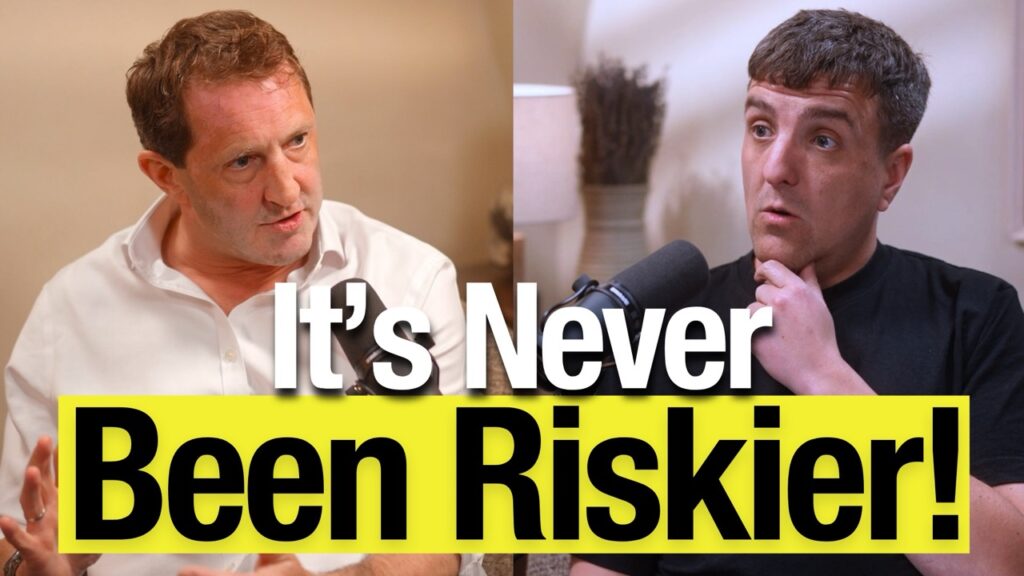

Louise Bastock swapped stand-up comedy and travel writing for personal finance content during COVID, and she’s spent the years since proving that money advice doesn’t have to be boring, patronising, or delivered by a bloke in a suit.
I’ve followed Finder for years, mostly because they’re one of the best places to check the latest deals, so getting Louise Bastock on the podcast felt like a proper full-circle moment. She’s a presenter, comedian, writer and award-winning content creator for Finder UK, one of the biggest personal finance comparison sites in the country.
What I loved about this chat is how much of it wasn’t really about products at all. It was about why people switch off the second finance sounds “serious”, and what it takes to bring them back in. Louise’s answer: relatability, humour where it fits, and a genuine effort to make money conversations feel like a chat with a mate down the pub rather than a lecture.
We also got into Finder’s research arm, the “singles tax” data that genuinely shocked me, and Louise’s own budgeting habits (including the food budget she still hasn’t fixed). Let’s get into it.
———
Gains App is LIVE!
An AI-powered budgeting and cashback app designed to help you make more of your money.
Download here: https://gainsapp.onelink.me/8IhT/oiaimr1z
———
Get a FREE FRACTIONAL SHARE worth up £100 when you deposit £1 with Trading 212
https://www.trading212.com/join/MGP
If you don’t receive the free fractional share, head to the menu and put the word ‘MGP’ into the promo code section.
(Capital at risk when you invest)
Key takeaways
- Louise moved into personal finance content during COVID after travel and comedy work dried up, and hasn’t looked back since.
- Finder UK is a price comparison site with a research team behind it, publishing stats-led studies that shape both content and product recommendations.
- Finder’s “singles tax” research found a single person can take 26 years to save an average house deposit versus 6 years for a couple, a 20-year gap driven by small compounding differences.
- Louise budgets using dedicated “pots” for specific goals (car payments, emergencies), though she admits her weekly food budget is still unrealistic.
- Her rule for finance content: authenticity over humour. Being real beats trying to force a joke every time.
Timestamps
- [0:58] Louise Bastock joins the Money Gains Podcast
- [1:22] From travel writing and comedy to Finder UK during COVID
- [7:43] What Finder UK actually does as a comparison site
- [10:06] Inside Finder’s research team and how studies shape content
- [13:31] The singles tax: why being single costs you more over time
- [16:15] How research findings influence Finder’s product recommendations
- [19:19] Louise’s pot budgeting system (and her food budget problem)
- [20:17] The supermarket gift card cashback hack
- [24:32] Bringing comedy into finance content without losing credibility
- [35:58] Why talking about money with friends changes everything
Why finance content needed a rebrand
Louise didn’t plan a career in personal finance. She told me: “I actually didn’t join the financial world until COVID times. So before then, I was working as a travel writer and a presenter and a stand-up comedian.” When travel and gigs disappeared, she noticed one thing wasn’t going anywhere: money, and the anxiety around it. That led her to Finder, a role that let her combine writing and presenting with a subject she’d never expected to fall for.
That comedy and presenting background is exactly why she stands out. As she put it, there’s “a lot of stigma and a lot of stereotypes around finance and the people that work in finance”, and she’s spent her career trying to break that down rather than lean into it.
It’s a mission I recognise. If financial guidance only ever comes from someone who looks and sounds nothing like you, it’s easy to tune out. Louise’s take was blunt and, honestly, spot on: making money content accessible and relatable “should be like talking to your friend down the pub”, a world away from a stiff seminar. If you’re just starting to get your own finances in order, our guide to investing for beginners in the UK is built with exactly that same “no jargon, no gatekeeping” approach.
The singles tax: what Finder's research actually found
One of the most striking parts of the conversation was Finder’s research into the so-called “singles tax”, the idea that living alone costs you more than sharing costs with a partner. Louise explained it isn’t just about splitting a takeaway: “individually, couples had more than double what a singular person had” in savings, and the gap compounds over time.
The stat that stuck with me: to save the average house deposit on an average salary, “it would take a couple six years to save for that deposit, and it would take a single person 26 years to save for the same amount.” A 20-year difference, driven by small day-to-day nudges like splitting a food shop rather than one big structural unfairness.
Louise’s point wasn’t that single people are doing something wrong. It’s that the system doesn’t scale evenly, and knowing that changes how you plan. If you’re building your own safety net solo, it’s worth checking how much should be in your emergency fund so you’re working towards a realistic target rather than guessing.
Budgeting with pots (and why one budget still doesn't work)
Louise is a self-confessed budgeting nerd in most areas of her life. She saves into separate, named pots rather than one general savings account: “I have like a pot for everything, so I don’t save into kind of a savings pot. I save for my car payments and I save for emergencies specific.”
Where it falls apart, by her own admission, is food. “Currently, my food budget is like £25 a week… I didn’t manage to stick to that budget when I was a student, let alone now.” It’s a small, honest admission, and it’s exactly the kind of relatable slip-up she says makes financial content actually land with people.
I shared my own supermarket hack in return: buying a gift card via Apple Pay before you reach the till, since some retailers offer 5-6% cashback on the card itself, then using that balance against your monthly shop. If pots and small cashback tricks like that appeal, running an audit of your own spending is a good place to start before you decide where the money should actually go, and our budgeting calculator can help you set realistic category limits instead of an aspirational £25-a-week fantasy.
Making finance content funny without faking it
Louise’s comedy background didn’t transfer over automatically. She told me that looking back at her early videos, some of the jokes make her cringe, and that with topics like life insurance, forcing humour just doesn’t work. Her rule now: “authenticity over humour. Humour, if you can do it, if it works.”
Her advice for anyone trying to make money content less dry isn’t to be funnier, it’s to be more honest. “If humour or like writing jokes isn’t a strong suit for you, just be you. That’s actually enough.” A silly story about a bank account mix-up or an over-ambitious food shop will stick with people far more than a polished script ever will, because it gives them something real to relate to and helps them judge whether the product is actually right for them.
That same honesty extends to sharing knowledge with friends. Louise told me she bought her flat using a lifetime ISA her friend recommended after comparing notes, a good reminder that word of mouth from someone you trust often beats generic advice. If you’re weighing up a lifetime ISA or general stocks and shares account for a house deposit or retirement pot, our cash ISA vs stocks and shares ISA comparison is worth a read before you commit.
Bouncing back from money mistakes
The line from this episode I keep coming back to: “set fire to the bandwagon so that you can’t fall off it.” Louise’s point is that one bad week, whether it’s blowing a food budget or missing a savings target, shouldn’t spiral into giving up entirely. Treat the slip as a blip, not a reason to abandon the plan until “Monday”.
She applies the same logic to debt. Rather than panicking and trying to clear everything in two months, she suggests being realistic: “if you can pay it off over a year, and that means you can still have your little Thursday nights out, that’s like a win-win situation.” Progress that you can actually sustain beats an aggressive plan you abandon in week three.
If you want a quick, judgement-free way to see where your own money habits sit before you set a plan like that, our money personality quiz is a genuinely useful starting point.
This transcript is auto-generated and lightly edited for readability, it may contain errors.
[0:00] Sammie Ellard-King: My name is Sammie Ellard-King, and welcome to the Money Gains Podcast. We’re a show all about making, saving, and investing your money, interviewing the top minds in the industry to unpack their tips and tricks to success. And today, my guest is Louise Bastock, who joins us from Finder.com, one of the UK’s biggest personal finance comparison sites out there. Finder do some incredible work in the industry. They’re one of my favourites to check out the latest deals. And we also discuss with Louise about content creation, how Finder are actually trying to change the game there. And really cool, she’s a comedian as well. So hopefully there were some funny bits in this one. But for now, let’s get started on the Money Gains podcast.
[0:58] Sammie Ellard-King: So Louise, welcome to the Money Gains Podcast. How are you? You well?
[1:01] Louise Bastock: I’m very well, thanks. Thank you for having me.
[1:04] Sammie Ellard-King: I’m really excited about this one. Your background’s super cool. I um you reached out on LinkedIn. I know we’ve like sort of I’ve waved at you from a chair in a cinema once while you were on stage. But um, yeah, let us know who you know who all about you.
[1:22] Louise Bastock: Yeah, sure. So I actually didn’t join the financial world until COVID times. So before then, I was working as a travel writer and a presenter and a stand-up comedian. COVID hit, and obviously there was no travel, there was no gigs, there was none of that stuff, and I was at a bit of a loss, really. And I kind of figured the one thing that wasn’t going anywhere was money, and that was a big issue, it was a big concern for a lot of people during that time. And then um, yeah, I found this this job at Finder, which is a personal finance comparison site, and it was writing, presenting, so two of my like creative dreams, and
[2:07] Louise Bastock: then it was about personal finance, and honestly, I’ve never looked back since like learning about money has just like opened my eyes to this world. It is such a fascinating topic, and I know there’ll be a lot of eye rolls for people. Like, is it really you know budgeting credit cards? Like, that doesn’t sound interesting, but hopefully we can kind of unpick that today.
[2:30] Sammie Ellard-King: Yeah, no, I suppose like you’re bringing something different to the table, really. Like your background in comedy and then presenting on travel and stuff like that probably gives you that different flavour when you’re actually presenting what can be considered rather boring sometimes, let’s be honest.
[2:47] Louise Bastock: Yeah, yeah, it’s fun coming at it from more of that like creative side of things. So I’d probably consider myself a bit of a creative first and foremost. I mean, when I was growing up, like content creator wasn’t a thing, and I know that’s really like branded me an older person, but like there, you know, I would never have thought to be a content creator. It wasn’t something I was aspiring to do. Um, that sort of came up naturally, and then finding my way into the financial services, it was like, okay, well, how do we join those two up? Because I don’t see why you can’t have both. And I think there’s a lot of stigma and a lot of stereotypes around finance and the people that work in finance as well. I’m sure you’ve like had a lot of this as well. You know, when you say you work in finance, everyone
[3:32] Louise Bastock: rolls their eyes and they’re like, Oh, I bet you own a Patagonia gilet. And you’re like, Well, maybe three, but um, it’s like, you know, there are a lot of stereotypes. There are a lot of people we think, you know, if you work in finance, you are this person. And then I’m always very quick to be like, no, no, I’m a creative and I’m not, you know, I’m one of the good ones. Um, but yeah, it’s really fun to see where that line crosses, where it blurs, because obviously there’s so much to do with compliance and all of that stuff that you just can’t get rid of, you can’t escape that. Like, that is just one of the things we have to deal with.
[4:11] Sammie Ellard-King: Yeah, I think I like really resonate with that as well because that’s exactly kind of what Up the Game stands for. It’s like, I know with you obviously have to adhere to Finder.com and the way that they do things, but you’re still bringing yourself to the you know, the people out there. And that’s one thing that like I try and do. It’s like, well, I’m just an everyday person just like you, but I just really enjoy talking about this stuff, and also we’ve got a hell of a lot of work to do because you know, let’s face it, half this country really needs help with their finances and even just understanding like the basics. And if it comes from a suit or an older gentleman, or let’s face it, a white, bald, old, fat guy in his 50s, probably 60s, like you’re immediately turning off.
[4:56] Sammie Ellard-King: But if it comes from someone like me and you, they’re like, oh, okay, maybe like I can actually listen to this person because they look like me and they talk like me.
[5:03] Louise Bastock: Absolutely, and it’s the relatability makes such a difference because I’m sure you’ve been to loads of these like seminars and workshops and whatever else. And I went to one about investing, and the guys are really interesting, they were super passionate, and I felt, oh god, I really like taking so much in. And they were talking about um, you know, managing people’s investments for them. They were like, Yeah, you know, if you guys out there have got 40k to invest, you just let us know. And I was like, who’s got that? I was immediately checked out. I was like, that is not, you know, a normal situation for most people, and that’s just going to turn everyone off. I think we think like money and finances, investing, all that stuff is like behind this wall that like people like you and me aren’t allowed to, we’re not allowed into that world.
[5:48] Louise Bastock: So just by talking about it and making it more accessible and relatable, it’s like talk, it should be like talking to your friend down the pub because there’s always that guy that like like my best friend loves like Amex cards and he like knows how all the points work and how you know which card has airport lounge access and everything. And it’s to me, it’s how do you encapsulate that and like those conversations, having a pint with your mate and they tell you something really interesting about money, and so you remember it. It’s like how do you distill that and scale it up?
[6:19] Sammie Ellard-King: Yeah, uh, I you couldn’t hit the nail on the head. It’s like that the guy that comes and just like puts an arm around you and goes, like, come on, mate, this is how you do it, kind of thing, rather than it being like uh, you know, take that or leave it. It’s a blank bit of paper, work it out.
[6:33] Louise Bastock: Totally. And even now, as someone who’s worked in the financial industry for a fair few years and I’ve really built my knowledge up, I’d say I’m pretty knowledgeable. Um, some of the best advice I even get is from my peers or people around me, and it’s those conversations you have. Um, like one I can think of is when I was um buying my flat and my friend was buying hers at the same time. We were just talking about ISAs. She found a really great lifetime ISA, and we just, you know, I ended up getting the same product because she recommended it. So it really is like word of mouth, people you trust, and yeah, just like those day-to-day conversations. And I just, yeah, it’s just the best way to do it, really. And it’s our job to make
[7:18] Louise Bastock: our content that sort of casual and colloquial, I guess.
[7:22] Sammie Ellard-King: Which I feel like finder.com does an amazing job. Like, obviously, let’s let’s touch on them. That they’re you know, it’s the the company’s enormous. Like when I was doing research into it, it’s just insane. I didn’t realise how big it was and how many countries it covers. And I think it’s two million members now. And yeah, what talk to us a little bit about like Finder and what it actually stands for.
[7:43] Louise Bastock: Yeah, sure. So Finder um is it it was founded and grew from Australia. So we’re a little Australian company, which is there’s a weird kind of parallel going on because the comp travel company I worked for was also Australian, so maybe I’m like drawn to the Aussie mentality. I don’t know.
[8:01] Sammie Ellard-King: Um you date an Aussie, that’s the thing.
[8:04] Louise Bastock: Like well, that’s a different video, I think. That’s uh you know, my dating advice can fill tombs of stuff, yeah. Um, but yeah, so uh yeah, so we’re in our kind of main offices, I think, are in Australia, UK, and uh the US, but we’ve got offices in the Philippines, Poland, Canada, like it’s yeah, it’s a big operation. And for anyone who’s never encountered us before, well, in fact, you might have encountered us. I think that’s a lot of people’s entry point is they we are a price comparison website, so first and foremost. So we help people find the right credit card for them or yeah, a new bank account. And so a lot of people may have encountered us on a
[8:48] Louise Bastock: Google search. Um, and you know, I’ll tell people I can find us, show the website, and they’re like, Yeah, I’ve definitely seen you guys before. Um, but our mentality, our mantra, if you will, is like we just want to help people make better financial decisions. And if we can do that every day, like box ticked for us, like it’s really we want to give people the information so it to empower them to make better decisions and like longer-term decisions and all of that stuff, so yeah, really just empowering our users to do more with their money, yeah, and like you get that experience.
[9:28] Sammie Ellard-King: Like, I I come across so much as well. There’s not just the price comparison site, it you behind that you have a massive research team which are putting out like industry-leading articles on we have gone out and done the study with all of these people, clearly spending quite a bit of money to be able to bring this to you uh as a consumer, which massively changes the way that you think about money. And I I I can’t even count the amount of Finder studies that I’ve read in that regard as well. So there’s all of that side of the business, which is just mind-blowing as well.
[10:06] Louise Bastock: Oh, thank you. Um, you have done your research and I love it. Um, yeah, no, I mean, yeah, the our like research team, they work really hard and they’re actually a brilliant example where we dive into some really serious, really important topics like financial education, like money and stress, and they’ll pull out some amazing stats that will help inform us on what kind of content we need to make, but also what kind of like campaigns we can do to help drive some of these issues forward because it’s really important that we, you know, back the messages that we’re putting out. We’re making sure that we are, you know, if if we’re deciding through our research that financial education is important, well, how are we supporting that? So it’s
[10:51] Louise Bastock: important for us, you know, that we back up um our stats and research. And so, yeah, we have some of those heavier hitting subjects, but we also will do things like the cost of a pint around the world and stats on people’s dietary trends and stuff. So I again I think that reflects the fact that like money and personal finance and things like that, the entry point could be anywhere. The entry point could be I’m turning vegan and I’ve realised that vegan sausages are twice as expensive as regular sausages. Like, how do I now budget for this? You know, it’s it’s just everywhere. Like, I don’t know that. I mean, maybe it’s just my spending habits, but I don’t, there’s rarely a day where I don’t spend some money. Um, you know, especially living in London,
[11:36] Louise Bastock: as soon as you walk out of your house, get on a bus, that’s like a couple of quid. So being good with your money or just understanding it, it’s it’s like huge. It’s game-changing, I think, for your well-being and like, yeah, your day-to-day life for sure.
[11:51] Sammie Ellard-King: And let’s be honest, like, as a Brit, you kind of do want to know how much you’re gonna be spending on a pint when you go on abroad.
[11:59] Louise Bastock: Absolutely.
[12:01] Sammie Ellard-King: Of course. I think when I was younger, it was like, okay, we can get a pound pint here. Let’s go here.
[12:07] Louise Bastock: I know. I remember when I first moved to London when I was 18, and I think I got a pint in a central London pub, it was £1.80.
[12:15] Sammie Ellard-King: Yeah.
[12:15] Louise Bastock: Wow. Can you bring it up?
[12:16] Sammie Ellard-King: Where are you from?
[12:17] Louise Bastock: Um, I grew up in West Sussex.
[12:20] Sammie Ellard-King: Okay, cool. So yeah. So yeah, it was probably like a even that probably that was like a shock for you at £1.80?
[12:27] Louise Bastock: Yeah, I think so. I was like, that’s like I think it was yes, crazy cheap at the time.
[12:33] Sammie Ellard-King: Um yeah. I paid like £8.20 the other day.
[12:37] Louise Bastock: No way.
[12:38] Sammie Ellard-King: Yeah.
[12:39] Louise Bastock: In London.
[12:40] Sammie Ellard-King: Yeah, in London, yeah.
[12:41] Louise Bastock: Oof. Was it the best pint you’ve ever had in your life?
[12:44] Sammie Ellard-King: It it was it was okay. It was a Beavertown pint. I do like a Beavertown, but um, it was I would nearly like double taped when he was like £16.40, please. I was like, uh like I couldn’t even believe it.
[12:59] Louise Bastock: Yeah, yeah. I was in um Portsmouth at the weekend and we were watching some football at Fratton Park.
[13:05] Sammie Ellard-King: Okay.
[13:05] Louise Bastock: And um, I think I got a round of drinks, but but it’s about five of us, and the round was 25 quid. I was like, Oh my god. I was like, I’m making money off this somehow. Yeah, it was so cheap. I loved it.
[13:19] Sammie Ellard-King: Yeah, it’s like when you go abroad as well, you are now seeing the same thing though. Like it Europe is crazy expensive like compared to what it used to be, and it’s just yeah, it’s it’s I think the impact of the last few years are being seen like across the board on so many different cost levels. It’s insane. Like I did a video the other day about comparing average food costs uh from 2020 to 2024, and the average shopping basket is like 64%, which is just mental.
[13:50] Louise Bastock: Yeah, it’s crazy. It’s it is wild, and I think more than ever it’s been like a huge stressor for people. And I do feel like more and more people are looking at ways they can actually like do something with their cash now, which is really nice. I think before people weren’t that engaged with it, but now it’s almost like we’re being forced to because everything’s so expensive. Um, we just did some research on the singles tax, so the idea that yeah, if you aren’t in a relationship, you are paying more for your cost of living because you can’t split expenses and things like that. And some of the shocking stuff we found is that it’s kind of it’s like a compound problem, so it’s almost like compound interest, but in a negative way. So it’s
[14:35] Louise Bastock: like because you would expect, okay, a couple have twice as many savings. Well, it wasn’t the case. Individually, couples had more than double what a singular person had. So if you add it all together and then sort of compound it over the years, a single person was like significantly far behind in terms of what they were able to save. I think the craziest stat we found was to save up for like the average house deposit on the average salary, um, with sort of X amount put on savings. It would take a couple six years to save for that deposit, and it would take a single person 26 years to save for the same amount. There was a 20-year difference just because of those like little
[15:20] Louise Bastock: nudges that that you get um when you when you’re to you know living with someone sharing your finances. And like going back to a sort of food shop thing, I think it is it money just doesn’t kind of work like that because a single a couple could probably get a shop for like 75 quid for a week, whatever, but a single person’s not going to be getting a shop for 35 pounds. That’s you’re gonna have like some bread and some milk at a tin of beans at that rate. So yeah, it it’s it our lifestyles, the cost of living, like nothing seems to be like matching quite right at the moment, I think. Which is great that it’s forcing people to like look at their money better because those habits just like won’t
[16:05] Louise Bastock: go away. That you know, those like good money habits will last you for the rest of your life. But it is, yeah, it’s a brutal way that we’re being forced to learn, I think.
[16:15] Sammie Ellard-King: I completely agree. So let’s say when you do that piece of research and you look into these things, how does that kind of influence what you would then do on the site as well? Is that kind of influencing the kind of products that you would suggest to people based on the findings?
[16:29] Louise Bastock: Yeah, definitely. I mean, we kind of come at it from lots of different angles. We definitely want to be fulfilling our ethos of helping people make better decisions with their money. So if we see there’s a particular search peak or there’s something in the news where people are like looking at ISAs or people are looking at joint savings accounts or whatever it happens to be, then that will definitely influence us. Um and we’ll yeah, go really sort of go in on some products that might help people. Um we also have we’re just developing a podcast of our own at the moment, um, which we’re gonna be calling It’s Giving Finance. And that is
[17:14] Louise Bastock: thank you. Um that is myself and my co-host Izzy, who is so I’m a millennial, she’s Gen Z. So we thought that was a really nice perspective.
[17:24] Sammie Ellard-King: Nice.
[17:24] Louise Bastock: And we started this podcast as almost like a reaction in that way to people just want people want help, but they also don’t want to feel alone. And conversations about money, I see are one of the big access points for getting better with your money, just talking about it, being open with your situation. Typically, we’re all more in the same boat than we think, but it’s very easy to look at your mate with loads of money and think they must be doing well. And it’s like they they could be, or they could be in crazy debt. You don’t know. So, one of the things I really like about the way the podcast is shaping up is it’ll give people money advice, it’ll help people out, but it’s also a way to sort
[18:09] Louise Bastock: of not feel alone if you are stressed or concerned. You can kind of listen to me and Izzy, have a gossip for you know half an hour or so, and just know that we’re all figuring it out. Even if like you and I would consider ourselves more like finance experts, we’re all still learning and still figuring out what’s best for ourselves.
[18:33] Sammie Ellard-King: 100%. Like, honestly, I feel like I have to check my own advice like all the time. Yeah, I’m like, uh like would I would I tell some? I don’t think I would say it. No, okay, I probably need not to not do that. Like and and and we all do it, like you know, I have a weakness for farm shops, it’s just it’s just my thing.
[18:51] Louise Bastock: Like, what’s your like go-to purchase?
[18:53] Sammie Ellard-King: Oh my god, I’m just so bad with the steaks. I’m just awful with the steaks. Like, I cannot, it’s something about it. I just see that like meat cabinet, and I just go, sorry if any vegans are listening, or if you are two of the reasons, I do apologise. But um, I just just like go gravitate towards that. But the thing is, is I will like fill up a basket and I just don’t think, and then I get to the front and then I go, that’s £110, please.
[19:19] Louise Bastock: And you go, I am the same. My I’m quite good at budgeting in that I have like a pot for everything, so I don’t save into kind of a savings pot. I save for my car payments and I save for emergencies specific, you know, brackets, this, this, and this. I’ll I’m I’m really specific about what I save for. But the one thing I haven’t yet revised, which I desperately need to, is my food budget. Currently, my food budget is like £25 a week, which is I didn’t I didn’t manage to stick to that budget when I was a student, let alone now.
[19:57] Sammie Ellard-King: Yeah.
[19:57] Louise Bastock: And I’m like, I just don’t know why I’ve I just keep leaving it there imagining that I’m gonna spend that little every every week. So I’m the same. I get to the till and it’s like 80 quid, 75 pounds, whatever it is. And yeah, so that needs to be adjusted for sure. So yeah, we’re all learning, we’re all human.
[20:17] Sammie Ellard-King: Oh, yeah. Well, like one of the big things I’ve been doing now is buying gift cards. Well, before I get to the till in the supermarkets, because you can get like sometimes like five-six percent back, and then leaving that money in there, and then at the end of the month, you get to put that towards your monthly shop.
[20:33] Louise Bastock: Oh, nice, a good hack.
[20:37] Sammie Ellard-King: Because like you’re getting your phone out for Apple Pay.
[20:39] Louise Bastock: Yeah.
[20:39] Sammie Ellard-King: So all it takes is that like you’re already in the queue. You probably would have opened Instagram to check your notifications just while you’re standing there waiting for Doris to hurry up and put her shopping on the on the car. Like, and that’s in that moment, you just go, oh, okay, 50 quid, probably looking at this, and just put 50 quid in and scan the gift card, and it’s like, and then you get the five quid back, basically. So it’s yeah, it’s worth doing. For sure.
[21:05] Louise Bastock: A great hack. I love it.
[21:07] Sammie Ellard-King: There you go. I um I’d love to talk a little bit about the like comedian side of stuff. Um, because you’re I was I to be fair, I was laughing my ass off about some of your jokes at at the at the um the uh affiliate gathering thing that you did, which was wicked. Um and I wondered like how you get into that. Like, what’s like do you just go just wake up and go, uh, yeah, I’m kind of funny, I’m gonna be a comedian, or like how’s that work?
[21:38] Louise Bastock: Well, um, fortunately, I had some people kind of guide me that way. So when I was at uni, I’ve always kind of liked performing, but it was always in the scope of acting or doing plays, like amateur dramatics in my little village where I grew up. Um, and then when I was at uni, uh I was auditioning for some plays and it was a lot of like Chekhov and very serious drama. And I just like wasn’t getting any parts. And then we did a couple of Tom Stoppard’s, which are like very funny. He’s like a brilliant playwright if you haven’t checked him out. And um I auditioned that and they wanted to cast me in like all of the plays. And I was like, wait, what’s going on? And a friend of mine was like, I think comedy is your thing. Like that’s where you seem to thrive. Then I’d
[22:23] Louise Bastock: probably put it off for about six years because it was very scary. Yeah.
[22:28] Sammie Ellard-King: Yeah.
[22:28] Louise Bastock: And then a friend of mine was in stand-up and sort of watching her journey. I was like, I think I could do it too. And just applied for some open mic nights. You bring a friend along, you have a pint of cider and a shot or Sambuca. And um, yeah, I don’t know. I just I loved it. I really and I still do love it. I mean, you go through ups and downs with anything creative, I think. But yeah, I’ve always really enjoyed it. I think I’ve always felt like one of my purposes in this world is to make people happy and to make people laugh. And even if that was just, you know, friends around the dinner table being able to make cheer people up and crack a joke, or then being on stage, like
[23:13] Louise Bastock: to make a room full of like a couple of hundred people all laugh at the same time is like there’s no better feeling, it’s it’s really cool, and yeah, it’s really cool to think, oh, I’ve just given people like 10 minutes of entertainment or you know, however long your set or your show is or whatever, and yeah, to be able to bring that with me in each job on some level has been really nice, and I think that’s why Finder was a good fit for me as well, because they were really open to that. They wanted personality, they wanted a bit of like comedy and fun. Um, and that’s partly why. So, Steve Davis, who started the finance affiliate club, he originally asked me to host those
[23:58] Louise Bastock: events because he wanted to break down that kind of vibe of stuffy finance, you know, some old white dude, as you say, gets up and drones on about tax brackets for 25 minutes or whatever it is. He was like, I want people to feel relaxed and to feel like this is everybody’s event, and it’s we’re all here to kind of learn and have a little drink and have a network. Um, so yeah, that I was sort of brought in for that very purpose. So it all seemed to sort of fit quite nicely. Um yeah.
[24:32] Sammie Ellard-King: Do you find that like writing startup and then perhaps like writing scripts for videos in a way kind of come together for you then?
[25:26] Louise Bastock: I think so. There’s a definite balance to be struck because I guess you grow as a creative as you grow in any career. But um, I look back at some of my earlier videos, so I’m like, oh cringe, like some of the jokes. You know, like the lists of three when you’re like trying to name really like quirky things to describe like gold or whatever, yeah. And you’re just like, oh god. Um, so there’s only some of those moments, and I think where where there is compliance and where there is like definite red tape of like can and cannot say or do these things, there’s a fine line between like patronizing your audience and actually being funny. And sometimes I would say, even I don’t like hit that line very well, but it’s a creative challenge,
[26:12] Louise Bastock: and I’ve kind of learnt now. Like my rule now would be like authenticity over humour. Humour, if you can do it, if it works, but even for myself, I’d say there’s some topics where it just doesn’t work. Like if you were talking about life insurance, you know, there’s a definite road you can clearly see. We’re like, probably that’s not that funny. Um so you know, unless you really want to go down the dark humour route, but there’s you know, there’s a time and a place. And I think what people on YouTube appreciate more and more and more, or maybe since YouTube even started, it’s a whole sort of vlogger, you know, cult of personality thing. It’s people just want like real people,
[26:57] Louise Bastock: and I think if you if you can’t, if like humour or like writing jokes isn’t a strong suit for you, just be you. That’s actually enough. Like, and I guarantee everyone has a bit of a joker funny side to them. So if you can’t like write a joke, then it’s just like, is there a funny experience that you had um you know, doing your food shop or opening a bank account, or you know, whatever it is, there’s probably like a silly situation you’ve got yourself into. And I guarantee someone who’s looking for a bank account, if you communicate your silly story, they’re either gonna remember that bank account much more than the others because it came with something funny and interesting, or and also they’re gonna know whether it’s right for them because
[27:42] Louise Bastock: you’ve said you’ve kind of given them a real life story to work off. So I think it has just like countless benefits to just being yourself, and yeah, if being funny can be a part of that, amazing.
[27:56] Sammie Ellard-King: Yeah, 100%. And if all else fails, just take the piss out of yourself.
[28:00] Louise Bastock: Yeah. Like that.
[28:02] Sammie Ellard-King: But I think it’s really like you’ve got to when you have when you have that, even as a comedian on stage, like I did it for years. I did uh musical theatre and then studied music after, and so cool, I love that. I I loved it, you know. I was singing Oliver at on stages as a little kid.
[28:19] Louise Bastock: Stop, that’s so sweet.
[28:21] Sammie Ellard-King: I know, I I I literally like absolutely loved it, and but that has allowed me to be able to feel comfortable in conversations like this in in rooms of hundreds of people, and someone hands you a microphone. I’m not like I imagine for the first time if someone was sitting there and someone handed a microphone, you know, you’d be like, or uh I still get nervous, you have to get nervous, otherwise you’re weird, I think, if you’re not nervous. But um, like, and it’s healthy to be nervous, but for the first time, that must be extremely nerve-wracking. So I feel like our backgrounds have helped us in that regard to go and make content, but that doesn’t stop you from going and doing anything in this world. I think like you can just if you really want it, like your first video is gonna be shit. You’ve said your first video, you cringe.
[29:06] Sammie Ellard-King: Like, yeah, I don’t ever want to see my first video. I think I made about 150 takes and then it’s got deleted, so it would never see the light of day ever again. But you’ve got to start somewhere, right? And it’s the same with your money, like you have to start somewhere, and and or a side hustle, or like a new freelancing gig, or whatever that might well be. These are all things you’ve got to start somewhere and you’re gonna suck at the beginning, it’s just okay.
[29:32] Louise Bastock: Absolutely. My thing as well with like um that sort of journey is it’s not gonna be linear, and I really believe in like not falling off the bandwagon. Like, my thing is set fire to the bandwagon so that you can’t fall off it. Like, the best advice I had around this was actually from like a trainer at the time, it’s about losing weight, but I really think it applies to your money as well, or any sort of creative career, or actually anything to be fair, is like say you’ve been doing really well with your diet all week, and then you get to Thursday and you go out for some drinks and dinner, and you completely blow your diet, and you’re just like, Oh well, never mind, I’ll get back to it on Monday. I’m off
[30:17] Louise Bastock: the bandwagon. Well, you’ve now wasted like three days where you could be, you know, reining everything back in and eating an apple instead of a packet of crisp or whatever it is, and it’s just like the idea of like one mistake shouldn’t suddenly like fall make you fall off a cliff. Just like get back up and keep going. Um, and I definitely had that in in like comedy, where like the first time I was ever MCing a gig, I completely misread the room, and just half the audience just like got up and left because I’d like said something to this guy. It was a crazy experience.
[30:56] Sammie Ellard-King: Brilliant.
[30:56] Louise Bastock: And then yeah, I was just like, Oh my gosh, I’m never gonna be asked back. That was like the worst thing I could have ever done. And afterwards, all the comedians came up to me and they were like, You made the right call, you just did it too early, so the audience weren’t like fully with you by the time you kind of told that guy he wasn’t behaving appropriately or whatever. But they were good instinct, bad timing. And I think that like the more you go down any sort of journey, and especially with your money, you kind of learn the instincts, the timing, the skills, the products, like you’re just collecting more stuff, um, which is why, as we were saying, that’s why we’re still learning as well, because stuff changes and like we’re not, you know, immune to making mistakes.
[31:41] Louise Bastock: But I think it is just like admit it, admit the mistake, and move on.
[31:46] Sammie Ellard-King: Yeah, 100%. And I think that’s what a lot of people like do with debt as well. Like they will like, um, oh, they’re trying to get out of debt, and then they go out and they have that Thursday night out, and then when they probably should rein it in on the Friday and Saturday, or they have the midnight ASOS splurge and they don’t stop, they the the package arrives and they order more and more and more. And just having like I say this to people all the time with personal finance, as long as you’re taking two steps forward, if you have one step back, you’re still taking one forward. So, like, if you can just be aware of your situation a lot of the times in reading the room in your example, or uh, or any of like with your money when it comes to like
[32:32] Sammie Ellard-King: actually doing okay, I’ve blown the budget now. I probably need to rein it in, or oh, I’m I might not invest this month because I fancy X, Y, and Z trainers, but I can’t really afford them. And these are all decisions that are just gonna impact future you. And so just making more good decisions over bad decisions over time compound into a better you. Like, I really believe that.
[32:55] Louise Bastock: Yeah, and it’s that consistency and also being realistic. I think a lot of people see that they’re in a lot of debt, freak out, and then they’re like, I need to pay this off in two months because I don’t want it weighing on me. And it’s like, but you can’t afford to pay it off in three months, but you can afford to pay it off over a year. So let’s figure out how to do that. And it’s yeah, it’s it’s just being realistic. If you if you if you can pay it off over a year, and that means you can still have your little Thursday nights out, that’s like a win-win situation. So it’s there’s definitely, I think, more options out there than people think. Um, and it is just people being really open. One of the first reasons I got
[33:40] Louise Bastock: into debt as like a I think I was just fresh out of uni, was because the people I was living with, we were all just kind of living this wild lifestyle and none of us admitting to each other that none of us could afford it. And I think if we had all just been like, hey, are you can we actually afford dinner tonight? You know, if we’d just been a bit more open, I think we wouldn’t have got ourselves into that situation. I think we were all thinking we were the odd one out somehow. So I’m a big advocate for talking about money, which is why, yeah, I was really like keen to have this chat with you today as well, because I just think it’s so important, but it’s
[35:24] Louise Bastock: so hard to start, and I totally get that. And that’s why I think if you can be funny or do something a bit more relatable and just kind of be people’s like money best friend, I think that is a great access point for people because it’s not being patronizing or condescending or saying like, oh, you’ve made a mistake, have you? Oh, shame. Yeah you know, there’s no coming back from that. It’s like, hey, join the club. We’re all constantly making mistakes and figuring out what’s yeah, what’s the best way to fix it?
[35:58] Sammie Ellard-King: Do you chat about money with friends?
[36:00] Louise Bastock: We do now a lot, like definitely, like I will know roughly what.
[36:06] Sammie Ellard-King: Does that happen because you got older or because of your job?
[36:08] Louise Bastock: What do you um that’s a great question? I think it probably was just a product of getting older and needing each other’s support. Like when we were all applying for like new jobs and stuff, we’d be like, I’ve been offered this salary. Does this seem like a lot? And I think weirdly, one of the hardest conversations, which is the salary conversation, was one of the first we had. And I feel super comfortable to say to my friends, I’m saving up for a house deposit this year, so can we not do our bougie Sunday dinners? Can we do uh you know something cheaper instead or whatever?
[36:45] Sammie Ellard-King: Yeah.
[36:45] Louise Bastock: Um, even like we we talk, so we have an episode on the podcast we’re gonna talk about friends’ holidays. Even, yeah, it’s uh always a very tricky situation to navigate.
[36:58] Sammie Ellard-King: Yes.
[36:59] Louise Bastock: Um, we me and my best mates for our girls’ trips, we will kind of talk about what how much spending money we’re all bringing so that we all know going into it we’re on the same page. Um in the past, we’ve even like when cash was the thing, um, we would take money out and combine it and just have a combined pot. So it was just like everybody’s money. So I think it’s it’s a product of just having really like a wonderful friendship network and being able to trust them and feeling really supportive and supported by them. Um, but yeah, definitely as we’re older, I just I don’t think there’s any there’s no boundaries. Maybe we need better boundaries, but with money, we’re pretty good with that. Like, yeah, I don’t see the point of like gatekeeping
[37:44] Louise Bastock: personally.
[37:45] Sammie Ellard-King: It’s really interesting because like my home group of friends are just like they won’t talk about it at all. And even though like I’d be happy to to openly chat, I think because I’m just a geek about it, probably. But that like my London friends uh call them or whatever, even though like my other friends are like literally on the edge of London, but anyway, London friends, we are like so open. It’s like, what do I do? This oh what rate you get on your mortgage? Oh, cool. Did you check out this? Have you like seen that they’ve changed the ISA rule or whatever? Like that, you know, these kind of conversations, yeah. And it’s like, and we’re all like, yeah, and it’s all like hot in the group for a minute, and then we’re all like, okay, this is boring. Should we go back to talking about football now? Like, yeah, you know, yeah,
[38:30] Sammie Ellard-King: that’s quite nice to have that. But it’s odd.
[38:34] Louise Bastock: Why do you think your home friends have that slightly different perspective?
[38:38] Sammie Ellard-King: I I think a lot of them they’re great people, but they never left. Um, so they are in the same town, same people, same mentality. Um, and I don’t know, it’s perhaps that means that they’re not as like open conversationally to have these types of topics, perhaps because mum and dad didn’t, and you know that that’s that’s their way of thinking. That’s just me off the cuff, uh they’re maybe something deeper. I don’t know, but um we’re all very open about everything else. But when it comes to money, not so not so much, which is really interesting. I suppose it’s I suppose I just wanted to sort of highlight that like someone listening to this might be like, Oh, we don’t talk about money at all, and then I think it’s again it’s quite normal, but you could be the one in your group to say, like, uh, hey, I come across
[39:24] Sammie Ellard-King: this, like, this might help you guys, and that’s like a really nice in. Um, because that that can like break down that barrier, and then they were like, Oh my god, yeah, I was looking at that the other day, and that’s it, then you’re away, and that could be a nice little little thing to do.
[39:39] Louise Bastock: Yeah, it’s really tricky because you need to feel like you are in that like safe environment, because you know, we can all imagine that situation when we’re like, hey, I’m not doing so great with my money, my you know, credit card bills racking up a bit, and then their friends just like shut them down. Like you, we I think we’re all fearful of that conversation. But I think it is as I think a lot of things in life, it’s being vulnerable and putting yourself out there and yeah, being the one to start the conversation. And I think that’s like a great entry point you just said of like, hey, I’ve seen this interesting you know, product or this interesting money story. It doesn’t have to be you like, here’s my bank account. Look at how much I’ve got in there. You don’t have
[40:24] Louise Bastock: to go that deep. Um when we were looking at the singles tax, I was kind of thinking a lot of the times it’s for the sort of person in like perceived power to help people who aren’t. I know being single in a relationship isn’t that exact dynamic, but you know, if you are in a couple and you see that your single friend, you know, maybe you could broach the conversation, is what I’m saying, I think, because it can be sometimes hard for a single person to sort of say, Hey, I don’t have as much disposable income as you because I’m not in a relationship. So sometimes it if even if you’re not struggling or you don’t need the advice, it could be a case of like just keeping an eye on your mate
[41:09] Louise Bastock: and being like, maybe I could offer them some help or just reach out to them. It’s can kind of come from both sides of it.
[41:17] Sammie Ellard-King: Yeah, I completely agree. Completely agree. Being open and also reading the room, you know, as well, like as you said. It’s like if if you know that they’re doing X, Y, and Z right now, or they’re that type of person, but just quite like volatile about certain subjects, perhaps they’re not the right person to broach that topic with. You know, we’ve all got different types of friends in that group. You probably, if you’re scared about that, pick the one who you feel would be most like, oh yeah, nice to have this type of conversation with you rather than the one that’s like a little bit scatty. We’ve all got one.
[41:50] Louise Bastock: Exactly. The one who’s like gonna lie to you and be like, no, I actually have a million pounds, so I don’t know what you’re talking about.
[41:57] Sammie Ellard-King: Oh yeah, yeah. I flew here on my Amex points.
[42:00] Louise Bastock: Come on.
[42:00] Sammie Ellard-King: Yeah, all right. Well, I’ve really loved this, Louise. It’s been really good fun. Um, super conversational. I knew it would be, and um, I think there’s loads of stuff for people to take away. But where can people come find you if they want to connect? And uh yeah.
[42:17] Louise Bastock: Yeah, well, if you want to check out Finder, um, that is a finder.com, and we’re Finder UK on YouTube. So loads of uh product reviews um and amazing videos on there. I have to say that, they’re my videos. Um if you want to follow me, the best thing would be Instagram, Louise underscore bastock, and I’ve got stand-up clips on there and share a little bit of personal finance here and there as well. Um so yeah, no, it’s been lovely talking to you too. I’ve really appreciated it. It’s been it’s been really fun.
[42:50] Sammie Ellard-King: Yeah, thanks, Louise. We’ll leave all those links in the show notes below. So I’m 100% gonna go and check out some of these stand-up videos.
[42:58] Louise Bastock: Oh, and also I should say, yeah, our podcast, It’s Giving Finance, is coming out hopefully this week. Um, and you can check that out when wherever you listen to your podcast, basically.
[43:07] Sammie Ellard-King: Um Yeah, is that gonna be a weekly episode or what’s hopefully, yeah.
[43:11] Louise Bastock: We’re gonna try and do a weekly rotation, just very like chatty, down to earth. Um yeah, just talking about money issues. So we’ve got episodes on like friends’ holidays, singles tax. Um, if you just need something to listen to on your commute, just some gals gossiping about money, really.
[43:31] Sammie Ellard-King: Oh, brilliant. Well, thank you so much, and I’ve absolutely loved it. I’m looking forward to catching up soon.
Frequently asked questions
Louise Bastock is a presenter, comedian, writer and content creator for Finder UK, one of the UK’s largest personal finance comparison sites. She moved into financial content during COVID after previously working as a travel writer, presenter and stand-up comedian.
It’s Finder’s term for the extra financial pressure single people face because they can’t split living costs. Their research found couples save more than double what single people save, and that gap can mean it takes a single person around 26 years to save an average house deposit versus 6 years for a couple.
She uses separate savings “pots” for specific goals like car payments and emergencies rather than one general savings account, which she says keeps her disciplined. She’s open that her food budget is the one area she still hasn’t got right.
She follows a rule of authenticity over humour: jokes should only be used where they genuinely fit, and forcing comedy into serious topics like life insurance can come across as inappropriate. Being honest and relatable matters more than being funny.
It’s a new weekly podcast hosted by Louise and her co-host Izzy, aimed at making money conversations feel casual and judgement-free, covering topics like friends’ holidays and the singles tax. This content is for educational purposes only and should not be considered financial advice. When you invest, your capital is at risk and past performance is not a guarantee of future results. This article contains affiliate links; if you click through and make a purchase we may receive a small commission, at no extra cost to you.
———