Listen to the pod


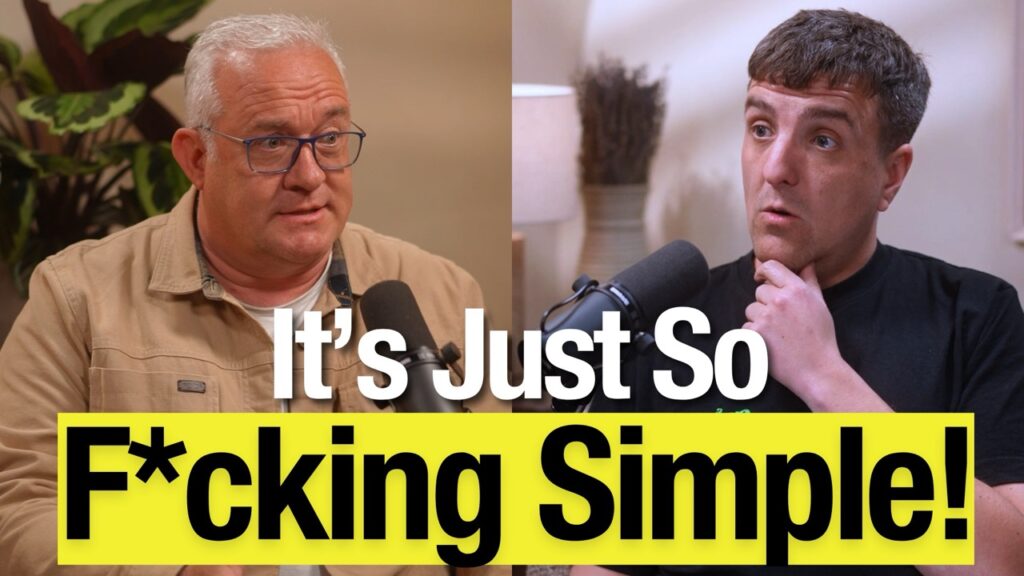
Chartered accountant Charlotte Baroukh explains why earning over £50,270 doesn’t mean handing 40% of everything to HMRC, how the 60% tax trap kicks in between £100,000 and £125,140, and why employer National Insurance just jumped from 13.8% to 15%.
I get the same question constantly: “I don’t want to earn over £50,000 because I’ll lose it all to 40% tax.” It’s one of the biggest misunderstandings in personal finance, and it stops people asking for pay rises they’ve earned.
So in this Money Moments I brought back Charlotte Baroukh, chartered accountant and tax expert at Pie, to clear it up properly.
We covered the progressive tax system, the 60% tax trap over £100,000, what’s actually sitting on your payslip, and why fiscal drag has quietly cost everyone money since thresholds froze.
We also got into salary sacrifice, cycle to work schemes, claiming for working from home, and the employer NI rise that’s already showing up in supermarket prices. Fourteen minutes, no fluff.
———
Gains App is live.
An AI-powered budgeting and cashback app designed to help you make more of your money.
Download here: https://gainsapp.onelink.me/8IhT/oiaimr1z
———
Get a free fractional share worth up to £100 when you deposit £1 with Trading 212.
https://www.trading212.com/join/MGP
If you don’t receive the free fractional share, head to the menu and put the word “MGP” into the promo code section.
(Capital at risk when you invest)
———
We’re delighted to welcome Tide as a sponsor for the show.
Offer: get £100 cashback when you deposit £5,000 within 30 days (T&Cs apply).
https://www.tide.co/offers/gains/
———
Key takeaways
- The UK has a progressive tax system: crossing £50,270 only taxes the amount above it at 40%, not your whole income.
- The 60% tax trap hits between £100,000 and £125,140, where your personal allowance shrinks by £1 for every £2 earned.
- Payslip basics matter: gross pay, net pay, your tax code and pension contributions all explain the gap between what you earn and what lands in your account.
- Salary sacrifice into a pension, a bike, or an electric car reduces your taxable income before tax is even calculated.
- Fiscal drag from frozen thresholds means rising salaries push more people into higher tax bands without them actually being better off.
Timestamps
- [00:18] Why the £50,270 panic is a myth
- [02:25] The 60% tax trap over £100,000
- [04:41] What your payslip actually shows
- [06:43] Pension contributions and salary sacrifice
- [09:10] Tax-efficient perks: cycle to work and EV schemes
- [10:46] Fiscal drag and frozen thresholds
- [13:00] The employer NI rise and its knock-on effects
Why the £50,270 panic is a myth
Charlotte says this is the misconception she hears most: people refusing pay rises because they think crossing £50,000 means losing 40% of everything.
It doesn’t work that way. The UK runs a progressive tax system, so only the income above £50,270 is taxed at 40%. Everything below stays at 20%.
She’s blunt about why this myth persists: financial education simply isn’t taught in schools. People leave education with no grounding in tax, payslips or mortgages, then get thrown into the working world and have to guess.
Sammie agrees, pointing out she gets the exact same question and has to explain that earning £51,000 only means roughly £800 gets taxed at the higher rate, not the whole salary.
Building the habit of tracking where your money actually goes each month makes these thresholds far less intimidating. Learning to Audit Your Spending is a useful first step before worrying about tax bands at all.
The 60% tax trap over £100,000
Above £100,000, a second and less understood mechanism kicks in. Your personal allowance, worth £12,570, is reduced by £1 for every £2 you earn over that threshold. By £125,140 the allowance is gone entirely.
Charlotte is careful to correct the scarier framing that circulates online: you are not paying a 60% tax rate. Your headline rate stays at 40%.
What’s actually happening is your tax-free allowance shrinking away, which has the effect of a much higher marginal rate on that specific band of income.
There is some hope on the horizon here too. Charlotte mentions petitions pushing to raise the personal allowance, with talk of increases toward £20,000, though nothing had been confirmed at the time of recording.
What your payslip actually shows
Most people, Charlotte says, only look at the number at the bottom of their payslip. That’s how confusion starts: expecting £2,000 a month on a £24,000 salary, then wondering why the bank balance shows less once National Insurance, tax and pension contributions come out.
Your tax code matters too. Most people should be on 1257L. Anything else usually means your personal allowance has been adjusted, often reduced. New starters frequently land on emergency tax before their code is submitted properly, but HMRC typically balances this out over time.
Charlotte also flags a practical trap: if you have a side income and only declare it after the tax year ends, HMRC won’t yet know about it, so your tax code will be wrong until you tell them.
Anyone building a Side Income alongside a main job needs to stay on top of that reporting.
Pension contributions and salary sacrifice
Pension contributions on your payslip do more than save for later.
Charlotte explains you have a £60,000 annual allowance, and money paid in comes out of your income before tax, reducing what you owe now. Tax is only paid later, when you draw the pension down.
Salary sacrifice takes this further. Sammie raises the example of someone on £105,000 sacrificing salary into their pension specifically to pull their income back down, avoiding the 60% tax trap band entirely.
Charlotte confirms this is common, and that people also use salary sacrifice to drop back into the basic rate band altogether. It isn’t complicated, she says, it just requires knowing the mechanism exists.
Thinking about pension contributions now also shapes what you’ll have later. It’s worth checking how your own pot compares against the Average Pension Pot for your age.
Tax-efficient perks and fiscal drag
Beyond pensions, Charlotte runs through other salary sacrifice wins: cycle to work schemes that reclaim tax on a bike, and electric car schemes, like the one Sammie’s partner was offered, where the cost comes out of pay before tax.
Working from home allowances also apply, whether that’s the flat £6-a-week rate or calculating an actual proportion of household bills against space used for work.
Sammie shares her own system for tax rebates and windfalls: split into thirds across investments, savings and spending. Anyone doing something similar can put the investing third to work using a Compound Interest Calculator to see how it grows over time.
The conversation then turns to fiscal drag: personal allowance and tax thresholds haven’t moved in line with inflation for years. As salaries rise, more income falls into higher tax brackets even though people aren’t genuinely better off.
Charlotte notes petitions calling for the personal allowance to rise, with talk of £20,000 as a target figure, though the October budget didn’t deliver the increase she’d hoped for.
The employer NI rise and its knock-on effects
The final chapter covers employer National Insurance, which rose from 13.8% to 15%, while the threshold at which employers start paying it dropped from £9,100 to £5,000.
Charlotte calls this short-sighted: framed as not hitting workers directly, it still risks job cuts and hiring freezes because employers simply can’t absorb the extra cost.
Sammie ties this to a real example: Sainsbury’s facing roughly £230 million a year in extra employee costs, a figure that filters through to prices on essentials and fewer staff on shop floors.
Businesses raising prices or cutting workers in response to rising costs is exactly why it pays to shop around on where your own money sits, whether that’s a Cash ISA vs S&S ISA or your everyday savings.
This transcript is auto-generated and lightly edited for readability, it may contain errors.
**Speaker 2** [0:18]
What’s something you feel like you would wish everyone knew about their own income tax?
**Speaker 1** [0:26]
I okay, there’s another misconception that I hear a lot, and people panic because they think they hear about these um thresholds, you know, 20% of your basic rate, 40% or 45%. And I genuinely get so many questions saying, I don’t want to earn over £50,000 because if I do, I’m gonna have to pay 40% tax. And it’s like, no, we have a progressive tax system, which means that over the £50,270 pounds, you’ll pay 40%. Under that, it’s still 20%. So you should still be striving to, you know, increase your income. It is progressive, but there are so many people that just, they just don’t have the financial knowledge. And it’s not their fault. It’s the fact that it’s nothing’s discussed in schools. And I think that this is, I think that’s, you know, it’s really, really bad. I feel like people are, you know, thrown into the working world after university or if they don’t go to university straight from school and they have no idea what to do. They’ve never been told what to do. I mean, that also extends to like mortgages and all these sorts of things. But I just feel like there should be an emphasis on financial education in schools. And I I don’t understand why there isn’t.
**Speaker 2** [1:34]
Yeah, you make such a good point. Like I I saw um Claire Barrett do like a video about this recently. Um we’re actually gonna remake it because it it it clearly hasn’t, you know, one video doesn’t reach everybody, right? So it’s just like, how do we re-peat this drum? Because I get this question too. It’s like, I don’t want to go over the 50k. I’m like, what are you on about? Yeah. Like, you know, it’s if you’re 51,000, you’re only gonna get taxed on that, you know, 800 odd quid at that 40% rate. Um and it’s just it’s like filling up the cup.
**Speaker 1** [2:02]
Yeah.
**Speaker 2** [2:03]
And once you hit the certain levels, you’re then with it, everything within those levels are then subject to that form of tax.
**Speaker 1** [2:09]
Yeah.
**Speaker 2** [2:09]
And so I think that’s like really important. But you’re totally right. Like that is that exercise, one video like that, and everyone would go, got it for life.
**Speaker 1** [2:19]
Yeah.
**Speaker 2** [2:19]
And it would just be a simple, you know, that you could do that in 60 seconds with people in school and it would change.
**Speaker 1** [2:25]
Oh, 100%. But then on the back of that, I also, I’m sure you’ve heard about the 60% tax trap, where essentially if you go over a hundred thousand pounds, your personal allowance, which is £12,570, gets reduced by one pound for every two pounds that you earn. Yeah. If that makes sense. So when you get to 125,000 pounds, your personal allowance is gone. Okay. Now there’s a lot of videos online, you know, kind of almost scaring people into saying, oh my gosh, if you earn over 100,000 pounds, you will fall into the 60% tax trap. And it’s like, actually, no, your personal allowance is decreasing, but you’re still only paying 40% of tax. So again, people need to know. I I feel like it just needs to be like a formal education of exactly how everything works because otherwise, people hear things online all the time and they’re like, oh my gosh, actually, I don’t want to be paying 60% tax if no one else is paying 60% tax. So yeah, I I think that there are some amazing people who are really striving to get this into schools, which is amazing. And I just think that’s so much more important than like Pythagoras’s theorem. And I loved math at school, but I just feel like there’s, you know, you you we need to like equip our kids for life.
**Speaker 2** [3:38]
Yeah, totally. Yeah. I’ve been like seeing a lot more people like move into like homeschooling as well.
**Speaker 1** [3:44]
Yeah.
**Speaker 2** [3:44]
Just simply because they’re just like, they’re not getting anything out of this.
**Speaker 1** [3:48]
100%.
**Speaker 2** [3:48]
You know, it really rammed it home for me. I watched Adolescence recently. I’m sure everybody’s seen it. Have you seen it?
**Speaker 1** [3:52]
I watched part of it, but with young kids, I I found it a bit too nerve-wracking for the future. But I totally understand.
**Speaker 2** [3:57]
Yeah. Because it it it really does ramp it home. Like, um, you know, my partner, uh, her sister has kids of that age, and you see exactly the same like way that they uh interact with the world like that, and those school systems, and it just it took me back, and I was like, yeah, it was actually just like an absolute like mind. School was just nuts, right? Like, and we just walked out of there, and I’m actually to this day, there’s only a small part of that. I would say probably use about 10% of my education. Nuts. How how can we turn that to 90%? I know and financial education for me is like the largest part of that. And following up on from that, obviously income tax, which we just discussed, pay slips.
**Speaker 1** [4:41]
Yeah.
**Speaker 2** [4:41]
Big one. Because people get paid and they don’t understand.
**Speaker 1** [4:45]
They don’t even look.
**Speaker 2** [4:47]
They just look at the number at the bottom.
**Speaker 1** [4:48]
Yeah, exactly. And actually, that’s one of the things they don’t understand because they’ll look at the number at the bottom. Let’s say they earn £24,000, let’s say, just to make the numbers easy, um, they’ll expect to get £2,000 a month. And uh, they’re looking at their payslip because their bank account is not showing £2,000. And they’re like, why what is gross pay? What’s net pay? Why aren’t they the same? What’s been taken out? I don’t want to pay national insurance. Like, I’ve not signed up for this. You know, they don’t understand that this is what everyone has to pay. National insurance comes out of your gross pay tax, your pension contributions, like there are so many things that people don’t know about. And the tax code at the which is normally at the bottom of your pay slip, you know, you need to be on top of that because HMRC, people always blame HMRC for getting these things wrong. But at the end of the day, if you have, let’s say you have a side side income and you only declare it kind of the following year after the tax year end, HMRC aren’t going to know that you’ve got this side income. So it your tax your payslip will most likely be wrong because the HMRC don’t know that information yet. So it’s it’s up to you. And I think that if the burden is on the taxpayer, they need to be given the education to know what they’re looking for in the first place.
**Speaker 2** [5:59]
Totally. And that tax code as well can be so many different like variations.
**Speaker 1** [6:03]
Exactly.
**Speaker 2** [6:04]
And just understanding what that is is really important. Like majority of people should be on the 1257L tax code.
**Speaker 1** [6:10]
Yeah.
**Speaker 2** [6:11]
And if you’re not, that means your personal allowance is either increased or reduced. Normally reduced. Normally reduced.
**Speaker** [6:16]
Yeah.
**Speaker 2** [6:17]
Um, and then when you join a company, often you’re put on emergency tax because your tax code hasn’t been submitted yet. Yeah. And so you’re getting whack of tax, but then it will balance out over time. That’s what something’s crucial here. HMRC does do a good job of eventually pulling you back to sort of normal levels, right? Or what what what normal is for you.
**Speaker 1** [6:35]
Yes.
**Speaker 2** [6:36]
Is there anything else that uh they should be aware of on their pay slip, like to look out for and it and question as well if there’s like something on there?
**Speaker 1** [6:43]
So another thing that is on the pay, which is on most people’s payslips, are pension contributions. And it’s really important to know how these can actually really benefit you and reduce your tax. Because if you pay into a pension, you have a 60,000 pound allowance every year, and that can reduce your tax because the money that’s put into your pension is essentially taken out of your income and you won’t pay tax on that. You will have to pay the tax when you eventually draw down on your pension. But if you’re tax efficient, you can you can minimize that. I mean, I’m not going to go into all the figures, but you can minimize that. But the fact is, you can reduce your income now. And that’s a really good tax um efficient way of saving money and also preparing for the future because a lot of people don’t know, you know, not don’t know, just don’t realise and aren’t thinking about the future. And you need to, because you don’t want to be stuck. You don’t want to be stuck in a, you know, you should be enjoying your retirement and not panicking about not having any money.
**Speaker 2** [7:37]
It’s so tough to make people like do that because they’re like, oh, I want to live for the now and I’d like more money now. Yeah. XYZ, but it you you make a great point because it’s it’s on your gross pay and you’re getting the tax relief on that money as well. Yeah. So it’s like it’s becomes a no-brainer. And it’s also interesting when people like say it get £105,000 salary, they’ll bring that down to keep their personal by using what’s called a salary sacrifice.
**Speaker 1** [8:04]
Yeah.
**Speaker 2** [8:04]
Is that something you have seen quite a bit lot of people do? So salary sacrifice into their pension?
**Speaker 1** [8:10]
Oh, absolutely. And it’s it’s not just that, it’s also to if people are trying to bring their um their income down into the basic rate.
**Speaker 2** [8:17]
Oh, interesting.
**Speaker 1** [8:17]
Oh, yeah, absolutely. I I feel like you’ve there are so many ways to be tax efficient and it’s really not complicated. That’s the main part. It’s really, really not complicated. And there’s so much information online. Um, and it is, yeah, it’s just important, it’s just really important to just stay informed and yeah, try and work it out for yourself as well. Try and think about things that you need in life. So, for example, even like cars, and think about how you can work that into reducing your income or you know, doing salary sacrifice schemes for a car or something like that. There are so many different things that you can do.
**Speaker 2** [8:50]
Yes. So um there’s like um, you know, the the cycle to work scheme as well, you get your the tax back on your bike.
**Speaker 1** [8:57]
Yeah.
**Speaker 2** [8:58]
And my other half got uh something sent around, I think it was like octopus energy or something like that, where you can get the electric car um for cheaper, it comes out of your pay, don’t pay the tax on it.
**Speaker 1** [9:10]
Yeah.
**Speaker 2** [9:10]
So it’s like really great way of like being tax efficient with purchases as well through your work scheme, which is really and another thing to keep note of is also working from home.
**Speaker 1** [9:20]
So many people are working from home nowadays, and you can claim that back. Uh when I say claim it back, you can claim it as an allowable expense, which therefore is slightly in a different way, but it will be reducing your income, your taxable income. And it’s it’s yeah, it’s really good.
**Speaker 2** [9:35]
That’s such a good chart, actually. Yeah. I remember doing that as well because it like in COVID, they were like, Well, how often we work at the moment. Yeah. It’s like a reduction of your household bills, isn’t it? Because you’re paying that because you’re it’s a proportion.
**Speaker 1** [9:45]
Either either you can do it’s a six pound like flat fee, flat rate per week, if you don’t want to kind of calculate it. If you want to calculate it, you can you can deduct part of your utilities, your internet, your Wi-Fi, like the proportion of your um home that is used for work. So if you have a, I don’t know, a study or an office um and it takes up 10% of your house, you can then um you can then claim back 10% of your utilities. I mean, it could be so efficient.
**Speaker 2** [10:12]
You know, even on the six pounds, it’s a couple hundred quid.
**Speaker 1** [10:15]
Yeah.
**Speaker 2** [10:15]
But it’s worth it.
**Speaker 1** [10:16]
Oh, absolutely.
**Speaker 2** [10:17]
Flights to Barcelona sort of. Do you know what I mean? It’s completely yeah, however, you want to reuse that money. I I got a tax rebate through this morning.
**Speaker 1** [10:23]
I was like, Amazing.
**Speaker 2** [10:25]
Yeah, you know, and I always do the same thing. Like, and I get this tax rebate, 33% goes to investments, 33% to savings, and I spend 33%. Yeah. And do the same every time I get any sort of windfill of money. And it’s just a nice way of like, you know, future me, you know, short term me, and I’d like some new trainers, please.
**Speaker 1** [10:42]
You know, that’s like you have to enjoy, you have to enjoy your money now as well. Yeah.
**Speaker 2** [10:46]
Yeah, it’s so, so important. Now, the personal allowances we’ve spoken about a little bit here as well, and the thresholds, they haven’t really changed much in recent years. And that’s something called fiscal drag. Yes. Which you might see in the news, and you might be like, that’s one of those personal finance terminologies which sounds really bloody complicated. How on earth do I work that out? But what does it actually mean?
**Speaker 1** [11:06]
So, in basic terms, it is essentially your pay, so your salary is increasing in line with inflation, but your but the tax thresholds are not moving. So, therefore, even though your salary is increasing, you are being taxed more and more. More of your money is falling into that tax bracket. And so you’re not necessarily better off. And it’s a real shame. I really thought that in the October budget, maybe wishful thinking, but I really thought they were going to make some kind of increase. And there has actually been um some petitions going around to try and increase this. And there’s talks it might be increased to 20%. Sorry, not 20%, £20,000. The personal allowance. The personal allowance.
**Speaker 2** [11:46]
Interesting.
**Speaker 1** [11:46]
Yeah. I saw one petition going around trying to get it to 45,000. Now there’s talks about it potentially going to 20,000. But it could, I just think people need to be helped.
**Speaker 2** [11:55]
They do. They do. And it’s a really fast way of helping people, isn’t it? This like immediately can be done. Obviously, you know, it impacts the income that HMRC receive, and of course, then government spending, etc. But we’re not going to get into that today because that’s another conversation entirely. Um, but it would make such a big difference. Even the, you know, an extra seven and a half grand a year is massive. Yeah. Um, you know, that’s food shops covered, so that’s energy rising costs, energy costs covered. I really do think that’s a quick win for a Labour government that’s potentially struggling a touch right now.
**Speaker 1** [12:29]
Well, they’re saying that reform, that was the first thing reform were gonna do. Um, which obviously would have got loads of people on board, but I don’t know, you they’ve got to make cuts somewhere. You know, everyone, everyone has their opinions on where the c the government should be spending their money. As you said, we’re not gonna go into that today. But I get comments on it all the time.
**Speaker 2** [12:47]
But you know, they raise taxes on business.
**Speaker 1** [12:50]
Yeah.
**Speaker 2** [12:50]
And so that’s like, and that that’s not hurt a lot of my friends who’ve got businesses, have had to cut workers or or raise prices, which has been nuts. Yeah.
**Speaker 1** [13:00]
Well, the main thing, the well, I say the main thing, one of the really big things, the employer’s NI, um, is massive. So that’s the they’re increasing it from uh, well, they’ve just increased it to 13 from 13.8% to 15%. And they’ve turned around and said, you know, we’re we’re not hurting the worker, it’s for the employer. But it’s so short-sighted because in turn, the employer might not be able to pay the this increased NI. Also, along with the increased NI percentage, the threshold to pay it has decreased from 9,100 to 5,000 pounds. So so many people are now gonna fall into that. And people could be laid off because companies might not be able to pay them. So it’s just it’s a really sad time. Totally.
**Speaker 2** [13:42]
Yeah, completely. Uh, you know, Sainsbury’s alone is like £230 million a year increase in employee costs. Where’s that going? It’s going on the eggs, it’s going on the milk, and it’s going uh Absolutely. There there’s gonna be less workers in the shop, yeah, essentially.
**Speaker 1** [13:57]
Yeah.
**Speaker 2** [13:58]
Um, so you know.
Frequently asked questions
It affects people earning between £100,000 and £125,140. For every £2 earned in this band, your £12,570 personal allowance shrinks by £1, until it disappears completely at £125,140.
Your actual tax rate stays at 40%, but losing the allowance creates a much higher effective rate on that slice of income.
No. The UK uses a progressive tax system. Only the portion of income above £50,270 is taxed at 40%.
Everything you earn up to that threshold is still taxed at 20%, so a small pay rise above the threshold only ever costs you tax on the amount over it.
Fiscal drag happens when tax thresholds and personal allowances stay frozen while wages rise with inflation.
More of your income gets pulled into higher tax bands over time, even though your real spending power hasn’t actually improved. Charlotte notes petitions are pushing for the personal allowance to rise toward £20,000.
Salary sacrifice reduces your taxable income before tax is calculated, typically through pension contributions, cycle to work schemes or electric car schemes.
Some people use it specifically to drop out of higher tax bands, such as sacrificing enough salary to avoid the 60% tax trap above £100,000.
Employer NI rose from 13.8% to 15%, and the threshold at which employers start paying it dropped from £9,100 to £5,000 per employee.
Charlotte warns this could lead to hiring freezes or job losses, since businesses may not be able to absorb the extra cost without passing it on.
———
This episode is meant for educational purposes and should not be considered financial advice. When you invest your capital is at risk. Past performance is not a guarantee of future success.
This description contains affiliate links – if you click on one and make a purchase we may receive a small commission. This does not alter our suggestions and there is no charge for you.