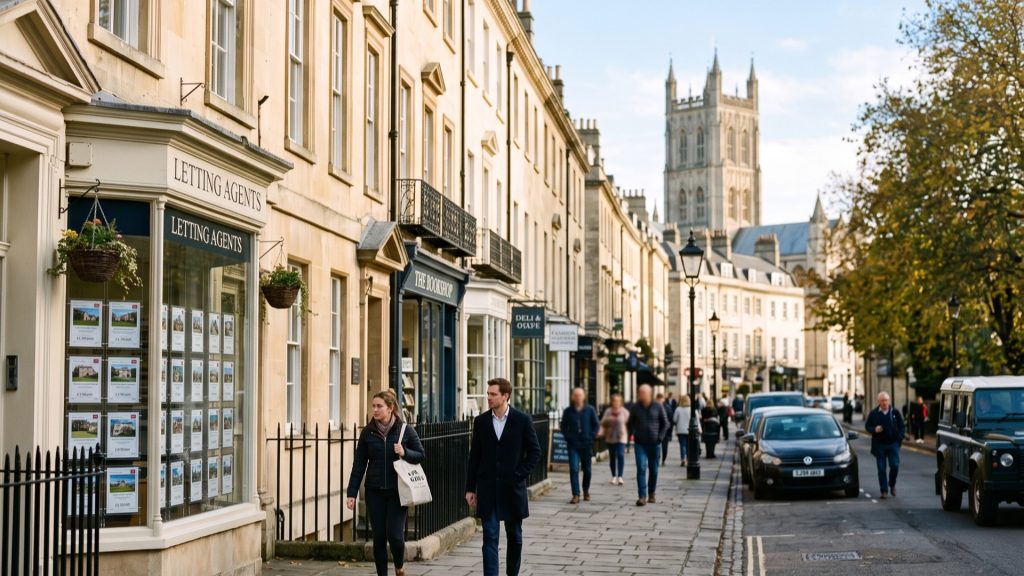
St Albans has been crowned the most expensive city to rent in Great Britain outside London, with average rents of £2,307 a month according to Rightmove. To be clear, London itself is still pricier overall, this ranking is about which city takes the crown once the capital is taken out of the running.
It is the kind of figure that makes you do a double take. That is more than £27,000 a year just to keep a roof over your head, in a cathedral city best known for its Roman ruins and a very good commute into central London.
And that is exactly the point. St Albans is not expensive because it is glamorous.
It is expensive because it is close.
Why is St Albans so expensive to rent?
St Albans sits around 20 minutes from London St Pancras by fast train, which puts it firmly in commuter-belt territory. You get a genuine city, with independent shops, decent schools and a market that has run since the 8th century, without actually living in London.
That trade-off has a price tag. Tenants who cannot stomach London rents but still need to reach the capital for work end up competing for the same pool of homes in places like St Albans, Winchester and Cambridge.
Limited housing supply plus consistent demand from commuters pushes rents up, even though the city itself is small.
It is the same dynamic that plays out in every commuter town within striking distance of a major city. Fewer new homes are being built than renters need, so landlords can charge more for the ones that exist.
There is also a supply squeeze specific to the type of property renters in St Albans tend to want. Families and young professionals moving out of London are usually after a two or three-bedroom house with a garden and good schools nearby, not a one-bed flat.
That is a much smaller pool of stock than the flats-heavy rental market you find in most UK cities, which pushes competition, and prices, higher still.



Which other cities made the top 10?
Rightmove’s ranking, published in September 2024, is the most recent city-by-city breakdown of rents outside London. There has been no fresh city ranking since, so these are the last verified figures at city level.
| Rank | City | Average rent (pcm) |
|---|---|---|
| 1 | St Albans | £2,307 |
| 2 | Oxford | £2,237 |
| 3 | Cambridge | £2,072 |
| 4 | Winchester | £2,049 |
| 5 | Brighton | £2,040 |
| 6 | Edinburgh | £1,778 |
| 7 | Bristol | £1,758 |
| 8 | Chelmsford | £1,686 |
| 9 | Milton Keynes | £1,590 |
| 10 | Southend-on-Sea | £1,495 |
The pattern is obvious once you look at the list. Almost every city on it is within easy reach of London or Edinburgh, and every single one is a city people choose because it is not the capital.
That is the commuter-belt premium in action, over and over again.
Has it got worse since 2024?
Rightmove has not repeated the city-level ranking, but its Q2 2026 national rent tracker shows the wider picture has not improved. Average asking rents outside London hit a fresh record of £1,397 a month, while London itself climbed to £2,791 a month.
So St Albans’s £2,307 figure from 2024 already sat well above where the whole of non-London Britain has only just arrived two years later. If rents in commuter cities have tracked the same broad direction as the national average, St Albans has very likely stayed at or near the top of the table, even without a fresh survey to prove it.
How much of your take-home pay would that actually eat?
Most budgeting guidance suggests keeping rent to around 30% of your take-home pay, so it is worth doing the maths on what living somewhere like St Albans actually demands.
To keep £2,307 a month at 30% of take-home pay, you would need to be bringing home roughly £7,690 a month, or around £92,000 a year after tax. That is a household income most single renters simply will not hit, which is exactly why so many people either share a house, commute in from somewhere cheaper, or hand over well over a third of their pay just to live in these commuter cities.
If you are weighing up a move to one of the cities on this list, run the sums before you sign anything. Work out your actual take-home pay, then work backwards from the 30% rule rather than forwards from what a landlord is asking.
It is a much easier way to avoid a rent that quietly swallows every spare pound you have.
Even at the bottom of this top 10, Southend-on-Sea’s £1,495 a month still needs take-home pay of around £5,000 a month, or roughly £60,000 a year, to stay inside that same 30% guideline. There is no city on this list where renting is a casual decision.
It is worth building the true cost of rent into any budgeting or house-move planning well before you start viewing properties, rather than working it out after you have already fallen for a place.
If you found this interesting, please share!
Disclaimer: Content on this page is for informational purposes and does not constitute financial advice. Always do your own research before making a financially related decision.