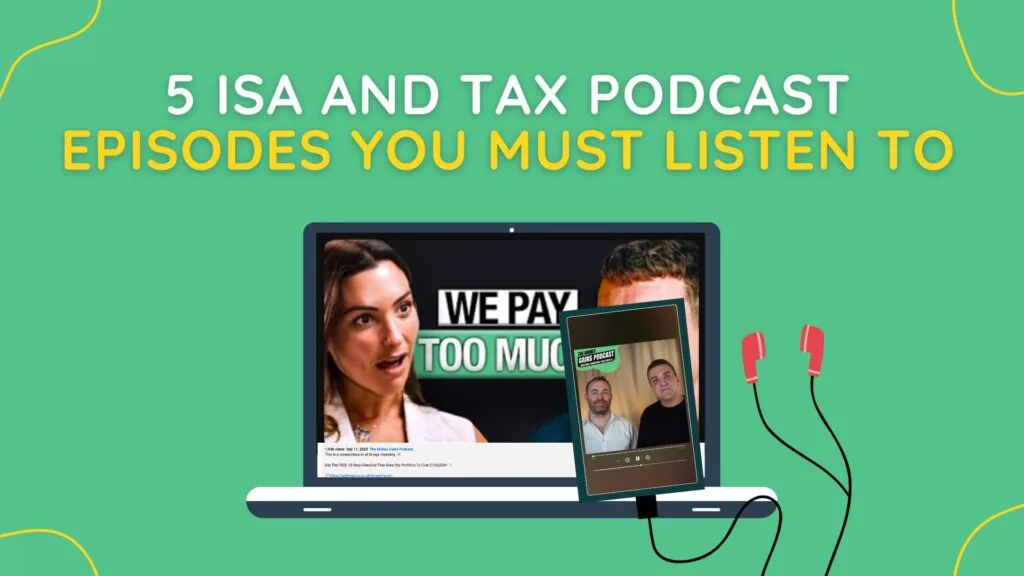
These are the five Money Gains Podcast episodes I’d start with if you want to understand ISAs and UK tax: the Lifetime ISA bonus, the tax traps hiding in your payslip, the cash ISA debate, how each type of ISA works, and where your money actually goes in tax. Each one is with an accountant, adviser or industry insider who explains it in plain English.
Updated after the 28 October 2026 Budget: some of the rules discussed in these episodes have changed since we recorded them, most importantly the cash ISA cut, which has now been scrapped. Under each episode there’s a one-line note on what’s different today, and a summary table below.
ISA and tax rules at a glance (October 2026)
| Rule | Where it stands now |
|---|---|
| ISA allowance | £20,000 a year, frozen until 5 April 2031 |
| Cash ISA limit from April 2027 | Stays £20,000 for everyone 18+. The planned £12,000 cut for under-65s was scrapped at the 28 October 2026 Budget |
| Lifetime ISA | £4,000 a year, 25% bonus up to £1,000. Charge for a first home over £450,000 cut to 20% from 29 October 2026. Replaced for new savers by a First Time Buyer ISA from April 2029 |
| Tax on savings interest | 20%, 40%, 45% now; 24%, 44%, 49% from 6 April 2027 on interest above your allowance |
| Trading allowance (side hustles) | £1,000 now, rising to £3,000 from 6 April 2027 |
| Personal Allowance and higher rate threshold | £12,570 and £50,270, frozen until April 2031 |
| Making Tax Digital for Income Tax | Sole traders and landlords over £50,000 from April 2026, over £30,000 from April 2027, over £20,000 from April 2028 |
New to investing?
Get my free Checklist: the steps I would follow to open and fill an ISA without the classic mistakes. Plus one email a week, unsubscribe any time.
Brian Byrnes on the Lifetime ISA: how to get £1,000 free from the government
Brian Byrnes, Head of Personal Finance at Moneybox, explains the most generous savings incentive most people never claim. Pay in up to £4,000 a year and the government adds a 25% bonus, up to £1,000, whether you’re saving for a first home or for later life.
Brian walks through choosing between the cash and stocks and shares versions, why financial confidence tends to track wealth, how to track down pensions you’ve lost along the way, and how pension tax relief compares with the bonus. If you’re under 40 and haven’t looked at a Lifetime ISA yet, this is the place to start.
What’s changed since recording: from 29 October 2026 the charge for using a Lifetime ISA on a first home over £450,000 drops from 25% to 20%, and a new First Time Buyer ISA will replace the Lifetime ISA for new savers from April 2029. Existing accounts carry on.
Listen on Spotify · Listen on Apple Podcasts · Episode notes
Brian came back in September 2026 to talk about first-time buyers and what he’d change about the Lifetime ISA: can you still buy a house in 2026? It was recorded before the Budget.
Charlotte Baroukh explains the UK tax traps quietly costing you money
Accountant and tax consultant Charlotte Baroukh unpicks the UK tax system in a way that actually makes sense. She covers how tax bands really work (not the way most people think), the 60% tax trap that hits earners between £100,000 and £125,140, and how to read your payslip properly.
There’s also a clear rundown of salary sacrifice, pension contributions as a tax tool, schemes like cycle to work, and the trading allowance for side hustle income. Charlotte’s central point stays with you: once you understand how the bands work, most of the fear around tax disappears.
What’s changed since recording: the trading allowance rises from £1,000 to £3,000 from 6 April 2027, and you won’t need to register for Self Assessment for trading income under £3,000. From April 2029, salary sacrifice pension contributions above £2,000 a year lose their National Insurance saving. Tax thresholds are now frozen until April 2031. The 60% trap is unchanged.
Listen on Spotify · Listen on Apple Podcasts · Episode notes
 Read nextHow To Invest 5k – The Ultimate Guide
Rajan Lakhani (Plum) on the cash ISA reforms: why cutting the allowance wouldn’t boost UK investing
We recorded this when the government planned to cut the cash ISA allowance to £12,000 for under-65s. Rajan Lakhani from Plum explains why most Britons opposed the change and, more importantly, why cutting the allowance was unlikely to push more people into investing.
He also covers the psychology of saving, why automation beats willpower, how to build an emergency fund before you think about investing at all, and the £450,000 Lifetime ISA property price cap that shuts out many buyers in the most expensive areas. The saving habits part is just as useful now as when we recorded it.
What’s changed since recording: the cash ISA cut has been scrapped. The 28 October 2026 Budget kept the cash ISA limit at £20,000 for everyone 18 and over, and the planned charge on cash in stocks and shares ISAs and the transfer ban won’t happen either. The £450,000 Lifetime ISA cap is unchanged. Full detail in the 2027 ISA changes explained.
Listen on Spotify · Listen on Apple Podcasts · Episode notes
Timi Merriman-Johnson (Mr MoneyJar) on ISAs, side hustles and personal growth
Mr MoneyJar’s first appearance on the podcast is still one of the best ISA explainers we’ve recorded. Timi breaks down each type of ISA, from cash to stocks and shares to Lifetime, and where each one fits depending on your goals and timeline.
He also gets into index funds versus picking individual shares, and how to use your ISA allowance without wrecking your monthly budget. Timi’s own path into finance, via law and a graphic design side business rather than a City career, makes it a lot less intimidating than most money content.
What’s changed since recording: since April 2024 you can pay into more than one ISA of the same type in a tax year (still only one Lifetime ISA), and partial transfers of this year’s money are allowed. The £20,000 allowance is unchanged and frozen until April 2031. My cash ISA vs stocks and shares ISA guide has the up-to-date rules.
Listen on Spotify · Listen on Apple Podcasts · Episode notes
Tom McNally: why the UK tax system takes 80% of your money
Tom McNally, founder of Pie Tax, makes the case that once you stack income tax, National Insurance, VAT and other indirect taxes, the government ends up with around £80 of every £100 you earn. That’s his estimate, and he explains why it matters for anyone weighing up a pay rise, a side hustle or a property investment.
He shares a real example of a Pie Tax user who reclaimed close to £50,000 in overpaid tax on savings interest, explains the Laffer Curve (the idea that past a point, higher tax rates bring in less money) in terms that apply to your own finances, and flags what Making Tax Digital means for anyone with side income.
What’s changed since recording: Making Tax Digital started in April 2026 for sole traders and landlords with income over £50,000, and reaches £30,000 in April 2027 and £20,000 in April 2028. The October 2026 Budget also raised tax on savings interest to 24%, 44% and 49% from April 2027, and lifted the trading allowance to £3,000.
Listen on Spotify · Listen on Apple Podcasts · Episode notes
New to investing?
Get my free Checklist: the steps I would follow to open and fill an ISA without the classic mistakes. Plus one email a week, unsubscribe any time.
Where to listen to The Money Gains Podcast
A new episode comes out every Wednesday on YouTube, Spotify and Apple Podcasts. You can browse every episode on The Money Gains Podcast page, and if you want more on investing, try five investing podcast episodes you must listen to.
FAQs
Is the cash ISA allowance still being cut to £12,000?
No. The 28 October 2026 Budget scrapped the cut, so the cash ISA limit stays £20,000 for everyone aged 18 and over from April 2027. The Rajan Lakhani episode was recorded while the cut was still planned.
Which episode should I start with if I’m new to ISAs?
Timi Merriman-Johnson’s. He goes through each type of ISA from scratch. Then Brian Byrnes if you’re under 40 and saving for a first home.
Which episode explains the 60% tax trap?
Charlotte Baroukh’s. She explains how you lose £1 of Personal Allowance for every £2 you earn between £100,000 and £125,140, and how pension contributions can bring your income back down.
Is the Lifetime ISA being scrapped?
It’s closing to new savers when the new First Time Buyer ISA launches in April 2029. If you already have a Lifetime ISA, you can keep paying in under the current rules.
Do I need to do Making Tax Digital for my side hustle?
Only if you’re a sole trader or landlord registered for Self Assessment with qualifying income over the threshold: £50,000 from April 2026, £30,000 from April 2027 and £20,000 from April 2028. Tom McNally’s episode covers what that means in practice.