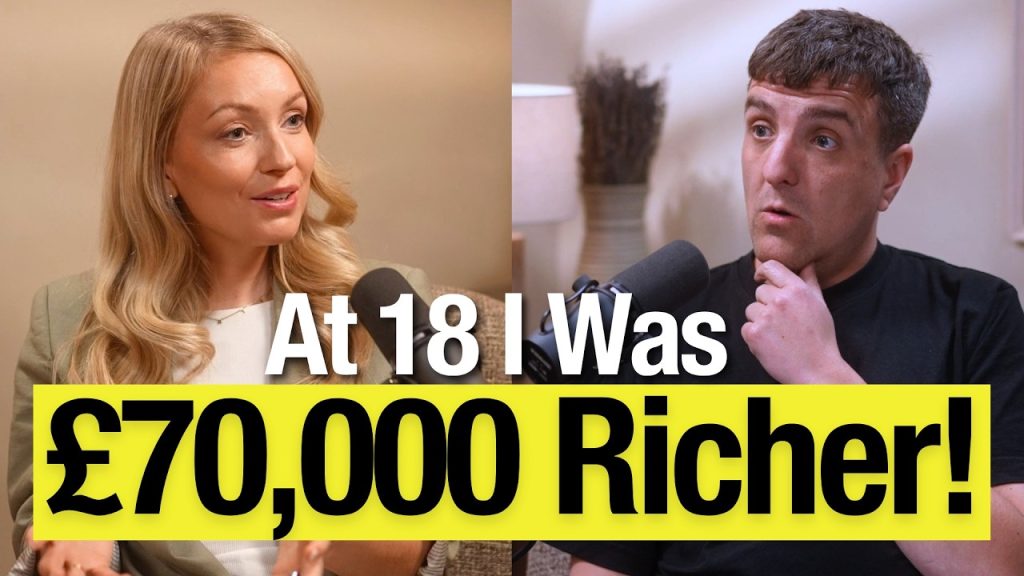

This week’s guest is Aisha Preece, founder of OutandBeyond.com and owner of six monetised blogs, who joins the podcast to explain how she went from a banking career to full-time digital nomad by building content assets that now sell for six figures.
Aisha grew up in Malaysia, moved to the UK alone at 18 to study law, and spent a decade in banking before deciding she wanted out.
She started with freelance writing, online teaching and proofreading before discovering blogging, the one side hustle she says could genuinely become passive.
She now runs six websites, employs her own team of writers, and has moved country, cat and partner along the way, funded entirely by content she built from scratch.
In this episode she walks through the exact steps she’d take to start a blog today, how long it realistically takes to reach a full-time income, and why a blog is best thought of as a sellable digital asset rather than just a source of monthly revenue.
It’s a practical episode for anyone weighing up blogging, niche sites or any other content-based side hustle as a genuine long-term wealth-building strategy.
———
Gains App is LIVE!
An AI-powered budgeting and cashback app designed to help you make more of your money.
Download here: https://gainsapp.onelink.me/8IhT/oiaimr1z
———
Get a FREE FRACTIONAL SHARE worth up £100 when you deposit £1 with Trading 212
https://www.trading212.com/join/MGP
If you don’t receive the free fractional share, head to the menu and put the word ‘MGP’ into the promo code section.
(Capital at risk when you invest)
Key takeaways
- Aisha grew six blogs from zero, including a second site now valued at six figures after unsolicited buyout offers, using a rough rule of thumb of net monthly profit multiplied by roughly 35.
- Her step-by-step process is: pick a profitable niche, learn the basics of SEO, set the blog up, then write consistently, aiming for around 100 solid articles before qualifying for ad networks like Mediavine.
- Realistic timelines vary hugely with output: her second blog qualified for Mediavine in 13 months, but she suggests two to three years is a fair benchmark alongside a full-time job.
- She warns against quitting a job with no financial buffer, recommending a costed budget and at least six to twelve months of savings, or a lower cost of living, before going all in.
- Blogs can be scaled faster by hiring writers once there’s revenue to reinvest, and can ultimately be sold as a digital asset for a lump sum rather than only monetised month to month.
Timestamps
- [2:07] Aisha Preece’s Journey From Poverty to Six Blogs
- [10:07] Googling How to Make Money Online: Aisha’s First Steps
- [14:18] Turning a Side Hustle Blog Into a Real Business
- [19:12] Learning SEO: How Traffic Went From 7,000 to 100,000 Visits
- [20:55] Step-by-Step Guide to Building and Monetising a Blog
- [25:41] How Long It Really Takes to Build a Profitable Blog
- [29:37] Budgeting Before You Quit Your Job for Your Blog
- [32:55] Using Low-Cost Countries to Buy Yourself Time
- [39:13] Selling a Blog: Turning Content Into a Six-Figure Digital Asset
- [45:02] Aisha’s Free Resources and Where to Learn More About Blogging
From a banking career to six monetised blogs
Aisha describes growing up poor in Malaysia after her family moved there from the UK, then flying back alone at 18 to study law and fund herself through university, covering her own rent and fees with no family support on the ground.
She moved into finance afterwards and spent close to a decade in banking before realising, as she puts it, she “just wanted to be free.”
She started Googling how to make money online and began with proofreading, freelance writing and online teaching, scaling her teaching rate from around $10 an hour to $60 an hour through trial and error, learning by doing rather than following any formal course.
Blogging came next, initially as a way to document what she was learning and share it with others, before it grew into her main income source, eventually overtaking her banking salary entirely.
She now runs six blogs and a small team, and has been able to relocate her family, her partner and even her cat as a result.
If building a side income of your own feels like the obvious next step, our guide to the top ways to earn a side income is a good place to compare blogging against other options.
Why blogging can become genuinely passive income
Aisha is upfront that blogging is not passive at the start. Her early years were spent writing without a strategy, and she says she struggled for two years before results picked up.
What changed things was investing in an SEO course, funded by selling clothes on Facebook Marketplace, which she followed exactly, cutting out Netflix and social media for weeks to get through it properly.
Within eight months her traffic went from around 7,000 visits a month to over 100,000, and four months later her main blog qualified for Mediavine, an advertising network that pays based on readership.
Once that income started landing every month, she says the constant financial fear she’d grown up with began to ease, and she was able to reinvest that money into growing her other sites and paying her writers.
She’s candid that the passive part only really kicks in once the groundwork is done: she describes logging into her blog after a two-week cycling holiday in Tuscany to find it had earned more than her old banking salary while she was away.
A step-by-step guide to starting and monetising a blog
Aisha’s process, in her own order, is straightforward. First, pick a profitable niche: not every topic monetises equally well, so it’s worth checking there’s genuine audience demand before committing, rather than simply writing about whatever feels personal.
Second, get a basic grounding in SEO before setting the blog up, which she says now takes as little as two hours with modern tools and templates, so the technical side shouldn’t put anyone off starting. Third, and most important, just write.
She’s candid that a writer’s first five articles will likely be poor and that this is completely normal, comparing it to building a muscle you can only develop through repetition rather than by waiting until you feel ready.
Once a blog reaches around 20 posts she suggests learning the basics of affiliate marketing, and once it reaches roughly 100 posts of consistent quality, Google tends to start taking the site seriously and ad network approval becomes realistic.
Only after that, she says, is it worth thinking about diversifying into your own products.
Realistic timelines and financial planning before going full-time
Timelines depend almost entirely on output rather than the calendar. Aisha’s second blog reached Mediavine qualification in 13 months by publishing consistently, while she suggests two to three years is a fair benchmark for someone writing around a blog alongside a full-time job.
She’s frank that her own first blog took closer to that longer end, since she’d started without a strategy, whereas her second benefited from everything she’d already learned.
Before leaving employment altogether, she recommends working out a bare-minimum survival budget, building a buffer of six to twelve months’ costs, or moving somewhere with a lower cost of living to buy extra runway.
Her own approach was to save a two-year budget before tapping out of banking, reasoning that extra free time would let her convert an already-viable side income into something significantly larger.
Getting a clear picture of your own monthly numbers first makes that kind of planning far easier, and our budgeting calculator is a straightforward way to see exactly what you need to cover before taking the leap.
Scaling faster with writers, and building a sellable digital asset
Once a blog is generating revenue, Aisha says the fastest way to scale further is hiring writers rather than trying to produce everything solo.
She’s done this by training people up through her own writing workshop, teaching them how to pitch, write and earn from clients before eventually bringing the strongest ones onto her own team.
The other insight she’s keen to stress is that a blog isn’t just monthly income, it’s a sellable asset.
Buyers commonly value blogs using a rough multiple of net monthly profit, and Aisha says she has been approached to sell her second blog, built from zero, for a six-figure sum.
That means a blog earning £1,000 a month in profit could realistically be worth tens of thousands of pounds as a lump sum, comparable to a house deposit, which reframes blogging as building equity rather than just chasing a monthly wage.
She likens it directly to building a rental property: you have to lay the groundwork, the articles, before there’s anything to earn from or sell, but once around 100 quality posts are in place, the asset starts to have real value in its own right.
If that changes how you think about long-term compounding, our compound interest calculator is worth a look for picturing how reinvested income can grow over time.
Investing the proceeds and staying grounded through growth
When it comes to her own money, Aisha keeps things simple: mostly index funds, with some fixed deposits for security, having been influenced by Tony Robbins’ writing on long-term investing.
She’s candid about being risk-averse given how hard she worked to build her income in the first place, preferring to grow it steadily rather than chase higher-risk trades, and says she’d rather earn less and keep it safe than gamble what she’s spent years building.
She’s equally clear that staying kind and grounded matters as much as the numbers, citing Michelle Obama and Oprah as influences on keeping perspective through rapid financial growth, and warning that chasing wealth too aggressively can change people for the worse if they’re not careful.
Her closing message is blunt: blogging can sound too good to be true, but it works on the same logic as any other business, build traffic, then monetise it, and none of it requires becoming an influencer first.
For anyone weighing up how their own take-home pay stretches to cover both living costs and future investing, our take-home pay calculator is a useful starting point.
This transcript is auto-generated and lightly edited for readability, it may contain errors.
[0:00] Sammie Ellard-King: Hello and welcome to another episode of the Money Gains podcast. This is your host, Sammie Ellard-King, and today my guest is Aisha Preece, who is a full-time blogger and digital nomad, traveling the world, making money from her side hustles. Now, if you’re interested in making money online, perhaps that’s through blogging or selling digital products or affiliate marketing, this podcast is for you. Aisha goes into detail about how she did it, the journey it took, the length that you need to go through to get there and make money online, because it is possible she’s doing it, she’s living proof, and I can’t wait to get her on the show today. But if you’re listening on YouTube, hit that subscribe button. Do it now. It really does help the show. But for now, let’s get started on the Money Gains Podcast. Aisha, welcome to the Money Gains Podcast. How are you doing? You well?
[1:09] Aisha Preece: Gosh, Sammie, I’m so happy and excited to be here. Thank you for having me. This is a really interesting topic which I don’t really talk about because it’s it can be quite sensitive and it can really reveal a lot of ways people think and what shaped them. So I really hope that I can make this as useful as I can for your audience and also with my audience and they’re listening to. And thank you everybody for listening today. Well, your journey is amazing. Um, you know, I’ve listened to you on multiple podcasts, I’ve been following you for a long, long time, and we had to get you on here today. One to show people about your journey, because I think it’s super, super interesting. Um, you know, you’re very active on socials and share a lot with your audience, and um, you know, you give a lot back, but also about your journey with with creating websites and and blogs too, and how that’s given you this freedom to to kind of explore the world and and become who you are today. And so, yeah, would you mind giving the audience a little bit of a kind of intro into you?
[2:07] Aisha Preece: Sure. I mean, basically, I I I grew up very poor, that’s my background, and that’s the reality of a lot of people. And I wanted to make money. That’s the so I what I did was I hustled, I studied law, I funded myself university, paid my own fees, and then I got into finance. And so worked my way up there and realised after 10 years that I hated my boss and wanted to get out, but didn’t know how. I mean, so many of us here, you you know that you want a different life, a but a life which has more independence, but you just don’t know how. So I was on that journey, and what I did was I ended up starting side hustles, and so I thought, okay, I’m gonna make a bit of extra money on the side, and I went through a range of side hustles we can talk about on this podcast, but freelance writing, social media management, online teaching. And through that journey, I also then found blogging. And blogging is the one thing that really kicked for me because I found that it was one which could be done passively, and the income potential was unlimited. And so you fast forward, I’m now running six websites. I have my own team, I’ve managed to move countries, move my cat, move my partner, and I no longer have to work for anybody else. And I’m just really, really happy because my blogs have helped me become financially independent and provide for my family, and that’s all I ever wanted. The freedom to do things I love with people I love.
[3:33] Sammie Ellard-King: I love that. One of the things I thought was super cool was like you flew your family out with you just so you could take them. Like that what a moment for you, right? Yeah, because I think some some something that you might face, and you’ve been listening to this, is when you finally do make money, you have this guilt of spend spending the money because you’ve spent so long not having money. And for me, it’s like learning that it’s okay if you’ve been savvy with your money, it’s okay to spend on things that you love. You know, and for me, like family is very important, and so giving them that comfort, giving them that flexibility is for me incredibly liberating, and it’s why I work really hard to make money. You touched on it briefly there, but what’s kind of your family had an impact on you and your relationship with money growing up?
[4:20] Aisha Preece: Yeah, I think that this is something which happens to a lot of people, you know, like learning about money is not taught in schools, and so I’d say I have a lot of respect for my mum and dad. They worked incredibly hard, but they weren’t they didn’t know much about investing and growing your money and um you know how to make extra money and better choices with money, and so as a result, you know, we grew up very poor, and that was sometimes the choices you make. And I feel like I remember as a child feeling very scared to get sick because I thought I remember thinking and knowing my parents can’t afford this, you know, they can’t afford for me to get sick, and I think that if there’s anything that can take from this, is how can I make sure the future generation understands this topic of money? How can we ensure that we protect ourselves, but also in a respectful way, educate my family? How can we as a as a generation, as a family, move forward instead of falling back and falling back again?
[5:24] Sammie Ellard-King: It’s it’s such a like difficult one, and that’s why for me I had to pour myself into this because it for me it’s a pandemic of sorts in its own right, because you know, the the amount of financial literacy we have as a as a both as a nation in the UK um and all over the world, uh, especially in you know some of the um you know less developed societies out there, it’s it it’s it’s tough, right? It’s just not spoken about. Um and so podcasts like this try and open those doors. Um so thank you for sharing that. That’s really it’s really cool um to hear like a different perspective of things. So let’s talk about a little bit about your journey then. As you kind of mentioned you went into into study law as a big undertaking. Um when did when did you have this kind of moment that it sort of started to click for you and you realised, right, you know, that aha moment as such.
[6:23] Aisha Preece: I in terms of wanting to make my own money and improve my family. Yeah. I think as a young girl, I felt like my options were very limited. I had all this desire and potential for a better life, but every door I turned to, I couldn’t go through the door because of money, right? I wanted to study in that university, I wanted to study, for example, medicine. I don’t think I’m smart enough in medicine, but medicine was never an option for me because you know you could obviously get a scholarship, but apart from that, you have to be able to afford it. It’s a privilege, right? And I felt just as a young woman, just I wanted to do so much, but I couldn’t due to money. And so when I was lucky enough to get a place um in university in UK, at the time we were living in Malaysia, right? So my family moved us from the UK to Malaysia, and that was a personal choice again. I don’t know if it was a good financial decision. There were obviously personal reasons for that, but the earning capacity in Malaysia is very, very different to the UK, right? And so I moved, I wanted to study in the UK, but I didn’t have the the rights that you get as a British citizen. I I am British, but I didn’t get the residency rights and the support from the government because I wasn’t living there. And so I flew as an 18, 19-year-old alone to the UK to study law and just fund the whole thing myself. Had to pay rent, had to figure out the bills, and it was incredibly tough. But I remember telling myself, if I can get through this, I can get through anything. And so when things get tough now, nothing’s gonna be hard as hard as having to juggle a law degree and pay your bills and pay your fees. And that’s what I tell myself, stop complaining because life could be so much harder. And so that’s when the journey began.
[8:06] Sammie Ellard-King: I think the hardest part of that is getting on the plane, you know, leaving your family, coming out and kind of going out on your own in a in a in a country that you know perhaps isn’t hasn’t been as familiar to you. That’s quite a big undertaking. I think I want I think my dreams were bigger than my excuses. I think at that, I’m not I’m not saying that like if you don’t, you know, I actually believe that. Like I think sometimes how much do you want something? What are you willing to sacrifice? And that’s why I always say we can say I want this success more than anyone in the world. You could want something till the cows come home, but it’s what are you willing to sacrifice? And that’s the question you have to ask yourself today, right? If you say you want financial independence and you want a different life, it’s not about how much you want it. What are you doing? What are you sacrificing today to make that happen? And so, me as an eight, 18, 19, 19-year-old, I wanted a different life so much. I wanted to change my life so much. More, more than my love for my family, more than the fear that I had of being alone. And I think that drove me. I could also be really stupid and not know the dangers. That could have been natural.
[9:16] Sammie Ellard-King: But sometimes you’ve got to jump into these things, right? You’ve got to go out, you’ve got to take risks, you’ve got to sacrifice to get yourself to the next hurdle. And that’s like fundamental business number 101. You know, you don’t take the risk, don’t start the business. You ain’t gonna get nowhere with that business. Or with the, you know, with your personal finances. If you want to invest your money to create yourself a future, you might have to cut out a couple of nights out a month that were costing, you know, are you going out spending 50, 60, 70, 100 quid on a night out? If you want to put 200 quid into your investments, that’s your money right there. So you’ve got to scale back a sacrifice, right? A social sacrifice. So it comes in many, many different forms. Um, so you’re studying law, you’ve gone into finance. Where was this, where did this like blog idea come from? What was it?
[10:07] Aisha Preece: So I I went into finance. I don’t know if you have to edit this out, but I was a banker wanker, basically. I was one of those bank wankers. You know, I had uh, you know, I’d finally like worked really hard, hustled, you know, they flew me to different parts of the world. I was part of a really good bank, international bank. And after about 10 years, right, I just remember do like I remember thinking, okay, like financially I was very secure, um, very comfortable, but I looked out the window, it’s like all looking out the window moment, and I saw those blue skies, look, looked at people sunning their toes who are probably unemployed now, think about it. But like, and I just thought, I just want to be free, you know, like I just want this freedom. And I don’t know if anybody else here can relate. It’s just that feeling of I need to be somewhere else, but I don’t know what it is or how I can get there. And I looked at my boss, I looked at my boss’s boss, and I was like, if I need to get to the top, what do I need to sacrifice? You know, like the hours you have to work, family time. I was like, there’s gotta be a different way. There must be a different way, and that’s when I said, okay, let me Google how to make money online. And we would do it, yeah. And so what I did was I found out that you can make money from proofreading, and so I just proofread my friends and family’s documents for free, and then I basically put up an ad in a university saying professional editor, and got my clients that way. So yeah, I just basically just went for it and then started getting clients uh because I had samples with that free samples and started getting paid, and I was like, wow, that first hundred pounds or $100 that you earn is your money. It’s like I can make my own money, and then I went into like freelance writing, and then I decided like, okay, I want to get paid to travel, and I also want to like because there’s so many people that don’t know how to navigate these waters, right? Like, I was an online teacher, and online teachers at the beginning was were being paid like 10 bucks an hour. I was like, I can’t live on that, and so I managed to scale my income to 60 bucks an hour. No one taught me how to do that. I just learned my life skills, and people were asking me, How did you do that? And so I thought I’d set up the blog and I’d talk about it and share with people. And if it works out, the blog can make me money, and that’s where the blog began.
[12:35] Sammie Ellard-King: So the blog came quite like as an almost an organic thing about the reflection of what you were doing in your day-to-day. Yeah, and also because I’m sure I mean, not gonna lie, obviously, I was driven by obviously revenue also. I want I was like, that’s another revenue income source, but I didn’t know how to make money blogging. I was like, I don’t know how it’s gonna work, but let me set it up and try. And my active income was my freelance writing, online teaching, and I wanted the blog to be my passive income, which it can be, and we can talk about later. Because the beauty about blogging is you can go cycling in Tuscany, which I did, for two weeks, and your blog can still make you a full-time income. Like I logged into my blog two weeks later, and I made way more than my banking income, just passively. And I’m not saying that it’s not passive initially, like you have to do the work, but blogging compared to a lot of active income sources and side hustles, can become very passive.
[14:18] Sammie Ellard-King: It’s just it’s uh it when I first learned about it, I was like, it blew my mind, and I was quite the same as you. I was like, had this kind of audience of people was like, if I write this down and share it with these people, then they will that will solve their problem. And then it very quickly realised that actually, oh hang on, if I used you know organic traffic and social media to then drive more and more people, suddenly this becomes uh a real life business. And I was the same as you building it on the side, talking about stuff that was relevant to me at the time, and I think that’s what people kind of go to. They kind of think when they see blogging as a side hustle, it’s like, well, what in the bloody hell am I gonna write about? And it’s like, well, actually, what what do you like? What do you really enjoy? What are you doing? Like, what are you good at? What can you sit down and write for a year about? Um, and that’s your answer.
[15:17] Aisha Preece: And I think a lot of people are a bit hard on themselves. They think that they don’t have a they don’t what they say is not valuable, right? But I promise you, you your life story and your experience is different to somebody else, right? And you will click to somebody else. Someone might listen to this podcast and think I’m talking rubbish, and not I hope you don’t do that if you listen to this. But somebody might say, Wow, there’s there’s a there’s half- I’m half Asian, right? There’s a half Asian woman that’s managed to make a decent income and help her family. I relate to her, I’m also Asian, I’m also a woman. Somebody out there is going to be touched by your experience in your life, and it’s valid just because I used to worry about this, like, oh, everybody else has done it, everybody else has more experience than me. It’s a it’s it doesn’t matter because your voice and how you tell it will somebody will relate to you, and that’s enough.
[16:07] Sammie Ellard-King: Hey guys, Sammie here. Just a quick one. If you wouldn’t mind heading over to upthegains.co.uk, hitting the subscribe button in the top right hand corner, and entering your email into the box. For your troubles, you will receive a free net worth calculator worth £25. Now, this net worth calculator, if you enter your assets and your liabilities, will tell you exactly how much you are worth today. Now, what you can also do is set yourself some financial goals and track your net worth along the way using this tool. It’s totally free. So head on over to upthegains.co.uk, hit the subscribe button, pop your email in, and you’ll be sent straight to your inbox in a matter of minutes. Now, back to the podcast. Yeah, yeah, absolutely. It it we all get imposter syndrome in every single aspect of life, no matter what we’re doing, uh, and it’s how you overbecome it. Um oh yeah.
[17:02] Aisha Preece: This is supervised, Sandy. If she makes noise email, um, I flew her on the plane, so she came in the cabin with me. But if she’s too noisy, I can throw her out, so just let me know. Hopefully, she’ll behave herself. Oh, that’s absolutely fine. I’ve got my furry friend uh sitting on my foot right now, so I’ve got a little bulldog, so uh yeah, no. He uh if someone knocks on the door, he’ll go mad, so you’ll hear him uh before before you see him. Um so yeah, um, very cute. So I’ve just got to do that. This this um this uh this gives people that are listening on the audio to the perfect opportunity to say, get over onto our YouTube channel so you can see I just can’t here. Yeah, she’s incredibly bad tempered. I’ve rescued her, but she’s forgotten about it. But sorry, go on.
[17:53] Sammie Ellard-King: No, not at all. Um so we I was just saying like how it it’s one of those things that you pick up, and I think you you you you can get overwhelmed by it um when you look at it, and and yes, it does need a lot of work. And the thing is, like you kind of have to get past this imposture syndrome with uh, you know, I don’t actually enjoy watching David Godin, Goggin, Goggins, Goggins, whatever his name is. Um I don’t really like watching him first, but actually just that first moment where he just says, if you don’t want to get up and run, or if you don’t want to sit down and write, get over yourself and sit down and write and get up and run. And I like the first time you hear that, you’re like, whoa, and I think he, you know, he calls you, he says, stop being a little bitch, and you’re like, oh, oh, oh, you’re like, but then you’re like, okay, no, fair enough, man. Like that makes actual sense. Like, you know, get get get if you can manage to get over that uh initial kind of like barrier that you set yourself just by breaking through it, um, often is the best way to sort of be able to try and kind of start creating a a career like this for yourself. So when when when did it kind of click with you? Because I uh you know I’ve heard your blog your blogging journey was kind of over a good few years. Um when did it when did you start making money with with with your blog?
[19:12] Aisha Preece: So I struggled for two years because I didn’t have any strategy, I didn’t take any courses, which I should have really. Um, but I’d say once I learned about search engine optimization, which is a technical term, it’s to do with Google traffic. So I took, I saved really hard um and and sold a few clothes at my Facebook Marketplace, and I bought this really expensive SEO course, and I was like, this has to work because I spent so much money on it, and I cancel Netflix, cancel social media, like did not tell told everybody don’t call me, and just sat at home and took the course and followed it exactly, just implemented it, and then I qualified, so I followed it. So I at that time I was getting like 7,000 visits a month, and it was sporadic, it was social traffic, not very good. And I went from 7,000 visits to over 100,000 in about eight months, and so that’s yeah, 100,000 page views, and then I qualified for Mediavine four months after I took the SEO course. I qualified for Mediavine, which is an advertising network which pays you for people reading your blog content. And I’d say that once I qualified, that’s when it started to take off because I was able to fund I was able to use that money to grow other sites. And so I’m running six blogs at the moment and I was able to pay my writers, and that’s when that feeling of fear of money started to ease, you know, it’s like okay, every month money’s coming in from Mediavine, from affiliates and other revenue sources. And I’d say once I qualify for Mediavine, that’s when things got better financially. I’m in my blog.
[20:55] Sammie Ellard-King: If you if you started today and you kind of like, because you jumped in and you started writing without the SEO knowledge, you wrote a load of blogs before that, right? If you were starting today, obviously you’d start with SEO first and then start that blog. Um, what what kind of what’s that journey really look like for someone, do you think, these days? I think that’s a really good question. I I wrote down the steps here actually. So, firstly, before I start the steps, just know I think it’s easier to start blogging now than it was when we started. Don’t listen to everybody that says, Oh, it’s too competitive. When I started, people said it’s too competitive. I think it’s easier now because there are way more tools that can help you overcome technical issues. I had no background in in in websites and I still tech issues still scare me, but nowadays there’s a lot more resources. I would, before anything, sit down and pick a profitable niche because the the niche and the the topic that you write about does make a difference because certain topics will not make as much money as others, okay? So there are ways to find out, there’s courses out there, there’s training. You drop me a demo on Instagram, I can help you with that. Sit down and take a moment. Are people looking for your topic? Are people interested in that topic and can you make money out of it? Right, there’s no point talking about my, you know, just talking about yourself all day long. Nobody’s interested in just you, they want to hear about the solution. So pick a really solid niche people are looking for. Number two, I would say I was kind of deliberating between should you set your blog up or should you learn SEO, but I suppose I suppose it would help if you had an understanding of what SEO is and just just take like an affordable course or go on YouTube and just learn what is SEO, how does it work? Then you need to pull the plug and you need to set your blog up. And like I said, nowadays you can. Set up your blog in two hours. It’s so easy if the templates that’s not something that should deter you nowadays. So then I have put here right, right, right, right, right, right, right. You’ve just got to write. Like, and on that topic of what you said, Sammie, you said, you know, the guy said just get on with it. Is you writing is like a muscle, right? Like when you if you want to develop a muscle, you’re not gonna develop muscles by sitting on the couch lamenting on the fact that you don’t have muscles, right? Being scared of lifting weights. You’re gonna get better by pro by training. With writing, your first five articles are gonna be shit, just letting you know FYI is gonna be a pilot heard. That’s normal. After the fifth article, it gets better. And you keep writing, keep writing. Once you get to about 20 posts, I reckon you should learn a bit about affiliate marketing. 20 posts. And then write right right. And I would say aim for about 100 posts. And once you get into 100 posts, with I’d say doing SEO properly, I reckon you can get into Mediavine with that number of posts, if it’s more than a year, depending on the niche, some niches are harder than others, because I’ve owned six blogs, I go for low competition niches. I reckon you can qualify in about two years if you’re holding a full-time job, two, three years. And then it should get easier. And then finally, I will go and diversify into a product. What kind of product can you help your audience with to diversify your income sources? I hope I haven’t complicated this too much or bored you.
[24:16] Sammie Ellard-King: No, no, no. I’m just kind of like wishing someone shared this structure to me, but at the beginning, you don’t need to know everything. Don’t worry about affiliate marketing, don’t worry about products. Right now, learn how to write, learn SEO, and just keep writing. It’s such good advice. I honestly wish I’d heard that myself, like when I got started. Because the thing is, you can get when you go into this topic, they’ll say, Oh, you need to learn how to write uh this type of content, this type of content, this type of content, informational, affiliate, uh, how to, what if, and they’re all different. Um, and they are, but uh how are you gonna know that unless you just go out and do it? You know, if you stress worrying behind the scenes about all of the different nuances that you need to consider, you’re never gonna get the number one thing done, which is actually to get pen to paper, which is what you’re gonna need to grow your site over the long term. And I look back at some of my first articles and they are so painful, they’re like the worst I’ve ever seen. Like some of them don’t exist anymore because I had to take them down there that bad. Or I just rewrite them because the art, you know, the keyword for that article is a is a juicy one. Um, so you know, it’s learn, learn and iterate as you go. Um, so you reckon sort of eight two two years is a good benchmark for someone that’s got a full-time nine to five?
[25:41] Aisha Preece: I reckon if you can, it also depends on how much content you can put out, right? Because as people ask me how long does it take, my question to you is how many articles can you write? If you can get a hundred good articles out in two years, you should be able to qualify for Mediavine. But realistically, can you write 50 articles a year with your full-time job? What are you giving up? If you’re if you’re continuing as you are, it’s gonna be a bit hard, but you need to you need to ask yourself, what am I gonna give up to make time to write 50 articles a year? You can do that, then yes, because my second blog qualified for Mediavine in 13 months. So that’s what I had experience, right? I was able to get a lot of content out. So it’s not about actually the time, it’s more about the content. I kind of liken it to uh building a rental property, right? So when you build a rental property, you need to actually build it before you can rent it out. So if you say, Well, how long does it take me to make money from a rental property? Well, they’ll say, Well, have you built it? Have you actually put the bricks? Well, it’ll you can make money when you when it’s built, right? So when you put all the bricks, then you can rent it out. Same with the blog. Once you’ve got at least maybe a hundred articles that are quality and good, then Google starts to pay attention. It says, Okay, so you’re a real blog.
[28:04] Sammie Ellard-King: It takes a while. Um, you know, I I was the other end of that spectrum. I think I did 214 in 12 months. Wow, and that was like, but that took waking up at 5 a.m., working four hours till nine, doing the day job, getting back home, sacrificing time with both my partner, friends on the weekends, uh, purely because I was like, I want out, and if I if I want out, I need to go laser focus for for 12 months. That’s one end of the spectrum. You know, if I had the opportunity of doing that again, I probably wouldn’t have gone go that hard again because I, you know, you do sacrifice a lot mentally, physically, um, it it’s tough. Um, but you could fall somewhere very easily in between there. And I think you know, if you’re spending a couple of hours, especially if you’ve got a commute on a train and things like that, you can get your laptop out and and and knock out you know, five, six hundred words in a 45 and to a minute hour train quite comfortably. Um, you know, a lot of people, obviously, everybody writes different paces and stuff, but it’s possible. Um, and it is like, as you say, it’s those foundational building blocks. You’re just adding layers and layers and layers on top of each other until you have this enormous sort of ecosystem that’s creating new passive income outside of outside of your day job. And then you have a decision to make. Do you go all in or do you not? So, with that in mind, what what would you say is a level that people should build to before they consider uh sort of taking it full-time?
[29:37] Aisha Preece: I think that’s a cost that you need to kind of calculate, right? So for me, I I really don’t like working for other people. So I really wanted that freedom. So I literally I would make a budget on your cost to survive. You know what are the bare minimum costs that you need, excuse me, to survive? You write down that amount. Okay, so then you say, All right, do I just want to survive or do I want to have a buffer? And so for me, like I was willing to get up pretty quick, and I knew that if I had extra time, I could go from barely surviving revenue to significantly more, right? And so it’s up to you, right? Like at the very minimum, your blog, you know, your side hustle or your blog needs to make you enough to cover your cost to survive, or if you have savings. Okay. So if you for me, I did a two-year, two-year budget, right? And so I said, What uh, what what can I what can I survive on for the next two years? And I had saved that to give me a buffer. And even though my blog wasn’t making as much as I needed to, I tapped out pretty quick because I knew that I could make more with the extra time. But don’t just quit your job because a lot of people make this mistake, they’re like, All right, I’m going all in, no savings, it’s gonna hustle. You can’t make good decisions when you’re stressed about money. Okay, your blog is not gonna grow, you’re not gonna write well, you’re not gonna do well with your side hustles or your blog if you are worried about paying your rent. And so either have that side hustle cover it or have savings for one year to cover you so you can buy yourself time to transition into a full-time role with your side hustle or your blog.
[31:19] Sammie Ellard-King: That’s such good advice. Yeah, I wish I’d listened to you before this. Oh, you know, well, I did it, I I I did it, I did um, I I jumped in, um, but it was because I saw the potential there and realised quickly that you know time, time uh interproject meant exponential income increases. So I actually scaled back uh uh to a two-day a week. Um so I had a hospitality business. Uh I sold my shares out in that business, and then I uh stayed on as a consultant for one of the sites to kind of help it through its first year, uh, first summer. Um, so yeah, I I’ve actually finished up that project now. Um, so yeah, I’m five days a week, but it that gave me the buffer. That was kind of like coming down from an income level, just slightly come down while the other one increased up, and then now it’s uh a nice balance. So yeah, no, I I I I completely agree. I think if I’d have uh I think I was so done that it was like you, I was ready to tap out, you know. I was like, get me out, I’ll find a way. And if you’re willing to go down that route, like you know, you’ve got to have the minerals to do it. Like, I don’t suggest doing that in any way, shape, or form because you know it is stressful. But if you can have at least six to twelve months worth of sort of tucked away to give you like a and and strip and be willing to sacrifice and strip back your expenses a tiny touch until you bring your income levels up, like that that for me is a bit of a better play than than doing what I did. There we go.
[32:55] Aisha Preece: Something else which which helped me, and I don’t know you you can take the advice or leave it. Anyone listening to this is go to a low cost go to a low-cost country. I I did that. So I I basically I needed time, right? I needed time to build this blog, and so when you do your budget, like I’m currently in Ireland, I just moved to Ireland, and it’s incredibly expensive just to survive, right? I lived in Malaysia. My my rent in Malaysia with a pool, with a the three-bedroom house was like less than 300 bucks a month, an entire apartment. Okay, and I live well in Malaysia, okay. So if you can, right, if you have savings and you need to buy yourself time, go to maybe a low cock, lower cost country, don’t take advantage, pay away, support the support the community, pick a place to rent, work from there and and grind and hustle and get your work out there. Because you know, food is really cheap. You can, you know, I could survive Malaysian food is very cheap, Indonesian food is very cheap, Vietnamese food is very cheap. Go to low cost. I mean, the Balkans is amazing. Um, go you know, go to these countries, you can get a cheap place to rent, knuckle down. Don’t see this as live my best life. A lot of people do that, you know. I saw that in in in Thailand when I was in a hostel, proofreading, hustling, and they’re like, Oh, come out and party. I was like, No, I’m working, right? You’re gonna go budget for it, keep your costs low, and really use that time to grow your your second revenue stream. And for me, it’s been really good that I was able to do that. It took the pressure, the financial pressure off.
[34:29] Sammie Ellard-King: It’s also beautiful out in those places as well. So you can just go and sit on the beach when you finish your day’s work, right? Yeah. So, you know, kind of that gives you everything you need: a bit of sun, bit of lifestyle, and it’s cheap. That’s a great idea. I think a lot of people out there uh these days, especially in the current economy states in the UK, people are looking for added income streams. And blogging is such a fantastic way of doing it, but it is it is a slog, and people do need to be wary of that. It’s not something you’re gonna be making money out of. So if you do want to make money out of something, uh you know, you you can supercharge this. So it what some ways that people like, let’s say they’ve got a bit of savings and they want to so kind of bring this process forward a bit faster. Perhaps they’re looking at this like, you know, I don’t want to write a hundred, or what if I hired someone to help me? Um, or what if I spent some money on ads and or something like that? Well, what are some other ways that people can sort of get going faster, really?
[35:29] Aisha Preece: Yeah, I mean, let’s just say, like, you know, for example, if I was still in my banking job and now I know about blogging, right? You could obviously hire somebody to write. So I have like my second blog was able to scale very fast because I hire writers, you know. And so you can hire writers to write the content for you, and that’s a something you can budget for, right? If you know that you can make more money in your day job, save that and spend it on content. So that’s something which can definitely skyrocket your you know, the trajectory of your blog. Um obviously, there’s more technical stuff like backlinks, but I think as a newbie, content is the main thing that you need to be focusing on. And learning, take a good SEO course and content, two of the main things.
[36:15] Sammie Ellard-King: I love this. So let’s talk a little bit about um uh your like your your money currently now. Like, obviously, you’ve you’ve created you’ve invested your time, which has created you this business. Are you doing anything in the investment side of stuff at the moment? So my my investment style is a bit boring, index funds. Like, I’m you know, like I think because I work, I know how it feels not to have money, I’m quite scared of losing money, right? And I know there are people that are smarter than me that can, you know, and and I’m sure people listening to this are way smarter than me when it comes to trading, but I just am not prepared to lose my money, okay? Yeah, and I’d rather earn less but grow it in a safe way. And I read this really fantastic book by Tony Robbins, Money Master the Game, or something, and he really opened my eyes up about index funds. And so now I just uh vanguard index funds. I have obviously like for safety money. When I moved here, I needed a lot of money to cut to set up fixed deposits, but I try and just kind of keep it simple, really. Um keep it in index funds and fixed deposits. What about you?
[37:30] Sammie Ellard-King: Good question. Um, I a lot of my savings poured into creating Up The Gains as a business and to help it scale. And uh, you know, we we mentioned it, they’re backlinks quickly, they’re not cheap. Um, that is sort of something you’ll get into, and you get if you do decide to get into the blogging space, you know, you do need them, um, and they’re not cheap. So be be wary of that. Um so yeah, you know, for me, my investment strategy is very similar to you in most of my wealth is in uh in index funds, and then I do love the occasional individual stock picks because I I love financial tech. Um, so I’m just really that’s that’s what I geek out on, as well as you know, uh all the normal stuff that uh a lad would do. Um, but you know, I I I really love how that industry is growing and the different ways that it’s being used to create and this kind of cash for society that we’ve created. Um and I I really enjoy all of the businesses and the way that they’re innovating. So I feel like I’ve got a leg up in that uh sector. So I invest a lot of my 20%, my 80-20 is what I call it, is in a lot of the financial tech businesses, which I think are going to do really well, so or that are innovating. Um, so yeah, that’s that’s my strategy, really. And then my main thing is how can I grow Up The Gains to give me exponential income so I can then invest it back into that strategy even further? So it becomes this kind of ecosystem that that feeds into in into sort of one sort of you know financial freedom goal, I suppose, essentially. Um you I’ve seen I know I read a few sorry, go on, go on.
[39:13] Aisha Preece: Just two things I want to touch on that, which might be interesting. Okay, well, just one thing, first of all. You I don’t know if anybody knows this, but you can actually sell your blog for a lot of money. You’re listening to this right now. You could start a blog right and sell it for life-changing, like the price of a house. And so my second blog, I’ve been approached by a lot of people that wanting to that want that want to buy it for six figures. Okay, this blog which I started, the second blog which I started from zero, is now worth six figures. Okay, that that’s life-changing. That can that can be put towards a house, you know. So if you are listening to this and you’re wondering, like, how can this this blog thing is real? Apart from giving you monthly revenue, it can be built up like an asset, and you can like them they’re saying the minimum is net profit times so net prop net monthly profit times by 35. So, but the cost of blogging, if you’re writing yourself, is not much. So you take the revenue minus the hosting, which is 10 bucks a month or whatever, and all that profit you multiply by 35, right? And that’s a lot of money. And so you can actually build if you’re not willing to quit your job, you could build up this blog just as an asset to sell to then fund your investment. That was what I was gonna say. Okay, go on.
[40:29] Sammie Ellard-King: No, no, honestly, that I’m so glad you said that actually, uh, because that’s that’s so true. You know, there are a lot of people now calling it digital property, and it is digital property, it’s a digital asset that you’re building. So you could look at it exactly as you were saying before, it’s like building your house to sell or to rent out, you are actually building a digital asset which has sale value. So once you’ve got content on there, traffic, and you do need some revenue, of course, then you’ve got an asset that grows. And at 35 times monthly revenue and monthly profit, net profit, is pretty good. You know, if you manage to get that up to a thousand pounds a month, that website goes for 35 grand. Um, you know, that’s a house deposit for many, many people. Uh, you know, or or that’s you know, life-changing wealth, that’s uh you know, money to put your kids through university or whatever you want to do with it. It’s a lot of money. Um, and as you say, you know, if you get that up to four or five thousand pounds, suddenly it’s hundreds, hundreds of thousands. Um, and these blogs do sell because there’s markets for it, and people really understand the value of the creating these things these days. It’s it’s insane. Um, you know, that’s certainly something that I’ve taken into consideration when building out my sites, is that you know, it have I got an exit in mind here as well, and what would be that number? And I work towards that and you know, forget their happy days. So um, what what I want to sort of touch on with you as well is it’s something that you do a lot with uh your following, you know, you’re very active on Instagram, um, and you help people and you help writers, and I love your way of working and and also hiring your writers. Can can you talk a little bit about that?
[42:13] Aisha Preece: So basically, I okay, so I was a freelance writer, and I found that when I wanted to become a freelance writer, nobody wanted to hire me because I had no experience, right? And so it’s kind of a catch-22. And so what I do now is I run a writing workshop and I teach everybody if you’re going from zero, how how do you become a freelance writer? How do you earn from your clients? How do you pitch? What do you charge? How do you write? And then I tell everybody, I tell people in that workshop, pitch to me because I’m looking for writers, and I take the best pitchers, and I’m always looking for good writers, and I train them up myself personally. And my coaching rate is quite a lot, but they get trained for free. So they are my precious writers that I train up from the beginning, and so I train them to a point where they know how to write content that’s going to bring them thousands of traffic, and so I train them up and then I pay them, and from there, they either start their own blogs and they grow their own blogs basically, they continue to write for me and get paid, but then I hire within my team from the writers. So my editor, my Pinterest manager, uh, my VAs, all I like to I like to reward the people that have been loyal and have learned with me, and I want to support them and give back to them. It’s much easier for me to go and hire an experience hire, right? But I like teaching them because I was there once. Nobody wanted to help me, nobody wanted to train me, right? And so I take people who are just want a different life and they’re willing to work hard and learn. I train them up, and then I they they go through the ranks in my team, and then by the end of it, it you know, I always say let people grow. If they if they say, I sure I can’t write for you anymore because I want to grow my blog, I’m delighted for you because it means that you’ve got the skills to change your life. And so a lot of my writers, I’m so proud of them, they’ve gone on to build their blog and qualify for Mediavine, and so now they have their own little business. And so my Instagram is very active because I find that I’m not very I’m not an influencer, you can tell by the state of my hair, right? I’m not like I’m not some kind of sleek influencer. I’m very, you’ll see my Instagram is very rough and ready, a bit all over the place. But I find that like they are my people, they’re my community, and I see a lot of the people that I used to be, like they need, they want to change their life and they want to get help and they want to improve, and they’re here to listen. So I teach them every day little things here and there. And the good thing also is you don’t have to like keep it rigid. I used to think that I need to like keep it rigid, but some days you’re gonna get pictures of my cat, of my family, pictures, you know, advice about relationship, how to set boundaries, all these things are important to become successful in anything you do. And so I say that, like my tiny but mighty Instagram community. So, anybody listening to this, you’re more than welcome to join and come say hi.
[45:02] Sammie Ellard-King: I think what I take away from your content is honest, uh honesty and and humility. Like it’s refreshing to see that you’re um so open and honest about where you’re at in your life, how you’re feeling your emotions at these points, because these we, you know, these these types of businesses, life in general is a roller coaster. Um, and I I feel like a lot of people on Instagram, or in fact, majority of people on Instagram do not show that, and so it’s really very refreshing to see that. Um you know, so and I do get very jealous as well because your your jet setting uh as over the past couple of years. I’m like, damn, you’re living life, and and rightly so, you know, you created those assets so you could do that, and um, I think that’s just awesome, really is. So if people were Listening to this, and they’re like, oh, this sounds great. I think I can do this, but I’m worried about writing. They can can you is your courses still open?
[46:02] Aisha Preece: Yeah, so I hope that if possible, I’ll do what I’ll do is I’ll send some links. So I have a couple of freebies. One’s about writing and one’s about blogging. So one is I have a freebie on the free writing tools are going to help you start making money from your writing. Um, I also have a writing ebook, and if you take it, you might get the chance to join my team. A lot of people don’t know this, but if you go through that book, that ebook, I actually allow you to picture me and join my team from that. Um, I also have a really cool report on seven bloggers that are making more than $10,000 a month. And I share how they’re making it, um, the different and the different niches. I share the different revenue sources. So you might be sitting there thinking, how on earth do these bloggers make money? It sounds like a scam. I’ve got this report and I’ve given, I basically analyzed their blog and I shared the different income sources and the niche. And so you might read it and think, oh, okay, it makes sense. And also my Instagram, my blog is at outandbeyond.com. There’s a lot of different side hustles on there. And also my Instagram, I always say, like, you make time and come and say hi, always reply. Be respectful, but you know, I always make time for my people. So I’d love you to come along and say hi if you have time.
[47:13] Sammie Ellard-King: You were great with me uh about 10 months ago, and I was like, I don’t know what to do, my traffic’s not going up. And you’re like, okay, let me have a look. And then you look, you’re like, okay, do this. I did that, and you know, lucky, lucky I did because I’m sitting here today. So um, who do you look up to? This was a really hard question because I feel sometimes, and actually, I read this book that said everybody feels like they don’t fit in. I feel often that I don’t fit in, right? I feel like there’s there’s nobody that’s kind of lived my life that I can relate to, but I do respect uh Michelle Obama and Oprah. I read their books, and the reason why is I think a lot of the time when we’re trying to chase wealth and hustle, you can end up being an arsehole, you know. Like I have to, I’m very conscious about that. I said, you can be incredibly financially successful and still be kind, and that’s something that I really want in my life and in my values and in my community. It’s like we can be ambitious, we can be courageous, we can hustle hard, but we must always remember to be kind because that for me is what really makes a difference. And I sound cheesy now, but when I look at Michelle Obama and Oprah, they’re so successful, but they keep their values of kindness and respect for other people. And um also interestingly, Tony Robbins, I do find him like he I let him scream down on his YouTube videos in my ears sometimes. I just think that like I just think he has this like no bullshit attitude to like doing the work, you know, like you get what you focus on, you know. Honestly, your you know, your journey is gonna be up and down. There’s gonna be times when you fail, but every time that you look around, you realise actually, there’s a lot in my life I’ve got to be grateful for, and gratitude is gonna help you through the good times and the bad, the hard times, you know. And so I’d say those three people really. If you have anybody else, I’d love to hear.
[49:11] Sammie Ellard-King: Oh no, I loved the um we did the Michelle Obama audiobook, we and then we did Barack’s straight after. Um, because we just loved it. I I I think their stories are so interesting, and when they start to intertwine, it’s um yeah, it’s incredible. The stuff that they’ve been through and um where they’ve came from and how they still are today. Uh, I just absolutely love the pair of them. I think they’re brilliant. Um, so yeah, no, I I agree with you. Definitely there. I think Barack would be in mine. Um, so uh yeah, he’s he’s he’s top out there. If someone’s looking to start now, then obviously, you know, you’ve got your reports and and your um your ebooks, which is which is awesome. 100% go and check those out. You know, I’ve heard really, really great things about them as well from people in the space. So um, but what where where else can people learn? What’s some like really great resources that they could perhaps go and check out as well?
[50:05] Aisha Preece: Um, apart from my blog, OutandBeyond. Apart from you. Yeah, like what in terms of like who I follow and podcasts I listen to, or yeah, yeah, some some some spots that people can go to check out about blogging if that’s something that they want to listen. I’d say like um, I do like to I listen to niche pursuits, that’s been very helpful for me. Honestly, though, I think that sometimes that I mean when I began I didn’t have this, but I think that sometimes don’t get yourself into analysis, paralysis, and overwhelm. If you start listening to too many people, you’re gonna get overwhelmed, like I can never do it, right? I find value in learning. Okay, watch a few YouTube videos, go to Niche Pursuits. Um, obviously, Sammie, Sammie’s very good, listen to Sammie, you know, his podcast. But I would say like just start because if you don’t start, you can’t learn, right? Um, but if I what about you? Do you have any recommendations that you think you’ll learn about blogging?
[51:05] Sammie Ellard-King: I completely agree. Niche Pursuits is fantastic. Um, and I also think uh I also think Twitter is uh a great spot at the moment. There’s a really great little community uh around blogging with it on Twitter, and actually it’s lovely, you know, it’s kind of like a little community that exists separately, and everybody sort of chip chimes in and helps each other. So I’d go and follow a few people in that space. Um, you know, I’m more active about um blogging on Twitter than I am on um my Instagram channels where I focus on the personal finance stuff. So um yeah, I would definitely say Twitter’s a good one too. Nice one. Well, I should this has been wicked. Um I purely because I knew that you’d be coming with some absolute gold, and I really wanted people to understand this. You know, we had Jason Mills on the podcast um from the affiliate school, and he came at it from a very heavy affiliate marketing side, obviously, but we touched on blogging. But I did want people to understand about the possibilities on your side of things as well, because you know, there’s very there are different ways of doing things, you know, you can go straight down affiliates, you could be just totally ads, you could just sell digital products from the content that you create. There’s so many different avenues you can take with it. Um so it’s always great to hear somebody else’s perspective. So thank you very much um for coming on. I really appreciated this because you um so it’s out and beyond and anywhere else as well.
[52:32] Aisha Preece: Yeah, just out and beyond, and also my Instagram. I’m quite active on Instagram. I try and limit my socials um because time and energy are assets, right? So uh Instagram mainly I do send a weekly email where I say share all my blogging tips, which will help grow your blogs and monetise your blog. So Instagram, join my email list. You if you sign up to a freebie, you might join the email list and also at and beyond.com. And just, you know, I want to end it with it sounds too good to be true, right? And that was the initial thought I had when I heard about people making money blogging. It sounds too good to be true. That’s what I told myself. But then if you look at the revenue sources of blogging and how logically blogging works, you build the traffic and then you monetise it. Blogging is just like any other business. So I know if you’re feeling skeptical right now and you think, oh, you need to be super famous to be making, you need to be an influencer. That’s not the case at all. I’m not an influencer, hardly anybody knows me. Um, I really think that with SEO and Google, you can you can really make a lot of money and grow your blogs without having to become someone famous. Okay, and so blogging is logical, it is a real business, and I recommend all of you just learn more about it and try. Get paid to write, get paid, get paid to write about things you love.
[53:53] Sammie Ellard-King: Wow. Honestly, thank you so much. Uh I’ve loved this, and uh, I really hope everyone else uh enjoys this too, and yeah, definitely encouraged to go follow Aisha as well. She’s a great fun. Thanks everyone for your time. I really appreciate you, Sammie, and it’s been a real delight. You’re just a nice guy, you know, a really nice guy. Humble. I really appreciate your time and thanks everybody for listening. And I hope that I can hear from all of you. Thanks.
Frequently asked questions
Aisha Preece is the founder of OutandBeyond.com and owner of six monetised blogs. She left a career in banking to become a full-time blogger and digital nomad, and now runs her own team of writers.
Aisha’s own timelines varied by blog: her second site qualified for the Mediavine ad network in 13 months, but she suggests two to three years is a realistic benchmark for most people writing alongside a full-time job.
Aisha describes a common valuation approach of net monthly profit multiplied by roughly 35, meaning a blog earning £1,000 a month in profit could sell for around £35,000, though actual sale prices vary by buyer and niche.
Aisha recommends picking a profitable niche first, learning the basics of SEO, then setting the blog up and writing consistently, aiming for around 100 quality articles before expecting significant traffic or ad revenue.
Aisha advises against quitting without a financial buffer. She recommends budgeting your bare survival costs, saving six to twelve months of expenses, or reducing your cost of living, so financial stress doesn’t affect the quality of your work. This episode is for educational purposes only and isn’t personal financial advice. When you invest, your capital is at risk. This page contains affiliate links; if you click one and make a purchase we may earn a small commission at no extra cost to you. Income and valuation figures discussed are Aisha’s own experience and claims at the time of recording and are not guaranteed outcomes for any blog or website.
———