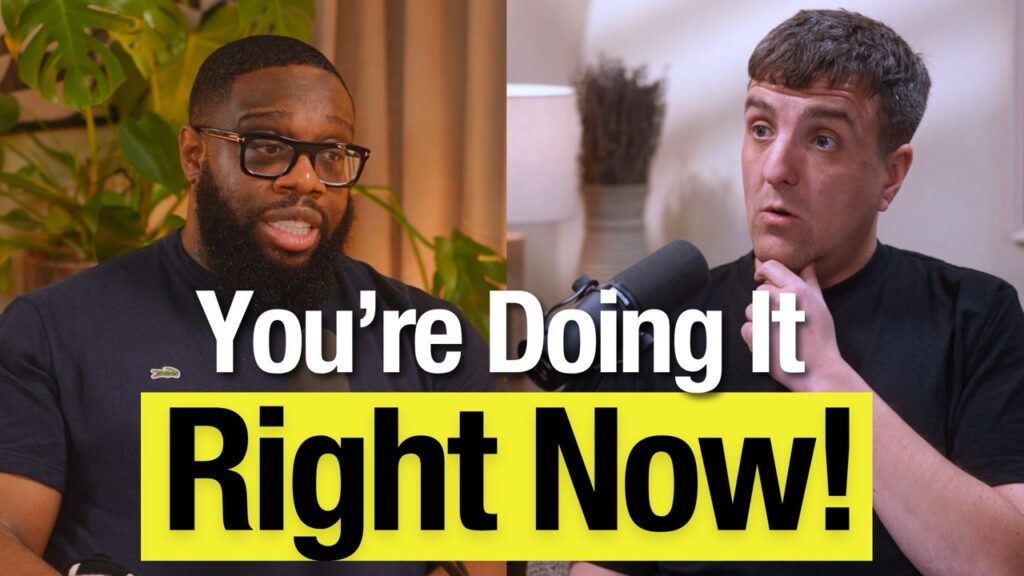
Listen to the pod


Starbucks opened 92 UK stores and paid zero corporation tax across two financial years, instead pocketing a £13.7 million credit.
Trader Michael Taylor explains how that legally happens, why the UK’s tax gap has hit £46.8 billion, and how to actually start picking UK stocks yourself.
I sat down with Michael Taylor again for episode 188, and this one grew out of a clip from our last conversation that racked up a few hundred thousand views.
Michael is a full-time trader and investor who built a large following breaking down UK companies, their numbers, and why they win or lose.
He’s also an investor in Gains App, so this conversation goes further than the last one.
We start with why some of the UK’s biggest multinationals pay next to no tax, move through why the local high street matters more than people think, and end with how an ordinary investor can actually start picking individual UK stocks without blowing themselves up.
———
Gains App is LIVE!
An AI-powered budgeting and cashback app designed to help you make more of your money.
Download here: https://gainsapp.onelink.me/8IhT/oiaimr1z
———
Get a FREE FRACTIONAL SHARE worth up £100 when you deposit £1 with Trading 212
https://www.trading212.com/join/MGP
If you don’t receive the free fractional share, head to the menu and put the word ‘MGP’ into the promo code section.
(Capital at risk when you invest)
Check for free if you’re due a refund in 60 seconds with Refund Club. Head to https://refundclub.co.uk/moneygains
Refund Club is a trading style of Sandsford Law LTD. You can pursue a claim free of charge directly to your lender and then to the Financial Ombudsman Service.
The FCA is likely introducing a free-to-use Consumer Redress Scheme, and it estimates the average redress per agreement will be £829.
Key takeaways
- Starbucks paid zero UK corporation tax across two financial years, and received a £13.7 million tax credit, despite opening 92 new stores in that time. It’s legal: profits get moved out via royalties, licensing fees, and intercompany loans.
- The UK’s tax gap, the difference between what HMRC should collect and what it actually receives, sits at an estimated £46.8 billion. That would rank as the eighth biggest item on the government’s budget.
- Every 70p of every £1 spent at a local independent shop stays in the local community, against as little as 5p at a large chain, according to New Economics Foundation research.
- Only around 17% of UK adults hold a stocks and shares ISA, and the FTSE 100 is dominated by “boring” dividend payers rather than growth stocks, which is part of why UK investors default to US tech.
- Michael’s approach to stock picking: start with a global ETF, research companies in sectors you actually understand, never bet more than you can afford to lose, and actively look for reasons you might be wrong.
Timestamps
- [00:00] Michael Taylor returns, viral Starbucks clip
- [00:20] Starbucks and zero UK corporation tax
- [03:11] How multinationals legally shift UK profits
- [11:16] UK’s £46.8bn tax gap and the wealth tax debate
- [15:22] Local spending: the 70p rule and high street decline
- [26:50] UK stocks vs US stocks: the ownership gap
- [36:05] Tool: how to research and value a UK stock
- [38:21] Position sizing, shorting and risk management
- [45:17] Trading full-time vs investing alongside a job
Why does Starbucks pay no tax in the UK?
A clip from Michael’s last appearance on the podcast, about Starbucks, picked up a few hundred thousand views, so we started there again.
The number is stark: Starbucks paid no UK corporation tax across two financial years and instead received a £13.7 million tax credit, all while opening 92 new UK stores.
“It’s well within the tax rules, it’s not doing anything illegal, but also doesn’t mean I have to like it,” Michael said.
He pointed out that Starbucks has told investors on shareholder calls that the UK arm is profitable, yet the filed accounts show losses and no tax paid.
The mechanism is straightforward once you see it. Starbucks pays royalties and licensing fees to related Starbucks entities based in lower-tax jurisdictions. Nando’s does something similar: one UK entity pays another Nando’s entity for “fit-out” costs in a different country.
Michael compared it to a loan: interest on that loan is deductible against UK profits, so cash moves out while the tax bill shrinks.
Nando’s structure is more elaborate still, spanning Malta, the Isle of Man, Guernsey, the Netherlands, Ireland, Luxembourg, Panama and the British Virgin Islands, with profits reportedly flowing through a Jersey trust holding around £750 million.
Meanwhile, every UK worker has income tax deducted before their wage even lands.
The UK's £46.8bn tax gap, and why a wealth tax won't fix it
The tax gap, the shortfall between what HMRC should collect and what it actually does, is estimated at £46.8 billion. That would make it the eighth largest line item in the government’s budget.
Oxford research cited on the show found 59% of foreign multinational subsidiaries operating in the UK report zero taxable profit, against 28% of domestic companies.
Even the £46.8 billion figure is disputed. “I read the same article in the FT, and I think the National Audit Office had figures very different to HMRC’s figures, so I don’t know which one to believe,” Michael said.
His point: nobody can fully measure what they can’t see, and the real number is probably higher.
We also discussed whether a wealth tax on the ultra-rich would close the gap. Michael was sceptical: “Money is pretty liquid and mobile. If you want to increase taxes, you also have to accept that people are going to leave as a result of that.”
The counter-argument raised on the show was that the sums typically proposed for a wealth tax are small next to £46.8 billion, so chasing large multinationals through the existing tax system may do more.
Does spending at independent shops actually help?
The most concrete number in the episode came from New Economics Foundation research: 70p of every £1 spent at a local independent shop stays within the local community, against as little as 5p spent at a large chain.
“That’s the fight, isn’t it? The high street is the fight. If all of these places go, it’s game over,” Michael said. Last year, 13,479 UK shops closed, an average of 37 a day, and 84% of those were independents.
From April, average business rates for shops jumped from around £3,750 to over £9,000 after relief was cut, squeezing already thin hospitality margins further.
A study in one small Devon catchment area found that diverting just 10% of local spending toward local businesses would inject an extra £2 million into that local economy every year.
Neither of us is arguing for boycotting big chains outright. The point is being conscious about where money goes when there’s a genuine choice, not treating every pound spent in the UK as automatically staying in the UK.
UK stocks vs US stocks: why investors look away
Only around 17% of the UK holds a stocks and shares ISA, and the total number of accounts opened has actually fallen in recent years. Part of the reason, Michael argued, is that the FTSE 100 simply isn’t exciting.
“I think the US has a lot better companies, that’s just a fact. Vodafone, Shell, HSBC, these are big monolithic businesses, but they are actually boring. They’re dividend payers, they’re not growth.”
If you already hold a global tracker, roughly 70% of it typically sits in US businesses, meaning most of your money is funding American growth rather than the UK economy you might actually want to support.
For a primer on where to hold that money, our guides to the best stocks and shares ISAs and cash ISAs vs stocks and shares ISAs are a good starting point before you go anywhere near individual shares.
Michael’s advice for most people is still to start with a diversified global ETF, and only move into individual UK stocks once you’re prepared to take the research seriously.
How to actually pick UK stocks
Michael’s method borrows from Peter Lynch’s “invest in what you know” approach: notice a business turning around in real life, then go and research the numbers behind it.
He gave his own example of buying Marks & Spencer shares after noticing local stores were consistently packed, which was followed by “an incredible run”.
The research itself starts with financial statements and ratios, comparing them the way you’d compare a car or a house before buying it.
Michael walks through this on his own YouTube channel. Our guide on how to pick stocks covers the same fundamentals if you want a UK-specific starting point.
Tool: look for reasons you’re wrong. “You want to find out if you were wrong. A lot of people, when they buy a stock, won’t listen to the downside because they’re emotionally invested in being right.”
He referenced Charlie Munger’s habit of listing the eleven ways a business could fail before deciding to invest.
Michael also flagged UK small caps as unusually cheap right now, after a decade of outflows and fewer active funds covering them.
He cited Cordel, a company doing AI-based rail inspection with a Network Rail contract, which private equity recently took private at a 100% premium after he’d tracked it for two years.
Risk, shorting and the trading lifestyle
Once you’re picking stocks, position sizing matters more than the pick itself. “Start with something small.
It needs to be enough that you’re actually invested enough to research it and care about it, but not so much that it can hurt you if you lost the lot tomorrow.”
Michael’s own rule: “Any position I take, I have to be prepared for it to go to zero tomorrow, because one day it will.”
He also warned about obvious red flags in management, recalling a CEO who told investors buying shares would let them “send your kids to Eton”, a company that later performed badly.
Revolution Bars was another example: directors took around £1 million in pay while the business was worth roughly £2.5 million, shortly before it collapsed.
On shorting, Michael described betting against Haydale Graphene after working out its monthly cash burn from a trading update, shorting around 5p and covering after the company raised money at 2p.
He also flagged Burford Capital as a short candidate on a podcast before Muddy Waters revealed its own short position and the stock dropped 80%.
Should you try trading full-time?
Michael was blunt about the lifestyle cost of trading for a living: waking at 3am to catch the New York open, cutting an Arizona holiday short after two weeks because the hours were unworkable.
“If there was any market action, I’d be looking to go to bed at 4pm.”
His actual advice runs counter to the fantasy most people have. “I think trading with a job is better, because you’re under zero pressure to make money, which is when it starts the enforced errors and mistakes.”
Removing the need to trade to pay the bills, he argued, makes you a better investor, not a worse one.
He also pointed back to circle of competence: whatever industry you already work in, you likely understand it better than most fund managers do, which is a genuine edge if you use it carefully and don’t overconcentrate in your own employer’s stock.
This transcript is auto-generated and lightly edited for readability, it may contain errors.
Host: Sammie Ellard-King (Up The Gains). Guest: Michael Taylor, UK stocks and trading expert, Shifting Shares.
[00:00] Sammie: Michael, welcome back.
[00:01] Michael: Thanks for having me on. Always a pleasure.
[00:03] Sammie: Mate, last time it flew, I think one of your clips, um, which is actually the baseline of this episode today, did a few hundred thousand views. It’s fair to say that this topic that we’re gonna talk about today is a big one. Um, I’m gonna jump right in.
[00:19] Michael: Yeah.
[00:20] Sammie: Starbucks.
[00:21] Michael: Yeah, on the number one Starbucks hater, I think. The OG Starbucks hater.
[00:26] Sammie: What you said last time made me laugh is burnt cigarettes. Yeah, it’s rank, isn’t it? The coffee. Yeah. Yeah. I’m not a fan. There’s one up the road from where we’re recording, next to an independent, and we should all go to the independent, as we all should. But they paid zero corporation tax in the last two financial years. In fact, they actually paid themselves, or received, a £13.7 million tax credit, which isn’t cash.
[00:52] Michael [?]: Yeah.
[00:52] Sammie: It’s basically off their tax bill.
[00:55] Michael: Which, if they don’t pay any, if they don’t make any profits, they won’t pay any tax, so it’s basically useless unless they actually make profits.
[01:04] Sammie: Well, maybe they’re potentially planning on making a profit soon, but they’ve opened 92 stores in that time frame, grew their sales if you look at the P&L, and meanwhile, every single person listening to this pays their tax in full every single month before it even hits their pay slip. So, how is a business operating on that scale in the UK even allowed to do that?
[01:24] Michael: Well, it’s well within the tax rules, it’s not doing anything illegal, but also doesn’t mean I have to like it. I personally find it quite annoying that some of these businesses pay less tax than me, and you know, everyone else should probably feel the same. But we all have a choice, right? So you can decide where you want to go, and if you really like Starbucks coffee, then you can go there. But the CEO once said, he basically bragged to investors on a call to shareholders, on an earnings call, that the UK was funding expansion elsewhere and was profitable, and yet when you actually look at the accounts filed, there’s no tax paid because they’ve created losses. So all of that cash has been sucked out of the UK to fund expansion elsewhere, and all of the things that Starbucks benefits from, so roads, yeah. If there’s a fire, they’re gonna call the fire brigade. Where’s the tax coming from to pay for that? And again, legal, but I don’t agree with it. So I just don’t go.
[02:25] Sammie: And then, if you look at it even further from that point on, there’s the infrastructure within the UK, there’s the ability to open these stores in the first place. Yeah. And then you’ve got the independent coffee shop next door paying business rates, tax on profits, corporation taxes, etc. And it just feels like a complete mismatch of imbalance, right?
[02:47] Michael: Well, it’s just economies of scale. Starbucks can do this, so it can charge itself royalties from a low tax jurisdiction, do all of these things that the average person just can’t do.
[03:00] Sammie: So walk us through it, like the average person listening to this is probably gonna be like, that really wound me up. And yeah, it did. It wound me up the first time I heard about this. Walk us through how they actually do it.
[03:11] Michael: So I’m not a tax expert, and I’m also not a financial advisor, as you know, so this isn’t tax expert advice, but essentially, Starbucks sends royalties to Starbucks, and it pays another Starbucks for licensing. Um, in the case of Nando’s, it paid for fit-out to another Nando’s in a different jurisdiction. So you can just move money around. So essentially, if you imagine a loan, you will pay interest on that loan, and you can deduct the interest from the profits in the UK, but the cash is basically moving from one place to another, which is what Caffe Nero does. It says it’s not set up to do that, but it just so happens that Caffe Nero doesn’t pay any tax. So it’s funny how that works, isn’t it? But essentially, all of these companies are doing the same thing, and there is a limit to how much you can do, but there are so many ways that it can be done, and obviously it can be done pretty well, because if you’ve got companies like Starbucks growing, adding more units, generating more and more cash, but not paying any profits, then it works pretty well. So again, it’s not illegal, the system works, but it’s not really working for the average person or the local coffee shop owner who’s struggling to stay open because they have to sell a certain amount of coffees just to pay the tax, HMRC, the rates, and then eventually they get what’s left, if anything’s left. I mean, how many of these places are closing down? So pubs are closing down, coffee shops, local restaurants are closing down because the costs are just too high. And we all have a choice, so it’s support these businesses or lose them. So if you go to these places, you’re gonna be left with a street full of faceless megacorps and chains.
[05:08] Sammie: Yeah, and also then you can kind of justify paying the extra 30p at the local, because Starbucks can then funnel the costs around and move these things around to bring that price down and undercut that chain value that’s up the road, even though technically you would say it’s worse cost-wise, right?
[05:25] Michael: Well, to come to that, a lot of people say that independents are more expensive. Yes, some of them are going to be more expensive, right? But what’s a Starbucks coffee now? It’s like five, six quid.
[05:37] Sammie: Oh, if you get the mocha chocolate frappuccino things, it’s gonna be even more, you know.
[05:41] Michael: Yeah, but for a standard coffee, it’s like four to six quid maybe. Yeah. And okay, London’s not cheap, but you can get coffee around that price or cheaper. So when you always get some bootlicker saying, oh, well, if we don’t go to Starbucks, all those people lose their jobs. Well, yeah, they might, and it’s not nice if a Starbucks closes down or one of these places closes down and people lose a job. I don’t like to see people lose their jobs, but that also applies to the independent. If that independent closes down, all of the people who work there lose their job, the owner loses a job, they might have to go on benefits until they find something new, just like the people in these multinational units. So, yeah, that argument doesn’t really make sense. And you also get what you pay for, I think. Like someone who works in Starbucks probably doesn’t really care about the service because they’re just doing a job. When I worked in McDonald’s, I didn’t really care. I was just doing the job, doing it for the money. If it was my own restaurant, then it would be a different story. Like the level of care and attention I would give to a customer.
[06:53] Sammie: Labour of love.
[06:53] Michael: Yeah, exactly, would go up. So, yeah, you get what you pay for.
[06:53] Sammie: I’ll agree a hundred percent. So I’ve just moved to Ramsgate and there’s a Starbucks in the town centre, and there’s an independent coffee shop called Staples around the corner, and it’s excellent, right? Yeah, they’ve nailed it and they’ve hit the right crowd, and it’s rammed. And I walked past yesterday as I knew you were coming on, and I was getting my hair cut in the town. I was like, let me just have a quick look because I knew we were going to talk about this. Starbucks had two people inside, and Staples was full to the brim. Good. So I think the message does carry. Um, and we’re not saying, look, we don’t want anyone to go out of business. Technically, they’re not doing anything illegal at all. It’s not tax evasion, it’s tax avoidance, um, and they’re just working the system, right? And they have that in their power to do so because of the way that the system’s set up. But we want to see the businesses in and around us do well. And it just makes for a better community, yeah, wherever you are in the UK.
[07:50] Michael: And also, some people could call me selfish, but I want a fairer country for my family, for me to live in. And, you know, you had some facts before this, so you’ve got on your sheet about how much actually stays in the economy. But if you think, you give it to a local business owner, they might then go spend it at the local restaurant or wherever. Yeah, they might go and spend it in Starbucks, who knows, right? Or they might put it into a global ETF, of which most of that will go to the US. But at least it’s been spent productively, whereas a lot of these multinationals, the cash is just sucked down and it’s gone. So it leaves the local area. So if you want a stronger local economy and you want people to be better off, then yeah, you need to vote with your money.
[08:37] Sammie: Well, here’s an example, right? Nando’s uses an extremely complicated structure across Malta, Isle of Man, Guernsey, Netherlands, Ireland, Luxembourg, Panama, and the British Virgin Islands.
[08:50] Michael [?]: That wouldn’t surprise me.
[08:52] Sammie: With profits flowing through a Jersey trust that was reported to contain £750 million. I mean, that’s absolutely wild. So they’re shifting money. I’ve listed eight, nine countries for it to essentially be stripped down to paying almost barely any tax for money that they’re taking from UK taxpayers.
[09:13] Michael: Yeah. And if that doesn’t annoy you, then I don’t know what will.
[09:17] Sammie: Why does the government let that happen?
[09:20] Michael: Well, this is probably beyond my pay grade, but if you were to introduce a tax on revenue booked, a lot of these companies are in the US. The man across the pond wouldn’t be happy. That’s going to affect things. So the Labour government gets a lot of criticism. I mean, every politician gets criticism, but there was a lot of criticism when the Chancellor wouldn’t say, you know, buy British. And I get that, because she’s negotiating, like the Labour government are negotiating with President Trump. If they say that, that could end up worse for tariffs. So there’s a lot of things to consider. It’s not as easy as saying, okay, we will place a tax on revenue here, because technically that sort of exists with VAT, and obviously that is a tax on the customer, passed on. But if you were to introduce that, other countries might introduce that too. And that’s the problem with the tariff wars, everyone is essentially worse off.
[10:23] Sammie: Gotcha. And if you think about it as well, a lot of the deals that we did post-Brexit weren’t that favourable to us, and we’re going back to the table all the time trying to renegotiate these inter-country trade deals, because we’re essentially standing on our own two feet as a country now. And if they do that, and we then have to go and negotiate with the Netherlands or Ireland or someone like that, we’re probably not going to get as favourable a rate.
[10:44] Michael: Yeah, pretty much, yeah. So for the person listening who is annoyed by it, the best thing that you can do, vote with your money and tell other people. And the amount of messages and comments I’ve had where people say, oh, I no longer go to multinationals because of your posts, which I think is great. I mean, I’m not naive enough to think I can make a difference, but every little helps, right? If you were spending, you know, 50 to 100 quid not in a multinational but in your local economy, if a few thousand people do that, great. Yeah. And that’s how it starts.
[11:16] Sammie: Oh, I agree. And, well, I say that, but then some of your Facebook posts, mate, they do a couple of million views. So I’m sure even if that’s a few thousand people, then it is actually making a substantial difference, and we’ll get on to why in a second. Um, but the UK tax gap, the difference between what HMRC should collect and what it actually receives, is £46.8 billion, which would make it the eighth biggest item on the government’s budget, which is absolutely mental. And an Oxford research study found that 59% of foreign multinational subsidiaries in the UK that report zero tax profit, compared to just 28% of domestic companies. So it really is a tax system right now which, obviously we’ve got outside influences in there, but it is broken from a UK perspective, right?
[12:07] Michael: Yeah, yeah. Yeah, I would agree. And I think I read the same article in the FT, and I think the National Audit Office, or one of them, said they had figures very different to HMRC’s figures, so I don’t know which figure to believe. I’m not even sure anyone knows because this is just so complex. And you also can’t see what you can’t see, you can only estimate, and I suspect the number is far bigger than anything we could even come up with, because you just don’t see it. It’s like money laundering, the increase in cash use is for money laundering, pretty much. But people will say, oh, the increase of cash, people are using the post offices more. That’s not people using the post office because they want to use the post office, that’s money being laundered, and you can easily look at one figure and think, oh, this is because of this, when actually it’s because of crime. Yeah.
[13:03] Sammie: So, well, look, in my personal opinion, I think we’re fighting the wrong fight. When you look at say the tax-the-rich kind of demographic. Well, who is the rich? Well, they’re saying anyone with net worth above £10 million, or there’s a multitude of numbers being thrown around. But however, even if you were to do any of the sort of wealth tax that say Zack Polanski, etc., are interested in putting in place, it’s a few billion quid a year. Yeah, this is 46.8 registered as an estimated amount. We’re saying it’s a lot higher than that. Yeah, it’s the wrong fight. Like we’re fighting the wrong fight, in my opinion, in that case. And I’m not saying that the wealthy shouldn’t pay their way, and I’m not part of that. And I definitely would like to see more money coming in from the ultra wealthy, but I just feel like this is something we can do ourselves, like we can actually fight this fight versus shouting about a wealth tax, which potentially may or probably will not ever happen, right?
[14:00] Michael: It’s probably not gonna happen, no, and I don’t know what the effects of that would be, because money is pretty liquid, right? And mobile. So, for example, I think in both of our cases, if we wanted to leave, it’s a few clicks and a flight, yeah, and we can be gone. Yeah. So, you know, and that’s just us, and we are nobody. So you think about what all of these people, you know, if I get why people want to leave, that’s fine. But yeah, if you want to increase taxes, you also have to accept that people are gonna leave as a result of that. And it’s very difficult to predict exactly what the consequences of something will be.
[15:22] Sammie: Yeah, 100%. So let’s bring this home then. We go back to this local conversation about you spending local, and this will really ram this point home. Research from the New Economics Foundation found that every 70 pence of every pound that you spend at a local independent shop stays within your local community, at a larger big chain, and I’m not saying don’t go and shop at your Tesco’s or anything like that, but it can be as low as five pence. So that’s a significant difference. Um, most people don’t think about what they’re actually doing when they’re tapping their cards, but it really does matter.
[16:00] Michael: Yeah, well, that’s the fight, isn’t it? The high street is the fight. So if all of these places go, then it’s game over. Yeah. And all of that money will get sucked out and we will all be the worse off for it. So people think that it doesn’t affect them. If you’re not gonna say boycott all these places, right?
[16:17] Sammie: If it’s almost physically impossible in a large amount of things, and, yeah, if you like a Nando’s, enjoying it, go to Nando’s, you know.
[16:25] Michael: I’ve spent so much money in Nando’s, I had one last week.
[16:29] Sammie: But I’m not saying that, I’m just saying that I think you’re more conscious now. I’m much more aware. Yeah, yeah, yeah. And if there was a decent chicken shop down the road that did the spicy rice, okay. Obviously, you don’t, and I’m still gonna go, if Starbucks is the only coffee shop in a 30-mile radius and I’m in need of caffeine, well, I’m gonna suck it up and get one, right? Yeah, because I need a coffee at that point. Well, that’s not what we’re saying. We’re saying you have to be conscious about where that money’s going. So if you have a choice, you can make a different one.
[16:58] Michael: Yeah, exactly. So as you say, it’s impossible to boycott everything, but even if people just modified, you know, 10% of the spending, it all makes a difference. And if everyone did that, we would all be better off as a result.
[17:12] Sammie: Yeah, because back to the high street then, last year, 13,479 UK shops closed. That’s a total of 37 a day. 84% of those were independents. Um, and from April, the average shop’s business rates have jumped from £3,750 to over £9,000, because relief was cut in the recent budgets. So independents are paying these full rates, multinational corporations aren’t. And it’s really difficult to compete with that.
[17:43] Michael: Yeah, I mean, all these multinationals have the economies of scale and the tax advantages that the average person, I mean, that’s a killer, that jump in rates of 200%, so three to nine. That’s basically profit that has either been wiped out, and if it’s not profitable, you can’t really continue, can you? It’s not exactly going to get easier.
[18:06] Sammie: We’re now looking at rate hikes and inflation on the actual physical goods, to be even keeping up to the same level as you were before, you have to raise prices.
[18:16] Michael: The price of coffee is potentially going to go up because of El Nino. So there’s a lot of factors. Yeah, it’s not just the rates, it’s the ingredients. But also, if people are not feeling as good, they will spend less. It’s just a given. Yeah, people might not skimp on the coffee as much, but they might not, well, actually, some people will, right? Depends if you’re middle class, you might cut back on a big holiday, but you’re probably not going to cut back on coffee because it’s just part of your life. Whereas if you’re someone where a coffee, you can’t afford it as much, you might cut back on the coffees, you might not go out to eat as much. So, yeah, I guess depending on what class and level of wealth you’re at, depends on what you will cut back. But people will spend less if they’re feeling worse off. Yeah. Because that just makes sense.
[19:08] Sammie: It’s really interesting what gets hit, right? It’s usually going out and entertainment goes first. The hospitality industry sort of gets hit hardest, most earliest, because it’s the easiest thing to pull back on.
[19:19] Michael [?]: Yeah.
[19:20] Sammie: Um, and then eventually it will stem over into the holidays. You might downgrade, you might go.
[19:27] Michael: Well, fuel prices are going up. Lufthansa has just cancelled 20,000 flights. Yeah. And that’s just now. When this fully comes through, they might cancel more. So yeah, that is gonna have an effect. We’re already seeing people change their behaviour because of the Iran war. So even if everything was back to as it was tomorrow, the damage has already been done.
[19:50] Sammie: Yeah. So is there any hope for the UK anymore?
[19:56] Michael: I like to think so. Um, I’m always quite optimistic. There’s always opportunity, but for a lot of people, life is quite hard, unfortunately. And, yeah, we’ve got this problem where wages, I mean the average wage now is £39,000 for a full-time, median.
[20:16] Sammie: Yeah, median, yeah.
[20:17] Michael: Median, yeah, sorry, so average, yeah, a bit different. But if you live in London, that is not a good wage. If you live in my hometown of Hartlepool, it’s quite a nice wage. So it really depends where you live, because everything’s, you know, I paid £7.10 for a tea the other day. Now it is the best tea I’ve ever had, and I’ll happily buy it again because it comes in some lovely China, a nice stainless steel pot to keep it hot, they warm up the milk.
[20:56] Sammie: Where, were you in a fancy hotel?
[20:59] Michael: Durrants, so it’s an independent hotel in George Street. But yeah, it’s lovely. Um, but yeah, things are excellent.
[20:56] Sammie: That’s an experience as well.
[20:59] Michael: Yeah, I guess so. Yeah, yeah. I mean, I tap away on my laptop there for a few hours, so yeah. But yeah, all of these things cost money, like pints are £9 now.
[21:07] Sammie: So I’m doing a video on this at the moment. Um, so the pint tax is mental. So the average salary in 1995 would buy you 9,000 pints or something, give or take. And today, in today’s reflection, it’s almost the business rate flip, it’s now like mid 3,000s. Right. So the price of beer, which we all care about, right? Yeah, like let’s be honest, you don’t really want to be going, like the other day, I was in the pub with some of my mates after doing a few podcast episodes in London, and the round came and it was like £54.
[21:49] Michael: For what, four pints or something?
[21:52] Sammie: Yeah, like a double vodka and lemonade or whatever, and then I was like, that’s 54 quid. Like, I remember when I could go out for a tenner and come home absolutely, yeah. But this is where we’re going with this, so it is difficult for people.
[22:08] Michael: But just on that though, a lot of that isn’t actually going to the pub, because it’s rates, duties, all sorts. I did a reel on this about pubs ripping you off because pints cost this, and then I took away all of the costs, and it was like pennies left for the pub. Like it was really low margin stuff, and pubs generally make money on wet-lead, I’m pretty sure. Um, the food, not as much.
[22:34] Sammie: But food is a lot harder, yeah.
[22:36] Michael: So, yeah, you’re in this industry.
[22:39] Sammie: Yeah, so you’re lucky if you’re getting three to five percent net margin at the end, like really. And you’re doing well if you’re at that point. Anything above that, you’re smashing it because it’s extremely difficult. So, but really interestingly, there was, um, I saw this come out the other day, and it’s a lot of the major businesses in the UK that you think are doing extremely well and ripping everybody off. Yeah. And yes, when you look at some of the bonuses that they give their senior members, that can annoy people. I get that. But then actually, on the margin side, on the real P&L, they’re very close, you know, under 10%, definitely under five in a lot of cases, which is just wild. Like within this hospitality industry, that one flick of change which then stems back down is more than your five percent, and that’s when you start to see them close.
[23:29] Michael: And these businesses are operationally geared, right? So regardless of how many people come through the door, you need to still pay for that unit, you still need to pay your full costs. So you’ve got to cover your costs, and then it starts to trickle down the P&L. But until you get a certain amount of business and revenue in, you’re not actually making any money, you’re just paying other people first.
[23:50] Sammie: Yeah. And look, I know people will probably say that we’re going on a bashing thing. I don’t think it’s that. I think it’s you need to be aware of where what happens with your pounds. I think we’ve got into this kind of mentality that wherever we’re spending in the UK is UK, and it’s just not. That’s just not true. So we’ve just got to be a bit more conscious about what we’re doing. That’s what the aim of this message is to bring. It’s not to say that the UK is rubbish. I am an optimist about the UK. I’m starting a business here.
[24:20] Michael: Yeah, I think the UK is great.
[24:22] Sammie: I love it. I love the UK. I’ve got so many plus points. I’ve been offered a golden visa in Dubai. I was like, absolutely not, because there’s no heart and soul, there’s no heritage as much. I’m sure there is heritage. I’m sure you know what I’m getting at. Yeah, right. For me, there’s no heritage, there’s no connection.
[24:39] Michael: Well, it’s just too hot. And there’s a lot of uncertainty now with what’s going on.
[24:44] Sammie: Well, yeah, look at what’s happened, exactly. So look, I am optimistic about the UK. I just want to see people vote with their pounds a little bit more than they already are, and, as we say, it’s really impossible to do that with everything, but try it with 10%. Um, because one study in Devon found that if people just diverted just 10% of what they earned, and this was from one small catchment area in Devon, it would have injected an extra two million pounds into their local economy every single year. Yeah. So that’s a tangible amount. This is improvements in parks and infrastructure and all of these things in and around you, yeah, which affect the quality of life for you, your family, your friends, and everyone living in that area, plus probably the prices of your houses and your assets.
[25:34] Michael: Yeah. Yeah, I agree. Yeah. I mean, that’s it, when you put it in the actual numbers like that, you can see very quickly it does make a difference.
[26:50] Sammie: Yeah, yeah, it’s crazy, isn’t it? So we’ve talked about where you’re spending and what you’re doing with your money. Let’s talk about where you’re investing. Right. Um, because you are a big proponent of the UK economy and where you’re investing, you’re investing into UK companies as your bread and butter. Um, most people are just passively buying indexes or investing into tech like Tesla and Nvidia, etc. Why do you think they’re ignoring what’s on their own doorsteps, and how do we change our thinking to look for potential opportunities that are here in the UK?
[27:27] Michael: I think the US has a lot better companies. That’s just a fact. I mean, if you look at our FTSE 100, it’s Vodafone, it’s Shell, it’s HSBC, sort of boring. You know, these are big monolithic businesses, but they are actually boring. And they’re dividend payers, they’re not growth. You know, you look at the Magnificent Seven and the growth in that, you can see why people get excited about that. But there’s also just a lack of education, and the UK, and again, this isn’t political, this is the result of several consecutive governments from all parties who’ve failed to build an investing culture in the UK. So, but the fact is a lot of people are just better off buying ETFs. It’s hard buying individual stocks, it carries a lot of risk, idiosyncratic risk, so that is individual stock risk. Um, so yeah, I think if you were going to invest in individual stocks, maybe, and again, this isn’t financial advice, look at a global ETF to cover the balance, get a lot of diversification in, and then pick individual stocks. Because if you pick 10 individual stocks, okay, you were sort of diversified, but unless you actually know what you’re doing, which most people don’t, the chances are you’re probably going to lose money. So unless you’re going to take it seriously, I wouldn’t advocate buying individual stocks.
[28:56] Sammie: Yeah, I agree, because it’s really difficult to get someone into it anyway. Only 17% of the UK have a stocks and shares ISA. So we’re trying to shift that number up. It’s actually gone down a little bit if you look at total numbers of accounts opened, which is mad because there’s all of us hammering it. Um, but hopefully that changes now with Martin Lewis venturing into speaking about it. And I’m very much certain he’ll have a much bigger story than all of us put together. But the same point is that once they’re in that stocks and shares ISA, teaching someone how to buy one globally diversified ETF is a lot easier than finding opportunities within their UK economy.
[29:41] Michael [?]: Yeah.
[29:42] Sammie: How, but if we want to shift that mindset to get cash flow coming into the UK, because again, it’s like you’re voting with your pounds here today. This is the same thing. When we’re, 70% of that global ETF is in the UK. So again, 70 pence of your pound is then going towards American-based businesses, which are using that capital in America, not in the UK, which is only three to four percent of that global ETF.
[30:06] Michael [?]: Yeah.
[30:06] Sammie: So maybe three to four pence of every pound that you spend on a global ETF is funding UK companies, and even those, some of those are then multinational corporations themselves within the FTSE 100. So it becomes this whole thing, like, how do we help the UK stock market and the businesses in the UK which are listed?
[30:25] Michael: Well, the government’s running a campaign at the moment, Savvy the Squirrel, which sort of makes me think of saving. So if anything, it should have been Stocko the Squirrel, I think. I associate a squirrel with saving. Reminds me of the Beano magazine, Stocko. So, I mean, that’s a start. Yeah, yeah. Um, it’s not gonna be an overnight change, right? It’s just not. Um, but 20, 30 years ago, if you’d done all right for yourself and you had a bit of money, ETFs weren’t really a thing. So you would buy a managed fund or you would read Investors Chronicle and learn about various stocks and try it that way. Whereas now it’s so much easier for people to buy a global ETF, which is still the best thing to do unless you’re gonna take it seriously. But if you do want to take it seriously, then you’ve got to learn how to value a stock, you’ve got to learn how to look at its business model, assess the company directors. If the share price keeps going down and the director’s salaries keep going up, that’s not really a good sign, is it? So, yeah, there’s a lot to learn, but start small, start learning about things. I mean, it’s a skill, right? And anyone can acquire a skill, it just takes time and effort.
[31:38] Sammie: A friend of ours, Rich, will say, like, walk around and see what’s going on. If you’re seeing X, Y and Z. And I made the case when I spoke to him that that’s exactly what I did with Marks and Spencer, when I looked at the Marks and Spencer share price, but then I could also see the stores that really started to turn around. All of the ones near me were always rammed every time you went in there. Yeah, you literally couldn’t move. And I was like, well, this is only a matter of time, and I bought based on that, and obviously a little bit of research. Like I bought Marks and Spencer and it had an incredible run.
[32:11] Michael: Well, that’s it. You can see a lot of these businesses, you know. A lot of the FTSE 250 is domestic businesses, so it’s things like Halfords, things that you can see and you can understand how they work. And, yeah, I’m not saying, look, if your local Tesco’s busy, go buy Tesco shares or whatever. But to come to that, you can actually see physical turnarounds, which you then decide to, okay, right, that’s an idea, I’m gonna go research this company. Um, Peter Lynch, who ran the Magellan Fund, he did exactly that. He took his wife and his kids to the mall, gave them all a bit of money, and then went to see where they went. And watched them, yeah, that was interesting, because then he learned what kit was fashionable with the kids, what was fashionable with his wife. Um, and then he would go research the stocks behind that story. So behind every business, there’s a stock, and I’m paraphrasing him, and your job is to go learn the story of that stock, learn what it does. It might be a great business, but it might be massively inflated, and then you might get a recession where suddenly the stock’s down 50%, hasn’t actually changed, and it throws up a massive opportunity. I mean, one of these for me was the COVID pandemic. William Hill was down 90%. Now I was on the bid at 30p, and I was all gone at 60, thinking, oh, I’ve done really well here. What I should have been thinking is, actually, gamblers are gonna keep gambling. Nothing has changed with this online business at all, and it got taken over at like 240 or something within a year.
[33:48] Sammie [?]: Wow.
[33:48] Michael: And I mean, at the time I didn’t have any sources of income other than the market, so I was just trading day to day, and you didn’t really know what was gonna happen, right? Because it was insane.
[33:59] Sammie: That was a hundred percent.
[34:03] Michael: Yeah, so it was just a very nice profit, either way.
[34:03] Sammie: Yeah, yeah, no.
[34:03] Michael: It’s, I mean, I was chipping them out all the way up, yeah. Um, but yeah, like the market throws off opportunity. You know, we had the tariffs thing, we had the Iran war knock value off some decent companies. So if you’re an investor, there’s always opportunities, and just because you don’t like a stock right now doesn’t mean you won’t like it, in a few years, when something happens. So, I mean, there’s stocks I’ve followed for years, I’ve never bought them, but I might one day. And it has been the case where I’ve followed a stock for about eight years and then doubled my money on it. So it’s just a case of research and knowing what’s around. And, yeah, I think the UK small caps are a really good trade at the moment. I’m not saying go buy them, but if you want to outperform, I think now is the time, because we’ve had a decade of outflows, Brexit didn’t help, institutional money selling things, we don’t really have that many active funds in UK small caps anymore. So we’ve got this inefficient, illiquid market where you can buy some world-beating businesses for very cheap. And there was one recently this week, Cordell. I’ve been watching that for the past two years. Cordell. Cordell, okay, and what it does is AI imaging, so it attaches something to the front of trains, it’s got a contract with Network Rail, the infrastructure, scans the rails, and then when it sees a problem, warns people. So smart, yeah, and that’s just been taken out by private equity for a hundred percent premium. So there are opportunities. Private equity is taking out a lot of our companies because they’re cheap. Yeah. And again, don’t go buy some spivvy miner in a faraway land because UK stocks are cheap. Some of them are cheap, some of them are complete garbage. Your job as an investor is to work out which ones that is.
[36:05] Sammie: I was just about to ask you, how do you understand that? If you’re the average Joe, thinking, all right, that sounds interesting, Mike, like, how do I even start to look at these things? I’m not gonna buy anything yet, but I want to get into it. What’s the start of the things that I need to look at?
[36:22] Michael: Financial statements. So I’ve got some walkthroughs on my YouTube, how to read these things and understand them.
[36:22] Sammie: Ratios video, by the way, I’ve enjoyed that.
[36:22] Michael: Yeah, ratios, financial ratios. So it’s like a house, right? You wouldn’t just go buy a house without doing a survey and looking at it and checking out all the things that you do. Same with a car, same with a stock. You’ve gotta look at, is it actually good value and what are its future prospects? Yeah.
[36:51] Sammie: So you’re almost looking to tell yourself that you’re wrong.
[36:55] Michael: Yeah, you want to find out if you were wrong, yeah. And a lot of people, when they buy a stock, they won’t listen to the downside because they’re emotionally invested in being right. You need to look at why you might be wrong and continuously update your thesis. Because if I find out that the story has changed, then I want to be able to get out and sell. I’d rather just accept that I was wrong than lose money.
[37:19] Sammie: Yeah, no, you’re totally right. I think Charlie Munger says it, he looks for the 11 ways that the business can fail. And if any of them ticks his boxes, only once he’s then looked at those 11 ways, then he will decide, okay, well, then even then it could still not be the right information.
[37:35] Michael: Yeah, I mean, it can still go wrong, right? There’s frauds, there’s, I mean, Patisserie Valerie, one day just stopped trading, gone. Conviviality, the directors even bought shares a few days before it suspended and never came back. So, yeah, do not put too much of your money in a single share. And my rule is that any position I take, I have to be prepared for it to go to zero tomorrow, because one day it will, hasn’t happened yet. I’ve had some big hits, one time from Management Resource Solutions, it was in 2016, but you’ve got to be prepared for it to go to zero one day because you cannot control that. One day it will happen, and the only way you can defend against it is by not position sizing too big.
[38:21] Sammie: Okay, so then let’s look at this from an average perspective, right? Like, I’m gonna buy 10 stocks over the course of, are you doing that in one go, or are you spacing this out over a number of, like, are you building positions and then keeping things in cash back? And how are you approaching that?
[38:36] Michael: So I’m a trader, so I will generally have less than 15 positions. But for example, this morning I increased one because I think the risk to reward has got better, and I might stack on exposure as that story develops, and then I might be selling others if the price is getting too toppy or if it’s run up a certain amount. So I’m basically managing the risk on the overall account, but also looking at, okay, what’s the risk to reward on this, this and this, and where is my money working more efficiently?
[39:10] Sammie: And so, for example, someone who’s got their global ETFs and they’re cooking there and they’re building that position and they want to try and get into this a little bit more, they might say start with five or ten percent of that total portfolio.
[39:23] Michael: Yeah, start with something small. I mean, it needs to be enough that you’re actually invested enough to research it and care about it, but not so much that it can hurt you if you lost the lot tomorrow.
[39:34] Sammie: So, really interestingly, a big part of what you do as a trader is you’re not just looking at stocks going up. Yeah, you’re also looking at them coming down.
[39:43] Michael: Yeah.
[39:44] Sammie: What does that mean?
[39:45] Michael: So if I think a share price is going to go down, I can bet against it, and in some cases actually drive the price down by just selling quite a bit of it. So for example, shorting is, so for example, in the pandemic, a lot of hospitality businesses had been hit, but bizarrely, Hollywood Bowl hadn’t. So I shorted it, and then because nobody wanted to buy it, the price went down and I just kept hitting it, and eventually it cratered. So I mean, that’s quite rare, but generally what I will look for is most of my trades are long, so less than one percent are actually short.
[40:27] Sammie: What’s long for you?
[40:28] Michael: So long is buying and looking for the price to go up. Whereas shorting is you sell something you don’t own and want the price to come down, and then you buy it back, and then the difference is your profit.
[40:41] Sammie: So can those be time frames of weeks, months, years?
[40:45] Michael: Usually weeks, yeah. I don’t really want to, I’m not a long-term shorter. But for example, there was a company called Haydale Graphene, gave its cash position in the trading update, and it also said the loss before EBITDA was this. So all I had to do was take the loss for the period, divide it by six, and then I can see the rough cash burn per month, and then subtract it from the cash balance given at the time. You didn’t need to be Warren Buffett to realise that they’re going to be getting the begging bowl out soon. So easy short around 5p, raised money at 2p, and I gave them money to close my short. Um, so that was a 3p profit, 60% profit in a few weeks. And this could have been avoided if management just raised money when they didn’t need to. And I say this to founders and people who come to me for wanting money for investments, raise the money when you don’t need it, because otherwise, people like me are gonna say, you need money, you’re desperate, and I’ll do it for you at this price. And that’s just the reality of it, just supply and demand.
[41:56] Sammie: Shouldn’t have come to you when we needed money for Up The Gains.
[41:59] Michael: Well, I’m quite happy with that investment, and if it works out, there’s more to come.
[42:04] Sammie: Yeah, yeah. I mean, I put it out publicly yesterday, Michael’s one of the investors in Gains App, and so, yeah, massive, massive thank you for that, man.
[42:11] Michael: Yeah, and as I say, raise money when you don’t need it.
[42:14] Sammie: So, well, yeah, we were having this chat yesterday, and I mean this is slightly off topic, but we were having this chat yesterday. It was like, well, we probably need to look in again in like five, six months to be able to go to the next phase of it. As in, the guys were like, oh, well, we don’t need to do that for another four or five months. I was like, no, no, no, we need to do that. You need to be thinking about it now, yeah. Yeah, yeah.
[42:33] Michael: You always need to be thinking of the raise after the one that you’re raising for.
[42:37] Sammie: Exactly right. I was like, I’ve taken a breather of a couple of weeks, I’ve just come out of legals, and I’m like, unfortunately now it’s back on the gas again, and it is what it is. I don’t think you ever stop that as a founder, but I just want to come back to this because you flagged Burford Capital as a short candidate on the Investors Chronicle podcast, and about a week later, Muddy Waters revealed their own short position and the stock dropped 80%.
[43:03] Michael [?]: Yeah.
[43:03] Sammie: So what are you seeing in that? Is that what you mentioned there?
[43:07] Michael: So this was different, because when you look at a chart, it’s homogeneous, it shows the entire price action of the stock, and the price really is just the money-weighted sum of opinion. Now, for about, I think it was about a year, the price had been going sideways. Every time the stock put out very good news, it sold off heavily, which basically says there’s a lot of people selling, or maybe one person selling a lot, but it was just repeated selling, the stock wasn’t going to go any higher, because it didn’t. And I said if it breaks this point here, that it’s a significant low, that would be a short for me. Um, and actually, I couldn’t get any borrow, so I rang round and nobody had any borrow, probably because it was all out on loan to Muddy Waters, which was a bit disappointing, but it definitely wasn’t a long when you’re seeing signs like that.
[44:00] Sammie: So let’s unpack that a little bit, because that’s one of the things that you tell people to watch out for, is a good thing, right? There’s good news about the company, that’s a good thing. That potentially means that the stock price might rise. Yeah, but that’s not always the case, is it? And there’s a multitude of different factors in play.
[44:16] Michael: Yeah, so a lot of traders will either be, or investors will be, fundamental or technical, and I look at both, because why would I not if I think they will give me an advantage? So, yeah, I’m looking at the price action and the chart. Generally, what I want to see is an early uptrend and a change in momentum. Because if I’m buying a stock that’s going down, I’m essentially betting that I am pinning the bottom. And why would I do that? So, unless I’m BlackRock and I need to buy it on the way down because I need the liquidity, why would I not just wait until the trend had changed? So I will do that. I will look at the fundamentals strengthening, any signs of director buying, things like that. So there’s a lot of things to look at, but yeah, again, start small, and, you know, someone who’s 30 now could be buying stocks for the next 40-50 years, so it’s a long-term thing, but it’s very fun as well.
[45:17] Sammie: But this is the bit I was just about to say, is that you said probably one percent of people should do this full-time, but probably less to be honest. You think less?
[45:25] Michael: Yeah, I think a lot of people like the idea of being a trader, and I had someone telling me the other day that they struggle to get motivated, like when they’ve got a trade on, they will just stop looking for other trades. I was like, it doesn’t work like that. This is a lifestyle. Like if I go to New York, I’m getting up at three in the morning because the RNS, the news, is opening at seven in London. That’s just how it is. I mean, my wife doesn’t like it. We were supposed to go to Arizona for two months and we lasted two weeks because I was getting up at midnight. And then, if there was any market action, I’d be looking to go to bed at 4am. But I can’t really go in the crouch. So I would stay up and I would go to sleep at like 3 or 4pm to try and sleep, and it was just so hard. Um, but I don’t have any options because that is my income. Yeah, sure. So it’s like really good. For example, I can come and sit and chat with you in the middle of the day, it’s pretty good, but there’s also a downside to it. And if you are reliant on that for your income, that just dials the stress levels up a hundred times more.
[46:40] Sammie: So, does someone listening to this have time to even think about this if they’re part-time, you know, looking at… sorry, can I rephrase the question? Can someone that’s listening to this, if they’re in a nine to five, yeah, they want to pick a few stocks on the side and do it like that, can someone still do that without… yeah, someone can do that.
[47:03] Michael: Yeah, you can invest and you can even trade with a full-time job, but you’re not gonna be intraday trading, you’re gonna be trading for the long term. And actually, I think trading with a job is better, because you’re under zero pressure to make money, which is when it starts the enforced errors and mistakes. I will trade better if this business that I’m growing on social media pays my bills, I’m then under zero pressure to make any money in the market, which will be quite weird because it’s all I’ve ever known.
[47:38] Sammie: So you might be better.
[47:40] Michael: No, I will be better because I won’t have the pressure to trade. I will be able to scale up my biggest trades because I’ve got my bills covered by, your own emergency fund in a way. Yeah, exactly. And I don’t have to take money out from ISAs and spread bets to pay the bills.
[47:56] Sammie: Yeah, that’s crazy. I didn’t think about it like that, because my own personal positions are between three and five years. Sometimes they go on longer. Um, because I sort of look at a company, I like finding the company that’s not really kicked on yet. Right. Or they’re hot, but the stock price hasn’t massively reflected that, or they’ve got enormous headroom in terms of where their growth is. So they’re at that inflection point as a business, that if they kick on, they’re gonna kick on hard. Um, but I like to stay in my lane as well with this. So I like to deeply understand fintech businesses, e-commerce businesses, yeah, and a bit of fashion in there as well. Um, with M&S and Nike, which you know about. Um, but I stay in my lane as I understand those, and I can see those businesses. A new one comes out and they list on the stock market. Yeah, then maybe the valuation’s a bit high for a little while, they have a little bit of a stutter, but then I can see that this product that they’ve got is just gonna go. It’s only a matter of time. That for me is a really great investment. It’s a trade in a way, but it’s a longer term one.
[49:05] Michael: Yeah. Well, that’s it. Whatever sector you work in, you probably know that sector better than most people, and in some cases, better than some fund managers. So that is your advantage. Now, for example, if you work for Rolls-Royce and you only bought Rolls-Royce shares, the issue is your employer is Rolls-Royce, so you’ve sort of doubled up, and that’s not necessarily a terrible thing, and it’s unlikely Rolls-Royce is going to go bust, but it can happen. But if you’re working in a certain industry, you will probably know that industry better than a lot of people. So it makes sense to invest in what you know.
[49:43] Sammie: Well, let’s take that example so someone can look at this as a logical thing, right? You look at Rolls-Royce, you’re in the car area, and so you deeply understand the makeup of cars and how cars are doing, and you’re interested in that because you’re doing mechanics or whatever, right? This is you as that individual, and let’s say BYD comes along, yeah, and it’s a brand new car, and it’s got all of these high-tech new things, and it’s listed on the stock market, but the stock price hasn’t gone up yet. But you’re like, that’s gonna change the world, whatever that might be.
[50:19] Michael: Well, that’s it. That’s when you would do more research. Yeah.
[50:22] Sammie: That’s when you’re looking into it and you’re understanding that that industry and that company within it has that potential uplift.
[50:29] Michael: Yeah.
[50:29] Sammie: But then you’re not betting the entire bag on that as well.
[50:32] Michael: No, you never bet the farm. I’ve seen a lot of people come and go over the years, and it was always they put too much money into one thing and they didn’t really know what they were doing, and then emotions just made them make suboptimal decisions. So, my goal is not to get rich overnight, it’s just to stay in business and keep going.
[50:54] Sammie: See, we’ve spoken about where you spend your money, where you invest your money. It’s like hyper UK focused. Are you investing in the UK because you’re a romantic or because you just understand it?
[51:08] Michael: I just, it’s what I’ve been doing for the last decade. I understand the intricacies of the market better than most people just because I went down the rabbit hole. I find it quite curious. I mean, one time I was looking at an auction screen and the market had closed and there were still orders on the book. I was like, hmm, I wonder what happens if I hit those orders, and it turned out those orders were live if they matched the uncrossing price. And no, I don’t think anyone knows that because you wouldn’t know, it’s not in the rule book. Well, yeah, but it’s not in the rule book, yeah, yeah. But it’s there. Okay. So all of these little different things. I mean, there’s a video on my YouTube of how I made £192 in two seconds. I actually flagged it on my Twitter and said, oh, someone’s gonna take the other side of this trade and make a few hundred quid. And I posted on my Twitter, but then nobody had taken the other side of the trade. So I was like, well, I’m just gonna take it for myself, and then I made £192 quid in like two seconds, because nobody understood, even people who’d looked at my tweet hadn’t really understood it, or maybe they’re just doing better than me, and, you know, £192 quid isn’t worth two seconds of time. So, you know, little things like that, and then I’ve got decent relationships in the City with brokers and people like that. And I speak to companies, speak to management teams in the UK, not getting any inside information, of course, and that’s illegal and I don’t want to go to jail. But if I’ve got questions about the business, I can then ask them, and obviously you’ve got to be careful because they will tell you what you want to hear. But if they look dodgy, don’t invest in them. I mean, there was a CEO before who had a gold earring, and he was saying if you buy the shares, you’ll be able to send your kids to Eton. That is a massive red flag. Um, that is not what you want to see. No, so, yeah, and you would be surprised to hear that that stock did very badly. Yeah, I can only imagine.
[53:12] Sammie: Because you need to look at management, you need to believe in the mission, you need to trust them.
[53:16] Michael: Yeah, you need to see what they’re doing is making sense. I mean, some management teams, I think I could do a better job, and that’s not me being arrogant, it’s just they’re so bad at what they do, and they’ve just ended up there, because they got lucky, and the shareholder base is often scattered to the wind, no one’s voted them off. And some of these people are gonna be getting like £300 grand, £400 grand a year for a company that’s terrible. I mean, look at Revolution Bars. I mean, I warned people that that would go bust, it did, but the management team were taking like a million in remuneration at a time when the business was only worth like two and a half million, and you think that is insane. They’re taking half the value of the company out in pay. Um, it really was nuts, and I don’t know where they all went, but yeah, some of these people struggle to get jobs anywhere near the same pay, because it just got lucky. Like some management teams are just bad, yeah.
[54:18] Sammie: Yeah, yeah. Well, yeah, not every manager, we’ve all had bad managers.
[54:24] Michael: Well, exactly, yeah.
[54:25] Sammie: I think a lot of them, they move up the chain, there’s no other progression period for them to become a manager, but they’ve never learned how to actually manage or do that role in that department, they just happen to get to that point because it’s the next logical step for them. So it doesn’t mean they’re any good. No, and that’s why companies go bust, right? Yeah, exactly.
[54:43] Michael: Yeah, and it’s not the only reason, but it’s one of them.
[54:46] Sammie: Yeah, I need to remember to turn this off, right? I think my ring is now going off on this, right. Uh, it means the dog walkers have come round. So that’s it. That’s a good thing. Um, I need to learn how to turn this off. I did put it on do not disturb, but it’s just not working, Michael. Um, but you’re quite active on social media. Yeah. You’ve got a very large following on Instagram alone. Um, congrats on that. I think you’re absolutely excellent.
[55:14] Michael: Oh, you help quite a bit. Well, it’s always good to bounce ideas and learn stuff from you.
[55:19] Sammie: Yeah, and we do. And I love chatting to you and, you know, we have quite open conversations about these things. I think it’s really helpful. But you do get a lot of stick every now and then. Yeah, yeah. I think I do too. Um, does it bother you? And it used to.
[55:36] Michael: I used to not put things out because I was worried about what people think. Um, and then, yeah, it’s just life’s too short, isn’t it? You get older, you realise that, if would you take advice from these people? Probably not. So then why would you listen to all the bad stuff they say? And usually it’s from people that are just angry and want to have a go. Like, fair enough, if someone wants to criticise me and tell me why, I’m open to hearing it. And, you know, fair enough, that is fine, and if people do it respectfully, I will always listen. But when I’ve been accused of being a lefty, a righty, a reformer, all sorts of things, and, you know, it’s usually people just want a vent and they’re just out for a fight. Or they’re jealous. I mean, I don’t know, maybe they are, maybe they’re not, but, you know, it’s like I gave, I wrote a book, gave it away for free. Um, I write newsletters for free, do YouTube videos for free. I mean, it cost me a lot of money to make those videos, but then if you ever charge for your time, people are like, well, why don’t you do that for free? I say, well, do you do your job for free? And no, of course I don’t, but for some reason there’s this expectation that people should just do things for free. And a lot of things I do do for free, but I also want to charge for my time because I think that’s fair.
[56:59] Sammie: Oh, I agree. I agree with you. It comes to a balance, and I think that’s why we’ve built the app now. It’s like, well, this is a thing that is really, really helpful. Um, if you want the pro version, you can, and the free version’s there, yeah. You can use the free version, but if you want more, there’s a cost.
[57:15] Michael: But it’s also not free to run, right? So it’s definitely not free to run. You couldn’t give it away for free even if you wanted to.
[57:21] Sammie: No, no, I haven’t got an endless pit of money to pour into it to carry on helping. But that’s why we’ve done it. Um, because I feel like you must feel the same. Like obviously we’ve got programmes and education programmes and paid things, but it’s difficult, even for me, I still just don’t enjoy selling these things to people.
[57:48] Michael: Yeah, I’m not really a big fan of it. It feels sort of weird.
[57:53] Sammie: Um, but then it’s wild that someone on the internet wants to pay you money, but that’s another one.
[57:58] Michael: Yeah, but, you know, if people get a good result out of it, well, yeah, then great, because time isn’t free, right? I mean, I spent hours building this thing, and, you know, my programme, it was supposed to be six weeks, it went on for twelve, just because I wanted to make sure that I actually delivered on what I wanted it to do, and it just took longer than I thought. But I’m not gonna say, okay, well, bye, six weeks, bye. I want people to have a good experience, so, yeah, but, yeah, I think it’s fair to charge people for your time.
[58:31] Sammie: Yeah, and I think you’re awesome at it. Definitely go and follow Michael on social media. Um, I would encourage you to tune into his walking reels. Oh, yeah. They’re excellent. Oh, thank you. Um, you get a really good digest about what’s going on in the UK economy, but really interestingly, you talk about individual stocks as well and companies doing badly. Sometimes, yeah, yeah, companies doing badly. Um, and I think it’s lovely to have that because you teach me loads as well. Like there’s loads of businesses I’m like, I had no idea that they did that, you know, like the way that they’re structured or the profits are up and down or they’re raising money. It’s such an incredible education channel. Oh, thank you.
[59:10] Michael: That’s good to hear.
[59:10] Sammie: You should be extremely proud of it. But, yeah, where are we gonna send people? Where do you want to send them today?
[59:15] Michael: YouTube. I quite enjoy creating YouTube videos and it’s massively loss-making. So please check out my channel if you think the videos are good. Watch more of them. If you think they’re rubbish, tell me why so I can fix it. I don’t mind constructive critical feedback.
[59:32] Sammie: We’re getting better, we’re getting better.
[59:34] Michael: I do have some trolls though, because every time I post a new video, it instantly gets two dislikes. I know. So I don’t know, this has been going on for ages, but every time I post a video, it’s two instant dislikes.
[59:45] Sammie: Yep, I’m the same. I get one or two dislikes, and we got a one-star app review on launch day. I was like, what the hell, guys? We launched today. So it just goes to show that there are some people out there that just don’t like you and what you do. Yeah, you’re just after the people that do. So I’m still here.
[1:00:06] Michael: You might just remind them of someone they don’t like. It’s got nothing to do with you, so you can’t take this stuff personally.
[1:00:12] Sammie: No, mate. Thank you very much for coming on.
[1:00:12] Michael: Well, thanks for having me on, it’s been a pleasure.
[1:00:12] Sammie: Uh, we’ll leave a link to your YouTube channel below. Go and follow Michael and, yeah, we’ll catch you very soon.
[1:00:21] Michael: Yeah, speak soon. Download the app.
Frequently asked questions
Starbucks paid zero UK corporation tax across two financial years and received a £13.7 million tax credit, despite opening 92 new UK stores.
It’s legal: the company pays royalties and licensing fees to related Starbucks entities in lower-tax jurisdictions, which reduces UK taxable profit through deductible costs like interest on intercompany loans.
The tax gap is the difference between what HMRC should collect and what it actually receives, currently estimated at £46.8 billion.
That would rank as the eighth largest item on the government’s budget. Oxford research found 59% of foreign multinational subsidiaries in the UK report zero taxable profit, against 28% of domestic firms.
Yes. New Economics Foundation research found 70p of every £1 spent at a local independent shop stays within the local community, against as little as 5p at a large chain.
Last year 13,479 UK shops closed, 84% of them independents, partly driven by rising business rates.
Start with a diversified global ETF before moving into single stocks.
When you do pick individual companies, research sectors you already understand, read financial statements and ratios, and actively look for reasons you might be wrong rather than confirming why you’re right. Never invest more than you could afford to lose entirely.
Probably not, according to Michael Taylor. Full-time trading demands unusual hours and removes any income cushion, which adds pressure that leads to worse decisions.
Investing or trading alongside a stable job means you’re under no pressure to make money from the market, which tends to produce better outcomes over time.
———
DISCLAIMER:
This episode is meant for educational purposes and should not be considered financial advice or UK tax advice. When you invest your capital is at risk. Past performance is not a guarantee of future success. Always do your own research.
This page contains affiliate links. If you click on one and make a purchase we may receive a small commission. This does not alter our suggestions and there is no charge for you.