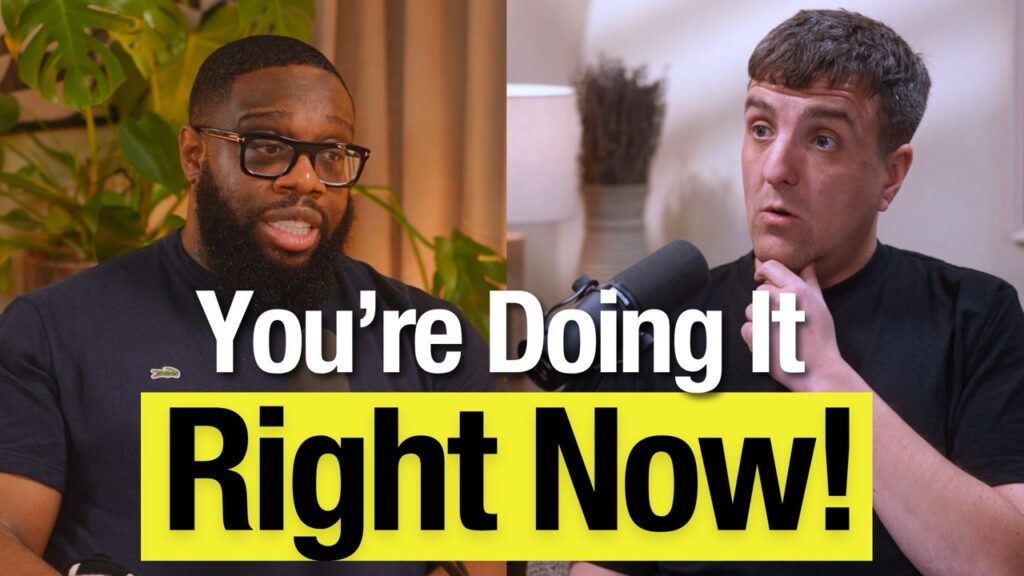
Listen to the pod


Anna Brading, founder of Mentor Money and author of “Money Mentor”, joins the Money Gains Podcast to talk about why money stress is so common, how saving even a small amount can improve your sleep, and her Champagne Tower method for building income without spreading yourself too thin.
Money stress doesn’t discriminate. Whether you’re on a tight income or earning well, that knot in your stomach when you check your bank balance is a familiar feeling for most of us.
This week we’re joined by Anna Brading, a Certified Financial Education Instructor and one of our highest-rated returning guests, to unpack why so many people feel out of control with money and what actually helps.
Anna has just released her second book, “Money Mentor”, and she brings the same practical, no-jargon approach that made her first appearance one of our best-performing episodes ever.
We talk about planning without pressure, the well-being side of saving, and why chasing seven income streams at once might be doing you more harm than good.
This isn’t about hustle culture or overnight fixes. It’s a grounded conversation about what actually reduces the anxiety around money, starting with a single, honest question: what do you really want your life to look like?
———
Gains App is LIVE!
An AI-powered budgeting and cashback app designed to help you make more of your money.
Download here: https://gainsapp.onelink.me/8IhT/oiaimr1z
———
Get a FREE FRACTIONAL SHARE worth up £100 when you deposit £1 with Trading 212
https://www.trading212.com/join/MGP
If you don’t receive the free fractional share, head to the menu and put the word ‘MGP’ into the promo code section.
(Capital at risk when you invest)
Key takeaways
- One in three people have less than £100 saved, and Anna says that’s a real indicator of how we’re handling money day to day, not a moral failing.
- Saving even a small amount, from zero to around £100, has been linked to better sleep and a stronger sense of well-being, regardless of income level.
- Anna’s “deep dive board” turns vague hopes into a plan by attaching real costs and phased steps to the things you actually want.
- The Champagne Tower method means focusing on one income stream until it overflows, rather than trying to build seven at once.
- An emergency fund isn’t just a safety net, it gives you the confidence to take bigger, calculated risks with your career and money.
Timestamps
- [0:00] Introduction and the Champagne Tower teaser
- [8:52] Why planning starts with asking what you really want
- [10:28] The deep dive board and turning goals into numbers
- [13:39] The four phases: visualise, write down, budget, cost it out
- [16:03] Why one in three people have less than £100 saved
- [17:42] How saving affects sleep and well-being
- [18:30] Emergency funds and the confidence to take risks
- [23:24] The Champagne Tower method explained
- [35:28] Why money conversations with a partner are emotional first
- [37:04] Writing “Money Mentor” and the grow score
Why money stress feels so heavy
Anna’s starting point isn’t a spreadsheet, it’s a question: when was the last time you actually sat down and thought about what you want your life to look like? Most of us never ask it.
We’re taught one route through school and university (get a job, follow the trajectory) and money stress often creeps in quietly once real life, kids, rent, bills, doesn’t fit that mould.
She describes hitting her own crunch point after having three children and realising she and her husband were “cutting corners all the time” without really knowing how to save. That frustration, not a love of finance, is what pushed her to start learning.
If you’re at that same point, a useful first move is running an audit of your spending so you can see exactly where the pressure is coming from rather than guessing.
Anna frames the choice simply: “we can either be moving intentionally in the place we want to go in the direction we want to go, or we can just be drifting.”
That drifting, rather than any single bad decision, is what she thinks quietly builds money stress over months and years. You’re moving forward every day whether you plan it or not, so the question is just which direction.
The deep dive board: planning without the overwhelm
Rather than jumping straight to a budget, Anna gets people to build what she calls a deep dive board, a visual plan that covers everything from family life to business goals, then attaches real costs to it.
It’s not about manifesting, she’s clear on that, it’s about turning fuzzy wants into a structured plan.
The process has four phases. First, list anything that’s free and just do it. Second, cost out the lower-price items you could budget for.
Third, price up the things that feel out of reach, because “we often think things are more expensive or out of reach than they are”.
Fourth, work out what your full dream life would actually cost. It’s a sketch, not a commitment, and it gives your budgeting a direction rather than a restriction.
Anna is careful to separate this from vision-boarding for luck. “It’s not to do with manifesting,” she says, “it’s actually just to make a plan, put down things that represent where you want to get to.”
The point isn’t magical thinking, it’s giving your subconscious and your budget the same target so every decision starts pulling the same way.
Saving small, and why it matters for your sleep
One of the most striking points in this episode is the well-being research Anna references: going from zero savings to even £100 can improve sleep.
She also points to studies showing people on lower incomes with savings report better life satisfaction than higher earners without any. That’s a meaningful reframe if you’ve ever felt behind because your income isn’t where you’d like it to be.
If you don’t have a buffer yet, working out how much should be in your emergency fund is a sensible next step.
Anna is refreshingly honest that the standard “six months of expenses” advice doesn’t work for everyone. For a lot of people, even three months of a realistic, no-frills number, say £1,500 a month, is a genuinely life-changing cushion.
The stakes are higher than they might seem too. Anna points out that “four in five stress-related illnesses are money-related”, which is part of why she treats saving as a well-being tool rather than just a numbers exercise.
She’s also seen it play out with the people she coaches: once they hit their first £10,000 saved, they describe it back to her as “completely liberating”.
She also draws a direct line between the debt snowball method and saving. Just as paying off your smallest debt first builds momentum, saving your first £100 and watching it become £1,000 builds the same psychological proof that it’s working.
If debt is part of your picture, the same logic applies when you’re working through how to get out of debt.
The Champagne Tower method
This is the idea Anna is best known for from this episode. Picture a champagne tower: you fill the top glass first and let it overflow into the next, and the next, rather than trying to fill seven glasses from a single bottle.
As Anna puts it, “what can you fill up now and let it overflow into the next one, and the next one, and next one?”
Applied to money, it means focusing on one income stream, whether that’s a side hustle, a full-time role, or a business, until it’s generating surplus, then using that overflow to build the next one.
It’s a direct counter to the “seven streams of income” advice that gets thrown around as a shortcut to becoming a millionaire.
Anna’s point is that most people who reach that stage didn’t start with seven things at once, they built one thing properly first. Spreading yourself too thin from day one is more likely to leave you with nothing working well than with seven small wins.
For anyone whose next income stream is investing rather than a side hustle, investing for beginners in the UK is a good place to start once your main income and emergency fund are in a solid spot.
And if you want a quick read on where you currently stand, the free money personality quiz gives you a tailored starting point.
Going backwards on your money goals is normal
Anna also pushes back on the idea that progress has to be a straight line.
She likens saving to the debt snowball: “start with £100 if you’ve not got any, build your confidence, see how good it feels”, then let that first £100 grow into £1,000 the same way you’d clear a small debt before tackling a bigger one.
Slipping up along the way doesn’t undo that.
Anna is open that she’s “100% gone backwards multiple times over” despite now teaching personal finance for a living, and her advice is simply to treat setbacks as part of the process rather than proof it isn’t working.
“It’s okay, it’s all right, it’s life,” as she puts it.
Money, communication, and the emotional side
Anna is candid about money conversations with a partner being emotional first and practical second. Her advice is to treat that as a given rather than a problem: pick a calm moment, come with grace rather than judgement, and expect it to take practice.
It’s not something she and her husband got right immediately, but the tools improve with repetition.
She brings that same instinct into her book, “Money Mentor”, which she describes as a letter rather than a textbook. The goal, in her words, is to take someone “from absolutely overwhelmed in your finances and stressed to feeling way more confident” without the jargon.
The book also opens and closes with what she calls a grow score, a snapshot that lets readers see whether their own money situation has actually shifted by the time they finish it.
This transcript is auto-generated and lightly edited for readability, it may contain errors.
This transcript was generated from the episode’s YouTube captions (Buzzsprout has no transcript for this episode). Speaker labels are NOT available; all turns are unlabelled.
[0:00]
when was the last time you asked yourself what you really want when was the last time you actually sat down and really thought what do I want my life to look like one in three people at the moment have less than £100 saved which actually blows my mind if you think about it we can either be moving intentionally in the place we want to go in the direction we want to go or we can just be drifting I think we often think things are more expensive or Out Of Reach than they are this is my champagne Tower method yeah okay what can you fill up now and let it overflow into the next one and the next one and next one to go from zero savings to just £100 a bit more saved even even a little bit can improve your sleep welcome back to the Money Gains Podcast this week we have a very special guest in the house that we actually share a birthday as well how weird is that her
[0:48]
name is Anna Brading from Mentor Money and she has a new book out called Mindset Money Multiply and we Dive Right into that plus a load of really cool things but did you know that you can sleep better if you save money yes that’s right we are going to unpack it all on this week’s episode and we’ll see you there and let’s get started on the Money Gains Podcast, the Money Gains Podcast, welcome back to the Money Gains Podcast, how are you thank you it’s good to be here I’m excited to chat with you I think we’ve got a lot to talk about today so this is going to be good we do I just want to obviously set the scene for people you are coming back on to the podcast but you are actually in our top three best ever performing episode I did not know that we’ve got you back on today to talk about money advice and your new book as well it feels weird
[1:37]
actually it’s like right here it’s a very fun experience writing a book and also like similar to content creation you do a lot of it behind the scenes at a laptop on your own in your own house and then suddenly something goes out in the world and it’s like it’s out now it’s lovely to have a physical item now that’s there can we take it back to the beginning well it’s it’s been a wild ride let’s be honest um one of the things that I think both of us about a lot um and we kind of connect on a bit is with when it comes to starting these Endeavors that we’ll probably get on to later on side hustles new business ideas and things like that the reality is you just never know where it’s going to take you and I didn’t think I’d be sitting here having a book out doing what I’m doing now when I if we roll back you know a good few years ago now I never could have seen it coming and that’s one of the things I love it’s one of the reasons I love talking about this stuff
[2:23]
is because it opens doors that wouldn’t have opened otherwise so if we go right back so came out of uni when into a job that was a great job it a great first job as was a forensic accountant looking at Big insurance claims like Whopper ones so something really big has happened to a massive factory they’ve had a flood someone’s got to go in and figure out what the loss is like how much money was lost during that period what is the cost it’s very interesting what it really was was sitting on Excel for about eight hours a day crunching numbers we’re kind of trained to become an employee aren’t we in school and uni that’s kind of what we’re taught to do come out of uni get a job but as a creative person I never really fit that mould I found it very difficult not because I’m not hardworking just want to put that out there I like working hard I enjoy working hard but the format we sort of were kind of set into which is
[3:13]
to get a career get a job and then kind of Follow that sort of trajectory I knew it didn’t fit me it never felt right and so the rest the next few years were kind of a journey of figuring that out as well as um realising I didn’t know much about money and finances I thought we’d be able to do more for the kids I wanted to give them more like the upbringing I had and we were finding we’re having to cut corners, like cut cost all the time, scrimp and save, didn’t really know how to save weren’t really saving it was all just bit of a mish mash and I just got really frustrated I got like to the point where I was like n this is not right I want more than this for my life and I want more than this for our girls for our marriage for our community want to give back more want to be able to do more is this it like is the whole do I just need to go and get a job and just
[4:00]
do that thing and it led me to a point of picking up a couple of books on finance and financial literacy from people that have thought outside the box and done things differently and it was like a light bulb went on in my head things like The 4-Hour Work Week, and I know, such a good book, yeah it’s amazing book and not kind of buying into this thing of it has to be 9 to5 it has to be salaried it has to be this that the other so there are other options there are options for people like me that don’t fit that mod who want to make money alongside being a mom and fit fit around the kids and not be at the beck and call of somebody else all the time and I had a business Mentor I still have a business mentor, Paul Edmond, he’s he’s a lovely friend of mine and he said to me something I did not want to hear when I started out and he said show me your third business idea that’s the one that’s going to win yeah yeah it was like the man prophesied because the
[4:49]
third thing is what I’m doing now don’t be scared to just start um and and you can find lowcost entry ideas you don’t have to take too much risk cuz I know obviously that’s a problem if if you haven’t got a lot of cash reserves you know you don’t want to and but you don’t have to spend a lot to start a business yeah and failing like it’s so important not to worry about failing oh gosh I hate failing some people say it with this kind of like Sage tone of voice of like well you’ve got to fail to learn in a sort of like isn’t it good and there’s little old me over here going I don’t want to fail I don’t want I don’t like failing and I I still don’t like failing and um guess what, number one’s still going but it has no website, no one knows, it’s only word of mouth so I have this side hustle that’s kind of remained like so many people think that they need to actually start
[5:37]
the next Tesla but that doesn’t actually need to be the case I don’t think and like you can just have a little side business that does a few hundred quid a month and it could have a good month every now yeah yeah and and the initial effort it took to build it is no longer there because I put that work in and now it’s just happening it’s all set up so if I get an order come in I can make it happen facilitate it sort it out out and if I want to pick it up again at some point and make it something bigger I probably could and I think you know we’ll probably come on to this in a minute but in terms of what’s in the news and the media there’s a lot of focus on when you’re struggling with money scrimp and save and cut back and I learned firsthand having three kids that were small already having lived quite tight we couldn’t cut back too far there’s a limit you can cut back but
[6:27]
when we’re talking side hustles and starting little businesses even if it’s not Tesla there’s not really an upper limit to that amount you can create through bringing in extra income and that’s what fascinated me because I thought huh I’ve only ever learned to just cut back there’s other ways of doing this and that’s to increase your income so I am so glad that you said that because I get messages all the time from people that perhaps are on the breadline or just struggling a little bit and they say you know what can I do like what can I do to increase my income and I say have you done a Time evaluation like you know you can start with your Netflix for example or your Tik Tok or your Instagram and your phone screen time like that’s a really good place to start from and then really as well like you’re not going to get support from the government from people outside in you do need to look at you
[7:15]
and how you present yourself to the world some people will say you know I’ve got a very demanding job I’ve got a very demanding career I can’t find that time and and there are situations where absolutely especially if you’ve got young kids or you know family life is difficult there are those times times and I think it’s identifying the season you’re in and finding the strategy for the For That season I had young kids but I did actually have time I had time when they were napping I had time so one thing I did before businesses I did a side hustle which was just tutoring and actually you put a few hours in and you actually can get paid quite well per hour the service-based side hustle really good for if you’ve only got a few hours a week so I could kind of go okay well I can make this much feing there I’ve also got these hours here so if I used that for starting a business that for side hustling I did a little bit of
[8:03]
like data entry stuff as well like like I was good on Excel so I did a lot of like number crunching and bits like that for somebody too and so you can do these little bits and Bobs um but I think it’s the right strategy for your season of life so if you’re somebody who’s got money haven’t got time but you’re like I’m not using my money to the best ability it might not be a side hustle it might be we look into investing because that’s the way you can even you could get growth through investing you can also get dividend payouts and that’s not relying on your time so there’s different strategies for for where you’re at I always like to think of it as a buffet so you’re like these are all the things you can do most of them we never got talk about have a look like just have a little look around see what piques your interest like do you want a bit of that do you want a bit of that try this there’s not one thing it’s lots and lots of different routes
[8:52]
you talk about planning a lot in your content like a lot of people struggle with planning because they don’t know what the end goal is so so how would you approach planning and what does that mean to you so I think if you’re feeling the pinch right now and you’re thinking oh I need sort my finances out cuz I often when I get members come into our membership and stuff one of the first questions I asked them is why now what was it that made you want to start sorting your finances out because there’s always a reason it’s not something you want to just do for fun on the weekend unless you’re really into finance that was not me I got to this point because I wanted because I had to because I had to sort our finances out so there’s often there’s a pinch and I think the trouble with that is you want to get to action straight away because you want to change things you want things to change tomorrow you’re like I just need to sort my finances out make it better so you get into the kind of do
[9:41]
doo doo like I just need to get a budget I need to do this I need to do that when was the last time you asked yourself what you really want when was the last time you actually sat down and really thought what do I want my life to look like maybe now maybe next week maybe in a year’s time maybe in five 10 years time scary question especially if you are somebody who has been taught there’s only one route to making income this is your trajectory so you have this ma picture kind of mapped out anyway so you’ve probably already ruled some stuff out but if you stop and you go hang on if there are other routs if I’m just going to believe that for a second what would I really want what I want my life to look like and so um I get people to make it what I call a deep dive board which is very similar to like a vision board situation but because I call it a deep dive board because I feel I want to call it something different because I attach it then afterwards to actual
[10:28]
numbers and finan and costings so it’s it’s kind of a different approach and also I’m not it’s not to do with manifesting it’s it’s actually just to make a plan put down things that represent where you want to get to I put everything on there from Family Life what do I want my relationship with my kids to look like so I’ll put things like um reading them books like a picture of someone reading a kid’s books I’ll put things like what our garden should look like like a home life i’ put down different stats for my business I’ve also put down things I want people to say about my business so imaginary quotes of Mentor money is a place where D or something like that I’m not a vision body person in terms of I don’t I’m not a manifesting person that’s not my belief system so I’m a Christian I’m believing God and stuff like that so I’m
[11:16]
That’s my kind of route my spiritual route so it’s not something that I’m going to go oh because I put it on there it’s going to happen however I’m a big believer that you’re always moving and I think we can either be moving intentionally in the place we want to go in the direction we want to go or we can just be drifting and I think in life you you know every single day you’re moving forward you’re going somewhere there’s money coming in there’s money going out things are happening you’re making decisions you’re not just static you’ve got another day older so your your your age is increased so I think we can either drift to where we we don’t plan and we just drift or we can start paddling towards where we want to go and I think what a board like this helps you do it even allows your subconscious to kind of go that’s where I want to go
[12:05]
okay let’s look for ways to get there so one time I put on um a picture completely forgot about it a year later I was telling my friend about this idea of boards and stuff and I just said hang on a second wait a second I’m just going to go get mine because I’ve just had this really weird thought went and got it pulled up the picture and I was like oh my gosh that’s really weird it was a picture that I had put of so I went to the door doing in France when I was a kid and went canoing down the river and it’s one of my my core memories absolutely loved it and I was like love to do out of my kids they’re about the right age now that summer we’ done that trip I’d forgotten I’d put it on my board and we had almost exact same photo in our camera roll that’s really interesting I don’t actually do that I actually have a oneyear goal a fiveyear goal and an ultimate goal and what I do
[12:52]
is I break them down into five steps that I can manage from there and in those goals like basically I’ll split them up so you can do things in what can you do this month for example what can you do in six months what can you do in a year and then I work towards those that could be like you know a family holiday in your onee goal for example and then more in your fiveyear goal you’re working to bigger goals as you progress yeah so would you say that that’s kind of the phase of the planning stage that first phase yes so I think a great next step is to write down anything that’s free so have a look at your board and say well some of these things don’t cost any money so I can just do them now I just need to put an action down so that would be phase one is so things like I want to teach my kids Spanish okay book it in your calendar phase two would be to then look at the things that are lower cost items you probably could do if you budgeted
[13:39]
better if you had a plan so you look at those and then it’s like what do they cost so oh I want to start going to the gym okay what does that actually cost write it down so listing yeah listed it List It Down add those up so what’s my monthly cost for all of those can I do that yet which ones can I do now so again that’s for later on when you start making a budget it’s like pulling those things in so you’re designing your budget to fit the thing you really want to do and then the third phase would be okay I can’t C I can’t afford these things what do they cost anyway because they might actually be less than I think they are I think we often think things are more expensive or Out Of Reach than they are so even um I don’t know if anyone’s said to you you know I think I think Tony Robbins does a thing on this of what do you think you need to like have everything you want and the number
[14:28]
people pick pick normally is like a billion pounds or like something really big and then he does this the whole thing I think it’s in the book Money: Master the Game, I’ve forgotten but I think it is and he says like actually if you just write it all down just have a look you want a jet okay well what does that actually cost so Step One is visualization step two is writing down how to actually make it happen yes step three is budgeting out the next stage and then step four is working out how much your actual dream life is going to cost exactly ex L that was a very good summary and how long does that take that doesn’t take long because actually at the moment you’re just putting down numbers it’s just a sketch and it’s to come back to so in the book what I do is I do um Mindset Money Multiply is the format of the book it’s 10 steps
[15:15]
that I think everyone should know these are 10 big things I learned that I’m like we should all know this stuff so just 10 things overall and then three sections so we start with mindset and that’s where the planning the stuff we just talked about would sit is in there then what we do is once you’ve got your numbers you can pull that into the next section which is the manage section which is where you’re really getting your finances in order and you’re getting things organised months a month you’ve got systems in place you’ve got automations happening but you’re using the numbers you’ve just come up with um to again push you in that direction yeah I’m on track to have over 5.5 million in retirement and I’m not saying this to brag guys I’m saying this because I an everyday person just like you so what does that actually mean well it means that it’s actually possible for you to build life changing wealth too no matter where you’re at on your journey your age your knowledge or even your Current
[16:03]
financial situation so Sammie, how do I sort that out? Well I’ve created something super cool which literally takes one minute of your time I’ve left a link in the show notes to a free money personality quiz which will provide you guys with a free tailored content plan based exactly where you’re at on your financial Journey once you filled it out you sent the steps to start getting you results from day one and then once you’re ready you can then move up to the next step very easily too it’s not judgy in any way it’s totally free to do and it’s actually really good fun too simply head down to the show notes and click the link there where it says to do the quiz and get your free money action plan right now now back to the show yeah one in three people at the moment have less than £100 saved which actually blows my mind if you think about it like Honestly though why why do you actually feel like that’s the case it’s a real indicator of
[16:52]
how we’re handling our money that we’ve got Basics like an emergency fund a lot of people don’t know what an emergeny fund is they don’t know what it should be they don’t know where to keep one another angle on it is buy now pay later and all the stuff that’s so available to us now that we’re putting on the credit card we are then having we can buy stuff we can get things but then we have to pay for it later and that’s eating up our savings as well saving isn’t glamorous saving isn’t sexy and fun it’s this kind of quiet discipline that gets you something else and one of the other things that people don’t talk enough about when it comes to saving is the well-being component there’s another study I did a video on recently about how saving it’s come out now that saving can improve your sleep so even to go from zero savings so just £100 a bit more saved even even a little bit can
[17:42]
improve your sleep so you could get a better sense of well-being and life Satisfaction by being on a lower income but having savings you have a better life satisfaction and well-being than a higher earner without savings that makes sense, four in five stress-related illnesses are money-related, yeah but savings give you that well-being they give you that sense of oh okay we’re going to be all right we say just try and get to your first 10 grand saved and the thing is with that is that we hop back on a call with these people and they say you know I’ve done it and I say to them like how do you feel and they go yeah like it’s completely liberating and I’m honestly completely agree I think it’s so important for people like you don’t have to then answer to you know an if he turns up and he’s mean to
[18:30]
you at work or you know you’re in a toxic work relationship or something like that um you’ve got options you know you got freedom and you have something to fall back on if something goes wrong yeah and I just think that has such a profound effect on your mental health and we don’t talk enough as well about risk and how actually to make things happen with your finances there are risks involved if you want to grow your money if you want to move things forward like starting a business there’s risks having an emergency fund basically allows you to take bigger risks safe okay so I can go from trying like a snail pace of trying to move things forward in my finances to like okay now I can take bigger steps and I can move this along and we definitely experienced that too when we got our emergency fund on we were like oh we’ve got options it’s a tough one for me with emergency funds because a lot of people say 6 months and I just have to disagree with that a little bit because for me it’s
[19:20]
just so much money for a lot of people and often if you just cut out the coffees and the Ubers and actually got a number that you know realistically you could live off you know you’re not on noodles or anything you can just live off it it would make a big difference to you like that could be like 1.5k and if you times that by say three and that’s three months that’s you know four and a half Grand it’s a big big difference you know a lot of people are are really familiar with the debt snowball and I was thinking recently I made a video about this about you should see it as a saving snowball as well oh cool so do the same thing you know start with £100 if you not got any start with1 build your confidence see how good it feels and the whole point of the debt snowball is, it’s a psychological thing it’s like pay off the smallest debt see how you feel see
[20:08]
how good it is pay off the next biggest debt see how good it is and it’s the same with saving get the 100 quid snowball into a thousand and now into you know and then you can just like keep going then you’re like oh this is really worth it but you’ve got to prove it to yourself and realise how good it is and then you’re like oh yeah okay actually it’s legit this is fine 100% And I think on that Journey people go through they go through that whole like they take the step backwards especially with debt and even with savings they get to £1,000 and then they blow 300 quid of it and then because they blown 300 quid they go they blow the other 700 they’re like annoyed at themselves yeah but I think with that Journey it’s like really important to just remember that you will have steps back and that’s totally all right cuz like until you’re like some like saving and investing God which is pretty difficult and actually takes like flexing that muscle
[20:57]
over periods of years I’m telling you from experience cuz I’ve 100% gone backwards multiple times over and I’m still sitting here today teaching about personal finance but you know you got to just it’s okay it is okay it’s okay it’s all right it’s life man like these things happen to now I want to talk just swear this conversation really on we spoke about a little bit cost of living and I don’t like banging about cost of living because it it’s just everywhere and I think people getting a bit frustrated with it if I’m being honest but there are like some pretty Stark crazy numbers out there at the moment like I did a video about the average food basket being up 48% since 2020 which blew up I there millions of views now and people are really tapping into it and I think we I I’d hit the nail on the head from a real inflation
[21:44]
perspective CU yeah they’d actually said that real Figures were like 21% but mine was 48 and all I did was pick receipts so like who was right you know the receipts are right cuz that’s real money right and so that’s a real tough thing for people to do but I suppose we’ve kind of touched on it actually really you think that they do you think they should be trying to increase their income at this point like what do people do because that’s like a lot for a family four isn’t it yeah I hit that crunch Point not through the cost of living crisis but through our own life changes of having kids and going from you know just the two of us to having three children and that jumped our life you know our living expensive when and that was way before the pandemic and I think I had to learn those lessons then
[22:34]
that got us through so we weren’t in that spot when the pandemic hit and I’m so grateful for them but it it’s the same principles again it’s like cut back where you can but there’s only so far you can can do let’s think more entrepreneurially about income let’s not just we’ve only been taught we have to acknowledge we’ve been taught this kind of one root model but actually most of the people that have done very well for themselves didn’t do that they thought outside the box you know the whole, millionaires have seven streams of income, you know um and and it’s types of income with that I’m really difficult with that one as well I I have a problem with that as well because yes they do but they now Alex wosi did a video about this the other day and I thought it absolutely nailed it because they fill up one cup to the absolute brim so that it’s allowing it to flow over okay let
[23:24]
me show you something okay here we go this is Alex I got their first all right this is my champagne Tower method yes you start with the first one okay what can you fill up now and let it overflow into the next one and the next one and next one you don’t like you say you don’t start with seven no you you go okay I’ve got one what can I do with that one how can I overflow that one so that I can fill up another one and then another one and another one and I think as long as you’re doing that that principle of pay yourself first of putting some of it aside when you create more income that allows you to make another one and then you P some of that aside and it makes another one so I that’s one that people can do now right they can create that second stream today that’s the Overflow from your main income yes yes if you can but if you can’t because money is too tight at Cost
[24:12]
of Living then you’ve you’ve got to find creative ways to boost it up so you can then overflow with that money so yeah so what was Alex’s thing he said so he did like a really cool visual where it was like um marbles in the cup and he was like flowing the cup and he was like well this is cup I’ve split it over seven what happens if I put this amount of marbles in this cup and the cup grows like this now I can pick ones out and put it in the other ones because this cup is so full it actually doesn’t have any space anymore I do need to diversify my income nice so he’s saying like go in on one he’s basically saying nail nail the hell out of a business idea and then when the business is really working and there Surplus cash and you really don’t know what to do with now buy some property businesses with it and do the other things or do the you know or look to invest the money rather than
[24:59]
necessarily like I need to start a property business I need to invest I need to save here I need to do this I need six side hustles and like yeah and then you spread teeth in and then them it’s like House of Cards all comes down yeah yeah I totally agree so the champagne tower, champagne tower method, yeah, so I just thought of it one day I was thinking I know so one of one of the things very relatable darling you know well I was myself I’ve never been to an event where there has been a champagne Tower oh I did I I did I’ve done a wedding oh see I’m just thinking I haven’t lived like that’s my goal that’s my new goal for the years oh you’ve seen it all I’ve seen it all yeah I I want to see it now I’ve seen espresso Martini ones that was cool and do you just take one when they’re all full you just go ahead and go right yeah I’ll have a sloppy glass that’s been stuff all yeah okay fine yeah you
[25:48]
obviously take the top and W down W you down but it’s going to still be anyway let’s not get into detail no but um with writing the book I have a really had really good editor Holly she’s amazing and she kept doing this thing where she would like just check in and think I wonder how she sort of write write comments and be like I wonder how people are feeling at this point I wonder how people are feeling do they need reassurance at this point because we’ve got to hear and it kind of got in my psyche a little bit and I thought that’s why I wrote that about the champagne Tower because I was thinking I wonder at this point after laying out all these different options of things you could be doing like property investing business are people going to be feeling bit overwhelmed and I think yes they probably are so I think coming back to you’re saying and what Alex is saying I’m saying Alex like I know him um like we’re BF my boy um starting with that one letting
[26:37]
that overflow focusing on it till it overflows then going to the next one is just such a good thing to do to just you can have an idea of when you where you want to get to but you don’t need to start with like all these different things and that’s like 20, 30 years of doing it, average age of a millionaire’s like 47 and a about it’s like and it’s like people in their 20s and 30s wondering like why am I rich yes you haven’t done anything no you haven’t done anything yet like just take the chill pill man you you’ll get there when he’s a rough man yeah I don’t want to go back I think life really a lot of people I ask this question to they say life gets good at 28 and I do agree it did but I was still kind of figuring it out for me it kind of kicked in around about 3132 I totally agree I don’t feel like that’s another
[27:26]
thing I wish I’d known um I I loved my 30s absolutely Lov it I’m on my tail end now I’m about to I’m coming out turning 39 on Friday so it’s like I’m on are you fourth of October fourth of October I’m fourth of October stop it yeah what I’m fourth of October we’re Birthday Twins yeah we’re Birthday Twins you realise who you are in your 30s and then you start to walk in it you actually live it like you supposed to be living in yourself if that makes it’s a bit woo but you know what I mean no I get it and then in your 40s I am fully expecting my my 40s to be epic I just think I just think we get sold this thing as especially as women we get sold this thing of like you peak in your 20s and then after that it’s like yeah we don’t we don’t want you know the visibility of women on like media and things like that it just dips after that time I’m like absolutely not come on like I’ve got I
[28:16]
think one of the things I’m noticing as well as a woman as you get older you just stop caring less about things that really don’t matter so I’m I’m interested to see what that will look like of like when you care less and you care less what other people think what what then do you start to do that you wouldn’t have done before so excited for the 40s yeah my mom started buying like fluorescent pink jackets just like going for it I remember it quite well she was just came into her like I don’t give a she went Flur her oh yeah likeing glass you know I I get it I you know you don’t care at that for do you I like these I’m going to wear it absolutely uh God knows what I’ll end up wearing anyways um you recently moved house did yeah talk to us about it how did you find it any tips I would say we did the opposite of what most people do is we
[29:04]
moved into London with a family I know you went the opposite mad yeah so you got you’d have actual Financial Educators and people who would say don’t do that because they’d be like why are you doing that um because there is a school of thought which is reduce your expenses as much as you can so reduce your mortgage reduce everything and you can do that better if you don’t live in London right um and then you can become financially free quicker blah blah blah the tradeoff though is the opportunities go down if you’re not in London um and also it’s not all about money it’s about the lifestyle you want to build and the life you want to have and we knew we wanted to live in London we knew we wanted to raise our kids in London it was like really yeah not from not for a long time so we came from Brighton and we lived in the center of Brighton tell
[29:52]
you what our living costs have come down Brighton’s mad isn’t it from moving from mental it is extravagantly priced it’s like ridiculous so our Cil tax has gone down our what we’re paying on our outgoings for our house so we actually own a property in Brighton and we rent property in London so what we’re renting our property in Brighton for is more than what we’re renting our house for in London for similar bigger or much bigger much bigger yeah we in our house now we’ve got a view of the city and for me when I wake up in the morning I look out the window and I see the city it’s like I am like rejoicing I’m like yes this is the dream so I love it it does p my mind a little bit from an opportunity standpoint for sure because we live just outside and we’re probably going to move even a little bit further away as well
[30:39]
and that does play on my mind a lot but then I do I I had this kind of like I fell out of love with London yeah a little bit fair enough um and just never really recovered from it and then moved back out and I think it’s because I lived, I grew up in St Albans, which was dirty okay what go stop it no this is getting weird this is actually getting really weird what, are you from St Albans? I’m from St Albans, what school did you go to Stags my sister went to Stags stop it yeah my sister, I lived on Harpenden Road what about the move then so they had you any tips on the move for anyone looking to relocate I think one of my biggest tips is um start early and keep your finger in the pulse especially when it comes to property and what’s going and what a good rate is because if you’re going to move some well I don’t even think it’s
[31:27]
exclusive to London now I think wherever you’re moving because property markets are crazy even rental markets like wild I think you need to be able to pounce when you’re ready so I think having your ducks in a row having your finances in order knowing what you can afford early early early knowing knowing what’s a good rate so when you find something that’s good you know it’s good so you have the confidence to put down the deposit or go for it and you know um we lost out on one house the first house we went for didn’t get it this is the rental market um got the second one we went for but by that time we knew it was good when we got it and we were like let’s move so we actually went slightly above asking price because it was there was already other people and we were just like yeah we’re going to we just got to go for it and this is the one we want and we haven’t seen anything like this so I think do your research um
[32:15]
subscribe to right move and get all their updates addictive it’s amazing it is addictive I think everyone does it though don’t they they look at they I I love those videos of they’re like I’m not looking at a 4 million pound house and annoyed when it goes for sale I’m not at all yeah definitely was I do it now I’m like what happens if we stretched our budget to 800k what would happen then well I better find 800 Grand could we could no you couldn’t know not yet not yet yeah exactly but it’s okay you know and I think yeah really yeah I think that would be one day I do the one day I’m like yeah cool that’s what I’m going for I know in my head I have like on my vision board but it lives up here yeah I know exactly what the house looks like do you that’s
[33:03]
cool and I’m like if I get there I know what the back I literally like I’m standing in the kitchen I know exactly how it feels and what it looks like and looking out into the garden and it’s massive garden and I’m like great yeah but it’s not like a mansion or anything like that it’s definitely not it’s like a big sort of townhouse Vibe could be mid Terrace as well still but it’s it’s not small but it’s very lovely and I I’m totally fine with that so it’s interesting yeah I don’t have big dreams of a big house the thing that really stresses me out is the cleaning I’m like if you can afford a mansion you better be able AR you better be able to afford a cleaner because I don’t I don’t want to be cleaning those rooms I just want just enough I want to we’re big Hostess so I want to have lots
[33:52]
of people over and we’ve currently got the space for that now anyway so we’re good so yeah I don’t have the big vision of a massive Mansion I never actually want that um I would rather I’d rather have the cash flow and yeah no I agree I for me it’s like there’s just a certain level of experience where I’m like I’m this is I’m me this is me I’m very happy like this yeah and know they get that I always said if I don’t care how much the shopping was and I can pay for a cleaner then I am smashing it and and and that’s a good B Benchmark I think yeah like, uh, the price of milk’s gone up, I don’t care, yeah, you know, like that type of a vibe it that’s how I know I’m smashing it yeah because if that happens then you know at that point you’re not counting pennies you’re
[34:40]
thinking counting thousands and more yeah um so I think that that’s that’s the Benchmark for me and if I get to that point then well you know I’m feeling a little bit better like I may have upgraded from Aldi to Waitrose now and that’s like a I I know how lovely I know sorry guys listen oh my can I come around for her miss my girlfriend absolutely hates B for her by the way she’s literally like she’s raging she’s raging she’s like I we could do the same shot for 40 quid and you spent £130 I’m like I know I know she’s like and it’s coming out of our joint account you’re putting in more this moment I’m like okay yeah come on Step Up mate if you want again actually it’s a good question to ask you like what’s communication like you sound like you’ve got it like as a joint as a couple like yeah do you think communication is
[35:28]
massively important when it comes to money so important I think I think my my biggest HP with with couples money and and how you talk about it and stuff is you’ve got to remember that first of all it’s an emotional conversation it’s it’s rarely ever not emotional conversation to have a Frank nuts and bolts this is the money D D D D without evoking any emotion is rare so you’ve got to come in with the mindset of this is going to be emotional let’s make sure we do it in a time that’s calm we’ve set side time we’re feeling good we’re both in a good head space we haven’t got other stuff going on the kids are doing something else you know so I think um we’ve made mistakes we’ve had like times that were more difficult missing each other just not getting it but I think um different stages different stages and I think we’re at a place now where we’ve got the
[36:17]
tools for the communication right and so when one of us bring something up there’s kind of an understanding of how that’s going to go and it’s it’s it’s in a good spot now we’re not perfect by any means but I think learning to come up with with a lot of Grace for each other um yeah don’t be hard on each other and try and understand how the other person’s feeling when you suggest something I think coming from that place is is a really good thing to do um yeah yeah let’s talk about the book all right let’s do it now honestly I want to know from you because I think you explain things so eloquently like what how why why yeah why like like because there’s so many Finance books out there there’s so many there’s not many British ones and I’m loving seeing the trend yeah cuz it’s great cuz you know otherwise it
[37:04]
would have been Rich Dad Poor Dad and you know psychology of money which are great books but they speak in dollars and they speak in you know yeah Federal and all of this and it’s like well no Hang on we’re very British we need Cups of Tea and grits like what what drove you to Dy to write this book and what is the goal that you someone gets from reading it so I got approached just over two years ago to write the book I wasn’t planning to write a book I was very happy making short for video putting out these things that I thought were helping people and connecting with people and I I didn’t have in mind that I would do that however at the same time I was putting together because I felt like I I could offer more than just a short quick video I was putting together a sort of step-by-step training so I really had
[37:51]
training in place that I was testing out and it was working and people were seeing results with it and it was going well so I thought okay I already got that that’s cool and then I got approached to write the book and um the funny thing was the editor who approached me sort of said they it was kind of they were seeing something that I hadn’t yet seen which was so lovely because you know with putting out content you don’t know like you don’t you’re just hoping for the best you’re kind of I think this is okay but you don’t actually know if it’s resonating and you often get more negative comments than you do you know feedback of what is working yeah um so to have some I take that as a good thing though yeah cuz at least they’re paying attention um she sort of said to me like we think you’ve got a message here that needs to go wider and I was just like what like wow thank you but that’s that’s just amazing to hear because it’s
[38:42]
I I want to talk about this stuff but to hear believe it yeah but to hear that it’s resonating that was great so I instantly knew what I would do it about because I I was like I already had put the step by step together for people I’ve already been working with what I wanted to give somebody was a good read so I didn’t want to do facts and sort of like a um the Wikipedia or the kind of Encyclopedia of money I didn’t want to do that I wanted it to be a good reader you could sit by the pool and read but I also wanted to take someone by the hand and that’s why we’ve kind of called it money Mentor is it’s like just follow these steps in this order and you can go quite quickly from being absolutely overwhelmed in your finances and stressed to feeling way more confident and feeling really in control and if you put it into practice is really getting things changing quite quickly you can go
[39:30]
from very stuck to this is really changing quite fast so I wanted to take people on that Journey step by step by hand without the jargon, without the guff, just through a lot of storytelling and Good Vibes um taking people on that journey and we do I have this thing at the beginning called a grow score and at the end a grow score so that you can actually see did it work sorry a grow score so grow score I talk a lot in the book about growth and about how you need to create Financial growth because inflation the cost of bread now is going to be more in the future so if we’re not if our money is not growing in any way it’s going to get really difficult later on down the road so we need to think about growth so I did a growth score at the beginning so you score where you at right now with money just a snapshot 20 Questions go and it’s digital and online stuff and then you do it at the end and
[40:18]
you can see oh nice just by reading the book Transformation has this actually moved the dial for you um the people who’ve done that grow score in other ways have found it has and that’s really encouraging but that’s the idea is to take yeah to take take somebody and and kind of speak the language of somebody who doesn’t find Finance interesting yeah cuz let’s be honest because we do but they don’t yeah but you know I don’t really like I don’t I don’t naturally find sitting through I’m a very creative person and I’m a funloving person you’re more you that TR me as like you want to help them and this is the biggest impact that you can make with it kind of we all have to use money whether we like Finance or not and I think the crunch point I’m good at numbers I’m good at maths but the crunch point for
[41:05]
me was like we get taught Finance by people who are interested in finance a lot of the time they speak to each other in the way they talk because it’s a lot of it is about TR try and separate myself from it yeah and now you’ve got like people that we know in our community of of financial um creators hate the term finfluencer, but you know, you know what I’m saying, financial creators who are people that some of them are financy people but they’re using language and communication in a new way that’s connecting with people which is why I think it’s so important that people are doing this and I think I think you know I did this certification I became a Certified Financial um education instructor and the people that taught that course were teaching you how to teach money but they were teaching in Gray suits on a gray backdrop in trb
[41:54]
like voices and I was I was laughing my head off cuz I was just like this is so ironic you’re trying to teach me how to teach in a way that’s engaging but you’re still doing it in that format and we need to get away from that because everyone has to use money they need to learn about money they need these skills but they need to be taught in a way that’s engaging for them and I think what I’ve written is like a letter to you rather than it’s it’s not I love that letter to you I’ve written it’s basically I’ve written you a letter yeah of what you need to know um I’ve not done something sort of Hardcore training that’s a really cool seminar it’s not that no no and I don’t read those books no and I think that’s what’s so good about about books like Rich Dad Poor Dad money Master game yeah they connect from us they’re written from people who know how to speak normal language they they
[42:42]
speak normally and it’s and you know Tony Robbins is a life coach he’s he’s just GNA make it all sound fun isn’t he oh yeah do love a bit of Tony a little bit I have a soft spot for Tony Robbins, yeah, I feel bad for it weirdly but I hear him talking and I’m like I am empowered yeah he takes a lot of I don’t know I don’t know him well enough but like the stuff that I’ve learned from him I’ve been really grateful for so I just think fair fair play mate so yeah so the book is out out yeah yeah it’s in the world it’s in the world man yeah so you can get it if you want it um everywhere we’ll leave links to this by the way in the show notes thanks 100% to it I can’t wait I’m going to send you a copy yeah I’m very much looking to talking into this yeah anything else about the book that we should know if
[43:30]
you got to the point where we talked about earlier where you’re thinking I I just don’t know how to make this work this isn’t working this will help you and it will be something that you can have read leave on the shelf and come back to time and time again anytime you feel like that so it’s like your go-to thing that you can Financial Buzzi yeah and you can for somebody who’s not that into Finance if you’re that person you’ll still enjoy it okay Wicked I’ve absolutely loved this conversation yeah I feel like I talk to you all day so um we’re going to have to do a part three aren’t we yeah let’s do it yeah TBC okay brilliant right part from the book where do you want to send people today come and find me on Instagram um Mentor money I still on Tik Tok as money for Millennials because that’s my OG handle and I’ve not changed it yet so
[44:18]
that’s a work I’m like who is that yeah yeah it’s just it is what it is it’s not very marketing friendly but I but I think last time we spoke you you were trying to crack into and you’ve cracked it now yeah it’s gone it’s gone well it’s like the community is there is so different to Tik Tok even the demographic is different so I’m adjusting still finding my way but I’m loving how you can really build community there and talk to people so come say hi if you want to on Instagram I’ll be there again we’ll leave all those links in the show notes it’s been a real pleasure thanks so much Anna thanks for having me wow guys what an episode there with Anna I absolutely loved that conversation one of the big things for me was the champagne method in her new book, Mindset Money Multiply, for me it’s like everyone says oh you need so many streams of income seven streams of income for a millionaire when actually
[45:04]
you should be focusing on one before you focus on the second and before you focus on the third it’s a such great advice from Anna absolutely killed it on this one as always guys make sure you’re subscribe and whack that notification Bell it really does help the show more than you know and we’ll see you next Wednesday it’s BR pleasure peace out
Frequently asked questions
Anna’s view is that money stress often comes from drifting rather than planning. Without a clear sense of what you want, day-to-day decisions feel reactive, which builds low-level anxiety even when your finances aren’t in obvious trouble.
There’s no single number, but Anna’s research points to even £100 in savings improving sleep and well-being. Building toward a realistic emergency fund, even if it’s three months rather than the commonly quoted six, tends to bring the biggest shift in how secure you feel.
It’s Anna’s approach to building multiple income streams by focusing fully on one until it produces a surplus, then letting that overflow fund the next one, rather than starting several income streams at once.
Yes. Anna is open about going backwards financially “multiple times” over the years despite now teaching personal finance for a living. Setbacks are part of the process, not evidence that it isn’t working.
Treat it as an emotional conversation from the outset. Choose a calm moment when neither of you is stressed or distracted, and approach it with understanding rather than blame.
This episode is for general education and information only and is not personalised financial or medical advice. Investing puts your capital at risk and past performance is not a guide to future results.
This description may contain affiliate links; if you use one, we may earn a small commission at no extra cost to you.
Content around money stress and well-being reflects the guest’s personal experience and general research, and is not a substitute for professional medical or mental health advice.
———