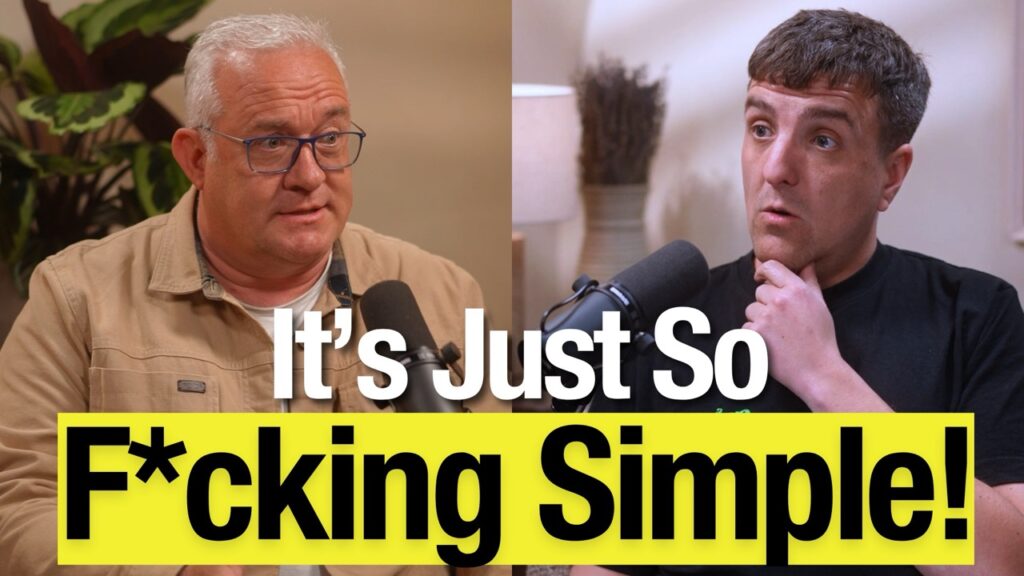
Listen to the pod



Empty shopfronts, the same five chains on every high street, and a Costa on every corner: content creator Ash Talwar has spent a year filming Britain’s changing retail scene, and he joins the Money Gains Podcast to explain what’s actually killing it, who’s buying up the wreckage, and whether there’s any way back.
I wanted to have this conversation because every high street in the country now looks the same. Walk down any town centre and it’s the same rotation: a vape shop, a Turkish barber, a Costa, and then a run of empty units.
Ash Talwar has built a huge following filming exactly this, so I asked him to break down why it’s happening.
We got into the reasons behind Debenhams and Toys R Us collapsing, why private equity firms are quietly buying up chunks of the British high street, and what the smarter retailers are doing to survive.
We also ended up talking about UK national debt, financial literacy, and why Britain seems so much more risk-averse than the US.
This isn’t just a retail story. It’s a consumer money story: where you shop, what things cost, and whether your local high street still has a future all feed straight back into your own household budget.
In this episode we welcome business and economics creator Ash Talwar to the show.
We discussed the decline of the UK high-street, cultural differences between the UK and US and the need for both government intervention and positive mindset shifts to revitalise British businesses.
Ash on Instagram https://www.instagram.com/asht_talks/
How major retailers are surviving by transforming stores into experience centres
Why private equity firms are buying up high streets and making it nearly impossible for independent British brands to compete
What advantages the UK still has: reliable government, excellent infrastructure and strategic time zone position
Why UK culture needs to shift from risk-averse negativity to celebrating entrepreneurial success
———
Gains App is LIVE!
An AI-powered budgeting and cashback app designed to help you make more of your money.
Download here: https://gainsapp.onelink.me/8IhT/oiaimr1z
———
Get a FREE FRACTIONAL SHARE worth up £100 when you deposit £1 with Trading 212
https://www.trading212.com/join/MGP
If you don’t receive the free fractional share, head to the menu and put the word ‘MGP’ into the promo code section.
(Capital at risk when you invest)
———
DISCLAIMER:
This video is meant for educational purposes and should not be considered financial advice. When you invest your capital is at risk. Past performance is not a guarantee of future success.
Key takeaways
- Big retail chains like Debenhams collapsed because they were over-leveraged on expensive retail space just as online shopping took off, and failed to change their offer.
- Surviving retailers such as Adidas and Sports Direct are turning stores into “experience centres” (in-store activities, events, even bars) to give shoppers a reason to visit in person.
- Private equity firms, many American, have bought up large chunks of the UK high street funded by debt, making it hard for independent British brands to compete on rent.
- The UK carries around £2.7 trillion of national debt, roughly £40,000 per taxpayer, which Ash links directly to rising business taxes and slower hiring.
- Ash argues UK culture is more risk-averse than the US and that early financial literacy, not taught in most UK schools, is part of the fix.
Timestamps
- [0:00] Is This the Death of the High Street?
- [1:38] Copy-Paste High Streets: Vape Shops and Coffee Chains
- [2:49] Why Debenhams and Toys R Us Collapsed
- [3:47] Tool: Experience Retail, Adidas’ In-Store Penalty Shootout
- [10:57] Private Equity Buying Up British High Streets
- [14:11] Sports Direct’s Blueprint for High Street Survival
- [20:44] UK National Debt: £40,000 Per Taxpayer
- [34:11] Tool: Why Financial Literacy Isn’t Taught in UK Schools
- [41:53] Building a Personal Brand in the Creator Economy
- [46:29] Balancing Negative News With Positive UK Stories
Why is the UK high street dying?
Ash Talwar’s answer starts with money, not shopping habits.
The big chains that dominated Britain’s high streets for decades, names like Debenhams, BHS and Toys R Us, took on huge amounts of expensive retail space and then failed to change their offer as online retail grew.
As Ash put it on the podcast, they “just continued to push the same thing in every single store” while the way people shop changed underneath them.
That combination of high fixed costs and a stale offer is a familiar trap outside retail too: it’s the same reason a household budget quietly falls apart if the big fixed costs (rent, subscriptions, finance deals) never get reviewed.
Running a proper audit of your spending is the consumer-level version of what these retailers failed to do at scale.
The result on the ground is the “copy and paste” high street Ash describes: a Wagamama, a coffee shop, a Turkish barber (now increasingly a vape shop), repeated down every town, with empty units filling the gaps left by collapsed chains.
Ash says this isn’t just a central London problem, it’s the same pattern in high streets right across the UK, and it’s accelerated fast: he only started filming a year ago and has already watched the mix of shops on a typical high street change noticeably in that time.
Above many of those units sits another empty layer: office space.
Ash links this to the shift to working from home, which he thinks is broadly fair for workers but leaves cities holding a trillion dollars of real estate with fewer people commuting in to spend money nearby.
His suggested fix is converting more of that space into mixed office-and-living use, so there are still people around to keep local coffee shops, restaurants and retailers in business.
How surviving retailers are fighting back
Not every retailer is losing. Ash points to Adidas, Nike and Sports Direct as businesses that have worked out how to get people through the door.
Adidas Oxford Street has an in-store penalty shootout area built for social media clips. Sports Direct keeps prices competitive with online rivals and layers in events with footballers to build “a sort of community spirit back to stores.”
The common thread is giving shoppers a reason to be there that a website can’t replicate: trying things on, an in-store event, even a bar built into a shoe shop, which Ash mentioned he’d seen firsthand.
It’s a shift from selling products to selling a reason to leave the house.
There’s a returns economics angle here too, which Ash raised directly: free returns and free delivery are expensive for retailers, and every parcel that gets tried on, boxed up and sent back again adds to their logistics costs, costs that eventually get passed on in higher prices.
Getting shoppers into a physical store to try things on and decide there and then is cheaper for retailers to run, not just better for footfall.
Shopping centres are chasing the same shift. Ash points to escape rooms, bowling alleys and arcade rooms opening up inside malls that used to be pure retail, turning a shopping trip into a day out rather than a single errand.
Market Halls-style street food venues taking over old department store units, like the one that replaced a Debenhams, are part of the same trend: big retail spaces being repurposed for entertainment and food rather than sitting empty.
Private equity and the high street funding problem
The part of this conversation that stood out most was Ash’s explanation of who is actually buying up Britain’s high streets.
“A lot of the high streets [are] brought up by private equity firms because they’ve just been cheap purchases over the last couple of years,” he said, adding that many are American firms funding the purchases through debt.
That matters because it changes who an independent British brand is competing against. A debt-funded private equity landlord “can live with huge losses every month, whereas an independent brand can’t.”
Ash’s ask of government is targeted: tax relief and subsidised rent for UK startups, to boost the high street from the bottom rather than relying on inbound investment that pushes costs up further.
He’s careful to point out that not every big-name store on a prime high street is there purely to turn a profit on rent.
Lululemon’s flagship Regent Street store, for example, likely doesn’t cover its rent, business rates and staffing costs on its own, but the brand keeps it open for the credibility a flagship location gives it globally, which then drives online sales elsewhere.
That’s a luxury only large, well-funded brands can afford, and it’s another reason prime high street space stays priced out of reach for smaller independents even when it isn’t fully profitable for the tenant either.
The UK economy, debt and business confidence
We moved from shopfronts to the bigger picture: UK national debt, which Ash puts at around £2.7 trillion, or roughly £40,000 per taxpayer.
He links that debt burden directly to the tax rises and National Insurance changes that have followed, and the knock-on effect on hiring and business investment.
His view isn’t that the UK is finished, though. He points to stable government, strong financial services, the English language and the GMT time zone as real advantages that keep foreign investment flowing in, even while wages lag behind the US and the UAE.
For anyone building their own financial resilience while the wider economy wobbles, this is exactly the environment where an emergency fund earns its keep.
Financial literacy, risk and the creator economy
Ash traces some of Britain’s risk-aversion back to school.
“We’re never really taught in school what an ISA is, what indices are, and how you can invest money to make more money,” he said, arguing that early financial education, not just entrepreneurial culture, is what’s missing compared with the US.
He’s also part of the shift he’s describing: a full-time professional who built “Ash Talks” into a following large enough to influence how people see UK retail and the economy.
He sees personal brands and independent creators as a genuine threat to legacy retailers’ market share, since a single viral video can now build a brand overnight in a way that simply wasn’t possible a decade ago.
It’s the same dynamic behind the wider rise in people building a side income outside their main job, whether that’s content, a small brand or a side business.
If any of this has you thinking about where your own money should be working harder, whether that’s understanding an ISA properly or getting started with investing as a beginner, that’s exactly the gap Ash is describing.
This transcript is auto-generated and lightly edited for readability, it may contain errors.
[0:00] Sammie Ellard-King: Welcome back to the Money Gains Podcast. Are we seeing the death of the high street in the UK right now? We’re joined by Ash Talwar, who is a man with the boots on the ground. Ash, how you doing, man? Good, thank you. Pleasure to be here. Um mate, I’ve just got to say this. Like, I love your content. Thank you. It’s so good, man. I really appreciate it. Like, you just have this different ability to just like get out really good information, but it’s done in such a different way to what you normally see online. And was that on purpose? Yeah, I mean, I’ve always had an interest in business, economics. I’ve worked in the field, and I thought if I want to go down the content creation, how can I be a little bit different? I live in, I think, the best city in the world, and it’s got built for everything. So being able to walk around and make videos, I don’t think there’s any better place. And I enjoyed it and it and it picked up traction. So yeah, it was good, it went well.
[0:51] Sammie Ellard-King: You’re obviously making a lot of content about the UK and you specifically brands that we all know. What’s something that surprised you, you think, from like walking around and being on the ground as much as you are? What surprised me is I started making content one year ago, and I was speaking about the British High Street shops that we all know, and just in 12 months, how much it’s changed, and the reasons why it’s changing is important that people know why, but also where we go next with the British High Street retail, the UK economy as a whole is really important, and we’re at a sort of crucial point. So seeing that develop so quickly in just 12 months is is probably the most surprising thing.
[1:38] Sammie Ellard-King: We see, like, you know, most towns now it’s like American Candy Shop, Costa, Starbucks, Turkish Barber, and then and then it repeats itself almost the whole way down the high street, and then you’ve got empty shop, empty shop, empty shop. You know, the high street has been decimated, and obviously there’s a big reason for that, and that’s online retail. But what are you seeing in London that’s different to perhaps you know the local high streets that we see around the country? Yeah, London. If you walk around London, you’ll see very similar shops all the time. You’ll see each high street will have a Wagamamas, it will have um various different coffee shops that you mentioned, it will have these Turkish barbers or now vape shops. And what we’re seeing is that is a continuing trend, not just in central London, but also in the high streets around London and the UK itself. And it’s kind of like a copy and paste everywhere we go. Central London, yeah, it’s a bit different, but that is a problem in itself as well. But there’s there’s there’s strong reasons why that’s the case.
[2:49] Sammie Ellard-King: You’ve obviously spoken quite a lot about like you know, the high street and and how it you know it’s evolving. What’s some of the big reasons that you feel like, other than perhaps online retail, that you know, some of these big stores like Debenhams and you know, Rumbelows, back in the day, you know, it was everywhere, wasn’t it? Toys R Us, all of these places, all these big brands have have gone under. Yeah, I mean, for the big brands, they had a lot of retail space, and retail space became expensive, number one, and these guys were over-leveraged at a time where online was taking over, the landscape of our shopping needs and habits were changing, and I felt that the likes of Debenhams didn’t keep up with the times, and they just continued to push the same thing in every single store. But what we’re seeing now is various retail giants taking on a different approach that will hopefully save them from the same fate that Debenhams had.
[3:47] Sammie Ellard-King: What’s some of that that you’re seeing at the moment? What’s the differences between that? You mentioned obviously stagnation with Debenhams, but what are some of the big guys doing that you’re noticing? So I don’t know if you’ve noticed, but if you go into Nike Town or Adidas in Oxford Street, you’ll see retail, yes, but you also see a glimpse of entertainment. These retailers want to get people to the store rather than them shopping online, so they have to differentiate their stores now. So when you go to Adidas, for example, they’ve got this big penalty shootout section where they can number one create good videos for social media and get people to the store, but also people can go with a reason. Okay, we’re also going to do an activity, it will get us out of our house rather than going on Adidas.com or 1.uk and getting a delivery in five days’ time. They’ll go to the store. Yes, they may pay more for the items there, but there’s a reason for them to go. And we’re seeing that across with Sports Direct, we’re also seeing companies do events in-store and also lease out parts of their stores for other companies to come in and do pop-ups, etc. And that is a way that these retail giants or bigger stores are dealing with that change in a mentality from the public.
[4:57] Sammie Ellard-King: You see like some of the online crossover into retail as well, like some of the bigger successes, and they they they they end up taking out a store. It’s essentially like free branding in a way, isn’t it? Yeah, it is. It’s like they can go into you can go into a store now, and the company itself can create loads of visuals and and different things for Instagram and so Snapchat and TikTok, and you know what it’s like when these things go viral on these platforms. Yeah there’s cues and and you a brand can be made overnight nowadays, and that’s the difference between what was the case ten years ago. Yeah, you see it with like the small guys, you know, you know, a big, you know, even like a burger chain. Yeah. If you’re like a viral burger, a creator goes in with a million followers, does a TikTok, and they’ve got cues down the street. Like we’ve seen that with uh some of the new burger joints in Soho, and you know, it’s so busy, and that’s what the power of social media can do. Do you feel like a lot of these needs, these brands that perhaps haven’t adopted this need to to stay alive?
[5:58] Ash Talwar: Yeah, absolutely. And it’s surprising. I mean, you see New Look, for example, when closed various different stores across the country, they just didn’t keep up with the times. But the the reason there was slightly obvious that you just needed to keep up with trends, keep up with clothing items that the younger generation want to buy, or become modernized, modernize your stores so that people can want to come in and shop and and approach a different audience. But if you stay and sell the same things and the same type of lines that you did 10, 15, 20 years ago, those customers are long gone. It’s the new generation coming through that are driving this growth. And it’s so important for even the smallest brand to start thinking about trends. And we’re seeing that with companies such as Uniqlo, who are doing phenomenally well. Yeah. They opened a new store in New York when I was there last week called GU. It’s a concept store which focuses solely on trends, and they’ll test out the clothing in GU and the ones that do well will then move on to Uniqlo.
[6:55] Sammie Ellard-King: Oh, smart. That’s really smart. And yeah, and then this is these are the types of mentality shifts that a lot of retailers, whether you’re a startup or a big company, they’re all trying to follow that trend. Yeah, totally. And obviously, like we are seeing a lot of empty space. Yeah. You know, offices as well as as retail, because above these big retail stores, there’s usually office blocks, and a lot of those are empty and you know, emptying quite quickly. Um how do we stop that? How do we how do we bring people back to the high street? I think a lot of this goes down to the government actually. And the problem with London and not just London, many other cities is the development of working from home, the mentality of people want to work from home. And that’s fair enough to a certain extent. I think if you have the capability to be able to log in and not have to do an hour, hour and a half commute, then that should be allowed. Yeah. But the government have to balance that with well, you’ve got a trillion dollars in your city of real estate. How do you make sure that that doesn’t fall to zero? So that’s the problem of the government, and I and and most people understand that. But it’s just now how do you convert some of those offices to working slash living spaces, which we’re seeing quite often now? So when you go in in in and around London, even some of the most prime locations, you walk around and you look up and you see it’s an office, but people also live there. It’s an apartment slash office building, and it’s just getting those customers and consumers back into the city, otherwise, restaurants, coffee shops, everything will start to fall. So it’s a real crucial point to see what where the investment’s coming from, what’s going to happen in the next 10 years, not just for London, but other major cities across the world. It’s the same thing in New York, for example.
[8:39] Sammie Ellard-King: Yeah. You mentioned obviously experiential, but that kind of bleeds over into like experiences as a whole. Like we saw market halls, the street food market take over the Debenhams store, and we’ve seen like more activity-based, like VR headset type experiences, escape rooms, those types of things, because these are big spaces that are great for entertainment. Do you feel like that trend will increase, or is there you know, only a short life to that kind of lifespan? No, I think it is, and I think the retailers don’t know what works. So I think you’re seeing a lot of different experiments going on in stores to see what works well. Like you mentioned, the Marx market, that’s done phenomenally well actually for them. But it’s now just diving down into what actually is going to work for them. And it’s difficult, it’s a difficult time for these big retailers because, like I said, that there’s never been a phenomenal growth of independent brands. Somebody in uh up north can in the UK, for example, can compete now with a big retailer in London, or any any independent can compete with a big retailer by smart marketing on social media. And these retailers know this that the market share is going down and down and down as people look to buy more from independent brands and less from the big retailers because they want to support the their influencers that they like or people personalities online they like. And and actually we’re seeing that with with major celebrities as well.
[10:07] Sammie Ellard-King: Yeah, yeah, you’re totally right. It is the it is the kind of tick toff tick-tockfication of the high street, isn’t it? Like and I don’t see that going anywhere. I can only see that just increasing like tenfold. It’s the and everybody likes the new thing, don’t they? Yeah. It’s like becomes a hit for, but it’s sustaining that over a period of time. Do you feel like there’s some things that can be done, say, at a government level, to help these retail sites? Because obviously a lot of them are privately owned, and therefore prime real estate costs money to set up the store, which is like it’s kind of a catch-22 because it’s like, well, no one’s in there. Yeah. No one’s taking the space because it’s too expensive. They don’t want to drop their prices, so it stays empty, which looks worse. Like, is there some intervention there that needs to happen to try and sort of generate a little bit of footfall and traffic back to these high streets?
[10:57] Ash Talwar: Yeah, absolutely. Um, but just to take a step back, or the reason why some of these retailers will still invest, like Lululemon, if you look in with their new Regent Street store, they’ve got a huge new HQ. Why have they done that? Well, they’re probably not going to make enough money to cover the rent and business rates and staffing costs off that store. But they want to do that because of brand identity. They know that having a store in Regent Street still holds a lot of weight globally, so they can again push sales online by having a big store in London, gives them that credibility. So that there’ll always be that demand. But the government definitely need to get involved in terms of helping smaller companies rival some of these larger companies if they want the high street to look different. Right now in the UK, what’s happening is a lot of the high streets brought up by private equity firms because they’ve just been cheap purchases over the last couple of years. The UK economy’s not done well, and so a lot of American private equity companies, for example, have come in, they’ve bought a lot of the high street, and what that does is they just fund it through debt. Then it’s very difficult for an independent British brand to come into the high street and compete with that because these guys can live with huge losses every month, whereas an independent brand can’t. And I think that’s where the government intervention needs to come in to say if you are a startup in the UK, you can get some sort of tax reliefs, or we’ll give you some, it will help with the subsidize the rental costs just to boost that economy from the bottom rather than investment coming into this country and making everything more expensive. And it goes the same with housing, it’s the same thing, it’s just bought up by huge companies and it and then the everyday person can’t come in and and and compete.
[12:44] Sammie Ellard-King: No, you’re totally right. I mean, if the high streak does go down, let’s throw the other side to that coin and you know it gets more desolate. Like obviously, we know the answer, but is is that technically a bad thing? Because everything is online, people just want the thing now. Do you think like it it would be a bad thing if it just carried on trending like it is? It would because it has a knock-on effect off other services in a city. And I don’t think many people want to live in a city where they can’t go for a walk and go to the local coffee high street and have that community feel if the high street starts to die down and it just becomes apartments everywhere, for example, it ru it kind of lowers that economy uh the the uh GDP off that local area, and it will start to bring in a lot of negative negativity in itself. So I think keeping up the high street is extremely important. Tourism’s another industry. If the central London starts to become a deserted place, tourism’s one of the biggest parts of London’s economy, of the UK’s economy, and and and things like that, infrastructure starts to go down because the why why invest in infrastructure if people aren’t using it, bridges, tunnels, roads, etc. And and so it continues to have a knock-on effect. So I think it is very important to keep up the high street, it’s just finding that right key that that will work.
[14:11] Sammie Ellard-King: Yeah, yeah. You mentioned um mentioned Mike Ashley and Sports Direct, yeah. Controversial character, but you know, he’s been buying up an enormous l amount of retail, making purchases in different groups, saving them, etc., or or lines from other retail groups. You know, you have mentioned obviously that Sports Direct, you know, they’re everywhere, right? That they’re they’re clearly doing something right. And what do you feel like that is? Um I think you spent a bit of time with them as well, didn’t you? Yeah, so I mean Sports Direct are sort of the blueprint of how to survive on the high street and and keep up with retail. If you look at Frasers Group as a whole, a lot of their most of their purchases are in store, whereas other companies you’re seeing online growth. But what’s what Frasers Group do really well is they make the shopping experience good, they modernize their stores, they keep prices at a level that competes with online competitors. So when you go to a sports direct store, for example, the the clothing, the footballs, it’s just similar to what you’d get on on Amazon, and you can get it immediately, plus you get the shopping experience. And and going back to the first point I made earlier about experiences, this is what a lot of Frasers Group’s aim is to do, is to bring in experiences into stores, do events, work with footballers or other influences in the country, and drive a sort of community spirit back to stores. And I think what they’re doing is really important for the UK as one of the top retailers in the country because it can show others that it is possible to have a load of retail stores everywhere and be successful.
[15:50] Sammie Ellard-King: Yeah, you’re totally right, man. Like I I agree with you because I’m one of those guys that like I’ve got long legs, short body, slightly weird sized shoulders, so like nothing, everything I order online. If I order 10 things, I’ll be lucky to get one that fits me. So I’ve got to go in store. Like, because I’ve got to try it on, see how it looks and feel. Because I also don’t know about you, but I’m one of those terrible people that I order loads of stuff and I’ll leave it to the last day before I can actually send it back. It’ll pile up by the front door, and then I’m like, uh, I’ve got to do it today. And sometimes I’ve missed it for you know, that’s not good for a personal finance podcast at all, but I have, you know, uh just because you know it’s it’s another step of having to like go back and do it. So I do really value going in store and I do really value like the human contact. Um, you know, where you get speaking to a really nice shop assistant or you know, floor floor team, and they’re like, that looks really good on you. And you’re like, oh, really? Cheers, thanks. Like that you wouldn’t have got that experience online. Yeah um, and you know, I feel like that is undervalued in the experience. But what would you say to that?
[16:59] Ash Talwar: Yeah, yeah, definitely. And and actually, shopping culture is such a big part of the British culture itself. Shopping malls and have always been a weekend activity in this country, mainly because of the weather, etc. But you go in, you go to a shopping mall, and and so it’s it’s very important to keep that up, to get people out, and even shopping malls. I don’t know if you’ve noticed, but when you go to shopping centre, you’ve got things like escape rooms, bowling alleys, arcade game rooms all opening up everywhere because again, they want to drive people in, they want to get the younger generation to come in, they want to have something for everyone. They’ve got these new bars and restaurants that come in, come in, and it’s all to give people a day out rather than just going somewhere to shop. So it is important, and also for the retailer, you you they want to returns kill the retailers, also, right? Because a lot of time they offer free returns, free delivery, and they also want to have someone to come in, try clothes on, buy or not buy, and then leave rather than sending things back, which is also getting more expensive. Logistics is significantly increasing for many of retailers, and that will be inflected into the price eventually.
[18:10] Sammie Ellard-King: Yeah, yeah, you’re totally right, man. Is it well? I mean, for you, like then, you know, what’s one of the say, for example, you’ve you’ve gone in store, what’s what would drive you into a shop for yourself? Like for me, I know it’s like it’s gotta have like really funky cool lighting. I’ve got to be able to see the clothes. I hate those retail shops where there’s like five things on the clothing round, but I do like to be able to see everything and light and experience and chirpy stuff. And but have you seen anything that’s like quite cool and outside of the norm when you’re going into these shops and having a look around? I think when you go into a store and make a purchase, it’s a very different feeling to receiving something in the post because you get that tangible aspect you can shop around and choose exactly what you like. That’s the first thing, but also I went to a big store recently, it was a shoe store in London, and they had a bar inside, for example. I’ve never seen that before, yeah. And they they had a bar right in the middle of their the shoe rack. So if someone’s partner shopping or something like that, then they can sit by the bar or or two people can just have a drink and uh and chill for a little bit. So we’re seeing a lot of that new things where people have additional aspects rather than the partner maybe saying to someone, oh come on, let’s go now, let’s leave the store. There’s things for everyone to do if that makes sense.
[19:30] Sammie Ellard-King: So you shut up and go and sit by the bar, I’m shopping for shoes. Yeah, exactly. It’s quite smart, really. Because I how many times have you sat? I don’t know about you, but I’ve definitely sat outside the uh the changing rooms on that. Look, sometimes they give you like a tiny little chair, and you just sit there and you feel really weird because there’s like loads of women like queued up, obviously trying to get in, and then your other half comes out and shows you that. I mean, if there was a bar over there, I’d be sitting there having a lovely time, like, oh, you look great. Yeah, carry on, yeah, exactly. Yeah, yeah. Yeah, I love that. But obviously, you know, we’ve spoken a little bit about the the struggles of uh of UK uh retail as a whole, but UK business as a whole is sort of under a bit of a pressure at the moment. We’ve since the the budget was announced last October and the rise of NI, which is obviously now in place, you know, costs have gone through the roof for some of these retail chains, but equally as well, UK business. You know, wages are up, um, which is putting pressure on the economy. Hiring’s slowed down a touch. We’re seeing uh those figures come out from uh Canary Wharf recently about the the big businesses there really slowing hiring. You know, what’s your take on the state of this right now on the UK fiscal policy?
[20:44] Ash Talwar: It’s just difficult. And it’s it’s years of poor decision making. Brexit. I don’t want to be that per guy who says Brexit, you know, ruined our economy, but it definitely had a negative impact. That’s in the numbers. I don’t think that that that many people can argue with that. Um, but I don’t think that it’s over. I think the the UK gets a lot of negative press, especially online, and even going to other countries. I mean, I go to a go to the other side of the world, and some will say, Oh, wow, London’s really bad right now. Uh, there’s there’s crime, the economy’s bad, your taxes are high. And yes, they’re all true, but it doesn’t mean that the economy or the UK is over, as some people say. And even sometimes I, when I’m doing my videos, can be a bit negative about the UK. But I think it’s very important to note that people still have some of the best opportunities in the world here. It’s just getting that right. The reason why government, I think, now have to make these choices where they’re increasing taxes, etc., is because the debt is so high. I think the UK has around $2.7 trillion of debt. That’s £40,000 per taxpayer. So each of us owe £40,000 on the government’s behind. Half, which is a load of money. Higher than the average salary. Exactly. And they’ve got themselves in this position. And it’s not just the UK, other countries are. But the the problem with the UK is that they’ve seen slow economic growth for the for years. Wages haven’t kept up with other countries. People can go to the UAE, for example, and and earn a salary with zero tax, so your net income is way higher than the UK. If you go to the US, you people are shocked at the salaries there. It’s almost double.
[22:27] Sammie Ellard-King: And there’s no crime and it’s clean. Yeah, it it it’s it’s an issue. So they the UK have to figure out a way to incentivize the right investment into the UK. Whether that’s going to these large car companies, for example, in Europe and saying, build a factory, let’s get a bit of manufacturing back in the UK. Because why not? Why should it just be a service? The UK is huge. London gets a lot of the services and has a lot of the GDP for the UK, but we’ve got a huge country. And I totally understand when people say the rest of the country is neglected. Because you look at other major cities like Birmingham and Manchester, the government should be incentivizing these companies, these uh big corporations to come in. You set up a factory here, we’ll give you subsidies, we’ll lower your tax rate. It’ll boost the economy just like the UK used to be. Bringing in fintech companies, startups, the startup culture in the in the US is huge.
[23:23] Sammie Ellard-King: Yeah. But you don’t see it as much here in the UK. And it’s because they are not incentivizing the right people. It seems like it’s always putting a plaster on the problem rather than just taking a step back and seeing how can we bring the right investment in, how can we bring jobs to this country, how can we bring manufacturing back? How can we bring improve our services, improve our military, for example, the the recent increase in military spend and and sort of the UK is still definitely a global powerhouse, but it’s slowly falling down. And I think decisions can be made whilst we still have that power. It’s just getting that right person in. But it’s definitely not over on the other side of the argument. When when you see these things on social media and people say, I’m leaving the UK, it’s just stop listening too much to the media and actually just take a step back and think, I’m in the UK. It’s actually still one of the safest places to live in the world. Your reliability on buying a property and investing money is relatively safe compared to other countries. In fact, probably the top 2% of the world. And that’s why we get a lot of foreign investment because we know that the government is quite stable. Investing in government bonds is stable. We’ve got one of the best financial services in the world. We’re time zone zero when and an English speaking and English speaking is international language.
[24:40] Sammie Ellard-King: That’s a big one. Huge big one. And so there are so many benefits that we that this country still has. It’s just getting the right and make sorry, making the right choices and and stop putting plasters over problems and and rework and think about how can we compete with the US and any in the EU. Yeah. Yeah. That’s that’s been the trouble for me with this Labour government is that they’ve like looked at business as a taxable source, which has then essentially made business owners retract investment, retract hiring, you know, look at raising prices, which then feeds this like consumer like lack of spending because they can’t afford the thing anymore. And it just it creates this vicious cycle. And that’s what worries me. But I want to see businesses given, especially smaller businesses, you know, under 10 million pounds revenue, those breaks to really get them up to perhaps be the new unicorn. I mean, we had ARM in this country, probably one of the biggest tech companies in the world, is now you know listed on the New York Stock Exchange, and and and you know, large part of those taxes go over there. And that’s such a shame to see that and why we can’t try and keep and create one of those big businesses here. But if we keep stifling young entrepreneurs and and and businesses with higher tax rates, like it makes it very difficult to start businesses and or even see the benefit of starting businesses here. But you obviously you m you sort of answered this question, but I I I want to know your thoughts. If you were to start a business today, would you start in the UK or would you look elsewhere?
[27:08] Ash Talwar: I would again I I would go for the UK, and and the reason is because of that safety net. I know we have a reliable government in terms of safety and we have good infrastructure, we are in the middle of the world. But I think if again there was no there are government incentives to start up, but if I wasn’t attracting the right investment or investors, that’s the biggest question because the biggest investors nowadays are moving out of the UK. Um and and getting venture capitalist funding, you’ll get maybe a higher valuation nowadays in the US or Middle East or Asia. And that’s the problem, and that’s why it’s important that the government have to make those changes or some changes to attract that right investment back into the UK. So if I was just to answer the question, if I was a startup and I and I needed funding or I needed a valuation uh or I was looking to sell a company, the UK probably isn’t the best place to be right now. But if I was from a seed idea trying to think about it, write a business plan and implement the business plan from the early stages, I still think the UK is good enough.
[28:21] Sammie Ellard-King: Yeah. Yeah. Well we have this same conversation all the time because it’s like we’re a UK-based business just for UK, you know, and if we were to branch out, then actually it would be so beneficial because you know, we can speak to America and we can speak to Hong Kong, we can, you know, even speak to Australia at certain times of the day as well, just by pure geographical location, which is such a big, big deal. So sort of to to to round that back off, what what what do you what would you want to see from a government really to change on sort of UK business at the moment? I want to see the government uh incentivise through advertising programs and and going and make Keir Starmer, the PM, making speeches, Rachel Reeves making speeches saying, This is the UK, we will support you if you come here and you open up factories and go on television and and and actually make a public appearance and do these sorts of things because otherwise the government over the last couple of years has been a bit of a laughing stock. It’s led and run by media outlets who will report whatever they want to report to sell a headline. Whereas if you look at other countries and their leaders, they actually come out and say, We want your business. Come to the I don’t know the last time a major public political figure did that consistently in the UK and said, We are we if you open a factory here or if you create your startups here, we will back you. You create X number of jobs or invest X amount of money into the UK, we will back you. We have all the infrastructure. Go and advertise our services. It was it’s kind of like the British culture is to say everyone already knows we have that, why should we have to say it? Yes, yeah, it’s kind of that stiff off a lip, yeah. Exactly. And I think that is a big problem. We need to the the old school, the the the PMs back in the back in the day would make these big speeches and announcements. So kind of even though I don’t agree with the Trump’s tariffs and and what he did a couple of weeks ago, go and do something similar to that where we are making global headlines to say the UK is back, we want to attract you, we want the best people, we want the most intelligent people from the doesn’t not necessarily the top universities, but people who have done well academically or done well for the best doctors, the best scientists. We want you to come here and we’re gonna incentivize you, we’re gonna give you that high salary that can compete with others. And yes, that may result in slightly more government spending, but it will be counteracted in the long term. I think it’s always in the in the UK over the last couple of years, Labour, conservatives, they’ve all tried to just do short-term decision making to make sure that they stay elected, whereas having a plan, I think would would do a lot more. And and we have again, I go back to it. We have the best infrastructure, there’s so many positives, but that will soon be lost if we don’t act in it soon. Completely agree, man. Completely agree.
[31:16] Sammie Ellard-King: I think you hit the nail on the head there. You’ve obviously been over in the Squ US quite a bit. Yeah. Um, how was it? Yeah, it’s it’s good. Uh I love going to the US. I think it they’ve got a lot of positives, a lot of negatives, like any other country. Uh, one thing that you feel as soon as you land in the US and you start speaking to people is there’s that everyone wants to be an entrepreneur, which I quite like. It’s everyone’s wants to either or do well in their career, everyone’s quite motivated to, I guess, chase the cliche American dream. And that’s quite good about America because it drives the economy. Each state uh has has something unique about it. Um, California, for example, is one of the biggest economies in the world just by itself. Um, so it’s very inspiring to go there and work with uh those guys. Yes, they’ve got their own problems as well, some of their laws are a bit controversial. Um, some of their policing and and the way things are done can be a bit controversial. But I think that’s normal in in most countries. And again, the US being such a big country will always get negative headlines. If there’s an issue or an incident in the US, it will make global headlines. Whereas an incident in another smaller country somewhere else, even though it might be bigger, won’t make the headline. Yeah. So so I think people always need to be careful with you know what they’re reading online. I get DMs all the time saying, Is it when I go to America, is it what is it safe? Um yeah, of course it is. You just need to stop, you know, listening to X, Y, and Z outlet that will just do the negative press.
[32:50] Sammie Ellard-King: Yeah. Um, so yeah, it’s some someplace I I definitely want to spend more time in in the future. And then like you said before, it’s just a huge economy that that seems to be doing the right things and and offering the right policies. Yeah, I I one of the things that sort of it sort of captures me about America is that whole like push each other up culture. It’s like, yeah, go on, buddy, start that business, you know, do your thing. Yeah, we’ve got your back, like we’ll help you out, like we’ll jump in, you know, give you support. What do you need? Whereas over here it’s like, oh, that’s a bit risky. Like, what are you doing? You know, stick to your job, mate. Like, you know, but also like don’t get too high to me. I don’t really like that, you know, and we bring each other, we bring them down. Yeah, and I I just think that we need to get over that mentality and start trying to like okay, there’s elements of the American culture where it’s like, you know, hey, you know, have a Walmart day and like, yeah, this is the you know, and it that’s too much. But that at those aspects of what I mentioned just now is so it fills you with like so much drive when I go over there and they you explain what you do. I explain what I do here and they go, Oh, right, yeah, cool. You know, it’s needed. Yeah, that’s what I that’s kind of reaction. You go over there. Wow, man, that’s so interesting. Like they they and they genuinely care. Yeah, and I just find it rubs off of me, yeah. And I would love, yeah. Did you find that as well?
[34:11] Ash Talwar: Yeah, definitely. I think you’re completely right about that British mentality, and I think it goes a bit down to the younger education. I was discussing this with someone else the other day, and I said, We’re never really taught in school to invest what an ISA is, what the um indices are, and how you can invest money to make more money. It’s always, you know, you need to go out, go to university, and get a job. And I think that financial literacy from a young age is the only way to really change that and start it. And I and I know as people speak about this all the time, uh, putting this type of financial literacy into schools rather than learning something that they will never use again in the rest of their life. And I think that’s really key to driving that. And I’m not saying that the US do that, but I think that they’re born into a culture where their generations above them have that entrepreneurial or motivational drive to work and and make a better life for themselves. I’m not saying the UK people don’t, but there needs to be more of it. Like you said, I do this, and then people say, Oh, but why do you we’re a lot more risk averse? Yeah.
[36:28] Sammie Ellard-King: It’s the risk thing. Yeah, I think is a big thing. It’s like, oh that’s oh, it’s a bit, it’s a bit risky that. You know, one one in five businesses failing the first year, or what you know, those it’s those types of statements, right, that you get. And you’re like, yeah, but what if I don’t fail? Or what if I do fail and I learn loads and my next business is the success because of what I’ve learned on that business? What then? You know, would you still do that? And I just feel like we um, you know, I actually wrote a newsletter about this today about like we give up in the UK on life way too early. And I am basically I stumbled across uh a photo of a bunch of lads that I used to go to school with, you know, they were the A team footballers, you know, and when you’re back in school, you always like, oh, they’re gonna, you know, they’re gonna amount to something and they’re gonna go out and do things. And the fact was, in that photo, is that they were all overweight, they didn’t, you know, they were still in the same town, they were still doing the same stuff, and they looked like they’d given up or just settled. And I feel like that’s only too much that it happens only too much in the UK, and I would really love to start seeing some change there. And in your opinion, obviously, you spent some time in the US, other than financial literacy, surely there’s something culturally there that’s stopping us from doing that, do you think?
[37:51] Ash Talwar: Yeah, absolutely. The the culture there is how can we compete with our peers? It’s quite a competitive landscape, and I think they also um celebrate their successes a lot more. Yeah. So even a small company in Texas, for example, when we were there, they were um they had they had found some new technology in in the oil industry, and it was just all over the news there. It was like this company, and then they invited these people on, and they’re celebrating the success. And I think again, it goes back to a bit of the media here, whereas that probably happens a little bit in the UK, but the if we start highlighting it, it will give that motivation to others to say, oh, a UK tech startup has achieved this. In fact, there was a I think correct me if I’m wrong, but I think the name is Wayve. It’s a driverless car company made a video about it the other day, and they’ve got a deal with Nissan to bring driverless technology to the UK. And that was one of the first times I’d seen the B likes of BBC, um, Financial Times really start celebrating a company in the UK who had done this, but even then it was more about Nissan and a little less about the UK technology. But we should be celebrating the PM should be speaking about it and saying this is what you can do in this country. And and I think in the US they do that a lot, whether it’s their local governors or the president himself will go out and start celebrating people. Look at the way they open their stock exchange, for example. They have a still, yeah, they have a celebration. I’m not saying that you know we have to do all that, but that the if a new company is listed, yeah, yeah, it will be sponsored all over. That that company will will get the publicity it deserves, you’re on the Nasdaq, or you’re on the NYSE. So, yeah, I think it’s important that you know that culture changes here. And is instead of talking about crime all the time in the UK, and yes, it happens, we know it happens, it’s a problem, but how many negative headlines do we see?
[39:52] Sammie Ellard-King: I’ve just I’ve turned off like that. You wouldn’t ever catch me dead on a news app, a guardian app. Even when I start it see it on my social media, now I’m like flick away, I don’t want to know what your opinion is. Because it is just and there’s stats about it is like 97.9% of news stories in the UK are negative. Yeah. Says it all, right? It would even you make that 10% of positive positive stories increasing on that, it’s gonna make a drastic difference. But I just think just turn up, just turn off from it because you’re not gonna affect anything that’s gonna happen to you, and you don’t really need to know that you know someone died in Northampton last week from X, Y, and Z. Like it’s not really gonna make a difference to your life, you know. And you’re right, it you know, I uh what I noticed was in Australia when I went there as well, and I turned on the news there because it’s always funny putting a news on in another country, it is all positive. Yeah, it’s so positive. They had a bloody cyclone coming into Brisbane when we were there, and they had people like out being like, Yeah, we’ve got this man, we’re out doing this thing, we’re pushing this all together, we’re all coming together as a community. It wasn’t like you you could die, yeah. You know, it would they even in the faces of adversity, they were still smiling, and that just summed them up.
[41:05] Ash Talwar: Yeah. Um, so I do think we need to try and install that and just you know, lighten up a bit, guys. Yeah, and I think a lot of it comes down to the again, it comes down to the government. Go out and and it doesn’t always have to be the PM. I get it, it’s a busy, it’s of course it’s a busy job, but have have a press team that goes out and speaks to the public and says, Not only are we offering this, this, and this, but we want to celebrate this. This is what happens when you come to this country and you work hard and you’re successful, and you know, this is the investment you get, and and and then it goes, it starts spreading. And it’s not just the big outlets when you go to the comment section, and people read comment sections all the time, even on my videos. It’s like, why would you ever be in the UK? Yeah, I know. 99% of the comments are like that, and it’s like, no, stop think cop copying what the other person said, go and actually try and make something in the UK, and I promise you, you can actually do it.
[41:53] Sammie Ellard-King: Yeah, on the subject of making something, obviously, you know, you’re in a full-time role and you’ve gone out and made Ash Talks, and it’s you know, doing very, very well. Like, congrats on the on the growth of the channel, it’s it’s phenomenal. Um what drove you to do that? Because you’re in a safe job, you could have just stuck with the cards you were given and probably done all right for yourself and just accepted it. Yeah, I think I have always been quite vocal and I’ve loved a good debate all the time. So I think my perfect evening is sitting down, having a couple of drinks, having a debate about the economy or politics, whatever it is. And I started, I’ve always been that person amongst my friends and family, etc. So I thought, what’s one way I can start sharing my thoughts and opinions, and and obviously social media was that way. And I think I combined the fact that I live in London with making videos, and while I’m making the video, I’m speaking about what the video relates to, and it sort of did well initially, and so I just continued it and posted every day for the last year. So it was a lot of work, but it was um rewarding. Yeah, because I was it was a lot of work, but I enjoyed it.
[43:04] Sammie Ellard-King: Yeah, yeah. And what’s the goal with it, do you think? Um, the goal with this is a good question. I get asked this quite often. Um, I want to continue to grow and I want to try and make a change in the country. I want people to realise that this country has a lot more to offer than is advertised, and it’s a lot more positive than people perceive it to be, especially in the last couple of years. So I want to be that voice for to to to advocate for the country um and then possibly go more into other areas like YouTube and make maybe longer form content. Uh, I think that’s sort of what everyone’s doing, but I uh as much you can talk about in a 45 to 60 second video. Totally. And I like to go into a bit more detail, yeah. So so possibly I’ll I’ll be doing that soon as well.
[43:53] Sammie Ellard-King: Oh, cool. And then, like, you know, that you’re a big part of what’s called called the creator economy now, but you’ve kind of built this personal brand for yourself. Do you feel like it’s something you would encourage a lot of people to explore a little bit more about themselves? Yeah, absolutely. I I say I also speak about this quite a bit on my channel. I say nowadays, if you’re whoever you are and you want to go down the creator route or you want to go down the business route, you have to have that personal identity or at least brand identity. So many companies will start with an idea and spend one year building the business, and then after the year start marketing. And that’s the probably the worst thing you can do. Rewind 12 months, think of your marketing strategy alongside your idea and just start building it because people think I’ll create an idea and I’ll start making content and it’ll go viral and I’ll start getting followers. So it takes about takes a couple of months to do that, figure out what works well, etc. Oh, yeah. So I think yeah, exactly. So it’s it’s it’s really important if you’re a new business or a new brand and you want to have a personal uh identity to start on social media. But even people, which superstars are doing this, Cristiano Ronaldo, Lionel Messi, they’re all starting their own brands and pulling away from deals such as Adidas and Nike. They’re walking away from $100, $200 million deals.
[45:12] Sammie Ellard-King: Yeah. Why? Because they know that they can make 10 times that by publicizing on their own social media and starting their own drink or whatever it is, clothing line, and and actually make way more. And that’s why we’re actually seeing companies such as Nike and Adidas, one of the reasons that their share price is falling, their market values falling, because growth of independent brands and independent people is is starting to thrive. Yeah, don’t say that. I I I’m big on Nike at the moment. I think it’s a good opportunity at the moment because Elliot Hill’s back in. Yeah, okay. Um, and that’s like a an interesting one for me watching that because he is done so well with them before, and now he’s back in there. Share price has been absolutely tanked, and so I’m watching that one. I’m watching that one for sure. So, yeah, let’s go a little bit like into philosophical. For example, you’re creating content about the UK at the moment. Do you feel like creators out there now have a role in helping people better understand the UK and the economy as well? Like, do you see little versions of uh of Ashtalks out there and people talking about this a little more to try and drive that positive change?
[46:29] Ash Talwar: Yeah, absolutely. And I think I’ll admit that I’ve sometimes made a few too many negative videos that when I first started. And I think it it’s important to tell the truth, of course, right? So if it is 100% negative, then yeah, what what else can we do? But there are ways that we like the Wayve and the the the um Nissan story that I published yesterday, these are important. So if you have a choice of two, and we took talk about crime all the time in London or phone stealing, everyone knows it exists, everyone knows it’s there, everyone knows it’s a bad situation, but you can choose that or you can choose a story of a success, then yeah, I think there is that responsibility to to balance both, at least as a minimum. Um, and it’s something that I definitely will be doing is going a lot more down the positivity route because there is a lot more positivity than I even thought when I first started. Um, and I think there is a responsibility for for creators to to do that, but also, of course, you have to make sure that you’re telling the truth, you can’t just make everything positive if it’s not true.
[47:33] Sammie Ellard-King: Yeah, 100%. Like uh we were talking about this the other day as a team, and you know, I’ve been doing videos of like uh 1995 versus 2025, and you know, they’re great for views and they’re great for conversations, but actually they they’re extremely negative because they just all the comments is you know, people really kicking off and arguments happen, etc. And I just thought I was like, is this the way that I want to present the brand and the way that the we see the UK and see the world? Should we be looking at this like this? Like, yes, those things exist, but you know that. So do I need to say it again? Um, so we are actively just trying to really push a much more positive mantra because I feel like it’s really important right now, and people need that, they need to see some sort of positivity because it is you know pretty tough out there for people at the moment, and I totally see that. But um, Ash, I’ve absolutely loved this, it’s been really good fun. Um, where do you want to send people?
[48:29] Ash Talwar: Uh my Instagram’s Ash T underscore talks, and uh I’ll be starting a YouTube soon with the same username on TikTok. Um, but yeah, I’ll I’ll uh that’s that’s where to find me. Wicked man, thanks for coming on. No worries. No worries, I’ve really enjoyed it. Thank you.
Frequently asked questions
According to Ash Talwar, it’s a mix of factors: online retail taking market share, big chains being over-leveraged on expensive retail space, private equity firms buying up high street property with debt-funded purchases, and rising business costs including National Insurance changes.
He argues the retailers that survive are the ones that turn stores into experiences rather than just places to buy things.
Ash explains that a lot of UK high street property became cheap to buy as the economy struggled, attracting American private equity firms in particular.
They fund purchases through debt, which lets them absorb losses that an independent British retailer couldn’t, making it harder for smaller brands to compete for the same space.
Ash puts UK national debt at around £2.7 trillion, working out to roughly £40,000 per taxpayer. He connects this figure directly to recent tax rises and the pressure on businesses to cut hiring and investment.
No, according to Ash.
He argues the UK still has strong advantages including a stable government, robust financial services, the English language and its GMT time zone, and points to retailers like Sports Direct and Adidas successfully adapting stores into experience-led spaces as proof that a comeback is possible.
Ash Talwar is a UK-based content creator known as “Ash Talks”, who has spent the past year making videos analysing British high street retail and the wider UK economy while holding down a full-time role in the industry. This article is for educational purposes only and should not be considered financial advice. When you invest, your capital is at risk and past performance is not a guarantee of future results. This post may contain affiliate links; if you click through and make a purchase we may earn a small commission at no extra cost to you.
———