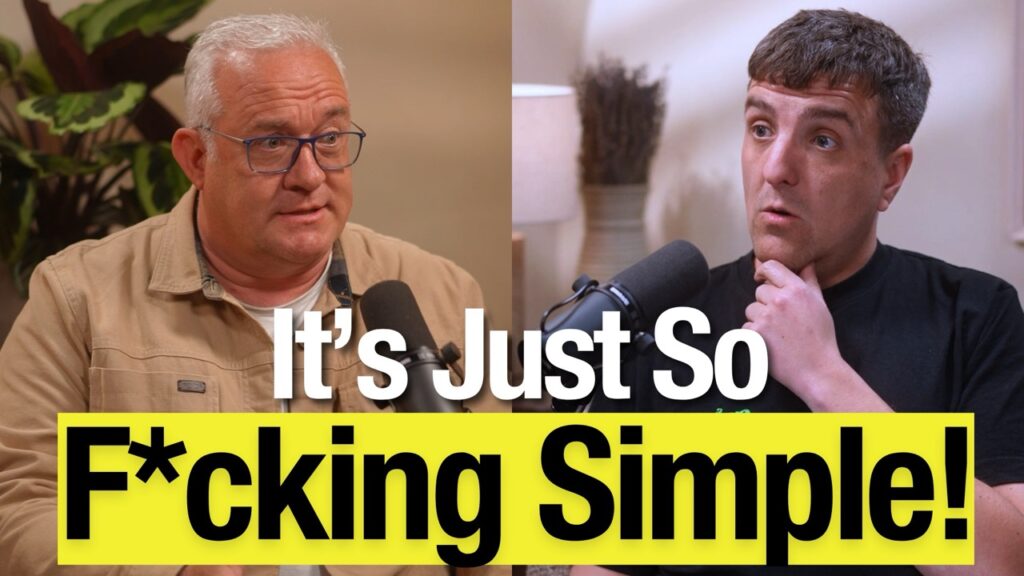

Everyone quotes the same inflation number, but almost nobody is actually living it.
In this Money Moments short, Rotimi Merriman-Johnson and Laura Ann-Moore pull apart why the official rate is only ever a rough average, and what that means for your money, your mindset and your next move.
Inflation gets talked about like it’s one number that applies to everyone equally. It doesn’t.
What you actually feel in your weekly shop, your rent and your bills depends on where you live, how you spend and what you’re buying, which is why the headline figure can feel completely disconnected from your own experience.
In this Money Moments episode, Rotimi Merriman-Johnson and Laura Ann-Moore unpack the gap between the “official” inflation rate and your personal one, why constant cost of living headlines can quietly push you into bad financial decisions, and how to actually build a plan around rising prices instead of just worrying about them.
We also answer two listener questions: where to put £350 a month between a pension and a stocks and shares ISA, and how to invest a child’s £25,000 inheritance ahead of university.
———
Gains App is LIVE!
An AI-powered budgeting and cashback app designed to help you make more of your money.
Download here: https://gainsapp.onelink.me/8IhT/oiaimr1z
———
Get a FREE FRACTIONAL SHARE worth up £100 when you deposit £1 with Trading 212
https://www.trading212.com/join/MGP
If you don’t receive the free fractional share, head to the menu and put the word ‘MGP’ into the promo code section.
(Capital at risk when you invest)
Key takeaways
- The headline inflation rate is a national average, not your personal rate, and it can be higher or lower depending on where you live and what you actually buy.
- Constant “cost of living crisis” headlines can push people into a scarcity mindset and rushed, risky financial decisions.
- You can’t control the inflation rate, but you can control your spending, saving and investing, so focus there.
- When splitting spare money between a pension and a stocks and shares ISA, start with your goal: when do you actually need the money?
- Before locking money away long term, build an accessible emergency fund first.
Timestamps
- [00:18] Tool: Work Out Your Personal Inflation Rate
- [01:12] Cost of Living “Crisis” Becomes the New Normal
- [01:59] Scarcity Mindset and Money Decisions
- [02:51] Tool: Focus on What You Can Control
- [03:40] Pension vs Stocks and Shares ISA Question
- [06:14] Tool: Split Contributions Between Pension and ISA
- [09:59] Investing a Child’s Inheritance for University
Why the official inflation rate doesn't match your life
Rotimi opened the segment by challenging how most people read inflation figures. As he put it, “you need to value it based upon what it can actually buy you,” not just the percentage on the news.
Your personal rate of inflation depends on where you live and how you actually spend, so a national figure of “2% more expensive” might not reflect your reality at all.
He also pointed out that once a price rise sticks around for a couple of years, it stops being a temporary “crisis” and just becomes the new normal, which changes how we should be planning rather than just reacting to headlines.
The scarcity mindset trap
Constant exposure to inflation and cost of living headlines does more than inform you, it can quietly change your behaviour.
The panel discussed how relentless negative news can create a scarcity mindset that pushes people towards rushed decisions or riskier bets with their money, simply because they feel like they need to “get money quick.”
The fix isn’t ignoring what’s happening. It’s acknowledging the reality while asking a more useful question: what direct impact is this actually having on me, and what’s within my control? That mindset shift matters as much as any spreadsheet when prices are rising.
Pension or stocks and shares ISA: what to do with spare cash
Answering a listener with £350 a month spare, Laura’s starting point was accessibility: “when do you want to be able to access that money?”
A workplace pension comes with employer contributions and tax relief on top of what you put in, but it’s locked away until pension age. A stocks and shares ISA gives you far easier access if you need the money sooner.
Rotimi shared his own approach: “for me, I do both. So I put into a pension and I do a stocks and shares ISA.”
Before locking anything away long term, though, he asked the question he uses with every client: “if you were to lose your primary source of income today, for how many months could you live?”
If the answer is zero, building an emergency fund comes first, before pension or ISA contributions.
Laura’s framing for the bigger decision was simple too: retirement, she said, “is not based on age.
It’s actually based on financial independence” and the number you’ve built up in accessible assets, which is exactly why some people retire in their 30s and others work well into their 60s.
Investing for a child's future
The second listener question involved a child who had inherited £25,000 seven years before starting university.
Rotimi’s answer leaned on the junior stocks and shares ISA allowance of £9,000 a year, spread across several tax years so the money starts growing as early as possible, rather than sitting in cash.
That’s the same principle behind investing in index funds: time in the market, not timing the market, is what beats inflation over the long run.
For anyone still working out the basics of where to start, our beginner’s guide to investing and compound interest calculator are good next steps.
This transcript is auto-generated and lightly edited for readability, it may contain errors.
[0:18] Sammie Ellard-King: Instead of valuing money purely by the number of zeros behind your salary, you need to value it based upon what it can actually buy you. Like how many people can a salary actually support? How many, how much groceries can you actually buy with the money that you have? That’s the real value of your money, not just the numbers. The issue I have with inflation is that’s what they are telling you. And actually your personal rate of inflation by still matter how you live could be lower or it could be higher. And so you need to work out what things are actually costing you physically yourself, and that’s going to differ if you’re in London, Manchester, Norfolk, who wherever over the world is going to be completely different to you. So, like looking at that figure and going, oh, 2% more expensive may not actually be one, be true, because personally I think they may inflate those figures to suit political narrative, and two, it’s probably different for you as well.
[1:12] Sammie Ellard-King: Yeah. The other thing that I would say is that the cost of living crisis, I think I understand why they called it that for like SEO post- Cost of chicken crisis now. But I don’t know, if something is happening for two years, that’s not a crisis, that’s just the way things are now. Yeah. Yeah. So I think that we’re going to have to get to a point where we stop talking about how expensive everything is and how we actually grow the economy. Because as we just said, prices are very unlikely to come down to where they were. Although they’re coming down, are they? Although deflation deflation does happen. It does, yeah. But that can be that can mean the economy’s not working as well. We need to grow the economy and we need to make it so that people have more cash in their pockets to actually afford things and businesses are growing and bridges are growing and that sort of thing. Yeah.
[1:59] Sammie Ellard-King: Yeah. And also what can happen, I think, sometimes on a mental basis, like an emotional basis, especially if all you’re reading in the news. And now I know that global news is going to be more bad than it is good. It’s just how it works. But every time you see inflation at all-time high, cost of living crisis, now it’s not to say those things aren’t happening and aren’t impacting people in real time. All it does is create a scarcity mindset. And it makes people like, I need to get money quick. They might end up making financial choices or taking risks that they wouldn’t usually. And I think it can have an impact on you and the way that you end up showing up and you move away from having like an abundance mindset and believing that there’s opportunities and resources and money available. And it puts you in this mindset where it’s like, and then you end up doing things that maybe aren’t best for your financial health. So it’s like finding the balance of not being naive or ignorant to it and acknowledging that it’s happening, but also being like, what direct impact is it having on me and as an individual and what can I control?
[2:51] Rotimi Merriman-Johnson: Yeah, 100%. Like, you know, you it’s it’s real. Yeah. Like things cost more now. Totally. So what you can do about it. That’s the way I see it. Yeah. Like instead of going, oh no, she’s in a call, Keir Starmer, please say me. No. Like, think about yourself, what you can do for you, your family, what is in your circle of influence, and how can you uh directly impact and change your life to then perhaps either make yourself have a little bit more money to be able to do the things that you used to do because that’s a reality that a lot of people face, instead of so I like just acceptance of that fact right now. Like we’re not there’s no one coming to save us, unfortunately. So we do have to make a change every now and then. But first question Okay Darren.
[3:40] Laura Ann-Moore: Dazza. I don’t know any Darons, and I know I don’t think I’ve ever met a Darren. I know three. You know three. Oh, I don’t know any. Three Dazers. Three Dazas. Wow. Three dazes. Or just Daz I. Three Dazai. Sounds like a house of dragons time, doesn’t it? Well, Darren Desai has said to us, um, I have no idea what to do when it comes to my money. I have 350 pounds to put away each month, which is separate to my savings. I don’t know whether to add it to a pension. I already have a workplace pension, or do I open a stocks and shares ISA? Any ideas, guys? I think when it comes to thinking about what to do with that extra money, one of the first things you need to think about is accessibility. When do you want to be able to access that money? Because pension, workplace pension is great. Like I remember hearing this thing once, I can’t claim it as my own, but it was called said that the workplace pension is like a meal deal. So you put your money in and then that’s the sandwich. And then the drink is the employer with their contribution, and then the snack is what’s coming from tax relief. So it’s like you put one bit in, but you’re getting two extra, you know, some bonus. Great, but obviously you can’t touch that money until a certain age. Whereas if you’re putting your money into something like a stocks and shares ISA and you’re investing on the stock market, it’s a lot easier access because you have direct money to sell and will liquidate your assets. And then you have the kind of thing in the middle with like property, for example, whereas yes, you have there’s no age limit on when you access that money. However, it’s, I guess, less liquidable. Um, so yeah, I would say really sit and think about first off, what do I want my future to look like? When would I like to retire? What does my retirement look like? And the key thing I will say about retirement is retirement is not based on uh age. It’s actually based on financial independence and like planning. It’s the number that you have available within your assets that you have access to that allows you to retire. That’s why you have people retiring like in the 30s and 40s, because they’ve built up enough money to give them an income for retirement. So yeah, I would say really, Dazza, have a think about what your what you want your retirement to look like, when you want what that looks like, how much it’s gonna cost you, because that is going to then indicate where you then put that money. Because it might make more financial sense to put it in a pension. But if you’re like, I really want to retire at 40, there’s no point having all of that money tied up in a pension. Yeah. So yeah, goals first is what I would say.
[6:14] Rotimi Merriman-Johnson: I completely agree uh with you, Laura, on that. It’s like for me, I do both. So I put into a pension and I do a stocks and shares ISA. Simply, and I’m a little bit more aggressive than I am in my stocks and shares ISA because I know I’m gonna want the money before I hit 57 to do other things with. And so that’s the decision I’ve made, but also topping up there so I have some tax relief. Does help with my business corporation tax as well, and also I know that that money’s locked up for me safely over there, should anything go wrong with my ISA for whatever reason. Um, so yeah, I think it depends on your goals. Like, when do you want it? What do you want to do with it? Um, Timmy, any thoughts on it? Yeah, um, again, completely agree with what you’ve both said. I think the the first thing I’d say is Dara Dazza. Dazza, congratulations. You’re not spending a hundred percent of your money. So that’s really, really positive. Um, because as uh yeah, as we as we said in a previous episode, like the the main aim of like a lot of the world around you is to strip you of all of your cash and get you to spend 100% of it, which leaves you in a vulnerable position for sure because you then have to make it to your next payday to have money. So the question I’d asked um Dazza is if you were to lose your primary source of income today, for how many months could you live? If the answer is zero, then open up an easy access savings account and start to build an emergency fund right away. Because that will give you the freedom and the flexibility to weather the storms.
[7:47] Rotimi Merriman-Johnson: It sounds like for he’s got I’ve got £350 to put away each month, which is separate to my savings. So it sounds like he’s saving money separate to that £350, which is amazing. Great. So that’s that’s like the short-term future. Yeah. Then for the medium-term future, what do you want to do or have? Does Darren want to buy a house? Does Darren want to go on holiday? Does Darren want a new car? You can set up a separate bank account for things for things that you want to do and have. And then of course, anything over and above that can go to longer-term investments like stocks and shares ISAs and pensions and stuff. The main difference between a stocks and shares ISA and a pension is largely the tax treatment. So, um, and and like the allowance. So with a stocks and shares ISA, you can put in 20K per tax year. With a pension, you can put in 60k. If you were to um like touch wood, hope it doesn’t happen, pass away, then your pension will be paid to your beneficiaries as a tax-free lump sum, but your stocks and shares ISA will be um subject to IHT inheritance tax. So for the long term, a stocks and shares ISA is more focused on you and the wealth you want to build for yourself. Your pension’s more like a form of generational wealth that you do use, but that can go on to um beneficiaries and your families and stuff.
[9:04] Rotimi Merriman-Johnson: Such a good point to me. Yeah, that’s a really good point. A lot of people forget about that inheritance tax with the stocks and shares ISA. Like that does like forms part of your estate. Exactly. Yeah, which I think people do need to be aware of. And that’s exactly one of the big decisions of plus point for me splitting up that contribution, even though I am more aggressive with stocks and shares ISA because I’m kind of banking on the fact I might live live hopefully in a few more years. But um fingers crossed, yeah, definitely getting called 54 when I’ve all that. Anyway, TikTok is a beautiful place. Yeah, but I think it’s a big factor for me, is like I do want to have some money locked away. You know, should I ever have kids or or or indeed like being able to pass on to my sisters or whatever that might well be in my pension is is important. So thank you, Darren. You daza, you legend. Now this one’s anonymous.
[9:59] Sammie Ellard-King: Oh. Um, so I’m gonna call her someone. Should we give her a name? It’s giving gossip girl. It’s definitely, it’s definitely, she says she, so it’s definitely what do you want to name her, Laura? Um Kelly. Yeah, it’s Kelly. It’s Kelly. It feels like a Kelly. It does feel like a Kelly, doesn’t it? Yeah, Kelly. Kelly, Kelly says, My daughter is 11 and has just inherited £25,000 from her grandparents. I feel like it’s a really good opportunity to help grow it, given that she is seven years away from university and ten years away from 21, which is when I feel like she would actually need it. What are my options in this case and how would you approach this yourself, Skies? To me. What was the amount inherited? £25,000 from her grandparents. £25,000, and she wants the child to be able to access it for uni times?
[10:46] Rotimi Merriman-Johnson: So she is seven years away from university daughter is 11 at this moment in time, so that would make her 18. Great. So you have a 9,000 pounds per tax year junior ISA allowance, so they can split that money up and over the course of four years, because I guess it’ll be like 9k, 9k, 9k, 1k, um, put that into a junior stocks and shares ISA. That can also be put into something like a tracker fund and and just grow over time. Um Could you do it with the seven years? With seven years, would you deb would you put it into a junior stocks and shares ISA, would you? Over the course of seven years. Yeah. Well the the annual allowance is is nine grand. So um you could split it up over seven years, but you have to remember like time in the market. So you want to get the money in early and growing early. So they could uh try not to be prescriptive with this, max out the nine in the year one, max out the nine in year two, year three, and then put the grand, the final grant in year four. Um separately, you also have a junior pension, and uh sorry, I’ll stick with the junior ISA that will then turn into an adult stocks and shares ISA when her daughter turns 18, which can be used towards university or driving lessons or maybe a house deposit, depending on the growth. Separately, you also have a junior pension allowance of 2,880 pounds per tax year. Uh tax relief takes that up to 3,600. And that works much the same as the junior stocks and shares ISA, but you can’t access that money until pension age. So that’s a very simple thing that they can do.
Frequently asked questions
The headline inflation figure is a national average built from a fixed basket of goods.
Your own cost of living depends on where you live and what you actually spend money on, so your personal inflation rate can be higher or lower than the number reported in the news.
Location and lifestyle both matter. Housing costs, commuting, food shopping and childcare vary hugely across the UK, so two households can experience very different real-world price rises even though they’re reading the same headline figure.
It depends on when you need the money. A pension comes with employer contributions and tax relief but is locked away until pension age, while a stocks and shares ISA is far more accessible. Many people, including Rotimi, split contributions between both.
Before contributing to a pension or ISA, work out how many months you could live on savings if you lost your income today. If the answer is zero, prioritise building an easy access emergency fund first.
Yes. A junior stocks and shares ISA lets you invest up to £9,000 a year, and spreading a lump sum across several years while staying invested for the long term gives it the best chance of growing faster than inflation. This article is for educational purposes only and should not be considered financial advice. When you invest, your capital is at risk and past performance is not a guarantee of future results. This page contains affiliate links; if you click one and make a purchase, we may receive a small commission at no extra cost to you.
———