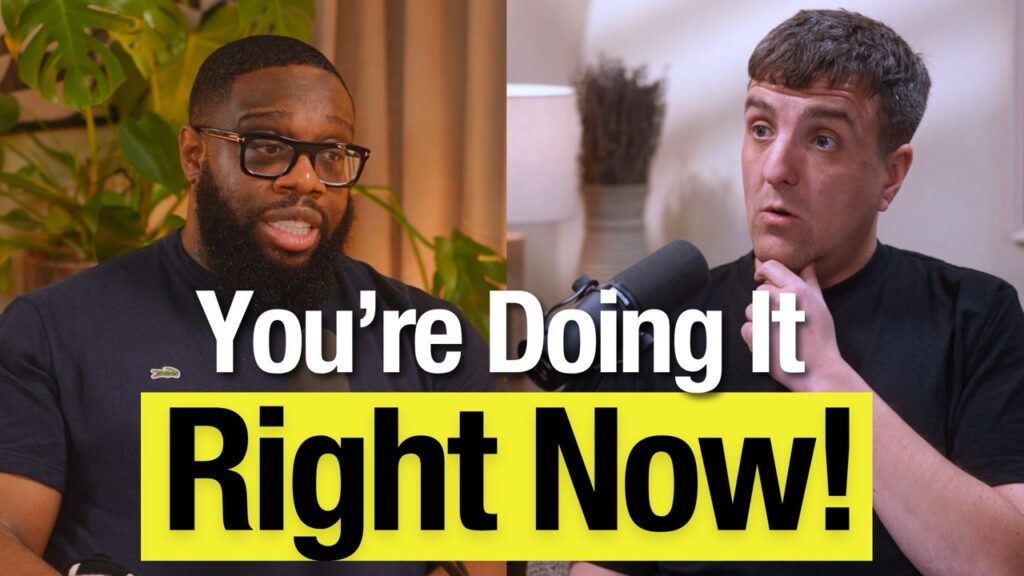

This week’s guest is David Henderson, Head of Pensions at Penny, who joins the podcast for a full deep dive into workplace pensions.
Why an estimated £28 billion is sitting in lost or forgotten pots at the time of recording, how to track your own pensions down, and what auto-enrolment, tax relief and drawdown actually mean in practice.
David spent close to 20 years at Hargreaves Lansdown, working across the help desk, the contact centre and workplace pensions before becoming head of the firm’s entire pensions division.
He now leads on pensions at Penny, a pension tracing and consolidation service built to solve a problem he saw play out again and again: people who assume that once they leave a job, the pension they built up there is gone too.
It isn’t.
In this episode David explains why so many pots go missing in the first place, walks through exactly how tracing and consolidating a pension works, and breaks down the mechanics of auto-enrolment, salary sacrifice, tax relief and what happens when you actually come to take your pension.
It’s a genuinely useful, practical episode for anyone who has ever wondered whether an old workplace pension is still out there with their name on it.
Couch To 5 Grand is HERE >> https://stan.store/upthegainsmoney/p/couch-to-5-grand–passive-income-starter-kit
———
Gains App is LIVE!
An AI-powered budgeting and cashback app designed to help you make more of your money.
Download here: https://gainsapp.onelink.me/8IhT/oiaimr1z
———
Get a FREE FRACTIONAL SHARE worth up £100 when you deposit £1 with Trading 212
https://www.trading212.com/join/MGP
If you don’t receive the free fractional share, head to the menu and put the word ‘MGP’ into the promo code section.
(Capital at risk when you invest)
Key takeaways
- The UK had an estimated £28 billion sitting in lost or forgotten pensions at the time of recording, built up as auto-enrolment brought more than 10 million extra people into workplace saving.
- When you change jobs your pension stays with the old provider, so tracking down old pots is your responsibility unless you use a tracing service.
- Around three in four people don’t know where their pension is actually invested, which David says is one of the biggest barriers to engaging with it.
- Tax relief adds an automatic top-up to every pension contribution, and higher and additional-rate taxpayers can claim back even more through self-assessment, something most eligible people never do.
- The minimum pension access age is rising from 55 to 57 from 2028, so starting early and consolidating what you already have matters more than ever.
Timestamps
- [1:20] David Henderson’s Journey From Hargreaves Lansdown to Penny
- [6:08] Why People Think Pensions Are Boring
- [10:58] Inside Penny: Tracing the UK’s £28 Billion in Lost Pensions
- [15:09] Real Stories: How People Lose Track of Old Pensions
- [16:23] How to Trace a Lost Pension Step by Step
- [22:50] Pension Access Age Rising From 55 to 57
- [26:48] Auto-Enrolment and Employer Contributions Explained
- [28:44] What Is Salary Sacrifice and How Does It Work
- [30:28] Tax Relief on Pensions Explained
- [37:52] Annuity vs Drawdown at Retirement
From the Hargreaves Lansdown help desk to running pensions at Penny
David’s pension career started, in his own words, with a morning spent reading a guide about stakeholder pensions before being put straight on the phones.
Nearly 20 years later he’d worked across the help desk, the contact centre, workplace pensions and advice, and ended up as head of the whole pensions division at Hargreaves Lansdown.
He left around two and a half years before this recording to work with smaller, faster-moving companies, eventually landing at Penny as Head of Pensions.
Penny’s job is straightforward to describe and surprisingly rare in practice: it helps people trace pensions they’ve lost track of and bring them together in one place.
David says the company uses its own technology to identify where a lost pot is held, get a current value, and, if the saver wants, start the transfer and consolidation process.
If you want to see how consistent saving and investment returns build up over time, our compound interest calculator is a good way to picture what a forgotten pot might be worth by the time you actually need it.
The £28 billion problem: why so many pensions get lost
David puts the scale of the issue at £28 billion sitting in lost UK pensions at the time of recording, and traces the root cause back to auto-enrolment.
Since it was introduced roughly ten years before this conversation, employees have been opted into a workplace pension by default rather than having to sign up themselves, which David says has pulled more than 10 million extra people into pension saving, including far more women and younger workers than before.
The catch is what happens when you move jobs. Your pension doesn’t move with you. It stays with whichever provider your old employer set up, and moving it is entirely down to you.
David shared examples from Penny’s own users, including a chef with 16 separate old pensions and various people in retail and childcare roles who simply assumed the money “wasn’t theirs anymore” once they’d left the job.
It is theirs, whether the pot is worth £500 or £20,000, and it doesn’t disappear just because you stopped paying in.
How to trace and consolidate a lost pension
Tracing a lost pension, David explains, usually comes down to a handful of details: your date of birth, National Insurance number and last known postcode. In most cases a service like Penny can identify a pot electronically using that information.
Where it’s more complicated, there’s a free government option too: the Pension Tracing Service, accessible via the MoneyHelper website, along with the gov.uk tool for finding pension provider contact details directly.
David’s own experience made the point well. With a double-barrelled surname that got recorded inconsistently across five different Nest pensions from job-hopping in his twenties, he ended up filling out five separate transfer forms just to bring his own pots together.
Old addresses from years of moving flats made it worse, since annual statements were going to places he no longer lived.
His advice is to treat pension tracing the same way you’d treat any other lost financial account: worth a bit of admin now to stop losing track of money that’s already yours.
Getting your day-to-day finances organised first makes that admin easier, and our budgeting calculator is a straightforward place to start if your monthly numbers feel like a mystery.
Auto-enrolment, employer contributions and salary sacrifice
David laid out the basic mechanics of auto-enrolment: if you’re over 22 and earning roughly over £10,000, your employer has to enrol you in a pension, with a minimum total contribution of 8%, split as 5% from you and 3% from your employer.
That employer 3% is, in David’s words, effectively free money, and it’s worth asking what your employer’s actual limits are, since some will match extra contributions well above the statutory minimum.
Salary sacrifice makes those contributions go further still. Rather than paying into your pension from money that’s already had tax and National Insurance taken off, you sacrifice part of your salary before deductions, so more of it reaches your pot.
On David’s example, £1,000 might become around £680 after tax and National Insurance normally, topped back up to roughly £850 with basic-rate tax relief, whereas salary sacrifice can get the full £1,000 working for you from the outset.
It’s worth checking your actual take-home position before deciding how much to sacrifice, and our take-home pay calculator is a quick way to see what you’re really working with each month.
Tax relief: the free money most higher earners forget to claim
Tax relief, David says plainly, is the government’s way of encouraging people to save into a pension, and it’s one of the strongest reasons to prioritise it. Basic-rate taxpayers get a 20% top-up automatically: pay in £2,880 and the government adds £720 to make £3,600.
Higher-rate taxpayers can claim relief worth up to 40%, and additional-rate taxpayers up to 45%, but anything above the basic 20% has to be claimed back separately through self-assessment.
That’s the part David flags as widely missed: by his account, roughly two-thirds of higher-rate taxpayers never claim back the extra relief they’re entitled to, even though it can be backdated up to four years.
If you’re deciding how aggressively to invest that extra relief once it lands, our guide to investing for beginners in the UK is a good starting point before you change how your pension or any other account is invested.
Pension access age, annuities and drawdown
The minimum age you can access a personal or workplace pension is currently 55, rising to 57 from 2028, and David is candid that it will likely keep rising as the population ages and the state pension becomes less generous in real terms.
His view is simple: there’s no realistic alternative to building your own pot, so the sooner good saving habits start, the better.
When it comes to actually taking the money, David explained the two main routes. Both let you take 25% of your pot as tax-free cash.
An annuity uses the rest to buy a guaranteed income for life, calculated using your age, health and postcode, which offers certainty but no flexibility once it’s set up.
Drawdown keeps the remaining 75% invested and lets you control how much you draw and when, which suits people who want flexibility but takes more ongoing engagement.
David noted a mix-and-match approach is possible too: using part of a pot for a guaranteed annuity income to cover essentials, while keeping the rest invested in drawdown.
Before any of that becomes relevant, it’s worth making sure your near-term finances are solid, and our piece on how much should be in your emergency fund covers how to size a buffer so you’re never forced to dip into a pension early.
This transcript is auto-generated and lightly edited for readability, it may contain errors.
[0:00] Sammie Ellard-King: Hello, hello, and welcome back to the Money Gains Podcast. We’ve had a little break over Christmas, but we’re back now with a whole range of brand new guests. We’re leveling things up, we’re going harder than we ever have before. And my guest today is a legendary David Henderson from Pension App Penny. He spent over 20 years in the pension industry for the likes of people like Hargreaves Lansdown, one of the biggest providers in the UK. And this is a deep dive. Everything you need to know about pensions from start to finish. Why you need to be thinking about your pension, why you need to maximize your employer contributions, your personal pensions, everything you need to know. What happens when you withdraw? Everything. Love this as a resource today. David was amazing. So we’re gonna get right into it. But if you’re listening on Apple or Spotify, then whack that follow button. Share this episode with a friend. We need to help get Britain financially fit, ladies and gentlemen. Let’s get started on the Money Gains Podcast for 2024. Let’s go. Hello and welcome to the Money Gains Podcast. My guest today is David. David, welcome to the show, man. How are you doing?
[1:20] David Henderson: Yeah, I’m good. Thanks for having me. Yeah, I’m really looking forward to this one. We haven’t really done a really good pension episode yet, and your experience is insane. If you wouldn’t mind telling the audience a little bit about yourself. Yeah, sure. So my name’s David Henderson. Um, I’m head of pensions at Penny. Um, Penny is a relatively new company. We’re a sort of pension tracing and consolidating service. But prior to that, um, I worked at Hargreaves Lansdown um for nearly 20 years. Um, worked across the business, uh, worked on the help desk, ran the contact center, uh, worked across workplace pensions, advice propositions, and was head of pensions, as head of the whole pension divisions for HL. So really exciting time, great company to work for, learned a lot, spoke to a lot of different clients. Every day you can speak to over 100 clients on some days. So, yeah, great to be here.
[2:10] Sammie Ellard-King: Thank you. Yeah, and I mean, talk to us about that then, because obviously HL 20 years ago, for those that don’t know, Hargreaves Lansdown, one of the biggest, I would say, providers of investment services in the UK. Um how is that how have you got to that point of your career? Well, so starting at HL, pretty much everyone would start in one of two ways. You would start and you’d either be on the phones in the afternoon, or you’d be sticking sticking and stapling paper together, application forms, so admin. So licking and sticking is what they used to say. Um so or or um or answering the phones. Um and that’s what I did. I started first day, you go in, you’d read a guide about stakeholder pensions, which was the main proposition at the time, you’d read that guide, and in the afternoon someone would say, right, you’re on the phone, just being the clients. And you’d be like, Jesus, I’ve I’ve I’ve got a morning’s experience here. Um but you just get on with it and you learn you’d learn your way around it. When I started, I think the pensions division was about there’s maybe 15 or 20 of us in there. Um and now it it spans across the business. You probably you probably count four or five hundred people that are in the pensions business at HL. And at that time, they launched a business, um, the pension side of things, because a chap called Adam Norris, Lando Norris, the Formula One driver’s dad, actually just approached Yeah, so he just approached them and just said, Look, um, I think we should set up a pensions business. There’s this opportunity for stakeholder pensions coming in, the government’s backing it. I think it’s gonna be a huge opportunity for you and the business. Let me run that and I’ll take a cut off that. So that’s what he did set up a business selling stakeholder pensions, and they were selling more stakeholder pensions than the people that they were selling them for, so the likes of Scottish Widows, Standard Life, Aviva, because HL has always just been an amazing marketing machine. And if you’re a client of theirs or you’ve ever dealt with them, you know that’s the case. Um, they grew that business, then they launched something called a SIP, which is a self-invested personal pension. And the reason for doing that, there was changes in rules, SIPs are becoming more and more popular, and a SIP is still just a pension, it’s just a wrapper. You get all the same tax benefits that will come onto, but you can just invest in more uh more investment types, you can invest directly into shares, whereas with a stakeholder pension might be limited. Um, so yeah, they grew the SIP business. Um, alongside that, they were growing the workplace side of things, so offering all those same services that HL offers. So your ISAs, your Fund and Share Account, your SIP, but to a workplace, so employees could offer that direct to the workplace. Yeah, and the business just grew. Um, they floated, things changed, you bring in more regulation, you know. That’s it, whenever a company floats, is that all the people that have been there for years say it’s not the same, you know, it’s too much, too much regulation, too much reporting. Um, it’s just it’s just natural flow, isn’t it? As a business grows, there’s more checks, more risk, there is more reporting you need to do. So, yeah, it was great, great companies to be to be part of. Um, and for the pension side of things, we almost had like our own little cottage industry. We’re just left to our own devices, and that was great, you could just try out new things. I think you’ve got a history or background in marketing, and we could we just tried different approaches, and we’re we’re still big enough to be credible, but small enough that you could try things, and if they didn’t work, it was okay, and no one was gonna lumbast you for it. So, really cool company to be part of. Learnt a lot from the bosses there. So Peter Hargreaves, Stephen Lansdown, I mean, very, very uh respectable figures and intimidating, but you know, to work around and be part of. Um had quite a few uh um what can I say, bollockings, um, or uh or or stern words mainly from Peter over the years, but that’s just you you just respect the fact that he’s passionate about the business, and if you give us if you gave us good back, that was all cool. Um so yeah, it’s an amazing business to work for. I left there probably about two and a half years ago because um I just wanted to work with different types of company, wanted to work with startups and gain a different type of experience.
[6:08] Sammie Ellard-King: It’s amazing though, that journey. I mean, HL now is I I have my set my sip with HL. Um had it there for years, not planning on ever moving it out of there, really, unless some ridiculously low-cost, fantastic option comes along and it makes sense for me financially. Um but having been there for that long and watching that grow and watching the industry grow so much. I’d love to know what you think some of the key misinterpretations around pensions are. Yeah, I think the main thing around pensions is people think they’re boring. And in the UK, we don’t generally have a good um we don’t talk about money enough, we don’t talk about our investments, we don’t invest enough in the stock market if you compare it to other countries. So there’s always that sort of, you know, we don’t talk about money and wealth in the UK, or didn’t used to anyway, as much as we should. And a pension, because you can’t actually access it, there’s a few reasons. One, because you can’t access it until much later in life. People just naturally switch off and think, well, it’s it’s not important to me anyway. Two, I I think there’s been a lack, this is improving, this is really improving now, but there has historically been a lack of sort of support and engagement in terms of you know, this is what you’ve got, is your money, and this is why it’s important. And that has changed slightly with auto enrollment that came in. So auto enrollment is came in about 10 years ago, and rather than you having to opt into a pension if you’re employed, you have to opt out, and that’s been huge. That that’s meant like 10 more than 10 million people, extra people have been enrolled into a workplace pension. So have a pension. I think things are changing as well because you’ve got more digital tools, so you can view your pension in your app anytime you want. Um you can view it 24-7, so there’s much better access, providers are getting better at the language they use, um the the statements, uh there’s a big push for statements to be more comprehendable, to not be written in language that’s misleading, confusing, jargon, all these types of things. And if you combine all of those together in the past, so lack of accessibility, poor language, poorly trained agents, all of these things, um, it was very easy to just switch off to a pension, especially if you’re especially if you got your annual statement um and it comes true and you’ve lost money, you’re just like, well, what is this? And I don’t I don’t understand, I’m not gonna engage with it. Now people um you can access it online, you can look at your investment options, there’s much more support. It’s easier to switch between investment options, whether that’s funds or equities. So I think it’s improving. I think that historically it’s been pretty bad, but it’s getting better, and more competition in the market will help with that. So more more challenges, more people sort of shaking up the industry, that’s only going to help. And it’s an important thing as well. Your pension is your biggest asset you’ll ever own, aside from your property. Um, so you do need to um pay it more attention, as as there was a recent campaign highlighted.
[9:01] Sammie Ellard-King: Yeah, and often people don’t necessarily understand that that pension is invested for them. That’s one of the really one of the biggest things I get back. And often I talk to people about this. Well, do you have a workplace pension? Yes, we do. Okay, cool. Um but they have this kind of stumbling block when it comes to investing. And then you say to them, Well, you do understand that you know majority of your pension is invested and into the stock market. And they say no. And they don’t actually understand the nuances of what happens behind the class. They just go, Oh, I have to do my pension or I’m putting money away into my pension. A lot of people view it like a savings account, which it is in a sort of semi in a in a non-official way, it is putting money away for a later period of your life, but yeah, majority of the providers are invested. And once they understand that stumbling block really opens up their whole mindset, like, oh, I’m actually growing my pension pot for my later years. And once you get into that mindset, it can really start to change things.
[9:58] David Henderson: Yeah, definitely. I think 75% of people don’t know where the pension pot is invested, which is pretty pretty pretty worrying. Yeah, mad, mad. Um, a part of that is you know lack of engagement for for every company that engages with their employers and employees, sorry, and says, we’ve set up this pension for you, this is where it’s invested, we’re gonna run workshops for you, we want you to understand your pension. That there’s another half that don’t do that or can’t do that because the smaller companies, you know, it might be local butchers or whatever it is, they just don’t have the support to be able to do that. But yeah, when you actually explain to someone where your pension and how it’s invested, suddenly there’s a bit of a light bulb because it’s it’s a bit like an ISA as well. People you you’ll you’ll say to someone if you’ve got an ISA or you’ve got a pension, oh, I’ve got one, but it it was rubbish. It’s like it’s not that that’s rubbish, it’s not the wrapper that’s rubbish, it’s where it’s invested, and you can change that, and you can change that quite easily. And there’s lots of support for you to be able to do that as well. So, yeah, I think that’s that you’re right, that’s a big thing that we need to sort of overcome in terms of getting more engagement.
[10:58] Sammie Ellard-King: Yeah, I completely agree. Now you’ve made the move over to Penny, which looks like a great business. Can you talk to us a little bit about the ethos of that business? Yeah, so Penny is basically helping people trap down lost pensions. So in the UK, there’s £28 billion of lost pensions out there, which is a staggering figure. And that comes back to auto enrollment, which we were talking about a moment ago. So auto enrollment came in 10 years ago, everyone is basically employed in pension, fantastic. Uh saving rates rates have gone up. A lot more women are invested in pensions now, which is great. Uh, a lot of younger people invested in pensions, again, fantastic, because that creates that engagement early doors. Um, what that does mean though is when you move jobs, your pension doesn’t go with you. And there’s talk of that changing in the future. But for now, when you move jobs, your pension stays with the existing provider that your company set up for you. So you work for JD Sports, for example, they set you up with a pension of standard life, you move and go work for Footlocker as a sort of shoe base example. Um it’s your responsibility to then move that pension across. And that money is yours. And you might have been working there for say two, three years, and you’d have been paying in your own money, your employer will be making a contribution, and tax week on top of that. And all that money is yours, whether it’s £500 or £2,000, that is yours. And what Penny do is they help individuals in those situations from you know from any sort of employment background or back whatever the background, but we help them track down those lost pensions. So use it going onto the app, uh, we’ve got our own propriety technology that means we can identify if, say, you have a pension with Aviva or Aegon, track it down, get the value for you, and if then you then you want to move it across and consolidate into one pot, that’s what we can do for you. We can do it all in seconds as well, in terms of the identifying the value, where it’s with, and then the process of transferring will initiate that for you as well. So it’s a big thing. And when I first started at Penny, I mean I knew about pension transfers and lost pots in the past. Working at HL, though, typically the clients there were a lot more engaged there, you know, the sort of they’d read the personal finance pages, they’d have their own spreadsheets, they’d know they had a pension with standard life, but they just chosen not to move it yet. So it was a different, different sort of conversation. When I moved to Penny, the first thing I did was speak to some of our users and just try and understand what their story was. And it’s things like there was a chef in Scotland who had, I think he had like 16 different pensions, and all of them, he just thought, well, I I left that job, so that money’s not mine anymore. Um, and he’s tracked them all down and consolidating them. And it’s similar with um someone who’s working in sort of childcare, just the same conversation, they just assume when they left the money stayed where it was, and that’s that’s a huge thing. And that’s just the people that we reach out to. There must be so many people in that situation with these lost pots that they could just transfer. And what we’ll find is when they do transfer, when they do realise that that money is theirs, um, it’s a bit of a light bulb moment because they’re then like, oh, I’ve got this money, I should pay a bit more attention to it, I should look at where it’s invested, and and you know, it’s it’s a good time to engage with them and start that journey.
[14:07] Sammie Ellard-King: If you’re interested in starting a side hustle that doesn’t completely take over your social life, then you’re going to want to hear this. I’ve just launched a brand new passive income-focused course called A Couch to Five Grand. I’ll show you how to go from zero to 5k in revenue in under 100 days selling digital products on social media. The beauty of this is we launch your very own product in a niche you’re already super passionate about. The course is packed full of 21 beginner-focused modules taking you from idea to launching your very own profitable digital product. Perfect for busy professionals, parents, entrepreneurs, and those with a keen interest in digital marketing. In January alone, we cleared £3,500 in revenue with just 60 minutes work a day. Yes, that’s right. We do all of this with 60 minutes work a day. There’s a link in the episode description to find out more. And now back to the podcast. 100%. That’s actually I didn’t realise it went that deep as in that people actually thought they’d lost money by moving jobs. Some people did a real thing.
[15:09] David Henderson: Yeah. Wow, like that’s crazy. That is really crazy. And I suppose you you’re right, it does come down to the employer and their capabilities of actually explaining this to them. Because I remember back in the, you know, in my early 20s, I’d get the NEST letter through. Yeah. And I’d just go, oh yeah, whatever. Because I’m in my 20s and my employer was just sent me a let a welcome pack. They didn’t necessarily say, hey, this is where it is and this is where it’s going. And actually, it was only until I started to consolidate. And I think I had nine, um, because I job hopped quite a lot in my twenties. I moved roles quite a bit to try and increase my salary a lot quicker, which which which which which is a good thing. But the issue was is that I had people’s pension, nest pensions, and because my name is spelt double barreled, often they’d leave out the hyphen or a part of my last name. And then so Nest had five for me, even though the name is the same. So it and it was a real nightmare of getting them to put them all together because I had to fill out five different transfer forms, and it was just a ball ache. And how do you help with that side of stuff? Because that was my experience.
[16:23] David Henderson: Yes, it did. Can I just check on that? Did you get five annual statements just from that each year? So yeah, no, I used to so this is the bad thing as well. It’s obviously that they were they had old addresses for me. Yeah. So when you live in London, you tend to move around quite a little bit, or you know, you do a year or two in a flat and then you’d move around, especially when you’re living with with mates, because you know, someone would get a girlfriend and or someone would, you know, lit um, you know, you might fall out of someone and you’d move around. And so your addresses have changed. So you’re getting the annual statement sent out to you, but you don’t work at that job anymore, and you don’t live at that address. So you don’t see it. And especially in your 20s when you’re not thinking about it as much, it’s it’s it’s it’s wild. Yeah, well, moving house, changing jobs, getting married, all these different things um can cause people to lose the lose track of not just the pensions, but all their investments. So everything I’m talking about here with pensions, you should be doing the same for your ISA, your general investment account, your banking, just making sure it’s all kept up to date. But in terms of trace, in terms of tracing the pensions, it’s things like you can, you know, date of birth, national insurance number, last known postcode, etc. All these things can sort of help build a picture. So the majority of cases you can identify them um electronically. In some cases, it might be that you need to go down the the cumbersome route of you know phoning up said incumbent provider sitting on the phone for 40 minutes and uh and seeing what they say, or writing them a letter and sitting back and waiting four weeks. Um but it’s different ways of doing it, and the government offer a service as well. So there is a there’s I mean, our service to find the pensions is free anyway, but there’s a government service as well, pension tracing service. Um, so if you if you want to go on there, it I think it’s on the Money Helper site, but you can find it on there, the pension tracing service. Um, so there’s lots of different routes out there to track them down now. So it’s it’s becoming more uh more well known and issued, which is which is a good thing.
[18:16] Sammie Ellard-King: I suppose I’m an anomaly in in that because you know not everybody has a double barrel name, and not everybody you know is a nomad like I was in my 20s, but there’s uh you know that was life for me back then, and it was it was a real thing, you know. I hit I hit 27, 28, I think it was 28 when I consolidated everything into HL. And it was just a bit empowering because I then suddenly turned around and was like, wow, I’ve got like 14 grand here. And I really in my head, I probably had about five, four, five max. I mean, you look at it and you go, Oh, you know, I could do some damage with this over the next few years. So if we invest it well. Um I always used to think. Yeah, I always used to think sort of 10k was the sort of tipping point for people to show some kind of interest because then it’s it’s like it’s it’s enough of an amount, it’s not huge, you can’t retire on 10k, but obviously, but it’s enough to say, oh, actually, this is something I should start paying attention to. So your your story’s pretty familiar there. Just yeah, yeah, I’ve got them all in one place. Actually, I’ll have a look at where it is invested, or do I need to do more, or use some of the calculators, and how much do I need for retirement?
[19:23] Sammie Ellard-King: Yeah, and then I just basically from that point on reappropriated my budget essentially. So for me, I’m way more aggressive, my stocks and shares ISA. This isn’t financial advice for anybody, this is just my strategy. I’m just way more aggressive with my stocks and shares ISA, but I still contribute to my pension actively because it helps me and my tax with my business. So that’s the way I look at it. Um you know, combining pensions, it sounds great. And I suppose for some people, you mentioned there it takes a few minutes, but what are some of the steps that you need to go through to get through it?
[20:44] David Henderson: Um dependent well, depending on who the provider is, depending from who you’re coming from, persistence. So not all some providers, some providers are better than others, you know. So a lot of this can be done electronically. So you can do a transfer in two days, or you can do a transfer in a year, depending on who it’s coming from, you know. So I mean, I mean, to be honest, if if it’s taking a year to get the pension out of your existing provider, they’re probably not a company you want to be with anyway, if it’s taking that long. So that’s why I’m saying persistence is key, you know, just keep going, keep pushing forward. Um, so yeah, once once you’ve handed it over to, I mean, like from the likes of Penny, once you say we want to transfer it, we do all that hard work for you. So we’re we’re requesting the funds electronically, we’re asking you where you want it to be invested, we’re making those investments, uh, your instructions on your behalf. And then where that where where there are delays, that’s what um the receiving schemes of Penny in this case, that’s what we’re doing for you. So we’re we’re tracking down why there’s a delay, making sure it comes across as quickly as possible. But yeah, I mean, if it’s if it’s taking too long, it’s probably a good sign that you’ve made the right choice because they’re gonna if they’re gonna be like that with the transfer, they’re gonna be like that when you have a general query, when you want to make a top-up, when you want to take benefits at retirement. So yeah.
[21:56] Sammie Ellard-King: Yeah, it’s fascinating, isn’t it? I mean, so some of the things I get, especially on my social media, I did a post about this actually recently. You know, I said I’m 34, putting X amount into my pension. If I continue on this rate, then I’m gonna have X amount. And people were kicking off left, right, and centre. And as they do on TikTok and Instagram lately, you know, there’s quite a few mouth breathers out there, shall we say. Um, and um one of the big things though that came up, it was a recurring theme, was about the pension age access. And we’ve obviously seen an increase recently from the 55 to 57. Yep. And often people are worried that, you know, but especially Gen Z, you’re sitting in your twenties now and you’re seeing that age go up. Many people worry about it, you know. Being 65 plus, and that kind of stops them contributing. What’s your view on that?
[22:50] David Henderson: It is going to go up. There’s no denying that. It has to go up, you know. Um, but what are the alternatives? You need to provide for retirement. There’s not going to be a magic pot there. Um, people, I mean, especially young people, don’t believe there’s going to be a state pension by the time we reach retirement age. So, you know, what what else are you going to do? The state pension at the moment is just over 10k a year. Um, we have an aging population, so I think 20% of the population is over 65. That’s going to keep increasing. I think in Japan it’s 25%, and it all all the signals are we’re going to an aging population. So that state pension is the likelihood is, you know, it’s not going to get any more generous, or it’s not going to suddenly become a lot more generous. You need to make your own provision. Auto enrollment is doing that, it’s getting people to pay in. Um so I mean, it’s it sounds, it’s I I get why people switch off because you’re like, well, I’m never gonna get, you know, I’m I’m 20 now, 67 is ages away, I’m never gonna get there. It comes around quick, or it comes around quicker than you think. And do you want to be a 60, 67-year-old who’s going on holiday twice a year, who has a nice car, who treats their relatives, who can help their grandchildren? Or do you want to be a 67-year-old that basically is eating tons of beans, turns the heating off, or turns the heating on once a week, doesn’t have a car, can’t support their family, their grandchildren, etc., and just basically doesn’t have that good a quality of life. Um, so you know, it’s it’s a tricky one, it is a long way off. Mentally, it’s a long way off, but the sooner you start, the better. That’s so I just say the sooner you start the better. Get it get some good habits there, start regular saving, making contributions. If if you’re lucky enough to get any kind of annual bonus, put some of that away, put it into your pension pot. But you know, don’t bury your head in the sand because there’s not going to be any alternative solution. You need to start saving for your retirement, or for rather than your retirement, your future years, maybe is a better way of wording it.
[24:44] Sammie Ellard-King: Yeah, exactly. I completely agree with you, David. It’s so, so important for people out there. It’s one of the reasons why I do what I do is to educate people about this process and bring them up to the knowledge that they need and get them started with a pension and equally a stocks and shares ISA and a cash ISA. You know, we need to secure ourselves financially as a nation. We’re not gonna get afforded the luxuries perhaps that we feel like we’re gonna be afforded by the government. Um state pension is not enough when you actually add up the costs of living versus a state pension. You are gonna be bang in trouble if that’s what you’re relying on. And it’s just not a nice way to live. You’ve worked your life, you’ve worked a hard life, you’ve, you know, what in whether industry you’re in a trade or in a corporate role, it doesn’t matter, you’ve worked hard for your life. You want to you don’t want to get to that point where you’re no longer able to work and suddenly it’s all um, you know, a bit of a struggle, uh, in my opinion. But people they get confused for me about workplace and pensions, um workplace and personal pensions. What is the difference um for people? Just to clear this up once and for all.
[25:55] David Henderson: Yes, I mean they’re very very similar. So uh personal pension, just the pension you pay into, you make contributions into uh where you invest within that can be can be the same as a workplace pension. So you could have an individual SIP, self-invested personal pension, or you could have a workplace SIP, self-invested personal pension. Um, you pay in on one hand, you pay in plus your employer on the other hand. Apart from that, it’s it’s fairly similar. You’re paying into the same type of vehicles, same investment options. And you might have lower charges on the workplace one because of economies of scale. Um, and there are some charge caps with workplace pensions as well. But so you might benefit from some savings chargings on the charges, but in terms of where you can invest, generally it’s pretty much the same. Okay, cool. And then how does uh employer contribution work then? So with this auto enrolment, you then uh are then required to put a certain percentage away. Could you talk a little bit about that?
[26:48] David Henderson: Yeah, sure. So auto enrollment, the basics are basically if you’re over 22 and earning roughly over 10k, then your employer has to has to opt you into the pension. And it works on a matching basis, so you’re 8% is the is the sort of starting point, and that will be 5% from the employee, 3% from the employer. So you’re basically getting 3% free money from your employer. So that’s the starting point. If you’re hitting that, um, I mean from from end of education wise, so from like 18 or 21, 22, whatever, if you’ll get starting off of 8%, that’s that’s that’s a good start. What it’s important to do is as you grow your career, as you have a bit more spare cash, perhaps, uh, speaking with your employer and asking, you know, what their limits are, will they pay in more? Will they match? Will they match your contributions if you want to pay in more than that? Um, but certainly that’s the starting point, 8%, and then work your way up from there. But have the conversation with your employer, understand what you’re entitled to. And if you make additional contributions, will they match that? And also up to what level?
[27:46] Sammie Ellard-King: 100%. And also, if you’re moving jobs, as I’ve found as well, they can be quite ungenerous with what they do offer. Um and even some just will naturally not tell the employees because why would the employer then want to pay out another few percent if they don’t need to tell anyone? But actually, their contributions, I’ve seen some up to like eight, nine percent before. I’m sure there’s even more in some cases. But you know, some of the tech companies, I think Google’s was eight percent until recently. And so there’s these opportunities, suddenly that’s 108% of your salary, and plus your contribution plus their 8% can be 12% in some cases. Some, you know, obviously that’s that’s you know top of the line, but which is amazing. And especially if you’re earning, you know, above national average wage, for example, it’s gonna build up very, very quickly. And with the power of compound interest with that invested, you’re gonna be having quite a sizeable pot.
[28:44] David Henderson: Yeah, and if they if they offer salary sacrifice as well, the benefits are even greater because you are pay basically for the thousand pounds you earn, but all of that is going into your pot rather than it after natural insurance and tax. Um, so yeah, it makes a big difference. It’s basically a difference between £1,000 in your pension pot and I think £850 in your pension pot. So over the lifetime, over the year, all adds up. So, yeah, you’re 100% right as well. People don’t see it as enough of a benefit when they’re looking employed. A new employer might be looking at, you know, how many days holiday do I get? Can I do flexible? Um, you know, this type of thing. Your pension should be one of the first things you look at. So you mentioned salary sacrifice there. That was actually a question I had for you because some people do explore that. What what what really is it in the nuts and bolts?
[29:30] David Henderson: So it’s basic, well, it’s basically um your employer allowing you to put um, so you’re say you’re getting £1,000 a month. That full thousand pounds, if you want to put that in your pension, you put the full amount into your pension. Uh whereas normally you’d have um national insurance and tax deducted, so then you’d be paying the low the amount after that in. So you’re putting a lower amount in. So I think on a thousand pounds after tax and national insurance, it’s £680, but then you would get tax relief on that, taking up to £850. So it’s the ability to just pay in straight away and have more of a benefit. And some employees will actually pay, and again, this is going back to your point why you should check on this. Some employees will actually pay that additional national insurance that saving on top of your contribution. So it could actually be a lot more than the thousand pounds. But like you say, you probably have to ask on that. Not all of them will offer that, or they might just offer it to certain grades of employee, but it’s worth asking, and salary sacrifice is a great way to put more into your pension tax efficiently as well.
[30:28] Sammie Ellard-King: Yeah, you’re paying less tax, but you’re getting the money at the end of the day, and that’s we all like paying less tax. So talking about tax, big part of pensions, workplace, personal, um tax relief, what does that actually mean and why is it beneficial to us when we’re paying into our pension? Yeah, so tax relief is one of the main benefits of why you pay into a pension or one of the main selling points, you know. We’ve talked about employer contributions there, but tax relief is a way of the government encouraging people to pay into a pension. And they do that by saying that basically anyone under the age of 75 that’s a UK resident for tax purposes can pay in, even if you don’t have any earnings, can pay in up to £3,600 or up to a maximum based on your earnings, and there’s certain caps in there. Uh, but for example, you could pay in three £3,600, which is £2,880 net, and they would top it up. So you pay in £2880, they’d add £720, that’s your 20% tax relief, and you’ve got £3,600. So if you make a contribution, they will top it up effectively by 20%. If you’re a high rate taxpayer, that can be even greater, so it can be up to 40%, or if you’re an additional rate taxpayer, up to sort up to 45%. So high rate 40%, additional rate 45%, but those parts you claim back in your tax return at the end of the year. And it’s really important to do that. I think I read something today, I think it was in the express saying uh I think two-thirds of uh of high rate taxpayers don’t claim that back in the self-assessment, so it’s really important to do it. It’s a big benefit to you. Um, backdate as well. Yeah, you can backdate it, exactly. Exactly. But tax relief is basically the government’s way of encouraging you to pay into pension, so it’s free money basically. Why would you not do it?
[33:17] Sammie Ellard-King: It’s basically as well. That’s why I looked at them some portion of my pension. The way I looked at this was tell me if I’m on the money or off the money, David. This is a little bit more advanced. So I was a higher rank taxpayer for for many years as director of a business. Um I basically saw that extra 20% as essentially, yes, it’s tax relief, but with 20% of my pension contributions, I was hyper-aggressive. So a little bit more speculative investment, so we say, knowing full well that that money was coming in from tax relief on top. So you could be a little bit more aggressive with that. What do you think around people at higher rate taxpayers and perhaps look, you know, exploring solutions that to kind of maximize that aspect of their pension?
[34:07] David Henderson: Yeah, I mean, it’s a strategy, it’s a mindset, is your way of you’re you’re basically thinking saying it’s free money, so therefore I’m going to take a riskier approach with it because I didn’t have it in the first place. You do get taxed when you come when you come to take the pension at a later day, but you’ll you’ll probably be on a lower tax rate because you’ll you’ll be retired anyway. But yeah, I get your I get your logic behind it, free money, so I’ll take a bit more risk with it. I mean, you you mentioned you’re what 33 or in your 30s? 34, sorry. So I mean, you’re going to be taking a relatively adventurous approach in terms of your investment uh approach at the moment, anyway, because you’ve got 30, 35, maybe 40 years until you can actually access your pension. So yeah, when you first when that’s an important thing to do as well, when you first set up your pension, um, you’ll typically have a default fund. So this will be a fund that the the scheme has selected for you through through um through the provider. Um and that’s fine, have a look at that. That’s it’s kind of a sort of vanilla option that suits every that should suit everyone in the scheme. Um, but it might not be 100% right for you because Bob, who’s 60, goes into that default fund perhaps as well, as there’s uh you know Jane, who’s 21. And if you’re somewhere in between, you’re you’re all gonna have very different objectives and appetite for risk and approach that you want to take. And like you said, you’ve put this 20%, that’s that’s free money, I’m gonna be risky with that. So everyone’s different. Have a look at the default, have a look at how it’s invested, and then choose the options that are right for you. And generally, most providers as well will have enough support on the website, they’ll have some good guides, they’ll they’ll tell you um how the how the fund or how the investment is is invested and whether that meets your criteria based on risk, based on you know your approach to investing. You might be want to invest in green technologies or you know, ESG, all these all these types of things. But have a look around. And it is it generally is easier and easier to do that these days, uh, especially if you’ve got access to online tools.
[35:59] Sammie Ellard-King: Yeah, the power of technology has changed everything for us. And I remember the day though that my friend told me about this high-rate taxpayer thing, because it was one of those things I was learning about personal finance deeply at the time, but and he has been claiming back on self-assessment for a while. You know, he was he I think he he was earning silly, silly money, getting 200k plus in his from his business. And um it was uh a day that I’ll never forget because I was like, you can backdate this. I think it was four years at the time before entirely sure what it was. It’s still four years. Yeah, picture it’s still four years, yeah. It was a good bit of change that came in at the end of the day, and then that was for me, they pay it into a bank account, and then it was like, wow, like this is insane. This is money that you wouldn’t necessarily had. And then once I realised that that that this was the case, my you know, my whole view on strategy on it changed. Uh it’s it’s something that we don’t talk about. And as you say, two-thirds of higher-rate taxpayers are not claiming this money, it’s free money. Backdate it, get it done, do a self-assessment.
[36:58] David Henderson: It’s the classic thing, you set it up and you think you you know what the advantage is when you set it up, but when you come around to actually doing your self-assessment, you just forget, or you know, it’s for whatever reason, not enough people are doing it. But yeah, you should absolutely be paying attention to this because, like you say, the the output or the the return is great. So we have gone right across the pension spectrum here. It’s been a really amazing chat. I think I’m gonna have so many clips out of this, David, for today. I think it’s gonna be great because it now I really I think our the audience here really we really needed this episode to happen because there’s always so many questions about pensions, and I’ve I’ve always got now I’ve always got a fantastic resource to provide them. There’s one bit that we haven’t touched on though with pensions, and that is what happens when we get to the age and how we can use it. Um would you mind talking to us a little bit about drawdown and and and you know our tax-free element to it?
[37:52] David Henderson: Yeah, sure. So when you hit retirement age, um, which is going up to for if you have a SIP or workplace pension, a personal pension, it’s going up to 57 from 2028. So it’s currently 55, going up to 57 from 2028. And there’s basically two options. Um, you can buy an annuity or you can go into drawdown. So we’ll keep it simple. You’ve got a pot of £100,000. Both those options allow you to take 25% of that as tax-free cash. So if I’m talking about an annuity first, I take £25,000. The rest of that money, £75,000, is then basically goes to a company who you basically put it out to auction is the best way of explaining it. You say to all the providers and YouTube companies, which are standalone for Viva, just um Scottish widows, I think they still do them. But you basically put it out to auction and say, okay, based on my age now, based on where I live as well, your postcode and where you live affects it, based on my health, who’s gonna offer me the best return? So they do all kinds of calculations saying, Oh, David, you’ve smoked for 20 odd years, you drink like a fish, and you live in a really dodgy area, um, you’re not gonna live for long, so we’ll give you this man, you know. So that’s how it works. Um, people like the security of that, of drawdown, because they know exactly what they’re going to get on that £75,000. They don’t need to do anything, they don’t need to worry about where it’s invested. What they don’t like is the control that’s taken away from them. So typically, when you when you die, the pot’s gone. There are ways of writing in different options that some of it goes to your spouse, or if you die in the first five years, first ten years, um, an element of that comes back to you. All of those affect the the initial rate that you’re going to get, though. So for a lot of people, that is actually the best option because your cognitive health might not be too good as you go into retirement. Not on day one, but in later life. So um it’s an option at later life as well. Um, and it’s just it’s just a less stressful way of uh taking your income. And for majority of people who don’t engage in the pensions, it’s probably one of the better ways of doing it. But there’s this psychological thing that we’ve got where I don’t want you controlling my money. So the other option, and this is um this is called drawdown. So same approach, you’ve got £100,000. I can, if I want, take 25% tax-free cash straight away. So I’ll go buy a caravan, go go on holiday, whatever the majority of people do. Most people have already spent it, by the way, before you even before they even get it out of their account. They’ve already spent it, they already know what they’re going to spend it on, whether it’s a kitchen, whatever. Um, the rest of the money, the 75,000, remains reinvested, go is reinvested. So it’s basically just remain if you’re in a SIP beforehand and it was invested, it basically stays in a SIP, but a SIP and drawdown. And previously there were caps on how much you were allowed to take from that. It was called cap drawdown. Um, and there were only certain amounts you were allowed to take from that. And the idea was to stop people running down their pots and then in later life being like, oh, what am I going to do now? Pension freedoms that came in, I think sort of eight, seven or eight years ago, removed all of that. So if you go into income drawdown, you’ve got your £75,000, and effectively it’s up to you how you manage that. If you want to take it or if you want to draw it all, that’s up to you. But you know, the more you draw at the beginning, it’s very hard to make that up from investment returns going on later later on. And there’s lots of tools you can use in terms of support for how to best manage that money in drawdown. You know, what’s the ideal income you should be taking? Should you just be taking something called the natural yield? So just the natural return on the on the income on the investment story, should you just be taking that, or should you be taking a larger proportion? But it’s really important that you know you know and understand the option that’s that’s right for you. And it’s one of the reasons that um one of the most common reasons people seek financial advice is at retirement because this is a big decision. Like I said before, your pension’s your biggest asset you’ll have after your house. And all of a sudden someone’s saying to you, right, what do you want to do with it? You’re like, oh, I don’t know, I’ve not looked at it for 20 years. So that’s why quite often people will then go and take advice to say, is annuity right for me? Is drawdown right for me? Do I manage it if I’m in drawdown, do I manage that myself, or do I have an advisor do that for me? And how do I make sure that I’m managing it so I don’t run out of income in later life? Does that make sense?
[41:57] Sammie Ellard-King: Yeah, no, absolutely. I find annuity really difficult to get my head around, and I suppose it’s just a way of my mentality that I and the way that I think. And it’s because for me, I look at it like let’s say we we follow what’s the typical 4% drawdown rule. And then but actually I’m earning 5% in dividends and it’s invested in funds which are uh averaging 7-8%. That money’s still going up and I’m still drawing exactly the same amount down. But then annuity, you know, Aviva are paying me out, you know, uh an amount each month, but I die, it’s all gone. I just I find it difficult to get past that, and I wish that there was a little bit more information around people because I I feel like an annuity, yes, it is convenient, but it does sort of shit it can stick people a little. I I don’t know. What do you think?
[42:45] David Henderson: Yeah, that’s well, that’s the thing, it’s it’s a psychological thing, isn’t it? People do feel like they might they might be shafted. If they suddenly they take out an annuity and then the next day they walk out and get run over by a bus, they’re gonna feel like they’ve had a bit of a bad deal. But the other option, the other way of doing it, but you you kind of need a certain size pot to make this worthwhile, is you say, okay, I’ve got 400k, for example, we put 200k into an annuity, so I know whatever happens, whatever’s happening in the stock market, I’ve got income coming in. And I can use that for my bread and butter, you know, I can use that for my my mortgage, my rent, whatever, um, and have the pot on the side as your rainy day, money, or your, you know, you might if you retire at 67 or 70, you might still have 10 years where cognitively you’re still quite capable of managing your pension and you’re quite interested in doing it. It’s something that you you you take enjoyment from. So there’s different ways of doing it. A mix and match approach is certainly something to consider as well, if if you want that secure guaranteed income.
[43:42] Sammie Ellard-King: Oh, that’s interesting. I didn’t know that there was a mix and match approach to this. That’s that’s really interesting to know because that actually does change things quite a bit, especially when you’ve got a sizable pot because you can still contribute, you’ve still got the safety element there if you do slightly lose functions without realising it. What’s quite interesting, I’ll just quick quickly is when when we um we had an annuity visit at Hargreaves Lansdown and you’re speaking to clients, and it’s one of the times you know, people have suspicion when you say to them, How much do you drink, how much do you smoke? And you’d have people sort of lying, saying, Oh, I mean, you know, I don’t I don’t really drink, I have maybe one at Christmas, and you know, I smoke. Maybe oh, if I go out for a party or smoke, and you stop them, you say, Look, this is the one time when it benefits you, because in the company’s eyes, it means you’re gonna die sooner, so they’re gonna give you more money, and then all of a sudden, oh I drink five pints a day and have a bottle of wine every evening, and I smoke 20 a day. So it it all it all changes. Um, as does where you live. You know, Glasgow’s got a lot of life expectancy to parts of uh the south, so yeah.
[44:44] Sammie Ellard-King: I didn’t smoke, but I do now. Yeah, that was a common question, actually. People would say, if I start now, will it work? You’re like, No, sorry, you need five years minimum. That is brilliant. Um, David, I love this. Thank you so much. Um, is there anything that we haven’t covered that you think uh we’ve missed? Um, I think just a couple of tips, a couple of um things to have a look at. So uh the Pensions and Lifetime Savings Association have a really good guide about what you need in retirement, and they base it on three different lifestyles. So I kind of touched on this earlier, but you’ve basically got minimum, moderate, and comfortable. And how they do that is you say, look, if you want a comfortable lifestyle, that’s I think it’s free European holidays, you change your car every five years and you go out for meals. Moderate, somewhere in the middle, minimum is you know, like they’re talking about eating beans and basically not having that nicer retirement. Have a look at that, it’s a good guide, it gives it some perspective. Have a look at sites like Money Helper, they have some great tools on there, they have the tax, um, they have tax relief contribution tools. You can see how much your pot’s going to grow, you can see how much delaying uh starting a pension will affect your pot, even like by five, ten years makes a huge difference. Um, and it’s just a really good, it they explain it all extremely well. So go and have a look at some of those tools, which also have some tools. Most of the big providers will have calculators, pension calculators, touch with calculators. Play around, there’s plenty of support out there, but just do something, get engaged, have a look. Um, yeah, go check it out.
[46:16] Sammie Ellard-King: We’ll include those resources in the show notes below. If anybody wants to check that out, just head down to the description below and we’ll include that there. But David, absolute pleasure. Thank you so much for your time today. It’s been amazing. No, thanks for having me. Really enjoyed it. Cheers, Lemmy.
Frequently asked questions
David Henderson is Head of Pensions at Penny, a pension tracing and consolidation service. He spent close to 20 years at Hargreaves Lansdown, working across workplace pensions, advice and eventually leading the firm’s entire pensions division.
David cited a figure of around £28 billion in lost or forgotten UK pensions at the time of recording, a total that has built up largely because people don’t move their pension when they change jobs.
Tracing services like Penny can search using your date of birth, National Insurance number and last known postcode. The free government Pension Tracing Service, available via MoneyHelper, and the gov.uk contact-details tool are also options.
Penny is a pension tracing and consolidation app. It identifies pensions you may have lost track of, confirms their value, and can handle the transfer if you decide to bring them together into one pot.
Tax relief is a government top-up on pension contributions: 20% for basic-rate taxpayers automatically, with higher and additional-rate taxpayers able to claim up to 40% or 45% respectively via self-assessment, backdatable up to four years. This episode is for educational purposes only and isn’t personal financial advice. When you invest, your capital is at risk. This page contains affiliate links; if you click one and make a purchase we may earn a small commission at no extra cost to you. Figures on lost pensions, tax relief and pension access ages were accurate at the time of recording and may have changed since; free, independent pension guidance is available from MoneyHelper.
———