When was the last time you really looked at your finances?
I mean really looked at them?
Not just a quick glance at your bank balance before buying coffee.
A proper, thorough examination of where you stand financially.
Think of this as your financial MOT.
Just like your car needs regular checks, your money needs attention too.
This is how can get your finances back in shape.
Start With Your Income
First things first – let’s talk about what’s coming in.
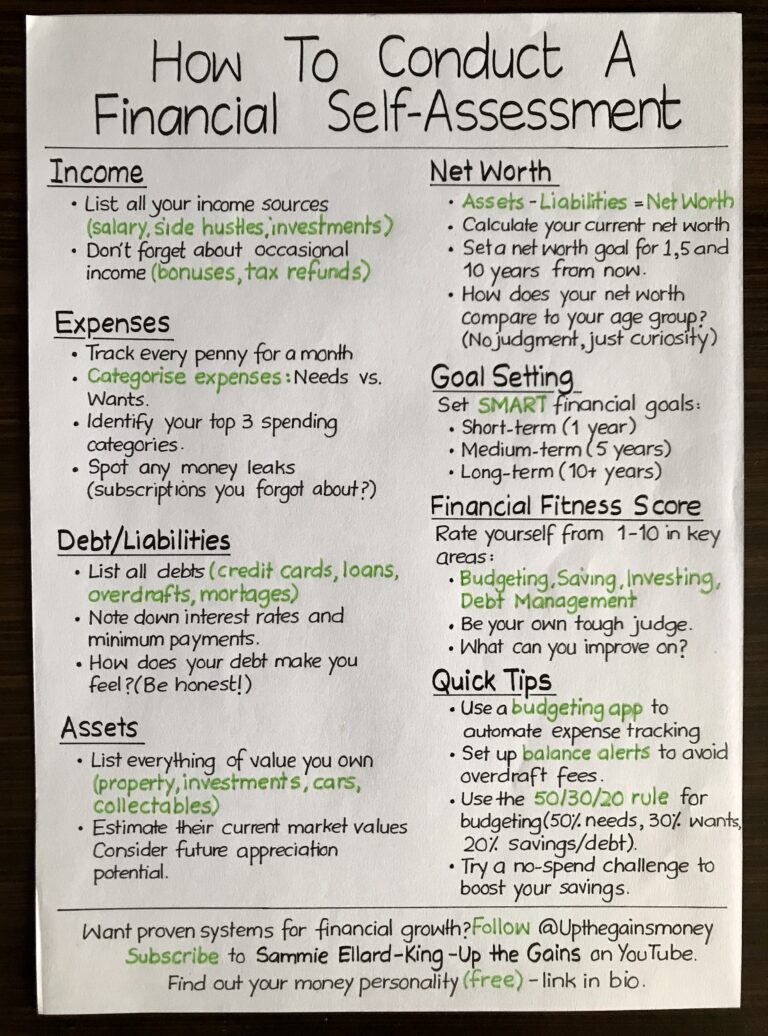
List every single income source you have.
Your salary is the obvious one, but what else?
Do you have a side hustle?
Maybe you sell things on eBay or do freelance work on weekends.
Even that £20 you made from selling old books counts.
Don’t forget the occasional windfalls either.
Bonuses, tax refunds, birthday money from your nan – it all adds up.
Tracking Your Expenses (The Scary Bit!)
Here’s where things get interesting.
You need to track every penny for a month.
Yes, every penny.
That means the £3.50 coffee, the £1.20 parking fee, even the 50p you put in a charity box.
Use your banking app, keep receipts, or try a budgeting app like Gains.
Whatever works for you.
Needs vs Wants: The Truth Hurts
Once you’ve tracked everything, categorise each expense.
Is it a need or a want?
Rent is a need.
Netflix is a want.
Groceries are a need.
That fancy cheese you bought because it was on offer?
Probably a want.
What are your top three spending categories?
You might be surprised by the results.
Finding Your Money Leaks
Now for the detective work.
Look for subscriptions you’ve forgotten about.
That gym membership you never use?
The streaming service you signed up for during lockdown?
These are your money leaks, and they’re silently draining your account.
How many did you find?
Don’t worry – we all have them!
Facing Your Debt Head-On
Time to list all your debts.
Credit cards, loans, overdrafts, mortgages – everything.
Write down the interest rates and minimum payments for each one.
This might sting a bit, but knowledge is power.
Here’s an important question:
How does your debt make you feel?
Stressed? Overwhelmed?
Or maybe you’re comfortable with it?
Be honest with yourself.
There’s no judgment here, just facts.
Counting Your Assets
Now for the more positive bit – what do you own?
List everything of value.
Your house, car, investments, even that rare Pokémon card collection if you’re lucky enough to have kept them.
Estimate their current market values.
You don’t need exact figures – rough estimates work fine.
Think about whether these assets might increase in value over time.
Property often does, but cars usually don’t.
Calculating Your Net Worth
Here’s the big moment.
Your net worth is simply:
Assets minus liabilities equals net worth.
Got a positive number?
Great!
Negative?
Don’t panic – you’re not alone, and you can fix this.
Set net worth goals for one year, five years, and ten years from now.
Where do you want to be?
How Do You Compare?
Curious how your net worth stacks up against others your age?
It’s also worth checking whether you’re actually behind on your savings, because the averages rarely tell the full story.
There are online calculators that can tell you.
But remember – comparison is the thief of joy.
This is about your journey, not anyone else’s.
Setting SMART Financial Goals
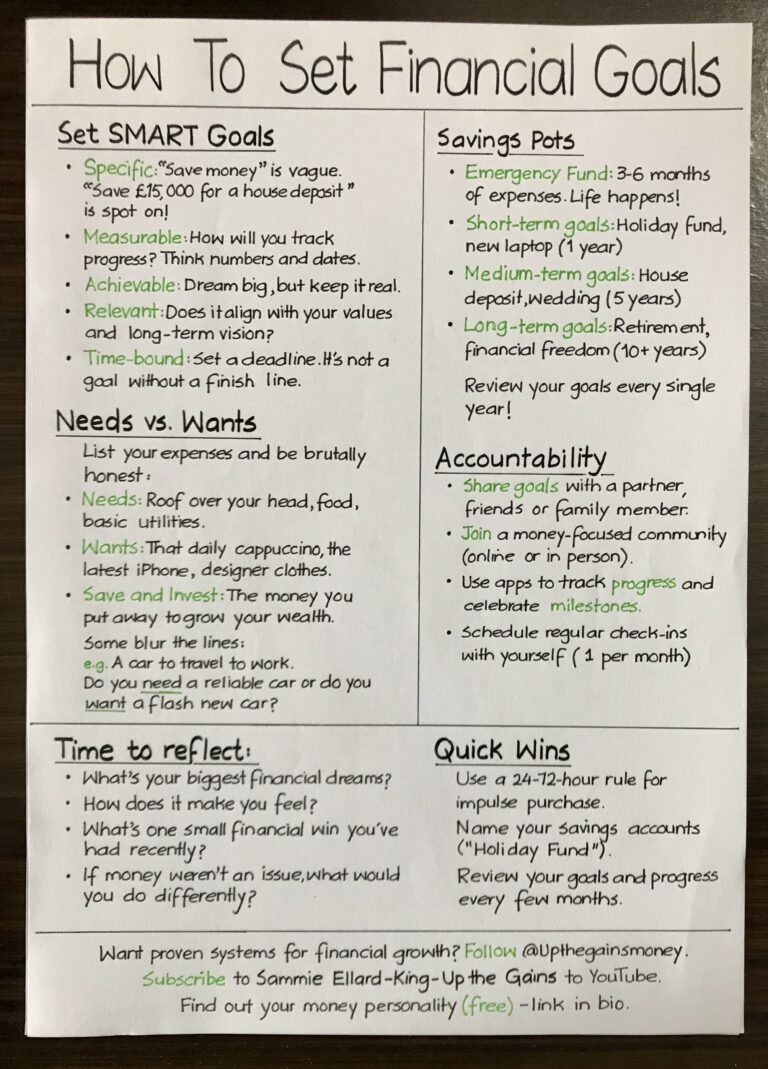
Time to get specific about what you want to achieve.
Set goals for different timeframes:
- Short-term (1 year): Maybe build an emergency fund
- Medium-term (5 years): Perhaps save for a house deposit
- Long-term (10+ years): Think retirement or financial independence
Make sure your goals are SMART – Specific, Measurable, Achievable, Relevant, and Time-bound.
Your Financial Fitness Score
Rate yourself from 1-10 in these key areas:
- Budgeting
- Saving
- Investing
- Debt management
Be tough but fair.
Where are you strongest?
What needs work?
This isn’t about being perfect – it’s about knowing where to focus your energy.
Quick Wins to Get Started
Want some immediate improvements?
Try these:
Set up balance alerts on your bank account.
No more surprise overdraft fees!
Download a budgeting app.
Many are free and make tracking expenses much easier.
AI can also help with managing your money.
Try the 50/30/20 rule: 50% of income for needs, 30% for wants, 20% for savings and debt repayment.
Challenge yourself to a no-spend week.
You’ll be amazed how much you can save.
What's Next?
You’ve done the hard work of assessing where you stand.
That’s actually the toughest part!
Now you have a clear picture of your finances.
No more guessing, no more wondering where your money goes.
This assessment isn’t a one-time thing either.
Revisit it every few months to track your progress.
Your future self will thank you for taking this step today.
Trust me on that one!