
You already believe investing matters. Almost everyone does. So why does only 30% of us feel like we’re actually doing enough about it?
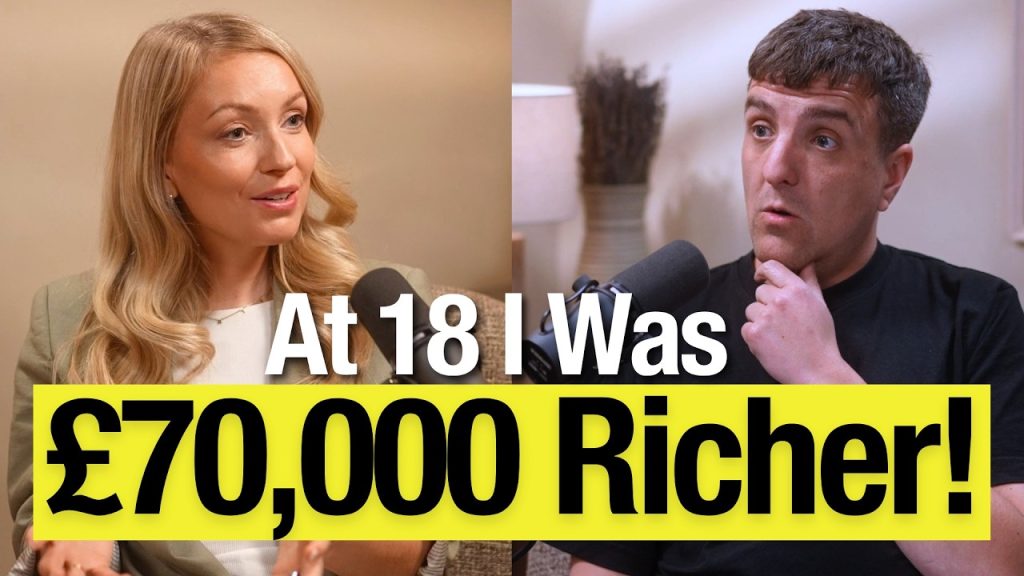
In this Money Moments short, I sit down with Samantha Rosenberg, founder of investing app Belong, whose research into why people avoid investing digs into something most money content skips: the psychology behind the excuse.
We’re not short on knowledge in this country. Most people know saving and investing for the future is important. What Samantha’s research uncovered is the gap between knowing that and actually doing it, and the very human, very sneaky reasons that gap exists.
This one’s short, sharp, and honestly a bit uncomfortable if you’ve got cash sitting in a savings account “just in case.” Let’s get into it.
———
Gains App is LIVE!
An AI-powered budgeting and cashback app designed to help you make more of your money.
Download here: https://gainsapp.onelink.me/8IhT/oiaimr1z
———
Get a FREE FRACTIONAL SHARE worth up £100 when you deposit £1 with Trading 212
https://www.trading212.com/join/MGP
If you don’t receive the free fractional share, head to the menu and put the word ‘MGP’ into the promo code section.
(Capital at risk when you invest)
———
DISCLAIMER:
This video is meant for educational purposes and should not be considered financial advice. When you invest your capital is at risk. Past performance is not a guarantee of future success.
This video description contains affiliate links, if you click on one and make a purchase we may receive a small commission. This does not alter our suggestions and there is no charge for you.
Key takeaways
- Almost everyone believes investing matters, but Samantha’s research found only 30% of people feel they’re personally doing enough about it.
- The first excuses are practical: “I’m not an investor” and “I don’t have enough money.” The deeper ones are emotional: fear of losing control, and a belief it’s already “too late.”
- Samantha calls it the sunk gain effect: avoiding investing now because you feel you’ve already missed the gains you’d have made, so what’s the point starting.
- An estimated £300 billion of cash savings sits with 25 to 45 year olds in the UK, much of it earning next to nothing.
- Present bias makes investing feel like sacrificing for a stranger, because your brain treats “future you” almost like a different person entirely.
Timestamps
- [0:18] Only 30% Feel They’re Investing Enough
- [1:41] Tool: The Two “System One” Excuses
- [3:15] The Sunk Gain Effect Explained
- [4:33] £300 Billion Sitting in UK Cash Savings
- [6:06] Present Bias and the Stranger You’ll Become
- [9:42] Warren Buffett’s First £100,000 Rule
- [13:12] Tool: How Belong Designs Around Behaviour
Why almost nobody feels like they're investing enough
Samantha’s team asked people a simple pair of questions: do you believe saving for the future is important, and are you personally doing enough about it. Everyone says yes to the first. Only 30% say yes to the second.
The first excuses people reach for are what Samantha calls “system one” reasons, the knee-jerk ones. “I’m not an investor. I don’t work in finance, I don’t have a degree in finance, no one ever taught me how to invest,” is the first.
The second is simply not having enough money, even though, as Samantha points out, “no one really knows what enough is.” If you’re still working out the basics, our investing for beginners UK guide is the right place to start untangling that.
The sunk gain effect: why "it's too late" is a trap
Underneath the practical excuses sit more emotional ones.
Samantha describes a pattern she calls the sunk gain effect: “the decision to invest today, I use the same mental models with the decision to keep a hundred pounds for myself today or give ten thousand pounds to a total stranger ten years from now.”
That’s present bias in action, your brain treats future you almost like someone you’ve never met.
Add to that the feeling that you’ve “lost out on too much time” and it’s “too late” to bother starting, and plenty of people who are only 25 to 45 talk themselves out of compounding they’ve barely missed.
Samantha’s research targets exactly that age group, 25 to 45 year olds who still have decades of compounding ahead of them.
The sunk gain effect convinces them otherwise, which is precisely why naming the bias matters. Once you can see it, it’s much harder for it to quietly run the decision for you.
Cash feels safe, but it's quietly costing you
Samantha’s research found that around 60% of Belong’s customers hold more than £20,000 in what they themselves call excess, non-emergency cash savings.
Nationally, she estimates £300 billion of cash sits with 25 to 45 year olds in the UK, much of it earning next to nothing in interest.
Holding cash isn’t wrong. Your emergency fund should stay fully liquid, and it’s worth working out how much should be in your emergency fund before you invest a penny beyond it.
The problem is cash held out of fear rather than need, kept because giving up control feels riskier than it actually is. If you’re weighing where surplus cash should sit, our cash ISA vs stocks and shares ISA comparison lays out the trade-off plainly.
What Warren Buffett would actually tell you to do
Samantha’s take on Warren Buffett is refreshingly practical. His advice, in his own words as she recounts it: if you’ve got anything less than $100,000 saved, buy an index fund. Don’t overthink it, don’t chase alternatives, just get to your first hundred thousand.
That first milestone matters more than people realise. Compounding accelerates hard once your base is bigger, which is worth seeing for yourself on our compound interest calculator. It’s not about picking clever stocks or timing dips, it’s about consistency and staying invested through them.
If you’re ready to put money to work rather than just think about it, our guide to how to invest in index funds UK walks through the practical steps. The hardest part isn’t the mechanics, it’s getting past the psychological blocks Samantha’s research keeps surfacing.
This transcript is auto-generated and lightly edited for readability, it may contain errors.
[0:18] SPEAKER_00:
These are kind of the top of mind reasons for why people tell us they aren’t investing. You know, we ask people, we ask every single person I ever asked. One of the first questions I asked in the research was, do you believe that saving for the future is important? And every single person has I I’ve never got no to that answer. Everyone says yes. And then the next question is, are you doing enough? Do you feel like you’re personally doing enough? So we agree it’s important. Do you feel like you’re personally doing enough?
[0:43] SPEAKER_01:
Right.
[0:43] SPEAKER_00:
And only 30% of people say yes. 30%. 30%. Wow. Do you think that’s a lot?
[0:50] SPEAKER_02:
I think it’s a lot. I think I I’d say no now.
[0:54] SPEAKER_00:
Yeah.
[0:55] SPEAKER_02:
Like even I would say no now. I think that’s just maybe the maybe it’s different types of people.
[1:00] SPEAKER_00:
Yeah.
[1:00] SPEAKER_02:
Absolutely. But that’s really that’s really interesting.
[1:02] SPEAKER_00:
But it’s yeah, it is and it’s different types of people. Because some of those 30% probably are doing enough.
[1:07] SPEAKER_02:
Exactly.
[1:08] SPEAKER_00:
But a lot of them definitely are.
[1:09] SPEAKER_02:
I think I’m being selfish in thinking about my own.
[1:11] SPEAKER_00:
Yeah, no, I would say I’m definitely not doing enough.
[1:13] SPEAKER_02:
Yeah.
[1:14] SPEAKER_00:
Um, but there is so there’s definitely, at least in that regard, there’s some like element of I I’m already doing enough. And we do know there’s a cohort of questions.
[1:23] SPEAKER_02:
Which is great.
[1:24] SPEAKER_00:
Yeah.
[1:24] SPEAKER_02:
But still though.
[1:26] SPEAKER_00:
Yeah.
[1:26] SPEAKER_02:
Yeah.
[1:26] SPEAKER_00:
It’s just well, if 100% of us agree that it’s important, why are we not doing as much as possible? Within your means. Um so within my means, I’m doing as much as I can. I just wish I had more means and then I’d do more.
[1:39] SPEAKER_02:
Yeah, totally.
[1:41] SPEAKER_00:
Um And when we then when we say, okay, so you believe that it’s important to be saving and investing for the future, but you’re not doing enough, why not? The the first two reasons we get, which I call that I call them the system one reasons because they’re like the the top of mind knee-jerk reasons. One, I’m not an investor. I don’t work in finance, I don’t have a degree in finance, no one ever taught me how to invest. That’s the first one. And what comes with that is I don’t know how to pick stocks, it’s really risky, all of that. The second reason we get is I don’t have enough money to invest. And you ask people what enough is, no one really knows what enough is. But they just have this feeling that whatever they have is not enough. So those are the first two reasons. And then as we start having the conversation, we get what I call the system, the the more emotional or self-con uh um subconscious reasons.
[2:41] SPEAKER_01:
Yeah.
[2:41] SPEAKER_00:
And these are I’ve lost out on too much time. I should have started 10 years ago and now it’s too late.
[2:48] SPEAKER_02:
Oh, it’s too late.
[2:49] SPEAKER_00:
It’s too late. And these are like 20, our target customer is 25 to 45. So these are definitely people who haven’t lost out on too much time.
[2:57] SPEAKER_01:
No.
[2:57] SPEAKER_00:
Um, but there’s almost this we call it the sunk gain effect. Yeah. So the sunk cost effect is, as we all know, when you continue doing something because you’ve already sunk the cost. Sunk gain is where you continue not doing something because you think you’ve already sunk the gain. You know, there’s no point in starting now.
[3:11] SPEAKER_02:
Yeah.
[3:12] SPEAKER_00:
That’s one reason we get.
[3:15] SPEAKER_02:
Risk, not enough money. They’re the system one. You call them system ones?
[3:21] SPEAKER_00:
Uh yeah, or just like the knee jerk, kind of like the conscious reasons for why.
[3:25] SPEAKER_02:
And then the subconscious reasons mainly around So the one is there’s a couple.
[3:30] SPEAKER_00:
So the or a few. There the one is around I’ve lost out on too much time.
[3:34] SPEAKER_02:
Yeah.
[3:34] SPEAKER_00:
The next one is uh I like the feeling of liquidity. I know it’s more than I need.
[3:38] SPEAKER_02:
Oh, cash in the bank.
[3:40] SPEAKER_00:
Cash in the bank.
[3:41] SPEAKER_02:
Yeah.
[3:41] SPEAKER_00:
I feel like I’m in control of it. And it feels really scary to give up control because investing feels like giving up control. And I consciously know it’s more than I need, but subconsciously I want to hold on to it. It feels like a safety blanket. And that’s not to say that these people shouldn’t be holding on to cash. Of course you should. You your emergency savings should be fully liquid. Um, you you need cash to live. Yeah. But, you know, according, like we estimate that there’s 300 billion of cash savings sitting with 25 to 44, 25 to 45 year olds in the UK.
[4:17] SPEAKER_02:
Yeah.
[4:17] SPEAKER_00:
300 billion of cash savings.
[4:19] SPEAKER_02:
It’s just mad, isn’t it? I think it’s like six, and it was like I saw a stat the other day, it was like 67% of the UK are getting 2% or less from their savings as well. So cash in bank, which is just mind-blowing, because that’s probably most of that £300 billion.
[4:33] SPEAKER_00:
Yeah. And when we speak to our customers, so that’s that’s according to data from Bank of England cash, ISA data. When we speak to our customers, we’ve got over 60% of our customers have more than £20,000 sitting in what they call excess non-emergency cash savings.
[4:52] SPEAKER_02:
Just sitting there.
[4:53] SPEAKER_00:
Sitting there.
[4:54] SPEAKER_02:
Oh, wow.
[4:55] SPEAKER_00:
And I don’t want to give up control of it. Then we’ve got things like another reason that we get is I know I’m smart enough to know that if I invest, I need to do it regularly. So I need to make an investment and I need to commit to it. But I also know myself and I can’t commit. So I’m not even going to start because there’s there’s no point. Um, and then there’s present bias. Why should I make a sacrifice today for some stranger 10 years from now?
[5:21] SPEAKER_02:
I heard you say this and I loved it.
[5:23] SPEAKER_00:
Yeah.
[5:23] SPEAKER_02:
Like I don’t know that person.
[5:25] SPEAKER_00:
I don’t know that person. We’ve actually, it’s been proven, we didn’t prove it. It was proven long before us, that the decision to invest today, that me making this decision today, I use the same mental models with the decision to keep a hundred pounds for myself today or give 10,000 pounds to a total stranger 10 years from now.
[5:49] Sammie Ellard-King:
Yeah.
[5:49] SPEAKER_00:
That’s the decision to invest 100 pounds today.
[5:52] SPEAKER_02:
So knowing that, like, how do you even start to break that? Like, you know, you’re thanking your future self. Yeah. No one enjoys hearing that.
[6:01] SPEAKER_00:
No. How do you connect? How do you really connect to that future self?
[6:05] SPEAKER_02:
Yeah.
[6:06] SPEAKER_00:
Um, and that’s a challenge. And that’s a challenge faced by the entire industry. That’s a challenge that it’s why it’s something I identified in the gambling addiction research, present bias. It’s something that I saw throughout my five years working in finance. Uh, and it’s it’s really the thing, I’d say the key thing blocking us, behaviourally blocking us from investing over the long term. And then coupled with that, there’s no brand in this country, or as far as I can tell, broader than that, that’s owning a narrative around long-term thinking. So, how can we expect people to save and invest for the future if there’s no real uh narrative around it, or even more importantly, kind of example of it or role model for it? And we ask people, we say, when if you could go to anyone for financial advice, anyone in the whole world. So it doesn’t have to be someone you know, who would you go to? And people say Warren Buffett.
[7:07] SPEAKER_02:
They say Warren Buffett. Yeah. Thank God.
[7:09] SPEAKER_00:
That’s it’s great. Yeah, we want them to say Warren Buffett. But is Warren Buffett our most contemporary advantage?
[7:13] SPEAKER_02:
Or even say Elon. And I like, I don’t know, yeah, okay, but I like Yeah, but like for financial advice, as long as you say Warren, I’m I’m okay.
[7:21] SPEAKER_00:
Yeah, great response, but it tells us that he’s our most contemporary financial influencer when it comes to long-term investing.
[7:28] SPEAKER_01:
Yeah.
[7:29] SPEAKER_00:
There’s been no one since Warren Buffett that we can look to and say, that is the person that I want advice from with my money. And we need more of that.
[7:38] SPEAKER_02:
Especially no one in the UK at all.
[7:41] SPEAKER_00:
Yeah.
[7:42] SPEAKER_02:
Like I I couldn’t even tell you. The thing is with Martin Lewis, probably is that kind of figure. He won’t touch investing with a barge pole. So, and that’s something I just feel like lets that down a touch because there’s only so much you can tell someone to save on their energy bills and their insurance until they really do need the next phase of wealth building. And so there’s no real standout figure. Hopefully, one day we can both change that.
[8:06] SPEAKER_00:
Sammie and Sam.
[8:08] SPEAKER_02:
Yeah, let’s do it. Double team act. I’m into it. Um, are you Sammie as well?
[8:14] SPEAKER_00:
Uh, to some people. Yeah. MMY, though.
[8:16] SPEAKER_02:
Your M M Y? Yeah. Um IE.
[8:18] SPEAKER_00:
Yeah, I like that. I like the IE.
[8:20] SPEAKER_02:
It’s the girl version, apparently.
[8:22] SPEAKER_00:
Really?
[8:22] SPEAKER_02:
Yeah. So I get it in school.
[8:24] SPEAKER_00:
So is mine and the boys?
[8:25] SPEAKER_02:
I mean, well, boys is like one M and an I.
[8:28] SPEAKER_00:
Oh, I quite like that.
[8:29] SPEAKER_02:
Yeah, that’s quite cool, isn’t it? Most of the British Sammies like never say one M I.
[8:33] SPEAKER_00:
Nice.
[8:35] SPEAKER_02:
But what you were saying there about Warren Buffett is so true because like, how are we gonna find and also he’s like 97 man? Like, you know, Charlie Munger is 99.
[8:46] SPEAKER_00:
His legacy will live on.
[8:47] SPEAKER_02:
It will, because like I think it’s like it’s just so hard to like say, because even he doesn’t actually buy index funds. Yeah, he buys companies, but he holds them for like 30 years, and then he gets rid of them and changes things around. I mean, we we’re we just put out a video, um, we’re actually about to put out this video. Um it’s not even been filmed yet, the script has been written. But last year they did 97 billion just from buying and holding strategy, wow, which is just absolutely insane.
[9:20] SPEAKER_00:
That is amazing.
[9:21] SPEAKER_02:
And it’s it works out something like you know, I think it’s like three and a half thousand pounds a second. And all he’s done is bought bought and held great businesses.
[9:30] SPEAKER_00:
Yeah.
[9:30] SPEAKER_02:
And I just think that it’s such an underrated strategy, and it just goes to show that like he’s 97, now he’s doing that. At the first, that compounding was not happening like that.
[9:41] SPEAKER_00:
Yeah.
[9:42] SPEAKER_02:
Time is being his most biggest friend.
[9:45] SPEAKER_00:
Absolutely. And he says that he and he and he’s although he doesn’t do it himself, he says if you’ve got anything less than he talks in dollars, if you’ve got anything less than $100,000 of savings, buy the S&P 500 or buy an index fund. Don’t, don’t look at alternatives, don’t look at private equity, don’t, you don’t have to be creative. Get to your first hundred thousand, invest that in index funds, and then you can do what I’m doing.
[10:14] SPEAKER_02:
Yeah. Yeah. I completely agree. First hundred thousand pounds, your net worth explodes. It’s very insane when you look at the numbers and the sh the time frames it takes you to get to the next jumps. Yeah. So if you just get yourself to that goal, it really does change. I think it’s 627% faster is 900 to a million than it is from zero to a hundred.
[10:36] SPEAKER_01:
Yeah.
[10:36] SPEAKER_02:
Which is just wild. And that’s with a 10,000 a year investment.
[10:40] SPEAKER_01:
Yeah.
[10:40] SPEAKER_02:
Which is just crazy. So you found this very much like on the behavioural side, you’re seeing these problems. This birthed a solution for you, which was belong.
[10:52] SPEAKER_00:
Yeah.
[10:53] SPEAKER_02:
Cool name.
[10:53] SPEAKER_00:
Thank you.
[10:54] SPEAKER_02:
Obviously. But it’s got a kind of double edge for you, do you think?
[10:59] SPEAKER_00:
Yeah.
[10:59] SPEAKER_02:
Because it’s like belong as the community and then belong as well.
[11:03] SPEAKER_00:
Because another thing that came out in our research was feeling I I guess it’s linked to this finding that people are saying, Oh, I’m not an investor. Uh, and therefore I don’t invest because I’m not part of this group of people who invest. And it’s actually you do belong. You belong to this investing community. Um, and that’s the we everything we do in our business, we say there’s the emotional and the rational, the emotional coming from my behavioural background and the rational coming from Avian’s very technical financial background. Um, so the belong is belonging to this movement in a lot of ways. And then the belong is belong the market, you know, be long term in your thinking.
[11:45] SPEAKER_02:
Love it.
[11:46] Sammie Ellard-King:
Yeah.
[11:46] SPEAKER_02:
I like it because it’s you’re so right. Like I do feel like a lot everybody wants community in this day and age, and they want to feel like their friends are doing it, or someone that they now obviously with a crossover of online, you want to feel like you’re part of something.
[12:02] SPEAKER_01:
Yeah.
[12:02] SPEAKER_02:
Um, and that’s why we’re seeing such a massive rise in in communities, online communities. Yeah. And so being a part of something means something to someone because you used to know everybody on your street, and now you couldn’t even tell anyone, like you maybe know one or two neighbors, and that’s it. And we’ve lost that. And so bringing everybody back together and they feel like they’re moving in the right direction is so important for me. So I love that.
[12:23] SPEAKER_00:
Yeah. And also just reinforcing this idea that there’s more of us that believe in this thing, that believe in this uh strategy. But it’s very much a movement. Strategy is the boring word. It’s very much a movement of, you know, it’s it’s really cool to buy and hold. It’s really cool. It’s really cool to ride out a dip.
[12:44] Sammie Ellard-King:
Yeah.
[12:44] SPEAKER_00:
And that’s what we should be celebrating. Like cheers when the when the um market goes down. And what we’ve seen, I mean, we we haven’t been live for very long. We’re still very early in the market, but what we’ve seen is that we’ve had a couple of dips over the last few months, and we see customers putting more in. Um, I love that. Yeah, which is because they’re thinking long. They think they’re thinking long.
[13:09] SPEAKER_01:
Yeah. They’re not panicking. No.
[13:12] SPEAKER_00:
And a lot of that I believe is because we’ve put a lot of work into taking customers out of system one and into system two when they’re in our app. We designed our whole experience around meditation apps. Oh, cool. Yeah.
[13:29] SPEAKER_02:
I didn’t know that. That’s really interesting.
[13:31] SPEAKER_00:
So instead of looking at other calm text experiences, very calming, very slow.
[13:35] SPEAKER_02:
Very slow. Yeah.
[13:36] SPEAKER_00:
The onboarding is quick. You can get onboarded in five minutes.
[13:39] SPEAKER_02:
Yeah.
[13:40] SPEAKER_00:
But the experience.
[13:41] SPEAKER_02:
There’s no like charts bunching around and colours throwing at you, which is all very like neutral colours. Interesting. Um that was a conscious decision.
[13:48] SPEAKER_00:
That was a very conscious decision.
[13:50] SPEAKER_02:
So I think me and Chris, who’s actually in this room, we went through the site and we were like, it just, it’s beautiful. Like it feels very like you you flow through it very nice and slowly. So that’s very much intentional from your stuff.
[14:01] SPEAKER_00:
Very much intentional. Because and and really at the core of belong is these two things. And again, it’s the emotional and the rational. The emotional is customers wanting an experience and making sure that that experience is it’s indulgent and it’s, I want to be, I want to live in this app. It’s luxurious. Luxurious, and it makes me feel something when I’m in it and feel good things. That’s the emotional or the or the behavioural side of belong. And then it’s product innovation, which is the financial side. We they just our generation is faced with an entirely different macroeconomy compared to the generations before us. But we’re still selling them the same old financial tools that just aren’t as relevant to us.
[14:50] SPEAKER_02:
No. No. That kind of expensive pension fund or those types of things, which are just mutual funds or whatever, which have their place, absolutely. But you know, I’m not beating down on them in any way, shape, or form, but they are old school and people don’t want that as much anymore.
[15:07] SPEAKER_00:
They they haven’t been built for us. No. They were built in a time where we still believed that people were making financial decisions in a perfectly rational way and were perfectly had all the information available to them when they made those financial decisions. That’s not the case. We now know that’s not the case. We know that this generation wants an experience, they want more tailored solutions. That we’ve identified all these behavioural blockers that customers are exposed to and are experiencing, and we’re tackling those head on.
Frequently asked questions
Samantha’s research found the gap isn’t knowledge, it’s psychology. People cite practical excuses first (no finance background, not enough money), then emotional ones underneath: fear of losing control of their cash, and a belief they’ve already missed their chance.
It’s a term Samantha uses for avoiding an investment decision because you feel you’ve already sunk the potential gain by not starting sooner, so there’s “no point” starting now. It mirrors the more familiar sunk cost fallacy, just working in reverse.
Your emergency fund should stay fully liquid and accessible. Beyond that, Samantha’s research suggests many people hold far more in cash than they need “just in case,” money that could otherwise be growing over the long term.
Yes, according to Samantha. Buffett reportedly tells people with under $100,000 saved to keep it simple: buy an index fund and avoid chasing alternatives until they’ve hit that first milestone.
Samantha’s research links this to present bias, where your brain treats your future self almost like a stranger. Committing money today for a benefit years away triggers the same resistance as giving money away to someone you’ve never met. This article is for educational purposes only and should not be considered financial advice. When you invest, your capital is at risk and past performance is not a guarantee of future returns. Some links in this article are affiliate links, if you click through and make a purchase we may earn a small commission at no extra cost to you.
———