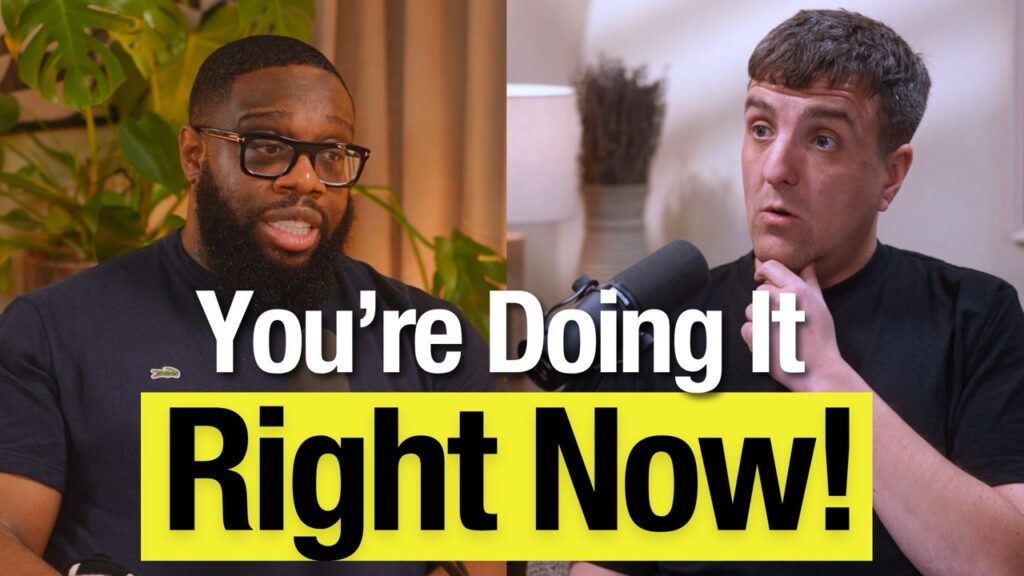

Money coach Laura Ann-Moore joins this Money Moments short to make the case that conscious spending deserves just as much attention as saving and investing, and that guilt-free enjoyment is what actually keeps a money plan sustainable.
There’s a lot of “save, save, save, invest, invest, invest” noise out there, and it’s not wrong. But in this Money Moments short, Laura Ann-Moore makes the case for the bit that gets left out: enjoying your money along the way.
Laura is a money coach who talks a lot about intentional spending, and in this chat she breaks down why the people who save and invest the hardest can still end up unhappy with money, plus practical ways to build enjoyment into your plan without derailing your goals.
We cover her three S’s system, why she’s “anti-boring budget” rather than anti-budget, and how the money beliefs you picked up as a kid are still steering your spending today.
———
Gains App is LIVE!
An AI-powered budgeting and cashback app designed to help you make more of your money.
Download here: https://gainsapp.onelink.me/8IhT/oiaimr1z
———
Get a FREE FRACTIONAL SHARE worth up £100 when you deposit £1 with Trading 212
https://www.trading212.com/join/MGP
If you don’t receive the free fractional share, head to the menu and put the word ‘MGP’ into the promo code section.
(Capital at risk when you invest)
Key takeaways
- Saving and investing are essential, but the danger is the extremes: over-save without a goal and you risk sitting on assets with no stories to show for them.
- Intentional spending means money goes on things that bring you joy, move you towards a goal, or align with your values, not autopilot “tap tap tap” purchases.
- Laura’s three S’s split income into survival (bills), spending (enjoyment), and success (savings, investing, debt), so every pound has a job.
- A monthly “novelty experience” (something new that pushes your comfort zone) is linked to a genuine mental health boost, and it doesn’t need to be expensive.
- Your money mindset was shaped young. Spotting the beliefs behind your spending and saving habits is the first step to changing them.
Timestamps
- [0:53] Conscious Spending: Balance Over Extremes
- [3:48] Tool: How to Die With Zero Mindset Shift
- [5:29] Tool: Monthly Novelty Experience Habit
- [7:49] Conscious Spending Plan vs Traditional Budget
- [9:37] Tool: Three S’s Money System (Survival, Spending, Success)
- [11:51] Money Mindset Defined
- [14:41] Tool: Spotting Your Limiting Money Beliefs
Why conscious spending matters as much as saving
Laura’s starting point is simple: saving and investing are “so important for financial stability, financial success, financial freedom,” but the trap is the extremes.
Over-save without a goal and, in her words, you’ll one day be “sat on a gold mine” with “bugger all experiences” and no stories to show for it, because health and time diminish while the money sits untouched.
Her turning point was reading How to Die With Zero by Bill Perkins, which reframed saving as something with an endpoint rather than a permanent default.
If you’re not sure how much of your income should even be going towards saving versus spending, running a proper audit of your spending first makes the conscious version of this so much easier, because you can only be intentional with money you can actually see.
That doesn’t mean ditching your safety net. Laura is clear that saving for a specific goal, like a trip in three years, is just delayed spending with intention behind it.
The same logic applies to your buffer: knowing roughly how much should be in your emergency fund removes the guilt of spending what’s left over once that’s covered.
A spending plan that actually works: the three S's
Sammie admits he’s not a budgeter and prefers a “conscious spending plan,” looking at spending patterns over time rather than tracking every line. Laura’s answer: “I’m not anti-budget, I’m anti-boring budget.”
Her system splits money into three buckets: survival (living costs), spending (monthly enjoyment) and success (savings, investments and debt), what she calls the three S’s of successful money management.
Sammie runs something similar with separate bank accounts for spending, bills and savings, moving savings out first so whatever’s left is genuinely his to enjoy. He also builds in a hard rule: “I have a non-negotiable 15%…
I’m blowing this, no matter what.” If you want to see how the maths behind that kind of split could work for your own income, the budgeting calculator is a useful place to test different percentages before committing to them.
Once the survival and spending pots are sorted, the success pot is where saving and investing meet. If you’re still working out where to start with the investing side of that bucket, investing for beginners in the UK is a solid next step.
The money mindset behind your spending
For Laura, your money mindset is “the foundation to your financial success,” a set of beliefs and attitudes that quietly drives how you spend, save and invest.
Much of it forms in childhood, absorbed from the people around you before you could even talk, and by around age seven those patterns are largely set.
Spotting a limiting belief starts with noticing the language you use about money and asking whether it’s actually true and whether it’s helping or hurting you.
Understanding your own patterns here, whether you lean saver, spender or somewhere in between, is exactly what our money personality quiz is built to surface, as a starting point for working out where your own beliefs might be quietly running the show.
This transcript is auto-generated and lightly edited for readability, it may contain errors.
[0:18] SPEAKER_02:
There is a lot of this kind of like save, save, save, save, save, invest, invest, invest, invest. And like, you know, I I’m certainly a part of that wheel sometimes my own self. And I think it can like be the wrong message to people because they feel like, you know, they hear like, oh, save 10% of your salary or save 20% invest 20% of your salary, whatever that might well be. And yeah, dude, definitely do that. But you think differently about this, and I really love your take on it. And it’s about conscious spending. Um, and you think that’s just as important. Why?
[0:53] SPEAKER_01:
So I think it’s about saving and investing is so important for financial stability, financial success, financial freedom. Where I think the trap is, is the extremes. Saving and investing too much and not enjoying your money. So it’s about balance and about intentionality. So intentionality being you are spending your money in a way that brings you joy, um, you are mindful of. It is taking you closer to your goals, or um, it’s in alignment with your values, or it’s creating memories and experiences. That’s being intentional, right? If you’re not being intentional, it’s like tap, tap, tap, the random things, you know, the social conditioning that makes you think you need these things. We’re not talking about that. We want that spending that is like makes you feel good.
[1:46] SPEAKER_02:
And that was worth it.
[1:49] SPEAKER_01:
Was worth it. Yeah. Was worth it. Because a lot of the time we’re not tapped into being mindful, being conscious because we’re all busy going about our days on autopilot, commute to work, lunch, right?
[2:00] SPEAKER_02:
Convenience.
[2:00] SPEAKER_01:
Convenience, all of those things. So really being able to be intentional with I work hard, I’m making money, I deserve to enjoy some of it. And I think the the balance side is saving and investing is important. Like if you just spend everything and you’re living paycheck to paycheck, you’ll work forever, you’ll be stressed, you’ll have money worries, anything could happen at any point. So the people who are in the place of being on the extreme of saving and investing, the saving side of it, if you are saving for a goal and you say, look, I’m going in hard saving because in three years I am going to go to South America and have the trip of a lifetime. That is just delayed spending. And the spending is going to be intentional. So it’s like, okay, I’m in my saving era. And I think that that’s great. You know, maybe you have a small amount that you spend, but the saving, there is actually a goal for it. Where I think it’s more dangerous is when either you’re like, I don’t really have a goal. I’m just saving. I’m just saving and saving. And you’re scared to touch any of that money and you are uh guilty, you feel guilty for spending your own money. And when you’re investing for the future, for your retirement, but you don’t know what that number is, you don’t know what that age is, you don’t know what that looks like. Because what happens is when you get to said number or said age, what makes you think that you are suddenly gonna wake up one day with a flipped mindset and go, oh great, I can start spending and enjoying this money now? Because you’re gonna have had 20, 30 years of habitual saving and investing. You’re just gonna be sat on a gold mine, you’ve got all this money, you’ve got all this asset, maybe you’ve got property, you’ve got uh stocks, all of the things.
[3:46] SPEAKER_02:
But bugger all experiences.
[3:48] SPEAKER_01:
Bugger all experiences, no stories. At that point, you know, naturally your health and your time diminishes. What you know, how have you changed and grown as a person and done things at certain points in your life, but also this idea of like knowing when to draw down on that money. And like for me, my mindset changed when I read um How to Die With Zero by Bill Perkins. Yes, hands down one of my favourite books.
[4:14] SPEAKER_02:
I’ve not read it, but I’ve been suggested by so many people.
[4:17] SPEAKER_01:
It’s so good. Because I caveats to all of this, I think like saving and investing is so important. I talk about it on my page. I think, you know, all of that, but it’s the extremes that are the issue.
[4:31] SPEAKER_00:
Yeah.
[4:31] SPEAKER_01:
When you’re doing too much of one thing. It’s okay to be in an era of, oh, I know for this year or next year, but really just knowing that all three have an important place in your financial plan to be financially successful, but also to enjoy your life.
[4:44] SPEAKER_02:
Yeah, that’s important. Like I’ve I have a non-negotiable 15% of like, I’m blowing this. Yeah. No matter what. Yeah. Like this month is going. Love that. And just like if we don’t do things, then I’ll like book us out a dinner or like I’ll go and treat myself to a farm shop or whatever. Like things, those little things, and I’m like, just get rid of it. Um, because it’s it’s there for me to enjoy myself. If I’ve just locked myself away working 24-7, which, you know, I can be a culture for every now and then. Can’t wheel. Yeah. Um, you know, I have to be intentional about getting out and doing things which are adding value to me, which I you know, I think is massively important, alongside saving, alongside investing, and alongside my bills and making sure they’re all paid.
[5:29] SPEAKER_01:
Yeah. And I think what I will say, two things. One, there is, I wish I could remember the stat. It’s really good to once a month do a novelty experience. Something that helps you feel the emotion of awe or creativity or like newness. Something that’s, I don’t know another word for newness.
[5:50] SPEAKER_02:
Pushes your boundaries.
[5:51] SPEAKER_01:
Pushes your boundaries, get you, get you out of a comfort, you know, your comfort zone, or things that like you’ve always wanted to do and you’ve just never done, you’re like, I want to go do a pottery class or I want whatever.
[6:00] SPEAKER_00:
Yeah.
[6:01] SPEAKER_01:
So that can be amazing for your mental health and for your just your own personal growth. It doesn’t have to be expensive. But I’m a big believer of spending on experiences versus things, not anti-things, but you know, like the finding the things that bring you joy. And I think a lot of the time when I chat with people, especially that fall into the camp of feeling guilty around spending and they’re like big savers and investors, they don’t know what they like. They don’t know what brings them joy, they don’t know what and they restrict themselves so much that like nothing is enjoyable because the fear of the the spending side takes over. So having a fun fund where you say this money is going on something. And if you know, like, oh, I know that this money is going on said novelty experience, um I’m working towards something. It’s not just some random person purchase. But to add to that as well, if you are listening to this and you’re like, hang on, you want me to spend, you want me to save, you want me to invest. Like I’ve I’ve also got to pay my bills. I also have to do to do I’ve also got kids. I’ve got kids, I’ve got things to pay for, like it and it feels overwhelming. I think what can be a really um great thing to do is not feel like the spending, saving and investing has to be large amounts. You could, if you look at your budget and you’re like, okay, I’ve got, you know, 400 pounds left over to do everything after all my bills. Like I’m trying to work on increasing my income or getting a new job, but that’s where I’m at right now. You could say, okay, 50 quid goes in savings, 50 quid goes in investments, 50 quid is like on like fun experiences, and the remaining, you know, 150 is gonna be like my food bill, my travel, or whatever. That’s not the right math, but you know what I mean. Um, I think it’s more about finding the small things as opposed to feeling like it has to be all or nothing.
[7:49] SPEAKER_02:
Yeah, totally. Like you just hit the nail on the head, like absolutely, because investing, you could be putting five quid in there. It’s like, okay, cool. And also you’re like gonna go through different seasons of life where you might have kids, so it is more expensive right now. And then when they bugger off to university, suddenly you’re a little bit more flush or you know, whatever, you might get a better pay rise in your job, suddenly you’re a bit more flush, so you can put some more money into your savings investments or like those buffers can change, but they’re gonna get restricted at certain points of life and they’re gonna grow, which is really, really important. Something you said there is about a budget, and I’m not a budgeter, I really struggle with it. Um, just looking at like every month writing everything down. What I do is I create like a conscious spending plan. So I just look at my spending overall over a period of time, and then go, you’re being a knob on those things, and you I really want to move money into this because it’s gonna provide me more value. Now I know a lot of people like budgets, a lot of people don’t. What’s your view on it and how could people approach it?
[8:51] SPEAKER_01:
So I’m not anti-budget, I’m anti-boring budget.
[8:54] SPEAKER_02:
Yeah.
[8:55] SPEAKER_01:
And I’m anti doing something that doesn’t work for you. I’m a big believer in spending plans. Like I actually use like in all my content and like all my freebies, it always says like spending plan. Especially because people attach so much negativity to the word bud budget. Yes. It’s frugal, it’s tight, it’s restrictive. So, first of all, it’s just a reframe, like it’s a spending plan. But then you have the range, right? Like you could go all in and you every penny has a purpose, different categories, different parts. Um, you track your spending throughout the month by writing it all down. You could be really like, or you go, I need to have a bit more freedom with it. You still need to know where your money is going.
[9:36] SPEAKER_00:
Yeah.
[9:37] SPEAKER_01:
I think that is like the most important thing. You still need to know where am I spending? Am I putting money in savings and investments? Do I have debt that I need to clear? Are my bills being paid? So viewing it as a, I am just making a conscious choice about where I want my money to go. What helped me with my shift in uh when it came to like having a spending plan was just using different spending accounts. So, like start of the month, looking at what’s coming in and being able to say, I know this much needs to go and fixed, that stays in that account. I know I would like to put towards financial success, this, this, and this. And then this is what’s for spending. And I talk it the like, I call it the three S’s of successful money management.
[10:16] SPEAKER_02:
Oh, nice.
[10:17] SPEAKER_01:
So survival, spending, and success.
[10:19] SPEAKER_02:
Oh, that’s cool.
[10:20] SPEAKER_01:
Survival is your living costs, spending is like just your general like enjoyment of the month, and then success is savings, investments, and debt. And it gives you like the empowerment of I know where my money’s going, I’m making the choices, but the flexibility to like just put the spending money onto a spending card and then tap, tap, tap, but just keep that’s why apps and technology is so good because you just go, oh, this is where I’m out of my budget today.
[10:44] SPEAKER_02:
Yeah. Um but also really bad as well, because it’s so easy to just like, oh, let me just let me just 20 quid 20 quid tap ta and then like that’s where it becomes a problem. That’s why I think, yeah, we have a similar system, three bank systems. So exactly the same thing. We’re just not as named nicely. Just call them banks.
[11:01] SPEAKER_01:
Yeah, banks. Yeah, cool.
[11:02] SPEAKER_02:
Which I really coined that term. Yeah, because it is, it’s a mindset thing as well. Like you want to give it a this is your spending account, this is your bills account, and this is your savings account. When the money comes in, savings go first, and then your fixed bills, and then whatever’s left over, guess what? That’s your money now to then run your life. Like, and everything else should be ticking over. Your bills are paid, your savings investments are moving, your debts are going down, and you still this is your money left over. And that should stop you dipping into credit, hopefully, as well. Um now you mentioned it before, and money mindset has become a bit of a buzzword. And it’s the thing is, it can mean so many things at different times. Uh like it has so many different connotations to different people. Well, for you, like, what does it actually stand for?
[11:51] SPEAKER_01:
So for me, your money mindset is the foundation to your financial success. And your money mindset is essentially just a bunch of beliefs and attitudes. So you’re thinking about money that then drives the way that you manage it, spend it, save it. So essentially, how this idea of how you think about money is how you will then behave with money. So your money mindset is what creates your reality with money, and that’s why it’s so important to be like in touch with it. And I think the key thing is that it looks different for everybody in regards to everybody has a different money mindset. There’s a lot of themes and patterns you see with different people and just generally, but this idea that What do you mean?
[12:34] SPEAKER_02:
Like he’s a spender, he’s a saver.
[12:36] SPEAKER_01:
Yeah, so like that’s you know, your self-identity and your self-concept is is one element of that because if you view yourself as I am a saver, I am a spender. But then themes and patterns, you know, different blocks and beliefs that people have in society, like money is money is evil, money makes you greedy, those kind of things, like societal beliefs, especially the difference between like the UK and the US, um, as an example. But then also just things that people internalize from their own money story. So I talk a lot about your money story being the impact that your childhood had on your core memories of money, yeah, which then impacts how you then behave with money when you’re older. And it’s different for everyone. But yeah, that’s for me, like it’s it’s just it’s essentially your thinking around money that creates your reality with it.
[13:21] SPEAKER_02:
Yeah, it’s like your film, your like your money habits form by the age of seven.
[13:24] Sammie Ellard-King:
Crazy.
[13:25] SPEAKER_02:
Just nuts. Like, where are you getting that from? You’re from your mum and dad, isn’t it?
[13:28] SPEAKER_01:
Like well, we we we absorb the messages from people closest to us. You know, they when you’re before language was created, you couldn’t communicate, so it would be off of emotion and um body language and you know, all the non-verbal cues. Now we also have language, so what you’re hearing and what you’re reading is also added into that. But when you’re younger, you just take everything to be true.
[13:53] SPEAKER_02:
Yeah, you’re like a sponge.
[13:54] SPEAKER_01:
You’re like a sponge, you’re like, give me the knowledge. Yeah, time. And then before you know it, you’re seven and you think money’s the worst thing ever, and you’ve got one picket all.
[14:03] SPEAKER_02:
Yeah, need some money therapy. That’s why you’re here.
[14:06] SPEAKER_01:
That’s why I’m here. It is like therapy.
[14:09] SPEAKER_02:
I think um you mentioned something there, which I think is really important, like this like money is evil, and this uh essentially a limiting belief around actually growing your money, perhaps you like push it away from yourself, or you you don’t believe you can hit X gold because you’re not that type of person, or I grew up here, so why could I now live or be that person over there?
[14:31] SPEAKER_00:
Yeah.
[14:31] SPEAKER_02:
Um, how do people kind of associate a limiting belief to themselves? How do they understand that that’s exactly what they think, and how can they change it?
[14:41] SPEAKER_01:
So I guess the key thing, so the first of all, if you’re trying to identify what are my limiting beliefs around money, understanding what language do I use, what phrases have I always said, what things have I always, you know, when I think about money, when I think about saving, when I think about spending, what comes up? And then is that helping or hindering me? Is that and also is that objectively true? Like, is that actually real? I feel like money is hard to make, but is that actually true if there are other people out in the world really easily making money? Well, the answer is no. Is that belief helping me? No, because what that’s gonna mean is I I act in alignment with that. So you can tell just with like the words used, whether it’s positive, whether it’s negative. And even if you believe something to be so true, like it feels so true for you, being able to get honest and be like, is this actually helping me? We all know the, you know, we we’re we can all be honest and be like, probably not.
[15:39] SPEAKER_00:
Yeah.
[15:40] SPEAKER_01:
Um, so I think you can identify your beliefs that way. And like, you know, there are layers. Sometimes it’s the way that you think about yourself that then creates a certain limiting belief around your own worthiness or deservingness of money. Sometimes it’s how you think money works in the world and in society. You know, there’s sometimes you think it’s it’s related to your own behaviours. So, like the whole, I’m a saver, I’m a spender. It can show up in so many ways. But I think being able to understand what stories have I always told myself about money, how has that impacted me, like genuinely, both the positive and the negative, because sometimes those beliefs actually keep you safe. Um, and then you can, you know, rewrite your story, create new beliefs, start to think differently. But it’s that thing of identify it first, and then you can do something about it.
Frequently asked questions
Conscious spending, as Laura describes it in this episode, means being intentional about where your money goes: spending on things that bring you joy, move you closer to a goal, align with your values or create memories, rather than spending on autopilot.
Laura’s three S’s are survival (your fixed living costs), spending (your general monthly enjoyment) and success (savings, investments and paying down debt). The idea is that every pound in your income has a clear job.
How to Die With Zero by Bill Perkins is the book Laura credits with shifting her own mindset.
It challenges the idea of saving and investing indefinitely, and argues for deliberately spending down your money to maximise life experiences while you’re still able to enjoy them.
Not inherently, but Laura warns against saving or investing without a clear goal or end point. Without one, people can end up feeling guilty about spending their own money and can miss out on experiences while their wealth sits unused.
Start by noticing the language you use about money: the phrases you repeat, whether they’re positive or negative, and whether they’re objectively true. Laura suggests asking if a belief is actually helping you, since many money beliefs formed in childhood and go unquestioned into adulthood. This content is for educational purposes only and should not be considered financial advice. When you invest, your capital is at risk and past performance is not a guarantee of future results. This article contains affiliate links; if you click one and make a purchase, we may earn a small commission at no extra cost to you.
———