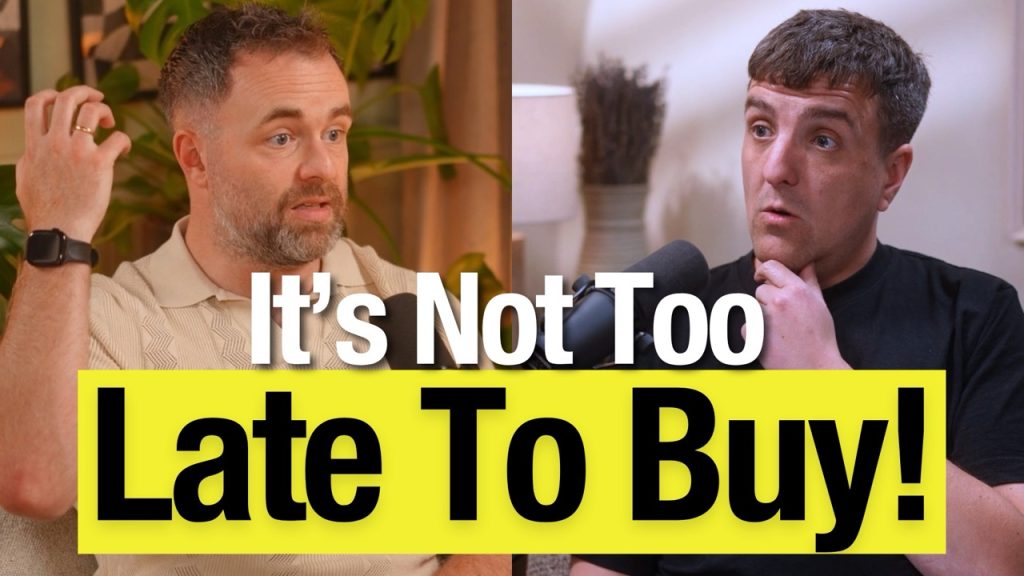

Research from Fidelity and Warwick Business School shows women investors outperform men by between 0.4% and 1.8% a year, yet the average UK woman retires with just £40,000 against £84,000 for men.
In this Money Moments clip, I sit down with Ayesha Ofori, ex-Goldman Sachs banker and founder of Propelle, to unpick a genuine contradiction. Women are statistically better at investing. So why are so few of them doing it?
Ayesha’s answer isn’t about confidence or risk appetite. It’s about time, money left sitting in savings instead of working, and a habit gap that compounds far more than most people realise.
We get into the numbers behind the gender pension gap, why “risk averse” is the wrong label for how women invest, and the one Excel model Ayesha uses to show people exactly what starting three years earlier is really worth.
———
Gains App is LIVE!
An AI-powered budgeting and cashback app designed to help you make more of your money.
Download here: https://gainsapp.onelink.me/8IhT/oiaimr1z
———
Get a FREE FRACTIONAL SHARE worth up £100 when you deposit £1 with Trading 212
https://www.trading212.com/join/MGP
If you don’t receive the free fractional share, head to the menu and put the word ‘MGP’ into the promo code section.
(Capital at risk when you invest)
Key takeaways
- Women investors outperform men by 0.4% (Fidelity) to 1.8% (Warwick Business School) a year, largely down to more due diligence before committing money.
- 67% of women now invest outside their retirement accounts, up from 44% in 2018, but Ayesha says it still isn’t enough.
- The average UK woman retires with roughly £40,000 versus £84,000 for men, driven by the gender pay gap (13.1%) and time out of work for childcare, eldercare, and menopause.
- Saving and investing are not the same thing: Ayesha’s rule is to save for anything under three years and start investing for anything beyond that.
- Over a 10-year period the probability of loss on the S&P 500 is around 2%. Over 15 years it drops to roughly 0.02%, so time in the market is what actually reduces risk.
Timestamps
- [00:18] The research: women outperform men as investors
- [00:54] Risk-aware, not risk-averse: why women invest the way they do
- [03:54] Investing versus gambling: what “risk” really means
- [05:04] The pension gap: £40,000 versus £84,000 at retirement
- [05:54] Why the gap exists: pay, caregiving, and time out of work
- [08:32] The power of starting early: compounding in action
- [09:54] Closing the 13.1% gender pay gap
Why women make better investors
Ayesha rejects the idea that women avoid investing because they’re risk averse.
She calls it risk aware instead: women ask more questions and want more information before they commit, and that extra due diligence is what tends to make them better investors once they do move forward.
The data backs it up. Fidelity found women outperform men by around 0.4% a year, and Warwick Business School put the gap at 1.8%.
Fidelity also found 67% of women now invest outside their retirement accounts, up from 44% in 2018. Progress, but Ayesha is clear it still isn’t enough.
Investing through a fund also means a professional team is doing the analysis for you day in, day out.
Ayesha points to her own banking background as an example of the level of scrutiny fund managers apply, with far more data behind each decision than most individual investors could gather alone.
Saving is not investing
One of the biggest confusions Ayesha sees is people using “saving” and “investing” interchangeably. Her rule of thumb: anything you need within three years should be saved, not invested.
Beyond three to five years, you should be putting money to work, and our investing for beginners guide is a good place to start. Beyond five years, and certainly for a pension, investing is essential because savings alone don’t move the needle.
She also pushes back on the idea that index funds, generalised ETFs from providers like Vanguard and BlackRock, are inherently risky.
Over a 10-year horizon the probability of loss on the S&P 500 sits at around 2%. Stretch that to 15 years and it drops to roughly 0.02%. The longer the timeframe, the smaller the real risk.
The £44,000 pension gap
The numbers are stark: an average pension pot of just under £40,000 for women against just over £84,000 for men.
Ayesha points to the gender pay gap, currently 13.1%, as one driver, alongside the time women take out of work for childcare, caring for elderly relatives, and menopause. That lost time compounds, both in missed earnings and in years the money isn’t invested.
Some of these factors can’t be solved individually. What can change, Ayesha says, is what happens to the money women do have, and for pensions specifically it’s worth understanding SIPPs vs ISAs before deciding where to invest.
Too often the money sits in savings rather than being invested, which is exactly the habit she’s trying to shift.
Ayesha also wants to see companies held to a higher standard on pay, rather than waiting until the government forces them to publish their gender pay gap numbers. She’d like a base level of fairness that doesn’t depend on legislation to enforce it.
Why the older institutions are being left behind
Ayesha and I also talked about workplace culture. Newer, younger companies tend to be far more relaxed about flexible working, picking up children, and working around family life, a shift she says has accelerated since COVID. Older, institutional firms have been slower to adapt.
She calls it hard to get “dinosaurs” to change, but believes it’s coming regardless. Younger generations are less willing to accept rigid, outdated policies, both as employees and as customers, which she thinks will eventually force even the most resistant firms to modernise.
Start small, start now: the power of compounding
Ayesha built an Excel model to show clients what an extra £10 or £50 a month, or starting just three years earlier, does over 10, 20, 30 and 40 years. Our compound interest calculator shows the same effect.
The impact is enormous and far from linear. She calls investing accessible from a single pound, and her message is simple: start as soon as possible, stay consistent, and invest for the long term.
This transcript is auto-generated and lightly edited for readability, it may contain errors.
**SPEAKER_02** [0:18]
Research from Fidelity found that women outperform men by approximately 0.4% every year. And then the Warwick Business School did a study and found it was actually 1.8%. Yep. Which is actually quite incredible. But then we have the problem of actually getting women investing in the first place. And there was a study done by Fidelity again that 67% of women are now investing outside of the retirement accounts compared to 44% in 2018. So that’s growing, but it’s not enough, right?
**SPEAKER_00** [0:54]
Not by any means, not at the moment. So that’s the irony, right? When it comes to investing, women are actually great investors. And I think it’s because they tend to be more prudent. So a lot of people say that women are really like risk averse. Like, oh gosh, investing is risky. So women don’t want to go anywhere near it. I don’t see that. I say women are risk aware. They have more questions. There are more things that they want to know before they move forward. But if you give them that information and they’re able to like assess the investment and the opportunity, just because it has a certain level of risk, they’re still potentially willing to move forward once you give them the information. And I think it’s that prudence and that extra due diligence that makes them better investors potentially. But as you said, women just aren’t investing anywhere near enough. We’re great at saving, but savings don’t move the needle as much as investing does. And sometimes people even use the word interchangeably, and it’s so frustrating. If you’re saving, you are not investing. It’s it takes a whole different sort of mindset. Like savings are things you do for short-term goals, like your emergency fund or something very short term. I typically say anything sort of less than three years, you should probably save for. Yeah. But anything longer than three years, you should start to think about putting that money to work and investing. You know, and then I have another bracket, sort of three to five years, sort of shorter-term investments. And then anything sort of five years plus is sort of longer term, and then your pension. And how you put your money to work will vary depending on where on that line it is. But the investing part is very, very different to the savings part. And this is what we’re really trying to get across to women. And then when it comes back to the sort of risk thing, like investing in what I call sort of core, very vanilla, sort of generalized funds or ETFs. Like we work, for example, with Vanguard and BlackRock and some of their funds, slow and steady over time, that’s really all you need. And actually, the data shows, I think it’s with the S&P 500. If you invest for a 10-year period, your probability of loss is around 2%. If you invest for 15 years, I think the probability of loss drops to something like 0.02. I mean, how that’s not risky. So it’s actually about the time that you invest for. So if you’re investing for the long term, you can significantly reduce the risk. But yes, I get it. If you’re investing, and I wouldn’t even call it investing, but if you say, for example, bought some shares or something for like a few months or a year, yes, probably a lot of volatility, a lot of risk, but that’s not investing. I’d say that’s probably gambling. So if you’re actually investing in line with a true investment philosophy for the long term, by nature of the fact that it’s so long term, you significantly reduce the risk. So when people say to me, like investing in those types of assets is risky, I’m like, where? Show me the risk. You know?
**SPEAKER_02** [3:54]
Yeah. And like the um comparison to gambling is that you’re playing with pure chance. Whereas these are real businesses, yep. Some of the best businesses in the world, real people making real profits every single day. Yep. And you are essentially tapping into a little piece of that when you do invest into these companies.
**SPEAKER_00** [4:13]
Absolutely. And if you invest through a fund, um, there’s likely a fund manager somewhere or a whole team of managers. And it’s their job day in, day out, to be looking at the underlying investments in this fund. And, you know, those people probably have various different qualifications, like what I went through when I was was in banking. So there’s a lot of smart people looking at this on a regular basis.
**SPEAKER_02** [4:36]
Yeah, with an enormous amount of data.
**SPEAKER_00** [4:38]
Exactly. Yeah. So when you think about all of these things, I think the risk is more sort of in your mind. It’s not actually the risk is not doing it. Exactly.
**SPEAKER_02** [4:48]
In my opinion.
**SPEAKER_00** [4:48]
And also there’s there’s always an element of risk in something, right? You know, nothing is completely risk-free. What people have to think about is the probability of that risk occurring. If the chances of it happening are so small, then it’s overall, I say it’s not that risky.
**SPEAKER_02** [5:04]
Yeah, absolutely. So, like it’s quite stark when you come to look at the figures between men and women when they come to retire. I think the average retirement pot is just under £40,000 for women and the average retirement pot for men just above £84,000. So that’s you know, less just double.
**SPEAKER_00** [5:22]
Yep.
**SPEAKER_02** [5:22]
Uh, which is pretty crazy. But obviously, there are some factors at play, you know, simply because of the makeup of uh, you know, men and women. Women usually birth the children and uh will raise them very much in the first couple of years at least, um, which obviously then has an effect on how much they can bring in uh and their careers, etc. So there’s that involved, which we do need to take into consideration. However, there are some bit other big factors at play. What’s some of the big ones that you see?
**SPEAKER_00** [5:54]
Yeah, so it’s a couple of things. So there’s obviously the gender pay gap. So the fact that men get paid more than women, that is closing. Um, and so I’d say it was more of an issue in the past. It is still an issue because we’re not at parity yet, but it’s getting better. So there’s a pay gap. As you mentioned, women tend to be the ones who, well, first of all, they have the children, but then they become carers predominantly for the children, and also tend to be the ones who become carers for sort of elderly relatives and things like this. So will take time out if that happens. Um, then also during menopause, a lot of women also take time out because of the various different um, you know, effects that that that they’re feeling. And when you add all of this stuff in, it’s essentially the time out of work um that has the biggest impact on a earning potential, but almost also how much they can accumulate. Yes.
**SPEAKER_02** [6:46]
Um then also you’re compounding years, essentially.
**SPEAKER_00** [6:48]
Exactly. And you’ve got to think about, you know, time out and what happens to their pensions and things like this. But then it’s compounded by the fact that women then don’t tend to invest the money they do have, it goes to savings. So some of those factors that I’ve mentioned, you know, we can’t solve for. Or, you know, women are the ones who have the children. Yes, there could be more done in terms of like paternity leave and things like that. And I think we are making progress in some of those areas, but we’re not going to be able to eliminate them all completely. So the way that I look at it is okay, what are the things that women can absolutely change and have a direct positive impact? Well, put your money to work and put it to work as hard as you possibly can for as long as you possibly can. Um, and I don’t know, sometimes for me it’s like it’s so simple. Just you don’t even have to invest a lot or have a lot of money. You know, you can open an ISA with a pound. It’s steady, often consistent, even if it’s a small amount of money. Um, so that’s the message that I’m gonna keep drumming into people and just keep going over and over and over. It’s you know, investing isn’t just for the rich. You can invest with a small amount of money. What matters is when you start, so start as soon as possible, being consistent and investing for the long term.
**SPEAKER_02** [8:09]
Yeah. We did a study uh the other day into like even waiting three years versus somebody else that doesn’t and does that whole like 35 years, then someone does 32 years.
**SPEAKER_00** [8:21]
Yeah.
**SPEAKER_02** [8:22]
It’s the difference is hundreds of thousands of so those even those small contributions earlier make an enormous difference. The time is the key factor with this.
**SPEAKER_00** [8:32]
But I think a lot of people don’t realise that. So I’ve actually put together an Excel model where I can show people this.
**SPEAKER_02** [8:38]
And that doesn’t surprise me in any way, Ayesha.
**SPEAKER_00** [8:41]
What can I say? Excel is like my best friend. Um yeah, no, Excel is I I love it. Um just so logical. It’s so easy to show things.
**SPEAKER_02** [8:52]
I can’t. I’m very much like, you know, have to write things out and see it in front of me. Excel, I’m just like, but for me, it works.
**SPEAKER_00** [8:59]
And so what I’ve done is I’ve shown people like if you increase your investments, say you’re making monthly contributions, if you increase it just by a little bit, an extra 10 pounds or an extra 50 pounds, over 10, 20, 30, 40 years, look at this huge impact. As you said, if you start in investing now versus in three years’ time, over 10, 20, 30, 40 years, look at the difference. And it is meaningful. But people just assume, oh, it’s only three years, it doesn’t matter. Oh, it’s only an extra 10 quid, that’s nothing. Compounding. Einstein called it the eighth wonder of the world. Like it really is. And it’s it’s like it’s not a flat line, it’s linear. It it’s it’s not even linear, it goes up like this. It’s almost exponential. Yeah. Um and that is the beauty of investing. It’s all in the compounding. And in order to benefit from that, you’ve got to stick at it. Yeah. Start early, invest often, and keep going.
**SPEAKER_02** [9:54]
Yeah, I I completely agree with you. Now, like the the gender pay gap is something which is interesting because it is closing, but it’s still standing at the moment at 13.1%. Yep. That’s quite a stark difference over an earning lifetime.
**SPEAKER_00** [10:09]
Yes.
**SPEAKER_02** [10:09]
Um, hopefully that’s there’s more parity within that as we as you know we move and then this becomes a little bit more of a of a topic.
**SPEAKER_00** [10:18]
Yep.
**SPEAKER_02** [10:18]
Um, as it should. What are some of the things that you want to see in that space being done at the moment, which can try and close that gap?
**SPEAKER_00** [10:26]
Yeah, that’s an interesting one. I think it is definitely changing. Um, we’re getting more women sort of going through university and coming out with degrees and therefore getting better jobs. But I think then ultimately it comes down to the companies. Um, and it’s gonna have to be on them to make sure that they are paying women appropriately. Like, why do you have to wait until the government forces you to publish your numbers? Like, why? Why do you have to be forced to do it? Um, and I guess the argument, if I thought about the flip side, is well, you know, we’re companies, we’re trying to make as much money as possible. If we don’t have to give it to people, then we won’t. Um, but I think there should be sort of a base level of what is acceptable.
**SPEAKER_02** [11:10]
No, I completely agree. And one of the things that I would say as well, as I’d add to that, is like I think that the older companies are still sort of stuck in their ways as such. And that kind of leads me on to my next point as well, actually, which is that the newer companies are much more open to the open work policies, you know, the you know, I need to go pick up the kids. Cool, go pick up pick up the kids and work in the evening because we’re all doing that too, you know. And it’s like they’re being way more accepting about what has become modern life, basically amplified since COVID, and everyone realised that they could all be at home and still create a million-dollar company or million-pound company or whatever that might well be, right? So I think we’ve become more awoken to that. But the older institutional footsie companies uh perhaps haven’t.
**SPEAKER_00** [11:56]
And it’s hard to get dinosaurs to change.
**SPEAKER_02** [12:00]
Yeah.
**SPEAKER_00** [12:00]
Um, and I think that’s one of the problems. You know, they’ve been so used to the system being a certain way that you’re not here at night and you leave it. Exactly, that they’re almost reluctant to change. But I think they’re going to have to change. Because what I see with younger generations is that they’re not prepared to accept the status quo. Oh no. And they won’t buy your products and they won’t interact with your company. So I think a lot of these big corporates are kind of going to get dragged into the modern ages, if you like. Yes. Um, and they they won’t have a choice to some extent because I also think younger people are just sort of like, we’re just not prepared to put up with that. And that’s just not the life that we want. And eventually those older people are gonna move on and newer people are gonna come in and they’re gonna have different mindsets. So I think over time, we are going to get more change.
Frequently asked questions
Yes. Fidelity research found women outperform men by around 0.4% a year, while a Warwick Business School study put the gap at 1.8%.
Ayesha Ofori puts this down to women doing more due diligence and asking more questions before committing money, rather than being more cautious or less capable.
UK women retire with roughly £40,000 on average against £84,000 for men.
Ayesha attributes this to the 13.1% gender pay gap plus time out of work for childcare, caring for elderly relatives, and menopause, all of which reduce both earnings and the years available for compounding.
Ayesha’s rule is straightforward: save for anything you need within three years, such as an emergency fund. For anything longer, especially five years or more and pensions, investing is the better route because savings alone don’t grow enough to make a meaningful difference over time.
Ayesha argues the real risk is not investing at all. Over a 10-year period, the probability of loss on the S&P 500 is around 2%, dropping to roughly 0.02% over 15 years.
Short-term share trading carries more volatility, but long-term investing in diversified funds significantly reduces genuine risk.
Very little. Ayesha says you can open an investment account with as little as £1 and build the habit from there.
What matters most is starting as early as possible and staying consistent, since even small monthly contributions compound significantly over 10, 20 or 30 years.
———
This video is meant for educational purposes and should not be considered financial advice. When you invest your capital is at risk. Past performance is not a guarantee of future success.
This video description contains affiliate links – if you click on one and make a purchase we may receive a small commission. This does not alter our suggestions and there is no charge for you.