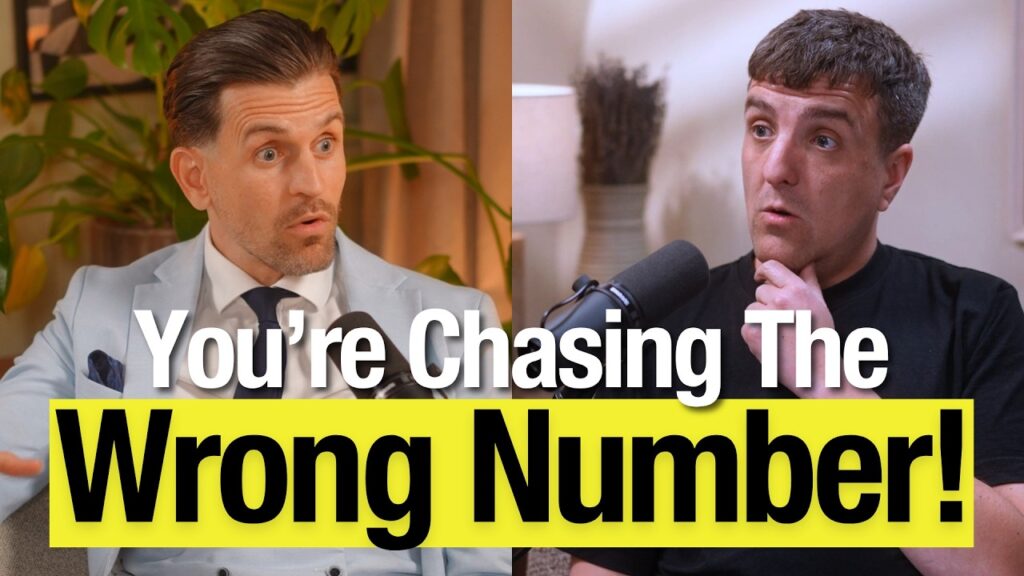

Adam Lees, Head of Marketing at InvestEngine, joins the Money Gains Podcast to strip the jargon out of ETF investing: what an ETF actually is, why fees matter more than most people realise, and how to decide between building your own portfolio or letting someone else manage it.
If the term “ETF” has ever made your eyes glaze over, this one’s for you. Adam spent nearly ten years at Investec before moving into fintech, and he’s built a career out of making low-cost, diversified investing feel less intimidating for beginners.
On this episode we get into what an ETF actually is (hint: it’s simpler than the acronym suggests), why a tiny difference in fees can cost you tens of thousands of pounds over a lifetime, and how InvestEngine’s DIY and managed options work.
We also cover savings plans, SIPPs, and the gender investment gap, because there’s a lot more to this conversation than just ETFs.
If you’re already comfortable with the basics and want the fund-tracking side of things, our complete guide to index fund investing in the UK covers that ground. This episode stays firmly on ETFs.
Check out InvestEngine here: https://investengine.com/?utm_medium=Affiliate&utm_source=UpTheGains
I’ve made no secret about my love for the InvestEngine brand. They’re doing some fantastic work helping people get into investing, but equally in areas like bridging the gender investment gap.
———
Gains App is LIVE!
An AI-powered budgeting and cashback app designed to help you make more of your money.
Download here: https://gainsapp.onelink.me/8IhT/oiaimr1z
Key takeaways
- An ETF (exchange traded fund) simply wraps up a basket of shares, such as the FTSE 100 or S&P 500, into one investment you can buy on an exchange like a stock.
- A 1% annual fee versus a 0.25% fee can cost you tens of thousands of pounds over a 40-year pension, purely from compounding.
- DIY investing on InvestEngine is free, but the underlying ETFs still carry a small provider fee from issuers like iShares or Vanguard; managed portfolios cost 0.25%.
- Savings plans let you automate weekly, fortnightly or monthly investments from as little as £10, removing the temptation to “forget” and spend it.
- A SIPP (self-invested personal pension) gives you control over how your pension is invested, and it can sit alongside a workplace pension and a stocks and shares ISA.
Timestamps
- [1:03] Adam Lees’ background and InvestEngine’s story
- [4:01] How InvestEngine’s model works
- [7:20] What actually is an ETF
- [13:56] What to look for when picking an ETF
- [16:36] Why fees quietly wreck your returns
- [23:58] Managed vs DIY portfolios explained
- [28:13] Savings plans and auto-invest explained
- [36:02] Closing the ETF knowledge gap
- [41:44] The gender investment gap
- [42:39] SIPPs: pensions you actually control
What is an ETF, actually?
Adam’s answer to this is refreshingly simple: an ETF, at its purest, is just a way of tracking an index. Most people already know what the FTSE 100 is, the top 100 companies listed in the UK.
An ETF is the investment type that lets you buy a slice of every one of those companies through a single purchase, while the fund itself does the tracking behind the scenes.
“So starting at the basics, an ETF is a great way, a great building block, a great tool that we like to basically give the vast majority of investors exposure to the assets they’re looking for,” Adam explained.
Rather than buying Apple, Tesla and Microsoft individually, one ETF purchase can give you exposure to all of them at once. It’s called “exchange traded” because, like a share, it’s bought and sold on an exchange.
If you’d rather buy a whole index in one go than pick individual ETFs by sector, our index fund investing guide is the natural next read.
How to pick an ETF without overthinking it
On the InvestEngine platform, ETFs are grouped into “collections” by sector, region or industry, which Adam says is the easiest entry point for beginners: recognise the companies you already understand, then branch out into themes like AI, healthcare or specific countries you’re bullish on.
Weighting is handled for you too. Some ETFs are weighted by market cap, so larger companies make up a bigger slice and you benefit proportionally as they grow.
Others are increasingly “active,” where a fund manager makes the allocation calls within the ETF wrapper itself. Either way, you’re not manually deciding how much of your £100 goes into Apple versus Tesla, the fund does that arithmetic for you.
If you’re still weighing up which app to actually do this through, our best investing apps in the UK roundup compares the main platforms side by side.
Why fees quietly wreck your returns
This is where the episode gets genuinely useful. Adam’s point is that nobody can guarantee future performance, but fees are the one thing you can control, and they compound just as aggressively as returns do.
“If you pay perhaps one percent, you will lose tens of thousands of pounds versus if you were paying maybe half a percent. And that’s the only fixed element in there,” he said.
Put £200 a month into a pension for 40 to 45 years and you could be looking at close to half a million pounds, depending on markets.
The fee difference between 1% and 0.25% on that pot isn’t marginal, it’s the difference between retiring on time and working two or three extra years.
Sammie backed this up from experience: “I recently switched because of that exact reason, and it was only explained to me by someone exactly like you said it there. Look at the compounding interest of these fees as well as your investments.”
She also flagged the trading cost gap: “for the likes of Hargreaves Lansdown, you’re paying like £12 to buy and to sell,” which stacks up fast if you’re trading regularly rather than holding.
Want to see what a fee difference actually does to your own numbers over time? Run it through our compound interest calculator.
On InvestEngine specifically, DIY portfolios are free to build, but the ETFs themselves carry a small charge from the issuer (iShares, Invesco, Wisdom Tree and so on), which Adam compares to a free car with a small petrol cost.
Managed portfolios cost 0.25% for InvestEngine’s investment committee to build and rebalance one of ten risk-rated portfolios on your behalf.
Managed vs DIY: which route suits you
DIY means you choose your own basket of ETFs and effectively become your own portfolio manager.
Managed means InvestEngine’s investment committee builds one of ten portfolios for you, weighted toward equities for growth or bonds for stability depending on your risk appetite, for 0.25% a year.
Adam is clear this isn’t just a beginner’s safety net: “the service that Invest Engine is offering is probably similar, or if not better, than a personal service that you would get,” without the 1%-plus fees and exit charges that come with a traditional financial adviser.
You can also run both approaches in the same account, starting DIY to build confidence and shifting into managed as your portfolio grows, or vice versa.
If you’re not sure a stocks and shares route beats cash right now, our cash ISA vs stocks and shares ISA comparison is worth reading before you commit either way.
Savings plans, SIPPs and closing the investment gap
Savings plans automate the bit most of us are genuinely bad at: actually moving money from your current account into your investments.
“One of the things that we as humans are guilty of, we’re the ones that are most at fault when it comes to investing, because our salary comes into our account and then we forget to put it into our investment account,” Adam admitted.
A savings plan can send as little as £10 a week automatically, and pairs with auto-invest to spread it across your chosen ETFs without you lifting a finger.
A SIPP (self-invested personal pension) works the same way for retirement money. “In its simplest form, it’s a pension that you control,” Adam said, and it can sit alongside a workplace pension or an ISA, with tax relief on top-ups from the government.
You can even hold a managed InvestEngine portfolio inside a SIPP if you want expert oversight without giving up control.
The episode also touched on the UK’s gender investment gap, where roughly one in five men hold a stocks and shares ISA versus one in ten women.
Adam puts this down to a historic “boys’ club” image around investing rather than any real difference in ability: “the best people I’ve worked with in the industry have always been women.”
He also cited InvestEngine’s own research showing Brits and Germans save similar amounts each month, but Germans are far more likely to actually invest it rather than leave it in cash, largely because ETF investing and savings plans are simply more normalised there.
If you’re starting from scratch and want a structured way in, our investing for beginners guide and investing checklist are good companions to this episode.
This transcript is auto-generated and lightly edited for readability, it may contain errors.
[0:00] Sammie Ellard-King: Hello and welcome back to the Money Gains podcast. This is your host, Sammie Ellard-King, and this week I have a banger of a guest. His name is Adam Lees. He’s the head of marketing for InvestEngine. Now, I love InvestEngine. I’m a big fan of what they’re doing, how they’re helping beginners but also seasoned investors get into the market. They operate slightly differently to the traditional broker that you might find online. And I just really love what they’re doing. We discuss all about the platform, ETF investing as well, investing into funds and lots of other things. This is a wicked episode. If you’re listening on Spotify, please do whack that follow button. And if you’re listening on YouTube or Apple Podcasts, you know, share it with a friend. Hit that follow. Let’s get this out there. Let’s show the world what the Money Gains podcast can do. And let’s get started on the Money Gains Podcast right now. Let’s go.
[1:03] Adam Lees: Let’s make some bread. So, Adam, welcome to the Money Gains Podcast, man. How’s it going? You well? Yeah, very good. Thanks. Nice to be here. Yeah, I’ve been looking forward to this one. I’m a big fan of InvestEngine. Um been following you guys, and we recommend you guys as well on our platform quite a bit. So um, but if you wouldn’t mind bringing the the listeners up to date with you. Yeah, yeah, of course. Um yeah, so thank thanks very much for the for the welcome. And um, yeah, good to hear, good to hear InvestEngine is uh highly thought of. Um so yeah, I’ve InvestEngine has been around kind of in its in its latest incarnation for about kind of three years now. Um so we began as kind of a robo-advice platform um similar to your nutmegs and your um your other platforms like that out there. Um and then we launched our DIY solution in uh in 2021, and that’s when things things really started to um started to take off for us. Um me personally, I was um I used to work for um work for Investec. Um so if you’re if you’re a cricket fan and you know the Zebra, um that’s the company I used to work for. So had a brilliant, brilliant almost near 10 years with them. Um so working in the more kind of traditional asset management space. Um, spent a few years in London and was fortunate enough to have a few years down in Cape Town, um, where they had a much more kind of retail-facing product, and that’s where I really kind of got this passion for um yeah, technology, the use of technology and the integrating kind of the use of technology in people’s personal lives and actually how we can help people invest through the technology. So that’s why I took the um took the move to a company like InvestEngine um, where we’re really trying to do what we can to make kind of best practice investing through kind of low-cost diversifications, automation as as easy and as accessible as possible for um for the vast majority of investors. And that’s yeah, that’s kind of where my passion comes in, and it’s great to see it kind of come into life, um, coming to life with Best Engine and getting out to audiences such as yours um on a regular basis.
[3:16] Sammie Ellard-King: Yeah, no, absolutely. Well, um amazing down in Cape Town for a few years. That must have been good fun. Yeah, yeah, no, it’s a it’s a great place to live and work. I’ve got friends out there and they absolutely love it. And they they run their business from there. They they move from Scotland in the UK, and I don’t think they’ll ever come back. They’re like, this is just us now. No, no, you can you can start the day with a with a run-up table mountain, go do a bit of work, hit the beach after work, go to the wine farm after that. It’s uh yeah, it’s uh it’s very very friendly people, beautiful background, and um yeah, another one. Doesn’t sound too shabby, does it? No, we should be doing this down there rather than rather than back in London. Yeah, I was just about to say we’re recording this in January in a rainy London, but hey, what could we do?
[4:01] Adam Lees: Next time, next time. Obviously, InvestEngine’s slightly different to say the standard investing platforms out there. Um, your model is what makes you different in a lot of ways. Um, would you mind talking to us through a little bit about that? Yeah, yeah. So as I kind of mentioned in the intro, there the idea is to kind of make low-cost accessible, diversified investing accessible to to as many people as as as possible. Um, we don’t focus on trading. Um, so there’s no there’s no buying and selling stocks on a on a daily basis. We focus on exchange traded funds and portfolios. So what that allows people to do is to diversify their money across or kind of spread their risk across a number of different assets. So um an ETF is a an ETF is an exchange traded fund. Um, effectively it allows you to track a basket of stocks on whether it’s an index or based on a particular um particular philosophy. So for instance, if you want to buy the top 500 companies in in America, you could buy the S&P 500 uh track, S&P 500, being being the index that tracks the top 500 companies in in the US. Or if you wanted to track a basket of AI stocks, you could buy an AI ETF. So starting at the basics, an ETF is a great way, a great building block, a great tool that we like to basically give the vast majority of investors exposure to to the assets they’re looking for. And then where InvestEngine comes in, that’s the that’s the investment that we that we that we love. Um you go on our website, you can find up loads more about why we love them as investment types, and then we allow DIY investing, which is where you can go and choose your own portfolio of ETFs, but then we also offer managed investing. So you can come onto our platform, fill in a questionnaire, and our management team will build and manage a portfolio to suit the level of risk with CCUs. So it’s yeah, in that sense, anyone can pick up the app. If they know what they’re doing, they can go DIY, if they don’t necessarily know what they’re doing, or they don’t necessarily have the time to do it, they can go down the managed routes, and that would leave them with a fairly solid portfolio to start with. Um, and then probably the other the other two key ways where we where we’re different is is on our cost. So we do a lot of a lot of all our effort is kind of put in to keep costs as low as possible. So on the DIY side, our portfolio is completely free, so it’s completely free for you to go and choose your own investments, and then on the managed side, it’s just 0.25%. Um, so you can go on to our set again, there’s a calculator there, and it’s an incredibly cheap way, cheap way to invest. Um, and then probably the final point that we’re really that we’re really proud of, um, because being cheap is not necessarily a selling point in its own, right? It’s it’s the automation and the tools that we give you to facilitate long-term investing. Um, so we’ve got things like savings plans where you can invest as little as as little as £10 a week, which will automatically be sent into your portfolio. We do all the investments for you, so then you can just sit back and enjoy your trip to Cape Town.
[7:20] Sammie Ellard-King: We’ve just rattled through some of the theories and um some of the key key features of the app, but I think we’ll we’ll tuck into them a little bit more because there’s certainly a lot to unpack there about reasons behind those thinkings. I I think we’d I’d love to sort of go a little bit deeper with you today on. But for someone like I know you mentioned a basket of stocks, and that’s generally what I people say with an ETF, but they they can like I I suppose my question really is like, how if you’re an ultimate beginner, what’s gonna make me understand what that means? Good question. Um, and it’s one that we it’s one that we we are we are faced with a lot because we believe ETFs are a great way to invest, but obviously when you start saying acronyms like ETF, people tend to lose interest or they don’t necessarily know what it is. But in reality, it’s it’s at its purest form is tracking an index. Um so I think the vast majority of people will be familiar with what the FTSE FTSE 100 is. FTSE 100 is the it is the top 100 stocks within the UK. Um, you can get an ETF, which is essentially just this investment type that’s designed to allow you to buy pieces of each of those companies through one investment, and then the ETF is doing all the tracking, all the tracking for you. So essentially, rather than you having to go and buy um shares if we if we take American companies, for example, if you say if you have to go buy Apple, Tesla, and track all of those companies individually, you can buy an ETF which wraps it all up for you. Um, it’s called an ETF because it’s exchange traded, which means it’s sold on an exchange, the same way a stock is.
[9:05] Sammie Ellard-King: Um, so yeah, it’s a much more accessible, um, easy, cheaper way to invest. So a lot of beginners will get confused, well, may get confused by what an ETF is. Ultimately, you’ve almost got to ignore what an ETF is and just see what it gives you. It’s essentially a way of downloading the InvestEngine app, looking at the area you want to invest in. Are you interested in the US? Are you interested in technology? Clicking that and clicking invest. So ultimately, the an ETF is just a way of doing it. What it’s allowing you to do is focus on um focus on investing in a particular area or sector. And that’s how I I personally first got into it. Yeah, a big part of my own investment strategy is sort of index fund investing and tracking index funds because you know it it’s a great way of uh of building wealth for for the long term, and you know, you can’t go on past results, but that’s all we have to go by in a lot of cases, so we do have to kind of take that into some sort of consideration. I know legally, you know, you have to say that, which is true. It is true, you can’t predict the future, but we yeah, we have to use some sort of measurement. Um otherwise, yeah, we’re kind of uh left shooting in the dark, aren’t we? But uh one thing about ETFs, which I I think of i is really interesting, especially for the beginner, is because like you don’t know how how to weight a particular portfolio. And you know, you might say let’s say we had £100 and you go and pick Apple, Microsoft, and Tesla. You don’t know, you know, some people might just put 33.33 into each one, yeah, but actually, do you is that the best decision for your money? Whereas the ETF are already weighting these things out for you. Could you explain a little bit about how that works and perhaps how many stocks are inside ETFs?
[10:53] Adam Lees: Yeah, yeah, so it worked works in a number of different different ways. So if we take if we take the S&P 500 example again, um you’re effectively, and we might get into some terminology here, but when there’s things like market cap, which is effectively the size of size of the size of the company, um, your breakdown of the proportions of each company within each within each ETF um will be done based on things like like the market cap or how much impact they have on that way on that uh on that on that particular market. Um so that that’s that’s one simple way of looking at it. Um there are other ways increasingly an ETF is just becoming a way to invest. So you’re increasingly getting active ETFs as well, where people are actually making decisions on the allocations within that ETF for you. So so yeah, you using using the example of yeah, Apple, Tesla, uh, Google, for instance, you could have 33% of each, but also a if you follow a particular index, it could be done on the size of the company. So some will be done proportionally based on the size of the companies, which would then mean as those companies grow, you would benefit basically proportionally based on how they grow. Um, but also getting into kind of this active world, which is becoming a very interesting thread within ETF investing at the moment, you will get professionals making the asset allocation decisions using ETFs as the vehicle. So, yeah, there’s a number of different ways for um for the allocations to be defined within an ETF. Um, and we’ll probably have to get my investment specialist to come give you over to every single one in detail. Um, but yeah, it’s a it’s as you say, the beauty of it is you and I aren’t having to do it, is that is that either we’re tracking the index and the we let the index organically grow in the way that it grows and then we and we benefit from that.
[12:47] Sammie Ellard-King: Um, or yeah, there are people that are making decisions, decisions are often so let’s say I’m you know, my name’s Sammie and I’m walking into InvestEngine today and I’ve got lots to pick from. What are some of the key things that I should be looking out for within an ETF? Do you think there’s, you know, uh, you know, is that you mentioned something called market cap there? What am I looking at?
[13:56] Adam Lees: Yeah, so it depends on the on the level of detail that you want to go into. Um, what we have on our dashboard when you go into the DIY view is an area called collections. Um, within collections, we group ETFs by um kind of the sector or the region or the the industry that they’re in. Um so that’s a good way of starting. So when I first started investing, my view was okay, I recognise these companies, so I understand these companies are in certain stocks, certain ETFs, so cool, I’m comfortable with that, I will pick that ETF. But then I also kind of I was thinking, okay, where do I think the world is going to grow in the future? So if I think, for instance, that China is gonna have a really strong year or the UK is gonna have a really strong year, you can pick ETFs that that that give you exposure to those areas. Similarly, if you were um if you think ai or healthcare are going to be the big drivers going forward, you can do it on a sector and an industry level like that as well. So you can go and pick an ETF that gives you exposure to those. So that’s how as kind of maybe maybe some beginner, some beginners can approach it. Um, but then you can you’re you’re right, you can go into even further detail by looking at each ETF and seeing how that ETF is constructed, um, how the different exposures created, um, how how it tracks the market it’s in. So yeah, I I think it’s probably one more for for my investment guys to dive into dive into with with the team. But yeah, that’s that’s that’s kind of where I would start when approaching the side.
[15:31] Sammie Ellard-King: Well, that’s why you’ve got the the managed and the DIY options, which we’ll unpack in a minute, I suppose. If you’re not comfortable, then you’ve always got that side there. Um, but yeah, you’re right. Like it’s so cool because some people have really great knowledge about particular sectors, but don’t necessarily understand the nuances of the companies within them. And that is actually, you know, that that puts a lot of people off investing in those companies, but actually uh, you know, could be bullish on healthcare or green energy or AI, as you mentioned, and these things mean oh, I’ve got I’ve now got exposure to this sector, I’m very confident in this sector, but I wouldn’t know that uh, you know, UnitedHealth or anything was the was a big driver in that sector. So yeah, but I now own it as part of my ETF, which is super cool. Um, something which I don’t feel like gets enough attention when it comes to picking investing apps, or indeed ISAs, is the fees. You touched on it briefly at the beginning there. This is very much at the forefront of your business. And I read that you saved over 10 million pounds for customers so far. That’s amazing. But why do investors need to pay more attention to the fees that they pay?
[16:36] Adam Lees: Yeah, so so a lot a lot of what we’ve we’ve spoken about so far, and and you mentioned the performance element, a lot of it is is we don’t know what the future’s gonna hold. But one thing you definitely know is that if you pay too much, that won’t eat into your returns. Um, so the more you pay, the more you will end up kind of sacrificing from your hard-earned effort in actually working out what investments, what investments you want to pick at. So whilst 1%, half a percent, a fraction of a percent may not seem like a lot, over the long term it really adds up. So if you think all of us are investing for our retirement, um we’ve got our pensions, we could have those pensions for for 40 years that we’re that we’re saving towards. Um, if you put perhaps maybe 200 pounds a month into your pension for 40, 45 years, that could end up being nearly, nearly kind of half a million pounds, depending on how the markets go. Um and the thing that’s the thing that’s guaranteed in there is that if you pay perhaps one percent, you will lose tens of thousands of pounds versus if you were paying maybe half a percent. And that’s the only fixed element in there. So a lot of people don’t think about it this way, they’ll just go onto a website, see, okay, it’s one percent. Ah, that’s fine. But actually, if you think about it in the context of your retirement, which a lot of people is what for a lot of people is what they’re saving for, if you if you pay too much and you end up losing tens of thousands of pounds worth of worth of returns in your investments, then all of a sudden you’re gonna have to work for two, three more years. So I’ve I’ve always had this image of someone someone being about to retire and then, oh no, I can’t retire because I was paying one percent fee rather than 0.25% fee. And it’s I think when people start to think about it in that term, it becomes so relatable that why would I be giving away all of my all of my investment proceeds to fees when actually there are ways to do it today where you don’t need to pay that much. Um, and then I think we could we could do a whole nother chapter on then on then compounding uh compounded interest, which just effectively doubles down the impact of those fees. So yeah, for me, fees is just one of those things that that investors can control and they should they should constantly review their investments to make sure that they’re not they’re not paying paying too much, and that’s not gonna impact them in future life.
[19:05] Sammie Ellard-King: 100%. Yeah, I think for me, one of the big things, you know, I recently switched because of that exact reason, and it was only explained to me by someone exactly like you said it there. Look at the compounding interest of these fees as well as your investments, because look how much your fees are now going up as your investments are growing. And I was absolutely staggered when I used the calculator and a free online, you can go and use them investment uh fees calculators, and like they are mind-blowing. Even like a 0.2% was something like 30,000, 40,000 pounds at the end for me. And I was like, oh my god, and that’s a year’s salary for someone, as you say, which is just nuts. Exactly. So you’ll be you’ll be ready to retire, and then all of a sudden you can’t because you’re 30,000 pounds short because because you were paying too much 20 years ago, so yeah, it’s definitely something for everyone to look at.
[19:56] Sammie Ellard-King: And yeah, and yeah, and you are other than perhaps you know, some uh some others, uh I won’t mention competitors’ names in this podcast just for your sake, but I think you know you are one of the cheapest on the market, um, and and you know, you’re very proud about that. And I think you know, having a zero percent um there, but it’s not totally free feeless, there are fees attached to it. Yeah, could you explain that type of stuff? Yeah, of course. So on um on the DIY side of things, um, so this is again where you go and choose your own investments, um, we don’t charge you anything for that. So if you if you invest via a general investment account or an ISA, um, those are those are completely fee-free um from our perspective. Um, but they are third-party uh partners are the ETF issuers themselves. So um if you think about the structure, it’s InvestEngine is kind of the vehicle, and then the ETFs are the fuel for that vehicle. So um InvestEngine is, yeah, we have well we’ll stick with the stick with the uh the engine engine and that she’s um InvestEngine is the vehicle, the ETF issuers such as iShares’ S&P 500, or um or Invesco, or WisdomTree, these are all the ETF providers, they charge fees to build the ETFs. So it’s it sounds complicated, but it’s it’s relatively simple. It’s it’s we’re we’re free to use, the car’s free, the petrol has a small charge that comes with it. Um the interesting thing about about why we um why we love ETFs as well is that they are considered to be cheaper than other other investment types. Um and then on our managed side, we charge 0.25% um there to manage. So um one of the things people often say to us is surely it’s too good to be true that you’re you’re free. We do have other fees, which is where we make money, so we can afford to pay salaries and and and keep the lights on. So yes, we are definitely looking to be a looking to be a profitable business and and look after your money that’s on.
[23:08] Sammie Ellard-King: Yeah, you do it in other ways, but they’re the important ones for investors, and and and and that, and that’s fine. I think for um for me, it’s just super, super simple, and that’s exactly what you want as a beginner. It’s like, okay, cool, you know, I’ve got mining fees, super clear, like what an ETFs are, I can understand funds very quickly as a beginner. And as you said there, you’re not you’re not trading. Um, you said that at the beginning, you’re not trading stocks. And this is where fees can rack up, you know. I for the likes of Hargreaves Lansdown, you’re paying like £12 to buy and to sell. Yeah. So you’re you’ve then got to have enough worth of of profit or or money in that investment for it to actually make sense. Otherwise, you’re just gonna end up being negative, which is just nuts. So Like to have that free element to the investing side of things is really important.
[23:58] Adam Lees: Yeah. Now we mentioned it a little bit before, um, but understanding really what a managed and a DIY option is, you know, we do see this bandit a lot in the finance industry. And I do think it’s really important to just like clear it up once and for all. So, so what would your kind of explanation of a managed and a DIY option be? Yeah, yeah. So put put simply, um, on our platform, DIY is where you choose, you choose your own portfolio of ETFs. So effectively you become the investment manager, you’re managing your own your own investments. Um, with our managed option, we have an investment committee who constructs 10 portfolios. So if you’re not comfortable or you don’t have the time to do it yourself and go and construct your own portfolio ETFs, um, so that’s for instance putting 10 different ETFs into a portfolio. Um, our investment team will build 10, uh, will build build a portfolio on your behalf. Um, so how they do do that is they kind of there’s there’s a big investment philosophy document on our website if you really keen and want to go want to go look at that, but they effectively are reviewing the investment landscape for you. So they they look at what could could they basically start with different risk levels of portfolios. So if you’re comfortable for a high risk portfolio, they’ll construct a portfolio that’s more weighted towards equities to to give you that growth in return for that risk risk premium that you’re that you’re willing to take. Um, but if you’re maybe needing a lower risk solution, then they’ll create a solution that’s perhaps more weighted to uh to bonds and fixed income, which will give you that bit more security um for for for um for the returns, you’re to your returns you’re gonna make. Um so the guys go into a a lot of detail to um to understand, yeah, understand the way the world’s going, position your portfolio accordingly, look for any opportunities out there which could drive drug, drive, drive growth, but ultimately the key thing that they’re trying to do is um yeah, is is build a portfolio that suits a certain level of risk so that yes things aren’t going up and down wildly and you can actually have a um have yeah have a have a good sleep at night.
[26:16] Sammie Ellard-King: Wow, that’s cool. Yeah, no, I like I really love that. And obviously, with the 0.25%, you know, a lot of financial advisors out there who will be doing something very similar to what you guys are offering there, uh charging one percent plus, you know, and you’re then offering that as a service for a lot less, and as you say, the vehicle to to make that happen, which I which I think is really cool, and especially we we have you know 38% of people in the UK aren’t confident uh managing money, and you know, I think is uh an crazy stat I heard the other day is like over 90% of the country don’t own a stocks and shares ISA, meaning they don’t understand how to invest. So we’ve got some work to do there, and a managed option kind of takes away that fear that someone might have.
[27:02] Adam Lees: Yeah, yeah, absol absolutely, and it’s um yeah, it’s brilliant, it’s brilliant for building for building confidence. And um, and this is this is one of the things because through your InvestEngine app and through the InvestEngine website, you can have both DRY and managed together in your account. So perhaps if you’re just starting off and you want to build confidence, then go start choosing your own investments. Um, that’s exactly what why why why the InvestEngine dashboard is such such a great great place to be. Um, and to your to your point there, exactly about about kind of financial professionals doing this for for north of 1% and charging high fees and exit fees and trading fees and all this kind of stuff. We’re not just for beginners. It’s it’s a brilliant platform for people with significant portfolios or investing experience to actually say, okay, look, I understand that the service, to be honest, the service that InvestEngine is offering is probably similar, or if not better, than a personal personal service that you would get because you’re not charged with being charged those significant fees, and then you get all the added benefits of the functionality that a platform, a modern platform like InvestEngine offers.
[28:13] Sammie Ellard-King: Absolutely, which I think is amazing. Um, and you know, that’s why I think uh that’s why I really wanted to have that chat with you and just understand it a little bit more because I think it’s such a fantastic service. Um, you recently launched the savings plans, and I think it’s a fantastic idea. Like, for example, you know, I speak to people all the time and they’re like, but I don’t want to be checking the charts every day, I don’t want to be doing these types of things. And I I say to them though, you know, you do realise that you don’t have to do that, especially with this style of investing longer-term approach. And you can just direct debit into your chosen selection, i.e., set it up once, uh, almost a set and forget approach, or you know, review once a year and move things around. But your savings plans allow people to do that. But what are they and why are they helpful perhaps for the everyday investor?
[29:00] Adam Lees: Yeah, yeah, absolutely. It’s it’s exactly as you say, it’s it’s it’s just a very efficient way to move money from your kind of salary and your and your and your current account, your bank account, into an investment account. So one of the things that we as humans are guilty of, we’re we’re we’re often the ones that are most at fault when it comes to investing, because our salary comes into our account and then we forget to put it into our investment account, and then another month goes by, and then we missed out the returns that happened in that month, and then another month goes by, so we go and spend it on something that we didn’t necessarily need, and another month goes by, and yeah, we’ve got to board more things that we don’t necessarily need. So the beauty of a um the beauty of a savings plan is you can, yeah, as you as you say, you you go through the onboarding process with InvestEngine, choose your portfolio, the very next button is set in the savings plan. Um, the concept of a savings plan is it’s it’s like direct debit, but it goes a couple steps further. So with a direct debit, you can make a transfer once a month, um, but with a savings plan you can do uh weekly, fortnightly, or monthly. So if perhaps um you want to spread your spread your investments out over the month, you can set up a savings plan to send £25 from your account on a weekly basis. So all of a sudden you’ve taken human nature out of it. We’re not you’re not going to be lazy, it’s automatically happening for you. And then as you can you can set and forget, and all of a sudden, in three months’ time, when you go and check, oh, you’ve automatically built up a portfolio, built up an investment pot, which is actually in the market working for you. So it’s brilliant because it it it’s it’s yeah, it takes the money from your bank account on an automatic basis for you. Um, and then when paired with our auto-invest feature, it automatically invests that into your portfolio. So if you have a managed portfolio, it’ll um it’ll automatically put your £100, for instance, spread that all across the portfolio. Um, if you’ve got DIY, it’ll do exactly the same thing. And the beauty of it is that as you say, you don’t have to monitor spreadsheets. You as you, as the individual client of InvestEngine, don’t have to go in and say, cool, right, okay, I’m gonna put £100 in, I’m then gonna put five pounds into that investment, £10 into that investment, £10 into that investment. Uh, we do it all automatically for you. Um, so yeah, I I use it personally. It’s a great way just to just to set it set up again. Um, I mean, you would hope I would use it personally, but I would like to.
[31:29] Sammie Ellard-King: Well, no, I I do it now. Like uh, this is what I mean. I would much rather automate that side of things because I’ve already picked the funds, and I’m picking a lot of these funds, especially the indexes, yeah. I’m not coming out of them until I retire. Yes, that’s 30 years. So, do I want to spend 30 years times 12 uh every month going in and placing those things? Absolutely not. Take care of it for me. Exactly. You know what I mean? Yeah, and you mentioned the you mentioned the 10 million pounds worth of trading fees that we’ve saved invest in investors. We’ve also done something like I probably forget the number off the top of my head, but I think it’s north of 5 million automatic trades. So you imagine the time that’s saved. Wow. So imagine imagine you or I having to sit down, do all our trades, call up the dealer, choose which ones you want to do. That could take minutes each time, minutes, hours each time to get that done. I remember, I remember when I was when I was much younger, and I was bought my first share. This is and I bought a Royal Mail share, and I was trying to work out how do I buy that, how do I sell it, and it took me forever to do. Whereas now, automatically on a weekly basis, I’m putting £25 into my investment engine, it’s doing 20 trades across my portfolio all on my behalf, and I don’t have to lift a finger. Um, and that and the all the all the power in the engine is just doing that automatically for you. So, yeah, not only are we saving you a lot in a lot in um investment fees, we’re also saving you a significant amount of time for you to then just go and crack on with your life and and not tinker with your portfolio, so it’s actually growing nicely over the long term for you.
[33:06] Sammie Ellard-King: Love that, absolutely love that. Um, so I’m going to talk about some friendly rivalries now. Us Brits, we uh we do we do like a good old rivalry, but I read in your Build a Nation of Investors report that compares a lot of metrics with Britain and you guessed it, Germany. One statistic that stood out to me is 48% of Germans are likely to invest over say over um 33% of Brits, which is quite a starting difference. I’d love to know why why that was from that report. Yeah, so it was a very interesting report, and what what we found was that our our German counterparts and and us Brits, we we put away the same amount, same amount of money each month. So it was kind of it was kind of 300 pounds. We also had the same goals. We were saving for retirement or saving for holidays or saving, saving for education, but what the Germans did is they actually invested it. Whereas what we do is we tended to keep it in cash or just put it into our bank account. So the trouble with that is then if it’s in your bank account, it’s a risk of decreasing in value because of inflation, and you also miss out on the potential opportunities of investing. Whereas our German friends were putting it to the putting them into actual their their investment accounts and their money was was growing faster than ours was. Um, and why do I think that was the case? It’s it’s it’s come down to sort of two to three kind of core reasons that we saw. One is one is two are very, very intrinsically linked, kind of it’s education and it’s just a more natural part of their society. So it’s not kind of a taboo over there. I think I think this podcast is doing this podcast, and many like it, doing a great effort in getting people to talk about money and talk about finance. But I know a lot of my friends, a lot of my parents just don’t just don’t talk about it. In in Germany, it’s a much more natural part of society where people talk, and then so if you break down those barriers and people actually just understand that investing is commonplace, then more and more people will start investing. So it’s so it’s yeah, it’s it’s thanks to you, Sammie, and thank thanks to kind of the hard work of the team at Investing is that we’re trying to kind of increase that, increase that that level of education. Um, and the other key part of it, which is where our our savings plans idea came from, is that savings plans and ETFs are a much more common way to invest in Germany than that in the UK. So people are much more comfortable with with what an ETF is, and they do a lot of their investing through through a savings plan into an ETF. So yeah, whilst whilst maybe during the pandemic a lot of people picked up their phone and started maybe buying Tesla, buying Apple, and getting maybe a bit scared of the chaos of that, a lot of our German friends were were buying ETFs and so they had a much smoother investing experience. Um, so those are those are kind of the key, the key differences that we’re trying to trying to kind of change and adopt over here as well.
[36:02] Sammie Ellard-King: You mentioned financial education there, which is obviously a big factor of yes, this podcast and and you know, lots like it. Um we’ve got a big job on our hands, and I know it’s something that’s at the heart and the core of what you do at InvestEngine. What are some of the things that you’re doing to help sort of bridge that gap? Yeah, so so for me, I’m a I’m a big leave believer in doing. Um, I think one of the core things that we try, like creating content and reports and long white papers and things like that, aren’t going to convince people to to start investing. Um but making an app. They want the meme, don’t they? Well, yeah, exactly, exactly. They want high returns for crypto. But unfortunately, that probably won’t end well, and then they’ll stop investing, and then that’ll be a terrible experience. So that’s that’s what that’s what we’re kind of fighting against them. But I think you you mentioned that there are platforms easy to use, and we did a survey and it said 50, no, it was much higher, I think I probably want to say 80, but um, 80% of our customers love the platform because it was easy. So fundamentally, that allows people to start investing and trying, that they can they can learn through experience. Um, the other interesting stats in that was that 52% of our customers hadn’t heard of ETFs. So the fact that they didn’t have the knowledge about ETFs didn’t put them off from trying and learning. And that’s what that’s what we want the platform. We want the platform to be welcoming, to be easy to use, to be be self-explanatory, so people can start with a little investment, learn, and then all of a sudden they are investing more and more and more and they’re in more control. And that that for me is the is the greatest the greatest way that someone can learn. Um the the other side to that is we’ve we’ve just launched our education series as well. Um, so if you go onto our YouTube channel, um we’ve we’ve created a number of videos and a series of videos that will help people kind of understand understand the basics, whether it’s what is an ETF or what is an ISA or um how to set up a savings plan or even more sophisticated into investing in gold and things in things like that. So yeah, we are we are doing the content side, but I’m a I’m a big believer in spreading, spreading the good word of InvestEngine and actually getting people to try it, and then and then they’ll build confidence and hopefully, hopefully um, yeah, boot the wards in the long term.
[38:25] Sammie Ellard-King: Yeah, 100% and collaboration, you know, we’ve all got an effort and all got a big part to play in this journey for everybody. And the better, you know, if you are an investor and you know somebody who’s not, then talk to them about it because the more people that get into the market, the higher your investments go up. That’s just a known fact. The more money that comes into the to investments, you your investments will go up. So, like that that’s exactly what we want, and we want to try and try and educate as many people about this possibility. Um something else in the report, which I really uh thought we should touch on today, is the gender investment gap, which I believe is a company you’re also focusing on uh quite closely. One in five men have a stocks and shares ISA, whereas one in ten women have one. Um why do you think that is?
[39:15] Adam Lees: It’s it’s it’s an inch it’s an interesting one, and and as you say, it’s one that we’re we’re focusing hard on just to just just to rectify. I think through through my career, I think I’ve always I’ve always worked with with women in finance. I’ve always seen I’ve always seen people who are comfortable, male and female, within the space, um, understanding the terminology and and engaging with it. And I I see no reason why there shouldn’t be a 50-50 split um across the rest of the rest of the society. Um there are there are many things that it comes down to, such as what we mentioned about kind of comparison with German and the UK. It’s seen as a bit of a bit of a boys’ club kind of thing, it’s seen as investing is has historically had this um had this persona and this image around it. And you look at the makeup of the financial centre of of the UK and London cities and the world, and they’re always men in suits and things like that. And that’s where that narrative’s changing. And we need to we need to as much as we need to bring investing mainstream, it’s it’s the same challenge with with kind of making investing, making women in investing feel comfortable as well. Um, so it’s just changing that narrative that the same way as when when I was saying that it was prohibited for me to try and buy post office shares, Royal Mail shares, whatever it was, it was just such such a painful experience. I think historically that has been the experience for women to get into investing, whether it’s through finance jobs and things like that, or through through actually accessing, accessing investments as well. So for me, it’s a there’s a historical problem that we’ve that the industry has facilitated through the image that it’s fostered, um, which I think has changed now. Is that as I mentioned, I’ve the best people I’ve worked with in the industry have always been women. Um, and if you the other part of the report that we found is that women are actually better investors. Um so there’s there’s a key part of that. Um, and it’s so so for me it’s just a it’s just changing these historic, historic narratives, um, that it isn’t a place for you or it isn’t a place for them. This is investing is is a thing for everyone. And and the interesting thing about investing that many people don’t think about is they everyone is investing, everyone has a pension, everyone’s already investing. So I think people just need to get more comfortable with it as more people start to talk about it. Hopefully that that that imbalance will will will narrow out.
[41:44] Sammie Ellard-King: That’s a great answer. I um, you know, technology I believe has has changed that access as well, internet access um is a big, big factor there because where perhaps um in a more traditional society view, 1950s housewife stays at home, how would she understand or know without education and with access to to many different touch points through the internet? That is now not an issue. Um, so I imagine those numbers are going to become closer as more and more um education, um, more and more women get educated on the subject. But yeah, it’s it’s it’s great to see uh platform like yourselves doing work in the space and actively trying to bridge that gap. Um you recently launched uh a SIP. I saw it pop up on your LinkedIn. Congratulations, a big step for for the uh for the company. What is a SIP for those listening and why should I bother having one, basically?
[42:39] Adam Lees: Yes, yeah. So a SIP is one of those classic, classic acronyms that that that sounds more confusing than it actually is. So a SIP is a self-invested personal pension. Um, so in its simplest form, it’s a pension that you control. Um so it’s a way of saving for your retirement, and you can choose the investments that go into it. So a lot of us through our employers will have will have a pension fund. Um you may not necessarily know what it’s invested in, you may not necessarily know how much you’re paying. Um, what you will probably notice when you look at your pay slip is how much money is going into it. That’s probably the extent of extent of most people’s interest that they pay that they pay into it. Um but what a SIP allows you to do is is more flexibility and more control. Um, so it’s very similar to to an ISA in a sense that it’s just kind of so an ISA is an individual savings account and it’s just a a wrapper for your investments that gives you certain certain tax benefits and certain flexibilities. So, in its simplest form, a SIP is a way of saving for your retirement. Um so there’s there’s lots of um yeah, there’s lots of benefits from if you if you top up a certain amount, you can get tax back from the government and contributions from the government.
[43:57] Sammie Ellard-King: Um, and then you can also choose um choose your investments that that go into it. Um, and you’ve got kind of a bit more control than if it’s sat with an old fun, old, old-fashioned pension fund where yeah, a man in a suit has to come and give you a bit of paper to access the details. But no, it’s it’s just a really it’s it’s hopefully yeah, the SIP acronym will just become one of the most commonplace things. Same as an ETF, it’s just a good way of saving for your retirement. Um, so yeah, it’s it’s it’s on the platform. Um, and yeah, if people want to check it out, um, we’ve got some videos and some education content coming around that. Um, so yeah, really um, really, really, really excited about that. A really, really great milestone for the company to be able to help people not only with their kind of short, shorter term saving, but their retirement saving as well. So yeah, really excited to see that come come to life.
[44:50] Sammie Ellard-King: Yeah, me too, actually. I think it’s a great addition to the um to the already fantastic kind of uh investment solutions that you do have. And from a wider perspective, you know, you can have a SIP alongside your workplace pension. So your workplace is running along, and you then decide actually I want to take control of a certain portion of my money. I put a certain portion of my money into a self-invested personal pension every month alongside an ISA, and that’s just part of my strategy. And I’ve got a bit more of a long-term mindset, less adventurous in my SIP, just simply because I know it’s gonna be in there for longer. I just want that to tick over and my ISA, I’m a little bit more aggressive, and that’s just my own personal strategy. Um that’s not uh financial advice for anyone, but that’s just the way that I I like I like to do things.
[45:35] Adam Lees: Um just just to um yeah, sorry, uh sorry, so I was I was just gonna add that on on the SIP, although it is self invested, you can still have an InvestEngine managed portfolio in there, so it’s it’s it’s self invested by name, but that’s all because you can just choose choose what investment types to go. Into it. So you could, yes, you can still have your own DIY portfolio, but if you still if you still want an expert looking after your portfolio, yeah, you can have an InvestEngine managed portfolio within a SIP. So you get that, um, you get all the benefits of a SIP with the control, the visibility, the low costs, and the flexibility, and uh, but yeah, you can have an expert helping you because, yeah, as we all know, we want to we want to have kind of make sure our pension pension investing is under control.
[46:20] Sammie Ellard-King: Yeah, absolutely. Yeah, that was one of my main things was like I had like four or five different pots, different places, different workplaces. I was like, no, just give it all to me, let me deal with it. Um I’m a massive fan of you guys, as you know. You know, I’ve spoken about this many times in this podcast already, but also on our website as well. If anybody wants to check out a more in-depth review, we do have one of InvestEngine from start to finish. Um and I’d love to know what’s what’s coming up, what potential users might get excited about. You know, we’ve got ISA changes along the horizon. Yeah, what’s what’s on uh what’s coming up? Yeah, so um the ISA changes I think is is a massive one for InvestEngine. Um so so for those those those who don’t don’t necessarily know yet, um the changes aren’t you’ll be able to open multiple um multiple of the same type of ISA um in a year. So previously you could only open one stocks and shares ISA a year. Um going forward you’ll be able to open multiple stocks and shares ISAs. Um because InvestEngine focuses on ETFs, some people may want um may want stocks and shares, they may want mutual funds, and they may want ETFs. So the beauty of this new regulation is that it allows people to have their ETF portion with a platform like InvestEngine, which is designed specifically for ETF investing, and I think that’s why it’s why it’s so good at it. It’s because we focus on what asset type, so it means we can put all our energy into making that work as efficiently as possible. Um and so yeah, people will be able to have their ETF portion with us, they can still have their stocks and shares portion elsewhere, they can have their um mutual fund portion elsewhere. So, but then hopefully over time we’ll convince everyone to come to the ETF world and then everyone be happy, happy to invest in just uh that that’s a really, really, really nice thing for us. Um, so that’s coming. Um ISA season is obviously a big thing. So the end of the tax year, um, I’ll be told by my um my operations director to to tell everyone why wait till the end of the tax year because because we’re sitting here frantically trying to get all your investments in at midnight at the end of the tax year. There’s no reason to wait for that. So Marianne, I’ve told everyone you don’t have to have to tell me on how um and yeah, so that that’s that’s a key that’s a key time of year for us. So we we look forward to welcoming on a lot more customers. We’ve already seen um a big spike in customers already in January as people people start the kind of new year with their with the kind of review of their finances. Um so that’s always a big time of year. Um we’re going to continue to evolve our pension product. Um, so we’ve got uh transfers and um employer contributions coming. Um so that’s a that’s a big big thing for us, and and to help people uh transfer all their all their SIPs into one place. So that is uh yeah, the the development team are working working hard hard on that one. Um and I think one that’s one that’s also really interesting for InvestEngine is um the focus on ETFs themselves. So so as I mentioned briefly at the beginning, ETFs are increasingly not just being used as a kind of a passive investment vehicle, but they’re kind of being used as the type of investing of choice for for a broad, broad range of types. So whether you’re an active fund manager um and or a passive fund manager or whatever, whatever wherever the balance may be. So um I was in a talk with with BlackRock, who are kind of the big big American um big American asset manager who who own the brand iShares, uh, who are one of the world’s biggest uh biggest ETF, ETF issuers, and they’re just talking about ETFs as a technology. So rather than rather than ETF being an investment type, they’re talking about as a technology which just allows you to build all these different investment products. So the the brilliance of ETFs in the past has been the low costs, the ability to buy a basket, stocks, attract, and index, the passive nature, which which we all we all know that the the common reports around passive outperforming active, but the main reason that happens is because of fees. So all the money that all at the moment passive outperforms active because the fees that you pay for an active manager to build your investments is so high it counteracts the performance thing. But actually, if you use an ETF to do that, then your fees are much lower. So all of a sudden we’re opening up this really exciting world of of the potential for ETFs to to help do different things for you as well as track kind of a specific market or a specific type of theme. So I think I think the world of ETFs is a really exciting place and and InvestEngine, we’re we’re positioning ourselves ourselves around that. Um and and yeah, it’s a I think it’s a very exciting, it’s very exciting time ahead for InvestEngine and ETF investors and our clients.
[51:20] Sammie Ellard-King: Ah, brilliant. Well, if you’re absolutely sold on InvestEngine from this podcast, we will leave a link down in the description below. You can check out there. There is a small bonus as well. Uh, when you invest £100, you can get up to £50 invested. Uh, there are some T’s and C’s, of course, and I have to say, capital at risk as well. Otherwise, we get the FCA chasing me, uh, which we don’t want. And um, Adam, it’s been an absolute pleasure. Thank you so much for coming on. And um, yeah, I uh I if people want to come and check out uh InvestEngine, we definitely uh uh advise them to do so. But where’s the best place? The best place to find us, um, you can find us on yeah, you can find us on uh InvestEngine.com or go to your app store and search InvestEngine. Um or as you say, uh the link on your website, and your website’s got a brilliant review of us. So yeah, head to um head to up the game so you can find out find out all about it. But um, but yeah, no, thanks um thanks so much for having us, and it’s yeah, it’s great to talk to you. And uh yeah, if anyone’s got any questions about how to use InvestEngine on the platform, um we’ve got a brilliant support support section um on the site, and you can get in touch with the team. Um, and yeah, check out our YouTube channel because um yeah, our our managed investment team just did a really good webinar, 45 minutes long, everything you’d ever want to know about about managed investing, so that’s up on our YouTube channel um as we speak, and there’s loads of other education content on there. So, yeah, whether you’re a beginner investor or an experienced investor, um come check us out. And yeah, as um as Sammie says, yeah, use use this link and then you can get nice little nice little work but to be on your way.
[52:59] Sammie Ellard-King: Yeah, cheers. Thanks, Adam. It’s been a pleasure, man. The Money Gains Podcast, the financial guide, all green or red. Let’s make some bread to the Money Gains podcast.
Frequently asked questions
An exchange traded fund is a single investment that tracks a basket of shares, such as an index like the FTSE 100 or S&P 500, or a theme like AI or healthcare.
Buying one ETF gives you exposure to every company inside it, and it trades on an exchange the same way an individual share does.
Neither is objectively better, they suit different people. DIY means you pick your own ETFs and pay no InvestEngine fee, just the underlying fund charges.
Managed means an investment committee builds and rebalances a portfolio for you for 0.25% a year, which suits people who don’t have the time or confidence to choose their own.
Because they compound in the same way returns do. Adam’s example: paying 1% instead of 0.25% on a pension you’re building for 40 years can cost you tens of thousands of pounds by retirement, even though the percentage difference looks small on paper.
A self-invested personal pension is a pension wrapper you control, similar in principle to an ISA but for retirement savings, with tax relief on contributions.
It’s not a replacement for a workplace pension, but a way to consolidate old pots or take more control over how your retirement money is invested.
Yes. UK rules now allow you to open and pay into multiple stocks and shares ISAs of the same type within a single tax year, which InvestEngine says is useful if you want to keep an ETF-focused portfolio with them while holding other assets elsewhere. Disclaimer: This podcast and article are for educational purposes only and do not constitute financial advice. Always do your own research before making financial decisions. When you invest, your capital is at risk.
———