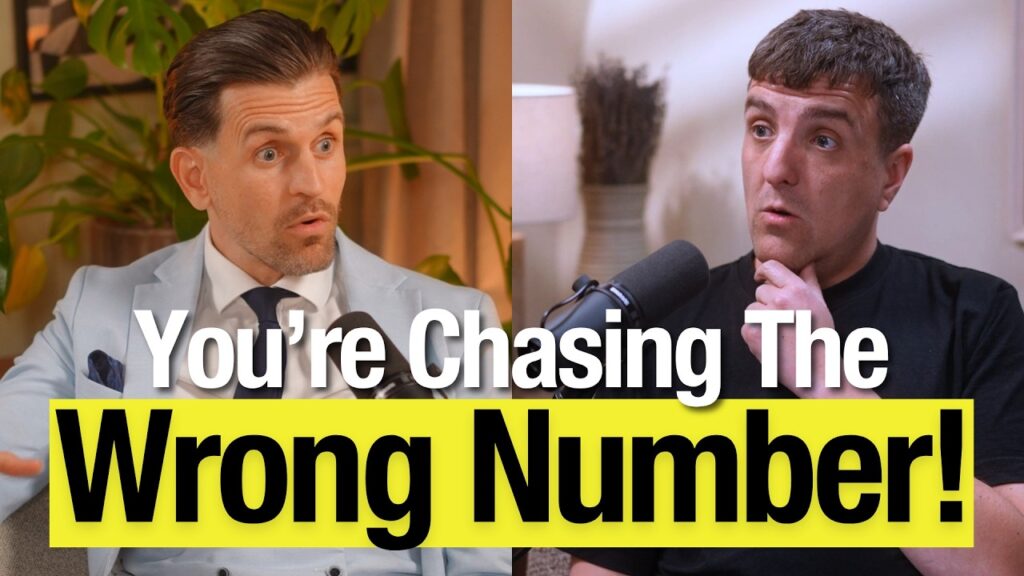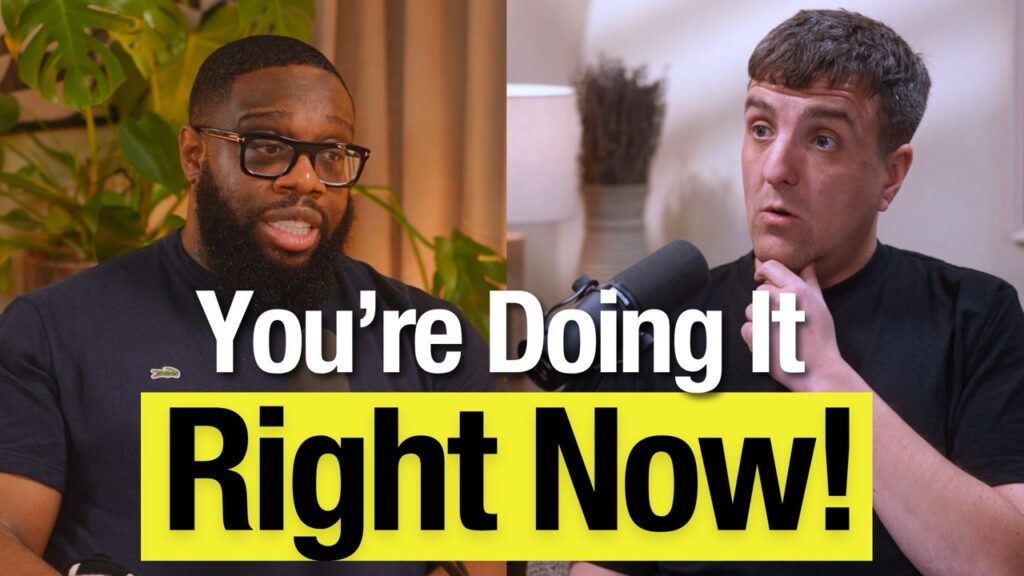

Gabriel Nussbaum, known online as That Money Guy, has built an audience of over 1.5 million by turning financial literacy into short, funny, role-play-style videos.
He joins Sammie to talk about why social media has quietly become the UK’s main source of money education, how to tell good financial content from bad, the difference between gross and net pay, and what it actually takes to build a career as a finance creator.
Gabriel is one of the biggest personal finance creators working right now, and his style is genuinely different. He often plays out two-person conversations and scenarios so beginners can follow financial topics from the ground up, rather than just being told facts.
We get into personal finance basics, but also what it’s really like to build a career as a content creator, where the creator economy is heading, and how social media is reshaping the way people learn about money.
If you’re on Spotify, hit follow, it really does help the show. Let’s get into it.
———
Gains App is LIVE!
An AI-powered budgeting and cashback app designed to help you make more of your money.
Download here: https://gainsapp.onelink.me/8IhT/oiaimr1z
———
Get a FREE FRACTIONAL SHARE worth up £100 when you deposit £1 with Trading 212
https://www.trading212.com/join/MGP
If you don’t receive the free fractional share, head to the menu and put the word ‘MGP’ into the promo code section.
(Capital at risk when you invest)
Key takeaways
- The UK has no formal financial literacy education in schools, so many young people learn about money from social media instead.
- A good rule of thumb for spotting bad financial content: if it sounds too good to be true online, it is.
- Gross pay is misleading. Gabriel argues people should think in net (take-home) pay, since that’s the number that actually funds their lifestyle.
- “Pay yourself first” (savings, pensions, debt, bills before fun spending) is a simple habit that beats trying to master budgeting all at once.
- Content creation is a genuine, learnable career path, but it takes years of consistent output, not one viral video, to build something sustainable.
Timestamps
- [01:57] Gabriel Nussbaum’s Background As “That Money Guy”
- [06:40] The UK’s Financial Literacy Gap
- [09:14] Spotting Good Versus Bad Financial Content Online
- [15:37] Saving And Lifestyle Inflation: The Number One Struggle
- [19:05] Gross Versus Net Income Explained
- [23:01] Top-Line Mentality And Paycheck-To-Paycheck Cycles
- [25:18] Pay Yourself First: A Simple Budgeting Framework
- [28:57] Side Hustles And Building A Creator Career
- [38:01] How Content Creators Actually Monetise Their Following
- [43:45] Who Inspires Gabriel: Ali Abdaal And Martin Lewis
Why financial literacy is missing from the UK's education system
Gabriel didn’t set out to become “That Money Guy”. He started creating content across a range of topics, including graduate schemes and self-development, before narrowing in on finance because it was the subject he was most passionate about and most self-educating on.
His background is actually in engineering, with some time spent working in finance, which gave him the natural link into talking about money online.
The bigger issue he keeps coming back to is that there’s no formal financial education in most UK schools. As he puts it, unless a school takes real initiative, financial literacy simply isn’t part of the syllabus.
So the obvious question is: where do people, especially teenagers, spend most of their time outside school? Social media.
Gabriel sees that as a genuine opportunity rather than a problem, a place where people are already searching for the exact answers they need, even if they arrived there for entertainment.
He’d still like to see more formal, structured financial education, whether from government or private organisations, particularly aimed at teenagers, since that’s when so many money habits form for life.
If you want a practical starting point for building your own financial foundations, our investing for beginners guide covers the basics Gabriel is talking about here.
Spotting good financial advice from bad online
Social media cuts both ways. Alongside genuinely useful creators, there’s plenty of content that muddies the waters, from get-rich-quick day trading claims to the “Lambo guy” lifestyle content that makes risky finance look glamorous.
Gabriel’s rule of thumb is blunt: if something online seems too good to be true, it is.
He also points to a psychological pattern behind bad financial decisions: people chasing money without understanding their own relationship with it.
Gabriel and Sammie agree that the antidote isn’t platform regulation alone, it’s creators with genuine track records consistently pushing the message that building wealth is a long game, not a shortcut.
As Gabriel says, “there’s always going to be bad players in the game in whatever industry you’re in,” so the goal is simply making sure good information outweighs the noise over time.
Gross versus net: why your take-home pay is what actually matters
One of Gabriel’s most-discussed ideas is that people should stop thinking in gross salary and start thinking in net income, the number that actually lands in your bank account after tax, student loans and pension contributions.
His argument is that people judge job offers by the headline gross figure, then end up living beyond what they can actually afford because they haven’t worked out the real take-home number.
He’s not expecting employers to suddenly start advertising net pay, but he wants people to get into the habit of checking it themselves before making lifestyle decisions around a new salary or pay rise.
Sammie makes the same point from the other direction: what matters isn’t earning “50k” in the abstract, it’s knowing exactly what lands in your account each month, because that’s the figure your actual life runs on.
Our budgeting calculator is a quick way to work out your real take-home position before you commit to new spending.
Breaking the paycheck-to-paycheck cycle
Sammie brings up “top-line mentality”, the tendency to associate your gross salary with how rich you feel, which leads to a familiar cycle: spend big in week one, regret it by week two, and end up relying on an overdraft by the end of the month.
Gabriel’s fix is the “pay yourself first” principle. Before anything else, money goes towards the foundations, an emergency fund, pension, debt repayment, savings or investing, and only what’s left is treated as spending money.
He’s clear that the amount doesn’t matter at the start: “I don’t care how much it is, five pounds, ten pounds, fifty pounds, a hundred pounds. Get into a habit of putting that away.”
Once that habit is established, you can build up to fuller budgeting, separate spending pots and a proper emergency fund. Starting that habit early is exactly where compounding does its best work, which our compound interest calculator can help you visualise.
Content creation as a career: inside the creator economy
Gabriel went full-time as a creator just over a year ago, after building his channel as a side project alongside his engineering and finance background.
He’s candid that a full-time content career isn’t for everyone, and that’s fine, but for people who do want to grow extra income in their own time, he argues there’s no ceiling on what you can earn, only a ceiling on what you can save.
For anyone considering a side hustle, whether that’s content creation or something else entirely, our guide to side income ideas is a useful starting point. Gabriel is also honest about what stops people starting: fear of putting their face on camera, or sounding stupid.
His counter is that content creation doesn’t require being on camera at all, and that every creator with an audience today started with zero followers. The real requirement, he says, is consistency over years, not a single viral moment.
The business side of being a creator
When it comes to monetising a following, Gabriel says brand deals are the most obvious and often the most lucrative route, but also the least reliable, since you can’t predict who will want to work with you or when.
His bigger shift in thinking came from a simple reframe: if a brand will pay several thousand pounds for one video, a creator effectively has a marketing budget bigger than most companies, and should be using that reach to build something of their own, whether that’s a product, a course, or a community.
That’s part of why Gabriel co-founded The Creator Space, a community for creators to support each other rather than compete, something he says addresses how lonely a full-time content career can actually be.
He also talks about who inspires him: fellow UK finance creators, YouTuber Ali Abdaal, and Martin Lewis, who he describes as the financial “GOAT” for the scale of impact he’s had on the country’s money habits.
If you want to check your own money habits against good practice, our money personality quiz is a quick way to see where you stand.
This transcript is auto-generated and lightly edited for readability, it may contain errors.
[0:00] Sammie Ellard-King: Hello and welcome back to another episode of the Money Gains Podcast. This week, my guest is one of the top personal finance creators out there right now. It’s Mr. Gabriel Nussbaum, who is an absolute legend. Like what he’s doing as well with his content is so cool. It’s different to anything I’ve ever seen in the finance space before. He often plays out role plays and scenarios so you can really understand financial topics from the ground up. It’s very beginner-centric, it’s brilliant stuff. And we also discuss all about personal finances, but also how to make it as a content creator, what the creator economy is going to look like going forward, the impact of social media on learning, education, and how the world’s changing. It’s rapidly changing. But I really, really love this chat from start to finish. If you are listening on Spotify, whack that follow button. Don’t go anywhere today. If you do anything today with your life, whack that follow button. It really does help the show. But for now, let’s get started on the Money Gains Podcast.
[1:05] Sammie Ellard-King: The Money Gains Podcast. Let’s make some break. So, Gabriel, welcome to the Money Gains Podcast, man. How are you doing? You well? I’m doing well on this rainy, what is it, Tuesday afternoon? As good as I can be. Yeah, man. It’s not ideal in Jan, is it? I I read a stat yesterday, actually, like we’re only like 30 days away from it being light past 5 pm again or something like that. So yeah, we need it. Let’s just fast forward right to then. I saw that by the end of March we’re going to be light past 7 p.m. So those are those are that’s the date that I’m looking forward to the most.
[1:57] Sammie Ellard-King: Yeah, man. Let’s start with some positivity. I love that. Yeah. But um for the guests who um for listeners, sorry, I’m starting there. But um, yeah, for those that don’t know you, would you mind bringing them up to speed? Yeah, I’ll try to as much as possible. So I’m Gabriel, otherwise known as my alias, That Money Guy. Um, I’ve been creating financial-based content on the internet for wow, probably over three years now, which is kind of scary to think about a little bit. Um, predominantly on like short form platforms. So you might see me on TikTok or Instagram, um, where I’m often found talking to myself in a two-person character conversation. Um, but yeah, I think that I’ve just been trying to slowly through entertaining content level up the financial literacy of, I suppose, anyone that watches one of my videos. So that’s kind of a little bit about me, but I suppose other things are my background’s in actually in engineering, surprisingly. Um, and then I worked a little bit in finance, which makes sense. There’s the nice little link to go and talk about finance on the internet. Um, and I’ve been doing this social media content creation full-time for just over a year now, which is pretty exciting. And I’ve had some incredible opportunities, worked with some incredible brands within the kind of financial industry as well, met some wicked people like yourself, jumped on a few podcasts, which is still bizarre to me that someone wants to hear from me. But if I’m invited, I’m 100% gonna say yes. So, yeah, that’s a little bit of a whistle top. Whistletop? Whistle stop tour about me.
[3:33] Sammie Ellard-King: Ah, wicked. Like, I always really like talking to creators like yourself because you know, we seem to be on a mission, and you mentioned financial literacy there. What drove you to start creating content in that space? Yeah, it’s a brilliant question because I actually started creating content around a range of topics, not just finance. So I’m very passionate about education and I love teaching. So when I actually started out three years ago, finance was one of the topics that I was creating content around. But it was a range of things like, you know, getting onto graduate schemes or just your personal self-development and learning new skills. Um, I very quickly realised with content creation, which I’m sure we’ll talk more about, that you do have to settle a little bit more precisely on the topic you’re going to talk about. So speaking about all those things was fun, but it wasn’t so conducive to actually creating content. Um, and then I guess you can ask, well, why finance out of all of those topics? And for me, it was the I was working in finance, which was a great way to pick which one. And just out of all of them, it was the one that I was most passionate about. It was the one that I was constantly self-educating myself on. And it was the one that I found that I had the most to speak about. And when you kind of put those three together, it became a no-brainer. And I naturally found the content, any piece of content I made, even if it was about your personal development, just having that little bit of a financial twist in it. So as I started to realise that I wanted to do this more and more as a hobby and as a bit of a career, um, finance became the natural topic that I was falling into.
[5:11] Sammie Ellard-King: Yeah, and I see that you on your LinkedIn you put short form content creator as one of the things that why short form when there are other areas that you could go into? Uh, because editing a long form video takes about 17 hours, and editing a short form one takes about 17 seconds. No, I mean that in all seriousness, that that was part of it. Um I think when you’re a content creator, you have to do things that you enjoy. Um, otherwise you just won’t do it for the for the long term. Uh, as much as it is about your passion and you know, all that kind of stuff, if you’re not doing something that you actually enjoy putting out into the world, regardless of kind of the feedback you’re getting from views and followers and subscribers and deals or whatever that kind of area is, you won’t be able to do it for the for the long term. So for me, these short form videos just very much kind of like went well with my personality. I like being able to synthesize information into really short snippets. And you know what? Whilst you’re going through the algorithm and swiping onto endless videos, and I mean, like you do you, I do that all the time. Why not sprinkle in a little bit of financial literacy? Because, and I’m sure we’ll dive into this, it’s a topic that isn’t very well covered in the UK, and that’s part of the reason I’m so passionate to throw it in when people are least expecting it, so they can actually get some of it into their lives.
[6:40] Sammie Ellard-King: Yeah, 100%. And you do it so well. Um, you know, we’ll unpack it a little bit in a bit, but I think for us, we’ve got a real challenge on our hands. I recently saw a study by FinCap, and that said 39% of adults in the UK don’t feel confident managing money, which is over 20 million people. And I actually feel like that number is personally higher just based by my own uh reaction to comments and videos that I put up myself. What role do you feel like social media has got now in really trying to help change those figures? I think it’s it’s huge because I mean, I don’t know how many of your listeners are from outside the UK. I assume most are within the UK. Um, and it comes as no surprise to say that unless you were very fortunate and your school took real initiative, there is zero formal financial literacy education in kind of like our upbringings. So you have to think to yourself, well, where do most people of, let’s say, school age spend most of their time outside of school if it’s not going to be put in their syllabus? And that is social media. Um, and just speaking from, I suppose, my own personal experience, I know that social media was a place where I went to develop loads of my skills. Um, I wouldn’t just use it for entertainment, I use it to educate myself. Even in building a social media channel, for example, a lot of the skills that maybe come easy to me now all started from you know watching that YouTube video, seeing that Instagram post or whatever it was. And so for me, it’s kind of like a no-brainer. I mean, social media obviously is an entertaining place and a place to escape, but it’s also a place where you can search for the exact question that you want answered. Um, and that’s the role that I kind of feel it fills. I mean, in an ideal world, um, I would love to have more formal programs and systems in place, picked maybe by the government, maybe by informal or private companies that do make this mandatory, because especially in that, you know, teenage era, that’s really where so many of your financial habits have formed for the long term. And if you can kind of get the basics nailed down then, the opportunity and knowledge that that’s going to kind of give you going into a career and longevity and all that kind of stuff is just unparalleled, kind of compared to kind of any other stage of life when you can get it. I mean, one of the most common phrases that someone will say when it comes to any kind of formal financial education is, oh, I wish I’d known that sooner, or I wish I started earlier. Um so for me, that’s why social media is one of the prime places to put out my education.
[9:14] Sammie Ellard-King: Yeah, you’re so right, man. Like for me, I always find that getting on socials and finding an initial few couple of people talking about that topic, and then maybe I’ll go and back it up with a longer YouTube video. And then perhaps if I’m really need an extra push over the line about the topic, I might dive into a book or a blog post or something like that. But that’s like a really consistent journey for most people now. Like if you’d have said that 10 years ago, it would have been, oh yeah, there’s a textbook on in Waterstones that you know you can get for 30 quid or perhaps rent from your local library. Like it’s completely different now. And I, you know, and I I think it’s great, but I also feel like as well, there’s a lot of content out there which is muddying the waters. And I find that, especially on social media, it’s difficult, especially for people that aren’t perhaps literate in that subject, it becomes uh a problem because you know something springs to mind is like the Lambo guys and day trading and these types of aspects and these very risky forms of finance, which can be quite you know enticing because they see someone driving a nice car and and living in Dubai. Um, what do you feel like could be done to try and help people learn? And perhaps is it the platforms you feel like that need to step in and try and try and help there? You know, I suppose it’s kind of an open-ended question, but yeah.
[10:41] Gabriel Nussbaum: Yeah, I mean, I feel like we could do an entire deep dive into this alone. But I suppose from from a high level, um, yes, the platforms could be doing more. That’s always kind of something that should be being pushed, but maybe something that not we we can’t do at our level. Um, from like an everyday perspective, I think that if anything online seems too good to be true, it is. That’s just kind of maybe that’s just coming with like with every year that I get a little bit older, I get a little bit more cynical with what’s on the internet. Um, and then I suppose I don’t know, it’s such a hard problem because it’s always, I mean, you saw the boom during COVID of you know, crypto and everyone shouting about they knew the next coin that was going to take off and all this kind of stuff. Um, and I suppose for us that had grown audiences based upon real good financial like stability, let’s say, and and proven and understanding track records of understanding kind of how finances work, it’s for us to really double down on our message and keep going on about the importance of growing wealth versus getting rich and how this isn’t a quick solution, and also understanding, I suppose, your psychology and relationship with money, why you chasing it in the first place, what are you actually doing it, what are your goals with money, how do you interact with it on a daily basis? Um, so I mean, as long as there are good players in the game, there’s always going to be bad players in the game in whatever industry you’re in. And that’s just a matter of fact. And of course, they’re gonna try and prey on the people that are less educated. But I mean, I hope, like you said, through formal institutions or by us continuing to try and put out our message, you know, it sounds like really um like uh what’s it called? Fairy tale-like, but like the good can push through and kind of rise to the top.
[12:34] Sammie Ellard-King: 100%, man. It’s just a a game of continuously putting out great content for people. The more people that see it, it’s just kind of expands, doesn’t it, across time. Like eventually we’ll change things. That’s why I get this is gonna be. I mean, I was gonna say, that’s why I get so excited when one of my boring videos does really well. Because I’m like, people are like in, you know, like it’s the sexy topics that normally do well, which is like, oh, this coin is gonna do great, or invest in these uh stocks because you know they’re the next big thing. But when I do a video that’s like this is how income tax works in the UK, and it’s going viral because people are debating it, being like, Oh, I didn’t know this is how much tax you have to pay. I’m like, yes, because that’s the breakthrough where I’m like, people are actually engaging in a topic that isn’t a get rich quick scheme, it’s just basic financial literacy. Um, so underneath the entertainment I put my videos, you’ll often find a really boring financial topic. Um, but that’s never gonna change.
[13:40] Sammie Ellard-King: No, you’re you’re you’re totally right, man. Like that’s for me as well. Like, I put out a video the other last week that did, I think it’s the best uh video that we’ve got, and it was about budgeting, and we have the new national insurance rate in there, and the comments were kicking off. They’re like, You’ve got this wrong. And it’s like, no, no, no, it’s gone down. Um, and that’s now reflected in your paycheck. And um having that conversation with people and just educating on that fact was brilliant because then you’re like, Wow, okay, right, they’ve met I’ve made a real difference now. That person understands that. Um, so I totally see where you’re coming from. One I came across you first, I think it was you out in the streets of London, you were chatting away with a lot of people and and running up to people in the street, and I I I loved it. Um you were one of the first that I saw do that. And uh, you know, I’ve especially in a finance game, being on the streets, talking to these people, being who you are and having so much access to so many people, what do you feel like’s the number one thing that people struggle with when it comes to money the most that’s a that’s a great question.
[15:37] Gabriel Nussbaum: I think maybe from what they would verbally say, it’s always how to save, especially when I’m running around a city like London. It’s just how can you have any of your paycheck to put towards the future version of yourself? And when I say save, I kind of put that under the same bucket as pensions, investing. For me, that’s kind of you know, money that isn’t being spent. Um that’s always the number one kind of struggle that I see that people verbalize. I would say that the number one thing that maybe is like underlying that, that maybe they haven’t even realised is this idea of lifestyle inflation. Um, especially the younger generation, like we said, with social media, everyone’s being shown up, like everyone on Instagram is posting as if they’re a celebrity. That’s kind of how Instagram works, right? You share stories, you show off your life to all of your friends. But with that comes comparisons. Look at this holiday I was just on. Look at this like new outfit that I’ve just bought, look at the new car that I’m now leasing that I can’t really afford. But you don’t know that because you don’t know my paycheck and you don’t know how much I’m paying you on a monthly basis. But look at the car. Um is kind of like the thing that goes out. So I think when I’m speaking to people on like a day-to-day basis or getting a little bit deeper into it, maybe behind the camera or away from the recording, what you’ll often see is they’re like, well, how much should I really be spending on rent on the current salary that I’m on? And when I do get a pay rise, is it okay to kind of celebrate? Or should I can I, you know, all of a sudden go and afford nicer things? Or like, is that like it’s a huge element of I think just human psyche. And even someone like myself that’s fully aware of the concept of living below your means and lifestyle inflation and how those two interact with each other, I still suffer from it. So I know that I still now go on nicer holidays than I used to. Um it’s just about in your overall life finding the right balance and being aware of it and taking as much action as you can. Um, so yeah, those I would say would be the two biggies.
[17:46] Sammie Ellard-King: Yeah, that’s a really good one. Just like money management, isn’t it? It’s like, what do I actually need to do and how do I do it is often the like the key things. And you’re right, like there’s often an underlying so like um abs Mekiao, I don’t know if you’ve come across him before, he’s got a really good um uh Instagram channel, but he put out a video today about there’s often uh there’s like uh what they actually say to you, underneath that there’s the real question, and the real question is usually based around the fear of not wanting, and they don’t want to ask you it because the fear of looking say stupid or in front of whoever they’re with or even in front of you as the creator or the the the person helping them. So yeah, I think education is is is paramount right now. And I mean you did you’re doing a lot of videos at the moment around income tax and how much you get when you earn. And I think it’s so so important that we educate people on this because it it’s a topic where which comes up a lot. And you did a video recently which I really liked, and it’s a topic which I think actually has some serious, serious legs. So you talk about how you don’t feel like we should be talking in gross income anymore, and we should be talking in net income when it comes to our salaries. What’s that?
[19:05] Gabriel Nussbaum: Yeah, so I mean the video had a bit of, I would say, kind of, you know, humor behind it, because I know we live in a world where no one’s ever gonna change, like companies aren’t gonna all of a sudden start saying, oh no, this is what you’re because for each person it’s an individual basis, what you actually end up taking home. Um, but I suppose for anyone listening that doesn’t know gross versus net, it’s literally just kind of like your overall pay package versus what actually ends up in your bank account. Obviously, there’s a difference because of tax, student loans, pensions, you name it, it’s gonna be a different number, right? Um and so the reason kind of why I advocate so strongly for this is because I often feel like people, like we said, look at the it’s like judging a book by its cover kind of thing. They’ll look at this shiny salary that’s maybe offered, or they’ll think that they’re in an incredible position. Um and maybe that will lead to something like them living well above what they can actually afford because they hadn’t quite calculated the actual amount of money that’s going to end up in their, in their account. Um and I’m sure there’s a lot a lot of other consequences from people not really knowing how much they’re being paid versus how much their gross salary, the salary that’s kind of on their job description, is stating. Um, and so all I’m trying to really do with this video and with this concept is get people to start looking at the numbers ending up in their account because those are the ones that actually matter. Those are the ones that you can actually budget your lifestyle around, those are the ones that actually dictate how much you can afford to spend on, you know, where you live, what you drive, what you do, all those kind of things. Um and I like I said at the beginning, I know companies aren’t all of a sudden going to start be talking start talking in your net pay. Um, and so many of the comments were like, oh, you idiot, like why would a company ever do this? This is such a silly video. It’s not the point. I’m not trying to reform the system or anything like that. I’m just trying to get you to start thinking about what’s actually ending up in your bank account so that hopefully you can start to understand this gulf and difference. And obviously, the more you earn, the bigger that number is that you’re not actually taking home. Um, so yeah, maybe one day we’ll see it. Maybe one day people will actually start being told the actual amount of money they’re being paid. Um, but for now it’s just hopefully something that has educated a few more people on you know the difference between gross and net.
[21:27] Sammie Ellard-King: You’re totally right, man, because why does it actually matter if I’m paid, let’s say, 50k, 70k, blah, blah, blah. What doesn’t really matter unless you, you know, I want to know I’m paid 32,000 pounds into my bank account next year. So that equates to this amount of money because that’s my money. The rest of it is taken off me before I’ve even seen the light of day. So I just find that like perhaps maybe they should start saying things like, if you’re on 50k, it’s approximately X after tax. So there’s like Now that would be brilliant. Another idea. That that that would be an incredible initiative if we could get companies to say, you know, assuming normal income tax rates and normal national insurance contributions before anything else, this is actually what’s going to end up in your account. And I wonder if that’s gonna make a few people start to think, oh, maybe uh I shouldn’t celebrate by getting myself that new car before the first pay package has actually landed in my bank account. Um, that was another video I did where I again satirical, but it was just a guy that was earning, you know, 5k a month before tax and decided to, you know, reward himself by spending one month’s salary, and then turns out that was actually closer to two months’ salary of what actually ended up in his bank account. And again, people were like, oh, no one actually thinks that you get paid what’s set on your income. People do. People really do. Like, just because you don’t, like I said, financial literacy in this country is horrifically low. So just because you think you know that thing and it’s obvious, there’s someone out there that doesn’t, and that’s who that video was for.
[23:01] Sammie Ellard-King: No, I agree with you, man. And uh one thing I learned yesterday from uh podcast that we had on Anna Brady is um top line mentality. So you’re getting paid, but you immediately associate your salary in the top line figure with how actually rich you are. And what’s that what that ends up doing is week one, ball of territory out there, you know, rounds for everyone, new handbags, whatever that might well look like. Week two, it’s like, yeah, okay, shouldn’t have blown that much, but we’re still good. And then it’s like, oh shit, beans on toast time, and then finally overdraft and credit card, and then back to square one again. And then having that knowledge about what was going to come in and how I think the next phase of this conversation is like, how do people deal with it? Because then they’ve got this money that’s come in, okay. Let’s say that Gabriel, they’ve learned how to they’ve learned that they get two and a half grand a month, but then what happens? Because that’s that paycheck paycheck mentality. How do you think we can help people break that?
[25:18] Gabriel Nussbaum: Yeah, it’s it’s really difficult, and that is the kind of part where you need to start educating yourself in financial literacy. I don’t want to scare people listening to this, it’s not hard, it really isn’t difficult. It just takes a little bit of effort to understand, you know, well, let me try and pay. We we often say as financial kind of influencers or content creators, paying yourself first. What does that actually mean? What does that actually look like? And it’s this idea of, you know, contribute that money towards, you know, the foundations in your financial life, whether it’s an emergency fund, whether it’s um, you know, the bills that need to go out, whether it’s paying off your debt, whether it’s investing and saving or putting money towards, you know, that short-term goal, buying a property, buying a car. Um, and then after that, start to take have a little play around with your fun money. Because it’s very easy to just spend what comes in straight away and then look at what you’ve got left over and try and think, oh, okay, maybe I’ll put a little bit of this towards savings. But by that point, most of it’s probably gone. If there is any left over, you probably think it’s not even enough to make a difference in your life. Kind of pause that mentality straight away. It is, it’s a habit. Get into it. I don’t care how much it is, five pounds, ten pounds, fifty pounds, a hundred pounds. Get into a habit of putting that way. But the reason why I think as financial content creators, we say pay yourself first is really because having those foundations is gonna set up future you. Like you have no idea the difference it’s gonna make. And the earlier you can get that one locked in, incredible. Obviously, after that, you can start maybe going up from level one to level two, three, four, five, you know, budgeting, building templates, you know, categorizing where your spend goes, um, building more different like pots, uh, understanding what an emergency fund is. You know, there are loads more things that you can start to do. But if at a very like low level, you can look at it as money in, some money goes to future me, okay, what’s left, let’s spend that on current me, and let’s do it that way around. That’s a great place to start.
[27:29] Sammie Ellard-King: Yeah, it simplifies it, doesn’t it? Because then it can be overwhelming, especially when you jump into financial literacy from the start. Because it’s like, as you said, you know, we just reeled through quite a range of topics. But for someone that’s sitting there going, what’s the emergency fund? What’s investing? What’s saving like, what’s budgeting look like? Suddenly it’s like, fuck, I’ve got nearly like 10 things that I need to learn. Don’t do that. Do do one thing and start from the bottom and just get yourself a little bit of foundational knowledge and then slowly add things in and build upon them. And that way you can really start to like actually make a difference. And you start seeing, like, oh, cool, you know, I tucked away some money last month. I didn’t tap into it. I’m slowly building up a habit. That that balance has gone up. Maybe I earned a bit of monthly interest from one of my accounts, and suddenly you’re seeing a bit of difference and a change to how you’re perhaps living your life normally with that sort of paycheck to paycheck mentality. Um one thing we talk about a lot on this channel and on this podcast, and you know, I’m super interested in how you I suppose it’s going to be a bit of a transition when we talk about this, but you obviously started the channels up on the side because you mentioned you went full-time there. How important do you feel like that is that is for people to be exploring at the moment, having some sort of side hustle or you know, potentially a business idea?
[28:57] Gabriel Nussbaum: It’s it’s funny you bring this up because literally, just before we jumped on this call, I was writing a script for a new video around this concept of you know having something on the side, you know, pursuing getting out of your nine to five, building a career or a business, something like that. Um and the argument I was actually putting forward in this video was this idea that it’s not it’s not for everyone. There are plenty of people that are content with just, you know, working their block hours in a career that they like, in a job that they like, going home and having that full separation between life and you know, personal life and work life. Um and they don’t want this whole side hustle, build a business on the side shoved down their throat, um, which I completely understand and completely respect. I was just a different personality type. Um, and it was just, you know, turning what for me was a hobby into a bit of a side hustle and eventually now into my full-time career. I mean, for those I would say that aren’t in that bucket of, you know, just wanting a nine to five when they do want to maybe grow some more income and they are open to, you know, using their personal time, I think it’s it’s an incredible thing to have or to do because of the fact that, like we said, cost of living crisis, there’s no upwards cap on what you can earn, but there is a downwards cap on what you can save. And I’m sure there’s more, uh, there’s better ways of saying that. But what I mean by that for those listening is you can only ever save 100% of what you earn, but you can earn whatever infinite, right? Exactly. Um, obviously not that easy. I wish it was that easy and we were actually all earning infinite, but that’s a that’s a topic for another day. Um yeah, like when I was doing this on the side, yes, it was a hobby, but I fully understood the business implications of what I was trying to build here and kind of where it could take me financially. And obviously, social media is one route, but there’s loads of different things you can find yourself getting into. Um, does it have to be with the objective of becoming your full-time career one day or turning it into a business? No, not at all. Some people have little, you know, side hobbies that they want to monetise a little bit, whether it’s, you know, a little bit of building a website for a few people, or maybe it’s a hobby like pottery that they like selling on through an Instagram page or something like that. I think there’s never any harm in having a little bit of extra income. Um, it’s brilliant. And if you can then treat that income as if it wasn’t really yours in the first place, like you’re living off your job, and then you have this extra income to hopefully put towards future you instead of current you, then you are just all you’re doing is putting a little bit of a, you know, like a fast-forward and accelerator on your financial life. Um, which who wouldn’t want that? Who won that wouldn’t want the prospect of, you know, either retiring early or retiring with more?
[31:51] Sammie Ellard-King: Oh, completely, completely. One thing I loved about what you said there, and I think it’s really, really important, is people don’t have to do this, like, but I highly doubt you’d probably be listening to a podcast like this if you weren’t interested in some aspect of it. And so I feel like it’s important to to cover that because yes, there may be some people listening to this and just going, I’m actually happy I was here for the saving tips. So cool. Like, but I think with how you’ve gone and the levels that you’ve gone to with this, I think it’s really important to touch on the creator side of things. I watched a video the other day and there were uh 30 kids asked, and they were all anonymous answers, but they were all in the classroom when um when the answers came back, and over 60% of them said that they would like to become or go into some sort of influencing media, so YouTube or TikTok. Now, how important do you think that learning content creation is for young people, but equally as well for us millennials?
[32:56] Gabriel Nussbaum: Oh I love it. So, like my answer here is going to be very biased because content creation for me is so much more than just sticking a bunch of videos on the internet and potentially hoping that it guarantees you a lot of followers and then maybe you make some money off of it. Um, I think that the skills that I’ve picked up from creating content and putting it on the internet um are just far superior. I couldn’t have learned such a large volume of skills to such a competent or high level in any other walk of life, like to my knowledge. Um, and I think that a lot, one of the barriers when it comes to kind of content creation or social media for let’s say the 60% of that classroom that said they wanted to do it, might be this kind of fear of putting their face on camera or sounding stupid or, you know, putting out something that their friends might mock at and all these kind of things. And it’s also probably a barrier to millennials that look at this now and maybe also want to be doing it. Um the first thing I would say is social media doesn’t mean your face has to be on the internet for a starter. There are so many areas of this industry that don’t involve that. Like you could go into the back end and helping a content creator build out their process, whether that be helping them script, helping them edit, helping them research, uh and all the 101 other things that come with it. You could build channels that are more to do with, you know, education and don’t require a face in it. They they work through storytelling. Um but if you are happy to put your face on a channel, um, I would say the first thing that might convince you to do so is this idea that anyone that you see on the internet, maybe with a following now or with some kind of level of success, started with no one watching. It’s impossible. You cannot start putting yourself out there onto social media, creating content without having zero at the beginning. That’s just how it works. Um, so once you kind of have understood that, that there’s no way of succeeding without getting through that first phase, maybe that will kind of turn a switch inside of your brain. Um, then the other thing to kind of understand about social media, number one, is if you’re thinking about it as a long-term career or as a business, um, you have to understand that it’s not just going to be a viral video that changes your life or um the moment you hit 10,000 followers on a platform, like you’re done, you can quit your job, happy days, you’ve made it. There’s nothing to do with that. The truth is, it’s about consistently putting value into the world for a very long period of time. And you could take that statement and put it into any industry or business because it applies the same way. Any successful business has been doing something repeatedly again and again and again. I’ve put out hundreds of videos, hundreds of videos again and again and again. And I’m three years down the line and I’m not slowing up, slowing down at all, because I know that that is what it takes to continue building this business that I’m that I’m doing. And again, that’s another skill that you’ll learn from social media. You’ll learn the skill of you know, speaking and public talking. You’ll learn the skill of networking. Um, it’s an incredible way to network, even yourself, I suppose. Part of the reason you might have started a podcast was because of the incredible people that you get to meet. I think I’ve just described myself as an incredible person. I’m gonna take that back because of the because of the people you get to you get to meet. Honestly, sometimes you get me down these little rabbit holes, and I say something and I’m like, I should not have. Just brush it off, dude.
[36:22] Sammie Ellard-King: Brush it off. Um because of the completely immodest people that you get to meet. No, but you’re right. You’re right. You are right. So there’s so many benefits. I couldn’t recommend it enough. I understand, again, it’s not for everybody, but if you have that little kind of you know, feeling in your stomach that it’s something you want to pursue, go for it and just have fun. Please have fun. Because if you don’t have fun, it it’s a shit show. Great advice, man. Like, having fun is probably the most important bit of it, isn’t it? Like, you know, if you’re gonna be creating this content, that’s why we’ve just started doing stuff in digital products and teaching people like how to start an Instagram channel and and and actually go for it. Um, if they want to, if you do want to check that out. Like, that’s but the most important thing is that it’s in a niche that you’re passionate about because you’ve got to do this, as you said, for like three, four years. Um, yes, you can get results sooner than that, of course. Like you can start making money, you know, after a few months if you if you do things well, but like you are gonna need to be doing this for a long time. So make sure you bloody love it. Otherwise, what’s the point? I read a stat, the creator economy is now worth $21.6 billion, which is just nuts. That’s like the global market cap at the moment for the for this industry. Uh, it just shows obviously there’s lots of money in the space, but something which you mentioned there about your growth. What are some of the ways that people can perhaps monetise? And what are perhaps some of the most lucrative ways they can monetise a channel like this?
[38:01] Gabriel Nussbaum: Uh, so I would say the most obvious one that most people have heard of when it comes to social media, obviously, is brand deals and partnering with companies that will pay you in exchange for marketing to your audience that you’ve built. Now, that can be, on the one hand, one of the most lucrative sources of income as a content creator or monetisation. But the only flip side of it is that it’s the least uh sustainable. And what I mean by that is you can’t predict who’s gonna want to work with you, when they’re gonna work with you, if anyone’s gonna work with you. Um, so I think a bit, it’s been a bit of a mindset shift for myself. But when it does come to social media, and if you are looking at this as a business rather than a hobby and a way to generate money, I think that you have to kind of flip the narrative now and think to yourself, well, what’s the purpose behind my content in the first place? Like, where am I making if there was no brand deals and you can’t, you know, like make money through that source of just creating content. There was, let’s say, no AdSense on YouTube or no create a partner program, whatever it is on TikTok, which probably doesn’t pay anything anyway. Um, like, where are you making your money from? And start there. And I think one of the best analogies that was given to me that helped me understand the importance of, you know, building something of value that your audience can actually pay for if they want it, um, because uh to kind of give you longevity and turn this into a career was the fact that someone said to me once, well, how much does a brand pay you for a video? And I shared my rate, it’s a few thousand pounds or something like that. And they were like, that’s incredible. Um, you are aware that you get to put out as many of those as you want for free, uh, kind of at your own marketing value. And I was like, but I’m not marketing anything. And they were like, Well, why? Why not? Like if a brand’s willing to pay you that much once for a video, and you can make as many of those on your channel as possible. Think like you’ve got a bigger to market, bigger marketing budget than probably 99% of companies now in the UK. Um, and I was like, I’ve never even thought about it that way. Um, and that was kind of just another reason why I realised like you need to have something behind the content. Now, there’s gonna be an asterisk with everything that we’re talking about. Like, there are a bunch of content creators that are just, you know, killing it as content creators, and becoming a content creator is their money source, it’s their personality, you know, fans will do anything they say and get any product they want, and they quite literally will have brand deals for life and have a career off the back of it and go into presenting, etc., etc. Um, but for the majority of content creators, just think about what’s the sub like the substance behind your content and build monetisation revenues through that. Um, and I suppose just I know it’s been a bit of a long answer, but those aren’t the only routes. There are loads of other things. You can, you know, build businesses off the side of it, you can start podcasts and try other different forms of content as well, courses, products, affiliates. There’s so many different ways. My recommendation would always just be find one that you’re willing to focus on and dive into that rather than trying everything and getting nowhere with any of them.
[41:08] Sammie Ellard-King: It’s really great advice. It’s so hard to know because you see some of these pages and they’ve got you know millions of followers in some cases, and you’re like, you actually ask them, you know, how how you’re getting on, how much money are you making, and they they basically say barely anything. And they’re like, wow, okay. So you built this whole channel, this whole thing, and there is no like there’s no goal from it from that point. Um, yes, you might get a brand deal, but as you say, like you might get three in January, nothing until August, and then suddenly you’re then relying on that. So it’s it is a it is a it is a really difficult game to get into, but you’re totally right. Like, as a marketer myself, it’s all about getting people off the platform. How do I get them off the platform? How do I get them in control, i.e., a mailing list or a sale of a product, a digital product, or a course, which is speaking my language at launch. And this is it, like that’s where you’re suddenly your then business. You you’ve got a real business because you can consistently go out and speak to these people. Uh, as we all know, even when you look at the social media, um your own social media, you put out a post, only a small percentage of your actual following sees it, and if you’re lucky, it’ll go be pushed out to non-followers. So then you’ve suddenly got this gap where it’s like, wow, okay, you know, if my video doesn’t bang, then no one’s gonna really see it, and no one’s really gonna do anything that I say. And so, but if I send you an email, you’re quite highly likely, if you like me, to open it and perhaps do what I say. And that’s where you can really win in these situations. It’s it’s a very interesting game, but I do feel like you’re totally right. You’ve got to have a product or a goal in mind uh for the other side of it.
[42:58] Gabriel Nussbaum: I agree. But if you’re someone that has no idea what they want to do behind the content and they’re just like, I just want to make videos, you know, because I enjoy that, don’t let what we’re saying stop you. Like 100% still do that to you know build the skills and all that kind of stuff. I think what we’re saying is if you do have something in mind, then make sure that your content is focused in that direction. Yeah, 100%, 100%. Yeah. Also, if you just want to make social media videos and have fun like doing TikTok dances, like do it, man. Who are we? Who are we? Two finance creators to tell you not to do that. Go have fun. Yeah, yeah, exactly. Yeah, go have fun, man. Let’s, let’s, let’s, let’s, um I obviously look, you’ve got over 1.5 million followers. This is the last question for me. Over 1.5 million followers, people look up to you. Yeah, you inspire people. Who inspires you?
[43:45] Gabriel Nussbaum: That’s a wicked question. Um, firstly, it’s the first time that I’ve probably ever been told that people look up to me. So that was a scary thing to be told. Um the genuinely, like the people that I look up to, A, are all of the financial content creators in the UK of all sizes. People like yourself, there are there are so many out there. And I think just because they share the same vision um as me, they do it potentially in different ways and their content is of different styles. Like I am inspired and motivated by all of them uh because they’re just you know off the out of their own kind of like free time and off their own back, they’re wanting to educate the country on a topic that just isn’t educated well. So I love absolutely all of that in so many ways because of kind of the shared mission. There are kind of like individuals as well that have had kind of big impacts in the social media world. Um I speak quite often, and I said quite early days, someone like Ali Abdaal was a who’s a massive YouTuber in the UK and who is, I think you’ll find probably one of the inspirations for a lot of creators that you watch now in the UK. He he was probably behind a lot of them. Um and the reason is that he’s been in the game for longer than most of us. So most of us were just thinking about videos when he’d been doing it already for two, three years. Um, so that’s always a name that I like to bring up and I like to continuously kind of give thanks to because I don’t think without watching his videos years ago, I would be doing what I’m doing today. Um, there are people like Martin Lewis, who I think is kind of like seen as the financial GOAT, you know. He is pushing and advocating constantly, and he is making impacts and waves that like I think us as financial creators can only hope to make one day in terms of our careers. Um and then I suppose the other people that inspire me are, you know, people in my family that kind of support this crazy mission that I’m on. Um, my missus, who works a nice corporate job to bring in a sustainable income. Income so that I can mess around and have fun during you know my my life. Relates. Like and all and everyone else who’s kind of eventually supported this idea and notion that what I’m doing is a job and it can generate an income and are always you know watching my videos, sending sending me love, sending me feedback. Um, in the case of my sisters mocking me and making fun of the videos that I make, but I know it comes from a place of love. So yeah, I mean like there’s so many sources of inspiration from all different areas. Um I hope that answers your question.
[46:26] Sammie Ellard-King: Oh no, I love that answer. I agree. Ali is one of mine. Um, yeah, I would definitely say Ali Abdaal is one up there. His new book is fantastic as well. I’ve just finished it this week. Did you? Yeah, it’s good as it. Yeah, there you go. It’s great. Yeah, um it’s nice, it’s almost fun back into stuff. Literally, I almost had the chance to interview him last week as well. Um did you? Oh, amazing. Through the the creator space, which is something we haven’t even spoken about, but it’s uh another thing that I’m building on the side. No, listen, it’s just it is what it is, but that’s like a whole community of creators that I’m building. And he came and spoke to the community. Um, and I was gonna interview him. Unfortunately, like the day before, I couldn’t come to the event, so one of my co-founders stepped in and interviewed him. But that would have been a great full circle moment. Um, I mean, it was even actually having him come and speak at an event that I was organizing. Um so yeah, I mean, if that links back to you know the opportunities and the network that you can build off of this content creation thingy that we’re doing, then I mean, that’s a great example.
[47:27] Sammie Ellard-King: Yeah, I’ll uh I would you mind giving us a quick 30 seconds about the creator space? I just missed it totally. This is this is officially my ad space for the creator space. Thank you very much. I can’t tell you how much I’ve I paid for this slot for this promotion, but thank you very much. Um, yeah, there you go. Um, the creator space is a community, a network for creators to come together, um, to level up, to educate, to generally help each other grow. Um, and the reason why I think we myself and my co-founders built it is because it might not seem like it, but for the majority of content creators, it’s a very lonely career. You’re often working on your own, building something on your own. You might have an editor or you might be lucky enough to be in a position where you can hire someone for the business. But for the majority of us, we’re doing 99.999% of what you see by ourselves. And it’s hard, especially if you go full-time and you quit a career where you’re constantly working around other people, to go from that to just, you know, a solopreneur career. So, what we decided was let’s actually build this community where we bring creators together, we help educate them, we have a bit of fun as well, um, and we just ensure that us as content creators are rather than attacking each other and trying to, you know, dog eats dog and get that brand in front of the other person and steal content over each other, we’re actually supporting each other and building this entire new industry and forming it into what it can actually become. Um so that sounds really vague, but we interviewed Ali Abdel last week, so it’s working.
[49:02] Sammie Ellard-King: It looks awesome, it looks awesome. Uh, we’ll chat offline about it. I I think it’s such a great idea. So um, yeah, hats off to you for that. Thank you. Um, it’s been a real pleasure, man. Where can people find you? Yeah, you can find me everywhere. You pick the social media platform, you’ll find my face there. Um, Gabriel, That Money Guy, look look me up. If you see someone talking to themselves on camera, you found the right profile. Go check it out. Come see if you like it. If you like it, stick around. If you don’t, that’s fine too. Love it, man. Thanks for coming on. I really appreciate your time. Pleasure. Thank you for having me. The Money Gains Podcast, That Money Guy, on green.
Frequently asked questions
Gabriel Nussbaum is a UK-based personal finance content creator with over 1.5 million followers across TikTok, Instagram and other platforms.
He’s known for role-play-style short videos that break down financial topics for beginners, and he’s been creating content full-time for just over a year after three years building it as a side project.
Because net (take-home) pay, after tax, student loans and pension contributions, is the figure that actually funds day-to-day life.
Gabriel argues that focusing on gross salary leads people to overestimate what they can afford and make lifestyle decisions based on a number they’ll never actually see in their bank account.
Gabriel’s rule of thumb is that if something online sounds too good to be true, it is.
He also suggests looking for creators with a consistent, provable track record who focus on long-term wealth building rather than quick wins, since anyone promising fast, guaranteed returns is worth treating with caution.
It means directing money towards financial foundations, such as an emergency fund, pension contributions, debt repayment or savings and investing, before spending on anything discretionary. Gabriel emphasises that the amount doesn’t matter at the start; building the habit consistently is what counts.
Gabriel believes it is, but stresses it isn’t a shortcut.
Building an audience and sustainable income takes years of consistent output, not a single viral video, and monetisation works best when it goes beyond brand deals into products, courses or other things creators can build and own themselves.
Money Gains is for education and entertainment purposes only and is not financial advice.
Investing involves risk, and the value of your investments can go down as well as up. Always do your own research, and speak to a regulated financial adviser before making significant financial decisions.
———