Energy bills are going up again from 1 July. Not by a small amount either.
Ofgem has confirmed the price cap is rising 13%, which translates to roughly £221 more a year for a typical household, or an extra £18 a month. Gas bills are jumping 24%. Electricity bills are up 5%. And forecasters at Cornwall Insight are already saying another rise is coming from October, just in time for the heating to come back on.
The honest version of this is that the rises arriving over the next six months are largely out of your hands. Global gas markets, the wider energy mix, what happens to wholesale prices, none of that gets fixed at a kitchen table.
What does get fixed at a kitchen table is whether you’ve done the boring summer prep that makes the winter survivable. Right now, the weather is warm. The heating is off. Bills are at their lowest point of the year. That makes this the calmest possible moment to sort the stuff that matters most.
So here are the five genuine, useful things to do before the rise lands.
1. Find Out Exactly What Tariff You’re On
You’d be amazed how many people don’t actually know. Or assume they do, and turn out to be wrong.
Open your supplier’s app or pull out your latest bill. Look for the words “standard variable” or “default tariff”. If that’s what you’re on, you’re in the group that just got the 13% rise. That’s where most of the country sits because it’s where you end up by default when you don’t actively pick anything.
If you’re on a fixed tariff that hasn’t expired yet, you’re shielded from the rise until your fix runs out. Make a note of when that is, because the rate it expires onto will be the prevailing cap of the day, and right now the prevailing cap is going one direction only.
Knowing which side of the line you’re on changes what you do next. There is no point optimising anything else until you know this.
2. Compare A Fixed Tariff Against The New July Cap
This is the move that could save you the most money in one go.
Comparison sites are reporting that several fixed-rate deals are currently sitting around £250 a year cheaper than the new July cap for an average household. That’s a real number, not a vague maybe. It’s worth doing a proper comparison rather than assuming a fix is automatically better or worse for your usage.
Two things to check carefully before signing up.
Exit fees. If wholesale prices unexpectedly fall later in the year, you don’t want to be locked into a fix that you can’t get out of without paying a penalty. Look at the exit fee on any deal you consider, and ask yourself whether you’d be willing to pay it to leave if you needed to.
Length of fix. A shorter fix gives you more flexibility, a longer one gives you more certainty. Neither is right or wrong. It depends on how much you value not having to think about energy for the next year or two.
For most households facing a likely autumn rise on top of this July one, locking in protection for the next twelve to twenty four months looks more attractive than it has in a while. But run the comparison properly using your actual annual usage, not the headline “typical” figure.
3. Use The Cheap Months To Build A Direct Debit Buffer
This one feels unglamorous but quietly does more work than people realise.
If you pay your energy bill by direct debit, your annual cost is spread evenly across twelve months. In summer, when you’re using less energy than your monthly payment covers, you naturally build credit in your account. In winter, when you’re using more than your monthly payment covers, you draw that credit down.
Most people, when they see a credit balance build up over the summer, immediately ask the supplier to refund it. That’s their money, so they’re entitled to take it, but it removes the buffer that was about to absorb the winter spike.
The smarter play is to let that credit sit there through the warm months. If you can, push your monthly direct debit up by a small amount, say ten or twenty pounds, while summer’s still in. Painless in May. Genuinely useful in November when the bill triples because the heating’s been on for two months solid.
If money’s tight and the small monthly increase isn’t possible, that’s fine, don’t force it. But if it is, this is one of the highest-value, lowest-effort moves you can make this month.
4. Check Your Eligibility For Support Now, Not When You’re In Trouble
There’s a category of money mistake that comes from finding out about help six months too late.
The Warm Home Discount gives eligible households £150 off their winter electricity bill. The Cold Weather Payment kicks in automatically for some people when temperatures drop. Most suppliers run their own hardship schemes, repayment plans and emergency support funds. Local councils sometimes have crisis funds you’d never know about unless you specifically asked.
The catch is that quite a lot of people who qualify for these schemes never claim. Sometimes because they don’t know they exist. Sometimes because they assume the rules don’t apply to them. Sometimes because by the time things are tight enough to look, they’re already too stressed to deal with a form.
Five minutes on your supplier’s website or on Citizens Advice today will tell you where you stand. If you don’t qualify for anything, fine, you’ve ruled it out and you can stop wondering. If you do, you’ve banked the answer for when the cold weather actually lands. Either way it’s worth doing now rather than in December.
5. Sort The Boring Efficiency Stuff While It’s Warm
The cheapest unit of energy is the one you never use. This is the unsexy but mathematically true bit.
A few things, all dull, all genuinely effective when stacked across a winter.
Draught-proof doors and windows. There are cheap strips you can fit yourself in an hour. Heat that goes out through a draughty front door is heat you paid for.
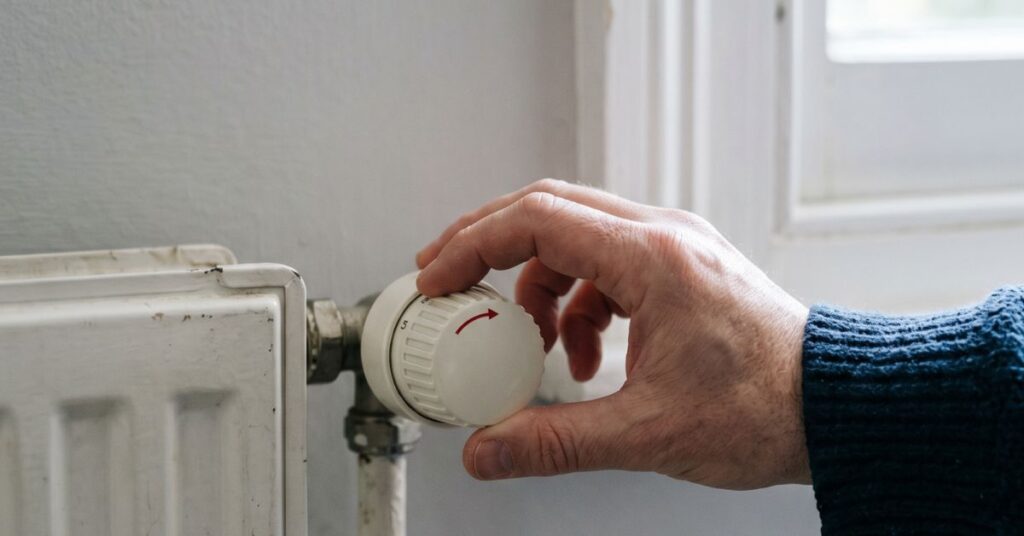
Sort your heating controls. Use the timer. Set the thermostat at a sensible temperature rather than treating it as a dial you crank up when cold. Turn radiator valves down in rooms you barely use. None of this involves spending much, and the small adjustments compound across a few thousand kilowatt hours.
Turn appliances off standby. Wash clothes at thirty rather than forty when you can. Use lids on pans. These individually are tiny things. Together over a winter they’re hundreds of kilowatt hours.
Doing this in May means it’s done by the time it actually matters. Doing it in November means standing barefoot on a cold tile floor trying to fit a draught excluder while your fingers go numb.
The Honest Bottom Line
None of these five things will dramatically transform your bill on their own. The price cap is the price cap, and a 13% rise plus another likely rise in autumn is going to land however prepared you are.
What these five things do, properly stacked, is materially soften the hit. The right tariff plus a built-up buffer plus any support you’re entitled to plus efficiency basics that you’ve actually bothered with is genuinely the difference between a winter that’s annoying and one that’s actually rough.
Energy is now a structural cost, not a small monthly annoyance. Treating it like a fixed bill you never review is the most expensive option available. Five minutes of attention now beats five months of pain later.
Pick the one on this list you’re least likely to forget about, and do it before the end of the week. Then come back and do another. That’s the work. There isn’t a clever shortcut.
This is general information, not financial advice. Energy prices, deals and support schemes change and depend on your circumstances, so it may be worth checking the latest with Ofgem, your supplier, or a free service like Citizens Advice.